Q61.Match the LIST-I with LIST-II
List-I
Electronic configuration of tetrahedral metal ion | List-II
Crystal Field Stabilization Energy (Δt) |
|---|
| A. | d2 | I. | − 0.6 |
| B. | d4 | II. | − 0.8 |
| C. | d6 | III. | − 1.2 |
| D. | d8 | IV. | − 0.4 |
Choose the correct answer from the options given below:
सूची-I का सूची-II से मिलान कीजिए
सूची-I
चतुष्फलकीय धातु आयन का इलेक्ट्रॉनिक विन्यास | सूची-II
क्रिस्टल क्षेत्र स्थायीकरण ऊर्जा (Δt) |
|---|
| A. | d2 | I. | − 0.6 |
| B. | d4 | II. | − 0.8 |
| C. | d6 | III. | − 1.2 |
| D. | d8 | IV. | − 0.4 |
नीचे दिए गए विकल्पों में से सही उत्तर चुनिए:
- AA-III, B-IV, C-II, D-I
- BA-III, B-I, C-IV, D-II
- CA-III, B-IV, C-I, D-II
- DA-II, B-I, C-IV, D-III
Show answer
Concept: In a tetrahedral field e orbitals lie at −0.6Δt and t2 at +0.4Δt; Δt is small, so complexes are always high spin.
- d2: e2 → 2(−0.6) = −1.2Δt → III.
- d4: e2t22 → −1.2 + 0.8 = −0.4Δt → IV.
- d6: e3t23 → −1.8 + 1.2 = −0.6Δt → I.
- d8: e4t24 → −2.4 + 1.6 = −0.8Δt → II.
- (A) swaps d6/d8, (B) swaps d4/d6, (D) is wrong for d2.
Short trick: Simply use CFSE = (−0.6 ne + 0.4 nt2)Δt.
Answer: (C) A-III, B-IV, C-I, D-II
अवधारणा: चतुष्फलकीय क्षेत्र में e कक्षक −0.6Δt पर तथा t2 कक्षक +0.4Δt पर होते हैं; Δt छोटा होता है, अतः संकुल सदैव उच्च प्रचक्रण होते हैं।
- d2: e2 → 2(−0.6) = −1.2Δt → III।
- d4: e2t22 → −1.2 + 0.8 = −0.4Δt → IV।
- d6: e3t23 → −1.8 + 1.2 = −0.6Δt → I।
- d8: e4t24 → −2.4 + 1.6 = −0.8Δt → II।
- (A) में d6/d8 की अदला-बदली है, (B) में d4/d6 की, (D) में d2 गलत है।
शॉर्ट ट्रिक: सीधे CFSE = (−0.6 ne + 0.4 nt2)Δt का प्रयोग कीजिए।
उत्तर: (C) A-III, B-IV, C-I, D-II
JEE Main 2026 (April) – Paper 1 (B.E./B.Tech)ChemistryCoordination Compounds – CFSE in tetrahedral fieldJEE Main 2026 (April) – Paper 1 (B.E./B.Tech) 2026 · 6 Apr Shift 1
Q62.Which of the following are true about the energy of the given d-orbitals of a tetrahedral complex?
A. dxy = dxz > dx2−y2
B. dxy = dyz > dz2
C. dx2−y2 > dz2 > dxz
D. dx2−y2 = dz2 < dxz
Choose the correct answer from the given below:
एक चतुष्फलकीय संकुल के दिए गए d-कक्षकों की ऊर्जा के संबंध में निम्नलिखित में से कौन-से सत्य हैं?
A. dxy = dxz > dx2−y2
B. dxy = dyz > dz2
C. dx2−y2 > dz2 > dxz
D. dx2−y2 = dz2 < dxz
नीचे दिए गए विकल्पों में से सही उत्तर चुनिए:
- AA, B and D onlyकेवल A, B तथा D
- BA and B onlyकेवल A तथा B
- CB and D onlyकेवल B तथा D
- DB, C and D onlyकेवल B, C तथा D
Show answer
Concept: In a tetrahedral field the d-orbitals split into a higher t2 set (dxy, dyz, dxz, degenerate) and a lower e set (dx2−y2, dz2, degenerate).
- A: t2 = t2 > e → true.
- B: t2 = t2 > e → true.
- C: dx2−y2 and dz2 are degenerate and both lie below dxz → false.
- D: e = e < t2 → true.
- So A, B and D; (B), (C) miss a true statement and (D) includes false C.
Short trick: Tetrahedral is the inverse of octahedral: the 'between-axes' orbitals go up.
Answer: (A) A, B and D only
अवधारणा: चतुष्फलकीय क्षेत्र में d-कक्षक उच्च t2 समुच्चय (dxy, dyz, dxz, समभ्रंश) तथा निम्न e समुच्चय (dx2−y2, dz2, समभ्रंश) में विपाटित होते हैं।
- A: t2 = t2 > e → सत्य।
- B: t2 = t2 > e → सत्य।
- C: dx2−y2 तथा dz2 समभ्रंश हैं तथा दोनों dxz से नीचे हैं → असत्य।
- D: e = e < t2 → सत्य।
- अतः A, B तथा D; (B), (C) में एक सत्य कथन छूटा है तथा (D) में असत्य C शामिल है।
शॉर्ट ट्रिक: चतुष्फलकीय, अष्टफलकीय का उलटा है: 'अक्षों के बीच' वाले कक्षक ऊपर जाते हैं।
उत्तर: (A) केवल A, B तथा D
JEE Main 2026 (April) – Paper 1 (B.E./B.Tech)ChemistryCoordination Compounds – crystal field splittingJEE Main 2026 (April) – Paper 1 (B.E./B.Tech) 2026 · 6 Apr Shift 1
Q63.Rf value for 2-methylpropene in a solvent system (Ethyl acetate + ether) is 0.42.
2-methylpropene is treated with dilute H2SO4 to give major organic product (X).
Rf value for (X) in the same solvent system under identical condition will be:
एक विलायक तंत्र (एथिल ऐसीटेट + ईथर) में 2-मेथिलप्रोपीन का Rf मान 0.42 है।
2-मेथिलप्रोपीन को तनु H2SO4 के साथ उपचारित करने पर मुख्य कार्बनिक उत्पाद (X) प्राप्त होता है।
समान परिस्थितियों में उसी विलायक तंत्र में (X) का Rf मान होगा:
- A0.42
- B0.82
- C0.62
- D0.12
Show answer
Concept: In TLC on polar silica, more polar compounds are adsorbed more strongly and move less → lower Rf.
- (CH3)2C=CH2 + H2O (dil. H2SO4) → (CH3)3C–OH (Markovnikov, via 3° carbocation); X = tert-butyl alcohol.
- X has an –OH group (H-bonding with silica), so it is much more polar than the alkene → Rf < 0.42.
- Only 0.12 is lower than 0.42; 0.42, 0.62 and 0.82 imply equal or lower polarity – wrong.
Short trick: More polar → sticks to the plate → smaller Rf.
Answer: (D) 0.12
अवधारणा: ध्रुवीय सिलिका पर TLC में अधिक ध्रुवीय यौगिक अधिक प्रबलता से अधिशोषित होते हैं तथा कम चलते हैं → कम Rf।
- (CH3)2C=CH2 + H2O (तनु H2SO4) → (CH3)3C–OH (मार्कोनीकॉफ, 3° कार्बधनायन द्वारा); X = tert-ब्यूटिल ऐल्कोहॉल।
- X में –OH समूह है (सिलिका के साथ H-आबंधन), अतः यह ऐल्कीन से बहुत अधिक ध्रुवीय है → Rf < 0.42।
- केवल 0.12 ही 0.42 से कम है; 0.42, 0.62 तथा 0.82 समान या कम ध्रुवता दर्शाते हैं – गलत।
शॉर्ट ट्रिक: अधिक ध्रुवीय → प्लेट से चिपकता है → छोटा Rf।
उत्तर: (D) 0.12
JEE Main 2026 (April) – Paper 1 (B.E./B.Tech)ChemistryPurification – TLC R<sub>f</sub> and hydration of alkeneJEE Main 2026 (April) – Paper 1 (B.E./B.Tech) 2026 · 6 Apr Shift 1
Q64.Given below are two statements:
Statement I: 2,6-diethylcyclohexanone and 6-methyl-2-n-propylcyclohexanone are metamers.
Statement II: 2,2,6,6 - tetramethylcyclohexanone exhibits keto-enol tautomerism.
In the light of the above statements, choose the correct answer from the options given below
नीचे दो कथन दिए गए हैं:
कथन I: 2,6-डाइएथिलसाइक्लोहेक्सेनोन तथा 6-मेथिल-2-n-प्रोपिलसाइक्लोहेक्सेनोन मध्यावयवी (metamers) हैं।
कथन II: 2,2,6,6-टेट्रामेथिलसाइक्लोहेक्सेनोन कीटो-ईनॉल चलावयवता (keto-enol tautomerism) प्रदर्शित करता है।
उपरोक्त कथनों के आलोक में, नीचे दिए गए विकल्पों में से सही उत्तर चुनिए
- ABoth Statement I and Statement II are trueकथन I और कथन II दोनों सत्य हैं
- BBoth Statement I and Statement II are falseकथन I और कथन II दोनों असत्य हैं
- CStatement I is true but Statement II is falseकथन I सत्य है परन्तु कथन II असत्य है
- DStatement I is false but Statement II is trueकथन I असत्य है परन्तु कथन II सत्य है
Show answer
Concept: Metamers have the same formula and functional group but different alkyl groups on either side of the functional group; keto-enol tautomerism needs an α-hydrogen.
- Statement I: both compounds are C10H18O cyclohexanones. Around the C=O, one has ethyl/ethyl on the two α-carbons, the other methyl/n-propyl – same functional group, different distribution of alkyl groups on the two sides → metamers → true.
- Statement II: in 2,2,6,6-tetramethylcyclohexanone both α-carbons (C-2 and C-6) are quaternary, so there is no α-H → no enolisation → false.
- Hence (A), (B), (D) are wrong.
Short trick: No α-H, no enol.
Answer: (C) Statement I is true but Statement II is false
अवधारणा: मध्यावयवियों का सूत्र तथा क्रियात्मक समूह समान होता है परन्तु क्रियात्मक समूह के दोनों ओर भिन्न ऐल्किल समूह होते हैं; कीटो-ईनॉल चलावयवता के लिए α-हाइड्रोजन आवश्यक है।
- कथन I: दोनों यौगिक C10H18O साइक्लोहेक्सेनोन हैं। C=O के चारों ओर, एक में दोनों α-कार्बनों पर एथिल/एथिल है, दूसरे में मेथिल/n-प्रोपिल – क्रियात्मक समूह समान, दोनों ओर ऐल्किल समूहों का वितरण भिन्न → मध्यावयवी → सत्य।
- कथन II: 2,2,6,6-टेट्रामेथिलसाइक्लोहेक्सेनोन में दोनों α-कार्बन (C-2 तथा C-6) चतुष्क (quaternary) हैं, अतः कोई α-H नहीं → ईनॉलन नहीं → असत्य।
- अतः (A), (B), (D) गलत हैं।
शॉर्ट ट्रिक: α-H नहीं, तो ईनॉल नहीं।
उत्तर: (C) कथन I सत्य है परन्तु कथन II असत्य है
JEE Main 2026 (April) – Paper 1 (B.E./B.Tech)ChemistryOrganic Chemistry – isomerism and tautomerismJEE Main 2026 (April) – Paper 1 (B.E./B.Tech) 2026 · 6 Apr Shift 1
Q65.Given below are two statements:
Statement I: Methane can be prepared by decarboxylation of sodium ethanoate, Kolbe's electrolysis of sodium acetate and reaction of CH3MgBr with water.
Statement II: Methane cannot be prepared from unsaturated hydrocarbons and by Wurtz reaction.
In the light of the above statements, choose the correct answer from the options given below
नीचे दो कथन दिए गए हैं:
कथन I: मेथेन को सोडियम एथेनोएट के विकार्बोक्सिलन, सोडियम ऐसीटेट के कोल्बे वैद्युतअपघटन तथा CH3MgBr की जल के साथ अभिक्रिया द्वारा बनाया जा सकता है।
कथन II: मेथेन को असंतृप्त हाइड्रोकार्बनों से तथा वुर्ट्ज़ अभिक्रिया (Wurtz reaction) द्वारा नहीं बनाया जा सकता।
उपरोक्त कथनों के आलोक में, नीचे दिए गए विकल्पों में से सही उत्तर चुनिए
- ABoth Statement I and Statement II are trueकथन I और कथन II दोनों सत्य हैं
- BBoth Statement I and Statement II are falseकथन I और कथन II दोनों असत्य हैं
- CStatement I is true but Statement II is falseकथन I सत्य है परन्तु कथन II असत्य है
- DStatement I is false but Statement II is trueकथन I असत्य है परन्तु कथन II सत्य है
Show answer
Concept: Methods that build C–C bonds or add H2 to a C=C cannot give a one-carbon alkane.
- CH3COONa + NaOH (CaO) → CH4 + Na2CO3 ✓; CH3MgBr + H2O → CH4 ✓.
- But Kolbe's electrolysis of CH3COONa gives CH3–CH3 (ethane), not methane → Statement I is false.
- Statement II: the simplest unsaturated hydrocarbon has two carbons (hydrogenation gives ≥ C2), and Wurtz coupling joins two alkyl groups (≥ C2) → methane cannot be made by either → true.
- Hence (A), (B), (C) are wrong.
Short trick: Kolbe and Wurtz both double the carbon count – never CH4.
Answer: (D) Statement I is false but Statement II is true
अवधारणा: वे विधियाँ जो C–C आबंध बनाती हैं या C=C पर H2 जोड़ती हैं, एक-कार्बन ऐल्केन नहीं दे सकतीं।
- CH3COONa + NaOH (CaO) → CH4 + Na2CO3 ✓; CH3MgBr + H2O → CH4 ✓।
- परन्तु CH3COONa का कोल्बे वैद्युतअपघटन CH3–CH3 (एथेन) देता है, मेथेन नहीं → कथन I असत्य है।
- कथन II: सबसे सरल असंतृप्त हाइड्रोकार्बन में दो कार्बन होते हैं (हाइड्रोजनन से ≥ C2), तथा वुर्ट्ज़ युग्मन दो ऐल्किल समूहों को जोड़ता है (≥ C2) → किसी से भी मेथेन नहीं बन सकती → सत्य।
- अतः (A), (B), (C) गलत हैं।
शॉर्ट ट्रिक: कोल्बे तथा वुर्ट्ज़ दोनों कार्बन संख्या को दोगुना करते हैं – कभी CH4 नहीं।
उत्तर: (D) कथन I असत्य है परन्तु कथन II सत्य है
JEE Main 2026 (April) – Paper 1 (B.E./B.Tech)ChemistryHydrocarbons – preparation of methaneJEE Main 2026 (April) – Paper 1 (B.E./B.Tech) 2026 · 6 Apr Shift 1
Q66.Given below are two statements:
Statement I: 3-phenylpropene reacts with HBr and gives secondary alkyl bromide having a chiral carbon atom as the major product.
Statement II: Aryl chlorides and aryl cyanides can be prepared by Sandmeyer reaction as well as Gattermann reaction.
In the light of the above statements, choose the correct answer from the options given below
नीचे दो कथन दिए गए हैं:
कथन I: 3-फेनिलप्रोपीन HBr से अभिक्रिया करके मुख्य उत्पाद के रूप में किरैल कार्बन परमाणु युक्त द्वितीयक ऐल्किल ब्रोमाइड देता है।
कथन II: ऐरिल क्लोराइड तथा ऐरिल सायनाइड, सैन्डमायर अभिक्रिया (Sandmeyer reaction) तथा गाटरमान अभिक्रिया (Gattermann reaction) दोनों द्वारा बनाए जा सकते हैं।
उपरोक्त कथनों के आलोक में, नीचे दिए गए विकल्पों में से सही उत्तर चुनिए
- ABoth Statement I and Statement II are trueकथन I और कथन II दोनों सत्य हैं
- BBoth Statement I and Statement II are falseकथन I और कथन II दोनों असत्य हैं
- CStatement I is true but Statement II is falseकथन I सत्य है परन्तु कथन II असत्य है
- DStatement I is false but Statement II is trueकथन I असत्य है परन्तु कथन II सत्य है
Show answer
Concept: Electrophilic addition of HBr (Markovnikov) and replacement reactions of diazonium salts.
- Statement I: PhCH2CH=CH2 + HBr → H+ adds to the terminal CH2, giving a 2° carbocation; Br− attack gives PhCH2CH(Br)CH3 (even if a hydride shift gives the benzylic ion, the product PhCH(Br)CH2CH3 is also 2°). In either case the C–Br carbon carries four different groups → chiral 2° bromide → true.
- Statement II: Sandmeyer (CuCl/HCl, CuCN/KCN) gives both ArCl and ArCN. Gattermann reaction (Cu powder + HCl/HBr) gives only ArCl/ArBr, not ArCN → false.
- Hence (A), (B), (D) are wrong.
Short trick: Gattermann = Cu + HX → only halides; cyanide needs Sandmeyer's CuCN.
Answer: (C) Statement I is true but Statement II is false
अवधारणा: HBr का इलेक्ट्रॉनरागी योगज (मार्कोनीकॉफ) तथा डाइऐज़ोनियम लवणों की प्रतिस्थापन अभिक्रियाएँ।
- कथन I: PhCH2CH=CH2 + HBr → H+ अंतस्थ CH2 पर जुड़ता है, जिससे 2° कार्बधनायन बनता है; Br− के आक्रमण से PhCH2CH(Br)CH3 बनता है (यदि हाइड्राइड विस्थापन से बेन्ज़िलिक आयन बने, तब भी उत्पाद PhCH(Br)CH2CH3 भी 2° है)। दोनों स्थितियों में C–Br कार्बन पर चार भिन्न समूह हैं → किरैल 2° ब्रोमाइड → सत्य।
- कथन II: सैन्डमायर (CuCl/HCl, CuCN/KCN) से ArCl तथा ArCN दोनों बनते हैं। गाटरमान अभिक्रिया (Cu चूर्ण + HCl/HBr) केवल ArCl/ArBr देती है, ArCN नहीं → असत्य।
- अतः (A), (B), (D) गलत हैं।
शॉर्ट ट्रिक: गाटरमान = Cu + HX → केवल हैलाइड; सायनाइड के लिए सैन्डमायर का CuCN चाहिए।
उत्तर: (C) कथन I सत्य है परन्तु कथन II असत्य है
JEE Main 2026 (April) – Paper 1 (B.E./B.Tech)ChemistryHaloalkanes and Haloarenes – preparationJEE Main 2026 (April) – Paper 1 (B.E./B.Tech) 2026 · 6 Apr Shift 1
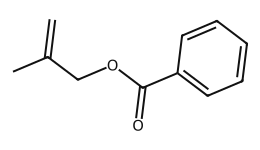
Q67.Consider the following sequence of reactions
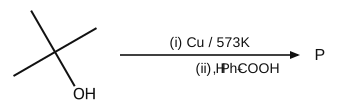
The major product P is:
अभिक्रियाओं के निम्नलिखित अनुक्रम पर विचार कीजिए
मुख्य उत्पाद P है:
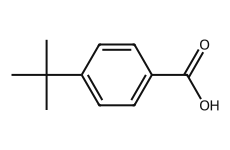
- A
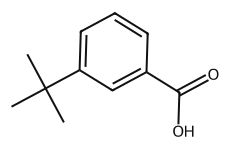
- B
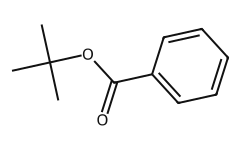
- C
- D
Show answer
Concept: Tertiary alcohols are dehydrated (not dehydrogenated) by Cu at 573 K; the alkene then forms a stable 3° carbocation in acid, which is trapped by a nucleophile.
- (CH3)3C–OH has no α-H on the carbinol carbon, so Cu/573 K gives 2-methylpropene: (CH3)2C=CH2 + H2O.
- With H+: (CH3)2C=CH2 → (CH3)3C+ (Markovnikov, 3° cation).
- The carboxyl O of PhCOOH attacks the cation → PhCOO–C(CH3)3 (tert-butyl benzoate) after loss of H+.
- (A)/(B): ring tert-butylation is not favoured – –COOH strongly deactivates the ring; (D) is the methallyl ester, which needs addition at the wrong carbon.
Short trick: 3° alcohol + Cu → alkene; alkene + H+ + RCOOH → tert-butyl ester.
Answer: (C) tert-butyl benzoate
अवधारणा: 573 K पर Cu द्वारा तृतीयक ऐल्कोहॉल का निर्जलीकरण होता है (विहाइड्रोजनन नहीं); फिर ऐल्कीन अम्ल में स्थायी 3° कार्बधनायन बनाती है, जिसे नाभिकरागी पकड़ लेता है।
- (CH3)3C–OH में कार्बिनॉल कार्बन पर कोई H नहीं है, अतः Cu/573 K से 2-मेथिलप्रोपीन बनती है: (CH3)2C=CH2 + H2O।
- H+ के साथ: (CH3)2C=CH2 → (CH3)3C+ (मार्कोनीकॉफ, 3° धनायन)।
- PhCOOH का कार्बॉक्सिल O धनायन पर आक्रमण करता है → H+ के निष्कासन के बाद PhCOO–C(CH3)3 (tert-ब्यूटिल बेन्ज़ोएट)।
- (A)/(B): वलय का tert-ब्यूटिलन अनुकूल नहीं है – –COOH वलय को प्रबल रूप से निष्क्रिय करता है; (D) मेथैलिल एस्टर है, जिसके लिए गलत कार्बन पर योग आवश्यक होगा।
शॉर्ट ट्रिक: 3° ऐल्कोहॉल + Cu → ऐल्कीन; ऐल्कीन + H+ + RCOOH → tert-ब्यूटिल एस्टर।
उत्तर: (C) tert-ब्यूटिल बेन्ज़ोएट
JEE Main 2026 (April) – Paper 1 (B.E./B.Tech)ChemistryAlcohols – dehydration and esterificationJEE Main 2026 (April) – Paper 1 (B.E./B.Tech) 2026 · 6 Apr Shift 1
Q68.Arrange the following compounds according to increasing order of boiling points.
n - C4H9OH (A), n - C4H9NH2 (B), n - C4H10 (C) and C2H5NHC2H5 (D).
निम्नलिखित यौगिकों को क्वथनांकों के बढ़ते क्रम में व्यवस्थित कीजिए।
n - C4H9OH (A), n - C4H9NH2 (B), n - C4H10 (C) तथा C2H5NHC2H5 (D)।
- AC < B < A < D
- BD < C < B < A
- CC < D < B < A
- DD < B < A < C
Show answer
Concept: For similar molar masses, boiling point rises with extent of intermolecular H-bonding: alcohol > 1° amine > 2° amine > alkane.
- n-Butane (C): only van der Waals forces, b.p. ≈ 273 K – lowest.
- Diethylamine (D): one N–H, weaker H-bonding, b.p. ≈ 329 K.
- n-Butylamine (B): two N–H, more H-bonding, b.p. ≈ 351 K.
- n-Butanol (A): O–H forms stronger H-bonds (O more electronegative), b.p. ≈ 391 K – highest.
- Order C < D < B < A; (A), (B), (D) misplace the alkane or the alcohol.
Short trick: More (and stronger) H-bond donors → higher b.p.: OH > NH2 > NH > none.
Answer: (C) C < D < B < A
अवधारणा: समान मोलर द्रव्यमान के लिए, अंतराअणुक H-आबंधन की मात्रा के साथ क्वथनांक बढ़ता है: ऐल्कोहॉल > 1° ऐमीन > 2° ऐमीन > ऐल्केन।
- n-ब्यूटेन (C): केवल वान्डरवाल्स बल, क्वथनांक ≈ 273 K – न्यूनतम।
- डाइएथिलऐमीन (D): एक N–H, दुर्बल H-आबंधन, क्वथनांक ≈ 329 K।
- n-ब्यूटिलऐमीन (B): दो N–H, अधिक H-आबंधन, क्वथनांक ≈ 351 K।
- n-ब्यूटेनॉल (A): O–H प्रबल H-आबंध बनाता है (O अधिक विद्युतऋणी), क्वथनांक ≈ 391 K – अधिकतम।
- क्रम C < D < B < A; (A), (B), (D) में ऐल्केन या ऐल्कोहॉल गलत स्थान पर है।
शॉर्ट ट्रिक: अधिक (तथा प्रबल) H-आबंध दाता → उच्च क्वथनांक: OH > NH2 > NH > कोई नहीं।
उत्तर: (C) C < D < B < A
JEE Main 2026 (April) – Paper 1 (B.E./B.Tech)ChemistryAmines – boiling pointsJEE Main 2026 (April) – Paper 1 (B.E./B.Tech) 2026 · 6 Apr Shift 1
Q69.Match the LIST-I with LIST-II
List-I
Deficiency Disease | List-II
Vitamin |
|---|
| A. | Scurvy | I. | Pyridoxine |
| B. | Convulsions | II. | Vitamin A |
| C. | Cheilosis | III. | Ascorbic Acid |
| D. | Xerophthalmia | IV. | Riboflavin |
Choose the correct answer from the options given below:
सूची-I का सूची-II से मिलान कीजिए
सूची-I
अभावजन्य रोग | सूची-II
विटामिन |
|---|
| A. | स्कर्वी (Scurvy) | I. | पिरिडॉक्सिन (Pyridoxine) |
| B. | ऐंठन (Convulsions) | II. | विटामिन A |
| C. | कीलोसिस (Cheilosis) | III. | ऐस्कॉर्बिक अम्ल (Ascorbic Acid) |
| D. | जीरोफ्थैल्मिया (Xerophthalmia) | IV. | राइबोफ्लेविन (Riboflavin) |
नीचे दिए गए विकल्पों में से सही उत्तर चुनिए:
- AA-I, B-III, C-II, D-IV
- BA-I, B-III, C-IV, D-II
- CA-III, B-I, C-IV, D-II
- DA-III, B-I, C-II, D-IV
Show answer
Concept: Vitamin deficiency diseases.
- Scurvy – vitamin C (ascorbic acid) → III.
- Convulsions – vitamin B6 (pyridoxine) → I.
- Cheilosis (fissuring at the corners of the mouth) – vitamin B2 (riboflavin) → IV.
- Xerophthalmia (hardening of cornea) – vitamin A → II.
- (A), (B) give scurvy to pyridoxine; (D) gives cheilosis to vitamin A – wrong.
Short trick: Scurvy–C is certain, so only (C) or (D); cheilosis is a B2 sign → (C).
Answer: (C) A-III, B-I, C-IV, D-II
अवधारणा: विटामिन अभावजन्य रोग।
- स्कर्वी – विटामिन C (ऐस्कॉर्बिक अम्ल) → III।
- ऐंठन – विटामिन B6 (पिरिडॉक्सिन) → I।
- कीलोसिस (मुँह के कोनों का फटना) – विटामिन B2 (राइबोफ्लेविन) → IV।
- जीरोफ्थैल्मिया (कॉर्निया का कठोर होना) – विटामिन A → II।
- (A), (B) में स्कर्वी को पिरिडॉक्सिन से जोड़ा गया है; (D) में कीलोसिस को विटामिन A से – गलत।
शॉर्ट ट्रिक: स्कर्वी–C निश्चित है, अतः केवल (C) या (D); कीलोसिस B2 का लक्षण है → (C)।
उत्तर: (C) A-III, B-I, C-IV, D-II
JEE Main 2026 (April) – Paper 1 (B.E./B.Tech)ChemistryBiomolecules – vitamins and deficiency diseasesJEE Main 2026 (April) – Paper 1 (B.E./B.Tech) 2026 · 6 Apr Shift 1
Q70.Match the LIST-I with LIST-II
List-I
Amino acid | List-II
Positive reaction/Test for functional group present in side chain of amino acid |
|---|
| A. | Glutamine | I. | Hinsberg's test |
| B. | Lysine | II. | Neutral FeCl3 test |
| C. | Tyrosine | III. | Ceric ammonium nitrate test |
| D. | Serine | IV. | Hoffman bromamide degradation |
Choose the correct answer from the options given below:
सूची-I का सूची-II से मिलान कीजिए
सूची-I
ऐमीनो अम्ल | सूची-II
ऐमीनो अम्ल की पार्श्व शृंखला में उपस्थित क्रियात्मक समूह के लिए धनात्मक अभिक्रिया/परीक्षण |
|---|
| A. | ग्लूटामीन (Glutamine) | I. | हिंसबर्ग परीक्षण |
| B. | लाइसीन (Lysine) | II. | उदासीन FeCl3 परीक्षण |
| C. | टाइरोसीन (Tyrosine) | III. | सेरिक अमोनियम नाइट्रेट परीक्षण |
| D. | सेरीन (Serine) | IV. | हॉफमान ब्रोमैमाइड निम्नीकरण |
नीचे दिए गए विकल्पों में से सही उत्तर चुनिए:
- AA-IV, B-II, C-I, D-III
- BA-IV, B-I, C-II, D-III
- CA-III, B-II, C-I, D-IV
- DA-IV, B-I, C-III, D-II
Show answer
Concept: Identify the side-chain functional group of each amino acid and its characteristic test.
- Glutamine: –CH2CH2CONH2 (1° amide) → Hoffmann bromamide degradation → IV.
- Lysine: –(CH2)4NH2 (1° amine) → Hinsberg's test → I.
- Tyrosine: –CH2C6H4OH (phenol) → violet colour with neutral FeCl3 → II.
- Serine: –CH2OH (alcohol) → ceric ammonium nitrate test (red colour) → III.
- (A) and (D) swap tyrosine's test; (C) wrongly gives glutamine CAN.
Short trick: Phenol → FeCl3, alcohol → CAN, amine → Hinsberg, amide → Hoffmann.
Answer: (B) A-IV, B-I, C-II, D-III
अवधारणा: प्रत्येक ऐमीनो अम्ल के पार्श्व-शृंखला क्रियात्मक समूह तथा उसके अभिलाक्षणिक परीक्षण को पहचानिए।
- ग्लूटामीन: –CH2CH2CONH2 (1° ऐमाइड) → हॉफमान ब्रोमैमाइड निम्नीकरण → IV।
- लाइसीन: –(CH2)4NH2 (1° ऐमीन) → हिंसबर्ग परीक्षण → I।
- टाइरोसीन: –CH2C6H4OH (फीनॉल) → उदासीन FeCl3 से बैंगनी रंग → II।
- सेरीन: –CH2OH (ऐल्कोहॉल) → सेरिक अमोनियम नाइट्रेट परीक्षण (लाल रंग) → III।
- (A) तथा (D) में टाइरोसीन का परीक्षण गलत है; (C) में ग्लूटामीन को CAN दिया गया है – गलत।
शॉर्ट ट्रिक: फीनॉल → FeCl3, ऐल्कोहॉल → CAN, ऐमीन → हिंसबर्ग, ऐमाइड → हॉफमान।
उत्तर: (B) A-IV, B-I, C-II, D-III
JEE Main 2026 (April) – Paper 1 (B.E./B.Tech)ChemistryBiomolecules – amino acid side-chain testsJEE Main 2026 (April) – Paper 1 (B.E./B.Tech) 2026 · 6 Apr Shift 1
Q71.First and second ionization enthalpies of lithium are 520 kJ mol−1 and 7297 kJ mol−1 respectively. Energy required to convert 3.5 mg lithium (g) into Li2+(g) [Li(g) → Li2+(g)] is _______ kJ mol−1. (nearest integer)
[Molar mass of Li = 7 g mol−1]
लीथियम की प्रथम तथा द्वितीय आयनन एन्थैल्पी क्रमशः 520 kJ mol−1 तथा 7297 kJ mol−1 हैं। 3.5 mg लीथियम (g) को Li2+(g) [Li(g) → Li2+(g)] में परिवर्तित करने के लिए आवश्यक ऊर्जा _______ kJ mol−1 है। (निकटतम पूर्णांक)
[Li का मोलर द्रव्यमान = 7 g mol−1]
Show answer
Concept: Energy for Li(g) → Li2+(g) = (IE1 + IE2) × moles of Li.
- Moles of Li = mol.
- IE1 + IE2 = 520 + 7297 = 7817 kJ mol−1.
- Energy = kJ ≈ 4 kJ (the blank asks for the energy for 3.5 mg; the unit printed with the blank is kJ mol−1, but the quantity is the total energy in kJ).
Short trick: 3.5 mg Li = 1/2000 mol → 7817/2000 ≈ 3.9.
Answer: 4
अवधारणा: Li(g) → Li2+(g) के लिए ऊर्जा = (IE1 + IE2) × Li के मोल।
- Li के मोल = मोल।
- IE1 + IE2 = 520 + 7297 = 7817 kJ mol−1।
- ऊर्जा = kJ ≈ 4 kJ (रिक्त स्थान 3.5 mg के लिए ऊर्जा पूछता है; रिक्त स्थान के साथ मुद्रित इकाई kJ mol−1 है, परन्तु राशि kJ में कुल ऊर्जा है)।
शॉर्ट ट्रिक: 3.5 mg Li = 1/2000 मोल → 7817/2000 ≈ 3.9।
उत्तर: 4
JEE Main 2026 (April) – Paper 1 (B.E./B.Tech)ChemistryClassification of Elements – ionization enthalpyJEE Main 2026 (April) – Paper 1 (B.E./B.Tech) 2026 · 6 Apr Shift 1
Q72.Consider the following sequence of reactions.
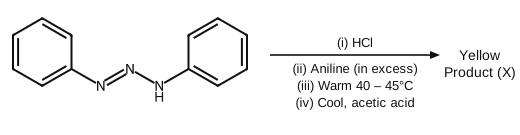
The percentage of nitrogen in the yellow product (X) formed is _______%. (Nearest Integer)
(Given Molar mass in g mol−1 H:1, C:12, N:14)
अभिक्रियाओं के निम्नलिखित अनुक्रम पर विचार कीजिए।
बने पीले उत्पाद (X) में नाइट्रोजन का प्रतिशत _______% है। (निकटतम पूर्णांक)
(दिया है मोलर द्रव्यमान g mol−1 में H:1, C:12, N:14)
Show answer
Concept: Diazoaminobenzene rearranges in acid (with excess aniline as solvent, 40–45 °C) to p-aminoazobenzene, a yellow dye.
- C6H5–N=N–NH–C6H5 + HCl → C6H5N2+ + C6H5NH2; the diazonium ion couples at the para-position of aniline → X = p-H2N–C6H4–N=N–C6H5 (yellow).
- Formula C12H11N3: M = 12×12 + 11×1 + 3×14 = 197 g mol−1.
- %N = ≈ 21.
Short trick: Rearrangement keeps the formula of the starting compound (C12H11N3), so %N is the same as in diazoaminobenzene.
Answer: 21
अवधारणा: डाइऐज़ोऐमीनोबेन्ज़ीन अम्ल में (विलायक के रूप में आधिक्य ऐनिलीन, 40–45 °C) पुनर्विन्यस्त होकर p-ऐमीनोऐज़ोबेन्ज़ीन बनाता है, जो एक पीला रंजक है।
- C6H5–N=N–NH–C6H5 + HCl → C6H5N2+ + C6H5NH2; डाइऐज़ोनियम आयन ऐनिलीन की पैरा-स्थिति पर युग्मित होता है → X = p-H2N–C6H4–N=N–C6H5 (पीला)।
- सूत्र C12H11N3: M = 12×12 + 11×1 + 3×14 = 197 g mol−1।
- %N = ≈ 21।
शॉर्ट ट्रिक: पुनर्विन्यास में प्रारंभिक यौगिक का सूत्र (C12H11N3) अपरिवर्तित रहता है, अतः %N डाइऐज़ोऐमीनोबेन्ज़ीन के समान है।
उत्तर: 21
JEE Main 2026 (April) – Paper 1 (B.E./B.Tech)ChemistryAmines – diazoamino rearrangementJEE Main 2026 (April) – Paper 1 (B.E./B.Tech) 2026 · 6 Apr Shift 1
Q73.4.7 g of phenol is heated with Zn to give product X. If this reaction goes to 60% completion then the number of moles of compound X formed will be ____ ×10−2. (Nearest Integer)
(Given molar mass in g mol−1 : H:1, C:12, O:16)
4.7 g फीनॉल को Zn के साथ गर्म करने पर उत्पाद X प्राप्त होता है। यदि यह अभिक्रिया 60% पूर्ण होती है, तो बने यौगिक X के मोलों की संख्या ____ ×10−2 होगी। (निकटतम पूर्णांक)
(दिया है मोलर द्रव्यमान g mol−1 में : H:1, C:12, O:16)
Show answer
Concept: Phenol is reduced to benzene on heating with zinc dust: C6H5OH + Zn → C6H6 + ZnO (1 : 1).
- Molar mass of phenol C6H6O = 72 + 6 + 16 = 94 g mol−1; moles = mol.
- At 60% completion, moles of benzene (X) = 0.05 × 0.6 = 0.03 mol = 3 × 10⁻² mol.
Short trick: 4.7/94 = 1/20; × 0.6 = 0.03.
Answer: 3
अवधारणा: ज़िंक चूर्ण के साथ गर्म करने पर फीनॉल बेन्ज़ीन में अपचयित होता है: C6H5OH + Zn → C6H6 + ZnO (1 : 1)।
- फीनॉल C6H6O का मोलर द्रव्यमान = 72 + 6 + 16 = 94 g mol−1; मोल = मोल।
- 60% पूर्णता पर, बेन्ज़ीन (X) के मोल = 0.05 × 0.6 = 0.03 मोल = 3 × 10⁻² मोल।
शॉर्ट ट्रिक: 4.7/94 = 1/20; × 0.6 = 0.03।
उत्तर: 3
JEE Main 2026 (April) – Paper 1 (B.E./B.Tech)ChemistryPhenols – reduction with zinc dustJEE Main 2026 (April) – Paper 1 (B.E./B.Tech) 2026 · 6 Apr Shift 1
Q74.Sucrose hydrolyses in acidic medium into glucose and fructose by first order rate law with t1/2 = 3 hour. The percentage of sucrose remaining after 6 hours is _____. (Nearest integer)
(Given : log 2 = 0.3010 and log 3 = 0.4771)
सुक्रोस अम्लीय माध्यम में प्रथम कोटि दर नियम द्वारा ग्लूकोस तथा फ्रक्टोस में जल-अपघटित होता है, जिसकी t1/2 = 3 घंटे है। 6 घंटे के बाद शेष सुक्रोस का प्रतिशत _____ है। (निकटतम पूर्णांक)
(दिया है : log 2 = 0.3010 तथा log 3 = 0.4771)
Show answer
Concept: For first-order kinetics, fraction remaining after n half-lives = (1/2)n.
- n = half-lives.
- Fraction remaining = → 25%.
- Check: h−1; → [A]/[A]0 = 0.25.
Short trick: Two half-lives: 100 → 50 → 25.
Answer: 25
अवधारणा: प्रथम कोटि बलगतिकी में, n अर्धायुओं के बाद शेष भाग = (1/2)n।
- n = अर्धायु।
- शेष भाग = → 25%।
- जाँच: h−1; → [A]/[A]0 = 0.25।
शॉर्ट ट्रिक: दो अर्धायु: 100 → 50 → 25।
उत्तर: 25
JEE Main 2026 (April) – Paper 1 (B.E./B.Tech)ChemistryChemical Kinetics – first-order half-lifeJEE Main 2026 (April) – Paper 1 (B.E./B.Tech) 2026 · 6 Apr Shift 1
Q75.Consider the reaction X ⇌ Y at 300 K. If ΔHθ and K are 28.40 kJ mol−1 and 1.8 × 10⁻⁷ at the same temperature, then the magnitude of ΔSθ for the reaction in J K−1 mol−1 is________. (Nearest integer)
(Given : R = 8.3 J K−1 mol−1, ln 10 = 2.3, log 3 = 0.48, log 2 = 0.30)
300 K पर अभिक्रिया X ⇌ Y पर विचार कीजिए। यदि उसी ताप पर ΔHθ तथा K क्रमशः 28.40 kJ mol−1 तथा 1.8 × 10⁻⁷ हैं, तो अभिक्रिया के लिए ΔSθ का परिमाण J K−1 mol−1 में ________ है। (निकटतम पूर्णांक)
(दिया है : R = 8.3 J K−1 mol−1, ln 10 = 2.3, log 3 = 0.48, log 2 = 0.30)
Show answer
Concept: ΔG° = −RT ln K = −2.3RT log K and ΔG° = ΔH° − TΔS°.
- log(1.8 × 10⁻⁷) = log 2 + 2 log 3 − 8 = 0.30 + 0.96 − 8 = −6.74.
- ΔG° = −8.3 × 300 × 2.3 × (−6.74) = +38 600 J mol−1 = 38.60 kJ mol−1.
- ΔS° = J K−1 mol−1.
- Magnitude = 34.
Short trick: 2.3RT = 5727 J; × 6.74 ≈ 38.6 kJ; (28.4 − 38.6) kJ / 300 K = −34 J K−1.
Answer: 34
अवधारणा: ΔG° = −RT ln K = −2.3RT log K तथा ΔG° = ΔH° − TΔS°।
- log(1.8 × 10⁻⁷) = log 2 + 2 log 3 − 8 = 0.30 + 0.96 − 8 = −6.74।
- ΔG° = −8.3 × 300 × 2.3 × (−6.74) = +38 600 J mol−1 = 38.60 kJ mol−1।
- ΔS° = J K−1 mol−1।
- परिमाण = 34।
शॉर्ट ट्रिक: 2.3RT = 5727 J; × 6.74 ≈ 38.6 kJ; (28.4 − 38.6) kJ / 300 K = −34 J K−1।
उत्तर: 34
JEE Main 2026 (April) – Paper 1 (B.E./B.Tech)ChemistryThermodynamics – ΔG°, K and ΔS°JEE Main 2026 (April) – Paper 1 (B.E./B.Tech) 2026 · 6 Apr Shift 1
Q76.What volume of hydrogen gas at STP would be liberated by action of 50 mL of H2SO4 of 50% purity (density = 1.3 g mL−1) on 20 g of zinc ?
Given : Molar mass of H, O, S, Zn are 1, 16, 32, 65 g mol−1 respectively.
50% शुद्धता (घनत्व = 1.3 g mL−1) वाले 50 mL H2SO4 की 20 g जिंक पर क्रिया द्वारा STP पर कितने आयतन की हाइड्रोजन गैस मुक्त होगी ?
दिया है : H, O, S, Zn के मोलर द्रव्यमान क्रमशः 1, 16, 32, 65 g mol−1 हैं।
- A5.824 L
- B7.428 L
- C6.892 L
- D8.375 L
Show answer
Concept: Zn + H2SO4 → ZnSO4 + H2 (1 : 1 : 1). Find the limiting reagent; 1 mol gas at STP = 22.4 L.
- Mass of acid solution = 50 × 1.3 = 65 g; pure H2SO4 = 50% of 65 = 32.5 g = mol.
- Moles of Zn = mol → Zn is the limiting reagent.
- Moles of H2 = 0.3077 mol; volume = L.
Short trick: Zn (0.308 mol) < acid (0.332 mol), so V = (20/65) × 22.4.
Answer: (C) 6.892 L
अवधारणा: Zn + H2SO4 → ZnSO4 + H2 (1 : 1 : 1)। सीमांत अभिकर्मक ज्ञात कीजिए; STP पर 1 मोल गैस = 22.4 L।
- अम्ल विलयन का द्रव्यमान = 50 × 1.3 = 65 g; शुद्ध H2SO4 = 65 का 50% = 32.5 g = मोल।
- Zn के मोल = मोल → Zn सीमांत अभिकर्मक है।
- H2 के मोल = 0.3077 मोल; आयतन = L।
शॉर्ट ट्रिक: Zn (0.308 मोल) < अम्ल (0.332 मोल), अतः V = (20/65) × 22.4।
उत्तर: (C) 6.892 L
JEE Main 2026 (April) – Paper 1 (B.E./B.Tech)ChemistryMole Concept – limiting reagentJEE Main 2026 (April) – Paper 1 (B.E./B.Tech) 2026 · 5 Apr Shift 2
Q77.Which of the following statement(s) is/are true ?
A. If two orbitals have the same value of (n + l), the orbital with lower value of n will have lower energy.
B. Energies of the orbitals in the same subshell increase with increase in atomic number.
C. The size of 2px orbital is less than the size of 3px orbital.
D. Among 5f, 6s, 4d, 5p and 5d orbitals, none of the orbitals have 2 radial nodes.
Choose the correct answer from the options given below :
निम्नलिखित में से कौन-सा/से कथन सत्य है/हैं ?
A. यदि दो कक्षकों के लिए (n + l) का मान समान हो, तो n के कम मान वाले कक्षक की ऊर्जा कम होगी।
B. समान उपकोश (subshell) के कक्षकों की ऊर्जा परमाणु क्रमांक बढ़ने के साथ बढ़ती है।
C. 2px कक्षक का आकार 3px कक्षक के आकार से कम है।
D. 5f, 6s, 4d, 5p तथा 5d कक्षकों में से किसी भी कक्षक में 2 त्रिज्य नोड (radial nodes) नहीं हैं।
नीचे दिए गए विकल्पों में से सही उत्तर चुनिए :
- AA, B and C onlyकेवल A, B तथा C
- BA and C onlyकेवल A तथा C
- CC and D onlyकेवल C तथा D
- DA onlyकेवल A
Show answer
Concept: (n + l) rule; effective nuclear charge; radial nodes = n − l − 1.
- A – true: for equal (n + l), the orbital with lower n is filled first (lower energy), e.g. 3d < 4p.
- B – false: as atomic number increases, Zeff increases, so energies of orbitals of the same subshell decrease.
- C – true: size increases with n, so 2px < 3px.
- D – false: radial nodes = n − l − 1 → 5f: 1, 6s: 5, 4d: 1, 5p: 3, 5d: 2. The 5d orbital has 2 radial nodes.
- True statements: A and C only. (A) includes false B; (C) includes false D; (D) misses C.
Short trick: n − l − 1 = 2 for 5d (5 − 2 − 1) kills D at once.
Answer: (B) A and C only
अवधारणा: (n + l) नियम; प्रभावी नाभिकीय आवेश; त्रिज्य नोड = n − l − 1।
- A – सत्य: समान (n + l) होने पर कम n वाला कक्षक पहले भरता है (कम ऊर्जा), जैसे 3d < 4p।
- B – असत्य: परमाणु क्रमांक बढ़ने पर Zeff बढ़ता है, अतः समान उपकोश के कक्षकों की ऊर्जा घटती है।
- C – सत्य: n बढ़ने पर आकार बढ़ता है, अतः 2px < 3px।
- D – असत्य: त्रिज्य नोड = n − l − 1 → 5f: 1, 6s: 5, 4d: 1, 5p: 3, 5d: 2। 5d कक्षक में 2 त्रिज्य नोड हैं।
- सत्य कथन: केवल A तथा C। (A) में असत्य B है; (C) में असत्य D है; (D) में C छूट गया है।
शॉर्ट ट्रिक: 5d के लिए n − l − 1 = 5 − 2 − 1 = 2, इससे D तुरंत असत्य।
उत्तर: (B) केवल A तथा C
JEE Main 2026 (April) – Paper 1 (B.E./B.Tech)ChemistryAtomic Structure – orbitals and nodesJEE Main 2026 (April) – Paper 1 (B.E./B.Tech) 2026 · 5 Apr Shift 2
Q78.The covalent radii of atoms A and B are rA and rB, respectively. The covalent bond length and total length of AB molecule are respectively
परमाणुओं A तथा B की सहसंयोजक त्रिज्याएँ क्रमशः rA तथा rB हैं। AB अणु की सहसंयोजक आबंध लंबाई तथा कुल लंबाई क्रमशः हैं
- A
- B
- C
- D
Show answer
Concept: Covalent radius = distance from the nucleus to the middle of the bond; the bond length is nucleus-to-nucleus distance.
- Bond length of A–B = rA + rB (nucleus of A to nucleus of B).
- Total length of the molecule runs from the outer edge of A to the outer edge of B: rA (outer half of A) + rA + rB (bond) + rB (outer half of B) = 2(rA + rB).
- (B) halves the bond length, (C) ignores the outer radii, (D) reverses the two quantities.
Short trick: Picture two touching spheres: centre-to-centre = rA + rB, end-to-end = 2rA + 2rB.
Answer: (A) (rA + rB), 2(rA + rB)
अवधारणा: सहसंयोजक त्रिज्या = नाभिक से आबंध के मध्य तक की दूरी; आबंध लंबाई = नाभिक से नाभिक की दूरी।
- A–B की आबंध लंबाई = rA + rB (A के नाभिक से B के नाभिक तक)।
- अणु की कुल लंबाई A के बाहरी सिरे से B के बाहरी सिरे तक होती है: rA (A का बाहरी भाग) + rA + rB (आबंध) + rB (B का बाहरी भाग) = 2(rA + rB)।
- (B) आबंध लंबाई को आधा कर देता है, (C) बाहरी त्रिज्याओं को छोड़ देता है, (D) दोनों राशियों को उलट देता है।
शॉर्ट ट्रिक: दो स्पर्श करते गोलों की कल्पना कीजिए: केंद्र से केंद्र = rA + rB, सिरे से सिरा = 2rA + 2rB।
उत्तर: (A) (rA + rB), 2(rA + rB)
JEE Main 2026 (April) – Paper 1 (B.E./B.Tech)ChemistryChemical Bonding – covalent radius and bond lengthJEE Main 2026 (April) – Paper 1 (B.E./B.Tech) 2026 · 5 Apr Shift 2
Q79.Consider the following data for the reaction
X2(g) + Y2(g) ⇌ 2XY(g)
at 600 K. The ΔrG⊖ (in kJ mol−1) for the reaction is :
| Compound | ΔfH⊖600K (kJ mol−1) | S⊖600K (J mol−1 K−1) |
|---|
| XY(g) | 42 | 200 |
| X2(g) | 8 | 140 |
| Y2(g) | 80 | 250 |
अभिक्रिया
X2(g) + Y2(g) ⇌ 2XY(g)
के लिए 600 K पर निम्नलिखित आँकड़ों पर विचार कीजिए। अभिक्रिया के लिए ΔrG⊖ (kJ mol−1 में) है :
| यौगिक | ΔfH⊖600K (kJ mol−1) | S⊖600K (J mol−1 K−1) |
|---|
| XY(g) | 42 | 200 |
| X2(g) | 8 | 140 |
| Y2(g) | 80 | 250 |
- A−21000
- B−10
- C−1000
- D−9.012
Show answer
Concept: ΔrG⊖ = ΔrH⊖ − TΔrS⊖, with ΔrX = ΣX(products) − ΣX(reactants).
- ΔrH⊖ = 2(42) − (8 + 80) = −4 kJ mol−1.
- ΔrS⊖ = 2(200) − (140 + 250) = +10 J mol−1 K−1 = 0.010 kJ mol−1 K−1.
- ΔrG⊖ = −4 − 600 × 0.010 = −4 − 6 = −10 kJ mol−1.
Short trick: Convert ΔS to kJ before multiplying by T; −1000 or −21000 come from forgetting this.
Answer: (B) −10
अवधारणा: ΔrG⊖ = ΔrH⊖ − TΔrS⊖, जहाँ ΔrX = ΣX(उत्पाद) − ΣX(अभिकारक)।
- ΔrH⊖ = 2(42) − (8 + 80) = −4 kJ mol−1।
- ΔrS⊖ = 2(200) − (140 + 250) = +10 J mol−1 K−1 = 0.010 kJ mol−1 K−1।
- ΔrG⊖ = −4 − 600 × 0.010 = −4 − 6 = −10 kJ mol−1।
शॉर्ट ट्रिक: T से गुणा करने से पहले ΔS को kJ में बदलिए; −1000 या −21000 इसी भूल से आते हैं।
उत्तर: (B) −10
JEE Main 2026 (April) – Paper 1 (B.E./B.Tech)ChemistryThermodynamics – Gibbs energyJEE Main 2026 (April) – Paper 1 (B.E./B.Tech) 2026 · 5 Apr Shift 2
Q80.The correct order of molar heat capacities measured at 298 K and 1 bar is :
298 K तथा 1 bar पर मापी गई मोलर ऊष्माधारिताओं का सही क्रम है :
- ACopper(s) > Bromine(l) > Helium(g)कॉपर(s) > ब्रोमीन(l) > हीलियम(g)
- BBromine(l) > Copper(s) > Helium(g)ब्रोमीन(l) > कॉपर(s) > हीलियम(g)
- CHelium(g) > Bromine(l) > Copper(s)हीलियम(g) > ब्रोमीन(l) > कॉपर(s)
- DHelium(g) > Bromine(l) = Copper(s)हीलियम(g) > ब्रोमीन(l) = कॉपर(s)
Show answer
Concept: Molar heat capacity grows with the number of ways a substance can store energy (translation, rotation, vibration, intermolecular interactions).
- He(g), monatomic: only translation → Cp,m = J K−1 mol−1.
- Cu(s): lattice vibrations (Dulong–Petit) → about 3R ≈ 24.4 J K−1 mol−1.
- Br2(l): diatomic molecules with rotation, vibration and strong intermolecular forces in the liquid → about 75.7 J K−1 mol−1.
- Order: Br2(l) > Cu(s) > He(g).
Short trick: Liquid of a polyatomic molecule ≫ metal (~3R) > monatomic gas (2.5R).
Answer: (B) Bromine(l) > Copper(s) > Helium(g)
अवधारणा: मोलर ऊष्माधारिता, पदार्थ द्वारा ऊर्जा संचित करने के तरीकों (स्थानांतरण, घूर्णन, कंपन, अंतराणुक अन्योन्यक्रिया) की संख्या के साथ बढ़ती है।
- He(g), एकपरमाणुक: केवल स्थानांतरण → Cp,m = J K−1 mol−1।
- Cu(s): जालक कंपन (ड्यूलॉन्ग–पेटिट) → लगभग 3R ≈ 24.4 J K−1 mol−1।
- Br2(l): घूर्णन, कंपन तथा द्रव में प्रबल अंतराणुक बलों वाले द्विपरमाणुक अणु → लगभग 75.7 J K−1 mol−1।
- क्रम: Br2(l) > Cu(s) > He(g)।
शॉर्ट ट्रिक: बहुपरमाणुक अणु का द्रव ≫ धातु (~3R) > एकपरमाणुक गैस (2.5R)।
उत्तर: (B) ब्रोमीन(l) > कॉपर(s) > हीलियम(g)
JEE Main 2026 (April) – Paper 1 (B.E./B.Tech)ChemistryThermodynamics – molar heat capacityJEE Main 2026 (April) – Paper 1 (B.E./B.Tech) 2026 · 5 Apr Shift 2

