Q1.Match List - I with List - II.
| List - I
Mass of substance | | List - II
Number of atoms |
|---|
| A. | 1.8 mg water | I. | 2 × 10⁻⁴ × NA |
| B. | 9.8 mg sulphuric acid | II. | 1.5 × 10⁻⁴ × NA |
| C. | 1.8 mg carbon | III. | 3 × 10⁻⁴ × NA |
| D. | 5.85 mg salt (NaCl) | IV. | 7 × 10⁻⁴ × NA |
Choose the correct answer from the options given below :
सूची - I का सूची - II से मिलान कीजिए।
| सूची - I
पदार्थ का द्रव्यमान | | सूची - II
परमाणुओं की संख्या |
|---|
| A. | 1.8 mg जल | I. | 2 × 10⁻⁴ × NA |
| B. | 9.8 mg सल्फ्यूरिक अम्ल | II. | 1.5 × 10⁻⁴ × NA |
| C. | 1.8 mg कार्बन | III. | 3 × 10⁻⁴ × NA |
| D. | 5.85 mg लवण (NaCl) | IV. | 7 × 10⁻⁴ × NA |
नीचे दिए गए विकल्पों में से सही उत्तर चुनिए :
- AA-IV, B-III, C-I, D-II
- BA-III, B-II, C-IV, D-I
- CA-III, B-IV, C-II, D-I
- DA-III, B-IV, C-I, D-II
Show answer
Concept: Number of atoms = moles × atoms per formula unit × NA.
- A: 1.8 mg H2O = 1.8 × 10⁻³/18 = 10−4 mol; 3 atoms each → 3 × 10⁻⁴ NA → III.
- B: 9.8 mg H2SO4 = 9.8 × 10⁻³/98 = 10−4 mol; 7 atoms each → 7 × 10⁻⁴ NA → IV.
- C: 1.8 mg C = 1.8 × 10⁻³/12 = 1.5 × 10⁻⁴ mol of atoms → II.
- D: 5.85 mg NaCl = 5.85 × 10⁻³/58.5 = 10−4 mol; 2 ions (atoms) each → 2 × 10⁻⁴ NA → I.
- So A-III, B-IV, C-II, D-I. (A) mismatches A and B; (B) mismatches B and C; (D) swaps C and D.
Short trick: Water, H2SO4 and NaCl are all exactly 10−4 mol, so just count atoms: 3, 7, 2.
Answer: (C) A-III, B-IV, C-II, D-I
अवधारणा: परमाणुओं की संख्या = मोल × प्रति सूत्र इकाई परमाणु × NA।
- A: 1.8 mg H2O = 1.8 × 10⁻³/18 = 10−4 mol; प्रत्येक में 3 परमाणु → 3 × 10⁻⁴ NA → III।
- B: 9.8 mg H2SO4 = 9.8 × 10⁻³/98 = 10−4 mol; प्रत्येक में 7 परमाणु → 7 × 10⁻⁴ NA → IV।
- C: 1.8 mg C = 1.8 × 10⁻³/12 = 1.5 × 10⁻⁴ mol परमाणु → II।
- D: 5.85 mg NaCl = 5.85 × 10⁻³/58.5 = 10−4 mol; प्रत्येक में 2 आयन (परमाणु) → 2 × 10⁻⁴ NA → I।
- अतः A-III, B-IV, C-II, D-I। (A) में A तथा B गलत हैं; (B) में B तथा C गलत हैं; (D) में C और D आपस में बदल दिए गए हैं।
शॉर्ट ट्रिक: जल, H2SO4 तथा NaCl तीनों ठीक 10−4 mol हैं, अतः केवल परमाणु गिनें: 3, 7, 2।
उत्तर: (C) A-III, B-IV, C-II, D-I
JEE Main 2026 (April) – Paper 1 (B.E./B.Tech)ChemistryMole Concept – number of atomsJEE Main 2026 (April) – Paper 1 (B.E./B.Tech) 2026 · 8 Apr Shift 2
Q2.Given below are two statements :
Given : Molar mass of C, H, O, Cl are 12, 1, 16 and 35.5 g mol−1, respectively
| Statement I : | In 30% (w/w) solution of methanol in CCl4(at T K), the mole fraction of CCl4 is equal to 0.33. |
| Statement II : | Mixture of methanol and CCl4 shows positive deviation from Raoult’s law. |
In the light of the above statements, choose the correct answer from the options given below :
नीचे दो कथन दिए गए हैं :
दिया है : C, H, O, Cl के मोलर द्रव्यमान क्रमशः 12, 1, 16 तथा 35.5 g mol−1 हैं
| कथन I : | CCl4 में मेथेनॉल के 30% (w/w) विलयन (T K पर) में CCl4 का मोल अंश 0.33 के बराबर है। |
| कथन II : | मेथेनॉल तथा CCl4 का मिश्रण राउल्ट नियम से धनात्मक विचलन (positive deviation) दर्शाता है। |
उपरोक्त कथनों के आलोक में, नीचे दिए गए विकल्पों में से सही उत्तर चुनिए :
- ABoth Statement I and Statement II are trueकथन I और कथन II दोनों सत्य हैं
- BBoth Statement I and Statement II are falseकथन I और कथन II दोनों असत्य हैं
- CStatement I is true but Statement II is falseकथन I सत्य है परन्तु कथन II असत्य है
- DStatement I is false but Statement II is trueकथन I असत्य है परन्तु कथन II सत्य है
Show answer
Concept: Mole fraction x = ni/Σn; breaking of H-bonds of methanol by non-polar CCl4 gives positive deviation.
- Take 100 g solution: methanol = 30 g → mol; CCl4 (M = 154) = 70 g → mol.
- x(CCl4) = → Statement I is true.
- CCl4 molecules come between methanol molecules and break their H-bonds; A–B attractions are weaker than A–A, so vapour pressure is higher than ideal → positive deviation. Statement II is true.
Short trick: Alcohol + non-polar solvent (CCl4, hexane) → H-bonds broken → always positive deviation.
Answer: (A) Both Statement I and Statement II are true
अवधारणा: मोल अंश x = ni/Σn; अध्रुवीय CCl4 द्वारा मेथेनॉल के H-आबंध टूटने से धनात्मक विचलन होता है।
- 100 g विलयन लें: मेथेनॉल = 30 g → mol; CCl4 (M = 154) = 70 g → mol।
- x(CCl4) = → कथन I सत्य है।
- CCl4 के अणु मेथेनॉल अणुओं के बीच आकर उनके H-आबंध तोड़ देते हैं; A–B आकर्षण A–A से दुर्बल होते हैं, अतः वाष्प दाब आदर्श से अधिक → धनात्मक विचलन। कथन II सत्य है।
शॉर्ट ट्रिक: ऐल्कोहॉल + अध्रुवीय विलायक (CCl4, हेक्सेन) → H-आबंध टूटते हैं → सदैव धनात्मक विचलन।
उत्तर: (A) कथन I और कथन II दोनों सत्य हैं
JEE Main 2026 (April) – Paper 1 (B.E./B.Tech)ChemistrySolutions – mole fraction and Raoult's law deviationJEE Main 2026 (April) – Paper 1 (B.E./B.Tech) 2026 · 8 Apr Shift 2
Q3.Bromine trifluoride autoionizes to form BrF2⊕ and BrF4⊖. The shapes of the cation and anion are respectively ________, and ________.
ब्रोमीन ट्राइफ्लुओराइड स्वतः आयनन (autoionization) द्वारा BrF2⊕ तथा BrF4⊖ बनाता है। धनायन तथा ऋणायन की आकृतियाँ क्रमशः ________, तथा ________ हैं।
- Abent, square planarबंकित (bent), वर्ग समतलीय (square planar)
- Blinear, square planarरैखिक (linear), वर्ग समतलीय (square planar)
- Cbent, see-sawबंकित (bent), सी-सॉ (see-saw)
- Dlinear, tetrahedralरैखिक (linear), चतुष्फलकीय (tetrahedral)
Show answer
Concept: Steric number = bond pairs + lone pairs on the central atom (VSEPR).
- BrF2+: Br has 7 − 1 = 6 valence electrons; 2 used in bonds → 2 lone pairs. 2 bp + 2 lp = sp3 → bent (like H2O).
- BrF4−: Br has 7 + 1 = 8 electrons; 4 used in bonds → 2 lone pairs. 4 bp + 2 lp = sp3d2 → square planar (like XeF4).
- (B)/(D) wrongly call the cation linear (that would need 3 lone pairs); (C) see-saw needs 4 bp + 1 lp.
Short trick: BrF2+ is isoelectronic (valence) with SCl2 → bent; BrF4− with XeF4 → square planar.
Answer: (A) bent, square planar
अवधारणा: त्रिविम संख्या = केन्द्रीय परमाणु पर आबंधी युग्म + एकाकी युग्म (VSEPR)।
- BrF2+: Br के पास 7 − 1 = 6 संयोजी इलेक्ट्रॉन; 2 आबंधों में प्रयुक्त → 2 एकाकी युग्म। 2 bp + 2 lp = sp3 → बंकित (H2O की भाँति)।
- BrF4−: Br के पास 7 + 1 = 8 इलेक्ट्रॉन; 4 आबंधों में प्रयुक्त → 2 एकाकी युग्म। 4 bp + 2 lp = sp3d2 → वर्ग समतलीय (XeF4 की भाँति)।
- (B)/(D) धनायन को रैखिक बताते हैं (इसके लिए 3 एकाकी युग्म चाहिए); (C) सी-सॉ के लिए 4 bp + 1 lp चाहिए।
शॉर्ट ट्रिक: BrF2+ संयोजी रूप से SCl2 के समइलेक्ट्रॉनी → बंकित; BrF4− XeF4 के समान → वर्ग समतलीय।
उत्तर: (A) बंकित, वर्ग समतलीय
JEE Main 2026 (April) – Paper 1 (B.E./B.Tech)ChemistryChemical Bonding – VSEPR shapes of interhalogen ionsJEE Main 2026 (April) – Paper 1 (B.E./B.Tech) 2026 · 8 Apr Shift 2
Q4.Which of the following statements are not correct ?
| A. | For water, magnitude of Kb is more than the magnitude of Kf. |
| B. | The elevation in boiling point of water when a non-volatile solute is added to it is larger in magnitude than its depression in freezing point. |
| C. | Osmotic pressure measurement is preferred over any other colligative property to determine molar mass of proteins and polymers. |
| D. | The dimerised form of benzoic acid in benzene is 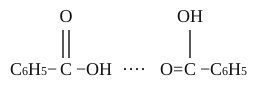 |
Choose the correct answer from the options given below :
निम्नलिखित में से कौन-से कथन सही नहीं हैं ?
| A. | जल के लिए Kb का परिमाण Kf के परिमाण से अधिक है। |
| B. | जल में अवाष्पशील विलेय मिलाने पर क्वथनांक में उन्नयन का परिमाण हिमांक में अवनमन से अधिक होता है। |
| C. | प्रोटीन तथा बहुलकों का मोलर द्रव्यमान ज्ञात करने के लिए परासरण दाब मापन को अन्य किसी भी अणुसंख्य गुणधर्म पर वरीयता दी जाती है। |
| D. | बेन्ज़ीन में बेन्ज़ोइक अम्ल का द्वितयित (dimerised) रूप है |
नीचे दिए गए विकल्पों में से सही उत्तर चुनिए :
- AA and B onlyकेवल A और B
- BA and D onlyकेवल A और D
- CA, B and D onlyकेवल A, B और D
- DA, C and D onlyकेवल A, C और D
Show answer
Concept: For water Kb = 0.52 K kg mol−1, Kf = 1.86 K kg mol−1; benzoic acid dimerises in benzene through two H-bonds (cyclic dimer).
- A: Kb (0.52) < Kf (1.86) → A is not correct.
- B: for the same molality ΔTb = 0.52 m < ΔTf = 1.86 m → B is not correct.
- C: osmotic pressure is measured at room temperature and gives a large measurable value even for very dilute solutions → preferred for proteins/polymers. C is correct.
- D: the dimer is a cyclic eight-membered ring with two O–H···O=C hydrogen bonds, not the open single-H-bond structure shown → D is not correct.
- Not correct = A, B and D. (A), (B) miss one of them; (D) wrongly includes C.
Short trick: Water: Kf ≈ 3.6 × Kb, so both A and B are false together.
Answer: (C) A, B and D only
अवधारणा: जल के लिए Kb = 0.52 K kg mol−1, Kf = 1.86 K kg mol−1; बेन्ज़ीन में बेन्ज़ोइक अम्ल दो H-आबंधों द्वारा (चक्रीय द्वितय) द्वितयित होता है।
- A: Kb (0.52) < Kf (1.86) → A सही नहीं है।
- B: समान मोललता पर ΔTb = 0.52 m < ΔTf = 1.86 m → B सही नहीं है।
- C: परासरण दाब कमरे के ताप पर मापा जाता है तथा अत्यंत तनु विलयनों में भी मापने योग्य बड़ा मान देता है → प्रोटीन/बहुलकों हेतु वरीय। C सही है।
- D: द्वितय दो O–H···O=C हाइड्रोजन आबंधों वाला आठ-सदस्यीय चक्रीय वलय है, न कि दर्शाई गई एक H-आबंध वाली खुली संरचना → D सही नहीं है।
- सही नहीं = A, B तथा D। (A), (B) में इनमें से एक छूट जाता है; (D) में C गलत रूप से शामिल है।
शॉर्ट ट्रिक: जल: Kf ≈ 3.6 × Kb, अतः A और B दोनों एक साथ असत्य हैं।
उत्तर: (C) केवल A, B और D
JEE Main 2026 (April) – Paper 1 (B.E./B.Tech)ChemistrySolutions – colligative propertiesJEE Main 2026 (April) – Paper 1 (B.E./B.Tech) 2026 · 8 Apr Shift 2
Q5.Consider the following reactions in which all the reactants and products are present in gaseous state
The value of K3 for the equilibrium is :
निम्नलिखित अभिक्रियाओं पर विचार कीजिए जिनमें सभी अभिकारक तथा उत्पाद गैसीय अवस्था में उपस्थित हैं
साम्य के लिए K3 का मान है :
- A
- B
- C
- D
Show answer
Concept: Reversing a reaction inverts K; multiplying by a factor raises K to that power; adding reactions multiplies K's.
- Reverse eq. 1 and halve it: , .
- Add eq. 2: .
- .
Short trick: .
Answer: (C)
अवधारणा: अभिक्रिया उलटने पर K व्युत्क्रम हो जाता है; किसी गुणक से गुणा करने पर K उसकी घात में; अभिक्रियाएँ जोड़ने पर K गुणा होते हैं।
- समीकरण 1 को उलटकर आधा करें: , ।
- समीकरण 2 जोड़ें: ।
- ।
शॉर्ट ट्रिक: ।
उत्तर: (C)
JEE Main 2026 (April) – Paper 1 (B.E./B.Tech)ChemistryChemical Equilibrium – combining equilibrium constantsJEE Main 2026 (April) – Paper 1 (B.E./B.Tech) 2026 · 8 Apr Shift 2
Q6.Given at 298 K :
Volt
Volt
The in Volt at 298 K is given by :
298 K पर दिया है :
Volt
Volt
298 K पर का मान (Volt में) होगा :
- A2X − 3Y
- B3Y − 2X
- C3Y + 2X
- DY + X
Show answer
Concept: Electrode potentials are not additive, but ΔG° = −nFE° is.
- Fe3+ + 3e− → Fe: ΔG°1 = −3FY.
- Fe2+ + 2e− → Fe: ΔG°2 = −2FX; reverse it: Fe → Fe2+ + 2e−, +2FX.
- Add: Fe3+ + e− → Fe2+, ΔG°3 = −3FY + 2FX = −1·F·E°3.
- E°3 = 3Y − 2X.
Short trick: n3E3 = n1E1 − n2E2 → 1·E = 3Y − 2X.
Answer: (B) 3Y − 2X
अवधारणा: इलेक्ट्रोड विभव योज्य नहीं होते, परन्तु ΔG° = −nFE° योज्य है।
- Fe3+ + 3e− → Fe: ΔG°1 = −3FY।
- Fe2+ + 2e− → Fe: ΔG°2 = −2FX; इसे उलटें: Fe → Fe2+ + 2e−, +2FX।
- जोड़ें: Fe3+ + e− → Fe2+, ΔG°3 = −3FY + 2FX = −1·F·E°3।
- E°3 = 3Y − 2X।
शॉर्ट ट्रिक: n3E3 = n1E1 − n2E2 → 1·E = 3Y − 2X।
उत्तर: (B) 3Y − 2X
JEE Main 2026 (April) – Paper 1 (B.E./B.Tech)ChemistryElectrochemistry – combining electrode potentialsJEE Main 2026 (April) – Paper 1 (B.E./B.Tech) 2026 · 8 Apr Shift 2
Q7.Given below are two statements :
R = 8.314 J K−1 mol−1 and 1 cal = 4.2 J
| Statement I : | When Ea = 12.6 kcal/mol, the room temperature rate constant is doubled by a 10 °C increase in temperature (298 K to 308 K) |
| Statement II : | For a first order reactions A → B,
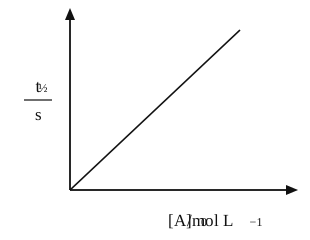 |
Here [A]o is the initial concentration of A and t½ is half life of reaction.
In the light of the above statements, choose the correct answer from the options given below :
नीचे दो कथन दिए गए हैं :
R = 8.314 J K−1 mol−1 तथा 1 cal = 4.2 J
| कथन I : | जब Ea = 12.6 kcal/mol है, तो ताप में 10 °C वृद्धि (298 K से 308 K) करने पर कमरे के ताप का वेग स्थिरांक दोगुना हो जाता है |
| कथन II : | प्रथम कोटि की अभिक्रिया A → B के लिए,
|
यहाँ [A]o, A की प्रारंभिक सांद्रता है तथा t½ अभिक्रिया की अर्ध-आयु है।
उपरोक्त कथनों के आलोक में, नीचे दिए गए विकल्पों में से सही उत्तर चुनिए :
- ABoth Statement I and Statement II are trueकथन I और कथन II दोनों सत्य हैं
- BBoth Statement I and Statement II are falseकथन I और कथन II दोनों असत्य हैं
- CStatement I is true but Statement II is falseकथन I सत्य है परन्तु कथन II असत्य है
- DStatement I is false but Statement II is trueकथन I असत्य है परन्तु कथन II सत्य है
Show answer
Concept: ; for first order , independent of [A]0.
- Ea = 12.6 × 4.2 = 52.92 kJ mol−1 = 52920 J mol−1.
- K−1.
- → k2 = 2k1. Statement I is true.
- The graph shows t½ increasing linearly with [A]0 (t½ ∝ [A]0) – that is zero-order behaviour. For first order, t½ vs [A]0 is a horizontal line. Statement II is false.
Short trick: The textbook rule ‘rate doubles per 10 °C near room temperature’ corresponds to Ea ≈ 53 kJ ≈ 12.6 kcal.
Answer: (C) Statement I is true but Statement II is false
अवधारणा: ; प्रथम कोटि के लिए , जो [A]0 पर निर्भर नहीं करती।
- Ea = 12.6 × 4.2 = 52.92 kJ mol−1 = 52920 J mol−1।
- K−1।
- → k2 = 2k1। कथन I सत्य है।
- ग्राफ में t½, [A]0 के साथ रैखिक रूप से बढ़ रही है (t½ ∝ [A]0) – यह शून्य कोटि का व्यवहार है। प्रथम कोटि के लिए t½ बनाम [A]0 क्षैतिज रेखा होती है। कथन II असत्य है।
शॉर्ट ट्रिक: ‘कमरे के ताप के निकट प्रति 10 °C पर वेग दोगुना’ वाला नियम Ea ≈ 53 kJ ≈ 12.6 kcal के संगत है।
उत्तर: (C) कथन I सत्य है परन्तु कथन II असत्य है
JEE Main 2026 (April) – Paper 1 (B.E./B.Tech)ChemistryChemical Kinetics – Arrhenius equation and half-lifeJEE Main 2026 (April) – Paper 1 (B.E./B.Tech) 2026 · 8 Apr Shift 2
Q8.Match List - I with List - II.
| List - I
Electronic configuration of neutral atom (where n = 2) | | List - II
1st Ionization Energy (kJ mol−1) |
|---|
| A. | ns2 | I. | 2080 |
| B. | ns2np1 | II. | 899 |
| C. | ns2np3 | III. | 800 |
| D. | ns2np6 | IV. | 1402 |
Choose the correct answer from the options given below :
सूची - I का सूची - II से मिलान कीजिए।
| सूची - I
उदासीन परमाणु का इलेक्ट्रॉनिक विन्यास (जहाँ n = 2) | | सूची - II
प्रथम आयनन ऊर्जा (kJ mol−1) |
|---|
| A. | ns2 | I. | 2080 |
| B. | ns2np1 | II. | 899 |
| C. | ns2np3 | III. | 800 |
| D. | ns2np6 | IV. | 1402 |
नीचे दिए गए विकल्पों में से सही उत्तर चुनिए :
- AA-II, B-III, C-IV, D-I
- BA-IV, B-III, C-II, D-I
- CA-III, B-II, C-IV, D-I
- DA-III, B-II, C-I, D-IV
Show answer
Concept: With n = 2: 2s2 = Be, 2s22p1 = B, 2s22p3 = N, 2s22p6 = Ne.
- Be (899) > B (800): the 2p electron of B is shielded by 2s and is removed more easily → A-II, B-III.
- N (1402): stable half-filled 2p3 → C-IV.
- Ne (2080): noble-gas configuration, highest in the period → D-I.
- (B) gives Be the value of N; (C), (D) swap Be and B.
Short trick: Period 2 order: Ne > N > Be > B – just sort the four values.
Answer: (A) A-II, B-III, C-IV, D-I
अवधारणा: n = 2 के साथ: 2s2 = Be, 2s22p1 = B, 2s22p3 = N, 2s22p6 = Ne।
- Be (899) > B (800): B का 2p इलेक्ट्रॉन 2s द्वारा परिरक्षित होता है तथा आसानी से निकलता है → A-II, B-III।
- N (1402): स्थायी अर्धपूरित 2p3 → C-IV।
- Ne (2080): उत्कृष्ट गैस विन्यास, आवर्त में सर्वाधिक → D-I।
- (B) में Be को N का मान दिया गया है; (C), (D) में Be और B आपस में बदल दिए गए हैं।
शॉर्ट ट्रिक: आवर्त 2 का क्रम: Ne > N > Be > B – चारों मानों को क्रम में रखें।
उत्तर: (A) A-II, B-III, C-IV, D-I
JEE Main 2026 (April) – Paper 1 (B.E./B.Tech)ChemistryPeriodic Properties – ionization enthalpy of period 2JEE Main 2026 (April) – Paper 1 (B.E./B.Tech) 2026 · 8 Apr Shift 2
Q9.Find the correct statements related to group 15 hydrides.
| A. | Reducing nature increases from NH3 to BiH3 |
| B. | Tendency to donate lone pair of electrons decreases from NH3 to BiH3 |
| C. | The stability of hydrides decreases from NH3 to BiH3 |
| D. | HEH bond angle decreases from NH3 to SbH3 (E = Elements of group 15) |
Choose the correct answer from the options given below :
वर्ग 15 के हाइड्राइडों से संबंधित सही कथन ज्ञात कीजिए।
| A. | NH3 से BiH3 तक अपचायक प्रकृति बढ़ती है |
| B. | NH3 से BiH3 तक एकाकी इलेक्ट्रॉन युग्म दान करने की प्रवृत्ति घटती है |
| C. | NH3 से BiH3 तक हाइड्राइडों का स्थायित्व घटता है |
| D. | NH3 से SbH3 तक HEH आबंध कोण घटता है (E = वर्ग 15 के तत्व) |
नीचे दिए गए विकल्पों में से सही उत्तर चुनिए :
- AA and B onlyकेवल A और B
- BB and C onlyकेवल B और C
- CA, B, C and DA, B, C और D
- DA, C and D Onlyकेवल A, C और D
Show answer
Concept: Down group 15 the E–H bond becomes longer and weaker, and the central atom becomes larger and less electronegative.
- A: weaker E–H bond → H is given up easily → reducing character NH3 < … < BiH3. True.
- B: lone pair spreads over a larger, more diffuse orbital → Lewis basicity NH3 > PH3 > … > BiH3. True.
- C: bond dissociation enthalpy falls → thermal stability decreases NH3 → BiH3. True.
- D: NH3 107.8°, PH3 93.6°, AsH3 91.8°, SbH3 91.3° → decreases. True.
- All four are correct, so (A), (B), (D) are incomplete.
Short trick: Only boiling point breaks the trend in group 15 hydrides; every other listed property changes steadily down the group.
Answer: (C) A, B, C and D
अवधारणा: वर्ग 15 में नीचे जाने पर E–H आबंध लंबा तथा दुर्बल होता है, तथा केन्द्रीय परमाणु बड़ा एवं कम विद्युतऋणात्मक होता जाता है।
- A: दुर्बल E–H आबंध → H आसानी से निकलता है → अपचायक गुण NH3 < … < BiH3। सत्य।
- B: एकाकी युग्म बड़े, विसरित कक्षक में फैल जाता है → लूइस क्षारकता NH3 > PH3 > … > BiH3। सत्य।
- C: आबंध वियोजन एन्थैल्पी घटती है → तापीय स्थायित्व NH3 → BiH3 घटता है। सत्य।
- D: NH3 107.8°, PH3 93.6°, AsH3 91.8°, SbH3 91.3° → घटता है। सत्य।
- चारों कथन सही हैं, अतः (A), (B), (D) अपूर्ण हैं।
शॉर्ट ट्रिक: वर्ग 15 के हाइड्राइडों में केवल क्वथनांक प्रवृत्ति तोड़ता है; सूचीबद्ध अन्य सभी गुण वर्ग में नीचे क्रमशः बदलते हैं।
उत्तर: (C) A, B, C और D
JEE Main 2026 (April) – Paper 1 (B.E./B.Tech)Chemistryp-Block – group 15 hydridesJEE Main 2026 (April) – Paper 1 (B.E./B.Tech) 2026 · 8 Apr Shift 2
Q10.Given below are two statements :
| Statement I : | The number of pairs among [Ti4+, V2+], [V2+, Mn2+], [Mn2+, Fe3+] and [V2+, Cr2+] in which both ions are coloured is 3. |
| Statement II : | The number of pairs among [La3+, Yb2+], [Lu3+, Ce4+] and [Ac3+, Lr3+] ions in which both are diamagnetic is 3. |
In the light of the above statements, choose the correct from the options given below :
नीचे दो कथन दिए गए हैं :
| कथन I : | युग्मों [Ti4+, V2+], [V2+, Mn2+], [Mn2+, Fe3+] तथा [V2+, Cr2+] में से ऐसे युग्मों की संख्या, जिनमें दोनों आयन रंगीन हैं, 3 है। |
| कथन II : | युग्मों [La3+, Yb2+], [Lu3+, Ce4+] तथा [Ac3+, Lr3+] आयनों में से ऐसे युग्मों की संख्या, जिनमें दोनों प्रतिचुंबकीय (diamagnetic) हैं, 3 है। |
उपरोक्त कथनों के आलोक में, नीचे दिए गए विकल्पों में से सही चुनिए :
- ABoth Statement I and Statement II are correctकथन I और कथन II दोनों सही हैं
- BBoth Statement I and Statement II are incorrectकथन I और कथन II दोनों गलत हैं
- CStatement I is correct but Statement II is incorrectकथन I सही है परन्तु कथन II गलत है
- DStatement I is incorrect but Statement II is correctकथन I गलत है परन्तु कथन II सही है
Show answer
Concept: d0/d10 ions are colourless; ions with f0/f14 (and no unpaired d) are diamagnetic.
- Statement I: Ti4+ (3d0) colourless → pair 1 fails. V2+ (3d3, violet), Mn2+ (3d5, pink), Fe3+ (3d5, yellow), Cr2+ (3d4, blue) are all coloured → pairs 2, 3, 4 qualify = 3. True.
- Statement II: La3+ 4f0, Yb2+ 4f14; Lu3+ 4f14, Ce4+ 4f0; Ac3+ 5f0, Lr3+ 5f14 – every ion has no unpaired electron → all 3 pairs diamagnetic. True.
Short trick: Lanthanoid/actinoid ions that are isoelectronic with La3+/Lu3+ (f0 or f14) are always diamagnetic.
Answer: (A) Both Statement I and Statement II are correct
अवधारणा: d0/d10 आयन रंगहीन होते हैं; f0/f14 वाले (तथा बिना अयुग्मित d) आयन प्रतिचुंबकीय होते हैं।
- कथन I: Ti4+ (3d0) रंगहीन → युग्म 1 असफल। V2+ (3d3, बैंगनी), Mn2+ (3d5, गुलाबी), Fe3+ (3d5, पीला), Cr2+ (3d4, नीला) सभी रंगीन हैं → युग्म 2, 3, 4 = 3। सत्य।
- कथन II: La3+ 4f0, Yb2+ 4f14; Lu3+ 4f14, Ce4+ 4f0; Ac3+ 5f0, Lr3+ 5f14 – किसी आयन में अयुग्मित इलेक्ट्रॉन नहीं → तीनों युग्म प्रतिचुंबकीय। सत्य।
शॉर्ट ट्रिक: f0 या f14 वाले लैन्थेनॉयड/ऐक्टिनॉयड आयन सदैव प्रतिचुंबकीय होते हैं।
उत्तर: (A) कथन I और कथन II दोनों सही हैं
JEE Main 2026 (April) – Paper 1 (B.E./B.Tech)Chemistryd- and f-Block – colour and magnetic behaviour of ionsJEE Main 2026 (April) – Paper 1 (B.E./B.Tech) 2026 · 8 Apr Shift 2
Q11.Given below are two statements for catalytic properties of transition metals.
| Statement I : | First row transition metals which act as catalyst utilise their 3d electrons only for formation of bonds between reactant molecules and atoms on the surface of catalyst. |
| Statement II : | There is increase in the concentration of reactants on the surface of catalyst which strengthens the bonds in reacting molecules. |
In the light of the above statements, choose the correct answer from the options given below :
संक्रमण धातुओं के उत्प्रेरकीय गुणों के लिए नीचे दो कथन दिए गए हैं।
| कथन I : | उत्प्रेरक के रूप में कार्य करने वाली प्रथम पंक्ति की संक्रमण धातुएँ अभिकारक अणुओं तथा उत्प्रेरक की सतह के परमाणुओं के बीच आबंध बनाने के लिए केवल अपने 3d इलेक्ट्रॉनों का उपयोग करती हैं। |
| कथन II : | उत्प्रेरक की सतह पर अभिकारकों की सांद्रता में वृद्धि होती है जो अभिक्रियक अणुओं के आबंधों को प्रबल बनाती है। |
उपरोक्त कथनों के आलोक में, नीचे दिए गए विकल्पों में से सही उत्तर चुनिए :
- ABoth Statement I and Statement II are correctकथन I और कथन II दोनों सही हैं
- BBoth Statement I and Statement II are incorrectकथन I और कथन II दोनों गलत हैं
- CStatement I is correct but Statement II is incorrectकथन I सही है परन्तु कथन II गलत है
- DStatement I is incorrect but Statement II is correctकथन I गलत है परन्तु कथन II सही है
Show answer
Concept: Transition-metal surfaces adsorb reactants by forming bonds with them, which raises the surface concentration and weakens bonds in the reactants.
- Statement I: first-row metals (e.g. Fe, Ni) use both their 3d and 4s electrons to form these surface bonds – not 3d only. Incorrect.
- Statement II: the concentration of reactants at the surface does increase, but the bonds in the reacting molecules are weakened (lowering activation energy), not strengthened. Incorrect.
Short trick: A catalyst that strengthened reactant bonds would slow the reaction – the word ‘strengthens’ alone makes II false.
Answer: (B) Both Statement I and Statement II are incorrect
अवधारणा: संक्रमण धातु की सतह अभिकारकों से आबंध बनाकर उन्हें अधिशोषित करती है, जिससे सतह पर सांद्रता बढ़ती है और अभिकारकों के आबंध दुर्बल होते हैं।
- कथन I: प्रथम पंक्ति की धातुएँ (जैसे Fe, Ni) इन सतही आबंधों के लिए अपने 3d तथा 4s दोनों इलेक्ट्रॉनों का उपयोग करती हैं – केवल 3d नहीं। गलत।
- कथन II: सतह पर अभिकारकों की सांद्रता बढ़ती है, परन्तु अभिक्रियक अणुओं के आबंध दुर्बल होते हैं (सक्रियण ऊर्जा घटती है), प्रबल नहीं। गलत।
शॉर्ट ट्रिक: यदि उत्प्रेरक अभिकारक आबंधों को प्रबल करे तो अभिक्रिया धीमी होगी – केवल ‘प्रबल’ शब्द से ही II असत्य है।
उत्तर: (B) कथन I और कथन II दोनों गलत हैं
JEE Main 2026 (April) – Paper 1 (B.E./B.Tech)Chemistryd-Block – catalytic properties of transition metalsJEE Main 2026 (April) – Paper 1 (B.E./B.Tech) 2026 · 8 Apr Shift 2
Q12.Given below are two statements :
| Statement I : | Vapours of the liquid with higher boiling point condense before vapours of the liquid with lower boiling points in fractional distillation. |
| Statement II : | The vapours rising up in the fractionating column become richer in high boiling component of the mixture. |
In the light of the above statements, choose the correct answer from the options given below :
नीचे दो कथन दिए गए हैं :
| कथन I : | प्रभाजी आसवन में उच्च क्वथनांक वाले द्रव की वाष्प, निम्न क्वथनांक वाले द्रव की वाष्प से पहले संघनित होती है। |
| कथन II : | प्रभाजी स्तंभ में ऊपर उठती वाष्प मिश्रण के उच्च क्वथनांक वाले घटक में समृद्ध होती जाती है। |
उपरोक्त कथनों के आलोक में, नीचे दिए गए विकल्पों में से सही उत्तर चुनिए :
- ABoth Statement I and Statement II are trueकथन I और कथन II दोनों सत्य हैं
- BBoth Statement I and Statement II are falseकथन I और कथन II दोनों असत्य हैं
- CStatement I is true but Statement II is falseकथन I सत्य है परन्तु कथन II असत्य है
- DStatement I is false but Statement II is trueकथन I असत्य है परन्तु कथन II सत्य है
Show answer
Concept: In a fractionating column repeated condensation–vaporisation occurs on the packing.
- Statement I: the higher-boiling liquid's vapour condenses first (at higher temperature) on the column surfaces. True.
- Statement II: since the higher-boiling component keeps condensing and running back, the vapour going up becomes richer in the low-boiling component. False.
Short trick: What reaches the top of the column (and distils first) is the more volatile, low-boiling liquid.
Answer: (C) Statement I is true but Statement II is false
अवधारणा: प्रभाजी स्तंभ की भराई पर बार-बार संघनन–वाष्पन होता है।
- कथन I: उच्च क्वथनांक वाले द्रव की वाष्प (उच्च ताप पर) स्तंभ की सतहों पर पहले संघनित होती है। सत्य।
- कथन II: चूँकि उच्च क्वथनांक वाला घटक संघनित होकर नीचे लौटता रहता है, ऊपर जाती वाष्प निम्न क्वथनांक वाले घटक में समृद्ध होती है। असत्य।
शॉर्ट ट्रिक: स्तंभ के शीर्ष तक (और पहले आसवित होकर) अधिक वाष्पशील, निम्न क्वथनांक वाला द्रव ही पहुँचता है।
उत्तर: (C) कथन I सत्य है परन्तु कथन II असत्य है
JEE Main 2026 (April) – Paper 1 (B.E./B.Tech)ChemistryPurification of Organic Compounds – fractional distillationJEE Main 2026 (April) – Paper 1 (B.E./B.Tech) 2026 · 8 Apr Shift 2
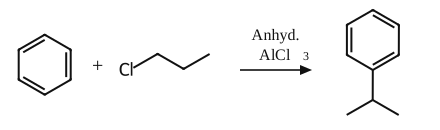
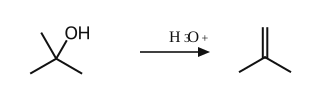
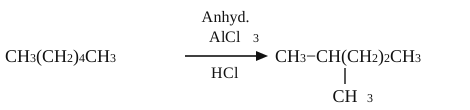
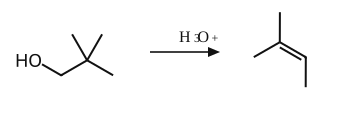
Q13.The major product of which of the following reaction is not obtained by rearrangement reaction ?
निम्नलिखित में से किस अभिक्रिया का मुख्य उत्पाद पुनर्विन्यास अभिक्रिया द्वारा प्राप्त नहीं होता है ?
- A
- B
- C
- D
Show answer
Concept: A rearrangement occurs when an initially formed carbocation shifts H−/CH3− to give a more stable one.
- (A) CH3CH2CH2Cl/AlCl3: the 1° carbocation undergoes a 1,2-H shift to the 2° isopropyl cation → cumene. Rearranged.
- (B) (CH3)3C–OH/H3O+: loss of water gives the 3° tert-butyl cation directly; loss of H+ gives (CH3)2C=CH2 with the same skeleton. No rearrangement.
- (C) n-hexane + AlCl3/HCl → 2-methylpentane: isomerisation of the carbon skeleton through carbocation shifts. Rearranged.
- (D) neopentyl alcohol: the 1° cation undergoes a 1,2-CH3 shift to a 3° cation → 2-methylbut-2-ene. Rearranged.
Short trick: If the carbon skeleton of product = skeleton of reactant and the first cation is already 3°, there is no rearrangement.
Answer: (B) tert-butyl alcohol → 2-methylpropene
अवधारणा: पुनर्विन्यास तब होता है जब प्रारम्भ में बना कार्बधनायन H−/CH3− का स्थानांतरण करके अधिक स्थायी कार्बधनायन बनाता है।
- (A) CH3CH2CH2Cl/AlCl3: 1° कार्बधनायन 1,2-H विस्थापन द्वारा 2° आइसोप्रोपिल धनायन बनाता है → क्यूमीन। पुनर्विन्यासित।
- (B) (CH3)3C–OH/H3O+: जल निकलने पर सीधे 3° tert-ब्यूटिल धनायन बनता है; H+ निकलने से समान ढाँचे वाला (CH3)2C=CH2 बनता है। कोई पुनर्विन्यास नहीं।
- (C) n-हेक्सेन + AlCl3/HCl → 2-मेथिलपेन्टेन: कार्बधनायन विस्थापनों द्वारा कार्बन ढाँचे का समावयवीकरण। पुनर्विन्यासित।
- (D) निओपेन्टिल ऐल्कोहॉल: 1° धनायन 1,2-CH3 विस्थापन द्वारा 3° धनायन बनाता है → 2-मेथिलब्यूट-2-ईन। पुनर्विन्यासित।
शॉर्ट ट्रिक: यदि उत्पाद का कार्बन ढाँचा अभिकारक के समान है तथा प्रथम धनायन पहले से 3° है, तो पुनर्विन्यास नहीं होता।
उत्तर: (B) tert-ब्यूटिल ऐल्कोहॉल → 2-मेथिलप्रोपीन
JEE Main 2026 (April) – Paper 1 (B.E./B.Tech)ChemistryCarbocation RearrangementJEE Main 2026 (April) – Paper 1 (B.E./B.Tech) 2026 · 8 Apr Shift 2
Q14.The total number of aromatic compounds/species from the following is
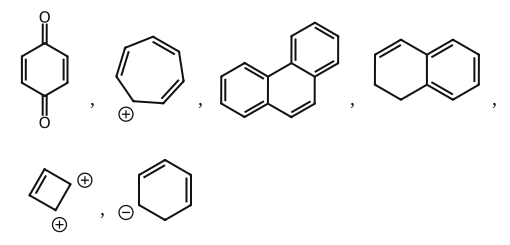
निम्नलिखित में से ऐरोमैटिक यौगिकों/स्पीशीज़ की कुल संख्या है
- A6
- B4
- C3
- D5
Show answer
Concept: Aromatic = cyclic, planar, fully conjugated ring with (4n + 2) π electrons; a compound containing such a ring is aromatic.
- p-Benzoquinone: the ring π electrons are cross-conjugated with the two C=O groups; it has no aromatic sextet → non-aromatic.
- Tropylium ion: 7 sp2 C, 6π → aromatic.
- Phenanthrene: 14π, fully conjugated fused benzenoid → aromatic.
- 1,2-Dihydronaphthalene: contains an intact benzene ring (6π) → aromatic compound.
- Cyclobutadienyl dication: 4 sp2 C, 2π (n = 0) → aromatic.
- Cyclohexadienyl anion: one sp3 CH2 breaks the cyclic conjugation → non-aromatic.
- Aromatic = tropylium, phenanthrene, dihydronaphthalene, cyclobutadienyl dication = 4.
Short trick: First reject any ring with an sp3 carbon in it (unless another ring is benzenoid), then apply 4n + 2.
Answer: (B) 4
अवधारणा: ऐरोमैटिक = चक्रीय, समतलीय, पूर्णतः संयुग्मित वलय जिसमें (4n + 2) π इलेक्ट्रॉन हों; ऐसा वलय रखने वाला यौगिक ऐरोमैटिक होता है।
- p-बेन्ज़ोक्विनोन: वलय के π इलेक्ट्रॉन दो C=O समूहों के साथ क्रॉस-संयुग्मित हैं; कोई ऐरोमैटिक षष्टक नहीं → अनैरोमैटिक।
- ट्रोपिलियम आयन: 7 sp2 C, 6π → ऐरोमैटिक।
- फ़िनैन्थ्रीन: 14π, पूर्णतः संयुग्मित संगलित बेन्ज़ीनॉइड → ऐरोमैटिक।
- 1,2-डाइहाइड्रोनैफ़्थेलीन: इसमें अक्षुण्ण बेन्ज़ीन वलय (6π) है → ऐरोमैटिक यौगिक।
- साइक्लोब्यूटाडाइनिल द्विधनायन: 4 sp2 C, 2π (n = 0) → ऐरोमैटिक।
- साइक्लोहेक्साडाइनिल ऋणायन: एक sp3 CH2 चक्रीय संयुग्मन को तोड़ता है → अनैरोमैटिक।
- ऐरोमैटिक = ट्रोपिलियम, फ़िनैन्थ्रीन, डाइहाइड्रोनैफ़्थेलीन, साइक्लोब्यूटाडाइनिल द्विधनायन = 4।
शॉर्ट ट्रिक: पहले sp3 कार्बन वाले वलयों को हटाइए (जब तक कोई अन्य बेन्ज़ीनॉइड वलय न हो), फिर 4n + 2 लगाइए।
उत्तर: (B) 4
JEE Main 2026 (April) – Paper 1 (B.E./B.Tech)ChemistryAromaticity – Hückel ruleJEE Main 2026 (April) – Paper 1 (B.E./B.Tech) 2026 · 8 Apr Shift 2
Q15.n-Butane on monochlorination under photochemical condition gives an optically active compound “P”. “P” on further chlorination gives dichloro compounds.
The number of dichloro compounds obtained (ignore stereoisomers) is :
n-ब्यूटेन प्रकाशरासायनिक परिस्थिति में एकलक्लोरीनन पर एक ध्रुवण घूर्णक (optically active) यौगिक “P” देता है। “P” आगे क्लोरीनन पर डाइक्लोरो यौगिक देता है।
प्राप्त डाइक्लोरो यौगिकों की संख्या (त्रिविम समावयवियों को छोड़कर) है :
- A3
- B4
- C5
- D6
Show answer
Concept: The only chiral monochloro-butane is 2-chlorobutane; replace each distinct H in it by Cl.
- P = CH3–CHCl–CH2–CH3 (2-chlorobutane, chiral C-2).
- Cl at C-1 → 1,2-dichlorobutane.
- Cl at C-2 → 2,2-dichlorobutane.
- Cl at C-3 → 2,3-dichlorobutane.
- Cl at C-4 → 1,3-dichlorobutane.
- 4 structurally different dichloro compounds.
Short trick: Number of structural dichloro products from P = number of carbon atoms that still carry H = 4.
Answer: (B) 4
अवधारणा: केवल 2-क्लोरोब्यूटेन ही काइरल मोनोक्लोरोब्यूटेन है; इसके प्रत्येक भिन्न H को Cl से प्रतिस्थापित करें।
- P = CH3–CHCl–CH2–CH3 (2-क्लोरोब्यूटेन, काइरल C-2)।
- C-1 पर Cl → 1,2-डाइक्लोरोब्यूटेन।
- C-2 पर Cl → 2,2-डाइक्लोरोब्यूटेन।
- C-3 पर Cl → 2,3-डाइक्लोरोब्यूटेन।
- C-4 पर Cl → 1,3-डाइक्लोरोब्यूटेन।
- 4 संरचनात्मक रूप से भिन्न डाइक्लोरो यौगिक।
शॉर्ट ट्रिक: P से संरचनात्मक डाइक्लोरो उत्पादों की संख्या = H वाले कार्बन परमाणुओं की संख्या = 4।
उत्तर: (B) 4
JEE Main 2026 (April) – Paper 1 (B.E./B.Tech)ChemistryAlkanes – free-radical chlorinationJEE Main 2026 (April) – Paper 1 (B.E./B.Tech) 2026 · 8 Apr Shift 2
Q16.Given below are two statements :
| Statement I : | Due to increase in van der Waals forces, the order of boiling points is CH3CH2CH2I > CH3CH2I > CH3I . |
| Statement II : | As 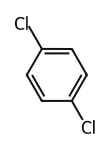 is more symmetric, its melting point is higher than 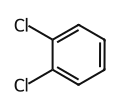 , however its boiling point is lower than |
In the light of the above statements, choose the correct answer from the options given below :
नीचे दो कथन दिए गए हैं :
| कथन I : | वान्डरवाल्स बलों में वृद्धि के कारण क्वथनांकों का क्रम CH3CH2CH2I > CH3CH2I > CH3I है। |
| कथन II : | चूँकि अधिक सममित है, इसका गलनांक से अधिक है, तथापि इसका क्वथनांक से कम है |
उपरोक्त कथनों के आलोक में, नीचे दिए गए विकल्पों में से सही उत्तर चुनिए :
- ABoth Statement I and Statement II are trueकथन I और कथन II दोनों सत्य हैं
- BBoth Statement I and Statement II are falseकथन I और कथन II दोनों असत्य हैं
- CStatement I is true but Statement II is falseकथन I सत्य है परन्तु कथन II असत्य है
- DStatement I is false but Statement II is trueकथन I असत्य है परन्तु कथन II सत्य है
Show answer
Concept: Boiling point rises with molecular size (van der Waals forces); melting point rises with symmetry (better packing in the crystal).
- Statement I: 1-iodopropane (375 K) > iodoethane (345 K) > iodomethane (315 K) – larger molecule, stronger dispersion forces. True.
- Statement II: p-dichlorobenzene is symmetrical and packs better → m.p. 326 K vs 256 K for o-isomer. Its b.p. (447 K) is lower than that of the polar o-isomer (453 K). True.
Short trick: para isomer: highest m.p. (symmetry); ortho isomer: highest b.p. (largest dipole).
Answer: (A) Both Statement I and Statement II are true
अवधारणा: आण्विक आकार (वान्डरवाल्स बल) बढ़ने पर क्वथनांक बढ़ता है; सममिति बढ़ने पर (क्रिस्टल में बेहतर संकुलन) गलनांक बढ़ता है।
- कथन I: 1-आयोडोप्रोपेन (375 K) > आयोडोएथेन (345 K) > आयोडोमेथेन (315 K) – बड़ा अणु, प्रबल परिक्षेपण बल। सत्य।
- कथन II: p-डाइक्लोरोबेन्ज़ीन सममित है तथा बेहतर संकुलित होता है → गलनांक 326 K, जबकि o-समावयवी का 256 K। इसका क्वथनांक (447 K) ध्रुवीय o-समावयवी (453 K) से कम है। सत्य।
शॉर्ट ट्रिक: पैरा समावयवी: सर्वाधिक गलनांक (सममिति); ऑर्थो समावयवी: सर्वाधिक क्वथनांक (सबसे बड़ा द्विध्रुव)।
उत्तर: (A) कथन I और कथन II दोनों सत्य हैं
JEE Main 2026 (April) – Paper 1 (B.E./B.Tech)ChemistryHaloalkanes and Haloarenes – physical propertiesJEE Main 2026 (April) – Paper 1 (B.E./B.Tech) 2026 · 8 Apr Shift 2
Q17.Consider the following reaction.
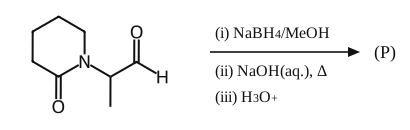
The major product (P) formed is :
निम्नलिखित अभिक्रिया पर विचार कीजिए।
बनने वाला मुख्य उत्पाद (P) है :
- A
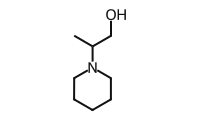
- B
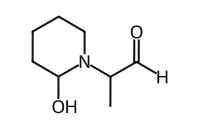
- C
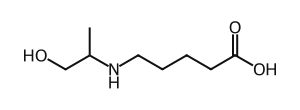
- D
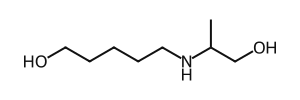
Show answer
Concept: NaBH4 reduces aldehydes/ketones but not amides; hot aqueous NaOH hydrolyses an amide (lactam) to carboxylate + amine.
- (i) NaBH4/MeOH: only –CHO → –CH2OH; the lactam C=O is untouched.
- (ii) NaOH(aq), Δ: the cyclic amide (piperidin-2-one) ring opens → −OOC–(CH2)4–NH–CH(CH3)–CH2OH.
- (iii) H3O+: carboxylate → COOH, giving HOOC–(CH2)4–NH–CH(CH3)–CH2OH – option (C).
- (A) needs reduction of the amide C=O (NaBH4 cannot); (B) reduces the amide instead of the aldehyde; (D) has the acid reduced to CH2OH.
Short trick: NaBH4 touches only CHO/C=O of aldehyde-ketone; NaOH/Δ opens the lactam – count: one CH2OH + one COOH + NH.
Answer: (C) HOOC(CH2)4NHCH(CH3)CH2OH
अवधारणा: NaBH4 ऐल्डिहाइड/कीटोन को अपचयित करता है परन्तु ऐमाइड को नहीं; गर्म जलीय NaOH ऐमाइड (लैक्टम) को कार्बोक्सिलेट + ऐमीन में जल-अपघटित करता है।
- (i) NaBH4/MeOH: केवल –CHO → –CH2OH; लैक्टम का C=O अप्रभावित रहता है।
- (ii) NaOH(aq), Δ: चक्रीय ऐमाइड (पिपेरिडिन-2-ओन) वलय खुलता है → −OOC–(CH2)4–NH–CH(CH3)–CH2OH।
- (iii) H3O+: कार्बोक्सिलेट → COOH, जिससे HOOC–(CH2)4–NH–CH(CH3)–CH2OH – विकल्प (C) बनता है।
- (A) के लिए ऐमाइड C=O का अपचयन चाहिए (NaBH4 नहीं कर सकता); (B) में ऐल्डिहाइड के स्थान पर ऐमाइड अपचयित है; (D) में अम्ल CH2OH में अपचयित दिखाया गया है।
शॉर्ट ट्रिक: NaBH4 केवल ऐल्डिहाइड-कीटोन के C=O पर; NaOH/Δ लैक्टम खोलता है – गिनें: एक CH2OH + एक COOH + NH।
उत्तर: (C) HOOC(CH2)4NHCH(CH3)CH2OH
JEE Main 2026 (April) – Paper 1 (B.E./B.Tech)ChemistryAmides – chemoselective reduction and lactam hydrolysisJEE Main 2026 (April) – Paper 1 (B.E./B.Tech) 2026 · 8 Apr Shift 2
Q18.Which statements are True ?
| A. | In Hoffmann bromamide degradation, 4 moles of NaOH and 2 moles of Br2 are consumed per mole of an amide |
| B. | Hoffmann bromamide reaction is not given by alkyl amides. |
| C. | Primary amines can be synthesized by Hoffmann bromamide degradation. |
| D. | Secondary amide on reaction with Br2 and NaOH will give secondary amine. |
| E. | The by-products of Hoffmann degradation are Na2CO3, NaBr and H2O. |
Choose the correct answer from the options given below :
कौन-से कथन सत्य हैं ?
| A. | हॉफमान ब्रोमैमाइड निम्नीकरण में प्रति मोल ऐमाइड 4 मोल NaOH तथा 2 मोल Br2 उपभुक्त होते हैं |
| B. | हॉफमान ब्रोमैमाइड अभिक्रिया ऐल्किल ऐमाइडों द्वारा नहीं दी जाती। |
| C. | प्राथमिक ऐमीनों का संश्लेषण हॉफमान ब्रोमैमाइड निम्नीकरण द्वारा किया जा सकता है। |
| D. | द्वितीयक ऐमाइड Br2 तथा NaOH से अभिक्रिया पर द्वितीयक ऐमीन देगा। |
| E. | हॉफमान निम्नीकरण के उपोत्पाद Na2CO3, NaBr तथा H2O हैं। |
नीचे दिए गए विकल्पों में से सही उत्तर चुनिए :
- AA, C and E onlyकेवल A, C और E
- BB, C and D onlyकेवल B, C और D
- CC and E onlyकेवल C और E
- DC, D and E onlyकेवल C, D और E
Show answer
Concept: RCONH2 + Br2 + 4NaOH → RNH2 + Na2CO3 + 2NaBr + 2H2O.
- A: 4 mol NaOH but only 1 mol Br2 per mol amide → false.
- B: alkyl amides (e.g. CH3CONH2 → CH3NH2) do give the reaction → false.
- C: the product is a primary amine with one C less → true.
- D: the reaction needs two N–H hydrogens (N-bromination, then loss of HBr to form the nitrene/isocyanate); a secondary amide cannot give it → false.
- E: by-products Na2CO3, NaBr and H2O → true.
- True = C and E only; (A) includes A, (B) includes B and D, (D) includes D.
Short trick: Remember the balanced equation – 1 Br2 : 4 NaOH, works only for –CONH2.
Answer: (C) C and E only
अवधारणा: RCONH2 + Br2 + 4NaOH → RNH2 + Na2CO3 + 2NaBr + 2H2O।
- A: प्रति मोल ऐमाइड 4 mol NaOH परन्तु केवल 1 mol Br2 → असत्य।
- B: ऐल्किल ऐमाइड (जैसे CH3CONH2 → CH3NH2) यह अभिक्रिया देते हैं → असत्य।
- C: उत्पाद एक कार्बन कम वाली प्राथमिक ऐमीन है → सत्य।
- D: अभिक्रिया के लिए N पर दो H चाहिए (N-ब्रोमीनन, फिर HBr निकलकर नाइट्रीन/आइसोसायनेट); द्वितीयक ऐमाइड यह नहीं दे सकता → असत्य।
- E: उपोत्पाद Na2CO3, NaBr तथा H2O → सत्य।
- सत्य = केवल C और E; (A) में A, (B) में B और D, (D) में D शामिल है।
शॉर्ट ट्रिक: संतुलित समीकरण याद रखें – 1 Br2 : 4 NaOH, केवल –CONH2 के लिए।
उत्तर: (C) केवल C और E
JEE Main 2026 (April) – Paper 1 (B.E./B.Tech)ChemistryAmines – Hoffmann bromamide degradationJEE Main 2026 (April) – Paper 1 (B.E./B.Tech) 2026 · 8 Apr Shift 2
Q19.The incorrect statement from the following with respect to carbohydrates is :
कार्बोहाइड्रेटों के संबंध में निम्नलिखित में से गलत कथन है :
- AAll monosaccharides are reducing sugars.सभी मोनोसैकेराइड अपचायी शर्कराएँ हैं।
- BThe monosaccharide units obtained from hydrolysis of oligosaccharides are always the same.ओलिगोसैकेराइडों के जल-अपघटन से प्राप्त मोनोसैकेराइड इकाइयाँ सदैव समान होती हैं।
- CStarch and cellulose are typical examples of polysaccharides, which are very high molecular weight compounds of more than ten monosaccharide units.स्टार्च तथा सेलुलोस पॉलिसैकेराइडों के प्रारूपिक उदाहरण हैं, जो दस से अधिक मोनोसैकेराइड इकाइयों वाले अत्यंत उच्च अणुभार के यौगिक हैं।
- DOpen chain and cyclic structures co-exist at equilibrium that are responsible for certain properties as in the case of D−(+)−glucose.विवृत शृंखला तथा चक्रीय संरचनाएँ साम्य पर सह-अस्तित्व में रहती हैं जो कुछ गुणों के लिए उत्तरदायी हैं, जैसे D−(+)−ग्लूकोस के मामले में।
Show answer
Concept: Oligosaccharides give 2–10 monosaccharide units on hydrolysis; these may be the same or different.
- (A) Every monosaccharide has a free aldehyde/α-hydroxy-ketone group (via the open chain) → reduces Tollens'/Fehling's. Correct.
- (B) Sucrose → glucose + fructose; lactose → glucose + galactose. The units need not be the same → incorrect.
- (C) Starch and cellulose are polysaccharides of a large number of glucose units. Correct.
- (D) Glucose exists as α/β-pyranose in equilibrium with a small amount of open chain, explaining mutarotation and its reactions. Correct.
Short trick: ‘always’ in a biomolecule statement is usually the trap – sucrose is the counter-example.
Answer: (B) The monosaccharide units obtained from hydrolysis of oligosaccharides are always the same.
अवधारणा: ओलिगोसैकेराइड जल-अपघटन पर 2–10 मोनोसैकेराइड इकाइयाँ देते हैं; ये समान या भिन्न हो सकती हैं।
- (A) प्रत्येक मोनोसैकेराइड में (विवृत शृंखला द्वारा) मुक्त ऐल्डिहाइड/α-हाइड्रॉक्सी-कीटोन समूह होता है → टॉलेन/फेलिंग को अपचयित करता है। सही।
- (B) सुक्रोस → ग्लूकोस + फ्रक्टोस; लैक्टोस → ग्लूकोस + गैलेक्टोस। इकाइयाँ समान होना आवश्यक नहीं → गलत।
- (C) स्टार्च तथा सेलुलोस बहुत अधिक ग्लूकोस इकाइयों वाले पॉलिसैकेराइड हैं। सही।
- (D) ग्लूकोस α/β-पाइरेनोस रूप में थोड़ी विवृत शृंखला के साथ साम्य में रहता है, जो परिवर्ती घूर्णन तथा इसकी अभिक्रियाओं को समझाता है। सही।
शॉर्ट ट्रिक: जैव-अणु कथनों में ‘सदैव’ प्रायः जाल होता है – सुक्रोस इसका प्रति-उदाहरण है।
उत्तर: (B) ओलिगोसैकेराइडों के जल-अपघटन से प्राप्त मोनोसैकेराइड इकाइयाँ सदैव समान होती हैं।
JEE Main 2026 (April) – Paper 1 (B.E./B.Tech)ChemistryBiomolecules – carbohydratesJEE Main 2026 (April) – Paper 1 (B.E./B.Tech) 2026 · 8 Apr Shift 2
Q20.Which of the following amino acid will give violet coloured complex with neutral ferric chloride solution ?
निम्नलिखित में से कौन-सा ऐमीनो अम्ल उदासीन फेरिक क्लोराइड विलयन के साथ बैंगनी रंग का संकुल देगा ?
- AThreonineथ्रिओनीन (Threonine)
- BSerineसेरीन (Serine)
- CTyrosineटाइरोसीन (Tyrosine)
- DCysteineसिस्टीन (Cysteine)
Show answer
Concept: Neutral FeCl3 gives a violet complex with a phenolic (Ar–OH) group.
- Tyrosine has a p-hydroxyphenyl side chain (–CH2–C6H4–OH) → violet colour.
- Threonine and serine have alcoholic –OH, cysteine has –SH; none is phenolic → no violet colour.
Short trick: FeCl3 violet = phenol; the only phenolic amino acid is tyrosine.
Answer: (C) Tyrosine
अवधारणा: उदासीन FeCl3 फ़ीनॉलिक (Ar–OH) समूह के साथ बैंगनी संकुल देता है।
- टाइरोसीन में p-हाइड्रॉक्सीफ़ेनिल पार्श्व शृंखला (–CH2–C6H4–OH) है → बैंगनी रंग।
- थ्रिओनीन तथा सेरीन में ऐल्कोहॉलीय –OH तथा सिस्टीन में –SH है; कोई भी फ़ीनॉलिक नहीं → बैंगनी रंग नहीं।
शॉर्ट ट्रिक: FeCl3 बैंगनी = फ़ीनॉल; एकमात्र फ़ीनॉलिक ऐमीनो अम्ल टाइरोसीन है।
उत्तर: (C) टाइरोसीन
JEE Main 2026 (April) – Paper 1 (B.E./B.Tech)ChemistryBiomolecules – amino acids, phenol testJEE Main 2026 (April) – Paper 1 (B.E./B.Tech) 2026 · 8 Apr Shift 2

