Q21.The magnetic field inside a 200 turns solenoid of radius 10 cm is Tesla. If the solenoid carries a current of 0.29 A, then the length of the solenoid is _____ cm.
10 cm त्रिज्या की 200 फेरों वाली परिनालिका के भीतर चुंबकीय क्षेत्र टेस्ला है। यदि परिनालिका में 0.29 A की धारा प्रवाहित हो, तो परिनालिका की लंबाई _____ cm है।
Show answer
Concept: Field inside a long solenoid: .
- m.
- m.
- cm, so the required value is 8. (The radius is not needed.)
Answer: 8
अवधारणा: लंबी परिनालिका के भीतर क्षेत्र: ।
- m।
- m।
- cm, अतः अभीष्ट मान 8 है। (त्रिज्या की आवश्यकता नहीं है।)
उत्तर: 8
JEE Main 2025 (January) – Paper 1 (B.E./B.Tech)PhysicsMoving Charges and Magnetism – solenoidJEE Main 2025 (January) – Paper 1 (B.E./B.Tech) 2025 · 29 Jan Shift 2
Q22.A parallel plate capacitor consisting of two circular plates of radius 10 cm is being charged by a constant current of 0.15 A. If the rate of change of potential difference between the plates is V/s then the integer value of the distance between the parallel plates is _____ m.
10 cm त्रिज्या की दो वृत्ताकार पट्टिकाओं से बने समांतर पट्टिका संधारित्र को 0.15 A की नियत धारा से आवेशित किया जा रहा है। यदि पट्टिकाओं के बीच विभवांतर के परिवर्तन की दर V/s हो, तो समांतर पट्टिकाओं के बीच की दूरी का पूर्णांक मान _____ m है।
Show answer
Concept: For a capacitor being charged, with , so .
- m.
- m.
- Numerator ; so m.
- m.
Answer: 1320
अवधारणा: आवेशित होते संधारित्र के लिए तथा , अतः ।
- m।
- m।
- अंश ; अतः m।
- m।
उत्तर: 1320
JEE Main 2025 (January) – Paper 1 (B.E./B.Tech)PhysicsElectromagnetic Waves – charging capacitorJEE Main 2025 (January) – Paper 1 (B.E./B.Tech) 2025 · 29 Jan Shift 2
Q23.Two planets, and are orbiting a common star in circular orbits of radii and , respectively, with . The planet is times more massive than planet . The ratio of angular momentum of planet to that of planet is closest to integer _____.
दो ग्रह तथा एक ही तारे की परिक्रमा क्रमशः तथा त्रिज्याओं की वृत्तीय कक्षाओं में कर रहे हैं, जहाँ । ग्रह का द्रव्यमान ग्रह से गुना है। ग्रह के कोणीय संवेग तथा ग्रह के कोणीय संवेग का अनुपात निकटतम पूर्णांक _____ है।
Show answer
Concept: For a circular orbit of radius about a star of mass : , so , i.e. .
- .
- .
Answer: 8
अवधारणा: द्रव्यमान के तारे के चारों ओर त्रिज्या की वृत्तीय कक्षा के लिए: , अतः , अर्थात् ।
- ।
- ।
उत्तर: 8
JEE Main 2025 (January) – Paper 1 (B.E./B.Tech)PhysicsGravitation – angular momentum in circular orbitsJEE Main 2025 (January) – Paper 1 (B.E./B.Tech) 2025 · 29 Jan Shift 2
Q24.Two cars P and Q are moving on a road in the same direction. Accleration of car P increases linearly with time whereas car Q moves with a constant accleration. Both cars cross each other at time , for the first time. The maximum possible number of crossing(s) (including the crossing at ) is _____.
दो कारें P तथा Q एक सड़क पर एक ही दिशा में चल रही हैं। कार P का त्वरण समय के साथ रैखिक रूप से बढ़ता है जबकि कार Q नियत त्वरण से चलती है। दोनों कारें पहली बार समय पर एक-दूसरे को पार करती हैं। पार करने (crossing) की अधिकतम संभव संख्या ( वाले क्रॉसिंग सहित) _____ है।
Show answer
Concept: Count the roots of the relative displacement. P: gives a cubic position in ; Q: constant acceleration gives a quadratic position.
- and (same position at ).
- Relative displacement: .
- A crossing occurs at every root of : plus at most two more (positive) roots of the quadratic bracket.
- Hence the maximum possible number of crossings .
Short trick: Cubic relative displacement ⇒ at most 3 real roots ⇒ at most 3 crossings.
Answer: 3
अवधारणा: आपेक्षिक विस्थापन के मूलों (roots) की गिनती करें। P: से स्थिति में त्रिघाती; Q: नियत त्वरण से स्थिति द्विघाती।
- तथा ( पर समान स्थिति)।
- आपेक्षिक विस्थापन: ।
- के प्रत्येक मूल पर एक क्रॉसिंग होती है: तथा द्विघाती कोष्ठक के अधिकतम दो और (धनात्मक) मूल।
- अतः क्रॉसिंग की अधिकतम संभव संख्या ।
शॉर्ट ट्रिक: त्रिघाती आपेक्षिक विस्थापन ⇒ अधिकतम 3 वास्तविक मूल ⇒ अधिकतम 3 क्रॉसिंग।
उत्तर: 3
JEE Main 2025 (January) – Paper 1 (B.E./B.Tech)PhysicsKinematics – relative motionJEE Main 2025 (January) – Paper 1 (B.E./B.Tech) 2025 · 29 Jan Shift 2
Q25.A physical quantity is related to four observables as follows : where, ; ; and , then the percentage error in is , where = _____.
एक भौतिक राशि चार प्रेक्षणीय राशियों से इस प्रकार संबंधित है : , जहाँ ; ; तथा है। तब में प्रतिशत त्रुटि है, जहाँ = _____।
Show answer
Concept: For , the maximum fractional error is .
- ; ; ; .
- Percentage error in .
- Given this equals : .
Answer: 7700
अवधारणा: के लिए अधिकतम भिन्नात्मक त्रुटि होती है।
- ; ; ; ।
- में प्रतिशत त्रुटि ।
- दिया है कि यह के बराबर है: ।
उत्तर: 7700
JEE Main 2025 (January) – Paper 1 (B.E./B.Tech)PhysicsUnits and Measurements – error analysisJEE Main 2025 (January) – Paper 1 (B.E./B.Tech) 2025 · 29 Jan Shift 2
Q26.An electric dipole of mass m, charge q, and length is placed in a uniform electric field . When the dipole is rotated slightly from its equilibrium position and released, the time period of its oscillations will be:
द्रव्यमान m, आवेश q तथा लंबाई का एक विद्युत द्विध्रुव एकसमान विद्युत क्षेत्र में रखा गया है। द्विध्रुव को उसकी साम्यावस्था से थोड़ा-सा घुमाकर छोड़ दिया जाए, तो उसके दोलनों का आवर्तकाल होगा:
- A
- B
- C
- D
Show answer
Concept: A dipole displaced by a small angle in a uniform field feels a restoring torque , giving angular SHM with .
- Here , and the dipole is the usual model of point charges of mass at the two ends of a massless rod of length , so .
Short trick: Dipole in a uniform field is a torsional pendulum: — only and are needed.
Answer: (D)
अवधारणा: एकसमान क्षेत्र में छोटे कोण से विस्थापित द्विध्रुव पर प्रत्यानयन बल-आघूर्ण लगता है, जिससे कोणीय सरल आवर्त गति होती है और ।
- यहाँ तथा द्विध्रुव का सामान्य मॉडल — द्रव्यमानहीन, लंबाई की छड़ के सिरों पर द्रव्यमान के बिंदु आवेश — लेने पर ।
शॉर्ट ट्रिक: एकसमान क्षेत्र में द्विध्रुव एक मरोड़ी लोलक (torsional pendulum) है: — केवल और चाहिए।
उत्तर: (D)
JEE Main 2025 (January) – Paper 1 (B.E./B.Tech)PhysicsElectrostatics – oscillations of a dipoleJEE Main 2025 (January) – Paper 1 (B.E./B.Tech) 2025 · 29 Jan Shift 1
Q27.A coil of area A and N turns is rotating with angular velocity in a uniform magnetic field about an axis perpendicular to . Magnetic flux and induced emf across it, at an instant when is parallel to the plane of coil, are :
क्षेत्रफल A तथा N फेरों वाली एक कुंडली, एकसमान चुंबकीय क्षेत्र में के लंबवत अक्ष के परितः कोणीय वेग से घूम रही है। जिस क्षण कुंडली के तल के समांतर है, उस क्षण उसमें चुंबकीय फ्लक्स तथा प्रेरित विद्युत वाहक बल होंगे :
- A
- B
- C
- D
Show answer
Concept: For a rotating coil, and — flux and emf are out of phase.
- When is parallel to the plane of the coil, the normal of the coil is perpendicular to , so .
- At the same instant , so the emf is maximum: .
Short trick: Flux zero emf maximum (and vice-versa).
Answer: (C)
अवधारणा: घूर्णी कुंडली के लिए तथा — फ्लक्स और विद्युत वाहक बल में का कलांतर होता है।
- जब कुंडली के तल के समांतर है, तब कुंडली का अभिलंब के लंबवत है, अतः ।
- उसी क्षण , अतः विद्युत वाहक बल अधिकतम है: ।
शॉर्ट ट्रिक: फ्लक्स शून्य विद्युत वाहक बल अधिकतम (और इसका विलोम भी)।
उत्तर: (C)
JEE Main 2025 (January) – Paper 1 (B.E./B.Tech)PhysicsElectromagnetic Induction – rotating coilJEE Main 2025 (January) – Paper 1 (B.E./B.Tech) 2025 · 29 Jan Shift 1
Q28.Given below are two statements : one is labelled as Assertion (A) and the other is labelled as Reason (R).
Assertion (A) : Choke coil is simply a coil having a large inductance but a small resistance. Choke coils are used with fluorescent mercury-tube fittings. If household electric power is directly connected to a mercury tube, the tube will be damaged.
Reason (R) : By using the choke coil, the voltage across the tube is reduced by a factor , where is frequency of the supply across resistor and inductor L. If the choke coil were not used, the voltage across the resistor would be the same as the applied voltage.
In the light of the above statements, choose the most appropriate answer from the options given below :
नीचे दो कथन दिए गए हैं : एक को अभिकथन (A) तथा दूसरे को कारण (R) कहा गया है।
अभिकथन (A) : चोक कुंडली वास्तव में बड़े प्रेरकत्व परंतु छोटे प्रतिरोध वाली एक कुंडली होती है। चोक कुंडलियाँ प्रतिदीप्त मरकरी-ट्यूब फिटिंग के साथ प्रयोग की जाती हैं। यदि घरेलू विद्युत शक्ति को सीधे मरकरी ट्यूब से जोड़ दिया जाए, तो ट्यूब क्षतिग्रस्त हो जाएगी।
कारण (R) : चोक कुंडली के प्रयोग से ट्यूब के सिरों पर वोल्टता गुणांक से कम हो जाती है, जहाँ प्रतिरोधक तथा प्रेरक L पर लगी सप्लाई की आवृत्ति है। यदि चोक कुंडली का प्रयोग न किया जाए, तो प्रतिरोधक पर वोल्टता अनुप्रयुक्त वोल्टता के बराबर होगी।
उपर्युक्त कथनों के आलोक में, नीचे दिए गए विकल्पों में से सबसे उपयुक्त उत्तर चुनिए :
- A(A) is true but (R) is false(A) सत्य है परंतु (R) असत्य है
- BBoth (A) and (R) are true and (R) is the correct explanation of (A)(A) तथा (R) दोनों सत्य हैं और (R), (A) की सही व्याख्या है
- C(A) is false but (R) is true(A) असत्य है परंतु (R) सत्य है
- DBoth (A) and (R) are true but (R) is not the correct explanation of (A)(A) तथा (R) दोनों सत्य हैं परंतु (R), (A) की सही व्याख्या नहीं है
Show answer
Concept: In a series L–R circuit on AC, the voltage divides between the inductor and the resistor; , while an ideal choke consumes almost no power.
- (A) is true: a choke has large L and small resistance, and connecting the mains directly would drive excessive voltage/current through the tube and damage it.
- (R) is true: with the choke in series, the tube (resistor) gets only the fraction of the applied voltage; without the choke it would get the full applied voltage.
- (R) states exactly why the choke protects the tube, so it correctly explains (A).
Answer: (B) Both (A) and (R) are true and (R) is the correct explanation of (A)
अवधारणा: AC पर श्रेणी L–R परिपथ में वोल्टता प्रेरक और प्रतिरोधक में बँट जाती है; , जबकि आदर्श चोक लगभग कोई शक्ति व्यय नहीं करती।
- (A) सत्य है: चोक में बड़ा L और छोटा प्रतिरोध होता है, तथा मेन्स को सीधे जोड़ने पर ट्यूब में अत्यधिक वोल्टता/धारा जाकर उसे क्षतिग्रस्त कर देगी।
- (R) सत्य है: श्रेणी में चोक लगाने पर ट्यूब (प्रतिरोधक) को अनुप्रयुक्त वोल्टता का केवल अंश मिलता है; चोक के बिना पूरी अनुप्रयुक्त वोल्टता मिलती।
- (R) ठीक वही कारण बताता है जिससे चोक ट्यूब की रक्षा करती है, अतः (R), (A) की सही व्याख्या है।
उत्तर: (B) (A) तथा (R) दोनों सत्य हैं और (R), (A) की सही व्याख्या है
JEE Main 2025 (January) – Paper 1 (B.E./B.Tech)PhysicsAlternating Current – choke coilJEE Main 2025 (January) – Paper 1 (B.E./B.Tech) 2025 · 29 Jan Shift 1
Q29.As shown below, bob A of a pendulum having massless string of length '
' is released from
to the vertical. It hits another bob B of half the mass that is at rest on a friction less table in the center. Assuming elastic collision, the magnitude of the velocity of bob A after the collision will be (take g as acceleration due to gravity.)
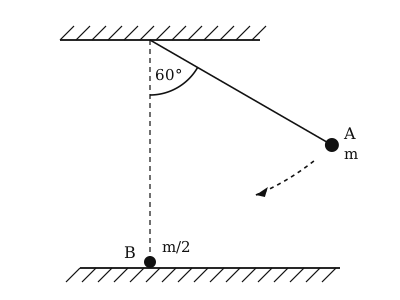
जैसा कि नीचे दिखाया गया है, '
' लंबाई की द्रव्यमानहीन डोरी वाले लोलक के गोलक A को ऊर्ध्वाधर से
पर छोड़ा जाता है। यह केंद्र में घर्षणरहित मेज पर विराम में रखे, आधे द्रव्यमान के दूसरे गोलक B से टकराता है। संघट्ट को प्रत्यास्थ मानते हुए, संघट्ट के बाद गोलक A के वेग का परिमाण होगा (g को गुरुत्वीय त्वरण लीजिए।)
- A
- B
- C
- D
Show answer
Concept: Energy conservation on the circular descent gives the speed before impact; in a 1-D elastic collision, .
- Height fallen: , so .
- Elastic collision of mass (A) with mass (B) at rest: .
- .
Short trick: For target mass half the projectile mass, the projectile keeps of its speed.
Answer: (D)
अवधारणा: वृत्तीय अवरोहण में ऊर्जा संरक्षण से टक्कर से ठीक पहले की चाल मिलती है; एकविमीय प्रत्यास्थ संघट्ट में ।
- गिरी हुई ऊँचाई: , अतः ।
- विराम में रखे द्रव्यमान (B) से द्रव्यमान (A) का प्रत्यास्थ संघट्ट: ।
- ।
शॉर्ट ट्रिक: लक्ष्य का द्रव्यमान प्रक्षेप्य का आधा हो, तो प्रक्षेप्य अपनी चाल का भाग बनाए रखता है।
उत्तर: (D)
JEE Main 2025 (January) – Paper 1 (B.E./B.Tech)PhysicsWork, Energy and Power – elastic collisionJEE Main 2025 (January) – Paper 1 (B.E./B.Tech) 2025 · 29 Jan Shift 1
Q30.Given below are two statements : one is labelled as Assertion (A) and the other is labelled as Reason (R).
Assertion (A) : Electromagnetic waves carry energy but not momentum.
Reason (R) : Mass of a photon is zero.
In the light of the above statements, choose the most appropriate answer from the options given below :
नीचे दो कथन दिए गए हैं : एक को अभिकथन (A) तथा दूसरे को कारण (R) कहा गया है।
अभिकथन (A) : विद्युत चुंबकीय तरंगें ऊर्जा का वहन करती हैं परंतु संवेग का नहीं।
कारण (R) : फोटॉन का द्रव्यमान शून्य होता है।
उपर्युक्त कथनों के आलोक में, नीचे दिए गए विकल्पों में से सबसे उपयुक्त उत्तर चुनिए :
- ABoth (A) and (R) are true and (R) is the correct explanation of (A)(A) तथा (R) दोनों सत्य हैं और (R), (A) की सही व्याख्या है
- BBoth (A) and (R) are true but (R) is not the correct explanation of (A)(A) तथा (R) दोनों सत्य हैं परंतु (R), (A) की सही व्याख्या नहीं है
- C(A) is false but (R) is true(A) असत्य है परंतु (R) सत्य है
- D(A) is true but (R) is false(A) सत्य है परंतु (R) असत्य है
Show answer
Concept: Electromagnetic waves carry both energy and momentum ; a photon, though of zero rest mass, has momentum .
- (A) is false — EM waves do transport momentum (this is why light exerts radiation pressure).
- (R) is true — the rest mass of a photon is zero.
Short trick: Radiation pressure of sunlight is direct proof that EM waves carry momentum.
Answer: (C) (A) is false but (R) is true
अवधारणा: विद्युत चुंबकीय तरंगें ऊर्जा और संवेग दोनों का वहन करती हैं; फोटॉन का विराम द्रव्यमान शून्य होते हुए भी उसका संवेग होता है।
- (A) असत्य है — विद्युत चुंबकीय तरंगें संवेग का वहन करती हैं (इसी कारण प्रकाश विकिरण दाब डालता है)।
- (R) सत्य है — फोटॉन का विराम द्रव्यमान शून्य होता है।
शॉर्ट ट्रिक: सूर्य के प्रकाश का विकिरण दाब इसका प्रत्यक्ष प्रमाण है कि विद्युत चुंबकीय तरंगें संवेग ले जाती हैं।
उत्तर: (C) (A) असत्य है परंतु (R) सत्य है
JEE Main 2025 (January) – Paper 1 (B.E./B.Tech)PhysicsElectromagnetic Waves – energy and momentumJEE Main 2025 (January) – Paper 1 (B.E./B.Tech) 2025 · 29 Jan Shift 1
Q31.Two projectiles are fired with same initial speed from same point on ground at angles of and , respectively, with the horizontal direction. The ratio of their maximum heights attained is :
दो प्रक्षेप्य, भूमि पर एक ही बिंदु से समान प्रारंभिक चाल से क्षैतिज दिशा से क्रमशः तथा कोणों पर दागे जाते हैं। उनके द्वारा प्राप्त अधिकतम ऊँचाइयों का अनुपात है :
- A
- B
- C
- D
Show answer
Concept: Maximum height , so .
- Using : .
- Similarly .
- .
Short trick: Complementary launch angles have equal ranges but heights in the ratio .
Answer: (B)
अवधारणा: अधिकतम ऊँचाई , अतः ।
- से: ।
- इसी प्रकार ।
- ।
शॉर्ट ट्रिक: पूरक प्रक्षेपण कोणों की परास बराबर होती है परंतु ऊँचाइयाँ के अनुपात में होती हैं।
उत्तर: (B)
JEE Main 2025 (January) – Paper 1 (B.E./B.Tech)PhysicsKinematics – projectile motionJEE Main 2025 (January) – Paper 1 (B.E./B.Tech) 2025 · 29 Jan Shift 1
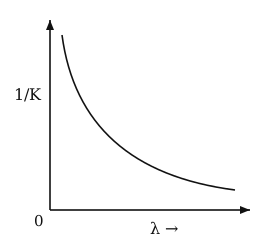
Q32.If and are de Broglie wavelength and kinetic energy, respectively, of a particle with constant mass. The correct graphical representation for the particle will be
यदि नियत द्रव्यमान वाले किसी कण की डी ब्रॉग्ली तरंगदैर्घ्य तथा गतिज ऊर्जा क्रमशः तथा हैं, तो कण के लिए सही आलेखीय निरूपण होगा
- A
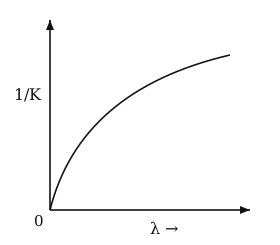
- B
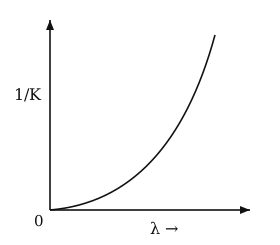
- C
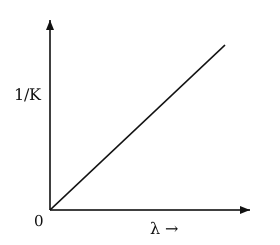
- D
Show answer
Concept: De Broglie wavelength , so and .
- : the graph of versus is a parabola through the origin, rising with increasing slope (concave up).
- Option (A) saturates (concave down), (C) is a straight line () and (D) decreases — all wrong; only (B) shows .
Short trick: — a parabola, not a line.
Answer: (B)
अवधारणा: डी ब्रॉग्ली तरंगदैर्घ्य , अतः और ।
- : के सापेक्ष का आलेख मूल बिंदु से गुजरती हुई, बढ़ती ढाल वाली (ऊपर की ओर अवतल) परवलय है।
- विकल्प (A) संतृप्त होता है (नीचे की ओर अवतल), (C) सरल रेखा है () और (D) घटता है — ये सभी गलत हैं; केवल (B) में है।
शॉर्ट ट्रिक: — परवलय, सरल रेखा नहीं।
उत्तर: (B)
JEE Main 2025 (January) – Paper 1 (B.E./B.Tech)PhysicsDual Nature of Matter – de Broglie wavelengthJEE Main 2025 (January) – Paper 1 (B.E./B.Tech) 2025 · 29 Jan Shift 1
Q33.Given below are two statements : one is labelled as Assertion (A) and the other is labelled as Reason (R).
Assertion (A) : Emission of electrons in photoelectric effect can be suppressed by applying a sufficiently negative electron potential to the photoemissive substance.
Reason (R) : A negative electric potential, which stops the emission of electrons from the surface of a photoemissive substance, varies linearly with frequency of incident radiation.
In the light of the above statements, choose the most appropriate answer from the options given below :
नीचे दो कथन दिए गए हैं : एक को अभिकथन (A) तथा दूसरे को कारण (R) कहा गया है।
अभिकथन (A) : प्रकाश-विद्युत प्रभाव में इलेक्ट्रॉनों के उत्सर्जन को, प्रकाश-उत्सर्जक पदार्थ पर पर्याप्त ऋणात्मक इलेक्ट्रॉन विभव लगाकर रोका जा सकता है।
कारण (R) : ऋणात्मक विद्युत विभव, जो प्रकाश-उत्सर्जक पदार्थ की सतह से इलेक्ट्रॉनों का उत्सर्जन रोक देता है, आपतित विकिरण की आवृत्ति के साथ रैखिकतः परिवर्तित होता है।
उपर्युक्त कथनों के आलोक में, नीचे दिए गए विकल्पों में से सबसे उपयुक्त उत्तर चुनिए :
- A(A) is false but (R) is true(A) असत्य है परंतु (R) सत्य है
- B(A) is true but (R) is false(A) सत्य है परंतु (R) असत्य है
- CBoth (A) and (R) are true and (R) is the correct explanation of (A)(A) तथा (R) दोनों सत्य हैं और (R), (A) की सही व्याख्या है
- DBoth (A) and (R) are true but (R) is not the correct explanation of (A)(A) तथा (R) दोनों सत्य हैं परंतु (R), (A) की सही व्याख्या नहीं है
Show answer
Concept: The stopping potential satisfies , so photoemission can be cut off by a sufficiently negative potential, and varies linearly with the frequency .
- (A) is true: making the emitting surface sufficiently negative (retarding potential equal to the stopping potential) suppresses the emission of photoelectrons.
- (R) is true: from , the stopping potential is a linear function of frequency.
- But (R) only describes how the stopping potential depends on frequency; it does not explain why emission is suppressed. So (R) is not the correct explanation of (A).
Answer: (D) Both (A) and (R) are true but (R) is not the correct explanation of (A)
अवधारणा: निरोधी विभव के लिए , अतः पर्याप्त ऋणात्मक विभव से प्रकाश-विद्युत उत्सर्जन रोका जा सकता है, तथा आवृत्ति के साथ रैखिकतः बदलता है।
- (A) सत्य है: उत्सर्जक सतह को पर्याप्त ऋणात्मक (निरोधी विभव के बराबर मंदक विभव) करने पर प्रकाश-इलेक्ट्रॉनों का उत्सर्जन रुक जाता है।
- (R) सत्य है: से, निरोधी विभव आवृत्ति का रैखिक फलन है।
- परंतु (R) केवल यह बताता है कि निरोधी विभव आवृत्ति पर कैसे निर्भर करता है; यह उत्सर्जन रुकने का कारण नहीं बताता। अतः (R), (A) की सही व्याख्या नहीं है।
उत्तर: (D) (A) तथा (R) दोनों सत्य हैं परंतु (R), (A) की सही व्याख्या नहीं है
JEE Main 2025 (January) – Paper 1 (B.E./B.Tech)PhysicsDual Nature of Matter – photoelectric effectJEE Main 2025 (January) – Paper 1 (B.E./B.Tech) 2025 · 29 Jan Shift 1
Q34.Consider a long straight wire of a circular cross-section (radius a) carrying a steady current I. The current is uniformly distributed across this cross-section. The distances from the centre of the wire's cross-section at which the magnetic field [inside the wire, outside the wire] is half of the maximum possible magnetic field, any where due to the wire, will be
वृत्ताकार अनुप्रस्थ काट (त्रिज्या a) के एक लंबे सीधे तार पर विचार कीजिए जिसमें अपरिवर्ती धारा I प्रवाहित है। धारा इस अनुप्रस्थ काट पर एकसमान रूप से वितरित है। तार के अनुप्रस्थ काट के केंद्र से वे दूरियाँ, जिन पर चुंबकीय क्षेत्र [तार के भीतर, तार के बाहर], तार के कारण कहीं भी संभव अधिकतम चुंबकीय क्षेत्र का आधा है, होंगी
- A
- B
- C
- D
Show answer
Concept: By Ampere's law, inside the wire () and outside (); the field is maximum at the surface, .
- Inside: .
- Outside: .
Short trick: inside, outside half-field at and .
Answer: (C)
अवधारणा: ऐम्पियर के नियम से, तार के भीतर () तथा बाहर (); क्षेत्र सतह पर अधिकतम होता है, ।
- भीतर: ।
- बाहर: ।
शॉर्ट ट्रिक: भीतर , बाहर आधा क्षेत्र और पर।
उत्तर: (C)
JEE Main 2025 (January) – Paper 1 (B.E./B.Tech)PhysicsMoving Charges and Magnetism – Ampere's lawJEE Main 2025 (January) – Paper 1 (B.E./B.Tech) 2025 · 29 Jan Shift 1
Q35.At the interface between two materials having refractive indices and , the critical angle for reflection of an em wave is . The material is replaced by another material having refractive index such that the critical angle at the interface between and materials is . If ; and , then is
अपवर्तनांक तथा वाले दो पदार्थों के अंतरापृष्ठ पर, विद्युत चुंबकीय तरंग के परावर्तन के लिए क्रांतिक कोण है। पदार्थ को अपवर्तनांक वाले दूसरे पदार्थ से इस प्रकार बदला जाता है कि तथा पदार्थों के अंतरापृष्ठ पर क्रांतिक कोण है। यदि ; तथा हो, तो है
- A
- B
- C
- D
Show answer
Concept: For light going from the denser to the rarer medium, the critical angle satisfies . Here is the rarer medium in both cases.
- and .
- Given :
- , i.e. .
Short trick: — one substitution finishes the problem.
Answer: (C)
अवधारणा: सघन से विरल माध्यम में जाते प्रकाश के लिए क्रांतिक कोण से मिलता है। यहाँ दोनों स्थितियों में विरल माध्यम है।
- तथा ।
- दिया है :
- , अर्थात ।
शॉर्ट ट्रिक: — एक प्रतिस्थापन से ही हल पूरा।
उत्तर: (C)
JEE Main 2025 (January) – Paper 1 (B.E./B.Tech)PhysicsRay Optics – total internal reflectionJEE Main 2025 (January) – Paper 1 (B.E./B.Tech) 2025 · 29 Jan Shift 1
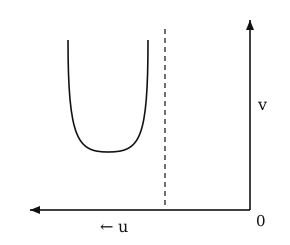
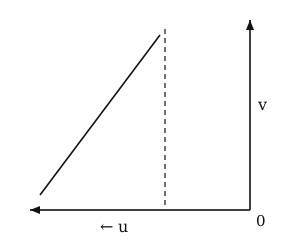
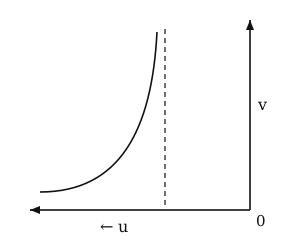
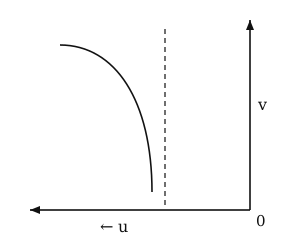
Q36.Let u and v be the distances of the object and the image from a lens of focal length . The correct graphical representation of u and v for a convex lens when , is
माना किसी फोकस दूरी के लेंस से वस्तु तथा प्रतिबिंब की दूरियाँ क्रमशः u तथा v हैं। उत्तल लेंस के लिए, जब हो, u तथा v का सही आलेखीय निरूपण है
- A
- B
- C
- D
Show answer
Concept: For a convex lens, gives (with negative). For the image is real ().
- As , : the curve starts near for far-away objects.
- As , : the curve shoots up along the dashed line (vertical asymptote).
- So increases slowly and then diverges as approaches — the rising curve with a vertical asymptote, graph (C). Graph (A) (U-shape) and (D) (decreasing) contradict this behaviour, and (B) (straight line) has no asymptote.
Short trick: Object at infinity image at focus; object at focus image at infinity — only (C) shows both limits.
Answer: (C)
अवधारणा: उत्तल लेंस के लिए से (जहाँ ऋणात्मक है)। के लिए प्रतिबिंब वास्तविक होता है ()।
- जब , तब : दूर की वस्तुओं के लिए वक्र के पास से प्रारंभ होता है।
- जब , तब : वक्र बिंदीदार रेखा (ऊर्ध्वाधर अनंतस्पर्शी) के साथ ऊपर चढ़ जाता है।
- अतः के की ओर आने पर धीरे-धीरे बढ़कर अनंत की ओर जाता है — ऊर्ध्वाधर अनंतस्पर्शी वाला बढ़ता वक्र, आलेख (C)। आलेख (A) (U-आकृति) और (D) (घटता) इस व्यवहार के विपरीत हैं, तथा (B) (सरल रेखा) में अनंतस्पर्शी नहीं है।
शॉर्ट ट्रिक: अनंत पर वस्तु फोकस पर प्रतिबिंब; फोकस पर वस्तु अनंत पर प्रतिबिंब — दोनों सीमाएँ केवल (C) में हैं।
उत्तर: (C)
JEE Main 2025 (January) – Paper 1 (B.E./B.Tech)PhysicsRay Optics – lens: u–v graphJEE Main 2025 (January) – Paper 1 (B.E./B.Tech) 2025 · 29 Jan Shift 1
Q37.Match List - I with List - II.
| List - I | List - II |
|---|
| (A) Electric field inside (distance from center) of a uniformly charged spherical shell with surface charge density , and radius . | (I) |
| (B) Electric field at distance from a uniformly charged infinite plane sheet with surface charge density . | (II) |
| (C) Electric field outside (distance from center) of a uniformly charged spherical shell with surface charge density , and radius . | (III) |
| (D) Electric field between 2 oppositely charged infinite plane parallel sheets with uniform surface charge density . | (IV) |
Choose the correct answer from the options given below :
सूची-I का सूची-II से मिलान कीजिए।
| सूची - I | सूची - II |
|---|
| (A) पृष्ठ आवेश घनत्व तथा त्रिज्या वाले एकसमान आवेशित गोलीय कोश के भीतर (केंद्र से दूरी पर) विद्युत क्षेत्र। | (I) |
| (B) पृष्ठ आवेश घनत्व वाली एकसमान आवेशित अनंत समतल चादर से दूरी पर विद्युत क्षेत्र। | (II) |
| (C) पृष्ठ आवेश घनत्व तथा त्रिज्या वाले एकसमान आवेशित गोलीय कोश के बाहर (केंद्र से दूरी पर) विद्युत क्षेत्र। | (III) |
| (D) एकसमान पृष्ठ आवेश घनत्व वाली 2 विपरीत आवेशित अनंत समतल समांतर चादरों के बीच विद्युत क्षेत्र। | (IV) |
नीचे दिए गए विकल्पों में से सही उत्तर चुनिए :
- A(A)-(III), (B)-(II), (C)-(IV), (D)-(I)
- B(A)-(IV), (B)-(II), (C)-(III), (D)-(I)
- C(A)-(II), (B)-(I), (C)-(IV), (D)-(III)
- D(A)-(IV), (B)-(I), (C)-(III), (D)-(II)
Show answer
Concept: Standard Gauss's-law results for a shell and for charged sheets.
- (A) Inside a uniformly charged shell, → (III).
- (B) Infinite charged sheet: , independent of distance → (II).
- (C) Outside the shell, with , i.e. → (IV).
- (D) Between two oppositely charged parallel sheets the fields add: → (I).
Short trick: Shell: 0 inside, point-charge-like outside; sheet: ; capacitor-like pair: .
Answer: (A) (A)-(III), (B)-(II), (C)-(IV), (D)-(I)
अवधारणा: गोलीय कोश और आवेशित चादरों के लिए गाउस के नियम के मानक परिणाम।
- (A) एकसमान आवेशित कोश के भीतर → (III)।
- (B) अनंत आवेशित चादर: , दूरी पर निर्भर नहीं → (II)।
- (C) कोश के बाहर , जहाँ , अर्थात → (IV)।
- (D) दो विपरीत आवेशित समांतर चादरों के बीच क्षेत्र जुड़ते हैं: → (I)।
शॉर्ट ट्रिक: कोश: भीतर 0, बाहर बिंदु-आवेश जैसा; चादर: ; संधारित्र जैसी जोड़ी: ।
उत्तर: (A) (A)-(III), (B)-(II), (C)-(IV), (D)-(I)
JEE Main 2025 (January) – Paper 1 (B.E./B.Tech)PhysicsElectrostatics – Gauss's lawJEE Main 2025 (January) – Paper 1 (B.E./B.Tech) 2025 · 29 Jan Shift 1
Q38.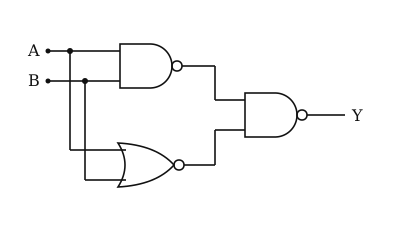
For the circuit shown above, equivalent GATE is :
ऊपर दर्शाए गए परिपथ के लिए, तुल्य गेट (GATE) है :
- AOR gateOR गेट
- BNAND gateNAND गेट
- CNOT gateNOT गेट
- DAND gateAND गेट
Show answer
Concept: Write the Boolean output stage by stage: the top gate is NAND, the bottom gate is NOR, and their outputs feed a NAND.
- Top: ; Bottom: .
- (De Morgan, and is absorbed in ).
- Truth check: inputs ; — exactly OR.
Short trick: NAND of (NAND, NOR) OR, since .
Answer: (A) OR gate
अवधारणा: चरण-दर-चरण बूलीय आउटपुट लिखिए: ऊपरी गेट NAND है, निचला गेट NOR है, तथा इनके आउटपुट एक NAND में जाते हैं।
- ऊपर: ; नीचे: ।
- (डी मॉर्गन, तथा , में समाहित हो जाता है)।
- सत्य-सारणी जाँच: निवेश ; — ठीक OR।
शॉर्ट ट्रिक: (NAND, NOR) का NAND OR, क्योंकि ।
उत्तर: (A) OR गेट
JEE Main 2025 (January) – Paper 1 (B.E./B.Tech)PhysicsSemiconductors – logic gatesJEE Main 2025 (January) – Paper 1 (B.E./B.Tech) 2025 · 29 Jan Shift 1
Q39.The expression given below shows the variation of velocity with time , . The dimension of is :
नीचे दिया गया व्यंजक वेग का समय के साथ परिवर्तन दर्शाता है, । की विमा है :
- A
- B
- C
- D
Show answer
Concept: Every term added to must have the dimensions of velocity , and quantities added together () must have the same dimensions.
- .
- , so .
- .
Short trick: sits with → it is a time; then is just a velocity.
Answer: (D)
अवधारणा: में जुड़ने वाले प्रत्येक पद की विमाएँ वेग की होनी चाहिए, तथा जोड़े जाने वाली राशियों () की विमाएँ समान होनी चाहिए।
- ।
- , अतः ।
- ।
शॉर्ट ट्रिक: , के साथ जुड़ा है → यह समय है; तब केवल वेग है।
उत्तर: (D)
JEE Main 2025 (January) – Paper 1 (B.E./B.Tech)PhysicsUnits and Dimensions – dimensional analysisJEE Main 2025 (January) – Paper 1 (B.E./B.Tech) 2025 · 29 Jan Shift 1
Q40.The workdone in an adiabatic change in an ideal gas depends upon only :
आदर्श गैस में रुद्धोष्म परिवर्तन में किया गया कार्य केवल निर्भर करता है :
- Achange in its temperatureउसके ताप में परिवर्तन पर
- Bchange in its volumeउसके आयतन में परिवर्तन पर
- Cchange in its pressureउसके दाब में परिवर्तन पर
- Dchange in its specific heatउसकी विशिष्ट ऊष्मा में परिवर्तन पर
Show answer
Concept: In an adiabatic process , so by the first law , and for an ideal gas .
- .
- With and fixed for the given gas, is determined solely by the change in temperature; pressure or volume changes matter only through .
Short trick: .
Answer: (A) change in its temperature
अवधारणा: रुद्धोष्म प्रक्रम में , अतः ऊष्मागतिकी के प्रथम नियम से , तथा आदर्श गैस के लिए ।
- ।
- दी गई गैस के लिए और नियत होने से, केवल ताप-परिवर्तन से निर्धारित होता है; दाब या आयतन का परिवर्तन केवल के माध्यम से प्रभाव डालता है।
शॉर्ट ट्रिक: ।
उत्तर: (A) उसके ताप में परिवर्तन पर
JEE Main 2025 (January) – Paper 1 (B.E./B.Tech)PhysicsThermodynamics – adiabatic processJEE Main 2025 (January) – Paper 1 (B.E./B.Tech) 2025 · 29 Jan Shift 1

