Q1.Consider the equilibrium CO(g) + 3H2(g) ⇌ CH4(g) + H2O(g)
If the pressure applied over the system increases by two fold at constant temperature then
(A) Concentration of reactants and products increases.
(B) Equilibrium will shift in forward direction.
(C) Equilibrium constant increases since concentration of products increases.
(D) Equilibrium constant remains unchanged as concentration of reactants and products remain same.
Choose the correct answer from the options given below :
साम्य CO(g) + 3H2(g) ⇌ CH4(g) + H2O(g) पर विचार कीजिए।
यदि स्थिर ताप पर निकाय पर लगाया गया दाब दोगुना कर दिया जाए, तो
(A) अभिकारकों तथा उत्पादों की सांद्रता बढ़ती है।
(B) साम्य अग्र दिशा में विस्थापित होगा।
(C) साम्य स्थिरांक बढ़ता है क्योंकि उत्पादों की सांद्रता बढ़ती है।
(D) साम्य स्थिरांक अपरिवर्तित रहता है क्योंकि अभिकारकों तथा उत्पादों की सांद्रता समान रहती है।
नीचे दिए गए विकल्पों में से सही उत्तर चुनिए :
- A(A), (B) and (C) onlyकेवल (A), (B) और (C)
- B(A) and (B) onlyकेवल (A) और (B)
- C(A), (B) and (D) onlyकेवल (A), (B) और (D)
- D(B) and (C) onlyकेवल (B) और (C)
Show answer
Concept: Doubling the pressure at constant temperature halves the volume, so every concentration (mol/V) rises. Le Chatelier then pushes the equilibrium toward the side with fewer gas moles; the equilibrium constant depends only on temperature.
- Volume is halved → concentration of every species doubles instantly → (A) is correct.
- Moles of gas: reactants , products . Fewer moles on the product side → equilibrium shifts forward → (B) is correct.
- (C) is wrong: never changes with pressure or concentration, only with temperature.
- (D) gives the right fact ( unchanged) but a wrong reason – the concentrations do not remain the same, they change until the ratio again equals . So (D) as a statement is incorrect.
Short trick: + pressure increase → forward shift; = f(T) only.
Answer: (B)
अवधारणा: स्थिर ताप पर दाब दोगुना करने से आयतन आधा हो जाता है, अतः प्रत्येक सांद्रता (mol/V) बढ़ जाती है। ला शातेलिए के अनुसार साम्य कम गैसीय मोल वाली दिशा में विस्थापित होता है; साम्य स्थिरांक केवल ताप पर निर्भर करता है।
- आयतन आधा → प्रत्येक स्पीशीज़ की सांद्रता तुरंत दोगुनी → (A) सही।
- गैसीय मोल: अभिकारक , उत्पाद । उत्पाद की ओर मोल कम → साम्य अग्र दिशा में → (B) सही।
- (C) गलत: दाब या सांद्रता से कभी नहीं बदलता, केवल ताप से बदलता है।
- (D) में तथ्य सही है ( अपरिवर्तित) पर कारण गलत है – सांद्रताएँ समान नहीं रहतीं, वे तब तक बदलती हैं जब तक अनुपात फिर से के बराबर न हो जाए। अतः कथन (D) गलत है।
शॉर्ट ट्रिक: + दाब वृद्धि → अग्र विस्थापन; केवल T का फलन।
उत्तर: (B)
JEE Main 2025 (January) – Paper 1 (B.E./B.Tech)ChemistryChemical Equilibrium – Le Chatelier's principleJEE Main 2025 (January) – Paper 1 (B.E./B.Tech) 2025 · 29 Jan Shift 2
Q2.Drug X becomes ineffective after 50% decomposition. The original concentration of drug in a bottle was 16 mg/mL which becomes 4 mg/mL in 12 months. The expiry time of the drug in months is __________. Assume that the decomposition of the drug follows first order kinetics.
औषधि X, 50% अपघटन के बाद अप्रभावी हो जाती है। एक बोतल में औषधि की प्रारंभिक सांद्रता 16 mg/mL थी जो 12 माह में 4 mg/mL हो जाती है। औषधि की समाप्ति अवधि (expiry time) महीनों में __________ है। मान लीजिए कि औषधि का अपघटन प्रथम कोटि की बलगतिकी का पालन करता है।
- A2
- B6
- C12
- D3
Show answer
Concept: For a first order reaction the half-life is constant. Expiry corresponds to 50% decomposition, i.e. exactly one half-life.
- mg/mL – the fall from 16 to 4 is two half-lives.
- Two half-lives take 12 months → months.
- The drug is usable until 50% has decomposed, i.e. for one half-life = 6 months.
Short trick: means left = 2 half-lives; expiry = 1 half-life = months.
Answer: (B)
अवधारणा: प्रथम कोटि अभिक्रिया के लिए अर्ध-आयु स्थिर होती है। समाप्ति (expiry) का अर्थ है 50% अपघटन, अर्थात् ठीक एक अर्ध-आयु।
- mg/mL – 16 से 4 तक गिरावट दो अर्ध-आयु है।
- दो अर्ध-आयु में 12 माह लगे → माह।
- औषधि 50% अपघटन तक, अर्थात् एक अर्ध-आयु = 6 माह तक प्रभावी रहती है।
शॉर्ट ट्रिक: अर्थात् शेष = 2 अर्ध-आयु; समाप्ति = 1 अर्ध-आयु = माह।
उत्तर: (B)
JEE Main 2025 (January) – Paper 1 (B.E./B.Tech)ChemistryChemical Kinetics – first order half-lifeJEE Main 2025 (January) – Paper 1 (B.E./B.Tech) 2025 · 29 Jan Shift 2
Q3.O2 gas will be evolved as a product of electrolysis of :
(A) an aqueous solution of AgNO3 using silver electrodes.
(B) an aqueous solution of AgNO3 using platinum electrodes.
(C) a dilute solution of H2SO4 using platinum electrodes.
(D) a high concentration solution of H2SO4 using platinum electrodes.
Choose the correct answer from the options given below :
निम्नलिखित के वैद्युत अपघटन के उत्पाद के रूप में O2 गैस निकलेगी :
(A) सिल्वर इलेक्ट्रोडों का उपयोग करके AgNO3 के जलीय विलयन का।
(B) प्लैटिनम इलेक्ट्रोडों का उपयोग करके AgNO3 के जलीय विलयन का।
(C) प्लैटिनम इलेक्ट्रोडों का उपयोग करके H2SO4 के तनु विलयन का।
(D) प्लैटिनम इलेक्ट्रोडों का उपयोग करके H2SO4 के उच्च सांद्रता वाले विलयन का।
नीचे दिए गए विकल्पों में से सही उत्तर चुनिए :
- A(A) and (C) onlyकेवल (A) और (C)
- B(B) and (C) onlyकेवल (B) और (C)
- C(A) and (D) onlyकेवल (A) और (D)
- D(B) and (D) onlyकेवल (B) और (D)
Show answer
Concept: O2 comes from anodic oxidation of water. It is evolved only when the anode is inert and no other species is oxidised more easily.
- (A) AgNO3 with silver (active) electrodes: the Ag anode itself dissolves (Ag → Ag+ + e−), so no O2 – wrong.
- (B) AgNO3 with Pt electrodes: NO3− is not oxidised; water is oxidised at the inert anode giving O2 – correct.
- (C) Dilute H2SO4 with Pt: water oxidation at the anode gives O2 (classic electrolysis of acidified water) – correct.
- (D) Concentrated H2SO4: SO42−/HSO4− itself is oxidised to peroxodisulphate (S2O82−), not O2 – wrong.
Short trick: Active anode → anode dissolves; conc. H2SO4 → Marshall's acid route, no O2.
Answer: (B)
अवधारणा: O2 ऐनोड पर जल के ऑक्सीकरण से बनती है। यह तभी निकलती है जब ऐनोड अक्रिय हो और कोई अन्य स्पीशीज़ अधिक आसानी से ऑक्सीकृत न होती हो।
- (A) सिल्वर (सक्रिय) इलेक्ट्रोडों के साथ AgNO3: Ag ऐनोड स्वयं घुलता है (Ag → Ag+ + e−), अतः O2 नहीं – गलत।
- (B) Pt इलेक्ट्रोडों के साथ AgNO3: NO3− ऑक्सीकृत नहीं होता; अक्रिय ऐनोड पर जल ऑक्सीकृत होकर O2 देता है – सही।
- (C) Pt के साथ तनु H2SO4: ऐनोड पर जल के ऑक्सीकरण से O2 (अम्लीकृत जल का प्रसिद्ध वैद्युत अपघटन) – सही।
- (D) सांद्र H2SO4: SO42−/HSO4− स्वयं ऑक्सीकृत होकर परॉक्सोडाइसल्फेट (S2O82−) बनाता है, O2 नहीं – गलत।
शॉर्ट ट्रिक: सक्रिय ऐनोड → ऐनोड घुलता है; सांद्र H2SO4 → मार्शल अम्ल मार्ग, O2 नहीं।
उत्तर: (B)
JEE Main 2025 (January) – Paper 1 (B.E./B.Tech)ChemistryElectrochemistry – products of electrolysisJEE Main 2025 (January) – Paper 1 (B.E./B.Tech) 2025 · 29 Jan Shift 2
Q4.Identify the homoleptic complexes with odd number of d electrons in the central metal :
(A) [FeO4]2− (B) [Fe(CN)6]3− (C) [Fe(CN)5NO]2− (D) [CoCl4]2− (E) [Co(H2O)3F3]
Choose the correct answer from the options given below :
केंद्रीय धातु में विषम संख्या में d इलेक्ट्रॉन वाले समलिगेंडी (homoleptic) संकुलों की पहचान कीजिए :
(A) [FeO4]2− (B) [Fe(CN)6]3− (C) [Fe(CN)5NO]2− (D) [CoCl4]2− (E) [Co(H2O)3F3]
नीचे दिए गए विकल्पों में से सही उत्तर चुनिए :
- A(A), (B) and (D) onlyकेवल (A), (B) और (D)
- B(C) and (E) onlyकेवल (C) और (E)
- C(B) and (D) onlyकेवल (B) और (D)
- D(A), (C) and (E) onlyकेवल (A), (C) और (E)
Show answer
Concept: A homoleptic complex has only one kind of ligand. Count d electrons from the metal oxidation state.
- (A) [FeO4]2−: homoleptic, but Fe is +6 → d2 – even → excluded.
- (B) [Fe(CN)6]3−: homoleptic, Fe3+ → d5 – odd → included.
- (C) [Fe(CN)5NO]2−: two kinds of ligands (CN− and NO) → heteroleptic → excluded.
- (D) [CoCl4]2−: homoleptic, Co2+ → d7 – odd → included.
- (E) [Co(H2O)3F3]: H2O and F− → heteroleptic → excluded.
Short trick: First throw out mixed-ligand complexes (C, E), then check parity of dn: d5 and d7 are odd.
Answer: (C)
अवधारणा: समलिगेंडी संकुल में केवल एक ही प्रकार का लिगेंड होता है। धातु की ऑक्सीकरण अवस्था से d इलेक्ट्रॉन गिनिए।
- (A) [FeO4]2−: समलिगेंडी, पर Fe की अवस्था +6 → d2 – सम → बाहर।
- (B) [Fe(CN)6]3−: समलिगेंडी, Fe3+ → d5 – विषम → शामिल।
- (C) [Fe(CN)5NO]2−: दो प्रकार के लिगेंड (CN− तथा NO) → विषमलिगेंडी → बाहर।
- (D) [CoCl4]2−: समलिगेंडी, Co2+ → d7 – विषम → शामिल।
- (E) [Co(H2O)3F3]: H2O तथा F− → विषमलिगेंडी → बाहर।
शॉर्ट ट्रिक: पहले मिश्रित-लिगेंड संकुल (C, E) हटाइए, फिर dn की सम-विषमता देखिए: d5 और d7 विषम हैं।
उत्तर: (C)
JEE Main 2025 (January) – Paper 1 (B.E./B.Tech)ChemistryCoordination Compounds – homoleptic complexes, d-electron countJEE Main 2025 (January) – Paper 1 (B.E./B.Tech) 2025 · 29 Jan Shift 2
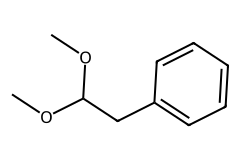
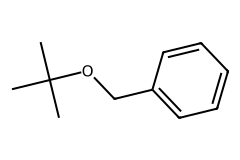
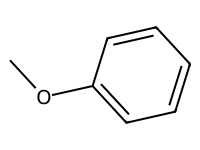
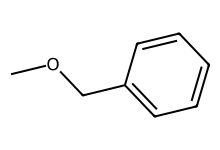
Q5.Which one of the following, with HBr will give a phenol?
निम्नलिखित में से कौन-सा, HBr के साथ एक फ़ीनॉल देगा?
- A
- B
- C
- D
Show answer
Concept: When an aryl alkyl ether (Ar–O–R) is cleaved by HX, the strong sp2 C(aryl)–O bond never breaks; the O–R(alkyl) bond breaks, giving ArOH (a phenol) + RX.
- (C) is anisole, C6H5–O–CH3. With HBr: protonation of O, then Br− attacks the methyl carbon (SN2) → C6H5OH (phenol) + CH3Br.
- (A) is an acetal PhCH2CH(OCH3)2: aqueous acid cleaves it to the aldehyde and CH3OH/CH3Br – no phenol.
- (B) PhCH2–O–C(CH3)3: cleavage gives benzyl alcohol/t-butyl bromide (via stable 3° carbocation) – no phenol.
- (D) PhCH2–O–CH3: both C–O bonds are to sp3 carbons; products are PhCH2Br + CH3OH (benzylic cleavage) – no phenol.
Short trick: Phenol can come only from a compound in which oxygen is attached directly to the ring – only (C) has Ar–O.
Answer: (C)
अवधारणा: जब ऐरिल ऐल्किल ईथर (Ar–O–R) का HX द्वारा विदलन होता है, तो प्रबल sp2 C(ऐरिल)–O आबंध कभी नहीं टूटता; O–R(ऐल्किल) आबंध टूटकर ArOH (फ़ीनॉल) + RX देता है।
- (C) ऐनिसोल है, C6H5–O–CH3। HBr के साथ: O का प्रोटॉनीकरण, फिर Br− मेथिल कार्बन पर आक्रमण (SN2) → C6H5OH (फ़ीनॉल) + CH3Br।
- (A) एक ऐसीटैल PhCH2CH(OCH3)2 है: जलीय अम्ल इसे ऐल्डिहाइड तथा CH3OH/CH3Br में विदलित करता है – फ़ीनॉल नहीं।
- (B) PhCH2–O–C(CH3)3: विदलन से बेंज़िल ऐल्कोहॉल/t-ब्यूटिल ब्रोमाइड (स्थायी 3° कार्बधनायन से) – फ़ीनॉल नहीं।
- (D) PhCH2–O–CH3: दोनों C–O आबंध sp3 कार्बन से हैं; उत्पाद PhCH2Br + CH3OH (बेंज़िलिक विदलन) – फ़ीनॉल नहीं।
शॉर्ट ट्रिक: फ़ीनॉल केवल उसी यौगिक से बन सकता है जिसमें ऑक्सीजन सीधे वलय से जुड़ी हो – केवल (C) में Ar–O है।
उत्तर: (C)
JEE Main 2025 (January) – Paper 1 (B.E./B.Tech)ChemistryEthers – cleavage with HBrJEE Main 2025 (January) – Paper 1 (B.E./B.Tech) 2025 · 29 Jan Shift 2
Q6.Given below are two statements :
Statement (I) : NaCl is added to the ice at 0°C, present in the ice cream box to prevent the melting of ice cream.
Statement (II) : On addition of NaCl to ice at 0°C, there is a depression in freezing point.
In the light of the above statements, choose the correct answer from the options given below :
नीचे दो कथन दिए गए हैं :
कथन (I) : आइसक्रीम के डिब्बे में उपस्थित 0°C वाली बर्फ में NaCl मिलाया जाता है ताकि आइसक्रीम को पिघलने से रोका जा सके।
कथन (II) : 0°C पर बर्फ में NaCl मिलाने पर हिमांक में अवनमन होता है।
उपर्युक्त कथनों के आलोक में, नीचे दिए गए विकल्पों में से सही उत्तर चुनिए :
- ABoth Statement I and Statement II are falseकथन I और कथन II दोनों असत्य हैं
- BStatement I is false but Statement II is trueकथन I असत्य है परंतु कथन II सत्य है
- CStatement I is true but Statement II is falseकथन I सत्य है परंतु कथन II असत्य है
- DBoth Statement I and Statement II are trueकथन I और कथन II दोनों सत्य हैं
Show answer
Concept: Freezing point depression is a colligative property: adding a non-volatile solute (NaCl) to ice/water lowers the freezing point, producing a freezing mixture well below 0°C.
- Statement II: NaCl dissolves in the water film on ice; the solution freezes below 0°C, i.e. – a clear depression in freezing point. True.
- Statement I: this ice-salt freezing mixture can reach about C, keeping the box much colder than 0°C, so the ice cream does not melt. This is exactly why salt is added. True.
- Statement II correctly explains Statement I, and the option asked only whether both are true.
Short trick: Salt + ice = freezing mixture (≈ C) – the classic kulfi/ice-cream vendor's trick.
Answer: (D)
अवधारणा: हिमांक अवनमन एक अणुसंख्यक गुणधर्म है: बर्फ/जल में अवाष्पशील विलेय (NaCl) मिलाने से हिमांक घटता है और 0°C से काफी नीचे का हिम-मिश्रण (freezing mixture) बनता है।
- कथन II: NaCl बर्फ पर जल की परत में घुलता है; विलयन 0°C से नीचे जमता है, अर्थात् – हिमांक में स्पष्ट अवनमन। सत्य।
- कथन I: यह बर्फ-नमक हिम-मिश्रण लगभग C तक पहुँच सकता है, जिससे डिब्बा 0°C से बहुत ठंडा रहता है और आइसक्रीम नहीं पिघलती। नमक इसीलिए मिलाया जाता है। सत्य।
- कथन II, कथन I की सही व्याख्या भी करता है; प्रश्न में केवल दोनों के सत्य होने के बारे में पूछा गया है।
शॉर्ट ट्रिक: नमक + बर्फ = हिम-मिश्रण (≈ C) – कुल्फी वाले की पुरानी तरकीब।
उत्तर: (D)
JEE Main 2025 (January) – Paper 1 (B.E./B.Tech)ChemistrySolutions – depression in freezing pointJEE Main 2025 (January) – Paper 1 (B.E./B.Tech) 2025 · 29 Jan Shift 2
Q7.Match List - I with List - II :
| List - I
Applications | | List - II
Batteries/Cell |
|---|
| (A) | Transistors | (I) | Anode - Zn/Hg ; Cathode - HgO + C |
| (B) | Hearing aids | (II) | Hydrogen fuel cell |
| (C) | Invertors | (III) | Anode - Zn ; Cathode - Carbon |
| (D) | Apollo space ship | (IV) | Anode - Pb ; Cathode - Pb|PbO2 |
Choose the correct answer from the options given below :
सूची - I का सूची - II से मिलान कीजिए :
| सूची - I
अनुप्रयोग | | सूची - II
बैटरियाँ/सेल |
|---|
| (A) | ट्रांज़िस्टर | (I) | ऐनोड - Zn/Hg ; कैथोड - HgO + C |
| (B) | श्रवण यंत्र (hearing aids) | (II) | हाइड्रोजन ईंधन सेल |
| (C) | इन्वर्टर | (III) | ऐनोड - Zn ; कैथोड - कार्बन |
| (D) | अपोलो अंतरिक्ष यान | (IV) | ऐनोड - Pb ; कैथोड - Pb|PbO2 |
नीचे दिए गए विकल्पों में से सही उत्तर चुनिए :
- A(A)-(III), (B)-(II), (C)-(IV), (D)-(I)
- B(A)-(II), (B)-(III), (C)-(IV), (D)-(I)
- C(A)-(III), (B)-(I), (C)-(IV), (D)-(II)
- D(A)-(IV), (B)-(III), (C)-(II), (D)-(I)
Show answer
Concept: Standard NCERT commercial cells: dry cell (Leclanché), mercury cell, lead storage battery and H2–O2 fuel cell.
- (A) Transistors (and clocks, torches) use the dry cell: anode Zn, cathode carbon (graphite) rod → (III).
- (B) Hearing aids and watches use the mercury button cell: anode Zn–Hg amalgam, cathode paste of HgO and carbon → (I).
- (C) Invertors and automobiles use the lead storage battery: anode Pb, cathode Pb coated/packed with PbO2 → (IV).
- (D) The Apollo space programme used the hydrogen–oxygen fuel cell (also gave drinking water) → (II).
Short trick: Hg → hearing aid; Pb → power backup; fuel cell → space flight; the dry cell is everything everyday.
Answer: (C)
अवधारणा: NCERT के मानक व्यावसायिक सेल: शुष्क सेल (लेक्लांशे), मर्करी सेल, लेड संचायक बैटरी तथा H2–O2 ईंधन सेल।
- (A) ट्रांज़िस्टर (तथा घड़ियाँ, टॉर्च) शुष्क सेल प्रयोग करते हैं: ऐनोड Zn, कैथोड कार्बन (ग्रेफ़ाइट) छड़ → (III)।
- (B) श्रवण यंत्र व घड़ियाँ मर्करी बटन सेल प्रयोग करते हैं: ऐनोड Zn–Hg अमलगम, कैथोड HgO व कार्बन का पेस्ट → (I)।
- (C) इन्वर्टर व वाहन लेड संचायक बैटरी प्रयोग करते हैं: ऐनोड Pb, कैथोड PbO2 युक्त Pb → (IV)।
- (D) अपोलो अंतरिक्ष कार्यक्रम में हाइड्रोजन–ऑक्सीजन ईंधन सेल (साथ में पेयजल भी) → (II)।
शॉर्ट ट्रिक: Hg → श्रवण यंत्र; Pb → पावर बैकअप; ईंधन सेल → अंतरिक्ष यात्रा; शुष्क सेल रोज़मर्रा की हर चीज़।
उत्तर: (C)
JEE Main 2025 (January) – Paper 1 (B.E./B.Tech)ChemistryElectrochemistry – commercial cells and batteriesJEE Main 2025 (January) – Paper 1 (B.E./B.Tech) 2025 · 29 Jan Shift 2
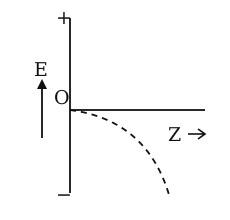
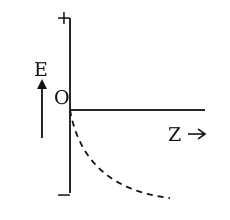
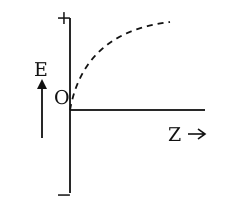
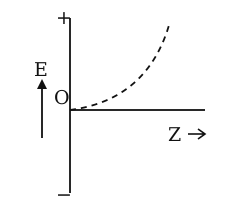
Q8.For hydrogen like species, which of the following graphs provides the most appropriate representation of E vs Z plot for a constant n ?
[E: Energy of the stationary state, Z : atomic number, n = principal quantum number]
हाइड्रोजन-सदृश स्पीशीज़ के लिए, स्थिर n पर E बनाम Z आलेख का सबसे उपयुक्त निरूपण निम्नलिखित में से कौन-सा ग्राफ़ देता है?
[E: स्थिर अवस्था की ऊर्जा, Z : परमाणु क्रमांक, n = मुख्य क्वांटम संख्या]
- A
- B
- C
- D
Show answer
Concept: For a hydrogen-like species, eV. For a fixed , .
- The energy is always negative (bound state), so the curve must lie below the Z-axis – this rules out (C) and (D).
- is a downward parabola: near the curve is almost flat, and it falls more and more steeply as increases.
- Graph (A) shows exactly this – flat at the origin, then plunging; graph (B) wrongly shows the steepest fall at small with flattening later (a -type shape).
Short trick: Negative quadrant + parabola getting steeper = .
Answer: (A)
अवधारणा: हाइड्रोजन-सदृश स्पीशीज़ के लिए eV। स्थिर पर ।
- ऊर्जा सदैव ऋणात्मक है (बद्ध अवस्था), अतः वक्र Z-अक्ष के नीचे होना चाहिए – इससे (C) तथा (D) निरस्त।
- एक अधोमुखी परवलय है: के पास वक्र लगभग समतल है और बढ़ने पर अधिकाधिक तीव्रता से गिरता है।
- ग्राफ़ (A) ठीक यही दर्शाता है – मूलबिंदु पर समतल, फिर तीव्र गिरावट; ग्राफ़ (B) गलत है क्योंकि उसमें छोटे पर सबसे तीव्र गिरावट और बाद में समतलता ( जैसी आकृति) दिखाई गई है।
शॉर्ट ट्रिक: ऋणात्मक चतुर्थांश + क्रमशः तीव्र होता परवलय = ।
उत्तर: (A)
JEE Main 2025 (January) – Paper 1 (B.E./B.Tech)ChemistryAtomic Structure – Bohr model, E vs ZJEE Main 2025 (January) – Paper 1 (B.E./B.Tech) 2025 · 29 Jan Shift 2
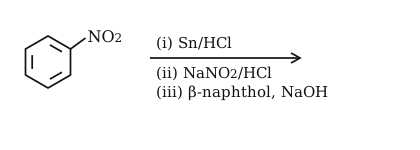
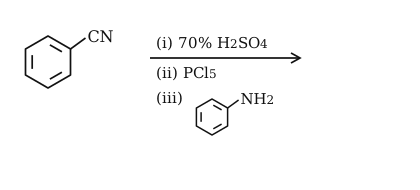
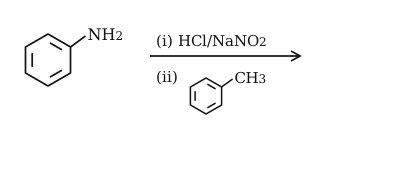
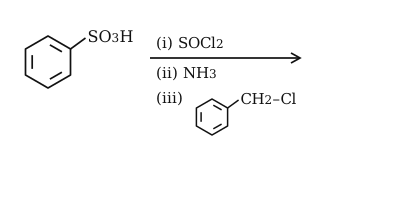
Q9.Which one of the following reaction sequences will give an azo dye?
निम्नलिखित में से कौन-सा अभिक्रिया अनुक्रम एक ऐज़ो रंजक (azo dye) देगा?
- A
- B
- C
- D
Show answer
Concept: An azo dye (Ar–N=N–Ar′) needs (i) an arenediazonium salt and (ii) coupling with a strongly activated arene (phenol/naphthol/aniline) in mildly alkaline medium.
- (A): nitrobenzene aniline benzenediazonium chloride brilliant orange-red azo dye (coupling at C-1 of naphthol). Correct.
- (B): PhCN → (70% H2SO4) benzoic acid/amide → (PCl5) benzoyl chloride → (aniline) benzanilide – an amide, no N=N bond.
- (C): aniline gives the diazonium salt, but toluene is not activated enough for azo coupling – coupling needs –OH or –NH2 on the ring.
- (D): PhSO3H → sulphonyl chloride → sulphonamide → N-alkylation with benzyl chloride – a sulphonamide, no azo group.
Short trick: Azo dye = diazonium + naphthol/phenol in base. Only (A) has that pair.
Answer: (A)
अवधारणा: ऐज़ो रंजक (Ar–N=N–Ar′) के लिए चाहिए (i) ऐरीनडाइऐज़ोनियम लवण तथा (ii) हल्के क्षारीय माध्यम में प्रबल सक्रियित ऐरीन (फ़ीनॉल/नैफ़्थॉल/ऐनिलीन) से युग्मन।
- (A): नाइट्रोबेंज़ीन ऐनिलीन बेंज़ीनडाइऐज़ोनियम क्लोराइड चमकीला नारंगी-लाल ऐज़ो रंजक (नैफ़्थॉल के C-1 पर युग्मन)। सही।
- (B): PhCN → (70% H2SO4) बेंज़ोइक अम्ल/ऐमाइड → (PCl5) बेंज़ॉयल क्लोराइड → (ऐनिलीन) बेंज़ऐनिलाइड – एक ऐमाइड, N=N आबंध नहीं।
- (C): ऐनिलीन से डाइऐज़ोनियम लवण बनता है, पर टॉलूईन ऐज़ो युग्मन के लिए पर्याप्त सक्रियित नहीं है – युग्मन के लिए वलय पर –OH या –NH2 चाहिए।
- (D): PhSO3H → सल्फ़ोनिल क्लोराइड → सल्फ़ोनेमाइड → बेंज़िल क्लोराइड से N-ऐल्किलन – सल्फ़ोनेमाइड, ऐज़ो समूह नहीं।
शॉर्ट ट्रिक: ऐज़ो रंजक = डाइऐज़ोनियम + क्षार में नैफ़्थॉल/फ़ीनॉल। यह युग्म केवल (A) में है।
उत्तर: (A)
JEE Main 2025 (January) – Paper 1 (B.E./B.Tech)ChemistryDiazonium salts – azo dye formationJEE Main 2025 (January) – Paper 1 (B.E./B.Tech) 2025 · 29 Jan Shift 2
Q10.Identify the essential amino acids from below :
(A) Valine (B) Proline (C) Lysine (D) Threonine (E) Tyrosine
Choose the correct answer from the options given below :
नीचे दिए गए में से आवश्यक ऐमीनो अम्लों की पहचान कीजिए :
(A) वैलीन (B) प्रोलीन (C) लाइसीन (D) थ्रिओनीन (E) टाइरोसीन
नीचे दिए गए विकल्पों में से सही उत्तर चुनिए :
- A(A), (C) and (E) onlyकेवल (A), (C) और (E)
- B(A), (C) and (D) onlyकेवल (A), (C) और (D)
- C(C), (D) and (E) onlyकेवल (C), (D) और (E)
- D(B), (C) and (E) onlyकेवल (B), (C) और (E)
Show answer
Concept: Essential amino acids cannot be synthesised by the human body and must come from the diet. The ten include valine, leucine, isoleucine, lysine, threonine, methionine, phenylalanine, tryptophan, histidine and arginine.
- (A) Valine – essential (branched-chain).
- (C) Lysine and (D) Threonine – both essential.
- (B) Proline is synthesised from glutamate – non-essential.
- (E) Tyrosine is made in the body from phenylalanine – non-essential.
Short trick: Mnemonic “PVT TIM HALL” (Phe, Val, Thr, Trp, Ile, Met, His, Arg, Leu, Lys) – proline and tyrosine are not in it.
Answer: (B)
अवधारणा: आवश्यक ऐमीनो अम्ल मानव शरीर में संश्लेषित नहीं हो सकते और आहार से प्राप्त करने पड़ते हैं। इन दस में वैलीन, ल्यूसीन, आइसोल्यूसीन, लाइसीन, थ्रिओनीन, मेथिओनीन, फ़ेनिलऐलानीन, ट्रिप्टोफ़ैन, हिस्टिडीन तथा आर्जिनीन आते हैं।
- (A) वैलीन – आवश्यक (शाखित-श्रृंखला)।
- (C) लाइसीन तथा (D) थ्रिओनीन – दोनों आवश्यक।
- (B) प्रोलीन ग्लूटामेट से संश्लेषित होता है – अनावश्यक।
- (E) टाइरोसीन शरीर में फ़ेनिलऐलानीन से बनता है – अनावश्यक।
शॉर्ट ट्रिक: स्मृति-सूत्र “PVT TIM HALL” (Phe, Val, Thr, Trp, Ile, Met, His, Arg, Leu, Lys) – इसमें प्रोलीन व टाइरोसीन नहीं हैं।
उत्तर: (B)
JEE Main 2025 (January) – Paper 1 (B.E./B.Tech)ChemistryBiomolecules – essential amino acidsJEE Main 2025 (January) – Paper 1 (B.E./B.Tech) 2025 · 29 Jan Shift 2
Q11.The calculated spin-only magnetic moments of K3[Fe(OH)6] and K4[Fe(OH)6] respectively are :
K3[Fe(OH)6] तथा K4[Fe(OH)6] के परिकलित चक्रण-मात्र (spin-only) चुंबकीय आघूर्ण क्रमशः हैं :
- A3.87 and 4.90 B.M.3.87 तथा 4.90 B.M.
- B4.90 and 5.92 B.M.4.90 तथा 5.92 B.M.
- C4.90 and 4.90 B.M.4.90 तथा 4.90 B.M.
- D5.92 and 4.90 B.M.5.92 तथा 4.90 B.M.
Show answer
Concept: OH− is a weak field ligand → high-spin complexes. B.M., = number of unpaired electrons.
- K3[Fe(OH)6]: Fe is +3 → d5, high spin → → B.M.
- K4[Fe(OH)6]: Fe is +2 → d6, high spin → → B.M.
- So the pair is 5.92 and 4.90 B.M.
Short trick: Memorise : 1→1.73, 2→2.83, 3→3.87, 4→4.90, 5→5.92.
Answer: (D)
अवधारणा: OH− दुर्बल क्षेत्र लिगेंड है → उच्च-चक्रण संकुल। B.M., = अयुग्मित इलेक्ट्रॉनों की संख्या।
- K3[Fe(OH)6]: Fe की अवस्था +3 → d5, उच्च-चक्रण → → B.M.
- K4[Fe(OH)6]: Fe की अवस्था +2 → d6, उच्च-चक्रण → → B.M.
- अतः युग्म 5.92 तथा 4.90 B.M. है।
शॉर्ट ट्रिक: याद रखिए: 1→1.73, 2→2.83, 3→3.87, 4→4.90, 5→5.92।
उत्तर: (D)
JEE Main 2025 (January) – Paper 1 (B.E./B.Tech)Chemistryd-block – spin-only magnetic momentJEE Main 2025 (January) – Paper 1 (B.E./B.Tech) 2025 · 29 Jan Shift 2
Q12.The type of oxide formed by the element among Li, Na, Be, Mg, B and Al that has the least atomic radius is :
Li, Na, Be, Mg, B तथा Al में से जिस तत्व की परमाणु त्रिज्या सबसे कम है, उसके द्वारा बनाए गए ऑक्साइड का प्रकार है :
- AA2O
- BA2O3
- CAO2
- DAO
Show answer
Concept: Atomic radius decreases across a period and increases down a group; the oxide formula follows the group valence.
- Across period 2: Li > Be > B; period 3: Na > Mg > Al; and each period-3 element is bigger than its period-2 counterpart.
- So the smallest atom in the set is boron (B, ≈ 85 pm).
- Boron is in group 13, valence 3 → its oxide is B2O3, i.e. of type A2O3.
Short trick: Right-most and top-most element of the list = smallest = B → B2O3.
Answer: (B)
अवधारणा: आवर्त में बाएँ से दाएँ परमाणु त्रिज्या घटती है और वर्ग में नीचे बढ़ती है; ऑक्साइड का सूत्र वर्ग-संयोजकता से तय होता है।
- आवर्त 2 में: Li > Be > B; आवर्त 3 में: Na > Mg > Al; तथा आवर्त 3 का प्रत्येक तत्व अपने आवर्त 2 के समकक्ष से बड़ा है।
- अतः समुच्चय में सबसे छोटा परमाणु बोरॉन (B, ≈ 85 pm) है।
- बोरॉन वर्ग 13 में है, संयोजकता 3 → इसका ऑक्साइड B2O3, अर्थात् A2O3 प्रकार का है।
शॉर्ट ट्रिक: सूची का सबसे दाहिना व सबसे ऊपर का तत्व = सबसे छोटा = B → B2O3।
उत्तर: (B)
JEE Main 2025 (January) – Paper 1 (B.E./B.Tech)ChemistryPeriodic properties – atomic radius and oxidesJEE Main 2025 (January) – Paper 1 (B.E./B.Tech) 2025 · 29 Jan Shift 2
Q13.Total number of sigma (σ) and pi (π) bonds respectively present in hex-1-en-4-yne are :
हेक्स-1-ईन-4-आइन में उपस्थित सिग्मा (σ) तथा पाई (π) आबंधों की कुल संख्या क्रमशः है :
- A3 and 133 और 13
- B11 and 311 और 3
- C13 and 313 और 3
- D14 and 314 और 3
Show answer
Concept: Every single bond is one σ; a double bond = 1σ + 1π; a triple bond = 1σ + 2π.
- Hex-1-en-4-yne: CH2=CH–CH2–C≡C–CH3.
- C–C σ bonds: 5 (between the 6 carbons).
- C–H σ bonds: .
- Total σ ; π bonds (C1=C2) (C4≡C5) .
Short trick: For Cn acyclic chains, σ = (atoms – 1) = .
Answer: (C)
अवधारणा: प्रत्येक एकल आबंध एक σ है; द्विआबंध = 1σ + 1π; त्रिआबंध = 1σ + 2π।
- हेक्स-1-ईन-4-आइन: CH2=CH–CH2–C≡C–CH3।
- C–C σ आबंध: 5 (6 कार्बनों के बीच)।
- C–H σ आबंध: ।
- कुल σ ; π आबंध (C1=C2) (C4≡C5) ।
शॉर्ट ट्रिक: अचक्रीय अणु में σ = (परमाणु – 1) = ।
उत्तर: (C)
JEE Main 2025 (January) – Paper 1 (B.E./B.Tech)ChemistryChemical Bonding – sigma and pi bond countJEE Main 2025 (January) – Paper 1 (B.E./B.Tech) 2025 · 29 Jan Shift 2
Q14.First ionisation enthalpy values of first four group 15 elements are given below. Choose the correct value for the element that is a main component of apatite family :
वर्ग 15 के प्रथम चार तत्वों की प्रथम आयनन एन्थैल्पी के मान नीचे दिए गए हैं। उस तत्व के लिए सही मान चुनिए जो ऐपेटाइट (apatite) परिवार का मुख्य घटक है :
- A1402 kJ mol−1
- B834 kJ mol−1
- C1012 kJ mol−1
- D947 kJ mol−1
Show answer
Concept: Apatite minerals, Ca9(PO4)6·CaX2 (X = F, Cl, OH), are phosphates – their key group-15 element is phosphorus. First ionisation enthalpy falls down the group: N > P > As > Sb.
- Assign the four values in decreasing order: N = 1402, P = 1012, As = 947, Sb = 834 kJ mol−1.
- The apatite family (fluoro-, chloro-, hydroxyapatite) is the chief phosphorus mineral source.
- Hence the required value is that of P: 1012 kJ mol−1.
Short trick: Apatite = phosphate rock → P = second-highest IE of the group.
Answer: (C)
अवधारणा: ऐपेटाइट खनिज, Ca9(PO4)6·CaX2 (X = F, Cl, OH), फ़ॉस्फ़ेट हैं – इनका मुख्य वर्ग-15 तत्व फ़ॉस्फ़ोरस है। वर्ग में नीचे जाने पर प्रथम आयनन एन्थैल्पी घटती है: N > P > As > Sb।
- चारों मान घटते क्रम में बाँटिए: N = 1402, P = 1012, As = 947, Sb = 834 kJ mol−1।
- ऐपेटाइट परिवार (फ़्लुओरो-, क्लोरो-, हाइड्रॉक्सीऐपेटाइट) फ़ॉस्फ़ोरस का मुख्य खनिज स्रोत है।
- अतः अभीष्ट मान P का है: 1012 kJ mol−1।
शॉर्ट ट्रिक: ऐपेटाइट = फ़ॉस्फ़ेट चट्टान → P = वर्ग की दूसरी सबसे बड़ी IE।
उत्तर: (C)
JEE Main 2025 (January) – Paper 1 (B.E./B.Tech)Chemistryp-block – group 15 ionisation enthalpyJEE Main 2025 (January) – Paper 1 (B.E./B.Tech) 2025 · 29 Jan Shift 2
Q15.Given below are two statements :
Statement (I) : On nitration of m-xylene with HNO3, H2SO4 followed by oxidation, 4-nitrobenzene-1,3-dicarboxylic acid is obtained as the major product.
Statement (II) : −CH3 group is o/p-directing while −NO2 group is m-directing group.
In the light of the above statements, choose the correct answer from the options given below :
नीचे दो कथन दिए गए हैं :
कथन (I) : m-ज़ाइलीन के HNO3, H2SO4 द्वारा नाइट्रीकरण और उसके बाद ऑक्सीकरण से मुख्य उत्पाद के रूप में 4-नाइट्रोबेंज़ीन-1,3-डाइकार्बोक्सिलिक अम्ल प्राप्त होता है।
कथन (II) : −CH3 समूह o/p-निर्देशी है जबकि −NO2 समूह m-निर्देशी समूह है।
उपर्युक्त कथनों के आलोक में, नीचे दिए गए विकल्पों में से सही उत्तर चुनिए :
- ABoth Statement I and Statement II are falseकथन I और कथन II दोनों असत्य हैं
- BStatement I is false but Statement II is trueकथन I असत्य है परंतु कथन II सत्य है
- CStatement I is true but Statement II is falseकथन I सत्य है परंतु कथन II असत्य है
- DBoth Statement I and Statement II are trueकथन I और कथन II दोनों सत्य हैं
Show answer
Concept: In m-xylene (1,3-dimethylbenzene) both −CH3 groups are o/p-directors; the position that is ortho/para to both (C-4) is attacked preferentially. KMnO4-type oxidation then converts each −CH3 to −COOH.
- Nitration of m-xylene: C-4 (and the equivalent C-6) is ortho to one CH3 and para to the other → major product 4-nitro-1,3-dimethylbenzene. (C-2, though doubly ortho, is sterically crowded.)
- Oxidation of both methyl groups → 4-nitrobenzene-1,3-dicarboxylic acid. Statement I is true.
- Statement II is the textbook rule: −CH3 (+H effect) is o/p-directing; −NO2 (−M effect) is m-directing. True – and it is the very reason the nitro group enters at C-4 before oxidation.
Short trick: Always nitrate first, oxidise later – the activating CH3 groups fix the NO2 position.
Answer: (D)
अवधारणा: m-ज़ाइलीन (1,3-डाइमेथिलबेंज़ीन) में दोनों −CH3 समूह o/p-निर्देशी हैं; जो स्थिति दोनों के सापेक्ष o/p है (C-4), वहाँ आक्रमण वरीयता से होता है। फिर KMnO4-प्रकार के ऑक्सीकरण से प्रत्येक −CH3, −COOH में बदल जाता है।
- m-ज़ाइलीन का नाइट्रीकरण: C-4 (तथा तुल्य C-6) एक CH3 के ऑर्थो और दूसरे के पैरा है → मुख्य उत्पाद 4-नाइट्रो-1,3-डाइमेथिलबेंज़ीन। (C-2 दोनों के ऑर्थो होते हुए भी त्रिविम रूप से संकुलित है।)
- दोनों मेथिल समूहों के ऑक्सीकरण से → 4-नाइट्रोबेंज़ीन-1,3-डाइकार्बोक्सिलिक अम्ल। कथन I सत्य।
- कथन II पाठ्यपुस्तक का नियम है: −CH3 (+H प्रभाव) o/p-निर्देशी; −NO2 (−M प्रभाव) m-निर्देशी। सत्य – और इसी कारण ऑक्सीकरण से पहले नाइट्रो समूह C-4 पर जुड़ता है।
शॉर्ट ट्रिक: पहले नाइट्रीकरण, बाद में ऑक्सीकरण – सक्रियकारी CH3 समूह NO2 की स्थिति तय करते हैं।
उत्तर: (D)
JEE Main 2025 (January) – Paper 1 (B.E./B.Tech)ChemistryAromatic substitution – directing effectsJEE Main 2025 (January) – Paper 1 (B.E./B.Tech) 2025 · 29 Jan Shift 2
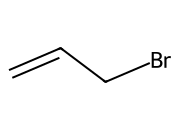
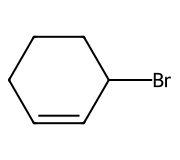
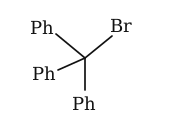
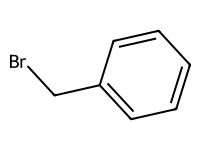
Q16.Which among the following halides will generate the most stable carbocation in the nucleophilic substitution reaction?
निम्नलिखित हैलाइडों में से कौन-सा नाभिकरागी प्रतिस्थापन अभिक्रिया में सबसे स्थायी कार्बधनायन उत्पन्न करेगा?
- A
- B
- C
- D
Show answer
Concept: Carbocation stability rises with the number of groups that can delocalise the positive charge by resonance/hyperconjugation.
- (A) Allyl bromide → allyl cation: charge spread over 2 carbons (one π system).
- (B) 3-Bromocyclohexene → secondary allylic (cyclohexenyl) cation: resonance over 2 carbons plus one alkyl framework.
- (C) Triphenylmethyl bromide, Ph3C–Br → trityl cation Ph3C+: the charge is delocalised into three benzene rings (9 extra resonance structures) – by far the most stable; its salts even exist as ionic solids.
- (D) Benzyl bromide → benzyl cation: delocalisation into only one ring.
Short trick: More phenyls on C+ = more resonance: Ph3C+ > Ph2CH+ > PhCH2+ ≈ allyl.
Answer: (C)
अवधारणा: कार्बधनायन का स्थायित्व उन समूहों की संख्या के साथ बढ़ता है जो अनुनाद/अतिसंयुग्मन द्वारा धनावेश को विस्थानीकृत कर सकते हैं।
- (A) ऐलिल ब्रोमाइड → ऐलिल धनायन: आवेश 2 कार्बनों पर (एक π तंत्र)।
- (B) 3-ब्रोमोसाइक्लोहेक्सीन → द्वितीयक ऐलिलिक (साइक्लोहेक्सेनिल) धनायन: 2 कार्बनों पर अनुनाद तथा साथ में एक ऐल्किल ढाँचा।
- (C) ट्राइफ़ेनिलमेथिल ब्रोमाइड, Ph3C–Br → ट्राइटिल धनायन Ph3C+: आवेश तीन बेंज़ीन वलयों में विस्थानीकृत (9 अतिरिक्त अनुनादी संरचनाएँ) – सबसे स्थायी; इसके लवण तो आयनिक ठोस के रूप में भी मिलते हैं।
- (D) बेंज़िल ब्रोमाइड → बेंज़िल धनायन: केवल एक वलय में विस्थानीकरण।
शॉर्ट ट्रिक: C+ पर जितने अधिक फ़ेनिल, उतना अधिक अनुनाद: Ph3C+ > Ph2CH+ > PhCH2+ ≈ ऐलिल।
उत्तर: (C)
JEE Main 2025 (January) – Paper 1 (B.E./B.Tech)ChemistryHaloalkanes – carbocation stabilityJEE Main 2025 (January) – Paper 1 (B.E./B.Tech) 2025 · 29 Jan Shift 2
Q17.Given below are two statements :
Statement (I) : It is impossible to specify simultaneously with arbitrary precision, both the linear momentum and the position of a particle.
Statement (II) : If the uncertainty in the measurement of position and uncertainty in measurement of momentum are equal for an electron, then the uncertainty in the measurement of velocity is .
In the light of the above statements, choose the correct answer from the options given below :
नीचे दो कथन दिए गए हैं :
कथन (I) : किसी कण के रैखिक संवेग तथा स्थिति, दोनों को एक साथ यथेच्छ परिशुद्धता से निर्धारित करना असंभव है।
कथन (II) : यदि किसी इलेक्ट्रॉन के लिए स्थिति के मापन की अनिश्चितता तथा संवेग के मापन की अनिश्चितता बराबर हों, तो वेग के मापन की अनिश्चितता होगी।
उपर्युक्त कथनों के आलोक में, नीचे दिए गए विकल्पों में से सही उत्तर चुनिए :
- AStatement I is false but Statement II is trueकथन I असत्य है परंतु कथन II सत्य है
- BBoth Statement I and Statement II are falseकथन I और कथन II दोनों असत्य हैं
- CBoth Statement I and Statement II are trueकथन I और कथन II दोनों सत्य हैं
- DStatement I is true but Statement II is falseकथन I सत्य है परंतु कथन II असत्य है
Show answer
Concept: Heisenberg's uncertainty principle: .
- Statement I is the uncertainty principle itself – true.
- Statement II: put . Then ⇒ .
- Since : – exactly as stated. True.
Short trick: ⇒ ; divide by for .
Answer: (C)
अवधारणा: हाइज़ेनबर्ग का अनिश्चितता सिद्धांत: ।
- कथन I स्वयं अनिश्चितता सिद्धांत है – सत्य।
- कथन II: रखिए। तब ⇒ ।
- चूँकि : – ठीक वैसा ही जैसा कथन में है। सत्य।
शॉर्ट ट्रिक: ⇒ ; के लिए से भाग दीजिए।
उत्तर: (C)
JEE Main 2025 (January) – Paper 1 (B.E./B.Tech)ChemistryAtomic Structure – Heisenberg uncertainty principleJEE Main 2025 (January) – Paper 1 (B.E./B.Tech) 2025 · 29 Jan Shift 2
Q18.0.1 M solution of KI reacts with excess of H2SO4 and KIO3 solutions. According to equation
5I− + IO3− + 6H+ → 3I2 + 3H2O
Identify the correct statements :
(A) 200 mL of KI solution reacts with 0.004 mol of KIO3
(B) 200 mL of KI solution reacts with 0.006 mol of H2SO4
(C) 0.5 L of KI solution produced 0.005 mol of I2
(D) Equivalent weight of KIO3 is equal to
Choose the correct answer from the options given below :
KI का 0.1 M विलयन H2SO4 तथा KIO3 विलयनों के आधिक्य से अभिक्रिया करता है। समीकरण
5I− + IO3− + 6H+ → 3I2 + 3H2O के अनुसार
सही कथनों की पहचान कीजिए :
(A) KI विलयन का 200 mL, KIO3 के 0.004 mol से अभिक्रिया करता है
(B) KI विलयन का 200 mL, H2SO4 के 0.006 mol से अभिक्रिया करता है
(C) KI विलयन के 0.5 L से I2 के 0.005 mol बनते हैं
(D) KIO3 का तुल्यांकी भार के बराबर है
नीचे दिए गए विकल्पों में से सही उत्तर चुनिए :
- A(A) and (D) onlyकेवल (A) और (D)
- B(C) and (D) onlyकेवल (C) और (D)
- C(B) and (C) onlyकेवल (B) और (C)
- D(A) and (B) onlyकेवल (A) और (B)
Show answer
Concept: Use mole ratios from 5I− + IO3− + 6H+ → 3I2 + 3H2O; equivalent weight = M/(electrons per formula unit).
- (A) 200 mL × 0.1 M = 0.02 mol I−. KIO3 needed mol – correct.
- (B) H+ needed mol ⇒ H2SO4 mol, not 0.006 – wrong.
- (C) 0.5 L ⇒ 0.05 mol I− ⇒ I2 mol, not 0.005 – wrong.
- (D) In IO3− iodine goes from +5 to 0, gaining 5 electrons ⇒ equivalent weight of KIO3 – correct.
Short trick: Everything scales off 0.02 mol I−; divide by 5 for IO3−, multiply by 6/5 for H+, 3/5 for I2.
Answer: (A)
अवधारणा: 5I− + IO3− + 6H+ → 3I2 + 3H2O से मोल अनुपात लीजिए; तुल्यांकी भार = M/(प्रति सूत्र इकाई इलेक्ट्रॉन)।
- (A) 200 mL × 0.1 M = 0.02 mol I−। आवश्यक KIO3 mol – सही।
- (B) आवश्यक H+ mol ⇒ H2SO4 mol, 0.006 नहीं – गलत।
- (C) 0.5 L ⇒ 0.05 mol I− ⇒ I2 mol, 0.005 नहीं – गलत।
- (D) IO3− में आयोडीन +5 से 0 तक जाता है, 5 इलेक्ट्रॉन ग्रहण ⇒ KIO3 का तुल्यांकी भार – सही।
शॉर्ट ट्रिक: सब कुछ 0.02 mol I− से: IO3− के लिए ÷5, H+ के लिए ×6/5, I2 के लिए ×3/5।
उत्तर: (A)
JEE Main 2025 (January) – Paper 1 (B.E./B.Tech)ChemistryRedox – stoichiometry and equivalent weightJEE Main 2025 (January) – Paper 1 (B.E./B.Tech) 2025 · 29 Jan Shift 2
Q19.Given below are two statements :
Statement (I): In partition chromatography, stationary phase is thin film of liquid present in the inert support.
Statement (II) : In paper chromatography, the material of paper acts as a stationary phase.
In the light of the above statements, choose the correct answer from the options given below :
नीचे दो कथन दिए गए हैं :
कथन (I) : वितरण वर्णलेखन (partition chromatography) में, स्थिर प्रावस्था अक्रिय आधार में उपस्थित द्रव की पतली फिल्म होती है।
कथन (II) : पेपर वर्णलेखन में, कागज़ का पदार्थ स्थिर प्रावस्था का कार्य करता है।
उपर्युक्त कथनों के आलोक में, नीचे दिए गए विकल्पों में से सही उत्तर चुनिए :
- AStatement I is true but Statement II is falseकथन I सत्य है परंतु कथन II असत्य है
- BStatement I is false but Statement II is trueकथन I असत्य है परंतु कथन II सत्य है
- CBoth Statement I and Statement II are falseकथन I और कथन II दोनों असत्य हैं
- DBoth Statement I and Statement II are trueकथन I और कथन II दोनों सत्य हैं
Show answer
Concept: Partition chromatography works by continuous differential partitioning of components between a stationary liquid phase and a mobile liquid phase.
- Statement I: in partition chromatography the stationary phase is indeed a thin film of liquid held on an inert solid support – true.
- Statement II: paper chromatography is a type of partition chromatography; the stationary phase is the water trapped in the pores/fibres of the paper, not the cellulose material of the paper itself – false.
- Hence Statement I is true and Statement II is false.
Short trick: In paper chromatography: paper = support, trapped water = stationary phase.
Answer: (A)
अवधारणा: वितरण वर्णलेखन में घटक, स्थिर द्रव प्रावस्था और गतिशील द्रव प्रावस्था के बीच लगातार भिन्न-भिन्न रूप से वितरित होते रहते हैं।
- कथन I: वितरण वर्णलेखन में स्थिर प्रावस्था वास्तव में अक्रिय ठोस आधार पर टिकी द्रव की पतली फिल्म होती है – सत्य।
- कथन II: पेपर वर्णलेखन वितरण वर्णलेखन का ही एक प्रकार है; स्थिर प्रावस्था कागज़ के छिद्रों/रेशों में फँसा जल है, कागज़ का सेलुलोस पदार्थ नहीं – असत्य।
- अतः कथन I सत्य और कथन II असत्य है।
शॉर्ट ट्रिक: पेपर वर्णलेखन में: कागज़ = आधार, फँसा हुआ जल = स्थिर प्रावस्था।
उत्तर: (A)
JEE Main 2025 (January) – Paper 1 (B.E./B.Tech)ChemistryPurification techniques – chromatographyJEE Main 2025 (January) – Paper 1 (B.E./B.Tech) 2025 · 29 Jan Shift 2
Q20.If C(diamond) → C(graphite) + X kJ mol−1
C(diamond) + O2(g) → CO2(g) + Y kJ mol−1
C(graphite) + O2(g) → CO2(g) + Z kJ mol−1
at constant temperature. Then
यदि स्थिर ताप पर
C(हीरा) → C(ग्रेफ़ाइट) + X kJ mol−1
C(हीरा) + O2(g) → CO2(g) + Y kJ mol−1
C(ग्रेफ़ाइट) + O2(g) → CO2(g) + Z kJ mol−1
हो, तो
- AX = −Y + Z
- B−X = Y + Z
- CX = Y + Z
- DX = Y − Z
Show answer
Concept: Hess's law – enthalpy change is path independent. Here X, Y, Z are the heats evolved (written on the product side).
- Diamond → graphite can be built as: diamond + O2 → CO2 (releases Y), then CO2 → graphite + O2 (absorbs Z).
- Net heat evolved .
- Check with enthalpies: , , ; Hess: ⇒ .
Short trick: Subtract the two combustion equations: (diamond – graphite) combustion difference = transition heat.
Answer: (D)
अवधारणा: हेस का नियम – एन्थैल्पी परिवर्तन पथ पर निर्भर नहीं करता। यहाँ X, Y, Z निर्मुक्त ऊष्माएँ हैं (उत्पाद पक्ष में लिखी गई)।
- हीरा → ग्रेफ़ाइट को ऐसे बनाइए: हीरा + O2 → CO2 (Y निर्मुक्त), फिर CO2 → ग्रेफ़ाइट + O2 (Z अवशोषित)।
- नेट निर्मुक्त ऊष्मा ।
- एन्थैल्पी से जाँच: , , ; हेस: ⇒ ।
शॉर्ट ट्रिक: दोनों दहन समीकरण घटाइए: (हीरा – ग्रेफ़ाइट) के दहन का अंतर = संक्रमण ऊष्मा।
उत्तर: (D)
JEE Main 2025 (January) – Paper 1 (B.E./B.Tech)ChemistryThermochemistry – Hess's lawJEE Main 2025 (January) – Paper 1 (B.E./B.Tech) 2025 · 29 Jan Shift 2

