Q101.For hydrogen atom, the orbital/s with lowest energy is/are :
(A) (B) (C) (D) (E)
Choose the correct answer from the options given below :
हाइड्रोजन परमाणु के लिए, न्यूनतम ऊर्जा वाला/वाले कक्षक है/हैं :
(A) (B) (C) (D) (E)
नीचे दिए गए विकल्पों में से सही उत्तर चुनिए :
- A(B), (C) and (D) onlyकेवल (B), (C) और (D)
- B(A) and (E) onlyकेवल (A) और (E)
- C(A) onlyकेवल (A)
- D(B) onlyकेवल (B)
Show answer
Concept: In a one-electron species such as the H atom, orbital energy depends only on the principal quantum number : eV. There is no -dependence.
- , and all have , so they are degenerate.
- and have , hence higher (less negative) energy.
- Lowest energy therefore belongs to the three orbitals: (B), (C) and (D).
Short trick: For hydrogen, just compare – smaller means lower energy; never matters.
Answer: (A)
अवधारणा: H परमाणु जैसी एक-इलेक्ट्रॉन स्पीशीज़ में कक्षक की ऊर्जा केवल मुख्य क्वांटम संख्या पर निर्भर करती है: eV। इसमें की कोई भूमिका नहीं होती।
- , और सभी के लिए है, अतः ये समभ्रंश (degenerate) हैं।
- और के लिए है, अतः इनकी ऊर्जा अधिक है।
- अतः न्यूनतम ऊर्जा वाले तीनों कक्षकों की है: (B), (C) और (D)।
शॉर्ट ट्रिक: हाइड्रोजन के लिए केवल की तुलना कीजिए – छोटा अर्थात् कम ऊर्जा; का कोई महत्व नहीं।
उत्तर: (A)
JEE Main 2025 (January) – Paper 1 (B.E./B.Tech)ChemistryAtomic Structure – orbital energies in H atomJEE Main 2025 (January) – Paper 1 (B.E./B.Tech) 2025 · 24 Jan Shift 2
Q102.Match List - I with List - II.
List - I
(Transition metal ion) | List - II
(Spin only magnetic moment (B.M.)) |
|---|
| (A) | Ti3+ | (I) | 3.87 |
| (B) | V2+ | (II) | 0.00 |
| (C) | Ni2+ | (III) | 1.73 |
| (D) | Sc3+ | (IV) | 2.84 |
Choose the correct answer from the options given below :
सूची - I का सूची - II से मिलान कीजिए।
सूची - I
(संक्रमण धातु आयन) | सूची - II
(चक्रण-मात्र चुंबकीय आघूर्ण (B.M.)) |
|---|
| (A) | Ti3+ | (I) | 3.87 |
| (B) | V2+ | (II) | 0.00 |
| (C) | Ni2+ | (III) | 1.73 |
| (D) | Sc3+ | (IV) | 2.84 |
नीचे दिए गए विकल्पों में से सही उत्तर चुनिए :
- A(A)-(III), (B)-(I), (C)-(IV), (D)-(II)
- B(A)-(III), (B)-(I), (C)-(II), (D)-(IV)
- C(A)-(IV), (B)-(II), (C)-(III), (D)-(I)
- D(A)-(II), (B)-(IV), (C)-(I), (D)-(III)
Show answer
Concept: Spin-only moment B.M., where = number of unpaired d-electrons.
- Ti3+: 3d1, , → (III)
- V2+: 3d3, , → (I)
- Ni2+: 3d8, , → (IV)
- Sc3+: 3d0, , → (II)
Short trick: Memorise B.M. for 1–4 unpaired electrons.
Answer: (A)
अवधारणा: चक्रण-मात्र आघूर्ण B.M., जहाँ = अयुग्मित d-इलेक्ट्रॉनों की संख्या।
- Ti3+: 3d1, , → (III)
- V2+: 3d3, , → (I)
- Ni2+: 3d8, , → (IV)
- Sc3+: 3d0, , → (II)
शॉर्ट ट्रिक: 1–4 अयुग्मित इलेक्ट्रॉनों के लिए B.M. याद रखिए।
उत्तर: (A)
JEE Main 2025 (January) – Paper 1 (B.E./B.Tech)Chemistryd-block – spin-only magnetic momentJEE Main 2025 (January) – Paper 1 (B.E./B.Tech) 2025 · 24 Jan Shift 2
Q103.Given below are two statements :
Statement (I) : Experimentally determined oxygen-oxygen bond lengths in the O3 are found to be same and the bond length is greater than that of a O=O (double bond) but less than that of a single (O−O) bond.
Statement (II) : The strong lone pair-lone pair repulsion between oxygen atoms is solely responsible for the fact that the bond length in ozone is smaller than that of a double bond (O=O) but more than that of a single bond (O−O).
In the light of the above statements, choose the correct answer from the options given below :
नीचे दो कथन दिए गए हैं :
कथन (I) : O3 में प्रयोगात्मक रूप से निर्धारित ऑक्सीजन-ऑक्सीजन आबंध लंबाइयाँ समान पाई जाती हैं तथा यह आबंध लंबाई O=O (द्विआबंध) से अधिक परन्तु एकल (O−O) आबंध से कम होती है।
कथन (II) : ओज़ोन में आबंध लंबाई द्विआबंध (O=O) से कम परन्तु एकल आबंध (O−O) से अधिक होने के लिए ऑक्सीजन परमाणुओं के बीच प्रबल एकाकी युग्म-एकाकी युग्म (lone pair-lone pair) प्रतिकर्षण ही एकमात्र उत्तरदायी है।
उपर्युक्त कथनों के आलोक में, नीचे दिए गए विकल्पों में से सही उत्तर चुनिए :
- ABoth Statement I and Statement II are falseकथन I और कथन II दोनों असत्य हैं
- BStatement I is false but Statement II is trueकथन I असत्य है परन्तु कथन II सत्य है
- CStatement I is true but Statement II is falseकथन I सत्य है परन्तु कथन II असत्य है
- DBoth Statement I and Statement II are trueकथन I और कथन II दोनों सत्य हैं
Show answer
Concept: O3 is a resonance hybrid of two equivalent structures; each O–O bond has bond order 1.5.
- Because of resonance, both O–O bonds are identical (128 pm), intermediate between O=O (121 pm) and O−O (148 pm) – Statement I is true.
- The intermediate bond length arises from delocalisation of the π-electrons (resonance), not from lone pair-lone pair repulsion. Saying lp–lp repulsion is 'solely responsible' is wrong – Statement II is false.
Short trick: Equal, intermediate bond lengths almost always point to resonance.
Answer: (C)
अवधारणा: O3 दो तुल्य संरचनाओं का अनुनाद संकर है; प्रत्येक O–O आबंध की आबंध कोटि 1.5 है।
- अनुनाद के कारण दोनों O–O आबंध समान (128 pm) होते हैं, जो O=O (121 pm) और O−O (148 pm) के बीच का मान है – कथन I सत्य है।
- यह मध्यवर्ती आबंध लंबाई π-इलेक्ट्रॉनों के विस्थानीकरण (अनुनाद) के कारण है, एकाकी युग्म-एकाकी युग्म प्रतिकर्षण के कारण नहीं। इसे 'एकमात्र उत्तरदायी' कहना गलत है – कथन II असत्य है।
शॉर्ट ट्रिक: समान तथा मध्यवर्ती आबंध लंबाइयाँ लगभग हमेशा अनुनाद की ओर संकेत करती हैं।
उत्तर: (C)
JEE Main 2025 (January) – Paper 1 (B.E./B.Tech)ChemistryChemical Bonding – resonance in ozoneJEE Main 2025 (January) – Paper 1 (B.E./B.Tech) 2025 · 24 Jan Shift 2
Q104.When Ethane-1,2-diamine is added progressively to an aqueous solution of Nickel (II) chloride, the sequence of colour change observed will be :
जब एथेन-1,2-डाइऐमीन को निकैल (II) क्लोराइड के जलीय विलयन में क्रमशः मिलाया जाता है, तो प्रेक्षित रंग परिवर्तन का क्रम होगा :
- AViolet → Blue → Pale Blue → Greenबैंगनी → नीला → हल्का नीला → हरा
- BPale Blue → Blue → Green → Violetहल्का नीला → नीला → हरा → बैंगनी
- CGreen → Pale Blue → Blue → Violetहरा → हल्का नीला → नीला → बैंगनी
- DPale Blue → Blue → Violet → Greenहल्का नीला → नीला → बैंगनी → हरा
Show answer
Concept: Ethane-1,2-diamine (en) is a stronger field ligand than H2O; as en replaces water step by step in [Ni(H2O)6]2+, Δo increases and the colour changes.
- [Ni(H2O)6]2+ – green (initial aqueous NiCl2).
- [Ni(H2O)4(en)]2+ – pale blue.
- [Ni(H2O)2(en)2]2+ – blue/purple.
- [Ni(en)3]2+ – violet.
Short trick: This NCERT sequence 'green → pale blue → blue → violet' is a direct fact question.
Answer: (C)
अवधारणा: एथेन-1,2-डाइऐमीन (en), H2O से प्रबल क्षेत्र लिगैन्ड है; जैसे-जैसे en, [Ni(H2O)6]2+ में जल को चरणबद्ध प्रतिस्थापित करता है, Δo बढ़ता है और रंग बदलता है।
- [Ni(H2O)6]2+ – हरा (प्रारंभिक जलीय NiCl2)।
- [Ni(H2O)4(en)]2+ – हल्का नीला।
- [Ni(H2O)2(en)2]2+ – नीला/बैंगनी।
- [Ni(en)3]2+ – बैंगनी।
शॉर्ट ट्रिक: NCERT का क्रम 'हरा → हल्का नीला → नीला → बैंगनी' सीधा तथ्यात्मक प्रश्न है।
उत्तर: (C)
JEE Main 2025 (January) – Paper 1 (B.E./B.Tech)ChemistryCoordination Compounds – colour of Ni(II) complexesJEE Main 2025 (January) – Paper 1 (B.E./B.Tech) 2025 · 24 Jan Shift 2
Q105.Given below are two statements :
Statement (I) : The first ionization energy of Pb is greater than that of Sn.
Statement (II) : The first ionization energy of Ge is greater than that of Si.
In the light of the above statements, choose the correct answer from the options given below :
नीचे दो कथन दिए गए हैं :
कथन (I) : Pb की प्रथम आयनन ऊर्जा Sn से अधिक है।
कथन (II) : Ge की प्रथम आयनन ऊर्जा Si से अधिक है।
उपर्युक्त कथनों के आलोक में, नीचे दिए गए विकल्पों में से सही उत्तर चुनिए :
- AStatement I is false but Statement II is trueकथन I असत्य है परन्तु कथन II सत्य है
- BStatement I is true but Statement II is falseकथन I सत्य है परन्तु कथन II असत्य है
- CBoth Statement I and Statement II are trueकथन I और कथन II दोनों सत्य हैं
- DBoth Statement I and Statement II are falseकथन I और कथन II दोनों असत्य हैं
Show answer
Concept: Down group 14, IE1 generally decreases, but poor shielding by intervening d- and f-electrons raises the effective nuclear charge for Pb.
- Pb (716 kJ mol−1) vs Sn (709 kJ mol−1): the poorly shielding 4f14 (and 5d10) electrons make Zeff on the 6s/6p electrons of Pb higher, so IE1(Pb) > IE1(Sn) – Statement I is true.
- Ge (762 kJ mol−1) vs Si (786 kJ mol−1): IE1 of Ge is lower than Si, so Statement II is false.
Short trick: Group 14 IE1 order: C > Si > Ge > Sn < Pb – the only inversion is at Pb.
Answer: (B)
अवधारणा: वर्ग 14 में नीचे जाने पर IE1 सामान्यतः घटती है, परन्तु मध्यवर्ती d- तथा f-इलेक्ट्रॉनों के दुर्बल परिरक्षण से Pb पर प्रभावी नाभिकीय आवेश बढ़ जाता है।
- Pb (716 kJ mol−1) बनाम Sn (709 kJ mol−1): दुर्बल परिरक्षण वाले 4f14 (तथा 5d10) इलेक्ट्रॉनों से Pb के 6s/6p इलेक्ट्रॉनों पर Zeff अधिक हो जाता है, अतः IE1(Pb) > IE1(Sn) – कथन I सत्य है।
- Ge (762 kJ mol−1) बनाम Si (786 kJ mol−1): Ge की IE1, Si से कम है, अतः कथन II असत्य है।
शॉर्ट ट्रिक: वर्ग 14 का IE1 क्रम: C > Si > Ge > Sn < Pb – उत्क्रम केवल Pb पर है।
उत्तर: (B)
JEE Main 2025 (January) – Paper 1 (B.E./B.Tech)ChemistryPeriodicity – first ionisation energyJEE Main 2025 (January) – Paper 1 (B.E./B.Tech) 2025 · 24 Jan Shift 2
Q106.Identify correct statement/s :
(A) −OCH3 and −NHCOCH3 are activating group.
(B) -CN and -OH are meta directing group.
(C) -CN and −SO3H are meta directing group.
(D) Activating groups act as ortho - and para directing groups.
(E) Halides are activating groups.
Choose the correct answer from the options given below :
सही कथन/कथनों की पहचान कीजिए :
(A) −OCH3 तथा −NHCOCH3 सक्रियक समूह हैं।
(B) -CN तथा -OH मेटा निर्देशक समूह हैं।
(C) -CN तथा −SO3H मेटा निर्देशक समूह हैं।
(D) सक्रियक समूह ऑर्थो- तथा पैरा निर्देशक समूहों के रूप में कार्य करते हैं।
(E) हैलाइड सक्रियक समूह हैं।
नीचे दिए गए विकल्पों में से सही उत्तर चुनिए :
- A(A) onlyकेवल (A)
- B(A), (B) and (E) onlyकेवल (A), (B) और (E)
- C(A) and (C) onlyकेवल (A) और (C)
- D(A), (C) and (D) onlyकेवल (A), (C) और (D)
Show answer
Concept: +M/+R groups (−OCH3, −NHCOCH3, −OH) activate the ring and direct ortho/para; −M groups (−CN, −SO3H) deactivate and direct meta; halogens are deactivating yet ortho/para directing.
- (A) True: −OCH3 and −NHCOCH3 donate electrons by resonance, activating the ring.
- (B) False: −CN is meta directing, but −OH is a strong ortho/para director.
- (C) True: both −CN and −SO3H are electron-withdrawing, meta directors.
- (D) True: every activating group directs ortho and para.
- (E) False: halogens are deactivating (−I dominates) though o/p-directing.
Short trick: 'Deactivating + meta' go together except halogens, which are deactivating but o/p-directing.
Answer: (D)
अवधारणा: +M/+R समूह (−OCH3, −NHCOCH3, −OH) वलय को सक्रिय करते हैं तथा ऑर्थो/पैरा निर्देशित करते हैं; −M समूह (−CN, −SO3H) निष्क्रियक तथा मेटा निर्देशक हैं; हैलोजन निष्क्रियक होते हुए भी ऑर्थो/पैरा निर्देशक हैं।
- (A) सत्य: −OCH3 तथा −NHCOCH3 अनुनाद द्वारा इलेक्ट्रॉन देकर वलय को सक्रिय करते हैं।
- (B) असत्य: −CN मेटा निर्देशक है, परन्तु −OH प्रबल ऑर्थो/पैरा निर्देशक है।
- (C) सत्य: −CN तथा −SO3H दोनों इलेक्ट्रॉन-आकर्षी, मेटा निर्देशक हैं।
- (D) सत्य: प्रत्येक सक्रियक समूह ऑर्थो तथा पैरा निर्देशित करता है।
- (E) असत्य: हैलोजन निष्क्रियक हैं (−I प्रभावी), यद्यपि o/p-निर्देशक हैं।
शॉर्ट ट्रिक: 'निष्क्रियक + मेटा' साथ चलते हैं, अपवाद हैलोजन – निष्क्रियक परन्तु o/p-निर्देशक।
उत्तर: (D)
JEE Main 2025 (January) – Paper 1 (B.E./B.Tech)ChemistryOrganic Chemistry – activating and directing groupsJEE Main 2025 (January) – Paper 1 (B.E./B.Tech) 2025 · 24 Jan Shift 2
Q107.Based on the data given below :
V V
V V
the strongest reducing agent is :
नीचे दिए गए आँकड़ों के आधार पर :
V V
V V
प्रबलतम अपचायक है :
- ACr
- BCl−
- CMnO4−
- DMn2+
Show answer
Concept: The lower (more negative) the standard reduction potential of a couple, the stronger the reduced form acts as a reducing agent.
- V is the lowest among the given couples.
- So Cr is oxidised most easily (oxidation potential V) and donates electrons best.
- MnO4− and Cr2O72− (high ) are strong oxidising agents instead, and Cl−/Mn2+ are poor electron donors.
Short trick: Strongest reducing agent = reduced species of the couple with the most negative .
Answer: (A)
अवधारणा: किसी युग्म का मानक अपचयन विभव जितना कम (अधिक ऋणात्मक) होता है, उसका अपचित रूप उतना ही प्रबल अपचायक होता है।
- V दिए गए युग्मों में न्यूनतम है।
- अतः Cr सबसे आसानी से ऑक्सीकृत होता है (ऑक्सीकरण विभव V) और सर्वोत्तम इलेक्ट्रॉन दाता है।
- MnO4− तथा Cr2O72− (उच्च ) प्रबल ऑक्सीकारक हैं, और Cl−/Mn2+ दुर्बल इलेक्ट्रॉन दाता हैं।
शॉर्ट ट्रिक: प्रबलतम अपचायक = सबसे ऋणात्मक वाले युग्म की अपचित स्पीशीज़।
उत्तर: (A)
JEE Main 2025 (January) – Paper 1 (B.E./B.Tech)ChemistryElectrochemistry – electrode potential and reducing powerJEE Main 2025 (January) – Paper 1 (B.E./B.Tech) 2025 · 24 Jan Shift 2
Q108.For the reaction, H2(g) + I2(g) ⇌ 2HI(g)
Attainment of equilibrium is predicted correctly by :
अभिक्रिया H2(g) + I2(g) ⇌ 2HI(g) के लिए
साम्य की प्राप्ति का सही पूर्वानुमान किया गया है :
- A
- B
- C
- D
Show answer
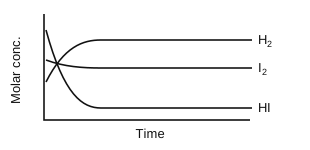
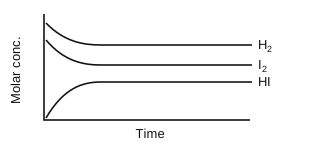
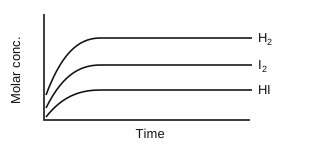
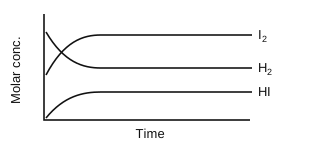
Concept: Starting from the reactants, [H2] and [I2] must fall from their initial values, [HI] must rise from zero, and all three must become constant (parallel to the time axis) at equilibrium.
- Option (B) shows exactly this: both reactant curves decrease, HI grows from zero, and every curve flattens at the same time.
- Options (A) and (D) are wrong because a reactant (H2 or I2) is shown increasing.
- Option (C) is wrong because all three species, including the reactants, are shown increasing.
Short trick: Reactants can only go down, products only up; after equilibrium every curve is horizontal.
Answer: (B)
अवधारणा: अभिकारकों से प्रारंभ करने पर [H2] तथा [I2] अपने प्रारंभिक मानों से घटने चाहिए, [HI] शून्य से बढ़ना चाहिए, और साम्य पर तीनों स्थिर (समय-अक्ष के समांतर) हो जाने चाहिए।
- विकल्प (B) ठीक यही दर्शाता है: दोनों अभिकारक वक्र घटते हैं, HI शून्य से बढ़ता है, और सभी वक्र एक साथ समतल हो जाते हैं।
- विकल्प (A) और (D) गलत हैं क्योंकि एक अभिकारक (H2 या I2) बढ़ता दिखाया गया है।
- विकल्प (C) गलत है क्योंकि अभिकारकों सहित तीनों स्पीशीज़ बढ़ती दिखाई गई हैं।
शॉर्ट ट्रिक: अभिकारक केवल घट सकते हैं, उत्पाद केवल बढ़ सकते हैं; साम्य के बाद प्रत्येक वक्र क्षैतिज होता है।
उत्तर: (B)
JEE Main 2025 (January) – Paper 1 (B.E./B.Tech)ChemistryChemical Equilibrium – approach to equilibriumJEE Main 2025 (January) – Paper 1 (B.E./B.Tech) 2025 · 24 Jan Shift 2
Q109.Find the compound 'A' from the following reaction sequences.
A B yellow ppt
निम्नलिखित अभिक्रिया अनुक्रमों से यौगिक 'A' ज्ञात कीजिए।
A B पीला अवक्षेप
- ACoS
- BZnS
- CNiS
- DMnS
Show answer
Concept: The yellow precipitate obtained with KNO2 in acetic acid medium is potassium hexanitritocobaltate(III), K3[Co(NO2)6] – the classic confirmatory test for Co2+.
- Aqua-regia dissolves the sulfide A, giving the metal chloride B in solution (CoS → CoCl2).
- Co2+ + excess KNO2 in AcOH: 3K+ + Co2+ + 7NO2− + 2H+ → K3[Co(NO2)6]↓ (yellow) + NO + H2O.
- Zn2+, Ni2+ and Mn2+ give no such yellow nitrito complex, so A = CoS.
Short trick: 'Yellow ppt with KNO2/AcOH' = cobalt, every time.
Answer: (A)
अवधारणा: ऐसीटिक अम्ल माध्यम में KNO2 के साथ प्राप्त पीला अवक्षेप पोटैशियम हेक्सानाइट्रिटोकोबाल्टेट(III), K3[Co(NO2)6] है – यह Co2+ का प्रसिद्ध पुष्टिकारक परीक्षण है।
- अम्लराज (aqua-regia) सल्फाइड A को घोलकर विलयन में धातु क्लोराइड B देता है (CoS → CoCl2)।
- Co2+ + आधिक्य KNO2 (AcOH में): 3K+ + Co2+ + 7NO2− + 2H+ → K3[Co(NO2)6]↓ (पीला) + NO + H2O।
- Zn2+, Ni2+ तथा Mn2+ ऐसा पीला नाइट्रिटो संकुल नहीं देते, अतः A = CoS।
शॉर्ट ट्रिक: 'KNO2/AcOH से पीला अवक्षेप' = हर बार कोबाल्ट।
उत्तर: (A)
JEE Main 2025 (January) – Paper 1 (B.E./B.Tech)ChemistryQualitative Analysis – cation identificationJEE Main 2025 (January) – Paper 1 (B.E./B.Tech) 2025 · 24 Jan Shift 2
Q110.The elemental composition of a compound is 54.2%C, 9.2%H and 36.6%O. If the molar mass of the compound is 132 g mol−1, the molecular formula of the compound is :
[Given : The relative atomic mass of C : H : O = 12 : 1 : 16]
किसी यौगिक का तात्विक संघटन 54.2%C, 9.2%H तथा 36.6%O है। यदि यौगिक का मोलर द्रव्यमान 132 g mol−1 है, तो यौगिक का अणु सूत्र है :
[दिया है : C : H : O का आपेक्षिक परमाणु द्रव्यमान = 12 : 1 : 16]
- AC4H9O3
- BC6H12O6
- CC4H8O2
- DC6H12O3
Show answer
Concept: Mole ratio of atoms gives the empirical formula; molecular formula = (empirical formula) × where = molar mass / empirical formula mass.
- Moles per 100 g: C , H , O .
- Divide by 2.29: C : H : O → empirical formula C2H4O (mass 44).
- → molecular formula C6H12O3.
Short trick: Only C6H12O3 among the choices has molar mass 132 (); C6H12O6 is 180.
Answer: (D)
अवधारणा: परमाणुओं का मोल अनुपात मूलानुपाती सूत्र देता है; अणु सूत्र = (मूलानुपाती सूत्र) × , जहाँ = मोलर द्रव्यमान / मूलानुपाती सूत्र द्रव्यमान।
- 100 g में मोल: C , H , O ।
- 2.29 से भाग देने पर: C : H : O → मूलानुपाती सूत्र C2H4O (द्रव्यमान 44)।
- → अणु सूत्र C6H12O3।
शॉर्ट ट्रिक: विकल्पों में केवल C6H12O3 का मोलर द्रव्यमान 132 () है; C6H12O6 का 180 है।
उत्तर: (D)
JEE Main 2025 (January) – Paper 1 (B.E./B.Tech)ChemistryMole Concept – molecular formulaJEE Main 2025 (January) – Paper 1 (B.E./B.Tech) 2025 · 24 Jan Shift 2
Q111.The conditions and consequence that favours the configuration in a metal complex are
किसी धातु संकुल में विन्यास के अनुकूल परिस्थितियाँ एवं परिणाम हैं
- Aweak field ligand, low spin complexदुर्बल क्षेत्र लिगैन्ड, निम्न चक्रण संकुल
- Bweak field ligand, high spin complexदुर्बल क्षेत्र लिगैन्ड, उच्च चक्रण संकुल
- Cstrong field ligand, high spin complexप्रबल क्षेत्र लिगैन्ड, उच्च चक्रण संकुल
- Dstrong field ligand, low spin complexप्रबल क्षेत्र लिगैन्ड, निम्न चक्रण संकुल
Show answer
Concept: For a d4 ion in an octahedral field, the 4th electron enters only when the crystal field splitting Δo is smaller than the pairing energy P.
- means the 4th electron occupies the higher set instead of pairing in .
- This happens when Δo < P, i.e. with a weak field ligand.
- Maximum unpaired electrons (4) result – a high spin complex. A strong field ligand would give the low-spin instead.
Short trick: Electron sitting in before is full ⇒ weak field ⇒ high spin.
Answer: (B)
अवधारणा: अष्टफलकीय क्षेत्र में d4 आयन के लिए चौथा इलेक्ट्रॉन में तभी जाता है जब क्रिस्टल क्षेत्र विपाटन Δo युग्मन ऊर्जा P से छोटा हो।
- का अर्थ है कि चौथा इलेक्ट्रॉन में युग्मित होने के बजाय ऊपरी समुच्चय में जाता है।
- यह तब होता है जब Δo < P, अर्थात् दुर्बल क्षेत्र लिगैन्ड हो।
- अधिकतम अयुग्मित इलेक्ट्रॉन (4) प्राप्त होते हैं – उच्च चक्रण संकुल। प्रबल क्षेत्र लिगैन्ड होने पर निम्न चक्रण बनता।
शॉर्ट ट्रिक: भरने से पहले इलेक्ट्रॉन का में बैठना ⇒ दुर्बल क्षेत्र ⇒ उच्च चक्रण।
उत्तर: (B)
JEE Main 2025 (January) – Paper 1 (B.E./B.Tech)ChemistryCoordination Compounds – crystal field theoryJEE Main 2025 (January) – Paper 1 (B.E./B.Tech) 2025 · 24 Jan Shift 2
Q112.In the given structure, number of sp and sp
2 hybridized carbon atoms present respectively are :
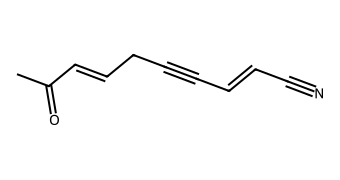
दी गई संरचना में उपस्थित sp तथा sp
2 संकरित कार्बन परमाणुओं की संख्या क्रमशः है :
- A4 and 54 और 5
- B3 and 53 और 5
- C3 and 63 और 6
- D4 and 64 और 6
Show answer
Concept: sp carbon: part of C≡C or C≡N (or cumulated diene); sp2 carbon: part of C=C or C=O; sp3: only single bonds.
- The chain is CH3–CO–CH=CH–CH2–C≡C–CH=CH–C≡N (10 carbons).
- sp carbons: the two alkyne carbons (C≡C) + the nitrile carbon (C≡N) = 3.
- sp2 carbons: the carbonyl carbon (C=O) + four alkene carbons of the two C=C units = 5.
- The remaining CH3 and CH2 are sp3. So sp : sp2 = 3 : 5.
Short trick: Count triple-bonded carbons first (sp), then every doubly bonded carbon (sp2) including C=O.
Answer: (B)
अवधारणा: sp कार्बन: C≡C या C≡N का भाग; sp2 कार्बन: C=C या C=O का भाग; sp3: केवल एकल आबंध।
- शृंखला है CH3–CO–CH=CH–CH2–C≡C–CH=CH–C≡N (10 कार्बन)।
- sp कार्बन: ऐल्काइन के दो कार्बन (C≡C) + नाइट्राइल कार्बन (C≡N) = 3।
- sp2 कार्बन: कार्बोनिल कार्बन (C=O) + दोनों C=C इकाइयों के चार ऐल्कीन कार्बन = 5।
- शेष CH3 तथा CH2 sp3 हैं। अतः sp : sp2 = 3 : 5।
शॉर्ट ट्रिक: पहले त्रिआबंधित कार्बन (sp) गिनिए, फिर C=O सहित प्रत्येक द्विआबंधित कार्बन (sp2)।
उत्तर: (B)
JEE Main 2025 (January) – Paper 1 (B.E./B.Tech)ChemistryGOC – hybridisationJEE Main 2025 (January) – Paper 1 (B.E./B.Tech) 2025 · 24 Jan Shift 2
Q113.Given below are two statements :
Statement (I) :
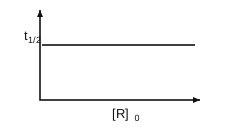
is valid for first order reaction.
Statement (II) :
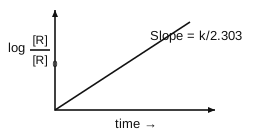
is valid for first order reaction.
In the light of the above statements, choose the correct answer from the options given below :
नीचे दो कथन दिए गए हैं :
कथन (I) :
प्रथम कोटि अभिक्रिया के लिए मान्य है।
कथन (II) :
प्रथम कोटि अभिक्रिया के लिए मान्य है।
उपर्युक्त कथनों के आलोक में, नीचे दिए गए विकल्पों में से सही उत्तर चुनिए :
- ABoth Statement I and Statement II are trueकथन I और कथन II दोनों सत्य हैं
- BStatement I is false but Statement II is trueकथन I असत्य है परन्तु कथन II सत्य है
- CStatement I is true but Statement II is falseकथन I सत्य है परन्तु कथन II असत्य है
- DBoth Statement I and Statement II are falseकथन I और कथन II दोनों असत्य हैं
Show answer
Concept: For a first order reaction (independent of ) and .
- Statement I: vs is a horizontal line because half-life does not depend on initial concentration – true.
- Statement II: vs time is a straight line through the origin but with negative slope , since decreases. The graph shown rises with slope – false.
- A positive slope would be obtained for vs time, not .
Short trick: falls; rises – watch which ratio is on the y-axis.
Answer: (C)
अवधारणा: प्रथम कोटि अभिक्रिया के लिए ( से स्वतंत्र) तथा ।
- कथन I: बनाम क्षैतिज रेखा है क्योंकि अर्ध-आयु प्रारंभिक सांद्रता पर निर्भर नहीं करती – सत्य।
- कथन II: बनाम समय मूल बिंदु से गुजरती सरल रेखा है परन्तु ऋणात्मक ढाल के साथ, क्योंकि घटता है। दर्शाया गया ग्राफ ढाल से बढ़ता है – असत्य।
- धनात्मक ढाल तो बनाम समय के लिए मिलती, के लिए नहीं।
शॉर्ट ट्रिक: घटता है; बढ़ता है – y-अक्ष पर कौन-सा अनुपात है, ध्यान दीजिए।
उत्तर: (C)
JEE Main 2025 (January) – Paper 1 (B.E./B.Tech)ChemistryChemical Kinetics – first order reaction graphsJEE Main 2025 (January) – Paper 1 (B.E./B.Tech) 2025 · 24 Jan Shift 2
Q114.Match List - I with List - II.
| List - I | List - II |
|---|
| (A) | RCN R CHO | (I) | Etard reaction |
| (B) | 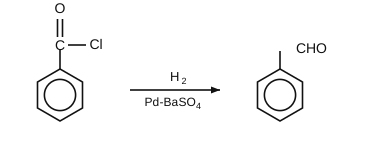 | (II) | Gatterman-Koch reaction |
| (C) | 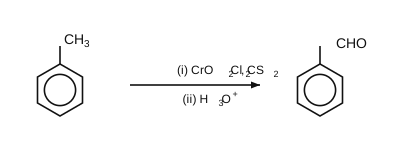 | (III) | Rosenmund reduction |
| (D) | 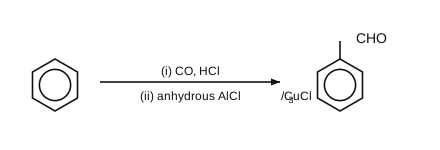 | (IV) | Stephen reaction |
Choose the correct answer from the options given below :
सूची - I का सूची - II से मिलान कीजिए।
| सूची - I | सूची - II |
|---|
| (A) | RCN R CHO | (I) | एटार्ड अभिक्रिया (Etard reaction) |
| (B) | | (II) | गाटरमान-कोच अभिक्रिया (Gatterman-Koch reaction) |
| (C) | | (III) | रोज़ेनमुंड अपचयन (Rosenmund reduction) |
| (D) | | (IV) | स्टीफन अभिक्रिया (Stephen reaction) |
नीचे दिए गए विकल्पों में से सही उत्तर चुनिए :
- A(A)-(III), (B)-(IV), (C)-(II), (D)-(I)
- B(A)-(I), (B)-(III), (C)-(II), (D)-(IV)
- C(A)-(III), (B)-(IV), (C)-(I), (D)-(II)
- D(A)-(IV), (B)-(III), (C)-(I), (D)-(II)
Show answer
Concept: Four classical routes to aldehydes carry the names of their discoverers.
- (A) RCN reduced by SnCl2/HCl to an aldimine, hydrolysed to RCHO – Stephen reaction → (IV).
- (B) Acid chloride + H2 over Pd-BaSO4 (poisoned catalyst) → aldehyde – Rosenmund reduction → (III).
- (C) Toluene + CrO2Cl2 in CS2, then hydrolysis → benzaldehyde – Etard reaction → (I).
- (D) Benzene + CO/HCl with anhydrous AlCl3/CuCl → benzaldehyde – Gatterman-Koch reaction → (II).
Short trick: Stephen–SnCl2 (both start with S); Rosenmund–'reduced' acid chloride; Etard–chromyl chloride; Gatterman-Koch–CO gas.
Answer: (D)
अवधारणा: ऐल्डिहाइड बनाने के चार क्लासिक मार्ग अपने खोजकर्ताओं के नाम से जाने जाते हैं।
- (A) RCN का SnCl2/HCl से ऐल्डिमीन में अपचयन, फिर जल-अपघटन से RCHO – स्टीफन अभिक्रिया → (IV)।
- (B) अम्ल क्लोराइड + H2, Pd-BaSO4 (विषाक्त उत्प्रेरक) पर → ऐल्डिहाइड – रोज़ेनमुंड अपचयन → (III)।
- (C) टॉलूईन + CrO2Cl2 (CS2 में), फिर जल-अपघटन → बेन्ज़ैल्डिहाइड – एटार्ड अभिक्रिया → (I)।
- (D) बेन्ज़ीन + CO/HCl, निर्जल AlCl3/CuCl के साथ → बेन्ज़ैल्डिहाइड – गाटरमान-कोच अभिक्रिया → (II)।
शॉर्ट ट्रिक: स्टीफन–SnCl2 (दोनों 'S' से); रोज़ेनमुंड–अम्ल क्लोराइड का अपचयन; एटार्ड–क्रोमिल क्लोराइड; गाटरमान-कोच–CO गैस।
उत्तर: (D)
JEE Main 2025 (January) – Paper 1 (B.E./B.Tech)ChemistryAldehydes – name reactionsJEE Main 2025 (January) – Paper 1 (B.E./B.Tech) 2025 · 24 Jan Shift 2
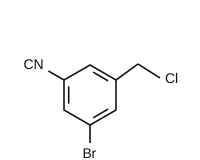
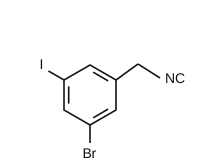
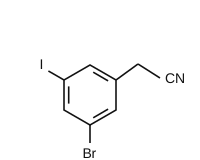
Q115.The structure of the major product formed in the following reaction is :
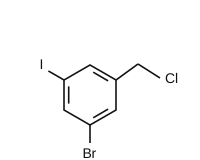
major product
निम्नलिखित अभिक्रिया में बनने वाले मुख्य उत्पाद की संरचना है :
मुख्य उत्पाद
- A
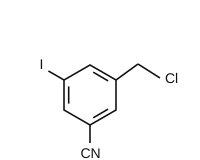
- B
- C
- D
Show answer
Concept: CN− is ambident. In covalent AgCN the carbon lone pair is tied up with Ag, so attack occurs through nitrogen, giving an isocyanide (R–NC). Only the benzylic C–Cl is reactive; aryl C–I and C–Br do not undergo nucleophilic substitution under these conditions.
- Ag+ assists ionisation of the benzylic C–Cl bond.
- N of AgCN attacks the benzylic carbon → ArCH2–NC (isocyanide), with ring I and Br untouched – option (C).
- Options (A) and (B) are wrong because they show substitution at the aromatic C–Br/C–I, which does not occur.
- Option (D) (nitrile, –CH2CN) would be the main product with ionic KCN, not AgCN.
Short trick: KCN → cyanide (R–CN); AgCN → isocyanide (R–NC).
Answer: (C)
अवधारणा: CN− उभयदंती है। सहसंयोजक AgCN में कार्बन का एकाकी युग्म Ag से बँधा होता है, अतः आक्रमण नाइट्रोजन से होता है और आइसोसायनाइड (R–NC) बनता है। केवल बेन्ज़िलिक C–Cl क्रियाशील है; ऐरिल C–I तथा C–Br इन परिस्थितियों में नाभिकरागी प्रतिस्थापन नहीं देते।
- Ag+ बेन्ज़िलिक C–Cl आबंध के आयनन में सहायता करता है।
- AgCN का N बेन्ज़िलिक कार्बन पर आक्रमण करता है → ArCH2–NC (आइसोसायनाइड), वलय के I व Br अपरिवर्तित – विकल्प (C)।
- विकल्प (A) और (B) गलत हैं क्योंकि उनमें ऐरोमैटिक C–Br/C–I पर प्रतिस्थापन दिखाया गया है, जो नहीं होता।
- विकल्प (D) (नाइट्राइल, –CH2CN) आयनिक KCN के साथ मुख्य उत्पाद होता, AgCN के साथ नहीं।
शॉर्ट ट्रिक: KCN → सायनाइड (R–CN); AgCN → आइसोसायनाइड (R–NC)।
उत्तर: (C)
JEE Main 2025 (January) – Paper 1 (B.E./B.Tech)ChemistryHaloalkanes – reaction with AgCNJEE Main 2025 (January) – Paper 1 (B.E./B.Tech) 2025 · 24 Jan Shift 2
Q116.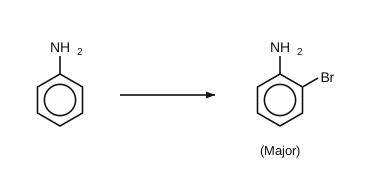
For reaction
The correct order of set of reagents for the above conversion is :
उपर्युक्त अभिक्रिया/रूपांतरण के लिए अभिकर्मकों के समुच्चय का सही क्रम है :
- ABr2 | FeBr3, H2O(Δ), NaOH
- BH2SO4, Ac2O, Br2, H2O(Δ), NaOH
- CAc2O, Br2, H2O(Δ), NaOH
- DAc2O, H2SO4, Br2, NaOH
Show answer
Concept: To brominate aniline selectively at the ortho position, the para position must be blocked and the strongly activating –NH2 moderated.
- H2SO4: sulfonation blocks the para position (–SO3H at C-4).
- Ac2O: acetylation of –NH2 to –NHCOCH3 moderates activation and prevents polybromination/oxidation.
- Br2: bromine now enters ortho to the –NHCOCH3 group (para is blocked).
- H2O(Δ): hot aqueous hydrolysis removes both the acetyl group and the –SO3H group; NaOH liberates the free amine → 2-bromoaniline (major).
- Option (A) fails: free aniline with Br2 gives 2,4,6-tribromoaniline. Option (C) gives mainly p-bromoacetanilide since para is open. Option (D) has no hydrolysis step to free the amine before NaOH.
Short trick: 'Block para (sulfonate), tame NH2 (acetylate), brominate, then unblock' is the standard ortho-selective route.
Answer: (B)
अवधारणा: ऐनिलीन का चयनात्मक ऑर्थो ब्रोमीनन करने के लिए पैरा स्थिति को अवरुद्ध करना और प्रबल सक्रियक –NH2 को संयमित करना आवश्यक है।
- H2SO4: सल्फोनीकरण से पैरा स्थिति अवरुद्ध हो जाती है (C-4 पर –SO3H)।
- Ac2O: –NH2 का ऐसीटिलीकरण (–NHCOCH3) सक्रियण को संयमित करता है तथा बहुब्रोमीनन/ऑक्सीकरण रोकता है।
- Br2: ब्रोमीन अब –NHCOCH3 के ऑर्थो में प्रवेश करता है (पैरा अवरुद्ध है)।
- H2O(Δ): गर्म जलीय जल-अपघटन ऐसीटिल तथा –SO3H दोनों समूह हटा देता है; NaOH मुक्त ऐमीन देता है → 2-ब्रोमोऐनिलीन (मुख्य)।
- विकल्प (A) असफल: मुक्त ऐनिलीन Br2 से 2,4,6-ट्राइब्रोमोऐनिलीन देती है। विकल्प (C) में पैरा खुला होने से मुख्यतः p-ब्रोमोऐसीटैनिलाइड बनता है। विकल्प (D) में NaOH से पहले जल-अपघटन का चरण ही नहीं है।
शॉर्ट ट्रिक: 'पैरा रोकिए (सल्फोनीकरण), NH2 संयमित कीजिए (ऐसीटिलीकरण), ब्रोमीनन कीजिए, फिर समूह हटाइए' – यही मानक ऑर्थो-चयनात्मक मार्ग है।
उत्तर: (B)
JEE Main 2025 (January) – Paper 1 (B.E./B.Tech)ChemistryAmines – synthesis of 2-bromoanilineJEE Main 2025 (January) – Paper 1 (B.E./B.Tech) 2025 · 24 Jan Shift 2
Q117.The successive 5 ionisation energies of an element are 800, 2427, 3658, 25024 and 32824 kJ/mol, respectively. By using the above values predict the group in which the above element is present :
किसी तत्व की क्रमिक 5 आयनन ऊर्जाएँ क्रमशः 800, 2427, 3658, 25024 तथा 32824 kJ/mol हैं। उपर्युक्त मानों के आधार पर उस वर्ग का पूर्वानुमान कीजिए जिसमें यह तत्व उपस्थित है :
- AGroup 13वर्ग 13
- BGroup 14वर्ग 14
- CGroup 2वर्ग 2
- DGroup 4वर्ग 4
Show answer
Concept: A sudden large jump between successive ionisation energies appears when a stable noble-gas core starts being broken; the number of easily removed electrons equals the number of valence electrons.
- IE1 to IE3: 800 → 2427 → 3658 kJ/mol – gradual increase.
- IE3 to IE4: 3658 → 25024 kJ/mol – a nearly 7-fold jump, so the 4th electron comes from the inner core.
- Hence the element has 3 valence electrons (ns2np1) → Group 13 (like B or Al).
Short trick: Count the IEs before the big jump – that count is the number of valence electrons; 3 valence electrons ⇒ group 13.
Answer: (A)
अवधारणा: क्रमिक आयनन ऊर्जाओं में अचानक बड़ी छलांग तब आती है जब स्थायी उत्कृष्ट-गैस कोर टूटना प्रारंभ होता है; आसानी से निकलने वाले इलेक्ट्रॉनों की संख्या = संयोजकता इलेक्ट्रॉनों की संख्या।
- IE1 से IE3: 800 → 2427 → 3658 kJ/mol – क्रमिक वृद्धि।
- IE3 से IE4: 3658 → 25024 kJ/mol – लगभग 7 गुना छलांग, अतः चौथा इलेक्ट्रॉन आंतरिक कोर से निकलता है।
- अतः तत्व में 3 संयोजकता इलेक्ट्रॉन हैं (ns2np1) → वर्ग 13 (जैसे B या Al)।
शॉर्ट ट्रिक: बड़ी छलांग से पहले की आयनन ऊर्जाएँ गिनिए – वही संयोजकता इलेक्ट्रॉनों की संख्या है; 3 संयोजकता इलेक्ट्रॉन ⇒ वर्ग 13।
उत्तर: (A)
JEE Main 2025 (January) – Paper 1 (B.E./B.Tech)ChemistryPeriodicity – successive ionisation energiesJEE Main 2025 (January) – Paper 1 (B.E./B.Tech) 2025 · 24 Jan Shift 2
- A(A)-(IV), (B)-(III), (C)-(II), (D)-(I)
- B(A)-(III), (B)-(IV), (C)-(II), (D)-(I)
- C(A)-(III), (B)-(IV), (C)-(I), (D)-(II)
- D(A)-(III), (B)-(I), (C)-(IV), (D)-(II)
Show answer
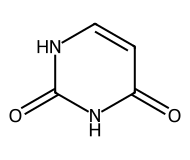
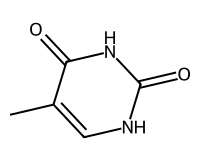
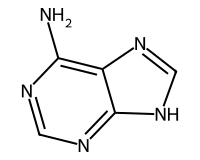
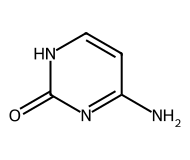
Concept: Adenine and guanine are purines (fused bicyclic); cytosine, thymine and uracil are pyrimidines (single six-membered ring).
- (A) Adenine – the only purine shown, bicyclic with an –NH2 group → (III).
- (B) Cytosine – pyrimidine with one C=O and one –NH2 → (IV).
- (C) Thymine – pyrimidine with two C=O and a 5-CH3 group → (II).
- (D) Uracil – pyrimidine with two C=O and no CH3 → (I).
Short trick: Thymine = 'methyl uracil'; spot the CH3 to separate (II) from (I).
Answer: (B)
अवधारणा: ऐडेनीन तथा ग्वानीन प्यूरीन हैं (संगलित द्विचक्रीय); साइटोसीन, थाइमीन तथा यूरैसिल पिरिमिडीन हैं (एकल षट्सदस्यीय वलय)।
- (A) ऐडेनीन – दर्शाई गई एकमात्र प्यूरीन, –NH2 समूह वाली द्विचक्रीय संरचना → (III)।
- (B) साइटोसीन – एक C=O तथा एक –NH2 वाली पिरिमिडीन → (IV)।
- (C) थाइमीन – दो C=O तथा 5-CH3 समूह वाली पिरिमिडीन → (II)।
- (D) यूरैसिल – दो C=O, बिना CH3 वाली पिरिमिडीन → (I)।
शॉर्ट ट्रिक: थाइमीन = 'मेथिल यूरैसिल'; CH3 देखकर (II) को (I) से अलग कीजिए।
उत्तर: (B)
JEE Main 2025 (January) – Paper 1 (B.E./B.Tech)ChemistryBiomolecules – nucleic acid basesJEE Main 2025 (January) – Paper 1 (B.E./B.Tech) 2025 · 24 Jan Shift 2
Q119.Which of the following mixing of 1 M base and 1 M acid leads to the largest increase in temperature?
1 M क्षारक तथा 1 M अम्ल के निम्नलिखित में से किस मिश्रण से ताप में सर्वाधिक वृद्धि होती है?
- A30 mL CH3COOH and 30 mL NaOH30 mL CH3COOH और 30 mL NaOH
- B45 mL CH3COOH and 25 mL NaOH45 mL CH3COOH और 25 mL NaOH
- C30 mL HCl and 30 mL NaOH30 mL HCl और 30 mL NaOH
- D50 mL HCl and 20 mL NaOH50 mL HCl और 20 mL NaOH
Show answer
Concept: ΔT ∝ heat released / total volume. Strong acid–strong base releases the full 57.1 kJ per mol of water; a weak acid releases less because part of the energy is used for its ionisation.
- Option (C): 30 mmol neutralised in 60 mL → 0.50 mmol per mL, all at 57.1 kJ/mol – highest ΔT.
- Option (D): only 20 mmol (limited by NaOH) in 70 mL → 0.286 mmol per mL – smaller rise.
- Options (A) and (B) use CH3COOH, whose enthalpy of neutralisation (≈ 55 kJ/mol) is lower, and (B) also neutralises only 25 mmol in 70 mL.
Short trick: Pick strong acid + strong base in exact equivalent amounts with the least total volume.
Answer: (C)
अवधारणा: ΔT ∝ उत्सर्जित ऊष्मा / कुल आयतन। प्रबल अम्ल–प्रबल क्षारक प्रति मोल जल पूरे 57.1 kJ देता है; दुर्बल अम्ल कम ऊष्मा देता है क्योंकि ऊर्जा का कुछ भाग उसके आयनन में लगता है।
- विकल्प (C): 60 mL में 30 mmol उदासीन → 0.50 mmol प्रति mL, सब 57.1 kJ/mol पर – सर्वाधिक ΔT।
- विकल्प (D): 70 mL में केवल 20 mmol (NaOH सीमित) → 0.286 mmol प्रति mL – कम वृद्धि।
- विकल्प (A) और (B) में CH3COOH है, जिसकी उदासीनीकरण एन्थैल्पी (≈ 55 kJ/mol) कम है, तथा (B) में 70 mL में केवल 25 mmol ही उदासीन होते हैं।
शॉर्ट ट्रिक: प्रबल अम्ल + प्रबल क्षारक, तुल्य मात्रा में, न्यूनतम कुल आयतन के साथ चुनिए।
उत्तर: (C)
JEE Main 2025 (January) – Paper 1 (B.E./B.Tech)ChemistryThermochemistry – enthalpy of neutralisationJEE Main 2025 (January) – Paper 1 (B.E./B.Tech) 2025 · 24 Jan Shift 2
Q120. kcal
kcal
The heat of formation of SO2(g) is given by :
kcal
kcal
SO2(g) की संभवन ऊष्मा (heat of formation) दी जाती है :
- A kcal
- B kcal
- C kcal
- D kcal
Show answer
Concept: Hess's law – subtract the two thermochemical equations to get the formation reaction of SO2. Heat written on the product side means ΔH = −(that heat).
- Equation 1: kcal; Equation 2: kcal.
- Equation 1 − Equation 2: , with kcal.
- So the heat of formation of SO2(g) is kcal.
Short trick: Target = (full oxidation) − (second-stage oxidation); do the same algebra on the ΔH values.
Answer: (B)
अवधारणा: हेस नियम – दोनों ऊष्मारासायनिक समीकरणों को घटाकर SO2 की संभवन अभिक्रिया प्राप्त कीजिए। उत्पाद पक्ष में लिखी ऊष्मा का अर्थ है ΔH = −(वह ऊष्मा)।
- समीकरण 1: kcal; समीकरण 2: kcal।
- समीकरण 1 − समीकरण 2: , जिसके लिए kcal।
- अतः SO2(g) की संभवन ऊष्मा kcal है।
शॉर्ट ट्रिक: लक्ष्य = (पूर्ण ऑक्सीकरण) − (द्वितीय चरण का ऑक्सीकरण); यही बीजगणित ΔH मानों पर कीजिए।
उत्तर: (B)
JEE Main 2025 (January) – Paper 1 (B.E./B.Tech)ChemistryThermochemistry – Hess law and enthalpy of formationJEE Main 2025 (January) – Paper 1 (B.E./B.Tech) 2025 · 24 Jan Shift 2