Q121.In Carius method of estimation of halogen, 0.25 g of an organic compound gave 0.15 g of silver bromide (AgBr). The percentage of Bromine in the organic compound is ______ ×10−1% (Nearest integer).
(Given : Molar mass of Ag is 108 and Br is 80 g mol−1)
हैलोजन के आकलन की कैरियस विधि में, 0.25 g कार्बनिक यौगिक ने 0.15 g सिल्वर ब्रोमाइड (AgBr) दिया। कार्बनिक यौगिक में ब्रोमीन का प्रतिशत ______ ×10−1% है (निकटतम पूर्णांक)।
(दिया है : Ag का मोलर द्रव्यमान 108 तथा Br का 80 g mol−1)
Show answer
Concept: In the Carius method, % halogen .
- Molar mass of AgBr g mol−1.
- Mass of Br in 0.15 g AgBr g.
- % Br .
- Expressed as : .
Short trick: – plug in and shift the decimal once for the ×10−1 format.
Answer: 255
अवधारणा: कैरियस विधि में, % हैलोजन ।
- AgBr का मोलर द्रव्यमान g mol−1।
- 0.15 g AgBr में Br का द्रव्यमान g।
- % Br ।
- के रूप में: ।
शॉर्ट ट्रिक: – मान रखिए और ×10−1 प्रारूप के लिए दशमलव एक स्थान खिसकाइए।
उत्तर: 255
JEE Main 2025 (January) – Paper 1 (B.E./B.Tech)ChemistryOrganic Analysis – Carius methodJEE Main 2025 (January) – Paper 1 (B.E./B.Tech) 2025 · 24 Jan Shift 2
Q122.The observed and normal molar masses of compound MX2 are 65.6 and 164 respectively. The percent degree of ionisation of MX2 is ______ %. (Nearest integer)
यौगिक MX2 के प्रेक्षित तथा सामान्य मोलर द्रव्यमान क्रमशः 65.6 तथा 164 हैं। MX2 के आयनन की प्रतिशत मात्रा ______ % है। (निकटतम पूर्णांक)
Show answer
Concept: van't Hoff factor ; for dissociation into ions, .
- .
- MX2 → M2+ + 2X−, so .
- , i.e. .
Short trick: Observed mass 2.5 times smaller ⇒ ; with 3 ions, .
Answer: 75
अवधारणा: वान्ट हॉफ गुणांक ; आयनों में वियोजन के लिए ।
- ।
- MX2 → M2+ + 2X−, अतः ।
- , अर्थात् ।
शॉर्ट ट्रिक: प्रेक्षित द्रव्यमान 2.5 गुना छोटा ⇒ ; 3 आयनों के साथ ।
उत्तर: 75
JEE Main 2025 (January) – Paper 1 (B.E./B.Tech)ChemistrySolutions – van’t Hoff factor and ionisationJEE Main 2025 (January) – Paper 1 (B.E./B.Tech) 2025 · 24 Jan Shift 2
Q123.Consider a complex reaction taking place in three steps with rate constants and respectively. The overall rate constant is given by the expression . If the activation energies of the three steps are 60, 30 and 10 kJ mol−1 respectively, then the overall energy of activation in kJ mol−1 is ______ . (Nearest integer)
तीन चरणों में होने वाली एक जटिल अभिक्रिया पर विचार कीजिए जिनके दर स्थिरांक क्रमशः तथा हैं। समग्र दर स्थिरांक व्यंजक द्वारा दिया जाता है। यदि तीनों चरणों की सक्रियण ऊर्जाएँ क्रमशः 60, 30 तथा 10 kJ mol−1 हैं, तो समग्र सक्रियण ऊर्जा kJ mol−1 में ______ है। (निकटतम पूर्णांक)
Show answer
Concept: Substituting the Arrhenius form into the rate-constant expression: multiplying rate constants adds activation energies, dividing subtracts them, and a square root halves them.
- .
- kJ mol−1.
Short trick: Treat like exponents: product → add, quotient → subtract, root → divide by the index.
Answer: 20
अवधारणा: दर स्थिरांक व्यंजक में आरेनियस रूप रखने पर: दर स्थिरांकों के गुणन से सक्रियण ऊर्जाएँ जुड़ती हैं, भाग से घटती हैं, तथा वर्गमूल से आधी हो जाती हैं।
- ।
- kJ mol−1।
शॉर्ट ट्रिक: को घातांकों की तरह लीजिए: गुणनफल → जोड़, भागफल → घटाव, मूल → घात से भाग।
उत्तर: 20
JEE Main 2025 (January) – Paper 1 (B.E./B.Tech)ChemistryChemical Kinetics – overall activation energyJEE Main 2025 (January) – Paper 1 (B.E./B.Tech) 2025 · 24 Jan Shift 2
Q124.The possible number of stereoisomers for 5-phenylpent-4-en-2-ol is ______
5-फेनिलपेन्ट-4-ईन-2-ऑल के संभावित त्रिविम समावयवियों (stereoisomers) की संख्या ______ है।
Show answer
Concept: Number of stereoisomers when no symmetry makes any of them identical.
- 5-Phenylpent-4-en-2-ol: C6H5–CH=CH–CH2–CH(OH)–CH3.
- The C4=C5 double bond carries Ph/H and chain/H → E and Z forms (1 stereogenic double bond).
- C-2 bears four different groups (OH, CH3, H, CH2CH=CHPh) → one chiral centre (R/S).
- Total stereoisomers (2R,E; 2S,E; 2R,Z; 2S,Z).
Short trick: One C=C with different ends + one chiral carbon ⇒ .
Answer: 4
अवधारणा: त्रिविम समावयवियों की संख्या , जब कोई सममिति उन्हें समान न बनाए।
- 5-फेनिलपेन्ट-4-ईन-2-ऑल: C6H5–CH=CH–CH2–CH(OH)–CH3।
- C4=C5 द्विआबंध पर Ph/H तथा शृंखला/H हैं → E और Z रूप (1 त्रिविमजनक द्विआबंध)।
- C-2 पर चार भिन्न समूह हैं (OH, CH3, H, CH2CH=CHPh) → एक किरैल केंद्र (R/S)।
- कुल त्रिविम समावयवी (2R,E; 2S,E; 2R,Z; 2S,Z)।
शॉर्ट ट्रिक: भिन्न सिरों वाला एक C=C + एक किरैल कार्बन ⇒ ।
उत्तर: 4
JEE Main 2025 (January) – Paper 1 (B.E./B.Tech)ChemistryStereochemistry – number of stereoisomersJEE Main 2025 (January) – Paper 1 (B.E./B.Tech) 2025 · 24 Jan Shift 2
Q125.The hydrocarbon (X) with molar mass 80 g mol−1 and 90% carbon has ______ degree of unsaturation.
80 g mol−1 मोलर द्रव्यमान तथा 90% कार्बन वाले हाइड्रोकार्बन (X) की असंतृप्तता की कोटि ______ है।
Show answer
Concept: Find the molecular formula from % composition, then degree of unsaturation for CCHH.
- Mass of C g → carbon atoms.
- Mass of H g → hydrogen atoms. So X = C6H8.
- Degree of unsaturation .
Short trick: Compare with saturated C6H14: deficiency of 6 H ⇒ degrees.
Answer: 3
अवधारणा: % संघटन से अणु सूत्र निकालिए, फिर CCHH के लिए असंतृप्तता की कोटि ।
- C का द्रव्यमान g → कार्बन परमाणु।
- H का द्रव्यमान g → हाइड्रोजन परमाणु। अतः X = C6H8।
- असंतृप्तता की कोटि ।
शॉर्ट ट्रिक: संतृप्त C6H14 से तुलना कीजिए: 6 H की कमी ⇒ कोटि।
उत्तर: 3
JEE Main 2025 (January) – Paper 1 (B.E./B.Tech)ChemistryGOC – degree of unsaturationJEE Main 2025 (January) – Paper 1 (B.E./B.Tech) 2025 · 24 Jan Shift 2
Q126.The carbohydrate "Ribose" present in DNA, is
A. A pentose sugar
B. present in pyranose form
C. in "D" configuration
D. a reducing sugar, when free
E. in α-anomeric form
Choose the correct answer from the options given below:
DNA में उपस्थित कार्बोहाइड्रेट "राइबोस" है
A. एक पेन्टोस शर्करा
B. पाइरैनोस रूप में उपस्थित
C. "D" विन्यास में
D. मुक्त अवस्था में एक अपचायक शर्करा (reducing sugar)
E. α-ऐनोमेरिक रूप में
नीचे दिए गए विकल्पों में से सही उत्तर चुनिए:
- AA, D and E Onlyकेवल A, D और E
- BA, C and D Onlyकेवल A, C और D
- CA, B and E Onlyकेवल A, B और E
- DB, D and E Onlyकेवल B, D और E
Show answer
Concept: Ribose is an aldopentose; in nucleic acids it is present as β-D-ribofuranose (a five-membered ring).
- A – true: ribose has five carbon atoms, so it is a pentose sugar.
- B – false: in DNA/RNA the sugar exists in the five-membered furanose ring, not the six-membered pyranose ring.
- C – true: natural ribose has the D-configuration.
- D – true: free ribose has a free anomeric –OH (potential –CHO group), so it reduces Tollens'/Fehling's reagents.
- E – false: in nucleic acids the sugar is in the β-anomeric form, not α.
- Hence A, C and D are correct.
Answer: (B)
अवधारणा: राइबोस एक ऐल्डोपेन्टोस है; न्यूक्लिक अम्लों में यह β-D-राइबोफ्यूरैनोस (पाँच-सदस्यीय वलय) के रूप में उपस्थित रहता है।
- A – सत्य: राइबोस में पाँच कार्बन परमाणु हैं, अतः यह पेन्टोस शर्करा है।
- B – असत्य: DNA/RNA में शर्करा पाँच-सदस्यीय फ्यूरैनोस वलय में होती है, छह-सदस्यीय पाइरैनोस में नहीं।
- C – सत्य: प्राकृतिक राइबोस D-विन्यास में होता है।
- D – सत्य: मुक्त राइबोस में मुक्त ऐनोमेरिक –OH (संभावित –CHO समूह) होता है, अतः यह टॉलेन/फेहलिंग अभिकर्मकों को अपचयित करता है।
- E – असत्य: न्यूक्लिक अम्लों में शर्करा β-ऐनोमेरिक रूप में होती है, α में नहीं।
- अतः A, C और D सही हैं।
उत्तर: (B)
JEE Main 2025 (January) – Paper 1 (B.E./B.Tech)ChemistryBiomolecules – carbohydratesJEE Main 2025 (January) – Paper 1 (B.E./B.Tech) 2025 · 24 Jan Shift 1
Q127.Given below are two statements:
Statement I: The conversion proceeds well in the less polar medium.
CH3−CH2−CH2−CH2−Cl CH3−CH2−CH2−CH2−OH + Cl(−)
Statement II: The conversion proceeds well in the more polar medium.
CH3−CH2−CH2−CH2−Cl CH3−CH2−CH2−CH2−(+)NR3 Cl(−)
In the light of the above statements, choose the correct answer from the options given below
नीचे दो कथन दिए गए हैं:
कथन I: यह परिवर्तन कम ध्रुवीय माध्यम में अच्छी तरह सम्पन्न होता है।
CH3−CH2−CH2−CH2−Cl CH3−CH2−CH2−CH2−OH + Cl(−)
कथन II: यह परिवर्तन अधिक ध्रुवीय माध्यम में अच्छी तरह सम्पन्न होता है।
CH3−CH2−CH2−CH2−Cl CH3−CH2−CH2−CH2−(+)NR3 Cl(−)
उपर्युक्त कथनों के आलोक में, नीचे दिए गए विकल्पों में से सही उत्तर चुनिए
- ABoth Statement I and Statement II are trueकथन I और कथन II दोनों सत्य हैं
- BStatement I is true but Statement II is falseकथन I सत्य है परन्तु कथन II असत्य है
- CStatement I is false but Statement II is trueकथन I असत्य है परन्तु कथन II सत्य है
- DBoth Statement I and Statement II are falseकथन I और कथन II दोनों असत्य हैं
Show answer
Concept: Solvent effect on SN2 (Hughes–Ingold rules): if charge is dispersed in the transition state, a more polar solvent slows the reaction; if charge is created in the transition state, a more polar solvent speeds it up.
- Statement I: the nucleophile HO− is an anion. In the transition state [HOδ−⋯C⋯Clδ−] the full negative charge gets dispersed, so a polar solvent stabilises the reactant (HO−) more than the TS. Hence the reaction goes better in a less polar medium – true.
- Statement II: the nucleophile R3N is neutral and the product is an ion pair R3N+–C⋯Cl−. Charge separation develops in the TS, which a more polar medium stabilises, so the reaction speeds up – true.
Short trick: Anion + neutral substrate → polar solvent slows; neutral + neutral → polar solvent helps.
Answer: (A)
अवधारणा: SN2 पर विलायक प्रभाव (ह्यूज–इंगोल्ड नियम): यदि संक्रमण अवस्था में आवेश फैल जाता है तो अधिक ध्रुवीय विलायक अभिक्रिया धीमी करता है; यदि संक्रमण अवस्था में आवेश उत्पन्न होता है तो अधिक ध्रुवीय विलायक उसे तीव्र करता है।
- कथन I: नाभिकरागी HO− ऋणायन है। संक्रमण अवस्था [HOδ−⋯C⋯Clδ−] में पूर्ण ऋणावेश फैल जाता है, अतः ध्रुवीय विलायक अभिकारक (HO−) को TS से अधिक स्थायी करता है। इसलिए अभिक्रिया कम ध्रुवीय माध्यम में बेहतर चलती है – सत्य।
- कथन II: नाभिकरागी R3N उदासीन है और उत्पाद आयन-युग्म R3N+–C⋯Cl− है। TS में आवेश पृथक्करण उत्पन्न होता है जिसे अधिक ध्रुवीय माध्यम स्थायी करता है, अतः अभिक्रिया तीव्र होती है – सत्य।
शॉर्ट ट्रिक: ऋणायन + उदासीन क्रियाधार → ध्रुवीय विलायक धीमा करे; उदासीन + उदासीन → ध्रुवीय विलायक सहायक।
उत्तर: (A)
JEE Main 2025 (January) – Paper 1 (B.E./B.Tech)ChemistryHaloalkanes – substitution & solvent effectJEE Main 2025 (January) – Paper 1 (B.E./B.Tech) 2025 · 24 Jan Shift 1
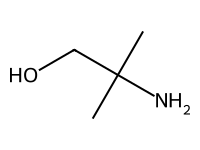
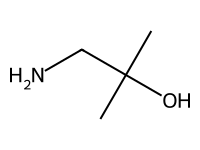
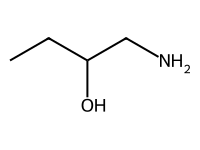
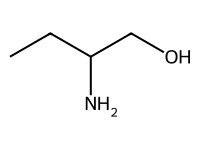
Q128.The product (A) formed in the following reaction sequence is
CH3−C≡CH (A) Product
निम्नलिखित अभिक्रिया अनुक्रम में बनने वाला उत्पाद (A) है
CH3−C≡CH (A) उत्पाद
- A
- B
- C
- D
Show answer
Concept: Kucherov (Markovnikov) hydration of an alkyne gives a ketone; HCN adds to the carbonyl to give a cyanohydrin; H2/Ni reduces −C≡N to −CH2NH2.
- CH3−C≡CH + H2O (Hg2+/H2SO4) → Markovnikov addition → enol → tautomerises to acetone, CH3COCH3.
- Acetone + HCN → acetone cyanohydrin, (CH3)2C(OH)CN.
- H2/Ni reduces the nitrile: (CH3)2C(OH)−CH2NH2 (1-amino-2-methylpropan-2-ol) – the structure in (B).
- (A) has the NH2 and OH positions interchanged; (C) and (D) have a straight-chain C4 skeleton, which would need butanal/butanone – not formed from propyne by Markovnikov hydration.
Answer: (B)
अवधारणा: ऐल्काइन का कुचेरोव (मार्कोनिकोव) जलयोजन कीटोन देता है; HCN कार्बोनिल पर जुड़कर सायनोहाइड्रिन बनाता है; H2/Ni, −C≡N को −CH2NH2 में अपचयित करता है।
- CH3−C≡CH + H2O (Hg2+/H2SO4) → मार्कोनिकोव योग → ईनॉल → चलावयवता से ऐसीटोन, CH3COCH3।
- ऐसीटोन + HCN → ऐसीटोन सायनोहाइड्रिन, (CH3)2C(OH)CN।
- H2/Ni नाइट्राइल को अपचयित करता है: (CH3)2C(OH)−CH2NH2 (1-ऐमीनो-2-मेथिलप्रोपेन-2-ऑल) – विकल्प (B) की संरचना।
- (A) में NH2 और OH के स्थान बदले हुए हैं; (C) तथा (D) में सीधी C4 शृंखला है, जिसके लिए ब्यूटेनैल/ब्यूटेनोन चाहिए – जो प्रोपाइन के मार्कोनिकोव जलयोजन से नहीं बनते।
उत्तर: (B)
JEE Main 2025 (January) – Paper 1 (B.E./B.Tech)ChemistryAlkynes & carbonyls – reaction sequenceJEE Main 2025 (January) – Paper 1 (B.E./B.Tech) 2025 · 24 Jan Shift 1
Q129.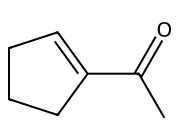
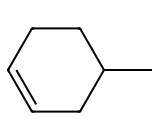
Aman has been asked to synthesise the molecule (x). He thought of preparing the molecule using an aldol condensation reaction. He found a few cyclic alkenes in his laboratory. He thought of performing ozonolysis reaction on alkene to produce a dicarbonyl compound followed by aldol reaction to prepare "x". Predict the suitable alkene that can lead to the formation of "x".
अमन को अणु (x) का संश्लेषण करने को कहा गया है। उसने ऐल्डोल संघनन अभिक्रिया द्वारा यह अणु बनाने का विचार किया। उसे अपनी प्रयोगशाला में कुछ चक्रीय ऐल्कीन मिलीं। उसने सोचा कि ऐल्कीन का ओज़ोनी अपघटन (ozonolysis) करके डाइकार्बोनिल यौगिक बनाया जाए और फिर ऐल्डोल अभिक्रिया से "x" तैयार किया जाए। वह उपयुक्त ऐल्कीन बताइए जिससे "x" का निर्माण हो सकता है।
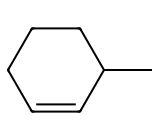
- A
- B
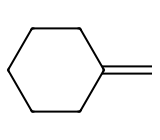
- C
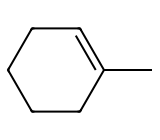
- D
Show answer
Concept: Retro-analysis: an α,β-unsaturated cyclic ketone made by intramolecular aldol condensation comes from a 1,6- (or 1,5-) dicarbonyl compound, which in turn comes from ozonolysis of a cycloalkene.
- x = 1-acetylcyclopent-1-ene. Breaking the C=C formed in the aldol step and adding back H2O (retro-aldol) gives the keto–aldehyde CH3CO−(CH2)4−CHO (6-oxoheptanal).
- This 1,6-dicarbonyl comes from reductive ozonolysis of 1-methylcyclohexene: the ring C=C bearing the CH3 cleaves to give the methyl ketone end and the aldehyde end – structure (C).
- Intramolecular aldol: the enolate α to the ketone attacks the aldehyde to form the five-membered ring; dehydration gives x.
- (A) 3-methylcyclohexene and (D) 4-methylcyclohexene give dialdehydes (no methyl ketone), and (B) methylenecyclohexane gives cyclohexanone + HCHO, none of which can cyclise to x.
Answer: (C)
अवधारणा: प्रतिगामी विश्लेषण: अन्तः-आण्विक ऐल्डोल संघनन से बना α,β-असंतृप्त चक्रीय कीटोन किसी 1,6- (या 1,5-) डाइकार्बोनिल यौगिक से बनता है, जो चक्रीय ऐल्कीन के ओज़ोनी अपघटन से प्राप्त होता है।
- x = 1-ऐसीटिलसाइक्लोपेन्ट-1-ईन। ऐल्डोल चरण में बने C=C को तोड़कर (रेट्रो-ऐल्डोल) कीटो–ऐल्डिहाइड CH3CO−(CH2)4−CHO (6-ऑक्सोहेप्टेनैल) प्राप्त होता है।
- यह 1,6-डाइकार्बोनिल 1-मेथिलसाइक्लोहेक्सीन के अपचयी ओज़ोनी अपघटन से बनता है: CH3 वाला वलय C=C टूटकर एक सिरे पर मेथिल कीटोन और दूसरे सिरे पर ऐल्डिहाइड देता है – संरचना (C)।
- अन्तः-आण्विक ऐल्डोल: कीटोन के α-कार्बन का ईनोलेट ऐल्डिहाइड पर आक्रमण कर पाँच-सदस्यीय वलय बनाता है; निर्जलीकरण से x प्राप्त होता है।
- (A) 3-मेथिलसाइक्लोहेक्सीन और (D) 4-मेथिलसाइक्लोहेक्सीन डाइऐल्डिहाइड देते हैं (मेथिल कीटोन नहीं), तथा (B) मेथिलीनसाइक्लोहेक्सेन से साइक्लोहेक्सेनोन + HCHO बनते हैं – इनमें से कोई x में चक्रित नहीं हो सकता।
उत्तर: (C)
JEE Main 2025 (January) – Paper 1 (B.E./B.Tech)ChemistryOzonolysis & aldol condensationJEE Main 2025 (January) – Paper 1 (B.E./B.Tech) 2025 · 24 Jan Shift 1
Q130.Which of the following arrangements with respect to their reactivity in nucleophilic addition reaction is correct?
नाभिकरागी योगज अभिक्रिया (nucleophilic addition) में क्रियाशीलता के सन्दर्भ में निम्नलिखित में से कौन-सा क्रम सही है?
- Aacetophenone < benzaldehyde < p-tolualdehyde < p-nitrobenzaldehydeऐसीटोफीनोन < बेन्ज़ैल्डिहाइड < p-टॉलूऐल्डिहाइड < p-नाइट्रोबेन्ज़ैल्डिहाइड
- Bbenzaldehyde < acetophenone < p-nitrobenzaldehyde < p-tolualdehydeबेन्ज़ैल्डिहाइड < ऐसीटोफीनोन < p-नाइट्रोबेन्ज़ैल्डिहाइड < p-टॉलूऐल्डिहाइड
- Cp-nitrobenzaldehyde < benzaldehyde < p-tolualdehyde < acetophenonep-नाइट्रोबेन्ज़ैल्डिहाइड < बेन्ज़ैल्डिहाइड < p-टॉलूऐल्डिहाइड < ऐसीटोफीनोन
- Dacetophenone < p-tolualdehyde < benzaldehyde < p-nitrobenzaldehydeऐसीटोफीनोन < p-टॉलूऐल्डिहाइड < बेन्ज़ैल्डिहाइड < p-नाइट्रोबेन्ज़ैल्डिहाइड
Show answer
Concept: Nucleophilic addition is faster the more electrophilic the carbonyl carbon: ketones < aldehydes (extra +I and steric bulk of the second alkyl group); electron-donating groups (−CH3) lower reactivity, electron-withdrawing groups (−NO2) raise it.
- Acetophenone is a ketone – least reactive of the four.
- Among the aldehydes: p-CH3 donates electrons → p-tolualdehyde < benzaldehyde.
- p-NO2 withdraws electrons strongly → p-nitrobenzaldehyde is the most reactive.
- Order: acetophenone < p-tolualdehyde < benzaldehyde < p-nitrobenzaldehyde.
Short trick: Ketone last; then arrange aldehydes by EDG < H < EWG.
Answer: (D)
अवधारणा: कार्बोनिल कार्बन जितना अधिक इलेक्ट्रॉनरागी हो, नाभिकरागी योग उतना तीव्र: कीटोन < ऐल्डिहाइड (दूसरे ऐल्किल समूह का +I तथा त्रिविम प्रभाव); इलेक्ट्रॉनदाता समूह (−CH3) क्रियाशीलता घटाते हैं, इलेक्ट्रॉन-आकर्षी समूह (−NO2) बढ़ाते हैं।
- ऐसीटोफीनोन कीटोन है – चारों में सबसे कम क्रियाशील।
- ऐल्डिहाइडों में: p-CH3 इलेक्ट्रॉन देता है → p-टॉलूऐल्डिहाइड < बेन्ज़ैल्डिहाइड।
- p-NO2 प्रबल इलेक्ट्रॉन-आकर्षी है → p-नाइट्रोबेन्ज़ैल्डिहाइड सर्वाधिक क्रियाशील।
- क्रम: ऐसीटोफीनोन < p-टॉलूऐल्डिहाइड < बेन्ज़ैल्डिहाइड < p-नाइट्रोबेन्ज़ैल्डिहाइड।
शॉर्ट ट्रिक: कीटोन सबसे पीछे; फिर ऐल्डिहाइड EDG < H < EWG क्रम में।
उत्तर: (D)
JEE Main 2025 (January) – Paper 1 (B.E./B.Tech)ChemistryAldehydes & ketones – nucleophilic additionJEE Main 2025 (January) – Paper 1 (B.E./B.Tech) 2025 · 24 Jan Shift 1
Q131.Let us consider an endothermic reaction which is non-spontaneous at the freezing point of water. However, the reaction is spontaneous at boiling point of water. Choose the correct option.
मान लीजिए एक ऊष्माशोषी अभिक्रिया जल के हिमांक पर स्वतः प्रवर्तित (spontaneous) नहीं है, परन्तु जल के क्वथनांक पर स्वतः प्रवर्तित है। सही विकल्प चुनिए।
- ABoth ΔH and ΔS are (-ve)ΔH तथा ΔS दोनों (-ve) हैं
- BΔH is (-ve) but ΔS is (+ve)ΔH (-ve) है परन्तु ΔS (+ve) है
- CΔH is (+ve) but ΔS is (−ve)ΔH (+ve) है परन्तु ΔS (−ve) है
- DBoth ΔH and ΔS are (+ve)ΔH तथा ΔS दोनों (+ve) हैं
Show answer
Concept: ΔG = ΔH − TΔS; a reaction is spontaneous when ΔG < 0.
- Endothermic ⇒ ΔH > 0.
- At 273 K (freezing point) ΔG > 0 (non-spontaneous); at 373 K (boiling point) ΔG < 0 (spontaneous).
- ΔG becomes negative on raising T only if the −TΔS term grows more negative, i.e. ΔS > 0.
- With ΔH > 0 and ΔS > 0 the reaction is spontaneous above T = ΔH/ΔS, which here lies between 273 K and 373 K.
- (A) and (C) would never become spontaneous at high T; (B) would be spontaneous at all temperatures.
Answer: (D)
अवधारणा: ΔG = ΔH − TΔS; अभिक्रिया तब स्वतः प्रवर्तित होती है जब ΔG < 0।
- ऊष्माशोषी ⇒ ΔH > 0।
- 273 K (हिमांक) पर ΔG > 0 (स्वतः प्रवर्तित नहीं); 373 K (क्वथनांक) पर ΔG < 0 (स्वतः प्रवर्तित)।
- तापमान बढ़ाने पर ΔG तभी ऋणात्मक होगा जब −TΔS पद और ऋणात्मक हो, अर्थात् ΔS > 0।
- ΔH > 0 तथा ΔS > 0 होने पर अभिक्रिया T = ΔH/ΔS से ऊपर स्वतः प्रवर्तित होती है, जो यहाँ 273 K और 373 K के बीच है।
- (A) तथा (C) उच्च ताप पर कभी स्वतः प्रवर्तित नहीं होते; (B) प्रत्येक ताप पर स्वतः प्रवर्तित होता।
उत्तर: (D)
JEE Main 2025 (January) – Paper 1 (B.E./B.Tech)ChemistryThermodynamics – spontaneityJEE Main 2025 (January) – Paper 1 (B.E./B.Tech) 2025 · 24 Jan Shift 1
Q132.Preparation of potassium permanganate from MnO2 involves two step process in which the 1st step is a reaction with KOH and KNO3 to produce
MnO2 से पोटैशियम परमैंगनेट के विरचन में दो-चरणीय प्रक्रम होता है जिसमें पहला चरण KOH तथा KNO3 के साथ अभिक्रिया द्वारा निम्न उत्पाद बनाता है
- AK3MnO4
- BK4[Mn(OH)6]
- CKMnO4
- DK2MnO4
Show answer
Concept: Commercial preparation of KMnO4: alkaline oxidative fusion of MnO2 gives potassium manganate, which is then oxidised to permanganate.
- Step 1: 2MnO2 + 4KOH + O2 (or KNO3 as the oxidant) → 2K2MnO4 (dark green manganate, Mn in +6) + 2H2O.
- Step 2: electrolytic (or disproportionation) oxidation of MnO42− to MnO4−, i.e. KMnO4.
- (A) K3MnO4 (Mn +5) is not formed in this fusion; (C) KMnO4 is the product of the 2nd step, not the 1st; (B) K4[Mn(OH)6] is not involved at all.
Answer: (D)
अवधारणा: KMnO4 का व्यावसायिक विरचन: MnO2 का क्षारीय ऑक्सीकारक संगलन पोटैशियम मैंगनेट देता है, जिसे फिर परमैंगनेट में ऑक्सीकृत किया जाता है।
- चरण 1: 2MnO2 + 4KOH + O2 (या ऑक्सीकारक के रूप में KNO3) → 2K2MnO4 (गहरा हरा मैंगनेट, Mn की +6 अवस्था) + 2H2O।
- चरण 2: MnO42− का विद्युत्-अपघटनी (या विषमीकरण) ऑक्सीकरण MnO4− अर्थात् KMnO4 में।
- (A) K3MnO4 (Mn +5) इस संगलन में नहीं बनता; (C) KMnO4 दूसरे चरण का उत्पाद है, पहले का नहीं; (B) K4[Mn(OH)6] की कोई भूमिका नहीं है।
उत्तर: (D)
JEE Main 2025 (January) – Paper 1 (B.E./B.Tech)Chemistryd-block – preparation of KMnO4JEE Main 2025 (January) – Paper 1 (B.E./B.Tech) 2025 · 24 Jan Shift 1
Q133.For a reaction, in a constant volume container, no products were present initially. The final pressure of the system when 50% of reaction gets completed is
स्थिर आयतन के पात्र में अभिक्रिया के लिए प्रारम्भ में कोई उत्पाद उपस्थित नहीं था। अभिक्रिया के 50% पूर्ण होने पर निकाय का अन्तिम दाब होगा
- A5 times of initial pressureप्रारम्भिक दाब का 5 गुना
- B5/2 times of initial pressureप्रारम्भिक दाब का 5/2 गुना
- C7/2 times of initial pressureप्रारम्भिक दाब का 7/2 गुना
- D7/4 times of initial pressureप्रारम्भिक दाब का 7/4 गुना
Show answer
Concept: At constant V and T, pressure ∝ moles; track partial pressures with the stoichiometry.
- Let the initial pressure of N2O5 be . When pressure of N2O5 reacts: N2O5 = , NO2 = , O2 = .
- 50% completion ⇒ .
- Total pressure .
Short trick: Δn per mole reacted = ; total .
Answer: (D)
अवधारणा: स्थिर V व T पर दाब ∝ मोल; रससमीकरणमिति से आंशिक दाब लिखिए।
- माना N2O5 का प्रारम्भिक दाब है। जब N2O5 का दाब अभिकृत होता है: N2O5 = , NO2 = , O2 = ।
- 50% पूर्णता ⇒ ।
- कुल दाब ।
शॉर्ट ट्रिक: प्रति मोल अभिकृत Δn ; कुल ।
उत्तर: (D)
JEE Main 2025 (January) – Paper 1 (B.E./B.Tech)ChemistryGaseous reactions – pressure stoichiometryJEE Main 2025 (January) – Paper 1 (B.E./B.Tech) 2025 · 24 Jan Shift 1
Q134.One mole of the octahedral complex compound Co(NH3)5Cl3 gives 3 moles of ions on dissolution in water. One mole of the same complex reacts with excess of AgNO3 solution to yield two moles of AgCl(s). The structure of the complex is:
अष्टफलकीय संकुल यौगिक Co(NH3)5Cl3 का एक मोल जल में घुलने पर 3 मोल आयन देता है। इसी संकुल का एक मोल AgNO3 विलयन के आधिक्य से अभिक्रिया कर दो मोल AgCl(s) देता है। संकुल की संरचना है:
- A[Co(NH3)4Cl2] · Cl · NH3
- B[Co(NH3)3Cl3] · 2NH3
- C[Co(NH3)5Cl]Cl2
- D[Co(NH3)4Cl] · Cl2 · NH3
Show answer
Concept: Only counter ions outside the coordination sphere ionise in water and are precipitated by AgNO3; ligands inside the sphere are not.
- 3 ions per formula unit ⇒ the complex cation must carry charge +2 with 2 Cl− outside: [complex]2+ + 2Cl−.
- 2 mol AgCl ⇒ exactly 2 ionisable Cl− – consistent with [Co(NH3)5Cl]Cl2, where one Cl is coordinated (C.N. = 5 NH3 + 1 Cl = 6, octahedral).
- (A) gives only 2 ions and 1 AgCl; (B) is a non-electrolyte (no ions, no AgCl); (D) has a 5-coordinate complex [Co(NH3)4Cl]2+, which cannot be octahedral.
Answer: (C)
अवधारणा: केवल उपसहसंयोजन मंडल के बाहर के प्रति-आयन जल में आयनित होते हैं और AgNO3 द्वारा अवक्षेपित होते हैं; मंडल के भीतर के लिगन्ड नहीं।
- प्रति सूत्र-इकाई 3 आयन ⇒ संकुल धनायन पर +2 आवेश तथा 2 Cl− बाहर: [संकुल]2+ + 2Cl−।
- 2 मोल AgCl ⇒ ठीक 2 आयननीय Cl− – यह [Co(NH3)5Cl]Cl2 के अनुरूप है, जिसमें एक Cl उपसहसंयोजित है (उपसहसंयोजन संख्या = 5 NH3 + 1 Cl = 6, अष्टफलकीय)।
- (A) केवल 2 आयन व 1 AgCl देता; (B) अन-अपघट्य है (न आयन, न AgCl); (D) में [Co(NH3)4Cl]2+ की उपसहसंयोजन संख्या 5 है, जो अष्टफलकीय नहीं हो सकता।
उत्तर: (C)
JEE Main 2025 (January) – Paper 1 (B.E./B.Tech)ChemistryCoordination compounds – ionisation & structureJEE Main 2025 (January) – Paper 1 (B.E./B.Tech) 2025 · 24 Jan Shift 1
Q135.Which of the following ions is the strongest oxidizing agent? (Atomic Number of Ce = 58, Eu = 63, Tb = 65, Lu = 71)
निम्नलिखित में से कौन-सा आयन प्रबलतम ऑक्सीकारक है? (परमाणु क्रमांक: Ce = 58, Eu = 63, Tb = 65, Lu = 71)
- AEu2+
- BTb4+
- CLu3+
- DCe3+
Show answer
Concept: The most stable oxidation state of lanthanoids is +3. An ion in an unusually high state (+4) tends to gain an electron and return to +3, so it acts as a strong oxidising agent; an ion in +2 tends to lose an electron (reducing agent).
- Tb4+ (+4 state) readily takes an electron to give the stable Tb3+ → strongest oxidant among the given ions.
- Eu2+ (4f7) tends to go to Eu3+ by losing an electron → it is a reducing agent, not an oxidant.
- Lu3+ (4f14) and Ce3+ are in the stable +3 state → practically no oxidising tendency.
Short trick: Ln4+ = oxidant, Ln2+ = reductant, Ln3+ = stable.
Answer: (B)
अवधारणा: लैन्थेनॉयडों की सर्वाधिक स्थायी ऑक्सीकरण अवस्था +3 है। असामान्य उच्च अवस्था (+4) वाला आयन इलेक्ट्रॉन ग्रहण कर +3 में लौटना चाहता है, अतः प्रबल ऑक्सीकारक होता है; +2 अवस्था वाला आयन इलेक्ट्रॉन त्याग कर अपचायक बनता है।
- Tb4+ (+4 अवस्था) सरलता से इलेक्ट्रॉन लेकर स्थायी Tb3+ बनाता है → दिए गए आयनों में प्रबलतम ऑक्सीकारक।
- Eu2+ (4f7) इलेक्ट्रॉन त्याग कर Eu3+ बनना चाहता है → यह अपचायक है, ऑक्सीकारक नहीं।
- Lu3+ (4f14) तथा Ce3+ स्थायी +3 अवस्था में हैं → ऑक्सीकरण की प्रवृत्ति नगण्य।
शॉर्ट ट्रिक: Ln4+ = ऑक्सीकारक, Ln2+ = अपचायक, Ln3+ = स्थायी।
उत्तर: (B)
JEE Main 2025 (January) – Paper 1 (B.E./B.Tech)Chemistryf-block – lanthanoid oxidation statesJEE Main 2025 (January) – Paper 1 (B.E./B.Tech) 2025 · 24 Jan Shift 1
Q136.Ksp for Cr(OH)3 is . What is the molar solubility of this salt in water?
Cr(OH)3 के लिए Ksp का मान है। जल में इस लवण की मोलर विलेयता क्या होगी?
- A
- B
- C
- D
Show answer
Concept: For a salt AB3 of solubility : Ksp .
- Cr(OH)3 ⇌ Cr3+ + 3OH−; [Cr3+] = , [OH−] = .
- Ksp .
- – option (C).
Short trick: For AB3-type salts, .
Answer: (C)
अवधारणा: विलेयता वाले AB3 प्रकार के लवण के लिए: Ksp ।
- Cr(OH)3 ⇌ Cr3+ + 3OH−; [Cr3+] = , [OH−] = ।
- Ksp ।
- – विकल्प (C)।
शॉर्ट ट्रिक: AB3 प्रकार के लवण के लिए ।
उत्तर: (C)
JEE Main 2025 (January) – Paper 1 (B.E./B.Tech)ChemistryIonic equilibrium – solubility productJEE Main 2025 (January) – Paper 1 (B.E./B.Tech) 2025 · 24 Jan Shift 1
Q137.Which of the following statements are NOT true about the periodic table?
A. The properties of elements are function of atomic weights.
B. The properties of elements are function of atomic numbers.
C. Elements having similar outer electronic configurations are arranged in same period.
D. An element's location reflects the quantum numbers of the last filled orbital.
E. The number of elements in a period is same as the number of atomic orbitals available in energy level that is being filled.
Choose the correct answer from the options given below:
आवर्त सारणी के विषय में निम्नलिखित में से कौन-से कथन सत्य नहीं हैं?
A. तत्वों के गुणधर्म परमाणु भारों के फलन हैं।
B. तत्वों के गुणधर्म परमाणु क्रमांकों के फलन हैं।
C. समान बाह्य इलेक्ट्रॉनिक विन्यास वाले तत्व एक ही आवर्त में व्यवस्थित हैं।
D. किसी तत्व की स्थिति अन्तिम भरे गए कक्षक की क्वान्टम संख्याओं को दर्शाती है।
E. किसी आवर्त में तत्वों की संख्या, भरे जा रहे ऊर्जा स्तर में उपलब्ध परमाणु कक्षकों की संख्या के बराबर होती है।
नीचे दिए गए विकल्पों में से सही उत्तर चुनिए:
- AA, C and E Onlyकेवल A, C और E
- BA and E Onlyकेवल A और E
- CB, C and E Onlyकेवल B, C और E
- DD and E Onlyकेवल D और E
Show answer
Concept: Modern periodic law: properties of elements are a periodic function of their atomic numbers; the table is built on electronic configuration.
- A – NOT true: 'function of atomic weights' was Mendeleev's (old) law; the modern basis is atomic number.
- B – true: modern periodic law.
- C – NOT true: elements with similar outer electronic configurations fall in the same group, not the same period.
- D – true: the period gives n and the block (s, p, d, f) gives l of the last filled orbital.
- E – NOT true: the number of elements in a period equals twice the number of orbitals being filled (e.g. period 2 has 8 elements but only 4 orbitals: one 2s + three 2p).
- Hence A, C and E are not true.
Answer: (A)
अवधारणा: आधुनिक आवर्त नियम: तत्वों के गुणधर्म उनके परमाणु क्रमांकों के आवर्ती फलन होते हैं; सारणी इलेक्ट्रॉनिक विन्यास पर आधारित है।
- A – असत्य: 'परमाणु भारों का फलन' मेन्डेलीव का (पुराना) नियम था; आधुनिक आधार परमाणु क्रमांक है।
- B – सत्य: आधुनिक आवर्त नियम।
- C – असत्य: समान बाह्य इलेक्ट्रॉनिक विन्यास वाले तत्व एक ही वर्ग में आते हैं, एक ही आवर्त में नहीं।
- D – सत्य: आवर्त से n तथा ब्लॉक (s, p, d, f) से अन्तिम भरे कक्षक का l ज्ञात होता है।
- E – असत्य: किसी आवर्त में तत्वों की संख्या भरे जा रहे कक्षकों की संख्या की दुगुनी होती है (जैसे आवर्त 2 में 8 तत्व हैं, पर कक्षक केवल 4: एक 2s + तीन 2p)।
- अतः A, C और E सत्य नहीं हैं।
उत्तर: (A)
JEE Main 2025 (January) – Paper 1 (B.E./B.Tech)ChemistryPeriodic table – classification of elementsJEE Main 2025 (January) – Paper 1 (B.E./B.Tech) 2025 · 24 Jan Shift 1
Q138.Given below are two statements I and II.
Statement I: Dumas method is used for estimation of "Nitrogen" in an organic compound.
Statement II: Dumas method involves the formation of ammonium sulphate by heating the organic compound with conc H2SO4.
In the light of the above statements, choose the correct answer from the options given below
नीचे दो कथन I तथा II दिए गए हैं।
कथन I: कार्बनिक यौगिक में "नाइट्रोजन" के आकलन के लिए ड्यूमा विधि प्रयुक्त होती है।
कथन II: ड्यूमा विधि में कार्बनिक यौगिक को सान्द्र H2SO4 के साथ गर्म करके अमोनियम सल्फेट बनाया जाता है।
उपर्युक्त कथनों के आलोक में, नीचे दिए गए विकल्पों में से सही उत्तर चुनिए
- AStatement I is true but Statement II is falseकथन I सत्य है परन्तु कथन II असत्य है
- BBoth Statement I and Statement II are falseकथन I और कथन II दोनों असत्य हैं
- CStatement I is false but Statement II is trueकथन I असत्य है परन्तु कथन II सत्य है
- DBoth Statement I and Statement II are trueकथन I और कथन II दोनों सत्य हैं
Show answer
Concept: Dumas method: the organic compound is heated with CuO in a CO2 atmosphere; its nitrogen is converted to N2 gas, collected over KOH solution and its volume measured.
- Statement I – true: Dumas method estimates nitrogen in an organic compound.
- Statement II – false: heating with conc. H2SO4 to form ammonium sulphate is the Kjeldahl method, not Dumas.
Short trick: Dumas → N2 gas; Kjeldahl → (NH4)2SO4 → NH3.
Answer: (A)
अवधारणा: ड्यूमा विधि: कार्बनिक यौगिक को CO2 वातावरण में CuO के साथ गर्म करते हैं; उसका नाइट्रोजन N2 गैस में परिवर्तित होकर KOH विलयन के ऊपर एकत्र किया जाता है और उसका आयतन मापा जाता है।
- कथन I – सत्य: ड्यूमा विधि से कार्बनिक यौगिक में नाइट्रोजन का आकलन होता है।
- कथन II – असत्य: सान्द्र H2SO4 के साथ गर्म कर अमोनियम सल्फेट बनाना कैल्डाल (Kjeldahl) विधि है, ड्यूमा विधि नहीं।
शॉर्ट ट्रिक: ड्यूमा → N2 गैस; कैल्डाल → (NH4)2SO4 → NH3।
उत्तर: (A)
JEE Main 2025 (January) – Paper 1 (B.E./B.Tech)ChemistryOrganic analysis – estimation of nitrogenJEE Main 2025 (January) – Paper 1 (B.E./B.Tech) 2025 · 24 Jan Shift 1
Q139.Which of the following statement is true with respect to H2O, NH3 and CH4?
A. The central atoms of all the molecules are sp3 hybridized.
B. The H−O−H, H−N−H and H−C−H angles in the above molecules are 104.5°, 107.5° and 109.5°, respectively.
C. The increasing order of dipole moment is CH4 < NH3 < H2O.
D. Both H2O and NH3 are Lewis acids and CH4 is a Lewis base.
E. A solution of NH3 in H2O is basic. In this solution NH3 and H2O act as Lowry-Bronsted acid and base respectively.
Choose the correct answer from the options given below:
H2O, NH3 तथा CH4 के सन्दर्भ में निम्नलिखित में से कौन-सा कथन सत्य है?
A. सभी अणुओं के केन्द्रीय परमाणु sp3 संकरित हैं।
B. उपर्युक्त अणुओं में H−O−H, H−N−H तथा H−C−H कोण क्रमशः 104.5°, 107.5° तथा 109.5° हैं।
C. द्विध्रुव आघूर्ण का बढ़ता क्रम CH4 < NH3 < H2O है।
D. H2O तथा NH3 दोनों लुईस अम्ल हैं और CH4 लुईस क्षारक है।
E. H2O में NH3 का विलयन क्षारकीय होता है। इस विलयन में NH3 तथा H2O क्रमशः लॉरी-ब्रॉन्स्टेड अम्ल और क्षारक का कार्य करते हैं।
नीचे दिए गए विकल्पों में से सही उत्तर चुनिए:
- AA, B and C Onlyकेवल A, B और C
- BA, D and E Onlyकेवल A, D और E
- CC, D and E Onlyकेवल C, D और E
- DA, B, C and E Onlyकेवल A, B, C और E
Show answer
Concept: All three molecules have sp3 central atoms; lone pairs compress bond angles and create dipole moment; species with lone pairs are Lewis bases.
- A – true: O, N and C are all sp3 hybridised (4 electron domains each).
- B – true: lone-pair repulsion gives 104.5° (two lone pairs), 107.5° (one lone pair) and 109.5° (none).
- C – true: μ(CH4) = 0 (symmetric) < μ(NH3) ≈ 1.47 D < μ(H2O) ≈ 1.85 D.
- D – false: H2O and NH3 have lone pairs, so they are Lewis bases; CH4 is neither a Lewis acid nor a base.
- E – false: the solution is indeed basic, but the roles are reversed – NH3 accepts H+ (Brønsted base) and H2O donates H+ (Brønsted acid).
- Hence only A, B and C are true.
Answer: (A)
अवधारणा: तीनों अणुओं के केन्द्रीय परमाणु sp3 हैं; एकाकी युग्म आबन्ध कोण घटाते हैं और द्विध्रुव आघूर्ण उत्पन्न करते हैं; एकाकी युग्म वाली स्पीशीज़ लुईस क्षारक होती हैं।
- A – सत्य: O, N तथा C तीनों sp3 संकरित हैं (प्रत्येक पर 4 इलेक्ट्रॉन क्षेत्र)।
- B – सत्य: एकाकी-युग्म प्रतिकर्षण से कोण 104.5° (दो एकाकी युग्म), 107.5° (एक एकाकी युग्म) तथा 109.5° (कोई नहीं) होते हैं।
- C – सत्य: μ(CH4) = 0 (सममित) < μ(NH3) ≈ 1.47 D < μ(H2O) ≈ 1.85 D।
- D – असत्य: H2O तथा NH3 में एकाकी युग्म हैं, अतः वे लुईस क्षारक हैं; CH4 न लुईस अम्ल है न क्षारक।
- E – असत्य: विलयन वास्तव में क्षारकीय है, परन्तु भूमिकाएँ उलटी हैं – NH3 H+ ग्रहण करता है (ब्रॉन्स्टेड क्षारक) और H2O H+ देता है (ब्रॉन्स्टेड अम्ल)।
- अतः केवल A, B और C सत्य हैं।
उत्तर: (A)
JEE Main 2025 (January) – Paper 1 (B.E./B.Tech)ChemistryChemical bonding – hybridisation & dipole momentJEE Main 2025 (January) – Paper 1 (B.E./B.Tech) 2025 · 24 Jan Shift 1
Q140.Which one of the carbocations from the following is most stable?
निम्नलिखित में से कौन-सा कार्बधनायन (carbocation) सर्वाधिक स्थायी है?
- A
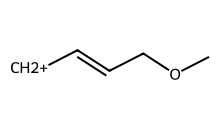
- B
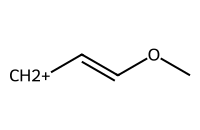
- C
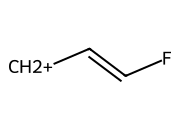
- D
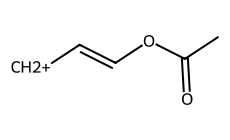
Show answer
Concept: An allylic cation is greatly stabilised when a lone-pair donor (+M group) sits on the far end of the conjugated system; the resonance structure with every atom having an octet (oxocarbenium ion) is especially stable.
- (B) +CH2−CH=CH−OCH3: the OCH3 lone pair conjugates through the allylic system, giving CH2=CH−CH=O+CH3 in which all atoms have complete octets – strongest stabilisation.
- (A): the OCH3 is insulated by an sp3 CH2, so there is no conjugation; only the (destabilising) −I effect of oxygen operates.
- (C): F also donates a lone pair, but its +M donation is much weaker and its −I effect strong, so stabilisation is less than with OCH3.
- (D): in the acetoxy group the oxygen lone pair is already delocalised into the ester C=O, so it donates far less into the allyl system.
Answer: (B)
अवधारणा: ऐलिलिक धनायन तब अत्यधिक स्थायी होता है जब संयुग्मित तंत्र के दूरस्थ सिरे पर एकाकी-युग्म दाता (+M समूह) हो; वह अनुनाद संरचना जिसमें प्रत्येक परमाणु का अष्टक पूर्ण हो (ऑक्सोकार्बेनियम आयन) विशेष रूप से स्थायी होती है।
- (B) +CH2−CH=CH−OCH3: OCH3 का एकाकी युग्म ऐलिलिक तंत्र से संयुग्मित होकर CH2=CH−CH=O+CH3 देता है जिसमें सभी परमाणुओं के अष्टक पूर्ण हैं – प्रबलतम स्थायीकरण।
- (A): OCH3 एक sp3 CH2 द्वारा पृथक है, अतः संयुग्मन नहीं; केवल ऑक्सीजन का (अस्थायीकारी) −I प्रभाव कार्य करता है।
- (C): F भी एकाकी युग्म देता है, परन्तु उसका +M दान बहुत दुर्बल और −I प्रभाव प्रबल है, अतः स्थायीकरण OCH3 से कम।
- (D): ऐसीटॉक्सी समूह में ऑक्सीजन का एकाकी युग्म पहले से एस्टर C=O में विस्थानीकृत है, अतः वह ऐलिल तंत्र को बहुत कम दान करता है।
उत्तर: (B)
JEE Main 2025 (January) – Paper 1 (B.E./B.Tech)ChemistryCarbocations – resonance stabilityJEE Main 2025 (January) – Paper 1 (B.E./B.Tech) 2025 · 24 Jan Shift 1

