Q161.Let the range of the function be . Then the distance of the point from the line is :
माना फलन का परिसर है। तो बिंदु की रेखा से दूरी है :
- A11
- B8
- C10
- D9
Show answer
Concept: , then double-angle.
- .
- , so range , i.e. .
- Distance .
Short trick: The chain collapses the whole product to a single sine.
Answer: (A) 11
अवधारणा: , फिर द्विकोण सूत्र।
- ।
- , अतः परिसर , अर्थात् ।
- दूरी ।
शॉर्ट ट्रिक: शृंखला पूरे गुणनफल को एक ही sine में समेट देती है।
उत्तर: (A) 11
JEE Main 2025 (January) – Paper 1 (B.E./B.Tech)MathematicsTrigonometry – range using multiple-angle identityJEE Main 2025 (January) – Paper 1 (B.E./B.Tech) 2025 · 23 Jan Shift 2
Q162.Let be the solution of the differential equation and . Then is equal to :
माना अवकल समीकरण का हल है तथा है। तो बराबर है :
- A
- B
- C
- D
Show answer
Concept: The equation is homogeneous in : put and separate variables.
- With : , so .
- Equation: .
- Integrating: . At : , so .
- At : , hence .
Short trick: — recognising this quotient-rule pattern gives the substitution at once.
Answer: (D)
अवधारणा: समीकरण में समघात है: रखकर चरों को पृथक कीजिए।
- से: , अतः ।
- समीकरण: ।
- समाकलन से: । पर: , अतः ।
- पर: , अतः ।
शॉर्ट ट्रिक: — भागफल-नियम का यह प्रतिरूप पहचानते ही प्रतिस्थापन मिल जाता है।
उत्तर: (D)
JEE Main 2025 (January) – Paper 1 (B.E./B.Tech)MathematicsDifferential Equations – homogeneous substitutionJEE Main 2025 (January) – Paper 1 (B.E./B.Tech) 2025 · 23 Jan Shift 2
Q163.A spherical chocolate ball has a layer of ice-cream of uniform thickness around it. When the thickness of the ice-cream layer is 1 cm, the ice-cream melts at the rate of and the thickness of the ice-cream layer decreases at the rate of cm/min. The surface area (in ) of the chocolate ball (without the ice-cream layer) is :
एक गोलीय चॉकलेट बॉल के चारों ओर एकसमान मोटाई की आइसक्रीम की एक परत है। जब आइसक्रीम की परत की मोटाई 1 cm है, तब आइसक्रीम की दर से पिघलती है तथा आइसक्रीम की परत की मोटाई cm/min की दर से घटती है। चॉकलेट बॉल (आइसक्रीम की परत के बिना) का पृष्ठीय क्षेत्रफल ( में) है :
- A
- B
- C
- D
Show answer
Concept: For the outer sphere of radius (ball radius , layer thickness ), .
- Ice-cream volume ; only the outer radius changes.
- At : .
- .
- Surface area of the chocolate ball .
Short trick: rate of volume (outer surface area) (rate of thickness): gives outer radius immediately.
Answer: (B)
अवधारणा: बाहरी गोले की त्रिज्या (बॉल की त्रिज्या , परत की मोटाई ) के लिए ।
- आइसक्रीम का आयतन ; केवल बाहरी त्रिज्या बदलती है।
- पर: ।
- ।
- चॉकलेट बॉल का पृष्ठीय क्षेत्रफल ।
शॉर्ट ट्रिक: आयतन की दर (बाहरी पृष्ठीय क्षेत्रफल) (मोटाई की दर): से बाहरी त्रिज्या तुरंत ।
उत्तर: (B)
JEE Main 2025 (January) – Paper 1 (B.E./B.Tech)MathematicsApplication of Derivatives – related ratesJEE Main 2025 (January) – Paper 1 (B.E./B.Tech) 2025 · 23 Jan Shift 2
Q164.The number of complex numbers , satisfying and , is :
तथा को संतुष्ट करने वाली सम्मिश्र संख्याओं की संख्या है :
- A4
- B8
- C10
- D6
Show answer
Concept: Put ; then and the sum is a real cosine.
- .
- .
- For , : gives 4 values of and gives 4 more.
- Total distinct complex numbers.
Short trick: with always gives solutions per full circle of ; two values of give .
Answer: (B) 8
अवधारणा: रखिए; तब तथा योग एक वास्तविक cosine है।
- ।
- ।
- के लिए : से के 4 मान तथा से 4 और।
- कुल भिन्न सम्मिश्र संख्याएँ।
शॉर्ट ट्रिक: के साथ से के पूरे चक्र में सदैव हल मिलते हैं; के दो मानों से ।
उत्तर: (B) 8
JEE Main 2025 (January) – Paper 1 (B.E./B.Tech)MathematicsComplex Numbers – unit modulus, argument formJEE Main 2025 (January) – Paper 1 (B.E./B.Tech) 2025 · 23 Jan Shift 2
Q165.Let be matrix such that and , then equals :
माना एक आव्यूह है जिसके लिए तथा हैं, तो बराबर है :
- A-1
- B2
- C1
- D0
Show answer
Concept: is the corresponding linear combination of the columns of .
- First relation: .
- Second and third: and .
- Twice the third minus the second: , so .
- is the 2nd entry of , i.e. .
Short trick: Only is needed — eliminate in one step ( third relation second) and never solve for the whole matrix.
Answer: (A)
अवधारणा: , के स्तंभों का संगत रैखिक संयोजन है।
- पहले संबंध से: ।
- दूसरे तथा तीसरे से: तथा ।
- तीसरे का दुगुना घटा दूसरा: , अतः ।
- , की दूसरी प्रविष्टि है, अर्थात् ।
शॉर्ट ट्रिक: केवल चाहिए — एक ही चरण में का विलोपन कीजिए ( तीसरा संबंध दूसरा), पूरा आव्यूह कभी न निकालें।
उत्तर: (A)
JEE Main 2025 (January) – Paper 1 (B.E./B.Tech)MathematicsMatrices – columns from matrix–vector productsJEE Main 2025 (January) – Paper 1 (B.E./B.Tech) 2025 · 23 Jan Shift 2
Q166.If , then equals :
यदि है, तो बराबर है :
- A
- B
- C
- D
Show answer
Concept: for any ; then King's property removes the factor .
- , so the upper limit is .
- Let . Replacing by leaves unchanged, so .
- Put , : the integral becomes .
- .
Short trick: Whenever multiplies a function symmetric about on , the averages to .
Answer: (C)
अवधारणा: किसी भी के लिए ; फिर King गुणधर्म से गुणनखंड हट जाता है।
- , अतः ऊपरी सीमा ।
- माना । के स्थान पर रखने पर अपरिवर्तित रहता है, अतः ।
- , रखने पर: समाकल ।
- ।
शॉर्ट ट्रिक: जब पर किसी के सापेक्ष सममित फलन से गुणित हो, तो का औसत होता है।
उत्तर: (C)
JEE Main 2025 (January) – Paper 1 (B.E./B.Tech)MathematicsDefinite Integration – King's propertyJEE Main 2025 (January) – Paper 1 (B.E./B.Tech) 2025 · 23 Jan Shift 2
Q167.A board has 16 squares as shown in the figure:
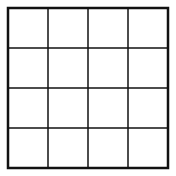
Out of these 16 squares, two squares are chosen at random. The probability that they have no side in common is :
एक बोर्ड में, चित्र में दर्शाए अनुसार, 16 वर्ग हैं :
इन 16 वर्गों में से दो वर्ग यादृच्छया चुने जाते हैं। उनकी कोई भुजा उभयनिष्ठ न होने की प्रायिकता है :
- A7/10
- B4/5
- C23/30
- D3/5
Show answer
Concept: Complementary counting — count the pairs of squares that share a side in the board.
- Total ways .
- Side-sharing pairs: each row has 3 horizontal adjacencies ; similarly 12 vertical. Total .
- Favourable ; probability .
Short trick: In an grid the number of side-sharing pairs is ; here .
Answer: (B) 4/5
अवधारणा: पूरक गणना — बोर्ड में उन वर्ग-युग्मों को गिनिए जिनकी भुजा उभयनिष्ठ है।
- कुल तरीके ।
- उभयनिष्ठ भुजा वाले युग्म: प्रत्येक पंक्ति में 3 क्षैतिज संलग्नताएँ ; इसी प्रकार 12 ऊर्ध्वाधर। कुल ।
- अनुकूल ; प्रायिकता ।
शॉर्ट ट्रिक: ग्रिड में उभयनिष्ठ भुजा वाले युग्मों की संख्या होती है; यहाँ ।
उत्तर: (B) 4/5
JEE Main 2025 (January) – Paper 1 (B.E./B.Tech)MathematicsProbability – choosing squares on a boardJEE Main 2025 (January) – Paper 1 (B.E./B.Tech) 2025 · 23 Jan Shift 2
Q168.Let the shortest distance from , to the parabola be 4. Then the equation of the circle passing through the point and the focus of the parabola, and having its centre on the axis of the parabola is :
माना , से परवलय की न्यूनतम दूरी 4 है। तो बिंदु तथा परवलय की नाभि से होकर जाने वाले उस वृत्त का समीकरण, जिसका केंद्र परवलय के अक्ष पर है, है :
- A
- B
- C
- D
Show answer
Concept: Minimise the distance from to ; the circle's centre lies midway since both given points are on its axis-diameter.
- ; . For , gives (and would give only when , rejected).
- .
- Focus of is . Circle through and with centre on the -axis: these are ends of a diameter, so centre , radius .
- Equation: , i.e. .
Short trick: Normal-chord fact: for , the foot of shortest distance satisfies ; then two axis points on a circle with centre on that axis are automatically diametrically opposite.
Answer: (B)
अवधारणा: से की दूरी का न्यूनतमीकरण कीजिए; दोनों दिए गए बिंदु अक्ष पर हैं, अतः वे वृत्त के व्यास के सिरे हैं।
- ; । के लिए से (तथा से केवल पर, अस्वीकृत)।
- ।
- की नाभि है। तथा से होकर, -अक्ष पर केंद्र वाला वृत्त: ये व्यास के सिरे हैं, अतः केंद्र , त्रिज्या ।
- समीकरण: , अर्थात् ।
शॉर्ट ट्रिक: अक्ष पर स्थित दो बिंदु, अक्ष पर केंद्र वाले वृत्त पर हों, तो वे स्वतः व्यासतः सम्मुख होते हैं — केंद्र उनका मध्य-बिंदु।
उत्तर: (B)
JEE Main 2025 (January) – Paper 1 (B.E./B.Tech)MathematicsParabola and Circle – shortest distance, circle on axisJEE Main 2025 (January) – Paper 1 (B.E./B.Tech) 2025 · 23 Jan Shift 2
Q169.If in the expansion of , the coefficients of and are 1 and -2, respectively, then is equal to :
यदि के प्रसार में तथा के गुणांक क्रमशः 1 तथा हैं, तो बराबर है :
- A18
- B13
- C8
- D20
Show answer
Concept: Multiply the first few terms of each binomial expansion and equate coefficients.
- Coefficient of : .
- Coefficient of : , i.e. .
- With : .
- So and .
Short trick: — this identity turns the messy condition into one line.
Answer: (B) 13
अवधारणा: दोनों द्विपद प्रसारों के प्रारंभिक पद गुणा कर गुणांकों की तुलना कीजिए।
- का गुणांक: ।
- का गुणांक: , अर्थात् ।
- से: ।
- अतः तथा ।
शॉर्ट ट्रिक: — यह सर्वसमिका जटिल शर्त को एक पंक्ति बना देती है।
उत्तर: (B) 13
JEE Main 2025 (January) – Paper 1 (B.E./B.Tech)MathematicsBinomial Theorem – equating coefficientsJEE Main 2025 (January) – Paper 1 (B.E./B.Tech) 2025 · 23 Jan Shift 2
Q170.If the area of the region is , then the value of is :
यदि क्षेत्र का क्षेत्रफल है, तो का मान है :
- A8
- B7
- C5
- D6
Show answer
Concept: Split at because of ; on the left the exponentials cancel.
- For : , so the height is just — area .
- For : height ; area .
- Total area . Given value .
- .
Short trick: Match the and terms first — they already agree, so only the constants and need equating.
Answer: (C) 5
अवधारणा: के कारण पर विभाजित कीजिए; बाईं ओर चरघातांकी पद निरस्त हो जाते हैं।
- के लिए: , अतः ऊँचाई केवल — क्षेत्रफल ।
- के लिए: ऊँचाई ; क्षेत्रफल ।
- कुल क्षेत्रफल । दिया गया मान ।
- ।
शॉर्ट ट्रिक: पहले तथा पदों का मिलान कीजिए — वे पहले से बराबर हैं, अतः केवल अचर तथा की तुलना शेष रहती है।
उत्तर: (C) 5
JEE Main 2025 (January) – Paper 1 (B.E./B.Tech)MathematicsArea under CurvesJEE Main 2025 (January) – Paper 1 (B.E./B.Tech) 2025 · 23 Jan Shift 2
Q171.The variance of the numbers is ______.
संख्याओं का प्रसरण ______ है।
Show answer
Concept: For an AP with common difference and terms, variance .
- ; number of terms .
- Variance .
- .
Short trick: An AP is a shifted-scaled version of , whose variance is ; shifting changes nothing, scaling multiplies by .
Answer: 8788
अवधारणा: सार्व अंतर तथा पदों वाली समांतर श्रेढ़ी के लिए प्रसरण ।
- ; पदों की संख्या ।
- प्रसरण ।
- ।
शॉर्ट ट्रिक: समांतर श्रेढ़ी का ही स्थानांतरित-मापित रूप है, जिसका प्रसरण है; स्थानांतरण से कुछ नहीं बदलता, मापन से गुणा होता है।
उत्तर: 8788
JEE Main 2025 (January) – Paper 1 (B.E./B.Tech)MathematicsStatistics – variance of an APJEE Main 2025 (January) – Paper 1 (B.E./B.Tech) 2025 · 23 Jan Shift 2
Q172.The roots of the quadratic equation are and terms of an arithmetic progression with common difference . If the sum of the first 11 terms of this arithmetic progression is 88, then is equal to ______.
द्विघात समीकरण के मूल, सार्व अंतर वाली एक समांतर श्रेढ़ी के वें तथा वें पद हैं। यदि इस समांतर श्रेढ़ी के प्रथम 11 पदों का योग 88 है, तो बराबर ______ है।
Show answer
Concept: Find the first term from , then use Vieta's formulas on .
- .
- and .
- Sum of roots: . Product: .
- .
Short trick: , so at once; then and without touching .
Answer: 474
अवधारणा: से प्रथम पद निकालिए, फिर पर विएटा (Vieta) सूत्र लगाइए।
- ।
- तथा ।
- मूलों का योग: । गुणनफल: ।
- ।
शॉर्ट ट्रिक: , अतः तुरंत ; फिर निकाले बिना तथा ।
उत्तर: 474
JEE Main 2025 (January) – Paper 1 (B.E./B.Tech)MathematicsSequences and Series – AP terms as roots of a quadraticJEE Main 2025 (January) – Paper 1 (B.E./B.Tech) 2025 · 23 Jan Shift 2
Q173.The number of ways, 5 boys and 4 girls can sit in a row so that either all the boys sit together or no two boys sit together, is ______.
5 लड़कों तथा 4 लड़कियों के एक पंक्ति में बैठने के तरीकों की संख्या, जबकि या तो सभी लड़के एक साथ बैठें या कोई भी दो लड़के एक साथ न बैठें, ______ है।
Show answer
Concept: The two events are mutually exclusive — add the counts.
- All boys together: tie the 5 boys into one block — arrangements of (block + 4 girls) internal orders .
- No two boys together: seat the 4 girls ( ways), creating 5 gaps; place the 5 boys in these 5 gaps in ways .
- Total .
Short trick: With 5 boys and only 5 gaps from 4 girls, 'no two together' forces every gap to be used — exactly .
Answer: 17280
अवधारणा: दोनों घटनाएँ परस्पर अपवर्जी हैं — गणनाएँ जोड़िए।
- सभी लड़के एक साथ: 5 लड़कों का एक ब्लॉक बनाइए — (ब्लॉक + 4 लड़कियाँ) के विन्यास ब्लॉक के भीतर क्रम ।
- कोई दो लड़के एक साथ नहीं: 4 लड़कियों को बैठाइए ( तरीके), जिससे 5 रिक्त स्थान बनते हैं; इन 5 स्थानों में 5 लड़कों को तरीकों से रखिए ।
- कुल ।
शॉर्ट ट्रिक: 5 लड़के तथा 4 लड़कियों से बने केवल 5 रिक्त स्थान — 'कोई दो साथ नहीं' में हर स्थान भरना अनिवार्य है, अतः ठीक ।
उत्तर: 17280
JEE Main 2025 (January) – Paper 1 (B.E./B.Tech)MathematicsPermutations and Combinations – arrangements in a rowJEE Main 2025 (January) – Paper 1 (B.E./B.Tech) 2025 · 23 Jan Shift 2
Q174.The focus of the parabola is the centre of the circle of radius 5. If the values of , for which passes through the point of intersection of the lines and , are and , then is equal to ______.
परवलय की नाभि, त्रिज्या 5 वाले वृत्त का केंद्र है। यदि के वे मान, जिनके लिए रेखाओं तथा के प्रतिच्छेद बिंदु से होकर जाता है, तथा , हैं, तो बराबर ______ है।
Show answer
Concept: Shift the parabola to find its focus; then impose that the intersection point lies on the circle.
- : vertex , so focus . Circle : .
- Intersection of and : . Put .
- On : .
- or , i.e. or . So .
- .
Short trick: Substituting makes the intersection point — one clean quadratic in instead of fractions in .
Answer: 15
अवधारणा: परवलय को स्थानांतरित कर नाभि ज्ञात कीजिए; फिर शर्त लगाइए कि प्रतिच्छेद बिंदु वृत्त पर हो।
- : शीर्ष , अतः नाभि । वृत्त : ।
- तथा का प्रतिच्छेद: । रखिए।
- पर: ।
- अथवा , अर्थात् अथवा । अतः ।
- ।
शॉर्ट ट्रिक: रखते ही प्रतिच्छेद बिंदु बन जाता है — की भिन्नों के स्थान पर में एक साफ द्विघात।
उत्तर: 15
JEE Main 2025 (January) – Paper 1 (B.E./B.Tech)MathematicsParabola and Circle – focus as centreJEE Main 2025 (January) – Paper 1 (B.E./B.Tech) 2025 · 23 Jan Shift 2
Q175.Let be the roots of the equation with . Let . If and , then is equal to ______.
माना के मूल हैं, जहाँ है। माना है। यदि तथा हैं, तो बराबर ______ है।
Show answer
Concept: Since satisfy , the sequence obeys .
- .
- .
- Solving: , so the equation is with .
- ; .
- .
Short trick: Never find themselves — two steps of the linear recurrence give , and Newton's identities give the power sums.
Answer: 31
अवधारणा: चूँकि समीकरण को संतुष्ट करते हैं, अनुक्रम का पालन करता है।
- ।
- ।
- हल करने पर: , अतः समीकरण है जिसमें ।
- ; ।
- ।
शॉर्ट ट्रिक: कभी न निकालें — रैखिक पुनरावृत्ति के दो चरणों से मिल जाते हैं, तथा न्यूटन सर्वसमिकाओं से घात-योग।
उत्तर: 31
JEE Main 2025 (January) – Paper 1 (B.E./B.Tech)MathematicsComplex Numbers – recurrence for powers of rootsJEE Main 2025 (January) – Paper 1 (B.E./B.Tech) 2025 · 23 Jan Shift 2
Q176.If the first term of an A.P. is 3 and the sum of its first four terms is equal to one-fifth of the sum of the next four terms, then the sum of the first 20 terms is equal to
यदि किसी समान्तर श्रेढ़ी (A.P.) का प्रथम पद 3 है तथा इसके प्रथम चार पदों का योग, अगले चार पदों के योग के पाँचवें भाग के बराबर है, तो प्रथम 20 पदों का योग बराबर है
- A
- B
- C
- D
Show answer
Concept: For an A.P., ; the sum of the next four terms after the first four is .
- Given .
- With : and .
- .
- .
Answer: (A)
अवधारणा: समान्तर श्रेढ़ी में ; प्रथम चार पदों के बाद के अगले चार पदों का योग होता है।
- दिया है ।
- लेने पर: तथा ।
- ।
- ।
उत्तर: (A)
JEE Main 2025 (January) – Paper 1 (B.E./B.Tech)MathematicsSequences & Series – A.P.JEE Main 2025 (January) – Paper 1 (B.E./B.Tech) 2025 · 23 Jan Shift 1
Q177.One die has two faces marked 1 , two faces marked 2 , one face marked 3 and one face marked 4 . Another die has one face marked 1 , two faces marked 2 , two faces marked 3 and one face marked 4. The probability of getting the sum of numbers to be 4 or 5 , when both the dice are thrown together, is
एक पासे के दो फलकों पर 1, दो फलकों पर 2, एक फलक पर 3 तथा एक फलक पर 4 अंकित है। एक अन्य पासे के एक फलक पर 1, दो फलकों पर 2, दो फलकों पर 3 तथा एक फलक पर 4 अंकित है। दोनों पासों को एक साथ फेंकने पर संख्याओं का योग 4 या 5 प्राप्त होने की प्रायिकता है
- A
- B
- C
- D
Show answer
Concept: Count favourable face-pairs out of equally likely outcomes, using the number of faces carrying each mark.
- Die 1 face counts: ; Die 2: .
- Sum : , , → ways.
- Sum : , , , → ways.
- Probability .
Answer: (B)
अवधारणा: समसम्भाव्य परिणामों में से अनुकूल फलक-युग्मों को गिनें, प्रत्येक अंक वाले फलकों की संख्या का उपयोग करते हुए।
- पासा 1 के फलक: ; पासा 2 के फलक: ।
- योग : , , → तरीके।
- योग : , , , → तरीके।
- प्रायिकता ।
उत्तर: (B)
JEE Main 2025 (January) – Paper 1 (B.E./B.Tech)MathematicsProbability – non-standard diceJEE Main 2025 (January) – Paper 1 (B.E./B.Tech) 2025 · 23 Jan Shift 1
Q178.Let the position vectors of the vertices and of a tetrahedron be , and respectively. The altitude from the vertex to the opposite face meets the median line segment through of the triangle at the point . If the length of is and the volume of the tetrahedron is , then the position vector of is
माना एक चतुष्फलक (tetrahedron) के शीर्षों तथा के स्थिति सदिश क्रमशः , तथा हैं। शीर्ष से सम्मुख फलक पर डाला गया शीर्षलम्ब, त्रिभुज की से होकर जाने वाली माध्यिका रेखाखण्ड को बिन्दु पर मिलता है। यदि की लम्बाई है तथा चतुष्फलक का आयतन है, तो का स्थिति सदिश है
- A
- B
- C
- D
Show answer
Concept: is the foot of the altitude from , so plane and ; Volume .
- , , ; midpoint of is , so , with , .
- , so area . Then .
- , so .
- .
Answer: (D)
अवधारणा: , से डाले गए शीर्षलम्ब का पाद है, अतः समतल तथा ; आयतन का क्षेत्रफल।
- , , ; का मध्य-बिन्दु है, अतः , जहाँ , ।
- , अतः क्षेत्रफल । तब ।
- , अतः ।
- ।
उत्तर: (D)
JEE Main 2025 (January) – Paper 1 (B.E./B.Tech)MathematicsVector Algebra & 3D – tetrahedronJEE Main 2025 (January) – Paper 1 (B.E./B.Tech) 2025 · 23 Jan Shift 1
Q179.If , and are non-singular matrices of same order, then the inverse of , is equal to
यदि तथा समान कोटि के व्युत्क्रमणीय (non-singular) आव्यूह हैं, तो का व्युत्क्रम बराबर है
- A
- B
- C
- D
Show answer
Concept: , so ; also .
- Required inverse .
- .
- Option (D): — the same expression. Options (A), (B) and (C) do not simplify to this.
Answer: (D)
अवधारणा: , अतः ; साथ ही ।
- अभीष्ट व्युत्क्रम ।
- ।
- विकल्प (D): — यही व्यंजक है। विकल्प (A), (B) तथा (C) इस रूप में सरल नहीं होते।
उत्तर: (D)
JEE Main 2025 (January) – Paper 1 (B.E./B.Tech)MathematicsMatrices – adjoint and inverseJEE Main 2025 (January) – Paper 1 (B.E./B.Tech) 2025 · 23 Jan Shift 1
Q180.Marks obtains by all the students of class 12 are presented in a freqency distribution with classes of equal width. Let the median of this grouped data be 14 with median class interval 12-18 and median class frequency 12 . If the number of students whose marks are less than 12 is 18 , then the total number of students is
कक्षा 12 के सभी विद्यार्थियों द्वारा प्राप्त अंकों को समान चौड़ाई के वर्गों वाले एक बारम्बारता बंटन में प्रस्तुत किया गया है। माना इन वर्गीकृत आँकड़ों की माध्यिका 14 है, माध्यिका वर्ग अन्तराल 12-18 है तथा माध्यिका वर्ग की बारम्बारता 12 है। यदि 12 से कम अंक प्राप्त करने वाले विद्यार्थियों की संख्या 18 है, तो विद्यार्थियों की कुल संख्या है
- A52
- B48
- C44
- D40
Show answer
Concept: Median of grouped data: , where = lower limit, = cumulative frequency before the median class, = its frequency, = class width.
- Here , , , , Median .
- .
- .
Answer: (C) 44
अवधारणा: वर्गीकृत आँकड़ों की माध्यिका: , जहाँ = निम्न सीमा, = माध्यिका वर्ग से पहले की संचयी बारम्बारता, = उसकी बारम्बारता, = वर्ग चौड़ाई।
- यहाँ , , , , माध्यिका ।
- ।
- ।
उत्तर: (C) 44
JEE Main 2025 (January) – Paper 1 (B.E./B.Tech)MathematicsStatistics – median of grouped dataJEE Main 2025 (January) – Paper 1 (B.E./B.Tech) 2025 · 23 Jan Shift 1

