Q1.A particle of mass M moves along a horizontal x axis from x=0 to x = L. The coefficient of kinetic friction varies as a function of x as , where , are constants of appropriate dimensions, so that . The total work done by the frictional force during the motion is , where g is the acceleration due to gravity. The value of n is :
द्रव्यमान M का एक कण क्षैतिज x-अक्ष के अनुदिश x=0 से x = L तक गति करता है। गतिज घर्षण गुणांक x के फलन के रूप में के अनुसार परिवर्तित होता है, जहाँ , उपयुक्त विमाओं वाले नियतांक हैं, जिससे है। गति के दौरान घर्षण बल द्वारा किया गया कुल कार्य है, जहाँ g गुरुत्वीय त्वरण है। n का मान है :
- A3
- B1
- C
- D
Show answer
Concept: Friction force varies with x, so work .
- .
- .
- , so n = 1/2 (magnitude).
Short trick: falls linearly from to 0, so use the average value : .
Answer: (D)
अवधारणा: घर्षण बल , x के साथ बदलता है, अतः कार्य ।
- ।
- ।
- , अतः n = 1/2 (परिमाण)।
शॉर्ट ट्रिक: रैखिक रूप से से 0 तक घटता है, अतः औसत मान लें: ।
उत्तर: (D)
NEET UGPhysicsWork, energy and power – work by variable frictionNEET UG 2026 · 21 Jun Shift 1
Q2.The mean free path of molecules in an ideal gas A is half that of another ideal gas B. The diameter of the spherical molecules of gas A is twice the diameter of the molecules of B. If number densities of the gases A and B are and , respectively, then the correct option is :
एक आदर्श गैस A के अणुओं का माध्य मुक्त पथ दूसरी आदर्श गैस B के माध्य मुक्त पथ का आधा है। गैस A के गोलीय अणुओं का व्यास, B के अणुओं के व्यास का दोगुना है। यदि गैसों A और B के संख्या घनत्व क्रमशः और हैं, तो सही विकल्प है :
- A
- B
- C
- D
Show answer
Concept: Mean free path , i.e. .
- (since ).
- Given : .
Short trick: = constant: .
Answer: (D)
अवधारणा: माध्य मुक्त पथ , अर्थात् ।
- (क्योंकि )।
- दिया है : ।
शॉर्ट ट्रिक: = नियत: ।
उत्तर: (D)
NEET UGPhysicsKinetic theory – mean free pathNEET UG 2026 · 21 Jun Shift 1
Q3.Two identical inductors are connected in two different configurations P and Q, where a time varying current I(t) I flowing, as shown in the figure. The induced emf between points a and b for configuration P is
and that for configuration Q is
. The ratio
is :
[Neglect the effect of mutual inductance.]
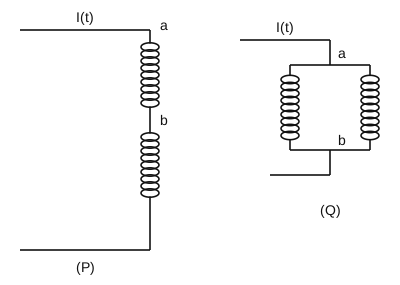
दो सर्वसम प्रेरकों को दो भिन्न विन्यासों P और Q में जोड़ा गया है, जिनमें चित्रानुसार समय के साथ परिवर्ती धारा I(t) प्रवाहित हो रही है। विन्यास P के लिए बिंदुओं a और b के बीच प्रेरित वि.वा.बल (emf)
है तथा विन्यास Q के लिए
है। अनुपात
है :
[अन्योन्य प्रेरकत्व के प्रभाव की उपेक्षा कीजिए।]
- A1/4
- B1/2
- C1
- D2
Show answer
Concept: Induced emf across an inductance carrying current I(t) is .
- In P, points a and b lie across only the first coil, so and .
- In Q, a and b are the two junctions of the parallel pair, so and .
- .
Short trick: Do not take 2L for P – check where b is: it is between the coils, so only one L is between a and b.
Answer: (D) 2
अवधारणा: धारा I(t) वाले प्रेरकत्व के सिरों पर प्रेरित emf होता है।
- P में बिंदु a और b केवल पहली कुंडली के सिरों पर हैं, अतः और ।
- Q में a और b समांतर युग्म के दोनों संधि-बिंदु हैं, अतः और ।
- ।
शॉर्ट ट्रिक: P के लिए 2L न लें – देखें b कहाँ है: वह दोनों कुंडलियों के बीच है, अतः a और b के बीच केवल एक L है।
उत्तर: (D) 2
NEET UGPhysicsElectromagnetic induction – inductors in series and parallelNEET UG 2026 · 21 Jun Shift 1
Q4.For sound waves, if the number of nodes for the harmonic of an open-ended pipe is n and that for the harmonic of the same pipe with one of its ends closed is m, the ratio is :
ध्वनि तरंगों के लिए, यदि दोनों सिरों से खुले पाइप के (पाँचवें) संनादी के लिए निस्पंदों (nodes) की संख्या n है तथा उसी पाइप का एक सिरा बंद करने पर (नौवें) संनादी के लिए निस्पंदों की संख्या m है, तो अनुपात है :
- A
- B
- C1
- D
Show answer
Concept: Open pipe, p-th harmonic: , antinodes at both ends, p nodes. Closed pipe, p-th harmonic (p odd): , number of nodes .
- Open pipe, 5th harmonic: → 5 nodes, so n = 5.
- Closed pipe, 9th harmonic: → nodes , so m = 5.
- .
Short trick: Count quarter-wavelengths: each node "uses" λ/2; closed pipe: 9λ/4 = node at closed end + 4 more half-waves → 5 nodes.
Answer: (C) 1
अवधारणा: खुला पाइप, p-वाँ संनादी: , दोनों सिरों पर प्रस्पंद, निस्पंदों की संख्या p। बंद पाइप, p-वाँ संनादी (p विषम): , निस्पंदों की संख्या ।
- खुला पाइप, 5वाँ संनादी: → 5 निस्पंद, अतः n = 5।
- बंद पाइप, 9वाँ संनादी: → निस्पंद , अतः m = 5।
- ।
शॉर्ट ट्रिक: चौथाई तरंगदैर्ध्य गिनें: बंद पाइप में 9λ/4 = बंद सिरे पर एक निस्पंद + 4 और अर्ध-तरंगें → 5 निस्पंद।
उत्तर: (C) 1
NEET UGPhysicsWaves – organ pipes, nodesNEET UG 2026 · 21 Jun Shift 1
Q5.Consider a long solenoid of length l and radius r. If n is the number of turns per unit length and is the permeability of free space, the inductance of the solenoid is :
लंबाई l और त्रिज्या r की एक लंबी परिनालिका पर विचार कीजिए। यदि n प्रति एकांक लंबाई फेरों की संख्या है तथा मुक्त आकाश की चुम्बकशीलता है, तो परिनालिका का प्रेरकत्व है :
- A
- B
- C
- D
Show answer
Concept: Inside a long solenoid ; flux linkage .
- Total turns N = nl, area .
- .
- .
Short trick: (volume) .
Answer: (A)
अवधारणा: लंबी परिनालिका के अंदर ; फ्लक्स-संबंधन ।
- कुल फेरे N = nl, क्षेत्रफल ।
- ।
- ।
शॉर्ट ट्रिक: (आयतन) ।
उत्तर: (A)
NEET UGPhysicsElectromagnetic induction – self-inductance of solenoidNEET UG 2026 · 21 Jun Shift 1
Q6.Consider a particle moving along a straight line, whose position as a function of time is given by , where , and m. The average speed of the particle, in , from t = 0 to t = 6 s is :
एक सरल रेखा के अनुदिश गतिमान कण पर विचार कीजिए, जिसकी स्थिति समय के फलन के रूप में द्वारा दी जाती है, जहाँ , तथा m है। t = 0 से t = 6 s तक कण की औसत चाल, में, है :
- A12
- B6
- C3
- D0
Show answer
Concept: Average speed = total distance / total time; distance must account for reversal of direction (where v = 0).
- , at t = 3 s.
- m, m, m.
- Distance = |−4 − 5| + |5 − (−4)| = 9 + 9 = 18 m.
- Average speed .
Short trick: Displacement is 0 (so average velocity = 0, option D is a trap), but speed counts both legs: 2 × 9 m in 6 s.
Answer: (C) 3
अवधारणा: औसत चाल = कुल दूरी / कुल समय; दिशा उलटने (जहाँ v = 0) को दूरी में अवश्य जोड़ें।
- , , t = 3 s पर।
- m, m, m।
- दूरी = |−4 − 5| + |5 − (−4)| = 9 + 9 = 18 m।
- औसत चाल ।
शॉर्ट ट्रिक: विस्थापन 0 है (अतः औसत वेग = 0, विकल्प D जाल है), पर चाल में दोनों भाग गिने जाते हैं: 6 s में 2 × 9 m।
उत्तर: (C) 3
NEET UGPhysicsKinematics – average speed with reversalNEET UG 2026 · 21 Jun Shift 1
Q7.Consider the following nuclear reaction :
Take masses of U, Th and He as 238.050 u, 234.043 u and 4.003 u, respectively. The Q value for the reaction, in keV, is :
[Given : 1 u = 931.5 MeV ]
निम्नलिखित नाभिकीय अभिक्रिया पर विचार कीजिए :
U, Th तथा He के द्रव्यमान क्रमशः 238.050 u, 234.043 u तथा 4.003 u लीजिए। अभिक्रिया का Q मान, keV में, है :
[दिया है : 1 u = 931.5 MeV ]
- A3726
- B3730
- C3736
- D3740
Show answer
Concept: , where = mass of reactants − mass of products.
- u.
- MeV MeV keV.
Short trick: 4 × 931.5 = 3726 – the answer just has the digits of 4 × 931.5.
Answer: (A) 3726
अवधारणा: , जहाँ = अभिकारकों का द्रव्यमान − उत्पादों का द्रव्यमान।
- u।
- MeV MeV keV।
शॉर्ट ट्रिक: 4 × 931.5 = 3726 – उत्तर में 4 × 931.5 के ही अंक हैं।
उत्तर: (A) 3726
NEET UGPhysicsNuclei – Q value of alpha decayNEET UG 2026 · 21 Jun Shift 1
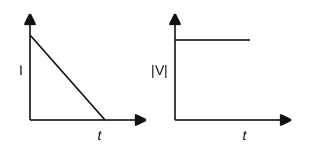
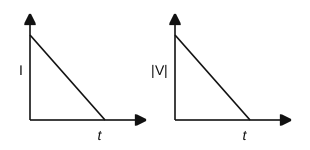
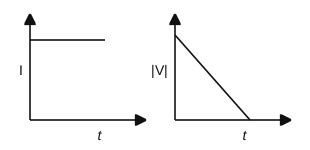
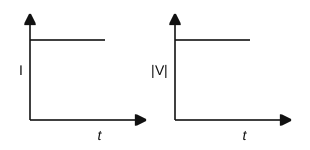
Q8.A beam of light falls on a metal surface such that photo-electrons are generated. If power of the light source starts to decrease linearly with time t, then variation of the photocurrent I and magnitude of the stopping potential |V| with time is best represented by :
प्रकाश का एक पुंज किसी धातु सतह पर इस प्रकार पड़ता है कि प्रकाश-इलेक्ट्रॉन उत्पन्न होते हैं। यदि प्रकाश स्रोत की शक्ति समय t के साथ रैखिक रूप से घटने लगे, तो समय के साथ प्रकाश-विद्युत धारा I तथा निरोधी विभव के परिमाण |V| में परिवर्तन को सर्वोत्तम रूप से निरूपित करने वाला ग्राफ है :
- A
- B
- C
- D
Show answer
Concept: Photocurrent ∝ intensity (number of photons per second); stopping potential depends only on frequency: .
- Power falls linearly at fixed frequency → photons per second fall linearly → I decreases linearly with t.
- Frequency is unchanged → maximum KE unchanged → |V| stays constant.
- Only graph (A) shows I falling linearly and |V| constant. (B), (C) wrongly make |V| fall; (C), (D) wrongly keep I constant.
Short trick: "Intensity → current, frequency → voltage." Power changed, colour did not.
Answer: (A)
अवधारणा: प्रकाश-विद्युत धारा ∝ तीव्रता (प्रति सेकंड फोटॉनों की संख्या); निरोधी विभव केवल आवृत्ति पर निर्भर: ।
- नियत आवृत्ति पर शक्ति रैखिक रूप से घटती है → प्रति सेकंड फोटॉन रैखिक रूप से घटते हैं → I, t के साथ रैखिक रूप से घटती है।
- आवृत्ति अपरिवर्तित → अधिकतम गतिज ऊर्जा अपरिवर्तित → |V| नियत रहता है।
- केवल ग्राफ (A) में I रैखिक रूप से घटती है और |V| नियत है। (B), (C) में |V| घटना गलत है; (C), (D) में I का नियत रहना गलत है।
शॉर्ट ट्रिक: "तीव्रता → धारा, आवृत्ति → विभव।" शक्ति बदली है, रंग (आवृत्ति) नहीं।
उत्तर: (A)
NEET UGPhysicsDual nature – photocurrent and stopping potential vs intensityNEET UG 2026 · 21 Jun Shift 1
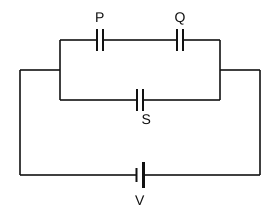
Q9.Three identical capacitors P, Q and S, each of the capacitance C, are connected to a battery of voltage V, as shown in the figure. If the energy stored in the capacitor P and total energy stored in the system are
and
, respectively, then the ratio
is :
तीन सर्वसम संधारित्र P, Q और S, प्रत्येक की धारिता C, चित्रानुसार वोल्टता V की बैटरी से जुड़े हैं। यदि संधारित्र P में संचित ऊर्जा तथा निकाय में संचित कुल ऊर्जा क्रमशः
और
हैं, तो अनुपात
है :
- A2/3
- B1/3
- C1/2
- D1/6
Show answer
Concept: P and Q are in series (C/2); this pair is in parallel with S across V.
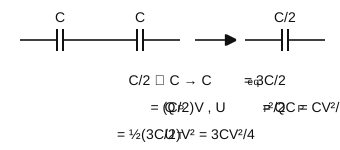
- Charge on P (= on Q) , so .
- , so .
- .
Short trick: Energy shares: S gets , P and Q get each → P : total = 1 : (4+1+1) = 1/6.
Answer: (D) 1/6
अवधारणा: P और Q श्रेणी में हैं (C/2); यह युग्म V के सिरों पर S के समांतर है।
- P पर आवेश (= Q पर) , अतः ।
- , अतः ।
- ।
शॉर्ट ट्रिक: ऊर्जा का बँटवारा: S को , P और Q प्रत्येक को → P : कुल = 1 : (4+1+1) = 1/6।
उत्तर: (D) 1/6
NEET UGPhysicsCapacitors – energy in a combinationNEET UG 2026 · 21 Jun Shift 1
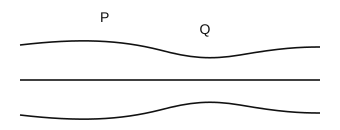
Q10.Water flows in a streamline motion through a horizontal pipe of circular cross-section as shown in the figure. The pressure difference of water between P and Q is 15
. The area of cross-section at P and Q are 40
and 20
, respectively. The rate of flow of water through the pipe, in
, is :
[Take density of water = 1000 kg
]
जल, चित्रानुसार वृत्तीय अनुप्रस्थ-काट वाले एक क्षैतिज पाइप में धारारेखी गति से प्रवाहित होता है। P और Q के बीच जल का दाबांतर 15
है। P और Q पर अनुप्रस्थ-काट का क्षेत्रफल क्रमशः 40
और 20
है। पाइप से जल के प्रवाह की दर,
में, है :
[जल का घनत्व = 1000 kg
लीजिए]
- A100
- B200
- C300
- D400
Show answer
Concept: Continuity and Bernoulli (horizontal) .
- .
- .
- Flow rate .
Short trick: Direct formula: .
Answer: (D) 400
अवधारणा: सांतत्य तथा बर्नूली (क्षैतिज) ।
- ।
- ।
- प्रवाह दर ।
शॉर्ट ट्रिक: सीधा सूत्र: ।
उत्तर: (D) 400
NEET UGPhysicsFluids – Bernoulli and continuityNEET UG 2026 · 21 Jun Shift 1
Q11.A current
flows through a metallic circular loop of radius r as shown in the figure. Resistance of the segment ABC is half that of ADC. Magnitude of magnetic field at the centre O of the loop is :
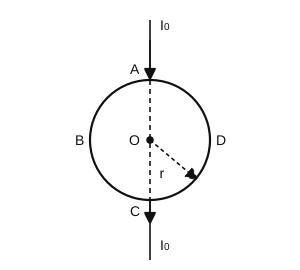
चित्रानुसार त्रिज्या r के एक धात्विक वृत्ताकार लूप से धारा
प्रवाहित होती है। खंड ABC का प्रतिरोध, ADC के प्रतिरोध का आधा है। लूप के केंद्र O पर चुम्बकीय क्षेत्र का परिमाण है :
- A
- B
- C
- D
Show answer
Concept: Field at centre of a semicircular arc = ; straight wires whose line passes through O give zero field at O.
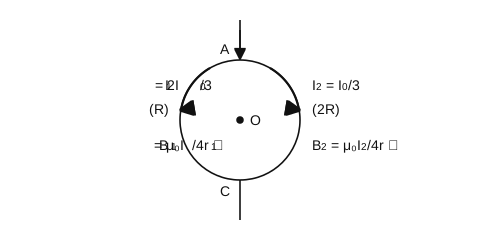
- ABC and ADC are the two semicircles (A, C are diametrically opposite). Current divides inversely as resistance: , .
- The two arcs carry current in opposite senses (one clockwise, one anticlockwise), so their fields at O oppose.
- .
- Lead wires lie along the diameter through O → no contribution.
Short trick: Net field = for two semicircles; here .
Answer: (A)
अवधारणा: अर्धवृत्ताकार चाप के केंद्र पर क्षेत्र = ; जिन सीधे तारों की रेखा O से गुजरती है, वे O पर शून्य क्षेत्र देते हैं।
- ABC और ADC दो अर्धवृत्त हैं (A, C व्यासतः विपरीत)। धारा प्रतिरोध के व्युत्क्रम अनुपात में बँटती है: , ।
- दोनों चापों में धारा विपरीत अर्थ (एक दक्षिणावर्त, एक वामावर्त) में है, अतः O पर उनके क्षेत्र विपरीत हैं।
- ।
- संयोजी तार O से होकर जाने वाले व्यास के अनुदिश हैं → कोई योगदान नहीं।
शॉर्ट ट्रिक: दो अर्धवृत्तों के लिए परिणामी क्षेत्र = ; यहाँ ।
उत्तर: (A)
NEET UGPhysicsMoving charges – field at centre of a loop with unequal armsNEET UG 2026 · 21 Jun Shift 1
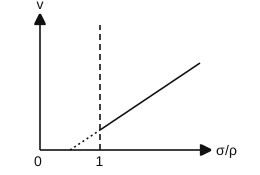
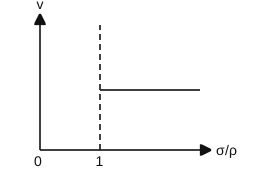
Q12.In the measurement of viscosity of liquids using terminal velocity experiment, spherical balls of same radius but having different densities are used. The variation of the terminal velocity (v) with the ratio of density of spherical ball () to density of the liquid (), is best represented by :
सीमांत वेग प्रयोग द्वारा द्रवों की श्यानता के मापन में, समान त्रिज्या परंतु भिन्न घनत्व वाली गोलीय गेंदें प्रयुक्त की जाती हैं। गोलीय गेंद के घनत्व () और द्रव के घनत्व () के अनुपात के साथ सीमांत वेग (v) के परिवर्तन को सर्वोत्तम रूप से निरूपित करने वाला ग्राफ है :
- A
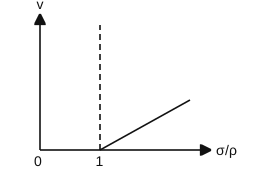
- B
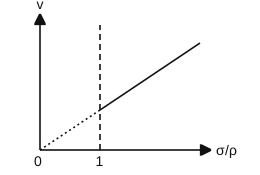
- C
- D
Show answer
Concept: Terminal velocity .
- v is a linear function of with positive slope.
- v = 0 at (ball of liquid density neither sinks nor rises); for it sinks with v growing linearly.
- (A): straight line starting from zero at ✔. (B) gives v ≠ 0 at 1 (line through origin) ✘; (C) makes v ≠ 0 at 1 ✘; (D) constant v ✘.
Short trick: Put : buoyancy balances weight, so v must be 0 exactly at 1.
Answer: (A)
अवधारणा: सीमांत वेग ।
- v, का धनात्मक ढाल वाला रैखिक फलन है।
- पर v = 0 (द्रव के घनत्व वाली गेंद न डूबती है न ऊपर उठती है); पर गेंद डूबती है और v रैखिक रूप से बढ़ता है।
- (A): पर शून्य से प्रारंभ होने वाली सरल रेखा ✔। (B) में 1 पर v ≠ 0 (मूल बिंदु से रेखा) ✘; (C) में 1 पर v ≠ 0 ✘; (D) में नियत v ✘।
शॉर्ट ट्रिक: रखें: उत्प्लावन भार को संतुलित करता है, अतः ठीक 1 पर v = 0 होना चाहिए।
उत्तर: (A)
NEET UGPhysicsMechanical properties of fluids – terminal velocityNEET UG 2026 · 21 Jun Shift 1
Q13.Two planets and with equal mass have radii and , respectively, where . The escape speeds of and are and , respectively. Then is :
समान द्रव्यमान वाले दो ग्रहों और की त्रिज्याएँ क्रमशः और हैं, जहाँ है। और की पलायन चालें क्रमशः और हैं। तब है :
- A
- B1
- C
- D2
Show answer
Concept: Escape speed , so for equal M, .
- .
Short trick: Smaller planet of same mass → deeper potential well → larger escape speed; only and 2 are > 1, and the root dependence gives .
Answer: (C)
अवधारणा: पलायन चाल , अतः समान M के लिए ।
- ।
शॉर्ट ट्रिक: समान द्रव्यमान का छोटा ग्रह → गहरा विभव कूप → अधिक पलायन चाल; केवल और 2 ही > 1 हैं, और वर्गमूल निर्भरता देती है।
उत्तर: (C)
NEET UGPhysicsGravitation – escape speedNEET UG 2026 · 21 Jun Shift 1
Q14.In a solar system, the time-period of revolution of a planet tracing a circular orbit of radius R is proportional to :
किसी सौर-मंडल में, त्रिज्या R की वृत्तीय कक्षा में परिक्रमा करने वाले ग्रह का परिक्रमण-काल किसके अनुक्रमानुपाती है :
- A
- B
- C
- D
Show answer
Concept: Kepler's law of periods: .
- Gravity provides centripetal force: .
- Hence .
Short trick: "Square of time ∝ cube of distance" → T ∝ .
Answer: (B)
अवधारणा: केप्लर का आवर्तकाल नियम: ।
- गुरुत्व बल अभिकेंद्र बल देता है: ।
- अतः ।
शॉर्ट ट्रिक: "समय का वर्ग ∝ दूरी का घन" → T ∝ ।
उत्तर: (B)
NEET UGPhysicsGravitation – Kepler's third lawNEET UG 2026 · 21 Jun Shift 1
Q15.Two infinitely long parallel conducting wires A and B carry currents I and 2I, respectively, in the same direction. The wire A has uniform mass per unit length and lies on an insulated floor. The wire B is kept fixed at a height h above the floor. The minimum magnitude of h so that the wire A does not rise from the floor is :
[g is the acceleration due to gravity and is the permeability of free space]
दो अनंत लंबे समांतर चालक तार A और B में क्रमशः धाराएँ I और 2I एक ही दिशा में प्रवाहित हैं। तार A का एकसमान प्रति एकांक लंबाई द्रव्यमान है और यह एक विद्युतरोधी फर्श पर रखा है। तार B को फर्श से ऊँचाई h पर स्थिर रखा गया है। h का वह न्यूनतम परिमाण, जिससे तार A फर्श से ऊपर न उठे, है :
[g गुरुत्वीय त्वरण तथा मुक्त आकाश की चुम्बकशीलता है]
- A
- B
- C
- D
Show answer
Concept: Parallel currents attract with force per unit length .
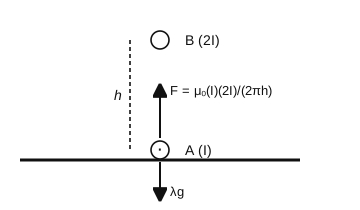
- B is above A and attracts it upward: .
- Weight per unit length of A = (downward). A does not rise if .
- , so .
Short trick: The 2 in 2I cancels the 2 in 2π – that is why the answer has only π.
Answer: (B)
अवधारणा: समांतर धाराएँ एक-दूसरे को आकर्षित करती हैं, प्रति एकांक लंबाई बल ।
- B, A के ऊपर है और उसे ऊपर की ओर खींचता है: ।
- A का प्रति एकांक लंबाई भार = (नीचे की ओर)। A नहीं उठेगा यदि ।
- , अतः ।
शॉर्ट ट्रिक: 2I का 2, 2π के 2 को काट देता है – इसीलिए उत्तर में केवल π है।
उत्तर: (B)
NEET UGPhysicsMoving charges – force between parallel currentsNEET UG 2026 · 21 Jun Shift 1
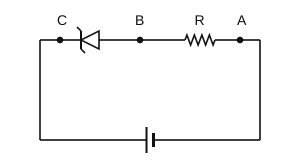
Q16.An ideal Zener diode with breakdown voltage of −3V is reverse biased with a negative input voltage
= −5V. The magnitude of voltage difference between points B and A is :
−3V भंजन वोल्टता (breakdown voltage) वाला एक आदर्श ज़ेनर डायोड ऋणात्मक निवेशी वोल्टता
= −5V से पश्च-अभिनत (reverse biased) है। बिंदुओं B और A के बीच वोल्टता-अंतर का परिमाण है :
- A3 V
- B2 V
- C1 V
- D0 V
Show answer
Concept: A reverse-biased ideal Zener in breakdown holds its breakdown voltage; the rest of the supply drops across the series resistor.
- |Input| = 5 V exceeds |breakdown| = 3 V, so the Zener conducts in breakdown and V.
- Series resistor R (between B and A) takes the remaining voltage: 5 − 3 = 2 V.
- V.
Short trick: KVL in one line: supply = Zener + resistor → 5 = 3 + VR.
Answer: (B) 2 V
अवधारणा: भंजन अवस्था में पश्च-अभिनत आदर्श ज़ेनर अपनी भंजन वोल्टता बनाए रखता है; शेष वोल्टता श्रेणी प्रतिरोधक पर गिरती है।
- |निवेश| = 5 V, |भंजन| = 3 V से अधिक है, अतः ज़ेनर भंजन में चालन करता है और V।
- श्रेणी प्रतिरोधक R (B और A के बीच) शेष वोल्टता लेता है: 5 − 3 = 2 V।
- V।
शॉर्ट ट्रिक: एक पंक्ति में KVL: स्रोत = ज़ेनर + प्रतिरोधक → 5 = 3 + VR।
उत्तर: (B) 2 V
NEET UGPhysicsSemiconductors – Zener diodeNEET UG 2026 · 21 Jun Shift 1
Q17.In an adiabatic expansion, the temperature of one mole of an ideal monatomic gas (=5/3) decreases from 60 K to 50 K. The work done by the gas in the process is :
(Take the universal gas constant as R = 8.3 J )
एक रुद्धोष्म प्रसार में, एक आदर्श एकपरमाणुक गैस (=5/3) के एक मोल का ताप 60 K से घटकर 50 K हो जाता है। इस प्रक्रम में गैस द्वारा किया गया कार्य है :
(सार्वत्रिक गैस नियतांक R = 8.3 J लीजिए)
- A41.5 J
- B83 J
- C124.5 J
- D166 J
Show answer
Concept: Adiabatic work by gas .
- , K.
- J.
Short trick: Q = 0, so W = −ΔU = = 1.5 × 83 = 124.5 J.
Answer: (C) 124.5 J
अवधारणा: रुद्धोष्म प्रक्रम में गैस द्वारा कार्य ।
- , K।
- J।
शॉर्ट ट्रिक: Q = 0, अतः W = −ΔU = = 1.5 × 83 = 124.5 J।
उत्तर: (C) 124.5 J
NEET UGPhysicsThermodynamics – work in adiabatic processNEET UG 2026 · 21 Jun Shift 1
Q18.A ray of light with wavelength is incident on three different photo-electric cells namely 1, 2 and 3. The threshold wavelengths of these photo-electric cells are , and , respectively and the magnitude of stopping potentials of these cells are , and , respectively. The relation between and threshold wavelengths are , and . The correct option is :
तरंगदैर्ध्य की एक प्रकाश किरण तीन भिन्न प्रकाश-विद्युत सेलों 1, 2 और 3 पर आपतित होती है। इन सेलों की देहली तरंगदैर्ध्य क्रमशः , और हैं तथा इनके निरोधी विभवों के परिमाण क्रमशः , और हैं। और देहली तरंगदैर्ध्यों के बीच संबंध , और हैं। सही विकल्प है :
- A,
- B,
- C,
- D,
Show answer
Concept: Emission needs (threshold). – larger → larger V.
- Cell 1: → no emission → .
- Cells 2 and 3: → emission occurs.
- means , i.e. smaller work function → .
- So , . (B) reverses the order; (C), (D) wrongly make .
Short trick: "Bigger threshold wavelength = easier metal = bigger stopping potential."
Answer: (A) ,
अवधारणा: उत्सर्जन के लिए (देहली) आवश्यक है। – अधिक → अधिक V।
- सेल 1: → कोई उत्सर्जन नहीं → ।
- सेल 2 और 3: → उत्सर्जन होता है।
- का अर्थ , अर्थात् कम कार्य-फलन → ।
- अतः , । (B) क्रम उलट देता है; (C), (D) में लेना गलत है।
शॉर्ट ट्रिक: "अधिक देहली तरंगदैर्ध्य = आसान धातु = अधिक निरोधी विभव।"
उत्तर: (A) ,
NEET UGPhysicsDual nature – threshold wavelength and stopping potentialNEET UG 2026 · 21 Jun Shift 1
Q19.A photon and an electron, each of 20 eV energy, move in free space. The ratio of linear momentum of electron to that of photon , is :
(Take speed of light = , charge of electron = C and mass of electron = kg)
एक फोटॉन और एक इलेक्ट्रॉन, प्रत्येक की ऊर्जा 20 eV, मुक्त आकाश में गति करते हैं। इलेक्ट्रॉन के रैखिक संवेग तथा फोटॉन के रैखिक संवेग का अनुपात है :
(प्रकाश की चाल = , इलेक्ट्रॉन का आवेश = C तथा इलेक्ट्रॉन का द्रव्यमान = kg लीजिए)
- A
- B
- C225
- D275
Show answer
Concept: Electron (non-relativistic): . Photon: .
- J.
- kg m s−1.
- kg m s−1.
- .
Short trick: .
Answer: (C) 225
अवधारणा: इलेक्ट्रॉन (अनापेक्षिकीय): । फोटॉन: ।
- J।
- kg m s−1।
- kg m s−1।
- ।
शॉर्ट ट्रिक: ।
उत्तर: (C) 225
NEET UGPhysicsDual nature – momentum of photon and electronNEET UG 2026 · 21 Jun Shift 1
Q20.Which of the following measurements require 'index correction'?
निम्नलिखित में से किस मापन में 'सूचकांक संशोधन' (index correction) की आवश्यकता होती है?
- AMeasurement of resistance of a wire using meter bridgeमीटर सेतु द्वारा किसी तार के प्रतिरोध का मापन
- BMeasurement of gravitational acceleration using simple pendulumसरल लोलक द्वारा गुरुत्वीय त्वरण का मापन
- CMeasurement of focal length of lenses using optical benchप्रकाशीय बेंच द्वारा लेंसों की फोकस दूरी का मापन
- DMeasurement of speed of sound using resonance tubeअनुनाद नलिका द्वारा ध्वनि की चाल का मापन
Show answer
Concept: Index error on an optical bench = difference between the bench-scale distance between two uprights and the actual distance between the optical centre of the lens and the object/needle tip.
- On the optical bench, the separation read from the scale (between upright index marks) is not the true lens–needle distance; an index rod is used to find this correction, which is added to u and v.
- Meter bridge uses end correction, not index correction.
- Simple pendulum needs only length to the centre of bob (radius added) – no index correction.
- Resonance tube uses end correction (0.3 d), not index correction.
Short trick: "Index rod ↔ optical bench"; "end correction ↔ meter bridge & resonance tube".
Answer: (C) Optical bench (focal length of lenses)
अवधारणा: प्रकाशीय बेंच पर सूचकांक त्रुटि = दो स्टैंडों के बीच बेंच-स्केल पर पढ़ी गई दूरी तथा लेंस के प्रकाशिक केंद्र एवं वस्तु/सुई की नोक के बीच वास्तविक दूरी का अंतर।
- प्रकाशीय बेंच पर स्केल से पढ़ी गई दूरी (स्टैंडों के सूचक चिह्नों के बीच) वास्तविक लेंस–सुई दूरी नहीं होती; सूचकांक छड़ (index rod) से यह संशोधन ज्ञात कर u और v में जोड़ा जाता है।
- मीटर सेतु में सिरा संशोधन (end correction) लगता है, सूचकांक संशोधन नहीं।
- सरल लोलक में केवल गोलक के केंद्र तक लंबाई (त्रिज्या जोड़कर) चाहिए – कोई सूचकांक संशोधन नहीं।
- अनुनाद नलिका में सिरा संशोधन (0.3 d) लगता है, सूचकांक संशोधन नहीं।
शॉर्ट ट्रिक: "सूचकांक छड़ ↔ प्रकाशीय बेंच"; "सिरा संशोधन ↔ मीटर सेतु एवं अनुनाद नलिका"।
उत्तर: (C) प्रकाशीय बेंच (लेंसों की फोकस दूरी)
NEET UGPhysicsExperimental skills – index correctionNEET UG 2026 · 21 Jun Shift 1

