NEET UG · 2,240 questions

NEET UG 2015, 2016, 2017, 2018, 2019, 2020, 2021, 2022, 2023, 2024, 2025, 2026 PYQs

Real previous year questions, subject-wise. Try the question, then open the answer and the explanation in Hindi & English – free, no login.

Courses – airGurukul

720 questions in Biology.

Q241.
Snow-blindness in Antarctic region is due to:
अंटार्कटिक क्षेत्र में हिम-अंधता (snow-blindness) का कारण है:
  1. AHigh reflection of light from snowहिम से प्रकाश का अधिक परावर्तन
  2. BDamage to retina caused by infra-red raysअवरक्त किरणों द्वारा रेटिना की क्षति
  3. CFreezing of fluids in the eye by low temperatureनिम्न ताप द्वारा नेत्र के द्रवों का जमना
  4. DInflammation of cornea due to high dose of UV-B radiationUV-B विकिरण की उच्च मात्रा के कारण कॉर्निया की सूजन (शोथ)
Show answer

Concept: NCERT: the cornea absorbs UV-B radiation; a high dose of UV-B causes inflammation of the cornea, called snow-blindness, cataract etc. Antarctic ozone hole lets more UV-B reach the ground.

  1. (D) Inflammation of cornea by high UV-B – the NCERT definition.
  2. (A) Reflection only increases exposure; the damaging agent is UV-B, not visible light.
  3. (B) Infra-red causes heat, not snow-blindness; and the cornea (not retina) is affected.
  4. (C) Eye fluids do not freeze.

Short trick: Ozone hole ↑ → UV-B ↑ → Cornea inflamed = Snow-blindness (both start with "C/S": Cornea → Snow).

Answer: (D) Inflammation of cornea due to high dose of UV-B radiation

अवधारणा: NCERT: कॉर्निया UV-B विकिरण का अवशोषण करती है; UV-B की उच्च मात्रा से कॉर्निया में शोथ (सूजन) होता है जिसे हिम-अंधता कहते हैं, मोतियाबिंद आदि भी। अंटार्कटिक ओज़ोन छिद्र के कारण अधिक UV-B धरातल तक पहुँचता है।

  1. (D) उच्च UV-B से कॉर्निया की सूजन – यही NCERT की परिभाषा है।
  2. (A) परावर्तन केवल संपर्क बढ़ाता है; क्षति पहुँचाने वाला कारक UV-B है, दृश्य प्रकाश नहीं।
  3. (B) अवरक्त किरणें ऊष्मा देती हैं, हिम-अंधता नहीं; और प्रभावित भाग कॉर्निया है, रेटिना नहीं।
  4. (C) नेत्र के द्रव नहीं जमते।

शॉर्ट ट्रिक: ओज़ोन छिद्र ↑ → UV-B ↑ → कॉर्निया में सूजन = हिम-अंधता।

उत्तर: (D) UV-B विकिरण की उच्च मात्रा के कारण कॉर्निया की सूजन (शोथ)
NEET UGBiologyEnvironmental issues – ozone depletion and UV-BNEET UG 2020 · 13 Sep Shift 1
Q242.
Strobili or cones are found in:
शंकु (strobili या cones) किसमें पाए जाते हैं?
  1. AMarchantia
  2. BEquisetum
  3. CSalvinia
  4. DPteris
Show answer

Concept: NCERT: in pteridophytes like Selaginella and Equisetum, sporophylls aggregate to form compact structures called strobili or cones.

  1. (B) Equisetum (horsetail) – terminal strobilus → correct.
  2. (A) Marchantia is a liverwort (bryophyte) – no cones; has gemma cups and archegoniophores/antheridiophores.
  3. (C) Salvinia – water fern with sporocarps, not strobili.
  4. (D) Pteris – fern with sori on the leaf margin, not cones.

Short trick: "Selaginella & Equisetum = SE = Strobili Exist" in pteridophytes.

Answer: (B) Equisetum

अवधारणा: NCERT: Selaginella और Equisetum जैसे टेरिडोफ़ाइट में बीजाणुपर्ण एकत्र होकर सघन संरचना बनाते हैं जिसे शंकु (strobili या cones) कहते हैं।

  1. (B) Equisetum (हॉर्सटेल) – शीर्षस्थ शंकु → सही।
  2. (A) Marchantia एक लिवरवर्ट (ब्रायोफ़ाइट) है – शंकु नहीं; इसमें जेमा कप तथा स्त्रीधानीधर/पुंधानीधर होते हैं।
  3. (C) Salvinia – जलीय फ़र्न, जिसमें बीजाणुफलिका (sporocarp) होती है, शंकु नहीं।
  4. (D) Pteris – फ़र्न जिसमें पत्ती के किनारे पर सोरस होते हैं, शंकु नहीं।

शॉर्ट ट्रिक: "Selaginella और Equisetum = SE = Strobili Exist" (टेरिडोफ़ाइट में)।

उत्तर: (B) Equisetum

NEET UGBiologyPlant kingdom – pteridophytesNEET UG 2020 · 13 Sep Shift 1
Q243.
From his experiments, S.L. Miller produced amino acids by mixing the following in a closed flask:
अपने प्रयोगों में एस.एल. मिलर ने एक बंद फ्लास्क में निम्नलिखित को मिलाकर ऐमीनो अम्ल उत्पन्न किए:
  1. ACH4, H2, NH3 and water vapor at 600°C600°C पर CH4, H2, NH3 और जलवाष्प
  2. BCH3, H2, NH3 and water vapor at 600°C600°C पर CH3, H2, NH3 और जलवाष्प
  3. CCH4, H2, NH3 and water vapor at 800°C800°C पर CH4, H2, NH3 और जलवाष्प
  4. DCH3, H2, NH4 and water vapor at 800°C800°C पर CH3, H2, NH4 और जलवाष्प
Show answer

Concept: NCERT: in 1953 S.L. Miller created electric discharge in a closed flask containing CH4, H2, NH3 and water vapour at 800°C and observed formation of amino acids.

  1. The gas is methane, CH4 (CH3 is only a radical, not a stable gas) → (B) and (D) out; (D) also has NH4 instead of ammonia NH3.
  2. The temperature quoted in NCERT is 800°C → (A) out.
  3. Hence CH4, H2, NH3, water vapour at 800°C → (C).

Short trick: "Miller – MHA-W at 800": Methane, Hydrogen, Ammonia, Water at 800°C (1953 – 5+3 = 8 helps recall 800).

Answer: (C) CH4, H2, NH3 and water vapor at 800°C

अवधारणा: NCERT: 1953 में एस.एल. मिलर ने 800°C पर CH4, H2, NH3 और जलवाष्प युक्त बंद फ्लास्क में विद्युत विसर्जन कराया और ऐमीनो अम्लों का बनना देखा।

  1. गैस मेथेन, CH4 है (CH3 केवल एक मूलक है, स्थायी गैस नहीं) → (B) और (D) बाहर; (D) में अमोनिया NH3 के स्थान पर NH4 भी है।
  2. NCERT में दिया गया ताप 800°C है → (A) बाहर।
  3. अतः 800°C पर CH4, H2, NH3, जलवाष्प → (C)।

शॉर्ट ट्रिक: "मिलर – MHA-W 800 पर": मेथेन, हाइड्रोजन, अमोनिया, जल 800°C पर (1953 – 5+3 = 8 से 800 याद रखें)।

उत्तर: (C) 800°C पर CH4, H2, NH3 और जलवाष्प

NEET UGBiologyEvolution – Miller's experimentNEET UG 2020 · 13 Sep Shift 1
Q244.
In relation to Gross primary productivity and Net primary productivity of an ecosystem, which one of the following statements is correct?
किसी पारितंत्र की सकल प्राथमिक उत्पादकता और नेट (शुद्ध) प्राथमिक उत्पादकता के संबंध में निम्नलिखित में से कौन-सा कथन सही है?
  1. AGross primary productivity and Net primary productivity are one and same.सकल प्राथमिक उत्पादकता और नेट प्राथमिक उत्पादकता एक ही हैं।
  2. BThere is no relationship between Gross primary productivity and Net primary productivity.सकल प्राथमिक उत्पादकता और नेट प्राथमिक उत्पादकता के बीच कोई संबंध नहीं है।
  3. CGross primary productivity is always less than Net primary productivity.सकल प्राथमिक उत्पादकता सदैव नेट प्राथमिक उत्पादकता से कम होती है।
  4. DGross primary productivity is always more than Net primary productivity.सकल प्राथमिक उत्पादकता सदैव नेट प्राथमिक उत्पादकता से अधिक होती है।
Show answer

Concept: NPP = GPP − R, where R = respiration losses of the producers.

  1. Plants always use part of the fixed energy in respiration (R > 0).
  2. Therefore GPP = NPP + R > NPP → (D).
  3. (A) and (B) are wrong because NPP is derived from GPP; (C) reverses the inequality.

Short trick: "Gross is the salary, Net is the take-home": gross is always more.

Answer: (D) Gross primary productivity is always more than Net primary productivity.

अवधारणा: NPP = GPP − R, जहाँ R = उत्पादकों द्वारा श्वसन में हुई हानि।

  1. पादप स्थिर की गई ऊर्जा का कुछ भाग सदैव श्वसन में व्यय करते हैं (R > 0)।
  2. अतः GPP = NPP + R > NPP → (D)।
  3. (A) और (B) गलत हैं क्योंकि NPP, GPP से ही प्राप्त होती है; (C) असमिका को उलट देता है।

शॉर्ट ट्रिक: "सकल = पूरा वेतन, नेट = हाथ में आया वेतन": सकल सदैव अधिक।

उत्तर: (D) सकल प्राथमिक उत्पादकता सदैव नेट प्राथमिक उत्पादकता से अधिक होती है।

NEET UGBiologyEcosystem – productivityNEET UG 2020 · 13 Sep Shift 1
Q245.
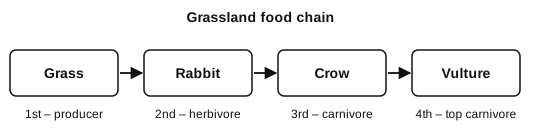
Match the trophic levels with their correct species examples in grassland ecosystem.
Column-IColumn-II
(a) Fourth trophic level(i) Crow
(b) Second trophic level(ii) Vulture
(c) First trophic level(iii) Rabbit
(d) Third trophic level(iv) Grass
Select the correct option:
घास-स्थल पारितंत्र में पोषी स्तरों का उनकी सही जाति के उदाहरणों से मिलान कीजिए।
स्तम्भ-Iस्तम्भ-II
(a) चौथा पोषी स्तर(i) कौआ
(b) दूसरा पोषी स्तर(ii) गिद्ध
(c) पहला पोषी स्तर(iii) खरगोश
(d) तीसरा पोषी स्तर(iv) घास
सही विकल्प चुनिए:
  1. Aa-iv, b-iii, c-ii, d-i
  2. Ba-i, b-ii, c-iii, d-iv
  3. Ca-ii, b-iii, c-iv, d-i
  4. Da-iii, b-ii, c-i, d-iv
Show answer

Concept: Grassland chain: Grass (producer) → Rabbit (herbivore) → Crow (secondary consumer) → Vulture (top carnivore).

  1. First trophic level = Grass → (c)-(iv).
  2. Second = Rabbit → (b)-(iii).
  3. Third = Crow → (d)-(i).
  4. Fourth = Vulture → (a)-(ii).
  5. a-ii, b-iii, c-iv, d-i = (C).

Short trick: Start at the bottom: "first level is always the plant" → only (C) has c-iv.

Answer: (C) a-ii, b-iii, c-iv, d-i

अवधारणा: घास-स्थल की श्रृंखला: घास (उत्पादक) → खरगोश (शाकाहारी) → कौआ (द्वितीयक उपभोक्ता) → गिद्ध (शीर्ष मांसाहारी)।

  1. पहला पोषी स्तर = घास → (c)-(iv)।
  2. दूसरा = खरगोश → (b)-(iii)।
  3. तीसरा = कौआ → (d)-(i)।
  4. चौथा = गिद्ध → (a)-(ii)।
  5. a-ii, b-iii, c-iv, d-i = (C)।

शॉर्ट ट्रिक: नीचे से शुरू करें: "पहला स्तर सदैव पादप" → केवल (C) में c-iv है।

उत्तर: (C) a-ii, b-iii, c-iv, d-i

NEET UGBiologyEcosystem – trophic levelsNEET UG 2020 · 13 Sep Shift 1
Q246.
Select the correct statement.
सही कथन का चयन कीजिए।
  1. AInsulin acts on pancreatic cells and adipocytes.इंसुलिन अग्न्याशयी कोशिकाओं और वसा कोशिकाओं (adipocytes) पर कार्य करता है।
  2. BInsulin is associated with hyperglycemiaइंसुलिन अतिग्लूकोज़रक्तता (hyperglycemia) से संबद्ध है
  3. CGlucocorticoids stimulate gluconeogenesisग्लूकोकॉर्टिकॉइड ग्लूकोनियोजनन (gluconeogenesis) को उद्दीपित करते हैं
  4. DGlucagon is associated with hypoglycemia.ग्लूकैगॉन अल्पग्लूकोज़रक्तता (hypoglycemia) से संबद्ध है।
Show answer

Concept: Glucocorticoids (cortisol) of the adrenal cortex stimulate gluconeogenesis, lipolysis and proteolysis (NCERT).

  1. (C) Correct.
  2. (A) Wrong – insulin acts mainly on hepatocytes and adipocytes, not on pancreatic cells.
  3. (B) Wrong – insulin lowers blood glucose → hypoglycemia; its deficiency causes hyperglycemia.
  4. (D) Wrong – glucagon raises blood glucose → hyperglycemic hormone.

Short trick: "Insulin – In the cell (glucose ↓, hypo); Glucagon – Glucose Gone up (hyper); Cortisol – Creates new glucose (gluconeogenesis)."

Answer: (C) Glucocorticoids stimulate gluconeogenesis

अवधारणा: अधिवृक्क वल्कुट के ग्लूकोकॉर्टिकॉइड (कॉर्टिसोल) ग्लूकोनियोजनन, वसा-अपघटन और प्रोटीन-अपघटन को उद्दीपित करते हैं (NCERT)।

  1. (C) सही।
  2. (A) गलत – इंसुलिन मुख्यतः यकृत कोशिकाओं (hepatocytes) और वसा कोशिकाओं पर कार्य करता है, अग्न्याशयी कोशिकाओं पर नहीं।
  3. (B) गलत – इंसुलिन रक्त ग्लूकोज़ घटाता है → अल्पग्लूकोज़रक्तता; इसकी कमी से अतिग्लूकोज़रक्तता होती है।
  4. (D) गलत – ग्लूकैगॉन रक्त ग्लूकोज़ बढ़ाता है → अतिग्लूकोज़रक्तताजनक हॉर्मोन।

शॉर्ट ट्रिक: "इंसुलिन – ग्लूकोज़ कोशिका के अंदर (↓, hypo); ग्लूकैगॉन – ग्लूकोज़ ऊपर (hyper); कॉर्टिसोल – नया ग्लूकोज़ बनाता है (gluconeogenesis)।"

उत्तर: (C) ग्लूकोकॉर्टिकॉइड ग्लूकोनियोजनन को उद्दीपित करते हैं

NEET UGBiologyChemical coordination – pancreatic and adrenal hormonesNEET UG 2020 · 13 Sep Shift 1
Q247.
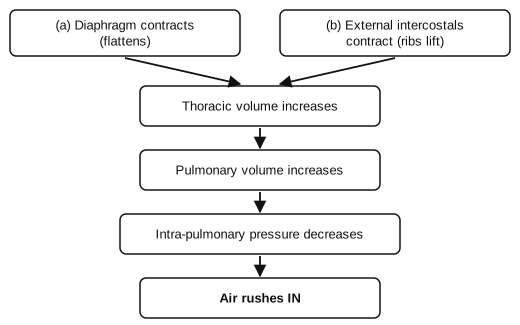
Select the correct events that occur during inspiration.
(a) Contraction of diaphragm
(b) Contraction of external inter-costal muscles
(c) Pulmonary volume decreases
(d) Intrapulmonary pressure increases
अंतःश्वसन (inspiration) के समय होने वाली सही घटनाओं का चयन कीजिए।
(a) डायाफ्राम का संकुचन
(b) बाह्य अंतरापर्शुक (external inter-costal) पेशियों का संकुचन
(c) फुप्फुसीय आयतन घटता है
(d) अंतःफुप्फुसीय दाब बढ़ता है
  1. A(a), (b) and (d)(a), (b) और (d)
  2. BOnly (d)केवल (d)
  3. C(a) and (b)(a) और (b)
  4. D(c) and (d)(c) और (d)
Show answer

Concept: Inspiration occurs when intra-pulmonary pressure falls below atmospheric pressure (NCERT).

  1. (a) Diaphragm contracts → antero-posterior axis of thorax increases – correct.
  2. (b) External intercostals contract → ribs and sternum lift → dorso-ventral axis increases – correct.
  3. (c) Wrong – thoracic and hence pulmonary volume increases.
  4. (d) Wrong – intra-pulmonary pressure decreases, so air rushes in.
  5. Correct events: (a) and (b) → (C).

Short trick: Inspiration = "muscles contract, volume up, pressure down" – any option with "volume decreases" or "pressure increases" is expiration.

Answer: (C) (a) and (b)

अवधारणा: अंतःश्वसन तब होता है जब अंतःफुप्फुसीय दाब वायुमंडलीय दाब से कम हो जाता है (NCERT)।

  1. (a) डायाफ्राम संकुचित होता है → वक्ष की अग्र-पश्च अक्ष बढ़ती है – सही।
  2. (b) बाह्य अंतरापर्शुक पेशियाँ संकुचित → पसलियाँ और उरोस्थि ऊपर उठती हैं → पृष्ठ-अधर अक्ष बढ़ती है – सही।
  3. (c) गलत – वक्षीय और अतः फुप्फुसीय आयतन बढ़ता है।
  4. (d) गलत – अंतःफुप्फुसीय दाब घटता है, इसलिए वायु अंदर आती है।
  5. सही घटनाएँ: (a) और (b) → (C)।

शॉर्ट ट्रिक: अंतःश्वसन = "पेशियाँ संकुचित, आयतन ऊपर, दाब नीचे" – "आयतन घटता" या "दाब बढ़ता" वाले विकल्प उच्छ्वसन के हैं।

उत्तर: (C) (a) और (b)

NEET UGBiologyBreathing and exchange of gases – mechanism of breathingNEET UG 2020 · 13 Sep Shift 1
Q248.
The roots that originate from the base of the stem are:
वे जड़ें (मूल) जो तने के आधार से निकलती हैं:
  1. AProp rootsस्तंभ मूल (prop roots)
  2. BLateral rootsपार्श्व मूल
  3. CFibrous rootsझकड़ा (रेशेदार) मूल
  4. DPrimary rootsप्राथमिक मूल
Show answer

Concept: NCERT: in monocots the primary root is short-lived and is replaced by a large number of roots that originate from the base of the stem – the fibrous root system (e.g. wheat).

  1. (C) Fibrous roots – arise from the base of the stem → correct.
  2. (A) Prop roots arise from lower branches of the stem and grow down (banyan); stilt roots of maize/sugarcane come from lower nodes.
  3. (B) Lateral roots arise from the primary root (pericycle).
  4. (D) Primary root develops from the radicle.

Short trick: NCERT word-for-word: "originate from the base of the stem = fibrous"; "from parts other than radicle = adventitious".

Answer: (C) Fibrous roots

अवधारणा: NCERT: एकबीजपत्री पादपों में प्राथमिक मूल अल्पायु होती है और इसका स्थान तने के आधार से निकलने वाली अनेक जड़ें ले लेती हैं – यह झकड़ा (रेशेदार) मूल तंत्र है (जैसे गेहूँ)।

  1. (C) झकड़ा मूल – तने के आधार से निकलती हैं → सही।
  2. (A) स्तंभ मूल तने की निचली शाखाओं से निकलकर नीचे बढ़ती हैं (बरगद); मक्का/गन्ने की अवस्तंभ मूल निचली पर्वसंधियों से।
  3. (B) पार्श्व मूल प्राथमिक मूल (परिरंभ) से निकलती हैं।
  4. (D) प्राथमिक मूल मूलांकुर से विकसित होती है।

शॉर्ट ट्रिक: NCERT शब्दशः: "तने के आधार से = झकड़ा मूल"; "मूलांकुर के अतिरिक्त अन्य भागों से = अपस्थानिक"।

उत्तर: (C) झकड़ा (रेशेदार) मूल

NEET UGBiologyMorphology of flowering plants – rootsNEET UG 2020 · 13 Sep Shift 1
Q249.
Goblet cells of alimentary canal are modified from:
आहार नाल की गॉब्लेट (चषक) कोशिकाएँ किससे रूपांतरित होती हैं?
  1. AChondrocytesउपास्थि कोशिकाएँ (chondrocytes)
  2. BCompound epithelial cellsसंयुक्त उपकला कोशिकाएँ
  3. CSquamous epithelial cellsशल्की उपकला कोशिकाएँ
  4. DColumnar epithelial cellsस्तंभाकार उपकला कोशिकाएँ
Show answer

Concept: NCERT: some columnar or cuboidal cells become specialised for secretion – glandular epithelium; goblet cells of the alimentary canal are unicellular glands of the columnar epithelium lining the intestine.

  1. (D) Columnar epithelial cells → correct (they secrete mucus).
  2. (A) Chondrocytes are cartilage cells (connective tissue).
  3. (B) Compound epithelium is protective (skin, buccal cavity), not glandular.
  4. (C) Squamous epithelium is thin, flat, for diffusion (alveoli, blood vessels).

Short trick: "Goblet = tall glass" → tall cells = columnar.

Answer: (D) Columnar epithelial cells

अवधारणा: NCERT: कुछ स्तंभाकार या घनाकार कोशिकाएँ स्रवण के लिए विशिष्ट हो जाती हैं – ग्रंथिल उपकला; आहार नाल की गॉब्लेट कोशिकाएँ आंत्र को आस्तरित करने वाली स्तंभाकार उपकला की एककोशिकीय ग्रंथियाँ हैं।

  1. (D) स्तंभाकार उपकला कोशिकाएँ → सही (ये श्लेष्मा स्रावित करती हैं)।
  2. (A) उपास्थि कोशिकाएँ उपास्थि (संयोजी ऊतक) की कोशिकाएँ हैं।
  3. (B) संयुक्त उपकला सुरक्षात्मक है (त्वचा, मुख गुहा), ग्रंथिल नहीं।
  4. (C) शल्की उपकला पतली, चपटी, विसरण हेतु (वायुकोष्ठिका, रक्तवाहिनियाँ)।

शॉर्ट ट्रिक: "गॉब्लेट = लंबा गिलास" → लंबी कोशिकाएँ = स्तंभाकार।

उत्तर: (D) स्तंभाकार उपकला कोशिकाएँ

NEET UGBiologyAnimal tissues – epitheliumNEET UG 2020 · 13 Sep Shift 1
Q250.
Montreal protocol was signed in 1987 for control of:
मॉन्ट्रियल प्रोटोकॉल पर 1987 में किसके नियंत्रण के लिए हस्ताक्षर किए गए थे?
  1. ARelease of Green House gasesग्रीनहाउस गैसों का उत्सर्जन
  2. BDisposal of e-wastesई-अपशिष्टों का निपटान
  3. CTransport of Genetically modified organisms from one country to anotherआनुवंशिक रूप से रूपांतरित जीवों का एक देश से दूसरे देश में परिवहन
  4. DEmission of ozone depleting substancesओज़ोन क्षयकारी पदार्थों का उत्सर्जन
Show answer

Concept: NCERT: the Montreal Protocol (Canada, 1987, effective 1989) was signed to control the emission of ozone-depleting substances such as CFCs.

  1. (D) correct.
  2. (A) Greenhouse gases – Kyoto Protocol (1997).
  3. (B) E-waste/hazardous waste movement – Basel Convention.
  4. (C) Transboundary movement of GMOs – Cartagena Protocol on Biosafety.

Short trick: "Montreal – Mother Ozone; Kyoto – Keep temperature (GHG); Cartagena – Crops GM; Basel – Bad waste."

Answer: (D) Emission of ozone depleting substances

अवधारणा: NCERT: मॉन्ट्रियल प्रोटोकॉल (कनाडा, 1987, प्रभावी 1989) पर CFC जैसे ओज़ोन क्षयकारी पदार्थों के उत्सर्जन पर नियंत्रण हेतु हस्ताक्षर हुए।

  1. (D) सही।
  2. (A) ग्रीनहाउस गैसें – क्योटो प्रोटोकॉल (1997)।
  3. (B) ई-अपशिष्ट/खतरनाक अपशिष्ट का आवागमन – बेसल अभिसमय।
  4. (C) GMO का सीमापार परिवहन – कार्टाजेना जैवसुरक्षा प्रोटोकॉल।

शॉर्ट ट्रिक: "मॉन्ट्रियल – ओज़ोन; क्योटो – ग्रीनहाउस गैस; कार्टाजेना – GM फ़सलें; बेसल – खतरनाक अपशिष्ट।"

उत्तर: (D) ओज़ोन क्षयकारी पदार्थों का उत्सर्जन

NEET UGBiologyEnvironmental issues – Montreal protocolNEET UG 2020 · 13 Sep Shift 1
Q251.
Which of the following statements are true for the phylum-Chordata?
(a) In Urochordata notochord extends from head to tail and it is present throughout their life.
(b) In Vertebrata notochord is present during the embryonic period only.
(c) Central nervous system is dorsal and hollow.
(d) Chordata is divided into 3 subphyla: Hemichordata, Tunicata and Cephalochordata.
संघ-कॉर्डेटा के लिए निम्नलिखित में से कौन-से कथन सत्य हैं?
(a) यूरोकॉर्डेटा में पृष्ठरज्जु (notochord) सिर से पूँछ तक फैली होती है और यह जीवन भर उपस्थित रहती है।
(b) वर्टिब्रेटा में पृष्ठरज्जु केवल भ्रूणीय अवस्था में उपस्थित होती है।
(c) केंद्रीय तंत्रिका तंत्र पृष्ठीय और खोखला होता है।
(d) कॉर्डेटा को 3 उपसंघों में बाँटा गया है: हेमीकॉर्डेटा, ट्यूनिकेटा और सेफैलोकॉर्डेटा।
  1. A(a) and (b)(a) और (b)
  2. B(b) and (c)(b) और (c)
  3. C(d) and (c)(d) और (c)
  4. D(c) and (a)(c) और (a)
Show answer

Concept: NCERT: Chordata = Urochordata (Tunicata) + Cephalochordata + Vertebrata; notochord, dorsal hollow nerve cord and pharyngeal gill slits are the key features.

  1. (a) False – in Urochordata the notochord is present only in the larval tail; head-to-tail, life-long notochord is the feature of Cephalochordata.
  2. (b) True – in vertebrates the notochord is present only in the embryo and is replaced by the vertebral column.
  3. (c) True – CNS is dorsal, hollow and single.
  4. (d) False – Hemichordata is now a separate phylum; the third subphylum is Vertebrata.
  5. True: (b) and (c) → (B).

Short trick: "Uro = tail only (larva), Cephalo = head to tail, life-long"; Hemichordata is NOT a chordate subphylum.

Answer: (B) (b) and (c)

अवधारणा: NCERT: कॉर्डेटा = यूरोकॉर्डेटा (ट्यूनिकेटा) + सेफैलोकॉर्डेटा + वर्टिब्रेटा; पृष्ठरज्जु, पृष्ठीय खोखला तंत्रिका रज्जु और ग्रसनी क्लोम छिद्र मुख्य लक्षण हैं।

  1. (a) असत्य – यूरोकॉर्डेटा में पृष्ठरज्जु केवल लार्वा की पूँछ में होती है; सिर से पूँछ तक, जीवन भर रहने वाली पृष्ठरज्जु सेफैलोकॉर्डेटा का लक्षण है।
  2. (b) सत्य – कशेरुकियों में पृष्ठरज्जु केवल भ्रूण में होती है और कशेरुक दंड द्वारा प्रतिस्थापित हो जाती है।
  3. (c) सत्य – केंद्रीय तंत्रिका तंत्र पृष्ठीय, खोखला और एकल होता है।
  4. (d) असत्य – हेमीकॉर्डेटा अब अलग संघ है; तीसरा उपसंघ वर्टिब्रेटा है।
  5. सत्य: (b) और (c) → (B)।

शॉर्ट ट्रिक: "यूरो = केवल पूँछ (लार्वा), सेफैलो = सिर से पूँछ, जीवन भर"; हेमीकॉर्डेटा कॉर्डेटा का उपसंघ नहीं है।

उत्तर: (B) (b) और (c)

NEET UGBiologyAnimal kingdom – phylum ChordataNEET UG 2020 · 13 Sep Shift 1
Q252.
Identify the substances having glycosidic bond and peptide bond, respectively in their structure:
उन पदार्थों को पहचानिए जिनकी संरचना में क्रमशः ग्लाइकोसिडिक बंध और पेप्टाइड बंध होते हैं:
  1. ACellulose, lecithinसेलुलोज़, लेसिथिन
  2. BInulin, insulinइनुलिन, इंसुलिन
  3. CChitin, cholesterolकाइटिन, कोलेस्टेरॉल
  4. DGlycerol, trypsinग्लिसरॉल, ट्रिप्सिन
Show answer

Concept: Glycosidic bonds join monosaccharides in polysaccharides; peptide bonds join amino acids in proteins.

  1. (B) Inulin – polymer of fructose (glycosidic bonds); insulin – protein hormone (peptide bonds) → correct.
  2. (A) Lecithin is a phospholipid – no peptide bond.
  3. (C) Cholesterol is a sterol (lipid) – no peptide bond.
  4. (D) Glycerol is a trihydroxy alcohol – no glycosidic bond.

Short trick: In each pair, the 2nd item must be a protein: only insulin and trypsin are proteins; then the 1st must be a sugar polymer → inulin.

Answer: (B) Inulin, insulin

अवधारणा: ग्लाइकोसिडिक बंध पॉलिसैकेराइडों में मोनोसैकेराइडों को जोड़ते हैं; पेप्टाइड बंध प्रोटीनों में ऐमीनो अम्लों को जोड़ते हैं।

  1. (B) इनुलिन – फ्रक्टोज़ का बहुलक (ग्लाइकोसिडिक बंध); इंसुलिन – प्रोटीन हॉर्मोन (पेप्टाइड बंध) → सही।
  2. (A) लेसिथिन एक फॉस्फोलिपिड है – पेप्टाइड बंध नहीं।
  3. (C) कोलेस्टेरॉल एक स्टेरॉल (लिपिड) है – पेप्टाइड बंध नहीं।
  4. (D) ग्लिसरॉल एक ट्राइहाइड्रॉक्सी ऐल्कोहॉल है – ग्लाइकोसिडिक बंध नहीं।

शॉर्ट ट्रिक: प्रत्येक जोड़े का दूसरा पदार्थ प्रोटीन होना चाहिए: केवल इंसुलिन और ट्रिप्सिन प्रोटीन हैं; फिर पहला शर्करा बहुलक होना चाहिए → इनुलिन।

उत्तर: (B) इनुलिन, इंसुलिन

NEET UGBiologyBiomolecules – glycosidic and peptide bondsNEET UG 2020 · 13 Sep Shift 1
Q253.
Match the following columns and select the correct option.
Column-IColumn-II
(a) Placenta(i) Androgens
(b) Zona pellucida(ii) Human Chorionic Gonadotropin (hCG)
(c) Bulbo-urethral glands(iii) Layer of the ovum
(d) Leydig cells(iv) Lubrication of the penis
नीचे दिए गए स्तम्भों का मिलान कीजिए और सही विकल्प चुनिए।
स्तम्भ-Iस्तम्भ-II
(a) अपरा (placenta)(i) एंड्रोजन
(b) ज़ोना पेलुसिडा(ii) मानव जरायु गोनैडोट्रॉपिन (hCG)
(c) बल्बोयूरेथ्रल ग्रंथियाँ(iii) अंडाणु की परत
(d) लेडिग कोशिकाएँ(iv) शिश्न का स्नेहन
  1. Aa-iii, b-ii, c-iv, d-i
  2. Ba-ii, b-iii, c-iv, d-i
  3. Ca-iv, b-iii, c-i, d-ii
  4. Da-i, b-iv, c-ii, d-iii
Show answer

Concept: NCERT, Human Reproduction.

  1. Placenta secretes hCG, hPL, estrogens, progesterone → (a)-(ii).
  2. Zona pellucida is the non-cellular layer around the ovum → (b)-(iii).
  3. Bulbo-urethral (Cowper's) gland secretions help in lubrication of the penis → (c)-(iv).
  4. Leydig (interstitial) cells synthesise androgens (testosterone) → (d)-(i).
  5. a-ii, b-iii, c-iv, d-i = (B).

Short trick: Leydig → androgens is the most certain pair (d-i); only (A) and (B) have it, and placenta–hCG settles (B).

Answer: (B) a-ii, b-iii, c-iv, d-i

अवधारणा: NCERT, मानव जनन।

  1. अपरा hCG, hPL, एस्ट्रोजन, प्रोजेस्टेरोन स्रावित करती है → (a)-(ii)।
  2. ज़ोना पेलुसिडा अंडाणु के चारों ओर अकोशिकीय परत है → (b)-(iii)।
  3. बल्बोयूरेथ्रल (काउपर) ग्रंथि के स्राव शिश्न के स्नेहन में सहायक हैं → (c)-(iv)।
  4. लेडिग (अंतराली) कोशिकाएँ एंड्रोजन (टेस्टोस्टेरॉन) संश्लेषित करती हैं → (d)-(i)।
  5. a-ii, b-iii, c-iv, d-i = (B)।

शॉर्ट ट्रिक: लेडिग → एंड्रोजन सबसे पक्का जोड़ा है (d-i); यह केवल (A) और (B) में है, और अपरा–hCG से (B) तय होता है।

उत्तर: (B) a-ii, b-iii, c-iv, d-i

NEET UGBiologyHuman reproduction – reproductive structuresNEET UG 2020 · 13 Sep Shift 1
Q254.
If the distance between two consecutive base pairs is 0.34 nm and the total number of base pairs of a DNA double helix in a typical mammalian cell is 6.6 × 10⁹ bp, then the length of the DNA is approximately
यदि दो क्रमागत क्षारक युग्मों के बीच की दूरी 0.34 nm हो और किसी विशिष्ट स्तनधारी कोशिका में DNA द्विकुंडली के कुल क्षारक युग्मों की संख्या 6.6 × 10⁹ bp हो, तो DNA की लंबाई लगभग होगी
  1. A2.2 meters2.2 मीटर
  2. B2.7 meters2.7 मीटर
  3. C2.0 meters2.0 मीटर
  4. D2.5 meters2.5 मीटर
Show answer

Concept: Length of DNA = number of base pairs × distance between consecutive base pairs.

  1. L = 6.6 × 109 × 0.34 × 10−9 m.
  2. L = 6.6 × 0.34 m = 2.244 m.
  3. ≈ 2.2 m → (A).

Short trick: The 109 of "bp" and the 10−9 of "nm" cancel – just multiply 6.6 × 0.34 ≈ 2.2 (NCERT value for human DNA).

Answer: (A) 2.2 meters

अवधारणा: DNA की लंबाई = क्षारक युग्मों की संख्या × दो क्रमागत क्षारक युग्मों के बीच की दूरी।

  1. L = 6.6 × 109 × 0.34 × 10−9 m।
  2. L = 6.6 × 0.34 m = 2.244 m।
  3. ≈ 2.2 m → (A)।

शॉर्ट ट्रिक: "bp" का 109 और "nm" का 10−9 कट जाते हैं – केवल 6.6 × 0.34 ≈ 2.2 गुणा करें (मानव DNA के लिए NCERT मान)।

उत्तर: (A) 2.2 मीटर

NEET UGBiologyMolecular basis of inheritance – length of DNANEET UG 2020 · 13 Sep Shift 1
Q255.
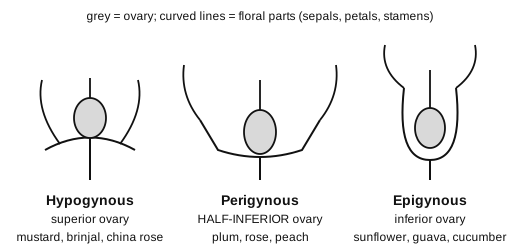
The ovary is half inferior in:
अंडाशय अर्ध-अधोवर्ती (half inferior) किसमें होता है?
  1. ASunflowerसूरजमुखी
  2. BPlumआलूबुखारा (प्लम)
  3. CBrinjalबैंगन
  4. DMustardसरसों
Show answer

Concept: In perigynous flowers the floral parts arise from the rim of a cup-shaped thalamus at about the level of the ovary – the ovary is said to be half inferior (NCERT: plum, rose, peach).

  1. (B) Plum – perigynous → half-inferior ovary → correct.
  2. (A) Sunflower – epigynous → inferior ovary.
  3. (C) Brinjal and (D) Mustard – hypogynous → superior ovary.

Short trick: "PRP – Plum, Rose, Peach = Perigynous = half"; "Guava, Cucumber, Sunflower = epigynous"; "Mustard, China rose, Brinjal = hypogynous".

Answer: (B) Plum

अवधारणा: परिजायांगी पुष्पों में पुष्पीय भाग प्यालेनुमा पुष्पासन के किनारे से लगभग अंडाशय के स्तर पर निकलते हैं – अंडाशय अर्ध-अधोवर्ती कहलाता है (NCERT: आलूबुखारा, गुलाब, आड़ू)।

  1. (B) आलूबुखारा – परिजायांगी → अर्ध-अधोवर्ती अंडाशय → सही।
  2. (A) सूरजमुखी – उपरिजायांगी → अधोवर्ती अंडाशय।
  3. (C) बैंगन और (D) सरसों – अधोजायांगी → ऊर्ध्ववर्ती अंडाशय।

शॉर्ट ट्रिक: "PRP – प्लम, रोज़, पीच = परिजायांगी = अर्ध"; "अमरूद, खीरा, सूरजमुखी = उपरिजायांगी"; "सरसों, गुड़हल, बैंगन = अधोजायांगी"।

उत्तर: (B) आलूबुखारा (प्लम)

NEET UGBiologyMorphology of flowering plants – position of ovaryNEET UG 2020 · 13 Sep Shift 1
Q256.
Identify the correct statement with regard to G1 phase (Gap 1) of interphase.
अंतरावस्था की G1 प्रावस्था (अंतराल 1) के संबंध में सही कथन को पहचानिए।
  1. ACell is metabolically active, grows but does not replicate its DNAकोशिका उपापचयी रूप से सक्रिय रहती है, वृद्धि करती है परंतु अपने DNA की प्रतिकृति नहीं बनाती
  2. BNuclear Division takes place.केंद्रक विभाजन होता है।
  3. CDNA synthesis or replication takes place.DNA संश्लेषण या प्रतिकृतिकरण होता है।
  4. DReorganisation of all cell components takes place.सभी कोशिका घटकों का पुनर्गठन होता है।
Show answer

Concept: NCERT: G1 phase is the interval between mitosis and initiation of DNA replication; the cell is metabolically active and continuously grows but does not replicate its DNA.

  1. (A) correct – the exact NCERT line.
  2. (B) Nuclear division (karyokinesis) occurs in M phase.
  3. (C) DNA replication occurs in S phase.
  4. (D) Reorganisation of all cell components occurs during M phase (mitosis/cytokinesis).

Short trick: G = "Gap/Growth": G1 grow, S synthesise DNA, G2 prepare proteins, M divide.

Answer: (A) Cell is metabolically active, grows but does not replicate its DNA

अवधारणा: NCERT: G1 प्रावस्था समसूत्रण और DNA प्रतिकृतिकरण के आरंभ के बीच का अंतराल है; इसमें कोशिका उपापचयी रूप से सक्रिय रहकर लगातार वृद्धि करती है परंतु DNA की प्रतिकृति नहीं बनाती।

  1. (A) सही – NCERT की यथावत पंक्ति।
  2. (B) केंद्रक विभाजन (केंद्रकभाजन) M प्रावस्था में होता है।
  3. (C) DNA प्रतिकृतिकरण S प्रावस्था में होता है।
  4. (D) सभी कोशिका घटकों का पुनर्गठन M प्रावस्था (समसूत्रण/कोशिकाद्रव्य विभाजन) में होता है।

शॉर्ट ट्रिक: G = "Gap/Growth": G1 वृद्धि, S DNA संश्लेषण, G2 प्रोटीन तैयारी, M विभाजन।

उत्तर: (A) कोशिका उपापचयी रूप से सक्रिय रहती है, वृद्धि करती है परंतु अपने DNA की प्रतिकृति नहीं बनाती

NEET UGBiologyCell cycle – interphase (G1)NEET UG 2020 · 13 Sep Shift 1
Q257.
Which of the following hormone levels will cause release of ovum (ovulation) from the graafian follicle?
निम्नलिखित में से किस हॉर्मोन का स्तर ग्राफ़ी पुटक से अंडाणु के मोचन (अंडोत्सर्ग) का कारण बनेगा?
  1. ALow concentration of LHLH की निम्न सांद्रता
  2. BLow concentration of FSHFSH की निम्न सांद्रता
  3. CHigh concentration of Estrogenएस्ट्रोजन की उच्च सांद्रता
  4. DHigh concentration of progesteroneप्रोजेस्टेरोन की उच्च सांद्रता
Show answer

Concept: Ovulation (day 14) is caused by the LH surge, which is itself triggered by the peak (high concentration) of estrogen secreted by the growing Graafian follicle (positive feedback).

  1. In the follicular phase, the Graafian follicle secretes increasing estrogen; its peak triggers the mid-cycle LH surge → rupture of follicle → ovulation.
  2. (A) and (B) Low LH/FSH would not cause ovulation – LH and FSH are at their highest at mid-cycle.
  3. (D) High progesterone is a feature of the luteal phase (after ovulation) and inhibits further ovulation.
  4. Among the options, high estrogen → (C).

Short trick: Ovulation trigger chain: "Estrogen peak → LH surge → egg out". High LH is the direct cause; it is not offered, so pick the estrogen peak.

Answer: (C) High concentration of Estrogen

अवधारणा: अंडोत्सर्ग (14वाँ दिन) LH के अचानक बढ़ने (LH सर्ज) से होता है, जो स्वयं वृद्धिशील ग्राफ़ी पुटक द्वारा स्रावित एस्ट्रोजन के शिखर (उच्च सांद्रता) से प्रेरित होता है (धनात्मक पुनर्भरण)।

  1. पुटकीय प्रावस्था में ग्राफ़ी पुटक बढ़ती मात्रा में एस्ट्रोजन स्रावित करता है; इसका शिखर मध्य-चक्र LH सर्ज लाता है → पुटक का फटना → अंडोत्सर्ग।
  2. (A) और (B) निम्न LH/FSH से अंडोत्सर्ग नहीं होगा – मध्य-चक्र में LH और FSH उच्चतम होते हैं।
  3. (D) उच्च प्रोजेस्टेरोन पीत प्रावस्था (अंडोत्सर्ग के बाद) का लक्षण है और आगे के अंडोत्सर्ग को रोकता है।
  4. विकल्पों में से, एस्ट्रोजन की उच्च सांद्रता → (C)।

शॉर्ट ट्रिक: अंडोत्सर्ग श्रृंखला: "एस्ट्रोजन शिखर → LH सर्ज → अंडाणु बाहर"। उच्च LH सीधा कारण है; वह विकल्प में नहीं है, अतः एस्ट्रोजन शिखर चुनें।

उत्तर: (C) एस्ट्रोजन की उच्च सांद्रता

NEET UGBiologyHuman reproduction – menstrual cycle and ovulationNEET UG 2020 · 13 Sep Shift 1
Q258.
Identify the correct statement with reference to human digestive system.
मानव पाचन तंत्र के संदर्भ में सही कथन को पहचानिए।
  1. AIleum is a highly coiled partक्षुद्रांत्र (ileum) अत्यधिक कुंडलित भाग है
  2. BVermiform appendix arises from duodenum.कृमिरूप परिशेषिका (vermiform appendix) ग्रहणी से निकलती है।
  3. CIleum opens into small intestine.क्षुद्रांत्र (ileum) छोटी आंत में खुलती है।
  4. DSerosa is the innermost layer of the alimentary canalसेरोसा आहार नाल की सबसे भीतरी परत है
Show answer

Concept: NCERT: small intestine = C-shaped duodenum, long coiled middle jejunum and highly coiled ileum.

  1. (A) Correct – ileum is the highly coiled part.
  2. (B) Wrong – vermiform appendix arises from the caecum (large intestine).
  3. (C) Wrong – ileum opens into the large intestine (caecum).
  4. (D) Wrong – serosa is the outermost layer; mucosa is the innermost.

Short trick: Wall layers from outside: "Some Men Show Muscles" = Serosa, Muscularis, Sub-mucosa, Mucosa (innermost).

Answer: (A) Ileum is a highly coiled part

अवधारणा: NCERT: छोटी आंत = C-आकार की ग्रहणी, लंबी कुंडलित मध्य अग्रक्षुद्रांत्र (jejunum) और अत्यधिक कुंडलित क्षुद्रांत्र (ileum)।

  1. (A) सही – क्षुद्रांत्र (ileum) अत्यधिक कुंडलित भाग है।
  2. (B) गलत – कृमिरूप परिशेषिका अंधनाल (caecum, बड़ी आंत) से निकलती है।
  3. (C) गलत – क्षुद्रांत्र बड़ी आंत (अंधनाल) में खुलती है।
  4. (D) गलत – सेरोसा सबसे बाहरी परत है; म्यूकोसा सबसे भीतरी।

शॉर्ट ट्रिक: भित्ति की परतें बाहर से: सेरोसा → मस्कुलेरिस → सबम्यूकोसा → म्यूकोसा (सबसे भीतरी) – "S-M-S-M"।

उत्तर: (A) क्षुद्रांत्र (ileum) अत्यधिक कुंडलित भाग है

NEET UGBiologyDigestion and absorption – alimentary canalNEET UG 2020 · 13 Sep Shift 1
Q259.
Match the following columns and select the correct option.
Column-IColumn-II
(a) Eosinophils(i) Immune response
(b) Basophils(ii) Phagocytosis
(c) Neutrophils(iii) Release histaminase, destructive enzymes
(d) Lymphocytes(iv) Release granules containing histamine
नीचे दिए गए स्तम्भों का मिलान कीजिए और सही विकल्प चुनिए।
स्तम्भ-Iस्तम्भ-II
(a) इओसिनोफ़िल(i) प्रतिरक्षा अनुक्रिया
(b) बेसोफ़िल(ii) भक्षकाणु क्रिया (phagocytosis)
(c) न्यूट्रोफ़िल(iii) हिस्टामिनेज़, विनाशकारी एंज़ाइम मुक्त करना
(d) लसीकाणु (lymphocytes)(iv) हिस्टामिन युक्त कणिकाएँ मुक्त करना
  1. Aa-i, b-ii, c-iv, d-iii
  2. Ba-ii, b-i, c-iii, d-iv
  3. Ca-iii, b-iv, c-ii, d-i
  4. Da-iv, b-i, c-ii, d-iii
Show answer

Concept: Functions of WBCs (NCERT Body Fluids and Circulation).

  1. Eosinophils resist infections and release histaminase and destructive enzymes (allergy) → (a)-(iii).
  2. Basophils release granules containing histamine, serotonin, heparin (inflammation) → (b)-(iv).
  3. Neutrophils (and monocytes) are phagocytic → (c)-(ii).
  4. Lymphocytes (B and T) are responsible for immune response → (d)-(i).
  5. Correct matching: a-iii, b-iv, c-ii, d-i → (C).
  6. (A), (B), (D) all give eosinophils a wrong role (immune response, phagocytosis, granule release) → wrong.

Short trick: "Eosinophil – Enzymes (histaminase); Basophil – Bags of granules; Neutrophil – Nibbles (phagocytosis); Lymphocyte – Locks on (immunity)."

Answer: (C) a-iii, b-iv, c-ii, d-i

अवधारणा: श्वेत रुधिर कणिकाओं के कार्य (NCERT शरीर द्रव तथा परिसंचरण)।

  1. इओसिनोफ़िल संक्रमण का प्रतिरोध करते हैं और हिस्टामिनेज़ तथा विनाशकारी एंज़ाइम मुक्त करते हैं (एलर्जी) → (a)-(iii)।
  2. बेसोफ़िल हिस्टामिन, सेरोटोनिन, हिपैरिन युक्त कणिकाएँ मुक्त करते हैं (शोथ) → (b)-(iv)।
  3. न्यूट्रोफ़िल (और मोनोसाइट) भक्षकाणु हैं → (c)-(ii)।
  4. लसीकाणु (B और T) प्रतिरक्षा अनुक्रिया के लिए उत्तरदायी हैं → (d)-(i)।
  5. सही मिलान: a-iii, b-iv, c-ii, d-i → (C)।
  6. (A), (B), (D) तीनों में इओसिनोफ़िल का कार्य गलत दिया है (प्रतिरक्षा अनुक्रिया, भक्षकाणु क्रिया, कणिका मोचन) → गलत।

शॉर्ट ट्रिक: "इओसिनोफ़िल – एंज़ाइम (हिस्टामिनेज़); बेसोफ़िल – कणिकाओं के थैले; न्यूट्रोफ़िल – भक्षण; लसीकाणु – प्रतिरक्षा।"

उत्तर: (C) a-iii, b-iv, c-ii, d-i

NEET UGBiologyBody fluids and circulation – leucocytesNEET UG 2020 · 13 Sep Shift 1
Q260.
The plant parts which consist of two generations one within the other:
(a) Pollen grains inside the anther
(b) Germinated pollen grain with two male gametes
(c) Seed inside the fruit
(d) Embryo sac inside the ovule
पादप के वे भाग जिनमें दो पीढ़ियाँ एक-दूसरे के भीतर होती हैं:
(a) परागकोश के भीतर परागकण
(b) दो नर युग्मकों सहित अंकुरित परागकण
(c) फल के भीतर बीज
(d) बीजांड के भीतर भ्रूणकोष
  1. A(c) and (d)(c) और (d)
  2. B(a) and (d)(a) और (d)
  3. C(a) onlyकेवल (a)
  4. D(a), (b) and (c)(a), (b) और (c)
Show answer

Concept: Two generations = gametophyte (n) enclosed in sporophytic (2n) tissue.

  1. (a) Pollen grain (male gametophyte, n) inside the anther (sporophyte, 2n) → two generations.
  2. (d) Embryo sac (female gametophyte, n) inside the ovule/nucellus (sporophyte, 2n) → two generations.
  3. (b) Germinated pollen with two male gametes is entirely the male gametophyte – one generation.
  4. (c) Seed inside fruit: embryo (new sporophyte, 2n) + endosperm (3n) + seed coat and fruit wall (parent sporophyte, 2n) – sporophyte within sporophyte, not two different generations.
  5. Hence (a) and (d) → (B).

Short trick: Look for "gametophyte inside sporophyte": the two –phytes inside sporangia = pollen in anther and embryo sac in ovule.

Answer: (B) (a) and (d)

अवधारणा: दो पीढ़ियाँ = युग्मकोद्भिद (n) जो बीजाणुद्भिद (2n) ऊतक के भीतर बंद हो।

  1. (a) परागकोश (बीजाणुद्भिद, 2n) के भीतर परागकण (नर युग्मकोद्भिद, n) → दो पीढ़ियाँ।
  2. (d) बीजांड/बीजांडकाय (बीजाणुद्भिद, 2n) के भीतर भ्रूणकोष (मादा युग्मकोद्भिद, n) → दो पीढ़ियाँ।
  3. (b) दो नर युग्मकों सहित अंकुरित परागकण पूरी तरह नर युग्मकोद्भिद है – एक ही पीढ़ी।
  4. (c) फल के भीतर बीज: भ्रूण (नया बीजाणुद्भिद, 2n) + भ्रूणपोष (3n) + बीजचोल व फलभित्ति (जनक बीजाणुद्भिद, 2n) – बीजाणुद्भिद के भीतर बीजाणुद्भिद, दो भिन्न पीढ़ियाँ नहीं।
  5. अतः (a) और (d) → (B)।

शॉर्ट ट्रिक: "बीजाणुद्भिद के भीतर युग्मकोद्भिद" खोजें: परागकोश में परागकण और बीजांड में भ्रूणकोष।

उत्तर: (B) (a) और (d)

NEET UGBiologySexual reproduction in flowering plants – generationsNEET UG 2020 · 13 Sep Shift 1