NEET UG · 2,240 questions

NEET UG 2015, 2016, 2017, 2018, 2019, 2020, 2021, 2022, 2023, 2024, 2025, 2026 PYQs

Real previous year questions, subject-wise. Try the question, then open the answer and the explanation in Hindi & English – free, no login.

Courses – airGurukul

560 questions in Chemistry.

Q241.
BF3 is planar and electron deficient compound. Hybridization and number of electrons around the central atom, respectively are
BF3 एक समतलीय तथा इलेक्ट्रॉन-न्यून यौगिक है। केन्द्रीय परमाणु का संकरण तथा उसके चारों ओर इलेक्ट्रॉनों की संख्या क्रमशः हैं
  1. Asp2 and 6sp2 और 6
  2. Bsp2 and 8sp2 और 8
  3. Csp3 and 4sp3 और 4
  4. Dsp3 and 6sp3 और 6
Show answer

Concept: Steric number = bond pairs + lone pairs decides hybridisation; electrons around the central atom = 2 × (bond pairs + lone pairs).

  1. B (2s22p1) has 3 valence electrons; each forms one B–F bond → 3 bond pairs, 0 lone pair.
  2. Steric number 3 → sp2, trigonal planar, F–B–F = 120°.
  3. Electrons around B = 3 × 2 = 6 (incomplete octet – that is why BF3 is electron deficient, a Lewis acid).
  4. sp3 would need 4 electron pairs (8 electrons) – not the case here.
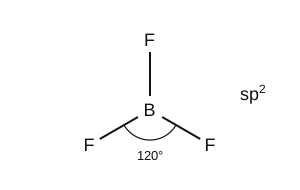
Short trick: Electron deficient + planar → sp2 with only a sextet (6 e−). Same for BCl3, AlCl3 (monomer).

Answer: (A) sp2 and 6

अवधारणा: स्टेरिक संख्या = आबंधी युग्म + एकाकी युग्म, इसी से संकरण तय होता है; केन्द्रीय परमाणु के चारों ओर इलेक्ट्रॉन = 2 × (आबंधी युग्म + एकाकी युग्म)।

  1. B (2s22p1) में 3 संयोजी इलेक्ट्रॉन हैं; प्रत्येक एक B–F आबंध बनाता है → 3 आबंधी युग्म, 0 एकाकी युग्म।
  2. स्टेरिक संख्या 3 → sp2, त्रिकोणीय समतलीय, F–B–F = 120°।
  3. B के चारों ओर इलेक्ट्रॉन = 3 × 2 = 6 (अपूर्ण अष्टक – इसी कारण BF3 इलेक्ट्रॉन-न्यून है, एक लुईस अम्ल)।
  4. sp3 के लिए 4 इलेक्ट्रॉन युग्म (8 इलेक्ट्रॉन) चाहिए – यहाँ ऐसा नहीं है।

शॉर्ट ट्रिक: इलेक्ट्रॉन-न्यून + समतलीय → केवल षष्टक (6 e−) वाला sp2। BCl3, AlCl3 (एकलक) में भी यही।

उत्तर: (A) sp2 और 6
NEET UGChemistryChemical bonding – hybridisationNEET UG 2021 · 12 Sep Shift 1
Q242.
Which of the following reactions is the metal displacement reaction? Choose the right option.
निम्नलिखित में से कौन-सी अभिक्रिया धातु विस्थापन अभिक्रिया है? सही विकल्प चुनिए।
  1. AFe + 2HCl ⟶ FeCl2 + H2↑
  2. B2Pb(NO3)2 ⟶ 2PbO + 4NO2 + O2↑
  3. C2KClO3 →Δ 2KCl + 3O2
  4. DCr2O3 + 2Al →Δ Al2O3 + 2Cr
Show answer

Concept: In a metal displacement reaction a more reactive metal pushes a less reactive metal out of its compound.

  1. (A) Fe displaces hydrogen from HCl → hydrogen displacement, not metal displacement.
  2. (B) Lead nitrate breaks into PbO, NO2, O2 → thermal decomposition.
  3. (C) KClO3 → KCl + O2 → decomposition.
  4. (D) Al (more reactive) takes oxygen from Cr2O3 and sets Cr free → metal displacement (aluminothermy, like the thermite process).

Short trick: Look for “metal + compound of another metal → new compound + free metal”. Al + metal oxide is the classic example.

Answer: (D) Cr2O3 + 2Al → Al2O3 + 2Cr

अवधारणा: धातु विस्थापन अभिक्रिया में अधिक क्रियाशील धातु, कम क्रियाशील धातु को उसके यौगिक से बाहर निकाल देती है।

  1. (A) Fe, HCl से हाइड्रोजन को विस्थापित करता है → हाइड्रोजन विस्थापन, धातु विस्थापन नहीं।
  2. (B) लेड नाइट्रेट PbO, NO2, O2 में टूटता है → तापीय वियोजन।
  3. (C) KClO3 → KCl + O2 → वियोजन अभिक्रिया।
  4. (D) Al (अधिक क्रियाशील) Cr2O3 से ऑक्सीजन लेकर Cr को मुक्त करता है → धातु विस्थापन (ऐलुमिनोथर्मी, थर्माइट प्रक्रम की तरह)।

शॉर्ट ट्रिक: “धातु + दूसरी धातु का यौगिक → नया यौगिक + मुक्त धातु” खोजिए। Al + धातु ऑक्साइड इसका क्लासिक उदाहरण है।

उत्तर: (D) Cr2O3 + 2Al → Al2O3 + 2Cr

NEET UGChemistryRedox reactions – types of redox reactionsNEET UG 2021 · 12 Sep Shift 1
Q243.
The compound which shows metamerism is
मध्यावयवता (metamerism) प्रदर्शित करने वाला यौगिक है
  1. AC3H6O
  2. BC4H10O
  3. CC5H12
  4. DC3H8O
Show answer

Concept: Metamers have the same functional group (–O–, –CO–, –NH–) but different alkyl groups on its two sides.

  1. C4H10O ethers: CH3–O–CH2CH2CH3 and C2H5–O–C2H5 → metamers. ✔
  2. C3H8O: only one ether, CH3–O–C2H5 → no second arrangement.
  3. C3H6O: only one ketone (acetone), CH3COCH3 – no metamer.
  4. C5H12: alkane, no polyvalent functional group → only chain isomers.

Short trick: Ether needs at least 4 C to split carbons two ways (1+3, 2+2) – so the smallest ether metamers are C4H10O.

Answer: (B) C4H10O

अवधारणा: मध्यावयवों में एक ही क्रियात्मक समूह (–O–, –CO–, –NH–) होता है, पर उसके दोनों ओर भिन्न ऐल्किल समूह होते हैं।

  1. C4H10O ईथर: CH3–O–CH2CH2CH3 तथा C2H5–O–C2H5 → मध्यावयव। ✔
  2. C3H8O: केवल एक ईथर, CH3–O–C2H5 → दूसरी व्यवस्था सम्भव नहीं।
  3. C3H6O: केवल एक कीटोन (ऐसीटोन), CH3COCH3 – कोई मध्यावयव नहीं।
  4. C5H12: ऐल्केन, कोई बहुसंयोजी क्रियात्मक समूह नहीं → केवल शृंखला समावयव।

शॉर्ट ट्रिक: ईथर में कार्बन को दो प्रकार से बाँटने (1+3, 2+2) के लिए कम-से-कम 4 C चाहिए – अतः सबसे छोटे ईथर मध्यावयव C4H10O हैं।

उत्तर: (B) C4H10O

NEET UGChemistryOrganic chemistry – isomerism (metamerism)NEET UG 2021 · 12 Sep Shift 1
Q244.
The pKb of dimethylamine and pKa of acetic acid are 3.27 and 4.77 respectively at T(K). The correct option for the pH of dimethyl ammonium acetate solution is:
T(K) पर डाइमेथिलऐमीन का pKb तथा ऐसीटिक अम्ल का pKa क्रमशः 3.27 तथा 4.77 हैं। डाइमेथिल अमोनियम ऐसीटेट विलयन के pH के लिए सही विकल्प है:
  1. A7.75
  2. B6.25
  3. C8.50
  4. D5.50
Show answer

Concept: Salt of a weak acid and a weak base: pH=7+12(pKa−pKb) (independent of concentration).

  1. pKa − pKb = 4.77 − 3.27 = 1.50
  2. pH = 7 + ½ (1.50) = 7 + 0.75 = 7.75

Short trick: pKb < pKa means the base is stronger → solution is basic, pH > 7. Only (A) and (C) are > 7, and the shift from 7 is half the difference = 0.75.

Answer: (A) 7.75

अवधारणा: दुर्बल अम्ल और दुर्बल क्षार का लवण: pH=7+12(pKa−pKb) (सान्द्रता पर निर्भर नहीं)।

  1. pKa − pKb = 4.77 − 3.27 = 1.50
  2. pH = 7 + ½ (1.50) = 7 + 0.75 = 7.75

शॉर्ट ट्रिक: pKb < pKa यानी क्षार अधिक प्रबल → विलयन क्षारीय, pH > 7। केवल (A) व (C) 7 से अधिक हैं, और 7 से विचलन अन्तर का आधा = 0.75।

उत्तर: (A) 7.75

NEET UGChemistryIonic equilibrium – hydrolysis of saltsNEET UG 2021 · 12 Sep Shift 1
Q245.
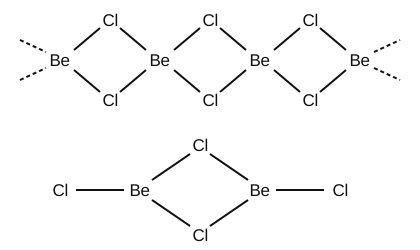
The structure of beryllium chloride in solid state and vapour phase, are:
ठोस अवस्था और वाष्प प्रावस्था में बेरिलियम क्लोराइड की संरचनाएँ हैं:
  1. ADimer and Linear, respectivelyक्रमशः द्वितय (डाइमर) और रैखिक
  2. BChain in bothदोनों में शृंखला
  3. CChain and dimer, respectivelyक्रमशः शृंखला और द्वितय (डाइमर)
  4. DLinear in bothदोनों में रैखिक
Show answer

Concept: BeCl2 is electron deficient (only 4 e− on Be), so it uses Cl bridges to complete its valence shell.

  1. Solid state: each Be is bonded to four bridging Cl atoms → polymeric chain (upper figure).
  2. Vapour (below ~1200 K): Cl-bridged dimer Be2Cl4 (lower figure); only above ~1200 K does it become linear monomer.
  3. Hence chain (solid) and dimer (vapour).

Short trick: NCERT line: “BeCl2 has a chain structure in the solid state … in the vapour phase it tends to form a chloro-bridged dimer which dissociates into the linear monomer at high temperatures of the order of 1200 K.”

Answer: (C) Chain and dimer, respectively

अवधारणा: BeCl2 इलेक्ट्रॉन-न्यून है (Be पर केवल 4 e−), इसलिए यह संयोजकता कोश पूर्ण करने हेतु Cl सेतु (ब्रिज) बनाता है।

  1. ठोस अवस्था: प्रत्येक Be चार सेतु Cl परमाणुओं से जुड़ा → बहुलकी शृंखला (ऊपर का चित्र)।
  2. वाष्प (लगभग 1200 K से नीचे): Cl-सेतु वाला द्वितय Be2Cl4 (नीचे का चित्र); लगभग 1200 K से ऊपर ही यह रैखिक एकलक बनता है।
  3. अतः शृंखला (ठोस) और द्वितय (वाष्प)।

शॉर्ट ट्रिक: NCERT पंक्ति: “ठोस अवस्था में BeCl2 की शृंखला संरचना होती है … वाष्प प्रावस्था में यह क्लोरो-सेतु द्वितय बनाता है जो लगभग 1200 K के उच्च ताप पर रैखिक एकलक में वियोजित हो जाता है।”

उत्तर: (C) क्रमशः शृंखला और द्वितय (डाइमर)

NEET UGChemistrys-Block elements – beryllium chlorideNEET UG 2021 · 12 Sep Shift 1
Q246.
Zr (Z = 40) and Hf (Z = 72) have similar atomic and ionic radii because of:
Zr (Z = 40) तथा Hf (Z = 72) की परमाण्वीय तथा आयनिक त्रिज्याएँ समान होती हैं, इसका कारण है:
  1. Alanthanoid contractionलैन्थेनॉयड आकुंचन
  2. Bhaving similar chemical propertiesसमान रासायनिक गुण होना
  3. CBelonging to same groupएक ही वर्ग से सम्बन्धित होना
  4. Ddiagonal relationshipविकर्ण सम्बन्ध
Show answer

Concept: The 14 lanthanoids (4f filling) come between La and Hf; 4f electrons shield poorly, so Zeff rises and size shrinks steadily.

  1. Normally size increases down a group (Ti → Zr increases).
  2. But in Hf the extra 14 protons of the 4f series are poorly shielded → the expected increase is cancelled.
  3. Result: r(Zr) ≈ 160 pm ≈ r(Hf) ≈ 159 pm – the effect is lanthanoid contraction.
  4. (B) is a consequence, not a cause; (C) alone would predict Hf bigger; (D) applies to Li–Mg, Be–Al type pairs.

Short trick: 4d and 5d elements of the same group are “twins” (Zr–Hf, Nb–Ta, Mo–W) – always because of lanthanoid contraction.

Answer: (A) lanthanoid contraction

अवधारणा: La और Hf के बीच 14 लैन्थेनॉयड (4f भरण) आते हैं; 4f इलेक्ट्रॉन दुर्बल परिरक्षण करते हैं, अतः Zeff बढ़ता है और आकार लगातार घटता है।

  1. सामान्यतः वर्ग में नीचे जाने पर आकार बढ़ता है (Ti → Zr बढ़ता है)।
  2. परन्तु Hf में 4f श्रेणी के अतिरिक्त 14 प्रोटॉन दुर्बल रूप से परिरक्षित होते हैं → अपेक्षित वृद्धि समाप्त हो जाती है।
  3. परिणाम: r(Zr) ≈ 160 pm ≈ r(Hf) ≈ 159 pm – यह प्रभाव लैन्थेनॉयड आकुंचन है।
  4. (B) परिणाम है, कारण नहीं; केवल (C) के आधार पर Hf बड़ा होना चाहिए; (D) Li–Mg, Be–Al जैसे युग्मों पर लागू होता है।

शॉर्ट ट्रिक: एक ही वर्ग के 4d और 5d तत्व “जुड़वाँ” हैं (Zr–Hf, Nb–Ta, Mo–W) – हमेशा लैन्थेनॉयड आकुंचन के कारण।

उत्तर: (A) लैन्थेनॉयड आकुंचन

NEET UGChemistryd- and f-Block elements – lanthanoid contractionNEET UG 2021 · 12 Sep Shift 1
Q247.
A particular station of All India Radio, New Delhi, broadcasts on a frequency of 1,368 KHz (kilohertz). The wavelength of the electromagnetic radiation emitted by the transmitter is: [Speed of light, c = 3 × 10⁸ ms-1]
ऑल इंडिया रेडियो, नई दिल्ली का एक विशेष केन्द्र 1,368 KHz (किलोहर्ट्ज़) आवृत्ति पर प्रसारण करता है। ट्रांसमीटर द्वारा उत्सर्जित विद्युत-चुम्बकीय विकिरण की तरंगदैर्ध्य है: [प्रकाश का वेग, c = 3 × 10⁸ ms-1]
  1. A2192 m
  2. B21.92 cm
  3. C219.3 m
  4. D219.2 m
Show answer

Concept: c=νλ⇒λ=cν

  1. ν = 1368 kHz = 1368 × 103 Hz = 1.368 × 10⁶ s−1
  2. λ = (3 × 10⁸) / (1.368 × 10⁶) = 219.298 m
  3. Rounded correctly: 219.3 m (219.2 m is a truncation error).

Short trick: 3 × 10⁸/1.368 × 106 ≈ 300/1.368 × 10 ≈ 219.3 – watch the last digit: 0.298 rounds up.

Answer: (C) 219.3 m

अवधारणा: c=νλ⇒λ=cν

  1. ν = 1368 kHz = 1368 × 103 Hz = 1.368 × 10⁶ s−1
  2. λ = (3 × 10⁸) / (1.368 × 10⁶) = 219.298 m
  3. सही पूर्णांकन: 219.3 m (219.2 m अंक काटने की त्रुटि है)।

शॉर्ट ट्रिक: 3 × 10⁸/1.368 × 106 ≈ 300/1.368 × 10 ≈ 219.3 – अन्तिम अंक ध्यान से: 0.298 ऊपर की ओर पूर्णांकित होता है।

उत्तर: (C) 219.3 m

NEET UGChemistryStructure of atom – electromagnetic radiationNEET UG 2021 · 12 Sep Shift 1
Q248.
An organic compound contains 78% (by wt.) carbon and remaining percentage of hydrogen. The right option for the empirical formula of this compound is: [Atomic wt. of C is 12, H is 1]
एक कार्बनिक यौगिक में 78% (भारानुसार) कार्बन तथा शेष प्रतिशत हाइड्रोजन है। इस यौगिक के मूलानुपाती सूत्र के लिए सही विकल्प है: [C का परमाणु भार 12, H का 1 है]
  1. ACH3
  2. BCH4
  3. CCH
  4. DCH2
Show answer

Concept: Divide % by atomic mass to get mole ratio, then divide by the smallest.

  1. C: 78/12 = 6.5 ; H: 22/1 = 22
  2. Ratio C : H = 1 : 22/6.5 = 1 : 3.38
  3. Among the options the closest whole-number ratio is 1 : 3 → CH3.
  4. Check others: CH4 = 75% C, CH2 = 85.7% C, CH = 92.3% C, CH3 = 80% C – nearest to 78% is CH3.

Short trick: Compute %C of each option (12/(12 + n)) and pick the one closest to the given value.

Answer: (A) CH3

अवधारणा: प्रतिशत को परमाणु द्रव्यमान से भाग देकर मोल अनुपात लें, फिर सबसे छोटे मान से भाग दें।

  1. C: 78/12 = 6.5 ; H: 22/1 = 22
  2. अनुपात C : H = 1 : 22/6.5 = 1 : 3.38
  3. विकल्पों में निकटतम पूर्णांक अनुपात 1 : 3 है → CH3।
  4. अन्य की जाँच: CH4 = 75% C, CH2 = 85.7% C, CH = 92.3% C, CH3 = 80% C – 78% के सबसे निकट CH3।

शॉर्ट ट्रिक: प्रत्येक विकल्प का %C (12/(12 + n)) निकालें और दिए गए मान के सबसे निकट वाला चुनें।

उत्तर: (A) CH3

NEET UGChemistrySome basic concepts – empirical formulaNEET UG 2021 · 12 Sep Shift 1
Q249.
Ethylenediaminetetraacetate (EDTA) ion is
एथिलीनडाइऐमीनटेट्राऐसीटेट (EDTA) आयन है
  1. ABidentate ligand with two “N” donor atomsदो “N” दाता परमाणुओं वाला द्विदन्तुक लिगन्ड
  2. BTridentate ligand with three “N” donor atoms.तीन “N” दाता परमाणुओं वाला त्रिदन्तुक लिगन्ड
  3. CHexadentate ligand with four “O” and two “N” donor atomsचार “O” और दो “N” दाता परमाणुओं वाला षट्दन्तुक लिगन्ड
  4. DUnidentate ligandएकदन्तुक लिगन्ड
Show answer

Concept: EDTA4− = (−OOCCH2)2N–CH2CH2–N(CH2COO−)2.

  1. Two amine N atoms each carry a lone pair → 2 donor sites.
  2. Four carboxylate groups each give one O− donor → 4 donor sites.
  3. Total 6 donor atoms → hexadentate (4 O + 2 N); it wraps the metal ion and forms very stable chelates (used in Ca2+/Mg2+ estimation, hardness of water).

Short trick: “Ethylenediaminetetraacetate” → di = 2 N, tetra = 4 O → 2 + 4 = 6 (hexa).

Answer: (C) Hexadentate ligand with four “O” and two “N” donor atoms

अवधारणा: EDTA4− = (−OOCCH2)2N–CH2CH2–N(CH2COO−)2।

  1. दो ऐमीन N परमाणुओं पर एकाकी युग्म है → 2 दाता स्थल।
  2. चार कार्बॉक्सिलेट समूह प्रत्येक एक O− दाता देते हैं → 4 दाता स्थल।
  3. कुल 6 दाता परमाणु → षट्दन्तुक (4 O + 2 N); यह धातु आयन को घेरकर अत्यन्त स्थायी कीलेट बनाता है (Ca2+/Mg2+ के आकलन, जल की कठोरता में प्रयुक्त)।

शॉर्ट ट्रिक: “एथिलीनडाइऐमीनटेट्राऐसीटेट” → डाइ = 2 N, टेट्रा = 4 O → 2 + 4 = 6 (षट्)।

उत्तर: (C) चार “O” और दो “N” दाता परमाणुओं वाला षट्दन्तुक लिगन्ड

NEET UGChemistryCoordination compounds – ligands (denticity)NEET UG 2021 · 12 Sep Shift 1
Q250.
Among the following alkaline earth metal halides, one which is covalent and soluble in organic solvents is:
निम्नलिखित क्षारीय मृदा धातु हैलाइडों में से वह कौन-सा है जो सहसंयोजी है तथा कार्बनिक विलायकों में विलेय है:
  1. AMagnesium chlorideमैग्नीशियम क्लोराइड
  2. BBeryllium chlorideबेरिलियम क्लोराइड
  3. CCalcium chlorideकैल्सियम क्लोराइड
  4. DStrontium chlorideस्ट्रॉन्शियम क्लोराइड
Show answer

Concept: Fajans’ rule: a small, highly charged cation polarises the anion strongly → covalent character.

  1. Be2+ is the smallest ion of group 2 → maximum polarising power → BeCl2 is essentially covalent and dissolves in organic solvents.
  2. MgCl2, CaCl2, SrCl2 have larger cations → mainly ionic, soluble in water, not in organic solvents.

Short trick: NCERT: “Except for beryllium halides, all other halides of alkaline earth metals are ionic in nature. Beryllium halides are essentially covalent and soluble in organic solvents.”

Answer: (B) Beryllium chloride

अवधारणा: फायान्स नियम: छोटा, उच्च आवेशित धनायन ऋणायन को प्रबल रूप से ध्रुवित करता है → सहसंयोजी गुण।

  1. Be2+ वर्ग 2 का सबसे छोटा आयन है → अधिकतम ध्रुवण क्षमता → BeCl2 मूलतः सहसंयोजी है और कार्बनिक विलायकों में घुलता है।
  2. MgCl2, CaCl2, SrCl2 के धनायन बड़े हैं → मुख्यतः आयनिक, जल में विलेय, कार्बनिक विलायकों में नहीं।

शॉर्ट ट्रिक: NCERT: “बेरिलियम हैलाइडों को छोड़कर क्षारीय मृदा धातुओं के सभी हैलाइड आयनिक हैं। बेरिलियम हैलाइड मूलतः सहसंयोजी हैं और कार्बनिक विलायकों में विलेय हैं।”

उत्तर: (B) बेरिलियम क्लोराइड

NEET UGChemistrys-Block elements – alkaline earth metal halidesNEET UG 2021 · 12 Sep Shift 1
Q251.
The right option for the statement “Tyndall effect is exhibited by” is:
कथन “टिंडल प्रभाव प्रदर्शित होता है” के लिए सही विकल्प है:
  1. AStarch solutionस्टार्च विलयन
  2. BUrea Solutionयूरिया विलयन
  3. CNaCl solutionNaCl विलयन
  4. DGlucose Solutionग्लूकोस विलयन
Show answer

Concept: Tyndall effect = scattering of light by particles of colloidal size (1–1000 nm); true solutions (< 1 nm) do not show it.

  1. Starch is a macromolecule → its “solution” is a colloidal sol (lyophilic) → scatters light, path becomes visible. ✔
  2. Urea, NaCl and glucose form true solutions – particles too small to scatter light.

Short trick: Tyndall effect ⇒ colloid. Starch, gum, gelatin, proteins in water = colloids; salts and sugars = true solutions.

Answer: (A) Starch solution

अवधारणा: टिंडल प्रभाव = कोलॉइडी आकार (1–1000 nm) के कणों द्वारा प्रकाश का प्रकीर्णन; वास्तविक विलयन (< 1 nm) इसे नहीं दर्शाते।

  1. स्टार्च एक बृहदणु है → इसका “विलयन” कोलॉइडी सॉल (द्रवरागी) है → प्रकाश प्रकीर्णित होता है, प्रकाश-पथ दिखाई देता है। ✔
  2. यूरिया, NaCl तथा ग्लूकोस वास्तविक विलयन बनाते हैं – कण प्रकाश प्रकीर्णन के लिए बहुत छोटे हैं।

शॉर्ट ट्रिक: टिंडल प्रभाव ⇒ कोलॉइड। जल में स्टार्च, गोंद, जिलेटिन, प्रोटीन = कोलॉइड; लवण और शर्करा = वास्तविक विलयन।

उत्तर: (A) स्टार्च विलयन

NEET UGChemistrySurface chemistry – colloids (Tyndall effect)NEET UG 2021 · 12 Sep Shift 1
Q252.
The molar conductance of NaCl, HCl and CH3COONa at infinite dilution are 126.45, 426.16 and 91.0 S cm2 mol-1 respectively. The molar conductance of CH3COOH at infinite dilution is. Choose the right option for your answer.
अनन्त तनुता पर NaCl, HCl तथा CH3COONa की मोलर चालकता क्रमशः 126.45, 426.16 तथा 91.0 S cm2 mol-1 है। अनन्त तनुता पर CH3COOH की मोलर चालकता है। अपने उत्तर के लिए सही विकल्प चुनिए।
  1. A698.28 S cm2 mol-1
  2. B540.48 S cm2 mol-1
  3. C201.28 S cm2 mol-1
  4. D390.71 S cm2 mol-1
Show answer

Concept: Kohlrausch law: Λ°m of an electrolyte = sum of the limiting ionic conductivities of its ions.

  1. Λ°(CH3COOH) = λ°(CH3COO−) + λ°(H+)
  2. = Λ°(CH3COONa) + Λ°(HCl) − Λ°(NaCl) (Na+ and Cl− cancel)
  3. = 91.0 + 426.16 − 126.45 = 390.71 S cm2 mol−1

Short trick: Write the ions you want (CH3COO−, H+) – add the salts that contain them, subtract the salt of the leftover ions (NaCl).

Answer: (D) 390.71 S cm2 mol-1

अवधारणा: कोलराउश नियम: किसी वैद्युत-अपघट्य का Λ°m = उसके आयनों की सीमान्त आयनिक चालकताओं का योग।

  1. Λ°(CH3COOH) = λ°(CH3COO−) + λ°(H+)
  2. = Λ°(CH3COONa) + Λ°(HCl) − Λ°(NaCl) (Na+ और Cl− निरस्त)
  3. = 91.0 + 426.16 − 126.45 = 390.71 S cm2 mol−1

शॉर्ट ट्रिक: आवश्यक आयन (CH3COO−, H+) लिखें – उन्हें रखने वाले लवण जोड़ें, बचे आयनों का लवण (NaCl) घटाएँ।

उत्तर: (D) 390.71 S cm2 mol-1

NEET UGChemistryElectrochemistry – Kohlrausch lawNEET UG 2021 · 12 Sep Shift 1
Q253.
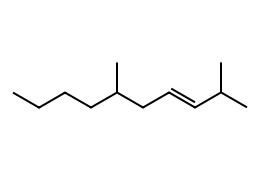
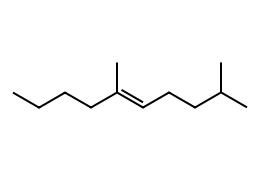
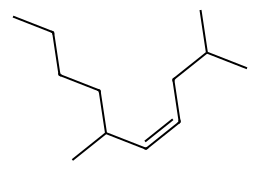
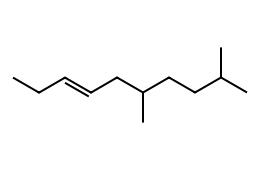
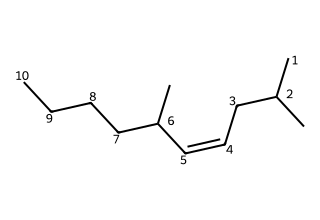
The correct structure of 2,6-Dimethyl-dec-4-ene
2,6-डाइमेथिल-डेक-4-ईन की सही संरचना है
  1. A
  2. B
  3. C
  4. D
Show answer

Concept: Dec = 10-C parent chain; “4-ene” = C4=C5; methyls on C2 and C6.

  1. Required: CH3–CH(CH3)–CH2–CH=CH–CH(CH3)–CH2CH2CH2CH3
  2. (A): isopropyl–CH=CH–CH2–CH(CH3)–butyl → double bond at C3 → 2,6-dimethyldec-3-ene.
  3. (B): isopropyl–CH2CH2–CH=C(CH3)–butyl → 2,6-dimethyldec-5-ene.
  4. (C): isopropyl–CH2–CH=CH–CH(CH3)–butyl → C4=C5 with methyls at 2 and 6 ✔ (see numbering).
  5. (D): longest chain numbered from the alkene end gives 6,9-dimethyldec-3-ene.

Short trick: From the isopropyl end count: C1, C2 (branch), C3 (CH2), then the double bond must start at C4 – only (C) has exactly one CH2 between the isopropyl CH and the C=C.

Answer: (C) structure (C)

अवधारणा: डेक = 10-C जनक शृंखला; “4-ईन” = C4=C5; मेथिल C2 तथा C6 पर।

  1. आवश्यक: CH3–CH(CH3)–CH2–CH=CH–CH(CH3)–CH2CH2CH2CH3
  2. (A): आइसोप्रोपिल–CH=CH–CH2–CH(CH3)–ब्यूटिल → द्विआबंध C3 पर → 2,6-डाइमेथिलडेक-3-ईन।
  3. (B): आइसोप्रोपिल–CH2CH2–CH=C(CH3)–ब्यूटिल → 2,6-डाइमेथिलडेक-5-ईन।
  4. (C): आइसोप्रोपिल–CH2–CH=CH–CH(CH3)–ब्यूटिल → C4=C5 तथा मेथिल 2 और 6 पर ✔ (क्रमांकन देखें)।
  5. (D): द्विआबंध वाले सिरे से क्रमांकित दीर्घतम शृंखला 6,9-डाइमेथिलडेक-3-ईन देती है।

शॉर्ट ट्रिक: आइसोप्रोपिल सिरे से गिनें: C1, C2 (शाखा), C3 (CH2), फिर द्विआबंध C4 से शुरू होना चाहिए – केवल (C) में आइसोप्रोपिल CH और C=C के बीच ठीक एक CH2 है।

उत्तर: (C) संरचना (C)

NEET UGChemistryOrganic chemistry – IUPAC nomenclature (alkenes)NEET UG 2021 · 12 Sep Shift 1
Q254.
The correct option for the number of body centred unit cells in all 14 types of Bravais lattice unit cells is:
सभी 14 प्रकार के ब्रेवे जालक एकक कोष्ठिकाओं में अंतःकेन्द्रित (body centred) एकक कोष्ठिकाओं की संख्या के लिए सही विकल्प है:
  1. A2
  2. B3
  3. C7
  4. D5
Show answer

Concept: 7 crystal systems give 14 Bravais lattices (primitive, body-centred, face-centred, end-centred variants).

  1. Body-centred variants exist only for: cubic, tetragonal, orthorhombic.
  2. Hexagonal, rhombohedral, monoclinic, triclinic have no body-centred lattice.
  3. Number = 3.

Short trick: Count of variants: Cubic 3 (P, I, F), Tetragonal 2 (P, I), Orthorhombic 4 (P, I, F, C), Monoclinic 2 (P, C), others 1 each = 14. “I” (body-centred) appears in C-T-O only.

Answer: (B) 3

अवधारणा: 7 क्रिस्टल तन्त्र 14 ब्रेवे जालक देते हैं (आद्य, अंतःकेन्द्रित, फलक-केन्द्रित, अन्त्य-केन्द्रित रूप)।

  1. अंतःकेन्द्रित रूप केवल इनमें है: घनीय, चतुष्कोणीय, विषमलम्बाक्ष (orthorhombic)।
  2. षट्कोणीय, त्रिसमनताक्ष (rhombohedral), एकनताक्ष, त्रिनताक्ष में अंतःकेन्द्रित जालक नहीं होता।
  3. संख्या = 3।

शॉर्ट ट्रिक: रूपों की गिनती: घनीय 3 (P, I, F), चतुष्कोणीय 2 (P, I), विषमलम्बाक्ष 4 (P, I, F, C), एकनताक्ष 2 (P, C), शेष 1-1 = 14। “I” (अंतःकेन्द्रित) केवल C-T-O में।

उत्तर: (B) 3

NEET UGChemistrySolid state – Bravais latticesNEET UG 2021 · 12 Sep Shift 1
Q255.
Which one of the following polymers is prepared by addition polymerisation?
निम्नलिखित में से कौन-सा बहुलक योगात्मक बहुलकन द्वारा बनाया जाता है?
  1. ANovolacनोवोलैक
  2. BDacronडेक्रॉन
  3. CTeflonटेफ्लॉन
  4. DNylon-66नाइलॉन-66
Show answer

Concept: Addition polymers form from unsaturated monomers without loss of small molecules; condensation polymers lose H2O/HCl/CH3OH.

  1. Teflon: n CF2=CF2 → –(CF2–CF2)n– (free-radical addition) ✔
  2. Novolac: phenol + formaldehyde → condensation (loses H2O).
  3. Dacron (terylene): ethylene glycol + terephthalic acid → condensation polyester.
  4. Nylon-66: hexamethylenediamine + adipic acid → condensation polyamide.

Short trick: Monomer with C=C (ethene, propene, styrene, CF2=CF2, acrylonitrile, chloroprene) ⇒ addition. Names with “-ester/-amide/resin” ⇒ condensation.

Answer: (C) Teflon

अवधारणा: योगात्मक बहुलक असंतृप्त एकलकों से बिना छोटे अणु निकले बनते हैं; संघनन बहुलकों में H2O/HCl/CH3OH निकलता है।

  1. टेफ्लॉन: n CF2=CF2 → –(CF2–CF2)n– (मुक्त-मूलक योगात्मक) ✔
  2. नोवोलैक: फीनॉल + फॉर्मेल्डिहाइड → संघनन (H2O निकलता है)।
  3. डेक्रॉन (टेरिलीन): एथिलीन ग्लाइकॉल + टेरेफ्थैलिक अम्ल → संघनन पॉलिएस्टर।
  4. नाइलॉन-66: हेक्सामेथिलीनडाइऐमीन + ऐडिपिक अम्ल → संघनन पॉलिऐमाइड।

शॉर्ट ट्रिक: C=C वाला एकलक (एथीन, प्रोपीन, स्टाइरीन, CF2=CF2, ऐक्रिलोनाइट्राइल, क्लोरोप्रीन) ⇒ योगात्मक। “-एस्टर/-ऐमाइड/रेज़िन” वाले नाम ⇒ संघनन।

उत्तर: (C) टेफ्लॉन

NEET UGChemistryPolymers – addition polymerisationNEET UG 2021 · 12 Sep Shift 1
Q256.
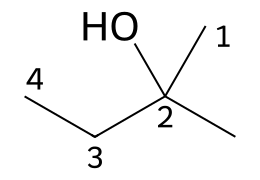
What is the IUPAC name of the organic compound formed in the following chemical reaction?
Acetone →(ii) H2O, H+(i) C2H5MgBr, dry Ether Product
निम्नलिखित रासायनिक अभिक्रिया में बनने वाले कार्बनिक यौगिक का IUPAC नाम क्या है?
ऐसीटोन →(ii) H2O, H+(i) C2H5MgBr, शुष्क ईथर उत्पाद
  1. Apentan-3-olपेन्टेन-3-ऑल
  2. B2-methyl butan-2-ol2-मेथिल ब्यूटेन-2-ऑल
  3. C2-methylpropan-2-ol2-मेथिलप्रोपेन-2-ऑल
  4. Dpentan-2-olपेन्टेन-2-ऑल
Show answer

Concept: RMgX adds to C=O; a ketone gives a 3° alcohol after hydrolysis (R of RMgX joins the carbonyl carbon).

  1. (CH3)2C=O + C2H5MgBr → (CH3)2C(OMgBr)C2H5
  2. Hydrolysis: (CH3)2C(OH)CH2CH3
  3. Longest chain containing C–OH: 4 C (butane), OH and CH3 on C2 → 2-methylbutan-2-ol.

Short trick: Ketone + RMgX → 3° alcohol. Total C = 3 (acetone) + 2 (ethyl) = 5 → must be a C5 3° alcohol; only (B) is tertiary with 5 C.

Answer: (B) 2-methyl butan-2-ol

अवधारणा: RMgX, C=O पर जुड़ता है; कीटोन जल-अपघटन के बाद 3° ऐल्कोहॉल देता है (RMgX का R कार्बोनिल कार्बन से जुड़ता है)।

  1. (CH3)2C=O + C2H5MgBr → (CH3)2C(OMgBr)C2H5
  2. जल-अपघटन: (CH3)2C(OH)CH2CH3
  3. C–OH युक्त दीर्घतम शृंखला: 4 C (ब्यूटेन), OH और CH3 दोनों C2 पर → 2-मेथिलब्यूटेन-2-ऑल।

शॉर्ट ट्रिक: कीटोन + RMgX → 3° ऐल्कोहॉल। कुल C = 3 (ऐसीटोन) + 2 (एथिल) = 5 → C5 का 3° ऐल्कोहॉल होना चाहिए; केवल (B) 5 C वाला तृतीयक है।

उत्तर: (B) 2-मेथिल ब्यूटेन-2-ऑल

NEET UGChemistryAlcohols – Grignard reagent with ketonesNEET UG 2021 · 12 Sep Shift 1
Q257.
Match List-I with List-II
List-IList-II
(a) PCl5(i) Square pyramidal
(b) SF6(ii) Trigonal planar
(c) BrF5(iii) Octahedral
(d) BF3(iv) Trigonal bipyramidal
सूची-I का सूची-II से मिलान कीजिए
सूची-Iसूची-II
(a) PCl5(i) वर्ग पिरामिडी
(b) SF6(ii) त्रिकोणीय समतलीय
(c) BrF5(iii) अष्टफलकीय
(d) BF3(iv) त्रिकोणीय द्विपिरामिडी
  1. A(a)-(iii), (b)-(i), (c)-(iv), (d)-(ii)
  2. B(a)-(iv), (b)-(iii), (c)-(ii), (d)-(i)
  3. C(a)-(iv), (b)-(iii), (c)-(i), (d)-(ii)
  4. D(a)-(ii), (b)-(iii), (c)-(iv), (d)-(i)
Show answer

Concept: Shape from (bond pairs, lone pairs) around the central atom.

  1. PCl5: 5 bp, 0 lp → sp3d → trigonal bipyramidal → (iv)
  2. SF6: 6 bp, 0 lp → sp3d2 → octahedral → (iii)
  3. BrF5: 5 bp, 1 lp → sp3d2 → square pyramidal → (i)
  4. BF3: 3 bp, 0 lp → sp2 → trigonal planar → (ii)
  5. So (a)-(iv), (b)-(iii), (c)-(i), (d)-(ii) = option (C). (A), (B), (D) each misplace at least two shapes.

Short trick: Fix the easy ones first: BF3 = trigonal planar (ii) and SF6 = octahedral (iii) → only (C) has both.

Answer: (C) (a)-(iv), (b)-(iii), (c)-(i), (d)-(ii)

अवधारणा: केन्द्रीय परमाणु के चारों ओर (आबंधी युग्म, एकाकी युग्म) से आकृति।

  1. PCl5: 5 bp, 0 lp → sp3d → त्रिकोणीय द्विपिरामिडी → (iv)
  2. SF6: 6 bp, 0 lp → sp3d2 → अष्टफलकीय → (iii)
  3. BrF5: 5 bp, 1 lp → sp3d2 → वर्ग पिरामिडी → (i)
  4. BF3: 3 bp, 0 lp → sp2 → त्रिकोणीय समतलीय → (ii)
  5. अतः (a)-(iv), (b)-(iii), (c)-(i), (d)-(ii) = विकल्प (C)। (A), (B), (D) प्रत्येक में कम-से-कम दो आकृतियाँ गलत हैं।

शॉर्ट ट्रिक: पहले आसान वाले तय करें: BF3 = त्रिकोणीय समतलीय (ii) तथा SF6 = अष्टफलकीय (iii) → दोनों केवल (C) में।

उत्तर: (C) (a)-(iv), (b)-(iii), (c)-(i), (d)-(ii)

NEET UGChemistryChemical bonding – VSEPR shapesNEET UG 2021 · 12 Sep Shift 1
Q258.
The incorrect statement among the following is:
निम्नलिखित में से गलत कथन है:
  1. ALanthanoids are good conductors of heat and electricityलैन्थेनॉयड ऊष्मा और विद्युत के अच्छे चालक हैं
  2. BActinoids are highly reactive metals, especially when finely divided.ऐक्टिनॉयड अत्यधिक क्रियाशील धातुएँ हैं, विशेषकर जब वे सूक्ष्म विभाजित हों।
  3. CActinoid contraction is greater for element to element than Lanthanoid contractionएक तत्व से दूसरे तत्व तक ऐक्टिनॉयड आकुंचन, लैन्थेनॉयड आकुंचन से अधिक होता है
  4. DMost of the trivalent Lanthanoid ions are colorless in the solid state.अधिकांश त्रिसंयोजी लैन्थेनॉयड आयन ठोस अवस्था में रंगहीन होते हैं।
Show answer

Concept: Colour of Ln3+ ions arises from f–f transitions; only f0 and f14 ions are colourless.

  1. (A) True – lanthanoids are typical metals, good conductors.
  2. (B) True – actinoids are highly reactive, especially when finely divided (react with boiling water, acids).
  3. (C) True – 5f electrons shield even more poorly than 4f → actinoid contraction is greater from element to element.
  4. (D) False – many Ln3+ ions are coloured in the solid state and in solution (e.g. Pr3+ green, Nd3+ lilac); only La3+ (4f0) and Lu3+ (4f14) are colourless.

Short trick: NCERT: “Many trivalent lanthanoid ions are coloured both in the solid state and in aqueous solutions.” “Most … colourless” is the trap word.

Answer: (D) Most of the trivalent Lanthanoid ions are colorless in the solid state.

अवधारणा: Ln3+ आयनों का रंग f–f संक्रमणों से आता है; केवल f0 और f14 आयन रंगहीन होते हैं।

  1. (A) सही – लैन्थेनॉयड विशिष्ट धातुएँ हैं, अच्छे चालक।
  2. (B) सही – ऐक्टिनॉयड अत्यधिक क्रियाशील हैं, विशेषकर सूक्ष्म विभाजित अवस्था में (उबलते जल, अम्लों से अभिक्रिया)।
  3. (C) सही – 5f इलेक्ट्रॉन 4f से भी दुर्बल परिरक्षण करते हैं → तत्व-दर-तत्व ऐक्टिनॉयड आकुंचन अधिक है।
  4. (D) गलत – अनेक Ln3+ आयन ठोस अवस्था और विलयन दोनों में रंगीन हैं (जैसे Pr3+ हरा, Nd3+ बैंगनी-गुलाबी); केवल La3+ (4f0) तथा Lu3+ (4f14) रंगहीन हैं।

शॉर्ट ट्रिक: NCERT: “अनेक त्रिसंयोजी लैन्थेनॉयड आयन ठोस अवस्था और जलीय विलयन दोनों में रंगीन होते हैं।” “अधिकांश … रंगहीन” ही जाल (ट्रैप) है।

उत्तर: (D) अधिकांश त्रिसंयोजी लैन्थेनॉयड आयन ठोस अवस्था में रंगहीन होते हैं।

NEET UGChemistryd- and f-Block elements – lanthanoids and actinoidsNEET UG 2021 · 12 Sep Shift 1
Q259.
Dihedral angle of least stable conformer of ethane is
एथेन के न्यूनतम स्थायी संरूपक का द्वितल (dihedral) कोण है
  1. A60∘
  2. B0∘
  3. C120∘
  4. D180∘
Show answer

Concept: Eclipsed conformation of ethane is least stable (maximum torsional strain); staggered is most stable.

  1. In the eclipsed form the C–H bonds of the front carbon lie exactly behind those of the back carbon → dihedral angle = 0°.
  2. Staggered form: dihedral angle 60° (most stable).
  3. Any value between 0° and 60° = skew conformations; 120° is again eclipsed (same as 0° for ethane), but the standard dihedral angle quoted for eclipsed is 0°.

Short trick: Eclipsed = “covered” = 0°; staggered = 60°. Energy difference in ethane ≈ 12.5 kJ mol−1.

Answer: (B) 0°

अवधारणा: एथेन का ग्रसित (eclipsed) संरूपण न्यूनतम स्थायी है (अधिकतम मरोड़ी विकृति); सांतरित (staggered) सर्वाधिक स्थायी।

  1. ग्रसित रूप में आगे वाले कार्बन के C–H आबंध पीछे वाले कार्बन के C–H आबंधों के ठीक पीछे होते हैं → द्वितल कोण = 0°।
  2. सांतरित रूप: द्वितल कोण 60° (सर्वाधिक स्थायी)।
  3. 0° और 60° के बीच का कोई भी मान = विषमतलीय (skew) संरूपण; 120° फिर से ग्रसित है (एथेन में 0° के समान), पर ग्रसित का मानक द्वितल कोण 0° लिया जाता है।

शॉर्ट ट्रिक: ग्रसित = “ढका हुआ” = 0°; सांतरित = 60°। एथेन में ऊर्जा अन्तर ≈ 12.5 kJ mol−1।

उत्तर: (B) 0°

NEET UGChemistryHydrocarbons – conformations of ethaneNEET UG 2021 · 12 Sep Shift 1
Q260.
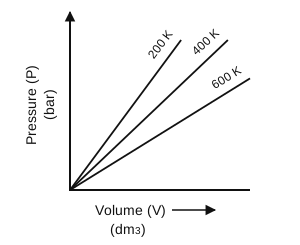
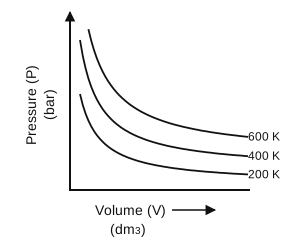
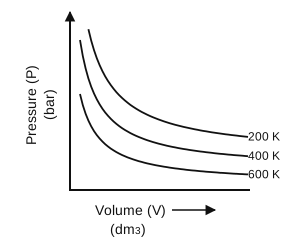
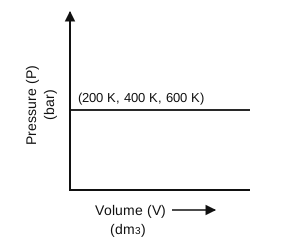
Choose the correct option for graphical representation of Boyle’s law, which shows a graph of pressure vs. Volume of a gas at different temperature.
बॉयल नियम के ग्राफीय निरूपण के लिए सही विकल्प चुनिए, जो विभिन्न तापों पर किसी गैस के दाब बनाम आयतन का ग्राफ दर्शाता है।
  1. A
  2. B
  3. C
  4. D
Show answer

Concept: Boyle’s law: at constant T, PV=k → P vs V is a rectangular hyperbola. Also k=nRT, so a higher T gives a higher curve.

  1. (A) straight lines through origin (P ∝ V) – wrong shape.
  2. (D) horizontal line (P independent of V) – wrong.
  3. (B) and (C) are hyperbolas; at the same V, P = nRT/V is larger at higher T → 600 K must be the outermost (top) curve.
  4. (B) has 600 K on top ✔; (C) has 200 K on top ✘.

Short trick: Isotherms move away from the axes as temperature rises – “hotter = higher”.

Answer: (B) graph (B)

अवधारणा: बॉयल नियम: स्थिर T पर PV=k → P बनाम V एक आयताकार अतिपरवलय है। साथ ही k=nRT, अतः अधिक T पर वक्र ऊपर होता है।

  1. (A) मूलबिन्दु से जाती सरल रेखाएँ (P ∝ V) – गलत आकृति।
  2. (D) क्षैतिज रेखा (P, V पर निर्भर नहीं) – गलत।
  3. (B) तथा (C) अतिपरवलय हैं; समान V पर P = nRT/V अधिक T पर बड़ा होता है → 600 K वाला वक्र सबसे बाहर (ऊपर) होना चाहिए।
  4. (B) में 600 K ऊपर है ✔; (C) में 200 K ऊपर है ✘।

शॉर्ट ट्रिक: ताप बढ़ने पर समतापी वक्र अक्षों से दूर खिसकते हैं – “अधिक गर्म = अधिक ऊपर”।

उत्तर: (B) ग्राफ (B)

NEET UGChemistryStates of matter – Boyle’s law (isotherms)NEET UG 2021 · 12 Sep Shift 1