Q261.Bt cotton variety that was developed by the introduction of toxin gene of Bacillus thuringiensis (Bt) is resistant to:
Bacillus thuringiensis (Bt) के विष जीन को प्रविष्ट कराकर विकसित की गई Bt कपास की किस्म किसके प्रति प्रतिरोधी है?
- APlant nematodesपादप सूत्रकृमि
- BInsect predatorsकीट परभक्षी
- CInsect pestsकीट पीड़क (insect pests)
- DFungal diseasesकवक रोग
Show answer
Concept: Bt toxin genes (cryIAc, cryIIAb) code for Cry proteins that kill specific insect pests – cotton bollworms (lepidopterans).
- Inactive protoxin is activated by the alkaline pH of the insect gut → pores in midgut epithelium → insect dies.
- (C) Insect pests – correct.
- (A) Nematode resistance is given by RNAi (e.g. against Meloidogyne incognita in tobacco), not Bt.
- (B) Insect predators are beneficial insects – not the target; (D) fungi are not affected by Cry proteins.
Short trick: Bt = "Bug-killer Toxin" – kills pests (bollworm, corn borer); nematodes → RNAi.
Answer: (C) Insect pests
अवधारणा: Bt विष जीन (cryIAc, cryIIAb) Cry प्रोटीनों को कोडित करते हैं जो विशिष्ट कीट पीड़कों – कपास के बॉलवर्म (लेपिडॉप्टेरा) – को मारते हैं।
- निष्क्रिय प्राक्-विष कीट की आंत के क्षारीय pH में सक्रिय होता है → मध्य-आंत्र उपकला में छिद्र → कीट की मृत्यु।
- (C) कीट पीड़क – सही।
- (A) सूत्रकृमि प्रतिरोध RNAi से मिलता है (जैसे तंबाकू में Meloidogyne incognita के विरुद्ध), Bt से नहीं।
- (B) कीट परभक्षी लाभदायक कीट हैं – लक्ष्य नहीं; (D) Cry प्रोटीन कवकों पर प्रभाव नहीं डालते।
शॉर्ट ट्रिक: Bt = "बग-किलर टॉक्सिन" – पीड़क मारता है (बॉलवर्म, कॉर्न बोरर); सूत्रकृमि → RNAi।
उत्तर: (C) कीट पीड़क (insect pests)
NEET UGBiologyBiotechnology applications – Bt cottonNEET UG 2020 · 13 Sep Shift 1
Q262.The first phase of translation is:
अनुवादन (translation) की पहली प्रावस्था है:
- AAminoacylation of tRNAtRNA का ऐमीनोऐसिलीकरण
- BRecognition of an anti-codonप्रतिप्रकूट (anti-codon) की पहचान
- CBinding of mRNA to ribosomemRNA का राइबोसोम से बंधन
- DRecognition of DNA moleculeDNA अणु की पहचान
Show answer
Concept: NCERT: "In the first phase itself amino acids are activated in the presence of ATP and linked to their cognate tRNA – a process commonly called charging of tRNA or aminoacylation of tRNA."
- Aminoacylation (charging) precedes initiation → (A).
- (C) Binding of mRNA to the ribosome is the start of initiation, which comes after tRNA charging.
- (B) Codon–anticodon recognition occurs during initiation/elongation.
- (D) DNA is not involved in translation at all.
Short trick: "Charge before you drive": tRNA must be charged (aminoacylated) before the ribosome can start.
Answer: (A) Aminoacylation of tRNA
अवधारणा: NCERT: "पहली प्रावस्था में ही ऐमीनो अम्ल ATP की उपस्थिति में सक्रियित होकर अपने संगत tRNA से जुड़ते हैं – इसे tRNA का आवेशन (charging) या ऐमीनोऐसिलीकरण कहते हैं।"
- ऐमीनोऐसिलीकरण (आवेशन) प्रारंभन से पहले होता है → (A)।
- (C) mRNA का राइबोसोम से बंधन प्रारंभन की शुरुआत है, जो tRNA आवेशन के बाद आता है।
- (B) प्रकूट–प्रतिप्रकूट पहचान प्रारंभन/दीर्घीकरण के समय होती है।
- (D) अनुवादन में DNA की कोई भूमिका नहीं होती।
शॉर्ट ट्रिक: "चलाने से पहले चार्ज करो": राइबोसोम के काम शुरू करने से पहले tRNA का आवेशन (ऐमीनोऐसिलीकरण) आवश्यक है।
उत्तर: (A) tRNA का ऐमीनोऐसिलीकरण
NEET UGBiologyMolecular basis of inheritance – translationNEET UG 2020 · 13 Sep Shift 1
Q263.Embryological support for evolution was disapproved by
विकास के भ्रूणविज्ञानीय समर्थन को किसने अस्वीकृत किया था?
- ACharles Darwinचार्ल्स डार्विन
- BOparinओपेरिन
- CKarl Ernst von Baerकार्ल अर्न्स्ट वॉन बेयर
- DAlfred Wallaceअल्फ्रेड वैलेस
Show answer
Concept: NCERT: embryological support for evolution was proposed by Ernst Haeckel (common features like gill slits in vertebrate embryos); it was disapproved by Karl Ernst von Baer, who noted that embryos never pass through the adult stages of other animals.
- (C) von Baer – correct.
- (A) Darwin and (D) Wallace proposed natural selection.
- (B) Oparin (with Haldane) proposed the chemical origin of life.
Short trick: "Haeckel Hailed, Baer Barred" – Haeckel proposed, von Baer disapproved.
Answer: (C) Karl Ernst von Baer
अवधारणा: NCERT: विकास का भ्रूणविज्ञानीय समर्थन अर्न्स्ट हेकल ने प्रस्तावित किया (कशेरुकी भ्रूणों में क्लोम छिद्र जैसे समान लक्षण); इसे कार्ल अर्न्स्ट वॉन बेयर ने अस्वीकृत किया, जिन्होंने बताया कि भ्रूण कभी अन्य जंतुओं की वयस्क अवस्थाओं से नहीं गुजरते।
- (C) वॉन बेयर – सही।
- (A) डार्विन और (D) वैलेस ने प्राकृतिक वरण का सिद्धांत दिया।
- (B) ओपेरिन (हाल्डेन के साथ) ने जीवन की रासायनिक उत्पत्ति प्रस्तावित की।
शॉर्ट ट्रिक: "हेकल ने हाँ कहा, बेयर ने बैर किया" – हेकल ने प्रस्तावित किया, वॉन बेयर ने अस्वीकृत किया।
उत्तर: (C) कार्ल अर्न्स्ट वॉन बेयर
NEET UGBiologyEvolution – evidences (embryology)NEET UG 2020 · 13 Sep Shift 1
Q264.Match the following columns and select the correct option.
| Column-I | Column-II |
|---|
| (a) 6-15 pairs of gill slits | (i) Trygon |
| (b) Heterocercal caudal fin | (ii) Cyclostomes |
| (c) Air bladder | (iii) Chondrichthyes |
| (d) Poison sting | (iv) Osteichthyes |
नीचे दिए गए स्तम्भों का मिलान कीजिए और सही विकल्प चुनिए।
| स्तम्भ-I | स्तम्भ-II |
|---|
| (a) 6-15 जोड़ी क्लोम छिद्र | (i) Trygon |
| (b) विषमपालिक (heterocercal) पुच्छ पख | (ii) साइक्लोस्टोम |
| (c) वायु आशय (air bladder) | (iii) कॉन्ड्रिक्थीज़ |
| (d) विष दंश (poison sting) | (iv) ऑस्टिक्थीज़ |
- Aa-iv, b-ii, c-iii, d-i
- Ba-i, b-iv, c-iii, d-ii
- Ca-ii, b-iii, c-iv, d-i
- Da-iii, b-iv, c-i, d-ii
Show answer
Concept: NCERT Animal Kingdom – distinguishing features of cyclostomes, cartilaginous and bony fishes.
- Cyclostomes have 6–15 pairs of gill slits → (a)-(ii).
- Chondrichthyes have a heterocercal tail (unequal lobes) → (b)-(iii).
- Osteichthyes have an air bladder for buoyancy → (c)-(iv).
- Trygon (sting ray) has a poison sting → (d)-(i).
- a-ii, b-iii, c-iv, d-i = (C).
Short trick: "Air bladder = Bony fish" (cartilaginous fish lack it and must keep swimming) – only (C) has c-iv.
Answer: (C) a-ii, b-iii, c-iv, d-i
अवधारणा: NCERT प्राणि जगत – साइक्लोस्टोम, उपास्थिल और अस्थिल मछलियों के विभेदक लक्षण।
- साइक्लोस्टोम में 6–15 जोड़ी क्लोम छिद्र होते हैं → (a)-(ii)।
- कॉन्ड्रिक्थीज़ में विषमपालिक पूँछ (असमान पालियाँ) होती है → (b)-(iii)।
- ऑस्टिक्थीज़ में उत्प्लावन हेतु वायु आशय होता है → (c)-(iv)।
- Trygon (स्टिंग रे) में विष दंश होता है → (d)-(i)।
- a-ii, b-iii, c-iv, d-i = (C)।
शॉर्ट ट्रिक: "वायु आशय = अस्थिल मछली" (उपास्थिल मछलियों में नहीं होता, उन्हें लगातार तैरना पड़ता है) – केवल (C) में c-iv है।
उत्तर: (C) a-ii, b-iii, c-iv, d-i
NEET UGBiologyAnimal kingdom – fishes and cyclostomesNEET UG 2020 · 13 Sep Shift 1
Q265.Match the following columns and select the correct option.
| Column-I | Column-II |
|---|
| (a) Clostridium butylicum | (i) Cyclosporin-A |
| (b) Trichoderma polysporum | (ii) Butyric acid |
| (c) Monascus purpureus | (iii) Citric acid |
| (d) Aspergillus niger | (iv) Blood cholesterol lowering agent |
नीचे दिए गए स्तम्भों का मिलान कीजिए और सही विकल्प चुनिए।
| स्तम्भ-I | स्तम्भ-II |
|---|
| (a) Clostridium butylicum | (i) साइक्लोस्पोरिन-A |
| (b) Trichoderma polysporum | (ii) ब्यूटिरिक अम्ल |
| (c) Monascus purpureus | (iii) सिट्रिक अम्ल |
| (d) Aspergillus niger | (iv) रक्त कोलेस्टेरॉल कम करने वाला कारक |
- Aa-i, b-ii, c-iv, d-iii
- Ba-iv, b-iii, c-ii, d-i
- Ca-iii, b-iv, c-ii, d-i
- Da-ii, b-i, c-iv, d-iii
Show answer
Concept: NCERT Microbes in Human Welfare – industrial products.
- Clostridium butylicum (bacterium) → butyric acid → (a)-(ii).
- Trichoderma polysporum (fungus) → cyclosporin A (immunosuppressant) → (b)-(i).
- Monascus purpureus (yeast) → statins, blood-cholesterol-lowering agents → (c)-(iv).
- Aspergillus niger (fungus) → citric acid → (d)-(iii).
- a-ii, b-i, c-iv, d-iii = (D).
Short trick: "Clostridium–Butyric (C-B), Trichoderma–Transplant drug, Monascus–Medicine for cholesterol, Aspergillus–Acid (citric)".
Answer: (D) a-ii, b-i, c-iv, d-iii
अवधारणा: NCERT मानव कल्याण में सूक्ष्मजीव – औद्योगिक उत्पाद।
- Clostridium butylicum (जीवाणु) → ब्यूटिरिक अम्ल → (a)-(ii)।
- Trichoderma polysporum (कवक) → साइक्लोस्पोरिन A (प्रतिरक्षा-निरोधक) → (b)-(i)।
- Monascus purpureus (यीस्ट) → स्टैटिन, रक्त कोलेस्टेरॉल कम करने वाले कारक → (c)-(iv)।
- Aspergillus niger (कवक) → सिट्रिक अम्ल → (d)-(iii)।
- a-ii, b-i, c-iv, d-iii = (D)।
शॉर्ट ट्रिक: "Clostridium–ब्यूटिरिक, Trichoderma–प्रत्यारोपण औषधि, Monascus–कोलेस्टेरॉल की दवा, Aspergillus–अम्ल (सिट्रिक)"।
उत्तर: (D) a-ii, b-i, c-iv, d-iii
NEET UGBiologyMicrobes in human welfare – microbial productsNEET UG 2020 · 13 Sep Shift 1
Q266.Which of the following is not an inhibitory substance governing seed dormancy?
निम्नलिखित में से कौन-सा बीज प्रसुप्ति को नियंत्रित करने वाला संदमक पदार्थ नहीं है?
- APhenolic acidफ़ीनोलिक अम्ल
- BPara-ascorbic acidपैरा-ऐस्कॉर्बिक अम्ल
- CGibberellic acidजिबरेलिक अम्ल
- DAbscisic acidऐब्सिसिक अम्ल
Show answer
Concept: NCERT: seed dormancy is due to hard seed coat, chemical inhibitors such as abscisic acid, phenolic acid, para-ascorbic acid, and immature embryo.
- (A), (B), (D) – all listed in NCERT as dormancy-causing inhibitors.
- (C) Gibberellic acid is a growth promoter that breaks seed dormancy (promotes germination) → not an inhibitor.
Short trick: GA = "Germination Activator"; ABA = "Always Blocks Awakening" (dormancy).
Answer: (C) Gibberellic acid
अवधारणा: NCERT: बीज प्रसुप्ति कठोर बीजचोल, ऐब्सिसिक अम्ल, फ़ीनोलिक अम्ल, पैरा-ऐस्कॉर्बिक अम्ल जैसे रासायनिक संदमकों तथा अपरिपक्व भ्रूण के कारण होती है।
- (A), (B), (D) – तीनों NCERT में प्रसुप्ति उत्पन्न करने वाले संदमकों के रूप में सूचीबद्ध हैं।
- (C) जिबरेलिक अम्ल वृद्धि-वर्धक है जो बीज प्रसुप्ति को तोड़ता है (अंकुरण को प्रोत्साहित करता है) → संदमक नहीं।
शॉर्ट ट्रिक: GA = "अंकुरण सक्रियक"; ABA = "प्रसुप्ति बनाए रखने वाला" हॉर्मोन।
उत्तर: (C) जिबरेलिक अम्ल
NEET UGBiologyPlant growth and development – seed dormancyNEET UG 2020 · 13 Sep Shift 1
Q267.Match the following columns and select the correct option.
| Column-I | Column-II |
|---|
| (a) Organ of Corti | (i) Connects middle ear and pharynx |
| (b) Cochlea | (ii) Coiled part of the labyrinth |
| (c) Eustachian tube | (iii) Attached to the oval window |
| (d) Stapes | (iv) Located on the basilar membrane |
नीचे दिए गए स्तम्भों का मिलान कीजिए और सही विकल्प चुनिए।
| स्तम्भ-I | स्तम्भ-II |
|---|
| (a) कॉर्टाई का अंग | (i) मध्य कर्ण को ग्रसनी से जोड़ती है |
| (b) कर्णावर्त (cochlea) | (ii) गहन (labyrinth) का कुंडलित भाग |
| (c) यूस्टेकियन नलिका | (iii) अंडाकार खिड़की से जुड़ा होता है |
| (d) स्टेपीज़ (वलयक) | (iv) आधारीय झिल्ली (basilar membrane) पर स्थित |
- Aa-iv, b-ii, c-i, d-iii
- Ba-i, b-ii, c-iv, d-iii
- Ca-ii, b-iii, c-i, d-iv
- Da-iii, b-i, c-iv, d-ii
Show answer
Concept: NCERT Neural Control – structure of the human ear.
- Organ of Corti (hearing receptor with hair cells) lies on the basilar membrane → (a)-(iv).
- Cochlea is the coiled portion of the bony/membranous labyrinth → (b)-(ii).
- Eustachian tube connects the middle-ear cavity with the pharynx (equalises pressure) → (c)-(i).
- Stapes (innermost ear ossicle) is attached to the oval window of the cochlea → (d)-(iii).
- a-iv, b-ii, c-i, d-iii = (A).
Short trick: Eustachian tube–pharynx (c-i) is certain; only (A) and (C) have it, and organ of Corti–basilar membrane (a-iv) picks (A).
Answer: (A) a-iv, b-ii, c-i, d-iii
अवधारणा: NCERT तंत्रिकीय नियंत्रण – मानव कर्ण की संरचना।
- कॉर्टाई का अंग (रोम कोशिकाओं युक्त श्रवण ग्राही) आधारीय झिल्ली पर स्थित है → (a)-(iv)।
- कर्णावर्त अस्थिल/कलामय गहन का कुंडलित भाग है → (b)-(ii)।
- यूस्टेकियन नलिका मध्य कर्ण गुहा को ग्रसनी से जोड़ती है (दाब संतुलन) → (c)-(i)।
- स्टेपीज़ (सबसे भीतरी कर्ण अस्थिका) कर्णावर्त की अंडाकार खिड़की से जुड़ा होता है → (d)-(iii)।
- a-iv, b-ii, c-i, d-iii = (A)।
शॉर्ट ट्रिक: यूस्टेकियन नलिका–ग्रसनी (c-i) पक्का है; यह केवल (A) और (C) में है, और कॉर्टाई का अंग–आधारीय झिल्ली (a-iv) से (A) चुना जाता है।
उत्तर: (A) a-iv, b-ii, c-i, d-iii
NEET UGBiologyNeural control – structure of the earNEET UG 2020 · 13 Sep Shift 1
Q268.The enzyme enterokinase helps in conversion of:
एंज़ाइम एंटेरोकाइनेज़ किसके रूपांतरण में सहायता करता है?
- ACaseinogen into caseinकेसीनोजन का केसीन में
- BPepsinogen into pepsinपेप्सिनोजन का पेप्सिन में
- CProtein into polypeptidesप्रोटीन का पॉलिपेप्टाइडों में
- DTrypsinogen into trypsinट्रिप्सिनोजन का ट्रिप्सिन में
Show answer
Concept: NCERT: trypsinogen of pancreatic juice is activated by enterokinase, secreted by the intestinal mucosa, into active trypsin, which in turn activates other pancreatic zymogens.
- (D) Trypsinogen → trypsin – correct.
- (A) Caseinogen → casein (milk coagulation) is done by rennin.
- (B) Pepsinogen → pepsin is done by HCl (and autocatalytically by pepsin).
- (C) Proteins → polypeptides/proteoses is the action of pepsin/trypsin, not enterokinase.
Short trick: "Entero-kinase → enters trypsin into action"; HCl activates pepsin.
Answer: (D) Trypsinogen into trypsin
अवधारणा: NCERT: अग्न्याशयी रस का ट्रिप्सिनोजन आंत्रीय श्लेष्मा द्वारा स्रावित एंटेरोकाइनेज़ से सक्रिय ट्रिप्सिन में बदलता है, जो फिर अन्य अग्न्याशयी ज़ाइमोजनों को सक्रिय करता है।
- (D) ट्रिप्सिनोजन → ट्रिप्सिन – सही।
- (A) केसीनोजन → केसीन (दूध का स्कंदन) रेनिन करता है।
- (B) पेप्सिनोजन → पेप्सिन HCl द्वारा (और स्वउत्प्रेरक रूप से पेप्सिन द्वारा) होता है।
- (C) प्रोटीन → पॉलिपेप्टाइड/प्रोटिओज़ पेप्सिन/ट्रिप्सिन की क्रिया है, एंटेरोकाइनेज़ की नहीं।
शॉर्ट ट्रिक: "एंटेरोकाइनेज़ → ट्रिप्सिन को सक्रिय करता है"; HCl पेप्सिन को सक्रिय करता है।
उत्तर: (D) ट्रिप्सिनोजन का ट्रिप्सिन में
NEET UGBiologyDigestion and absorption – enzyme activationNEET UG 2020 · 13 Sep Shift 1
Q269.Presence of which of the following conditions in urine are indicative of diabetes mellitus?
मूत्र में निम्नलिखित में से किन स्थितियों की उपस्थिति मधुमेह (diabetes mellitus) का संकेत देती है?
- AKetonuria and Glycosuriaकीटोनमेह (ketonuria) और ग्लूकोसमेह (glycosuria)
- BRenal calculi and Hyperglycaemiaवृक्क अश्मरी और अतिग्लूकोज़रक्तता
- CUremia and ketonuriaयूरीमिया और कीटोनमेह
- DUremia and Renal Calculiयूरीमिया और वृक्क अश्मरी
Show answer
Concept: NCERT: presence of glucose (glycosuria) and ketone bodies (ketonuria) in urine are indicative of diabetes mellitus.
- (A) Ketonuria + glycosuria – correct.
- (B) Renal calculi are kidney stones; hyperglycaemia is a blood (not urine) condition.
- (C), (D) Uremia = accumulation of urea in blood (kidney failure), not a urine finding of diabetes.
Short trick: Urine words end in "-uria" – choose the option where both are "-uria": ketonuria + glycosuria.
Answer: (A) Ketonuria and Glycosuria
अवधारणा: NCERT: मूत्र में ग्लूकोज़ (ग्लूकोसमेह) और कीटोन काय (कीटोनमेह) की उपस्थिति मधुमेह का संकेत है।
- (A) कीटोनमेह + ग्लूकोसमेह – सही।
- (B) वृक्क अश्मरी गुर्दे की पथरी है; अतिग्लूकोज़रक्तता रक्त की स्थिति है, मूत्र की नहीं।
- (C), (D) यूरीमिया = रक्त में यूरिया का संचय (वृक्क विफलता), मधुमेह का मूत्र-लक्षण नहीं।
शॉर्ट ट्रिक: मूत्र-संबंधी शब्द "-uria" पर समाप्त होते हैं – वह विकल्प चुनें जिसमें दोनों "-uria" हों: ketonuria + glycosuria।
उत्तर: (A) कीटोनमेह (ketonuria) और ग्लूकोसमेह (glycosuria)
NEET UGBiologyExcretory products – disorders (diabetes mellitus)NEET UG 2020 · 13 Sep Shift 1
Q270.The process responsible for facilitating loss of water in liquid form from the tip of grass blades at night and in early morning is:
रात में और प्रातःकाल घास की पत्तियों के शीर्ष से द्रव रूप में जल की हानि को सुगम बनाने के लिए उत्तरदायी प्रक्रिया है:
- AImbibitionअंतःशोषण
- BPlasmolysisजीवद्रव्यकुंचन
- CTranspirationवाष्पोत्सर्जन
- DRoot pressureमूल दाब
Show answer
Concept: NCERT: the effect of root pressure is observable at night and early morning when evaporation is low – excess water collects as droplets around special openings (hydathodes) at the tips of grass blades; this loss of liquid water is guttation.
- Root pressure pushes water up the xylem → guttation → (D).
- (A) Imbibition is absorption of water by hydrophilic colloids (e.g. seeds).
- (B) Plasmolysis is shrinkage of protoplast in a hypertonic solution.
- (C) Transpiration is loss of water as vapour, mostly by day through stomata.
Short trick: Liquid drops at leaf tip at dawn = guttation = proof of root pressure (vapour = transpiration).
Answer: (D) Root pressure
अवधारणा: NCERT: मूल दाब का प्रभाव रात में और प्रातःकाल दिखता है जब वाष्पन कम होता है – अतिरिक्त जल घास की पत्तियों के शीर्ष पर विशेष छिद्रों (जलरंध्र, hydathodes) के आसपास बूँदों के रूप में एकत्र होता है; द्रव जल की यह हानि बिंदुस्राव (guttation) है।
- मूल दाब जल को जाइलम में ऊपर धकेलता है → बिंदुस्राव → (D)।
- (A) अंतःशोषण जलरागी कोलॉइडों (जैसे बीज) द्वारा जल का अवशोषण है।
- (B) जीवद्रव्यकुंचन अतिपरासारी विलयन में जीवद्रव्य का सिकुड़ना है।
- (C) वाष्पोत्सर्जन जल की वाष्प रूप में हानि है, अधिकतर दिन में रंध्रों से।
शॉर्ट ट्रिक: भोर में पत्ती की नोक पर द्रव बूँदें = बिंदुस्राव = मूल दाब का प्रमाण (वाष्प = वाष्पोत्सर्जन)।
उत्तर: (D) मूल दाब
NEET UGBiologyTransport in plants – root pressure and guttationNEET UG 2020 · 13 Sep Shift 1
Q271.The Earth Summit held in Rio de Janeiro in 1992 was called
रियो डी जेनेरो में 1992 में आयोजित पृथ्वी सम्मेलन (Earth Summit) बुलाया गया था
- Ato reduce CO2 emissions and global warmingCO2 उत्सर्जन तथा भूमंडलीय तापन (global warming) को कम करने के लिए
- Bfor conservation of biodiversity and sustainable utilization of its benefitsजैव विविधता के संरक्षण तथा इसके लाभों के सतत उपयोग के लिए
- Cto assess threat posed to native species by invasive weed speciesआक्रामक खरपतवार जातियों द्वारा देशज जातियों को उत्पन्न खतरे के आकलन के लिए
- Dfor immediate steps to discontinue use of CFCs that were damaging the ozone layerओज़ोन परत को क्षति पहुँचा रहे CFCs का उपयोग तुरंत बंद करने के कदम उठाने के लिए
Show answer
Concept: NCERT (Biodiversity and Conservation): at the historic Convention on Biological Diversity (“The Earth Summit”), Rio de Janeiro, 1992, all nations were called upon to take measures for conservation of biodiversity and sustainable utilisation of its benefits.
- Earth Summit, Rio 1992 → Convention on Biological Diversity → conservation + sustainable use of biodiversity – option (B).
- (A) CO2/global-warming reduction is the theme of the Kyoto Protocol (1997).
- (C) Invasive-species assessment was not the purpose of the summit.
- (D) Phasing out CFCs is the Montreal Protocol (1987).
Short trick: Rio = “Bio” (biodiversity); Kyoto = CO2; Montreal = Ozone/CFC. Follow-up: World Summit on Sustainable Development, Johannesburg 2002.
Answer: (B) for conservation of biodiversity and sustainable utilization of its benefits
अवधारणा: NCERT (जैव विविधता एवं संरक्षण): रियो डी जेनेरो (1992) में हुए ऐतिहासिक जैव विविधता सम्मेलन (“पृथ्वी सम्मेलन”) में सभी राष्ट्रों से जैव विविधता के संरक्षण तथा इसके लाभों के सतत उपयोग हेतु उपाय करने का आह्वान किया गया।
- पृथ्वी सम्मेलन, रियो 1992 → जैव विविधता सम्मेलन (CBD) → जैव विविधता का संरक्षण + सतत उपयोग – विकल्प (B)।
- (A) CO2/भूमंडलीय तापन कम करना क्योटो प्रोटोकॉल (1997) का विषय है।
- (C) आक्रामक जातियों का आकलन इस सम्मेलन का उद्देश्य नहीं था।
- (D) CFCs को समाप्त करना मॉन्ट्रियल प्रोटोकॉल (1987) है।
शॉर्ट ट्रिक: रियो = “बायो” (जैव विविधता); क्योटो = CO2; मॉन्ट्रियल = ओज़ोन/CFC। अगला: सतत विकास पर विश्व सम्मेलन, जोहान्सबर्ग 2002।
उत्तर: (B) जैव विविधता के संरक्षण तथा इसके लाभों के सतत उपयोग के लिए
NEET UGBiologyBiodiversity – conservation (Earth Summit)NEET UG 2019 · 5 May Shift 1
Q272.Colostrum the yellowish fluid, secreted by mother during the initial days of lactation is very essential to impart immunity to the new born infants because it contains :
स्तनपान के प्रारम्भिक दिनों में माता द्वारा स्रावित पीला-सा तरल खीस (colostrum) नवजात शिशुओं को प्रतिरक्षा प्रदान करने के लिए अत्यंत आवश्यक है क्योंकि इसमें होता है :
- ANatural killer cellsप्राकृतिक मारक कोशिकाएँ (Natural killer cells)
- BMonocytesएककेंद्रकाणु (Monocytes)
- CMacrophagesमहाभक्षकाणु (Macrophages)
- DImmunoglobulin Aइम्यूनोग्लोबुलिन A (IgA)
Show answer
Concept: Colostrum is rich in antibodies of the IgA type; these ready-made antibodies give the infant natural passive immunity.
- NCERT: “The yellowish fluid colostrum secreted by mother during the initial days of lactation has abundant antibodies (IgA) to protect the infant.”
- (A) NK cells, (B) monocytes and (C) macrophages are cells of innate immunity in blood/tissues – they are not what colostrum supplies to give immunity.
Short trick: Colostrum → IgA (“A for Amma / milk”); placenta → IgG (“G crosses the Gap”).
Answer: (D) Immunoglobulin A
अवधारणा: खीस में IgA प्रकार की प्रतिरक्षियाँ (antibodies) प्रचुर मात्रा में होती हैं; ये पहले से बनी प्रतिरक्षियाँ शिशु को प्राकृतिक निष्क्रिय प्रतिरक्षा देती हैं।
- NCERT: “स्तनपान के प्रारम्भिक दिनों में माता द्वारा स्रावित पीले तरल खीस में शिशु की रक्षा के लिए प्रचुर प्रतिरक्षियाँ (IgA) होती हैं।”
- (A) NK कोशिकाएँ, (B) मोनोसाइट तथा (C) मैक्रोफेज रक्त/ऊतकों की सहज प्रतिरक्षा की कोशिकाएँ हैं – खीस प्रतिरक्षा देने के लिए इन्हें प्रदान नहीं करता।
शॉर्ट ट्रिक: खीस → IgA (“A = अम्मा का दूध”); अपरा (placenta) → IgG (“G गैप पार करता है”)।
उत्तर: (D) इम्यूनोग्लोबुलिन A (IgA)
NEET UGBiologyHuman health – immunity (passive immunity, colostrum)NEET UG 2019 · 5 May Shift 1
Q273.Grass leaves curl inwards during very dry weather. Select the most appropriate reason from the following :
अत्यधिक शुष्क मौसम में घास की पत्तियाँ अंदर की ओर मुड़ जाती हैं। निम्नलिखित में से सबसे उपयुक्त कारण चुनिए :
- AClosure of stomataरंध्रों का बंद होना
- BFlaccidity of bulliform cellsआवर्ध त्वक् कोशिकाओं (bulliform cells) का श्लथ (flaccid) होना
- CShrinkage of air spaces in spongy mesophyllस्पंजी पर्णमध्योतक में वायु-अवकाशों का सिकुड़ना
- DTyloses in vesselsवाहिकाओं में टाइलोसिस (tyloses)
Show answer
Concept: In grasses some adaxial epidermal cells along the veins are large, empty, colourless bulliform cells.
- When turgid they keep the leaf surface exposed (leaf flat).
- Under water stress they lose water and become flaccid → the leaf rolls/curls inwards → less surface exposed → less transpiration.
- (A) Stomatal closure reduces transpiration but does not roll the leaf.
- (C) Grass (monocot) leaf has no distinct spongy mesophyll, and air-space shrinkage does not curl leaves.
- (D) Tyloses block old xylem vessels (heartwood) – unrelated to leaf rolling.
Short trick: “Bulliform = bull-dozer of leaf folding”: turgid → open, flaccid → curl.
Answer: (B) Flaccidity of bulliform cells
अवधारणा: घासों में शिराओं के साथ ऊपरी (adaxial) बाह्यत्वचा की कुछ कोशिकाएँ बड़ी, रिक्त और रंगहीन आवर्ध त्वक् (bulliform) कोशिकाएँ होती हैं।
- स्फीत (turgid) होने पर ये पत्ती की सतह को खुला (पत्ती को चपटा) रखती हैं।
- जल की कमी में ये जल खोकर श्लथ हो जाती हैं → पत्ती अंदर की ओर लिपट/मुड़ जाती है → कम सतह खुली → कम वाष्पोत्सर्जन।
- (A) रंध्रों के बंद होने से वाष्पोत्सर्जन घटता है, पर पत्ती नहीं मुड़ती।
- (C) घास (एकबीजपत्री) की पत्ती में स्पष्ट स्पंजी पर्णमध्योतक नहीं होता, और वायु-अवकाश सिकुड़ने से पत्ती नहीं मुड़ती।
- (D) टाइलोसिस पुरानी जाइलम वाहिकाओं (अंतःकाष्ठ) को अवरुद्ध करते हैं – पत्ती मुड़ने से इनका संबंध नहीं।
शॉर्ट ट्रिक: “बुलिफॉर्म = पत्ती मोड़ने वाली कोशिका”: स्फीत → खुली, श्लथ → मुड़ी।
उत्तर: (B) आवर्ध त्वक् कोशिकाओं (bulliform cells) का श्लथ (flaccid) होना
NEET UGBiologyAnatomy of flowering plants – monocot leaf (bulliform cells)NEET UG 2019 · 5 May Shift 1
Q274.The shorter and longer arms of a submetacentric chromosome are referred to as
एक उपमध्यकेंद्री (submetacentric) गुणसूत्र की छोटी और लंबी भुजाओं को कहा जाता है
- As-arm and l-arm respectivelyक्रमशः s-भुजा और l-भुजा
- Bp-arm and q-arm respectivelyक्रमशः p-भुजा और q-भुजा
- Cq-arm and p-arm respectivelyक्रमशः q-भुजा और p-भुजा
- Dm-arm and n-arm respectivelyक्रमशः m-भुजा और n-भुजा
Show answer
Concept: In a submetacentric chromosome the centromere is slightly away from the middle, giving one shorter and one longer arm.
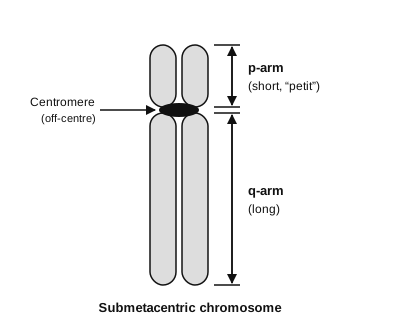
- Short arm = p-arm (from French petit = small).
- Long arm = q-arm (the next letter after p).
- So the order “shorter, longer” = p-arm, q-arm → (B); (C) is the reverse; s/l and m/n are not used terms.
Short trick: p = petit (small); q comes after p → longer arm.
Answer: (B) p-arm and q-arm respectively
अवधारणा: उपमध्यकेंद्री गुणसूत्र में गुणसूत्र बिंदु (centromere) मध्य से थोड़ा हटकर होता है, जिससे एक भुजा छोटी तथा एक लंबी होती है।
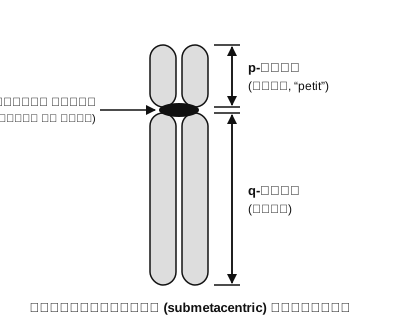
- छोटी भुजा = p-भुजा (फ्रेंच petit = छोटा)।
- लंबी भुजा = q-भुजा (p के बाद का अक्षर)।
- अतः “छोटी, लंबी” का क्रम = p-भुजा, q-भुजा → (B); (C) उलटा है; s/l तथा m/n प्रयुक्त शब्द नहीं हैं।
शॉर्ट ट्रिक: p = petit (छोटा); q, p के बाद आता है → लंबी भुजा।
उत्तर: (B) क्रमशः p-भुजा और q-भुजा
NEET UGBiologyCell cycle & chromosomes – types of chromosomesNEET UG 2019 · 5 May Shift 1
Q275.Respiratory Quotient (RQ) value of tripalmitin is
ट्राइपामिटिन का श्वसन गुणांक (RQ) मान है
- A0.9
- B0.7
- C0.07
- D0.09
Show answer
Concept: RQ = volume of CO2 evolved / volume of O2 consumed.
- 2(C51H98O6) + 145 O2 → 102 CO2 + 98 H2O + energy (tripalmitin).
- RQ = 102 CO2 / 145 O2 = 0.703 ≈ 0.7.
- Fats are poor in oxygen, so they need more O2 → RQ < 1. 0.9 is near protein; 0.07/0.09 are impossibly low.
Short trick: RQ: carbohydrate = 1, protein ≈ 0.9, fat ≈ 0.7, organic acids > 1 (malic acid 1.33).
Answer: (B) 0.7
अवधारणा: RQ = निकली CO2 का आयतन / उपभुक्त O2 का आयतन।
- 2(C51H98O6) + 145 O2 → 102 CO2 + 98 H2O + ऊर्जा (ट्राइपामिटिन)।
- RQ = 102 CO2 / 145 O2 = 0.703 ≈ 0.7।
- वसा में ऑक्सीजन कम होती है, अतः अधिक O2 लगती है → RQ < 1। 0.9 प्रोटीन के निकट है; 0.07/0.09 असंभव रूप से कम हैं।
शॉर्ट ट्रिक: RQ: कार्बोहाइड्रेट = 1, प्रोटीन ≈ 0.9, वसा ≈ 0.7, कार्बनिक अम्ल > 1 (मैलिक अम्ल 1.33)।
उत्तर: (B) 0.7
NEET UGBiologyRespiration in plants – respiratory quotientNEET UG 2019 · 5 May Shift 1
Q276.Which of the following is a commercial blood cholesterol lowering agent?
निम्नलिखित में से कौन-सा एक व्यावसायिक रक्त कोलेस्टेरॉल कम करने वाला कारक है?
- ACyclosporin Aसाइक्लोस्पोरिन A
- BStatinस्टैटिन
- CStreptokinaseस्ट्रेप्टोकाइनेज़
- DLipasesलाइपेज़
Show answer
Concept: Statins, produced by the yeast Monascus purpureus, competitively inhibit the enzyme of cholesterol synthesis and are used as blood-cholesterol-lowering agents.
- (A) Cyclosporin A (Trichoderma polysporum) – immunosuppressant in organ transplant.
- (C) Streptokinase (Streptococcus) – “clot buster”, dissolves blood clots.
- (D) Lipases – used in detergents to remove oily stains.
Short trick: Statin = static cholesterol; Monascus → Minus cholesterol.
Answer: (B) Statin
अवधारणा: स्टैटिन यीस्ट Monascus purpureus द्वारा बनाए जाते हैं; ये कोलेस्टेरॉल संश्लेषण के एंजाइम का स्पर्धी संदमन करते हैं और रक्त-कोलेस्टेरॉल घटाने वाले कारक के रूप में प्रयुक्त होते हैं।
- (A) साइक्लोस्पोरिन A (Trichoderma polysporum) – अंग प्रत्यारोपण में प्रतिरक्षा-निरोधक।
- (C) स्ट्रेप्टोकाइनेज़ (Streptococcus) – “थक्का नाशक”, रक्त के थक्के घोलता है।
- (D) लाइपेज़ – अपमार्जकों में तैलीय धब्बे हटाने में प्रयुक्त।
शॉर्ट ट्रिक: स्टैटिन = कोलेस्टेरॉल “स्थिर/कम”; Monascus → Minus कोलेस्टेरॉल।
उत्तर: (B) स्टैटिन
NEET UGBiologyMicrobes in human welfare – bioactive moleculesNEET UG 2019 · 5 May Shift 1
Q277.Match the following structures with their respective location in organs
| Structure | Location |
|---|
| (a) Crypts of Lieberkuhn | (i) Pancreas |
| (b) Glisson's Capsule | (ii) Duodenum |
| (c) Islets of Langerhans | (iii) Small intestine |
| (d) Brunner's Glands | (iv) Liver |
Select the correct option from the following
निम्नलिखित संरचनाओं का उनके अंगों में संबंधित स्थान से मिलान कीजिए
| संरचना | स्थान |
|---|
| (a) लीबरकुन की प्रगुहिकाएँ (Crypts of Lieberkuhn) | (i) अग्न्याशय |
| (b) ग्लिसन का संपुट (Glisson's Capsule) | (ii) ग्रहणी (Duodenum) |
| (c) लैंगरहैंस की द्वीपिकाएँ | (iii) छोटी आँत |
| (d) ब्रूनर की ग्रंथियाँ | (iv) यकृत |
निम्नलिखित में से सही विकल्प चुनिए
- A(a)-(iii), (b)-(i), (c)-(ii), (d)-(iv)
- B(a)-(ii), (b)-(iv), (c)-(i), (d)-(iii)
- C(a)-(iii), (b)-(iv), (c)-(i), (d)-(ii)
- D(a)-(iii), (b)-(ii), (c)-(i), (d)-(iv)
Show answer
Concept: Each structure belongs to one specific digestive organ.
- (a) Crypts of Lieberkuhn – tubular glands between the villi of the small intestine → (iii).
- (b) Glisson's capsule – connective-tissue sheath around each hepatic lobule of the liver → (iv).
- (c) Islets of Langerhans – endocrine part of the pancreas → (i).
- (d) Brunner's glands – submucosal glands of the duodenum → (ii).
- So a-iii, b-iv, c-i, d-ii = option (C).
Short trick: Only (c) = Pancreas is certain → options (B), (C) and (D) remain; Brunner = “B for Beginning of intestine” (duodenum) → only (C).
Answer: (C) (a)-(iii), (b)-(iv), (c)-(i), (d)-(ii)
अवधारणा: प्रत्येक संरचना किसी एक विशिष्ट पाचक अंग में पाई जाती है।
- (a) लीबरकुन की प्रगुहिकाएँ – छोटी आँत के रसांकुरों के बीच की नलिकाकार ग्रंथियाँ → (iii)।
- (b) ग्लिसन का संपुट – यकृत की प्रत्येक यकृत पालिका को घेरने वाला संयोजी ऊतक आवरण → (iv)।
- (c) लैंगरहैंस की द्वीपिकाएँ – अग्न्याशय का अंतःस्रावी भाग → (i)।
- (d) ब्रूनर की ग्रंथियाँ – ग्रहणी की अधःश्लेष्मिका ग्रंथियाँ → (ii)।
- अतः a-iii, b-iv, c-i, d-ii = विकल्प (C)।
शॉर्ट ट्रिक: केवल (c) = अग्न्याशय निश्चित → (B), (C), (D) बचे; ब्रूनर = “B = आँत की शुरुआत” (ग्रहणी) → केवल (C)।
उत्तर: (C) (a)-(iii), (b)-(iv), (c)-(i), (d)-(ii)
NEET UGBiologyDigestion – structures and their locationNEET UG 2019 · 5 May Shift 1
Q278.Which of the following is the most important cause for animals and plants being driven to extinction?
निम्नलिखित में से कौन-सा जंतुओं और पादपों के विलुप्ति की ओर धकेले जाने का सबसे महत्वपूर्ण कारण है?
- AHabitat loss and fragmentationआवासीय क्षति तथा विखंडन
- BDrought and floodsसूखा और बाढ़
- CEconomic exploitationआर्थिक शोषण (अति-दोहन)
- DAlien species invasionविदेशी जातियों का आक्रमण
Show answer
Concept: NCERT “evil quartet” of biodiversity loss: habitat loss & fragmentation, over-exploitation, alien species invasions, co-extinctions.
- NCERT: “Habitat loss and fragmentation – this is the most important cause driving animals and plants to extinction” (e.g. tropical rain forests reduced from 14% to 6% of land surface).
- (C) over-exploitation and (D) alien species are also causes of the quartet, but secondary.
- (B) Drought and floods are natural events, not listed as the main cause.
Short trick: Evil quartet in order of importance = “H O A C” – Habitat, Over-exploitation, Alien, Co-extinction.
Answer: (A) Habitat loss and fragmentation
अवधारणा: जैव विविधता ह्रास की NCERT “दुष्ट चौकड़ी”: आवासीय क्षति व विखंडन, अति-दोहन, विदेशी जातियों का आक्रमण, सह-विलुप्तता।
- NCERT: “आवासीय क्षति तथा विखंडन – जंतुओं और पादपों को विलुप्ति की ओर ले जाने वाला यह सबसे महत्वपूर्ण कारण है” (जैसे उष्णकटिबंधीय वर्षा वन भू-सतह के 14% से घटकर 6% रह गए)।
- (C) अति-दोहन और (D) विदेशी जातियाँ भी चौकड़ी के कारण हैं, पर गौण।
- (B) सूखा और बाढ़ प्राकृतिक घटनाएँ हैं, मुख्य कारण के रूप में सूचीबद्ध नहीं।
शॉर्ट ट्रिक: महत्व के क्रम में दुष्ट चौकड़ी = “आ-अ-वि-स” – आवास, अति-दोहन, विदेशी, सह-विलुप्तता।
उत्तर: (A) आवासीय क्षति तथा विखंडन
NEET UGBiologyBiodiversity – causes of loss (evil quartet)NEET UG 2019 · 5 May Shift 1
Q279.Which part of the brain is responsible for thermoregulation?
मस्तिष्क का कौन-सा भाग ताप-नियमन (thermoregulation) के लिए उत्तरदायी है?
- ACerebrumप्रमस्तिष्क (Cerebrum)
- BHypothalamusअधश्चेतक (Hypothalamus)
- CCorpus callosumमहासंयोजिका (Corpus callosum)
- DMedulla oblongataमेडुला ऑब्लांगेटा (Medulla oblongata)
Show answer
Concept: The hypothalamus (base of the forebrain/diencephalon) contains centres that control body temperature, hunger and thirst, and it secretes hypothalamic hormones.
- (A) Cerebrum – intelligence, memory, voluntary actions, sensory perception.
- (C) Corpus callosum – tract of nerve fibres connecting the two cerebral hemispheres.
- (D) Medulla – centres for respiration, cardiovascular reflexes and gastric secretion.
Short trick: Hypothalamus = body's “thermostat” + hunger/thirst switch (“HOT” – Hypothalamus Owns Temperature).
Answer: (B) Hypothalamus
अवधारणा: अधश्चेतक (हाइपोथैलेमस) (अग्रमस्तिष्क/डाइएनसेफेलॉन का आधार) में शरीर-ताप, भूख और प्यास नियंत्रित करने वाले केंद्र होते हैं, तथा यह हाइपोथैलेमिक हॉर्मोन स्रावित करता है।
- (A) प्रमस्तिष्क – बुद्धि, स्मृति, ऐच्छिक क्रियाएँ, संवेदी अनुभूति।
- (C) महासंयोजिका – दोनों प्रमस्तिष्क गोलार्धों को जोड़ने वाला तंत्रिका-तंतु पथ।
- (D) मेडुला – श्वसन, हृद्-संवहनी प्रतिवर्तों तथा जठर स्राव के केंद्र।
शॉर्ट ट्रिक: हाइपोथैलेमस = शरीर का “थर्मोस्टैट” + भूख/प्यास का स्विच।
उत्तर: (B) अधश्चेतक (Hypothalamus)
NEET UGBiologyNeural control – parts of brain (hypothalamus)NEET UG 2019 · 5 May Shift 1
Q280.Consider following features
(a) Organ system level of organisation
(b) Bilateral symmetry
(c) True coelomates with segmentation of body
Select the correct option of animal groups which possess all the above characteristics
निम्नलिखित लक्षणों पर विचार कीजिए
(a) अंग तंत्र स्तर का संगठन
(b) द्विपार्श्व सममिति
(c) शरीर के खंडीभवन सहित वास्तविक प्रगुहीय (true coelomates)
उन प्राणि समूहों का सही विकल्प चुनिए जिनमें उपर्युक्त सभी लक्षण पाए जाते हैं
- AAnnelida, Arthropoda and Chordataऐनेलिडा, आर्थ्रोपोडा तथा कॉर्डेटा
- BAnnelida, Arthropoda and Molluscaऐनेलिडा, आर्थ्रोपोडा तथा मोलस्का
- CArthropoda, Mollusca and Chordataआर्थ्रोपोडा, मोलस्का तथा कॉर्डेटा
- DAnnelida, Mollusca and Chordataऐनेलिडा, मोलस्का तथा कॉर्डेटा
Show answer
Concept: All coelomate phyla (Annelida → Chordata) are organ-system level and bilateral (adult echinoderms radial); the deciding feature is metameric segmentation.
- Segmented phyla (NCERT): Annelida, Arthropoda and Chordata – all three are true coelomates, bilateral, organ-system level → (A).
- Mollusca are coelomate and bilateral but unsegmented → (B), (C), (D) each contain Mollusca, so all are wrong.
Short trick: Segmentation = “A A C” – Annelida, Arthropoda, Chordata; any option with Mollusca is out.
Answer: (A) Annelida, Arthropoda and Chordata
अवधारणा: सभी प्रगुही संघ (ऐनेलिडा → कॉर्डेटा) अंग तंत्र स्तर के तथा द्विपार्श्व सममित हैं (वयस्क एकाइनोडर्म अरीय); निर्णायक लक्षण विखंडीय खंडीभवन (metameric segmentation) है।
- खंडित संघ (NCERT): ऐनेलिडा, आर्थ्रोपोडा तथा कॉर्डेटा – तीनों वास्तविक प्रगुही, द्विपार्श्व, अंग तंत्र स्तर के → (A)।
- मोलस्का प्रगुही व द्विपार्श्व हैं परंतु अखंडित → (B), (C), (D) प्रत्येक में मोलस्का है, अतः सभी गलत।
शॉर्ट ट्रिक: खंडीभवन = “A A C” – ऐनेलिडा, आर्थ्रोपोडा, कॉर्डेटा; मोलस्का वाला हर विकल्प बाहर।
उत्तर: (A) ऐनेलिडा, आर्थ्रोपोडा तथा कॉर्डेटा
NEET UGBiologyAnimal kingdom – basis of classificationNEET UG 2019 · 5 May Shift 1

