Q301.Which of the following is a cationic detergent?
निम्नलिखित में से कौन-सा एक धनायनी अपमार्जक (cationic detergent) है?
- ACetyl trimethyl ammonium bromideसेटिल ट्राइमेथिल अमोनियम ब्रोमाइड
- BSodium dodecylbenzene sulphonateसोडियम डोडेसिलबेन्ज़ीन सल्फ़ोनेट
- CSodium lauryl sulphateसोडियम लॉरिल सल्फ़ेट
- DSodium stearateसोडियम स्टीयरेट
Show answer
Concept: In a cationic detergent the long hydrocarbon part carries a positive charge (quaternary ammonium ion); in an anionic detergent it carries a negative charge (sulphonate/sulphate).
- CTAB: CH3(CH2)15–N+(CH3)3 Br− → active part is a cation → cationic detergent (used in hair conditioners, germicidal).
- (B) and (C) are anionic detergents (–SO3−Na+, –OSO3−Na+).
- (D) Sodium stearate is a soap (–COO−Na+), not a synthetic detergent.
Short trick: "Ammonium" in the name ⇒ cationic; "sodium … sulphate/sulphonate" ⇒ anionic.
Answer: (A) Cetyl trimethyl ammonium bromide
अवधारणा: धनायनी अपमार्जक में लंबा हाइड्रोकार्बन भाग धन आवेश वहन करता है (चतुष्क अमोनियम आयन); ऋणायनी अपमार्जक में यह ऋण आवेश (सल्फ़ोनेट/सल्फ़ेट) वहन करता है।
- CTAB: CH3(CH2)15–N+(CH3)3 Br− → सक्रिय भाग धनायन है → धनायनी अपमार्जक (हेयर कंडीशनर, रोगाणुनाशक में प्रयुक्त)।
- (B) तथा (C) ऋणायनी अपमार्जक हैं (–SO3−Na+, –OSO3−Na+)।
- (D) सोडियम स्टीयरेट साबुन है (–COO−Na+), संश्लेषित अपमार्जक नहीं।
शॉर्ट ट्रिक: नाम में "अमोनियम" ⇒ धनायनी; "सोडियम … सल्फ़ेट/सल्फ़ोनेट" ⇒ ऋणायनी।
उत्तर: (A) सेटिल ट्राइमेथिल अमोनियम ब्रोमाइड
NEET UGChemistryChemistry in everyday life – detergentsNEET UG 2020 · 13 Sep Shift 1
Q302.Which one of the followings has maximum number of atoms?
निम्नलिखित में से किसमें परमाणुओं की संख्या अधिकतम है?
- A1 g of O2(g) [Atomic mass of O = 16]1 g O2(g) [O का परमाणु द्रव्यमान = 16]
- B1 g of Li(s) [Atomic mass of Li = 7]1 g Li(s) [Li का परमाणु द्रव्यमान = 7]
- C1 g of Ag(s) [Atomic mass of Ag = 108]1 g Ag(s) [Ag का परमाणु द्रव्यमान = 108]
- D1 g of Mg(s) [Atomic mass of Mg = 24]1 g Mg(s) [Mg का परमाणु द्रव्यमान = 24]
Show answer
Concept: Number of atoms = (mass / molar mass) × atoms per formula unit × .
- O2: mol atoms
- Li: mol atoms
- Ag: mol atoms
- Mg: mol atoms
- Largest → 1 g Li ( atoms).
Short trick: Same mass ⇒ smallest mass per atom wins. O2 counts as 16 per atom, so Li (7) is lightest.
Answer: (B) 1 g of Li(s)
अवधारणा: परमाणुओं की संख्या = (द्रव्यमान / मोलर द्रव्यमान) × प्रति सूत्र-इकाई परमाणु × ।
- O2: मोल परमाणु
- Li: मोल परमाणु
- Ag: मोल परमाणु
- Mg: मोल परमाणु
- अधिकतम → 1 g Li ( परमाणु)।
शॉर्ट ट्रिक: द्रव्यमान समान ⇒ प्रति परमाणु सबसे कम द्रव्यमान वाला जीतता है। O2 में प्रति परमाणु 16, अतः Li (7) सबसे हल्का।
उत्तर: (B) 1 g Li(s)
NEET UGChemistrySome basic concepts – mole concept (number of atoms)NEET UG 2020 · 13 Sep Shift 1
Q303.Identify the incorrect match.
| Name | IUPAC Official Name |
|---|
| (a) Unnilunium | (i) Mendelevium |
| (b) Unniltrium | (ii) Lawrencium |
| (c) Unnilhexium | (iii) Seaborgium |
| (d) Unununnium | (iv) Darmstadtium |
गलत मिलान को पहचानिए।
| नाम | IUPAC आधिकारिक नाम |
|---|
| (a) Unnilunium | (i) मेन्डेलीवियम (Mendelevium) |
| (b) Unniltrium | (ii) लॉरेन्सियम (Lawrencium) |
| (c) Unnilhexium | (iii) सीबोर्गियम (Seaborgium) |
| (d) Unununnium | (iv) डार्मस्टैडशियम (Darmstadtium) |
- A(c), (iii)
- B(d), (iv)
- C(a), (i)
- D(b), (ii)
Show answer
Concept: IUPAC roots: nil = 0, un = 1, bi = 2, tri = 3, quad = 4, pent = 5, hex = 6, sept = 7, oct = 8, enn = 9; name = roots + 'ium'.
- (a) Un-nil-unium = 101 = Mendelevium (Md) ✔
- (b) Un-nil-trium = 103 = Lawrencium (Lr) ✔
- (c) Un-nil-hexium = 106 = Seaborgium (Sg) ✔
- (d) Un-un-unnium = 111 = Roentgenium (Rg), not Darmstadtium (Ds = 110, Ununnilium) ✘
- So (a)-(i), (b)-(ii), (c)-(iii) are correct and the wrong pair is (d), (iv).
Short trick: Read the roots as digits: un-un-un = 1-1-1 = 111 = Rg; Ds is 110 (un-un-nil).
Answer: (B) (d), (iv)
अवधारणा: IUPAC मूल शब्द: nil = 0, un = 1, bi = 2, tri = 3, quad = 4, pent = 5, hex = 6, sept = 7, oct = 8, enn = 9; नाम = मूल शब्द + 'ium'।
- (a) Un-nil-unium = 101 = मेन्डेलीवियम (Md) ✔
- (b) Un-nil-trium = 103 = लॉरेन्सियम (Lr) ✔
- (c) Un-nil-hexium = 106 = सीबोर्गियम (Sg) ✔
- (d) Un-un-unnium = 111 = रॉन्टजेनियम (Rg), डार्मस्टैडशियम नहीं (Ds = 110, Ununnilium) ✘
- अतः (a)-(i), (b)-(ii), (c)-(iii) सही हैं तथा गलत युग्म (d), (iv) है।
शॉर्ट ट्रिक: मूल शब्दों को अंक मानकर पढ़ें: un-un-un = 1-1-1 = 111 = Rg; Ds 110 है (un-un-nil)।
उत्तर: (B) (d), (iv)
NEET UGChemistryClassification of elements – IUPAC nomenclature of elements with Z above 100NEET UG 2020 · 13 Sep Shift 1
Q304.Which of the following amine will give the carbylamine test?
निम्नलिखित में से कौन-सी ऐमीन कार्बिलऐमीन परीक्षण देगी?
- A
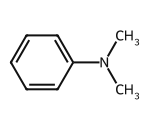
- B
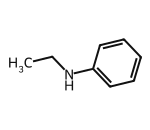
- C
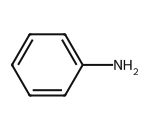
- D
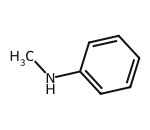
Show answer
Concept: Only primary amines (aliphatic or aromatic) give the carbylamine test: R–NH2 + CHCl3 + 3KOH (alc.) → R–NC (foul-smelling isocyanide) + 3KCl + 3H2O.
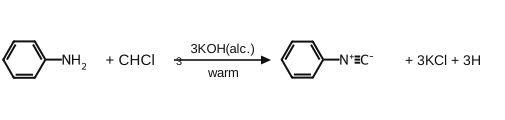
- (A) C6H5N(CH3)2 – tertiary amine ✘
- (B) C6H5NHC2H5 – secondary amine ✘
- (C) C6H5NH2 (aniline) – primary amine ✔ → phenyl isocyanide
- (D) C6H5NHCH3 – secondary amine ✘
Short trick: Carbylamine needs two H on N (–NH2) – look for the option with NH2.
Answer: (C) C6H5NH2 (aniline)
अवधारणा: केवल प्राथमिक ऐमीन (ऐलिफ़ैटिक या ऐरोमैटिक) कार्बिलऐमीन परीक्षण देती हैं: R–NH2 + CHCl3 + 3KOH (ऐल्कोहॉली) → R–NC (दुर्गंधयुक्त आइसोसायनाइड) + 3KCl + 3H2O।
- (A) C6H5N(CH3)2 – तृतीयक ऐमीन ✘
- (B) C6H5NHC2H5 – द्वितीयक ऐमीन ✘
- (C) C6H5NH2 (ऐनिलीन) – प्राथमिक ऐमीन ✔ → फ़ेनिल आइसोसायनाइड
- (D) C6H5NHCH3 – द्वितीयक ऐमीन ✘
शॉर्ट ट्रिक: कार्बिलऐमीन के लिए N पर दो H (–NH2) चाहिए – NH2 वाला विकल्प चुनें।
उत्तर: (C) C6H5NH2 (ऐनिलीन)
NEET UGChemistryAmines – carbylamine (isocyanide) testNEET UG 2020 · 13 Sep Shift 1
Q305.Paper chromatography is an example of
पेपर वर्णलेखन (Paper chromatography) किसका एक उदाहरण है?
- AThin layer chromatographyपतली परत वर्णलेखन
- BColumn chromatographyकॉलम वर्णलेखन
- CAdsorption chromatographyअधिशोषण वर्णलेखन
- DPartition chromatographyवितरण (पार्टीशन) वर्णलेखन
Show answer
Concept: Paper chromatography is a type of partition chromatography (NCERT): water held in the cellulose fibres of the paper is the stationary phase; the solvent moving up is the mobile phase.
- Components separate because they partition differently between the stationary water and the mobile solvent.
- (A) TLC and (B) column chromatography are adsorption chromatography techniques (silica/alumina as adsorbent).
- (C) Adsorption chromatography is based on differential adsorption, not partition.
Short trick: Paper = Partition; TLC & Column = Adsorption.
Answer: (D) Partition chromatography
अवधारणा: पेपर वर्णलेखन, वितरण (partition) वर्णलेखन का एक प्रकार है (NCERT): कागज़ के सेलुलोस तंतुओं में रुका जल स्थिर प्रावस्था है तथा ऊपर चढ़ता विलायक गतिशील प्रावस्था है।
- घटक इसलिए पृथक होते हैं क्योंकि स्थिर जल व गतिशील विलायक के बीच उनका वितरण भिन्न होता है।
- (A) पतली परत (TLC) तथा (B) कॉलम वर्णलेखन अधिशोषण वर्णलेखन की विधियाँ हैं (सिलिका/ऐलुमिना अधिशोषक)।
- (C) अधिशोषण वर्णलेखन विभेदी अधिशोषण पर आधारित है, वितरण पर नहीं।
शॉर्ट ट्रिक: Paper = Partition; TLC व कॉलम = अधिशोषण।
उत्तर: (D) वितरण (पार्टीशन) वर्णलेखन
NEET UGChemistryPurification of organic compounds – chromatographyNEET UG 2020 · 13 Sep Shift 1
Q306.A mixture of N2 and Ar gases in a cylinder contains 7 g of N2 and 8 g of Ar. If the total pressure of the mixture of the gases in the cylinder is 27 bar, the partial pressure of N2 is:
एक सिलिंडर में N2 तथा Ar गैसों के मिश्रण में 7 g N2 तथा 8 g Ar है। यदि सिलिंडर में गैसों के मिश्रण का कुल दाब 27 bar है, तो N2 का आंशिक दाब है:
- A15 bar
- B18 bar
- C9 bar
- D12 bar
Show answer
Concept: Dalton's law: , where is the mole fraction.
- mol; mol
- bar
Short trick: Ratio of moles 1/4 : 1/5 = 5 : 4 → split 27 bar as 15 : 12.
Answer: (A) 15 bar
अवधारणा: डाल्टन का नियम: , जहाँ मोल-अंश है।
- मोल; मोल
- bar
शॉर्ट ट्रिक: मोलों का अनुपात 1/4 : 1/5 = 5 : 4 → 27 bar को 15 : 12 में बाँटें।
उत्तर: (A) 15 bar
NEET UGChemistryStates of matter – Dalton's law of partial pressuresNEET UG 2020 · 13 Sep Shift 1
Q307.The number of protons, neutrons and electrons in , respectively, are:
में प्रोटॉनों, न्यूट्रॉनों तथा इलेक्ट्रॉनों की संख्या क्रमशः है:
- A71, 71 and 10471, 71 तथा 104
- B175, 104 and 71175, 104 तथा 71
- C71, 104 and 7171, 104 तथा 71
- D104, 71 and 71104, 71 तथा 71
Show answer
Concept: For (neutral atom): protons = electrons = Z; neutrons = A − Z.
- Z = 71 → protons = 71, electrons = 71
- Neutrons = 175 − 71 = 104
- Order asked: p, n, e = 71, 104, 71
Short trick: Protons and electrons are always equal in a neutral atom – only options with first and last numbers equal survive: (C).
Answer: (C) 71, 104 and 71
अवधारणा: (उदासीन परमाणु) के लिए: प्रोटॉन = इलेक्ट्रॉन = Z; न्यूट्रॉन = A − Z।
- Z = 71 → प्रोटॉन = 71, इलेक्ट्रॉन = 71
- न्यूट्रॉन = 175 − 71 = 104
- पूछा गया क्रम: p, n, e = 71, 104, 71
शॉर्ट ट्रिक: उदासीन परमाणु में प्रोटॉन व इलेक्ट्रॉन सदैव बराबर – पहली व अंतिम संख्या समान वाला विकल्प ही बचता है: (C)।
उत्तर: (C) 71, 104 तथा 71
NEET UGChemistryStructure of atom – subatomic particlesNEET UG 2020 · 13 Sep Shift 1
Q308.The rate constant for a first order reaction is . The time required to reduce 2.0 g of the reactant to 0.2 g is:
एक प्रथम कोटि अभिक्रिया का वेग स्थिरांक है। 2.0 g अभिकारक को 0.2 g तक घटाने में लगने वाला समय है:
- A500 s
- B1000 s
- C100 s
- D200 s
Show answer
Concept: First order: .
- , so
- s
Short trick: Reduction to 1/10 in first order takes ; and 2.303/4.606 = 1/2 → 0.5 × 10³ s.
Answer: (A) 500 s
अवधारणा: प्रथम कोटि: ।
- , अतः
- s
शॉर्ट ट्रिक: प्रथम कोटि में 1/10 तक घटने का समय ; तथा 2.303/4.606 = 1/2 → 0.5 × 10³ s।
उत्तर: (A) 500 s
NEET UGChemistryChemical kinetics – first order reactionNEET UG 2020 · 13 Sep Shift 1
Q309.Identify a molecule which does not exist.
उस अणु को पहचानिए जिसका अस्तित्व नहीं है।
- AC2
- BO2
- CHe2
- DLi2
Show answer
Concept: Bond order = ½ (Nb − Na); a molecule with bond order 0 does not exist.
- He2 (4 e−): σ1s2 σ*1s2 → B.O. = ½(2 − 2) = 0 → does not exist.
- Li2 = 1, C2 = 2, O2 = 2 → all exist.
Short trick: Homonuclear diatomics with 4 electrons (He2) or 8 electrons (Be2) have bond order 0 → do not exist.
Answer: (C) He2
अवधारणा: आबंध कोटि = ½ (Nb − Na); आबंध कोटि 0 वाले अणु का अस्तित्व नहीं होता।
- He2 (4 e−): σ1s2 σ*1s2 → आबंध कोटि = ½(2 − 2) = 0 → अस्तित्व नहीं।
- Li2 = 1, C2 = 2, O2 = 2 → सभी का अस्तित्व है।
शॉर्ट ट्रिक: He2 (4 e−) तथा Be2 (8 e−) जैसे द्विपरमाणुक की आबंध कोटि 0 → अस्तित्व नहीं।
उत्तर: (C) He2
NEET UGChemistryChemical bonding – molecular orbital theory (bond order)NEET UG 2020 · 13 Sep Shift 1
Q310.Hydrolysis of sucrose is given by the following reaction:
Sucrose + H2O ⇌ Glucose + Fructose
If the equilibrium constant () is at 300 K, the value of at the same temperature will be:
सुक्रोस का जल-अपघटन निम्नलिखित अभिक्रिया द्वारा दिया जाता है:
सुक्रोस + H2O ⇌ ग्लूकोस + फ्रक्टोस
यदि 300 K पर साम्य स्थिरांक () है, तो उसी ताप पर का मान होगा:
- A
- B
- C
- D
Show answer
Concept: .
- R = 8.314 J mol−1 K−1, T = 300 K, K =
- J mol−1
- K ≫ 1 ⇒ ΔG° must be negative: rules out (A) and (D); (B) has the wrong K.
Short trick: Large K → negative ΔG°: keep the minus sign and the same K.
Answer: (C)
अवधारणा: ।
- R = 8.314 J mol−1 K−1, T = 300 K, K =
- J mol−1
- K ≫ 1 ⇒ ΔG° ऋणात्मक होना चाहिए: (A) व (D) बाहर; (B) में K गलत है।
शॉर्ट ट्रिक: बड़ा K → ऋणात्मक ΔG°: ऋण चिह्न और वही K रखें।
उत्तर: (C)
NEET UGChemistryEquilibrium – relation between ΔG° and KNEET UG 2020 · 13 Sep Shift 1
Q311.For the reaction, 2Cl(g) → Cl2(g), the correct option is:
अभिक्रिया 2Cl(g) → Cl2(g) के लिए सही विकल्प है:
- A and तथा
- B and तथा
- C and तथा
- D and तथा
Show answer
Concept: Bond formation always releases energy; entropy falls when the number of gaseous particles decreases.
- Cl + Cl → Cl–Cl: a bond is formed → energy released → .
- 2 mol gas → 1 mol gas: fewer particles, less disorder → .
Short trick: Atoms combining = 'both negative' (ΔH < 0, ΔS < 0); the reverse (bond breaking) is 'both positive'.
Answer: (B) and
अवधारणा: आबंध बनने पर सदैव ऊर्जा मुक्त होती है; गैसीय कणों की संख्या घटने पर एन्ट्रॉपी घटती है।
- Cl + Cl → Cl–Cl: आबंध बनता है → ऊर्जा मुक्त → ।
- 2 मोल गैस → 1 मोल गैस: कम कण, कम अव्यवस्था → ।
शॉर्ट ट्रिक: परमाणुओं का संयोजन = 'दोनों ऋणात्मक' (ΔH < 0, ΔS < 0); उल्टा (आबंध टूटना) = 'दोनों धनात्मक'।
उत्तर: (B) तथा
NEET UGChemistryThermodynamics – signs of ΔH and ΔSNEET UG 2020 · 13 Sep Shift 1
Q312.Find out the solubility of Ni(OH)2 in 0.1 M NaOH. Given that the ionic product of Ni(OH)2 is .
0.1 M NaOH में Ni(OH)2 की विलेयता ज्ञात कीजिए। दिया है कि Ni(OH)2 का आयनिक गुणनफल है।
- A M
- B M
- C M
- D M
Show answer
Concept: Common ion effect: OH− from NaOH suppresses dissociation of Ni(OH)2; .
- Let solubility = s: [Ni2+] = s, [OH−] = 2s + 0.1 ≈ 0.1 M (s is tiny)
- M
Short trick: With a common ion: s = Ksp/[common ion]2 → just divide 2 × 10−15 by 10−2.
Answer: (C) M
अवधारणा: सम-आयन प्रभाव: NaOH से आए OH− आयन Ni(OH)2 के वियोजन को दबाते हैं; ।
- माना विलेयता = s: [Ni2+] = s, [OH−] = 2s + 0.1 ≈ 0.1 M (s बहुत छोटा है)
- M
शॉर्ट ट्रिक: सम-आयन होने पर: s = Ksp/[सम-आयन]2 → बस 2 × 10⁻¹⁵ को 10−2 से भाग दें।
उत्तर: (C) M
NEET UGChemistryIonic equilibrium – common ion effect on solubilityNEET UG 2020 · 13 Sep Shift 1
Q313.On electrolysis of dil. sulphuric acid using Platinum (Pt) electrode, the product obtained at anode will be:
प्लैटिनम (Pt) इलेक्ट्रोड का उपयोग करके तनु सल्फ़्यूरिक अम्ल के वैद्युत-अपघटन पर ऐनोड पर प्राप्त उत्पाद होगा:
- AH2S gasH2S गैस
- BSO2 gasSO2 गैस
- CHydrogen gasहाइड्रोजन गैस
- DOxygen gasऑक्सीजन गैस
Show answer
Concept: At the anode the species that is oxidised most easily is discharged. In dilute H2SO4, water is oxidised in preference to SO42−.
- Anode: 2H2O(l) → O2(g) + 4H+(aq) + 4e− (E° = 1.23 V)
- Cathode: 2H+(aq) + 2e− → H2(g) – so (C) is a cathode product.
- In concentrated H2SO4, S2O82− may form; H2S and SO2 are reduction products, never formed at an anode.
Short trick: Anode = oxidation = O2 for dilute acids; cathode gives H2.
Answer: (D) Oxygen gas
अवधारणा: ऐनोड पर वही स्पीशीज़ विसर्जित होती है जिसका ऑक्सीकरण सबसे आसानी से हो। तनु H2SO4 में SO42− की अपेक्षा जल का ऑक्सीकरण होता है।
- ऐनोड: 2H2O(l) → O2(g) + 4H+(aq) + 4e− (E° = 1.23 V)
- कैथोड: 2H+(aq) + 2e− → H2(g) – अतः (C) कैथोड का उत्पाद है।
- सांद्र H2SO4 में S2O82− बन सकता है; H2S व SO2 अपचयन उत्पाद हैं, ऐनोड पर कभी नहीं बनते।
शॉर्ट ट्रिक: ऐनोड = ऑक्सीकरण = तनु अम्लों में O2; कैथोड पर H2।
उत्तर: (D) ऑक्सीजन गैस
NEET UGChemistryElectrochemistry – products of electrolysisNEET UG 2020 · 13 Sep Shift 1
Q314.Which of the following is not correct about carbon monoxide?
कार्बन मोनोऑक्साइड के बारे में निम्नलिखित में से कौन-सा सही नहीं है?
- AThe carboxyhaemoglobin (haemoglobin bound to CO) is less stable than oxyhaemoglobin.कार्बॉक्सीहीमोग्लोबिन (CO से बँधा हीमोग्लोबिन), ऑक्सीहीमोग्लोबिन से कम स्थायी है।
- BIt is produced due to incomplete combustion.यह अपूर्ण दहन के कारण उत्पन्न होती है।
- CIt forms carboxyhaemoglobin.यह कार्बॉक्सीहीमोग्लोबिन बनाती है।
- DIt reduces oxygen carrying ability of blood.यह रक्त की ऑक्सीजन वहन क्षमता को घटाती है।
Show answer
Concept: NCERT: CO binds haemoglobin about 300 times more strongly than O2, forming carboxyhaemoglobin.
- Carboxyhaemoglobin is more stable than oxyhaemoglobin → statement (A) is wrong.
- (B) CO is formed by incomplete combustion of carbon fuels – true.
- (C) CO + Hb → carboxyhaemoglobin – true.
- (D) Blocked Hb cannot carry O2 → oxygen-carrying capacity falls (headache, suffocation) – true.
Short trick: CO is the '300× stronger' ligand – anything saying CO–Hb is weaker/less stable is false.
Answer: (A) The carboxyhaemoglobin is less stable than oxyhaemoglobin (false statement)
अवधारणा: NCERT: CO, हीमोग्लोबिन से O2 की तुलना में लगभग 300 गुना अधिक प्रबलता से बँधकर कार्बॉक्सीहीमोग्लोबिन बनाती है।
- कार्बॉक्सीहीमोग्लोबिन, ऑक्सीहीमोग्लोबिन से अधिक स्थायी है → कथन (A) गलत है।
- (B) कार्बन ईंधनों के अपूर्ण दहन से CO बनती है – सत्य।
- (C) CO + Hb → कार्बॉक्सीहीमोग्लोबिन – सत्य।
- (D) अवरुद्ध Hb, O2 नहीं ले जा सकता → ऑक्सीजन वहन क्षमता घटती है (सिरदर्द, दम घुटना) – सत्य।
शॉर्ट ट्रिक: CO '300 गुना प्रबल' लिगन्ड है – जो कथन CO–Hb को दुर्बल/कम स्थायी बताए, वह गलत है।
उत्तर: (A) कार्बॉक्सीहीमोग्लोबिन, ऑक्सीहीमोग्लोबिन से कम स्थायी है (गलत कथन)
NEET UGChemistryEnvironmental chemistry – carbon monoxideNEET UG 2020 · 13 Sep Shift 1
Q315.The number of Faradays (F) required to produce 20 g of calcium from molten CaCl2 (Atomic mass of Ca = 40 g mol−1) is:
गलित CaCl2 से 20 g कैल्सियम उत्पन्न करने के लिए आवश्यक फैराडे (F) की संख्या है (Ca का परमाणु द्रव्यमान = 40 g mol−1):
- A3
- B4
- C1
- D2
Show answer
Concept: Charge needed (in F) = moles of metal × electrons per ion.
- Ca2+ + 2e− → Ca: 1 mol Ca (40 g) needs 2 F
- 20 g Ca = mol
- Charge = 0.5 × 2 = 1 F
Short trick: F = (mass/atomic mass) × valency = (20/40) × 2 = 1.
Answer: (C) 1
अवधारणा: आवश्यक आवेश (F में) = धातु के मोल × प्रति आयन इलेक्ट्रॉन।
- Ca2+ + 2e− → Ca: 1 मोल Ca (40 g) के लिए 2 F
- 20 g Ca = मोल
- आवेश = 0.5 × 2 = 1 F
शॉर्ट ट्रिक: F = (द्रव्यमान/परमाणु द्रव्यमान) × संयोजकता = (20/40) × 2 = 1।
उत्तर: (C) 1
NEET UGChemistryElectrochemistry – Faraday's lawsNEET UG 2020 · 13 Sep Shift 1
Q316.Elimination reaction of 2-Bromo-pentane to form pent-2-ene is:
(a) β-Elimination reaction
(b) Follows Zaitsev rule
(c) Dehydrohalogenation reaction
(d) Dehydration reaction
2-ब्रोमोपेन्टेन की विलोपन अभिक्रिया द्वारा पेन्ट-2-ईन बनना है:
(a) β-विलोपन अभिक्रिया
(b) ज़ैतसेव (सेत्ज़ेफ़) नियम का पालन करती है
(c) विहाइड्रोहैलोजनीकरण अभिक्रिया
(d) निर्जलीकरण अभिक्रिया
- A(b), (c), (d)
- B(a), (b), (d)
- C(a), (b), (c)
- D(a), (c), (d)
Show answer
Concept: Alc. KOH removes H from the β-carbon and Br from the α-carbon of an alkyl halide (β-elimination / dehydrohalogenation); the more substituted alkene is the major product (Zaitsev).
- CH3CH(Br)CH2CH2CH3 → CH3CH=CHCH2CH3 + HBr
- (a) H is lost from a β-carbon → β-elimination ✔
- (b) pent-2-ene (disubstituted) is preferred over pent-1-ene → Zaitsev ✔
- (c) H and Br are removed → dehydrohalogenation ✔
- (d) Dehydration means loss of H2O from an alcohol ✘
Short trick: Alkyl halide → loses HX (dehydrohalogenation); alcohol → loses H2O (dehydration).
Answer: (C) (a), (b), (c)
अवधारणा: ऐल्कोहॉली KOH, ऐल्किल हैलाइड के β-कार्बन से H तथा α-कार्बन से Br हटाता है (β-विलोपन / विहाइड्रोहैलोजनीकरण); अधिक प्रतिस्थापित ऐल्कीन मुख्य उत्पाद होती है (ज़ैतसेव)।
- CH3CH(Br)CH2CH2CH3 → CH3CH=CHCH2CH3 + HBr
- (a) H, β-कार्बन से निकलता है → β-विलोपन ✔
- (b) पेन्ट-2-ईन (द्विप्रतिस्थापित), पेन्ट-1-ईन से अधिक बनती है → ज़ैतसेव ✔
- (c) H तथा Br निकलते हैं → विहाइड्रोहैलोजनीकरण ✔
- (d) निर्जलीकरण का अर्थ है ऐल्कोहॉल से H2O का निकलना ✘
शॉर्ट ट्रिक: ऐल्किल हैलाइड → HX निकलता है (विहाइड्रोहैलोजनीकरण); ऐल्कोहॉल → H2O निकलता है (निर्जलीकरण)।
उत्तर: (C) (a), (b), (c)
NEET UGChemistryHaloalkanes – β-elimination (Saytzeff rule)NEET UG 2020 · 13 Sep Shift 1
Q317.What is the change in oxidation number of carbon in the following reaction?
CH4(g) + 4Cl2(g) → CCl4(l) + 4HCl(g)
निम्नलिखित अभिक्रिया में कार्बन की ऑक्सीकरण संख्या में क्या परिवर्तन होता है?
CH4(g) + 4Cl2(g) → CCl4(l) + 4HCl(g)
- A−4 to +4−4 से +4
- B0 to −40 से −4
- C+4 to +4+4 से +4
- D0 to +40 से +4
Show answer
Concept: In a covalent compound, the more electronegative atom is given the negative oxidation number; sum of oxidation numbers = 0 for a neutral molecule.
- CH4: x + 4(+1) = 0 ⇒ x = −4
- CCl4: x + 4(−1) = 0 ⇒ x = +4
- Change: −4 → +4 (carbon is oxidised by 8 units).
Short trick: Replacing each H (+1) by Cl (−1) raises C by 2; four replacements → −4 + 8 = +4.
Answer: (A) −4 to +4
अवधारणा: सहसंयोजी यौगिक में अधिक विद्युतऋणी परमाणु को ऋणात्मक ऑक्सीकरण संख्या दी जाती है; उदासीन अणु में ऑक्सीकरण संख्याओं का योग = 0।
- CH4: x + 4(+1) = 0 ⇒ x = −4
- CCl4: x + 4(−1) = 0 ⇒ x = +4
- परिवर्तन: −4 → +4 (कार्बन का 8 इकाई ऑक्सीकरण)।
शॉर्ट ट्रिक: प्रत्येक H (+1) को Cl (−1) से बदलने पर C में 2 की वृद्धि; चार बार → −4 + 8 = +4।
उत्तर: (A) −4 से +4
NEET UGChemistryRedox reactions – oxidation numberNEET UG 2020 · 13 Sep Shift 1
Q318.Which of the following alkane cannot be made in good yield by Wurtz reaction?
निम्नलिखित में से किस ऐल्केन को वुर्ट्ज़ अभिक्रिया द्वारा अच्छी लब्धि में नहीं बनाया जा सकता?
- An-Heptanen-हेप्टेन
- Bn-Butanen-ब्यूटेन
- Cn-Hexanen-हेक्सेन
- D2,3-Dimethylbutane2,3-डाइमेथिलब्यूटेन
Show answer
Concept: Wurtz reaction 2R–X + 2Na → R–R + 2NaX gives good yield only for symmetrical alkanes (even number of C, R–R). Two different halides give a mixture of three alkanes.
- n-Butane = C2H5–C2H5 (from ethyl bromide) ✔
- n-Hexane = C3H7–C3H7 (from n-propyl bromide) ✔
- 2,3-Dimethylbutane = (CH3)2CH–CH(CH3)2 (from isopropyl bromide) ✔
- n-Heptane (C7, odd) needs C3H7X + C4H9X → mixture of hexane, heptane, octane → poor yield ✘
Short trick: Odd number of carbons ⇒ unsymmetrical ⇒ not by Wurtz. Spot the odd-carbon alkane.
Answer: (A) n-Heptane
अवधारणा: वुर्ट्ज़ अभिक्रिया 2R–X + 2Na → R–R + 2NaX केवल सममित ऐल्केनों (सम संख्या में C, R–R) के लिए अच्छी लब्धि देती है। दो भिन्न हैलाइड लेने पर तीन ऐल्केनों का मिश्रण बनता है।
- n-ब्यूटेन = C2H5–C2H5 (एथिल ब्रोमाइड से) ✔
- n-हेक्सेन = C3H7–C3H7 (n-प्रोपिल ब्रोमाइड से) ✔
- 2,3-डाइमेथिलब्यूटेन = (CH3)2CH–CH(CH3)2 (आइसोप्रोपिल ब्रोमाइड से) ✔
- n-हेप्टेन (C7, विषम) के लिए C3H7X + C4H9X चाहिए → हेक्सेन, हेप्टेन, ऑक्टेन का मिश्रण → कम लब्धि ✘
शॉर्ट ट्रिक: विषम संख्या में कार्बन ⇒ असममित ⇒ वुर्ट्ज़ से नहीं। विषम-कार्बन वाला ऐल्केन पहचानें।
उत्तर: (A) n-हेप्टेन
NEET UGChemistryHydrocarbons – Wurtz reactionNEET UG 2020 · 13 Sep Shift 1
Q319.Sucrose on hydrolysis gives:
सुक्रोस के जल-अपघटन से प्राप्त होता है:
- Aα-D-Glucose + β-D-Fructoseα-D-ग्लूकोस + β-D-फ्रक्टोस
- Bα-D-Fructose + β-D-Fructoseα-D-फ्रक्टोस + β-D-फ्रक्टोस
- Cβ-D-Glucose + α-D-Fructoseβ-D-ग्लूकोस + α-D-फ्रक्टोस
- Dα-D-Glucose + β-D-Glucoseα-D-ग्लूकोस + β-D-ग्लूकोस
Show answer
Concept: NCERT: sucrose is a non-reducing disaccharide in which C1 of α-D-glucose is linked to C2 of β-D-fructose (glycosidic bond between both reducing groups).
- Hydrolysis (dil. acid or invertase): C12H22O11 + H2O → C6H12O6 (α-D-glucose) + C6H12O6 (β-D-fructose)
- (B) and (D) give two units of the same sugar – that is not sucrose (D resembles a glucose–glucose disaccharide).
- (C) has the anomers swapped.
Short trick: Sucrose = α-glucose + β-fructose ("alphabetical": α before β, G before F). The mixture is called invert sugar.
Answer: (A) α-D-Glucose + β-D-Fructose
अवधारणा: NCERT: सुक्रोस एक अनपचायी डाइसैकेराइड है जिसमें α-D-ग्लूकोस का C1, β-D-फ्रक्टोस के C2 से जुड़ा होता है (दोनों अपचायी समूहों के बीच ग्लाइकोसाइडी बंध)।
- जल-अपघटन (तनु अम्ल या इन्वर्टेज़): C12H22O11 + H2O → C6H12O6 (α-D-ग्लूकोस) + C6H12O6 (β-D-फ्रक्टोस)
- (B) तथा (D) एक ही शर्करा की दो इकाइयाँ देते हैं – यह सुक्रोस नहीं है ((D) ग्लूकोस–ग्लूकोस डाइसैकेराइड जैसा है)।
- (C) में ऐनोमर उलट दिए गए हैं।
शॉर्ट ट्रिक: सुक्रोस = α-ग्लूकोस + β-फ्रक्टोस ("वर्णक्रम": α पहले β, G पहले F)। इस मिश्रण को अपवृत शर्करा (invert sugar) कहते हैं।
उत्तर: (A) α-D-ग्लूकोस + β-D-फ्रक्टोस
NEET UGChemistryBiomolecules – carbohydrates (sucrose)NEET UG 2020 · 13 Sep Shift 1
Q320.Identify the incorrect statement.
गलत कथन को पहचानिए।
- AInterstitial compounds are those that are formed when small atoms like H, C or N are trapped inside the crystal lattices of metals.अंतराकाशी यौगिक वे हैं जो H, C या N जैसे छोटे परमाणुओं के धातुओं के क्रिस्टल जालक के अंदर फँस जाने पर बनते हैं।
- BThe oxidation states of chromium in CrO42− and Cr2O72− are not the same.CrO42− तथा Cr2O72− में क्रोमियम की ऑक्सीकरण अवस्थाएँ समान नहीं हैं।
- CCr2+(d4) is a stronger reducing agent than Fe2+(d6) in water.जल में Cr2+(d4), Fe2+(d6) से अधिक प्रबल अपचायक है।
- DThe transition metals and their compounds are known for their catalytic activity due to their ability to adopt multiple oxidation states and to form complexes.संक्रमण धातुएँ तथा उनके यौगिक अनेक ऑक्सीकरण अवस्थाएँ ग्रहण करने तथा संकुल बनाने की क्षमता के कारण अपनी उत्प्रेरकीय सक्रियता के लिए जाने जाते हैं।
Show answer
Concept: Find the oxidation state of Cr in chromate and dichromate; check the other NCERT statements.
- CrO42−: x + 4(−2) = −2 ⇒ x = +6
- Cr2O72−: 2x + 7(−2) = −2 ⇒ x = +6
- Both are +6 (the chromate ⇌ dichromate change is only a pH-dependent acid–base change) ⇒ statement (B) is incorrect.
- (A) correct – NCERT definition of interstitial compounds (e.g., TiC, Fe3H).
- (C) correct – Cr2+ → Cr3+ gives stable d3 (half-filled t2g); E°(Cr3+/Cr2+) = −0.41 V vs E°(Fe3+/Fe2+) = +0.77 V.
- (D) correct – variable oxidation states and complex formation make them good catalysts.
Short trick: Chromate (yellow) ⇌ dichromate (orange) is NOT redox – both are Cr(VI).
Answer: (B) Oxidation states of Cr in CrO42− and Cr2O72− are not the same (false – both +6)
अवधारणा: क्रोमेट तथा डाइक्रोमेट में Cr की ऑक्सीकरण अवस्था ज्ञात करें; अन्य NCERT कथनों की जाँच करें।
- CrO42−: x + 4(−2) = −2 ⇒ x = +6
- Cr2O72−: 2x + 7(−2) = −2 ⇒ x = +6
- दोनों +6 हैं (क्रोमेट ⇌ डाइक्रोमेट परिवर्तन केवल pH पर निर्भर अम्ल–क्षार परिवर्तन है) ⇒ कथन (B) गलत है।
- (A) सही – अंतराकाशी यौगिकों की NCERT परिभाषा (जैसे TiC, Fe3H)।
- (C) सही – Cr2+ → Cr3+ से स्थायी d3 (अर्धपूरित t2g) बनता है; E°(Cr3+/Cr2+) = −0.41 V जबकि E°(Fe3+/Fe2+) = +0.77 V।
- (D) सही – परिवर्ती ऑक्सीकरण अवस्थाएँ तथा संकुल निर्माण इन्हें अच्छा उत्प्रेरक बनाते हैं।
शॉर्ट ट्रिक: क्रोमेट (पीला) ⇌ डाइक्रोमेट (नारंगी) अपचयोपचय नहीं है – दोनों Cr(VI) हैं।
उत्तर: (B) CrO42− तथा Cr2O72− में Cr की ऑक्सीकरण अवस्थाएँ समान नहीं हैं (गलत – दोनों +6)
NEET UGChemistryd- and f-Block elements – properties of transition metalsNEET UG 2020 · 13 Sep Shift 1

