NEET UG · 2,240 questions

NEET UG 2015, 2016, 2017, 2018, 2019, 2020, 2021, 2022, 2023, 2024, 2025, 2026 PYQs

Real previous year questions, subject-wise. Try the question, then open the answer and the explanation in Hindi & English – free, no login.

Courses – airGurukul

560 questions in Chemistry.

Q361.
Conjugate base for Brönsted acids H2O and HF are :
ब्रॉन्स्टेड अम्लों H2O तथा HF के संयुग्मी क्षारक हैं :
  1. AOH– and H2F+, respectivelyक्रमशः OH– तथा H2F+
  2. BH3O+ and F–, respectivelyक्रमशः H3O+ तथा F–
  3. COH– and F–, respectivelyक्रमशः OH– तथा F–
  4. DH3O+ and H2F+, respectivelyक्रमशः H3O+ तथा H2F+
Show answer

Concept: Conjugate base = acid minus one H+.

  1. H2O − H+ → OH−; HF − H+ → F−.
  2. H3O+ and H2F+ are formed by ADDING H+ – they are conjugate acids, so (A), (B), (D) are wrong.

Short trick: Base = "remove H+" → charge drops by one.

Answer: (C) OH– and F–, respectively

अवधारणा: संयुग्मी क्षारक = अम्ल में से एक H+ कम।

  1. H2O − H+ → OH−; HF − H+ → F−।
  2. H3O+ तथा H2F+ H+ जोड़ने से बनते हैं – ये संयुग्मी अम्ल हैं, अतः (A), (B), (D) गलत हैं।

शॉर्ट ट्रिक: क्षारक = "H+ हटाइए" → आवेश एक कम हो जाता है।

उत्तर: (C) क्रमशः OH– तथा F–
NEET UGChemistryIonic equilibrium – conjugate acid–base pairsNEET UG 2019 · 5 May Shift 1
Q362.
Which mixture of the solutions will lead to the formation of negatively charged colloidal [AgI]I– sol. ?
विलयनों का कौन-सा मिश्रण ऋणावेशित कोलॉइडी [AgI]I– सॉल के निर्माण की ओर ले जाएगा?
  1. A50 mL of 1 M AgNO3 + 50 mL of 1.5 M KI50 mL 1 M AgNO3 + 50 mL 1.5 M KI
  2. B50 mL of 1 M AgNO3 + 50 mL of 2 M KI50 mL 1 M AgNO3 + 50 mL 2 M KI
  3. C50 mL of 2 M AgNO3 + 50 mL of 1.5 M KI50 mL 2 M AgNO3 + 50 mL 1.5 M KI
  4. D50 mL of 0.1 M AgNO3 + 50 mL of 0.1 M KI50 mL 0.1 M AgNO3 + 50 mL 0.1 M KI
Show answer

Concept: AgI adsorbs the ion common to it that is present in EXCESS: excess I− → AgI/I− (negative sol); excess Ag+ → AgI/Ag+ (positive sol).

  1. (A) Ag+ = 50 mmol, I− = 75 mmol → I− in excess → negative sol ✓.
  2. (B) Ag+ = 50 mmol, I− = 100 mmol → I− in excess → negative sol ✓.
  3. (C) Ag+ = 100 mmol, I− = 75 mmol → Ag+ in excess → positive sol ✗.
  4. (D) 5 mmol each → no excess ion → no charged sol (precipitate) ✗.
  5. As printed, two options, (A) and (B), are equally correct.

Short trick: Compare millimoles (M × mL): whichever ion is larger decides the sign of the sol.

Answer: Bonus – both (A) and (B) give the negatively charged AgI/I− sol, so the question has two correct options.

अवधारणा: AgI उस उभयनिष्ठ आयन का अधिशोषण करता है जो अधिकता में उपस्थित हो: I− अधिक → AgI/I− (ऋणावेशित सॉल); Ag+ अधिक → AgI/Ag+ (धनावेशित सॉल)।

  1. (A) Ag+ = 50 mmol, I− = 75 mmol → I− अधिक → ऋणावेशित सॉल ✓।
  2. (B) Ag+ = 50 mmol, I− = 100 mmol → I− अधिक → ऋणावेशित सॉल ✓।
  3. (C) Ag+ = 100 mmol, I− = 75 mmol → Ag+ अधिक → धनावेशित सॉल ✗।
  4. (D) प्रत्येक 5 mmol → कोई आयन अधिक नहीं → आवेशित सॉल नहीं (अवक्षेप) ✗।
  5. जैसा मुद्रित है, दो विकल्प (A) तथा (B) समान रूप से सही हैं।

शॉर्ट ट्रिक: मिलीमोल (M × mL) की तुलना कीजिए: जो आयन अधिक हो वही सॉल का आवेश तय करता है।

उत्तर: बोनस – (A) तथा (B) दोनों से ऋणावेशित AgI/I− सॉल बनता है, अतः प्रश्न के दो सही विकल्प हैं।

NEET UGChemistrySurface chemistry – charge on colloidsNEET UG 2019 · 5 May Shift 1
Q363.
Among the following, the narrow spectrum antibiotic is :
निम्नलिखित में से संकीर्ण स्पेक्ट्रम (narrow spectrum) प्रतिजैविक है :
  1. APenicillin Gपेनिसिलिन G
  2. BAmpicillinऐम्पिसिलिन
  3. CAmoxycillinऐमॉक्सीसिलिन
  4. DChloramphenicolक्लोरैम्फ़ेनिकॉल
Show answer

Concept: NCERT: Penicillin G has a narrow spectrum; ampicillin and amoxycillin (synthetic modifications of penicillin) are broad spectrum; chloramphenicol is broad spectrum.

  1. Penicillin G acts mainly on Gram-positive bacteria → narrow spectrum ✓.
  2. Ampicillin and amoxycillin also kill many Gram-negative bacteria → broad spectrum ✗.
  3. Chloramphenicol acts on Gram-positive and Gram-negative bacteria (typhoid, meningitis…) → broad spectrum ✗.

Short trick: "Penicillin G is the G-rade-narrow one; its -cillin cousins went broad".

Answer: (A) Penicillin G

अवधारणा: NCERT: पेनिसिलिन G संकीर्ण स्पेक्ट्रम है; ऐम्पिसिलिन तथा ऐमॉक्सीसिलिन (पेनिसिलिन के संश्लेषित रूपांतर) विस्तृत स्पेक्ट्रम हैं; क्लोरैम्फ़ेनिकॉल विस्तृत स्पेक्ट्रम है।

  1. पेनिसिलिन G मुख्यतः ग्राम-धनात्मक जीवाणुओं पर कार्य करता है → संकीर्ण स्पेक्ट्रम ✓।
  2. ऐम्पिसिलिन तथा ऐमॉक्सीसिलिन अनेक ग्राम-ऋणात्मक जीवाणुओं को भी मारते हैं → विस्तृत स्पेक्ट्रम ✗।
  3. क्लोरैम्फ़ेनिकॉल ग्राम-धनात्मक तथा ग्राम-ऋणात्मक दोनों पर कार्य करता है (टाइफ़ॉइड, मेनिनजाइटिस…) → विस्तृत स्पेक्ट्रम ✗।

शॉर्ट ट्रिक: "मूल पेनिसिलिन G संकीर्ण; उसके -सिलिन संबंधी (ऐम्पि-, ऐमॉक्सी-) विस्तृत"।

उत्तर: (A) पेनिसिलिन G

NEET UGChemistryChemistry in everyday life – antibioticsNEET UG 2019 · 5 May Shift 1
Q364.
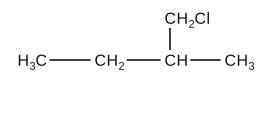
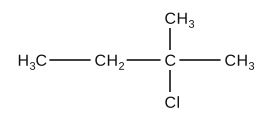
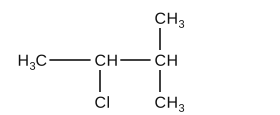
An alkene "A" on reaction with O3 and Zn–H2O gives propanone and ethanal in equimolar ratio. Addition of HCl to alkene "A" gives "B" as the major product. The structure of product "B" is:
एक ऐल्कीन "A", O3 तथा Zn–H2O से अभिक्रिया करके सममोलर अनुपात में प्रोपेनोन तथा एथेनैल देती है। ऐल्कीन "A" में HCl के योग से मुख्य उत्पाद "B" बनता है। उत्पाद "B" की संरचना है:
  1. A
  2. B
  3. C
  4. D
Show answer

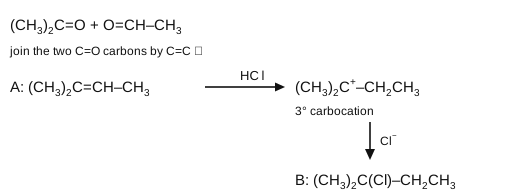
Concept: Reverse ozonolysis: join the two carbonyl carbons by a C=C; then add HCl by Markovnikov’s rule via the more stable carbocation.

  1. (CH3)2C=O + O=CH–CH3 → A = (CH3)2C=CH–CH3 (2-methylbut-2-ene).
  2. H+ adds to =CH– so that the 3° carbocation (CH3)2C+–CH2CH3 forms.
  3. Cl− attacks it → B = (CH3)2C(Cl)–CH2–CH3 (2-chloro-2-methylbutane) = (C).
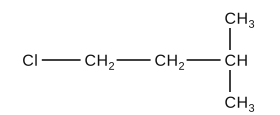
  4. (A) and (B) are primary chlorides (anti-Markovnikov products); (D) is the secondary chloride from the less stable 2° cation.

Short trick: Markovnikov → Cl goes to the carbon that already has more alkyl groups (fewer H) – here the carbon bearing two CH3.

Answer: (C) 2-chloro-2-methylbutane

अवधारणा: विपरीत ओज़ोनी-अपघटन: दोनों कार्बोनिल कार्बनों को C=C से जोड़िए; फिर मार्कोनीकॉफ़ नियम से अधिक स्थायी कार्बधनायन द्वारा HCl जोड़िए।

  1. (CH3)2C=O + O=CH–CH3 → A = (CH3)2C=CH–CH3 (2-मेथिलब्यूट-2-ईन)।
  2. H+ =CH– पर जुड़ता है ताकि 3° कार्बधनायन (CH3)2C+–CH2CH3 बने।
  3. Cl− इस पर आक्रमण करता है → B = (CH3)2C(Cl)–CH2–CH3 (2-क्लोरो-2-मेथिलब्यूटेन) = (C)।
  4. (A) तथा (B) प्राथमिक क्लोराइड हैं (प्रति-मार्कोनीकॉफ़ उत्पाद); (D) कम स्थायी 2° धनायन से बना द्वितीयक क्लोराइड है।

शॉर्ट ट्रिक: मार्कोनीकॉफ़ → Cl उस कार्बन पर जाता है जिस पर पहले से अधिक ऐल्किल समूह (कम H) हैं – यहाँ दो CH3 वाला कार्बन।

उत्तर: (C) 2-क्लोरो-2-मेथिलब्यूटेन

NEET UGChemistryHydrocarbons – ozonolysis and Markovnikov additionNEET UG 2019 · 5 May Shift 1
Q365.
What is the correct electronic configuration of the central atom in K4[Fe(CN)6] based on crystal field theory?
क्रिस्टल क्षेत्र सिद्धांत के आधार पर K4[Fe(CN)6] में केंद्रीय परमाणु का सही इलेक्ट्रॉनिक विन्यास क्या है?
  1. At2g4eg2
  2. Bt2g6eg0
  3. Ce3t23
  4. De4t22
Show answer

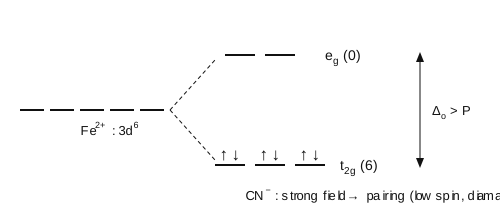
Concept: Octahedral complex; CN− is a strong-field ligand, so Δo > pairing energy P → electrons pair in t2g (low spin).

  1. K4[Fe(CN)6]: x − 6 = −4 → Fe2+, 3d6.
  2. All 6 electrons enter t2g → t2g6eg0 (diamagnetic).
  3. (A) is the high-spin (weak field) arrangement; (C) and (D) use e/t2 labels, which belong to tetrahedral splitting – not applicable to this octahedral complex.

Short trick: Cyanide always pairs: [Fe(CN)6]4− is diamagnetic → all six d electrons paired in t2g.

Answer: (B) t2g6eg0

अवधारणा: अष्टफलकीय संकुल; CN− प्रबल क्षेत्र लिगन्ड है, अतः Δo > युग्मन ऊर्जा P → इलेक्ट्रॉन t2g में युग्मित होते हैं (निम्न चक्रण)।

  1. K4[Fe(CN)6]: x − 6 = −4 → Fe2+, 3d6।
  2. सभी 6 इलेक्ट्रॉन t2g में जाते हैं → t2g6eg0 (प्रतिचुंबकीय)।
  3. (A) उच्च चक्रण (दुर्बल क्षेत्र) व्यवस्था है; (C) तथा (D) में e/t2 संकेत चतुष्फलकीय विपाटन के हैं – इस अष्टफलकीय संकुल पर लागू नहीं।

शॉर्ट ट्रिक: सायनाइड सदैव युग्मन कराता है: [Fe(CN)6]4− प्रतिचुंबकीय है → सभी छह d इलेक्ट्रॉन t2g में युग्मित।

उत्तर: (B) t2g6eg0

NEET UGChemistryCoordination compounds – crystal field theoryNEET UG 2019 · 5 May Shift 1
Q366.
Identify the incorrect statement related to PCl5 from the following:
निम्नलिखित में से PCl5 से संबंधित गलत कथन पहचानिए:
  1. AThree equatorial P–Cl bonds make an angle of 120° with each otherतीन विषुवतीय P–Cl आबंध परस्पर 120° का कोण बनाते हैं
  2. BTwo axial P–Cl bonds make an angle of 180° with each otherदो अक्षीय P–Cl आबंध परस्पर 180° का कोण बनाते हैं
  3. CAxial P–Cl bonds are longer than equatorial P–Cl bondsअक्षीय P–Cl आबंध विषुवतीय P–Cl आबंधों से लंबे होते हैं
  4. DPCl5 molecule is non-reactivePCl5 अणु अभिक्रियाशील नहीं है
Show answer

Concept: PCl5: sp³d hybridised P, trigonal bipyramidal.

  1. (A) Equatorial Cl’s are 120° apart – correct.
  2. (B) Axial Cl’s are 180° apart – correct.
  3. (C) Axial bonds suffer more repulsion from three equatorial bond pairs, so they are longer (≈ 240 pm vs 202 pm) – correct.
  4. (D) Because the axial bonds are longer and weaker, PCl5 is very reactive (PCl5 → PCl3 + Cl2, chlorinating agent) → statement is incorrect ✓.

Short trick: Long weak axial bonds ⇒ reactive molecule – (C) being true directly makes (D) false.

Answer: (D) PCl5 molecule is non-reactive

अवधारणा: PCl5: P का sp³d संकरण, त्रिकोणीय द्विपिरैमिडी।

  1. (A) विषुवतीय Cl परस्पर 120° पर हैं – सही।
  2. (B) अक्षीय Cl परस्पर 180° पर हैं – सही।
  3. (C) अक्षीय आबंध तीन विषुवतीय आबंध युग्मों से अधिक प्रतिकर्षण झेलते हैं, अतः लंबे होते हैं (≈ 240 pm बनाम 202 pm) – सही।
  4. (D) अक्षीय आबंध लंबे तथा दुर्बल होने के कारण PCl5 अत्यंत अभिक्रियाशील है (PCl5 → PCl3 + Cl2, क्लोरीनीकारक) → कथन गलत है ✓।

शॉर्ट ट्रिक: लंबे दुर्बल अक्षीय आबंध ⇒ अभिक्रियाशील अणु – (C) सत्य होने से ही (D) असत्य हो जाता है।

उत्तर: (D) PCl5 अणु अभिक्रियाशील नहीं है

NEET UGChemistryChemical bonding – structure of PCl5NEET UG 2019 · 5 May Shift 1
Q367.
Which will make basic buffer?
कौन-सा क्षारीय बफ़र बनाएगा?
  1. A50 mL of 0.1 M NaOH + 25 mL of 0.1 M CH3COOH50 mL 0.1 M NaOH + 25 mL 0.1 M CH3COOH
  2. B100 mL of 0.1 M CH3COOH + 100 mL of 0.1 M NaOH100 mL 0.1 M CH3COOH + 100 mL 0.1 M NaOH
  3. C100 mL of 0.1 M HCl + 200 mL of 0.1 M NH4OH100 mL 0.1 M HCl + 200 mL 0.1 M NH4OH
  4. D100 mL of 0.1 M HCl + 100 mL of 0.1 M NaOH100 mL 0.1 M HCl + 100 mL 0.1 M NaOH
Show answer

Concept: A basic buffer = weak base + its salt with a strong acid (e.g. NH4OH + NH4Cl). It can be made by partly neutralising a weak base with a strong acid.

  1. (C) HCl = 10 mmol, NH4OH = 20 mmol → 10 mmol NH4Cl formed + 10 mmol NH4OH left → basic buffer ✓.
  2. (A) NaOH (5 mmol) in excess over CH3COOH (2.5 mmol) → strong base + salt, not a buffer ✗.
  3. (B) 10 mmol each → only CH3COONa (salt hydrolysis), no buffer ✗.
  4. (D) strong acid + strong base, exactly neutralised → NaCl solution ✗.

Short trick: Basic buffer needs a WEAK base left over – only (C) has a weak base in excess.

Answer: (C) 100 mL of 0.1 M HCl + 200 mL of 0.1 M NH4OH

अवधारणा: क्षारीय बफ़र = दुर्बल क्षारक + प्रबल अम्ल के साथ उसका लवण (जैसे NH4OH + NH4Cl)। इसे दुर्बल क्षारक को प्रबल अम्ल से आंशिक रूप से उदासीन करके बनाया जा सकता है।

  1. (C) HCl = 10 mmol, NH4OH = 20 mmol → 10 mmol NH4Cl बनता है + 10 mmol NH4OH शेष → क्षारीय बफ़र ✓।
  2. (A) NaOH (5 mmol), CH3COOH (2.5 mmol) से अधिक → प्रबल क्षारक + लवण, बफ़र नहीं ✗।
  3. (B) प्रत्येक 10 mmol → केवल CH3COONa (लवण जल-अपघटन), बफ़र नहीं ✗।
  4. (D) प्रबल अम्ल + प्रबल क्षारक, पूर्ण उदासीन → NaCl विलयन ✗।

शॉर्ट ट्रिक: क्षारीय बफ़र के लिए दुर्बल क्षारक शेष रहना चाहिए – केवल (C) में दुर्बल क्षारक अधिकता में है।

उत्तर: (C) 100 mL 0.1 M HCl + 200 mL 0.1 M NH4OH

NEET UGChemistryIonic equilibrium – buffer solutionsNEET UG 2019 · 5 May Shift 1
Q368.
The major product of the following reaction is:
निम्नलिखित अभिक्रिया का मुख्य उत्पाद है:
  1. A
  2. B
  3. C
  4. D
Show answer

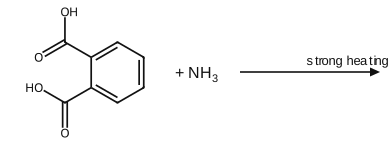
Concept: A dicarboxylic acid with NH3 first forms the ammonium salt/amide; strong heating removes water twice and closes the five-membered imide ring.

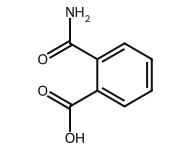
  1. Phthalic acid + NH3 → ammonium phthalate → (−H2O) phthalamic acid (A).
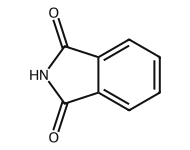
  2. On strong heating, the –CONH2 attacks the neighbouring –COOH, losing a second H2O → phthalimide (B).
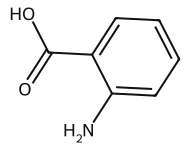
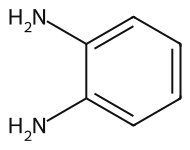
  3. (A) is only the intermediate (it cyclises on strong heating); (C) anthranilic acid needs Hofmann degradation (Br2/NaOH); (D) o-phenylenediamine cannot form.

Short trick: Phthalic acid + NH3 + strong heat = phthalimide – the starting material of Gabriel synthesis.

Answer: (B) Phthalimide

अवधारणा: NH3 के साथ डाइकार्बोक्सिलिक अम्ल पहले अमोनियम लवण/ऐमाइड बनाता है; प्रबल गर्म करने पर दो बार जल निकलता है तथा पाँच-सदस्यीय इमाइड वलय बंद होता है।

  1. थैलिक अम्ल + NH3 → अमोनियम थैलेट → (−H2O) थैलैमिक अम्ल (A)।
  2. प्रबल गर्म करने पर –CONH2 पड़ोसी –COOH पर आक्रमण करता है, दूसरा H2O निकलता है → थैलिमाइड (B)।
  3. (A) केवल मध्यवर्ती है (प्रबल गर्म करने पर वलय बना लेता है); (C) ऐन्थ्रानिलिक अम्ल के लिए हॉफ़मान निम्नीकरण (Br2/NaOH) चाहिए; (D) o-फ़ेनिलीनडाइऐमीन नहीं बन सकता।

शॉर्ट ट्रिक: थैलिक अम्ल + NH3 + प्रबल ताप = थैलिमाइड – गैब्रिएल संश्लेषण का प्रारंभिक पदार्थ।

उत्तर: (B) थैलिमाइड

NEET UGChemistryAmines – phthalimide formationNEET UG 2019 · 5 May Shift 1
Q369.
Match the Xenon compounds in Column-I with its structure in Column-II and assign the correct code:
Column-IColumn-II
(a) XeF4(i) pyramidal
(b) XeF6(ii) square planar
(c) XeOF4(iii) distorted octahedral
(d) XeO3(iv) square pyramidal
Code:
स्तंभ-I के ज़ीनॉन यौगिकों का स्तंभ-II में उनकी संरचना से मिलान कीजिए तथा सही कूट चुनिए:
स्तंभ-Iस्तंभ-II
(a) XeF4(i) पिरैमिडी
(b) XeF6(ii) वर्ग समतली
(c) XeOF4(iii) विकृत अष्टफलकीय
(d) XeO3(iv) वर्ग पिरैमिडी
कूट:
  1. A(a)-(i), (b)-(ii), (c)-(iii), (d)-(iv)
  2. B(a)-(ii), (b)-(iii), (c)-(iv), (d)-(i)
  3. C(a)-(ii), (b)-(iii), (c)-(i), (d)-(iv)
  4. D(a)-(iii), (b)-(iv), (c)-(i), (d)-(ii)
Show answer

Concept: VSEPR: count bond pairs (bp) and lone pairs (lp) on Xe.

  1. (a) XeF4: 4 bp + 2 lp (sp³d²) → square planar (ii).
  2. (b) XeF6: 6 bp + 1 lp (sp³d³) → distorted octahedral (iii).
  3. (c) XeOF4: 5 σ bp + 1 lp (sp³d²) → square pyramidal (iv).
  4. (d) XeO3: 3 σ bp + 1 lp (sp³) → pyramidal (i).

Short trick: (a)-(ii) alone leaves (B) and (C); (d)-(i) picks (B).

Answer: (B) (a)-(ii), (b)-(iii), (c)-(iv), (d)-(i)

अवधारणा: VSEPR: Xe पर आबंध युग्म (bp) तथा एकाकी युग्म (lp) गिनिए।

  1. (a) XeF4: 4 bp + 2 lp (sp³d²) → वर्ग समतली (ii)।
  2. (b) XeF6: 6 bp + 1 lp (sp³d³) → विकृत अष्टफलकीय (iii)।
  3. (c) XeOF4: 5 σ bp + 1 lp (sp³d²) → वर्ग पिरैमिडी (iv)।
  4. (d) XeO3: 3 σ bp + 1 lp (sp³) → पिरैमिडी (i)।

शॉर्ट ट्रिक: (a)-(ii) से केवल (B) तथा (C) बचते हैं; (d)-(i) से (B) चुना जाता है।

उत्तर: (B) (a)-(ii), (b)-(iii), (c)-(iv), (d)-(i)

NEET UGChemistryp-Block elements – xenon compounds (VSEPR)NEET UG 2019 · 5 May Shift 1
Q370.
The manganate and permanganate ions are tetrahedral, due to :
मैंगनेट तथा परमैंगनेट आयन चतुष्फलकीय होते हैं, क्योंकि :
  1. AThe π-bonding involves overlap of p-orbitals of oxygen with d-orbitals of manganeseπ-आबंधन में ऑक्सीजन के p-कक्षकों का मैंगनीज़ के d-कक्षकों के साथ अतिव्यापन होता है
  2. BThere is no π-bondingकोई π-आबंधन नहीं होता
  3. CThe π-bonding involves overlap of p-orbitals of oxygen with p-orbitals of manganeseπ-आबंधन में ऑक्सीजन के p-कक्षकों का मैंगनीज़ के p-कक्षकों के साथ अतिव्यापन होता है
  4. DThe π-bonding involves overlap of d-orbitals of oxygen with d-orbitals of manganeseπ-आबंधन में ऑक्सीजन के d-कक्षकों का मैंगनीज़ के d-कक्षकों के साथ अतिव्यापन होता है
Show answer

Concept: NCERT (d-block): in MnO42− and MnO4− the Mn–O π-bonding takes place by overlap of filled p-orbitals of oxygen with d-orbitals of manganese (pπ–dπ).

  1. Mn uses sp³-type σ bonds to four O → tetrahedral; extra Mn=O character comes from pπ–dπ bonding.
  2. (B) is wrong – π-bonding exists (Mn–O bonds are shorter than single bonds).
  3. (C) Mn uses its 3d orbitals, not p orbitals, for π-bonding ✗.
  4. (D) O (2nd period) has no d-orbitals ✗.

Short trick: Oxygen gives p, the transition metal gives d → "pπ–dπ".

Answer: (A) p-orbitals of O overlapping with d-orbitals of Mn (pπ–dπ)

अवधारणा: NCERT (d-ब्लॉक): MnO42− तथा MnO4− में Mn–O π-आबंधन ऑक्सीजन के भरे p-कक्षकों तथा मैंगनीज़ के d-कक्षकों के अतिव्यापन (pπ–dπ) से होता है।

  1. Mn चार O से σ आबंध बनाता है → चतुष्फलकीय; अतिरिक्त Mn=O लक्षण pπ–dπ आबंधन से आता है।
  2. (B) गलत – π-आबंधन उपस्थित है (Mn–O आबंध एकल आबंध से छोटे हैं)।
  3. (C) Mn π-आबंधन के लिए p नहीं, 3d कक्षकों का उपयोग करता है ✗।
  4. (D) O (द्वितीय आवर्त) में d-कक्षक नहीं होते ✗।

शॉर्ट ट्रिक: ऑक्सीजन p देता है, संक्रमण धातु d देती है → "pπ–dπ"।

उत्तर: (A) O के p-कक्षकों का Mn के d-कक्षकों से अतिव्यापन (pπ–dπ)

NEET UGChemistryd-Block elements – structure of manganate and permanganateNEET UG 2019 · 5 May Shift 1
Q371.
Which of the following species is not stable?
निम्नलिखित में से कौन-सी स्पीशीज़ स्थायी नहीं है?
  1. A[SiF6]2–
  2. B[GeCl6]2–
  3. C[Sn(OH)6]2–
  4. D[SiCl6]2–
Show answer

Concept: NCERT: Si (small atom) can accommodate six small F atoms, but [SiCl6]2− is not known.

  1. Six large Cl atoms cannot fit around the small Si atom (steric crowding), and the lone pairs of Cl interact weakly with Si → [SiCl6]2− is unstable ✓.
  2. [SiF6]2− (small F), [GeCl6]2− (larger Ge) and [Sn(OH)6]2− (large Sn) are all known stable species.

Short trick: Small Si + small F = fine; small Si + big Cl = overcrowded.

Answer: (D) [SiCl6]2–

अवधारणा: NCERT: Si (छोटा परमाणु) छह छोटे F परमाणुओं को समायोजित कर सकता है, किंतु [SiCl6]2− ज्ञात नहीं है।

  1. छह बड़े Cl परमाणु छोटे Si परमाणु के चारों ओर नहीं समा सकते (त्रिविम भीड़), तथा Cl के एकाकी युग्म Si से दुर्बल अन्योन्यक्रिया करते हैं → [SiCl6]2− अस्थायी ✓।
  2. [SiF6]2− (छोटा F), [GeCl6]2− (बड़ा Ge) तथा [Sn(OH)6]2− (बड़ा Sn) सभी ज्ञात स्थायी स्पीशीज़ हैं।

शॉर्ट ट्रिक: छोटा Si + छोटा F = ठीक; छोटा Si + बड़ा Cl = अत्यधिक भीड़।

उत्तर: (D) [SiCl6]2–

NEET UGChemistryp-Block elements – group 14 complexesNEET UG 2019 · 5 May Shift 1
Q372.
For a cell involving one electron Ecello=0.59 V at 298 K, the equilibrium constant for the cell reaction is :
[Given that 2.303RTF=0.059 V at T = 298 K]
एक इलेक्ट्रॉन वाले सेल के लिए 298 K पर Ecello=0.59 V है, सेल अभिक्रिया का साम्य स्थिरांक है :
[दिया है, T = 298 K पर 2.303RTF=0.059 V]
  1. A1.0 × 102
  2. B1.0 × 105
  3. C1.0 × 1010
  4. D1.0 × 1030
Show answer

Concept: At equilibrium Ecell=0, so Ecello=0.059nlog⁡K.

  1. log⁡K=nEo0.059=1×0.590.059=10.
  2. K=1010=1.0×10¹⁰.

Short trick: Every 0.059 V per electron = one power of 10 in K: 0.59 V → 10 powers.

Answer: (C) 1.0 × 10¹⁰

अवधारणा: साम्य पर Ecell=0, अतः Ecello=0.059nlog⁡K।

  1. log⁡K=nEo0.059=1×0.590.059=10।
  2. K=1010=1.0×10¹⁰।

शॉर्ट ट्रिक: प्रति इलेक्ट्रॉन प्रत्येक 0.059 V = K में 10 की एक घात: 0.59 V → 10 घातें।

उत्तर: (C) 1.0 × 10¹⁰

NEET UGChemistryElectrochemistry – EMF and equilibrium constantNEET UG 2019 · 5 May Shift 1
Q373.
Which of the following is an amphoteric hydroxide?
निम्नलिखित में से कौन-सा उभयधर्मी (amphoteric) हाइड्रॉक्साइड है?
  1. ASr(OH)2
  2. BCa(OH)2
  3. CMg(OH)2
  4. DBe(OH)2
Show answer

Concept: Be (small size, high polarising power) behaves differently from other group 2 metals; BeO and Be(OH)2 are amphoteric.

  1. Be(OH)2 + 2HCl → BeCl2 + 2H2O (acts as base).
  2. Be(OH)2 + 2OH− → [Be(OH)4]2− (acts as acid) ✓.
  3. Mg(OH)2, Ca(OH)2, Sr(OH)2 are basic only.

Short trick: Diagonal relationship: Be ≈ Al → both hydroxides amphoteric.

Answer: (D) Be(OH)2

अवधारणा: Be (छोटा आकार, उच्च ध्रुवण क्षमता) वर्ग 2 की अन्य धातुओं से भिन्न व्यवहार करता है; BeO तथा Be(OH)2 उभयधर्मी हैं।

  1. Be(OH)2 + 2HCl → BeCl2 + 2H2O (क्षारक की भाँति)।
  2. Be(OH)2 + 2OH− → [Be(OH)4]2− (अम्ल की भाँति) ✓।
  3. Mg(OH)2, Ca(OH)2, Sr(OH)2 केवल क्षारकीय हैं।

शॉर्ट ट्रिक: विकर्ण संबंध: Be ≈ Al → दोनों के हाइड्रॉक्साइड उभयधर्मी।

उत्तर: (D) Be(OH)2

NEET UGChemistrys-Block elements – amphoteric hydroxideNEET UG 2019 · 5 May Shift 1
Q374.
A gas at 350 K and 15 bar has molar volume 20 percent smaller than that for an ideal gas under the same conditions. The correct option about the gas and its compressibility factor (Z) is :
एक गैस का 350 K तथा 15 bar पर मोलर आयतन समान परिस्थितियों में आदर्श गैस की अपेक्षा 20 प्रतिशत कम है। गैस तथा उसके संपीड्यता गुणांक (Z) के बारे में सही विकल्प है :
  1. AZ > 1 and attractive forces are dominantZ > 1 तथा आकर्षण बल प्रभावी हैं
  2. BZ > 1 and repulsive forces are dominantZ > 1 तथा प्रतिकर्षण बल प्रभावी हैं
  3. CZ < 1 and attractive forces are dominantZ < 1 तथा आकर्षण बल प्रभावी हैं
  4. DZ < 1 and repulsive forces are dominantZ < 1 तथा प्रतिकर्षण बल प्रभावी हैं
Show answer

Concept: Z=VrealVideal at the same T and p.

  1. Vreal = 0.8 Videal → Z = 0.8 < 1.
  2. Z < 1 means the gas is more compressible than ideal – intermolecular attractions dominate.

Short trick: Z < 1 ↔ attraction ("pulls molecules closer"); Z > 1 ↔ repulsion.

Answer: (C) Z < 1 and attractive forces are dominant

अवधारणा: समान T तथा p पर Z=VrealVideal।

  1. Vreal = 0.8 Videal → Z = 0.8 < 1।
  2. Z < 1 का अर्थ है गैस आदर्श की अपेक्षा अधिक संपीड्य है – अंतराअणुक आकर्षण प्रभावी है।

शॉर्ट ट्रिक: Z < 1 ↔ आकर्षण ("अणुओं को पास खींचता है"); Z > 1 ↔ प्रतिकर्षण।

उत्तर: (C) Z < 1 तथा आकर्षण बल प्रभावी हैं

NEET UGChemistryStates of matter – compressibility factorNEET UG 2019 · 5 May Shift 1
Q375.
A compound is formed by cation C and anion A. The anions form hexagonal close packed (hcp) lattice and the cations occupy 75% of octahedral voids. The formula of the compound is :
एक यौगिक धनायन C तथा ऋणायन A से बनता है। ऋणायन षट्कोणीय निविड संकुलित (hcp) जालक बनाते हैं तथा धनायन 75% अष्टफलकीय रिक्तियों को घेरते हैं। यौगिक का सूत्र है :
  1. AC2A3
  2. BC3A2
  3. CC3A4
  4. DC4A3
Show answer

Concept: In a close-packed lattice of N atoms there are N octahedral voids and 2N tetrahedral voids.

  1. Let anions = N → octahedral voids = N.
  2. Cations = 0.75 N = 3N/4.
  3. C : A = 3/4 : 1 = 3 : 4 → C3A4.

Short trick: Fraction of octahedral voids filled = cation : anion ratio directly (75% → 3 : 4).

Answer: (C) C3A4

अवधारणा: N परमाणुओं के निविड संकुलित जालक में N अष्टफलकीय तथा 2N चतुष्फलकीय रिक्तियाँ होती हैं।

  1. माना ऋणायन = N → अष्टफलकीय रिक्तियाँ = N।
  2. धनायन = 0.75 N = 3N/4।
  3. C : A = 3/4 : 1 = 3 : 4 → C3A4।

शॉर्ट ट्रिक: भरी अष्टफलकीय रिक्तियों का अंश सीधे धनायन : ऋणायन अनुपात देता है (75% → 3 : 4)।

उत्तर: (C) C3A4

NEET UGChemistrySolid state – voids and formulaNEET UG 2019 · 5 May Shift 1
Q376.
In which case change in entropy is negative?
किस स्थिति में एन्ट्रॉपी परिवर्तन ऋणात्मक है?
  1. AEvaporation of waterजल का वाष्पन
  2. BExpansion of a gas at constant temperatureनियत ताप पर गैस का प्रसार
  3. CSublimation of solid to gasठोस का गैस में ऊर्ध्वपातन
  4. D2H(g) → H2(g)
Show answer

Concept: Entropy decreases when the number of gaseous particles decreases or the system becomes more ordered.

  1. (D) 2 mol of gaseous atoms → 1 mol of gas molecules: Δng = −1, fewer particles → ΔS < 0 ✓.
  2. (A) liquid → vapour, (B) larger volume, (C) solid → gas: all increase disorder → ΔS > 0 ✗.

Short trick: Look for the process where gas moles DEcrease – that is the negative-ΔS one.

Answer: (D) 2H(g) → H2(g)

अवधारणा: जब गैसीय कणों की संख्या घटती है या निकाय अधिक व्यवस्थित होता है तो एन्ट्रॉपी घटती है।

  1. (D) 2 mol गैसीय परमाणु → 1 mol गैस अणु: Δng = −1, कण कम → ΔS < 0 ✓।
  2. (A) द्रव → वाष्प, (B) अधिक आयतन, (C) ठोस → गैस: सभी में अव्यवस्था बढ़ती है → ΔS > 0 ✗।

शॉर्ट ट्रिक: वह प्रक्रम खोजिए जिसमें गैस के मोल घटते हों – वही ऋणात्मक ΔS वाला है।

उत्तर: (D) 2H(g) → H2(g)

NEET UGChemistryThermodynamics – entropy changeNEET UG 2019 · 5 May Shift 1
Q377.
Which of the following series of transitions in the spectrum of hydrogen atom falls in visible region?
हाइड्रोजन परमाणु के स्पेक्ट्रम में संक्रमणों की निम्नलिखित में से कौन-सी श्रेणी दृश्य क्षेत्र में आती है?
  1. ALyman seriesलाइमैन श्रेणी
  2. BBalmer seriesबामर श्रेणी
  3. CPaschen seriesपाशन श्रेणी
  4. DBrackett seriesब्रैकेट श्रेणी
Show answer

Concept: Spectral series of H are named by the lower level n1 of the transition.

  1. Balmer (n1 = 2): its lines Hα 656 nm, Hβ 486 nm, Hγ 434 nm, Hδ 410 nm lie in the visible region ✓.
  2. Lyman (n1 = 1) → ultraviolet; Paschen (n1 = 3), Brackett (n1 = 4) → infrared ✗.

Short trick: "Lyman-UV, Balmer-Visible, then Paschen-Brackett-Pfund all IR" – only n1 = 2 gives visible lines.

Answer: (B) Balmer series

अवधारणा: H की स्पेक्ट्रमी श्रेणियाँ संक्रमण के निम्न स्तर n1 के अनुसार नामित होती हैं।

  1. बामर (n1 = 2): इसकी रेखाएँ Hα 656 nm, Hβ 486 nm, Hγ 434 nm, Hδ 410 nm दृश्य क्षेत्र में हैं ✓।
  2. लाइमैन (n1 = 1) → पराबैंगनी; पाशन (n1 = 3), ब्रैकेट (n1 = 4) → अवरक्त ✗।

शॉर्ट ट्रिक: "लाइमैन-UV, बामर-दृश्य, फिर पाशन-ब्रैकेट-फुंड सभी IR" – केवल n1 = 2 दृश्य रेखाएँ देता है।

उत्तर: (B) बामर श्रेणी

NEET UGChemistryAtomic structure – hydrogen spectrumNEET UG 2019 · 5 May Shift 1
Q378.
The method used to remove temporary hardness of water is :
जल की अस्थायी कठोरता दूर करने के लिए प्रयुक्त विधि है :
  1. ACalgon's methodकैलगॉन विधि
  2. BClark's methodक्लार्क विधि
  3. CIon-exchange methodआयन-विनिमय विधि
  4. DSynthetic resins methodसंश्लेषित रेज़िन विधि
Show answer

Concept: Temporary hardness is due to Ca/Mg hydrogencarbonates; it is removed by boiling or by Clark’s method.

  1. Clark’s method: a calculated amount of lime is added – Ca(HCO3)2 + Ca(OH)2 → 2CaCO3↓ + 2H2O ✓.
  2. Calgon, ion-exchange (zeolite) and synthetic resin methods are used for permanent hardness (chlorides/sulphates) ✗.

Short trick: Clark = "Calcium hydrogencarbonate + lime" – the only method specific to temporary hardness.

Answer: (B) Clark's method

अवधारणा: अस्थायी कठोरता Ca/Mg के हाइड्रोजनकार्बोनेटों के कारण होती है; इसे उबालकर अथवा क्लार्क विधि से दूर किया जाता है।

  1. क्लार्क विधि: परिकलित मात्रा में चूना मिलाया जाता है – Ca(HCO3)2 + Ca(OH)2 → 2CaCO3↓ + 2H2O ✓।
  2. कैलगॉन, आयन-विनिमय (ज़िओलाइट) तथा संश्लेषित रेज़िन विधियाँ स्थायी कठोरता (क्लोराइड/सल्फ़ेट) के लिए प्रयुक्त होती हैं ✗।

शॉर्ट ट्रिक: क्लार्क = "कैल्सियम हाइड्रोजनकार्बोनेट + चूना" – केवल अस्थायी कठोरता की विशिष्ट विधि।

उत्तर: (B) क्लार्क विधि

NEET UGChemistryHydrogen – hardness of waterNEET UG 2019 · 5 May Shift 1
Q379.
Which one is malachite from the following?
निम्नलिखित में से मैलेकाइट कौन-सा है?
  1. ACuFeS2
  2. BCu(OH)2
  3. CFe3O4
  4. DCuCO3.Cu(OH)2
Show answer

Concept: Malachite is the green basic copper carbonate ore of copper.

  1. Malachite = CuCO3·Cu(OH)2 ✓.
  2. CuFeS2 = copper pyrites (chalcopyrite); Fe3O4 = magnetite; Cu(OH)2 is not an ore ✗.

Short trick: "Malachite is green like verdigris" – green basic copper carbonate; azurite (blue) is 2CuCO3·Cu(OH)2.

Answer: (D) CuCO3.Cu(OH)2

अवधारणा: मैलेकाइट ताँबे का हरा क्षारकीय कॉपर कार्बोनेट अयस्क है।

  1. मैलेकाइट = CuCO3·Cu(OH)2 ✓।
  2. CuFeS2 = कॉपर पाइराइट (कैल्कोपाइराइट); Fe3O4 = मैग्नेटाइट; Cu(OH)2 अयस्क नहीं है ✗।

शॉर्ट ट्रिक: "मैलेकाइट हरा" – हरा क्षारकीय कॉपर कार्बोनेट; ऐज़ुराइट (नीला) 2CuCO3·Cu(OH)2 है।

उत्तर: (D) CuCO3.Cu(OH)2

NEET UGChemistryMetallurgy – ores and mineralsNEET UG 2019 · 5 May Shift 1
Q380.
The correct order of the basic strength of methyl substituted amines in aqueous solution is :
जलीय विलयन में मेथिल प्रतिस्थापित ऐमीनों की क्षारकीय सामर्थ्य का सही क्रम है :
  1. A(CH3)2NH > CH3NH2 > (CH3)3N
  2. B(CH3)3N > CH3NH2 > (CH3)2NH
  3. C(CH3)3N > (CH3)2NH > CH3NH2
  4. DCH3NH2 > (CH3)2NH > (CH3)3N
Show answer

Concept: In water, basicity of amines depends on +I effect, solvation (H-bonding) of the ammonium ion and steric hindrance together.

  1. For methyl amines: (CH3)2NH (pKb 3.27) > CH3NH2 (3.38) > (CH3)3N (4.22).
  2. 3° amine: its cation (CH3)3NH+ has only one N–H for H-bonding → poorly solvated → weakest base in water.
  3. (B), (C), (D) ignore the solvation effect (the gas-phase order would be 3° > 2° > 1°).

Short trick: Methyl series in water: "2 > 1 > 3"; ethyl series: "2 > 3 > 1".

Answer: (A) (CH3)2NH > CH3NH2 > (CH3)3N

अवधारणा: जल में ऐमीनों की क्षारकता +I प्रभाव, अमोनियम आयन के विलायकन (हाइड्रोजन आबंधन) तथा त्रिविम बाधा – तीनों पर एक साथ निर्भर करती है।

  1. मेथिल ऐमीनों के लिए: (CH3)2NH (pKb 3.27) > CH3NH2 (3.38) > (CH3)3N (4.22)।
  2. 3° ऐमीन: इसके धनायन (CH3)3NH+ में हाइड्रोजन आबंधन के लिए केवल एक N–H है → कम विलायकन → जल में सबसे दुर्बल क्षारक।
  3. (B), (C), (D) विलायकन प्रभाव की उपेक्षा करते हैं (गैस प्रावस्था में क्रम 3° > 2° > 1° होता)।

शॉर्ट ट्रिक: जल में मेथिल श्रेणी: "2 > 1 > 3"; एथिल श्रेणी: "2 > 3 > 1"।

उत्तर: (A) (CH3)2NH > CH3NH2 > (CH3)3N

NEET UGChemistryAmines – basic strength in waterNEET UG 2019 · 5 May Shift 1