NEET UG · 2,240 questions

NEET UG 2015, 2016, 2017, 2018, 2019, 2020, 2021, 2022, 2023, 2024, 2025, 2026 PYQs

Real previous year questions, subject-wise. Try the question, then open the answer and the explanation in Hindi & English – free, no login.

Courses – airGurukul

720 questions in Biology.

Q381.
Natality refers to
जन्मदर (Natality) से तात्पर्य है
  1. ANumber of individuals leaving the habitatआवास छोड़ने वाले व्यष्टियों की संख्या
  2. BBirth rateजन्म दर
  3. CDeath rateमृत्यु दर
  4. DNumber of individuals entering a habitatकिसी आवास में प्रवेश करने वाले व्यष्टियों की संख्या
Show answer

Concept: Natality = number of births during a given period in the population that are added to the initial density.

  1. (A) Leaving the habitat = emigration.
  2. (C) Death rate = mortality.
  3. (D) Entering the habitat = immigration.
  4. Nt+1 = Nt + [(B + I) – (D + E)].

Short trick: Natality – natal = birth (pre-natal, native).

Answer: (B) Birth rate

अवधारणा: जन्मदर = किसी निश्चित अवधि में समष्टि में होने वाले जन्मों की संख्या, जो प्रारंभिक घनत्व में जुड़ती है।

  1. (A) आवास छोड़ना = उत्प्रवासन (emigration)।
  2. (C) मृत्यु दर = मृत्युदर (mortality)।
  3. (D) आवास में प्रवेश = आप्रवासन (immigration)।
  4. Nt+1 = Nt + [(B + I) – (D + E)]।

शॉर्ट ट्रिक: Natality – नेटल = जन्म (प्रसव-पूर्व = pre-natal)।

उत्तर: (B) जन्म दर
NEET UGBiologyOrganisms and populations – population attributesNEET UG 2018 · 6 May Shift 1
Q382.
World Ozone Day is celebrated on
विश्व ओज़ोन दिवस कब मनाया जाता है?
  1. A16th September16 सितंबर
  2. B21st April21 अप्रैल
  3. C5th June5 जून
  4. D22nd April22 अप्रैल
Show answer

Concept: World Ozone Day (International Day for the Preservation of the Ozone Layer) is observed on 16 September, the date the Montreal Protocol was signed in 1987.

  1. (B) 21 April – not World Ozone Day.
  2. (C) 5 June – World Environment Day.
  3. (D) 22 April – Earth Day.

Short trick: Montreal Protocol 16-9-1987 → Ozone Day 16 Sept.

Answer: (A) 16th September

अवधारणा: विश्व ओज़ोन दिवस (ओज़ोन परत संरक्षण अंतर्राष्ट्रीय दिवस) 16 सितंबर को मनाया जाता है – 1987 में इसी दिन मॉन्ट्रियल प्रोटोकॉल पर हस्ताक्षर हुए थे।

  1. (B) 21 अप्रैल – विश्व ओज़ोन दिवस नहीं।
  2. (C) 5 जून – विश्व पर्यावरण दिवस।
  3. (D) 22 अप्रैल – पृथ्वी दिवस।

शॉर्ट ट्रिक: मॉन्ट्रियल प्रोटोकॉल 16-9-1987 → ओज़ोन दिवस 16 सितंबर।

उत्तर: (A) 16 सितंबर

NEET UGBiologyEnvironmental issues – important daysNEET UG 2018 · 6 May Shift 1
Q383.
Which of the following is a secondary pollutant?
निम्नलिखित में से कौन-सा द्वितीयक प्रदूषक है?
  1. ASO2
  2. BCO2
  3. CCO
  4. DO3
Show answer

Concept: Primary pollutants are emitted directly from a source; secondary pollutants are formed in the atmosphere by reactions among primary pollutants.

  1. Ground-level O3 forms when NO2 (from vehicles) is split by sunlight and the O atom reacts with O2, aided by hydrocarbons – a photochemical (secondary) product, like PAN.
  2. (A) SO2 – released directly by burning sulphur-containing fuels – primary.
  3. (B) CO2 – released directly by combustion/respiration – primary.
  4. (C) CO – released directly by incomplete combustion – primary.

Short trick: Secondary = “made in the sky”: O3, PAN, smog components.

Answer: (D) O3

अवधारणा: प्राथमिक प्रदूषक सीधे स्रोत से उत्सर्जित होते हैं; द्वितीयक प्रदूषक वायुमंडल में प्राथमिक प्रदूषकों की अभिक्रियाओं से बनते हैं।

  1. भू-स्तरीय O3 तब बनती है जब सूर्य-प्रकाश NO2 (वाहनों से) को तोड़ता है और O परमाणु O2 से अभिक्रिया करता है, हाइड्रोकार्बनों की सहायता से – PAN की तरह यह प्रकाश-रासायनिक (द्वितीयक) उत्पाद है।
  2. (A) SO2 – सल्फरयुक्त ईंधन जलने से सीधे मुक्त – प्राथमिक।
  3. (B) CO2 – दहन/श्वसन से सीधे मुक्त – प्राथमिक।
  4. (C) CO – अपूर्ण दहन से सीधे मुक्त – प्राथमिक।

शॉर्ट ट्रिक: द्वितीयक = “आकाश में बना”: O3, PAN, धूम-कोहरे के घटक।

उत्तर: (D) O3

NEET UGBiologyEnvironmental issues – air pollutantsNEET UG 2018 · 6 May Shift 1
Q384.
Niche is
निकेत (Niche) है
  1. Athe range of temperature that the organism needs to liveवह ताप परास जिसकी जीव को जीवित रहने के लिए आवश्यकता होती है
  2. Bthe physical space where an organism livesवह भौतिक स्थान जहाँ जीव रहता है
  3. Call the biological factors in the organism's environmentजीव के पर्यावरण के सभी जैविक कारक
  4. Dthe functional role played by the organism where it livesजीव द्वारा अपने निवास स्थान में निभाई जाने वाली कार्यात्मक भूमिका
Show answer

Concept: NCERT: each species has a distinct role (niche) in the ecosystem – the range of conditions it can tolerate, resources it uses and its functional role in the ecological system.

  1. (A) Temperature range is only one dimension of the niche (tolerance range).
  2. (B) Physical space where an organism lives = habitat (its “address”).
  3. (C) All biological factors = biotic environment, not the niche.

Short trick: Habitat = address; Niche = profession (what it does there).

Answer: (D) the functional role played by the organism where it lives

अवधारणा: NCERT: प्रत्येक जाति की पारितंत्र में एक विशिष्ट भूमिका (निकेत) होती है – उसके द्वारा सहन की जाने वाली परिस्थितियों का परास, उपयोग किए जाने वाले संसाधन और पारिस्थितिक तंत्र में उसकी कार्यात्मक भूमिका।

  1. (A) ताप परास निकेत का केवल एक आयाम (सहनशीलता परास) है।
  2. (B) जीव जिस भौतिक स्थान में रहता है = आवास (उसका “पता”)।
  3. (C) सभी जैविक कारक = जैविक पर्यावरण, निकेत नहीं।

शॉर्ट ट्रिक: आवास = पता; निकेत = पेशा (वहाँ वह क्या करता है)।

उत्तर: (D) जीव द्वारा अपने निवास स्थान में निभाई जाने वाली कार्यात्मक भूमिका

NEET UGBiologyOrganisms and populations – ecological nicheNEET UG 2018 · 6 May Shift 1
Q385.
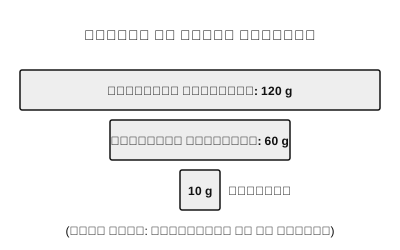
What type of ecological pyramid would be obtained with the following data?
Secondary consumer : 120 g
Primary consumer : 60 g
Primary producer : 10 g
निम्नलिखित आँकड़ों से किस प्रकार का पारिस्थितिक पिरामिड प्राप्त होगा?
द्वितीयक उपभोक्ता : 120 g
प्राथमिक उपभोक्ता : 60 g
प्राथमिक उत्पादक : 10 g
  1. AUpright pyramid of numbersसंख्या का सीधा पिरामिड
  2. BPyramid of energyऊर्जा का पिरामिड
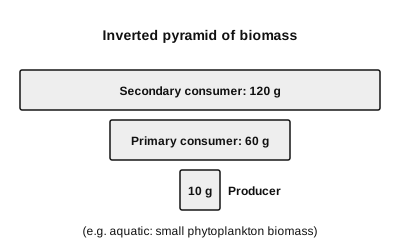
  3. CInverted pyramid of biomassजैवभार का उल्टा पिरामिड
  4. DUpright pyramid of biomassजैवभार का सीधा पिरामिड
Show answer

Concept: The data are in grams (mass of living matter) → pyramid of biomass. Biomass increases from producer to secondary consumer → the pyramid is inverted.

  1. Producer 10 g < primary consumer 60 g < secondary consumer 120 g → narrow base, broad top.
  2. Typical of aquatic ecosystems: small standing crop of phytoplankton supports a large biomass of zooplankton/fish because phytoplankton multiply very fast.
  3. (A) Data are masses, not numbers. (B) Energy is in kJ/kcal and the energy pyramid is always upright. (D) An upright biomass pyramid needs producer > consumers – opposite to the data.

Short trick: Units tell the pyramid: g → biomass, count → numbers, kJ → energy (never inverted).

Answer: (C) Inverted pyramid of biomass

अवधारणा: आँकड़े ग्राम (जीवित पदार्थ का द्रव्यमान) में हैं → जैवभार का पिरामिड। उत्पादक से द्वितीयक उपभोक्ता की ओर जैवभार बढ़ता है → पिरामिड उल्टा है।

  1. उत्पादक 10 g < प्राथमिक उपभोक्ता 60 g < द्वितीयक उपभोक्ता 120 g → संकरा आधार, चौड़ा शीर्ष।
  2. जलीय पारितंत्रों में विशिष्ट: पादपप्लवकों की कम खड़ी फसल (standing crop) प्राणिप्लवक/मछलियों के बड़े जैवभार को सहारा देती है क्योंकि पादपप्लवक बहुत तेज़ी से गुणन करते हैं।
  3. (A) आँकड़े द्रव्यमान हैं, संख्या नहीं। (B) ऊर्जा kJ/kcal में होती है और ऊर्जा पिरामिड सदैव सीधा होता है। (D) सीधे जैवभार पिरामिड के लिए उत्पादक > उपभोक्ता चाहिए – आँकड़ों के विपरीत।

शॉर्ट ट्रिक: इकाई से पिरामिड पहचानें: g → जैवभार, गिनती → संख्या, kJ → ऊर्जा (कभी उल्टा नहीं)।

उत्तर: (C) जैवभार का उल्टा पिरामिड

NEET UGBiologyEcosystem – ecological pyramidsNEET UG 2018 · 6 May Shift 1
Q386.
In stratosphere, which of the following elements acts as a catalyst in degradation of ozone and release of molecular oxygen?
समतापमंडल में निम्नलिखित में से कौन-सा तत्व ओज़ोन के निम्नीकरण और आण्विक ऑक्सीजन के मुक्त होने में उत्प्रेरक का कार्य करता है?
  1. AFe
  2. BCl
  3. CCarbonकार्बन
  4. DOxygenऑक्सीजन
Show answer

Concept: NCERT: UV rays act on CFCs in the stratosphere and release Cl atoms. Cl degrades ozone releasing molecular oxygen; Cl acts only as a catalyst and is not consumed, so it has a permanent, cumulative effect.

  1. Cl + O3 → ClO + O2
  2. ClO + O → Cl + O2 (Cl regenerated – one Cl atom can destroy thousands of O3 molecules).
  3. (A) Fe, (C) carbon, (D) oxygen – not the catalytic ozone-depleting species.

Short trick: CFC → Cl = “Catalyst Lives on”.

Answer: (B) Cl

अवधारणा: NCERT: समतापमंडल में UV किरणें CFC पर क्रिया करके Cl परमाणु मुक्त करती हैं। Cl ओज़ोन का निम्नीकरण करके आण्विक ऑक्सीजन मुक्त करता है; Cl केवल उत्प्रेरक है और व्यय नहीं होता, इसलिए इसका प्रभाव स्थायी व संचयी होता है।

  1. Cl + O3 → ClO + O2
  2. ClO + O → Cl + O2 (Cl पुनः बनता है – एक Cl परमाणु हज़ारों O3 अणु नष्ट कर सकता है)।
  3. (A) Fe, (C) कार्बन, (D) ऑक्सीजन – ओज़ोन क्षय करने वाले उत्प्रेरक नहीं।

शॉर्ट ट्रिक: CFC → Cl = “उत्प्रेरक बचा रहता है”।

उत्तर: (B) Cl

NEET UGBiologyEnvironmental issues – ozone depletionNEET UG 2018 · 6 May Shift 1
Q387.
The two functional groups characteristic of sugars are
शर्कराओं के दो विशिष्ट क्रियात्मक समूह हैं
  1. ACarbonyl and phosphateकार्बोनिल और फॉस्फेट
  2. BCarbonyl and methylकार्बोनिल और मेथिल
  3. CHydroxyl and methylहाइड्रॉक्सिल और मेथिल
  4. DCarbonyl and hydroxylकार्बोनिल और हाइड्रॉक्सिल
Show answer

Concept: Sugars (carbohydrates) are polyhydroxy aldehydes or ketones – many –OH groups plus one carbonyl (C=O) group.

  1. Glucose: –CHO (aldehyde carbonyl) + five –OH; fructose: C=O (ketone carbonyl) + five –OH.
  2. (A) Phosphate is present only in sugar phosphates/nucleotides, not characteristic of sugars.
  3. (B), (C) Methyl groups are not characteristic of sugars (deoxy-sugars aside).

Short trick: Sugar = “poly-OH + C=O”.

Answer: (D) Carbonyl and hydroxyl

अवधारणा: शर्कराएँ (कार्बोहाइड्रेट) पॉलीहाइड्रॉक्सी ऐल्डिहाइड या कीटोन हैं – अनेक –OH समूह तथा एक कार्बोनिल (C=O) समूह।

  1. ग्लूकोज़: –CHO (ऐल्डिहाइड कार्बोनिल) + पाँच –OH; फ्रक्टोज़: C=O (कीटोन कार्बोनिल) + पाँच –OH।
  2. (A) फॉस्फेट केवल शर्करा-फॉस्फेट/न्यूक्लियोटाइडों में होता है, शर्कराओं का विशिष्ट समूह नहीं।
  3. (B), (C) मेथिल समूह शर्कराओं का विशिष्ट समूह नहीं है।

शॉर्ट ट्रिक: शर्करा = “अनेक –OH + C=O”।

उत्तर: (D) कार्बोनिल और हाइड्रॉक्सिल

NEET UGBiologyBiomolecules – carbohydratesNEET UG 2018 · 6 May Shift 1
Q388.
Which among the following is not a prokaryote?
निम्नलिखित में से कौन प्रोकैरियोट नहीं है?
  1. ANostoc
  2. BMycobacterium
  3. CSaccharomyces
  4. DOscillatoria
Show answer

Concept: Saccharomyces (yeast) is a unicellular fungus (Ascomycetes) – a eukaryote with a true nucleus and membrane-bound organelles.

  1. (A) Nostoc and (D) Oscillatoria – cyanobacteria (Monera) – prokaryotes.
  2. (B) Mycobacterium – bacterium (causes TB, leprosy) – prokaryote.

Short trick: Yeast = fungus = eukaryote, even though it is single-celled.

Answer: (C) Saccharomyces

अवधारणा: Saccharomyces (यीस्ट) एककोशिकीय कवक (ऐस्कोमाइसिटीज़) है – वास्तविक केंद्रक व झिल्ली-बद्ध कोशिकांगों वाला यूकैरियोट।

  1. (A) Nostoc और (D) Oscillatoria – सायनोबैक्टीरिया (मोनेरा) – प्रोकैरियोट।
  2. (B) Mycobacterium – जीवाणु (TB, कुष्ठ रोग का कारक) – प्रोकैरियोट।

शॉर्ट ट्रिक: यीस्ट = कवक = यूकैरियोट, भले ही एककोशिकीय हो।

उत्तर: (C) Saccharomyces

NEET UGBiologyBiological classification – prokaryotes vs eukaryotesNEET UG 2018 · 6 May Shift 1
Q389.
The Golgi complex participates in
गॉल्जी सम्मिश्र किसमें भाग लेता है?
  1. ARespiration in bacteriaजीवाणुओं में श्वसन
  2. BFormation of secretory vesiclesस्रावी पुटिकाओं का निर्माण
  3. CFatty acid breakdownवसीय अम्लों का विखंडन
  4. DActivation of amino acidऐमीनो अम्लों का सक्रियण
Show answer

Concept: NCERT: the Golgi apparatus is the important site of packaging materials to be delivered intracellularly or secreted; materials enter at the cis face and leave from the trans (maturing) face as secretory vesicles.

  1. It also forms glycoproteins/glycolipids and the acrosome of sperm.
  2. (A) Bacteria have no Golgi; their respiration occurs on the plasma membrane/mesosomes.
  3. (C) Fatty acid β-oxidation occurs in mitochondria/peroxisomes (glyoxysomes).
  4. (D) Amino-acid activation (charging of tRNA) occurs in the cytoplasm by aminoacyl-tRNA synthetase.

Short trick: Golgi = cell's post office – packs and ships secretory vesicles.

Answer: (B) Formation of secretory vesicles

अवधारणा: NCERT: गॉल्जी उपकरण कोशिका के भीतर पहुँचाए जाने वाले या स्रावित किए जाने वाले पदार्थों के संवेष्टन (packaging) का मुख्य स्थल है; पदार्थ सिस-फलक से प्रवेश करते हैं और ट्रांस (परिपक्व) फलक से स्रावी पुटिकाओं के रूप में निकलते हैं।

  1. यह ग्लाइकोप्रोटीन/ग्लाइकोलिपिड तथा शुक्राणु का अग्रपिंडक (acrosome) भी बनाता है।
  2. (A) जीवाणुओं में गॉल्जी नहीं होता; उनका श्वसन प्लाज़्मा झिल्ली/मीज़ोसोम पर होता है।
  3. (C) वसीय अम्लों का β-ऑक्सीकरण माइटोकॉन्ड्रिया/परॉक्सीसोम (ग्लाइऑक्सीसोम) में होता है।
  4. (D) ऐमीनो अम्ल का सक्रियण (tRNA का आवेशन) कोशिकाद्रव्य में ऐमीनोऐसिल-tRNA सिंथेटेज़ द्वारा होता है।

शॉर्ट ट्रिक: गॉल्जी = कोशिका का डाकघर – स्रावी पुटिकाएँ पैक करके भेजता है।

उत्तर: (B) स्रावी पुटिकाओं का निर्माण

NEET UGBiologyCell: the unit of life – Golgi apparatusNEET UG 2018 · 6 May Shift 1
Q390.
Which of the following is not a product of light reaction of photosynthesis?
निम्नलिखित में से कौन प्रकाश-संश्लेषण की प्रकाश अभिक्रिया का उत्पाद नहीं है?
  1. ANADPH
  2. BNADH
  3. CATP
  4. DOxygenऑक्सीजन
Show answer

Concept: Light reaction (thylakoids): photolysis of water, ATP synthesis by photophosphorylation and reduction of NADP+ → products ATP, NADPH and O2.

  1. 2H2O → 4H+ + O2 + 4e– (O2 released).
  2. Electrons reach NADP+ via PS I → NADPH; proton gradient → ATP.
  3. NADH is formed in respiration (glycolysis, Krebs cycle), not in photosynthesis.

Short trick: Photosynthesis uses the “P” coenzyme – NADPH; respiration uses NADH.

Answer: (B) NADH

अवधारणा: प्रकाश अभिक्रिया (थाइलेकॉइड): जल का प्रकाश-अपघटन, प्रकाश-फॉस्फोरिलेशन द्वारा ATP संश्लेषण तथा NADP+ का अपचयन → उत्पाद ATP, NADPH और O2।

  1. 2H2O → 4H+ + O2 + 4e– (O2 मुक्त)।
  2. इलेक्ट्रॉन PS I से होकर NADP+ तक पहुँचते हैं → NADPH; प्रोटॉन प्रवणता → ATP।
  3. NADH श्वसन (ग्लाइकोलिसिस, क्रेब्स चक्र) में बनता है, प्रकाश-संश्लेषण में नहीं।

शॉर्ट ट्रिक: प्रकाश-संश्लेषण “P” वाला सहएंजाइम – NADPH; श्वसन – NADH।

उत्तर: (B) NADH

NEET UGBiologyPhotosynthesis – products of light reactionNEET UG 2018 · 6 May Shift 1
Q391.
Which of the following is true for nucleolus?
केंद्रिका (nucleolus) के लिए निम्नलिखित में से कौन-सा सत्य है?
  1. AIt takes part in spindle formationयह तर्कु निर्माण में भाग लेती है
  2. BIt is a membrane-bound structureयह एक झिल्ली-बद्ध संरचना है
  3. CLarger nucleoli are present in dividing cellsविभाजित होती कोशिकाओं में बड़ी केंद्रिकाएँ होती हैं
  4. DIt is a site for active ribosomal RNA synthesisयह सक्रिय राइबोसोमल RNA संश्लेषण का स्थल है
Show answer

Concept: NCERT: the nucleolus is a spherical structure in the nucleoplasm, not membrane-bound; it is the site for active ribosomal RNA synthesis. Larger and more numerous nucleoli are present in cells actively carrying out protein synthesis.

  1. (A) Spindle is formed by centrioles/microtubules – nucleolus disappears in prophase.
  2. (B) Its content is continuous with the nucleoplasm – no membrane.
  3. (C) Large nucleoli occur in cells active in protein synthesis; in dividing cells the nucleolus disappears.

Short trick: Nucleolus = rRNA factory, membrane-less, vanishes in prophase.

Answer: (D) It is a site for active ribosomal RNA synthesis

अवधारणा: NCERT: केंद्रिका केंद्रकद्रव्य में एक गोलाकार संरचना है, झिल्ली-बद्ध नहीं; यह सक्रिय राइबोसोमल RNA संश्लेषण का स्थल है। सक्रिय रूप से प्रोटीन संश्लेषण करने वाली कोशिकाओं में अधिक बड़ी व अधिक संख्या में केंद्रिकाएँ होती हैं।

  1. (A) तर्कु तारककेंद्रों/सूक्ष्मनलिकाओं से बनता है – पूर्वावस्था में केंद्रिका लुप्त हो जाती है।
  2. (B) इसका पदार्थ केंद्रकद्रव्य से सतत है – कोई झिल्ली नहीं।
  3. (C) बड़ी केंद्रिकाएँ प्रोटीन संश्लेषण में सक्रिय कोशिकाओं में होती हैं; विभाजित कोशिकाओं में केंद्रिका लुप्त हो जाती है।

शॉर्ट ट्रिक: केंद्रिका = rRNA कारखाना, झिल्ली-रहित, पूर्वावस्था में लुप्त।

उत्तर: (D) यह सक्रिय राइबोसोमल RNA संश्लेषण का स्थल है

NEET UGBiologyCell: the unit of life – nucleolusNEET UG 2018 · 6 May Shift 1
Q392.
Stomatal movement is not affected by
रंध्रीय गति किससे प्रभावित नहीं होती?
  1. AO2 concentrationO2 सांद्रता
  2. BLightप्रकाश
  3. CTemperatureताप
  4. DCO2 concentrationCO2 सांद्रता
Show answer

Concept: Opening and closing of stomata is controlled by light, CO2 concentration, temperature, water status and ABA – not by O2 concentration.

  1. (B) Light → guard-cell photosynthesis/K+ uptake → stomata open.
  2. (D) Low internal CO2 → open; high CO2 → close.
  3. (C) Temperature affects transpiration and stomatal aperture (high temperature/water stress → closure).

Short trick: Stomata respond to “L-C-T-W-A” (Light, CO2, Temperature, Water, ABA) – O2 is not in the list.

Answer: (A) O2 concentration

अवधारणा: रंध्रों का खुलना-बंद होना प्रकाश, CO2 सांद्रता, ताप, जल स्थिति और ABA द्वारा नियंत्रित होता है – O2 सांद्रता द्वारा नहीं।

  1. (B) प्रकाश → द्वार कोशिका में प्रकाश-संश्लेषण/K+ अवशोषण → रंध्र खुलते हैं।
  2. (D) कम आंतरिक CO2 → खुलते हैं; अधिक CO2 → बंद।
  3. (C) ताप वाष्पोत्सर्जन और रंध्र-छिद्र को प्रभावित करता है (उच्च ताप/जल प्रतिबल → बंद होना)।

शॉर्ट ट्रिक: रंध्र “प्रकाश-CO2-ताप-जल-ABA” पर प्रतिक्रिया करते हैं – O2 इस सूची में नहीं है।

उत्तर: (A) O2 सांद्रता

NEET UGBiologyTransport in plants – stomatal movementNEET UG 2018 · 6 May Shift 1
Q393.
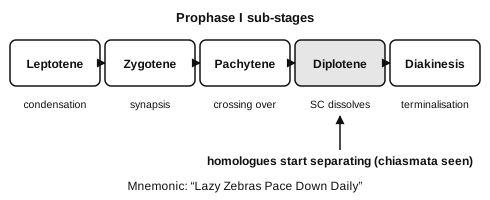
The stage during which separation of the paired homologous chromosomes begins is
वह अवस्था जिसके दौरान युग्मित समजात गुणसूत्रों का पृथक्करण आरंभ होता है
  1. ADiakinesisडायकाइनेसिस
  2. BDiploteneडिप्लोटीन
  3. CPachyteneपैकीटीन
  4. DZygoteneज़ाइगोटीन
Show answer

Concept: NCERT: diplotene is recognised by dissolution of the synaptonemal complex and the tendency of the recombined homologous chromosomes of the bivalents to separate from each other except at the sites of crossovers (chiasmata).

  1. (D) Zygotene – pairing (synapsis) begins, synaptonemal complex forms.
  2. (C) Pachytene – crossing over between non-sister chromatids (recombination nodules).
  3. (A) Diakinesis – terminalisation of chiasmata, nucleolus and nuclear envelope disappear; separation has already begun.

Short trick: Diplotene – Divorce begins (homologues pull apart, X-shaped chiasmata seen).

Answer: (B) Diplotene

अवधारणा: NCERT: डिप्लोटीन की पहचान सिनैप्टोनीमल सम्मिश्र के विघटन तथा द्विसंयोजकों के पुनर्योजित समजात गुणसूत्रों के, विनिमय स्थलों (काइएज़्मेटा) को छोड़कर, एक-दूसरे से अलग होने की प्रवृत्ति से होती है।

  1. (D) ज़ाइगोटीन – युग्मन (सूत्रयुग्मन) आरंभ, सिनैप्टोनीमल सम्मिश्र बनता है।
  2. (C) पैकीटीन – असहोदर अर्धगुणसूत्रों के बीच जीन विनिमय (पुनर्योजन ग्रंथिकाएँ)।
  3. (A) डायकाइनेसिस – काइएज़्मेटा का उपांतीभवन, केंद्रिका व केंद्रक आवरण लुप्त; पृथक्करण पहले ही आरंभ हो चुका होता है।

शॉर्ट ट्रिक: डिप्लोटीन – “डिवोर्स” आरंभ (समजात अलग होने लगते हैं, X-आकार के काइएज़्मेटा दिखते हैं)।

उत्तर: (B) डिप्लोटीन

NEET UGBiologyCell cycle and cell division – prophase I of meiosisNEET UG 2018 · 6 May Shift 1
Q394.
Stomata in grass leaf are
घास की पत्ती में रंध्र होते हैं
  1. ARectangularआयताकार
  2. BKidney shapedवृक्काकार (kidney shaped)
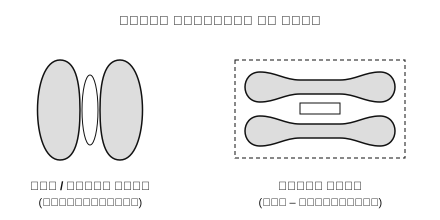
  3. CDumb-bell shapedडम्बल आकार
  4. DBarrel shapedबैरल आकार
Show answer

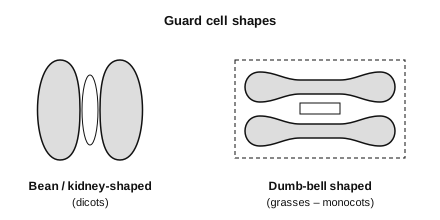
Concept: NCERT: in grasses the guard cells are dumb-bell shaped, whereas in dicots (and most other monocots) they are bean/kidney shaped.

  1. Grass guard cells have thick-walled narrow middle and thin-walled bulbous ends; swelling of the ends pulls the walls apart to open the pore.
  2. (B) Kidney shape – dicot leaves.
  3. (A), (D) – not the guard-cell shape of any standard example.

Short trick: Grass = Gym → dumb-bell.

Answer: (C) Dumb-bell shaped

अवधारणा: NCERT: घासों में द्वार कोशिकाएँ डम्बल आकार की होती हैं, जबकि द्विबीजपत्रियों (और अधिकांश अन्य एकबीजपत्रियों) में सेम/वृक्क आकार की।

  1. घास की द्वार कोशिकाओं का मध्य भाग संकरा व मोटी भित्ति वाला तथा सिरे फूले हुए व पतली भित्ति वाले होते हैं; सिरों के फूलने से भित्तियाँ दूर खिंचती हैं और छिद्र खुलता है।
  2. (B) वृक्क आकार – द्विबीजपत्री पत्तियाँ।
  3. (A), (D) – किसी मानक उदाहरण की द्वार कोशिका का आकार नहीं।

शॉर्ट ट्रिक: घास = जिम → डम्बल।

उत्तर: (C) डम्बल आकार

NEET UGBiologyAnatomy of flowering plants – stomataNEET UG 2018 · 6 May Shift 1
Q395.
Secondary xylem and phloem in dicot stem are produced by
द्विबीजपत्री तने में द्वितीयक जाइलम और फ्लोएम किसके द्वारा उत्पन्न होते हैं?
  1. APhellogenकागजन (Phellogen)
  2. BVascular cambiumसंवहन एधा (Vascular cambium)
  3. CApical meristemsशीर्षस्थ विभज्योतक
  4. DAxillary meristemsकक्षस्थ विभज्योतक
Show answer

Concept: The vascular cambium (intrafascicular + interfascicular cambium ring) cuts off secondary xylem towards the pith (inside) and secondary phloem towards the periphery (outside).

  1. It is more active on the inner side, so secondary xylem is produced more than secondary phloem.
  2. (A) Phellogen (cork cambium) forms cork (phellem) outside and secondary cortex (phelloderm) inside.
  3. (C) Apical meristems cause primary growth in length.
  4. (D) Axillary meristems form branches/flowers.

Short trick: Vascular cambium → Vessels (xylem) + sieve tubes; cork cambium → bark.

Answer: (B) Vascular cambium

अवधारणा: संवहन एधा (अंतःपूलीय + अंतरपूलीय एधा का वलय) मज्जा की ओर (भीतर) द्वितीयक जाइलम और परिधि की ओर (बाहर) द्वितीयक फ्लोएम बनाती है।

  1. यह भीतरी ओर अधिक सक्रिय होती है, इसलिए द्वितीयक जाइलम द्वितीयक फ्लोएम से अधिक बनता है।
  2. (A) कागजन (कॉर्क एधा) बाहर कॉर्क (फेलम) और भीतर द्वितीयक वल्कुट (फेलोडर्म) बनाती है।
  3. (C) शीर्षस्थ विभज्योतक लंबाई में प्राथमिक वृद्धि करते हैं।
  4. (D) कक्षस्थ विभज्योतक शाखाएँ/पुष्प बनाते हैं।

शॉर्ट ट्रिक: संवहन एधा → वाहिकाएँ (जाइलम) + चालनी नलिकाएँ; कॉर्क एधा → छाल।

उत्तर: (B) संवहन एधा

NEET UGBiologyAnatomy of flowering plants – secondary growthNEET UG 2018 · 6 May Shift 1
Q396.
Pneumatophores occur in
श्वसन मूल (Pneumatophores) किसमें पाई जाती हैं?
  1. ACarnivorous plantsकीटभक्षी पादप
  2. BFree-floating hydrophytesमुक्त-प्लावी जलोद्भिद
  3. CHalophytesलवणोद्भिद (Halophytes)
  4. DSubmerged hydrophytesनिमग्न जलोद्भिद
Show answer

Concept: NCERT: in plants growing in swampy areas like Rhizophora (mangroves – halophytes), many roots come out of the ground and grow vertically upwards; these pneumatophores help to get oxygen for respiration.

  1. Mangrove soil is saline and water-logged → anaerobic; negatively geotropic roots with lenticels (pneumathodes) take in air.
  2. (A) Carnivorous plants – leaves modified as traps.
  3. (B), (D) Hydrophytes have aerenchyma for internal aeration; they do not form pneumatophores.

Short trick: Pneumatophore = Pneumo (air) roots in salty mangrove mud.

Answer: (C) Halophytes

अवधारणा: NCERT: दलदली क्षेत्रों में उगने वाले पादपों जैसे Rhizophora (मैंग्रोव – लवणोद्भिद) में अनेक जड़ें भूमि से बाहर निकलकर ऊर्ध्वाधर ऊपर की ओर बढ़ती हैं; ये श्वसन मूल श्वसन के लिए ऑक्सीजन प्राप्त करने में सहायक होती हैं।

  1. मैंग्रोव की मृदा लवणीय व जलाक्रांत होती है → अवायवीय; वातरंध्र (न्यूमैथोड) युक्त ऋणात्मक गुरुत्वानुवर्ती जड़ें वायु ग्रहण करती हैं।
  2. (A) कीटभक्षी पादप – पत्तियाँ जाल में रूपांतरित।
  3. (B), (D) जलोद्भिदों में आंतरिक वातन हेतु वायूतक (aerenchyma) होता है; वे श्वसन मूल नहीं बनाते।

शॉर्ट ट्रिक: न्यूमैटोफोर = न्यूमो (वायु) जड़ें – लवणीय मैंग्रोव कीचड़ में।

उत्तर: (C) लवणोद्भिद

NEET UGBiologyMorphology of flowering plants – modified rootsNEET UG 2018 · 6 May Shift 1
Q397.
Casparian strips occur in
कैस्पेरी पट्टियाँ (Casparian strips) किसमें पाई जाती हैं?
  1. ACortexवल्कुट
  2. BPericycleपरिरंभ
  3. CEpidermisबाह्यत्वचा
  4. DEndodermisअंतस्त्वचा
Show answer

Concept: NCERT: the endodermis is the innermost layer of the cortex; its radial and tangential walls have a deposition of water-impermeable, waxy suberin in the form of Casparian strips.

  1. The strips block the apoplast path, forcing water and minerals to enter the stele through the symplast – selective uptake.
  2. (A) Cortex – parenchyma, apoplast flow is free here.
  3. (B) Pericycle – gives rise to lateral roots, no strips.
  4. (C) Epidermis – bears root hairs, no strips.

Short trick: Casparian = Check-post at Endodermis (entry gate to stele).

Answer: (D) Endodermis

अवधारणा: NCERT: अंतस्त्वचा वल्कुट की सबसे भीतरी परत है; इसकी अरीय व स्पर्शरेखीय भित्तियों पर जल-अपारगम्य, मोमी सुबेरिन का जमाव कैस्पेरी पट्टियों के रूप में होता है।

  1. ये पट्टियाँ एपोप्लास्ट पथ को रोकती हैं, जिससे जल व खनिज सिमप्लास्ट द्वारा ही रंभ में प्रवेश करते हैं – चयनात्मक अवशोषण।
  2. (A) वल्कुट – मृदूतक, यहाँ एपोप्लास्ट प्रवाह मुक्त है।
  3. (B) परिरंभ – पार्श्व जड़ें बनाता है, पट्टियाँ नहीं।
  4. (C) बाह्यत्वचा – मूलरोम धारण करती है, पट्टियाँ नहीं।

शॉर्ट ट्रिक: कैस्पेरी पट्टी = अंतस्त्वचा पर “चेक-पोस्ट” (रंभ का प्रवेश द्वार)।

उत्तर: (D) अंतस्त्वचा

NEET UGBiologyAnatomy of flowering plants – endodermisNEET UG 2018 · 6 May Shift 1
Q398.
Plants having little or no secondary growth are
अल्प या बिना द्वितीयक वृद्धि वाले पादप हैं
  1. AConifersशंकुधारी (Conifers)
  2. BDeciduous angiospermsपर्णपाती आवृतबीजी
  3. CGrassesघासें
  4. DCycadsसाइकैड
Show answer

Concept: Secondary growth needs a vascular cambium. Monocots such as grasses have closed vascular bundles (no cambium) and therefore little or no secondary growth.

  1. (A) Conifers (e.g. Pinus, Cedrus) – woody trees with extensive secondary growth.
  2. (B) Deciduous angiosperms (dicot trees) – annual rings formed by cambium.
  3. (D) Cycads – gymnosperms with secondary growth (though slow).

Short trick: Monocot = closed bundles = no cambium = no wood (palms show only anomalous growth).

Answer: (C) Grasses

अवधारणा: द्वितीयक वृद्धि के लिए संवहन एधा आवश्यक है। घासों जैसे एकबीजपत्रियों में बंद संवहन पूल (एधा रहित) होते हैं, इसलिए उनमें अल्प या कोई द्वितीयक वृद्धि नहीं होती।

  1. (A) शंकुधारी (जैसे Pinus, Cedrus) – व्यापक द्वितीयक वृद्धि वाले काष्ठीय वृक्ष।
  2. (B) पर्णपाती आवृतबीजी (द्विबीजपत्री वृक्ष) – एधा द्वारा वार्षिक वलय बनते हैं।
  3. (D) साइकैड – द्वितीयक वृद्धि वाले अनावृतबीजी (यद्यपि धीमी)।

शॉर्ट ट्रिक: एकबीजपत्री = बंद पूल = एधा नहीं = काष्ठ नहीं (ताड़ में केवल असंगत वृद्धि)।

उत्तर: (C) घासें

NEET UGBiologyAnatomy of flowering plants – secondary growthNEET UG 2018 · 6 May Shift 1
Q399.
Sweet potato is a modified
शकरकंद (sweet potato) किसका रूपांतरित रूप है?
  1. ATap rootमूसला जड़
  2. BAdventitious rootअपस्थानिक जड़
  3. CStemतना
  4. DRhizomeप्रकंद (Rhizome)
Show answer

Concept: NCERT: adventitious roots of sweet potato get swollen and store food; tap roots of carrot, turnip are swollen for storage.

  1. Sweet potato grows from nodes of a creeping stem → adventitious; tuberous root, no nodes/buds on its surface like a stem.
  2. (A) Tap root storage – carrot, radish, turnip.
  3. (C), (D) Stem tuber – potato; rhizome – ginger, turmeric (have nodes and buds).

Short trick: Sweet potato = Secondary/adventitious; Potato = Plain stem tuber.

Answer: (B) Adventitious root

अवधारणा: NCERT: शकरकंद की अपस्थानिक जड़ें फूलकर भोजन संचित करती हैं; गाजर, शलजम की मूसला जड़ें भंडारण हेतु फूलती हैं।

  1. शकरकंद रेंगने वाले तने की पर्वसंधियों से निकलता है → अपस्थानिक; कंदिल जड़, तने की तरह इसकी सतह पर पर्वसंधियाँ/कलिकाएँ नहीं।
  2. (A) मूसला जड़ भंडारण – गाजर, मूली, शलजम।
  3. (C), (D) तना कंद – आलू; प्रकंद – अदरक, हल्दी (पर्वसंधियाँ व कलिकाएँ होती हैं)।

शॉर्ट ट्रिक: शकरकंद = अपस्थानिक जड़; आलू = तना कंद।

उत्तर: (B) अपस्थानिक जड़

NEET UGBiologyMorphology of flowering plants – modified rootsNEET UG 2018 · 6 May Shift 1
Q400.
Which of the following statements is correct?
निम्नलिखित में से कौन-सा कथन सही है?
  1. AHorsetails are gymnospermsहॉर्सटेल अनावृतबीजी हैं
  2. BSelaginella is heterosporous, while Salvinia is homosporousSelaginella विषमबीजाणुक है, जबकि Salvinia समबीजाणुक है
  3. COvules are not enclosed by ovary wall in gymnospermsअनावृतबीजियों में बीजांड अंडाशय भित्ति से घिरे नहीं होते
  4. DStems are usually unbranched in both Cycas and CedrusCycas और Cedrus दोनों में तने सामान्यतः अशाखित होते हैं
Show answer

Concept: NCERT: gymnosperms are plants in which the ovules are not enclosed by any ovary wall and remain exposed before and after fertilisation (naked seeds).

  1. (A) Horsetails (Equisetum) are pteridophytes.
  2. (B) Both Selaginella and Salvinia are heterosporous.
  3. (D) Cycas stem is unbranched, but Pinus/Cedrus stems are branched.

Short trick: Gymno = naked → ovule without ovary. Heterosporous pteridophytes: “Salvinia, Selaginella” – both S = both hetero.

Answer: (C) Ovules are not enclosed by ovary wall in gymnosperms

अवधारणा: NCERT: अनावृतबीजी वे पादप हैं जिनमें बीजांड किसी अंडाशय भित्ति से घिरे नहीं होते और निषेचन से पहले व बाद में अनावृत रहते हैं (नग्न बीज)।

  1. (A) हॉर्सटेल (Equisetum) टेरिडोफाइट हैं।
  2. (B) Selaginella व Salvinia दोनों विषमबीजाणुक हैं।
  3. (D) Cycas का तना अशाखित है, परंतु Pinus/Cedrus के तने शाखित होते हैं।

शॉर्ट ट्रिक: जिम्नो = नग्न → अंडाशय-रहित बीजांड। विषमबीजाणुक: “Salvinia, Selaginella” – दोनों S = दोनों विषम।

उत्तर: (C) अनावृतबीजियों में बीजांड अंडाशय भित्ति से घिरे नहीं होते

NEET UGBiologyPlant kingdom – pteridophytes and gymnospermsNEET UG 2018 · 6 May Shift 1