NEET UG · 2,240 questions

NEET UG 2015, 2016, 2017, 2018, 2019, 2020, 2021, 2022, 2023, 2024, 2025, 2026 PYQs

Real previous year questions, subject-wise. Try the question, then open the answer and the explanation in Hindi & English – free, no login.

Courses – airGurukul

720 questions in Biology.

Q401.
Select the wrong statement :
गलत कथन चुनिए :
  1. APseudopodia are locomotory and feeding structures in Sporozoansस्पोरोज़ोआ में पादाभ (pseudopodia) गमन और भोजन ग्रहण की संरचनाएँ हैं
  2. BMushrooms belong to Basidiomycetesछत्रक (mushrooms) बेसिडियोमाइसिटीज़ से संबंधित हैं
  3. CCell wall is present in members of Fungi and Plantaeकवक और पादप जगत के सदस्यों में कोशिका भित्ति उपस्थित होती है
  4. DMitochondria are the powerhouse of the cell in all kingdoms except Moneraमोनेरा को छोड़कर सभी जगतों में माइटोकॉन्ड्रिया कोशिका के ऊर्जा-गृह हैं
Show answer

Concept: Pseudopodia (false feet) are the locomotory and food-capturing organs of amoeboid protozoans (Sarcodina), e.g. Amoeba. Sporozoans (e.g. Plasmodium) have no locomotory organelles – hence statement (A) is wrong.

  1. (B) Mushroom (Agaricus) – Basidiomycetes – correct.
  2. (C) Fungi (chitin) and Plantae (cellulose) have cell walls – correct.
  3. (D) Monera are prokaryotes without mitochondria; all eukaryotic kingdoms have them – correct.

Short trick: Protozoa groups: Amoeboid – pseudopodia; Flagellated – flagella; Ciliated – cilia; Sporozoans – none.

Answer: (A) Pseudopodia are locomotory and feeding structures in Sporozoans

अवधारणा: पादाभ (कूटपाद) अमीबीय प्रोटोज़ोआ (सार्कोडिना), जैसे Amoeba, के गमन व भोजन ग्रहण के अंग हैं। स्पोरोज़ोआ (जैसे Plasmodium) में कोई गमन अंगक नहीं होता – अतः कथन (A) गलत है।

  1. (B) छत्रक (Agaricus) – बेसिडियोमाइसिटीज़ – सही।
  2. (C) कवक (काइटिन) और पादप (सेलुलोस) में कोशिका भित्ति होती है – सही।
  3. (D) मोनेरा माइटोकॉन्ड्रिया-रहित प्रोकैरियोट हैं; सभी यूकैरियोटी जगतों में ये होते हैं – सही।

शॉर्ट ट्रिक: प्रोटोज़ोआ समूह: अमीबीय – पादाभ; कशाभी – कशाभ; पक्ष्माभी – पक्ष्माभ; स्पोरोज़ोआ – कोई नहीं।

उत्तर: (A) स्पोरोज़ोआ में पादाभ (pseudopodia) गमन और भोजन ग्रहण की संरचनाएँ हैं
NEET UGBiologyBiological classification – kingdom characteristicsNEET UG 2018 · 6 May Shift 1
Q402.
After karyogamy followed by meiosis, spores are produced exogenously in
केंद्रक संलयन (karyogamy) के पश्चात अर्धसूत्री विभाजन होकर बीजाणु बहिर्जात (exogenously) रूप से किसमें उत्पन्न होते हैं?
  1. AAgaricus
  2. BAlternaria
  3. CNeurospora
  4. DSaccharomyces
Show answer

Concept: In Basidiomycetes karyogamy and meiosis take place in the basidium, and four basidiospores are produced exogenously on sterigmata of the basidium.

  1. Agaricus (mushroom) – basidiomycete → exogenous basidiospores.
  2. (B) Alternaria – Deuteromycetes; sexual stage unknown, only conidia.
  3. (C) Neurospora and (D) Saccharomyces – Ascomycetes; ascospores are formed endogenously inside the ascus.

Short trick: Ascus = a sac → spores inside; Basidium = a club → spores outside.

Answer: (A) Agaricus

अवधारणा: बेसिडियोमाइसिटीज़ में केंद्रक संलयन और अर्धसूत्री विभाजन बेसिडियम में होते हैं, और चार बेसिडियोबीजाणु बेसिडियम के स्टेरिग्मेटा पर बहिर्जात रूप से बनते हैं।

  1. Agaricus (छत्रक) – बेसिडियोमाइसिटीज़ → बहिर्जात बेसिडियोबीजाणु।
  2. (B) Alternaria – ड्यूटेरोमाइसिटीज़; लैंगिक अवस्था अज्ञात, केवल कोनिडिया।
  3. (C) Neurospora और (D) Saccharomyces – ऐस्कोमाइसिटीज़; ऐस्कोबीजाणु ऐस्कस के भीतर अंतर्जात रूप से बनते हैं।

शॉर्ट ट्रिक: ऐस्कस = थैली → बीजाणु भीतर; बेसिडियम = मुगदर → बीजाणु बाहर।

उत्तर: (A) Agaricus

NEET UGBiologyBiological classification – fungiNEET UG 2018 · 6 May Shift 1
Q403.
Match the items given in Column I with those in Column II and select the correct option given below:
Column IColumn II
a. Herbarium(i) It is a place having a collection of preserved plants and animals
b. Key(ii) A list that enumerates methodically all the species found in an area with brief description aiding identification
c. Museum(iii) Is a place where dried and pressed plant specimens mounted on sheets are kept
d. Catalogue(iv) A booklet containing a list of characters and their alternates which are helpful in identification of various taxa.
स्तंभ I में दिए गए मदों का स्तंभ II के मदों से मिलान कीजिए और नीचे दिए गए विकल्पों में से सही विकल्प चुनिए:
स्तंभ Iस्तंभ II
a. हर्बेरियम (पादपालय)(i) यह एक स्थान है जहाँ परिरक्षित पादपों और जंतुओं का संग्रह होता है
b. कुंजी (Key)(ii) एक सूची जो किसी क्षेत्र में पाई जाने वाली सभी जातियों को पहचान में सहायक संक्षिप्त विवरण सहित क्रमबद्ध रूप से गिनाती है
c. संग्रहालय(iii) एक स्थान है जहाँ शीटों पर आरोपित सुखाए और दबाए गए पादप नमूने रखे जाते हैं
d. सूचीपत्र (Catalogue)(iv) एक पुस्तिका जिसमें लक्षणों और उनके विकल्पों की सूची होती है जो विभिन्न टैक्सॉन की पहचान में सहायक होती है।
  1. Aa-(ii), b-(iv), c-(iii), d-(i)
  2. Ba-(iii), b-(ii), c-(i), d-(iv)
  3. Ca-(i), b-(iv), c-(iii), d-(ii)
  4. Da-(iii), b-(iv), c-(i), d-(ii)
Show answer

Concept: Taxonomical aids (NCERT, The Living World).

  1. a. Herbarium – store-house of dried, pressed, preserved plant specimens on sheets → (iii).
  2. b. Key – taxonomical aid using contrasting characters in pairs (couplets) for identification → (iv).
  3. c. Museum – collections of preserved plant and animal specimens → (i).
  4. d. Catalogue – a list enumerating species of an area with brief descriptions (Flora/manual/catalogue) → (ii).
  5. So a-(iii), b-(iv), c-(i), d-(ii). (A) and (C) put a = (ii)/(i) – wrong; (B) puts b = (ii) – wrong.

Short trick: Fix the sure ones: Herbarium = dried sheets (iii), Key = couplets (iv) → only (D) has both.

Answer: (D) a-(iii), b-(iv), c-(i), d-(ii)

अवधारणा: वर्गिकी सहायक साधन (NCERT, जीव जगत)।

  1. a. हर्बेरियम – शीटों पर सुखाए, दबाए व परिरक्षित पादप नमूनों का भंडार → (iii)।
  2. b. कुंजी – पहचान हेतु युग्मों (couplets) में विपरीत लक्षणों पर आधारित वर्गिकी साधन → (iv)।
  3. c. संग्रहालय – परिरक्षित पादप और जंतु नमूनों का संग्रह → (i)।
  4. d. सूचीपत्र – किसी क्षेत्र की जातियों को संक्षिप्त विवरण सहित गिनाने वाली सूची → (ii)।
  5. अतः a-(iii), b-(iv), c-(i), d-(ii)। (A) और (C) में a = (ii)/(i) – गलत; (B) में b = (ii) – गलत।

शॉर्ट ट्रिक: पक्के मिलान पहले: हर्बेरियम = सूखी शीटें (iii), कुंजी = युग्म (iv) → केवल (D) में दोनों हैं।

उत्तर: (D) a-(iii), b-(iv), c-(i), d-(ii)

NEET UGBiologyThe living world – taxonomical aidsNEET UG 2018 · 6 May Shift 1
Q404.
Winged pollen grains are present in
पंखयुक्त परागकण किसमें पाए जाते हैं?
  1. AMangoआम
  2. BCycas
  3. CMustardसरसों
  4. DPinus
Show answer

Concept: In Pinus the exine expands on two sides into air-filled wings (sacci), which help wind dispersal (anemophily).

  1. (A) Mango and (C) mustard – angiosperms with ordinary non-winged pollen (insect-pollinated).
  2. (B) Cycas – wind-pollinated gymnosperm but its pollen has no wings.

Short trick: Pinus pilot – pollen with two wings like a plane.

Answer: (D) Pinus

अवधारणा: Pinus में बाह्यचोल दो ओर फैलकर वायु से भरे पंख (सैकी) बनाता है, जो वायु द्वारा प्रकीर्णन (वायु-परागण) में सहायक होते हैं।

  1. (A) आम और (C) सरसों – सामान्य पंखरहित परागकण वाले आवृतबीजी (कीट-परागित)।
  2. (B) Cycas – वायु-परागित अनावृतबीजी, परंतु इसके परागकणों में पंख नहीं होते।

शॉर्ट ट्रिक: Pinus पायलट – हवाई जहाज़ जैसे दो पंखों वाला परागकण।

उत्तर: (D) Pinus

NEET UGBiologyPlant kingdom – gymnosperms (pollen)NEET UG 2018 · 6 May Shift 1
Q405.
Which one is wrongly matched?
कौन-सा गलत सुमेलित है?
  1. AGemma cups – Marchantiaजेमा कप – Marchantia
  2. BBiflagellate zoospores – Brown algaeद्विकशाभी चलबीजाणु – भूरे शैवाल
  3. CUniflagellate gametes – Polysiphoniaएककशाभी युग्मक – Polysiphonia
  4. DUnicellular organism – Chlorellaएककोशिकीय जीव – Chlorella
Show answer

Concept: Polysiphonia is a red alga (Rhodophyceae). Red algae have no flagellated stages – spores and gametes are non-motile.

  1. (A) Marchantia (liverwort) reproduces asexually by gemmae formed in gemma cups – correct.
  2. (B) Brown algae (Phaeophyceae) – pear-shaped biflagellate zoospores with two unequal laterally attached flagella – correct.
  3. (D) Chlorella – unicellular green alga (single-cell protein) – correct.

Short trick: Red algae = “red light, no motion” – no flagella anywhere in the life cycle.

Answer: (C) Uniflagellate gametes – Polysiphonia

अवधारणा: Polysiphonia एक लाल शैवाल (रोडोफाइसी) है। लाल शैवालों में कोई कशाभी अवस्था नहीं होती – बीजाणु और युग्मक अचल होते हैं।

  1. (A) Marchantia (लिवरवर्ट) जेमा कपों में बने जेमी द्वारा अलैंगिक जनन करता है – सही।
  2. (B) भूरे शैवाल (फियोफाइसी) – पार्श्व से जुड़े दो असमान कशाभों वाले नाशपाती-आकार के द्विकशाभी चलबीजाणु – सही।
  3. (D) Chlorella – एककोशिकीय हरा शैवाल (एकल कोशिका प्रोटीन) – सही।

शॉर्ट ट्रिक: लाल शैवाल = “लाल बत्ती, कोई गति नहीं” – जीवन-चक्र में कहीं कशाभ नहीं।

उत्तर: (C) एककशाभी युग्मक – Polysiphonia

NEET UGBiologyPlant kingdom – algae and bryophytesNEET UG 2018 · 6 May Shift 1
Q406.
Which of the following options correctly represents the lung conditions in asthma and emphysema, respectively?
निम्नलिखित में से कौन-सा विकल्प क्रमशः दमा (asthma) और वातस्फीति (emphysema) में फेफड़ों की स्थिति को सही रूप से दर्शाता है?
  1. AIncreased respiratory surface; Inflammation of bronchiolesश्वसन सतह में वृद्धि; श्वसनिकाओं में सूजन
  2. BIncreased number of bronchioles; Increased respiratory surfaceश्वसनिकाओं की संख्या में वृद्धि; श्वसन सतह में वृद्धि
  3. CInflammation of bronchioles; Decreased respiratory surfaceश्वसनिकाओं में सूजन; श्वसन सतह में कमी
  4. DDecreased respiratory surface; Inflammation of bronchiolesश्वसन सतह में कमी; श्वसनिकाओं में सूजन
Show answer

Concept: Asthma = difficulty in breathing with wheezing due to inflammation of bronchi and bronchioles. Emphysema = chronic disorder in which alveolar walls are damaged, so respiratory surface decreases (NCERT).

  1. Asthma → inflammation of bronchioles (first blank).
  2. Emphysema → alveolar walls break down → decreased respiratory surface (second blank).
  3. (A) and (B) say "increased respiratory surface" – never true in either disease; (D) has the right pair in the wrong order ("respectively").

Short trick: Asthma = Airways inflamed; Emphysema = alveoli Empty/Eroded → surface down. Watch the word "respectively".

Answer: (C) Inflammation of bronchioles; Decreased respiratory surface

अवधारणा: दमा = श्वसनी और श्वसनिकाओं में सूजन के कारण घरघराहट के साथ साँस लेने में कठिनाई। वातस्फीति = दीर्घकालिक विकार जिसमें कूपिकाओं की भित्तियाँ क्षतिग्रस्त हो जाती हैं, अतः श्वसन सतह घट जाती है (NCERT)।

  1. दमा → श्वसनिकाओं में सूजन (पहला भाग)।
  2. वातस्फीति → कूपिका-भित्तियाँ टूटती हैं → श्वसन सतह में कमी (दूसरा भाग)।
  3. (A) और (B) में "श्वसन सतह में वृद्धि" है – किसी भी रोग में सत्य नहीं; (D) में सही युग्म उलटे क्रम में है ("क्रमशः")।

शॉर्ट ट्रिक: दमा = वायुमार्ग में सूजन; वातस्फीति = कूपिकाएँ नष्ट → सतह घटी। "क्रमशः" शब्द पर ध्यान दें।

उत्तर: (C) श्वसनिकाओं में सूजन; श्वसन सतह में कमी

NEET UGBiologyBreathing and exchange of gases – respiratory disordersNEET UG 2018 · 6 May Shift 1
Q407.
Match the items given in Column I with those in Column II and select the correct option given below:
Column IColumn II
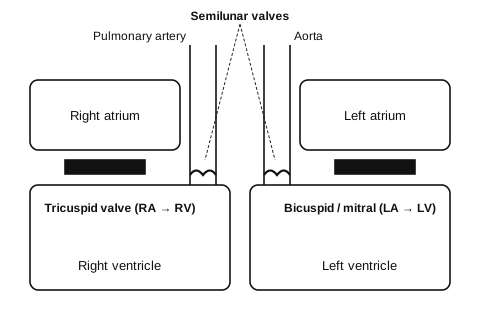
a. Tricuspid valvei. Between left atrium and left ventricle
b. Bicuspid valveii. Between right ventricle and pulmonary artery
c. Semilunar valveiii. Between right atrium and right ventricle
स्तंभ I में दी गई मदों का स्तंभ II की मदों से मिलान कीजिए और नीचे दिए गए विकल्पों में से सही विकल्प चुनिए:
स्तंभ Iस्तंभ II
a. त्रिवलनी कपाट (Tricuspid valve)i. बाएँ अलिंद और बाएँ निलय के बीच
b. द्विवलनी कपाट (Bicuspid valve)ii. दाएँ निलय और फुफ्फुसीय धमनी के बीच
c. अर्धचंद्राकार कपाट (Semilunar valve)iii. दाएँ अलिंद और दाएँ निलय के बीच
  1. Aa-i, b-ii, c-iii
  2. Ba-i, b-iii, c-ii
  3. Ca-iii, b-i, c-ii
  4. Da-ii, b-i, c-iii
Show answer

Concept: The right atrio-ventricular opening is guarded by the tricuspid valve, the left one by the bicuspid (mitral) valve; semilunar valves guard the openings of the pulmonary artery and aorta.

  1. a. Tricuspid → between right atrium and right ventricle → iii.
  2. b. Bicuspid → between left atrium and left ventricle → i.
  3. c. Semilunar → between right ventricle and pulmonary artery (and left ventricle–aorta) → ii.
  4. Only option (C) gives a-iii, b-i, c-ii.

Short trick: "Tricuspid on the Right – Try before you Bi" (Right side tricuspid, left side bicuspid). Semilunar = exits of ventricles.

Answer: (C) a-iii, b-i, c-ii

अवधारणा: दायाँ अलिंद-निलय छिद्र त्रिवलनी कपाट से, बायाँ द्विवलनी (मिट्रल) कपाट से सुरक्षित होता है; अर्धचंद्राकार कपाट फुफ्फुसीय धमनी और महाधमनी के छिद्रों पर होते हैं।

  1. a. त्रिवलनी → दाएँ अलिंद और दाएँ निलय के बीच → iii।
  2. b. द्विवलनी → बाएँ अलिंद और बाएँ निलय के बीच → i।
  3. c. अर्धचंद्राकार → दाएँ निलय और फुफ्फुसीय धमनी के बीच (तथा बाएँ निलय–महाधमनी) → ii।
  4. केवल विकल्प (C) में a-iii, b-i, c-ii है।

शॉर्ट ट्रिक: त्रिवलनी = दायाँ (Tri–Right), द्विवलनी = बायाँ; अर्धचंद्राकार = निलयों से निकलने वाली धमनियों के द्वार पर।

उत्तर: (C) a-iii, b-i, c-ii

NEET UGBiologyBody fluids and circulation – heart valvesNEET UG 2018 · 6 May Shift 1
Q408.
Match the items given in Column I with those in Column II and select the correct option given below:
Column IColumn II
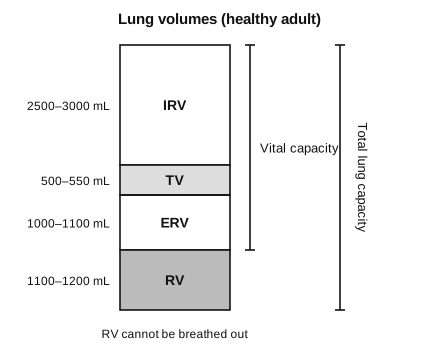
a. Tidal volumei. 2500 – 3000 mL
b. Inspiratory Reserve volumeii. 1100 – 1200 mL
c. Expiratory Reserve volumeiii. 500 – 550 mL
d. Residual volumeiv. 1000 – 1100 mL
स्तंभ I में दी गई मदों का स्तंभ II की मदों से मिलान कीजिए और नीचे दिए गए विकल्पों में से सही विकल्प चुनिए:
स्तंभ Iस्तंभ II
a. ज्वारीय आयतन (Tidal volume)i. 2500 – 3000 mL
b. अंतःश्वसन आरक्षित आयतन (Inspiratory Reserve volume)ii. 1100 – 1200 mL
c. निःश्वसन आरक्षित आयतन (Expiratory Reserve volume)iii. 500 – 550 mL
d. अवशिष्ट आयतन (Residual volume)iv. 1000 – 1100 mL
  1. Aa-i, b-iv, c-ii, d-iii
  2. Ba-iii, b-i, c-iv, d-ii
  3. Ca-iii, b-ii, c-i, d-iv
  4. Da-iv, b-iii, c-ii, d-i
Show answer

Concept: NCERT values: TV ≈ 500 mL, IRV ≈ 2500–3000 mL, ERV ≈ 1000–1100 mL, RV ≈ 1100–1200 mL.

  1. a. Tidal volume (normal breath) → 500–550 mL → iii.
  2. b. IRV (extra air by forcible inspiration) → 2500–3000 mL → i.
  3. c. ERV (extra air by forcible expiration) → 1000–1100 mL → iv.
  4. d. RV (air left after forcible expiration) → 1100–1200 mL → ii.
  5. a-iii, b-i, c-iv, d-ii = option (B).

Short trick: Order by size: IRV (≈3000) > RV (≈1200) > ERV (≈1100) > TV (500). TV is the smallest – a must be iii, which leaves only (B) and (C); ERV < RV picks (B).

Answer: (B) a-iii, b-i, c-iv, d-ii

अवधारणा: NCERT मान: TV ≈ 500 mL, IRV ≈ 2500–3000 mL, ERV ≈ 1000–1100 mL, RV ≈ 1100–1200 mL।

  1. a. ज्वारीय आयतन (सामान्य श्वास) → 500–550 mL → iii।
  2. b. IRV (बलपूर्वक अंतःश्वसन से अतिरिक्त वायु) → 2500–3000 mL → i।
  3. c. ERV (बलपूर्वक निःश्वसन से अतिरिक्त वायु) → 1000–1100 mL → iv।
  4. d. RV (बलपूर्वक निःश्वसन के बाद शेष वायु) → 1100–1200 mL → ii।
  5. a-iii, b-i, c-iv, d-ii = विकल्प (B)।

शॉर्ट ट्रिक: आकार का क्रम: IRV (≈3000) > RV (≈1200) > ERV (≈1100) > TV (500)। TV सबसे छोटा – a = iii, अतः केवल (B) व (C) बचते हैं; ERV < RV से (B)।

उत्तर: (B) a-iii, b-i, c-iv, d-ii

NEET UGBiologyBreathing and exchange of gases – respiratory volumesNEET UG 2018 · 6 May Shift 1
Q409.
The transparent lens in the human eye is held in its place by
मानव नेत्र में पारदर्शी लेंस अपने स्थान पर किसके द्वारा टिका रहता है?
  1. Asmooth muscles attached to the irisपरितारिका (iris) से जुड़ी चिकनी पेशियों द्वारा
  2. Bligaments attached to the irisपरितारिका से जुड़े स्नायुओं (ligaments) द्वारा
  3. Cligaments attached to the ciliary bodyपक्ष्माभी काय (ciliary body) से जुड़े स्नायुओं द्वारा
  4. Dsmooth muscles attached to the ciliary bodyपक्ष्माभी काय से जुड़ी चिकनी पेशियों द्वारा
Show answer

Concept: NCERT: "The lens is held in place by ligaments attached to the ciliary body."

  1. The ciliary body is the forward thickening of the choroid; suspensory ligaments (zonules) run from it to the lens.
  2. The iris only controls pupil size – it does not hold the lens, so (A) and (B) are wrong.
  3. Ciliary muscles change lens curvature but the lens is suspended by ligaments, not muscles – (D) is wrong.

Short trick: Lens hangs on "suspensory LIGAMENTS" from the CILIARY body – both key words must appear.

Answer: (C) ligaments attached to the ciliary body

अवधारणा: NCERT: "लेंस पक्ष्माभी काय से जुड़े स्नायुओं द्वारा अपने स्थान पर टिका रहता है।"

  1. पक्ष्माभी काय रक्तक पटल (choroid) का अग्र मोटा भाग है; इससे निलंबन स्नायु (zonules) लेंस तक जाते हैं।
  2. परितारिका केवल पुतली का आकार नियंत्रित करती है – लेंस को नहीं थामती, अतः (A) और (B) गलत।
  3. पक्ष्माभी पेशियाँ लेंस की वक्रता बदलती हैं, पर लेंस स्नायुओं से लटका होता है, पेशियों से नहीं – (D) गलत।

शॉर्ट ट्रिक: लेंस "निलंबन स्नायुओं" द्वारा "पक्ष्माभी काय" से लटका है – दोनों मुख्य शब्द होने चाहिए।

उत्तर: (C) पक्ष्माभी काय से जुड़े स्नायुओं द्वारा

NEET UGBiologyNeural control and coordination – human eyeNEET UG 2018 · 6 May Shift 1
Q410.
Which of the following is an amino acid derived hormone?
निम्नलिखित में से कौन-सा अमीनो अम्ल व्युत्पन्न हॉर्मोन है?
  1. AEstradiolएस्ट्राडिऑल
  2. BEcdysoneएक्डाइसोन
  3. CEpinephrineएपिनेफ्रीन
  4. DEstriolएस्ट्रिऑल
Show answer

Concept: NCERT groups hormones as peptide/protein, steroids, iodothyronines and amino-acid derivatives (epinephrine).

  1. Epinephrine (adrenaline) is a catecholamine made from the amino acid tyrosine → amino-acid derivative.
  2. Estradiol and estriol are estrogens – steroids (from cholesterol).
  3. Ecdysone (insect moulting hormone) is also a steroid.

Short trick: Three "Es"-trogens/ecdysone are steroids; the odd one, Epinephrine, comes from tyrosine (as does thyroxine).

Answer: (C) Epinephrine

अवधारणा: NCERT हॉर्मोनों को पेप्टाइड/प्रोटीन, स्टेरॉयड, आयोडोथायरोनीन और अमीनो-अम्ल व्युत्पन्न (एपिनेफ्रीन) में बाँटता है।

  1. एपिनेफ्रीन (एड्रीनेलीन) अमीनो अम्ल टाइरोसीन से बनने वाला कैटेकोलामीन है → अमीनो-अम्ल व्युत्पन्न।
  2. एस्ट्राडिऑल और एस्ट्रिऑल एस्ट्रोजन हैं – स्टेरॉयड (कोलेस्ट्रॉल से)।
  3. एक्डाइसोन (कीटों का निर्मोचन हॉर्मोन) भी स्टेरॉयड है।

शॉर्ट ट्रिक: एस्ट्रोजन/एक्डाइसोन स्टेरॉयड हैं; अलग वाला एपिनेफ्रीन टाइरोसीन से बनता है।

उत्तर: (C) एपिनेफ्रीन

NEET UGBiologyChemical coordination – classification of hormonesNEET UG 2018 · 6 May Shift 1
Q411.
Which of the following hormones can play a significant role in osteoporosis?
निम्नलिखित में से कौन-से हॉर्मोन अस्थिसुषिरता (osteoporosis) में महत्वपूर्ण भूमिका निभा सकते हैं?
  1. AEstrogen and Parathyroid hormoneएस्ट्रोजन और पैराथायरॉइड हॉर्मोन
  2. BProgesterone and Aldosteroneप्रोजेस्टेरोन और एल्डोस्टेरोन
  3. CAldosterone and Prolactinएल्डोस्टेरोन और प्रोलैक्टिन
  4. DParathyroid hormone and Prolactinपैराथायरॉइड हॉर्मोन और प्रोलैक्टिन
Show answer

Concept: Osteoporosis = loss of bone mass; NCERT: decreased estrogen levels are a common cause. PTH mobilises Ca2+ from bone (bone resorption).

  1. Estrogen supports bone formation; its fall after menopause leads to osteoporosis.
  2. Excess parathyroid hormone demineralises bone (hypercalcaemic hormone).
  3. Aldosterone (Na+/water balance), progesterone (pregnancy) and prolactin (milk) have no major role in bone mass – so (B), (C), (D) fail.

Short trick: Bone loss = "less Estrogen + more PTH". Both hormones of option (A) touch calcium/bone.

Answer: (A) Estrogen and Parathyroid hormone

अवधारणा: अस्थिसुषिरता = अस्थि द्रव्यमान में कमी; NCERT: एस्ट्रोजन स्तर में कमी इसका सामान्य कारण है। PTH अस्थि से Ca2+ मुक्त कराता है (अस्थि अवशोषण)।

  1. एस्ट्रोजन अस्थि निर्माण में सहायक है; रजोनिवृत्ति के बाद इसकी कमी से अस्थिसुषिरता होती है।
  2. पैराथायरॉइड हॉर्मोन की अधिकता अस्थि का विखनिजीकरण करती है (अतिकैल्सियमी हॉर्मोन)।
  3. एल्डोस्टेरोन (Na+/जल संतुलन), प्रोजेस्टेरोन (गर्भावस्था) और प्रोलैक्टिन (दुग्ध) की अस्थि द्रव्यमान में मुख्य भूमिका नहीं – अतः (B), (C), (D) गलत।

शॉर्ट ट्रिक: अस्थि क्षय = "कम एस्ट्रोजन + अधिक PTH"। विकल्प (A) के दोनों हॉर्मोन कैल्सियम/अस्थि से जुड़े हैं।

उत्तर: (A) एस्ट्रोजन और पैराथायरॉइड हॉर्मोन

NEET UGBiologyChemical coordination – hormones and bone (osteoporosis)NEET UG 2018 · 6 May Shift 1
Q412.
Which of the following structures or regions is incorrectly paired with its functions?
निम्नलिखित में से कौन-सी संरचना या क्षेत्र अपने कार्यों के साथ गलत युग्मित है?
  1. AHypothalamus : production of releasing hormones and regulation of temperature, hunger and thirst.हाइपोथैलेमस : मोचक हॉर्मोनों का उत्पादन तथा ताप, भूख और प्यास का नियमन।
  2. BLimbic system : consists of fibre tracts that interconnect different regions of brain; controls movement.लिम्बिक तंत्र : मस्तिष्क के विभिन्न क्षेत्रों को परस्पर जोड़ने वाले तंतु पथों से बना; गति का नियंत्रण करता है।
  3. CMedulla oblongata : controls respiration and cardiovascular reflexes.मेडुला ऑब्लांगेटा : श्वसन और हृद्-संवहनी प्रतिवर्तों का नियंत्रण।
  4. DCorpus callosum : band of fibers connecting left and right cerebral hemispheres.कॉर्पस कैलोसम : बाएँ और दाएँ प्रमस्तिष्क गोलार्धों को जोड़ने वाली तंतुओं की पट्टी।
Show answer

Concept: Limbic system (amygdala, hippocampus etc. with inner cerebral parts) regulates sexual behaviour, expression of emotional reactions and motivation – not movement (NCERT).

  1. (A) Hypothalamus – releasing hormones, temperature, hunger, thirst: correct.
  2. (B) Limbic system – "controls movement" is wrong; it is the emotional brain. Movement is coordinated by cerebellum/motor cortex.
  3. (C) Medulla – centres for respiration, cardiovascular reflexes and gastric secretion: correct.
  4. (D) Corpus callosum – fibre band joining the two hemispheres: correct.

Short trick: Limbic = "Love, Lust, Liking" (emotions, motivation) – never movement.

Answer: (B) Limbic system – "controls movement" is wrong

अवधारणा: लिम्बिक तंत्र (एमिग्डला, हिप्पोकैम्पस आदि सहित प्रमस्तिष्क के आंतरिक भाग) लैंगिक व्यवहार, भावनात्मक प्रतिक्रियाओं और अभिप्रेरणा का नियमन करता है – गति का नहीं (NCERT)।

  1. (A) हाइपोथैलेमस – मोचक हॉर्मोन, ताप, भूख, प्यास: सही।
  2. (B) लिम्बिक तंत्र – "गति का नियंत्रण" गलत है; यह भावनात्मक मस्तिष्क है। गति का समन्वय अनुमस्तिष्क/प्रेरक वल्कुट करता है।
  3. (C) मेडुला – श्वसन, हृद्-संवहनी प्रतिवर्त और जठर स्राव के केंद्र: सही।
  4. (D) कॉर्पस कैलोसम – दोनों गोलार्धों को जोड़ने वाली तंतु पट्टी: सही।

शॉर्ट ट्रिक: लिम्बिक = भावनाएँ और अभिप्रेरणा – गति कभी नहीं।

उत्तर: (B) लिम्बिक तंत्र – "गति का नियंत्रण" गलत है

NEET UGBiologyNeural control and coordination – parts of brainNEET UG 2018 · 6 May Shift 1
Q413.
The amnion of mammalian embryo is derived from
स्तनधारी भ्रूण का उल्व (amnion) किससे व्युत्पन्न होता है?
  1. Amesoderm and trophoblastमीसोडर्म और ट्रोफोब्लास्ट से
  2. Bendoderm and mesodermएंडोडर्म और मीसोडर्म से
  3. Cectoderm and mesodermएक्टोडर्म और मीसोडर्म से
  4. Dectoderm and endodermएक्टोडर्म और एंडोडर्म से
Show answer

Concept: Extra-embryonic membranes are two-layered: amnion and chorion = ectoderm + somatic mesoderm (somatopleure); yolk sac and allantois = endoderm + splanchnic mesoderm (splanchnopleure).

  1. Amnion: inner ectoderm lined outside by mesoderm → ectoderm + mesoderm.
  2. Chorion: trophoblast (trophectoderm) + mesoderm – that is (A), not amnion.
  3. Endoderm + mesoderm = yolk sac / allantois – (B). Ectoderm + endoderm never forms a membrane without mesoderm – (D).

Short trick: "A-C = Ecto" (Amnion, Chorion → ectoderm side); "Y-A = Endo" (Yolk sac, Allantois → endoderm side).

Answer: (C) ectoderm and mesoderm

अवधारणा: भ्रूणबाह्य झिल्लियाँ दो-स्तरीय होती हैं: उल्व व जरायु = एक्टोडर्म + कायिक मीसोडर्म (सोमैटोप्ल्यूर); पीतक कोष व अपरापोषिका = एंडोडर्म + आंतरंग मीसोडर्म (स्प्लैंक्नोप्ल्यूर)।

  1. उल्व: भीतर एक्टोडर्म, बाहर मीसोडर्म का अस्तर → एक्टोडर्म + मीसोडर्म।
  2. जरायु (chorion): ट्रोफोब्लास्ट + मीसोडर्म – यह (A) है, उल्व नहीं।
  3. एंडोडर्म + मीसोडर्म = पीतक कोष/अपरापोषिका – (B)। मीसोडर्म के बिना एक्टोडर्म + एंडोडर्म से कोई झिल्ली नहीं बनती – (D)।

शॉर्ट ट्रिक: उल्व और जरायु → एक्टोडर्म पक्ष; पीतक कोष और अपरापोषिका → एंडोडर्म पक्ष; दोनों में मीसोडर्म अवश्य।

उत्तर: (C) एक्टोडर्म और मीसोडर्म से

NEET UGBiologyHuman reproduction – extra-embryonic membranesNEET UG 2018 · 6 May Shift 1
Q414.
Hormones secreted by the placenta to maintain pregnancy are
गर्भावस्था को बनाए रखने के लिए अपरा (placenta) द्वारा स्रावित हॉर्मोन हैं
  1. AhCG, hPL, progestogens, estrogenshCG, hPL, प्रोजेस्टोजन, एस्ट्रोजन
  2. BhCG, hPL, estrogens, relaxin, oxytocinhCG, hPL, एस्ट्रोजन, रिलैक्सिन, ऑक्सीटोसिन
  3. ChCG, hPL, progestogens, prolactinhCG, hPL, प्रोजेस्टोजन, प्रोलैक्टिन
  4. DhCG, progestogens, estrogens, glucocorticoidshCG, प्रोजेस्टोजन, एस्ट्रोजन, ग्लूकोकॉर्टिकॉइड
Show answer

Concept: NCERT: placenta acts as an endocrine tissue producing hCG, hPL, estrogens and progestogens.

  1. hCG keeps the corpus luteum alive; hPL prepares breasts and maternal metabolism; progestogens + estrogens keep the endometrium and pregnancy.
  2. (B) Oxytocin comes from the posterior pituitary (released at parturition); relaxin is mainly from the ovary late in pregnancy.
  3. (C) Prolactin is from the anterior pituitary. (D) Glucocorticoids are from the adrenal cortex.

Short trick: Placental set = "2h + 2 sex steroids": hCG, hPL, estrogen, progesterone. Any pituitary/adrenal hormone in the list → reject.

Answer: (A) hCG, hPL, progestogens, estrogens

अवधारणा: NCERT: अपरा अंतःस्रावी ऊतक के रूप में hCG, hPL, एस्ट्रोजन और प्रोजेस्टोजन बनाता है।

  1. hCG पीत पिंड को बनाए रखता है; hPL स्तनों और मातृ उपापचय को तैयार करता है; प्रोजेस्टोजन + एस्ट्रोजन गर्भाशय-अंतःस्तर और गर्भावस्था बनाए रखते हैं।
  2. (B) ऑक्सीटोसिन पश्च पीयूष ग्रंथि से (प्रसव के समय); रिलैक्सिन मुख्यतः गर्भावस्था के अंत में अंडाशय से।
  3. (C) प्रोलैक्टिन अग्र पीयूष से है। (D) ग्लूकोकॉर्टिकॉइड अधिवृक्क वल्कुट से हैं।

शॉर्ट ट्रिक: अपरा समूह = "2h + 2 लैंगिक स्टेरॉयड": hCG, hPL, एस्ट्रोजन, प्रोजेस्टेरोन। सूची में पीयूष/अधिवृक्क हॉर्मोन हो तो हटाएँ।

उत्तर: (A) hCG, hPL, प्रोजेस्टोजन, एस्ट्रोजन

NEET UGBiologyHuman reproduction – placental hormonesNEET UG 2018 · 6 May Shift 1
Q415.
The difference between spermiogenesis and spermiation is
शुक्राणुजनन (spermiogenesis) और शुक्राणु-मोचन (spermiation) के बीच अंतर है
  1. AIn spermiogenesis spermatozoa from sertoli cells are released into the cavity of seminiferous tubules, while in spermiation spermatozoa are formed.शुक्राणुजनन में सर्टोली कोशिकाओं से शुक्राणु शुक्रजनक नलिकाओं की गुहा में मुक्त होते हैं, जबकि शुक्राणु-मोचन में शुक्राणु बनते हैं।
  2. BIn spermiogenesis spermatozoa are formed, while in spermiation spermatids are formed.शुक्राणुजनन में शुक्राणु बनते हैं, जबकि शुक्राणु-मोचन में शुक्राणुप्रसू (spermatids) बनते हैं।
  3. CIn spermiogenesis spermatids are formed, while in spermiation spermatozoa are formed.शुक्राणुजनन में शुक्राणुप्रसू बनते हैं, जबकि शुक्राणु-मोचन में शुक्राणु बनते हैं।
  4. DIn spermiogenesis spermatozoa are formed, while in spermiation spermatozoa are released from sertoli cells into the cavity of seminiferous tubules.शुक्राणुजनन में शुक्राणु बनते हैं, जबकि शुक्राणु-मोचन में शुक्राणु सर्टोली कोशिकाओं से शुक्रजनक नलिकाओं की गुहा में मुक्त होते हैं।
Show answer

Concept: NCERT: spermatids are transformed into spermatozoa by spermiogenesis; after spermiogenesis, sperm heads embedded in Sertoli cells are finally released from the seminiferous tubules by spermiation.

  1. Spermiogenesis = spermatid → spermatozoon (differentiation, no division).
  2. Spermiation = release of sperms from Sertoli cells into the lumen.
  3. (A) swaps the two; (B) and (C) wrongly say spermatids/spermatozoa are "formed" in spermiation, and spermatids are formed by meiosis II, not spermiogenesis.

Short trick: spermio-GENESIS = GENErate the sperm; spermi-ATION = "evacuATION" (release).

Answer: (D) Spermiogenesis forms spermatozoa; spermiation releases them

अवधारणा: NCERT: शुक्राणुप्रसू शुक्राणुजनन (spermiogenesis) द्वारा शुक्राणुओं में बदलते हैं; इसके बाद सर्टोली कोशिकाओं में धँसे शुक्राणु शुक्राणु-मोचन (spermiation) द्वारा नलिकाओं से मुक्त होते हैं।

  1. शुक्राणुजनन = शुक्राणुप्रसू → शुक्राणु (विभेदन, कोई विभाजन नहीं)।
  2. शुक्राणु-मोचन = सर्टोली कोशिकाओं से शुक्राणुओं का गुहा में मुक्त होना।
  3. (A) दोनों को उलट देता है; (B) और (C) गलत कहते हैं कि शुक्राणु-मोचन में कुछ "बनता" है, और शुक्राणुप्रसू अर्धसूत्री-II से बनते हैं, शुक्राणुजनन से नहीं।

शॉर्ट ट्रिक: spermio-GENESIS = निर्माण; spermi-ATION = मोचन/निकास।

उत्तर: (D) शुक्राणुजनन में शुक्राणु बनते हैं; शुक्राणु-मोचन में मुक्त होते हैं

NEET UGBiologyHuman reproduction – spermatogenesisNEET UG 2018 · 6 May Shift 1
Q416.
The contraceptive ‘SAHELI’
गर्भनिरोधक ‘सहेली’ (SAHELI)
  1. Ais an IUD.एक IUD (अंतर्गर्भाशयी युक्ति) है।
  2. Bincreases the concentration of estrogen and prevents ovulation in females.एस्ट्रोजन की सांद्रता बढ़ाकर स्त्रियों में अंडोत्सर्ग रोकता है।
  3. Cblocks estrogen receptors in the uterus, preventing eggs from getting implanted.गर्भाशय में एस्ट्रोजन ग्राहियों को अवरुद्ध करता है, जिससे अंडों का रोपण नहीं हो पाता।
  4. Dis a post-coital contraceptive.एक पश्च-मैथुन (post-coital) गर्भनिरोधक है।
Show answer

Concept: Saheli (centchroman, CDRI Lucknow) is a non-steroidal, once-a-week oral pill – a selective estrogen-receptor modulator acting on the uterus.

  1. It blocks estrogen receptors of the endometrium → uterus is not made receptive → implantation fails → (C).
  2. (A) It is an oral pill, not an intra-uterine device.
  3. (B) It is non-steroidal and does not raise estrogen or block ovulation.
  4. (D) It is taken weekly as a regular pill, not as an emergency post-coital pill.

Short trick: SAHELI = "Saptahik (weekly) pill, Anti-Estrogen" – once a week, non-steroidal, blocks uterine estrogen receptors.

Answer: (C) blocks estrogen receptors in the uterus, preventing eggs from getting implanted

अवधारणा: सहेली (सेंटक्रोमैन, CDRI लखनऊ) एक अस्टेरॉयडी, सप्ताह में एक बार ली जाने वाली मुखीय गोली है – गर्भाशय पर कार्य करने वाला चयनात्मक एस्ट्रोजन-ग्राही रूपांतरक।

  1. यह गर्भाशय-अंतःस्तर की एस्ट्रोजन ग्राहियों को अवरुद्ध करती है → गर्भाशय ग्रहणशील नहीं बनता → रोपण नहीं होता → (C)।
  2. (A) यह मुखीय गोली है, अंतर्गर्भाशयी युक्ति नहीं।
  3. (B) यह अस्टेरॉयडी है और न एस्ट्रोजन बढ़ाती है न अंडोत्सर्ग रोकती है।
  4. (D) इसे नियमित साप्ताहिक गोली के रूप में लिया जाता है, आपातकालीन पश्च-मैथुन गोली के रूप में नहीं।

शॉर्ट ट्रिक: सहेली = साप्ताहिक, अस्टेरॉयडी, गर्भाशय की एस्ट्रोजन ग्राहियों को अवरुद्ध करती है।

उत्तर: (C) गर्भाशय में एस्ट्रोजन ग्राहियों को अवरुद्ध करता है, जिससे अंडों का रोपण नहीं हो पाता

NEET UGBiologyReproductive health – contraceptives (Saheli)NEET UG 2018 · 6 May Shift 1
Q417.
Ciliates differ from all other protozoans in
पक्ष्माभी (ciliates) अन्य सभी प्रोटोजोआ से किसमें भिन्न होते हैं?
  1. Ausing pseudopodia for capturing preyशिकार पकड़ने के लिए कूटपादों का उपयोग करने में
  2. Bhaving a contractile vacuole for removing excess waterअतिरिक्त जल निकालने हेतु संकुचनशील रिक्तिका रखने में
  3. Cusing flagella for locomotionगमन के लिए कशाभिकाओं का उपयोग करने में
  4. Dhaving two types of nucleiदो प्रकार के केन्द्रक रखने में
Show answer

Concept: Ciliates (e.g. Paramoecium) show nuclear dimorphism – a large macronucleus (vegetative) and a small micronucleus (reproductive); no other protozoan group has this.

  1. (A) Pseudopodia are typical of amoeboid protozoans (sarcodines).
  2. (B) Contractile vacuoles are also found in Amoeba and many freshwater protozoans – not unique.
  3. (C) Flagella are used by flagellated protozoans; ciliates use cilia.
  4. (D) Two types of nuclei – unique to ciliates.

Short trick: Ciliate = "Cilia + Couple of nuclei" (macro + micro).

Answer: (D) having two types of nuclei

अवधारणा: पक्ष्माभी (जैसे Paramoecium) में केन्द्रकीय द्विरूपता होती है – एक बड़ा दीर्घकेन्द्रक (कायिक) और एक छोटा लघुकेन्द्रक (जनन); अन्य किसी प्रोटोजोआ समूह में यह नहीं।

  1. (A) कूटपाद अमीबीय प्रोटोजोआ (सार्कोडाइन) की विशेषता है।
  2. (B) संकुचनशील रिक्तिका अमीबा व अनेक अलवणजलीय प्रोटोजोआ में भी होती है – विशिष्ट नहीं।
  3. (C) कशाभिकाएँ कशाभी प्रोटोजोआ में होती हैं; पक्ष्माभी पक्ष्माभ (cilia) से चलते हैं।
  4. (D) दो प्रकार के केन्द्रक – केवल पक्ष्माभियों में।

शॉर्ट ट्रिक: पक्ष्माभी = "पक्ष्माभ + दो केन्द्रक" (दीर्घ + लघु)।

उत्तर: (D) दो प्रकार के केन्द्रक रखने में

NEET UGBiologyBiological classification – Protozoa (ciliates)NEET UG 2018 · 6 May Shift 1
Q418.
Identify the vertebrate group of animals characterized by crop and gizzard in its digestive system
उस कशेरुकी प्राणी समूह को पहचानिए जिसके पाचन तंत्र में अन्नपुट (crop) और पेषणी (gizzard) पाए जाते हैं
  1. AAvesपक्षी वर्ग (Aves)
  2. BReptiliaसरीसृप वर्ग (Reptilia)
  3. CAmphibiaउभयचर वर्ग (Amphibia)
  4. DOsteichthyesअस्थिल मत्स्य (Osteichthyes)
Show answer

Concept: NCERT (Aves): "The digestive tract of birds has additional chambers, the crop and gizzard."

  1. Crop stores (and softens) food; gizzard is a muscular grinding chamber – an adaptation for toothless beaks.
  2. Reptiles, amphibians and bony fishes are not described with crop and gizzard in NCERT.

Short trick: No teeth → birds need a "grinding mill" (gizzard) + "store room" (crop).

Answer: (A) Aves

अवधारणा: NCERT (पक्षी वर्ग): "पक्षियों की आहार नाल में अतिरिक्त कक्ष – अन्नपुट और पेषणी – होते हैं।"

  1. अन्नपुट भोजन का संग्रह (और नरम) करता है; पेषणी पेशीय पीसने वाला कक्ष है – दाँत-रहित चोंच का अनुकूलन।
  2. NCERT में सरीसृप, उभयचर और अस्थिल मछलियों के लिए अन्नपुट व पेषणी का वर्णन नहीं है।

शॉर्ट ट्रिक: दाँत नहीं → पक्षियों को "चक्की" (पेषणी) + "भंडार" (अन्नपुट) चाहिए।

उत्तर: (A) पक्षी वर्ग (Aves)

NEET UGBiologyAnimal kingdom – AvesNEET UG 2018 · 6 May Shift 1
Q419.
Which of the following features is used to identify a male cockroach from a female cockroach?
नर तिलचट्टे को मादा तिलचट्टे से पहचानने के लिए निम्नलिखित में से किस लक्षण का उपयोग किया जाता है?
  1. AForewings with darker tegminaगहरे रंग के टेगमिना वाले अग्रपंख
  2. BPresence of caudal stylesपुच्छ कंटिकाओं (caudal styles) की उपस्थिति
  3. CPresence of a boat shaped sternum on the 9th abdominal segment9वें उदरीय खंड पर नाव-आकार के उरोस्थि (sternum) की उपस्थिति
  4. DPresence of anal cerciगुदा लूमों (anal cerci) की उपस्थिति
Show answer

Concept: NCERT: males bear a pair of short, thread-like anal styles (from the 9th sternum) which are absent in females.

  1. Anal/caudal styles → only males → (B).
  2. (A) Tegmina (forewings) are present in both sexes.
  3. (C) A boat-shaped sternum is a female feature (the 7th sternum, which with the 8th and 9th sterna forms the genital pouch) – it does not mark a male.
  4. (D) Anal cerci (10th segment) occur in both sexes.

Short trick: Male = "Styles" (style-conscious male); both sexes have cerci.

Answer: (B) Presence of caudal styles

अवधारणा: NCERT: नर में छोटी, धागे-जैसी गुदा कंटिकाओं (anal styles) का एक जोड़ा (9वें उरोस्थि से) होता है, जो मादा में अनुपस्थित है।

  1. गुदा/पुच्छ कंटिकाएँ → केवल नर में → (B)।
  2. (A) टेगमिना (अग्रपंख) दोनों लिंगों में होते हैं।
  3. (C) नाव-आकार का उरोस्थि मादा का लक्षण है (7वाँ उरोस्थि, जो 8वें व 9वें उरोस्थि के साथ जनन कोष्ठ बनाता है) – यह नर की पहचान नहीं है।
  4. (D) गुदा लूम (10वाँ खंड) दोनों लिंगों में होते हैं।

शॉर्ट ट्रिक: नर = "Styles"; लूम (cerci) दोनों में।

उत्तर: (B) पुच्छ कंटिकाओं (caudal styles) की उपस्थिति

NEET UGBiologyStructural organisation in animals – cockroachNEET UG 2018 · 6 May Shift 1
Q420.
Which one of these animals is not a homeotherm?
इनमें से कौन-सा प्राणी समतापी (homeotherm) नहीं है?
  1. ACamelus
  2. BChelone
  3. CMacropus
  4. DPsittacula
Show answer

Concept: Only birds and mammals are homeothermous (warm-blooded); reptiles are poikilothermous (cold-blooded).

  1. Chelone = turtle (Reptilia) → poikilotherm → answer.
  2. Camelus (camel) and Macropus (kangaroo) are mammals; Psittacula (parrot) is a bird – all homeotherms.

Short trick: NCERT examples: Chelone (turtle), Testudo (tortoise) – reptiles. "Ch-elone = Ch-ill (cold)".

Answer: (B) Chelone

अवधारणा: केवल पक्षी और स्तनधारी समतापी (नियततापी) होते हैं; सरीसृप असमतापी (शीत-रुधिर) होते हैं।

  1. Chelone = कछुआ (सरीसृप) → असमतापी → उत्तर।
  2. Camelus (ऊँट) और Macropus (कंगारू) स्तनधारी हैं; Psittacula (तोता) पक्षी है – सभी समतापी।

शॉर्ट ट्रिक: NCERT उदाहरण: Chelone (समुद्री कछुआ), Testudo (कछुआ) – सरीसृप।

उत्तर: (B) Chelone

NEET UGBiologyAnimal kingdom – homeothermyNEET UG 2018 · 6 May Shift 1