NEET UG · 2,240 questions

NEET UG 2015, 2016, 2017, 2018, 2019, 2020, 2021, 2022, 2023, 2024, 2025, 2026 PYQs

Real previous year questions, subject-wise. Try the question, then open the answer and the explanation in Hindi & English – free, no login.

Courses – airGurukul

560 questions in Chemistry.

Q401.
In the reaction
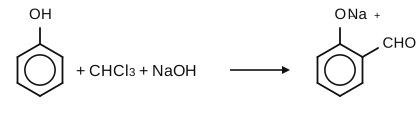
The electrophile involved is
अभिक्रिया

में सम्मिलित इलेक्ट्रॉनरागी है
  1. ADichloromethyl anion (C⊖HCl2)डाइक्लोरोमेथिल ऋणायन (C⊖HCl2)
  2. BFormyl cation (C⊕HO)फॉर्मिल धनायन (C⊕HO)
  3. CDichloromethyl cation (C⊕HCl2)डाइक्लोरोमेथिल धनायन (C⊕HCl2)
  4. DDichlorocarbene (:CCl2)डाइक्लोरोकार्बीन (:CCl2)
Show answer

Concept: Reimer–Tiemann reaction: phenol + CHCl3 + aq. NaOH → salicylaldehyde (after acidification). The electrophile is the electron-deficient (6-electron) dichlorocarbene.

  1. CHCl3 + OH– ⇌ –:CCl3 + H2O
  2. –:CCl3 → :CCl2 + Cl– (α-elimination)
  3. :CCl2 attacks the o-position of the phenoxide ion; the –CHCl2 group formed is hydrolysed to –CHO.
  4. An anion (A) cannot be an electrophile; CHO+ (B) and CHCl2+ (C) are not formed in alkaline medium.

Short trick: Reimer–Tiemann ↔ carbene; the same :CCl2 appears in the carbylamine test (CHCl3 + KOH).

Answer: (D)

अवधारणा: राइमर-टीमान अभिक्रिया: फीनॉल + CHCl3 + जलीय NaOH → सैलिसिलैल्डिहाइड (अम्लीकरण के बाद)। इलेक्ट्रॉनरागी इलेक्ट्रॉन-न्यून (6-इलेक्ट्रॉन) डाइक्लोरोकार्बीन है।

  1. CHCl3 + OH– ⇌ –:CCl3 + H2O
  2. –:CCl3 → :CCl2 + Cl– (α-विलोपन)
  3. :CCl2 फीनॉक्साइड आयन की o-स्थिति पर आक्रमण करता है; बना हुआ –CHCl2 समूह जल-अपघटित होकर –CHO बनता है।
  4. ऋणायन (A) इलेक्ट्रॉनरागी नहीं हो सकता; CHO+ (B) और CHCl2+ (C) क्षारीय माध्यम में नहीं बनते।

शॉर्ट ट्रिक: राइमर-टीमान ↔ कार्बीन; यही :CCl2 कार्बिलऐमीन परीक्षण (CHCl3 + KOH) में भी बनता है।

उत्तर: (D)
NEET UGChemistryPhenols – Reimer–Tiemann reactionNEET UG 2018 · 6 May Shift 1
Q402.
Carboxylic acids have higher boiling points than aldehydes, ketones and even alcohols of comparable molecular mass. It is due to their
कार्बोक्सिलिक अम्लों के क्वथनांक तुलनीय आण्विक द्रव्यमान वाले ऐल्डिहाइडों, कीटोनों और यहाँ तक कि ऐल्कोहॉलों से भी अधिक होते हैं। इसका कारण है इनका
  1. AMore extensive association of carboxylic acid via van der Waals force of attractionवान्डरवाल्स आकर्षण बलों द्वारा कार्बोक्सिलिक अम्ल का अधिक व्यापक संगुणन
  2. BFormation of carboxylate ionकार्बोक्सिलेट आयन का बनना
  3. CFormation of intramolecular H-bondingअंतःअणुक (intramolecular) H-आबंधन का बनना
  4. DFormation of intermolecular H-bondingअंतराअणुक (intermolecular) H-आबंधन का बनना
Show answer

Concept: Carboxylic acids form strong intermolecular H-bonds; two molecules pair up as a cyclic dimer (each –COOH gives and accepts an H-bond), which persists even in the vapour phase.

  1. More extensive intermolecular H-bonding than in alcohols ⇒ more energy needed to separate molecules ⇒ higher b.p.
  2. (A) – van der Waals forces are similar for compounds of comparable mass; they do not explain the difference.
  3. (B) – carboxylate ions are not formed in the pure acid.
  4. (C) – intramolecular H-bonding would lower the b.p. (e.g. o-nitrophenol).

Short trick: High b.p. ⇒ INTER-molecular H-bonds; intramolecular H-bonds lower b.p. and volatility.

Answer: (D)

अवधारणा: कार्बोक्सिलिक अम्ल प्रबल अंतराअणुक H-आबंध बनाते हैं; दो अणु चक्रीय द्वितय (dimer) बनाते हैं (प्रत्येक –COOH एक H-आबंध देता और लेता है), जो वाष्प अवस्था में भी बना रहता है।

  1. ऐल्कोहॉल से अधिक व्यापक अंतराअणुक H-आबंधन ⇒ अणुओं को अलग करने में अधिक ऊर्जा ⇒ उच्च क्वथनांक।
  2. (A) – तुलनीय द्रव्यमान वाले यौगिकों में वान्डरवाल्स बल लगभग समान होते हैं; ये अंतर की व्याख्या नहीं करते।
  3. (B) – शुद्ध अम्ल में कार्बोक्सिलेट आयन नहीं बनते।
  4. (C) – अंतःअणुक H-आबंधन क्वथनांक को कम करता है (जैसे o-नाइट्रोफीनॉल)।

शॉर्ट ट्रिक: उच्च क्वथनांक ⇒ अंतराअणुक H-आबंध; अंतःअणुक H-आबंध क्वथनांक और वाष्पशीलता घटाते हैं।

उत्तर: (D)

NEET UGChemistryCarboxylic acids – boiling point and H-bondingNEET UG 2018 · 6 May Shift 1
Q403.
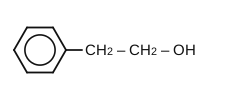
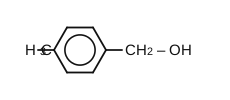
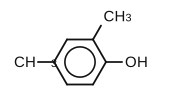
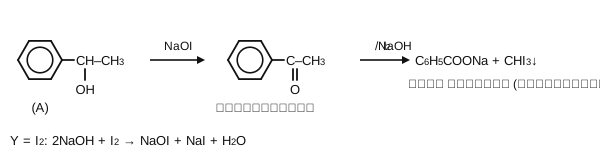
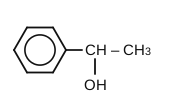
Compound A, C8H10O, is found to react with NaOI (produced by reacting Y with NaOH) and yields a yellow precipitate with characteristic smell.
A and Y are respectively
यौगिक A, C8H10O, NaOI (जो Y की NaOH से अभिक्रिया द्वारा बनता है) से अभिक्रिया करके विशिष्ट गंध वाला पीला अवक्षेप देता है।
A और Y क्रमशः हैं
  1. A and I2 तथा I2
  2. B and I2 तथा I2
  3. C and I2 तथा I2
  4. D and I2 तथा I2
Show answer

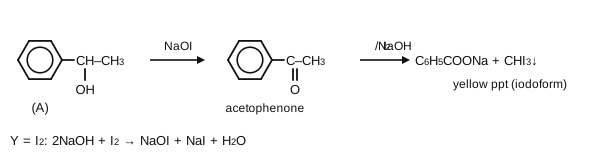
Concept: Iodoform test (yellow CHI3, antiseptic smell) is given by compounds with CH3CO– or CH3CH(OH)– group. NaOI is made from I2 + NaOH, so Y = I2.

  1. 2NaOH + I2 → NaOI + NaI + H2O.
  2. (A) 1-phenylethanol C6H5CH(OH)CH3 (C8H10O) has CH3CH(OH)– ⇒ oxidised to acetophenone, then gives CHI3 + C6H5COONa ✔.
  3. (B) 2-phenylethanol, (C) 4-methylbenzyl alcohol – primary alcohols without CH3CH(OH)– ✘.
  4. (D) 2,4-dimethylphenol – a phenol, no CH3CH(OH)– unit ✘.

Short trick: Look for "CH3 on the carbon that carries OH" – only (A) has it.

Answer: (A)

अवधारणा: आयोडोफॉर्म परीक्षण (पीला CHI3, पूतिरोधी गंध) उन यौगिकों द्वारा दिया जाता है जिनमें CH3CO– या CH3CH(OH)– समूह हो। NaOI, I2 + NaOH से बनता है, अतः Y = I2।

  1. 2NaOH + I2 → NaOI + NaI + H2O।
  2. (A) 1-फेनिलएथेनॉल C6H5CH(OH)CH3 (C8H10O) में CH3CH(OH)– है ⇒ ऐसीटोफ़ीनोन में ऑक्सीकृत होकर CHI3 + C6H5COONa देता है ✔।
  3. (B) 2-फेनिलएथेनॉल, (C) 4-मेथिलबेन्ज़िल ऐल्कोहॉल – प्राथमिक ऐल्कोहॉल, CH3CH(OH)– नहीं ✘।
  4. (D) 2,4-डाइमेथिलफीनॉल – फीनॉल है, CH3CH(OH)– इकाई नहीं ✘।

शॉर्ट ट्रिक: "OH वाले कार्बन पर CH3" खोजें – यह केवल (A) में है।

उत्तर: (A)

NEET UGChemistryAlcohols – iodoform testNEET UG 2018 · 6 May Shift 1
Q404.
Match the metal ions given in Column I with the spin magnetic moments of the ions given in Column II and assign the correct code :
Column IColumn II
a. Co3+i. 8 BM
b. Cr3+ii. 35 BM
c. Fe3+iii. 3 BM
d. Ni2+iv. 24 BM
v. 15 BM
स्तंभ I में दिए गए धातु आयनों का स्तंभ II में दिए गए आयनों के प्रचक्रण चुंबकीय आघूर्णों से मिलान कीजिए और सही कूट चुनिए :
स्तंभ Iस्तंभ II
a. Co3+i. 8 BM
b. Cr3+ii. 35 BM
c. Fe3+iii. 3 BM
d. Ni2+iv. 24 BM
v. 15 BM
  1. Aa-iv, b-i, c-ii, d-iii
  2. Ba-i, b-ii, c-iii, d-iv
  3. Ca-iv, b-v, c-ii, d-i
  4. Da-iii, b-v, c-i, d-ii
Show answer

Concept: Spin-only moment μ = n(n+2) BM, n = number of unpaired electrons.

  1. Co3+: [Ar]3d6, n = 4 ⇒ μ = 4×6=24 BM (iv)
  2. Cr3+: [Ar]3d3, n = 3 ⇒ μ = 3×5=15 BM (v)
  3. Fe3+: [Ar]3d5, n = 5 ⇒ μ = 5×7=35 BM (ii)
  4. Ni2+: [Ar]3d8, n = 2 ⇒ μ = 2×4=8 BM (i)
  5. Code: a-iv, b-v, c-ii, d-i.

Short trick: n(n+2) values to remember: n = 1→3, 2→8, 3→15, 4→24, 5→35. Fe3+ (d5) = √35 alone fixes c-ii; with a-iv only (A) and (C) remain, and Cr3+ = √15 picks (C).

Answer: (C)

अवधारणा: प्रचक्रण-मात्र आघूर्ण μ = n(n+2) BM, n = अयुग्मित इलेक्ट्रॉनों की संख्या।

  1. Co3+: [Ar]3d6, n = 4 ⇒ μ = 4×6=24 BM (iv)
  2. Cr3+: [Ar]3d3, n = 3 ⇒ μ = 3×5=15 BM (v)
  3. Fe3+: [Ar]3d5, n = 5 ⇒ μ = 5×7=35 BM (ii)
  4. Ni2+: [Ar]3d8, n = 2 ⇒ μ = 2×4=8 BM (i)
  5. कूट: a-iv, b-v, c-ii, d-i।

शॉर्ट ट्रिक: n(n+2) के मान याद रखें: n = 1→3, 2→8, 3→15, 4→24, 5→35। Fe3+ (d5) = √35 से c-ii तय; a-iv के साथ केवल (A) और (C) बचते हैं, और Cr3+ = √15 से (C)।

उत्तर: (C)

NEET UGChemistryd-Block – spin-only magnetic momentNEET UG 2018 · 6 May Shift 1
Q405.
Which one of the following ions exhibits d-d transition and paramagnetism as well?
निम्नलिखित में से कौन-सा आयन d-d संक्रमण और अनुचुंबकत्व दोनों दर्शाता है?
  1. AMnO4–
  2. BCr2O72–
  3. CCrO42–
  4. DMnO42–
Show answer

Concept: Both d-d transition and paramagnetism need at least one unpaired d-electron (d1–d9). d0 ions are diamagnetic; their colour comes from charge transfer (LMCT), not d-d.

  1. MnO4–: Mn(+7) = 3d0 – diamagnetic; purple colour is charge transfer.
  2. Cr2O72–, CrO42–: Cr(+6) = 3d0 – diamagnetic.
  3. MnO42–: Mn(+6) = 3d1, n = 1 ⇒ paramagnetic and shows d-d transition ✔.

Short trick: Count d-electrons = group number − oxidation state: Mn(7−6) = 1 ⇒ only manganate has a d-electron.

Answer: (D)

अवधारणा: d-d संक्रमण और अनुचुंबकत्व दोनों के लिए कम से कम एक अयुग्मित d-इलेक्ट्रॉन (d1–d9) चाहिए। d0 आयन प्रतिचुंबकीय होते हैं; इनका रंग आवेश-स्थानांतरण (LMCT) से होता है, d-d से नहीं।

  1. MnO4–: Mn(+7) = 3d0 – प्रतिचुंबकीय; बैंगनी रंग आवेश-स्थानांतरण के कारण।
  2. Cr2O72–, CrO42–: Cr(+6) = 3d0 – प्रतिचुंबकीय।
  3. MnO42–: Mn(+6) = 3d1, n = 1 ⇒ अनुचुंबकीय और d-d संक्रमण दर्शाता है ✔।

शॉर्ट ट्रिक: d-इलेक्ट्रॉन = वर्ग संख्या − ऑक्सीकरण अवस्था: Mn(7−6) = 1 ⇒ केवल मैंगनेट में d-इलेक्ट्रॉन है।

उत्तर: (D)

NEET UGChemistryd-Block – colour and magnetism of oxoanionsNEET UG 2018 · 6 May Shift 1
Q406.
Iron carbonyl, Fe(CO)5 is
आयरन कार्बोनिल, Fe(CO)5 है
  1. ATrinuclearत्रिनाभिकीय (Trinuclear)
  2. BMononuclearएकनाभिकीय (Mononuclear)
  3. CTetranuclearचतुर्नाभिकीय (Tetranuclear)
  4. DDinuclearद्विनाभिकीय (Dinuclear)
Show answer

Concept: Nuclearity = number of metal atoms in one complex unit.

  1. Fe(CO)5 has one Fe atom ⇒ mononuclear (trigonal bipyramidal, dsp3).
  2. Compare: Co2(CO)8, Mn2(CO)10 – dinuclear; Fe3(CO)12 – trinuclear.

Short trick: Just read the subscript on the metal: Fe1 ⇒ mono.

Answer: (B)

अवधारणा: नाभिकता = एक संकुल इकाई में धातु परमाणुओं की संख्या।

  1. Fe(CO)5 में एक Fe परमाणु है ⇒ एकनाभिकीय (त्रिकोणीय द्विपिरैमिडी, dsp3)।
  2. तुलना: Co2(CO)8, Mn2(CO)10 – द्विनाभिकीय; Fe3(CO)12 – त्रिनाभिकीय।

शॉर्ट ट्रिक: धातु पर लिखा अधोलेख देखें: Fe1 ⇒ एक।

उत्तर: (B)

NEET UGChemistryCoordination compounds – metal carbonylsNEET UG 2018 · 6 May Shift 1
Q407.
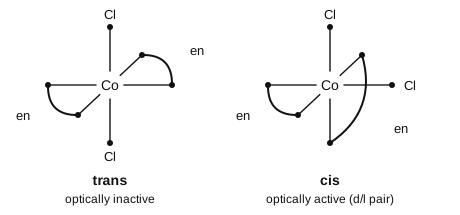
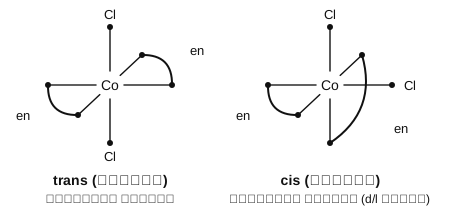
The type of isomerism shown by the complex [CoCl2(en)2] is
संकुल [CoCl2(en)2] द्वारा दर्शाई जाने वाली समावयवता का प्रकार है
  1. AIonization isomerismआयनन समावयवता
  2. BCoordination isomerismउपसहसंयोजन समावयवता
  3. CGeometrical isomerismज्यामितीय समावयवता
  4. DLinkage isomerismबंधनी (linkage) समावयवता
Show answer

Concept: An octahedral complex of type [M(AA)2B2] shows geometrical (cis–trans) isomerism; the cis form is also optically active.

  1. Co has CN 6 (2 Cl + 2 bidentate en) ⇒ octahedral [M(AA)2B2].
  2. Two Cl can be opposite (trans) or adjacent (cis) ⇒ geometrical isomers.
  3. Ionization isomerism needs a counter-ion to exchange; coordination isomerism needs both cation and anion to be complexes; linkage isomerism needs an ambidentate ligand (NO2–, SCN–) – none present.

Short trick: [M(AA)2B2] ⇒ cis + trans, and cis exists as d and l ⇒ 3 stereoisomers in total.

Answer: (C)

अवधारणा: [M(AA)2B2] प्रकार का अष्टफलकीय संकुल ज्यामितीय (समपक्ष–विपक्ष) समावयवता दर्शाता है; समपक्ष (cis) रूप प्रकाशिक सक्रिय भी होता है।

  1. Co की उपसहसंयोजन संख्या 6 है (2 Cl + 2 द्विदंतुर en) ⇒ अष्टफलकीय [M(AA)2B2]।
  2. दोनों Cl आमने-सामने (विपक्ष/trans) या पास-पास (समपक्ष/cis) हो सकते हैं ⇒ ज्यामितीय समावयवी।
  3. आयनन समावयवता के लिए बदलने योग्य प्रति-आयन चाहिए; उपसहसंयोजन समावयवता के लिए धनायन और ऋणायन दोनों संकुल होने चाहिए; बंधनी समावयवता के लिए उभयदंती लिगन्ड (NO2–, SCN–) चाहिए – इनमें से कोई उपस्थित नहीं।

शॉर्ट ट्रिक: [M(AA)2B2] ⇒ cis + trans, और cis के d तथा l रूप ⇒ कुल 3 त्रिविम समावयवी।

उत्तर: (C)

NEET UGChemistryCoordination compounds – isomerismNEET UG 2018 · 6 May Shift 1
Q408.
The geometry and magnetic behaviour of the complex [Ni(CO)4] are
संकुल [Ni(CO)4] की ज्यामिति और चुंबकीय व्यवहार हैं
  1. ASquare planar geometry and paramagneticवर्ग समतली ज्यामिति और अनुचुंबकीय
  2. BTetrahedral geometry and diamagneticचतुष्फलकीय ज्यामिति और प्रतिचुंबकीय
  3. CSquare planar geometry and diamagneticवर्ग समतली ज्यामिति और प्रतिचुंबकीय
  4. DTetrahedral geometry and paramagneticचतुष्फलकीय ज्यामिति और अनुचुंबकीय
Show answer

Concept: In [Ni(CO)4] nickel is in the zero oxidation state; CO is a strong-field ligand.

  1. Ni(0): [Ar]3d84s2; CO pushes the 4s electrons into 3d ⇒ 3d104s0.
  2. Four CO use the empty 4s + three 4p orbitals ⇒ sp3 ⇒ tetrahedral.
  3. All electrons paired (3d10) ⇒ diamagnetic.
  4. Square planar needs dsp2 (a vacant 3d orbital) – not possible with d10.

Short trick: d10 + 4 ligands ⇒ always tetrahedral and diamagnetic (e.g. [Ni(CO)4], [Zn(NH3)4]2+).

Answer: (B)

अवधारणा: [Ni(CO)4] में निकैल शून्य ऑक्सीकरण अवस्था में है; CO प्रबल क्षेत्र लिगन्ड है।

  1. Ni(0): [Ar]3d84s2; CO, 4s इलेक्ट्रॉनों को 3d में धकेल देता है ⇒ 3d104s0।
  2. चार CO रिक्त 4s + तीन 4p कक्षकों का उपयोग करते हैं ⇒ sp3 ⇒ चतुष्फलकीय।
  3. सभी इलेक्ट्रॉन युग्मित (3d10) ⇒ प्रतिचुंबकीय।
  4. वर्ग समतली के लिए dsp2 (एक रिक्त 3d कक्षक) चाहिए – d10 में संभव नहीं।

शॉर्ट ट्रिक: d10 + 4 लिगन्ड ⇒ सदैव चतुष्फलकीय और प्रतिचुंबकीय (जैसे [Ni(CO)4], [Zn(NH3)4]2+)।

उत्तर: (B)

NEET UGChemistryCoordination compounds – VBT of [Ni(CO)<sub>4</sub>]NEET UG 2018 · 6 May Shift 1
Q409.
Following solutions were prepared by mixing different volumes of NaOH and HCl of different concentrations :
a. 60 mL M10 HCl + 40 mL M10 NaOH
b. 55 mL M10 HCl + 45 mL M10 NaOH
c. 75 mL M5 HCl + 25 mL M5 NaOH
d. 100 mL M10 HCl + 100 mL M10 NaOH
pH of which one of them will be equal to 1?
विभिन्न सांद्रताओं वाले NaOH और HCl के विभिन्न आयतनों को मिलाकर निम्नलिखित विलयन बनाए गए :
a. 60 mL M10 HCl + 40 mL M10 NaOH
b. 55 mL M10 HCl + 45 mL M10 NaOH
c. 75 mL M5 HCl + 25 mL M5 NaOH
d. 100 mL M10 HCl + 100 mL M10 NaOH
इनमें से किसका pH 1 के बराबर होगा?
  1. Ad
  2. Ba
  3. Cb
  4. Dc
Show answer

Concept: For a strong acid–strong base mixture: excess mmol of H+ ÷ total volume (mL) = [H+]; pH = −log[H+].

  1. a: HCl 60 × 0.1 = 6 mmol, NaOH 4 mmol ⇒ excess H+ = 2 mmol in 100 mL ⇒ 0.02 M ⇒ pH ≈ 1.7
  2. b: 5.5 − 4.5 = 1 mmol in 100 mL ⇒ 0.01 M ⇒ pH = 2
  3. c: HCl 75 × 0.2 = 15 mmol, NaOH 25 × 0.2 = 5 mmol ⇒ excess 10 mmol in 100 mL ⇒ [H+] = 0.1 M ⇒ pH = 1 ✔
  4. d: 10 mmol each ⇒ neutral ⇒ pH = 7

Short trick: pH 1 ⇒ [H+] = 0.1 M ⇒ in 100 mL you need 10 mmol excess acid: only c gives 15 − 5 = 10.

Answer: (D)

अवधारणा: प्रबल अम्ल–प्रबल क्षार मिश्रण में: H+ के आधिक्य mmol ÷ कुल आयतन (mL) = [H+]; pH = −log[H+]।

  1. a: HCl 60 × 0.1 = 6 mmol, NaOH 4 mmol ⇒ आधिक्य H+ = 2 mmol, 100 mL में ⇒ 0.02 M ⇒ pH ≈ 1.7
  2. b: 5.5 − 4.5 = 1 mmol, 100 mL में ⇒ 0.01 M ⇒ pH = 2
  3. c: HCl 75 × 0.2 = 15 mmol, NaOH 25 × 0.2 = 5 mmol ⇒ आधिक्य 10 mmol, 100 mL में ⇒ [H+] = 0.1 M ⇒ pH = 1 ✔
  4. d: दोनों 10 mmol ⇒ उदासीन ⇒ pH = 7

शॉर्ट ट्रिक: pH 1 ⇒ [H+] = 0.1 M ⇒ 100 mL में 10 mmol आधिक्य अम्ल चाहिए: केवल c में 15 − 5 = 10।

उत्तर: (D)

NEET UGChemistryIonic equilibrium – pH of acid–base mixturesNEET UG 2018 · 6 May Shift 1
Q410.
On which of the following properties does the coagulating power of an ion depend?
किसी आयन की स्कंदन क्षमता निम्नलिखित में से किस गुण पर निर्भर करती है?
  1. ABoth magnitude and sign of the charge on the ionआयन पर आवेश के परिमाण और चिह्न दोनों पर
  2. BSize of the ion aloneकेवल आयन के आकार पर
  3. CThe magnitude of the charge on the ion aloneकेवल आयन पर आवेश के परिमाण पर
  4. DThe sign of charge on the ion aloneकेवल आयन पर आवेश के चिह्न पर
Show answer

Concept: Hardy–Schulze rule: the ion that coagulates a sol is the one carrying charge opposite to the colloidal particles (sign), and its coagulating power increases with its valency (magnitude).

  1. Negative sol (As2S3): Al3+ > Ba2+ > Na+.
  2. Positive sol (Fe(OH)3): [Fe(CN)6]4– > PO43– > SO42– > Cl–.
  3. So both the sign (must be opposite) and the magnitude (higher = stronger) matter; (B), (C), (D) each give only part of the rule.

Short trick: Hardy–Schulze = "opposite sign, higher charge, faster coagulation".

Answer: (A)

अवधारणा: हार्डी-शुल्ज़े नियम: सॉल का स्कंदन वह आयन करता है जिसका आवेश कोलॉइडी कणों के विपरीत हो (चिह्न), और उसकी स्कंदन क्षमता उसकी संयोजकता (परिमाण) के साथ बढ़ती है।

  1. ऋणात्मक सॉल (As2S3): Al3+ > Ba2+ > Na+।
  2. धनात्मक सॉल (Fe(OH)3): [Fe(CN)6]4– > PO43– > SO42– > Cl–।
  3. अतः चिह्न (विपरीत होना चाहिए) और परिमाण (अधिक = प्रबल) दोनों महत्त्वपूर्ण हैं; (B), (C), (D) प्रत्येक नियम का केवल एक भाग बताते हैं।

शॉर्ट ट्रिक: हार्डी-शुल्ज़े = "विपरीत चिह्न, अधिक आवेश, तीव्र स्कंदन"।

उत्तर: (A)

NEET UGChemistrySurface chemistry – coagulation (Hardy–Schulze rule)NEET UG 2018 · 6 May Shift 1
Q411.
Given van der Waals constant for NH3, H2, O2 and CO2 are respectively 4.17, 0.244, 1.36 and 3.59, which one of the following gases is most easily liquefied?
NH3, H2, O2 और CO2 के वान्डरवाल्स स्थिरांक क्रमशः 4.17, 0.244, 1.36 और 3.59 दिए गए हैं, निम्नलिखित में से कौन-सी गैस सबसे आसानी से द्रवित होगी?
  1. AO2
  2. BH2
  3. CNH3
  4. DCO2
Show answer

Concept: van der Waals constant a measures intermolecular attraction; larger a ⇒ stronger attraction ⇒ higher critical temperature (Tc = 8a/27Rb) ⇒ easier liquefaction.

  1. a values: NH3 4.17 > CO2 3.59 > O2 1.36 > H2 0.244.
  2. Largest a ⇒ NH3 (also H-bonded) is most easily liquefied; H2 is the hardest.

Short trick: Liquefaction ease ∝ a (∝ Tc). Pick the biggest a.

Answer: (C)

अवधारणा: वान्डरवाल्स स्थिरांक a अंतराअणुक आकर्षण का माप है; अधिक a ⇒ प्रबल आकर्षण ⇒ उच्च क्रांतिक ताप (Tc = 8a/27Rb) ⇒ आसान द्रवण।

  1. a के मान: NH3 4.17 > CO2 3.59 > O2 1.36 > H2 0.244।
  2. सबसे अधिक a ⇒ NH3 (H-आबंधित भी) सबसे आसानी से द्रवित होती है; H2 सबसे कठिन।

शॉर्ट ट्रिक: द्रवण की सरलता ∝ a (∝ Tc)। सबसे बड़ा a चुनें।

उत्तर: (C)

NEET UGChemistryStates of matter – van der Waals constant aNEET UG 2018 · 6 May Shift 1
Q412.
The solubility of BaSO4 in water is 2.42 × 10⁻³ gL–1 at 298 K. The value of its solubility product (Ksp) will be
(Given molar mass of BaSO4 = 233 g mol–1)
298 K पर जल में BaSO4 की विलेयता 2.42 × 10⁻³ gL–1 है। इसके विलेयता गुणनफल (Ksp) का मान होगा
(दिया है BaSO4 का मोलर द्रव्यमान = 233 g mol–1)
  1. A1.08 × 10–14 mol2L–2
  2. B1.08 × 10–12 mol2L–2
  3. C1.08 × 10–10 mol2L–2
  4. D1.08 × 10–8 mol2L–2
Show answer

Concept: For an AB-type salt, BaSO4(s) ⇌ Ba2+ + SO42–; Ksp = s2 (s in mol L–1).

  1. s = (2.42 × 10⁻³ g L–1) / (233 g mol–1) = 1.04 × 10⁻⁵ mol L–1
  2. Ksp = s2 = (1.04 × 10⁻⁵)2 = 1.08 × 10⁻¹⁰ mol2 L–2

Short trick: s ≈ 10–5 ⇒ Ksp ≈ 10–10; the mantissa 1.08 is common to all options, so only the power matters.

Answer: (C) 1.08 × 10⁻¹⁰ mol2 L–2

अवधारणा: AB प्रकार के लवण के लिए, BaSO4(s) ⇌ Ba2+ + SO42–; Ksp = s2 (s, mol L–1 में)।

  1. s = (2.42 × 10⁻³ g L–1) / (233 g mol–1) = 1.04 × 10⁻⁵ mol L–1
  2. Ksp = s2 = (1.04 × 10⁻⁵)2 = 1.08 × 10⁻¹⁰ mol2 L–2

शॉर्ट ट्रिक: s ≈ 10–5 ⇒ Ksp ≈ 10–10; 1.08 सभी विकल्पों में समान है, अतः केवल घातांक देखें।

उत्तर: (C) 1.08 × 10⁻¹⁰ mol2 L–2

NEET UGChemistryIonic equilibrium – solubility productNEET UG 2018 · 6 May Shift 1
Q413.
In which case is number of molecules of water maximum?
किस स्थिति में जल के अणुओं की संख्या अधिकतम है?
  1. A0.00224 L of water vapours at 1 atm and 273 K1 atm और 273 K पर 0.00224 L जलवाष्प
  2. B0.18 g of water0.18 g जल
  3. C18 mL of water18 mL जल
  4. D10–3 mol of water10–3 mol जल
Show answer

Concept: Number of molecules = moles × NA; compare moles.

  1. (A) At STP 22.4 L = 1 mol ⇒ 0.00224/22.4 = 10–4 mol.
  2. (B) 0.18/18 = 10–2 mol.
  3. (C) 18 mL water (density 1 g mL–1) = 18 g = 1 mol ⇒ NA molecules (maximum).
  4. (D) 10–3 mol.

Short trick: Liquid water is ~1000 times denser than vapour – 18 mL of liquid is a full mole.

Answer: (C)

अवधारणा: अणुओं की संख्या = मोल × NA; मोलों की तुलना करें।

  1. (A) STP पर 22.4 L = 1 mol ⇒ 0.00224/22.4 = 10–4 mol।
  2. (B) 0.18/18 = 10–2 mol।
  3. (C) 18 mL जल (घनत्व 1 g mL–1) = 18 g = 1 mol ⇒ NA अणु (अधिकतम)।
  4. (D) 10–3 mol।

शॉर्ट ट्रिक: द्रव जल, वाष्प से लगभग 1000 गुना सघन है – 18 mL द्रव पूरा एक मोल है।

उत्तर: (C)

NEET UGChemistrySome basic concepts – mole conceptNEET UG 2018 · 6 May Shift 1
Q414.
The correct difference between first and second order reactions is that
प्रथम और द्वितीय कोटि की अभिक्रियाओं के बीच सही अंतर यह है कि
  1. AA first-order reaction can catalyzed; a second-order reaction cannot be catalyzedप्रथम कोटि की अभिक्रिया उत्प्रेरित हो सकती है; द्वितीय कोटि की अभिक्रिया उत्प्रेरित नहीं हो सकती
  2. BThe half-life of a first-order reaction does not depend on [A]0; the half-life of a second-order reaction does depend on [A]0प्रथम कोटि की अभिक्रिया का अर्धायु काल [A]0 पर निर्भर नहीं करता; द्वितीय कोटि की अभिक्रिया का अर्धायु काल [A]0 पर निर्भर करता है
  3. CThe rate of a first-order reaction does not depend on reactant concentrations; the rate of a second-order reaction does depend on reactant concentrationsप्रथम कोटि की अभिक्रिया का वेग अभिकारक सांद्रताओं पर निर्भर नहीं करता; द्वितीय कोटि की अभिक्रिया का वेग अभिकारक सांद्रताओं पर निर्भर करता है
  4. DThe rate of a first-order reaction does depend on reactant concentrations; the rate of a second-order reaction does not depend on reactant concentrationsप्रथम कोटि की अभिक्रिया का वेग अभिकारक सांद्रताओं पर निर्भर करता है; द्वितीय कोटि की अभिक्रिया का वेग अभिकारक सांद्रताओं पर निर्भर नहीं करता
Show answer

Concept: Half-life: first order t1/2=0.693k (independent of [A]0); second order t1/2=1k[A]0 (depends on [A]0).

  1. (B) is exactly this difference ✔.
  2. (A) – reactions of any order can be catalysed ✘.
  3. (C), (D) – rates of both first-order (r = k[A]) and second-order (r = k[A]2) reactions depend on concentration ✘; only zero-order rate is concentration-independent.

Short trick: General rule: t1/2 ∝ [A]01−n ⇒ n = 1 gives no dependence; n = 2 gives t1/2 ∝ 1/[A]0.

Answer: (B)

अवधारणा: अर्धायु: प्रथम कोटि t1/2=0.693k ([A]0 से स्वतंत्र); द्वितीय कोटि t1/2=1k[A]0 ([A]0 पर निर्भर)।

  1. (B) ठीक यही अंतर है ✔।
  2. (A) – किसी भी कोटि की अभिक्रिया उत्प्रेरित हो सकती है ✘।
  3. (C), (D) – प्रथम कोटि (r = k[A]) और द्वितीय कोटि (r = k[A]2) दोनों के वेग सांद्रता पर निर्भर करते हैं ✘; केवल शून्य कोटि का वेग सांद्रता से स्वतंत्र होता है।

शॉर्ट ट्रिक: सामान्य नियम: t1/2 ∝ [A]01−n ⇒ n = 1 पर कोई निर्भरता नहीं; n = 2 पर t1/2 ∝ 1/[A]0।

उत्तर: (B)

NEET UGChemistryChemical kinetics – first vs second orderNEET UG 2018 · 6 May Shift 1
Q415.
Among CaH2, BeH2, BaH2, the order of ionic character is
CaH2, BeH2, BaH2 में आयनिक गुण का क्रम है
  1. ABeH2 < BaH2 < CaH2
  2. BCaH2 < BeH2 < BaH2
  3. CBeH2 < CaH2 < BaH2
  4. DBaH2 < BeH2 < CaH2
Show answer

Concept: Down group 2, the cation gets larger and more electropositive (less polarising, Fajans rule) ⇒ hydrides become more ionic.

  1. BeH2: tiny Be2+, covalent polymeric hydride – least ionic.
  2. CaH2 is ionic (saline); BaH2, with the largest, most electropositive Ba, is the most ionic.
  3. Order: BeH2 < CaH2 < BaH2.

Short trick: Same anion, bigger cation ⇒ more ionic. Follow the group order Be → Ca → Ba.

Answer: (C)

अवधारणा: वर्ग 2 में नीचे जाने पर धनायन बड़ा और अधिक विद्युत-धनात्मक (कम ध्रुवणकारी, फ़ायान्स नियम) होता है ⇒ हाइड्राइड अधिक आयनिक होते जाते हैं।

  1. BeH2: अत्यंत छोटा Be2+, सहसंयोजी बहुलकी हाइड्राइड – न्यूनतम आयनिक।
  2. CaH2 आयनिक (लवणीय) है; BaH2 सबसे बड़े, सबसे विद्युत-धनात्मक Ba के कारण सर्वाधिक आयनिक है।
  3. क्रम: BeH2 < CaH2 < BaH2।

शॉर्ट ट्रिक: ऋणायन समान, धनायन बड़ा ⇒ अधिक आयनिक। वर्ग का क्रम Be → Ca → Ba अपनाएँ।

उत्तर: (C)

NEET UGChemistrys-Block – ionic character of hydridesNEET UG 2018 · 6 May Shift 1
Q416.
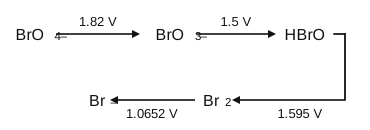
Consider the change in oxidation state of Bromine corresponding to different emf values as shown in the diagram below :

Then the species undergoing disproportionation is
नीचे दिए गए आरेख में विभिन्न emf मानों के संगत ब्रोमीन की ऑक्सीकरण अवस्था में परिवर्तन पर विचार कीजिए :

तब असमानुपातन (disproportionation) करने वाली स्पीशीज़ है
  1. ABr2
  2. BBrO4–
  3. CBrO3–
  4. DHBrO
Show answer

Concept: In a Latimer diagram a species disproportionates if E° on its right (its reduction) is greater than E° on its left (reduction of the species above it), i.e. E°cell = E°right − E°left > 0.

  1. HBrO: right E°(HBrO/Br2) = 1.595 V; left E°(BrO3–/HBrO) = 1.5 V.
  2. For 5HBrO → 2Br2 + BrO3– (+ H+, H2O): E°cell = 1.595 − 1.5 = +0.095 V > 0 ⇒ ΔG° < 0 ⇒ spontaneous ✔.
  3. Br2: E°(Br2/Br–) = 1.0652 V < E°(HBrO/Br2) = 1.595 V ⇒ E°cell = −0.53 V ⇒ no disproportionation.
  4. BrO3–: right 1.5 V < left 1.82 V ⇒ E°cell = −0.32 V ✘. BrO4– is the highest state – it cannot be oxidised further ✘.

Short trick: Scan the diagram: whenever "E° to the right > E° to the left", the middle species is unstable. Only HBrO (1.595 > 1.5) fits.

Answer: (D)

अवधारणा: लैटिमर आरेख में कोई स्पीशीज़ तब असमानुपातित होती है जब उसके दाईं ओर का E° (उसका अपचयन) उसके बाईं ओर के E° (ऊपर वाली स्पीशीज़ का अपचयन) से अधिक हो, अर्थात् E°cell = E°दायाँ − E°बायाँ > 0।

  1. HBrO: दायाँ E°(HBrO/Br2) = 1.595 V; बायाँ E°(BrO3–/HBrO) = 1.5 V।
  2. 5HBrO → 2Br2 + BrO3– (+ H+, H2O) के लिए: E°cell = 1.595 − 1.5 = +0.095 V > 0 ⇒ ΔG° < 0 ⇒ स्वतः प्रवर्तित ✔।
  3. Br2: E°(Br2/Br–) = 1.0652 V < E°(HBrO/Br2) = 1.595 V ⇒ E°cell = −0.53 V ⇒ असमानुपातन नहीं।
  4. BrO3–: दायाँ 1.5 V < बायाँ 1.82 V ⇒ E°cell = −0.32 V ✘। BrO4– उच्चतम अवस्था है – इसका आगे ऑक्सीकरण संभव नहीं ✘।

शॉर्ट ट्रिक: आरेख में देखें: जहाँ "दाईं ओर का E° > बाईं ओर का E°" हो, बीच की स्पीशीज़ अस्थायी है। केवल HBrO (1.595 > 1.5) पर यह लागू होता है।

उत्तर: (D)

NEET UGChemistryElectrochemistry – Latimer diagram and disproportionationNEET UG 2018 · 6 May Shift 1
Q417.
For the redox reaction
MnO4– + C2O42– + H+ → Mn2+ + CO2 + H2O
The correct coefficients of the reactants for the balanced equation are
अपचयोपचय अभिक्रिया
MnO4– + C2O42– + H+ → Mn2+ + CO2 + H2O
के संतुलित समीकरण में अभिकारकों के सही गुणांक हैं
  1. AMnO4– : 2, C2O42– : 16, H+ : 5
  2. BMnO4– : 2, C2O42– : 5, H+ : 16
  3. CMnO4– : 16, C2O42– : 5, H+ : 2
  4. DMnO4– : 5, C2O42– : 16, H+ : 2
Show answer

Concept: Electrons lost = electrons gained; balance O with H2O and H with H+.

  1. Mn: +7 → +2, gains 5 e– per MnO4–.
  2. C: +3 → +4; C2O42– → 2CO2 loses 2 e–.
  3. LCM 10 ⇒ 2MnO4– + 5C2O42–.
  4. O: 8 on Mn side become 8H2O ⇒ need 16H+: 2MnO4– + 5C2O42– + 16H+ → 2Mn2+ + 10CO2 + 8H2O.
  5. Charge check: −2 −10 +16 = +4 = 2 × (+2) ✔.

Short trick: Permanganate–oxalate in acid is always 2 : 5 : 16 – memorise it.

Answer: (B)

अवधारणा: खोए इलेक्ट्रॉन = प्राप्त इलेक्ट्रॉन; O को H2O से और H को H+ से संतुलित करें।

  1. Mn: +7 → +2, प्रति MnO4– 5 e– ग्रहण।
  2. C: +3 → +4; C2O42– → 2CO2 में 2 e– त्याग।
  3. LCM 10 ⇒ 2MnO4– + 5C2O42–।
  4. O: Mn ओर के 8 O, 8H2O बनाते हैं ⇒ 16H+ चाहिए: 2MnO4– + 5C2O42– + 16H+ → 2Mn2+ + 10CO2 + 8H2O।
  5. आवेश जाँच: −2 −10 +16 = +4 = 2 × (+2) ✔।

शॉर्ट ट्रिक: अम्लीय माध्यम में परमैंगनेट–ऑक्सैलेट सदैव 2 : 5 : 16 – इसे याद रखें।

उत्तर: (B)

NEET UGChemistryRedox reactions – balancing by ion-electron methodNEET UG 2018 · 6 May Shift 1
Q418.
Which one of the following conditions will favour maximum formation of the product in the reaction,
A2(g) + B2(g) ⇌ X2(g)   ΔrH = –X kJ?
अभिक्रिया
A2(g) + B2(g) ⇌ X2(g)   ΔrH = –X kJ
में उत्पाद के अधिकतम निर्माण के लिए निम्नलिखित में से कौन-सी परिस्थिति अनुकूल होगी?
  1. AHigh temperature and high pressureउच्च ताप और उच्च दाब
  2. BLow temperature and low pressureनिम्न ताप और निम्न दाब
  3. CLow temperature and high pressureनिम्न ताप और उच्च दाब
  4. DHigh temperature and low pressureउच्च ताप और निम्न दाब
Show answer

Concept: Le Chatelier: the equilibrium shifts to oppose the change imposed.

  1. Δng = 1 − 2 = −1 (fewer gas moles on product side) ⇒ high pressure favours the forward reaction.
  2. ΔH negative (exothermic) ⇒ low temperature favours the forward reaction.
  3. Hence low temperature and high pressure.

Short trick: Exothermic + volume-decreasing (like Haber process) ⇒ "low T, high P".

Answer: (C)

अवधारणा: ला-शातालिए: साम्य उस दिशा में खिसकता है जो लगाए गए परिवर्तन का विरोध करे।

  1. Δng = 1 − 2 = −1 (उत्पाद पक्ष में गैस के कम मोल) ⇒ उच्च दाब अग्र अभिक्रिया के अनुकूल।
  2. ΔH ऋणात्मक (ऊष्माक्षेपी) ⇒ निम्न ताप अग्र अभिक्रिया के अनुकूल।
  3. अतः निम्न ताप और उच्च दाब।

शॉर्ट ट्रिक: ऊष्माक्षेपी + आयतन घटाने वाली अभिक्रिया (हाबर प्रक्रम जैसी) ⇒ "निम्न T, उच्च P"।

उत्तर: (C)

NEET UGChemistryChemical equilibrium – Le Chatelier principleNEET UG 2018 · 6 May Shift 1
Q419.
When initial concentration of the reactant is doubled, the half-life period of a zero order reaction
जब अभिकारक की प्रारंभिक सांद्रता दोगुनी की जाती है, तो शून्य कोटि की अभिक्रिया का अर्धायु काल
  1. AIs tripledतीन गुना हो जाता है
  2. BIs doubledदोगुना हो जाता है
  3. CIs halvedआधा हो जाता है
  4. DRemains unchangedअपरिवर्तित रहता है
Show answer

Concept: Zero order: [A] = [A]0 − kt ⇒ t1/2=[A]02k, directly proportional to [A]0.

  1. [A]0 → 2[A]0 ⇒ t1/2 → 2 t1/2.

Short trick: t1/2 ∝ [A]01−n; n = 0 ⇒ t1/2 ∝ [A]0.

Answer: (B)

अवधारणा: शून्य कोटि: [A] = [A]0 − kt ⇒ t1/2=[A]02k, जो [A]0 के समानुपाती है।

  1. [A]0 → 2[A]0 ⇒ t1/2 → 2 t1/2।

शॉर्ट ट्रिक: t1/2 ∝ [A]01−n; n = 0 ⇒ t1/2 ∝ [A]0।

उत्तर: (B)

NEET UGChemistryChemical kinetics – zero-order half-lifeNEET UG 2018 · 6 May Shift 1
Q420.
The bond dissociation energies of X2, Y2 and XY are in the ratio of 1 : 0.5 : 1. ΔH for the formation of XY is –200 kJ mol–1. The bond dissociation energy of X2 will be
X2, Y2 और XY की आबंध वियोजन ऊर्जाएँ 1 : 0.5 : 1 के अनुपात में हैं। XY के निर्माण के लिए ΔH, –200 kJ mol–1 है। X2 की आबंध वियोजन ऊर्जा होगी
  1. A800 kJ mol–1
  2. B100 kJ mol–1
  3. C200 kJ mol–1
  4. D400 kJ mol–1
Show answer

Concept: ΔrH = Σ BE(bonds broken) − Σ BE(bonds formed).

  1. Formation of 1 mol XY: ½X2(g) + ½Y2(g) → XY(g).
  2. Let BE(X2) = a ⇒ BE(Y2) = 0.5a, BE(XY) = a.
  3. ΔH = ½a + ½(0.5a) − a = −a/4 = −200 ⇒ a = 800 kJ mol–1.

Short trick: Do not forget the ½ coefficients – using whole moles would wrongly give 400.

Answer: (A) 800 kJ mol–1

अवधारणा: ΔrH = Σ आबंध ऊर्जा (टूटे आबंध) − Σ आबंध ऊर्जा (बने आबंध)।

  1. 1 mol XY का निर्माण: ½X2(g) + ½Y2(g) → XY(g)।
  2. माना BE(X2) = a ⇒ BE(Y2) = 0.5a, BE(XY) = a।
  3. ΔH = ½a + ½(0.5a) − a = −a/4 = −200 ⇒ a = 800 kJ mol–1।

शॉर्ट ट्रिक: ½ गुणांक न भूलें – पूरे मोल लेने पर गलत उत्तर 400 आएगा।

उत्तर: (A) 800 kJ mol–1

NEET UGChemistryThermodynamics – bond enthalpyNEET UG 2018 · 6 May Shift 1