Q441.Select the incorrect match :
गलत सुमेल का चयन कीजिए:
- ASubmetacentric chromosomes – L-shaped chromosomesउपमध्यकेन्द्री गुणसूत्र – L-आकार के गुणसूत्र
- BAllosomes – Sex chromosomesएलोसोम – लिंग गुणसूत्र
- CLampbrush chromosomes – Diplotene bivalentsलैम्पब्रश गुणसूत्र – डिप्लोटीन द्विसंयोजक
- DPolytene chromosomes – Oocytes of amphibiansपॉलिटीन गुणसूत्र – उभयचरों के अंडक (oocytes)
Show answer
Concept: Giant chromosomes: polytene chromosomes occur in salivary glands of dipteran insect larvae (e.g. Drosophila, Chironomus); lampbrush chromosomes occur in amphibian oocytes at diplotene.
- (A) Correct – submetacentric (centromere slightly off-centre) appear L-shaped (NCERT).
- (B) Correct – allosomes = sex chromosomes (rest are autosomes).
- (C) Correct – lampbrush chromosomes are diplotene bivalents of meiosis I in oocytes.
- (D) Incorrect – oocytes of amphibians have lampbrush, not polytene, chromosomes.
Short trick: Polytene = "Poly-salivary" of flies; Lampbrush = "Lamp in the egg" (amphibian oocyte).
Answer: (D) Polytene chromosomes – Oocytes of amphibians
अवधारणा: विशाल गुणसूत्र: पॉलिटीन गुणसूत्र द्विपंखी (Diptera) कीट-लार्वा की लार ग्रंथियों में (जैसे Drosophila, Chironomus); लैम्पब्रश गुणसूत्र उभयचर अंडकों में डिप्लोटीन अवस्था पर पाए जाते हैं।
- (A) सही – उपमध्यकेन्द्री (गुणसूत्रबिंदु केंद्र से थोड़ा हटकर) L-आकार के दिखते हैं (NCERT)।
- (B) सही – एलोसोम = लिंग गुणसूत्र (शेष अलिंग गुणसूत्र)।
- (C) सही – लैम्पब्रश गुणसूत्र अंडकों में अर्धसूत्री-I के डिप्लोटीन द्विसंयोजक हैं।
- (D) गलत – उभयचर अंडकों में लैम्पब्रश गुणसूत्र होते हैं, पॉलिटीन नहीं।
शॉर्ट ट्रिक: पॉलिटीन = मक्खियों की लार ग्रंथि; लैम्पब्रश = अंडक (उभयचर)।
उत्तर: (D) पॉलिटीन गुणसूत्र – उभयचरों के अंडक
NEET UGBiologyCell: the unit of life – types of chromosomesNEET UG 2018 · 6 May Shift 1
Q442.Which of the following terms describe human dentition?
निम्नलिखित में से कौन-से पद मानव दंतविन्यास का वर्णन करते हैं?
- APleurodont, Monophyodont, Homodontपार्श्वदंती, एकबारदंती, समदंती
- BThecodont, Diphyodont, Heterodontगर्तदंती, द्विबारदंती, विषमदंती
- CThecodont, Diphyodont, Homodontगर्तदंती, द्विबारदंती, समदंती
- DPleurodont, Diphyodont, Heterodontपार्श्वदंती, द्विबारदंती, विषमदंती
Show answer
Concept: NCERT: humans have thecodont, diphyodont and heterodont dentition.
- Thecodont – each tooth embedded in a socket (alveolus) of the jaw bone (pleurodont = attached to inner side of jaw, as in lizards).
- Diphyodont – two sets: 20 milk (deciduous) teeth replaced by 32 permanent teeth (monophyodont = one set).
- Heterodont – different types: incisors, canines, premolars, molars (homodont = all alike).
- Only (B) has all three correct.
Short trick: "TDH" – Thecodont, Diphyodont, Heterodont ("The Dentist's Habit").
Answer: (B) Thecodont, Diphyodont, Heterodont
अवधारणा: NCERT: मनुष्य का दंतविन्यास गर्तदंती (thecodont), द्विबारदंती (diphyodont) और विषमदंती (heterodont) है।
- गर्तदंती – प्रत्येक दाँत जबड़े की अस्थि के गर्त (कूपिका) में धँसा (पार्श्वदंती = जबड़े के भीतरी पार्श्व से जुड़े, जैसे छिपकली)।
- द्विबारदंती – दो समुच्चय: 20 दूध (पर्णपाती) दाँत 32 स्थायी दाँतों से प्रतिस्थापित (एकबारदंती = एक समुच्चय)।
- विषमदंती – भिन्न प्रकार: कृंतक, रदनक, अग्रचर्वणक, चर्वणक (समदंती = सभी समान)।
- केवल (B) में तीनों सही हैं।
शॉर्ट ट्रिक: "TDH" – Thecodont, Diphyodont, Heterodont।
उत्तर: (B) गर्तदंती, द्विबारदंती, विषमदंती
NEET UGBiologyDigestion and absorption – human dentitionNEET UG 2018 · 6 May Shift 1
Q443.Which of the following events does not occur in rough endoplasmic reticulum?
निम्नलिखित में से कौन-सी घटना खुरदरी अंतःप्रद्रव्यी जालिका (RER) में नहीं होती?
- ACleavage of signal peptideसंकेत पेप्टाइड का विदलन
- BProtein glycosylationप्रोटीन ग्लाइकोसिलेशन
- CProtein foldingप्रोटीन वलन (folding)
- DPhospholipid synthesisफॉस्फोलिपिड संश्लेषण
Show answer
Concept: NCERT: RER is actively involved in protein synthesis and secretion; SER is the major site for synthesis of lipids (steroidal hormones in animals).
- (A) Signal peptide of secretory proteins is cleaved by signal peptidase in the RER lumen.
- (B) N-linked glycosylation begins in the RER.
- (C) Proteins fold (with chaperones) in the RER lumen.
- (D) Lipid/phospholipid synthesis is the job of SER → does not occur in RER (as per NCERT).
Short trick: Rough = Ribosomes = pRotein work; Smooth = Lipids ("Smooth like oil").
Answer: (D) Phospholipid synthesis
अवधारणा: NCERT: RER प्रोटीन संश्लेषण और स्रवण में सक्रिय है; SER लिपिड (जंतुओं में स्टेरॉयडी हॉर्मोन) संश्लेषण का मुख्य स्थल है।
- (A) स्रावी प्रोटीनों का संकेत पेप्टाइड RER की गुहा में सिग्नल पेप्टिडेज़ द्वारा काटा जाता है।
- (B) N-संयुक्त ग्लाइकोसिलेशन RER में आरंभ होता है।
- (C) प्रोटीन RER की गुहा में (चैपेरोन की सहायता से) वलित होते हैं।
- (D) लिपिड/फॉस्फोलिपिड संश्लेषण SER का कार्य है → RER में नहीं होता (NCERT के अनुसार)।
शॉर्ट ट्रिक: Rough = राइबोसोम = प्रोटीन कार्य; Smooth = लिपिड ("तेल जैसा चिकना")।
उत्तर: (D) फॉस्फोलिपिड संश्लेषण
NEET UGBiologyCell: the unit of life – endoplasmic reticulumNEET UG 2018 · 6 May Shift 1
Q444.Many ribosomes may associate with a single mRNA to form multiple copies of a polypeptide simultaneously. Such strings of ribosomes are termed as
अनेक राइबोसोम एक ही mRNA से जुड़कर एक साथ एक पॉलिपेप्टाइड की कई प्रतियाँ बना सकते हैं। राइबोसोमों की ऐसी शृंखलाएँ कहलाती हैं
- APlastidomeप्लास्टिडोम
- BPolyhedral bodiesबहुफलकीय पिंड
- CPolysomeपॉलीसोम
- DNucleosomeन्यूक्लियोसोम
Show answer
Concept: NCERT: several ribosomes may attach to a single mRNA and form a chain called polyribosome or polysome.
- Polysome increases the rate of translation – each ribosome makes its own copy of the polypeptide.
- Plastidome = all plastids of a cell; polyhedral bodies = carboxysomes/viral inclusion bodies.
- Nucleosome = DNA wrapped around histone octamer – unit of chromatin.
Short trick: Poly + some = many ribosomes on one mRNA.
Answer: (C) Polysome
अवधारणा: NCERT: अनेक राइबोसोम एक ही mRNA से जुड़कर एक शृंखला बनाते हैं जिसे पॉलीराइबोसोम या पॉलीसोम कहते हैं।
- पॉलीसोम अनुवादन की दर बढ़ाता है – प्रत्येक राइबोसोम पॉलिपेप्टाइड की अपनी प्रति बनाता है।
- प्लास्टिडोम = कोशिका के सभी लवक; बहुफलकीय पिंड = कार्बोक्सीसोम/विषाणु अंतर्विष्ट पिंड।
- न्यूक्लियोसोम = हिस्टोन अष्टक पर लिपटा DNA – क्रोमैटिन की इकाई।
शॉर्ट ट्रिक: Poly + some = एक mRNA पर अनेक राइबोसोम।
उत्तर: (C) पॉलीसोम
NEET UGBiologyMolecular basis of inheritance – polysomeNEET UG 2018 · 6 May Shift 1
Q445.In which disease does mosquito transmitted pathogen cause chronic inflammation of lymphatic vessels?
किस रोग में मच्छर द्वारा संचरित रोगजनक लसीका वाहिकाओं में दीर्घकालिक शोथ उत्पन्न करता है?
- ARingworm diseaseदाद (Ringworm)
- BAscariasisऐस्केरिऐसिस
- CElephantiasisफ़ीलपाँव (Elephantiasis)
- DAmoebiasisअमीबता (Amoebiasis)
Show answer
Concept: NCERT: Wuchereria (W. bancrofti, W. malayi) cause chronic inflammation of organs in which they live for many years, usually the lymphatic vessels of lower limbs – elephantiasis/filariasis; transmitted by female mosquito (Culex).
- Elephantiasis → mosquito vector + lymphatic inflammation → (C).
- Ringworm – fungal skin infection by contact (Microsporum, Trichophyton, Epidermophyton).
- Ascariasis – intestinal roundworm, via contaminated food/water.
- Amoebiasis – Entamoeba histolytica in large intestine; houseflies are mechanical carriers.
Short trick: Swollen "elephant" legs = blocked lymph by worms carried by Culex.
Answer: (C) Elephantiasis
अवधारणा: NCERT: Wuchereria (W. bancrofti, W. malayi) कई वर्षों तक जिन अंगों में रहते हैं, सामान्यतः निचले अंगों की लसीका वाहिकाओं में, दीर्घकालिक शोथ करते हैं – फ़ीलपाँव/फाइलेरियता; मादा मच्छर (Culex) द्वारा संचरित।
- फ़ीलपाँव → मच्छर वाहक + लसीका शोथ → (C)।
- दाद – संपर्क से त्वचा का कवक संक्रमण (Microsporum, Trichophyton, Epidermophyton)।
- ऐस्केरिऐसिस – आंत्र गोलकृमि, दूषित भोजन/जल से।
- अमीबता – बड़ी आंत में Entamoeba histolytica; घरेलू मक्खी यांत्रिक वाहक।
शॉर्ट ट्रिक: हाथी जैसे सूजे पैर = Culex द्वारा लाए कृमियों से अवरुद्ध लसीका।
उत्तर: (C) फ़ीलपाँव (Elephantiasis)
NEET UGBiologyHuman health and disease – filariasisNEET UG 2018 · 6 May Shift 1
Q446.Which of the following is not an autoimmune disease?
निम्नलिखित में से कौन-सा एक स्व-प्रतिरक्षा (autoimmune) रोग नहीं है?
- AAlzheimer's diseaseऐल्ज़ाइमर रोग
- BRheumatoid arthritisआमवाती संधिशोथ (Rheumatoid arthritis)
- CPsoriasisसोरायसिस
- DVitiligoविटिलिगो (श्वित्र)
Show answer
Concept: Autoimmunity = immune system attacks self cells. Rheumatoid arthritis (NCERT example), psoriasis and vitiligo are autoimmune.
- Alzheimer's disease is a neurodegenerative disorder associated with deficiency of the neurotransmitter acetylcholine – not autoimmune → (A).
- Rheumatoid arthritis – antibodies against synovial membrane/cartilage.
- Psoriasis – T-cell–mediated attack causing thick red scaly skin patches.
- Vitiligo – immune destruction of melanocytes → white patches.
Short trick: Three skin/joint diseases are autoimmune; the brain-degeneration one (Alzheimer's – low acetylcholine) is the odd one out.
Answer: (A) Alzheimer's disease
अवधारणा: स्व-प्रतिरक्षा = प्रतिरक्षा तंत्र का अपनी ही कोशिकाओं पर आक्रमण। आमवाती संधिशोथ (NCERT उदाहरण), सोरायसिस और विटिलिगो स्व-प्रतिरक्षा रोग हैं।
- ऐल्ज़ाइमर रोग तंत्रिका-अपह्रासी विकार है जो तंत्रिकाप्रेषी ऐसीटिलकोलीन की कमी से जुड़ा है – स्व-प्रतिरक्षा नहीं → (A)।
- आमवाती संधिशोथ – साइनोवियल झिल्ली/उपास्थि के विरुद्ध प्रतिरक्षी।
- सोरायसिस – T-कोशिका मध्यस्थ आक्रमण से त्वचा पर मोटे लाल शल्की धब्बे।
- विटिलिगो – मेलेनोसाइटों का प्रतिरक्षी विनाश → सफेद धब्बे।
शॉर्ट ट्रिक: तीन त्वचा/जोड़ रोग स्व-प्रतिरक्षी हैं; मस्तिष्क-अपह्रास वाला (ऐल्ज़ाइमर – कम ऐसीटिलकोलीन) अलग है।
उत्तर: (A) ऐल्ज़ाइमर रोग
NEET UGBiologyHuman health and disease – autoimmunityNEET UG 2018 · 6 May Shift 1
Q447.Among the following sets of examples for divergent evolution, select the incorrect option :
अपसारी विकास के उदाहरणों के निम्नलिखित समूहों में से गलत विकल्प चुनिए:
- ABrain of bat, man and cheetahचमगादड़, मनुष्य और चीता का मस्तिष्क
- BHeart of bat, man and cheetahचमगादड़, मनुष्य और चीता का हृदय
- CForelimbs of man, bat and cheetahमनुष्य, चमगादड़ और चीता के अग्रपाद
- DEye of octopus, bat and manऑक्टोपस, चमगादड़ और मनुष्य की आँख
Show answer
Concept: Divergent evolution → homologous organs (same origin, different functions), e.g. vertebrate hearts, brains, forelimbs. Convergent evolution → analogous organs (different origin, similar function).
- (A), (B), (C) – structures of vertebrates (mammals) with common ancestry → homologous → divergent: correct examples.
- (D) Eye of octopus (mollusc) and of mammals have different origins but similar function → analogous → convergent evolution → incorrect as a divergent example.
Short trick: If an invertebrate (octopus) is mixed with vertebrates → analogy/convergent.
Answer: (D) Eye of octopus, bat and man
अवधारणा: अपसारी विकास → समजात अंग (समान उत्पत्ति, भिन्न कार्य), जैसे कशेरुकियों के हृदय, मस्तिष्क, अग्रपाद। अभिसारी विकास → समरूप अंग (भिन्न उत्पत्ति, समान कार्य)।
- (A), (B), (C) – समान पूर्वज वाले कशेरुकियों (स्तनधारियों) की संरचनाएँ → समजात → अपसारी: सही उदाहरण।
- (D) ऑक्टोपस (मोलस्क) और स्तनधारियों की आँख की उत्पत्ति भिन्न पर कार्य समान → समरूप → अभिसारी विकास → अपसारी के उदाहरण के रूप में गलत।
शॉर्ट ट्रिक: यदि अकशेरुकी (ऑक्टोपस) कशेरुकियों के साथ मिला हो → समरूपता/अभिसारी।
उत्तर: (D) ऑक्टोपस, चमगादड़ और मनुष्य की आँख
NEET UGBiologyEvolution – divergent and convergent evolutionNEET UG 2018 · 6 May Shift 1
Q448.Conversion of milk to curd improves its nutritional value by increasing the amount of
दूध के दही में परिवर्तन से उसका पोषण मान किसकी मात्रा बढ़ने से सुधरता है?
- AVitamin B12विटामिन B12
- BVitamin Aविटामिन A
- CVitamin Dविटामिन D
- DVitamin Eविटामिन E
Show answer
Concept: NCERT: Lactic acid bacteria (LAB, e.g. Lactobacillus) convert milk to curd and also improve its nutritional quality by increasing vitamin B12.
- LAB produce acids that coagulate and partially digest milk proteins → curd.
- They synthesise vitamin B12 → (A); A, D, E are fat-soluble vitamins not increased by LAB. LAB in the stomach also check disease-causing microbes.
Short trick: LAB → "Lactobacillus Adds B12".
Answer: (A) Vitamin B12
अवधारणा: NCERT: लैक्टिक अम्ल जीवाणु (LAB, जैसे Lactobacillus) दूध को दही में बदलते हैं और विटामिन B12 बढ़ाकर इसकी पोषण गुणवत्ता भी सुधारते हैं।
- LAB अम्ल बनाते हैं जो दूध प्रोटीनों को स्कंदित व आंशिक पचित करते हैं → दही।
- ये विटामिन B12 संश्लेषित करते हैं → (A); A, D, E वसा-विलेय विटामिन हैं जिन्हें LAB नहीं बढ़ाते। आमाशय में LAB रोगकारक सूक्ष्मजीवों को भी नियंत्रित करते हैं।
शॉर्ट ट्रिक: LAB → "Lactobacillus B12 बढ़ाता है"।
उत्तर: (A) विटामिन B12
NEET UGBiologyMicrobes in human welfare – household productsNEET UG 2018 · 6 May Shift 1
Q449.The similarity of bone structure in the forelimbs of many vertebrates is an example of
अनेक कशेरुकियों के अग्रपादों की अस्थि संरचना में समानता किसका उदाहरण है?
- AConvergent evolutionअभिसारी विकास
- BAnalogyसमरूपता (Analogy)
- CHomologyसमजातता (Homology)
- DAdaptive radiationअनुकूली विकिरण
Show answer
Concept: NCERT: forelimbs of whales, bats, cheetah and human share the same pattern of bones (humerus, radius-ulna, carpals, metacarpals, phalanges) though they perform different functions → homology.
- Same anatomical plan + common ancestry = homologous organs → homology → (C).
- Analogy/convergent evolution = different structures doing similar function (e.g. wings of butterfly and bird) – opposite case.
- Adaptive radiation is a process (e.g. Darwin's finches) leading to many forms; the question asks what the bone similarity itself represents.
Short trick: HOMology = "same HOMe (origin)"; ANAlogy = "ANother origin, same job".
Answer: (C) Homology
अवधारणा: NCERT: व्हेल, चमगादड़, चीता और मनुष्य के अग्रपादों में अस्थियों का समान प्रतिरूप (ह्यूमरस, रेडियस-अल्ना, कार्पल, मेटाकार्पल, फैलेंजेज़) होता है, यद्यपि कार्य भिन्न हैं → समजातता।
- समान शारीरिक योजना + समान पूर्वज = समजात अंग → समजातता → (C)।
- समरूपता/अभिसारी विकास = भिन्न संरचनाएँ समान कार्य करती हैं (जैसे तितली और पक्षी के पंख) – विपरीत स्थिति।
- अनुकूली विकिरण एक प्रक्रिया है (जैसे डार्विन की फिंच) जिससे अनेक रूप बनते हैं; प्रश्न पूछता है कि अस्थि समानता स्वयं क्या दर्शाती है।
शॉर्ट ट्रिक: समजात = "समान जन्म (उत्पत्ति)"; समरूप = "भिन्न उत्पत्ति, समान कार्य"।
उत्तर: (C) समजातता (Homology)
NEET UGBiologyEvolution – homologous organsNEET UG 2018 · 6 May Shift 1
Q450.Which of the following characteristics represent ‘Inheritance of blood groups’ in humans?
a. Dominance
b. Co-dominance
c. Multiple allele
d. Incomplete dominance
e. Polygenic inheritance
निम्नलिखित में से कौन-से लक्षण मनुष्यों में ‘रुधिर वर्गों की वंशागति’ को दर्शाते हैं?
a. प्रभाविता
b. सहप्रभाविता
c. बहु-युग्मविकल्पी (Multiple allele)
d. अपूर्ण प्रभाविता
e. बहुजीनी वंशागति
- Ab, d and eb, d और e
- Ba, b and ca, b और c
- Cb, c and eb, c और e
- Da, c and ea, c और e
Show answer
Concept: ABO blood group is controlled by one gene I with three alleles IA, IB, i (NCERT).
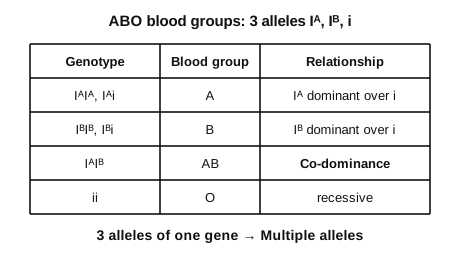
- a. Dominance: IA and IB are dominant over i (IAi → A, IBi → B). ✔
- b. Co-dominance: IAIB expresses both A and B antigens → AB. ✔
- c. Multiple alleles: three alleles of the same gene in the population. ✔
- d. Incomplete dominance (blended intermediate, e.g. snapdragon) – not seen. ✘
- e. Polygenic inheritance needs several genes (e.g. skin colour) – ABO is a single gene. ✘
- Hence a, b and c → (B).
Short trick: ABO shows "all three Ds except the blended one": Dominance, co-Dominance, Diverse (multiple) alleles.
Answer: (B) a, b and c
अवधारणा: ABO रुधिर वर्ग एक जीन I द्वारा नियंत्रित होता है जिसके तीन युग्मविकल्पी IA, IB, i हैं (NCERT)।
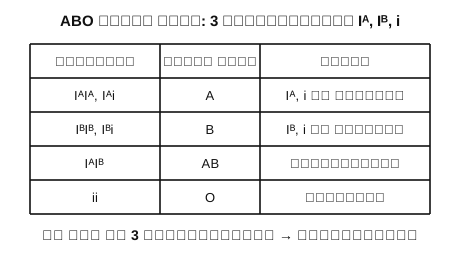
- a. प्रभाविता: IA और IB, i पर प्रभावी हैं (IAi → A, IBi → B)। ✔
- b. सहप्रभाविता: IAIB में A और B दोनों प्रतिजन व्यक्त → AB। ✔
- c. बहुविकल्पता: समष्टि में एक ही जीन के तीन युग्मविकल्पी। ✔
- d. अपूर्ण प्रभाविता (मिश्रित मध्यवर्ती, जैसे स्नैपड्रैगन) – नहीं दिखती। ✘
- e. बहुजीनी वंशागति में अनेक जीन चाहिए (जैसे त्वचा का रंग) – ABO एक जीन है। ✘
- अतः a, b और c → (B)।
शॉर्ट ट्रिक: ABO में: प्रभाविता, सहप्रभाविता, बहुविकल्पता – पर मिश्रण (अपूर्ण प्रभाविता) नहीं।
उत्तर: (B) a, b और c
NEET UGBiologyPrinciples of inheritance – ABO blood groupsNEET UG 2018 · 6 May Shift 1
Q451.Double fertilization is exhibited by
द्विनिषेचन किसके द्वारा प्रदर्शित किया जाता है?
- AGymnospermsअनावृतबीजी (जिम्नोस्पर्म)
- BAlgaeशैवाल
- CFungiकवक
- DAngiospermsआवृतबीजी (एंजियोस्पर्म)
Show answer
Concept: Double fertilisation = syngamy + triple fusion, both taking place in the same embryo sac; it is unique to angiosperms.
- One male gamete fuses with the egg (syngamy) → diploid zygote.
- The second male gamete fuses with the two polar nuclei (triple fusion) → triploid primary endosperm nucleus.
- (A) Gymnosperms – only one fertilisation; endosperm is haploid female gametophyte tissue. (B) Algae and (C) Fungi – simple syngamy, no endosperm.
Short trick: Triploid endosperm (3n) ⇔ double fertilisation ⇔ angiosperms only.
Answer: (D) Angiosperms
अवधारणा: द्विनिषेचन = युग्मक संलयन + त्रिक संलयन, दोनों एक ही भ्रूणकोष में होते हैं; यह केवल आवृतबीजियों का विशिष्ट लक्षण है।
- एक नर युग्मक अंड से संलयित होता है (युग्मक संलयन) → द्विगुणित युग्मनज।
- दूसरा नर युग्मक दो ध्रुवीय केंद्रकों से संलयित होता है (त्रिक संलयन) → त्रिगुणित प्राथमिक भ्रूणपोष केंद्रक।
- (A) अनावृतबीजी – केवल एक निषेचन; भ्रूणपोष अगुणित मादा युग्मकोद्भिद ऊतक है। (B) शैवाल तथा (C) कवक – साधारण युग्मक संलयन, भ्रूणपोष नहीं।
शॉर्ट ट्रिक: त्रिगुणित भ्रूणपोष (3n) ⇔ द्विनिषेचन ⇔ केवल आवृतबीजी।
उत्तर: (D) आवृतबीजी (एंजियोस्पर्म)
NEET UGBiologySexual reproduction in flowering plants – double fertilisationNEET UG 2017 · 7 May Shift 1
Q452.Which of the following are found in extreme saline conditions?
निम्नलिखित में से कौन अत्यधिक लवणीय परिस्थितियों में पाए जाते हैं?
- AArchaebacteriaआर्कीबैक्टीरिया
- BEubacteriaयूबैक्टीरिया
- CCyanobacteriaसायनोबैक्टीरिया
- DMycobacteriaमाइकोबैक्टीरिया
Show answer
Concept: Archaebacteria live in the harshest habitats – extreme salt (halophiles), hot springs (thermoacidophiles) and marshy areas (methanogens). Their cell wall/membrane structure lets them survive there.
- Halophiles (e.g. Halobacterium) are archaebacteria living in salt pans and the Dead Sea.
- (B) Eubacteria – “true bacteria” of ordinary habitats. (C) Cyanobacteria – photosynthetic, in fresh water/soil. (D) Mycobacteria – pathogens such as TB bacillus.
Short trick: Archae = “ancient” – three extremes: Halophiles, Thermoacidophiles, Methanogens (“HTM”).
Answer: (A) Archaebacteria
अवधारणा: आर्कीबैक्टीरिया अत्यंत कठोर आवासों में रहते हैं – अधिक लवण (हैलोफाइल), गर्म झरने (थर्मोएसिडोफाइल) तथा दलदली क्षेत्र (मेथेनोजन)। उनकी कोशिका भित्ति/झिल्ली की विशेष संरचना उन्हें वहाँ जीवित रहने में सहायता करती है।
- हैलोफाइल (जैसे Halobacterium) आर्कीबैक्टीरिया हैं जो लवण क्षेत्रों तथा मृत सागर में रहते हैं।
- (B) यूबैक्टीरिया – सामान्य आवासों के “वास्तविक जीवाणु”। (C) सायनोबैक्टीरिया – प्रकाश-संश्लेषी, अलवण जल/मृदा में। (D) माइकोबैक्टीरिया – रोगजनक, जैसे TB जीवाणु।
शॉर्ट ट्रिक: Archae = “प्राचीन” – तीन चरम आवास: Halophiles, Thermoacidophiles, Methanogens (“HTM”)।
उत्तर: (A) आर्कीबैक्टीरिया
NEET UGBiologyBiological classification – ArchaebacteriaNEET UG 2017 · 7 May Shift 1
Q453.Select the mismatch :
बेमेल युग्म का चयन कीजिए :
- AFrankia – Alnus
- BRhodospirillum – Mycorrhiza
- CAnabaena – Nitrogen fixerAnabaena – नाइट्रोजन स्थिरीकारक
- DRhizobium – Alfalfa
Show answer
Concept: Rhodospirillum is a free-living anaerobic N2-fixing bacterium; a mycorrhiza is a fungus–root association, so the pair is wrong.
- (A) Frankia (actinomycete) forms N2-fixing root nodules on non-leguminous Alnus – correct.
- (C) Anabaena is a heterocyst-bearing cyanobacterium that fixes N2 – correct.
- (D) Rhizobium forms nodules on legumes such as alfalfa – correct.
- (B) Rhodospirillum has nothing to do with fungi/mycorrhiza – mismatch.
Short trick: Mycorrhiza always pairs with a fungus (e.g. Glomus); “Rhodospirillum” is a free-living bacterium (like Azotobacter).
Answer: (B) Rhodospirillum – Mycorrhiza
अवधारणा: Rhodospirillum एक स्वतंत्रजीवी अवायवीय N2-स्थिरीकारी जीवाणु है; कवकमूल (mycorrhiza) कवक और जड़ का सहयोग है, अतः यह युग्म गलत है।
- (A) Frankia (ऐक्टिनोमाइसीट) अदलहनी Alnus की जड़ों पर N2-स्थिरीकारी ग्रंथिकाएँ बनाता है – सही।
- (C) Anabaena हेटेरोसिस्ट युक्त सायनोबैक्टीरिया है जो N2 स्थिर करता है – सही।
- (D) Rhizobium अल्फाल्फा जैसे दलहनों पर ग्रंथिकाएँ बनाता है – सही।
- (B) Rhodospirillum का कवक/कवकमूल से कोई संबंध नहीं – बेमेल।
शॉर्ट ट्रिक: कवकमूल हमेशा किसी कवक (जैसे Glomus) के साथ जुड़ता है; “Rhodospirillum” स्वतंत्रजीवी जीवाणु है (Azotobacter की तरह)।
उत्तर: (B) Rhodospirillum – Mycorrhiza
NEET UGBiologyMineral nutrition / Biological classification – nitrogen fixersNEET UG 2017 · 7 May Shift 1
Q454.What is the criterion for DNA fragments movement on agarose gel during gel electrophoresis?
जेल वैद्युतकणसंचलन (gel electrophoresis) के दौरान ऐगारोज़ जेल पर DNA खंडों की गति का मानदंड क्या है?
- AThe larger the fragment size, the farther it movesखंड का आकार जितना बड़ा, वह उतनी अधिक दूरी तय करता है
- BThe smaller the fragment size, the farther it movesखंड का आकार जितना छोटा, वह उतनी अधिक दूरी तय करता है
- CPositively charged fragments move to farther endधनावेशित खंड अधिक दूर वाले सिरे तक जाते हैं
- DNegatively charged fragments do not moveऋणावेशित खंड गति नहीं करते
Show answer
Concept: All DNA fragments are negatively charged (phosphate groups) and move towards the anode; agarose acts as a molecular sieve, so they separate by size.
- Smaller fragments slip through the gel pores easily and travel farther.
- (A) is the reverse of the truth. (C) DNA is never positively charged. (D) Negatively charged DNA is exactly what moves (to the anode).
Short trick: “Small runs fast” – the smallest band is nearest the positive end (bottom of the gel).
Answer: (B) The smaller the fragment size, the farther it moves
अवधारणा: सभी DNA खंड ऋणावेशित (फॉस्फेट समूह) होते हैं और ऐनोड की ओर चलते हैं; ऐगारोज़ आणविक छलनी का कार्य करता है, अतः खंड आकार के आधार पर पृथक होते हैं।
- छोटे खंड जेल के छिद्रों से आसानी से निकलकर अधिक दूर तक जाते हैं।
- (A) सत्य का उल्टा है। (C) DNA कभी धनावेशित नहीं होता। (D) ऋणावेशित DNA ही तो (ऐनोड की ओर) गति करता है।
शॉर्ट ट्रिक: “छोटा तेज़ दौड़ता है” – सबसे छोटा बैंड धनात्मक सिरे (जेल के नीचे) के सबसे निकट होता है।
उत्तर: (B) खंड का आकार जितना छोटा, वह उतनी अधिक दूरी तय करता है
NEET UGBiologyBiotechnology – gel electrophoresisNEET UG 2017 · 7 May Shift 1
Q455.Attractants and rewards are required for
आकर्षक (attractants) तथा पुरस्कार (rewards) किसके लिए आवश्यक हैं?
- AAnemophilyवायु-परागण (एनीमोफिली)
- BEntomophilyकीट-परागण (एंटोमोफिली)
- CHydrophilyजल-परागण (हाइड्रोफिली)
- DCleistogamyअनुन्मील्यता (क्लिस्टोगैमी)
Show answer
Concept: Animal (insect) pollinated flowers must attract visitors (colour, fragrance) and reward them (nectar, pollen, sometimes a safe egg-laying site).
- Entomophily = pollination by insects – needs both attractants and rewards.
- (A) Wind and (C) water pollination are abiotic – no visitor to attract. (D) Cleistogamous flowers never open; self-pollination occurs inside the closed bud.
Short trick: Rewards are only needed when a living agent does the work – insects/birds/bats.
Answer: (B) Entomophily
अवधारणा: जंतु (कीट) परागित पुष्पों को आगंतुकों को आकर्षित (रंग, सुगंध) करना तथा उन्हें पुरस्कार (मकरंद, पराग, कभी-कभी अंडे देने का सुरक्षित स्थान) देना पड़ता है।
- कीट-परागण = कीटों द्वारा परागण – इसमें आकर्षक तथा पुरस्कार दोनों आवश्यक हैं।
- (A) वायु तथा (C) जल परागण अजैविक हैं – किसी आगंतुक को आकर्षित नहीं करना। (D) अनुन्मील्य पुष्प कभी खुलते ही नहीं; स्वपरागण बंद कलिका के अंदर होता है।
शॉर्ट ट्रिक: पुरस्कार तभी चाहिए जब कोई जीवित वाहक काम करे – कीट/पक्षी/चमगादड़।
उत्तर: (B) कीट-परागण (एंटोमोफिली)
NEET UGBiologySexual reproduction in flowering plants – pollinationNEET UG 2017 · 7 May Shift 1
Q456.Which of the following is made up of dead cells?
निम्नलिखित में से कौन मृत कोशिकाओं से बना है?
- AXylem parenchymaजाइलम मृदूतक
- BCollenchymaस्थूलकोण ऊतक (कॉलेनकाइमा)
- CPhellemकॉर्क (फेलम)
- DPhloemफ्लोएम
Show answer
Concept: Cork cambium (phellogen) cuts off phellem (cork) on the outside; its cells are suberised and dead at maturity.
- Phellem = cork – dead, compactly arranged, suberin-walled cells.
- (A) Xylem parenchyma – the only living xylem element. (B) Collenchyma – living, with pectin-thickened corners. (D) Phloem – sieve tubes, companion cells, phloem parenchyma are living (only phloem fibres are dead).
Short trick: Phellem = empty (dead) outside; phelloderm inside is living.
Answer: (C) Phellem
अवधारणा: कॉर्क एधा (फेलोजन) बाहर की ओर फेलम (कॉर्क) बनाती है; इसकी कोशिकाएँ सुबेरिनयुक्त तथा परिपक्व होने पर मृत होती हैं।
- फेलम = कॉर्क – मृत, सघन, सुबेरिन भित्ति वाली कोशिकाएँ।
- (A) जाइलम मृदूतक – जाइलम का एकमात्र जीवित अवयव। (B) स्थूलकोण ऊतक – जीवित, कोनों पर पेक्टिन का स्थूलन। (D) फ्लोएम – चालनी नलिकाएँ, सहचर कोशिकाएँ, फ्लोएम मृदूतक जीवित होते हैं (केवल फ्लोएम तंतु मृत)।
शॉर्ट ट्रिक: Phellem = empty (मृत) बाहर; अंदर का phelloderm जीवित।
उत्तर: (C) कॉर्क (फेलम)
NEET UGBiologyAnatomy of flowering plants – peridermNEET UG 2017 · 7 May Shift 1
Q457.Which cells of 'Crypts of Lieberkuhn' secrete antibacterial lysozyme?
‘लीबरकुन की दरारों (Crypts of Lieberkuhn)’ की कौन-सी कोशिकाएँ जीवाणुरोधी लाइसोज़ाइम स्रावित करती हैं?
- AArgentaffin cellsअर्जेन्टाफिन कोशिकाएँ
- BPaneth cellsपैनेथ कोशिकाएँ
- CZymogen cellsज़ाइमोजन कोशिकाएँ
- DKupffer cellsकुफ़्फ़र कोशिकाएँ
Show answer
Concept: The intestinal crypts contain Paneth cells at their base, which secrete lysozyme – an antibacterial enzyme.
- Paneth cells → lysozyme (defence of the intestinal lining).
- (A) Argentaffin cells – hormone (serotonin-type) producing endocrine cells. (C) Zymogen (chief) cells – secrete enzymes (pepsinogen) in gastric glands. (D) Kupffer cells – phagocytic cells of the liver, not in the intestine.
Short trick: Paneth = Protect (lysozyme); Kupffer = liver – eliminate at once.
Answer: (B) Paneth cells
अवधारणा: आंत्र दरारों के आधार पर पैनेथ कोशिकाएँ होती हैं जो लाइसोज़ाइम – एक जीवाणुरोधी एंज़ाइम – स्रावित करती हैं।
- पैनेथ कोशिकाएँ → लाइसोज़ाइम (आंत्र स्तर की रक्षा)।
- (A) अर्जेन्टाफिन कोशिकाएँ – हॉर्मोन (सीरोटोनिन प्रकार) बनाने वाली अंतःस्रावी कोशिकाएँ। (C) ज़ाइमोजन (मुख्य) कोशिकाएँ – जठर ग्रंथियों में एंज़ाइम (पेप्सिनोजन) स्रावित करती हैं। (D) कुफ़्फ़र कोशिकाएँ – यकृत की भक्षक कोशिकाएँ, आंत्र में नहीं।
शॉर्ट ट्रिक: Paneth = Protect (लाइसोज़ाइम); कुफ़्फ़र = यकृत – तुरंत हटाएँ।
उत्तर: (B) पैनेथ कोशिकाएँ
NEET UGBiologyDigestion and absorption – intestinal glandsNEET UG 2017 · 7 May Shift 1
Q458.Adult human RBCs are enucleate. Which of the following statement(s) is/are most appropriate explanation for this feature?
(a) They do not need to reproduce
(b) They are somatic cells
(c) They do not metabolize
(d) All their internal space is available for oxygen transport
वयस्क मानव की लाल रुधिर कणिकाएँ (RBC) केंद्रकविहीन होती हैं। इस लक्षण की सर्वाधिक उपयुक्त व्याख्या निम्नलिखित में से कौन-सा/से कथन है/हैं?
(a) उन्हें जनन करने की आवश्यकता नहीं होती
(b) वे कायिक कोशिकाएँ हैं
(c) वे उपापचय नहीं करतीं
(d) उनका संपूर्ण आंतरिक स्थान ऑक्सीजन परिवहन के लिए उपलब्ध होता है
- AOnly (d)केवल (d)
- BOnly (a)केवल (a)
- C(a), (c) and (d)(a), (c) तथा (d)
- D(b) and (c)(b) तथा (c)
Show answer
Concept: Mammalian RBCs lose their nucleus (and most organelles) during maturation so that the whole cell volume can be packed with haemoglobin for O2 transport.
- (d) is the adaptive reason – more space for haemoglobin, plus a biconcave shape for diffusion.
- (a) Many cells that do not divide still keep a nucleus – not the explanation. (b) All body cells except gametes are somatic and most are nucleated – irrelevant. (c) False – RBCs do metabolise (anaerobic glycolysis gives them ATP).
Short trick: RBC = “O2 bag”: empty the bag (no nucleus, no mitochondria) to fill it with Hb.
Answer: (A) Only (d)
अवधारणा: स्तनधारियों की RBC परिपक्वन के दौरान अपना केंद्रक (तथा अधिकांश कोशिकांग) खो देती हैं ताकि पूरा कोशिका आयतन O2 परिवहन हेतु हीमोग्लोबिन से भरा जा सके।
- (d) अनुकूलनीय कारण है – हीमोग्लोबिन के लिए अधिक स्थान, साथ ही विसरण हेतु उभयावतल आकार।
- (a) विभाजित न होने वाली अनेक कोशिकाओं में भी केंद्रक रहता है – यह व्याख्या नहीं। (b) युग्मकों के अतिरिक्त सभी कोशिकाएँ कायिक हैं और अधिकांश में केंद्रक होता है – असंबद्ध। (c) गलत – RBC उपापचय करती हैं (अवायवीय ग्लाइकोलिसिस से ATP मिलता है)।
शॉर्ट ट्रिक: RBC = “O2 थैला”: थैले को खाली करो (केंद्रक नहीं, माइटोकॉन्ड्रिया नहीं) ताकि उसमें Hb भरा जा सके।
उत्तर: (A) केवल (d)
NEET UGBiologyBody fluids and circulation – RBCsNEET UG 2017 · 7 May Shift 1
Q459.The hepatic portal vein drains blood to liver from
यकृत निवाहिका शिरा (hepatic portal vein) किससे रक्त यकृत तक ले जाती है?
- AHeartहृदय
- BStomachआमाशय
- CKidneysवृक्क
- DIntestineआंत्र
Show answer
Concept: A portal vein starts in capillaries of one organ and ends in capillaries of another; the hepatic portal vein carries absorbed food-rich blood from the intestine to the liver before it reaches the systemic circulation.
- Intestine → hepatic portal vein → liver (NCERT line).
- (A) Heart receives blood from the liver via the hepatic vein, not the reverse. (B) Stomach does contribute a small tributary, but NCERT’s answer for the system is intestine. (C) Kidneys drain into renal veins → inferior vena cava.
Short trick: Portal = “gate”: food passes the liver’s gate (checking/detox, glycogen storage) before entering general blood.
Answer: (D) Intestine
अवधारणा: निवाहिका शिरा एक अंग की केशिकाओं से आरंभ होकर दूसरे अंग की केशिकाओं में समाप्त होती है; यकृत निवाहिका शिरा अवशोषित पोषक-युक्त रक्त को आंत्र से यकृत तक, दैहिक परिसंचरण में पहुँचने से पहले, ले जाती है।
- आंत्र → यकृत निवाहिका शिरा → यकृत (NCERT पंक्ति)।
- (A) हृदय को यकृत से रक्त यकृत शिरा द्वारा मिलता है, उल्टा नहीं। (B) आमाशय से एक छोटी शाखा आती है, परंतु NCERT के अनुसार इस तंत्र का उत्तर आंत्र है। (C) वृक्क वृक्क-शिराओं → पश्च महाशिरा में जाते हैं।
शॉर्ट ट्रिक: Portal = “द्वार”: भोजन सामान्य रक्त में जाने से पहले यकृत के द्वार (जाँच/विषहरण, ग्लाइकोजन संचय) से गुज़रता है।
उत्तर: (D) आंत्र
NEET UGBiologyBody fluids and circulation – portal systemNEET UG 2017 · 7 May Shift 1
Q460.The final proof for DNA as the genetic material came from the experiments of
DNA के आनुवंशिक पदार्थ होने का अंतिम प्रमाण किसके प्रयोगों से मिला?
- AGriffithग्रिफ़िथ
- BHershey and Chaseहर्षे तथा चेज़
- CAvery, Mcleod and McCartyएवरी, मैक्लिऑड तथा मैक्कार्टी
- DHargobind Khoranaहरगोबिंद खुराना
Show answer
Concept: Hershey and Chase (1952) used bacteriophages labelled with 32P (DNA) and 35S (protein); only 32P entered bacteria – unequivocal proof that DNA is the genetic material.
- (A) Griffith (1928) – only showed a “transforming principle” existed.
- (C) Avery, MacLeod, McCarty (1944) – showed DNA is the transforming principle, but not all biologists were convinced.
- (D) Khorana – synthetic RNA/genetic code, not proof of genetic material.
Short trick: Order: Griffith (something transforms) → Avery (it is DNA) → Hershey–Chase (final proof, blender experiment).
Answer: (B) Hershey and Chase
अवधारणा: हर्षे तथा चेज़ (1952) ने 32P (DNA) तथा 35S (प्रोटीन) से चिह्नित जीवाणुभोजियों का उपयोग किया; केवल 32P जीवाणुओं में प्रविष्ट हुआ – DNA के आनुवंशिक पदार्थ होने का असंदिग्ध प्रमाण।
- (A) ग्रिफ़िथ (1928) – केवल यह दिखाया कि कोई “रूपांतरण कारक” होता है।
- (C) एवरी, मैक्लिऑड, मैक्कार्टी (1944) – दिखाया कि रूपांतरण कारक DNA है, परंतु सभी जीवविज्ञानी सहमत नहीं हुए।
- (D) खुराना – कृत्रिम RNA/आनुवंशिक कूट, आनुवंशिक पदार्थ का प्रमाण नहीं।
शॉर्ट ट्रिक: क्रम: ग्रिफ़िथ (कुछ रूपांतरित करता है) → एवरी (वह DNA है) → हर्षे–चेज़ (अंतिम प्रमाण, ब्लेंडर प्रयोग)।
उत्तर: (B) हर्षे तथा चेज़
NEET UGBiologyMolecular basis of inheritance – DNA as genetic materialNEET UG 2017 · 7 May Shift 1

