Q461.A first order reaction has a specific reaction rate of 10–2 s–1. How much time will it take for 20 g of the reactant to reduce to 5 g?
एक प्रथम कोटि अभिक्रिया का विशिष्ट अभिक्रिया वेग 10–2 s–1 है। 20 g अभिकारक को घटकर 5 g होने में कितना समय लगेगा?
- A238.6 second238.6 सेकंड
- B138.6 second138.6 सेकंड
- C346.5 second346.5 सेकंड
- D693.0 second693.0 सेकंड
Show answer
Concept: First order: t1/2 = 0.693/k, independent of initial amount.
- t1/2 = 0.693/10–2 = 69.3 s
- 20 g → 10 g → 5 g = 2 half-lives
- t = 2 × 69.3 = 138.6 s
- Check: t = (2.303/k) log(20/5) = 230.3 × 0.602 = 138.6 s.
Short trick: Amount becomes 1/2n after n half-lives: 20 → 5 is 1/4 → n = 2.
Answer: (B)
अवधारणा: प्रथम कोटि: t1/2 = 0.693/k, प्रारम्भिक मात्रा से स्वतंत्र।
- t1/2 = 0.693/10–2 = 69.3 s
- 20 g → 10 g → 5 g = 2 अर्धायु
- t = 2 × 69.3 = 138.6 s
- जाँच: t = (2.303/k) log(20/5) = 230.3 × 0.602 = 138.6 s।
शॉर्ट ट्रिक: n अर्धायु के बाद मात्रा 1/2n रह जाती है: 20 → 5 अर्थात् 1/4 → n = 2।
उत्तर: (B)
NEET UGChemistryChemical kinetics – first order half-lifeNEET UG 2017 · 7 May Shift 1
Q462.Name the gas that can readily decolourises acidified KMnO4 solution:
उस गैस का नाम बताइए जो अम्लीकृत KMnO4 विलयन को शीघ्र रंगहीन कर देती है:
- ACO2
- BSO2
- CNO2
- DP2O5
Show answer
Concept: Decolourising acidified KMnO4 (purple MnO4– → colourless Mn2+) needs a reducing agent.
- SO2 (S in +4) is readily oxidised to SO42–: 5SO2 + 2MnO4– + 2H2O → 5SO42– + 4H+ + 2Mn2+.
- (A) CO2: C already +4 (maximum) – not a reductant.
- (C) NO2: mainly an oxidising gas under these conditions; not the standard test gas.
- (D) P2O5: P in +5 (maximum), and it is a solid.
Short trick: Lab test for SO2: decolourises acidified KMnO4 and turns acidified K2Cr2O7 green.
Answer: (B)
अवधारणा: अम्लीकृत KMnO4 को रंगहीन करने (बैंगनी MnO4– → रंगहीन Mn2+) के लिए अपचायक चाहिए।
- SO2 (S की +4 अवस्था) आसानी से SO42– में ऑक्सीकृत होता है: 5SO2 + 2MnO4– + 2H2O → 5SO42– + 4H+ + 2Mn2+।
- (A) CO2: C पहले से +4 (अधिकतम) – अपचायक नहीं।
- (C) NO2: इन परिस्थितियों में मुख्यतः ऑक्सीकारक गैस; मानक परीक्षण गैस नहीं।
- (D) P2O5: P की +5 (अधिकतम) अवस्था, और यह ठोस है।
शॉर्ट ट्रिक: SO2 का प्रयोगशाला परीक्षण: अम्लीकृत KMnO4 को रंगहीन करती है तथा अम्लीकृत K2Cr2O7 को हरा कर देती है।
उत्तर: (B)
NEET UGChemistryp-block elements – reducing property of SO<sub>2</sub>NEET UG 2017 · 7 May Shift 1
Q463.The heating of phenyl-methyl ethers with HI produces.
फ़ेनिल-मेथिल ईथरों को HI के साथ गर्म करने पर बनता है।
- AEthyl chloridesएथिल क्लोराइड
- BIodobenzeneआयोडोबेन्ज़ीन
- CPhenolफ़ीनॉल
- DBenzeneबेन्ज़ीन
Show answer
Concept: Alkyl aryl ethers are cleaved by HI at the O–alkyl bond, because the O–aryl bond has partial double-bond character and phenyl cannot undergo SN2.
- C6H5–O–CH3 + HI → C6H5–O+(H)–CH3; I– attacks CH3 (SN2).
- Products: C6H5OH (phenol) + CH3I.
- (B) iodobenzene is not formed – I– cannot displace OH from an aryl carbon; (A) no Cl or ethyl group is present; (D) benzene would need removal of oxygen.
Short trick: Ar–O–R + HI → ArOH + RI, always (aryl stays with O).
Answer: (C)
अवधारणा: ऐल्किल ऐरिल ईथर, HI द्वारा O–ऐल्किल आबंध पर विदलित होते हैं, क्योंकि O–ऐरिल आबंध में आंशिक द्विआबंध लक्षण होता है तथा फ़ेनिल पर SN2 नहीं हो सकता।
- C6H5–O–CH3 + HI → C6H5–O+(H)–CH3; I–, CH3 पर आक्रमण करता है (SN2)।
- उत्पाद: C6H5OH (फ़ीनॉल) + CH3I।
- (B) आयोडोबेन्ज़ीन नहीं बनता – I– ऐरिल कार्बन से OH को विस्थापित नहीं कर सकता; (A) यहाँ कोई Cl या एथिल समूह नहीं है; (D) बेन्ज़ीन के लिए ऑक्सीजन हटाना पड़ेगा।
शॉर्ट ट्रिक: Ar–O–R + HI → ArOH + RI, सदैव (ऐरिल O के साथ रहता है)।
उत्तर: (C)
NEET UGChemistryEthers – cleavage of alkyl aryl ethers by HINEET UG 2017 · 7 May Shift 1
Q464.Pick out the correct statement with respect [Mn(CN)6]3– :
[Mn(CN)6]3– के संबंध में सही कथन चुनिए :
- AIt is sp3d2 hybridised and octahedralयह sp3d2 संकरित तथा अष्टफलकीय है
- BIt is sp3d2 hybridised and tetrahedralयह sp3d2 संकरित तथा चतुष्फलकीय है
- CIt is d2sp3 hybridised and octahedralयह d2sp3 संकरित तथा अष्टफलकीय है
- DIt is dsp2 hybridised and square planarयह dsp2 संकरित तथा वर्ग समतलीय है
Show answer
Concept: CN– is a strong-field ligand: it pairs up the d electrons, leaving two inner 3d orbitals free for d2sp3 (inner-orbital) hybridisation.
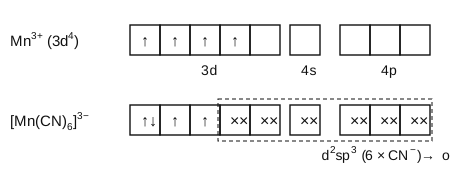
- Oxidation state: x + 6(–1) = –3 ⇒ Mn(+3) = [Ar]3d4.
- With CN–, the 4 electrons pair into three 3d orbitals (↑↓ ↑ ↑) → two 3d orbitals empty.
- 2 (3d) + 1 (4s) + 3 (4p) → d2sp3; 6 ligands → octahedral (2 unpaired e–, paramagnetic).
- (A) sp3d2 is for weak-field (outer) complexes; (B) sp3d2 can never be tetrahedral; (D) dsp2 needs CN = 4.
Short trick: CN = 6 + strong ligand + d3–d6 metal → d2sp3, octahedral.
Answer: (C)
अवधारणा: CN– प्रबल क्षेत्र लिगैंड है: यह d इलेक्ट्रॉनों को युग्मित कर देता है, जिससे दो आंतरिक 3d कक्षक d2sp3 (आंतरिक कक्षक) संकरण के लिए रिक्त हो जाते हैं।
- ऑक्सीकरण अवस्था: x + 6(–1) = –3 ⇒ Mn(+3) = [Ar]3d4।
- CN– के साथ 4 इलेक्ट्रॉन तीन 3d कक्षकों में युग्मित हो जाते हैं (↑↓ ↑ ↑) → दो 3d कक्षक रिक्त।
- 2 (3d) + 1 (4s) + 3 (4p) → d2sp3; 6 लिगैंड → अष्टफलकीय (2 अयुग्मित e–, अनुचुंबकीय)।
- (A) sp3d2 दुर्बल क्षेत्र (बाह्य) संकुलों के लिए है; (B) sp3d2 कभी चतुष्फलकीय नहीं हो सकता; (D) dsp2 के लिए उपसहसंयोजन संख्या 4 चाहिए।
शॉर्ट ट्रिक: उपसहसंयोजन संख्या 6 + प्रबल लिगैंड + d3–d6 धातु → d2sp3, अष्टफलकीय।
उत्तर: (C)
NEET UGChemistryCoordination compounds – VBT hybridisationNEET UG 2017 · 7 May Shift 1
Q465.Ionic mobility of which of the following alkali metal ions is lowest when aqueous solution of their salts are put under an electric field?
जब इनके लवणों के जलीय विलयन को विद्युत क्षेत्र में रखा जाता है, तो निम्नलिखित में से किस क्षार धातु आयन की आयनिक गतिशीलता न्यूनतम होती है?
- ANa
- BK
- CRb
- DLi
Show answer
Concept: In water, mobility depends on the size of the hydrated ion, not the bare ion.
- Li+ is the smallest ion → highest charge density → most heavily hydrated.
- Hydrated radius: Li+(aq) > Na+(aq) > K+(aq) > Rb+(aq).
- Largest hydrated ion moves slowest → Li+ has the lowest ionic mobility/conductance; Rb+ the highest.
Short trick: Smallest bare ion = biggest "water coat" = slowest: mobility Li+ < Na+ < K+ < Rb+ < Cs+.
Answer: (D)
अवधारणा: जल में गतिशीलता जलयोजित आयन के आकार पर निर्भर करती है, नग्न आयन पर नहीं।
- Li+ सबसे छोटा आयन है → सर्वाधिक आवेश घनत्व → सर्वाधिक जलयोजित।
- जलयोजित त्रिज्या: Li+(aq) > Na+(aq) > K+(aq) > Rb+(aq)।
- सबसे बड़ा जलयोजित आयन सबसे धीरे चलता है → Li+ की आयनिक गतिशीलता/चालकता न्यूनतम; Rb+ की अधिकतम।
शॉर्ट ट्रिक: सबसे छोटा नग्न आयन = सबसे मोटा "जल आवरण" = सबसे धीमा: गतिशीलता Li+ < Na+ < K+ < Rb+ < Cs+।
उत्तर: (D)
NEET UGChemistrys-block elements – ionic mobility of hydrated alkali ionsNEET UG 2017 · 7 May Shift 1
Q466.The equilibrium constants of the following are.
N2 + 3H2 ⇌ 2NH3 K1
N2 + O2 ⇌ 2NO K2
K3
The equilibrium constant (K) of the reaction:
, will be
निम्नलिखित के साम्य स्थिरांक हैं।
N2 + 3H2 ⇌ 2NH3 K1
N2 + O2 ⇌ 2NO K2
K3
अभिक्रिया:
का साम्य स्थिरांक (K) होगा
- A
- B
- C
- D
Show answer
Concept: Adding equations → multiply K; reversing → 1/K; multiplying an equation by n → Kn.
- Target = (eq. 2) + 3 × (eq. 3) – (eq. 1).
- Check: N2 + O2 + 3H2 + 3/2 O2 + 2NH3 → 2NO + 3H2O + N2 + 3H2 ⇒ 2NH3 + 5/2 O2 → 2NO + 3H2O ✓
- K = K2 × K33 × (1/K1) = K2K33/K1.
Short trick: NH3 is on the reactant side → K1 goes to the denominator; 3H2O → K3 cubed; 2NO once → K2.
Answer: (B)
अवधारणा: समीकरणों को जोड़ने पर K गुणा होते हैं; उलटने पर 1/K; किसी समीकरण को n से गुणा करने पर Kn।
- लक्ष्य = (समी. 2) + 3 × (समी. 3) – (समी. 1)।
- जाँच: N2 + O2 + 3H2 + 3/2 O2 + 2NH3 → 2NO + 3H2O + N2 + 3H2 ⇒ 2NH3 + 5/2 O2 → 2NO + 3H2O ✓
- K = K2 × K33 × (1/K1) = K2K33/K1।
शॉर्ट ट्रिक: NH3 अभिकारक पक्ष में है → K1 हर में; 3H2O → K3 का घन; 2NO एक बार → K2।
उत्तर: (B)
NEET UGChemistryEquilibrium – combining equilibrium constantsNEET UG 2017 · 7 May Shift 1
Q467.Which of the following reactions is appropriate for converting acetamide to methanamine?
ऐसीटैमाइड को मेथेनेमीन में परिवर्तित करने के लिए निम्नलिखित में से कौन-सी अभिक्रिया उपयुक्त है?
- ACarbylamine reactionकार्बिलऐमीन अभिक्रिया
- BHoffmann hypobromamide reactionहॉफ़मान हाइपोब्रोमैमाइड अभिक्रिया
- CStephens reactionस्टीफ़न अभिक्रिया
- DGabriels phthalimide synthesisगैब्रिएल थैलिमाइड संश्लेषण
Show answer
Concept: Hoffmann bromamide degradation converts an amide RCONH2 into a 1° amine RNH2 with one carbon less.
- CH3CONH2 + Br2 + 4NaOH → CH3NH2 + Na2CO3 + 2NaBr + 2H2O
- Acetamide (C2) → methanamine (C1): exactly one carbon lost.
- (A) carbylamine is a test for 1° amines (gives isocyanide); (C) Stephens reduces nitriles to aldehydes; (D) Gabriel makes 1° amines from alkyl halides, not from amides.
Short trick: Amide → amine with one C less = Hoffmann (Br2/NaOH).
Answer: (B)
अवधारणा: हॉफ़मान ब्रोमैमाइड निम्नीकरण ऐमाइड RCONH2 को एक कार्बन कम वाली 1° ऐमीन RNH2 में बदलता है।
- CH3CONH2 + Br2 + 4NaOH → CH3NH2 + Na2CO3 + 2NaBr + 2H2O
- ऐसीटैमाइड (C2) → मेथेनेमीन (C1): ठीक एक कार्बन कम।
- (A) कार्बिलऐमीन 1° ऐमीनों का परीक्षण है (आइसोसायनाइड देता है); (C) स्टीफ़न अभिक्रिया नाइट्राइलों को ऐल्डिहाइड में अपचयित करती है; (D) गैब्रिएल ऐल्किल हैलाइडों से 1° ऐमीन बनाता है, ऐमाइडों से नहीं।
शॉर्ट ट्रिक: ऐमाइड → एक C कम वाली ऐमीन = हॉफ़मान (Br2/NaOH)।
उत्तर: (B)
NEET UGChemistryAmines – Hoffmann bromamide degradationNEET UG 2017 · 7 May Shift 1
Q468.Mechanism of a hypothetical reaction X2 + Y2 → 2XY is given below :
(i) X2 → X + X (fast)
(ii) X + Y2 ⇌ XY + Y (slow)
(iii) X + Y → XY (fast)
The overall order of the reaction will be
एक काल्पनिक अभिक्रिया X2 + Y2 → 2XY की क्रियाविधि नीचे दी गई है :
(i) X2 → X + X (तीव्र)
(ii) X + Y2 ⇌ XY + Y (मंद)
(iii) X + Y → XY (तीव्र)
अभिक्रिया की कुल कोटि होगी
- A1
- B2
- C0
- D1.5
Show answer
Concept: Rate is set by the slow step; an intermediate (X) is eliminated using the fast step before it, treated as a rapid equilibrium X2 ⇌ 2X.
- Slow step (ii): rate = k[X][Y2]
- Fast step (i) as equilibrium: K = [X]2/[X2] ⇒ [X] = K1/2[X2]1/2
- Rate = kK1/2[X2]1/2[Y2]
- Order = 1/2 + 1 = 1.5
Short trick: Fast step before slow step → substitute the intermediate from its equilibrium; a dissociation A2 ⇌ 2A always contributes order ½.
Answer: (D)
अवधारणा: वेग मंद पद द्वारा तय होता है; मध्यवर्ती (X) को उससे पहले वाले तीव्र पद द्वारा हटाया जाता है, जिसे तीव्र साम्य X2 ⇌ 2X माना जाता है।
- मंद पद (ii): वेग = k[X][Y2]
- तीव्र पद (i) को साम्य मानकर: K = [X]2/[X2] ⇒ [X] = K1/2[X2]1/2
- वेग = kK1/2[X2]1/2[Y2]
- कोटि = 1/2 + 1 = 1.5
शॉर्ट ट्रिक: मंद पद से पहले तीव्र पद → मध्यवर्ती को उसके साम्य से प्रतिस्थापित कीजिए; वियोजन A2 ⇌ 2A सदैव ½ कोटि जोड़ता है।
उत्तर: (D)
NEET UGChemistryChemical kinetics – mechanism and order (pre-equilibrium)NEET UG 2017 · 7 May Shift 1
Q469.The IUPAC name of the compound
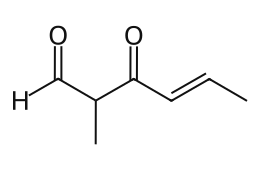
is ________.
यौगिक
का IUPAC नाम ________ है।
- A3-keto-2-methylhex-4-enal
- B5-formylhex-2-en-3-one
- C5-methyl-4-oxohex-2-en-5-al
- D3-keto-2-methylhex-5-enal
Show answer
Concept: Principal group: –CHO (aldehyde) ranks above ketone; it gets C-1 and the suffix "-al". The ketone becomes a prefix (oxo/keto).
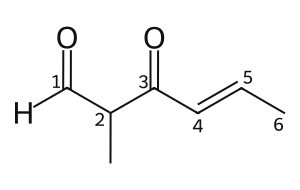
- Chain: CHO(1)–CH(CH3)(2)–CO(3)–CH(4)=CH(5)–CH3(6) → 6 carbons, hex.
- Substituents: 2-methyl, 3-keto (3-oxo); double bond at C-4 → hex-4-enal.
- Name: 3-keto-2-methylhex-4-enal (modern form: 2-methyl-3-oxohex-4-enal) = (A).
- (B) and (C) number from the wrong end/choose the wrong principal group; (D) puts the double bond at C-5 instead of C-4.
Short trick: Aldehyde present? Its carbon is always C-1 and the name ends in "-al".
Answer: (A)
अवधारणा: मुख्य समूह: –CHO (ऐल्डिहाइड) का स्थान कीटोन से ऊपर है; इसे C-1 तथा अनुलग्न "-al" मिलता है। कीटोन पूर्वलग्न (oxo/keto) बन जाता है।
- शृंखला: CHO(1)–CH(CH3)(2)–CO(3)–CH(4)=CH(5)–CH3(6) → 6 कार्बन, hex।
- प्रतिस्थापी: 2-methyl, 3-keto (3-oxo); C-4 पर द्विआबंध → hex-4-enal।
- नाम: 3-keto-2-methylhex-4-enal (आधुनिक रूप: 2-methyl-3-oxohex-4-enal) = (A)।
- (B) तथा (C) गलत सिरे से क्रमांकन/गलत मुख्य समूह चुनते हैं; (D) द्विआबंध को C-4 के स्थान पर C-5 पर रखता है।
शॉर्ट ट्रिक: ऐल्डिहाइड उपस्थित हो तो उसका कार्बन सदैव C-1 होता है और नाम "-al" पर समाप्त होता है।
उत्तर: (A)
NEET UGChemistryOrganic chemistry – IUPAC nomenclature (polyfunctional)NEET UG 2017 · 7 May Shift 1
Q470.Extraction of gold and silver involves leaching with CN– ion. Silver is later recovered by
सोने तथा चाँदी के निष्कर्षण में CN– आयन द्वारा निक्षालन (leaching) सम्मिलित है। बाद में चाँदी को किसके द्वारा प्राप्त किया जाता है?
- ALiquationद्रवगलन (Liquation)
- BDistillationआसवन
- CZone refiningमंडल परिष्करण (Zone refining)
- DDisplacement with ZnZn द्वारा विस्थापन
Show answer
Concept: Mac-Arthur–Forrest cyanide process: Ag/Au are leached as soluble cyanide complexes and then displaced by the more electropositive zinc.
- Leaching: 4Ag + 8CN– + 2H2O + O2 → 4[Ag(CN)2]– + 4OH–
- Recovery: 2[Ag(CN)2]– + Zn → [Zn(CN)4]2– + 2Ag↓
- (A) liquation refines low-melting metals (Sn); (B) distillation refines volatile metals (Zn, Hg); (C) zone refining gives ultra-pure Si, Ge, Ga – none recover Ag from solution.
Short trick: Cyanide leach → Zn dust: "Zinc pulls silver/gold out of cyanide".
Answer: (D)
अवधारणा: मैक-आर्थर–फॉरेस्ट सायनाइड प्रक्रम: Ag/Au को विलेय सायनाइड संकुलों के रूप में निक्षालित किया जाता है और फिर अधिक विद्युत्-धनात्मक जिंक द्वारा विस्थापित किया जाता है।
- निक्षालन: 4Ag + 8CN– + 2H2O + O2 → 4[Ag(CN)2]– + 4OH–
- पुनर्प्राप्ति: 2[Ag(CN)2]– + Zn → [Zn(CN)4]2– + 2Ag↓
- (A) द्रवगलन कम गलनांक वाली धातुओं (Sn) का परिष्करण करता है; (B) आसवन वाष्पशील धातुओं (Zn, Hg) के लिए; (C) मंडल परिष्करण अति-शुद्ध Si, Ge, Ga देता है – कोई भी विलयन से Ag प्राप्त नहीं करता।
शॉर्ट ट्रिक: सायनाइड निक्षालन → Zn चूर्ण: "जिंक सायनाइड से चाँदी/सोना खींच लेता है"।
उत्तर: (D)
NEET UGChemistryMetallurgy – cyanide process (leaching of Ag/Au)NEET UG 2017 · 7 May Shift 1
Q471.Consider the molecules CH4, NH3 and H2O. Which of the given statements is false?
अणुओं CH4, NH3 तथा H2O पर विचार कीजिए। दिए गए कथनों में से कौन-सा असत्य है?
- AThe H – C – H bond angle in CH4, the H – N – H bond angle in NH3, and the H – O – H bond angle in H2O are all greater than 90°.CH4 में H – C – H आबंध कोण, NH3 में H – N – H आबंध कोण तथा H2O में H – O – H आबंध कोण, सभी 90° से अधिक हैं।
- BThe H – O – H bond angle in H2O is larger than the H – C – H bond angle in CH4.H2O में H – O – H आबंध कोण, CH4 में H – C – H आबंध कोण से बड़ा है।
- CThe H – O – H bond angle in H2O is smaller than the H – N – H bond angle in NH3.H2O में H – O – H आबंध कोण, NH3 में H – N – H आबंध कोण से छोटा है।
- DThe H – C – H bond angle in CH4 is larger than the H – N – H bond angle in NH3.CH4 में H – C – H आबंध कोण, NH3 में H – N – H आबंध कोण से बड़ा है।
Show answer
Concept: All three central atoms are sp3 hybridised. Lone pairs repel more than bond pairs, so each extra lone pair squeezes the H–X–H angle.
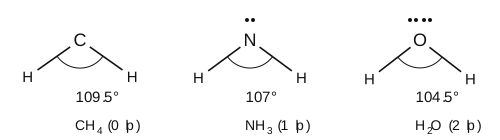
- CH4 (0 lone pair) = 109.5°; NH3 (1 lone pair) = 107°; H2O (2 lone pairs) = 104.5°.
- (A) All three angles are > 90° – true.
- (B) Says 104.5° > 109.5° – false.
- (C) 104.5° < 107° – true. (D) 109.5° > 107° – true.
Short trick: More lone pairs on the central atom → smaller angle: CH4 > NH3 > H2O (109.5 > 107 > 104.5).
Answer: (B) H2O angle is NOT larger than CH4 angle – this statement is false.
अवधारणा: तीनों केंद्रीय परमाणु sp3 संकरित हैं। एकाकी युग्म (lone pair) आबंधी युग्म से अधिक प्रतिकर्षण करते हैं, अतः प्रत्येक अतिरिक्त एकाकी युग्म H–X–H कोण को घटा देता है।
- CH4 (0 एकाकी युग्म) = 109.5°; NH3 (1 एकाकी युग्म) = 107°; H2O (2 एकाकी युग्म) = 104.5°।
- (A) तीनों कोण 90° से अधिक हैं – सत्य।
- (B) कहता है 104.5° > 109.5° – असत्य।
- (C) 104.5° < 107° – सत्य। (D) 109.5° > 107° – सत्य।
शॉर्ट ट्रिक: केंद्रीय परमाणु पर जितने अधिक एकाकी युग्म, कोण उतना छोटा: CH4 > NH3 > H2O (109.5 > 107 > 104.5)।
उत्तर: (B) H2O का कोण CH4 के कोण से बड़ा नहीं है – यह कथन असत्य है।
NEET UGChemistryChemical bonding – VSEPR and bond anglesNEET UG 2016 · 1 May Shift 1
Q472.In the reaction
X and Y are:
अभिक्रिया
में X तथा Y हैं:
- AX = 1 – Butyne ; Y = 3 – HexyneX = 1 – ब्यूटाइन ; Y = 3 – हेक्साइन
- BX = 2 – Butyne ; Y = 3 – HexyneX = 2 – ब्यूटाइन ; Y = 3 – हेक्साइन
- CX = 2 – Butyne ; Y = 2 – HexyneX = 2 – ब्यूटाइन ; Y = 2 – हेक्साइन
- DX = 1 – Butyne ; Y = 2 – HexyneX = 1 – ब्यूटाइन ; Y = 2 – हेक्साइन
Show answer
Concept: Terminal alkyne C–H is acidic: NaNH2 makes the acetylide ion, which attacks a primary alkyl halide (SN2) and adds an alkyl group to that carbon.
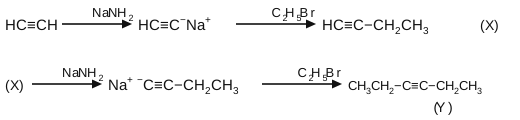
- HC≡CH + NaNH2 → HC≡C−Na+; + CH3CH2Br → HC≡C–CH2CH3 = 1-butyne (X).
- X still has one acidic ≡C–H: NaNH2 → Na+ −C≡C–CH2CH3; + CH3CH2Br → CH3CH2–C≡C–CH2CH3.
- Numbering C1–C6, the triple bond starts at C3 → 3-hexyne (Y).
- 2-Butyne / 2-hexyne would need a methyl group on the triple bond – no CH3Br is used, so (B), (C), (D) are out.
Short trick: One ethyl on each end of C≡C: first ethyl → 1-butyne, second ethyl on the other end → symmetrical Et–C≡C–Et = 3-hexyne.
Answer: (A) X = 1-butyne; Y = 3-hexyne
अवधारणा: सीमांत ऐल्काइन का C–H अम्लीय होता है: NaNH2 ऐसीटिलाइड आयन बनाता है, जो प्राथमिक ऐल्किल हैलाइड पर आक्रमण (SN2) कर उस कार्बन पर ऐल्किल समूह जोड़ देता है।
- HC≡CH + NaNH2 → HC≡C−Na+; + CH3CH2Br → HC≡C–CH2CH3 = 1-ब्यूटाइन (X)।
- X में अभी भी एक अम्लीय ≡C–H है: NaNH2 → Na+ −C≡C–CH2CH3; + CH3CH2Br → CH3CH2–C≡C–CH2CH3।
- C1–C6 क्रमांकन में त्रिआबंध C3 से आरंभ होता है → 3-हेक्साइन (Y)।
- 2-ब्यूटाइन / 2-हेक्साइन के लिए त्रिआबंध पर मेथिल समूह चाहिए – CH3Br प्रयुक्त नहीं हुआ, अतः (B), (C), (D) गलत हैं।
शॉर्ट ट्रिक: C≡C के प्रत्येक सिरे पर एक एथिल: पहला एथिल → 1-ब्यूटाइन, दूसरे सिरे पर दूसरा एथिल → सममित Et–C≡C–Et = 3-हेक्साइन।
उत्तर: (A) X = 1-ब्यूटाइन; Y = 3-हेक्साइन
NEET UGChemistryHydrocarbons – alkynes (acidity and alkylation)NEET UG 2016 · 1 May Shift 1
Q473.Among the following, the correct order of acidity is:
निम्नलिखित में से अम्लता का सही क्रम है:
- AHClO3 < HClO4 < HClO2 < HClO
- BHClO < HClO2 < HClO3 < HClO4
- CHClO2 < HClO < HClO3 < HClO4
- DHClO4 < HClO2 < HClO < HClO3
Show answer
Concept: For oxoacids of the same element, acidity rises with the oxidation state of the central atom (more O atoms → the conjugate anion is more resonance-stabilised).
- Oxidation state of Cl: HClO (+1), HClO2 (+3), HClO3 (+5), HClO4 (+7).
- ClO4− spreads the negative charge over 4 O atoms – the most stable anion, so HClO4 is the strongest acid.
- Order: HClO < HClO2 < HClO3 < HClO4; the other three orders break this trend.
Short trick: Count the oxygens – more O, stronger acid (HClO4 is one of the strongest acids known).
Answer: (B) HClO < HClO2 < HClO3 < HClO4
अवधारणा: एक ही तत्व के ऑक्सोअम्लों में केंद्रीय परमाणु की ऑक्सीकरण अवस्था बढ़ने पर अम्लता बढ़ती है (अधिक O परमाणु → संयुग्मी ऋणायन अनुनाद द्वारा अधिक स्थायी)।
- Cl की ऑक्सीकरण अवस्था: HClO (+1), HClO2 (+3), HClO3 (+5), HClO4 (+7)।
- ClO4− में ऋण आवेश 4 O परमाणुओं पर फैला है – सबसे स्थायी ऋणायन, अतः HClO4 सबसे प्रबल अम्ल है।
- क्रम: HClO < HClO2 < HClO3 < HClO4; शेष तीनों क्रम इस प्रवृत्ति के विपरीत हैं।
शॉर्ट ट्रिक: ऑक्सीजन गिनिए – जितने अधिक O, उतना प्रबल अम्ल (HClO4 ज्ञात प्रबलतम अम्लों में से एक है)।
उत्तर: (B) HClO < HClO2 < HClO3 < HClO4
NEET UGChemistryp-Block – oxoacids of chlorine (acidic strength)NEET UG 2016 · 1 May Shift 1
Q474.The rate of a first-order reaction is 0.04 mol l−1 s−1 at 10 second and 0.03 mol l−1 s−1 at 20 seconds after initiation of the reaction. The half-life period of the reaction is:
एक प्रथम कोटि की अभिक्रिया का वेग, अभिक्रिया आरंभ होने के 10 सेकंड पर 0.04 mol l−1 s−1 तथा 20 सेकंड पर 0.03 mol l−1 s−1 है। अभिक्रिया की अर्धायु अवधि है:
- A24.1 s
- B34.1 s
- C44.1 s
- D54.1 s
Show answer
Concept: For a first-order reaction rate = k[A], so the ratio of rates equals the ratio of concentrations; and .
Short trick: In Δt = 10 s the rate falls to 3/4. Since (3/4) is more than (1/2), t1/2 must be well above 10 s; ln 2/ln(4/3) = 0.693/0.2877 ≈ 2.41 → t1/2 = 2.41 × 10 s.
Answer: (A) 24.1 s
अवधारणा: प्रथम कोटि अभिक्रिया में वेग = k[A], अतः वेगों का अनुपात सांद्रताओं के अनुपात के बराबर होता है; तथा ।
शॉर्ट ट्रिक: Δt = 10 s में वेग घटकर 3/4 रह जाता है। चूँकि 3/4, 1/2 से अधिक है, t1/2 10 s से काफी अधिक होगा; ln 2/ln(4/3) = 0.693/0.2877 ≈ 2.41 → t1/2 = 2.41 × 10 s।
उत्तर: (A) 24.1 s
NEET UGChemistryChemical kinetics – first-order reaction, half-lifeNEET UG 2016 · 1 May Shift 1
Q475.Which one of the following characteristics is associated with adsorption?
निम्नलिखित में से कौन-सा अभिलक्षण अधिशोषण (adsorption) से संबद्ध है?
- AΔG is negative but ΔH and ΔS are positiveΔG ऋणात्मक है परंतु ΔH तथा ΔS धनात्मक हैं
- BΔG, ΔH and ΔS all are negativeΔG, ΔH तथा ΔS सभी ऋणात्मक हैं
- CΔG and ΔH are negative but ΔS is positiveΔG तथा ΔH ऋणात्मक हैं परंतु ΔS धनात्मक है
- DΔG and ΔS are negative but ΔH is positiveΔG तथा ΔS ऋणात्मक हैं परंतु ΔH धनात्मक है
Show answer
Concept: Adsorption is spontaneous (ΔG < 0); gas molecules lose freedom when they stick to the surface (ΔS < 0); hence, from ΔG = ΔH − TΔS, ΔH must be negative (exothermic).
- Free gas molecules → bound to surface: randomness decreases, ΔS < 0, so −TΔS is positive.
- For ΔG to be negative, ΔH must be negative and larger in magnitude than TΔS → adsorption is always exothermic.
- (A), (C) need ΔS > 0 – wrong; (D) needs ΔH > 0 with ΔS < 0, which can never give ΔG < 0 – wrong.
Short trick: NCERT line: "adsorption is always exothermic" + entropy decreases → all three negative.
Answer: (B) ΔG, ΔH and ΔS all are negative
अवधारणा: अधिशोषण स्वतः प्रवर्तित (ΔG < 0) होता है; पृष्ठ पर चिपकने से गैस अणुओं की स्वतंत्रता घटती है (ΔS < 0); अतः ΔG = ΔH − TΔS से ΔH ऋणात्मक (ऊष्माक्षेपी) होना चाहिए।
- मुक्त गैस अणु → पृष्ठ से बंधे: यादृच्छिकता घटती है, ΔS < 0, अतः −TΔS धनात्मक है।
- ΔG ऋणात्मक होने के लिए ΔH ऋणात्मक तथा परिमाण में TΔS से बड़ा होना चाहिए → अधिशोषण सदैव ऊष्माक्षेपी है।
- (A), (C) में ΔS > 0 चाहिए – गलत; (D) में ΔS < 0 के साथ ΔH > 0 है, जिससे ΔG कभी ऋणात्मक नहीं हो सकता – गलत।
शॉर्ट ट्रिक: NCERT पंक्ति: "अधिशोषण सदैव ऊष्माक्षेपी होता है" + एन्ट्रॉपी घटती है → तीनों ऋणात्मक।
उत्तर: (B) ΔG, ΔH तथा ΔS सभी ऋणात्मक हैं
NEET UGChemistrySurface chemistry – thermodynamics of adsorptionNEET UG 2016 · 1 May Shift 1
Q476.In which of the following options the order of arrangement does not agree with the variation of property indicated against it?
निम्नलिखित में से किस विकल्प में व्यवस्था का क्रम उसके सामने दर्शाए गए गुण के परिवर्तन से मेल नहीं खाता?
- AAl3+ < Mg2+ < Na+ < F− (increasing ionic size)Al3+ < Mg2+ < Na+ < F− (बढ़ता आयनिक आकार)
- BB < C < N < O (increasing first ionization enthalpy)B < C < N < O (बढ़ती प्रथम आयनन एन्थैल्पी)
- CI < Br < Cl < F (increasing electron gain enthalpy)I < Br < Cl < F (बढ़ती इलेक्ट्रॉन लब्धि एन्थैल्पी)
- DLi < Na < K < Rb (increasing metallic radius)Li < Na < K < Rb (बढ़ती धात्विक त्रिज्या)
Show answer
Concept: Check each order against the real trend; the question wants the order that does NOT agree.
- (A) Isoelectronic ions (10 e−): more nuclear charge → smaller; Al3+ < Mg2+ < Na+ < F− – correct order.
- (B) N (2p3, half-filled, extra stable) has higher IE than O (2p4); real order B < C < O < N – does NOT agree.
- (C) Electron gain enthalpy (magnitude): F is less negative than Cl because the small 2p shell of F repels the incoming electron; real order I < Br < F < Cl – does NOT agree.
- (D) Metallic radius increases down the group: Li < Na < K < Rb – correct order.
- So both (B) and (C) fit the question – two correct answers.
Short trick: Two classic exceptions of period 2: IE N > O and |ΔegH| Cl > F.
Answer: Bonus – both (B) and (C) are orders that do not agree with the property, so no single answer exists.
अवधारणा: प्रत्येक क्रम को वास्तविक प्रवृत्ति से मिलाइए; प्रश्न वह क्रम पूछता है जो मेल नहीं खाता।
- (A) सम-इलेक्ट्रॉनिक आयन (10 e−): अधिक नाभिकीय आवेश → छोटा आकार; Al3+ < Mg2+ < Na+ < F− – सही क्रम।
- (B) N (2p3, अर्धपूरित, अतिरिक्त स्थायी) की आयनन एन्थैल्पी O (2p4) से अधिक है; वास्तविक क्रम B < C < O < N – मेल नहीं खाता।
- (C) इलेक्ट्रॉन लब्धि एन्थैल्पी (परिमाण): F का मान Cl से कम ऋणात्मक है क्योंकि F का छोटा 2p कोश आने वाले इलेक्ट्रॉन को प्रतिकर्षित करता है; वास्तविक क्रम I < Br < F < Cl – मेल नहीं खाता।
- (D) धात्विक त्रिज्या वर्ग में नीचे जाने पर बढ़ती है: Li < Na < K < Rb – सही क्रम।
- अतः (B) तथा (C) दोनों प्रश्न के अनुरूप हैं – दो सही उत्तर।
शॉर्ट ट्रिक: आवर्त 2 के दो प्रसिद्ध अपवाद: आयनन एन्थैल्पी N > O तथा |ΔegH| Cl > F।
उत्तर: बोनस – (B) तथा (C) दोनों ऐसे क्रम हैं जो गुण से मेल नहीं खाते, अतः कोई एक उत्तर नहीं है।
NEET UGChemistryPeriodic properties – ionic size, ionisation and electron gain enthalpyNEET UG 2016 · 1 May Shift 1
Q477.Which of the following statements is false?
निम्नलिखित में से कौन-सा कथन असत्य है?
- AMg2+ ions form a complex with ATP.Mg2+ आयन ATP के साथ संकुल बनाते हैं।
- BCa2+ ions are important in blood clotting.Ca2+ आयन रक्त के थक्का बनने (blood clotting) में महत्त्वपूर्ण हैं।
- CCa2+ ions are not important in maintaining the regular beating of the heart.Ca2+ आयन हृदय की नियमित धड़कन बनाए रखने में महत्त्वपूर्ण नहीं हैं।
- DMg2+ ions are important in the green parts of plants.Mg2+ आयन पौधों के हरे भागों में महत्त्वपूर्ण हैं।
Show answer
Concept: NCERT (s-block, biological importance of Na, K, Mg, Ca): Ca2+ is needed for blood clotting and for maintaining the regular beating of the heart.
- (A) All ATP-using enzymes need Mg2+, which binds ATP as a Mg–ATP complex – true.
- (B) Ca2+ is a clotting factor – true.
- (C) Ca2+ controls muscle contraction, including the heart beat – so saying it is "not important" is false.
- (D) Mg2+ is the central ion of chlorophyll in green parts – true.
Short trick: Ca → clotting + heart beat + bones; Mg → chlorophyll + ATP.
Answer: (C) The statement denying the role of Ca2+ in heart beat is false.
अवधारणा: NCERT (s-ब्लॉक, Na, K, Mg, Ca का जैविक महत्त्व): Ca2+ रक्त का थक्का बनने तथा हृदय की नियमित धड़कन बनाए रखने के लिए आवश्यक है।
- (A) ATP का उपयोग करने वाले सभी एन्ज़ाइमों को Mg2+ चाहिए, जो ATP से Mg–ATP संकुल बनाता है – सत्य।
- (B) Ca2+ थक्का बनाने वाला कारक है – सत्य।
- (C) Ca2+ हृदय की धड़कन सहित पेशी संकुचन को नियंत्रित करता है – अतः इसे "महत्त्वपूर्ण नहीं" कहना असत्य है।
- (D) Mg2+ हरे भागों में क्लोरोफिल का केंद्रीय आयन है – सत्य।
शॉर्ट ट्रिक: Ca → थक्का + हृदय धड़कन + हड्डियाँ; Mg → क्लोरोफिल + ATP।
उत्तर: (C) हृदय धड़कन में Ca2+ की भूमिका नकारने वाला कथन असत्य है।
NEET UGChemistrys-Block – biological importance of Mg and CaNEET UG 2016 · 1 May Shift 1
Q478.Which of the following statements about hydrogen is incorrect?
हाइड्रोजन के विषय में निम्नलिखित में से कौन-सा कथन गलत है?
- AHydrogen has three isotopes of which tritium is the most common.हाइड्रोजन के तीन समस्थानिक हैं जिनमें ट्रिटियम सबसे सामान्य है।
- BHydrogen never acts as cation in ionic salts.हाइड्रोजन आयनिक लवणों में कभी धनायन के रूप में कार्य नहीं करता।
- CHydronium ion, H3O+ exists freely in solution.हाइड्रोनियम आयन, H3O+ विलयन में स्वतंत्र रूप से विद्यमान रहता है।
- DDihydrogen does not act as a reducing agent.डाइहाइड्रोजन अपचायक (reducing agent) के रूप में कार्य नहीं करता।
Show answer
Concept: Recall NCERT facts on hydrogen and test each statement.
- (A) Isotopes: protium (99.985 %), deuterium (0.015 %), tritium (radioactive, ~1 in 1018 atoms). Protium is the most common, not tritium – incorrect.
- (B) H+ (a bare proton) cannot exist on its own in a crystal; in ionic hydrides H is the anion H− – statement is correct.
- (C) In water H+ is always hydrated and exists as H3O+ – correct.
- (D) H2 reduces metal oxides (CuO + H2 → Cu + H2O) – it IS a reducing agent, so this statement is incorrect.
- Two statements, (A) and (D), are incorrect.
Short trick: Tritium = rarest and radioactive; H2 = classic reducing agent.
Answer: Bonus – statements (A) and (D) are both incorrect, so two options fit the question.
अवधारणा: हाइड्रोजन से संबंधित NCERT तथ्यों को याद कर प्रत्येक कथन जाँचिए।
- (A) समस्थानिक: प्रोटियम (99.985 %), ड्यूटीरियम (0.015 %), ट्रिटियम (रेडियोऐक्टिव, लगभग 1018 में 1 परमाणु)। सबसे सामान्य प्रोटियम है, ट्रिटियम नहीं – गलत।
- (B) H+ (केवल प्रोटॉन) क्रिस्टल में अकेला नहीं रह सकता; आयनिक हाइड्राइडों में H ऋणायन H− होता है – कथन सही है।
- (C) जल में H+ सदैव जलयोजित होकर H3O+ के रूप में रहता है – सही।
- (D) H2 धातु ऑक्साइडों का अपचयन करता है (CuO + H2 → Cu + H2O) – यह अपचायक है, अतः यह कथन गलत है।
- दो कथन, (A) तथा (D), गलत हैं।
शॉर्ट ट्रिक: ट्रिटियम = सबसे दुर्लभ एवं रेडियोऐक्टिव; H2 = प्रसिद्ध अपचायक।
उत्तर: बोनस – कथन (A) तथा (D) दोनों गलत हैं, अतः दो विकल्प प्रश्न के अनुरूप हैं।
NEET UGChemistryHydrogen – isotopes and propertiesNEET UG 2016 · 1 May Shift 1
Q479.The correct statement regarding a carbonyl compound with a hydrogen atom on its alpha carbon, is:
ऐल्फा कार्बन पर हाइड्रोजन परमाणु वाले कार्बोनिल यौगिक के संबंध में सही कथन है:
- AA carbonyl compound with a hydrogen atom on its alpha-carbon never equilibrates with its corresponding enol.ऐल्फा-कार्बन पर हाइड्रोजन परमाणु वाला कार्बोनिल यौगिक अपने संगत ईनॉल के साथ कभी साम्य स्थापित नहीं करता।
- BA carbonyl compound with a hydrogen atom on its alpha-carbon rapidly equilibrates with its corresponding enol and this process is known as aldehyde-ketone equilibration.ऐल्फा-कार्बन पर हाइड्रोजन परमाणु वाला कार्बोनिल यौगिक अपने संगत ईनॉल के साथ तीव्रता से साम्य स्थापित करता है और यह प्रक्रम ऐल्डिहाइड-कीटोन साम्यन कहलाता है।
- CA carbonyl compound with a hydrogen atom on its alpha-carbon rapidly equilibrates with its corresponding enol and this process is known as carbonylation.ऐल्फा-कार्बन पर हाइड्रोजन परमाणु वाला कार्बोनिल यौगिक अपने संगत ईनॉल के साथ तीव्रता से साम्य स्थापित करता है और यह प्रक्रम कार्बोनिलन (carbonylation) कहलाता है।
- DA carbonyl compound with a hydrogen atom on its alpha-carbon rapidly equilibrates with its corresponding enol and this process is known as keto-enol tautomerism.ऐल्फा-कार्बन पर हाइड्रोजन परमाणु वाला कार्बोनिल यौगिक अपने संगत ईनॉल के साथ तीव्रता से साम्य स्थापित करता है और यह प्रक्रम कीटो-ईनॉल चलावयवता (tautomerism) कहलाता है।
Show answer
Concept: An α-H can shift to the carbonyl O, giving an enol (C=C–OH). The keto and enol forms are tautomers in rapid equilibrium.
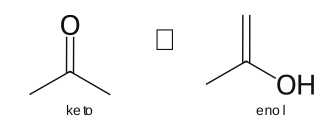
- Example: CH3COCH3 (keto) ⇌ CH2=C(OH)CH3 (enol); the keto form dominates at equilibrium.
- (A) "never equilibrates" – wrong, the equilibrium is fast (acid/base catalysed).
- (B) "aldehyde-ketone equilibration" and (C) "carbonylation" (adding a CO group) are wrong names.
- The correct name is keto-enol tautomerism – (D).
Short trick: α-H present ⇒ enolisable ⇒ keto ⇌ enol tautomerism (same reason α-H is needed for aldol condensation).
Answer: (D) keto-enol tautomerism
अवधारणा: α-H, कार्बोनिल O पर स्थानांतरित होकर ईनॉल (C=C–OH) बना सकता है। कीटो तथा ईनॉल रूप चलावयवी (tautomers) हैं जो तीव्र साम्य में रहते हैं।
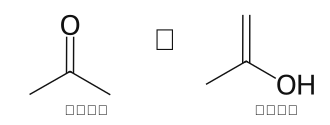
- उदाहरण: CH3COCH3 (कीटो) ⇌ CH2=C(OH)CH3 (ईनॉल); साम्य पर कीटो रूप प्रधान होता है।
- (A) "कभी साम्य नहीं" – गलत, साम्य तीव्र होता है (अम्ल/क्षार उत्प्रेरित)।
- (B) "ऐल्डिहाइड-कीटोन साम्यन" तथा (C) "कार्बोनिलन" (CO समूह जोड़ना) गलत नाम हैं।
- सही नाम कीटो-ईनॉल चलावयवता है – (D)।
शॉर्ट ट्रिक: α-H उपस्थित ⇒ ईनॉलीकरण संभव ⇒ कीटो ⇌ ईनॉल चलावयवता (इसी कारण ऐल्डोल संघनन के लिए भी α-H आवश्यक है)।
उत्तर: (D) कीटो-ईनॉल चलावयवता
NEET UGChemistryAldehydes and ketones – keto-enol tautomerismNEET UG 2016 · 1 May Shift 1
Q480.MY and NY3, two nearly insoluble salts, have the same Ksp values of 6.2 × 10⁻¹³ at room temperature. Which statement would be true in regard to MY and NY3?
MY तथा NY3, दो लगभग अविलेय लवणों के Ksp मान कमरे के ताप पर समान, 6.2 × 10⁻¹³ हैं। MY तथा NY3 के संबंध में कौन-सा कथन सत्य होगा?
- AThe molar solubilities of MY and NY3 in water are identical.जल में MY तथा NY3 की मोलर विलेयताएँ समान हैं।
- BThe molar solubility of MY in water is less than that of NY3.जल में MY की मोलर विलेयता NY3 की तुलना में कम है।
- CThe salts MY and NY3 are more soluble in 0.5 M KY than in pure water.लवण MY तथा NY3 शुद्ध जल की तुलना में 0.5 M KY में अधिक विलेय हैं।
- DThe addition of the salt of KY to solution of MY and NY3 will have no effect on their solubilities.MY तथा NY3 के विलयन में KY लवण मिलाने से उनकी विलेयताओं पर कोई प्रभाव नहीं पड़ेगा।
Show answer
Concept: For AB: Ksp = s2; for AB3: Ksp = s(3s)3 = 27s4. A common ion lowers solubility.
- MY: M.
- NY3 ⇌ N3+ + 3Y−: M.
- So s(MY) < s(NY3) → (B) true, (A) false.
- KY supplies the common ion Y− → both salts become LESS soluble; (C) and (D) are false.
Short trick: Same Ksp but more ions per formula ⇒ larger s (the root is of a higher order). Whatever the exact formula, AB3 wins.
Answer: (B) Molar solubility of MY is less than that of NY3.
अवधारणा: AB के लिए: Ksp = s2; AB3 के लिए: Ksp = s(3s)3 = 27s4। सम-आयन विलेयता घटाता है।
- MY: M।
- NY3 ⇌ N3+ + 3Y−: M।
- अतः s(MY) < s(NY3) → (B) सत्य, (A) असत्य।
- KY सम-आयन Y− देता है → दोनों लवण कम विलेय हो जाते हैं; (C) तथा (D) असत्य हैं।
शॉर्ट ट्रिक: Ksp समान, परंतु प्रति सूत्र अधिक आयन ⇒ s अधिक (उच्च कोटि का मूल लेना पड़ता है)। सूत्र कुछ भी हो, AB3 की विलेयता अधिक।
उत्तर: (B) MY की मोलर विलेयता NY3 से कम है।
NEET UGChemistryIonic equilibrium – solubility productNEET UG 2016 · 1 May Shift 1

