NEET UG · 2,240 questions

NEET UG 2015, 2016, 2017, 2018, 2019, 2020, 2021, 2022, 2023, 2024, 2025, 2026 PYQs

Real previous year questions, subject-wise. Try the question, then open the answer and the explanation in Hindi & English – free, no login.

Courses – airGurukul

720 questions in Biology.

Q481.
Which one of the following is related to Ex-situ conservation of threatened animals and plants?
निम्नलिखित में से कौन-सा संकटग्रस्त जंतुओं तथा पादपों के बाह्य-स्थाने (Ex-situ) संरक्षण से संबंधित है?
  1. AWildlife Safari parksवन्यजीव सफ़ारी पार्क
  2. BBiodiversity hot spotsजैव विविधता हॉट स्पॉट
  3. CAmazon rainforestअमेज़न वर्षावन
  4. DHimalayan regionहिमालय क्षेत्र
Show answer

Concept: Ex-situ = conservation outside the natural habitat: zoological parks, botanical gardens, wildlife safari parks, seed/gene banks, cryopreservation.

  1. Wildlife safari park → animals kept in a special setting away from their habitat → (A).
  2. (B) Hot spots, (C) Amazon rainforest and (D) Himalayan region are natural habitats – they come under in-situ conservation.

Short trick: “Ex” = exit from home; any natural region named is in-situ.

Answer: (A) Wildlife Safari parks

अवधारणा: बाह्य-स्थाने = प्राकृतिक आवास के बाहर संरक्षण: जंतु उद्यान, वनस्पति उद्यान, वन्यजीव सफ़ारी पार्क, बीज/जीन बैंक, निम्नताप परिरक्षण।

  1. वन्यजीव सफ़ारी पार्क → जंतुओं को उनके आवास से दूर विशेष परिवेश में रखा जाता है → (A)।
  2. (B) हॉट स्पॉट, (C) अमेज़न वर्षावन तथा (D) हिमालय क्षेत्र प्राकृतिक आवास हैं – ये स्व-स्थाने (in-situ) संरक्षण में आते हैं।

शॉर्ट ट्रिक: “Ex” = घर से exit; कोई भी प्राकृतिक क्षेत्र in-situ है।

उत्तर: (A) वन्यजीव सफ़ारी पार्क
NEET UGBiologyBiodiversity and conservation – ex-situ conservationNEET UG 2017 · 7 May Shift 1
Q482.
Select the mismatch :
बेमेल युग्म का चयन कीजिए :
  1. APinus – DioeciousPinus – एकलिंगाश्रयी (डायोशियस)
  2. BCycas – DioeciousCycas – एकलिंगाश्रयी (डायोशियस)
  3. CSalvinia – HeterosporousSalvinia – विषमबीजाणुक
  4. DEquisetum – HomosporousEquisetum – समबीजाणुक
Show answer

Concept: Pinus is monoecious – male and female cones on the same tree; Cycas is dioecious – male and female cones on separate trees.

  1. (A) Pinus – dioecious ✗ → mismatch.
  2. (B) Cycas – dioecious ✓. (C) Salvinia (with Selaginella) – heterosporous pteridophyte ✓. (D) Equisetum – homosporous ✓.

Short trick: “Pinus = Pair on one tree (monoecious); Cycas = Couple lives apart (dioecious).” Heterosporous pteridophytes: Selaginella, Salvinia.

Answer: (A) Pinus – Dioecious

अवधारणा: Pinus उभयलिंगाश्रयी (monoecious) है – नर तथा मादा शंकु एक ही वृक्ष पर; Cycas एकलिंगाश्रयी है – नर तथा मादा शंकु अलग-अलग वृक्षों पर।

  1. (A) Pinus – एकलिंगाश्रयी ✗ → बेमेल।
  2. (B) Cycas – एकलिंगाश्रयी ✓। (C) Salvinia (Selaginella के साथ) – विषमबीजाणुक टेरिडोफाइट ✓। (D) Equisetum – समबीजाणुक ✓।

शॉर्ट ट्रिक: “Pinus = एक ही पेड़ पर जोड़ा (monoecious); Cycas = जोड़ा अलग-अलग रहता है (dioecious)।” विषमबीजाणुक टेरिडोफाइट: Selaginella, Salvinia।

उत्तर: (A) Pinus – एकलिंगाश्रयी (डायोशियस)

NEET UGBiologyPlant kingdom – gymnosperms and pteridophytesNEET UG 2017 · 7 May Shift 1
Q483.
Which of the following facilitates opening of stomatal aperture?
निम्नलिखित में से कौन रंध्र छिद्र के खुलने में सहायक है?
  1. AContraction of outer wall of guard cellsद्वार कोशिकाओं की बाहरी भित्ति का संकुचन
  2. BDecrease in turgidity of guard cellsद्वार कोशिकाओं की स्फीति में कमी
  3. CRadial orientation of cellulose microfibrils in the cell wall of guard cellsद्वार कोशिकाओं की कोशिका भित्ति में सेलुलोस सूक्ष्मतंतुओं का अरीय विन्यास
  4. DLongitudinal orientation of cellulose microfibrils in the cell wall of guard cellsद्वार कोशिकाओं की कोशिका भित्ति में सेलुलोस सूक्ष्मतंतुओं का अनुदैर्ध्य विन्यास
Show answer

Concept: When guard cells become turgid, the thin outer walls bulge out and pull the thick inner walls into a crescent; radially oriented cellulose microfibrils make it easy for the stoma to open.

  1. Radial microfibrils → guard cell can lengthen but not widen much → it bows outward → pore opens → (C).
  2. (A) The outer wall stretches/bulges, it does not contract. (B) Decrease in turgidity closes the stoma. (D) Longitudinal orientation is not what NCERT gives; radial orientation is the stated cause.

Short trick: NCERT line: “orientation of microfibrils in the cell walls of guard cells – radially rather than longitudinally – makes it easier for the stoma to open.”

Answer: (C) Radial orientation of cellulose microfibrils in the cell wall of guard cells

अवधारणा: जब द्वार कोशिकाएँ स्फीत होती हैं तो पतली बाहरी भित्तियाँ बाहर उभरती हैं और मोटी भीतरी भित्तियों को अर्धचंद्राकार खींचती हैं; अरीय विन्यस्त सेलुलोस सूक्ष्मतंतु रंध्र के खुलने को सरल बनाते हैं।

  1. अरीय सूक्ष्मतंतु → द्वार कोशिका लंबी तो हो सकती है पर अधिक चौड़ी नहीं → बाहर की ओर मुड़ती है → छिद्र खुलता है → (C)।
  2. (A) बाहरी भित्ति खिंचती/उभरती है, संकुचित नहीं होती। (B) स्फीति में कमी से रंध्र बंद होता है। (D) अनुदैर्ध्य विन्यास NCERT में नहीं दिया; अरीय विन्यास ही बताया गया कारण है।

शॉर्ट ट्रिक: NCERT पंक्ति: “द्वार कोशिकाओं की भित्ति में सूक्ष्मतंतुओं का विन्यास – अनुदैर्ध्य के बजाय अरीय – रंध्र का खुलना सरल बनाता है।”

उत्तर: (C) द्वार कोशिकाओं की कोशिका भित्ति में सेलुलोस सूक्ष्मतंतुओं का अरीय विन्यास

NEET UGBiologyTransport in plants – stomatal openingNEET UG 2017 · 7 May Shift 1
Q484.
The association of histone H1 with a nucleosome indicates:
न्यूक्लियोसोम के साथ हिस्टोन H1 का जुड़ना इंगित करता है:
  1. ATranscription is occurringअनुलेखन (ट्रांसक्रिप्शन) हो रहा है
  2. BDNA replication is occurringDNA प्रतिकृति हो रही है
  3. CThe DNA is condensed into a Chromatin FibreDNA एक क्रोमैटिन तंतु में संघनित हो गया है
  4. DThe DNA double helix is exposedDNA द्विकुंडली उद्भासित (खुली) है
Show answer

Concept: Nucleosome = histone octamer + ~200 bp DNA. Histone H1 binds the linker DNA and pulls nucleosomes together into the condensed 30 nm chromatin fibre.

  1. H1 bound → DNA packed (condensed chromatin) → (C).
  2. (A) Transcription and (B) replication need DNA to be loosened (H1 released, euchromatin). (D) Exposed DNA is the opposite of H1 binding.

Short trick: H1 = the “clip” that shuts the beads-on-string into a tight fibre; clip on = closed = inactive.

Answer: (C) The DNA is condensed into a Chromatin Fibre

अवधारणा: न्यूक्लियोसोम = हिस्टोन अष्टक + ~200 bp DNA। हिस्टोन H1 संयोजक (linker) DNA से जुड़कर न्यूक्लियोसोमों को पास खींचता है जिससे संघनित 30 nm क्रोमैटिन तंतु बनता है।

  1. H1 जुड़ा → DNA संवेष्टित (संघनित क्रोमैटिन) → (C)।
  2. (A) अनुलेखन तथा (B) प्रतिकृति के लिए DNA का ढीला होना (H1 का हटना, यूक्रोमैटिन) आवश्यक है। (D) खुला DNA, H1 के जुड़ने का उल्टा है।

शॉर्ट ट्रिक: H1 = वह “क्लिप” जो मनकों की माला को कसे तंतु में बंद कर देती है; क्लिप लगी = बंद = निष्क्रिय।

उत्तर: (C) DNA एक क्रोमैटिन तंतु में संघनित हो गया है

NEET UGBiologyMolecular basis of inheritance – chromatin packagingNEET UG 2017 · 7 May Shift 1
Q485.
DNA fragments are
DNA खंड होते हैं
  1. APositively chargedधनावेशित
  2. BNegatively chargedऋणावेशित
  3. CNeutralउदासीन
  4. DEither positively or negatively charged depending on their sizeअपने आकार के अनुसार धनावेशित अथवा ऋणावेशित
Show answer

Concept: Each nucleotide carries a phosphate group that is ionised at physiological/buffer pH, so DNA is a polyanion – negatively charged regardless of length.

  1. Phosphate backbone → negative charge → DNA moves to the anode in electrophoresis → (B).
  2. (A) and (C) contradict the phosphate charge. (D) Size changes the amount of charge, not its sign.

Short trick: DNA runs to the red (+) electrode: “run to red”.

Answer: (B) Negatively charged

अवधारणा: प्रत्येक न्यूक्लियोटाइड में फॉस्फेट समूह होता है जो शरीर-क्रियात्मक/बफर pH पर आयनित रहता है, अतः DNA बहुऋणायन है – लंबाई कुछ भी हो, ऋणावेशित।

  1. फॉस्फेट आधार-शृंखला → ऋण आवेश → वैद्युतकणसंचलन में DNA ऐनोड की ओर जाता है → (B)।
  2. (A) तथा (C) फॉस्फेट आवेश के विपरीत हैं। (D) आकार से आवेश की मात्रा बदलती है, उसका चिह्न नहीं।

शॉर्ट ट्रिक: DNA लाल (+) इलेक्ट्रोड की ओर दौड़ता है: “run to red”।

उत्तर: (B) ऋणावेशित

NEET UGBiologyBiotechnology – properties of DNANEET UG 2017 · 7 May Shift 1
Q486.
Capacitation occurs in
धारितीकरण (capacitation) कहाँ होता है?
  1. ARete testisवृषण जालिका (रीटे टेस्टिस)
  2. BEpididymisअधिवृषण (एपिडिडिमिस)
  3. CVas deferensशुक्रवाहक (वास डेफ़रेंस)
  4. DFemale Reproductive tractमादा जनन पथ
Show answer

Concept: Capacitation is the final activation of sperm (removal of surface coat, membrane changes) that makes them able to fertilise; it takes place only after ejaculation, inside the female reproductive tract.

  1. Female tract (uterus/oviduct) → capacitation → (D).
  2. (A) Rete testis and (C) vas deferens – merely transport sperm. (B) Epididymis – sperm mature and gain motility, but are not yet capacitated.

Short trick: Sperm “get the capacity” only on reaching the female – epididymis = maturation, female tract = capacitation.

Answer: (D) Female Reproductive tract

अवधारणा: धारितीकरण शुक्राणुओं का अंतिम सक्रियण (सतही आवरण का हटना, झिल्ली परिवर्तन) है जो उन्हें निषेचन योग्य बनाता है; यह स्खलन के बाद केवल मादा जनन पथ में होता है।

  1. मादा पथ (गर्भाशय/अंडवाहिनी) → धारितीकरण → (D)।
  2. (A) वृषण जालिका तथा (C) शुक्रवाहक – केवल शुक्राणुओं का परिवहन। (B) अधिवृषण – शुक्राणु परिपक्व होते व गतिशीलता पाते हैं, परंतु अभी धारितीकृत नहीं होते।

शॉर्ट ट्रिक: शुक्राणु क्षमता (capacity) केवल मादा तक पहुँचकर पाते हैं – अधिवृषण = परिपक्वन, मादा पथ = धारितीकरण।

उत्तर: (D) मादा जनन पथ

NEET UGBiologyHuman reproduction – capacitationNEET UG 2017 · 7 May Shift 1
Q487.
Which ecosystem has the maximum biomass?
किस पारितंत्र में अधिकतम जैवभार होता है?
  1. AForest ecosystemवन पारितंत्र
  2. BGrassland ecosystemघासस्थल पारितंत्र
  3. CPond ecosystemतालाब पारितंत्र
  4. DLake ecosystemझील पारितंत्र
Show answer

Concept: Biomass = mass of living matter per unit area. Forests have huge standing crop in the form of trees (wood), far more than any other ecosystem in the list.

  1. Forest (especially tropical rain forest) → maximum biomass → (A).
  2. (B) Grassland – small herbaceous plants, low standing crop. (C) Pond and (D) Lake – producers are tiny phytoplankton with very low biomass (inverted biomass pyramid in water).

Short trick: Biomass = “how much is standing” – nothing stands taller and heavier than a forest.

Answer: (A) Forest ecosystem

अवधारणा: जैवभार = प्रति इकाई क्षेत्र जीवित पदार्थ का द्रव्यमान। वनों में वृक्षों (काष्ठ) के रूप में विशाल खड़ी फसल होती है, जो सूची के किसी भी अन्य पारितंत्र से कहीं अधिक है।

  1. वन (विशेषकर उष्णकटिबंधीय वर्षावन) → अधिकतम जैवभार → (A)।
  2. (B) घासस्थल – छोटे शाकीय पौधे, कम खड़ी फसल। (C) तालाब तथा (D) झील – उत्पादक सूक्ष्म पादपप्लवक हैं जिनका जैवभार बहुत कम है (जल में जैवभार का पिरामिड उल्टा)।

शॉर्ट ट्रिक: जैवभार = “कितना खड़ा है” – वन से ऊँचा और भारी कुछ भी खड़ा नहीं।

उत्तर: (A) वन पारितंत्र

NEET UGBiologyEcosystem – biomass and productivityNEET UG 2017 · 7 May Shift 1
Q488.
A disease caused by an autosomal primary non-disjunction is
प्राथमिक अलिंगसूत्री अवियोजन (autosomal primary non-disjunction) से होने वाला रोग है
  1. ADown's syndromeडाउन सिंड्रोम
  2. BKlinefelter's syndromeक्लाइनफेल्टर सिंड्रोम
  3. CTurner's syndromeटर्नर सिंड्रोम
  4. DSickle cell anemiaदात्र कोशिका अरक्तता (सिकल सेल एनीमिया)
Show answer

Concept: Non-disjunction of chromosome 21 (an autosome) during gamete formation gives trisomy 21 = Down’s syndrome (47, +21).

  1. Autosomal aneuploidy → Down’s syndrome → (A).
  2. (B) Klinefelter’s (47, XXY) and (C) Turner’s (45, XO) – non-disjunction of sex chromosomes. (D) Sickle cell anaemia – a point (gene) mutation, not a chromosomal disorder.

Short trick: Klinefelter and Turner both carry an X → sex-chromosomal; Down = 21 = autosome.

Answer: (A) Down's syndrome

अवधारणा: युग्मक निर्माण के समय गुणसूत्र 21 (एक अलिंगसूत्र) का अवियोजन ट्राइसोमी 21 = डाउन सिंड्रोम (47, +21) देता है।

  1. अलिंगसूत्री असुगुणिता → डाउन सिंड्रोम → (A)।
  2. (B) क्लाइनफेल्टर (47, XXY) तथा (C) टर्नर (45, XO) – लिंग गुणसूत्रों का अवियोजन। (D) दात्र कोशिका अरक्तता – बिंदु (जीन) उत्परिवर्तन, गुणसूत्रीय विकार नहीं।

शॉर्ट ट्रिक: क्लाइनफेल्टर व टर्नर दोनों में X है → लिंग गुणसूत्रीय; डाउन = 21 = अलिंगसूत्र।

उत्तर: (A) डाउन सिंड्रोम

NEET UGBiologyPrinciples of inheritance – chromosomal disordersNEET UG 2017 · 7 May Shift 1
Q489.
Life cycle of Ectocarpus and Fucus respectively are
Ectocarpus तथा Fucus के जीवन चक्र क्रमशः हैं
  1. AHaplontic, Diplonticअगुणितक, द्विगुणितक
  2. BDiplontic, Haplodiplonticद्विगुणितक, अगुणितक-द्विगुणितक
  3. CHaplodiplontic, Diplonticअगुणितक-द्विगुणितक, द्विगुणितक
  4. DHaplodiplontic, Haplonticअगुणितक-द्विगुणितक, अगुणितक
Show answer

Concept: NCERT: most algae are haplontic; some (Ectocarpus, Polysiphonia, kelps) are haplo-diplontic; Fucus (an alga) is diplontic.

  1. Ectocarpus – both multicellular haploid and diploid phases → haplodiplontic.
  2. Fucus – the diploid sporophyte is the only free-living phase; gametes are the only haploid cells → diplontic.
  3. Hence (C); every other option mislabels at least one of the two.

Short trick: “Fucus is Fully diploid”; Ectocarpus, Polysiphonia, Kelps = “EPK – both phases”.

Answer: (C) Haplodiplontic, Diplontic

अवधारणा: NCERT: अधिकांश शैवाल अगुणितक होते हैं; कुछ (Ectocarpus, Polysiphonia, केल्प) अगुणितक-द्विगुणितक होते हैं; Fucus (एक शैवाल) द्विगुणितक है।

  1. Ectocarpus – बहुकोशिकीय अगुणित तथा द्विगुणित दोनों प्रावस्थाएँ → अगुणितक-द्विगुणितक।
  2. Fucus – द्विगुणित बीजाणुद्भिद ही एकमात्र स्वतंत्र प्रावस्था; केवल युग्मक अगुणित → द्विगुणितक।
  3. अतः (C); अन्य प्रत्येक विकल्प कम से कम एक को गलत बताता है।

शॉर्ट ट्रिक: “Fucus पूरी तरह (Fully) द्विगुणित”; Ectocarpus, Polysiphonia, Kelps = “EPK – दोनों प्रावस्थाएँ”।

उत्तर: (C) अगुणितक-द्विगुणितक, द्विगुणितक

NEET UGBiologyPlant kingdom – life cycle patternsNEET UG 2017 · 7 May Shift 1
Q490.
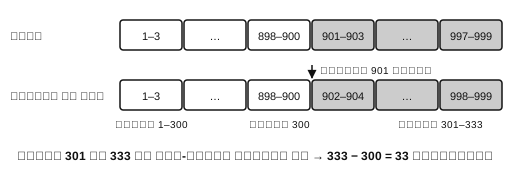
If there are 999 bases in an RNA that codes for a protein with 333 amino acids, and the base at position 901 is deleted such that the length of the RNA becomes 998 bases, how many codons will be altered?
यदि 333 अमीनो अम्लों वाले प्रोटीन का कूटन करने वाले एक RNA में 999 क्षारक हैं, और स्थिति 901 पर स्थित क्षारक विलोपित हो जाता है जिससे RNA की लंबाई 998 क्षारक हो जाती है, तो कितने कोडॉन परिवर्तित होंगे?
  1. A1
  2. B11
  3. C33
  4. D333
Show answer

Concept: Codons are read in non-overlapping triplets from a fixed start; deleting one base shifts the reading frame of every codon from that point onward (frameshift).

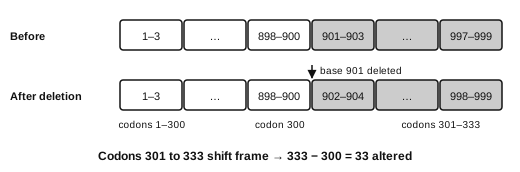
  1. Codon number of base 901 = ⌈901/3⌉ = 301 (codon 301 = bases 901–903).
  2. Codons 1–300 (bases 1–900) are untouched.
  3. Altered codons = 301 to 333 = 333 − 300 = 33 → (C).

Short trick: Altered codons = total codons − (bases before the deletion ÷ 3) = 333 − 900/3 = 33.

Answer: (C) 33

अवधारणा: कोडॉन एक निश्चित आरंभ से अनतिव्यापी त्रिकों में पढ़े जाते हैं; एक क्षारक के विलोपन से उस बिंदु से आगे के सभी कोडॉनों का पठन-ढाँचा खिसक जाता है (फ्रेमशिफ्ट)।

  1. क्षारक 901 का कोडॉन क्रमांक = ⌈901/3⌉ = 301 (कोडॉन 301 = क्षारक 901–903)।
  2. कोडॉन 1–300 (क्षारक 1–900) अप्रभावित रहते हैं।
  3. परिवर्तित कोडॉन = 301 से 333 = 333 − 300 = 33 → (C)।

शॉर्ट ट्रिक: परिवर्तित कोडॉन = कुल कोडॉन − (विलोपन से पहले के क्षारक ÷ 3) = 333 − 900/3 = 33।

उत्तर: (C) 33

NEET UGBiologyMolecular basis of inheritance – frameshift mutationNEET UG 2017 · 7 May Shift 1
Q491.
The pivot joint between atlas and axis is a type of
एटलस तथा एक्सिस के बीच की धुराग्र संधि (pivot joint) किस प्रकार की संधि है?
  1. AFibrous jointतंतुमय संधि
  2. BCartilaginous jointउपास्थियुक्त संधि
  3. CSynovial jointसाइनोवियल संधि
  4. DSaddle jointसैडल संधि
Show answer

Concept: Synovial joints have a fluid-filled cavity and allow considerable movement; NCERT types: ball-and-socket, hinge, pivot, gliding, saddle.

  1. Pivot joint (atlas–axis) is a sub-type of synovial joint → (C).
  2. (A) Fibrous – immovable (skull sutures). (B) Cartilaginous – slightly movable (between vertebrae). (D) Saddle – a different synovial joint (thumb carpal–metacarpal), not atlas–axis.

Short trick: Atlas–axis lets you say “no” – rotation needs a free (synovial) pivot.

Answer: (C) Synovial joint

अवधारणा: साइनोवियल संधियों में द्रव से भरी गुहा होती है तथा ये पर्याप्त गति करने देती हैं; NCERT के प्रकार: कंदुक-खल्लिका, कब्ज़ा, धुराग्र, विसर्पी, सैडल।

  1. धुराग्र संधि (एटलस–एक्सिस) साइनोवियल संधि का एक उप-प्रकार है → (C)।
  2. (A) तंतुमय – अचल (कपाल की सीवनें)। (B) उपास्थियुक्त – अल्प गतिशील (कशेरुकाओं के बीच)। (D) सैडल – एक अलग साइनोवियल संधि (अंगूठे की कार्पल–मेटाकार्पल), एटलस–एक्सिस नहीं।

शॉर्ट ट्रिक: एटलस–एक्सिस से हम सिर हिलाकर “ना” कहते हैं – घूर्णन के लिए मुक्त (साइनोवियल) धुरी चाहिए।

उत्तर: (C) साइनोवियल संधि

NEET UGBiologyLocomotion and movement – jointsNEET UG 2017 · 7 May Shift 1
Q492.
A gene whose expression helps to identify transformed cell is known as
वह जीन जिसकी अभिव्यक्ति रूपांतरित कोशिका की पहचान में सहायता करती है, कहलाता है
  1. ASelectable markerवरणयोग्य चिह्नक (सिलेक्टेबल मार्कर)
  2. BVectorसंवाहक (वेक्टर)
  3. CPlasmidप्लाज़्मिड
  4. DStructural geneसंरचनात्मक जीन
Show answer

Concept: A selectable marker (e.g. genes for resistance to ampicillin, tetracycline, kanamycin) helps identify and eliminate non-transformants and selectively permits transformants to grow.

  1. Gene used to identify transformed cells → selectable marker → (A).
  2. (B) Vector and (C) plasmid – the carrier DNA, not a single gene. (D) Structural gene – codes for a polypeptide/product, not for selection.

Short trick: “Selectable” – the gene that lets you select the transformants.

Answer: (A) Selectable marker

अवधारणा: वरणयोग्य चिह्नक (जैसे ऐम्पिसिलिन, टेट्रासाइक्लिन, कैनामाइसिन प्रतिरोधी जीन) अरूपांतरित कोशिकाओं को पहचानकर हटाने तथा केवल रूपांतरित कोशिकाओं की वृद्धि होने देने में सहायता करते हैं।

  1. रूपांतरित कोशिकाओं की पहचान में प्रयुक्त जीन → वरणयोग्य चिह्नक → (A)।
  2. (B) संवाहक तथा (C) प्लाज़्मिड – वाहक DNA, एकल जीन नहीं। (D) संरचनात्मक जीन – पॉलिपेप्टाइड/उत्पाद का कूटन करता है, चयन के लिए नहीं।

शॉर्ट ट्रिक: “वरणयोग्य” – वह जीन जिससे रूपांतरित कोशिकाओं का वरण (चयन) होता है।

उत्तर: (A) वरणयोग्य चिह्नक (सिलेक्टेबल मार्कर)

NEET UGBiologyBiotechnology – cloning vectorsNEET UG 2017 · 7 May Shift 1
Q493.
Presence of plants arranged into well defined vertical layers depending on their height can be seen best in :
ऊँचाई के आधार पर सुस्पष्ट ऊर्ध्वाधर परतों में व्यवस्थित पादपों की उपस्थिति सबसे अच्छी तरह कहाँ देखी जा सकती है?
  1. ATropical Savannahउष्णकटिबंधीय सवाना
  2. BTropical Rain Forestउष्णकटिबंधीय वर्षा वन
  3. CGrasslandघासस्थल
  4. DTemperate Forestशीतोष्ण वन
Show answer

Concept: Vertical distribution of species at different heights is called stratification; it is most pronounced in tropical rain forests (emergent trees, canopy, under-canopy trees, shrubs, ground herbs).

  1. Tropical rain forest – maximum number of distinct strata → (B).
  2. (A) Savannah and (C) grassland – mainly a grass layer with scattered trees. (D) Temperate forest – fewer layers than a tropical rain forest.

Short trick: NCERT: “trees occupy the top vertical strata, shrubs the second and herbs and grasses the bottom” – best seen where diversity is highest: tropical rain forest.

Answer: (B) Tropical Rain Forest

अवधारणा: विभिन्न ऊँचाइयों पर जातियों का ऊर्ध्वाधर वितरण स्तरविन्यास कहलाता है; यह उष्णकटिबंधीय वर्षा वनों में सबसे स्पष्ट होता है (उद्गामी वृक्ष, वितान, निम्न-वितान वृक्ष, झाड़ियाँ, भू-शाक)।

  1. उष्णकटिबंधीय वर्षा वन – सर्वाधिक सुस्पष्ट स्तर → (B)।
  2. (A) सवाना तथा (C) घासस्थल – मुख्यतः एक घास परत तथा बिखरे वृक्ष। (D) शीतोष्ण वन – उष्णकटिबंधीय वर्षा वन से कम परतें।

शॉर्ट ट्रिक: NCERT: “वृक्ष सबसे ऊपरी ऊर्ध्वाधर स्तर, झाड़ियाँ दूसरा तथा शाक व घासें निचला स्तर घेरती हैं” – सबसे अच्छा वहाँ जहाँ विविधता सर्वाधिक: उष्णकटिबंधीय वर्षा वन।

उत्तर: (B) उष्णकटिबंधीय वर्षा वन

NEET UGBiologyEcosystem – stratificationNEET UG 2017 · 7 May Shift 1
Q494.
The genotypes of a Husband and Wife are IAIB and IAi.
Among the blood types of their children, how many different genotypes and phenotypes are possible?
एक पति तथा पत्नी के जीनप्ररूप IAIB तथा IAi हैं।
उनके बच्चों के रुधिर वर्गों में कितने भिन्न जीनप्ररूप तथा लक्षणप्ररूप संभव हैं?
  1. A3 genotypes ; 3 phenotypes3 जीनप्ररूप ; 3 लक्षणप्ररूप
  2. B3 genotypes ; 4 phenotypes3 जीनप्ररूप ; 4 लक्षणप्ररूप
  3. C4 genotypes ; 3 phenotypes4 जीनप्ररूप ; 3 लक्षणप्ररूप
  4. D4 genotypes ; 4 phenotypes4 जीनप्ररूप ; 4 लक्षणप्ररूप
Show answer

Concept: IA and IB are codominant, both dominant over i.

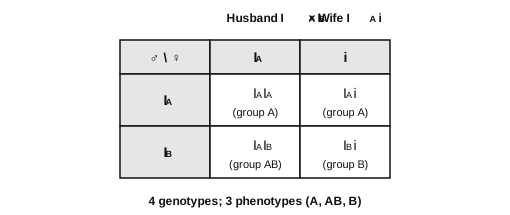
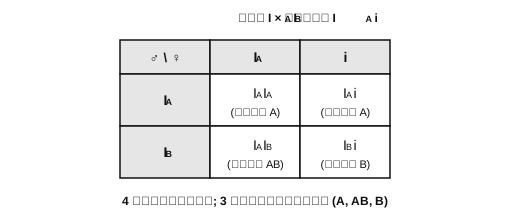
  1. Gametes: husband IA, IB; wife IA, i.
  2. Genotypes: IAIA, IAi, IAIB, IBi → 4 different genotypes.
  3. Phenotypes: IAIA and IAi = A; IAIB = AB; IBi = B → 3 phenotypes → (C).

Short trick: Two heterozygous parents give 2 × 2 = 4 gamete combinations, here all different = 4 genotypes; just check which two collapse into one blood group (IAIA = IAi).

Answer: (C) 4 genotypes ; 3 phenotypes

अवधारणा: IA तथा IB सहप्रभावी हैं, दोनों i पर प्रभावी हैं।

  1. युग्मक: पति IA, IB; पत्नी IA, i।
  2. जीनप्ररूप: IAIA, IAi, IAIB, IBi → 4 भिन्न जीनप्ररूप।
  3. लक्षणप्ररूप: IAIA तथा IAi = A; IAIB = AB; IBi = B → 3 लक्षणप्ररूप → (C)।

शॉर्ट ट्रिक: दो विषमयुग्मजी जनक 2 × 2 = 4 युग्मक संयोजन देते हैं, यहाँ सभी भिन्न = 4 जीनप्ररूप; बस देखें कि कौन-से दो एक ही रुधिर वर्ग बन जाते हैं (IAIA = IAi)।

उत्तर: (C) 4 जीनप्ररूप ; 3 लक्षणप्ररूप

NEET UGBiologyPrinciples of inheritance – multiple alleles (ABO)NEET UG 2017 · 7 May Shift 1
Q495.
Zygotic meiosis is characteristic of
युग्मनजी अर्धसूत्रण (zygotic meiosis) किसका अभिलक्षण है?
  1. AMarchantia
  2. BFucus
  3. CFunaria
  4. DChlamydomonas
Show answer

Concept: In a haplontic life cycle the only diploid cell is the zygote, which undergoes meiosis immediately (zygotic/initial meiosis) – e.g. Chlamydomonas, Volvox, Spirogyra.

  1. Chlamydomonas – haplontic → zygotic meiosis → (D).
  2. (A) Marchantia and (C) Funaria – bryophytes, haplo-diplontic → sporic meiosis. (B) Fucus – diplontic → gametic meiosis.

Short trick: Meiosis type follows life cycle: haplontic → zygotic, diplontic → gametic, haplo-diplontic → sporic.

Answer: (D) Chlamydomonas

अवधारणा: अगुणितक जीवन चक्र में एकमात्र द्विगुणित कोशिका युग्मनज होता है, जिसमें तुरंत अर्धसूत्रण होता है (युग्मनजी/प्रारंभिक अर्धसूत्रण) – जैसे Chlamydomonas, Volvox, Spirogyra।

  1. Chlamydomonas – अगुणितक → युग्मनजी अर्धसूत्रण → (D)।
  2. (A) Marchantia तथा (C) Funaria – ब्रायोफाइट, अगुणितक-द्विगुणितक → बीजाणुजनी अर्धसूत्रण। (B) Fucus – द्विगुणितक → युग्मकी अर्धसूत्रण।

शॉर्ट ट्रिक: अर्धसूत्रण का प्रकार जीवन चक्र के अनुसार: अगुणितक → युग्मनजी, द्विगुणितक → युग्मकी, अगुणितक-द्विगुणितक → बीजाणुजनी।

उत्तर: (D) Chlamydomonas

NEET UGBiologyPlant kingdom – zygotic meiosisNEET UG 2017 · 7 May Shift 1
Q496.
Which of the following is correctly matched for the product produced by them?
उनके द्वारा उत्पादित उत्पाद के लिए निम्नलिखित में से कौन-सा सही सुमेलित है?
  1. AAcetobacter aceti : AntibioticsAcetobacter aceti : प्रतिजैविक (एंटीबायोटिक)
  2. BMethanobacterium : Lactic acidMethanobacterium : लैक्टिक अम्ल
  3. CPenicillium notatum : Acetic acidPenicillium notatum : ऐसीटिक अम्ल
  4. DSaccharomyces cerevisiae : EthanolSaccharomyces cerevisiae : एथेनॉल
Show answer

Concept: Saccharomyces cerevisiae (brewer’s/baker’s yeast) ferments sugars to ethanol and CO2 – used in making beer, wine and industrial ethanol.

  1. (A) ✘ Acetobacter aceti produces acetic acid (vinegar), not antibiotics.
  2. (B) ✘ Methanobacterium is a methanogen – produces methane (biogas); lactic acid is made by Lactobacillus.
  3. (C) ✘ Penicillium notatum gives the antibiotic penicillin, not acetic acid.
  4. (D) ✔ Saccharomyces cerevisiae → ethanol.

Short trick: The first three are a “shuffle”: Acetobacter ↔ acetic acid, Penicillium ↔ penicillin (antibiotic), Methano ↔ methane. Only yeast–ethanol is untouched.

Answer: (D) Saccharomyces cerevisiae : Ethanol

अवधारणा: Saccharomyces cerevisiae (ब्रूअर/बेकर यीस्ट) शर्कराओं का किण्वन कर एथेनॉल और CO2 बनाता है – बियर, वाइन तथा औद्योगिक एथेनॉल बनाने में प्रयुक्त।

  1. (A) ✘ Acetobacter aceti ऐसीटिक अम्ल (सिरका) बनाता है, प्रतिजैविक नहीं।
  2. (B) ✘ Methanobacterium मेथैनोजन है – मेथेन (बायोगैस) बनाता है; लैक्टिक अम्ल Lactobacillus बनाता है।
  3. (C) ✘ Penicillium notatum से प्रतिजैविक पेनिसिलिन मिलता है, ऐसीटिक अम्ल नहीं।
  4. (D) ✔ Saccharomyces cerevisiae → एथेनॉल।

शॉर्ट ट्रिक: पहले तीन जोड़े आपस में उलझाए गए हैं: Acetobacter ↔ ऐसीटिक अम्ल, Penicillium ↔ पेनिसिलिन, Methano ↔ मेथेन। केवल यीस्ट–एथेनॉल सही बचा।

उत्तर: (D) Saccharomyces cerevisiae : एथेनॉल

NEET UGBiologyMicrobes in human welfare – microbial productsNEET UG 2017 · 7 May Shift 1
Q497.
Frog's heart when taken out of the body continues to beat for some time
Select the best option from the following statements
(a) Frog is a poikilotherm
(b) Frog does not have any coronary circulation
(c) Heart is "myogenic" in nature
(d) Heart is autoexcitable
Options
मेंढक का हृदय शरीर से बाहर निकालने पर भी कुछ समय तक धड़कता रहता है
निम्नलिखित कथनों में से सर्वोत्तम विकल्प चुनिए
(a) मेंढक असमतापी (poikilotherm) है
(b) मेंढक में कोई कोरोनरी परिसंचरण नहीं होता
(c) हृदय "पेशीजनक" (myogenic) प्रकृति का है
(d) हृदय स्वउत्तेजनशील (autoexcitable) है
विकल्प
  1. AOnly (c)केवल (c)
  2. BOnly (d)केवल (d)
  3. C(a) & (b)(a) तथा (b)
  4. D(c) & (d)(c) तथा (d)
Show answer

Concept: A myogenic heart generates its own impulses in specialised muscle (SA node / sinus venosus pacemaker) – it is autoexcitable, so it keeps beating without nerve supply as long as it is kept moist and oxygenated.

  1. (c) ✔ Heart beat originates in the cardiac muscle itself (myogenic).
  2. (d) ✔ Being self-excitable, the pacemaker keeps firing even outside the body.
  3. (a) ✘ Being cold-blooded explains body temperature, not why an isolated heart beats.
  4. (b) ✘ The presence or absence of coronary circulation does not generate the heartbeat – the impulse arises in the heart muscle itself.
  5. Hence (c) and (d) together are the best explanation.

Short trick: Isolated heart beats = “self-starter”: myogenic + autoexcitable always go together.

Answer: (D) (c) & (d)

अवधारणा: पेशीजनक (myogenic) हृदय अपने विशेष पेशी-ऊतक (SA नोड / साइनस वेनोसस पेसमेकर) में स्वयं आवेग उत्पन्न करता है – यह स्वउत्तेजनशील है, इसलिए नम और ऑक्सीजन युक्त रखने पर तंत्रिका-आपूर्ति के बिना भी धड़कता रहता है।

  1. (c) ✔ हृदय-स्पंदन स्वयं हृदय-पेशी में उत्पन्न होता है (पेशीजनक)।
  2. (d) ✔ स्वउत्तेजनशील होने से पेसमेकर शरीर के बाहर भी आवेग देता रहता है।
  3. (a) ✘ असमतापी होना शरीर-ताप को समझाता है, पृथक हृदय के धड़कने को नहीं।
  4. (b) ✘ कोरोनरी परिसंचरण का होना या न होना हृदय-स्पंदन उत्पन्न नहीं करता – आवेग स्वयं हृदय-पेशी में उत्पन्न होता है।
  5. अतः (c) और (d) मिलकर सर्वोत्तम व्याख्या हैं।

शॉर्ट ट्रिक: शरीर से बाहर धड़कता हृदय = “सेल्फ-स्टार्टर”: पेशीजनक + स्वउत्तेजनशील हमेशा साथ-साथ।

उत्तर: (D) (c) तथा (d)

NEET UGBiologyBody fluids and circulation – myogenic heartNEET UG 2017 · 7 May Shift 1
Q498.
Which statement is wrong for Krebs' cycle?
क्रेब्स चक्र के लिए कौन-सा कथन गलत है?
  1. AThere are three points in the cycle where NAD+ is reduced to NADH + H+चक्र में तीन बिंदु ऐसे हैं जहाँ NAD+ अपचयित होकर NADH + H+ बनता है
  2. BThere is one point in the cycle where FAD+ is reduced to FADH2चक्र में एक बिंदु ऐसा है जहाँ FAD+ अपचयित होकर FADH2 बनता है
  3. CDuring conversion of succinyl CoA to succinic acid, a molecule of GTP is synthesisedसक्सिनिल CoA के सक्सिनिक अम्ल में परिवर्तन के समय GTP का एक अणु संश्लेषित होता है
  4. DThe cycle starts with condensation of acetyl group (acetyl CoA) with pyruvic acid to yield citric acidचक्र ऐसीटिल समूह (ऐसीटिल CoA) के पाइरुविक अम्ल के साथ संघनन से सिट्रिक अम्ल बनने से आरम्भ होता है
Show answer

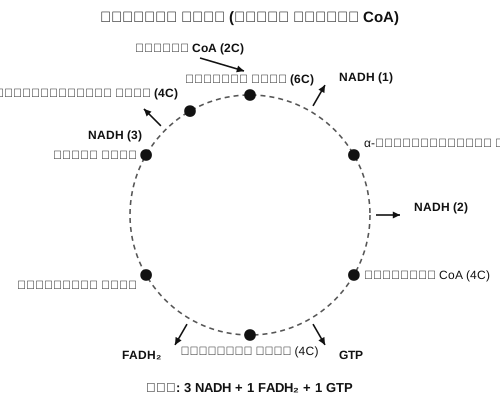
Concept: The TCA cycle begins when acetyl CoA (2C) condenses with oxaloacetic acid (OAA, 4C) and water to form citric acid (6C), catalysed by citrate synthase.

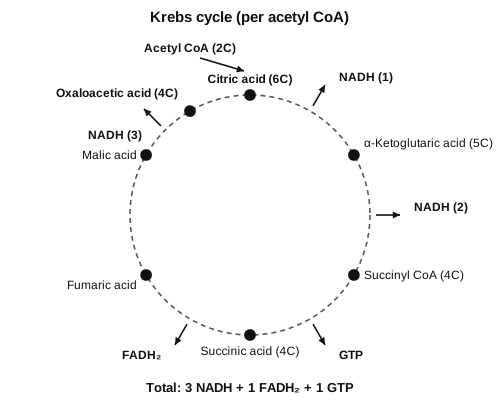
  1. (A) ✔ NADH is formed at three steps: isocitrate → α-ketoglutarate, α-ketoglutarate → succinyl CoA, malate → OAA.
  2. (B) ✔ One FADH2: succinate → fumarate (succinate dehydrogenase).
  3. (C) ✔ Substrate-level phosphorylation: succinyl CoA → succinic acid gives one GTP.
  4. (D) ✘ The acceptor is OAA, not pyruvic acid – pyruvate is first converted to acetyl CoA by oxidative decarboxylation. So (D) is the wrong statement.

Short trick: Count per turn “3-1-1”: 3 NADH, 1 FADH2, 1 GTP. Citric acid = 2C + 4C (OAA) = 6C; 2C + 3C (pyruvate) would give 5C – impossible.

Answer: (D) condensation with pyruvic acid is wrong

अवधारणा: TCA चक्र तब आरम्भ होता है जब ऐसीटिल CoA (2C) ऑक्सैलोऐसीटिक अम्ल (OAA, 4C) और जल के साथ संघनित होकर सिट्रिक अम्ल (6C) बनाता है; यह सिट्रेट सिन्थेज़ द्वारा उत्प्रेरित होता है।

  1. (A) ✔ NADH तीन चरणों में बनता है: आइसोसिट्रेट → α-कीटोग्लूटैरेट, α-कीटोग्लूटैरेट → सक्सिनिल CoA, मैलेट → OAA।
  2. (B) ✔ एक FADH2: सक्सिनेट → फ्यूमैरेट (सक्सिनेट डीहाइड्रोजिनेज़)।
  3. (C) ✔ क्रियाधार-स्तरीय फॉस्फोरिलीकरण: सक्सिनिल CoA → सक्सिनिक अम्ल में एक GTP बनता है।
  4. (D) ✘ ग्राही OAA है, पाइरुविक अम्ल नहीं – पाइरुवेट पहले ऑक्सीकारी विकार्बोक्सिलन द्वारा ऐसीटिल CoA में बदलता है। अतः (D) गलत कथन है।

शॉर्ट ट्रिक: प्रति चक्र “3-1-1” गिनें: 3 NADH, 1 FADH2, 1 GTP। सिट्रिक अम्ल = 2C + 4C (OAA) = 6C; 2C + 3C (पाइरुवेट) से 5C बनेगा – असंभव।

उत्तर: (D) पाइरुविक अम्ल के साथ संघनन गलत है

NEET UGBiologyRespiration in plants – Krebs cycleNEET UG 2017 · 7 May Shift 1
Q499.
In case of poriferans the spongocoel is lined with flagellated cells called :
पोरीफेरा में स्पंजगुहा (spongocoel) जिन कशाभी कोशिकाओं से आस्तरित होती है, वे कहलाती हैं :
  1. AOstiaऑस्टिया (Ostia)
  2. BOsculaऑस्कुला (Oscula)
  3. CChoanocytesकोएनोसाइट (Choanocytes)
  4. DMesenchymal cellsमीसेनकाइमी कोशिकाएँ (Mesenchymal cells)
Show answer

Concept: Sponges have a water canal system; the spongocoel and canals are lined by choanocytes (collar cells) whose flagella drive water current, help in food capture and gas exchange.

  1. (A) ✘ Ostia – minute pores in the body wall through which water enters.
  2. (B) ✘ Osculum – the large opening through which water leaves.
  3. (C) ✔ Choanocytes – flagellated collar cells lining spongocoel/canals.
  4. (D) ✘ Mesenchymal cells lie in the mesohyl (jelly layer), not lining the spongocoel.

Short trick: Water path: Ostia (in) → spongocoel (choanocytes) → Osculum (out). “Collar” cells sit in the “cavity”.

Answer: (C) Choanocytes

अवधारणा: स्पंजों में जल नाल तंत्र होता है; स्पंजगुहा और नालें कोएनोसाइट (कॉलर कोशिकाएँ) से आस्तरित होती हैं जिनके कशाभ जलधारा चलाते हैं तथा भोजन पकड़ने और गैस-विनिमय में सहायक हैं।

  1. (A) ✘ ऑस्टिया – देहभित्ति के सूक्ष्म छिद्र जिनसे जल प्रवेश करता है।
  2. (B) ✘ ऑस्कुलम – बड़ा छिद्र जिससे जल बाहर निकलता है।
  3. (C) ✔ कोएनोसाइट – स्पंजगुहा/नालों को आस्तरित करने वाली कशाभी कॉलर कोशिकाएँ।
  4. (D) ✘ मीसेनकाइमी कोशिकाएँ मीसोहिल (जेली स्तर) में होती हैं, स्पंजगुहा को आस्तरित नहीं करतीं।

शॉर्ट ट्रिक: जल का मार्ग: ऑस्टिया (अंदर) → स्पंजगुहा (कोएनोसाइट) → ऑस्कुलम (बाहर)। “कॉलर” कोशिकाएँ “गुहा” में।

उत्तर: (C) कोएनोसाइट

NEET UGBiologyAnimal kingdom – PoriferaNEET UG 2017 · 7 May Shift 1
Q500.
Which of the following RNAs should be most abundant in animal cell?
निम्नलिखित में से कौन-सा RNA जंतु कोशिका में सबसे अधिक मात्रा में होना चाहिए?
  1. Ar-RNA
  2. Bt-RNA
  3. Cm-RNA
  4. Dmi-RNA
Show answer

Concept: Ribosomes are present in enormous numbers and each is made largely of rRNA, so rRNA forms about 80% of the total cellular RNA.

  1. (A) ✔ rRNA ≈ 80% – structural + catalytic (ribozyme) part of ribosomes.
  2. (B) ✘ tRNA ≈ 10–15% – small adapter molecules.
  3. (C) ✘ mRNA ≈ 3–5% – short-lived, continuously degraded.
  4. (D) ✘ miRNA – tiny regulatory RNAs, present in very small amounts.

Short trick: Order of abundance “R > T > M” – Ribosome, Transfer, Messenger (80 : 15 : 5).

Answer: (A) r-RNA

अवधारणा: कोशिका में राइबोसोम अत्यधिक संख्या में होते हैं और प्रत्येक मुख्यतः rRNA से बना होता है, अतः rRNA कुल कोशिकीय RNA का लगभग 80% होता है।

  1. (A) ✔ rRNA ≈ 80% – राइबोसोम का संरचनात्मक एवं उत्प्रेरक (राइबोज़ाइम) भाग।
  2. (B) ✘ tRNA ≈ 10–15% – छोटे अनुकूलक (adapter) अणु।
  3. (C) ✘ mRNA ≈ 3–5% – अल्पजीवी, लगातार विघटित होता है।
  4. (D) ✘ miRNA – बहुत छोटे नियामक RNA, अत्यल्प मात्रा में।

शॉर्ट ट्रिक: प्रचुरता का क्रम “R > T > M” – राइबोसोमी, ट्रांसफर, मैसेंजर (80 : 15 : 5)।

उत्तर: (A) r-RNA

NEET UGBiologyMolecular basis of inheritance – types of RNANEET UG 2017 · 7 May Shift 1