NEET UG · 2,240 questions

NEET UG 2015, 2016, 2017, 2018, 2019, 2020, 2021, 2022, 2023, 2024, 2025, 2026 PYQs

Real previous year questions, subject-wise. Try the question, then open the answer and the explanation in Hindi & English – free, no login.

Courses – airGurukul

720 questions in Biology.

Q541.
Gause's principle of competitive exclusion states that:
गॉस (Gause) के प्रतिस्पर्धी अपवर्जन सिद्धांत के अनुसार:
  1. AMore abundant species will exclude the less abundant species through competitionअधिक बहुतायत वाली जाति प्रतिस्पर्धा द्वारा कम बहुतायत वाली जाति को बाहर कर देगी
  2. BCompetition for the same resources excludes species having different food preferencesसमान संसाधनों के लिए प्रतिस्पर्धा भिन्न आहार-वरीयता वाली जातियों को बाहर कर देती है
  3. CNo two species can occupy the same niche indefinitely for the same limiting resourcesकोई भी दो जातियाँ समान सीमाकारी संसाधनों के लिए एक ही निकेत (niche) में अनिश्चित काल तक नहीं रह सकतीं
  4. DLarger organisms exclude smaller ones through competitionबड़े जीव प्रतिस्पर्धा द्वारा छोटे जीवों को बाहर कर देते हैं
Show answer

Concept: Gause's competitive exclusion principle (NCERT, Organisms and Populations): two closely related species competing for the same limiting resources cannot co-exist indefinitely – the competitively inferior one is eventually eliminated.

  1. Key words: same niche, same limiting resource, cannot co-exist indefinitely → option (C).
  2. (A) The principle is about competitive superiority, not abundance.
  3. (B) Species with different food preferences do not compete for the same resource – they can co-exist.
  4. (D) Body size is not the criterion; the better competitor (not the larger) wins.

Short trick: “One niche – one species.” Remember the exception: resource partitioning (MacArthur’s warblers) lets competitors co-exist.

Answer: (C) No two species can occupy the same niche indefinitely for the same limiting resources

अवधारणा: गॉस का प्रतिस्पर्धी अपवर्जन सिद्धांत (NCERT, जीव और समष्टियाँ): समान सीमाकारी संसाधनों के लिए प्रतिस्पर्धा करने वाली दो निकट-संबंधी जातियाँ अनिश्चित काल तक साथ नहीं रह सकतीं – प्रतिस्पर्धा में कमजोर जाति अंततः समाप्त हो जाती है।

  1. मुख्य शब्द: एक ही निकेत, समान सीमाकारी संसाधन, अनिश्चित काल तक सह-अस्तित्व नहीं → विकल्प (C)।
  2. (A) सिद्धांत प्रतिस्पर्धी श्रेष्ठता पर आधारित है, बहुतायत पर नहीं।
  3. (B) भिन्न आहार-वरीयता वाली जातियाँ एक ही संसाधन के लिए प्रतिस्पर्धा नहीं करतीं – वे साथ रह सकती हैं।
  4. (D) शरीर का आकार मापदंड नहीं है; बेहतर प्रतिस्पर्धी (न कि बड़ा) जीतता है।

शॉर्ट ट्रिक: “एक निकेत – एक जाति।” अपवाद याद रखें: संसाधन विभाजन (मैकआर्थर की वार्बलर पक्षी) से प्रतिस्पर्धी साथ रह सकते हैं।

उत्तर: (C) कोई भी दो जातियाँ समान सीमाकारी संसाधनों के लिए एक ही निकेत में अनिश्चित काल तक नहीं रह सकतीं
NEET UGBiologyOrganisms and populations – competitionNEET UG 2016 · 1 May Shift 1
Q542.
The two polypeptides of human insulin are linked together by:
मानव इंसुलिन की दो पॉलिपेप्टाइड शृंखलाएँ किसके द्वारा आपस में जुड़ी होती हैं?
  1. AHydrogen bondsहाइड्रोजन आबंध
  2. BPhosphodiester bondफॉस्फोडाइएस्टर आबंध
  3. CCovalent bondसहसंयोजी आबंध
  4. DDisulphide bridgesडाइसल्फाइड सेतु (bridges)
Show answer

Concept: NCERT (Biotechnology and its Applications): mature insulin has two short polypeptide chains, A and B, linked together by disulphide bridges (–S–S– between cysteine residues).

  1. Proinsulin → C-peptide removed → A-chain + B-chain held by disulphide bridges → (D).
  2. (A) Hydrogen bonds stabilise secondary structure, they do not join the A and B chains.
  3. (B) Phosphodiester bonds link nucleotides in DNA/RNA, not amino-acid chains.
  4. (C) A disulphide bond is a kind of covalent bond, but the specific, NCERT answer asked for is “disulphide bridges”.

Short trick: Insulin = A + B chains, S–S bridges; Eli Lilly (1983) made the A and B chains separately in E. coli and joined them by disulphide bonds.

Answer: (D) Disulphide bridges

अवधारणा: NCERT (जैव प्रौद्योगिकी एवं उसके उपयोग): परिपक्व इंसुलिन में दो छोटी पॉलिपेप्टाइड शृंखलाएँ A और B होती हैं, जो डाइसल्फाइड सेतुओं (सिस्टीन अवशेषों के बीच –S–S–) द्वारा जुड़ी रहती हैं।

  1. प्रोइंसुलिन → C-पेप्टाइड हटाया जाता है → A-शृंखला + B-शृंखला डाइसल्फाइड सेतुओं से जुड़ी → (D)।
  2. (A) हाइड्रोजन आबंध द्वितीयक संरचना को स्थिर करते हैं, A और B शृंखलाओं को नहीं जोड़ते।
  3. (B) फॉस्फोडाइएस्टर आबंध DNA/RNA में न्यूक्लियोटाइडों को जोड़ते हैं, अमीनो अम्ल शृंखलाओं को नहीं।
  4. (C) डाइसल्फाइड आबंध एक प्रकार का सहसंयोजी आबंध है, पर पूछा गया विशिष्ट (NCERT) उत्तर “डाइसल्फाइड सेतु” है।

शॉर्ट ट्रिक: इंसुलिन = A + B शृंखला, S–S सेतु; एली लिली (1983) ने A व B शृंखलाएँ E. coli में अलग-अलग बनाकर डाइसल्फाइड आबंधों से जोड़ीं।

उत्तर: (D) डाइसल्फाइड सेतु

NEET UGBiologyBiotechnology – recombinant insulinNEET UG 2016 · 1 May Shift 1
Q543.
The coconut water from tender coconut represents:
कच्चे (कोमल) नारियल का नारियल-पानी किसे निरूपित करता है?
  1. AEndocarpअंतःफलभित्ति (Endocarp)
  2. BFleshy mesocarpगूदेदार मध्यफलभित्ति (Mesocarp)
  3. CFree nuclear proembryoमुक्त केंद्रकी प्राक्भ्रूण (proembryo)
  4. DFree nuclear endospermमुक्त केंद्रकी भ्रूणपोष (endosperm)
Show answer

Concept: NCERT: the coconut water of tender coconut is free-nuclear endosperm (thousands of nuclei without walls); the surrounding white kernel is cellular endosperm.

  1. PEN undergoes repeated free-nuclear divisions → liquid, free-nuclear endosperm = coconut water → (D).
  2. (A) Endocarp is the hard shell.
  3. (B) Mesocarp is the fibrous husk (coir), not fleshy in coconut.
  4. (C) The proembryo is a tiny cellular structure, not the liquid.

Short trick: Coconut: water = free-nuclear, white kernel = cellular endosperm; shell = endocarp, coir = mesocarp.

Answer: (D) Free nuclear endosperm

अवधारणा: NCERT: कच्चे नारियल का पानी मुक्त-केंद्रकी भ्रूणपोष है (हजारों केंद्रक, बिना कोशिका भित्ति के); चारों ओर का सफेद गूदा (गिरी) कोशिकीय भ्रूणपोष है।

  1. PEN में बार-बार मुक्त-केंद्रकी विभाजन → द्रव, मुक्त-केंद्रकी भ्रूणपोष = नारियल-पानी → (D)।
  2. (A) अंतःफलभित्ति कठोर खोल है।
  3. (B) मध्यफलभित्ति रेशेदार छिलका (जटा/coir) है, नारियल में गूदेदार नहीं।
  4. (C) प्राक्भ्रूण एक छोटी कोशिकीय संरचना है, द्रव नहीं।

शॉर्ट ट्रिक: नारियल: पानी = मुक्त-केंद्रकी, सफेद गिरी = कोशिकीय भ्रूणपोष; खोल = अंतःफलभित्ति, जटा = मध्यफलभित्ति।

उत्तर: (D) मुक्त केंद्रकी भ्रूणपोष

NEET UGBiologySexual reproduction in flowering plants – endospermNEET UG 2016 · 1 May Shift 1
Q544.
Which of the following statements is wrong for viroids?
वाइरॉइड के लिए निम्नलिखित में से कौन-सा कथन गलत है?
  1. AThey lack a protein coatइनमें प्रोटीन आवरण नहीं होता
  2. BThey are smaller than virusesये विषाणुओं से छोटे होते हैं
  3. CThey cause infectionsये संक्रमण उत्पन्न करते हैं
  4. DTheir RNA is of high molecular weightइनका RNA उच्च अणुभार का होता है
Show answer

Concept: NCERT: viroids (T.O. Diener, 1971; potato spindle tuber disease) are infectious agents smaller than viruses, consisting of free RNA without a protein coat; the RNA is of low molecular weight.

  1. (A) True – no protein coat (capsid).
  2. (B) True – smaller than viruses.
  3. (C) True – they cause plant diseases such as potato spindle tuber.
  4. (D) Wrong – their RNA is of low molecular weight → answer.

Short trick: Viroid = “naked, small, low-MW RNA”; Prion = protein only (no nucleic acid).

Answer: (D) Their RNA is of high molecular weight

अवधारणा: NCERT: वाइरॉइड (टी.ओ. डाइनर, 1971; आलू का स्पिंडल ट्यूबर रोग) विषाणुओं से छोटे संक्रामक कारक हैं, जिनमें बिना प्रोटीन आवरण का मुक्त RNA होता है; यह RNA निम्न अणुभार का होता है।

  1. (A) सही – प्रोटीन आवरण (कैप्सिड) नहीं होता।
  2. (B) सही – विषाणुओं से छोटे होते हैं।
  3. (C) सही – ये आलू स्पिंडल ट्यूबर जैसे पादप रोग उत्पन्न करते हैं।
  4. (D) गलत – इनका RNA निम्न अणुभार का होता है → उत्तर।

शॉर्ट ट्रिक: वाइरॉइड = “नग्न, छोटा, निम्न-अणुभार RNA”; प्रिऑन = केवल प्रोटीन (न्यूक्लिक अम्ल नहीं)।

उत्तर: (D) इनका RNA उच्च अणुभार का होता है

NEET UGBiologyBiological classification – viroidsNEET UG 2016 · 1 May Shift 1
Q545.
Which of the following features is not present in the Phylum – Arthropoda?
निम्नलिखित में से कौन-सा लक्षण संघ – आर्थ्रोपोडा में नहीं पाया जाता?
  1. AChitinous exoskeletonकाइटिनी बाह्यकंकाल
  2. BMetameric segmentationविखंडीय (मेटामेरिक) खंडीभवन
  3. CParapodiaपैरापोडिया (पार्श्वपाद)
  4. DJointed appendagesसंधियुक्त उपांग
Show answer

Concept: NCERT: Arthropods have a chitinous exoskeleton, jointed appendages and a segmented body. Parapodia are lateral appendages of aquatic annelids (e.g. Nereis) used in swimming.

  1. (A) Present – chitinous cuticle/exoskeleton.
  2. (B) Present – body is metamerically segmented (head, thorax, abdomen).
  3. (C) Absent – parapodia belong to Annelida → answer.
  4. (D) Present – “arthro-poda” literally means jointed feet.

Short trick: Parapodia → Nereis (Annelida); Arthropoda = jointed legs + chitin.

Answer: (C) Parapodia

अवधारणा: NCERT: संधिपादों में काइटिनी बाह्यकंकाल, संधियुक्त उपांग और खंडित शरीर होता है। पैरापोडिया जलीय ऐनेलिडों (जैसे Nereis) के पार्श्व उपांग हैं जो तैरने में सहायक हैं।

  1. (A) उपस्थित – काइटिनी क्यूटिकल/बाह्यकंकाल।
  2. (B) उपस्थित – शरीर विखंडीय रूप से खंडित (सिर, वक्ष, उदर)।
  3. (C) अनुपस्थित – पैरापोडिया ऐनेलिडा का लक्षण है → उत्तर।
  4. (D) उपस्थित – “आर्थ्रो-पोडा” का अर्थ ही है संधियुक्त पाद।

शॉर्ट ट्रिक: पैरापोडिया → नेरीस (ऐनेलिडा); आर्थ्रोपोडा = संधियुक्त पाद + काइटिन।

उत्तर: (C) पैरापोडिया

NEET UGBiologyAnimal kingdom – ArthropodaNEET UG 2016 · 1 May Shift 1
Q546.
Which of the following most appropriately describes hemophilia?
निम्नलिखित में से कौन-सा हीमोफीलिया का सबसे उपयुक्त वर्णन करता है?
  1. ARecessive gene disorderअप्रभावी जीन विकार
  2. BX – linked recessive gene disorderX – सहलग्न अप्रभावी जीन विकार
  3. CChromosomal disorderगुणसूत्रीय विकार
  4. DDominant gene disorderप्रभावी जीन विकार
Show answer

Concept: NCERT: haemophilia is a sex-linked (X-linked) recessive Mendelian disorder – a defect in a clotting-factor protein, so a small cut causes non-stop bleeding.

  1. Gene lies on the X chromosome and is recessive → “X-linked recessive” → (B) is the most precise description.
  2. (A) “Recessive” is true but incomplete – it misses the X-linkage, hence not the most appropriate.
  3. (C) It is a single-gene (Mendelian) disorder, not a change in chromosome number/structure.
  4. (D) It is not dominant – heterozygous females are unaffected carriers.

Short trick: X-linked recessive set: Haemophilia, colour blindness, DMD. Royal disease – Queen Victoria was a carrier.

Answer: (B) X – linked recessive gene disorder

अवधारणा: NCERT: हीमोफीलिया एक लिंग-सहलग्न (X-सहलग्न) अप्रभावी मेंडेलीय विकार है – रक्त स्कंदन कारक प्रोटीन में दोष के कारण छोटी चोट से भी लगातार रक्तस्राव होता है।

  1. जीन X गुणसूत्र पर स्थित और अप्रभावी है → “X-सहलग्न अप्रभावी” → (B) सबसे सटीक वर्णन है।
  2. (A) “अप्रभावी” सही है पर अधूरा – X-सहलग्नता छूट जाती है, अतः सबसे उपयुक्त नहीं।
  3. (C) यह एकल-जीन (मेंडेलीय) विकार है, गुणसूत्रों की संख्या/संरचना का परिवर्तन नहीं।
  4. (D) यह प्रभावी नहीं है – विषमयुग्मजी स्त्रियाँ अप्रभावित वाहक होती हैं।

शॉर्ट ट्रिक: X-सहलग्न अप्रभावी समूह: हीमोफीलिया, वर्णांधता, DMD। शाही रोग – महारानी विक्टोरिया वाहक थीं।

उत्तर: (B) X – सहलग्न अप्रभावी जीन विकार

NEET UGBiologyPrinciples of inheritance – sex-linked disordersNEET UG 2016 · 1 May Shift 1
Q547.
Emerson’s enhancement effect and Red drop have been instrumental in the discovery of:
एमर्सन प्रभाव (enhancement effect) तथा लाल पतन (Red drop) किसकी खोज में सहायक रहे हैं?
  1. APhotophosphorylation and non – cyclic electron transportप्रकाश-फॉस्फोरिलीकरण तथा अचक्रीय इलेक्ट्रॉन परिवहन
  2. BTwo photosystems operating simultaneouslyएक साथ कार्य करने वाले दो प्रकाश-तंत्र
  3. CPhotophosphorylation and cyclic electron transportप्रकाश-फॉस्फोरिलीकरण तथा चक्रीय इलेक्ट्रॉन परिवहन
  4. DOxidative phosphorylationऑक्सीकरणी फॉस्फोरिलीकरण
Show answer

Concept: Red drop: quantum yield of photosynthesis falls sharply in light beyond 680 nm. Emerson enhancement: if far-red (> 680 nm) and shorter red light are given together, the rate is greater than the sum of the two given separately.

  1. Far-red light excites only PS I (P700); PS II (P680) needs shorter wavelengths.
  2. Enhancement when both wavelengths are given together ⇒ two pigment systems (PS I and PS II) work simultaneously, in series → (B).
  3. (A)/(C) Photophosphorylation was shown by Arnon’s experiments, not by red drop.
  4. (D) Oxidative phosphorylation is a mitochondrial (respiration) process.

Short trick: Red drop + Emerson effect = proof of TWO photosystems (Z-scheme).

Answer: (B) Two photosystems operating simultaneously

अवधारणा: लाल पतन: 680 nm से अधिक तरंगदैर्घ्य के प्रकाश में प्रकाश-संश्लेषण की क्वांटम लब्धि तेजी से घटती है। एमर्सन प्रभाव: सुदूर-लाल (> 680 nm) तथा कम तरंगदैर्घ्य का लाल प्रकाश साथ देने पर दर, दोनों को अलग-अलग देने पर प्राप्त दरों के योग से अधिक होती है।

  1. सुदूर-लाल प्रकाश केवल PS I (P700) को उत्तेजित करता है; PS II (P680) को कम तरंगदैर्घ्य चाहिए।
  2. दोनों तरंगदैर्घ्य साथ देने पर वृद्धि ⇒ दो वर्णक-तंत्र (PS I और PS II) एक साथ, श्रेणी में कार्य करते हैं → (B)।
  3. (A)/(C) प्रकाश-फॉस्फोरिलीकरण आर्नन के प्रयोगों से दिखाया गया, लाल पतन से नहीं।
  4. (D) ऑक्सीकरणी फॉस्फोरिलीकरण माइटोकॉन्ड्रिया (श्वसन) की प्रक्रिया है।

शॉर्ट ट्रिक: लाल पतन + एमर्सन प्रभाव = दो प्रकाश-तंत्रों का प्रमाण (Z-योजना)।

उत्तर: (B) एक साथ कार्य करने वाले दो प्रकाश-तंत्र

NEET UGBiologyPhotosynthesis – two photosystemsNEET UG 2016 · 1 May Shift 1
Q548.
In which of the following, all three are macronutrients?
निम्नलिखित में से किसमें तीनों वृहत् पोषक तत्व (macronutrients) हैं?
  1. ABoron, zinc, manganeseबोरॉन, जिंक, मैंगनीज़
  2. BIron, copper, molybdenumआयरन, कॉपर, मॉलिब्डेनम
  3. CMolybdenum, magnesium, manganeseमॉलिब्डेनम, मैग्नीशियम, मैंगनीज़
  4. DNitrogen, nickel, phosphorusनाइट्रोजन, निकेल, फॉस्फोरस
Show answer

Concept: NCERT (Mineral Nutrition): macronutrients (> 10 mmol kg−1 dry matter) = C, H, O, N, P, K, S, Ca, Mg. Micronutrients (< 10 mmol kg−1) = Fe, Mn, Cu, Mo, Zn, B, Cl, Ni.

  1. (A) B, Zn, Mn – all three micronutrients.
  2. (B) Fe, Cu, Mo – all three micronutrients.
  3. (C) Mo and Mn are micronutrients; only Mg is a macronutrient.
  4. (D) N and P are macronutrients, but nickel is a micronutrient – so this set also fails.
  5. No option has all three macronutrients; (D) is merely the closest (two of three).

Short trick: Macro list: “C HOPKiNS CaMg”. Micro: “Mn Fe Cu Zn B Mo Cl Ni” – nickel is the newest micronutrient.

Answer: Bonus – as printed, no option contains three macronutrients, because nickel in (D) is a micronutrient.

अवधारणा: NCERT (खनिज पोषण): वृहत् पोषक (> 10 mmol kg−1 शुष्क पदार्थ) = C, H, O, N, P, K, S, Ca, Mg। सूक्ष्म पोषक (< 10 mmol kg−1) = Fe, Mn, Cu, Mo, Zn, B, Cl, Ni।

  1. (A) B, Zn, Mn – तीनों सूक्ष्म पोषक।
  2. (B) Fe, Cu, Mo – तीनों सूक्ष्म पोषक।
  3. (C) Mo और Mn सूक्ष्म पोषक हैं; केवल Mg वृहत् पोषक है।
  4. (D) N और P वृहत् पोषक हैं, पर निकेल सूक्ष्म पोषक है – अतः यह समूह भी सही नहीं।
  5. किसी भी विकल्प में तीनों वृहत् पोषक नहीं हैं; (D) केवल निकटतम है (तीन में से दो)।

शॉर्ट ट्रिक: वृहत् सूची: “C HOPKiNS CaMg”। सूक्ष्म: “Mn Fe Cu Zn B Mo Cl Ni” – निकेल सबसे नया सूक्ष्म पोषक है।

उत्तर: बोनस – प्रश्न जैसा छपा है, उसमें किसी विकल्प में तीनों वृहत् पोषक नहीं हैं, क्योंकि (D) का निकेल सूक्ष्म पोषक है।

NEET UGBiologyMineral nutrition – macronutrientsNEET UG 2016 · 1 May Shift 1
Q549.
Name the chronic respiratory disorder caused mainly by cigarette smoking:
मुख्यतः सिगरेट पीने से होने वाले दीर्घकालिक (chronic) श्वसन विकार का नाम बताइए:
  1. AEmphysemaवातस्फीति (Emphysema)
  2. BAsthmaदमा (Asthma)
  3. CRespiratory acidosisश्वसनीय अम्लरक्तता (Respiratory acidosis)
  4. DRespiratory alkalosisश्वसनीय क्षारमयता (Respiratory alkalosis)
Show answer

Concept: NCERT: Emphysema is a chronic disorder in which alveolar walls are damaged, reducing the respiratory surface; one of the major causes is cigarette smoking.

  1. Smoking → destruction of alveolar septa → fewer, larger alveoli → less surface for gas exchange = emphysema → (A).
  2. (B) Asthma is an allergic inflammation of bronchi/bronchioles (difficulty in breathing, wheezing), not mainly due to smoking.
  3. (C)/(D) Respiratory acidosis/alkalosis are blood pH disturbances, not named chronic lung diseases.

Short trick: Emphysema = Exploded alveoli – the smoker’s lung.

Answer: (A) Emphysema

अवधारणा: NCERT: वातस्फीति एक दीर्घकालिक विकार है जिसमें कूपिकाओं (alveoli) की भित्तियाँ क्षतिग्रस्त हो जाती हैं, जिससे श्वसन सतह घट जाती है; इसका एक प्रमुख कारण सिगरेट पीना है।

  1. धूम्रपान → कूपिका पटों का विनाश → कम पर बड़ी कूपिकाएँ → गैस विनिमय की सतह कम = वातस्फीति → (A)।
  2. (B) दमा श्वसनी/श्वसनिकाओं की एलर्जी जनित सूजन है (साँस लेने में कठिनाई, घरघराहट), मुख्यतः धूम्रपान से नहीं।
  3. (C)/(D) श्वसनीय अम्लरक्तता/क्षारमयता रक्त pH के विचलन हैं, नामित दीर्घकालिक फुफ्फुस रोग नहीं।

शॉर्ट ट्रिक: Emphysema = Exploded (फटी) कूपिकाएँ – धूम्रपान करने वाले का फेफड़ा।

उत्तर: (A) वातस्फीति

NEET UGBiologyBreathing and exchange of gases – disordersNEET UG 2016 · 1 May Shift 1
Q550.
A system of rotating crops with legume or grass pasture to improve soil structure and fertility is called:
मृदा संरचना और उर्वरता सुधारने हेतु फसलों को फलीदार (legume) अथवा घास-चारागाह के साथ हेर-फेर (चक्रण) करने की प्रणाली कहलाती है:
  1. ALey farmingले खेती (Ley farming)
  2. BContour farmingसमोच्च खेती (Contour farming)
  3. CStrip farmingपट्टीदार खेती (Strip farming)
  4. DShifting agricultureस्थानांतरी कृषि (Shifting agriculture)
Show answer

Concept: Ley farming: arable crops are rotated with a temporary grass/legume pasture (the “ley”) for a few years; the pasture adds organic matter and nitrogen and improves soil structure.

  1. Crop ↔ legume/grass pasture rotation for soil fertility = ley farming → (A).
  2. (B) Contour farming = ploughing/sowing along contour lines of a slope to check soil erosion.
  3. (C) Strip farming = alternate strips of different crops (erosion control).
  4. (D) Shifting agriculture (jhum) = clearing forest, cultivating for a few years and moving on.

Short trick: Ley = “legume/grass ley pasture” in rotation.

Answer: (A) Ley farming

अवधारणा: ले खेती: कृषि फसलों को कुछ वर्षों के लिए अस्थायी घास/फलीदार चारागाह (“ले”) के साथ चक्रित किया जाता है; चारागाह कार्बनिक पदार्थ व नाइट्रोजन जोड़ता है और मृदा संरचना सुधारता है।

  1. फसल ↔ फलीदार/घास चारागाह का चक्रण, मृदा उर्वरता हेतु = ले खेती → (A)।
  2. (B) समोच्च खेती = ढलान की समोच्च रेखाओं के अनुदिश जुताई/बुवाई, मृदा अपरदन रोकने हेतु।
  3. (C) पट्टीदार खेती = विभिन्न फसलों की एकांतर पट्टियाँ (अपरदन नियंत्रण)।
  4. (D) स्थानांतरी कृषि (झूम) = वन साफ कर कुछ वर्ष खेती, फिर दूसरी जगह चले जाना।

शॉर्ट ट्रिक: Ley = चक्रण में “फलीदार/घास ले चारागाह”।

उत्तर: (A) ले खेती

NEET UGBiologyCrop production – farming practicesNEET UG 2016 · 1 May Shift 1
Q551.
Mitochondria and chloroplast are:
(i) Semi – autonomous organelles
(ii) Formed by division of pre – existing organelles and they contain DNA but lack protein synthesizing machinery
Which one of the following options is correct?
माइटोकॉन्ड्रिया तथा हरितलवक:
(i) अर्ध-स्वायत्त अंगक हैं
(ii) पूर्व-स्थित अंगकों के विभाजन से बनते हैं तथा इनमें DNA होता है परंतु प्रोटीन संश्लेषण तंत्र नहीं होता
निम्नलिखित में से कौन-सा विकल्प सही है?
  1. ABoth (i) and (ii) are correct(i) और (ii) दोनों सही हैं
  2. B(ii) is true but (i) is false(ii) सत्य है परंतु (i) असत्य है
  3. C(i) is true but (ii) is false(i) सत्य है परंतु (ii) असत्य है
  4. DBoth (i) and (ii) are false(i) और (ii) दोनों असत्य हैं
Show answer

Concept: NCERT: mitochondria and chloroplasts are semi-autonomous – they have their own circular DNA, RNA and 70S ribosomes, so they can make some of their own proteins; they arise by division of pre-existing ones.

  1. (i) Semi-autonomous – true.
  2. (ii) First half (division of pre-existing organelles, contain DNA) is true, but “lack protein synthesizing machinery” is false – they have 70S ribosomes. So (ii) as a whole is false.
  3. Hence (i) true, (ii) false → (C).

Short trick: Semi-autonomous = own DNA + own 70S ribosomes; a statement is false if any part is false.

Answer: (C) (i) is true but (ii) is false

अवधारणा: NCERT: माइटोकॉन्ड्रिया और हरितलवक अर्ध-स्वायत्त हैं – इनमें अपना वृत्ताकार DNA, RNA और 70S राइबोसोम होते हैं, अतः ये अपने कुछ प्रोटीन स्वयं बना सकते हैं; ये पूर्व-स्थित अंगकों के विभाजन से बनते हैं।

  1. (i) अर्ध-स्वायत्त – सत्य।
  2. (ii) पहला भाग (पूर्व-स्थित अंगकों का विभाजन, DNA उपस्थित) सत्य है, पर “प्रोटीन संश्लेषण तंत्र नहीं होता” असत्य है – इनमें 70S राइबोसोम होते हैं। अतः (ii) पूर्ण रूप से असत्य है।
  3. अतः (i) सत्य, (ii) असत्य → (C)।

शॉर्ट ट्रिक: अर्ध-स्वायत्त = अपना DNA + अपने 70S राइबोसोम; कथन का कोई भी भाग गलत हो तो पूरा कथन गलत।

उत्तर: (C) (i) सत्य है परंतु (ii) असत्य है

NEET UGBiologyCell – mitochondria and plastidsNEET UG 2016 · 1 May Shift 1
Q552.
In context of Amniocentesis, which of the following statement is incorrect?
उल्ववेधन (Amniocentesis) के संदर्भ में निम्नलिखित में से कौन-सा कथन गलत है?
  1. AIt is usually done when a woman is between 14 – 16 weeks pregnantयह सामान्यतः तब किया जाता है जब स्त्री 14 – 16 सप्ताह की गर्भवती हो
  2. BIt is used for prenatal sex determinationइसका उपयोग प्रसवपूर्व लिंग निर्धारण के लिए होता है
  3. CIt can be used for detection of Down syndromeइसका उपयोग डाउन सिंड्रोम की पहचान के लिए किया जा सकता है
  4. DIt can be used for detection of Cleft palateइसका उपयोग कटे तालु (Cleft palate) की पहचान के लिए किया जा सकता है
Show answer

Concept: Amniocentesis: a little amniotic fluid (with foetal cells) is drawn, usually at 14–16 weeks, and the cells are karyotyped/tested – it detects chromosomal and some genetic disorders and reveals foetal sex.

  1. (A) Correct – done around 14–16 weeks.
  2. (B) Correct – it reveals sex (hence statutory ban on its misuse for sex determination).
  3. (C) Correct – trisomy 21 is seen in the karyotype.
  4. (D) Incorrect – cleft palate is a structural (developmental) defect, not detected by analysing amniotic cells; it is seen on ultrasound → answer.

Short trick: Amniocentesis tests cells/chromosomes, not shape – shape defects need imaging.

Answer: (D) It can be used for detection of Cleft palate

अवधारणा: उल्ववेधन: सामान्यतः 14–16 सप्ताह पर थोड़ा उल्व द्रव (भ्रूण कोशिकाओं सहित) निकालकर कोशिकाओं का कैरियोटाइप/परीक्षण किया जाता है – इससे गुणसूत्रीय व कुछ आनुवंशिक विकारों का तथा भ्रूण के लिंग का पता चलता है।

  1. (A) सही – लगभग 14–16 सप्ताह पर किया जाता है।
  2. (B) सही – इससे लिंग ज्ञात होता है (इसीलिए लिंग निर्धारण हेतु इसके दुरुपयोग पर वैधानिक प्रतिबंध है)।
  3. (C) सही – कैरियोटाइप में ट्राइसोमी 21 दिखाई देती है।
  4. (D) गलत – कटा तालु एक संरचनात्मक (परिवर्धनीय) दोष है, उल्व कोशिकाओं के विश्लेषण से नहीं पहचाना जाता; यह अल्ट्रासाउंड में दिखता है → उत्तर।

शॉर्ट ट्रिक: उल्ववेधन कोशिकाएँ/गुणसूत्र जाँचता है, आकृति नहीं – आकृति दोषों के लिए इमेजिंग चाहिए।

उत्तर: (D) इसका उपयोग कटे तालु की पहचान के लिए किया जा सकता है

NEET UGBiologyReproductive health – amniocentesisNEET UG 2016 · 1 May Shift 1
Q553.
In a chloroplast the highest number of protons are found in:
हरितलवक में सर्वाधिक प्रोटॉन कहाँ पाए जाते हैं?
  1. AStromaस्ट्रोमा
  2. BLumen of thylakoidsथाइलेकॉइड की अवकाशिका (lumen)
  3. CInter membrane spaceअंतराझिल्ली अवकाश
  4. DAntennae complexएंटेना सम्मिश्र
Show answer

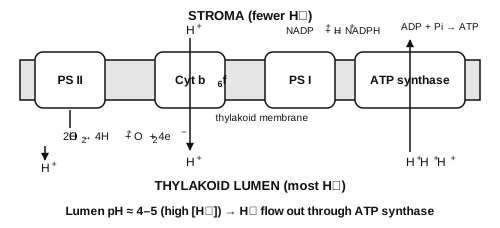
Concept: Chemiosmotic hypothesis (NCERT): during the light reaction protons accumulate inside the thylakoid lumen, creating a proton gradient across the thylakoid membrane that drives ATP synthase.

  1. Splitting of water (PS II) occurs on the lumen side → H+ released into the lumen.
  2. Electron transport through the cytochrome b6f complex pumps H+ from stroma into the lumen.
  3. NADP reductase on the stroma side removes H+ from the stroma.
  4. So H+ concentration is highest in the thylakoid lumen → (B).
  5. (A) Stroma becomes H+-poor; (C) the intermembrane space is the high-H+ site in mitochondria; (D) the antenna complex is a pigment array, not a proton store.

Short trick: Chloroplast: H+ pile up inside (lumen) and flow out to stroma to make ATP; mitochondria: H+ pile up in the intermembrane space.

Answer: (B) Lumen of thylakoids

अवधारणा: रसोपरासरणी परिकल्पना (NCERT): प्रकाश अभिक्रिया के दौरान प्रोटॉन थाइलेकॉइड अवकाशिका के भीतर एकत्र होते हैं, जिससे थाइलेकॉइड झिल्ली के आर-पार प्रोटॉन प्रवणता बनती है जो ATP सिंथेज को चलाती है।

  1. जल का विघटन (PS II) अवकाशिका की ओर होता है → H+ अवकाशिका में मुक्त होते हैं।
  2. साइटोक्रोम b6f सम्मिश्र से इलेक्ट्रॉन परिवहन H+ को स्ट्रोमा से अवकाशिका में पंप करता है।
  3. स्ट्रोमा की ओर स्थित NADP रिडक्टेज स्ट्रोमा से H+ हटाता है।
  4. अतः H+ सांद्रता थाइलेकॉइड अवकाशिका में सर्वाधिक होती है → (B)।
  5. (A) स्ट्रोमा में H+ कम हो जाते हैं; (C) अंतराझिल्ली अवकाश माइटोकॉन्ड्रिया में उच्च H+ का स्थान है; (D) एंटेना सम्मिश्र वर्णकों का समूह है, प्रोटॉन भंडार नहीं।

शॉर्ट ट्रिक: हरितलवक: H+ भीतर (अवकाशिका) जमा होकर ATP बनाने के लिए बाहर स्ट्रोमा में बहते हैं; माइटोकॉन्ड्रिया: H+ अंतराझिल्ली अवकाश में जमा होते हैं।

उत्तर: (B) थाइलेकॉइड की अवकाशिका

NEET UGBiologyPhotosynthesis – chemiosmotic hypothesisNEET UG 2016 · 1 May Shift 1
Q554.
Photosensitive compound in human eye is made up of:
मानव नेत्र का प्रकाश-संवेदी यौगिक किससे बना होता है?
  1. AGuanosine and Retinolग्वानोसीन और रेटिनॉल
  2. BOpsin and Retinalऑप्सिन और रेटिनल
  3. COpsin and Retinolऑप्सिन और रेटिनॉल
  4. DTransducin and Retineneट्रांसड्यूसिन और रेटिनीन
Show answer

Concept: NCERT (Neural Control): rods and cones contain light-sensitive proteins called photopigments, composed of opsin (a protein) and retinal (an aldehyde of vitamin A).

  1. Rhodopsin (visual purple) = opsin + 11-cis retinal → (B).
  2. (A) Guanosine is a nucleoside – not part of the pigment.
  3. (C) Retinol is vitamin A (alcohol); it must be oxidised to retinal before joining opsin.
  4. (D) Transducin is the G-protein activated after light hits rhodopsin; it is not a part of the pigment.

Short trick: Pigment = Opsin + Retin-AL (aldehyde) – “AL” not “OL”. Light: 11-cis → all-trans retinal.

Answer: (B) Opsin and Retinal

अवधारणा: NCERT (तंत्रिकीय नियंत्रण): शलाकाओं और शंकुओं में प्रकाश-संवेदी प्रोटीन (प्रकाश-वर्णक) होते हैं, जो ऑप्सिन (एक प्रोटीन) तथा रेटिनल (विटामिन A का एल्डिहाइड) से बने होते हैं।

  1. रोडॉप्सिन (दृष्टि-बैंगनी) = ऑप्सिन + 11-cis रेटिनल → (B)।
  2. (A) ग्वानोसीन एक न्यूक्लिओसाइड है – वर्णक का भाग नहीं।
  3. (C) रेटिनॉल विटामिन A (ऐल्कोहॉल) है; ऑप्सिन से जुड़ने से पहले इसका रेटिनल में ऑक्सीकरण होना आवश्यक है।
  4. (D) ट्रांसड्यूसिन वह G-प्रोटीन है जो रोडॉप्सिन पर प्रकाश पड़ने के बाद सक्रिय होता है; यह वर्णक का भाग नहीं।

शॉर्ट ट्रिक: वर्णक = ऑप्सिन + रेटिन-AL (एल्डिहाइड) – “AL”, “OL” नहीं। प्रकाश: 11-cis → all-trans रेटिनल।

उत्तर: (B) ऑप्सिन और रेटिनल

NEET UGBiologyNeural control – photoreceptor pigmentNEET UG 2016 · 1 May Shift 1
Q555.
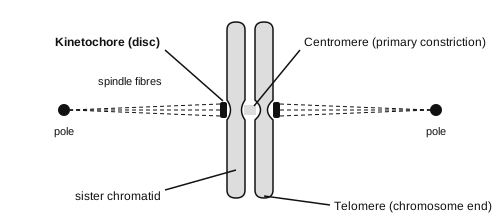
Spindle fibres attach on to:
तर्कु तंतु (spindle fibres) किससे जुड़ते हैं?
  1. ATelomere of the chromosomeगुणसूत्र के टीलोमियर से
  2. BKinetochore of the chromosomeगुणसूत्र के काइनेटोकोर से
  3. CCentromere of the chromosomeगुणसूत्र के गुणसूत्रबिंदु (सेंट्रोमियर) से
  4. DKinetosome of the chromosomeगुणसूत्र के काइनेटोसोम से
Show answer

Concept: NCERT (Cell): the centromere carries disc-shaped structures on its sides called kinetochores; spindle fibres (chromosomal fibres) attach to the kinetochores.

  1. Attachment point of spindle fibre = kinetochore → (B).
  2. (C) Centromere is the primary constriction that holds sister chromatids; it bears the kinetochore but the fibres bind the kinetochore itself – the more precise answer.
  3. (A) Telomeres are the chromosome ends – no spindle attachment.
  4. (D) Kinetosome (basal body) is at the base of cilia/flagella, not on chromosomes.

Short trick: Kineto-CHORE does the “chore” of pulling; Kineto-SOME sits under cilia.

Answer: (B) Kinetochore of the chromosome

अवधारणा: NCERT (कोशिका): गुणसूत्रबिंदु के दोनों ओर बिंब-आकार की संरचनाएँ होती हैं जिन्हें काइनेटोकोर कहते हैं; तर्कु तंतु (गुणसूत्रीय तंतु) काइनेटोकोर से जुड़ते हैं।

  1. तर्कु तंतु के जुड़ने का स्थान = काइनेटोकोर → (B)।
  2. (C) गुणसूत्रबिंदु प्राथमिक संकीर्णन है जो सहोदर अर्धगुणसूत्रों को जोड़े रखता है; इस पर काइनेटोकोर होता है, पर तंतु स्वयं काइनेटोकोर से जुड़ते हैं – अधिक सटीक उत्तर यही है।
  3. (A) टीलोमियर गुणसूत्र के सिरे हैं – वहाँ तर्कु नहीं जुड़ता।
  4. (D) काइनेटोसोम (आधार काय) पक्ष्माभ/कशाभ के आधार पर होता है, गुणसूत्र पर नहीं।

शॉर्ट ट्रिक: काइनेटो-कोर खींचने का काम करता है; काइनेटो-सोम पक्ष्माभ के नीचे होता है।

उत्तर: (B) गुणसूत्र के काइनेटोकोर से

NEET UGBiologyCell cycle – chromosome and spindleNEET UG 2016 · 1 May Shift 1
Q556.
Which is the National Aquatic Animal of India?
भारत का राष्ट्रीय जलीय जीव कौन-सा है?
  1. AGangetic sharkगंगा शार्क
  2. BRiver dolphinनदी डॉल्फ़िन
  3. CBlue whaleनीली व्हेल
  4. DSea – horseसमुद्री घोड़ा (Sea-horse)
Show answer

Concept: The Gangetic river dolphin (Platanista gangetica) was declared the National Aquatic Animal of India in 2009.

  1. It lives only in clean freshwater of the Ganga–Brahmaputra system → indicator of river health → (B).
  2. (A) Gangetic shark – a rare, endangered fish, not the national aquatic animal.
  3. (C) Blue whale – largest animal, marine; not India’s national aquatic animal.
  4. (D) Sea-horse – a marine fish, no national status.

Short trick: Ganga’s mascot = “Susu”, the blind river dolphin (2009).

Answer: (B) River dolphin

अवधारणा: गंगा नदी डॉल्फ़िन (Platanista gangetica) को 2009 में भारत का राष्ट्रीय जलीय जीव घोषित किया गया।

  1. यह केवल गंगा–ब्रह्मपुत्र तंत्र के स्वच्छ मीठे पानी में रहती है → नदी के स्वास्थ्य की सूचक → (B)।
  2. (A) गंगा शार्क – एक दुर्लभ, संकटग्रस्त मछली, राष्ट्रीय जलीय जीव नहीं।
  3. (C) नीली व्हेल – सबसे बड़ा प्राणी, समुद्री; भारत का राष्ट्रीय जलीय जीव नहीं।
  4. (D) समुद्री घोड़ा – समुद्री मछली, कोई राष्ट्रीय दर्जा नहीं।

शॉर्ट ट्रिक: गंगा का शुभंकर = “सूँस”, अंधी नदी डॉल्फ़िन (2009)।

उत्तर: (B) नदी डॉल्फ़िन

NEET UGBiologyBiodiversity – national animalsNEET UG 2016 · 1 May Shift 1
Q557.
Which of the following is required as inducer(s) for the expression of Lac operon?
Lac ओपेरॉन की अभिव्यक्ति के लिए निम्नलिखित में से किसकी प्रेरक (inducer) के रूप में आवश्यकता होती है?
  1. AGlucoseग्लूकोज़
  2. BGalactoseगैलेक्टोज़
  3. CLactoseलैक्टोज़
  4. DLactose and galactoseलैक्टोज़ और गैलेक्टोज़
Show answer

Concept: NCERT: lactose (or allolactose) is the inducer of the lac operon – it binds the repressor, inactivates it, and lets RNA polymerase transcribe z, y, a.

  1. Substrate of β-galactosidase = lactose = inducer → (C).
  2. (A) Glucose does not induce; when glucose is present the operon is kept low (catabolite repression).
  3. (B) Galactose is a product of lactose hydrolysis, not the inducer.
  4. (D) Galactose is not required – lactose alone induces.

Short trick: Lac operon is “switched ON by its own food” – lactose (inducible operon).

Answer: (C) Lactose

अवधारणा: NCERT: लैक्टोज़ (या एलोलैक्टोज़) lac ओपेरॉन का प्रेरक है – यह दमनकारी (repressor) से जुड़कर उसे निष्क्रिय करता है, जिससे RNA पॉलिमरेज़ z, y, a का अनुलेखन करता है।

  1. β-गैलेक्टोसाइडेज़ का क्रियाधार = लैक्टोज़ = प्रेरक → (C)।
  2. (A) ग्लूकोज़ प्रेरित नहीं करता; ग्लूकोज़ उपस्थित होने पर ओपेरॉन की क्रिया कम रहती है (कैटाबोलाइट दमन)।
  3. (B) गैलेक्टोज़ लैक्टोज़ के जल-अपघटन का उत्पाद है, प्रेरक नहीं।
  4. (D) गैलेक्टोज़ आवश्यक नहीं – केवल लैक्टोज़ ही प्रेरित करता है।

शॉर्ट ट्रिक: Lac ओपेरॉन “अपने ही भोजन से चालू” होता है – लैक्टोज़ (प्रेरणीय ओपेरॉन)।

उत्तर: (C) लैक्टोज़

NEET UGBiologyMolecular basis of inheritance – lac operonNEET UG 2016 · 1 May Shift 1
Q558.
Which of the following pairs of hormones are not antagonistic (having opposite effects) to each other?
हॉर्मोनों के निम्नलिखित युग्मों में से कौन-सा युग्म एक-दूसरे का प्रतिपक्षी (विपरीत प्रभाव वाला) नहीं है?
  1. AParathormone - Calcitoninपैराथॉर्मोन - कैल्सिटोनिन
  2. BInsulin - Glucagonइंसुलिन - ग्लूकागॉन
  3. CAldosterone - Atrial Natriuretic Factorएल्डोस्टेरॉन - एट्रियल नेट्रियूरेटिक कारक
  4. DRelaxin - Inhibinरिलैक्सिन - इनहिबिन
Show answer

Concept: Antagonistic hormones act on the same parameter in opposite directions.

  1. (A) PTH ↑ blood Ca2+; calcitonin ↓ blood Ca2+ – antagonistic.
  2. (B) Insulin ↓ blood glucose; glucagon ↑ blood glucose – antagonistic.
  3. (C) Aldosterone ↑ Na+/water reabsorption (↑ BP); ANF causes vasodilation and ↓ BP – antagonistic.
  4. (D) Relaxin softens pelvic ligaments/cervix at parturition; inhibin inhibits FSH – they act on unrelated targets, so not antagonistic → answer.

Short trick: Check “same target?” – if the two hormones act on different things, they cannot be antagonists.

Answer: (D) Relaxin - Inhibin

अवधारणा: प्रतिपक्षी हॉर्मोन एक ही प्राचल (parameter) पर विपरीत दिशाओं में कार्य करते हैं।

  1. (A) PTH रक्त Ca2+ ↑; कैल्सिटोनिन रक्त Ca2+ ↓ – प्रतिपक्षी।
  2. (B) इंसुलिन रक्त ग्लूकोज़ ↓; ग्लूकागॉन रक्त ग्लूकोज़ ↑ – प्रतिपक्षी।
  3. (C) एल्डोस्टेरॉन Na+/जल पुनरवशोषण ↑ (BP ↑); ANF वाहिका-विस्फारण द्वारा BP ↓ – प्रतिपक्षी।
  4. (D) रिलैक्सिन प्रसव के समय श्रोणि स्नायुओं/गर्भाशय-ग्रीवा को शिथिल करता है; इनहिबिन FSH को रोकता है – दोनों भिन्न लक्ष्यों पर कार्य करते हैं, अतः प्रतिपक्षी नहीं → उत्तर।

शॉर्ट ट्रिक: जाँचें “एक ही लक्ष्य?” – यदि दोनों हॉर्मोन भिन्न चीजों पर कार्य करते हैं, तो वे प्रतिपक्षी नहीं हो सकते।

उत्तर: (D) रिलैक्सिन - इनहिबिन

NEET UGBiologyChemical coordination – hormone antagonismNEET UG 2016 · 1 May Shift 1
Q559.
Microtubules are the constituents of:
सूक्ष्मनलिकाएँ (Microtubules) किसके घटक हैं?
  1. ACilia, Flagella and Peroxisomesपक्ष्माभ, कशाभ और परऑक्सीसोम
  2. BSpindle fibres, centrioles and ciliaतर्कु तंतु, तारककेंद्रक और पक्ष्माभ
  3. CCentrioles, spindle fibres and chromatinतारककेंद्रक, तर्कु तंतु और क्रोमैटिन
  4. DCentrosome, Nucleosome and Centriolesतारककाय, न्यूक्लियोसोम और तारककेंद्रक
Show answer

Concept: NCERT: microtubules (tubulin polymers) form the axoneme of cilia/flagella (9+2), the triplets of centrioles (9+0) and the spindle fibres.

  1. Spindle fibres, centrioles and cilia – all three are microtubular → (B).
  2. (A) Peroxisomes are membrane-bound microbodies – not microtubules.
  3. (C) Chromatin = DNA + histones – not microtubules.
  4. (D) Nucleosome = DNA wrapped round a histone octamer – not microtubules.

Short trick: Microtubule family = “C-C-S-F”: Cilia, Centrioles, Spindle, Flagella. Any option with a DNA or membrane body is out.

Answer: (B) Spindle fibres, centrioles and cilia

अवधारणा: NCERT: सूक्ष्मनलिकाएँ (ट्यूबुलिन बहुलक) पक्ष्माभ/कशाभ का अक्षसूत्र (9+2), तारककेंद्रक के त्रिक (9+0) तथा तर्कु तंतु बनाती हैं।

  1. तर्कु तंतु, तारककेंद्रक और पक्ष्माभ – तीनों सूक्ष्मनलिका-निर्मित → (B)।
  2. (A) परऑक्सीसोम झिल्ली-बद्ध सूक्ष्मकाय हैं – सूक्ष्मनलिका नहीं।
  3. (C) क्रोमैटिन = DNA + हिस्टोन – सूक्ष्मनलिका नहीं।
  4. (D) न्यूक्लियोसोम = हिस्टोन अष्टक पर लिपटा DNA – सूक्ष्मनलिका नहीं।

शॉर्ट ट्रिक: सूक्ष्मनलिका परिवार = “C-C-S-F”: पक्ष्माभ, तारककेंद्रक, तर्कु, कशाभ। DNA या झिल्ली-काय वाला कोई भी विकल्प बाहर।

उत्तर: (B) तर्कु तंतु, तारककेंद्रक और पक्ष्माभ

NEET UGBiologyCell – cytoskeletonNEET UG 2016 · 1 May Shift 1
Q560.
A complex of ribosomes attached to single strand of RNA is known as:
RNA के एकल रज्जुक से जुड़े राइबोसोमों का सम्मिश्र कहलाता है:
  1. APolysomeपॉलीसोम
  2. BPolymerबहुलक (Polymer)
  3. CPolypeptideपॉलिपेप्टाइड
  4. DOkazaki fragmentओकाज़ाकी खंड
Show answer

Concept: NCERT: several ribosomes may attach to a single mRNA and translate it simultaneously; such a chain is called a polysome (polyribosome).

  1. Many ribosomes on one mRNA = polysome → (A).
  2. (B) Polymer – any large molecule of repeating units; a general term.
  3. (C) Polypeptide – the product of translation, not the ribosome–mRNA complex.
  4. (D) Okazaki fragments – short DNA pieces of the lagging strand in replication.

Short trick: Poly-SOME = many ribo-somes on one mRNA → many copies of the same protein at once.

Answer: (A) Polysome

अवधारणा: NCERT: एक ही mRNA पर कई राइबोसोम जुड़कर एक साथ उसका अनुवादन (translation) कर सकते हैं; ऐसी शृंखला पॉलीसोम (पॉलीराइबोसोम) कहलाती है।

  1. एक mRNA पर कई राइबोसोम = पॉलीसोम → (A)।
  2. (B) बहुलक – पुनरावृत्त इकाइयों वाला कोई भी बड़ा अणु; सामान्य शब्द।
  3. (C) पॉलिपेप्टाइड – अनुवादन का उत्पाद, राइबोसोम–mRNA सम्मिश्र नहीं।
  4. (D) ओकाज़ाकी खंड – प्रतिकृतियन में पश्चगामी रज्जुक के छोटे DNA टुकड़े।

शॉर्ट ट्रिक: पॉली-सोम = एक mRNA पर अनेक राइबो-सोम → एक ही प्रोटीन की अनेक प्रतियाँ एक साथ।

उत्तर: (A) पॉलीसोम

NEET UGBiologyMolecular basis of inheritance – translationNEET UG 2016 · 1 May Shift 1