Q601.Which of the following is a restriction endonuclease?
निम्नलिखित में से कौन-सा एक प्रतिबन्धन एन्डोन्यूक्लिऐज़ है?
- AHind II
- BProteaseप्रोटिऐज़
- CDNase I
- DRNase
Show answer
Concept: Restriction endonucleases cut DNA at specific recognition (palindromic) sequences. Hind II, from Haemophilus influenzae, was the first one isolated; it always cuts at a particular six-base-pair sequence.
- (A) Hind II – a restriction endonuclease (correct).
- (B) Protease – digests proteins, not DNA.
- (C) DNase I – a non-specific nuclease that cuts DNA anywhere (no recognition sequence), so it is not a restriction enzyme.
- (D) RNase – digests RNA.
Short trick: Naming rule: first letter = genus, next two = species, then strain, then Roman numeral (EcoRI = Escherichia coli RY13, I). Names like EcoRI, Hind II, BamHI = restriction enzymes.
Answer: (A) Hind II
अवधारणा: प्रतिबन्धन एन्डोन्यूक्लिऐज़ DNA को विशिष्ट पहचान (पैलिन्ड्रोमिक) अनुक्रमों पर काटते हैं। Haemophilus influenzae से प्राप्त Hind II सबसे पहले पृथक किया गया था; यह सदैव एक विशेष छह-क्षारक-युग्म अनुक्रम पर काटता है।
- (A) Hind II – प्रतिबन्धन एन्डोन्यूक्लिऐज़ (सही)।
- (B) प्रोटिऐज़ – प्रोटीन को पचाता है, DNA को नहीं।
- (C) DNase I – अविशिष्ट न्यूक्लिऐज़ जो DNA को कहीं भी काटता है (कोई पहचान अनुक्रम नहीं), अतः प्रतिबन्धन एन्ज़ाइम नहीं।
- (D) RNase – RNA को पचाता है।
शॉर्ट ट्रिक: नामकरण नियम: पहला अक्षर = वंश, अगले दो = जाति, फिर स्ट्रेन, फिर रोमन अंक (EcoRI = Escherichia coli RY13, I)। EcoRI, Hind II, BamHI जैसे नाम = प्रतिबन्धन एन्ज़ाइम।
उत्तर: (A) Hind II
NEET UGBiologyBiotechnology: principles and processes – restriction enzymesNEET UG 2016 · 1 May Shift 1
Q602.The term ecosystem was coined by:
पारितंत्र (ecosystem) शब्द किसने गढ़ा था?
- AE.P. OdumE.P. ओडम
- BA.G. TansleyA.G. टान्सले
- CE. HaeckelE. हेकल
- DE. WarmingE. वार्मिंग
Show answer
Concept: The word "ecosystem" was introduced by the British ecologist A.G. Tansley in 1935.
- (B) A.G. Tansley – ecosystem (1935). Correct.
- (A) E.P. Odum – "father of modern ecosystem ecology", wrote Fundamentals of Ecology; did not coin the term.
- (C) E. Haeckel – coined the term "ecology" (1866).
- (D) E. Warming – father of plant ecology (ecological plant geography).
Short trick: Haeckel → Ecology (1866); Tansley → Ecosystem (1935): "T for Tansley, T for the System".
Answer: (B) A.G. Tansley
अवधारणा: "पारितंत्र" शब्द ब्रिटिश पारिस्थितिकीविद् A.G. टान्सले ने 1935 में प्रस्तुत किया।
- (B) A.G. टान्सले – पारितंत्र (1935)। सही।
- (A) E.P. ओडम – "आधुनिक पारितंत्र पारिस्थितिकी के जनक", Fundamentals of Ecology के लेखक; यह शब्द उन्होंने नहीं गढ़ा।
- (C) E. हेकल – "पारिस्थितिकी (ecology)" शब्द गढ़ा (1866)।
- (D) E. वार्मिंग – पादप पारिस्थितिकी के जनक।
शॉर्ट ट्रिक: हेकल → इकोलॉजी (1866); टान्सले → इकोसिस्टम (1935)।
उत्तर: (B) A.G. टान्सले
NEET UGBiologyEcosystem – history of the termNEET UG 2016 · 1 May Shift 1
Q603.Which one of the following statements is wrong?
निम्नलिखित में से कौन-सा कथन गलत है?
- ASucrose is a disaccharideसुक्रोस एक डाइसैकेराइड है
- BCellulose is a polysaccharideसेलुलोस एक पॉलीसैकेराइड है
- CUracil is a pyrimidineयूरेसिल एक पिरिमिडीन है
- DGlycine is a sulphur containing amino acidग्लाइसीन एक सल्फर-युक्त ऐमीनो अम्ल है
Show answer
Concept: Glycine is the simplest amino acid – its R group is just a hydrogen atom (H2N–CH2–COOH); it has no sulphur.
- (A) True – sucrose = glucose + fructose.
- (B) True – cellulose is a homopolymer of β-glucose.
- (C) True – pyrimidines are cytosine, thymine and uracil.
- (D) Wrong – sulphur-containing amino acids are cysteine and methionine.
Short trick: Sulphur amino acids: "Cys-Met" (Cysteine, Methionine). Pyrimidines: "CUT the PY" (C, U, T).
Answer: (D) Glycine is a sulphur containing amino acid
अवधारणा: ग्लाइसीन सबसे सरल ऐमीनो अम्ल है – इसका R समूह केवल एक हाइड्रोजन परमाणु है (H2N–CH2–COOH); इसमें सल्फर नहीं होता।
- (A) सत्य – सुक्रोस = ग्लूकोस + फ्रक्टोस।
- (B) सत्य – सेलुलोस β-ग्लूकोस का समबहुलक है।
- (C) सत्य – पिरिमिडीन हैं साइटोसीन, थायमीन और यूरेसिल।
- (D) गलत – सल्फर-युक्त ऐमीनो अम्ल हैं सिस्टीन और मेथियोनीन।
शॉर्ट ट्रिक: सल्फर ऐमीनो अम्ल: "सिस-मेट" (सिस्टीन, मेथियोनीन)। पिरिमिडीन: "CUT the PY" (C, U, T)।
उत्तर: (D) ग्लाइसीन एक सल्फर-युक्त ऐमीनो अम्ल है
NEET UGBiologyBiomolecules – carbohydrates, nucleotides, amino acidsNEET UG 2016 · 1 May Shift 1
Q604.In bryophytes and pteridophytes, transport of male gametes requires:
ब्रायोफाइट और टेरिडोफाइट में नर युग्मकों के परिवहन के लिए किसकी आवश्यकता होती है?
- AWindवायु
- BInsectsकीट
- CBirdsपक्षी
- DWaterजल
Show answer
Concept: Bryophytes and pteridophytes produce flagellated (motile) antherozoids that must swim through a film of water to reach the archegonium.
- Antheridia release biflagellate (bryophytes) or multiflagellate (pteridophytes) male gametes.
- They swim in water and are attracted chemically to the egg in the archegonium.
- (A), (B), (C) – wind, insects and birds carry pollen in seed plants; bryophytes and pteridophytes have no pollen.
Short trick: "Amphibians of the plant kingdom" (bryophytes) – need water for fertilisation, just like frogs.
Answer: (D) Water
अवधारणा: ब्रायोफाइट और टेरिडोफाइट कशाभिकायुक्त (चल) पुमणु बनाते हैं जिन्हें स्त्रीधानी तक पहुँचने के लिए जल की परत में तैरना पड़ता है।
- पुंधानियाँ द्विकशाभिक (ब्रायोफाइट) या बहुकशाभिक (टेरिडोफाइट) नर युग्मक मुक्त करती हैं।
- ये जल में तैरते हैं और रासायनिक रूप से स्त्रीधानी के अण्ड की ओर आकर्षित होते हैं।
- (A), (B), (C) – वायु, कीट और पक्षी बीजीय पादपों में परागकण ले जाते हैं; ब्रायोफाइट और टेरिडोफाइट में परागकण नहीं होते।
शॉर्ट ट्रिक: "पादप जगत के उभयचर" (ब्रायोफाइट) – मेंढक की तरह निषेचन हेतु जल आवश्यक।
उत्तर: (D) जल
NEET UGBiologyPlant kingdom – fertilisation in bryophytes and pteridophytesNEET UG 2016 · 1 May Shift 1
Q605.When does the growth rate of a population following the logistic model equal zero? The logistic model is given as :
लॉजिस्टिक मॉडल का अनुसरण करने वाली समष्टि की वृद्धि दर कब शून्य के बराबर होती है? लॉजिस्टिक मॉडल के रूप में दिया गया है:
- AWhen is exactly oneजब ठीक एक हो
- BWhen N nears the carrying capacity of the habitatजब N आवास की पोषण क्षमता के निकट पहुँचे
- CWhen equals zeroजब शून्य के बराबर हो
- DWhen death rate is greater than birth rateजब मृत्यु दर जन्म दर से अधिक हो
Show answer
Concept: In the logistic (Verhulst–Pearl) model, ; growth stops when the term becomes zero.
- Put : → growth rate is exactly zero (population at carrying capacity, plateau).
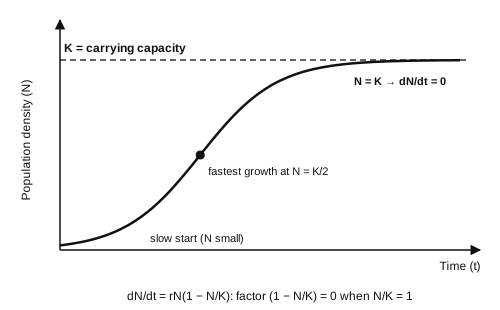
- (B) "Nears" K → is small but still positive, so growth is slow, not zero.
- (C) means N = 0 → no population at all (trivial case, not the plateau the model describes).
- (D) Death rate > birth rate gives a negative growth rate (decline), not zero.
Short trick: S-curve: lag → log (fastest at K/2) → plateau at N = K, where dN/dt = 0.
Answer: (A) When is exactly one
अवधारणा: लॉजिस्टिक (वरहुल्स्ट–पर्ल) मॉडल में ; जब पद शून्य हो जाता है तब वृद्धि रुक जाती है।
- रखने पर: → वृद्धि दर ठीक शून्य (समष्टि पोषण क्षमता पर, स्थिर अवस्था)।
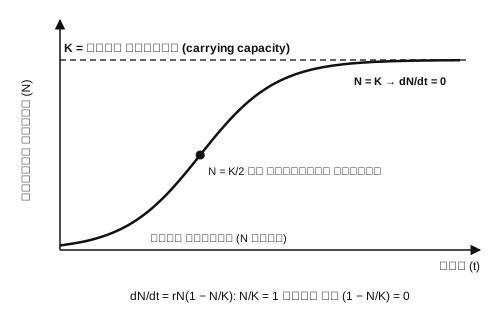
- (B) K के "निकट" → छोटा पर धनात्मक, अतः वृद्धि धीमी है, शून्य नहीं।
- (C) का अर्थ N = 0 → कोई समष्टि ही नहीं (तुच्छ स्थिति, मॉडल की स्थिर अवस्था नहीं)।
- (D) मृत्यु दर > जन्म दर होने पर वृद्धि दर ऋणात्मक (ह्रास) होती है, शून्य नहीं।
शॉर्ट ट्रिक: S-वक्र: लैग → लॉग (K/2 पर सर्वाधिक) → N = K पर स्थिर अवस्था, जहाँ dN/dt = 0।
उत्तर: (A) जब ठीक एक हो
NEET UGBiologyOrganisms and populations – logistic growthNEET UG 2016 · 1 May Shift 1
Q606.Which one of the following statements is not true?
निम्नलिखित में से कौन-सा कथन सत्य नहीं है?
- ATapetum helps in the dehiscence of antherटेपीटम परागकोश के स्फुटन में सहायता करता है
- BExine of pollen grains is made up of sporopolleninपरागकणों का बाह्यचोल (exine) स्पोरोपोलेनिन का बना होता है
- CPollen grains of many species cause severe allegiesअनेक जातियों के परागकण गम्भीर एलर्जी उत्पन्न करते हैं
- DStored pollen in liquid nitrogen can be used in the crop breeding programmesद्रव नाइट्रोजन में संग्रहित परागकणों का उपयोग फसल प्रजनन कार्यक्रमों में किया जा सकता है
Show answer
Concept: Tapetum is the innermost wall layer of the microsporangium; it nourishes the developing pollen grains. Dehiscence of the anther is brought about by the endothecium (and stomium).
- (A) Not true – tapetum is nutritive, not a dehiscence layer.
- (B) True – exine is made of sporopollenin, the most resistant organic material known.
- (C) True – pollen of Parthenium (carrot grass) and many others cause allergies and asthma.
- (D) True – pollen can be stored for years at −196 °C in liquid nitrogen (pollen banks) for breeding.
Short trick: Anther wall from outside: Epidermis – Endothecium (dehiscence) – Middle layers – Tapetum (nutrition). "E-E-M-T: the last one feeds".
Answer: (A) Tapetum helps in the dehiscence of anther
अवधारणा: टेपीटम लघुबीजाणुधानी की भित्ति की सबसे भीतरी परत है; यह विकासशील परागकणों को पोषण देता है। परागकोश का स्फुटन अन्तःस्थीसियम (endothecium) (और स्टोमियम) द्वारा होता है।
- (A) असत्य – टेपीटम पोषक परत है, स्फुटन परत नहीं।
- (B) सत्य – बाह्यचोल स्पोरोपोलेनिन का बना है, जो ज्ञात सबसे प्रतिरोधी कार्बनिक पदार्थ है।
- (C) सत्य – Parthenium (गाजर घास) तथा अनेक अन्य के परागकण एलर्जी और दमा उत्पन्न करते हैं।
- (D) सत्य – परागकणों को द्रव नाइट्रोजन में −196 °C पर वर्षों तक संग्रहित किया जा सकता है (पराग बैंक), प्रजनन हेतु।
शॉर्ट ट्रिक: परागकोश भित्ति बाहर से: बाह्यत्वचा – अन्तःस्थीसियम (स्फुटन) – मध्य परतें – टेपीटम (पोषण)। "अन्तिम परत भोजन देती है"।
उत्तर: (A) टेपीटम परागकोश के स्फुटन में सहायता करता है
NEET UGBiologySexual reproduction in flowering plants – anther and pollenNEET UG 2016 · 1 May Shift 1
Q607.Which of the following would appear as the pioneer organisms on bare rocks?
नग्न चट्टानों पर निम्नलिखित में से कौन-से अग्रणी (pioneer) जीव के रूप में प्रकट होंगे?
- ALichensलाइकेन
- BLiverwortsलिवरवर्ट
- CMossesमॉस
- DGreen algaeहरे शैवाल
Show answer
Concept: In primary succession on bare rock (xerarch), lichens are the pioneers: they secrete acids that dissolve rock and help in weathering and soil formation.
- Lichens → (thin soil) bryophytes such as mosses/liverworts → herbs → shrubs → trees (climax forest).
- (B), (C) Liverworts and mosses come after lichens, once a little soil has formed.
- (D) Green algae are pioneers of hydrarch succession (in water: phytoplankton), not of bare rock.
Short trick: Rock → Lichen ("L for Lithosere"); Water → Phytoplankton.
Answer: (A) Lichens
अवधारणा: नग्न चट्टान पर प्राथमिक अनुक्रमण (शुष्कक्रमक) में लाइकेन अग्रणी होते हैं: ये अम्ल स्रावित कर चट्टान को घोलते हैं और अपक्षय तथा मृदा-निर्माण में सहायक होते हैं।
- लाइकेन → (पतली मृदा) ब्रायोफाइट जैसे मॉस/लिवरवर्ट → शाक → झाड़ियाँ → वृक्ष (चरम वन)।
- (B), (C) लिवरवर्ट और मॉस थोड़ी मृदा बन जाने के बाद आते हैं।
- (D) हरे शैवाल जलक्रमक अनुक्रमण (जल में: पादपप्लवक) के अग्रणी हैं, नग्न चट्टान के नहीं।
शॉर्ट ट्रिक: चट्टान → लाइकेन; जल → पादपप्लवक।
उत्तर: (A) लाइकेन
NEET UGBiologyEcosystem – ecological succession (xerarch)NEET UG 2016 · 1 May Shift 1
Q608.Which one of the following is the starter codon?
निम्नलिखित में से कौन-सा प्रारम्भन (starter) कोडॉन है?
- AAUG
- BUGA
- CUAA
- DUAG
Show answer
Concept: AUG is the initiation codon; it codes for methionine (formyl-methionine in prokaryotes) and has dual function.
- (A) AUG – start codon. Correct.
- (B) UGA, (C) UAA, (D) UAG – stop (nonsense/termination) codons that code for no amino acid.
Short trick: Stops "U Go Away, U Are Away, U Are Gone" = UGA, UAA, UAG. Start = "AUGust starts".
Answer: (A) AUG
अवधारणा: AUG प्रारम्भन कोडॉन है; यह मेथियोनीन (प्रोकैरियोट में फॉर्माइल-मेथियोनीन) का कूट है और इसका दोहरा कार्य होता है।
- (A) AUG – प्रारम्भन कोडॉन। सही।
- (B) UGA, (C) UAA, (D) UAG – समापन (निरर्थक) कोडॉन जो किसी ऐमीनो अम्ल का कूट नहीं हैं।
शॉर्ट ट्रिक: समापन: "U Go Away, U Are Away, U Are Gone" = UGA, UAA, UAG। प्रारम्भ = AUG।
उत्तर: (A) AUG
NEET UGBiologyMolecular basis of inheritance – genetic codeNEET UG 2016 · 1 May Shift 1
Q609.Which one of the following characteristics is not shared by birds and mammals?
निम्नलिखित में से कौन-सा अभिलक्षण पक्षियों और स्तनधारियों में साझा नहीं है?
- AOssified endoskeletonअस्थिभूत अन्तःकंकाल
- BBreathing using lungsफेफड़ों द्वारा श्वसन
- CViviparityजरायुजता (Viviparity)
- DWarm blooded natureनियततापी (warm blooded) स्वभाव
Show answer
Concept: Birds and mammals are both bony (ossified) vertebrates, breathe by lungs and are homeotherms; but all birds are oviparous.
- (A) Shared – both have a bony endoskeleton (birds: pneumatic bones).
- (B) Shared – both breathe through lungs (birds have air sacs as accessory).
- (C) Not shared – birds lay eggs (oviparous); most mammals give birth to young ones (viviparous).
- (D) Shared – both are warm-blooded (homeothermous).
Short trick: No bird is viviparous; the only egg-laying mammals are prototherians (platypus, echidna).
Answer: (C) Viviparity
अवधारणा: पक्षी और स्तनधारी दोनों अस्थिल (अस्थिभूत) कशेरुकी हैं, फेफड़ों से श्वसन करते हैं और नियततापी हैं; परन्तु सभी पक्षी अण्डयुज हैं।
- (A) साझा – दोनों में अस्थिल अन्तःकंकाल (पक्षियों में वातिल अस्थियाँ)।
- (B) साझा – दोनों फेफड़ों से श्वसन करते हैं (पक्षियों में सहायक वायुकोष)।
- (C) साझा नहीं – पक्षी अण्डे देते हैं (अण्डयुज); अधिकांश स्तनधारी शिशु को जन्म देते हैं (जरायुज)।
- (D) साझा – दोनों नियततापी हैं।
शॉर्ट ट्रिक: कोई भी पक्षी जरायुज नहीं; अण्डे देने वाले स्तनधारी केवल प्रोटोथीरियन (प्लैटिपस, एकिडना)।
उत्तर: (C) जरायुजता
NEET UGBiologyAnimal kingdom – Aves and MammaliaNEET UG 2016 · 1 May Shift 1
Q610.Nomenclature is governed by certain universal rules. Which one of the following is contrary to the rules of nomenclature?
नामपद्धति कुछ सार्वभौमिक नियमों द्वारा नियन्त्रित होती है। निम्नलिखित में से कौन-सा नामपद्धति के नियमों के विपरीत है?
- ABiological names can be written in any languageजैविक नाम किसी भी भाषा में लिखे जा सकते हैं
- BThe first words in a biological name represents the genus name, and the second is a specific epithetजैविक नाम का पहला शब्द वंश नाम तथा दूसरा जाति संकेतपद (specific epithet) को दर्शाता है
- CThe names are written in Latin and are italicizedनाम लैटिन में लिखे जाते हैं और तिरछे (italic) होते हैं
- DWhen written by hand, the names are to be underlinedहाथ से लिखते समय नामों को रेखांकित किया जाता है
Show answer
Concept: NCERT rules (ICBN/ICZN): biological names are generally in Latin (or Latinised) and written in italics; the first word is the genus, the second the specific epithet; handwritten names are underlined separately; the genus begins with a capital letter.
- (A) Contrary – names cannot be in "any language"; they must be Latin or Latinised, irrespective of origin.
- (B), (C), (D) – all are the standard rules of binomial nomenclature.
Short trick: Example: Mangifera indica Linn. → Latin, italic, Genus capital + species small, author abbreviated.
Answer: (A) Biological names can be written in any language
अवधारणा: NCERT नियम (ICBN/ICZN): जैविक नाम सामान्यतः लैटिन (या लैटिनीकृत) में तथा तिरछे अक्षरों में लिखे जाते हैं; पहला शब्द वंश, दूसरा जाति संकेतपद; हाथ से लिखे नाम अलग-अलग रेखांकित; वंश का पहला अक्षर बड़ा।
- (A) विपरीत – नाम "किसी भी भाषा" में नहीं हो सकते; उत्पत्ति चाहे जो हो, नाम लैटिन या लैटिनीकृत होने चाहिए।
- (B), (C), (D) – ये सभी द्विनाम पद्धति के मानक नियम हैं।
शॉर्ट ट्रिक: उदाहरण: Mangifera indica Linn. → लैटिन, तिरछा, वंश बड़े अक्षर से + जाति छोटे से, लेखक का संक्षिप्त नाम।
उत्तर: (A) जैविक नाम किसी भी भाषा में लिखे जा सकते हैं
NEET UGBiologyThe living world – binomial nomenclatureNEET UG 2016 · 1 May Shift 1
Q611.Blood pressure in the pulmonary artery is:
फुप्फुसीय धमनी में रक्तदाब:
- ASame as that in the aortaमहाधमनी के समान होता है
- BMore than that in the carotidकैरोटिड से अधिक होता है
- CMore than that in the pulmonary veinफुप्फुसीय शिरा से अधिक होता है
- DLess than that in the venae cavaeमहाशिराओं (venae cavae) से कम होता है
Show answer
Concept: Blood always flows from higher to lower pressure. Pulmonary circuit: right ventricle → pulmonary artery (~25/8 mm Hg) → lung capillaries → pulmonary vein (~5–8 mm Hg) → left atrium.
- (C) Correct – pulmonary artery pressure > pulmonary vein pressure; that drop drives blood through the lungs.
- (A) Wrong – aorta carries systemic pressure (~120/80 mm Hg), much higher than the pulmonary artery.
- (B) Wrong – the carotid is a systemic artery with near-aortic pressure, higher than the pulmonary artery.
- (D) Wrong – venae cavae have the lowest pressure in the body (~0–5 mm Hg).
Short trick: Within any circuit: artery > arteriole > capillary > venule > vein. Systemic arteries > pulmonary artery (low-pressure lungs).
Answer: (C) More than that in the pulmonary vein
अवधारणा: रक्त सदैव उच्च से निम्न दाब की ओर बहता है। फुप्फुसीय परिपथ: दायाँ निलय → फुप्फुसीय धमनी (~25/8 mm Hg) → फेफड़ों की केशिकाएँ → फुप्फुसीय शिरा (~5–8 mm Hg) → बायाँ अलिन्द।
- (C) सही – फुप्फुसीय धमनी का दाब > फुप्फुसीय शिरा का दाब; यही अन्तर रक्त को फेफड़ों में से प्रवाहित करता है।
- (A) गलत – महाधमनी में दैहिक दाब (~120/80 mm Hg) होता है, जो फुप्फुसीय धमनी से बहुत अधिक है।
- (B) गलत – कैरोटिड दैहिक धमनी है जिसका दाब लगभग महाधमनी जितना, अर्थात् फुप्फुसीय धमनी से अधिक होता है।
- (D) गलत – महाशिराओं में शरीर का न्यूनतम दाब (~0–5 mm Hg) होता है।
शॉर्ट ट्रिक: किसी भी परिपथ में: धमनी > धमनिका > केशिका > शिरिका > शिरा। दैहिक धमनियाँ > फुप्फुसीय धमनी (फेफड़े निम्न-दाब तंत्र)।
उत्तर: (C) फुप्फुसीय शिरा से अधिक होता है
NEET UGBiologyBody fluids and circulation – blood pressure in vesselsNEET UG 2016 · 1 May Shift 1
Q612.Cotyledon of maize grain is called:
मक्का के दाने का बीजपत्र कहलाता है:
- APlumuleप्रांकुर (Plumule)
- BColeorhizaमूलांकुरचोल (Coleorhiza)
- CColeoptileप्रांकुरचोल (Coleoptile)
- DScutellumप्रशल्क (Scutellum)
Show answer
Concept: In grasses (maize, wheat) the embryo has one large, shield-shaped cotyledon called the scutellum, lying towards one side of the embryonal axis.
- (D) Scutellum – the single cotyledon. Correct.
- (A) Plumule – embryonic shoot tip.
- (B) Coleorhiza – sheath covering the radicle and root cap.
- (C) Coleoptile – hollow foliar sheath enclosing the plumule.
Short trick: Scutellum = "scutum" = shield → shield-shaped cotyledon. Coleo-ptile covers plumule; Coleo-rhiza covers radicle.
Answer: (D) Scutellum
अवधारणा: घासों (मक्का, गेहूँ) के भ्रूण में एक बड़ा, ढाल-आकार का बीजपत्र होता है जिसे प्रशल्क (scutellum) कहते हैं; यह भ्रूणीय अक्ष के एक ओर स्थित होता है।
- (D) प्रशल्क – एकमात्र बीजपत्र। सही।
- (A) प्रांकुर – भ्रूणीय प्ररोह शीर्ष।
- (B) मूलांकुरचोल – मूलांकुर और मूलगोप को ढकने वाला आवरण।
- (C) प्रांकुरचोल – प्रांकुर को घेरने वाला खोखला पर्णीय आवरण।
शॉर्ट ट्रिक: Scutellum = "scutum" = ढाल → ढाल-आकार बीजपत्र। Coleoptile → plumule; Coleorhiza → radicle।
उत्तर: (D) प्रशल्क (Scutellum)
NEET UGBiologySexual reproduction in flowering plants – monocot seedNEET UG 2016 · 1 May Shift 1
Q613.In the stomach, gastric acid is secreted by the:
आमाशय में जठर अम्ल का स्राव कौन करती हैं?
- AGastrin secreting cellsगैस्ट्रिन-स्रावी कोशिकाएँ
- BParietal cellsभित्तीय (Parietal) कोशिकाएँ
- CPeptic cellsपेप्टिक कोशिकाएँ
- DAcidic cellsअम्लीय कोशिकाएँ
Show answer
Concept: Gastric glands have three main cell types: mucus neck cells (mucus), peptic/chief cells (pepsinogen), and parietal/oxyntic cells (HCl + intrinsic factor).
- (B) Parietal (oxyntic) cells – secrete HCl. Correct.
- (A) G-cells secrete the hormone gastrin, which only stimulates acid secretion.
- (C) Peptic (chief/zymogenic) cells – secrete proenzyme pepsinogen.
- (D) "Acidic cells" – no such cell type.
Short trick: Oxyntic = "acid-forming" (Greek oxys = acid) → HCl + Castle's intrinsic factor (for vit. B12).
Answer: (B) Parietal cells
अवधारणा: जठर ग्रन्थियों में तीन मुख्य कोशिकाएँ होती हैं: श्लेष्मा ग्रीवा कोशिकाएँ (श्लेष्मा), पेप्टिक/मुख्य कोशिकाएँ (पेप्सिनोजन) और भित्तीय/ऑक्सिन्टिक कोशिकाएँ (HCl + नैज कारक)।
- (B) भित्तीय (ऑक्सिन्टिक) कोशिकाएँ – HCl स्रावित करती हैं। सही।
- (A) G-कोशिकाएँ गैस्ट्रिन हॉर्मोन स्रावित करती हैं, जो केवल अम्ल स्राव को उद्दीपित करता है।
- (C) पेप्टिक (मुख्य/जाइमोजिनिक) कोशिकाएँ – पूर्वएन्ज़ाइम पेप्सिनोजन स्रावित करती हैं।
- (D) "अम्लीय कोशिकाएँ" – ऐसी कोई कोशिका नहीं होती।
शॉर्ट ट्रिक: Oxyntic = "अम्ल बनाने वाली" (यूनानी oxys = अम्ल) → HCl + कैसल का नैज कारक (विटामिन B12 हेतु)।
उत्तर: (B) भित्तीय कोशिकाएँ
NEET UGBiologyDigestion and absorption – gastric glandsNEET UG 2016 · 1 May Shift 1
Q614.Depletion of which gas in the atmosphere can lead to an increased incidence of skin cancers:
वायुमण्डल में किस गैस के अवक्षय से त्वचा कैंसर की घटनाओं में वृद्धि हो सकती है?
- ANitrous oxideनाइट्रस ऑक्साइड
- BOzoneओज़ोन
- CAmmoniaअमोनिया
- DMethaneमेथेन
Show answer
Concept: Stratospheric ozone absorbs UV-B radiation. Its thinning (by CFCs → Cl atoms) lets more UV-B reach the earth, damaging DNA and causing skin cancer, snow-blindness and cataract.
- (B) Ozone – correct.
- (A) Nitrous oxide and (D) methane – greenhouse gases (global warming), not UV shields.
- (C) Ammonia – a pollutant/nitrogen compound; not a UV shield.
Short trick: Ozone measured in Dobson units; "ozone hole" over Antarctica; Montreal Protocol (1987) to cut CFCs.
Answer: (B) Ozone
अवधारणा: समतापमण्डलीय ओज़ोन UV-B विकिरण को अवशोषित करती है। इसके पतला होने (CFC → Cl परमाणु) से अधिक UV-B पृथ्वी तक पहुँचता है जो DNA को क्षति पहुँचाकर त्वचा कैंसर, हिम-अन्धता और मोतियाबिन्द उत्पन्न करता है।
- (B) ओज़ोन – सही।
- (A) नाइट्रस ऑक्साइड और (D) मेथेन – ग्रीनहाउस गैसें (वैश्विक तापन), UV कवच नहीं।
- (C) अमोनिया – प्रदूषक/नाइट्रोजन यौगिक; UV कवच नहीं।
शॉर्ट ट्रिक: ओज़ोन डॉब्सन इकाई में मापी जाती है; अण्टार्कटिका के ऊपर "ओज़ोन छिद्र"; CFC कम करने हेतु मॉन्ट्रियल प्रोटोकॉल (1987)।
उत्तर: (B) ओज़ोन
NEET UGBiologyEnvironmental issues – ozone depletionNEET UG 2016 · 1 May Shift 1
Q615.Chrysophytes, Euglenoids, Dinoflagellates and Slime moulds are included in the kingdom:
क्राइसोफाइट, यूग्लीनॉइड, डाइनोफ्लैजेलेट और अवपंक कवक (slime moulds) किस जगत में सम्मिलित हैं?
- AMoneraमोनेरा
- BProtistaप्रोटिस्टा
- CFungiकवक (Fungi)
- DAnimaliaऐनिमेलिया
Show answer
Concept: In Whittaker's five-kingdom system, kingdom Protista holds all single-celled eukaryotes: chrysophytes, dinoflagellates, euglenoids, slime moulds and protozoans.
- (B) Protista – correct.
- (A) Monera – prokaryotes (bacteria, cyanobacteria, archaebacteria, mycoplasma).
- (C) Fungi – multicellular/filamentous heterotrophs with chitin walls (slime moulds were earlier grouped with fungi but are protists).
- (D) Animalia – multicellular heterotrophs without cell walls.
Short trick: NCERT Protista list: "Chrysophytes, Dinoflagellates, Euglenoids, Slime moulds, Protozoans" – CDESP.
Answer: (B) Protista
अवधारणा: व्हिटेकर के पाँच-जगत वर्गीकरण में जगत प्रोटिस्टा में सभी एककोशिक यूकैरियोट आते हैं: क्राइसोफाइट, डाइनोफ्लैजेलेट, यूग्लीनॉइड, अवपंक कवक और प्रोटोज़ोआ।
- (B) प्रोटिस्टा – सही।
- (A) मोनेरा – प्रोकैरियोट (जीवाणु, सायनोबैक्टीरिया, आद्यजीवाणु, माइकोप्लाज़्मा)।
- (C) कवक – काइटिन भित्ति वाले बहुकोशिक/तन्तुमय परपोषी (अवपंक कवक पहले कवकों में रखे गए थे, पर ये प्रोटिस्ट हैं)।
- (D) ऐनिमेलिया – कोशिका भित्ति-रहित बहुकोशिक परपोषी।
शॉर्ट ट्रिक: NCERT प्रोटिस्टा सूची: "क्राइसोफाइट, डाइनोफ्लैजेलेट, यूग्लीनॉइड, अवपंक कवक, प्रोटोज़ोआ"।
उत्तर: (B) प्रोटिस्टा
NEET UGBiologyBiological classification – kingdom ProtistaNEET UG 2016 · 1 May Shift 1
Q616.Water vapour comes out from the plant leaf through the stomatal opening. Through the same stomatal opening carbon dioxide diffuses into the plant during photosynthesis. Reason out the above statements using one of following options:
जलवाष्प रन्ध्र छिद्र के द्वारा पौधे की पत्ती से बाहर निकलती है। उसी रन्ध्र छिद्र से प्रकाश-संश्लेषण के दौरान कार्बन डाइऑक्साइड पौधे में विसरित होती है। निम्नलिखित विकल्पों में से किसी एक का उपयोग करके उपर्युक्त कथनों का कारण बताइए:
- ABoth processes cannot happen simultaneouslyदोनों प्रक्रियाएँ एक साथ नहीं हो सकतीं
- BBoth processes can happen together because the diffusion coefficient of water and CO2 is differentदोनों प्रक्रियाएँ एक साथ हो सकती हैं क्योंकि जल और CO2 के विसरण गुणांक भिन्न हैं
- CThe above processes happen only during night timeउपर्युक्त प्रक्रियाएँ केवल रात्रि में होती हैं
- DOne process occurs during day time, and the other at nightएक प्रक्रिया दिन में और दूसरी रात में होती है
Show answer
Concept: Diffusion of each gas is independent: each moves down its own concentration gradient, at a rate set by its own diffusion coefficient.
- Inside the leaf water vapour concentration is high → it diffuses out; outside air has more CO2 than the photosynthesising mesophyll → CO2 diffuses in.
- Both gradients exist at the same time (daytime, stomata open), and the two gases have different diffusion coefficients, so both fluxes occur together through the same pore.
- (A) Wrong – nothing prevents two opposite gas fluxes simultaneously.
- (C), (D) Wrong – in most plants stomata open by day, when both transpiration and CO2 uptake occur together.
Short trick: Stomata are a "two-way street": H2O out, CO2 in – the price of photosynthesis is transpiration.
Answer: (B) Both processes can happen together because the diffusion coefficient of water and CO2 is different
अवधारणा: प्रत्येक गैस का विसरण स्वतन्त्र होता है: प्रत्येक गैस अपनी स्वयं की सान्द्रता प्रवणता के अनुदिश, अपने विसरण गुणांक द्वारा निर्धारित दर से गति करती है।
- पत्ती के भीतर जलवाष्प की सान्द्रता अधिक → वह बाहर विसरित होती है; प्रकाश-संश्लेषण करते मध्यपर्ण की तुलना में बाहरी वायु में CO2 अधिक → CO2 भीतर विसरित होती है।
- दोनों प्रवणताएँ एक ही समय (दिन में, रन्ध्र खुले) विद्यमान होती हैं और दोनों गैसों के विसरण गुणांक भिन्न हैं, अतः एक ही छिद्र से दोनों प्रवाह साथ-साथ होते हैं।
- (A) गलत – दो विपरीत गैस प्रवाहों को एक साथ होने से कोई नहीं रोकता।
- (C), (D) गलत – अधिकांश पौधों में रन्ध्र दिन में खुलते हैं, जब वाष्पोत्सर्जन और CO2 ग्रहण दोनों साथ होते हैं।
शॉर्ट ट्रिक: रन्ध्र "दो-तरफ़ा मार्ग" हैं: H2O बाहर, CO2 भीतर – प्रकाश-संश्लेषण की कीमत वाष्पोत्सर्जन है।
उत्तर: (B) दोनों प्रक्रियाएँ एक साथ हो सकती हैं क्योंकि जल और CO2 के विसरण गुणांक भिन्न हैं
NEET UGBiologyTransport in plants – diffusion through stomataNEET UG 2016 · 1 May Shift 1
Q617.In mammals, which blood vessel would normally carry largest amount of urea?
स्तनधारियों में सामान्यतः कौन-सी रक्त वाहिका यूरिया की सबसे अधिक मात्रा ले जाती है?
- ARenal veinवृक्क शिरा
- BDorsal aortaपृष्ठ महाधमनी
- CHepatic veinयकृत शिरा
- DHepatic portal veinयकृत निवाहिका शिरा
Show answer
Concept: Urea is made in the liver (ornithine–urea cycle) from NH3 and CO2; it leaves the liver in the hepatic vein and is removed in the kidneys.
- (C) Hepatic vein – carries blood just after urea has been added → highest urea. Correct.
- (A) Renal vein – blood after filtration in kidney → least urea.
- (B) Dorsal aorta – mixed arterial blood; urea already diluted in the whole circulation.
- (D) Hepatic portal vein – brings blood from the gut to the liver; rich in absorbed nutrients and NH3, not yet converted to urea.
Short trick: Follow the factory: urea is produced in the liver → exits via hepatic vein (max) → cleaned in kidney → renal vein (min).
Answer: (C) Hepatic vein
अवधारणा: यूरिया यकृत में (ऑर्निथीन–यूरिया चक्र) NH3 और CO2 से बनता है; यह यकृत शिरा द्वारा यकृत से निकलता है और वृक्कों में हटाया जाता है।
- (C) यकृत शिरा – यूरिया जुड़ने के तुरन्त बाद का रक्त → सर्वाधिक यूरिया। सही।
- (A) वृक्क शिरा – वृक्क में निस्यन्दन के बाद का रक्त → न्यूनतम यूरिया।
- (B) पृष्ठ महाधमनी – मिश्रित धमनी रक्त; यूरिया पूरे परिसंचरण में पहले ही तनु हो चुका।
- (D) यकृत निवाहिका शिरा – आँत से रक्त यकृत तक लाती है; इसमें अवशोषित पोषक और NH3 अधिक, यूरिया अभी नहीं बना।
शॉर्ट ट्रिक: कारखाने का पीछा करें: यूरिया यकृत में बनता → यकृत शिरा से निकलता (अधिकतम) → वृक्क में साफ़ → वृक्क शिरा (न्यूनतम)।
उत्तर: (C) यकृत शिरा
NEET UGBiologyExcretory products and their elimination – urea formationNEET UG 2016 · 1 May Shift 1
Q618.Seed formation without fertilization in flowering plants involves the process of:
पुष्पी पादपों में निषेचन के बिना बीज-निर्माण में कौन-सी प्रक्रिया सम्मिलित है?
- ASporulationबीजाणुजनन
- BBuddingमुकुलन
- CSomatic hybridizationकायिक संकरण
- DApomixisअसंगजनन (Apomixis)
Show answer
Concept: NCERT: "Apomixis is a form of asexual reproduction that mimics sexual reproduction" – seeds are formed without fertilisation (e.g. some Asteraceae and grasses).
- (D) Apomixis – correct; apomictic seeds produce plants identical to the parent (useful for keeping hybrid vigour).
- (A) Sporulation – asexual spore formation (fungi, algae), no seeds.
- (B) Budding – outgrowth forms a new individual (yeast, Hydra), no seeds.
- (C) Somatic hybridisation – fusion of protoplasts of two plants (pomato), a tissue-culture technique.
Short trick: Apo = without, mixis = mixing (of gametes) → seed without sex.
Answer: (D) Apomixis
अवधारणा: NCERT: "असंगजनन अलैंगिक जनन का एक रूप है जो लैंगिक जनन की नकल करता है" – बीज निषेचन के बिना बनते हैं (जैसे कुछ ऐस्टरेसी और घासें)।
- (D) असंगजनन – सही; असंगजनित बीज जनक जैसे पौधे उत्पन्न करते हैं (संकर ओज बनाए रखने में उपयोगी)।
- (A) बीजाणुजनन – अलैंगिक बीजाणु निर्माण (कवक, शैवाल), बीज नहीं।
- (B) मुकुलन – उद्वर्ध से नया जीव बनता है (यीस्ट, Hydra), बीज नहीं।
- (C) कायिक संकरण – दो पौधों के जीवद्रव्यकों का संलयन (पोमेटो), ऊतक संवर्धन तकनीक।
शॉर्ट ट्रिक: Apo = बिना, mixis = मिश्रण (युग्मकों का) → लैंगिकता के बिना बीज।
उत्तर: (D) असंगजनन
NEET UGBiologySexual reproduction in flowering plants – apomixisNEET UG 2016 · 1 May Shift 1
Q619.Which of the following is wrongly matched in the given table?
दी गई तालिका में निम्नलिखित में से कौन-सा गलत सुमेलित है?
- A
| Microbe | Product | Application |
|---|
| Trichoderma polysporum | Cyclosporin A | Immunosuppressive drug |
| सूक्ष्मजीव | उत्पाद | अनुप्रयोग |
|---|
| Trichoderma polysporum | साइक्लोस्पोरिन A | प्रतिरक्षा-निरोधक औषधि |
- B
| Microbe | Product | Application |
|---|
| Monascus purpureus | Statins | Lowering of blood cholesterol |
| सूक्ष्मजीव | उत्पाद | अनुप्रयोग |
|---|
| Monascus purpureus | स्टैटिन | रक्त कोलेस्टेरॉल कम करना |
- C
| Microbe | Product | Application |
|---|
| Streptococcus | Streptokinase | Removal of clot from blood vessel |
| सूक्ष्मजीव | उत्पाद | अनुप्रयोग |
|---|
| Streptococcus | स्ट्रेप्टोकाइनेज़ | रक्त वाहिका से थक्का हटाना |
- D
| Microbe | Product | Application |
|---|
| Clostridium butylicum | Lipase | Removal of oil stains |
| सूक्ष्मजीव | उत्पाद | अनुप्रयोग |
|---|
| Clostridium butylicum | लाइपेज़ | तेल के धब्बे हटाना |
Show answer
Concept: NCERT industrial microbes: Clostridium butylicum produces butyric acid; lipases (used in detergents to remove oily stains) are not attributed to it.
- (A) Correct match – cyclosporin A from the fungus Trichoderma polysporum is an immunosuppressant for organ-transplant patients.
- (B) Correct match – statins from the yeast Monascus purpureus competitively inhibit cholesterol synthesis.
- (C) Correct match – streptokinase from Streptococcus (modified by genetic engineering) is a "clot buster" for myocardial infarction.
- (D) Wrong match – C. butylicum → butyric acid; the product/application pair "lipase – removal of oil stains" does not belong to this microbe.
Short trick: Acids list: Aspergillus niger – citric, Acetobacter aceti – acetic, Clostridium butylicum – butyric, Lactobacillus – lactic.
Answer: (D) Clostridium butylicum – Lipase – Removal of oil stains
अवधारणा: NCERT औद्योगिक सूक्ष्मजीव: Clostridium butylicum ब्यूटिरिक अम्ल बनाता है; लाइपेज़ (अपमार्जकों में तेलीय धब्बे हटाने हेतु) इससे सम्बन्धित नहीं है।
- (A) सही सुमेल – कवक Trichoderma polysporum से प्राप्त साइक्लोस्पोरिन A अंग-प्रत्यारोपण रोगियों में प्रतिरक्षा-निरोधक है।
- (B) सही सुमेल – यीस्ट Monascus purpureus से प्राप्त स्टैटिन कोलेस्टेरॉल संश्लेषण को प्रतिस्पर्धी रूप से रोकते हैं।
- (C) सही सुमेल – Streptococcus से प्राप्त स्ट्रेप्टोकाइनेज़ (आनुवंशिक इंजीनियरी द्वारा रूपान्तरित) हृद्पेशी रोधगलन में "थक्का-भंजक" है।
- (D) गलत सुमेल – C. butylicum → ब्यूटिरिक अम्ल; "लाइपेज़ – तेल के धब्बे हटाना" युग्म इस सूक्ष्मजीव का नहीं है।
शॉर्ट ट्रिक: अम्ल सूची: Aspergillus niger – सिट्रिक, Acetobacter aceti – ऐसीटिक, Clostridium butylicum – ब्यूटिरिक, Lactobacillus – लैक्टिक।
उत्तर: (D) Clostridium butylicum – लाइपेज़ – तेल के धब्बे हटाना
NEET UGBiologyMicrobes in human welfare – industrial productsNEET UG 2016 · 1 May Shift 1
Q620.In a testcross involving F1 dihybrid flies, more parental – type offspring were produced than the recombinant – type offspring. This indicates:
F1 द्विसंकर मक्खियों से सम्बन्धित एक परीक्षार्थ संकरण में पुनर्योगज-प्रकार की संतति की तुलना में पैतृक-प्रकार की संतति अधिक उत्पन्न हुई। यह दर्शाता है कि:
- AThe two genes are located on two different chromosomesदोनों जीन दो भिन्न गुणसूत्रों पर स्थित हैं
- BChromosomes failed to separate during meiosisअर्धसूत्री विभाजन के दौरान गुणसूत्र पृथक नहीं हो पाए
- CThe two genes are linked and present on the same chromosomeदोनों जीन सहलग्न हैं और एक ही गुणसूत्र पर उपस्थित हैं
- DBoth of the characters are controlled by more than one geneदोनों लक्षण एक से अधिक जीन द्वारा नियन्त्रित हैं
Show answer
Concept: A dihybrid testcross (AaBb × aabb) shows the gamete types of the F1 directly. Independent assortment → 1 : 1 : 1 : 1; linkage → parental types > 50 %, recombinants < 50 %.
- Genes on different chromosomes assort independently → parental : recombinant = 50 : 50; so (A) is wrong, because here parentals are in excess.
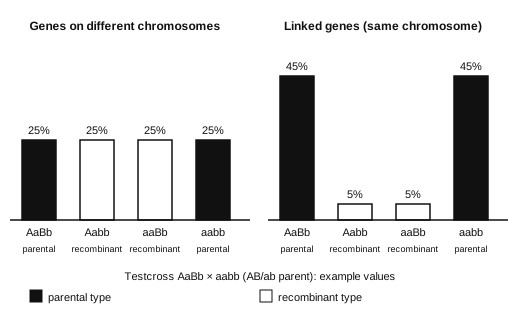
- Genes on the same chromosome tend to stay together; only crossing over makes recombinants, so parental types dominate (Morgan's Drosophila crosses).
- (B) Non-disjunction gives aneuploids, not a parental excess. (D) Polygenic inheritance gives continuous variation, not this ratio.
Short trick: Testcross ratio ≠ 1:1:1:1 with parentals in excess → linkage; % recombinants = map distance.
Answer: (C) The two genes are linked and present on the same chromosome
अवधारणा: द्विसंकर परीक्षार्थ संकरण (AaBb × aabb) F1 के युग्मक प्रकार सीधे दर्शाता है। स्वतन्त्र अपव्यूहन → 1 : 1 : 1 : 1; सहलग्नता → पैतृक प्रकार > 50 %, पुनर्योगज < 50 %।
- भिन्न गुणसूत्रों पर जीन स्वतन्त्र रूप से अपव्यूहित होते हैं → पैतृक : पुनर्योगज = 50 : 50; अतः (A) गलत है, क्योंकि यहाँ पैतृक प्रकार अधिक हैं।
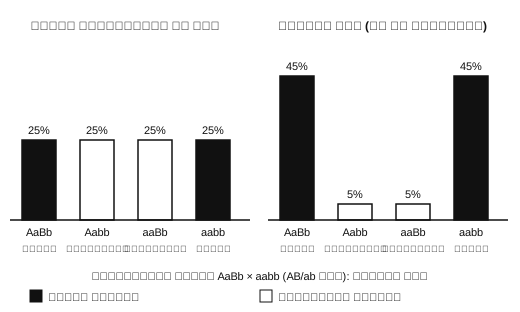
- एक ही गुणसूत्र पर जीन साथ रहने की प्रवृत्ति रखते हैं; केवल जीन-विनिमय (crossing over) से पुनर्योगज बनते हैं, अतः पैतृक प्रकार अधिक (मॉर्गन के Drosophila संकरण)।
- (B) अवियोजन से असुगुणित (aneuploid) बनते हैं, पैतृक अधिकता नहीं। (D) बहुजीनी वंशागति से सतत विभिन्नता आती है, यह अनुपात नहीं।
शॉर्ट ट्रिक: परीक्षार्थ संकरण अनुपात ≠ 1:1:1:1 और पैतृक अधिक → सहलग्नता; % पुनर्योगज = मानचित्र दूरी।
उत्तर: (C) दोनों जीन सहलग्न हैं और एक ही गुणसूत्र पर उपस्थित हैं
NEET UGBiologyPrinciples of inheritance – linkageNEET UG 2016 · 1 May Shift 1

