Q621.It is much easier for a small animal to run uphill than for a large animal, because:
छोटे प्राणी के लिए बड़े प्राणी की तुलना में चढ़ाई पर दौड़ना कहीं अधिक आसान है, क्योंकि:
- AIt is easier to carry a small body weight.छोटे शरीर का भार ढोना आसान है।
- BSmaller animals have a higher metabolic rate.छोटे प्राणियों की उपापचयी दर अधिक होती है।
- CSmall animals have a lower O2 requirementछोटे प्राणियों की O2 आवश्यकता कम होती है
- DThe efficiency of muscles in large animals is less than in the small animals.बड़े प्राणियों में पेशियों की दक्षता छोटे प्राणियों की तुलना में कम होती है।
Show answer
Concept: Small animals have a larger surface-area-to-volume ratio and a higher mass-specific (per gram) metabolic rate, so they can generate energy (ATP) fast enough per unit body mass for the extra work of climbing.
- (B) Correct – higher metabolic rate per unit mass → quicker energy release → easier uphill running.
- (A) Body weight is relative; the work per kg of body mass for climbing is about the same for both, so weight alone is not the reason.
- (C) Wrong – per gram, small animals need more O2, not less.
- (D) Muscle efficiency (energy converted to work) is broadly similar across animal sizes.
Short trick: Mouse vs elephant: per gram, the mouse burns far more energy – "small body, fast fire".
Answer: (B) Smaller animals have a higher metabolic rate.
अवधारणा: छोटे प्राणियों में पृष्ठ-क्षेत्रफल-से-आयतन अनुपात अधिक और प्रति ग्राम उपापचयी दर अधिक होती है, अतः वे प्रति इकाई शरीर-भार चढ़ाई के अतिरिक्त कार्य हेतु पर्याप्त तीव्रता से ऊर्जा (ATP) उत्पन्न कर पाते हैं।
- (B) सही – प्रति इकाई भार अधिक उपापचयी दर → तीव्र ऊर्जा मुक्ति → चढ़ाई पर दौड़ना आसान।
- (A) शरीर का भार सापेक्ष है; चढ़ने में प्रति kg शरीर-भार किया गया कार्य दोनों के लिए लगभग समान है, अतः केवल भार कारण नहीं।
- (C) गलत – प्रति ग्राम छोटे प्राणियों को अधिक O2 चाहिए, कम नहीं।
- (D) पेशी दक्षता (ऊर्जा का कार्य में रूपान्तरण) विभिन्न आकार के प्राणियों में लगभग समान होती है।
शॉर्ट ट्रिक: चूहा बनाम हाथी: प्रति ग्राम चूहा कहीं अधिक ऊर्जा जलाता है – "छोटा शरीर, तेज़ आग"।
उत्तर: (B) छोटे प्राणियों की उपापचयी दर अधिक होती है।
NEET UGBiologyBreathing and respiration – metabolic rate and body sizeNEET UG 2016 · 1 May Shift 1
Q622.Which of the following is not a characteristic feature during mitosis in somatic cells?
कायिक कोशिकाओं में समसूत्री विभाजन के दौरान निम्नलिखित में से कौन-सा अभिलक्षण नहीं होता?
- ASpindle fibresतर्कु तन्तु
- BDisappearance of nucleolusकेन्द्रिक का लोप
- CChromosome movementगुणसूत्र संचलन
- DSynapsisसूत्रयुग्मन (Synapsis)
Show answer
Concept: Synapsis is the pairing of homologous chromosomes (forming the synaptonemal complex) in zygotene of meiosis I; it never occurs in mitosis.
- (A) Spindle fibres – formed in prophase/metaphase of mitosis.
- (B) Nucleolus disappears at end of prophase of mitosis.
- (C) Chromatids move to opposite poles in anaphase of mitosis.
- (D) Synapsis – a meiosis-only event, so not a feature of mitosis.
Short trick: Meiosis-only words: synapsis, bivalent/tetrad, chiasma, crossing over, terminalisation.
Answer: (D) Synapsis
अवधारणा: सूत्रयुग्मन अर्धसूत्री विभाजन I के युग्मपट्ट (zygotene) में समजात गुणसूत्रों का युग्मन (सिनैप्टोनीमल सम्मिश्र का निर्माण) है; यह समसूत्री विभाजन में कभी नहीं होता।
- (A) तर्कु तन्तु – समसूत्री के पूर्वावस्था/मध्यावस्था में बनते हैं।
- (B) समसूत्री की पूर्वावस्था के अन्त में केन्द्रिक लुप्त होता है।
- (C) समसूत्री की पश्चावस्था में अर्धगुणसूत्र विपरीत ध्रुवों की ओर जाते हैं।
- (D) सूत्रयुग्मन – केवल अर्धसूत्री घटना, अतः समसूत्री का अभिलक्षण नहीं।
शॉर्ट ट्रिक: केवल अर्धसूत्री के शब्द: सूत्रयुग्मन, युगली/चतुष्क, काएज़्मा, जीन-विनिमय, उपान्तीभवन।
उत्तर: (D) सूत्रयुग्मन
NEET UGBiologyCell cycle and cell division – mitosis vs meiosisNEET UG 2016 · 1 May Shift 1
Q623.Which of the following statements is not correct?
निम्नलिखित में से कौन-सा कथन सही नहीं है?
- APollen grains of many species can germinate on the stigma of a flower, but only one pollen tube of the same species grows into the style.अनेक जातियों के परागकण किसी पुष्प के वर्तिकाग्र पर अंकुरित हो सकते हैं, परन्तु वर्तिका में समान जाति की केवल एक ही पराग नलिका वृद्धि करती है।
- BInsects that consume pollen or nectar without bringing about pollination are called pollen/nectar robbers.जो कीट परागण किए बिना पराग या मकरन्द का उपभोग करते हैं उन्हें पराग/मकरन्द दस्यु (robbers) कहते हैं।
- CPollen germination and pollen tube growth are regulated by chemical components of pollen interacting with those of the pistil.परागकण का अंकुरण और पराग नलिका की वृद्धि, पराग के रासायनिक घटकों की स्त्रीकेसर के रासायनिक घटकों के साथ अन्योन्यक्रिया द्वारा नियन्त्रित होते हैं।
- DSome reptiles have also been reported as pollinators in some plant species.कुछ पादप जातियों में कुछ सरीसृपों को भी परागणकर्ता के रूप में पाया गया है।
Show answer
Concept: The pistil recognises compatible pollen; only compatible pollen (usually of the same species) germinates, and many pollen tubes of the same species can grow down the style together.
- (A) Not correct – (i) the pistil rejects incompatible pollen of other species, so "pollen of many species germinate" is false; (ii) several compatible pollen tubes enter the style, not just one.
- (B) Correct – NCERT: insects that consume pollen/nectar without pollinating are pollen/nectar robbers.
- (C) Correct – pollen–pistil interaction is a dialogue mediated by chemical components of both.
- (D) Correct – NCERT: some primates, arboreal rodents and reptiles (gecko lizard, garden lizard) act as pollinators.
Short trick: Pistil = "bouncer": lets in the right (compatible) crowd – many of them – and turns away others.
Answer: (A) Pollen grains of many species can germinate on the stigma … only one pollen tube … grows into the style.
अवधारणा: स्त्रीकेसर सुयोग्य पराग को पहचानता है; केवल सुयोग्य पराग (सामान्यतः उसी जाति का) अंकुरित होता है, और उसी जाति की अनेक पराग नलिकाएँ एक साथ वर्तिका में बढ़ सकती हैं।
- (A) सही नहीं – (i) स्त्रीकेसर अन्य जातियों के असुयोग्य पराग को अस्वीकार कर देता है, अतः "अनेक जातियों के पराग अंकुरित होते हैं" असत्य है; (ii) वर्तिका में कई सुयोग्य पराग नलिकाएँ प्रवेश करती हैं, केवल एक नहीं।
- (B) सही – NCERT: परागण किए बिना पराग/मकरन्द खाने वाले कीट पराग/मकरन्द दस्यु कहलाते हैं।
- (C) सही – पराग-स्त्रीकेसर संकर्षण दोनों के रासायनिक घटकों द्वारा संचालित संवाद है।
- (D) सही – NCERT: कुछ प्राइमेट, वृक्षवासी कृन्तक और सरीसृप (गेको छिपकली, उद्यान छिपकली) परागणकर्ता होते हैं।
शॉर्ट ट्रिक: स्त्रीकेसर = "द्वारपाल": सही (सुयोग्य) भीड़ – अनेक – को भीतर आने देता है और अन्य को लौटा देता है।
उत्तर: (A) अनेक जातियों के परागकण … वर्तिका में … केवल एक ही पराग नलिका वृद्धि करती है।
NEET UGBiologySexual reproduction in flowering plants – pollination and pollen–pistil interactionNEET UG 2016 · 1 May Shift 1
Q624.Specialized epidermal cells surrounding the guard cells are called:
द्वार कोशिकाओं को घेरे रहने वाली विशिष्ट बाह्यत्वचीय कोशिकाएँ कहलाती हैं:
- AComplementary cellsपूरक कोशिकाएँ
- BSubsidiary cellsसहायक कोशिकाएँ (Subsidiary cells)
- CBulliform cellsआवर्ध त्वक् कोशिकाएँ (Bulliform cells)
- DLenticelsवातरन्ध्र (Lenticels)
Show answer
Concept: NCERT: "Sometimes, a few epidermal cells, in the vicinity of the guard cells become specialised in their shape and size and are known as subsidiary cells. The stomatal aperture, guard cells and the surrounding subsidiary cells are together called stomatal apparatus."
- (B) Subsidiary cells – correct.
- (A) Complementary cells – loosely arranged cells filling a lenticel, not around stomata.
- (C) Bulliform cells – large, empty adaxial epidermal cells of grass leaves that roll the leaf in water stress.
- (D) Lenticels – lens-shaped openings in the bark (periderm) for gas exchange.
Short trick: Stomatal apparatus = pore + guard cells + subsidiary cells. Lenticel ↔ complementary cells (both in bark).
Answer: (B) Subsidiary cells
अवधारणा: NCERT: "कभी-कभी द्वार कोशिकाओं के समीप की कुछ बाह्यत्वचीय कोशिकाएँ आकार और माप में विशिष्ट हो जाती हैं, जिन्हें सहायक कोशिकाएँ कहते हैं। रन्ध्र छिद्र, द्वार कोशिकाएँ और चारों ओर की सहायक कोशिकाएँ मिलकर रन्ध्री उपकरण कहलाती हैं।"
- (B) सहायक कोशिकाएँ – सही।
- (A) पूरक कोशिकाएँ – वातरन्ध्र को भरने वाली ढीली व्यवस्थित कोशिकाएँ, रन्ध्रों के चारों ओर नहीं।
- (C) आवर्ध त्वक् कोशिकाएँ – घास की पत्तियों की ऊपरी बाह्यत्वचा की बड़ी, खाली कोशिकाएँ जो जल-तनाव में पत्ती को मोड़ देती हैं।
- (D) वातरन्ध्र – गैस विनिमय हेतु छाल (परित्वक्) में लेंस-आकार के छिद्र।
शॉर्ट ट्रिक: रन्ध्री उपकरण = छिद्र + द्वार कोशिकाएँ + सहायक कोशिकाएँ। वातरन्ध्र ↔ पूरक कोशिकाएँ (दोनों छाल में)।
उत्तर: (B) सहायक कोशिकाएँ
NEET UGBiologyAnatomy of flowering plants – stomatal apparatusNEET UG 2016 · 1 May Shift 1
Q625.Which of the following guards the opening of hepatopancreatic duct into the duodenum?
निम्नलिखित में से कौन ग्रहणी में यकृत-अग्न्याशयी वाहिनी के छिद्र की रक्षा करता है?
- ASemilunar valveअर्धचन्द्राकार कपाट
- BIleocaecal valveशेषान्त्र-अन्धान्त्र कपाट
- CPyloric sphincterजठरनिर्गमी अवरोधिनी (Pyloric sphincter)
- DSphincter of Oddiओडी की अवरोधिनी (Sphincter of Oddi)
Show answer
Concept: NCERT: "The bile duct and the pancreatic duct open together into the duodenum as the common hepato-pancreatic duct which is guarded by a sphincter called the sphincter of Oddi."
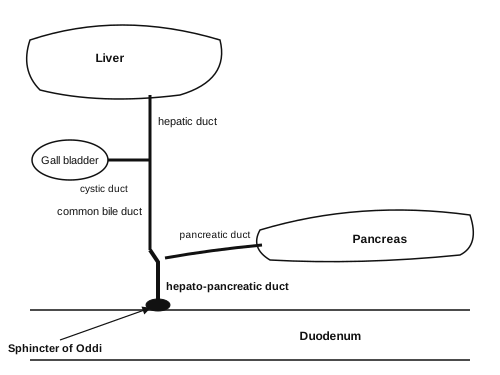
- (D) Sphincter of Oddi – correct.
- (A) Semilunar valves – at the bases of the aorta and pulmonary artery in the heart.
- (B) Ileocaecal valve – between ileum and caecum (small → large intestine).
- (C) Pyloric sphincter – between stomach and duodenum.
Short trick: Gut sphincters in order: gastro-oesophageal (cardiac) → pyloric → Oddi (on the bile-pancreatic duct) → ileocaecal → anal.
Answer: (D) Sphincter of Oddi
अवधारणा: NCERT: "पित्त वाहिनी और अग्न्याशयी वाहिनी मिलकर सामान्य यकृत-अग्न्याशयी वाहिनी के रूप में ग्रहणी में खुलती हैं, जिसकी रक्षा ओडी की अवरोधिनी नामक अवरोधिनी करती है।"
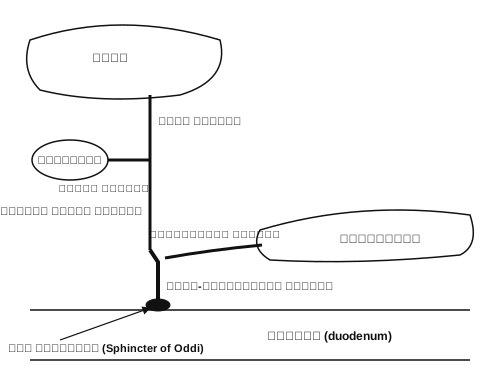
- (D) ओडी की अवरोधिनी – सही।
- (A) अर्धचन्द्राकार कपाट – हृदय में महाधमनी और फुप्फुसीय धमनी के आधार पर।
- (B) शेषान्त्र-अन्धान्त्र कपाट – शेषान्त्र और अन्धान्त्र के बीच (छोटी → बड़ी आँत)।
- (C) जठरनिर्गमी अवरोधिनी – आमाशय और ग्रहणी के बीच।
शॉर्ट ट्रिक: आहारनाल की अवरोधिनियाँ क्रम से: जठर-ग्रसिका (हृदयी) → जठरनिर्गमी → ओडी (पित्त-अग्न्याशयी वाहिनी पर) → शेषान्त्र-अन्धान्त्र → गुदा।
उत्तर: (D) ओडी की अवरोधिनी
NEET UGBiologyDigestion and absorption – duct system and sphinctersNEET UG 2016 · 1 May Shift 1
Q626.Stems modified into flat green organs performing the functions of leaves are known as:
पत्तियों का कार्य करने वाले चपटे हरे अंगों में रूपान्तरित तने कहलाते हैं:
- ACladodesक्लैडोड
- BPhyllodesपर्णाभवृन्त (Phyllodes)
- CPhyllocladesपर्णाभ स्तम्भ (Phylloclades)
- DScalesशल्क
Show answer
Concept: NCERT: "Some plants of arid regions modify their stems into flattened (Opuntia) or fleshy cylindrical (Euphorbia) structures. They contain chlorophyll and carry out photosynthesis" – phylloclades.
- (C) Phylloclades – flat green stems of many internodes (Opuntia, Euphorbia). Correct, as per NCERT term.
- (A) Cladodes – phylloclades of only one (or two) internode (e.g. Asparagus); a special type, not the general term.
- (B) Phyllodes – flattened green petioles (Australian Acacia) – leaf, not stem.
- (D) Scales – small, dry, non-green leaves (onion, ginger).
Short trick: Phylloclade = flat stem (klados = branch); Phyllode = flat petiole.
Answer: (C) Phylloclades
अवधारणा: NCERT: "शुष्क क्षेत्रों के कुछ पौधों के तने चपटे (Opuntia) या गूदेदार बेलनाकार (Euphorbia) संरचनाओं में रूपान्तरित हो जाते हैं। इनमें क्लोरोफिल होता है और ये प्रकाश-संश्लेषण करते हैं" – पर्णाभ स्तम्भ।
- (C) पर्णाभ स्तम्भ – अनेक पर्वों वाले चपटे हरे तने (Opuntia, Euphorbia)। NCERT शब्द के अनुसार सही।
- (A) क्लैडोड – केवल एक (या दो) पर्व वाले पर्णाभ स्तम्भ (जैसे Asparagus); एक विशेष प्रकार, सामान्य शब्द नहीं।
- (B) पर्णाभवृन्त – चपटे हरे पर्णवृन्त (ऑस्ट्रेलियाई Acacia) – पत्ती, तना नहीं।
- (D) शल्क – छोटी, शुष्क, अहरित पत्तियाँ (प्याज़, अदरक)।
शॉर्ट ट्रिक: Phylloclade = चपटा तना (klados = शाखा); Phyllode = चपटा पर्णवृन्त।
उत्तर: (C) पर्णाभ स्तम्भ
NEET UGBiologyMorphology of flowering plants – phyllocladeNEET UG 2016 · 1 May Shift 1
Q627.The primitive prokaryotes responsible for the production of biogas from the dung of ruminant animals, include the:
जुगाली करने वाले पशुओं के गोबर से बायोगैस के उत्पादन के लिए उत्तरदायी आदिम प्रोकैरियोट में सम्मिलित हैं:
- AHalophilesलवणरागी (Halophiles)
- BThermoacidophilesतापअम्लरागी (Thermoacidophiles)
- CMethanogensमेथेनोजन (Methanogens)
- DEubacteriaसुजीवाणु (Eubacteria)
Show answer
Concept: Methanogens (e.g. Methanobacterium) are archaebacteria living anaerobically in the rumen and in sludge; they produce methane, the main component of biogas.
- (C) Methanogens – correct.
- (A) Halophiles – archaebacteria of extremely salty areas; no methane.
- (B) Thermoacidophiles – archaebacteria of hot acidic springs.
- (D) Eubacteria – "true bacteria", not the primitive archaebacteria that make methane.
Short trick: Archaebacteria trio: Halo (salt), Thermo-acido (hot springs), Methano (marshy/rumen → gobar gas).
Answer: (C) Methanogens
अवधारणा: मेथेनोजन (जैसे Methanobacterium) आद्यजीवाणु हैं जो रूमेन और पंक में अवायवीय रूप से रहते हैं; ये मेथेन बनाते हैं, जो बायोगैस का मुख्य घटक है।
- (C) मेथेनोजन – सही।
- (A) लवणरागी – अत्यधिक लवणीय क्षेत्रों के आद्यजीवाणु; मेथेन नहीं बनाते।
- (B) तापअम्लरागी – गर्म अम्लीय झरनों के आद्यजीवाणु।
- (D) सुजीवाणु – "वास्तविक जीवाणु", मेथेन बनाने वाले आदिम आद्यजीवाणु नहीं।
शॉर्ट ट्रिक: आद्यजीवाणु त्रयी: हैलो (लवण), थर्मो-एसिडो (गर्म झरने), मेथेनो (दलदल/रूमेन → गोबर गैस)।
उत्तर: (C) मेथेनोजन
NEET UGBiologyBiological classification / microbes – methanogens and biogasNEET UG 2016 · 1 May Shift 1
Q628.A river with an inflow of domestic sewage rich in organic waste may result in:
कार्बनिक अपशिष्ट से भरपूर घरेलू वाहित मल के अन्तर्वाह वाली नदी का परिणाम हो सकता है:
- ADrying of the river very soon due to algal bloom.शैवाल प्रस्फुटन के कारण नदी का बहुत शीघ्र सूख जाना।
- BIncreased population of aquatic food web organisms.जलीय खाद्य जाल के जीवों की समष्टि में वृद्धि।
- CAn increased production of fish due to biodegradable nutrients.जैवनिम्नीकरणीय पोषकों के कारण मछली उत्पादन में वृद्धि।
- DDeath of fish due to lack of oxygen.ऑक्सीजन की कमी से मछलियों की मृत्यु।
Show answer
Concept: Organic sewage raises BOD: microbes decomposing it consume dissolved oxygen (DO) sharply, so fish and other aquatic animals die.
- (D) Correct – DO falls → fish mortality.
- (A) Algal bloom deteriorates water quality but does not dry a river.
- (B) Food-web organisms (other than decomposers) decline, not increase, because of low oxygen.
- (C) Fish production falls, not rises.
Short trick: More sewage → more BOD → less DO → fish die. High BOD = high pollution.
Answer: (D) Death of fish due to lack of oxygen.
अवधारणा: कार्बनिक वाहित मल BOD बढ़ाता है: इसका अपघटन करने वाले सूक्ष्मजीव घुली ऑक्सीजन (DO) का तीव्र उपभोग करते हैं, अतः मछलियाँ और अन्य जलीय प्राणी मर जाते हैं।
- (D) सही – DO घटती है → मछलियों की मृत्यु।
- (A) शैवाल प्रस्फुटन जल गुणवत्ता बिगाड़ता है पर नदी को सुखाता नहीं।
- (B) ऑक्सीजन कम होने से खाद्य जाल के जीव (अपघटकों को छोड़कर) घटते हैं, बढ़ते नहीं।
- (C) मछली उत्पादन घटता है, बढ़ता नहीं।
शॉर्ट ट्रिक: अधिक वाहित मल → अधिक BOD → कम DO → मछलियाँ मरती हैं। उच्च BOD = उच्च प्रदूषण।
उत्तर: (D) ऑक्सीजन की कमी से मछलियों की मृत्यु।
NEET UGBiologyEnvironmental issues / microbes – sewage and BODNEET UG 2016 · 1 May Shift 1
Q629.A cell at telophase stage is observed by a student in a plant brought from the field. He tells his teacher that this cell is not like other cells at telophase stage. There is no formation of cell plate and thus the cell is containing more number of chromosomes as compared to other dividing cells. This would result in:
खेत से लाए गए एक पौधे में एक छात्र अन्त्यावस्था (telophase) की एक कोशिका देखता है। वह अपने शिक्षक को बताता है कि यह कोशिका अन्त्यावस्था की अन्य कोशिकाओं जैसी नहीं है। इसमें कोशिका पट्टिका का निर्माण नहीं हुआ है और इस कारण इस कोशिका में अन्य विभाजित कोशिकाओं की तुलना में अधिक गुणसूत्र हैं। इसका परिणाम होगा:
- AAneuploidyअसुगुणिता (Aneuploidy)
- BPolyploidyबहुगुणिता (Polyploidy)
- CSomaclonal variationकायक्लोनी विभिन्नता
- DPolytenyबहुपट्टिता (Polyteny)
Show answer
Concept: If chromosomes have separated at anaphase but cytokinesis (cell-plate formation) fails, both complete sets stay in one cell → the whole chromosome set is doubled (2n → 4n) = polyploidy.
- (B) Polyploidy – increase in whole sets of chromosomes. Correct.
- (A) Aneuploidy – gain/loss of one or a few chromosomes (non-disjunction), not of whole sets.
- (C) Somaclonal variation – genetic variation among plants regenerated from tissue culture.
- (D) Polyteny – repeated DNA replication without separation of chromatids (giant salivary-gland chromosomes of Drosophila), no change in chromosome number.
Short trick: Failure of cytokinesis = whole-set doubling = polyploidy (colchicine works the same way by blocking spindle).
Answer: (B) Polyploidy
अवधारणा: यदि पश्चावस्था में गुणसूत्र पृथक हो गए हों पर कोशिकाद्रव्य विभाजन (कोशिका पट्टिका निर्माण) विफल हो जाए, तो दोनों पूर्ण समुच्चय एक ही कोशिका में रह जाते हैं → पूरा गुणसूत्र समुच्चय दोगुना (2n → 4n) = बहुगुणिता।
- (B) बहुगुणिता – गुणसूत्रों के पूर्ण समुच्चयों में वृद्धि। सही।
- (A) असुगुणिता – एक या कुछ गुणसूत्रों की वृद्धि/कमी (अवियोजन), पूर्ण समुच्चय नहीं।
- (C) कायक्लोनी विभिन्नता – ऊतक संवर्धन से पुनर्जनित पौधों में आनुवंशिक विभिन्नता।
- (D) बहुपट्टिता – अर्धगुणसूत्रों के पृथक हुए बिना बार-बार DNA प्रतिकृतियन (Drosophila की लार-ग्रन्थि के विशाल गुणसूत्र), गुणसूत्र संख्या में परिवर्तन नहीं।
शॉर्ट ट्रिक: कोशिकाद्रव्य विभाजन की विफलता = पूर्ण समुच्चय दोगुना = बहुगुणिता (कॉल्चिसीन भी तर्कु रोककर यही करता है)।
उत्तर: (B) बहुगुणिता
NEET UGBiologyPrinciples of inheritance / cell division – polyploidyNEET UG 2016 · 1 May Shift 1
Q630.A typical fat molecules is made up of:
एक प्रारूपिक वसा अणु किससे बना होता है?
- AThree glycerol molecules and one fatty acid moleculesतीन ग्लिसरॉल अणु और एक वसा अम्ल अणु
- BOne glycerol and three fatty acid moleculesएक ग्लिसरॉल और तीन वसा अम्ल अणु
- COne glycerol and one fatty acid moleculeएक ग्लिसरॉल और एक वसा अम्ल अणु
- DThree glycerol and three fatty acid moleculesतीन ग्लिसरॉल और तीन वसा अम्ल अणु
Show answer
Concept: A fat (neutral fat) is a triglyceride: glycerol (trihydroxy propane) has three –OH groups, each esterified with one fatty acid.
- 1 glycerol + 3 fatty acids → triglyceride + 3 H2O. Hence (B).
- (C) one glycerol + one fatty acid = monoglyceride, not a typical fat.
- (A), (D) – a fat never contains three glycerol molecules.
Short trick: "Tri-glyceride" = TRI fatty acids on one glycerol backbone (an "E" shape).
Answer: (B) One glycerol and three fatty acid molecules
अवधारणा: वसा (उदासीन वसा) एक ट्राइग्लिसराइड है: ग्लिसरॉल (ट्राइहाइड्रॉक्सी प्रोपेन) में तीन –OH समूह होते हैं, प्रत्येक एक वसा अम्ल से एस्टरीकृत।
- 1 ग्लिसरॉल + 3 वसा अम्ल → ट्राइग्लिसराइड + 3 H2O। अतः (B)।
- (C) एक ग्लिसरॉल + एक वसा अम्ल = मोनोग्लिसराइड, प्रारूपिक वसा नहीं।
- (A), (D) – वसा में कभी तीन ग्लिसरॉल अणु नहीं होते।
शॉर्ट ट्रिक: "ट्राइ-ग्लिसराइड" = एक ग्लिसरॉल आधार पर तीन वसा अम्ल ("E" आकार)।
उत्तर: (B) एक ग्लिसरॉल और तीन वसा अम्ल अणु
NEET UGBiologyBiomolecules – lipids (triglycerides)NEET UG 2016 · 1 May Shift 1
Q631.Root pressure develops due to :
मूल दाब (root pressure) किसके कारण उत्पन्न होता है?
- AIncrease in transpirationवाष्पोत्सर्जन में वृद्धि
- BActive absorptionसक्रिय अवशोषण
- CLow osmotic potential in soilमृदा में निम्न परासरण विभव
- DPassive absorptionनिष्क्रिय अवशोषण
Show answer
Concept: Root pressure is a positive pressure in the xylem created by active uptake of mineral ions into the root xylem; water then follows osmotically.
- Root cells use ATP to pump ions (K+, NO3− …) into the xylem → water potential of xylem sap falls.
- Water enters the xylem by osmosis and pushes the sap up → root pressure (seen as guttation and as sap oozing from a cut stem).
- (A) Transpiration creates a pull (negative pressure), not root pressure; (C) low osmotic potential in soil would draw water out of roots; (D) passive absorption is driven by transpiration pull, not by roots.
Short trick: Root pressure = Push from below by active absorption; transpiration = Pull from above by passive absorption.
Answer: (B) Active absorption
अवधारणा: मूल दाब जाइलम में धनात्मक दाब है, जो मूल के जाइलम में खनिज आयनों के सक्रिय अवशोषण से बनता है; इसके बाद जल परासरण द्वारा प्रवेश करता है।
- मूल कोशिकाएँ ATP खर्च कर आयनों (K+, NO3− …) को जाइलम में पंप करती हैं → जाइलम रस का जल विभव घटता है।
- जल परासरण द्वारा जाइलम में आता है और रस को ऊपर धकेलता है → मूल दाब (बिन्दुस्रावण तथा कटे तने से रस निकलने के रूप में दिखता है)।
- (A) वाष्पोत्सर्जन खिंचाव (ऋणात्मक दाब) बनाता है, मूल दाब नहीं; (C) मृदा में निम्न परासरण विभव जल को मूल से बाहर खींचेगा; (D) निष्क्रिय अवशोषण वाष्पोत्सर्जन खिंचाव से होता है, मूल द्वारा नहीं।
शॉर्ट ट्रिक: मूल दाब = सक्रिय अवशोषण से नीचे से धक्का; वाष्पोत्सर्जन = निष्क्रिय अवशोषण द्वारा ऊपर से खिंचाव।
उत्तर: (B) सक्रिय अवशोषण
NEET UGBiologyTransport in plants – root pressureNEET UG 2015 · 25 Jul Shift 1
Q632.Which one is a wrong statement?
निम्नलिखित में से कौन-सा कथन गलत है?
- ABrown algae have chlorophyll a and c, and fucoxanthinभूरे शैवालों में क्लोरोफिल a तथा c, और फ्यूकोज़ैन्थिन होते हैं
- BArchegonia are found in Bryophyta, Pteridophyta and Gymnospermsस्त्रीधानी (आर्कीगोनिया) ब्रायोफाइटा, टेरिडोफाइटा तथा अनावृतबीजियों में पाई जाती है
- CMucor has biflagellate zoosporesMucor में द्विकशाभिकी चल-बीजाणु (zoospores) होते हैं
- DHaploid endosperm is typical feature of Gymnospermsअगुणित भ्रूणपोष अनावृतबीजियों का विशिष्ट लक्षण है
Show answer
Concept: Mucor is a terrestrial phycomycete (zygomycete) fungus; its asexual spores are non-motile sporangiospores, not zoospores.
- (A) Correct – Phaeophyceae: chl a, c + fucoxanthin (brown colour).
- (B) Correct – archegonium is the female sex organ of bryophytes, pteridophytes and gymnosperms.
- (C) Wrong – Mucor produces non-motile aplanospores (sporangiospores) in sporangia; flagellate zoospores occur in aquatic forms like Albugo/Chlamydomonas.
- (D) Correct – gymnosperm endosperm is the female gametophyte tissue, formed before fertilisation, so it is haploid (n).
Short trick: Bread-mould Mucor lives on land → no need to swim → no flagella.
Answer: (C) Mucor has biflagellate zoospores
अवधारणा: Mucor एक स्थलीय फाइकोमाइसिटीज़ (ज़ाइगोमाइसिटीज़) कवक है; इसके अलैंगिक बीजाणु अचल बीजाणुधानी-बीजाणु (sporangiospores) होते हैं, चल-बीजाणु नहीं।
- (A) सही – फियोफाइसी: क्लोरोफिल a, c + फ्यूकोज़ैन्थिन (भूरा रंग)।
- (B) सही – स्त्रीधानी ब्रायोफाइट, टेरिडोफाइट और अनावृतबीजियों का मादा लैंगिक अंग है।
- (C) गलत – Mucor बीजाणुधानी में अचल बीजाणुधानी-बीजाणु (sporangiospores) बनाता है; कशाभिकी चल-बीजाणु Albugo/Chlamydomonas जैसे जलीय रूपों में होते हैं।
- (D) सही – अनावृतबीजियों का भ्रूणपोष मादा युग्मकोद्भिद् ऊतक है, जो निषेचन से पहले बनता है, अतः अगुणित (n) होता है।
शॉर्ट ट्रिक: ब्रेड-मोल्ड Mucor स्थल पर रहता है → तैरने की आवश्यकता नहीं → कशाभिका नहीं।
उत्तर: (C) Mucor में द्विकशाभिकी चल-बीजाणु (zoospores) होते हैं
NEET UGBiologyPlant kingdom & fungi – features of groupsNEET UG 2015 · 25 Jul Shift 1
Q633.Which of the following structures is not found in prokaryotic cells?
निम्नलिखित में से कौन-सी संरचना प्रोकैरियोटी कोशिकाओं में नहीं पाई जाती?
- APlasma membraneप्लाज़्मा झिल्ली
- BNuclear envelopeकेन्द्रक आवरण
- CRibosomeराइबोसोम
- DMesosomeमीसोसोम
Show answer
Concept: Prokaryotes have no membrane-bound organelles; their DNA lies naked in the cytoplasm as a nucleoid – there is no nuclear envelope.
- (A) Plasma membrane – present in every cell.
- (B) Nuclear envelope – absent; the genetic material forms a nucleoid without a membrane.
- (C) Ribosomes – present (70S type).
- (D) Mesosome – infolding of plasma membrane, characteristic of bacteria.
Short trick: Pro = before, karyon = nucleus → "before a true nucleus" → no nuclear envelope.
Answer: (B) Nuclear envelope
अवधारणा: प्रोकैरियोटों में झिल्ली-युक्त अंगक नहीं होते; उनका DNA कोशिकाद्रव्य में नग्न रूप से केन्द्रकाभ (nucleoid) के रूप में रहता है – केन्द्रक आवरण नहीं होता।
- (A) प्लाज़्मा झिल्ली – प्रत्येक कोशिका में उपस्थित।
- (B) केन्द्रक आवरण – अनुपस्थित; आनुवंशिक पदार्थ बिना झिल्ली के केन्द्रकाभ बनाता है।
- (C) राइबोसोम – उपस्थित (70S प्रकार)।
- (D) मीसोसोम – प्लाज़्मा झिल्ली का अंतर्वलन, जीवाणुओं का विशिष्ट लक्षण।
शॉर्ट ट्रिक: Pro = पहले, karyon = केन्द्रक → "वास्तविक केन्द्रक से पहले" → केन्द्रक आवरण नहीं।
उत्तर: (B) केन्द्रक आवरण
NEET UGBiologyCell – prokaryotic cellNEET UG 2015 · 25 Jul Shift 1
Q634.Which one of the following animals has two separate circulatory pathways?
निम्नलिखित में से किस जंतु में दो पृथक परिसंचरण पथ होते हैं?
- ASharkशार्क
- BFrogमेंढक
- CLizardछिपकली
- DWhaleव्हेल
Show answer
Concept: Complete double circulation (separate pulmonary and systemic pathways) needs a 4-chambered heart with complete ventricular separation – found in birds and mammals.
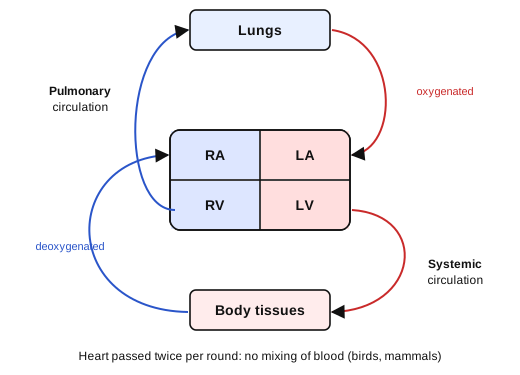
- Whale is a mammal → 4-chambered heart → oxygenated and deoxygenated blood never mix → two separate pathways.
- (A) Shark (fish): 2-chambered heart, single circulation.
- (B) Frog (amphibian): 3-chambered heart, mixed blood – incomplete double circulation.
- (C) Lizard (reptile): 3-chambered heart with incompletely divided ventricle – mixing still occurs.
Short trick: Two separate pathways = "Birds & Mammals only" – a whale is a mammal, not a fish.
Answer: (D) Whale
अवधारणा: पूर्ण दोहरा परिसंचरण (पृथक फुप्फुसीय और दैहिक पथ) के लिए पूर्णतः विभाजित निलय वाला 4-कक्षीय हृदय चाहिए – यह पक्षियों और स्तनियों में होता है।
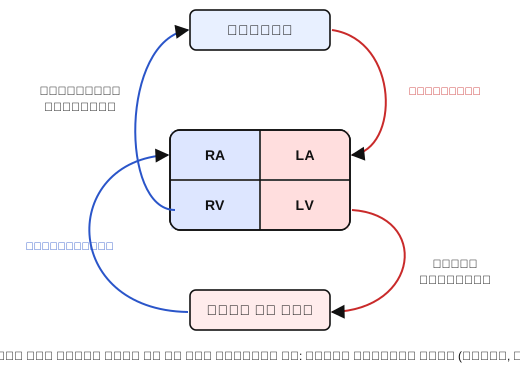
- व्हेल एक स्तनी है → 4-कक्षीय हृदय → ऑक्सीजनित और विऑक्सीजनित रुधिर कभी नहीं मिलते → दो पृथक पथ।
- (A) शार्क (मछली): 2-कक्षीय हृदय, एकल परिसंचरण।
- (B) मेंढक (उभयचर): 3-कक्षीय हृदय, मिश्रित रुधिर – अपूर्ण दोहरा परिसंचरण।
- (C) छिपकली (सरीसृप): अपूर्ण विभाजित निलय वाला 3-कक्षीय हृदय – रुधिर का मिश्रण होता है।
शॉर्ट ट्रिक: दो पृथक पथ = "केवल पक्षी व स्तनी" – व्हेल स्तनी है, मछली नहीं।
उत्तर: (D) व्हेल
NEET UGBiologyBody fluids & circulation – double circulationNEET UG 2015 · 25 Jul Shift 1
Q635.Most animals that live in deep oceanic waters are :
गहरे महासागरीय जल में रहने वाले अधिकांश जंतु होते हैं :
- ADetritivoresअपरदाहारी (detritivores)
- BPrimary consumersप्राथमिक उपभोक्ता
- CSecondary consumersद्वितीयक उपभोक्ता
- DTertiary consumersतृतीयक उपभोक्ता
Show answer
Concept: No sunlight reaches the deep ocean, so there are no photosynthetic producers there; the food base is detritus (dead organic matter) sinking from the upper layers.
- Without producers there is hardly any grazing food chain → primary, secondary and tertiary consumers of a grazing chain cannot be the majority.
- Most deep-sea animals (sea cucumbers, brittle stars, many crustaceans, some fishes) feed on the "marine snow" of detritus → they are detritivores.
- Therefore the detritus food chain dominates in the deep ocean → (A).
Short trick: Dark ocean floor = no plants = live on the dead "rain" from above → detritivores.
Answer: (A) Detritivores
अवधारणा: गहरे समुद्र तक सूर्य का प्रकाश नहीं पहुँचता, इसलिए वहाँ प्रकाश-संश्लेषी उत्पादक नहीं होते; भोजन का आधार ऊपरी परतों से नीचे गिरने वाला अपरद (मृत कार्बनिक पदार्थ) होता है।
- उत्पादकों के बिना चारण खाद्य शृंखला लगभग नहीं होती → चारण शृंखला के प्राथमिक, द्वितीयक, तृतीयक उपभोक्ता बहुसंख्यक नहीं हो सकते।
- अधिकांश गहरे समुद्री जंतु (समुद्री ककड़ी, भंगुरतारा, अनेक क्रस्टेशियन, कुछ मछलियाँ) अपरद की "समुद्री हिम" पर पलते हैं → वे अपरदाहारी हैं।
- अतः गहरे समुद्र में अपरद खाद्य शृंखला प्रमुख है → (A)।
शॉर्ट ट्रिक: अंधेरा समुद्र तल = पौधे नहीं = ऊपर से गिरने वाली मृत "वर्षा" पर जीवन → अपरदाहारी।
उत्तर: (A) अपरदाहारी (detritivores)
NEET UGBiologyEcosystem – food chains in deep oceanNEET UG 2015 · 25 Jul Shift 1
Q636.An association of individuals of different species living in the same habitat and having functional interactions is :
एक ही आवास में रहने वाले तथा परस्पर क्रियात्मक अन्योन्यक्रिया रखने वाले विभिन्न जातियों के जीवों का समूह कहलाता है :
- APopulationसमष्टि
- BEcological nicheपारिस्थितिक निकेत
- CBiotic communityजैविक समुदाय
- DEcosystemपारितंत्र
Show answer
Concept: Populations of different species living together in an area and interacting form a biotic community.
- (A) Population – individuals of the same species only.
- (B) Niche – the functional role/range of conditions of one species, not a group.
- (C) Biotic community – many species, same habitat, interacting ✔.
- (D) Ecosystem – community plus the abiotic environment; the question mentions only living individuals.
Short trick: Same species → population; different species → community; community + non-living → ecosystem.
Answer: (C) Biotic community
अवधारणा: एक क्षेत्र में साथ रहने वाली और परस्पर क्रिया करने वाली विभिन्न जातियों की समष्टियाँ मिलकर जैविक समुदाय बनाती हैं।
- (A) समष्टि – केवल एक ही जाति के जीव।
- (B) निकेत – एक जाति की क्रियात्मक भूमिका/परिस्थितियों का परास, कोई समूह नहीं।
- (C) जैविक समुदाय – अनेक जातियाँ, एक आवास, परस्पर क्रिया ✔।
- (D) पारितंत्र – समुदाय और अजैव पर्यावरण; प्रश्न में केवल सजीवों का उल्लेख है।
शॉर्ट ट्रिक: एक जाति → समष्टि; विभिन्न जातियाँ → समुदाय; समुदाय + अजैव → पारितंत्र।
उत्तर: (C) जैविक समुदाय
NEET UGBiologyOrganisms & populations – levels of organisationNEET UG 2015 · 25 Jul Shift 1
Q637.The oxygen evolved during photosynthesis comes from water molecules. Which one of the following pairs of elements is involved in this reaction?
प्रकाश-संश्लेषण में निकलने वाली ऑक्सीजन जल के अणुओं से आती है। निम्नलिखित में से तत्वों का कौन-सा युग्म इस अभिक्रिया में सम्मिलित है?
- AMagnesium and Chlorineमैग्नीशियम और क्लोरीन
- BManganese and Chlorineमैंगनीज़ और क्लोरीन
- CManganese and Potassiumमैंगनीज़ और पोटैशियम
- DMagnesium and Molybdenumमैग्नीशियम और मॉलिब्डेनम
Show answer
Concept: Water splitting (photolysis) at PS II is catalysed by the oxygen-evolving complex containing Mn, with Ca2+ and Cl− as essential cofactors.
- 2H2O → 4H+ + 4e− + O2 occurs on the inner (lumen) side of the thylakoid at PS II.
- NCERT: "the splitting of water is associated with PS II; Mn2+ and Cl− play a prominent role in photolysis".
- Mg is part of chlorophyll (not water splitting); K regulates stomata; Mo is for nitrogenase/nitrate reductase → (B).
Short trick: "Many Clouds give water" – Mn + Cl (+Ca) split water.
Answer: (B) Manganese and Chlorine
अवधारणा: PS II पर जल का विघटन (प्रकाश-अपघटन) Mn युक्त ऑक्सीजन-मुक्तकारी संकुल द्वारा उत्प्रेरित होता है, जिसमें Ca2+ और Cl− आवश्यक सहकारक हैं।
- 2H2O → 4H+ + 4e− + O2, थाइलेकॉइड की भीतरी (ल्यूमेन) ओर PS II पर होता है।
- NCERT: "जल का विघटन PS II से संबद्ध है; प्रकाश-अपघटन में Mn2+ और Cl− की प्रमुख भूमिका है"।
- Mg क्लोरोफिल का भाग है (जल-विघटन नहीं); K रंध्रों का नियमन करता है; Mo नाइट्रोजिनेज़/नाइट्रेट रिडक्टेज़ के लिए है → (B)।
शॉर्ट ट्रिक: "Many Clouds give water" – Mn + Cl (+Ca) जल को तोड़ते हैं।
उत्तर: (B) मैंगनीज़ और क्लोरीन
NEET UGBiologyPhotosynthesis – photolysis of waterNEET UG 2015 · 25 Jul Shift 1
Q638.Axile placentation is present in :
स्तंभीय (axile) बीजाण्डन्यास किसमें पाया जाता है?
- AArgemone
- BDianthus
- CLemonनींबू
- DPeaमटर
Show answer
Concept: In axile placentation the ovary is multilocular and ovules are attached to a central axis (e.g. china rose, tomato, lemon).
- Lemon (Citrus) – multilocular ovary, ovules on the central axis → axile ✔.
- Argemone – parietal (ovules on the inner wall).
- Dianthus – free central (no septa, ovules on a central column).
- Pea – marginal (ovules along one suture of a single carpel).
Short trick: NCERT set: Marginal – pea; Axile – china rose, tomato, lemon; Parietal – mustard, Argemone; Free central – Dianthus, Primrose; Basal – sunflower, marigold.
Answer: (C) Lemon
अवधारणा: स्तंभीय बीजाण्डन्यास में अंडाशय बहुकोष्ठकी होता है और बीजाण्ड केन्द्रीय अक्ष पर लगे होते हैं (जैसे गुड़हल, टमाटर, नींबू)।
- नींबू (Citrus) – बहुकोष्ठकी अंडाशय, बीजाण्ड केन्द्रीय अक्ष पर → स्तंभीय ✔।
- Argemone – भित्तीय (बीजाण्ड भीतरी भित्ति पर)।
- Dianthus – मुक्त स्तंभीय (पट नहीं, बीजाण्ड केन्द्रीय स्तंभ पर)।
- मटर – सीमांत (एक अंडप की एक सीवन पर बीजाण्ड)।
शॉर्ट ट्रिक: NCERT समूह: सीमांत – मटर; स्तंभीय – गुड़हल, टमाटर, नींबू; भित्तीय – सरसों, Argemone; मुक्त स्तंभीय – Dianthus, Primrose; आधारी – सूरजमुखी, गेंदा।
उत्तर: (C) नींबू
NEET UGBiologyMorphology of flowering plants – placentationNEET UG 2015 · 25 Jul Shift 1
Q639.In which of the following both pairs have correct combination?
निम्नलिखित में से किसमें दोनों युग्मों का संयोजन सही है?
- AGaseous nutrient cycle: Sulphur and Phosphorus
Sedimentary nutrient cycle: Carbon and Nitrogenगैसीय पोषक चक्र: सल्फर और फॉस्फोरस
अवसादी पोषक चक्र: कार्बन और नाइट्रोजन - BGaseous nutrient cycle: Carbon and Nitrogen
Sedimentary nutrient cycle: Sulphur and Phosphorusगैसीय पोषक चक्र: कार्बन और नाइट्रोजन
अवसादी पोषक चक्र: सल्फर और फॉस्फोरस - CGaseous nutrient cycle: Carbon and sulphur
Sedimentary nutrient cycle: Nitrogen and phosphorusगैसीय पोषक चक्र: कार्बन और सल्फर
अवसादी पोषक चक्र: नाइट्रोजन और फॉस्फोरस - DGaseous nutrient cycle: Nitrogen and sulphur
Sedimentary nutrient cycle: Carbon and Phosphorusगैसीय पोषक चक्र: नाइट्रोजन और सल्फर
अवसादी पोषक चक्र: कार्बन और फॉस्फोरस
Show answer
Concept: Nutrient cycles are of two types: gaseous (reservoir in atmosphere) and sedimentary (reservoir in Earth's crust/rocks).
- Carbon (CO2) and nitrogen (N2) have their main reservoir in the atmosphere → gaseous cycles.
- Sulphur and phosphorus are stored mainly in rocks/sediments (sulphates, phosphates) → sedimentary cycles.
- Only (B) puts both pairs right; (A) is fully reversed, (C) and (D) mix one wrong element in each pair.
Short trick: NCERT line: "reservoir for gaseous type of nutrient cycle (e.g., nitrogen, carbon cycle) exists in the atmosphere and for the sedimentary cycle (e.g., sulphur and phosphorus cycle) the reservoir is located in Earth's crust".
Answer: (B) Gaseous nutrient cycle: Carbon and Nitrogen
Sedimentary nutrient cycle: Sulphur and Phosphorus
अवधारणा: पोषक चक्र दो प्रकार के होते हैं: गैसीय (भंडार वायुमंडल में) और अवसादी (भंडार भूपर्पटी/चट्टानों में)।
- कार्बन (CO2) और नाइट्रोजन (N2) का मुख्य भंडार वायुमंडल है → गैसीय चक्र।
- सल्फर और फॉस्फोरस मुख्यतः चट्टानों/अवसादों में (सल्फेट, फॉस्फेट) संचित होते हैं → अवसादी चक्र।
- केवल (B) में दोनों युग्म सही हैं; (A) पूरा उलटा है, (C) और (D) में प्रत्येक युग्म में एक तत्व गलत है।
शॉर्ट ट्रिक: NCERT पंक्ति: "गैसीय पोषक चक्र (जैसे नाइट्रोजन, कार्बन चक्र) का भंडार वायुमंडल में तथा अवसादी चक्र (जैसे सल्फर और फॉस्फोरस चक्र) का भंडार भूपर्पटी में होता है"।
उत्तर: (B) गैसीय पोषक चक्र: कार्बन और नाइट्रोजन
अवसादी पोषक चक्र: सल्फर और फॉस्फोरस
NEET UGBiologyEcosystem – nutrient cyclingNEET UG 2015 · 25 Jul Shift 1
Q640.In mammalian eye, the ‘fovea’ is the center of the visual field, where :
स्तनी नेत्र में ‘फोविया’ (गर्तिका) दृष्टि क्षेत्र का केन्द्र है, जहाँ :
- AMore rods than cones are found.शलाकाओं की संख्या शंकुओं से अधिक होती है।
- BHigh density of cones occur, but has no rodsशंकुओं का घनत्व अधिक होता है, परंतु शलाकाएँ नहीं होतीं
- CThe optic nerve leaves the eyeदृक्-तंत्रिका नेत्र से बाहर निकलती है
- DOnly rods are presentकेवल शलाकाएँ उपस्थित होती हैं
Show answer
Concept: The fovea is a thinned-out portion of the macula lutea where only cones are densely packed – the point of greatest visual acuity.
- (B) ✔ – densely packed cones, no rods.
- (A), (D) wrong – rods dominate the peripheral retina, not the fovea.
- (C) wrong – the point where the optic nerve leaves is the blind spot (no rods or cones).
Short trick: Fovea = Fine detail = cones only; Blind spot = nerve exit = no receptors.
Answer: (B) High density of cones occur, but has no rods
अवधारणा: फोविया पीत बिंदु (macula lutea) का पतला भाग है, जहाँ केवल शंकु घने रूप से भरे होते हैं – सर्वाधिक दृष्टि-तीक्ष्णता का स्थान।
- (B) ✔ – घने शंकु, कोई शलाका नहीं।
- (A), (D) गलत – शलाकाएँ परिधीय दृष्टिपटल में अधिक होती हैं, फोविया में नहीं।
- (C) गलत – जहाँ से दृक्-तंत्रिका बाहर निकलती है, वह अंध बिंदु है (न शलाका, न शंकु)।
शॉर्ट ट्रिक: Fovea = Fine detail = केवल शंकु; अंध बिंदु = तंत्रिका का निकास = कोई ग्राही नहीं।
उत्तर: (B) शंकुओं का घनत्व अधिक होता है, परंतु शलाकाएँ नहीं होतीं
NEET UGBiologyNeural control – human eyeNEET UG 2015 · 25 Jul Shift 1

