Q121.Which of following organisms cannot fix nitrogen?
A. Azotobacter
B. Oscillatoria
C. Anabaena
D. Volvox
E. Nostoc
Choose the correct answer from the options given below:
निम्नलिखित में से कौन-से जीव नाइट्रोजन का स्थिरीकरण नहीं कर सकते?
A. Azotobacter
B. Oscillatoria
C. Anabaena
D. Volvox
E. Nostoc
नीचे दिए गए विकल्पों में से सही उत्तर चुनिए:
- AB onlyकेवल B
- BE onlyकेवल E
- CA onlyकेवल A
- DD onlyकेवल D
Show answer
Concept: Only prokaryotes possess nitrogenase and can fix N2.
- Azotobacter – free-living aerobic N2-fixing bacterium.
- Oscillatoria, Anabaena, Nostoc – cyanobacteria (BGA) that fix N2 (Anabaena, Nostoc in heterocysts).
- Volvox – a eukaryotic colonial green alga (Chlorophyceae); no nitrogenase → cannot fix nitrogen.
Short trick: Eukaryote in the list = non-fixer: Volvox is a green alga, all others are prokaryotes.
Answer: (D) D only
अवधारणा: केवल प्राक्केन्द्रकियों में नाइट्रोजिनेज़ होता है और वे ही N2 का स्थिरीकरण कर सकते हैं।
- Azotobacter – स्वतन्त्रजीवी वायवीय N2-स्थिरीकारक जीवाणु।
- Oscillatoria, Anabaena, Nostoc – सायनोबैक्टीरिया (नील-हरित शैवाल) जो N2 का स्थिरीकरण करते हैं (Anabaena, Nostoc में हेटेरोसिस्ट द्वारा)।
- Volvox – सुकेन्द्रकी निवही हरा शैवाल (क्लोरोफ़ाइसी); नाइट्रोजिनेज़ नहीं → नाइट्रोजन स्थिरीकरण नहीं कर सकता।
शॉर्ट ट्रिक: सूची में सुकेन्द्रकी = स्थिरीकरण नहीं: Volvox हरा शैवाल है, बाकी सब प्राक्केन्द्रकी हैं।
उत्तर: (D) केवल D
NEET UGBiologyMineral nutrition / Biological classification – nitrogen fixersNEET UG 2025 · 4 May Shift 1
Q122.Which one of the following is an example of ex-situ conservation?
निम्नलिखित में से कौन-सा बहिःस्थाने (ex-situ) संरक्षण का उदाहरण है?
- AZoos and botanical gardensप्राणि उद्यान और वनस्पति उद्यान
- BProtected areasसंरक्षित क्षेत्र
- CNational Parkराष्ट्रीय उद्यान
- DWildlife Sanctuaryवन्यजीव अभयारण्य
Show answer
Concept: Ex-situ (off-site) conservation protects organisms outside their natural habitat; in-situ (on-site) protects them within it.
- Zoological parks, botanical gardens, wildlife safari parks, seed banks, cryopreservation → ex-situ → (A).
- Protected areas, national parks, wildlife sanctuaries, biosphere reserves, sacred groves → in-situ.
Short trick: Ex = Exit from home (zoo, garden, seed bank); In = In home (parks, sanctuaries).
Answer: (A) Zoos and botanical gardens
अवधारणा: बहिःस्थाने (स्थान से बाहर) संरक्षण में जीवों का उनके प्राकृतिक आवास से बाहर संरक्षण होता है; स्वस्थाने (in-situ) संरक्षण उनके आवास में ही।
- प्राणि उद्यान, वनस्पति उद्यान, वन्यजीव सफ़ारी पार्क, बीज बैंक, निम्नताप परिरक्षण → बहिःस्थाने → (A)।
- संरक्षित क्षेत्र, राष्ट्रीय उद्यान, वन्यजीव अभयारण्य, जीवमण्डल आरक्षित क्षेत्र, पवित्र उपवन → स्वस्थाने।
शॉर्ट ट्रिक: Ex = घर से बाहर (चिड़ियाघर, उद्यान, बीज बैंक); In = घर के अन्दर (उद्यान, अभयारण्य)।
उत्तर: (A) प्राणि उद्यान और वनस्पति उद्यान
NEET UGBiologyBiodiversity and conservation – ex-situ conservationNEET UG 2025 · 4 May Shift 1
Q123.Who is known as the father of Ecology in India?
भारत में पारिस्थितिकी का जनक किसे कहा जाता है?
- ARam Udarराम उदार
- BBirbal Sahniबीरबल साहनी
- CS. R. Kashyapएस. आर. कश्यप
- DRamdeo Misraरामदेव मिश्र
Show answer
Concept: Professor Ramdeo Misra (Banaras Hindu University) is revered as the father of ecology in India; he founded ecological research and education in the country.
- Ramdeo Misra – father of Indian ecology → (D).
- Birbal Sahni – father of Indian palaeobotany.
- S. R. Kashyap – father of Indian bryology.
- Ram Udar – noted Indian palynologist/plant scientist, not known as father of ecology.
Short trick: Misra = Mother-earth (ecology); Sahni = Stones (fossils); Kashyap = Kai (mosses).
Answer: (D) Ramdeo Misra
अवधारणा: प्रोफ़ेसर रामदेव मिश्र (काशी हिन्दू विश्वविद्यालय) को भारत में पारिस्थितिकी का जनक माना जाता है; उन्होंने देश में पारिस्थितिक शोध और शिक्षा की नींव रखी।
- रामदेव मिश्र – भारतीय पारिस्थितिकी के जनक → (D)।
- बीरबल साहनी – भारतीय पुरावनस्पति विज्ञान के जनक।
- एस. आर. कश्यप – भारतीय ब्रायोलॉजी (मॉस विज्ञान) के जनक।
- राम उदार – प्रसिद्ध भारतीय परागाणु-विज्ञानी/पादप वैज्ञानिक, पारिस्थितिकी के जनक नहीं।
शॉर्ट ट्रिक: मिश्र = पारिस्थितिकी; साहनी = जीवाश्म; कश्यप = मॉस (ब्रायोफ़ाइट)।
उत्तर: (D) रामदेव मिश्र
NEET UGBiologyEcology – Indian ecologistsNEET UG 2025 · 4 May Shift 1
Q124.Given below are two statements:
Statement I: In the RNA world, RNA is considered the first genetic material evolved to carry out essential life processes, RNA acts as a genetic material and also as a catalyst for some important biochemical reactions in living systems. Being reactive, RNA is unstable.
Statement II: DNA evolved from RNA and is a more stable genetic material. Its double helical strands being complementary, resist changes by evolving repairing mechanism.
In the light of the above statements, choose the most appropriate answer from the options given below:
नीचे दो कथन दिए गए हैं:
कथन I: RNA संसार में, RNA को आवश्यक जीवन प्रक्रियाओं को सम्पन्न करने के लिए विकसित हुआ प्रथम आनुवंशिक पदार्थ माना जाता है; RNA आनुवंशिक पदार्थ के रूप में तथा सजीव तंत्रों में कुछ महत्त्वपूर्ण जैव-रासायनिक अभिक्रियाओं के उत्प्रेरक के रूप में भी कार्य करता है। अभिक्रियाशील होने के कारण RNA अस्थायी है।
कथन II: DNA, RNA से विकसित हुआ और एक अधिक स्थायी आनुवंशिक पदार्थ है। इसके द्विकुण्डलित रज्जुक पूरक होने के कारण मरम्मत क्रियाविधि विकसित करके परिवर्तनों का प्रतिरोध करते हैं।
उपर्युक्त कथनों के आलोक में, नीचे दिए गए विकल्पों में से सबसे उपयुक्त उत्तर चुनिए:
- AStatement I is correct but statement II is incorrectकथन I सही है परन्तु कथन II गलत है
- BStatement I is incorrect but statement II is correctकथन I गलत है परन्तु कथन II सही है
- CBoth statement I and statement II are correctकथन I और कथन II दोनों सही हैं
- DBoth statement I and statement II are incorrectकथन I और कथन II दोनों गलत हैं
Show answer
Concept: NCERT (RNA World): RNA was the first genetic material; it acts as genetic material and catalyst; being a catalyst it is reactive and hence unstable. DNA evolved from RNA with chemical modifications that make it more stable; its two complementary strands resist changes by evolving a repair process.
- Statement I – correct: matches NCERT word for word (genetic material + catalyst, reactive → unstable; the 2′-OH makes RNA labile).
- Statement II – correct: DNA evolved from RNA, is more stable (thymine instead of uracil, no 2′-OH) and its complementary double strands allow repair.
Short trick: RNA = Reactive, DNA = Durable; both lines are straight from NCERT → (C).
Answer: (C) Both statement I and statement II are correct
अवधारणा: NCERT (RNA संसार): RNA प्रथम आनुवंशिक पदार्थ था; यह आनुवंशिक पदार्थ व उत्प्रेरक दोनों का कार्य करता है; उत्प्रेरक होने के कारण यह अभिक्रियाशील और अतः अस्थायी है। DNA, RNA से रासायनिक रूपान्तरणों द्वारा विकसित हुआ जो उसे अधिक स्थायी बनाते हैं; इसके दो पूरक रज्जुक मरम्मत प्रक्रिया विकसित करके परिवर्तनों का प्रतिरोध करते हैं।
- कथन I – सही: NCERT के अनुरूप (आनुवंशिक पदार्थ + उत्प्रेरक, अभिक्रियाशील → अस्थायी; 2′-OH समूह RNA को अस्थिर बनाता है)।
- कथन II – सही: DNA, RNA से विकसित हुआ, अधिक स्थायी है (यूरैसिल के स्थान पर थाइमीन, 2′-OH नहीं) और इसके पूरक द्विरज्जुक मरम्मत सम्भव बनाते हैं।
शॉर्ट ट्रिक: RNA = अभिक्रियाशील, DNA = टिकाऊ; दोनों पंक्तियाँ सीधे NCERT से → (C)।
उत्तर: (C) कथन I और कथन II दोनों सही हैं
NEET UGBiologyMolecular basis of inheritance – RNA worldNEET UG 2025 · 4 May Shift 1
Q125.Given below are two statements:
Statement I: Transfer RNSs and ribosomal RNA do not interact with mRNA.
Statement II: RNA interference (RNAi) takes places in all eukaryotic organisms as a method of cellular defence.
In the light of the above statements, choose the most appropriate answer from the options given below:
नीचे दो कथन दिए गए हैं:
कथन I: ट्रान्सफ़र RNA (tRNA) और राइबोसोमल RNA (rRNA) mRNA के साथ पारस्परिक क्रिया नहीं करते।
कथन II: RNA व्यतिकरण (RNAi) सभी सुकेन्द्रकी जीवों में कोशिकीय रक्षा की एक विधि के रूप में होता है।
उपर्युक्त कथनों के आलोक में, नीचे दिए गए विकल्पों में से सबसे उपयुक्त उत्तर चुनिए:
- AStatement I is correct but statement II is incorrectकथन I सही है परन्तु कथन II गलत है
- BStatement I is incorrect but statement II is correctकथन I गलत है परन्तु कथन II सही है
- CBoth statement I and statement II are correctकथन I और कथन II दोनों सही हैं
- DBoth statement I and statement II are incorrectकथन I और कथन II दोनों गलत हैं
Show answer
Concept: In translation, mRNA, tRNA and rRNA all work together; RNAi is a natural defence of eukaryotes (NCERT, Biotechnology applications).
- Statement I – incorrect: tRNA anticodons pair with mRNA codons, and rRNA of the small subunit binds mRNA (and 23S rRNA acts as peptidyl transferase) during translation.
- Statement II – correct: NCERT – “RNAi takes place in all eukaryotic organisms as a method of cellular defence”; complementary dsRNA binds and silences the specific mRNA.
Short trick: All three RNAs meet on the ribosome during translation – any statement that says they “do not interact” is false.
Answer: (B) Statement I is incorrect but statement II is correct
अवधारणा: अनुवादन में mRNA, tRNA और rRNA तीनों साथ कार्य करते हैं; RNAi सुकेन्द्रकियों की प्राकृतिक रक्षा विधि है (NCERT, जैव प्रौद्योगिकी के अनुप्रयोग)।
- कथन I – गलत: अनुवादन के दौरान tRNA के प्रतिकोडोन mRNA के कोडोन से युग्मित होते हैं, और छोटी उप-इकाई का rRNA mRNA से जुड़ता है (तथा 23S rRNA पेप्टिडिल ट्रान्सफ़रेज़ का कार्य करता है)।
- कथन II – सही: NCERT – “RNAi सभी सुकेन्द्रकी जीवों में कोशिकीय रक्षा की एक विधि के रूप में होता है”; पूरक dsRNA विशिष्ट mRNA से जुड़कर उसे निष्क्रिय कर देता है।
शॉर्ट ट्रिक: अनुवादन में तीनों RNA राइबोसोम पर मिलते हैं – जो कथन कहे कि वे “पारस्परिक क्रिया नहीं करते”, वह गलत है।
उत्तर: (B) कथन I गलत है परन्तु कथन II सही है
NEET UGBiologyMolecular basis of inheritance / Biotechnology – translation and RNAiNEET UG 2025 · 4 May Shift 1
Q126.Match
List-I with
List-II.
| List-I | List-II |
|---|
| A. Heart | I. Erythropoietin |
| B. Kidney | II. Aldosterone |
| C. Gastro-intestinal tract | III. Atrial natriuretic factor |
| D. Adrenal Cortex | IV. Secretin |
Choose the
correct answer from the options given below:
सूची-I का
सूची-II से मिलान कीजिए।
| सूची-I | सूची-II |
|---|
| A. हृदय | I. एरिथ्रोपोइटिन |
| B. वृक्क | II. एल्डोस्टेरॉन |
| C. जठरान्त्र पथ | III. आलिन्दी नेट्रियूरेटिक कारक (ANF) |
| D. अधिवृक्क वल्कुट | IV. सेक्रेटिन |
नीचे दिए गए विकल्पों में से सही उत्तर चुनिए:
- AA-I, B-III, C-IV, D-II
- BA-III, B-I, C-IV, D-II
- CA-II, B-I, C-III, D-IV
- DA-IV, B-III, C-II, D-I
Show answer
Concept: Hormones of non-endocrine tissues (NCERT): heart – ANF; kidney (JG cells) – erythropoietin; GI tract – gastrin, secretin, CCK, GIP. Adrenal cortex secretes aldosterone (mineralocorticoid).
- A. Heart – atrial wall secretes ANF → III.
- B. Kidney – juxtaglomerular cells secrete erythropoietin (RBC formation) → I.
- C. GI tract – secretin → IV.
- D. Adrenal cortex – aldosterone → II.
- A-III, B-I, C-IV, D-II = (B).
Short trick: Only option (B) starts with A-III (heart–ANF): one correct pair is enough here.
Answer: (B) A-III, B-I, C-IV, D-II
अवधारणा: अ-अन्तःस्रावी ऊतकों के हॉर्मोन (NCERT): हृदय – ANF; वृक्क (JG कोशिकाएँ) – एरिथ्रोपोइटिन; जठरान्त्र पथ – गैस्ट्रिन, सेक्रेटिन, CCK, GIP। अधिवृक्क वल्कुट एल्डोस्टेरॉन (मिनरैलोकॉर्टिकॉइड) स्रावित करता है।
- A. हृदय – आलिन्द भित्ति ANF स्रावित करती है → III।
- B. वृक्क – सन्निकट-गुच्छ कोशिकाएँ एरिथ्रोपोइटिन (RBC निर्माण) स्रावित करती हैं → I।
- C. जठरान्त्र पथ – सेक्रेटिन → IV।
- D. अधिवृक्क वल्कुट – एल्डोस्टेरॉन → II।
- A-III, B-I, C-IV, D-II = (B)।
शॉर्ट ट्रिक: केवल विकल्प (B) A-III (हृदय–ANF) से शुरू होता है: यहाँ एक सही युग्म ही पर्याप्त है।
उत्तर: (B) A-III, B-I, C-IV, D-II
NEET UGBiologyChemical coordination – hormones of heart, kidney and GI tractNEET UG 2025 · 4 May Shift 1
Q127.All living members of the class Cyclostomata are:
वर्ग साइक्लोस्टोमेटा के सभी जीवित सदस्य हैं:
- ASymbioticसहजीवी
- BEctoparasiteबाह्यपरजीवी (Ectoparasite)
- CFree livingस्वतन्त्रजीवी
- DEndoparasiteअन्तःपरजीवी (Endoparasite)
Show answer
Concept: NCERT: “All living members of the class Cyclostomata are ectoparasites on some fishes.” (e.g. Petromyzon – lamprey, Myxine – hagfish).
- They attach to the body surface of fishes with a sucking circular mouth → ectoparasites → (B).
- They live outside, not inside, the host → not endoparasites.
- They depend on the host fish → not free living; the host is harmed → not symbiotic (mutual).
Short trick: Cyclostomata = circular sucker mouth stuck on the fish’s outside.
Answer: (B) Ectoparasite
अवधारणा: NCERT: “वर्ग साइक्लोस्टोमेटा के सभी जीवित सदस्य कुछ मछलियों पर बाह्यपरजीवी होते हैं।” (जैसे Petromyzon – लैम्प्रे, Myxine – हैगफ़िश)।
- ये चूषक वृत्ताकार मुख से मछलियों की शरीर-सतह पर चिपकते हैं → बाह्यपरजीवी → (B)।
- ये पोषक के बाहर रहते हैं, भीतर नहीं → अन्तःपरजीवी नहीं।
- ये पोषक मछली पर निर्भर हैं → स्वतन्त्रजीवी नहीं; पोषक को हानि होती है → सहजीवी (पारस्परिक) नहीं।
शॉर्ट ट्रिक: साइक्लोस्टोमेटा = वृत्ताकार चूषक मुख जो मछली के बाहर चिपकता है।
उत्तर: (B) बाह्यपरजीवी (Ectoparasite)
NEET UGBiologyAnimal kingdom – CyclostomataNEET UG 2025 · 4 May Shift 1
Q128.Streptokinase produced by bacterium Streptococcus is used for
जीवाणु Streptococcus द्वारा उत्पादित स्ट्रेप्टोकाइनेज़ का उपयोग किसके लिए किया जाता है?
- ALiver disease treatmentयकृत रोग के उपचार में
- BRemoving clots from blood vesselsरुधिर वाहिकाओं से थक्के हटाने में
- CCurd productionदही उत्पादन में
- DEthanol productionएथेनॉल उत्पादन में
Show answer
Concept: NCERT: Streptokinase produced by Streptococcus and modified by genetic engineering is used as a “clot buster” for removing clots from blood vessels of patients who have had myocardial infarction.
- Streptokinase activates plasminogen → plasmin dissolves fibrin clots → (B).
- Curd – Lactobacillus (LAB); ethanol – Saccharomyces; it is not a liver-disease drug.
Short trick: Strepto-kinase = clot-killer (clot buster).
Answer: (B) Removing clots from blood vessels
अवधारणा: NCERT: Streptococcus द्वारा उत्पादित तथा आनुवंशिक इंजीनियरी द्वारा रूपान्तरित स्ट्रेप्टोकाइनेज़ का उपयोग हृदयाघात (myocardial infarction) के रोगियों की रुधिर वाहिकाओं से थक्के हटाने हेतु “थक्का-भंजक (clot buster)” के रूप में होता है।
- स्ट्रेप्टोकाइनेज़ प्लाज़्मिनोजेन को सक्रिय करता है → प्लाज़्मिन फ़ाइब्रिन थक्के को घोल देता है → (B)।
- दही – Lactobacillus (LAB); एथेनॉल – Saccharomyces; यह यकृत रोग की औषधि नहीं है।
शॉर्ट ट्रिक: स्ट्रेप्टो-काइनेज़ = थक्का-भंजक।
उत्तर: (B) रुधिर वाहिकाओं से थक्के हटाने में
NEET UGBiologyMicrobes in human welfare – bioactive moleculesNEET UG 2025 · 4 May Shift 1
Q129.Role of the water vascular system in Echinoderms is:
A. Respiration and Locomotion
B. Excretion and Locomotion
C. Capture and transport of food
D. Digestion and Respiration
E. Digestion and Excretion
Choose the correct answer from the options given below:
एकाइनोडर्मों में जल संवहनी तंत्र (water vascular system) की भूमिका है:
A. श्वसन और गमन
B. उत्सर्जन और गमन
C. भोजन का ग्रहण और परिवहन
D. पाचन और श्वसन
E. पाचन और उत्सर्जन
नीचे दिए गए विकल्पों में से सही उत्तर चुनिए:
- AB and C Onlyकेवल B और C
- BB, D and E Onlyकेवल B, D और E
- CA and B Onlyकेवल A और B
- DA and C Onlyकेवल A और C
Show answer
Concept: NCERT: “The most distinctive feature of echinoderms is the presence of water vascular system which helps in locomotion, capture and transport of food and respiration.” An excretory system is absent.
- A – correct: respiration and locomotion (tube feet).
- C – correct: capture and transport of food.
- B, E – incorrect: echinoderms have no excretory system; water vascular system is not for excretion.
- D, E – incorrect: digestion occurs in the complete digestive tract, not the water vascular system.
Short trick: Water vascular system = “L-F-R”: Locomotion, Food capture/transport, Respiration – no Excretion, no Digestion.
Answer: (D) A and C Only
अवधारणा: NCERT: “एकाइनोडर्मों का सबसे विशिष्ट लक्षण जल संवहनी तंत्र की उपस्थिति है जो गमन, भोजन के ग्रहण व परिवहन तथा श्वसन में सहायता करता है।” उत्सर्जन तंत्र अनुपस्थित होता है।
- A – सही: श्वसन और गमन (नाल पाद द्वारा)।
- C – सही: भोजन का ग्रहण और परिवहन।
- B, E – गलत: एकाइनोडर्मों में उत्सर्जन तंत्र नहीं होता; जल संवहनी तंत्र उत्सर्जन के लिए नहीं है।
- D, E – गलत: पाचन पूर्ण पाचन नाल में होता है, जल संवहनी तंत्र में नहीं।
शॉर्ट ट्रिक: जल संवहनी तंत्र = “L-F-R”: गमन, भोजन ग्रहण/परिवहन, श्वसन – उत्सर्जन नहीं, पाचन नहीं।
उत्तर: (D) केवल A और C
NEET UGBiologyAnimal kingdom – EchinodermataNEET UG 2025 · 4 May Shift 1
Q130.Match
List I with
List II.
| List I | List II |
|---|
| A. Pteridophyte | I. Salvia |
| B. Bryophyte | II. Ginkgo |
| C. Angiosperm | III. Polytrichum |
| D. Gymnosperm | IV. Salvinia |
Choose the option with all
correct matches.
सूची I का
सूची II से मिलान कीजिए।
| सूची I | सूची II |
|---|
| A. टेरिडोफ़ाइट | I. Salvia |
| B. ब्रायोफ़ाइट | II. Ginkgo |
| C. आवृतबीजी | III. Polytrichum |
| D. अनावृतबीजी | IV. Salvinia |
सभी
सही मिलानों वाला विकल्प चुनिए।
- AA-III, B-IV, C-I, D-II
- BA-IV, B-III, C-II, D-I
- CA-III, B-IV, C-II, D-I
- DA-IV, B-III, C-I, D-II
Show answer
Concept: Know one NCERT example for each plant group.
- A. Pteridophyte – Salvinia (heterosporous water fern) → IV.
- B. Bryophyte – Polytrichum (a moss) → III.
- C. Angiosperm – Salvia (sage, Lamiaceae; lever mechanism of pollination) → I.
- D. Gymnosperm – Ginkgo (maidenhair tree) → II.
- A-IV, B-III, C-I, D-II = (D).
Short trick: Don’t mix the look-alikes: Salvinia = fern (water), Salvia = flowering herb.
Answer: (D) A-IV, B-III, C-I, D-II
अवधारणा: प्रत्येक पादप समूह का एक NCERT उदाहरण याद रखें।
- A. टेरिडोफ़ाइट – Salvinia (विषमबीजाणुक जलीय फ़र्न) → IV।
- B. ब्रायोफ़ाइट – Polytrichum (एक मॉस) → III।
- C. आवृतबीजी – Salvia (सेज, लैमिएसी; परागण की लीवर क्रियाविधि) → I।
- D. अनावृतबीजी – Ginkgo (मेडेनहेयर ट्री) → II।
- A-IV, B-III, C-I, D-II = (D)।
शॉर्ट ट्रिक: मिलते-जुलते नाम न उलझाएँ: Salvinia = फ़र्न (जलीय), Salvia = पुष्पी शाक।
उत्तर: (D) A-IV, B-III, C-I, D-II
NEET UGBiologyPlant kingdom – examples of plant groupsNEET UG 2025 · 4 May Shift 1
Q131.Which are correct:
A. Computed tomography and magnetic resonance imaging detect cancers of internal organs.
B. Chemotherapeutics drugs are used to kill non-cancerous cells.
C. α-interferon activate the cancer patients’ immune system and helps in destroying the tumour.
D. Chemotherapeutic drugs are biological response modifiers.
E. In the case of leukemia blood cell counts are decreases.
Choose the correct answer from the options given below:
कौन-से सही हैं:
A. कम्प्यूटेड टोमोग्राफ़ी और चुम्बकीय अनुनाद प्रतिबिम्बन (MRI) आन्तरिक अंगों के कैंसर का पता लगाते हैं।
B. रसोचिकित्सीय औषधियों का उपयोग अकैंसरी कोशिकाओं को मारने के लिए किया जाता है।
C. α-इंटरफ़ेरॉन कैंसर रोगी के प्रतिरक्षा तंत्र को सक्रिय करता है और अर्बुद को नष्ट करने में सहायता करता है।
D. रसोचिकित्सीय औषधियाँ जैविक अनुक्रिया रूपान्तरक (biological response modifiers) हैं।
E. ल्यूकेमिया की स्थिति में रुधिर कोशिकाओं की संख्या घट जाती है।
नीचे दिए गए विकल्पों में से सही उत्तर चुनिए:
- AC and D onlyकेवल C और D
- BA and C onlyकेवल A और C
- CB and D onlyकेवल B और D
- DD and E onlyकेवल D और E
Show answer
Concept: NCERT: CT and MRI detect cancers of internal organs; chemotherapeutic drugs kill cancerous cells; patients are given biological response modifiers such as α-interferon which activate the immune system and help destroy the tumour; leukaemia = increased cell counts.
- A – correct: CT (X-rays, 3-D image) and MRI detect internal cancers.
- B – incorrect: chemotherapeutic drugs are used to kill cancerous cells (side effects on normal cells are unwanted).
- C – correct: α-interferon is a biological response modifier that activates the immune system.
- D – incorrect: the biological response modifier is α-interferon, not the chemotherapeutic drugs.
- E – incorrect: leukaemia (blood cancer) is detected by increased blood cell counts (biopsy of bone marrow/blood).
Short trick: BRM = α-interferon only; leukaemia = blood cells up.
Answer: (B) A and C only
अवधारणा: NCERT: CT और MRI आन्तरिक अंगों के कैंसर का पता लगाते हैं; रसोचिकित्सीय औषधियाँ कैंसरी कोशिकाओं को मारती हैं; रोगियों को α-इंटरफ़ेरॉन जैसे जैविक अनुक्रिया रूपान्तरक दिए जाते हैं जो प्रतिरक्षा तंत्र को सक्रिय कर अर्बुद नष्ट करने में मदद करते हैं; ल्यूकेमिया = कोशिका संख्या में वृद्धि।
- A – सही: CT (X-किरणें, त्रिविमीय चित्र) और MRI आन्तरिक कैंसर का पता लगाते हैं।
- B – गलत: रसोचिकित्सीय औषधियाँ कैंसरी कोशिकाओं को मारने के लिए होती हैं (सामान्य कोशिकाओं पर प्रभाव अवांछित दुष्प्रभाव है)।
- C – सही: α-इंटरफ़ेरॉन एक जैविक अनुक्रिया रूपान्तरक है जो प्रतिरक्षा तंत्र को सक्रिय करता है।
- D – गलत: जैविक अनुक्रिया रूपान्तरक α-इंटरफ़ेरॉन है, रसोचिकित्सीय औषधियाँ नहीं।
- E – गलत: ल्यूकेमिया (रक्त कैंसर) में रुधिर कोशिकाओं की संख्या बढ़ जाती है (रक्त/अस्थि मज्जा की जाँच द्वारा पता चलता है)।
शॉर्ट ट्रिक: BRM = केवल α-इंटरफ़ेरॉन; ल्यूकेमिया = रुधिर कोशिकाएँ अधिक।
उत्तर: (B) केवल A और C
NEET UGBiologyHuman health and disease – cancer detection and treatmentNEET UG 2025 · 4 May Shift 1
Q132.What are the potential drawback in adoption of the IVF method?
A. High fatality risk to mother
B. Expensive instruments and reagents
C. Husband/wife necessary for being donors
D. Less adoption of orphans
E. Not available in India
F. Possibility that the early embryo does not survive
Choose the correct answer from the options given below:
IVF विधि को अपनाने में सम्भावित कमियाँ क्या हैं?
A. माता को मृत्यु का उच्च जोखिम
B. महँगे उपकरण और अभिकर्मक
C. पति/पत्नी का दाता होना आवश्यक
D. अनाथ बच्चों को कम गोद लेना
E. भारत में उपलब्ध नहीं
F. प्रारम्भिक भ्रूण के जीवित न रहने की सम्भावना
नीचे दिए गए विकल्पों में से सही उत्तर चुनिए:
- AA, B, C, D onlyकेवल A, B, C, D
- BA, B, C, E, F onlyकेवल A, B, C, E, F
- CB, D, F onlyकेवल B, D, F
- DA, C, D, F onlyकेवल A, C, D, F
Show answer
Concept: IVF (test-tube baby) is available in India but needs highly specialised professionals and expensive instrumentation; NCERT also stresses that adopting orphans is a better alternative that gets neglected.
- B – drawback: expensive instruments and reagents, available only in limited centres.
- D – drawback: preference for one’s own biological child leads to less adoption of orphaned/destitute children.
- F – drawback: the early embryo transferred (ZIFT/IUT) may fail to implant or survive, so repeated cycles may be needed.
- A – not true: IVF is not a high fatality risk to the mother.
- C – not true: gametes may come from donors; husband/wife need not be the donors.
- E – not true: IVF clinics are available in India.
Short trick: Remove the three “false facts” (high death risk, own gametes compulsory, not in India) → B, D, F.
Answer: (C) B, D, F only
अवधारणा: IVF (परखनली शिशु) भारत में उपलब्ध है परन्तु इसके लिए अत्यन्त विशिष्ट विशेषज्ञ और महँगे उपकरण चाहिए; NCERT यह भी बताता है कि अनाथ बच्चों को गोद लेना एक बेहतर विकल्प है जिसकी उपेक्षा होती है।
- B – कमी: महँगे उपकरण और अभिकर्मक, केवल सीमित केन्द्रों में उपलब्ध।
- D – कमी: अपने जैविक शिशु की चाह से अनाथ/निराश्रित बच्चों को कम गोद लिया जाता है।
- F – कमी: स्थानान्तरित प्रारम्भिक भ्रूण (ZIFT/IUT) का रोपण या जीवित रहना विफल हो सकता है, अतः बार-बार चक्र करने पड़ सकते हैं।
- A – सत्य नहीं: IVF से माता को मृत्यु का उच्च जोखिम नहीं होता।
- C – सत्य नहीं: युग्मक दाताओं से भी लिए जा सकते हैं; पति/पत्नी का दाता होना आवश्यक नहीं।
- E – सत्य नहीं: भारत में IVF केन्द्र उपलब्ध हैं।
शॉर्ट ट्रिक: तीन “गलत तथ्य” हटाएँ (मृत्यु का उच्च जोखिम, अपने ही युग्मक अनिवार्य, भारत में नहीं) → B, D, F।
उत्तर: (C) केवल B, D, F
NEET UGBiologyReproductive health – assisted reproductive technologies (IVF)NEET UG 2025 · 4 May Shift 1
Q133.Consider the following:
A. The reductive division for the human female gametogenesis starts earlier than that of the male gametogenesis.
B. The gap between the first meiotic division and the second meiotic division is much shorter for males compared to females.
C. The first polar body is associated with the formation of the primary oocyte.
D. Luteinizing Hormone (LH) surge leads to disintegration of the endometrium and onset of menstrual bleeding.
Choose the correct answer from the options given below:
निम्नलिखित पर विचार कीजिए:
A. मानव मादा युग्मकजनन में न्यूनीकरण विभाजन, नर युग्मकजनन की तुलना में पहले आरम्भ होता है।
B. प्रथम अर्धसूत्री विभाजन और द्वितीय अर्धसूत्री विभाजन के बीच का अन्तराल मादाओं की तुलना में नरों में बहुत कम होता है।
C. प्रथम ध्रुवीय काय प्राथमिक अण्डक के निर्माण से सम्बद्ध है।
D. ल्यूटिनाइज़िंग हॉर्मोन (LH) का उछाल (surge) गर्भाशय अन्तःस्तर के विघटन और आर्तव रक्तस्राव के आरम्भ का कारण बनता है।
नीचे दिए गए विकल्पों में से सही उत्तर चुनिए:
- AB and D are trueB और D सत्य हैं
- BB and C are trueB और C सत्य हैं
- CA and B are trueA और B सत्य हैं
- DA and C are trueA और C सत्य हैं
Show answer
Concept: Oogenesis begins in the foetal ovary (primary oocytes enter meiosis I and arrest in prophase I); spermatogenesis starts only at puberty, and in males meiosis II follows meiosis I immediately.
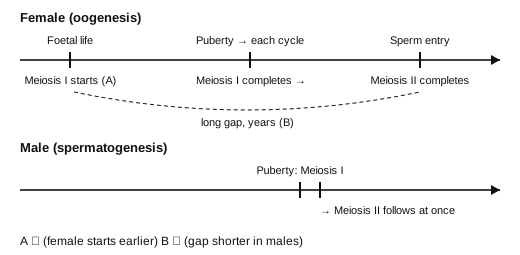
- A – true: meiosis I in females starts during foetal life, long before male meiosis begins at puberty.
- B – true: in males secondary spermatocytes undergo meiosis II at once; in females meiosis I is completed only at puberty/each cycle and meiosis II only after sperm entry → years of gap.
- C – false: the first polar body is formed when the primary oocyte completes meiosis I to form the secondary oocyte.
- D – false: the LH surge causes ovulation; menstruation follows the fall of progesterone after degeneration of the corpus luteum.
Short trick: Polar body 1 ↔ secondary oocyte; LH surge ↔ ovulation (not menses) – cut C and D → A, B.
Answer: (C) A and B are true
अवधारणा: अण्डजनन भ्रूणीय अण्डाशय में आरम्भ हो जाता है (प्राथमिक अण्डक अर्धसूत्री-I में प्रवेश कर प्रोफ़ेज़-I में रुक जाते हैं); शुक्रजनन केवल यौवनारम्भ पर शुरू होता है, और नरों में अर्धसूत्री-I के तुरंत बाद अर्धसूत्री-II होता है।
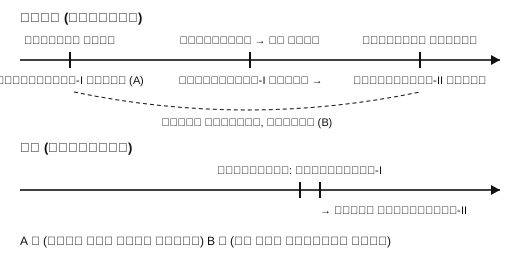
- A – सत्य: मादाओं में अर्धसूत्री-I भ्रूणीय जीवन में ही आरम्भ हो जाता है, नर में यौवनारम्भ पर होने वाले अर्धसूत्री विभाजन से बहुत पहले।
- B – सत्य: नरों में द्वितीयक शुक्राणुकोशिकाएँ तुरंत अर्धसूत्री-II करती हैं; मादाओं में अर्धसूत्री-I यौवनारम्भ/प्रत्येक चक्र में पूर्ण होता है और अर्धसूत्री-II केवल शुक्राणु प्रवेश के बाद → वर्षों का अन्तराल।
- C – असत्य: प्रथम ध्रुवीय काय तब बनती है जब प्राथमिक अण्डक अर्धसूत्री-I पूर्ण कर द्वितीयक अण्डक बनाता है।
- D – असत्य: LH उछाल अण्डोत्सर्ग कराता है; आर्तव स्राव पीत पिण्ड के अपह्रासन के बाद प्रोजेस्टेरॉन घटने से होता है।
शॉर्ट ट्रिक: ध्रुवीय काय 1 ↔ द्वितीयक अण्डक; LH उछाल ↔ अण्डोत्सर्ग (आर्तव नहीं) – C और D हटाएँ → A, B।
उत्तर: (C) A और B सत्य हैं
NEET UGBiologyHuman reproduction – gametogenesis and menstrual cycleNEET UG 2025 · 4 May Shift 1
Q134.In bryophytes, the gemmae help in which one of the following?
ब्रायोफ़ाइटों में, जेमा (gemmae) निम्नलिखित में से किसमें सहायता करते हैं?
- ANutrient absorptionपोषक तत्त्व अवशोषण
- BGaseous exchangeगैसीय विनिमय
- CSexual reproductionलैंगिक जनन
- DAsexual reproductionअलैंगिक जनन
Show answer
Concept: NCERT: Asexual reproduction in liverworts takes place by fragmentation of thalli or by specialised structures called gemmae – green, multicellular, asexual buds formed in gemma cups on the thallus.
- Gemmae detach from the parent and germinate into new individuals → asexual reproduction → (D).
- Absorption is by rhizoids; gas exchange through air pores/thallus surface – not gemmae.
- Sexual reproduction is by antheridia and archegonia, not gemmae.
Short trick: Gemma = “gem-bud” in a cup → new plant without gametes.
Answer: (D) Asexual reproduction
अवधारणा: NCERT: लिवरवर्ट में अलैंगिक जनन थैलस के विखण्डन से या जेमा नामक विशिष्ट संरचनाओं से होता है – ये हरी, बहुकोशिकीय, अलैंगिक कलिकाएँ हैं जो थैलस पर जेमा-कप में बनती हैं।
- जेमा जनक से अलग होकर अंकुरित होते हैं और नए पादप बनाते हैं → अलैंगिक जनन → (D)।
- अवशोषण मूलाभासों (rhizoids) द्वारा; गैसीय विनिमय वायु-छिद्रों/थैलस सतह से – जेमा द्वारा नहीं।
- लैंगिक जनन पुंधानी (antheridia) और स्त्रीधानी (archegonia) द्वारा होता है, जेमा द्वारा नहीं।
शॉर्ट ट्रिक: जेमा = कप में रखी “कलिका-रत्न” → युग्मकों के बिना नया पादप।
उत्तर: (D) अलैंगिक जनन
NEET UGBiologyPlant kingdom – bryophytes (liverworts)NEET UG 2025 · 4 May Shift 1
Q135.Given below are two statements: One is labelled as Assertion (A) and the other is labelled as Reason (R).
Assertion (A): The primary function of the Golgi apparatus is to package the materials made by the endoplasmic reticulum and deliver it to intracellular targets and outside the cell.
Reason (R): Vesicles containing materials made by the endoplasmic reticulum fuse with the cis face of the Golgi apparatus, and they are modified and released from the trans face of the Golgi apparatus.
In the light of the above statements, choose the correct answer from the options given below:
नीचे दो कथन दिए गए हैं: एक को अभिकथन (Assertion) (A) और दूसरे को कारण (Reason) (R) के रूप में चिह्नित किया गया है।
अभिकथन (A): गॉल्जी उपकरण का प्राथमिक कार्य अन्तःप्रद्रव्यी जालिका (ER) द्वारा बनाए गए पदार्थों का संवेष्टन कर उन्हें अन्तःकोशिकीय लक्ष्यों तक तथा कोशिका के बाहर पहुँचाना है।
कारण (R): अन्तःप्रद्रव्यी जालिका द्वारा बनाए गए पदार्थों वाले पुटिकाएँ गॉल्जी उपकरण के सिस (cis) फलक से संलयित होती हैं, और ये रूपान्तरित होकर गॉल्जी उपकरण के ट्रान्स (trans) फलक से मुक्त होती हैं।
उपर्युक्त कथनों के आलोक में, नीचे दिए गए विकल्पों में से सही उत्तर चुनिए:
- AA is true but R is falseA सही है परन्तु R गलत है
- BA is false but R is trueA गलत है परन्तु R सही है
- CBoth A and R are true and R is the correct explanation of AA और R दोनों सही हैं तथा R, A की सही व्याख्या है
- DBoth A and R are true but R is not the correct explanation of AA और R दोनों सही हैं परन्तु R, A की सही व्याख्या नहीं है
Show answer
Concept: NCERT: “The Golgi apparatus principally performs the function of packaging materials, to be delivered either to the intra-cellular targets or secreted outside the cell. Materials to be packaged in the form of vesicles from the ER fuse with the cis face of the Golgi apparatus and move towards the maturing (trans) face.”
- A is true – packaging and dispatch of ER products is the principal role of the Golgi.
- R is true – ER vesicles enter at the cis (forming) face, are modified (e.g. glycosylation) and leave from the trans (maturing) face.
- R explains A: it describes exactly how the Golgi receives ER products, processes and packages them and sends them out – which is the function stated in A.
Short trick: cis = “come in” (from ER), trans = “transport out”; the route explains the job → (C).
Answer: (C) Both A and R are true and R is the correct explanation of A
अवधारणा: NCERT: “गॉल्जी उपकरण मुख्यतः पदार्थों के संवेष्टन का कार्य करता है, जिन्हें या तो अन्तःकोशिकीय लक्ष्यों तक पहुँचाया जाता है या कोशिका के बाहर स्रावित किया जाता है। ER से पुटिकाओं के रूप में आने वाले पदार्थ गॉल्जी उपकरण के सिस फलक से संलयित होकर परिपक्व (ट्रान्स) फलक की ओर बढ़ते हैं।”
- A सही है – ER उत्पादों का संवेष्टन व प्रेषण गॉल्जी का प्रमुख कार्य है।
- R सही है – ER पुटिकाएँ सिस (निर्माणकारी) फलक से प्रवेश करती हैं, रूपान्तरित होती हैं (जैसे ग्लाइकोसिलीकरण) और ट्रान्स (परिपक्व) फलक से निकलती हैं।
- R, A की व्याख्या करता है: यह ठीक बताता है कि गॉल्जी ER उत्पादों को कैसे ग्रहण करता है, प्रक्रमित व संवेष्टित करता है और बाहर भेजता है – जो A में बताया गया कार्य है।
शॉर्ट ट्रिक: सिस = “अन्दर आना” (ER से), ट्रान्स = “बाहर भेजना”; यह मार्ग ही कार्य की व्याख्या है → (C)।
उत्तर: (C) A और R दोनों सही हैं तथा R, A की सही व्याख्या है
NEET UGBiologyCell: the unit of life – Golgi apparatusNEET UG 2025 · 4 May Shift 1
Q136.Which one of the following statements refers to Reductionist Biology?
निम्नलिखित में से कौन-सा कथन अपचयनवादी जीवविज्ञान (Reductionist Biology) को संदर्भित करता है?
- AChemical approach to study and understand living organisms.सजीवों के अध्ययन एवं समझ के लिए रासायनिक उपागम।
- BBehavioural approach to study and understand living organisms.सजीवों के अध्ययन एवं समझ के लिए व्यवहारात्मक उपागम।
- CPhysico-chemical approach to study and understand living organisms.सजीवों के अध्ययन एवं समझ के लिए भौतिक-रासायनिक उपागम।
- DPhysiological approach to study and understand living organisms.सजीवों के अध्ययन एवं समझ के लिए कार्यिकीय उपागम।
Show answer
Concept: Reductionist biology explains life by breaking organisms down to molecules and studying them with the concepts and techniques of physics and chemistry.
- NCERT (Biomolecules/Introduction): the reductionist approach led to increasing use of physico-chemical concepts and techniques (cell-free systems, molecular biology).
- A purely "chemical" approach is only half the idea – physics (thermodynamics, spectroscopy etc.) is also used.
- Behavioural and physiological approaches study whole organisms/organ function – they are not reductionist.
Short trick: Reductionist = "reduce life to physics + chemistry" → physico-chemical.
Answer: (C) Physico-chemical approach
अवधारणा: अपचयनवादी जीवविज्ञान सजीवों को अणुओं तक तोड़कर भौतिकी एवं रसायन की अवधारणाओं और तकनीकों से जीवन की व्याख्या करता है।
- NCERT: अपचयनवादी उपागम के कारण भौतिक-रासायनिक अवधारणाओं और तकनीकों (कोशिका-मुक्त तंत्र, आण्विक जीवविज्ञान) का उपयोग बढ़ा।
- केवल "रासायनिक" उपागम आधा विचार है – भौतिकी (ऊष्मागतिकी, स्पेक्ट्रोस्कोपी आदि) का भी प्रयोग होता है।
- व्यवहारात्मक और कार्यिकीय उपागम पूरे जीव/अंग के कार्य का अध्ययन करते हैं – ये अपचयनवादी नहीं हैं।
शॉर्ट ट्रिक: Reductionist = "जीवन को भौतिकी + रसायन तक घटाना" → भौतिक-रासायनिक।
उत्तर: (C) भौतिक-रासायनिक उपागम
NEET UGBiologyThe living world – reductionist biologyNEET UG 2025 · 4 May Shift 1
Q137.After maturation, in primary lymphoid organs, the lymphocytes migrate for interaction with antigens to secondary lymphoid organ(s)/tissue(s) like:
A. thymus
B. bone marrow
C. spleen
D. lymph nodes
E. Peyer’s patches
Choose the correct answer from the options given below:
प्राथमिक लसीकाभ अंगों में परिपक्व होने के बाद लसीकाणु (lymphocytes) प्रतिजनों से पारस्परिक क्रिया हेतु द्वितीयक लसीकाभ अंग(अंगों)/ऊतक(ऊतकों) में प्रवास करते हैं, जैसे :
A. थाइमस
B. अस्थि मज्जा
C. प्लीहा
D. लसीका ग्रंथियाँ
E. पेयर पैच
नीचे दिए गए विकल्पों में से सही उत्तर चुनिए :
- AE, A, B onlyकेवल E, A, B
- BC, D, E onlyकेवल C, D, E
- CB, C, D onlyकेवल B, C, D
- DA, B, C onlyकेवल A, B, C
Show answer
Concept: Primary lymphoid organs (bone marrow, thymus) produce/mature lymphocytes; secondary lymphoid organs are where mature lymphocytes meet antigens.
- Primary: bone marrow (B and all lymphocytes formed) and thymus (T-cells mature) → A and B are excluded.
- Secondary: spleen, lymph nodes, tonsils, Peyer’s patches of small intestine, appendix (MALT) → C, D, E.
- Every option containing A or B is wrong, leaving (B).
Short trick: "BT = Born & Trained" (Bone marrow, Thymus = primary); everything else where antigens are trapped is secondary.
Answer: (B) C, D, E only
अवधारणा: प्राथमिक लसीकाभ अंग (अस्थि मज्जा, थाइमस) लसीकाणु बनाते/परिपक्व करते हैं; द्वितीयक लसीकाभ अंगों में परिपक्व लसीकाणु प्रतिजनों से मिलते हैं।
- प्राथमिक: अस्थि मज्जा (सभी लसीकाणु बनते हैं) और थाइमस (T-कोशिकाएँ परिपक्व होती हैं) → A और B बाहर।
- द्वितीयक: प्लीहा, लसीका ग्रंथियाँ, टॉन्सिल, छोटी आंत के पेयर पैच, परिशेषिका (MALT) → C, D, E।
- A या B वाला हर विकल्प गलत है, अतः (B) बचता है।
शॉर्ट ट्रिक: "BT = Born & Trained" (अस्थि मज्जा, थाइमस = प्राथमिक); जहाँ प्रतिजन फँसते हैं वे सब द्वितीयक।
उत्तर: (B) केवल C, D, E
NEET UGBiologyImmunity – lymphoid organsNEET UG 2025 · 4 May Shift 1
Q138.Match
List I with
List II :
| List I | List II |
|---|
| A. The Evil Quartet | I. Cryopreservation |
| B. Ex situ conservation | II. Alien species invasion |
| C. Lantana camara | III. Causes of biodiversity losses |
| D. Dodo | IV. Extinction |
Choose the option will all correct matches.
सूची I का
सूची II से मिलान कीजिए :
| सूची I | सूची II |
|---|
| A. द ईविल क्वार्टेट (Evil Quartet) | I. निम्नताप परिरक्षण (Cryopreservation) |
| B. बाह्य स्थाने (Ex situ) संरक्षण | II. विदेशी जाति आक्रमण |
| C. Lantana camara | III. जैव विविधता क्षति के कारण |
| D. डोडो | IV. विलुप्ति |
सभी सही मिलान वाला विकल्प चुनिए।
- AA-III, B-IV, C-II, D-I
- BA-III, B-II, C-IV, D-I
- CA-III, B-II, C-I, D-IV
- DA-III, B-I, C-II, D-IV
Show answer
Concept: NCERT Biodiversity: "Evil Quartet" = four major causes of biodiversity loss; ex situ conservation includes cryopreservation of gametes; Lantana is an invasive alien weed; Dodo is a recent extinction (Mauritius).
- A – Evil Quartet (habitat loss, over-exploitation, alien invasion, co-extinction) → III.
- B – Ex situ: seed banks, zoos, cryopreservation at −196 °C → I.
- C – Lantana camara → II (alien species invasion).
- D – Dodo → IV (extinction). All A-III options: only (D) has B-I, C-II, D-IV.
Short trick: All options start with A-III, so just fix B: "ex situ = outside = freezer (cryo)" → B-I → only option (D).
Answer: (D) A-III, B-I, C-II, D-IV
अवधारणा: NCERT जैव विविधता: "ईविल क्वार्टेट" = जैव विविधता क्षति के चार प्रमुख कारण; बाह्य स्थाने संरक्षण में युग्मकों का निम्नताप परिरक्षण आता है; Lantana एक आक्रामक विदेशी खरपतवार है; डोडो हाल में विलुप्त (मॉरीशस) हुआ।
- A – ईविल क्वार्टेट (आवास क्षति, अतिदोहन, विदेशी आक्रमण, सह-विलुप्ति) → III।
- B – बाह्य स्थाने: बीज बैंक, चिड़ियाघर, −196 °C पर निम्नताप परिरक्षण → I।
- C – Lantana camara → II (विदेशी जाति आक्रमण)।
- D – डोडो → IV (विलुप्ति)। सभी विकल्पों में A-III है; केवल (D) में B-I, C-II, D-IV है।
शॉर्ट ट्रिक: सभी विकल्प A-III से शुरू होते हैं, केवल B तय करें: "ex situ = बाहर = फ्रीज़र (cryo)" → B-I → केवल विकल्प (D)।
उत्तर: (D) A-III, B-I, C-II, D-IV
NEET UGBiologyBiodiversity and conservationNEET UG 2025 · 4 May Shift 1
Q139.How many meiotic and mitotic divisions need to occur for the development of a mature female gametophyte from the megaspore mother cell in an angiosperm plant?
किसी आवृतबीजी पादप में गुरुबीजाणु मातृ कोशिका से परिपक्व मादा युग्मकोद्भिद् के विकास हेतु कितने अर्धसूत्री और समसूत्री विभाजन होने आवश्यक हैं?
- A1 Meiosis and 3 Mitosis1 अर्धसूत्री और 3 समसूत्री
- BNo Meiosis and 2 Mitosisकोई अर्धसूत्री नहीं और 2 समसूत्री
- C2 Meiosis and 3 Mitosis2 अर्धसूत्री और 3 समसूत्री
- D1 Meiosis and 2 Mitosis1 अर्धसूत्री और 2 समसूत्री
Show answer
Concept: Monosporic (Polygonum type) development: MMC → meiosis → 4 megaspores, 1 functional → 3 free-nuclear mitoses → 8-nucleate, 7-celled embryo sac.
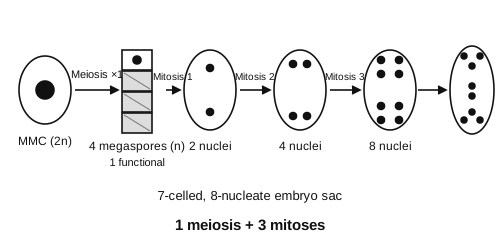
- MMC (2n) undergoes one meiosis (meiosis I + II together count as one meiotic division) → linear tetrad of 4 haploid megaspores.
- Three megaspores degenerate; the functional megaspore nucleus divides mitotically: 1 → 2 → 4 → 8 nuclei = 3 mitoses.
- 23 = 8 nuclei → 3 cells at micropylar end (egg apparatus), 3 antipodals, 2 polar nuclei in the central cell.
Short trick: 8 nuclei = 23 → 3 mitoses; haploid megaspore needs 1 meiosis.
Answer: (A) 1 Meiosis and 3 Mitosis
अवधारणा: एकबीजाणुज (Polygonum प्रकार) विकास: MMC → अर्धसूत्री → 4 गुरुबीजाणु, 1 क्रियाशील → 3 मुक्त-केन्द्रकी समसूत्री विभाजन → 8-केन्द्रकी, 7-कोशिकीय भ्रूणकोष।
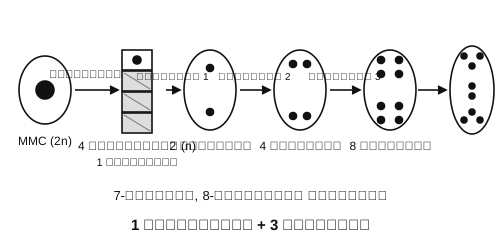
- MMC (2n) में एक अर्धसूत्री विभाजन (अर्धसूत्री I + II मिलकर एक गिने जाते हैं) → 4 अगुणित गुरुबीजाणुओं का रेखीय चतुष्क।
- तीन गुरुबीजाणु नष्ट हो जाते हैं; क्रियाशील गुरुबीजाणु का केन्द्रक समसूत्री विभाजन करता है: 1 → 2 → 4 → 8 केन्द्रक = 3 समसूत्री।
- 23 = 8 केन्द्रक → बीजाण्डद्वारी सिरे पर 3 कोशिकाएँ (अंड उपकरण), 3 प्रतिमुखी कोशिकाएँ, केन्द्रीय कोशिका में 2 ध्रुवीय केन्द्रक।
शॉर्ट ट्रिक: 8 केन्द्रक = 23 → 3 समसूत्री; अगुणित गुरुबीजाणु हेतु 1 अर्धसूत्री।
उत्तर: (A) 1 अर्धसूत्री और 3 समसूत्री
NEET UGBiologySexual reproduction in flowering plants – megasporogenesisNEET UG 2025 · 4 May Shift 1
Q140.Which of the following type of immunity is present at the time of birth and is a non-specific type of defence in the human body?
निम्नलिखित में से किस प्रकार की प्रतिरक्षा मानव शरीर में जन्म के समय से उपस्थित होती है तथा एक अविशिष्ट प्रकार की रक्षा है?
- ACell-mediated Immunityकोशिका-माध्यित प्रतिरक्षा
- BHumoral Immunityतरल (ह्यूमोरल) प्रतिरक्षा
- CAcquired Immunityउपार्जित प्रतिरक्षा
- DInnate Immunityसहज (Innate) प्रतिरक्षा
Show answer
Concept: Innate immunity is non-specific and present from birth; acquired immunity is pathogen-specific, develops after exposure and has memory.
- Innate barriers: physical (skin, mucus), physiological (HCl, saliva, tears), cellular (neutrophils, monocytes, NK cells, macrophages), cytokine (interferons).
- Cell-mediated (T-cells) and humoral (antibodies, B-cells) are the two arms of acquired immunity – specific, so (A), (B), (C) are wrong.
Short trick: "Innate = inborn": present at birth and non-specific.
Answer: (D) Innate Immunity
अवधारणा: सहज प्रतिरक्षा अविशिष्ट होती है और जन्म से उपस्थित रहती है; उपार्जित प्रतिरक्षा रोगजनक-विशिष्ट होती है, संपर्क के बाद विकसित होती है और उसमें स्मृति होती है।
- सहज रोध: भौतिक (त्वचा, श्लेष्मा), कार्यिकीय (HCl, लार, आँसू), कोशिकीय (न्यूट्रोफिल, मोनोसाइट, NK कोशिकाएँ, महाभक्षकाणु), साइटोकाइन (इंटरफेरॉन)।
- कोशिका-माध्यित (T-कोशिकाएँ) और तरल (प्रतिरक्षी, B-कोशिकाएँ) उपार्जित प्रतिरक्षा की दो शाखाएँ हैं – ये विशिष्ट हैं, अतः (A), (B), (C) गलत।
शॉर्ट ट्रिक: "Innate = जन्मजात": जन्म से उपस्थित और अविशिष्ट।
उत्तर: (D) सहज प्रतिरक्षा
NEET UGBiologyImmunity – innate immunityNEET UG 2025 · 4 May Shift 1

