NEET UG · 2,240 questions

NEET UG 2015, 2016, 2017, 2018, 2019, 2020, 2021, 2022, 2023, 2024, 2025, 2026 PYQs

Real previous year questions, subject-wise. Try the question, then open the answer and the explanation in Hindi & English – free, no login.

Courses – airGurukul

200 questions in Botany.

Q121.
Read the following statements about the vascular bundles
(a) In roots, xylem and phloem in a vascular bundle are arranged in an alternate manner along the different radii.
(b) Conjoint closed vascular bundles do not possess cambium
(c) In open vascular bundles, cambium is present in between xylem and phloem
(d) The vascular bundles of dicotyledonous stem possess endarch protoxylem
(e) In monocotyledonous root, usually there are more than six xylem bundles present
Choose the correct answer from the options given below:
संवहन पूलों के बारे में निम्नलिखित कथनों को पढ़िए
(a) मूलों में संवहन पूल के दारु तथा फ्लोएम विभिन्न त्रिज्याओं पर एकांतर क्रम में व्यवस्थित होते हैं।
(b) संयुक्त बंद संवहन पूलों में एधा (cambium) नहीं होती
(c) खुले संवहन पूलों में दारु तथा फ्लोएम के बीच एधा उपस्थित होती है
(d) द्विबीजपत्री तने के संवहन पूलों में अंतःआदिदारुक (endarch) आदिदारु होता है
(e) एकबीजपत्री मूल में सामान्यतः छह से अधिक दारु पूल होते हैं
नीचे दिए गए विकल्पों में से सही उत्तर चुनिए:
  1. A(a), (b) and (d) onlyकेवल (a), (b) और (d)
  2. B(b), (c), (d) and (e) onlyकेवल (b), (c), (d) और (e)
  3. C(a), (b), (c) and (d) onlyकेवल (a), (b), (c) और (d)
  4. D(a), (c), (d) and (e) onlyकेवल (a), (c), (d) और (e)
Show answer

Concept: NCERT (Anatomy of Flowering Plants) – radial vs conjoint vascular bundles. In a radial arrangement (roots) xylem and phloem form separate bundles lying on alternate radii; they are never together in one vascular bundle.

  1. (a) Incorrect – it says xylem and phloem lie in a vascular bundle on alternate radii. In roots they are separate xylem bundles and phloem bundles alternating on different radii (radial arrangement); a single bundle containing both is a conjoint bundle (stems, leaves).
  2. (b) Correct – conjoint closed bundles (monocot stem) have no cambium.
  3. (c) Correct – open bundles (dicot stem) have cambium between xylem and phloem.
  4. (d) Correct – dicot stem bundles are conjoint, collateral, open with endarch protoxylem (protoxylem towards the pith).
  5. (e) Correct – monocot root usually has more than six xylem bundles (polyarch).
  6. Correct set = (b), (c), (d), (e) → option (B). (A), (C) and (D) all contain the wrong statement (a); (A) and (C) also leave out true statements.

Short trick: Root = radial = xylem and phloem in separate bundles; Stem/leaf = conjoint = both in one bundle. Any statement putting both ‘in a bundle’ in the root is a trap.

Answer: (B) (b), (c), (d) and (e) only

अवधारणा: NCERT (पुष्पी पादपों का शारीर) – अरीय तथा संयुक्त संवहन पूल। अरीय व्यवस्था (मूल) में दारु तथा फ्लोएम अलग-अलग पूल बनाते हैं जो एकांतर त्रिज्याओं पर स्थित होते हैं; वे कभी एक ही संवहन पूल में साथ नहीं होते।

  1. (a) गलत – कथन कहता है कि दारु तथा फ्लोएम एक संवहन पूल में एकांतर त्रिज्याओं पर होते हैं। मूल में ये अलग-अलग दारु पूल तथा फ्लोएम पूल हैं जो भिन्न त्रिज्याओं पर एकांतर क्रम में होते हैं (अरीय व्यवस्था); दोनों को एक साथ रखने वाला पूल संयुक्त पूल होता है (तना, पत्ती)।
  2. (b) सही – संयुक्त बंद पूलों (एकबीजपत्री तना) में एधा नहीं होती।
  3. (c) सही – खुले पूलों (द्विबीजपत्री तना) में दारु और फ्लोएम के बीच एधा होती है।
  4. (d) सही – द्विबीजपत्री तने के पूल संयुक्त, संपार्श्विक, खुले तथा अंतःआदिदारुक (आदिदारु मज्जा की ओर) होते हैं।
  5. (e) सही – एकबीजपत्री मूल में सामान्यतः छह से अधिक दारु पूल होते हैं (बहुआदिदारुक)।
  6. सही समुच्चय = (b), (c), (d), (e) → विकल्प (B)। (A), (C) तथा (D) सभी में गलत कथन (a) है; (A) तथा (C) कुछ सही कथन छोड़ भी देते हैं।

शॉर्ट ट्रिक: मूल = अरीय = दारु और फ्लोएम अलग पूलों में; तना/पत्ती = संयुक्त = दोनों एक पूल में। मूल में दोनों को ‘एक पूल में’ बताने वाला कथन जाल है।

उत्तर: (B) केवल (b), (c), (d) और (e)
NEET UGBotanyAnatomy – vascular bundlesNEET UG 2022 · 17 Jul Shift 1
Q122.
Which one of the following never occurs during mitotic cell division?
निम्नलिखित में से कौन-सी घटना समसूत्री कोशिका विभाजन के दौरान कभी नहीं होती है?
  1. ASpindle fibres attach to kinetochores of chromosomesतर्कु तंतु गुणसूत्रों के काइनेटोकोर से जुड़ते हैं
  2. BMovement of centrioles towards opposite polesतारककेंद्रों (centrioles) की विपरीत ध्रुवों की ओर गति
  3. CPairing of homologous chromosomesसमजात गुणसूत्रों का युग्मन
  4. DCoiling and condensation of the chromatidsअर्धगुणसूत्रों का कुंडलन तथा संघनन
Show answer

Concept: Pairing (synapsis) of homologous chromosomes is unique to zygotene of meiosis I.

  1. (A) Occurs in metaphase of mitosis – spindle fibres attach to kinetochores.
  2. (B) Occurs in prophase – centrioles (centrosomes) move to opposite poles in animal cells.
  3. (D) Occurs in prophase – chromatin condenses into chromosomes.
  4. (C) Synapsis/bivalent formation never happens in mitosis; homologues behave independently.

Short trick: Pairing, crossing over, chiasmata, bivalents = Meiosis-only words.

Answer: (C) Pairing of homologous chromosomes

अवधारणा: समजात गुणसूत्रों का युग्मन (सूत्रयुग्मन/synapsis) केवल अर्धसूत्रण I की युग्मपट्ट (zygotene) अवस्था में होता है।

  1. (A) समसूत्रण की मध्यावस्था में होता है – तर्कु तंतु काइनेटोकोर से जुड़ते हैं।
  2. (B) पूर्वावस्था में होता है – जंतु कोशिकाओं में तारककेंद्र विपरीत ध्रुवों की ओर जाते हैं।
  3. (D) पूर्वावस्था में होता है – क्रोमैटिन संघनित होकर गुणसूत्र बनाता है।
  4. (C) सूत्रयुग्मन/द्विसंयोजक निर्माण समसूत्रण में कभी नहीं होता; समजात स्वतंत्र रूप से व्यवहार करते हैं।

शॉर्ट ट्रिक: युग्मन, जीन विनिमय, काइऐज़्मा, द्विसंयोजक = केवल अर्धसूत्रण के शब्द।

उत्तर: (C) समजात गुणसूत्रों का युग्मन

NEET UGBotanyCell cycle – mitosis vs meiosisNEET UG 2022 · 17 Jul Shift 1
Q123.
Production of Cucumber has increased manifold in recent years. Application of which of the following phytohormones has resulted in this increased yield as the hormone is known to produce female flowers in the plants?
हाल के वर्षों में खीरे का उत्पादन कई गुना बढ़ गया है। निम्नलिखित में से किस पादप हॉर्मोन के प्रयोग से यह उपज बढ़ी है, क्योंकि यह हॉर्मोन पौधों में मादा पुष्प उत्पन्न करने के लिए जाना जाता है?
  1. AABAABA (ऐब्सिसिक अम्ल)
  2. BGibberellinजिबरेलिन
  3. CEthyleneएथिलीन
  4. DCytokininसाइटोकाइनिन
Show answer

Concept: NCERT: ethylene “promotes femaleness in cucumbers thereby increasing the yield.”

  1. Ethylene (gaseous PGR) shifts sex expression towards more female flowers → more fruits.
  2. ABA is a growth inhibitor (dormancy, stomatal closure).
  3. Gibberellins tend to promote maleness in cucurbits and are used for elongation/bolting.
  4. Cytokinins promote cell division and delay senescence.

Short trick: Cucumber + Pineapple flowering → Ethylene (Ethephon).

Answer: (C) Ethylene

अवधारणा: NCERT: एथिलीन “खीरे में स्त्रीत्व को बढ़ाता है, जिससे उपज बढ़ती है।”

  1. एथिलीन (गैसीय PGR) लिंग अभिव्यक्ति को अधिक मादा पुष्पों की ओर ले जाता है → अधिक फल।
  2. ABA वृद्धि अवरोधक है (प्रसुप्ति, रंध्र बंद होना)।
  3. जिबरेलिन कुकरबिट में नरत्व को बढ़ाते हैं तथा दीर्घीकरण/बोल्टिंग में प्रयुक्त होते हैं।
  4. साइटोकाइनिन कोशिका विभाजन बढ़ाते हैं तथा जीर्णता को टालते हैं।

शॉर्ट ट्रिक: खीरा + अनन्नास पुष्पन → एथिलीन (एथेफॉन)।

उत्तर: (C) एथिलीन

NEET UGBotanyPlant growth regulators – ethylene and femalenessNEET UG 2022 · 17 Jul Shift 1
Q124.
The flowers are Zygomorphic in:
(a) Mustard
(b) Gulmohar
(c) Cassia
(d) Datura
(e) Chilli
Choose the correct answer from the options given below:
पुष्प एकव्याससममित (Zygomorphic) होते हैं:
(a) सरसों
(b) गुलमोहर
(c) Cassia (कैसिया)
(d) Datura (धतूरा)
(e) मिर्च
नीचे दिए गए विकल्पों में से सही उत्तर चुनिए:
  1. A(a), (b), (c) onlyकेवल (a), (b), (c)
  2. B(b), (c) onlyकेवल (b), (c)
  3. C(d), (e) onlyकेवल (d), (e)
  4. D(c), (d), (e) onlyकेवल (c), (d), (e)
Show answer

Concept: Zygomorphic = can be divided into two similar halves in only one vertical plane. NCERT examples: pea, gulmohur, bean, Cassia.

  1. Gulmohar and Cassia – zygomorphic ✔.
  2. Mustard, Datura and chilli – actinomorphic (radial; any vertical plane through the centre gives two equal halves) ✘.
  3. So only (b) and (c).

Short trick: NCERT line “pea, gulmohur, bean, Cassia” = zygomorphic; “mustard, datura, chilli” = actinomorphic.

Answer: (B) (b), (c) only

अवधारणा: एकव्याससममित = केवल एक ऊर्ध्व तल से ही दो समान भागों में बँट सकता है। NCERT उदाहरण: मटर, गुलमोहर, सेम, Cassia।

  1. गुलमोहर तथा Cassia – एकव्याससममित ✔।
  2. सरसों, Datura तथा मिर्च – त्रिज्यसममित (केंद्र से जाने वाला कोई भी ऊर्ध्व तल दो समान भाग देता है) ✘।
  3. अतः केवल (b) और (c)।

शॉर्ट ट्रिक: NCERT पंक्ति “मटर, गुलमोहर, सेम, कैसिया” = एकव्याससममित; “सरसों, धतूरा, मिर्च” = त्रिज्यसममित।

उत्तर: (B) केवल (b), (c)

NEET UGBotanyMorphology – floral symmetryNEET UG 2022 · 17 Jul Shift 1
Q125.
Identify the correct set of statements:
(a) The leaflets are modified into pointed hard thorns in Citrus and Bougainvillea
(b) Axillary buds form slender and spirally coiled tendrils in cucumber and pumpkin
(c) Stem is flattened and fleshy on Opuntia and modified to perform the function of leaves
(d) Rhizophora shows vertically upward growing roots that help to get oxygen for respiration
(e) Subaerially growing stems in grasses and strawberry help in vegetative propagation
Choose the correct answer from the options given below:
कथनों के सही समुच्चय को पहचानिए:
(a) Citrus तथा Bougainvillea में पत्रक नुकीले कठोर कंटकों में रूपांतरित होते हैं
(b) खीरे और कद्दू में कक्षस्थ कलिकाएँ पतले तथा सर्पिल कुंडलित प्रतान बनाती हैं
(c) Opuntia में तना चपटा व मांसल होता है तथा पत्ती का कार्य करने के लिए रूपांतरित होता है
(d) Rhizophora में ऊर्ध्वाधर ऊपर की ओर बढ़ने वाली मूलें होती हैं जो श्वसन हेतु ऑक्सीजन प्राप्त करने में सहायता करती हैं
(e) घासों तथा स्ट्रॉबेरी में उपवायवीय रूप से बढ़ने वाले तने कायिक प्रवर्धन में सहायता करते हैं
नीचे दिए गए विकल्पों में से सही उत्तर चुनिए:
  1. A(b) and (c) onlyकेवल (b) और (c)
  2. B(a) and (d) onlyकेवल (a) और (d)
  3. C(b), (c), (d) and (e) onlyकेवल (b), (c), (d) और (e)
  4. D(a), (b), (d) and (e) onlyकेवल (a), (b), (d) और (e)
Show answer

Concept: NCERT (Morphology): stem and root modifications.

  1. (a) False – thorns of Citrus and Bougainvillea are modified axillary buds (stem), not leaflets.
  2. (b) True – stem tendrils from axillary buds in cucumber, pumpkin, watermelon, grapevine.
  3. (c) True – Opuntia has a flattened fleshy green stem (phylloclade) that photosynthesises.
  4. (d) True – Rhizophora (mangrove) has pneumatophores growing vertically up for O2.
  5. (e) True – sub-aerial stems (runners/stolons) of grass and strawberry spread and propagate vegetatively.

Short trick: Eliminate (a) (thorn = stem) → only option without (a) and with b, c, d, e is (C).

Answer: (C) (b), (c), (d) and (e) only

अवधारणा: NCERT (आकारिकी): तने तथा मूल के रूपांतरण।

  1. (a) असत्य – Citrus व Bougainvillea के कंटक रूपांतरित कक्षस्थ कलिकाएँ (तना) हैं, पत्रक नहीं।
  2. (b) सत्य – खीरा, कद्दू, तरबूज़, अंगूर में कक्षस्थ कलिकाओं से तना प्रतान।
  3. (c) सत्य – Opuntia का चपटा मांसल हरा तना (पर्णाभ स्तंभ) प्रकाश-संश्लेषण करता है।
  4. (d) सत्य – Rhizophora (मैंग्रोव) में O2 हेतु ऊपर की ओर बढ़ने वाली श्वसन मूलें (न्यूमेटोफोर) होती हैं।
  5. (e) सत्य – घास व स्ट्रॉबेरी के उपवायवीय तने (उपरिभूस्तारी/भूस्तारी) फैलकर कायिक प्रवर्धन करते हैं।

शॉर्ट ट्रिक: (a) को हटाइए (कंटक = तना) → (a) रहित तथा b, c, d, e युक्त एकमात्र विकल्प (C)।

उत्तर: (C) केवल (b), (c), (d) और (e)

NEET UGBotanyMorphology – modifications of stem and rootNEET UG 2022 · 17 Jul Shift 1
Q126.
Which of the following is incorrectly matched?
निम्नलिखित में से कौन-सा गलत सुमेलित है?
  1. AEctocarpus - FucoxanthinEctocarpus - फ्यूकोज़ैन्थिन
  2. BUlothrix - MannitolUlothrix - मैनिटॉल
  3. CPorphyra - Floridian StarchPorphyra - फ्लोरिडियन मंड
  4. DVolvox - StarchVolvox - मंड
Show answer

Concept: NCERT table of algal classes: pigments and stored food.

  1. Ectocarpus – Phaeophyceae (brown): pigment fucoxanthin ✔.
  2. Porphyra – Rhodophyceae (red): stored food floridean starch ✔.
  3. Volvox – Chlorophyceae (green): stored food starch ✔.
  4. Ulothrix is a green alga storing starch; mannitol (and laminarin) is the reserve of brown algae → wrongly matched.

Short trick: Green = Starch, Brown = Laminarin/Mannitol, Red = Floridean starch.

Answer: (B) Ulothrix - Mannitol

अवधारणा: NCERT शैवाल वर्गों की तालिका: वर्णक तथा संचित भोजन।

  1. Ectocarpus – फियोफ़ाइसी (भूरा): वर्णक फ्यूकोज़ैन्थिन ✔।
  2. Porphyra – रोडोफ़ाइसी (लाल): संचित भोजन फ्लोरिडियन मंड ✔।
  3. Volvox – क्लोरोफ़ाइसी (हरा): संचित भोजन मंड ✔।
  4. Ulothrix हरा शैवाल है जो मंड संचित करता है; मैनिटॉल (तथा लैमिनेरिन) भूरे शैवालों का संचित भोजन है → गलत सुमेलित।

शॉर्ट ट्रिक: हरा = मंड, भूरा = लैमिनेरिन/मैनिटॉल, लाल = फ्लोरिडियन मंड।

उत्तर: (B) Ulothrix - मैनिटॉल

NEET UGBotanyPlant kingdom – algae and stored foodNEET UG 2022 · 17 Jul Shift 1
Q127.
Which one of the following produces nitrogen fixing nodules on the roots of Alnus?
निम्नलिखित में से कौन Alnus की मूलों पर नाइट्रोजन स्थिरीकारी ग्रंथिकाएँ उत्पन्न करता है?
  1. ARhizobium
  2. BFrankia
  3. CRhodospirillum
  4. DBeijerinckia
Show answer

Concept: NCERT: “Frankia also produces nitrogen-fixing nodules on the roots of non-leguminous plants (e.g., Alnus).”

  1. Frankia – symbiotic actinomycete, nodules on Alnus ✔.
  2. Rhizobium – symbiotic, but nodulates legumes (pea, gram, alfalfa).
  3. Rhodospirillum – free-living anaerobic N2-fixer.
  4. Beijerinckia – free-living aerobic N2-fixer (like Azotobacter).

Short trick: “Frankly, Alnus is not a legume” → Frankia.

Answer: (B) Frankia

अवधारणा: NCERT: “Frankia भी अशिम्बी पौधों (जैसे Alnus) की मूलों पर नाइट्रोजन स्थिरीकारी ग्रंथिकाएँ बनाता है।”

  1. Frankia – सहजीवी ऐक्टिनोमाइसीट, Alnus पर ग्रंथिकाएँ ✔।
  2. Rhizobium – सहजीवी, परंतु शिम्बी पौधों (मटर, चना, ऐल्फ़ा-ऐल्फ़ा) पर ग्रंथिकाएँ।
  3. Rhodospirillum – मुक्तजीवी अवायवीय N2 स्थिरीकारी।
  4. Beijerinckia – मुक्तजीवी वायवीय N2 स्थिरीकारी (Azotobacter जैसा)।

शॉर्ट ट्रिक: “Alnus शिम्बी नहीं” → Frankia।

उत्तर: (B) Frankia

NEET UGBotanyMineral nutrition – non-leguminous nodulesNEET UG 2022 · 17 Jul Shift 1
Q128.
Identify the incorrect statement related to Pollination:
परागण से संबंधित गलत कथन को पहचानिए:
  1. APollination by water is quite rare in flowering plantsपुष्पी पादपों में जल द्वारा परागण काफ़ी दुर्लभ है
  2. BPollination by wind is more common amongst abiotic pollinationअजैविक परागण में वायु द्वारा परागण अधिक सामान्य है
  3. CFlowers produce foul odours to attract flies and beetles to get pollinatedपरागित होने के लिए पुष्प मक्खियों और भृंगों को आकर्षित करने हेतु दुर्गंध उत्पन्न करते हैं
  4. DMoths and butterflies are the most dominant pollinating agents among insectsकीटों में शलभ (moths) तथा तितलियाँ सबसे प्रभावी परागण कारक हैं
Show answer

Concept: NCERT: “Among animals, insects, particularly bees, are the dominant biotic pollinating agents.”

  1. (A) True – hydrophily is limited to about 30 genera, mostly monocots (Vallisneria, Hydrilla, Zostera).
  2. (B) True – among abiotic agents, wind is far more common than water.
  3. (C) True – flowers pollinated by flies and beetles secrete foul odours.
  4. (D) False – bees, not moths and butterflies, are the dominant insect pollinators.

Short trick: Bees are the ‘Boss’ of pollination.

Answer: (D) Moths and butterflies are the most dominant pollinating agents among insects

अवधारणा: NCERT: “जंतुओं में कीट, विशेषकर मधुमक्खियाँ, प्रमुख जैविक परागण कारक हैं।”

  1. (A) सत्य – जल परागण लगभग 30 वंशों तक सीमित है, अधिकतर एकबीजपत्री (Vallisneria, Hydrilla, Zostera)।
  2. (B) सत्य – अजैविक कारकों में वायु, जल की तुलना में कहीं अधिक सामान्य है।
  3. (C) सत्य – मक्खियों व भृंगों द्वारा परागित पुष्प दुर्गंध छोड़ते हैं।
  4. (D) असत्य – शलभ और तितलियाँ नहीं, मधुमक्खियाँ प्रमुख कीट परागणकर्ता हैं।

शॉर्ट ट्रिक: मधुमक्खियाँ परागण की ‘बॉस’ हैं।

उत्तर: (D) कीटों में शलभ तथा तितलियाँ सबसे प्रभावी परागण कारक हैं

NEET UGBotanySexual reproduction in flowering plants – pollinationNEET UG 2022 · 17 Jul Shift 1
Q129.
Given below are two statements:
Statement I : Cleistogamous flowers are invariably autogamous
Statement II : Cleistogamy is disadvantageous as there is no chance for cross pollination
In the light of the above statements, choose the correct answer from the options given below:
नीचे दो कथन दिए गए हैं:
कथन I : अनुन्मील्य (cleistogamous) पुष्प सदैव स्वयुग्मनी (autogamous) होते हैं
कथन II : अनुन्मील्य परागणता हानिकारक है क्योंकि इसमें पर-परागण की कोई संभावना नहीं होती
उपर्युक्त कथनों के आलोक में, नीचे दिए गए विकल्पों में से सही उत्तर चुनिए:
  1. ABoth Statement I and Statement II are correctकथन I और कथन II दोनों सही हैं
  2. BBoth Statement I and Statement II are incorrectकथन I और कथन II दोनों गलत हैं
  3. CStatement I is correct but Statement II is incorrectकथन I सही है परंतु कथन II गलत है
  4. DStatement I is incorrect but Statement II is correctकथन I गलत है परंतु कथन II सही है
Show answer

Concept: Cleistogamous flowers never open (e.g., Viola, Oxalis, Commelina); anthers and stigma lie close together inside the closed flower, so only self-pollen reaches the stigma.

  1. Statement I – correct: NCERT – cleistogamous flowers are invariably autogamous as there is no chance of cross-pollen landing on the stigma.
  2. Statement II – correct: because cross-pollination is impossible, there is no new gene combination (no genetic variation) – this is the disadvantage of cleistogamy. (Its advantage is assured seed-set without pollinators, but that does not make Statement II false.)
  3. Both statements are correct → (A). (B), (C) and (D) each call at least one true statement incorrect.

Short trick: Cleistogamy = ‘closed marriage’: always selfed (I ✔) → assured seeds (plus) but no variation (minus, II ✔).

Answer: (A) Both Statement I and Statement II are correct

अवधारणा: अनुन्मील्य पुष्प कभी नहीं खुलते (जैसे Viola, Oxalis, Commelina); बंद पुष्प के भीतर परागकोश तथा वर्तिकाग्र पास-पास होते हैं, अतः वर्तिकाग्र तक केवल स्व-पराग ही पहुँचता है।

  1. कथन I – सही: NCERT – अनुन्मील्य पुष्प सदैव स्वयुग्मनी होते हैं क्योंकि वर्तिकाग्र पर पर-पराग के पहुँचने की कोई संभावना नहीं होती।
  2. कथन II – सही: पर-परागण असंभव होने के कारण नए जीन-संयोजन नहीं बनते (आनुवंशिक विभिन्नता नहीं) – यही अनुन्मील्यता की हानि है। (इसका लाभ परागणकर्ताओं के बिना भी निश्चित बीज-समुच्चय है, परंतु इससे कथन II गलत नहीं होता।)
  3. दोनों कथन सही हैं → (A)। (B), (C) तथा (D) प्रत्येक कम से कम एक सही कथन को गलत बताते हैं।

शॉर्ट ट्रिक: अनुन्मील्यता = ‘बंद विवाह’: सदैव स्व-परागण (I ✔) → निश्चित बीज (लाभ) परंतु विभिन्नता नहीं (हानि, II ✔)।

उत्तर: (A) कथन I और कथन II दोनों सही हैं

NEET UGBotanySexual reproduction in flowering plants – cleistogamyNEET UG 2022 · 17 Jul Shift 1
Q130.
Hydrocolloid carrageen is obtained from
जलकोलॉइड कैरागीन (carrageen) किससे प्राप्त होता है?
  1. AChlorophyceae and Phaeophyceaeक्लोरोफ़ाइसी तथा फियोफ़ाइसी
  2. BPhaeophyceae and Rhodophyceaeफियोफ़ाइसी तथा रोडोफ़ाइसी
  3. CRhodophyceae onlyकेवल रोडोफ़ाइसी
  4. DPhaeophyceae onlyकेवल फियोफ़ाइसी
Show answer

Concept: NCERT: “Certain marine brown and red algae produce large amounts of hydrocolloids (water-holding substances), e.g., algin (brown algae) and carrageen (red algae).”

  1. Algin → Phaeophyceae (brown).
  2. Carrageen → Rhodophyceae (red) only.
  3. Agar (Gelidium, Gracilaria) is also from red algae.
  4. Green algae (Chlorophyceae) are not sources of these hydrocolloids.

Short trick: “Red Carpet = Carrageen”; “Brown Algin”.

Answer: (C) Rhodophyceae only

अवधारणा: NCERT: “कुछ समुद्री भूरे तथा लाल शैवाल बड़ी मात्रा में जलकोलॉइड (जल धारण करने वाले पदार्थ) बनाते हैं, जैसे ऐल्जिन (भूरे शैवाल) तथा कैरागीन (लाल शैवाल)।”

  1. ऐल्जिन → फियोफ़ाइसी (भूरे)।
  2. कैरागीन → केवल रोडोफ़ाइसी (लाल)।
  3. ऐगार (Gelidium, Gracilaria) भी लाल शैवालों से।
  4. हरे शैवाल (क्लोरोफ़ाइसी) इन जलकोलॉइडों के स्रोत नहीं हैं।

शॉर्ट ट्रिक: “लाल कालीन (Red Carpet) = कैरागीन”; “भूरा ऐल्जिन”।

उत्तर: (C) केवल रोडोफ़ाइसी

NEET UGBotanyPlant kingdom – economic importance of algaeNEET UG 2022 · 17 Jul Shift 1
Q131.
What is the net gain of ATP when each molecule of glucose is converted to two molecules of pyruvic acid?
जब ग्लूकोज़ का प्रत्येक अणु पाइरुविक अम्ल के दो अणुओं में परिवर्तित होता है, तब ATP का शुद्ध लाभ कितना होता है?
  1. AFourचार
  2. BSixछह
  3. CTwoदो
  4. DEightआठ
Show answer

Concept: Glycolysis (EMP pathway) in cytoplasm: glucose → 2 pyruvate.

  1. ATP used: 2 (glucose → G-6-P and F-6-P → F-1,6-bisP).
  2. ATP formed by substrate-level phosphorylation: 2 (1,3-BPGA → 3-PGA) × 2 + 2 (PEP → pyruvate) = 4.
  3. Net direct gain = 4 − 2 = 2 ATP (plus 2 NADH, which are not counted as ATP here).

Short trick: Glycolysis: “spend 2, earn 4, keep 2”.

Answer: (C) Two

अवधारणा: ग्लाइकोलिसिस (EMP पथ) कोशिकाद्रव्य में: ग्लूकोज़ → 2 पाइरूवेट।

  1. उपयोग हुए ATP: 2 (ग्लूकोज़ → G-6-P तथा F-6-P → F-1,6-बिसP)।
  2. क्रियाधार-स्तरीय फ़ॉस्फ़ोरिलीकरण से बने ATP: 2 (1,3-BPGA → 3-PGA) + 2 (PEP → पाइरूवेट) = 4।
  3. शुद्ध प्रत्यक्ष लाभ = 4 − 2 = 2 ATP (साथ में 2 NADH, जिन्हें यहाँ ATP में नहीं गिना जाता)।

शॉर्ट ट्रिक: ग्लाइकोलिसिस: “2 खर्च, 4 कमाई, 2 बचत”।

उत्तर: (C) दो

NEET UGBotanyRespiration in plants – glycolysisNEET UG 2022 · 17 Jul Shift 1
Q132.
The appearance of recombination nodules on homologous chromosomes during meiosis characterizes:
अर्धसूत्रण के दौरान समजात गुणसूत्रों पर पुनर्योजन ग्रंथिकाओं (recombination nodules) का दिखना किसका लक्षण है?
  1. ASynaptonemal complexसिनैप्टोनीमल सम्मिश्र
  2. BBivalentद्विसंयोजक (Bivalent)
  3. CSites at which crossing over occursवे स्थल जहाँ जीन विनिमय (crossing over) होता है
  4. DTerminalizationउपांतीभवन (Terminalization)
Show answer

Concept: NCERT (pachytene): “This stage is characterised by the appearance of recombination nodules, the sites at which crossing over occurs between non-sister chromatids of the homologous chromosomes.”

  1. Synaptonemal complex forms earlier, in zygotene (it holds the paired homologues).
  2. Bivalent/tetrad is the paired homologue unit – also visible from zygotene.
  3. Terminalisation of chiasmata occurs in diakinesis.
  4. Recombination nodules = sites of crossing over (enzyme recombinase) → (C).

Short trick: Lepto-Zygo-PACHY-Diplo-Dia: PACHY = cross-over (nodules), DIPLO = chiasmata, DIA = terminalisation.

Answer: (C) Sites at which crossing over occurs

अवधारणा: NCERT (स्थूलपट्ट/pachytene): “इस अवस्था का लक्षण पुनर्योजन ग्रंथिकाओं का प्रकट होना है – ये वे स्थल हैं जहाँ समजात गुणसूत्रों के असहोदर अर्धगुणसूत्रों के बीच जीन विनिमय होता है।”

  1. सिनैप्टोनीमल सम्मिश्र पहले, युग्मपट्ट (zygotene) में बनता है (युग्मित समजातों को जोड़े रखता है)।
  2. द्विसंयोजक/चतुष्क युग्मित समजातों की इकाई है – यह भी युग्मपट्ट से दिखता है।
  3. काइऐज़्मा का उपांतीभवन पारगतिक्रम (diakinesis) में होता है।
  4. पुनर्योजन ग्रंथिकाएँ = जीन विनिमय के स्थल (एंज़ाइम रिकॉम्बिनेज़) → (C)।

शॉर्ट ट्रिक: लेप्टो-ज़ाइगो-पैकी-डिप्लो-डाया: पैकी = जीन विनिमय (ग्रंथिकाएँ), डिप्लो = काइऐज़्मा, डाया = उपांतीभवन।

उत्तर: (C) वे स्थल जहाँ जीन विनिमय होता है

NEET UGBotanyCell cycle – meiosis (pachytene)NEET UG 2022 · 17 Jul Shift 1
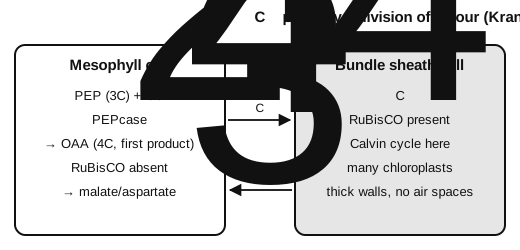
Q133.
Given below are two statements:
Statement I : The primary CO2 acceptor in C4 plants is phosphoenolpyruvate and is found in the mesophyll cells.
Statement II : Mesophyll cells of C4 plants lack RuBisCo enzyme.
In the light of the above statements, choose the correct answer from the options given below:
नीचे दो कथन दिए गए हैं:
कथन I : C4 पौधों में प्राथमिक CO2 ग्राही फ़ॉस्फ़ोइनॉलपाइरूवेट है तथा यह पर्णमध्योतक (mesophyll) कोशिकाओं में पाया जाता है।
कथन II : C4 पौधों की पर्णमध्योतक कोशिकाओं में RuBisCo एंज़ाइम का अभाव होता है।
उपर्युक्त कथनों के आलोक में, नीचे दिए गए विकल्पों में से सही उत्तर चुनिए:
  1. ABoth Statement I and Statement II are correctकथन I और कथन II दोनों सही हैं
  2. BBoth Statement I and Statement II are incorrectकथन I और कथन II दोनों गलत हैं
  3. CStatement I is correct but Statement II is incorrectकथन I सही है परंतु कथन II गलत है
  4. DStatement I is incorrect but Statement II is correctकथन I गलत है परंतु कथन II सही है
Show answer

Concept: C4 (Hatch–Slack) pathway shows division of labour between mesophyll and bundle-sheath cells (Kranz anatomy).

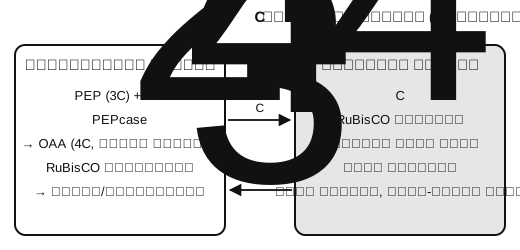
  1. Statement I – correct: PEP (3C) in mesophyll cells accepts CO2 via PEP carboxylase → OAA (4C).
  2. Statement II – correct: NCERT – “the mesophyll cells lack RuBisCO enzyme”; RuBisCO and the Calvin cycle are confined to bundle-sheath cells.

Short trick: C4: Mesophyll = PEPcase only; Bundle sheath = RuBisCO only.

Answer: (A) Both Statement I and Statement II are correct

अवधारणा: C4 (हैच–स्लैक) पथ में पर्णमध्योतक तथा पूलाच्छद कोशिकाओं के बीच कार्य विभाजन होता है (क्रान्ज़ शारीरिकी)।

  1. कथन I – सही: पर्णमध्योतक कोशिकाओं में PEP (3C), PEP कार्बोक्सिलेज़ द्वारा CO2 ग्रहण करता है → OAA (4C)।
  2. कथन II – सही: NCERT – “पर्णमध्योतक कोशिकाओं में RuBisCO एंज़ाइम का अभाव होता है”; RuBisCO तथा केल्विन चक्र केवल पूलाच्छद कोशिकाओं में होते हैं।

शॉर्ट ट्रिक: C4: पर्णमध्योतक = केवल PEPcase; पूलाच्छद = केवल RuBisCO।

उत्तर: (A) कथन I और कथन II दोनों सही हैं

NEET UGBotanyPhotosynthesis – C<sub>4</sub> pathwayNEET UG 2022 · 17 Jul Shift 1
Q134.
“Girdling Experiment” was performed by plant physiologists to identify the plant tissue through which:
पादप कार्यिकीविदों द्वारा “वलयन प्रयोग” (Girdling Experiment) उस पादप ऊतक की पहचान के लिए किया गया जिसके द्वारा:
  1. AWater is transportedजल का परिवहन होता है
  2. BFood is transportedभोजन का परिवहन होता है
  3. CFor both water and food transportationजल तथा भोजन दोनों का परिवहन होता है
  4. DOsmosis is observedपरासरण देखा जाता है
Show answer

Concept: Girdling = removing a ring of bark (which contains phloem) down to the cambium; xylem (wood) is left intact.

  1. Leaves still get water (xylem intact) and stay fresh for some time.
  2. Food from leaves cannot pass below the ring, so the bark above the ring swells with accumulated food and roots below eventually starve.
  3. This proves that phloem transports food; water transport is untouched, so (A), (C), (D) are wrong.

Short trick: Girdle = remove the bark = remove phloem → food stops; water goes on.

Answer: (B) Food is transported

अवधारणा: वलयन = छाल का एक वलय (जिसमें फ्लोएम होता है) एधा तक हटाना; दारु (काष्ठ) अक्षत रहता है।

  1. पत्तियों को अब भी जल मिलता है (दारु अक्षत) और वे कुछ समय तक ताज़ा रहती हैं।
  2. पत्तियों का भोजन वलय से नीचे नहीं जा पाता, अतः वलय के ऊपर की छाल संचित भोजन से फूल जाती है तथा नीचे की मूलें अंततः भूखी मर जाती हैं।
  3. इससे सिद्ध होता है कि फ्लोएम भोजन का परिवहन करता है; जल परिवहन अप्रभावित रहता है, अतः (A), (C), (D) गलत हैं।

शॉर्ट ट्रिक: वलयन = छाल हटाना = फ्लोएम हटाना → भोजन रुकता है; जल चलता रहता है।

उत्तर: (B) भोजन का परिवहन होता है

NEET UGBotanyTransport in plants – girdling experimentNEET UG 2022 · 17 Jul Shift 1
Q135.
XO type of sex determination can be found in
XO प्रकार का लिंग निर्धारण किसमें पाया जा सकता है?
  1. ADrosophilaDrosophila (ड्रोसोफ़िला)
  2. BBirdsपक्षी
  3. CGrasshoppersटिड्डा (Grasshoppers)
  4. DMonkeysबंदर
Show answer

Concept: XX–XO: females XX, males have only one X (XO). NCERT example: grasshopper (many insects).

  1. Drosophila and monkeys (mammals incl. humans) – XX–XY (male heterogamety).
  2. Birds – ZW–ZZ (female heterogamety).
  3. Grasshoppers – XX–XO ✔: half the sperms carry X, half carry no sex chromosome.

Short trick: Grass-hOpper → ‘O’ type.

Answer: (C) Grasshoppers

अवधारणा: XX–XO: मादा XX, नर में केवल एक X (XO)। NCERT उदाहरण: टिड्डा (अनेक कीट)।

  1. Drosophila तथा बंदर (मनुष्य सहित स्तनधारी) – XX–XY (नर विषमयुग्मकी)।
  2. पक्षी – ZW–ZZ (मादा विषमयुग्मकी)।
  3. टिड्डे – XX–XO ✔: आधे शुक्राणुओं में X, आधों में कोई लिंग गुणसूत्र नहीं।

शॉर्ट ट्रिक: ग्रासहॉपर (Grass-hOpper) → ‘O’ प्रकार।

उत्तर: (C) टिड्डा

NEET UGBotanyPrinciples of inheritance – sex determinationNEET UG 2022 · 17 Jul Shift 1
Q136.
Addition of more solutes in a given solution will:
किसी दिए गए विलयन में और अधिक विलेय मिलाने पर:
  1. ARaise its water potentialउसका जल विभव बढ़ जाएगा
  2. BLower its water potentialउसका जल विभव घट जाएगा
  3. CMake its water potential zeroउसका जल विभव शून्य हो जाएगा
  4. DNot affect the water potential at allजल विभव पर कोई प्रभाव नहीं पड़ेगा
Show answer

Concept: Ψw=Ψs+Ψp; pure water has Ψw=0 and solute potential Ψs is always negative.

  1. Adding solute lowers the free energy of water → Ψs becomes more negative.
  2. Hence Ψw is lowered (more negative); the more solute, the lower the water potential.
  3. It can never be raised or made zero by adding solute; zero is only for pure water at atmospheric pressure.

Short trick: More solute → more negative Ψ → water flows INTO it (from high Ψ to low Ψ).

Answer: (B) Lower its water potential

अवधारणा: Ψw=Ψs+Ψp; शुद्ध जल का Ψw=0 होता है तथा विलेय विभव Ψs सदैव ऋणात्मक होता है।

  1. विलेय मिलाने से जल की मुक्त ऊर्जा घटती है → Ψs और अधिक ऋणात्मक हो जाता है।
  2. अतः Ψw घट जाता है (अधिक ऋणात्मक); जितना अधिक विलेय, उतना कम जल विभव।
  3. विलेय मिलाकर इसे न बढ़ाया जा सकता है न शून्य किया जा सकता है; शून्य केवल वायुमंडलीय दाब पर शुद्ध जल का होता है।

शॉर्ट ट्रिक: अधिक विलेय → अधिक ऋणात्मक Ψ → जल उसकी ओर बहता है (उच्च Ψ से निम्न Ψ की ओर)।

उत्तर: (B) उसका जल विभव घट जाएगा

NEET UGBotanyTransport in plants – water potentialNEET UG 2022 · 17 Jul Shift 1
Q137.
If a geneticist uses the blind approach for sequencing the whole genome of an organism, followed by assignment of functions to different segment, the methodology adopted by him is called as:
यदि कोई आनुवंशिकीविद् किसी जीव के संपूर्ण जीनोम के अनुक्रमण के लिए अंध उपागम (blind approach) अपनाता है और उसके बाद विभिन्न खंडों को कार्य निर्धारित करता है, तो उसके द्वारा अपनाई गई विधि कहलाती है:
  1. ASequence annotationअनुक्रम टिप्पणीकरण (Sequence annotation)
  2. BGene mappingजीन मानचित्रण (Gene mapping)
  3. CExpressed sequence tagsव्यक्त अनुक्रम टैग (Expressed sequence tags)
  4. DBioinformaticsजैवसूचना विज्ञान (Bioinformatics)
Show answer

Concept: NCERT (HGP) – two approaches: (i) Expressed Sequence Tags (ESTs) – identify only the genes expressed as RNA; (ii) Sequence Annotation – blind sequencing of the whole genome (coding + non-coding), then assigning functions to different regions.

  1. The question describes ‘blind approach + later assigning function’ = sequence annotation ✔.
  2. ESTs start from expressed RNA, not the whole genome.
  3. Gene mapping places genes on chromosomes; bioinformatics is the computational field used for storing/analysing data – neither is the named methodology.

Short trick: EST = Expressed only; Annotation = All (blind) then label.

Answer: (A) Sequence annotation

अवधारणा: NCERT (मानव जीनोम परियोजना) – दो उपागम: (i) व्यक्त अनुक्रम टैग (EST) – केवल RNA के रूप में व्यक्त जीनों की पहचान; (ii) अनुक्रम टिप्पणीकरण – संपूर्ण जीनोम (कोडिंग + नॉन-कोडिंग) का अंध अनुक्रमण, फिर विभिन्न क्षेत्रों को कार्य निर्धारित करना।

  1. प्रश्न में ‘अंध उपागम + बाद में कार्य निर्धारण’ = अनुक्रम टिप्पणीकरण ✔।
  2. EST व्यक्त RNA से आरंभ होते हैं, संपूर्ण जीनोम से नहीं।
  3. जीन मानचित्रण जीनों को गुणसूत्रों पर स्थापित करता है; जैवसूचना विज्ञान आँकड़ों के संचय/विश्लेषण का संगणकीय क्षेत्र है – इनमें से कोई भी यह विधि नहीं है।

शॉर्ट ट्रिक: EST = केवल व्यक्त; टिप्पणीकरण = सब कुछ (अंध) फिर लेबल।

उत्तर: (A) अनुक्रम टिप्पणीकरण

NEET UGBotanyMolecular basis of inheritance – Human Genome ProjectNEET UG 2022 · 17 Jul Shift 1
Q138.
Which of the following occurs due to the presence of an autosome linked dominant trait?
निम्नलिखित में से कौन-सा एक अलिंगसूत्र-सहलग्न प्रभावी लक्षण (autosome linked dominant trait) की उपस्थिति के कारण होता है?
  1. ASickle cell anaemiaदात्र कोशिका अरक्तता (Sickle cell anaemia)
  2. BMyotonic dystrophyमायोटोनिक डिस्ट्रॉफ़ी
  3. CHaemophiliaहीमोफ़ीलिया
  4. DThalassemiaथैलेसीमिया
Show answer

Concept: NCERT pedigree examples: myotonic dystrophy = autosomal dominant trait.

  1. Sickle cell anaemia – autosomal recessive (HbSHbS).
  2. Thalassemia – autosomal recessive.
  3. Haemophilia – X-linked recessive.
  4. Myotonic dystrophy – autosomal dominant ✔ (affected in every generation, both sexes).

Short trick: Autosomal Dominant in NCERT = “MD” (Myotonic Dystrophy). Recessive autosomal = Sickle, Thalassemia, PKU.

Answer: (B) Myotonic dystrophy

अवधारणा: NCERT वंशावली उदाहरण: मायोटोनिक डिस्ट्रॉफ़ी = अलिंगसूत्री प्रभावी लक्षण।

  1. दात्र कोशिका अरक्तता – अलिंगसूत्री अप्रभावी (HbSHbS)।
  2. थैलेसीमिया – अलिंगसूत्री अप्रभावी।
  3. हीमोफ़ीलिया – X-सहलग्न अप्रभावी।
  4. मायोटोनिक डिस्ट्रॉफ़ी – अलिंगसूत्री प्रभावी ✔ (प्रत्येक पीढ़ी में, दोनों लिंगों में प्रभावित)।

शॉर्ट ट्रिक: NCERT में अलिंगसूत्री प्रभावी = “MD” (मायोटोनिक डिस्ट्रॉफ़ी)। अलिंगसूत्री अप्रभावी = दात्र कोशिका, थैलेसीमिया, PKU।

उत्तर: (B) मायोटोनिक डिस्ट्रॉफ़ी

NEET UGBotanyPrinciples of inheritance – Mendelian disordersNEET UG 2022 · 17 Jul Shift 1
Q139.
Given below are two statements : one is labelled as Assertion (A) and the other is labelled as Reason (R).
Assertion (A): Mendel’s law of Independent assortment does not hold goods for the genes that are located closely on the same chromosome.
Reason (R): Closely located genes assort independently.
Answer from the options given below:
नीचे दो कथन दिए गए हैं: एक को अभिकथन (A) तथा दूसरे को कारण (R) के रूप में चिह्नित किया गया है।
अभिकथन (A): मेंडल का स्वतंत्र अपव्यूहन का नियम उन जीनों पर लागू नहीं होता जो एक ही गुणसूत्र पर पास-पास स्थित हैं।
कारण (R): पास-पास स्थित जीन स्वतंत्र रूप से अपव्यूहित होते हैं।
नीचे दिए गए विकल्पों में से उत्तर दीजिए:
  1. ABoth (A) and (R) are correct and (R) is the correct explanation of (A)(A) और (R) दोनों सही हैं और (R), (A) की सही व्याख्या है
  2. BBoth (A) and (R) are correct but (R) is not the correct explanation of (A)(A) और (R) दोनों सही हैं परंतु (R), (A) की सही व्याख्या नहीं है
  3. C(A) is correct but (R) is not correct(A) सही है परंतु (R) सही नहीं है
  4. D(A) is not correct but (R) is correct(A) सही नहीं है परंतु (R) सही है
Show answer

Concept: Linkage (Morgan): genes close together on the same chromosome tend to be inherited together; recombination frequency rises with distance.

  1. (A) is correct – tightly linked genes do not assort independently, so Mendel’s second law fails for them.
  2. (R) is wrong – closely located genes are linked and do not assort independently (they show low recombination, e.g., white–yellow genes in Drosophila 1.3%).

Short trick: Closer genes = stronger linkage = less independent assortment.

Answer: (C) (A) is correct but (R) is not correct

अवधारणा: सहलग्नता (मॉर्गन): एक ही गुणसूत्र पर पास-पास स्थित जीन साथ-साथ वंशागत होते हैं; दूरी बढ़ने पर पुनर्योजन आवृत्ति बढ़ती है।

  1. (A) सही है – दृढ़ता से सहलग्न जीन स्वतंत्र अपव्यूहन नहीं करते, अतः मेंडल का दूसरा नियम उन पर लागू नहीं होता।
  2. (R) गलत है – पास-पास स्थित जीन सहलग्न होते हैं तथा स्वतंत्र रूप से अपव्यूहित नहीं होते (कम पुनर्योजन दिखाते हैं, जैसे Drosophila में white–yellow जीन 1.3%)।

शॉर्ट ट्रिक: जितने पास जीन = उतनी प्रबल सहलग्नता = उतना कम स्वतंत्र अपव्यूहन।

उत्तर: (C) (A) सही है परंतु (R) सही नहीं है

NEET UGBotanyPrinciples of inheritance – linkageNEET UG 2022 · 17 Jul Shift 1
Q140.
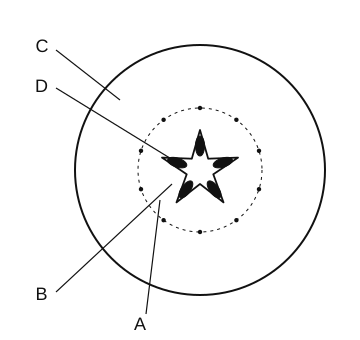
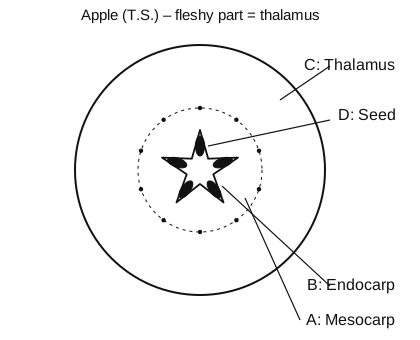
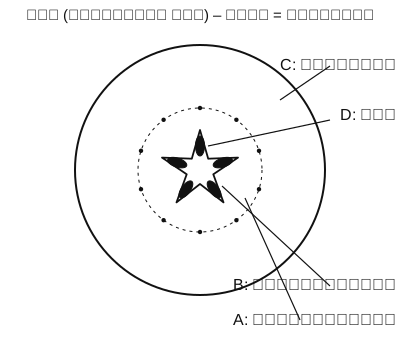
Which part of the fruit, labelled in the given figure makes it a false fruit?
दिए गए चित्र में नामांकित फल का कौन-सा भाग इसे कूटफल (false fruit) बनाता है?
  1. AA - MesocarpA - मध्यफलभित्ति (Mesocarp)
  2. BB - EndocarpB - अंतःफलभित्ति (Endocarp)
  3. CC - ThalamusC - पुष्पासन (Thalamus)
  4. DD - SeedD - बीज (Seed)
Show answer

Concept: A true fruit develops only from the ovary; in a false fruit (apple, strawberry, cashew) the thalamus also contributes.

  1. The figure is a T.S. of apple: the central star-shaped papery part is the endocarp (B) enclosing seeds (D); the thin zone just outside it is the mesocarp (A).
  2. The broad outer fleshy, edible part (C) is the thalamus – a non-ovarian part.
  3. Mesocarp, endocarp and seed are all derived from the ovary/ovule, so they are present in true fruits too; only the thalamus makes apple a false fruit.

Short trick: False fruit = ‘Thalamus-fruit’ – apple, strawberry, cashew (ASC).

Answer: (C) C - Thalamus

अवधारणा: सत्य फल केवल अंडाशय से बनता है; कूटफल (सेब, स्ट्रॉबेरी, काजू) में पुष्पासन भी योगदान देता है।

  1. चित्र सेब की अनुप्रस्थ काट है: केंद्र का तारे जैसा कागज़ी भाग अंतःफलभित्ति (B) है जिसमें बीज (D) बंद हैं; इसके ठीक बाहर का पतला क्षेत्र मध्यफलभित्ति (A) है।
  2. बाहरी चौड़ा मांसल, खाने योग्य भाग (C) पुष्पासन है – जो अंडाशय का भाग नहीं है।
  3. मध्यफलभित्ति, अंतःफलभित्ति तथा बीज – सभी अंडाशय/बीजांड से बनते हैं, अतः सत्य फलों में भी होते हैं; केवल पुष्पासन ही सेब को कूटफल बनाता है।

शॉर्ट ट्रिक: कूटफल = ‘पुष्पासन-फल’ – सेब, स्ट्रॉबेरी, काजू।

उत्तर: (C) C - पुष्पासन

NEET UGBotanyMorphology – false fruit (apple)NEET UG 2022 · 17 Jul Shift 1