NEET UG · 2,240 questions

NEET UG 2015, 2016, 2017, 2018, 2019, 2020, 2021, 2022, 2023, 2024, 2025, 2026 PYQs

Real previous year questions, subject-wise. Try the question, then open the answer and the explanation in Hindi & English – free, no login.

Courses – airGurukul

200 questions in Botany.

Q141.
Read the following statements on lipids and find out correct set of statements:
(a) Lecithin found in the plasma membrane is a glycolipid
(b) Saturated fatty acids possess one or more c = c bonds
(c) Gingely oil has lower melting point, hence remains as oil in winter
(d) Lipids are generally insoluble in water but soluble in some organic solvents
(e) When fatty acid is esterified with glycerol, monoglycerides are formed.
Choose the correct answer from the options given below
लिपिडों के संबंध में निम्नलिखित कथनों को पढ़िए तथा कथनों का सही समुच्चय ज्ञात कीजिए:
(a) प्लाज़्मा झिल्ली में पाया जाने वाला लेसिथिन एक ग्लाइकोलिपिड है
(b) संतृप्त वसा अम्लों में एक या अधिक c = c बंध होते हैं
(c) तिल (gingely) के तेल का गलनांक कम होता है, अतः यह शीत ऋतु में तेल के रूप में ही रहता है
(d) लिपिड सामान्यतः जल में अविलेय परंतु कुछ कार्बनिक विलायकों में विलेय होते हैं
(e) जब वसा अम्ल ग्लिसरॉल के साथ एस्टरीकृत होता है, तो मोनोग्लिसराइड बनते हैं।
नीचे दिए गए विकल्पों में से सही उत्तर चुनिए
  1. A(a), (b) and (c) onlyकेवल (a), (b) और (c)
  2. B(a), (d) and (e) onlyकेवल (a), (d) और (e)
  3. C(c), (d) and (e) onlyकेवल (c), (d) और (e)
  4. D(a), (b) and (d) onlyकेवल (a), (b) और (d)
Show answer

Concept: NCERT (Biomolecules): lipids are water-insoluble; fatty acids may be saturated or unsaturated; esters with glycerol form mono-, di- and triglycerides; phospholipids contain phosphate.

  1. (a) False – lecithin is a phospholipid, not a glycolipid.
  2. (b) False – saturated fatty acids have no C=C double bond; unsaturated ones have one or more.
  3. (c) True – oils (e.g., gingelly oil) have lower melting points and stay liquid in winter.
  4. (d) True – insoluble in water, soluble in organic solvents (ether, chloroform).
  5. (e) True – one fatty acid esterified with glycerol gives a monoglyceride.

Short trick: Remove any option containing (a) or (b) → only (C) survives.

Answer: (C) (c), (d) and (e) only

अवधारणा: NCERT (जैव अणु): लिपिड जल में अविलेय होते हैं; वसा अम्ल संतृप्त या असंतृप्त हो सकते हैं; ग्लिसरॉल के साथ एस्टर मोनो-, डाइ- तथा ट्राइग्लिसराइड बनाते हैं; फ़ॉस्फ़ोलिपिड में फ़ॉस्फ़ेट होता है।

  1. (a) असत्य – लेसिथिन एक फ़ॉस्फ़ोलिपिड है, ग्लाइकोलिपिड नहीं।
  2. (b) असत्य – संतृप्त वसा अम्लों में कोई C=C द्विबंध नहीं होता; असंतृप्त में एक या अधिक होते हैं।
  3. (c) सत्य – तेलों (जैसे तिल का तेल) का गलनांक कम होता है और वे शीत में द्रव रहते हैं।
  4. (d) सत्य – जल में अविलेय, कार्बनिक विलायकों (ईथर, क्लोरोफ़ॉर्म) में विलेय।
  5. (e) सत्य – एक वसा अम्ल के ग्लिसरॉल से एस्टरीकरण पर मोनोग्लिसराइड बनता है।

शॉर्ट ट्रिक: (a) या (b) वाले सभी विकल्प हटाइए → केवल (C) बचता है।

उत्तर: (C) केवल (c), (d) और (e)
NEET UGBotanyBiomolecules – lipidsNEET UG 2022 · 17 Jul Shift 1
Q142.
Transposons can be used during which one of the following?
निम्नलिखित में से किसके दौरान ट्रांसपोसॉन (transposons) का उपयोग किया जा सकता है?
  1. APolymerase chain reactionपॉलीमरेज़ शृंखला अभिक्रिया
  2. BGene silencingजीन शमन (Gene silencing)
  3. CAutoradiographyस्वविकिरणी चित्रण (Autoradiography)
  4. DGene sequencingजीन अनुक्रमण (Gene sequencing)
Show answer

Concept: NCERT (RNAi for nematode resistance): “RNAi involves silencing of a specific mRNA due to a complementary dsRNA molecule… The source of this complementary RNA could be from an infection by viruses having RNA genomes or mobile genetic elements (transposons) that replicate via an RNA intermediate.”

  1. Transposons (via their RNA intermediate) supply the dsRNA that triggers RNA interference → gene silencing (e.g., Meloidogyne incognita-resistant tobacco).
  2. PCR uses primers + Taq polymerase; autoradiography detects radioactive probes; gene sequencing in NCERT uses Sanger’s method – transposons are not the NCERT tool for these.

Short trick: NCERT links “mobile genetic elements (transposons)” only to RNAi → gene silencing.

Answer: (B) Gene silencing

अवधारणा: NCERT (सूत्रकृमि प्रतिरोध हेतु RNAi): “RNAi में एक पूरक dsRNA अणु द्वारा विशिष्ट mRNA का शमन होता है… इस पूरक RNA का स्रोत RNA जीनोम वाले विषाणुओं का संक्रमण या चलायमान आनुवंशिक तत्व (ट्रांसपोसॉन) हो सकते हैं जो RNA मध्यवर्ती द्वारा प्रतिकृत होते हैं।”

  1. ट्रांसपोसॉन (अपने RNA मध्यवर्ती द्वारा) वह dsRNA देते हैं जो RNA अंतरक्षेप को आरंभ करता है → जीन शमन (जैसे Meloidogyne incognita-प्रतिरोधी तंबाकू)।
  2. PCR में प्राइमर + Taq पॉलीमरेज़ प्रयुक्त होते हैं; स्वविकिरणी चित्रण रेडियोसक्रिय प्रोब का पता लगाता है; NCERT में जीन अनुक्रमण सैंगर विधि से होता है – इनके लिए ट्रांसपोसॉन NCERT का साधन नहीं हैं।

शॉर्ट ट्रिक: NCERT में “चलायमान आनुवंशिक तत्व (ट्रांसपोसॉन)” केवल RNAi से जुड़े हैं → जीन शमन।

उत्तर: (B) जीन शमन

NEET UGBotanyBiotechnology applications – RNA interferenceNEET UG 2022 · 17 Jul Shift 1
Q143.
While explaining interspecific interaction of population, (+) sign is assigned for beneficial interaction, (-) sign is assigned for detrimental interaction and (0) for neutral interaction. Which of the following interactions can be assigned (+) for one species and (-) for another species involved in the interaction?
समष्टि की अंतरजातीय अन्योन्यक्रिया को समझाते समय लाभदायक अन्योन्यक्रिया के लिए (+) चिह्न, हानिकारक के लिए (-) चिह्न तथा उदासीन के लिए (0) चिह्न दिया जाता है। निम्नलिखित में से किस अन्योन्यक्रिया में सम्मिलित एक जाति को (+) तथा दूसरी जाति को (-) दिया जा सकता है?
  1. APredationपरभक्षण
  2. BAmensalismअंतरजातीय प्रतिजीविता (Amensalism)
  3. CCommensalismसहभोजिता (Commensalism)
  4. DCompetitionप्रतिस्पर्धा
Show answer

Concept: NCERT table of population interactions.

  1. InteractionSpecies ASpecies B
    Mutualism++
    Competition––
    Predation+–
    Parasitism+–
    Commensalism+0
    Amensalism–0
  2. Predation: predator gains (+), prey is killed (–) ✔.
  3. Amensalism (–/0), commensalism (+/0), competition (–/–) do not fit.

Short trick: (+/–) pairs in NCERT = Predation and Parasitism only.

Answer: (A) Predation

अवधारणा: NCERT की समष्टि अन्योन्यक्रियाओं की तालिका।

  1. अन्योन्यक्रियाजाति Aजाति B
    सहोपकारिता++
    प्रतिस्पर्धा––
    परभक्षण+–
    परजीविता+–
    सहभोजिता+0
    अंतरजातीय प्रतिजीविता–0
  2. परभक्षण: परभक्षी को लाभ (+), शिकार मारा जाता है (–) ✔।
  3. अंतरजातीय प्रतिजीविता (–/0), सहभोजिता (+/0), प्रतिस्पर्धा (–/–) उपयुक्त नहीं।

शॉर्ट ट्रिक: NCERT में (+/–) युग्म = केवल परभक्षण तथा परजीविता।

उत्तर: (A) परभक्षण

NEET UGBotanyOrganisms and populations – population interactionsNEET UG 2022 · 17 Jul Shift 1
Q144.
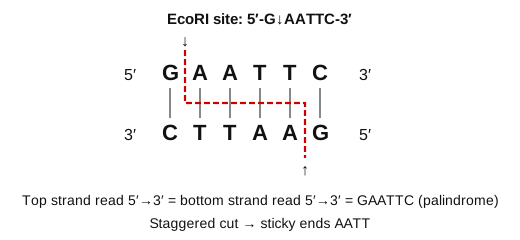
In the following palindromic base sequence of DNA, which one can be cut easily by a particular restriction enzyme?
DNA के निम्नलिखित पैलिंड्रोमी क्षार अनुक्रम में से कौन-सा किसी विशिष्ट प्रतिबंधन एंज़ाइम द्वारा आसानी से काटा जा सकता है?
  1. A5’ GATACT 3’ ; 3’ CTATGA 5’
  2. B5’ GAATTC 3’ ; 3’ CTTAAG 5’
  3. C5’ CTCAGT 3’ ; 3’ GAGTCA 5’
  4. D5’ GTATTC 3’ ; 3’ CATAAG 5’
Show answer

Concept: A palindrome in DNA reads the same on both strands when each is read 5’→3’; restriction endonucleases recognise such sites.

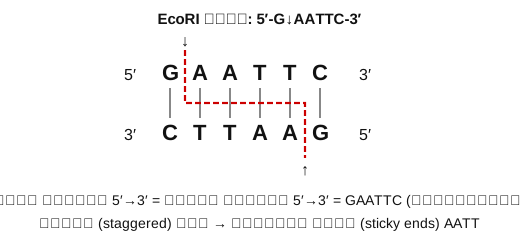
  1. (B) top 5’-GAATTC-3’; bottom read 5’→3’ = GAATTC → palindrome ✔ (EcoRI site, cuts G↓AATTC leaving AATT sticky ends).
  2. (A) bottom 5’→3’ = AGTATC ≠ GATACT.
  3. (C) bottom 5’→3’ = ACTGAG ≠ CTCAGT.
  4. (D) bottom 5’→3’ = GAATAC ≠ GTATTC.

Short trick: Quick test: write the reverse complement of the top strand – it must equal the top strand. Classic NCERT example = GAATTC.

Answer: (B) 5’ GAATTC 3’ ; 3’ CTTAAG 5’

अवधारणा: DNA में पैलिंड्रोम वह अनुक्रम है जो दोनों रज्जुकों पर 5’→3’ पढ़ने पर समान हो; प्रतिबंधन एंडोन्यूक्लिएज़ ऐसे स्थलों को पहचानते हैं।

  1. (B) ऊपरी 5’-GAATTC-3’; निचला 5’→3’ पढ़ने पर = GAATTC → पैलिंड्रोम ✔ (EcoRI स्थल, G↓AATTC पर काटकर AATT चिपचिपे सिरे देता है)।
  2. (A) निचला 5’→3’ = AGTATC ≠ GATACT।
  3. (C) निचला 5’→3’ = ACTGAG ≠ CTCAGT।
  4. (D) निचला 5’→3’ = GAATAC ≠ GTATTC।

शॉर्ट ट्रिक: त्वरित जाँच: ऊपरी रज्जुक का विपरीत पूरक लिखिए – वह ऊपरी रज्जुक के बराबर होना चाहिए। NCERT का क्लासिक उदाहरण = GAATTC।

उत्तर: (B) 5’ GAATTC 3’ ; 3’ CTTAAG 5’

NEET UGBotanyBiotechnology – restriction enzymes and palindromesNEET UG 2022 · 17 Jul Shift 1
Q145.
Which one of the following will accelerate phosphorus cycle?
निम्नलिखित में से कौन फ़ॉस्फ़ोरस चक्र को त्वरित करेगा?
  1. ABurning of fossil fuelsजीवाश्म ईंधनों का दहन
  2. BVolcanic activityज्वालामुखी क्रिया
  3. CWeathering of rocksचट्टानों का अपक्षय
  4. DRainfall and stormsवर्षा तथा तूफ़ान
Show answer

Concept: Phosphorus cycle is sedimentary: NCERT – “The natural reservoir of phosphorus is rock, which contains phosphorus in the form of phosphates. When rocks are weathered, minute amounts of these phosphates dissolve in soil solution and are absorbed by the roots.”

  1. Weathering of rocks releases phosphate – the entry step of the cycle, so it speeds up the cycle ✔.
  2. Burning fossil fuels and volcanic activity add CO2/gases – they matter for the carbon (gaseous) cycle; P has no significant gaseous phase.
  3. Rain and storms may move particles but are not the reservoir-releasing step named in NCERT.

Short trick: No gas in P-cycle → only rock weathering frees P.

Answer: (C) Weathering of rocks

अवधारणा: फ़ॉस्फ़ोरस चक्र अवसादी है: NCERT – “फ़ॉस्फ़ोरस का प्राकृतिक भंडार चट्टानें हैं जिनमें यह फ़ॉस्फ़ेट के रूप में रहता है। चट्टानों के अपक्षय पर इन फ़ॉस्फ़ेटों की थोड़ी मात्रा मृदा विलयन में घुलती है और मूलों द्वारा अवशोषित होती है।”

  1. चट्टानों का अपक्षय फ़ॉस्फ़ेट मुक्त करता है – यह चक्र का प्रवेश-चरण है, अतः चक्र को त्वरित करता है ✔।
  2. जीवाश्म ईंधन का दहन तथा ज्वालामुखी क्रिया CO2/गैसें जोड़ते हैं – ये कार्बन (गैसीय) चक्र के लिए महत्त्वपूर्ण हैं; P की कोई उल्लेखनीय गैसीय प्रावस्था नहीं है।
  3. वर्षा व तूफ़ान कणों को स्थानांतरित कर सकते हैं, परंतु NCERT में बताया गया भंडार-मुक्ति चरण ये नहीं हैं।

शॉर्ट ट्रिक: P-चक्र में गैस नहीं → केवल चट्टानों का अपक्षय P मुक्त करता है।

उत्तर: (C) चट्टानों का अपक्षय

NEET UGBotanyEcosystem – phosphorus cycleNEET UG 2022 · 17 Jul Shift 1
Q146.
The entire fleet of buses in Delhi were converted to CNG from diesel. In reference to this, which one of the following statements is false?
दिल्ली में बसों के पूरे बेड़े को डीज़ल से CNG में परिवर्तित कर दिया गया। इसके संदर्भ में निम्नलिखित में से कौन-सा कथन असत्य है?
  1. ACNG burns more efficiently than dieselCNG डीज़ल की तुलना में अधिक दक्षता से जलती है
  2. BThe same diesel engine is used in CNG buses making the cost of conversion lowCNG बसों में वही डीज़ल इंजन प्रयुक्त होता है जिससे रूपांतरण की लागत कम रहती है
  3. CIt is cheaper than dieselयह डीज़ल से सस्ती है
  4. DIt cannot be adulterated like dieselइसमें डीज़ल की तरह मिलावट नहीं की जा सकती
Show answer

Concept: NCERT (Delhi case study): CNG burns most efficiently with very little left unburnt, is cheaper than petrol/diesel, cannot be siphoned off by thieves or adulterated.

  1. (A), (C), (D) are NCERT advantages of CNG → true.
  2. (B) is false – CNG needs different/modified engines and gas cylinders, and the main problem NCERT mentions is laying pipelines for supply; the diesel engine cannot simply be reused.

Short trick: CNG’s 3 NCERT pluses: efficient, cheap, no adulteration – anything else is the trap.

Answer: (B) The same diesel engine is used in CNG buses making the cost of conversion low

अवधारणा: NCERT (दिल्ली केस अध्ययन): CNG सबसे दक्षता से जलती है और बहुत कम अदग्ध रहती है, पेट्रोल/डीज़ल से सस्ती है, इसे चोर निकाल नहीं सकते और इसमें मिलावट नहीं हो सकती।

  1. (A), (C), (D) NCERT में बताए CNG के लाभ हैं → सत्य।
  2. (B) असत्य है – CNG के लिए भिन्न/संशोधित इंजन तथा गैस सिलिंडर चाहिए, और NCERT में मुख्य समस्या आपूर्ति हेतु पाइपलाइन बिछाना बताई गई है; डीज़ल इंजन को यूँ ही पुनः प्रयोग नहीं किया जा सकता।

शॉर्ट ट्रिक: CNG के 3 NCERT लाभ: दक्ष, सस्ती, मिलावट नहीं – इसके अलावा कुछ भी जाल है।

उत्तर: (B) CNG बसों में वही डीज़ल इंजन प्रयुक्त होता है जिससे रूपांतरण की लागत कम रहती है

NEET UGBotanyEnvironmental issues – CNG in DelhiNEET UG 2022 · 17 Jul Shift 1
Q147.
Match the plant with the kind of life cycle it exhibits. Choose the correct answer from the options given below:
List - IList - II
(a)Spirogyra(i)Dominant diploid sporophyte vascular plant, with highly reduced male or female gametophyte
(b)Fern(ii)Dominant haploid free-living gametophyte
(c)Funaria(iii)Dominant diploid sporophyte alternating with reduced gametophyte called prothallus
(d)Cycas(iv)Dominant haploid leafy gametophyte alternating with partially dependent multicellular sporophyte
पौधे का उसके द्वारा प्रदर्शित जीवन चक्र के प्रकार से मिलान कीजिए। नीचे दिए गए विकल्पों में से सही उत्तर चुनिए:
सूची - Iसूची - II
(a)Spirogyra(i)प्रभावी द्विगुणित बीजाणुद्भिद संवहनी पौधा, जिसमें नर या मादा युग्मकोद्भिद अत्यधिक ह्रासित होता है
(b)फ़र्न(ii)प्रभावी अगुणित मुक्तजीवी युग्मकोद्भिद
(c)Funaria(iii)प्रभावी द्विगुणित बीजाणुद्भिद जो प्रोथैलस नामक ह्रासित युग्मकोद्भिद से एकांतरित होता है
(d)Cycas(iv)प्रभावी अगुणित पत्तीमय युग्मकोद्भिद जो आंशिक रूप से आश्रित बहुकोशिकीय बीजाणुद्भिद से एकांतरित होता है
  1. A(a) - (iv); (b) - (i); (c) - (ii); (d) - (iii)
  2. B(a) - (ii); (b) - (iii); (c) - (iv); (d) - (i)
  3. C(a) - (iii); (b) - (iv); (c) - (i); (d) - (ii)
  4. D(a) - (ii); (b) - (iv); (c) - (i); (d) - (iii)
Show answer

Concept: NCERT patterns: haplontic, haplo-diplontic, diplontic.

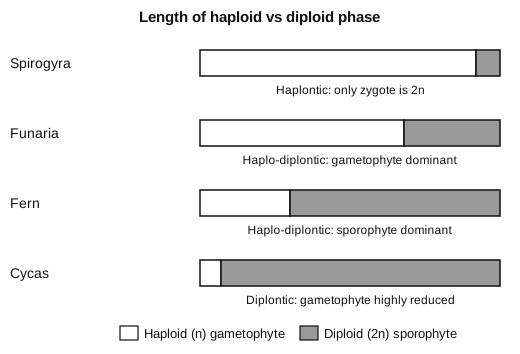
  1. Spirogyra – haplontic: free-living haploid gametophyte dominant; only zygote is diploid → (ii).
  2. Fern (pteridophyte) – haplo-diplontic, sporophyte dominant; gametophyte is the small prothallus → (iii).
  3. Funaria (bryophyte) – haplo-diplontic, leafy gametophyte dominant, sporophyte partially dependent → (iv).
  4. Cycas (gymnosperm) – diplontic: dominant vascular sporophyte, highly reduced gametophytes → (i).

Short trick: Prothallus = Fern (unique word) → only option with (b)-(iii) is (B).

Answer: (B) (a) - (ii); (b) - (iii); (c) - (iv); (d) - (i)

अवधारणा: NCERT प्रतिरूप: अगुणितक, अगुणित-द्विगुणितक, द्विगुणितक।

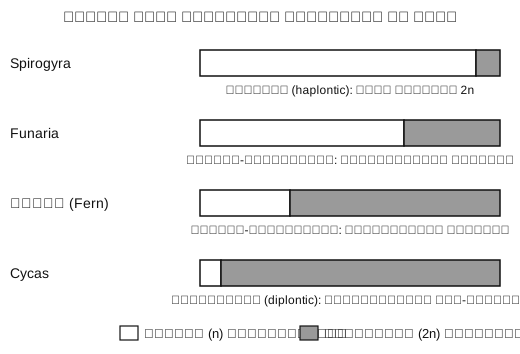
  1. Spirogyra – अगुणितक: मुक्तजीवी अगुणित युग्मकोद्भिद प्रभावी; केवल युग्मनज द्विगुणित → (ii)।
  2. फ़र्न (टेरिडोफ़ाइट) – अगुणित-द्विगुणितक, बीजाणुद्भिद प्रभावी; युग्मकोद्भिद छोटा प्रोथैलस → (iii)।
  3. Funaria (ब्रायोफ़ाइट) – अगुणित-द्विगुणितक, पत्तीमय युग्मकोद्भिद प्रभावी, बीजाणुद्भिद आंशिक आश्रित → (iv)।
  4. Cycas (अनावृतबीजी) – द्विगुणितक: प्रभावी संवहनी बीजाणुद्भिद, अत्यधिक ह्रासित युग्मकोद्भिद → (i)।

शॉर्ट ट्रिक: प्रोथैलस = फ़र्न (विशिष्ट शब्द) → (b)-(iii) वाला एकमात्र विकल्प (B)।

उत्तर: (B) (a) - (ii); (b) - (iii); (c) - (iv); (d) - (i)

NEET UGBotanyPlant kingdom – life cycle patternsNEET UG 2022 · 17 Jul Shift 1
Q148.
Match List - I with List - II. Choose the correct answer from the options given below:
List - IList - II
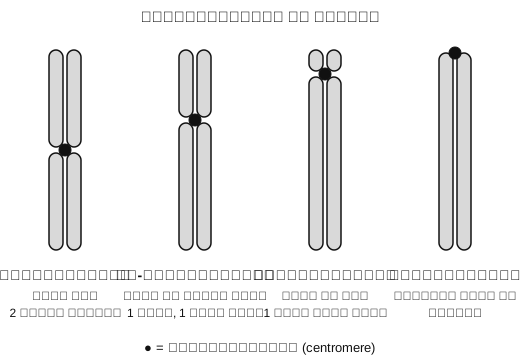
(a)Metacentric chromosome(i)Centromere situated close to the end forming one extremely short and one long arms.
(b)Acrocentric chromosome(ii)Centromeres at the terminal end
(c)Sub-metacentric(iii)Centromere in the middle forming two equal arms of chromosomes
(d)Telocentric chromosome(iv)Centromere slightly away from the middle forming one shorter arm and one longer arm
सूची - I का सूची - II से मिलान कीजिए। नीचे दिए गए विकल्पों में से सही उत्तर चुनिए:
सूची - Iसूची - II
(a)मेटासेंट्रिक गुणसूत्र(i)गुणसूत्रबिंदु सिरे के पास स्थित, जिससे एक अत्यंत छोटी तथा एक लंबी भुजा बनती है।
(b)एक्रोसेंट्रिक गुणसूत्र(ii)गुणसूत्रबिंदु अंतस्थ सिरे पर
(c)सब-मेटासेंट्रिक(iii)गुणसूत्रबिंदु मध्य में, जिससे गुणसूत्र की दो बराबर भुजाएँ बनती हैं
(d)टीलोसेंट्रिक गुणसूत्र(iv)गुणसूत्रबिंदु मध्य से थोड़ा हटकर, जिससे एक छोटी तथा एक लंबी भुजा बनती है
  1. A(a) - (iii); (b) - (i); (c) - (iv); (d) - (ii)
  2. B(a) - (i); (b) - (iii); (c) - (ii); (d) - (iv)
  3. C(a) - (ii); (b) - (iii); (c) - (iv); (d) - (i)
  4. D(a) - (i); (b) - (ii); (c) - (iii); (d) - (iv)
Show answer

Concept: Chromosomes are classified by position of the centromere (NCERT, Cell: The Unit of Life).

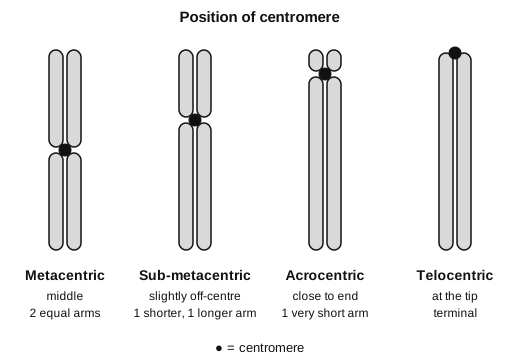
  1. Metacentric – centromere in the middle, two equal arms → (iii).
  2. Acrocentric – centromere close to the end, one extremely short and one very long arm → (i).
  3. Sub-metacentric – centromere slightly away from the middle, one shorter and one longer arm → (iv).
  4. Telocentric – terminal centromere → (ii).

Short trick: Meta = Middle, Sub = Slightly off, Acro = Almost end, Telo = Tip (end).

Answer: (A) (a) - (iii); (b) - (i); (c) - (iv); (d) - (ii)

अवधारणा: गुणसूत्रों का वर्गीकरण गुणसूत्रबिंदु (centromere) की स्थिति के आधार पर होता है (NCERT, कोशिका: जीवन की इकाई)।

  1. मेटासेंट्रिक – गुणसूत्रबिंदु मध्य में, दो बराबर भुजाएँ → (iii)।
  2. एक्रोसेंट्रिक – गुणसूत्रबिंदु सिरे के पास, एक अत्यंत छोटी व एक बहुत लंबी भुजा → (i)।
  3. सब-मेटासेंट्रिक – गुणसूत्रबिंदु मध्य से थोड़ा हटकर, एक छोटी व एक लंबी भुजा → (iv)।
  4. टीलोसेंट्रिक – अंतस्थ गुणसूत्रबिंदु → (ii)।

शॉर्ट ट्रिक: मेटा = मध्य, सब = थोड़ा हटकर, एक्रो = लगभग सिरा, टीलो = बिल्कुल सिरा।

उत्तर: (A) (a) - (iii); (b) - (i); (c) - (iv); (d) - (ii)

NEET UGBotanyCell – types of chromosomesNEET UG 2022 · 17 Jul Shift 1
Q149.
The anatomy of springwood shows some peculiar features. Identify the correct set of statements about springwood.
(a) It is also called early wood.
(b) In the spring season cambium produces xylem elements with narrow vessels.
(c) It is lighter in colour.
(d) The springwood along with autumnwood shows alternate concentric rings forming annual rings.
(e) It has lower density
Choose the correct answer from the options given below:
वसंत दारु (springwood) की शारीरिकी कुछ विशिष्ट लक्षण दर्शाती है। वसंत दारु के बारे में कथनों के सही समुच्चय को पहचानिए।
(a) इसे प्रारंभिक दारु (early wood) भी कहते हैं।
(b) वसंत ऋतु में एधा संकरी वाहिकाओं वाले दारु तत्व बनाती है।
(c) यह हल्के रंग की होती है।
(d) वसंत दारु शरद दारु के साथ एकांतर संकेंद्री वलय बनाकर वार्षिक वलय बनाती है।
(e) इसका घनत्व कम होता है
नीचे दिए गए विकल्पों में से सही उत्तर चुनिए:
  1. A(a), (b), (d) and (e) onlyकेवल (a), (b), (d) और (e)
  2. B(a), (c), (d) and (e) onlyकेवल (a), (c), (d) और (e)
  3. C(a), (b), and (d) onlyकेवल (a), (b) और (d)
  4. D(c), (d) and (e) onlyकेवल (c), (d) और (e)
Show answer

Concept: NCERT: in spring the cambium is very active and produces many xylary elements with wider vessels – springwood/early wood: lighter in colour, lower density.

  1. (a) True – springwood = early wood.
  2. (b) False – vessels are wide in springwood; narrow vessels are formed in autumn (late wood).
  3. (c) True – lighter colour.
  4. (d) True – spring + autumn wood together form an annual ring (used to estimate age).
  5. (e) True – lower density (autumnwood is darker and denser).

Short trick: Spring = Strong cambium → wide, light, less dense; Autumn = narrow, dark, dense. Drop (b) → (B).

Answer: (B) (a), (c), (d) and (e) only

अवधारणा: NCERT: वसंत में एधा अत्यधिक सक्रिय होती है और चौड़ी वाहिकाओं वाले अनेक दारु तत्व बनाती है – वसंत दारु/प्रारंभिक दारु: हल्के रंग की, कम घनत्व वाली।

  1. (a) सत्य – वसंत दारु = प्रारंभिक दारु।
  2. (b) असत्य – वसंत दारु में वाहिकाएँ चौड़ी होती हैं; संकरी वाहिकाएँ शरद (पश्च दारु) में बनती हैं।
  3. (c) सत्य – हल्का रंग।
  4. (d) सत्य – वसंत + शरद दारु मिलकर एक वार्षिक वलय बनाते हैं (आयु के आकलन हेतु)।
  5. (e) सत्य – कम घनत्व (शरद दारु गहरी तथा सघन होती है)।

शॉर्ट ट्रिक: वसंत = सक्रिय एधा → चौड़ी, हल्की, कम सघन; शरद = संकरी, गहरी, सघन। (b) हटाइए → (B)।

उत्तर: (B) केवल (a), (c), (d) और (e)

NEET UGBotanyAnatomy – springwood and autumnwoodNEET UG 2022 · 17 Jul Shift 1
Q150.
What is the role of large bundle sheath cells found around the vascular bundles in C4 plants?
C4 पौधों में संवहन पूलों के चारों ओर पाई जाने वाली बड़ी पूलाच्छद (bundle sheath) कोशिकाओं की भूमिका क्या है?
  1. ATo provide the site of photorespiratory pathwayप्रकाशश्वसन पथ के लिए स्थल प्रदान करना
  2. BTo increase the number of chloroplast for the operation of Calvin cycleकेल्विन चक्र के संचालन हेतु हरितलवकों की संख्या बढ़ाना
  3. CTo enable the plant to tolerate high temperatureपौधे को उच्च तापमान सहन करने योग्य बनाना
  4. DTo protect the vascular tissue from high light intensityसंवहन ऊतक को उच्च प्रकाश तीव्रता से बचाना
Show answer

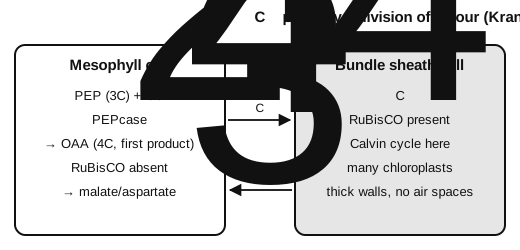
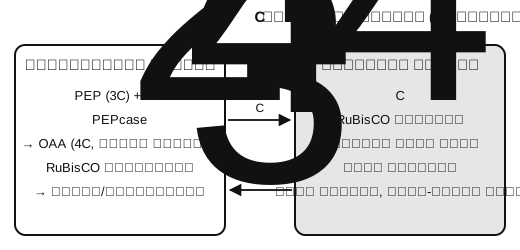
Concept: Kranz anatomy (NCERT): bundle-sheath cells are large, have a large number of chloroplasts, thick walls impervious to gas exchange and no intercellular spaces; RuBisCO and the Calvin cycle operate here.

  1. (B) ✔ – many chloroplasts in bundle sheath run the Calvin cycle on CO2 released from C4 acids.
  2. (A) ✘ – C4 plants concentrate CO2 around RuBisCO precisely to avoid photorespiration.
  3. (C) ✘ – high-temperature tolerance is a property of the whole C4 pathway, not the purpose of the sheath cells.
  4. (D) ✘ – they are not a light shield.

Short trick: Kranz = ‘wreath’ of chloroplast-rich cells = Calvin cycle factory.

Answer: (B) To increase the number of chloroplast for the operation of Calvin cycle

अवधारणा: क्रान्ज़ शारीरिकी (NCERT): पूलाच्छद कोशिकाएँ बड़ी होती हैं, उनमें अनेक हरितलवक, गैस-विनिमय के लिए अपारगम्य मोटी भित्तियाँ होती हैं और अंतराकोशिकीय स्थान नहीं होते; RuBisCO तथा केल्विन चक्र यहीं चलते हैं।

  1. (B) ✔ – पूलाच्छद के अनेक हरितलवक C4 अम्लों से मुक्त CO2 पर केल्विन चक्र चलाते हैं।
  2. (A) ✘ – C4 पौधे RuBisCO के पास CO2 सांद्रित करते ही इसलिए हैं कि प्रकाशश्वसन से बचा जा सके।
  3. (C) ✘ – उच्च ताप सहिष्णुता पूरे C4 पथ का गुण है, पूलाच्छद कोशिकाओं का उद्देश्य नहीं।
  4. (D) ✘ – ये प्रकाश से रक्षा-कवच नहीं हैं।

शॉर्ट ट्रिक: क्रान्ज़ = हरितलवक-समृद्ध कोशिकाओं की ‘माला’ = केल्विन चक्र का कारखाना।

उत्तर: (B) केल्विन चक्र के संचालन हेतु हरितलवकों की संख्या बढ़ाना

NEET UGBotanyPhotosynthesis – Kranz anatomyNEET UG 2022 · 17 Jul Shift 1
Q151.
During the purification process for recombinant DNA technology, addition of chilled ethanol precipitates out:
पुनर्योगज DNA प्रौद्योगिकी के लिए शोधन (purification) प्रक्रिया के दौरान, द्रुतशीतित (chilled) एथेनॉल मिलाने पर कौन-सा अवक्षेपित होता है?
  1. AHistonesहिस्टोन
  2. BPolysaccharidesपॉलीसैकेराइड
  3. CRNA
  4. DDNA
Show answer

Concept: Isolation of DNA: cells are lysed, RNA is removed by ribonuclease, proteins by protease; finally chilled ethanol is added and purified DNA precipitates out.

  1. Histones (proteins) are removed earlier by protease treatment – (A) wrong.
  2. Polysaccharides/cell wall are broken by lysozyme, cellulase, chitinase – (B) wrong.
  3. RNA is digested by ribonuclease – (C) wrong.
  4. Addition of chilled ethanol → DNA appears as a collection of fine threads in suspension, which can be spooled out – (D) correct.

Short trick: Enzyme order: “L-C-C-R-P” (lysozyme, cellulase, chitinase, RNase, protease) → ethanol last = DNA out (spooling of DNA threads).

Answer: (D) DNA

अवधारणा: DNA का पृथक्करण: कोशिकाओं का लयन किया जाता है, RNA को राइबोन्यूक्लिएज़ द्वारा तथा प्रोटीन को प्रोटिएज़ द्वारा हटाया जाता है; अंत में द्रुतशीतित एथेनॉल मिलाने पर शुद्ध DNA अवक्षेपित हो जाता है।

  1. हिस्टोन (प्रोटीन) पहले ही प्रोटिएज़ उपचार से हटा दिए जाते हैं – (A) गलत।
  2. पॉलीसैकेराइड/कोशिका भित्ति लाइसोज़ाइम, सेल्युलेज़, काइटिनेज़ द्वारा तोड़ी जाती है – (B) गलत।
  3. RNA का पाचन राइबोन्यूक्लिएज़ द्वारा होता है – (C) गलत।
  4. द्रुतशीतित एथेनॉल मिलाने पर DNA निलंबन में महीन धागों के समूह के रूप में दिखाई देता है, जिसे स्पूलिंग द्वारा बाहर निकाला जाता है – (D) सही।

शॉर्ट ट्रिक: एंजाइम क्रम: “L-C-C-R-P” (लाइसोज़ाइम, सेल्युलेज़, काइटिनेज़, RNase, प्रोटिएज़) → अंत में एथेनॉल = DNA बाहर (DNA धागों की स्पूलिंग)।

उत्तर: (D) DNA

NEET UGBotanyBiotechnology – isolation of DNANEET UG 2021 · 12 Sep Shift 1
Q152.
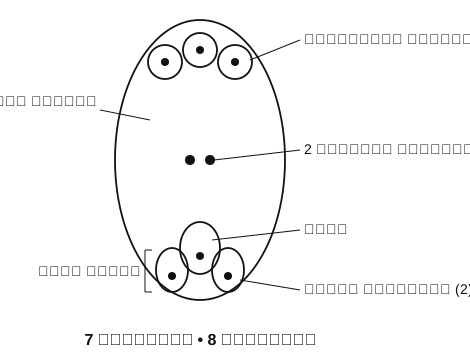
A typical angiosperm embryo sac at maturity is
परिपक्व अवस्था में एक प्रारूपिक आवृतबीजी भ्रूणकोष होता है
  1. A7-nucleate and 7-celled7-केन्द्रकीय तथा 7-कोशिकीय
  2. B8-nucleate and 8-celled8-केन्द्रकीय तथा 8-कोशिकीय
  3. C8-nucleate and 7-celled8-केन्द्रकीय तथा 7-कोशिकीय
  4. D7-nucleate and 8-celled7-केन्द्रकीय तथा 8-कोशिकीय
Show answer

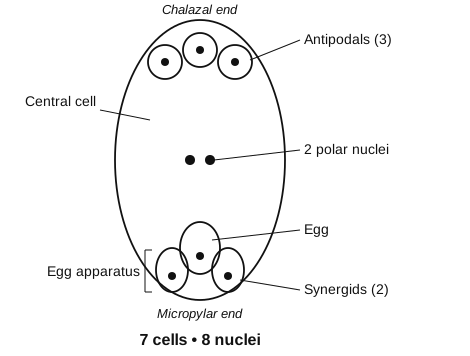
Concept: The functional megaspore divides mitotically three times (free nuclear) → 8 nuclei; 6 of them get walls, while 2 polar nuclei stay in one large central cell.

  1. Micropylar end: egg apparatus = 1 egg + 2 synergids → 3 cells, 3 nuclei.
  2. Chalazal end: 3 antipodals → 3 cells, 3 nuclei.
  3. Central cell: 1 cell with 2 polar nuclei.
  4. Total = 3 + 3 + 1 = 7 cells and 3 + 3 + 2 = 8 nuclei; (A), (B), (D) do not fit this count.

Short trick: “7–8 rule”: 8 nuclei but only 7 cells – the central cell is the only binucleate cell.

Answer: (C) 8-nucleate and 7-celled

अवधारणा: क्रियाशील गुरुबीजाणु में तीन बार समसूत्री (मुक्त केन्द्रकीय) विभाजन → 8 केन्द्रक; इनमें से 6 के चारों ओर भित्ति बनती है, जबकि 2 ध्रुवीय केन्द्रक एक बड़ी केन्द्रीय कोशिका में रहते हैं।

  1. बीजाण्डद्वारी (micropylar) सिरा: अण्ड उपकरण = 1 अण्ड + 2 सहायक कोशिकाएँ → 3 कोशिकाएँ, 3 केन्द्रक।
  2. निभागी (chalazal) सिरा: 3 प्रतिमुखी (antipodal) कोशिकाएँ → 3 कोशिकाएँ, 3 केन्द्रक।
  3. केन्द्रीय कोशिका: 2 ध्रुवीय केन्द्रकों वाली 1 कोशिका।
  4. कुल = 3 + 3 + 1 = 7 कोशिकाएँ तथा 3 + 3 + 2 = 8 केन्द्रक; (A), (B), (D) इस गणना में ठीक नहीं बैठते।

शॉर्ट ट्रिक: “7–8 नियम”: 8 केन्द्रक पर केवल 7 कोशिकाएँ – केन्द्रीय कोशिका ही एकमात्र द्विकेन्द्रकीय कोशिका है।

उत्तर: (C) 8-केन्द्रकीय तथा 7-कोशिकीय

NEET UGBotanySexual reproduction in flowering plants – embryo sacNEET UG 2021 · 12 Sep Shift 1
Q153.
Which of the following is an incorrect statement ?
निम्नलिखित में से कौन-सा कथन गलत है?
  1. AThe perinuclear space forms a barrier between the materials present inside the nucleus and that of the cytoplasmपरिकेन्द्रकीय अवकाश (perinuclear space) केन्द्रक के भीतर उपस्थित पदार्थों तथा कोशिकाद्रव्य के पदार्थों के बीच अवरोध बनाता है
  2. BNuclear pores act as passages for proteins and RNA molecules in both directions between nucleus and cytoplasmकेन्द्रक छिद्र, केन्द्रक तथा कोशिकाद्रव्य के बीच दोनों दिशाओं में प्रोटीन तथा RNA अणुओं के आवागमन के मार्ग का कार्य करते हैं
  3. CMature sieve tube elements possess a conspicuous nucleus and usual cytoplasmic organellesपरिपक्व चालनी नलिका तत्वों में एक सुस्पष्ट केन्द्रक तथा सामान्य कोशिकाद्रव्यी अंगक होते हैं
  4. DMicrobodies are present both in plant and animal cellsसूक्ष्मकाय (microbodies) पादप तथा जन्तु दोनों कोशिकाओं में पाए जाते हैं
Show answer

Concept: NCERT (Anatomy): a mature sieve tube element has a peripheral cytoplasm and a large vacuole but lacks a nucleus; its functions are controlled by the companion cell.

  1. (A) correct – the 10–50 nm perinuclear space between the two nuclear membranes forms a barrier between nucleoplasm and cytoplasm.
  2. (B) correct – nuclear pores allow two-way movement of RNA and proteins.
  3. (C) incorrect – mature sieve tube elements are enucleate.
  4. (D) correct – microbodies (peroxisomes, glyoxysomes) occur in both plant and animal cells.

Short trick: Sieve tube = “living but nucleus-less”; its “brain” is the companion cell.

Answer: (C) Mature sieve tube elements possess a conspicuous nucleus…

अवधारणा: NCERT (शारीरिकी): परिपक्व चालनी नलिका तत्व में परिधीय कोशिकाद्रव्य तथा एक बड़ी रिक्तिका होती है परन्तु केन्द्रक नहीं होता; इसके कार्य सहकोशिका (companion cell) द्वारा नियंत्रित होते हैं।

  1. (A) सही – दोनों केन्द्रक झिल्लियों के बीच 10–50 nm का परिकेन्द्रकीय अवकाश केन्द्रकद्रव्य और कोशिकाद्रव्य के बीच अवरोध बनाता है।
  2. (B) सही – केन्द्रक छिद्र RNA तथा प्रोटीन का दोनों दिशाओं में आवागमन होने देते हैं।
  3. (C) गलत – परिपक्व चालनी नलिका तत्व केन्द्रकविहीन होते हैं।
  4. (D) सही – सूक्ष्मकाय (परऑक्सीसोम, ग्लाइऑक्सीसोम) पादप तथा जन्तु दोनों कोशिकाओं में मिलते हैं।

शॉर्ट ट्रिक: चालनी नलिका = “जीवित पर केन्द्रकविहीन”; इसका “मस्तिष्क” सहकोशिका है।

उत्तर: (C) परिपक्व चालनी नलिका तत्वों में सुस्पष्ट केन्द्रक…

NEET UGBotanyCell – nucleus, sieve tubes and microbodiesNEET UG 2021 · 12 Sep Shift 1
Q154.
The plant hormone used to destroy weeds in a field is
खेत में खरपतवारों को नष्ट करने के लिए प्रयुक्त पादप हॉर्मोन है
  1. A2, 4-D
  2. BIBA
  3. CIAA
  4. DNAA
Show answer

Concept: NCERT: the synthetic auxin 2,4-D (2,4-dichlorophenoxyacetic acid) is widely used to kill dicotyledonous weeds; it does not affect mature monocot crops.

  1. IBA (indole-3-butyric acid) – natural auxin, used for rooting of stem cuttings – (B) wrong.
  2. IAA (indole-3-acetic acid) – natural auxin, growth – (C) wrong.
  3. NAA (naphthalene acetic acid) – synthetic auxin, used for rooting / preventing fruit drop – (D) wrong.
  4. 2,4-D – selective weedicide (herbicide), used in lawns and cereal fields – (A) correct.

Short trick: “2,4-D = D for Destroy (dicot weeds)”.

Answer: (A) 2, 4-D

अवधारणा: NCERT: संश्लेषित ऑक्सिन 2,4-D (2,4-डाइक्लोरोफीनॉक्सीऐसीटिक अम्ल) का व्यापक उपयोग द्विबीजपत्री खरपतवारों को नष्ट करने में होता है; यह परिपक्व एकबीजपत्री फसलों को प्रभावित नहीं करता।

  1. IBA (इंडोल-3-ब्यूटिरिक अम्ल) – प्राकृतिक ऑक्सिन, तना कलमों में जड़ निकालने हेतु – (B) गलत।
  2. IAA (इंडोल-3-ऐसीटिक अम्ल) – प्राकृतिक ऑक्सिन, वृद्धि हेतु – (C) गलत।
  3. NAA (नैफ्थेलीन ऐसीटिक अम्ल) – संश्लेषित ऑक्सिन, जड़ निकालने / फल-झड़न रोकने हेतु – (D) गलत।
  4. 2,4-D – चयनात्मक खरपतवारनाशी (शाकनाशी), लॉन तथा अनाज के खेतों में प्रयुक्त – (A) सही।

शॉर्ट ट्रिक: “2,4-D = D for Destroy (द्विबीजपत्री खरपतवार)”।

उत्तर: (A) 2, 4-D

NEET UGBotanyPlant growth regulators – auxinsNEET UG 2021 · 12 Sep Shift 1
Q155.
Match list I with list II.
List IList II
(a) Cells with active cell division capacity(i) Vascular Tissues
(b) Tissue having all cells similar in structure and function(ii) Meristematic tissues
(c) Tissue having different type of cells(iii) Sclereids
(d) Dead cells with highly thickened walls and narrow lumen(iv) Simple Tissue
सूची I का सूची II से मिलान कीजिए।
सूची Iसूची II
(a) सक्रिय कोशिका विभाजन क्षमता वाली कोशिकाएँ(i) संवहनी ऊतक
(b) संरचना तथा कार्य में समान सभी कोशिकाओं वाला ऊतक(ii) विभज्योतकी ऊतक
(c) विभिन्न प्रकार की कोशिकाओं वाला ऊतक(iii) स्क्लेरीड (दृढ़कोशिकाएँ)
(d) अत्यधिक मोटी भित्ति तथा संकीर्ण अवकाशिका वाली मृत कोशिकाएँ(iv) सरल ऊतक
  1. A(a)-(i); (b)-(ii); (c)-(iii); (d)-(iv)
  2. B(a)-(iii); (b)-(ii); (c)-(iv); (d)-(i)
  3. C(a)-(ii); (b)-(iv); (c)-(i); (d)-(iii)
  4. D(a)-(iv); (b)-(iii); (c)-(ii); (d)-(i)
Show answer

Concept: Meristems divide actively; simple tissues have one cell type; complex tissues (xylem, phloem = vascular) have several cell types; sclereids are dead sclerenchyma cells with very thick walls and narrow lumen.

  1. (a) active division → meristematic tissue (ii).
  2. (b) all cells alike → simple tissue (iv).
  3. (c) different types of cells → complex = vascular tissue (i).
  4. (d) dead, thick-walled, narrow lumen → sclereids (iii).
  5. So a-ii, b-iv, c-i, d-iii = option (C); (A), (B), (D) mismatch at least (a).

Short trick: Just fix (a) = meristem (ii) → only option (C) starts with (a)-(ii).

Answer: (C) (a)-(ii); (b)-(iv); (c)-(i); (d)-(iii)

अवधारणा: विभज्योतक सक्रिय रूप से विभाजित होते हैं; सरल ऊतक में एक प्रकार की कोशिकाएँ होती हैं; जटिल ऊतक (जाइलम, फ्लोएम = संवहनी) में कई प्रकार की कोशिकाएँ होती हैं; स्क्लेरीड अत्यधिक मोटी भित्ति तथा संकीर्ण अवकाशिका वाली मृत दृढ़ोतक कोशिकाएँ हैं।

  1. (a) सक्रिय विभाजन → विभज्योतकी ऊतक (ii)।
  2. (b) सभी कोशिकाएँ समान → सरल ऊतक (iv)।
  3. (c) विभिन्न प्रकार की कोशिकाएँ → जटिल = संवहनी ऊतक (i)।
  4. (d) मृत, मोटी भित्ति, संकीर्ण अवकाशिका → स्क्लेरीड (iii)।
  5. अतः a-ii, b-iv, c-i, d-iii = विकल्प (C); (A), (B), (D) कम से कम (a) में ही गलत हैं।

शॉर्ट ट्रिक: केवल (a) = विभज्योतक (ii) तय कीजिए → केवल विकल्प (C) ही (a)-(ii) से शुरू होता है।

उत्तर: (C) (a)-(ii); (b)-(iv); (c)-(i); (d)-(iii)

NEET UGBotanyAnatomy – plant tissuesNEET UG 2021 · 12 Sep Shift 1
Q156.
Which of the following is not an application of PCR (Polymerase Chain Reaction)
निम्नलिखित में से कौन-सा PCR (पॉलिमरेज़ शृंखला अभिक्रिया) का अनुप्रयोग नहीं है?
  1. APurification of isolated proteinपृथक्कृत प्रोटीन का शोधन
  2. BDetection of gene mutationजीन उत्परिवर्तन का पता लगाना
  3. CMolecular diagnosisआण्विक निदान
  4. DGene amplificationजीन प्रवर्धन
Show answer

Concept: PCR amplifies DNA (nucleic acid) in vitro using primers and thermostable Taq polymerase; it cannot act on proteins.

  1. Gene amplification – the basic use of PCR – (D) is an application.
  2. Molecular diagnosis – very low amounts of pathogen DNA/RNA (e.g. HIV) detected by amplification – (C) is an application.
  3. Detection of gene mutations (e.g. in suspected cancer patients) – (B) is an application.
  4. Protein purification is done by chromatography/precipitation, not PCR – (A) is not an application.

Short trick: PCR = “Photocopier for DNA” – anything that is not DNA (protein) is outside its job.

Answer: (A) Purification of isolated protein

अवधारणा: PCR प्राइमर तथा तापस्थायी Taq पॉलिमरेज़ की सहायता से पात्रे (in vitro) DNA (न्यूक्लिक अम्ल) का प्रवर्धन करता है; यह प्रोटीन पर कार्य नहीं कर सकता।

  1. जीन प्रवर्धन – PCR का मूल उपयोग – (D) अनुप्रयोग है।
  2. आण्विक निदान – रोगजनक के बहुत कम DNA/RNA (जैसे HIV) का प्रवर्धन द्वारा पता लगाना – (C) अनुप्रयोग है।
  3. जीन उत्परिवर्तन का पता लगाना (जैसे संदिग्ध कैंसर रोगियों में) – (B) अनुप्रयोग है।
  4. प्रोटीन का शोधन क्रोमैटोग्राफी/अवक्षेपण द्वारा होता है, PCR द्वारा नहीं – (A) अनुप्रयोग नहीं है।

शॉर्ट ट्रिक: PCR = “DNA की फोटोकॉपी मशीन” – जो DNA नहीं है (प्रोटीन), वह इसका कार्य नहीं।

उत्तर: (A) पृथक्कृत प्रोटीन का शोधन

NEET UGBotanyBiotechnology – applications of PCRNEET UG 2021 · 12 Sep Shift 1
Q157.
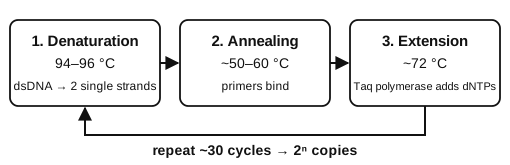
Which of the following is a correct sequence of steps in a PCR (Polymerase Chain Reaction) ?
निम्नलिखित में से कौन-सा PCR (पॉलिमरेज़ शृंखला अभिक्रिया) के चरणों का सही क्रम है?
  1. AExtension, Denaturation, Annealingप्रसार (Extension), विकृतीकरण (Denaturation), तापानुशीतन (Annealing)
  2. BAnnealing, Denaturation, Extensionतापानुशीतन (Annealing), विकृतीकरण (Denaturation), प्रसार (Extension)
  3. CDenaturation, Annealing, Extensionविकृतीकरण (Denaturation), तापानुशीतन (Annealing), प्रसार (Extension)
  4. DDenaturation, Extension, Annealingविकृतीकरण (Denaturation), प्रसार (Extension), तापानुशीतन (Annealing)
Show answer

Concept: Each PCR cycle has three steps in fixed order: Denaturation → Annealing → Extension.

  1. Denaturation (~94 °C): double-stranded DNA separates into two single strands.
  2. Annealing (~50–60 °C): two primers bind to complementary ends of the single strands.
  3. Extension (~72 °C): Taq polymerase extends the primers using dNTPs.
  4. Strands must separate before primers can bind, and primers must bind before extension – so (A), (B), (D) are impossible orders.

Short trick: “D-A-E” – “Do Again Every cycle”; 30 cycles ≈ 230 copies.

Answer: (C) Denaturation, Annealing, Extension

अवधारणा: प्रत्येक PCR चक्र में तीन चरण निश्चित क्रम में होते हैं: विकृतीकरण (Denaturation) → तापानुशीतन (Annealing) → प्रसार (Extension)।

  1. विकृतीकरण (~94 °C): द्विरज्जुकी DNA दो एकल रज्जुकों में अलग हो जाता है।
  2. तापानुशीतन (~50–60 °C): दो प्राइमर एकल रज्जुकों के पूरक सिरों से जुड़ते हैं।
  3. प्रसार (~72 °C): Taq पॉलिमरेज़ dNTP का उपयोग कर प्राइमरों को आगे बढ़ाता है।
  4. प्राइमर जुड़ने से पहले रज्जुकों का अलग होना आवश्यक है, और प्रसार से पहले प्राइमरों का जुड़ना – अतः (A), (B), (D) असंभव क्रम हैं।

शॉर्ट ट्रिक: “D-A-E” – “Do Again Every cycle”; 30 चक्र ≈ 230 प्रतियाँ।

उत्तर: (C) विकृतीकरण, तापानुशीतन, प्रसार

NEET UGBotanyBiotechnology – steps of PCRNEET UG 2021 · 12 Sep Shift 1
Q158.
When gene targetting involving gene amplification is attempted in an individual's tissue to treat disease, it is known as:
जब रोग के उपचार हेतु किसी व्यक्ति के ऊतक में जीन प्रवर्धन से सम्बद्ध जीन लक्ष्यीकरण (gene targetting) का प्रयास किया जाता है, तो इसे कहा जाता है:
  1. AMolecular diagnosisआण्विक निदान
  2. BSafety testingसुरक्षा परीक्षण
  3. CBiopiracyजैवदस्युता (बायोपाइरेसी)
  4. DGene therapyजीन चिकित्सा
Show answer

Concept: Gene therapy = correction of a gene defect by delivering a normal gene into the cells/tissues of a patient to treat the disease (first case: ADA deficiency, 1990).

  1. Molecular diagnosis = early detection of disease (PCR, ELISA, probes), not treatment – (A) wrong.
  2. Safety testing = checking a new drug/GMO before release – (B) wrong.
  3. Biopiracy = use of bio-resources of a nation without authorisation/compensation – (C) wrong.
  4. Targeting a gene in a person’s tissue to treat disease = gene therapy – (D) correct.

Short trick: Key words “to treat disease” + “individual’s tissue” → therapy.

Answer: (D) Gene therapy

अवधारणा: जीन चिकित्सा = रोगी की कोशिकाओं/ऊतकों में सामान्य जीन पहुँचाकर जीन दोष को ठीक करना, ताकि रोग का उपचार हो (पहला उदाहरण: ADA न्यूनता, 1990)।

  1. आण्विक निदान = रोग का शीघ्र पता लगाना (PCR, ELISA, प्रोब), उपचार नहीं – (A) गलत।
  2. सुरक्षा परीक्षण = किसी नई औषधि/GMO को जारी करने से पहले जाँच – (B) गलत।
  3. जैवदस्युता = किसी राष्ट्र के जैव-संसाधनों का बिना अनुमति/क्षतिपूर्ति के उपयोग – (C) गलत।
  4. रोग के उपचार हेतु व्यक्ति के ऊतक में जीन को लक्षित करना = जीन चिकित्सा – (D) सही।

शॉर्ट ट्रिक: मुख्य शब्द “रोग का उपचार” + “व्यक्ति का ऊतक” → चिकित्सा।

उत्तर: (D) जीन चिकित्सा

NEET UGBotanyBiotechnology – gene therapyNEET UG 2021 · 12 Sep Shift 1
Q159.
Mutations in plant cells can be induced by:
पादप कोशिकाओं में उत्परिवर्तन किसके द्वारा प्रेरित किए जा सकते हैं?
  1. AGamma raysगामा किरणें
  2. BZeatinज़ीऐटिन
  3. CKinetinकाइनेटिन
  4. DInfrared raysअवरक्त किरणें
Show answer

Concept: NCERT: mutations are artificially induced by chemicals or radiations like gamma rays; selected mutants are used as a source of disease resistance (e.g. mung bean resistant to yellow mosaic virus).

  1. Gamma rays are ionising, high-energy radiation that break/alter DNA – (A) correct.
  2. Zeatin – natural cytokinin (from maize) promoting cell division – (B) wrong.
  3. Kinetin – cytokinin (from autoclaved herring sperm DNA) – (C) wrong.
  4. Infrared rays carry low energy (heat), not mutagenic – (D) wrong.

Short trick: Mutagenic radiation = short wavelength: γ, X-rays, UV; zeatin/kinetin are just cytokinins.

Answer: (A) Gamma rays

अवधारणा: NCERT: रसायनों या गामा किरणों जैसे विकिरणों द्वारा कृत्रिम रूप से उत्परिवर्तन प्रेरित किए जाते हैं; चुने गए उत्परिवर्ती रोग-प्रतिरोध के स्रोत के रूप में प्रयुक्त होते हैं (जैसे पीत मोज़ेक विषाणु प्रतिरोधी मूँग)।

  1. गामा किरणें आयनकारी, उच्च-ऊर्जा विकिरण हैं जो DNA को तोड़ती/बदलती हैं – (A) सही।
  2. ज़ीऐटिन – कोशिका विभाजन बढ़ाने वाला प्राकृतिक साइटोकाइनिन (मक्का से) – (B) गलत।
  3. काइनेटिन – साइटोकाइनिन (ऑटोक्लेव किए गए हेरिंग शुक्राणु DNA से) – (C) गलत।
  4. अवरक्त किरणें कम ऊर्जा (ऊष्मा) वाली होती हैं, उत्परिवर्तजन नहीं – (D) गलत।

शॉर्ट ट्रिक: उत्परिवर्तजन विकिरण = कम तरंगदैर्ध्य: γ, X-किरणें, UV; ज़ीऐटिन/काइनेटिन केवल साइटोकाइनिन हैं।

उत्तर: (A) गामा किरणें

NEET UGBotanyPlant breeding – mutation breedingNEET UG 2021 · 12 Sep Shift 1
Q160.
Which of the following algae produce Carrageen?
निम्नलिखित में से कौन-से शैवाल कैराजीन (Carrageen) उत्पन्न करते हैं?
  1. ARed Algaeलाल शैवाल
  2. BBlue-Green Algaeनील-हरित शैवाल
  3. CGreen Algaeहरे शैवाल
  4. DBrown Algaeभूरे शैवाल
Show answer

Concept: NCERT: hydrocolloids – algin from brown algae and carrageen from red algae – are used commercially; agar is from Gelidium and Gracilaria (red algae).

  1. Red algae (Rhodophyceae) produce carrageen – (A) correct.
  2. Blue-green algae are cyanobacteria (prokaryotes); used as biofertilisers – (B) wrong.
  3. Green algae (e.g. Chlorella) – food supplement, starch reserve – (C) wrong.
  4. Brown algae produce algin, not carrageen – (D) wrong.

Short trick: “Red → caRRageen & agar; Brown → algin”.

Answer: (A) Red Algae

अवधारणा: NCERT: हाइड्रोकोलॉइड – भूरे शैवाल से एल्जिन तथा लाल शैवाल से कैराजीन – का व्यावसायिक उपयोग होता है; अगर Gelidium तथा Gracilaria (लाल शैवाल) से प्राप्त होता है।

  1. लाल शैवाल (रोडोफाइसी) कैराजीन उत्पन्न करते हैं – (A) सही।
  2. नील-हरित शैवाल सायनोबैक्टीरिया (प्रोकैरियोट) हैं; जैव-उर्वरक के रूप में प्रयुक्त – (B) गलत।
  3. हरे शैवाल (जैसे Chlorella) – खाद्य पूरक, स्टार्च संचय – (C) गलत।
  4. भूरे शैवाल एल्जिन बनाते हैं, कैराजीन नहीं – (D) गलत।

शॉर्ट ट्रिक: “Red → caRRageen व अगर; Brown (भूरा) → एल्जिन”।

उत्तर: (A) लाल शैवाल

NEET UGBotanyPlant kingdom – algae (Rhodophyceae)NEET UG 2021 · 12 Sep Shift 1