NEET UG · 2,240 questions

NEET UG 2015, 2016, 2017, 2018, 2019, 2020, 2021, 2022, 2023, 2024, 2025, 2026 PYQs

Real previous year questions, subject-wise. Try the question, then open the answer and the explanation in Hindi & English – free, no login.

Courses – airGurukul

560 questions in Chemistry.

Q141.
Select the correct statements from the following:
A. Atoms of all elements are composed of two fundamental particles.
B. The mass of the electron is 9.10939 × 10⁻³¹ kg.
C. All the isotopes of a given element show same chemical properties
D. Protons and electrons are, collectively known as nucleons.
E. Dalton's atomic theory, regarded the atom as an ultimate particle of matter.
Choose the correct answer from the options given below.
निम्नलिखित में से सही कथनों का चयन कीजिए:
A. सभी तत्वों के परमाणु दो मूलभूत कणों से बने होते हैं।
B. इलेक्ट्रॉन का द्रव्यमान 9.10939 × 10⁻³¹ kg है।
C. किसी दिए गए तत्व के सभी समस्थानिक (isotopes) समान रासायनिक गुण दर्शाते हैं।
D. प्रोटॉन और इलेक्ट्रॉन सामूहिक रूप से न्यूक्लिऑन (nucleons) कहलाते हैं।
E. डाल्टन के परमाणु सिद्धान्त ने परमाणु को द्रव्य का अंतिम कण माना।
नीचे दिए गए विकल्पों में से सही उत्तर चुनिए।
  1. AA, B and C onlyकेवल A, B और C
  2. BC, D and E onlyकेवल C, D और E
  3. CA and E onlyकेवल A और E
  4. DB, C and E onlyकेवल B, C और E
Show answer

Concept: An atom has three fundamental particles (e–, p+, n); nucleons = particles in the nucleus (p + n).

  1. A – false: there are three fundamental particles (electron, proton, neutron).
  2. B – true: me = 9.10939 × 10⁻³¹ kg (NCERT value).
  3. C – true: isotopes have the same electronic configuration, so the same chemistry.
  4. D – false: nucleons are protons and neutrons, not electrons.
  5. E – true: Dalton treated the atom as the ultimate, indivisible particle.
  6. Correct set = B, C, E.

Short trick: Nucleons live in the nucleus – electrons never count. Strike A and D, only option (D) survives.

Answer: (D) B, C and E only

अवधारणा: परमाणु में तीन मूलभूत कण होते हैं (e–, p+, n); न्यूक्लिऑन = नाभिक में उपस्थित कण (p + n)।

  1. A – असत्य: मूलभूत कण तीन हैं (इलेक्ट्रॉन, प्रोटॉन, न्यूट्रॉन)।
  2. B – सत्य: me = 9.10939 × 10⁻³¹ kg (NCERT मान)।
  3. C – सत्य: समस्थानिकों का इलेक्ट्रॉनिक विन्यास समान होता है, अतः रासायनिक गुण समान होते हैं।
  4. D – असत्य: न्यूक्लिऑन प्रोटॉन और न्यूट्रॉन हैं, इलेक्ट्रॉन नहीं।
  5. E – सत्य: डाल्टन ने परमाणु को अंतिम, अविभाज्य कण माना।
  6. सही समूह = B, C, E।

शॉर्ट ट्रिक: न्यूक्लिऑन नाभिक में रहते हैं – इलेक्ट्रॉन कभी नहीं गिने जाते। A और D हटाइए, केवल विकल्प (D) बचता है।

उत्तर: (D) केवल B, C और E
NEET UGChemistryStructure of atom – subatomic particlesNEET UG 2023 · 7 May Shift 1
Q142.
Given below are two statements: one is labelled as Assertion A and the other is labelled as Reason R:
Assertion A: A reaction can have zero activation energy.
Reasons R: The minimum extra amount of energy absorbed by reactant molecules so that their energy becomes equal to threshold value, is called activation energy.
In the light of the above statements, choose the correct answer from the options given below :
नीचे दो कथन दिए गए हैं: एक को अभिकथन A और दूसरे को कारण R के रूप में लिखा गया है:
अभिकथन A: किसी अभिक्रिया की सक्रियण ऊर्जा शून्य हो सकती है।
कारण R: अभिकारक अणुओं द्वारा अवशोषित वह न्यूनतम अतिरिक्त ऊर्जा, जिससे उनकी ऊर्जा देहली (threshold) मान के बराबर हो जाए, सक्रियण ऊर्जा कहलाती है।
उपर्युक्त कथनों के आलोक में, नीचे दिए गए विकल्पों में से सही उत्तर चुनिए:
  1. ABoth A and R are true and R is the correct explanation of AA और R दोनों सत्य हैं तथा R, A की सही व्याख्या है
  2. BBoth A and R are true and R is not the correct explanation of AA और R दोनों सत्य हैं परन्तु R, A की सही व्याख्या नहीं है
  3. CA is true but R is false.A सत्य है परन्तु R असत्य है
  4. DA is false but R is true.A असत्य है परन्तु R सत्य है
Show answer

Concept: Ea = threshold energy – average energy of reactants. If reactants already possess the threshold energy, Ea = 0.

  1. A – true: e.g. combination of two free radicals (radical–radical recombination) needs no extra energy, Ea ≈ 0.
  2. R – true: it is the NCERT definition of activation energy.
  3. But the definition does not tell us why some reactions have zero Ea; that is due to reactants already being at the threshold level.
  4. So both true, R is not the explanation of A.

Short trick: Definitions rarely 'explain' a special case – when R is just a definition, think option (B).

Answer: (B) Both A and R are true and R is not the correct explanation of A

अवधारणा: Ea = देहली ऊर्जा – अभिकारकों की औसत ऊर्जा। यदि अभिकारकों के पास पहले से देहली ऊर्जा हो, तो Ea = 0।

  1. A – सत्य: जैसे दो मुक्त मूलकों (free radicals) का संयोजन बिना अतिरिक्त ऊर्जा के होता है, Ea ≈ 0।
  2. R – सत्य: यह सक्रियण ऊर्जा की NCERT परिभाषा है।
  3. परन्तु यह परिभाषा नहीं बताती कि कुछ अभिक्रियाओं की Ea शून्य क्यों होती है; ऐसा इसलिए है क्योंकि अभिकारक पहले से देहली स्तर पर होते हैं।
  4. अतः दोनों सत्य हैं, पर R, A की व्याख्या नहीं है।

शॉर्ट ट्रिक: परिभाषा किसी विशेष स्थिति की 'व्याख्या' प्रायः नहीं करती – जब R केवल परिभाषा हो, विकल्प (B) सोचिए।

उत्तर: (B) A और R दोनों सत्य हैं परन्तु R, A की सही व्याख्या नहीं है

NEET UGChemistryChemical kinetics – activation energyNEET UG 2023 · 7 May Shift 1
Q143.
A compound is formed by two elements A and B. The element B forms cubic close packed structure and atoms of A occupy 1/3 of tetrahedral voids. If the formula of the compound is AxBy, then the value of x + y is in option
एक यौगिक दो तत्वों A और B से बना है। तत्व B घनीय निविड संकुलित (ccp) संरचना बनाता है तथा A के परमाणु चतुष्फलकीय रिक्तियों (tetrahedral voids) के 1/3 भाग को घेरते हैं। यदि यौगिक का सूत्र AxBy है, तो x + y का मान किस विकल्प में है?
  1. A5
  2. B4
  3. C3
  4. D2
Show answer

Concept: In ccp (fcc), atoms per unit cell = 4 and tetrahedral voids = 2 × atoms = 8.

  1. B atoms per cell = 4; tetrahedral voids = 8.
  2. A occupies 1/3 of 8 = 8/3 voids.
  3. A : B = 8/3 : 4 = 2 : 3 → formula A2B3.
  4. x + y = 2 + 3 = 5.

Short trick: Per B atom there are 2 T-voids; A = (1/3)×2 = 2/3 per B → A2/3B1 = A2B3.

Answer: (A) 5

अवधारणा: ccp (fcc) में प्रति एकक कोष्ठिका परमाणु = 4 तथा चतुष्फलकीय रिक्तियाँ = 2 × परमाणु = 8।

  1. प्रति कोष्ठिका B परमाणु = 4; चतुष्फलकीय रिक्तियाँ = 8।
  2. A, 8 का 1/3 = 8/3 रिक्तियाँ घेरता है।
  3. A : B = 8/3 : 4 = 2 : 3 → सूत्र A2B3।
  4. x + y = 2 + 3 = 5।

शॉर्ट ट्रिक: प्रति B परमाणु 2 T-रिक्तियाँ; A = (1/3)×2 = 2/3 प्रति B → A2/3B1 = A2B3।

उत्तर: (A) 5

NEET UGChemistrySolid state – voids and formulaNEET UG 2023 · 7 May Shift 1
Q144.
Given below are two statements: one is labelled as Assertion A and the other is labelled as Reason R
Assertion A: Metallic sodium dissolves in liquid ammonia giving a deep blue solution. which is paramagnetic.
Reasons R: The deep blue solution is due to the formation of amide.
In the light of the above statements, choose the correct answer from the options given below:
नीचे दो कथन दिए गए हैं: एक को अभिकथन A और दूसरे को कारण R के रूप में लिखा गया है:
अभिकथन A: धात्विक सोडियम द्रव अमोनिया में घुलकर गहरा नीला विलयन देता है, जो अनुचुम्बकीय (paramagnetic) होता है।
कारण R: गहरा नीला विलयन ऐमाइड (amide) बनने के कारण होता है।
उपर्युक्त कथनों के आलोक में, नीचे दिए गए विकल्पों में से सही उत्तर चुनिए:
  1. ABoth A and R are true and R is the correct explanation of A.A और R दोनों सत्य हैं तथा R, A की सही व्याख्या है
  2. BBoth A and R are true but R is NOT the correct explanation of A.A और R दोनों सत्य हैं परन्तु R, A की सही व्याख्या नहीं है
  3. CA is true but R. is false.A सत्य है परन्तु R असत्य है
  4. DA is false but R is true.A असत्य है परन्तु R सत्य है
Show answer

Concept: Alkali metals dissolve in liquid NH3: M + (x + y)NH3 → [M(NH3)x]+ + [e(NH3)y]–.

  1. The ammoniated (solvated) electron absorbs in the visible region → deep blue colour.
  2. Unpaired ammoniated electrons make the solution paramagnetic → A is true.
  3. Amide (NaNH2) forms only slowly on standing and is colourless; it is not the cause of the blue colour → R is false.

Short trick: Blue = ammoniated electron; amide = colourless, slow, with H2 liberation.

Answer: (C) A is true but R is false

अवधारणा: क्षार धातुएँ द्रव NH3 में घुलती हैं: M + (x + y)NH3 → [M(NH3)x]+ + [e(NH3)y]–।

  1. अमोनियायुक्त (विलायकयोजित) इलेक्ट्रॉन दृश्य क्षेत्र में प्रकाश अवशोषित करता है → गहरा नीला रंग।
  2. अयुग्मित अमोनियायुक्त इलेक्ट्रॉन विलयन को अनुचुम्बकीय बनाते हैं → A सत्य है।
  3. ऐमाइड (NaNH2) रखे रहने पर धीरे-धीरे बनता है और रंगहीन होता है; यह नीले रंग का कारण नहीं है → R असत्य है।

शॉर्ट ट्रिक: नीला = अमोनियायुक्त इलेक्ट्रॉन; ऐमाइड = रंगहीन, धीमा, H2 मुक्त होने के साथ।

उत्तर: (C) A सत्य है परन्तु R असत्य है

NEET UGChemistrys-Block – alkali metals in liquid ammoniaNEET UG 2023 · 7 May Shift 1
Q145.
Amongst the following, the total number of species NOT having eight electrons around central atom in its outer most shell, is
NH3, AlCl3, BeCl2, CCl4, PCl5
निम्नलिखित में से उन स्पीशीज़ की कुल संख्या, जिनमें केन्द्रीय परमाणु के बाह्यतम कोश में आठ इलेक्ट्रॉन नहीं हैं, है
NH3, AlCl3, BeCl2, CCl4, PCl5
  1. A3
  2. B2
  3. C4
  4. D1
Show answer

Concept: Electrons around central atom = its valence electrons + one per bond formed (for neutral single-bonded molecules).

  1. NH3: 3 bond pairs + 1 lone pair = 8 ✔
  2. AlCl3: 3 bond pairs = 6 (incomplete octet) ✘
  3. BeCl2: 2 bond pairs = 4 (incomplete octet) ✘
  4. CCl4: 4 bond pairs = 8 ✔
  5. PCl5: 5 bond pairs = 10 (expanded octet) ✘
  6. Species without 8 electrons = 3.

Short trick: Group 2/13 central atoms → less than octet; period-3+ with 5 or 6 bonds → more than octet.

Answer: (A) 3

अवधारणा: केन्द्रीय परमाणु के चारों ओर इलेक्ट्रॉन = उसके संयोजकता इलेक्ट्रॉन + प्रत्येक बने आबंध के लिए एक (उदासीन एकल-आबंधित अणुओं में)।

  1. NH3: 3 आबंध युग्म + 1 एकाकी युग्म = 8 ✔
  2. AlCl3: 3 आबंध युग्म = 6 (अपूर्ण अष्टक) ✘
  3. BeCl2: 2 आबंध युग्म = 4 (अपूर्ण अष्टक) ✘
  4. CCl4: 4 आबंध युग्म = 8 ✔
  5. PCl5: 5 आबंध युग्म = 10 (विस्तारित अष्टक) ✘
  6. 8 इलेक्ट्रॉन न रखने वाली स्पीशीज़ = 3।

शॉर्ट ट्रिक: वर्ग 2/13 के केन्द्रीय परमाणु → अष्टक से कम; आवर्त-3 या आगे के, 5 या 6 आबंधों वाले → अष्टक से अधिक।

उत्तर: (A) 3

NEET UGChemistryChemical bonding – octet rule exceptionsNEET UG 2023 · 7 May Shift 1
Q146.
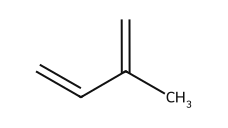
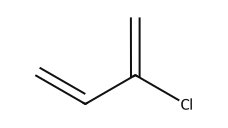
Which amongst the following molecules on polymerization produces neoprene?
निम्नलिखित में से कौन-सा अणु बहुलकीकरण पर निओप्रीन (neoprene) बनाता है?
  1. AH2C = CH–CH = CH2
  2. B
  3. CH2C = CH– C ≡ CH
  4. D
Show answer

Concept: Neoprene is the addition polymer of chloroprene (2-chlorobuta-1,3-diene).

  1. n CH2=C(Cl)–CH=CH2 → –(CH2–C(Cl)=CH–CH2)n– (neoprene).
  2. (A) buta-1,3-diene → polybutadiene / Buna rubbers.
  3. (C) vinylacetylene is an intermediate for making chloroprene, not the monomer itself.
  4. (D) isoprene (2-methylbuta-1,3-diene) → natural rubber.

Short trick: neoprene ↔ chloroprene; natural rubber ↔ isoprene – the 'Cl' version gives the oil-resistant rubber.

Answer: (B) 2-chlorobuta-1,3-diene

अवधारणा: निओप्रीन, क्लोरोप्रीन (2-क्लोरोब्यूटा-1,3-डाईन) का योगज बहुलक है।

  1. n CH2=C(Cl)–CH=CH2 → –(CH2–C(Cl)=CH–CH2)n– (निओप्रीन)।
  2. (A) ब्यूटा-1,3-डाईन → पॉलिब्यूटाडाईन / ब्यूना रबर।
  3. (C) वाइनिलऐसीटिलीन क्लोरोप्रीन बनाने का मध्यवर्ती है, स्वयं एकलक नहीं।
  4. (D) आइसोप्रीन (2-मेथिलब्यूटा-1,3-डाईन) → प्राकृतिक रबर।

शॉर्ट ट्रिक: निओप्रीन ↔ क्लोरोप्रीन; प्राकृतिक रबर ↔ आइसोप्रीन – 'Cl' वाला तेल-प्रतिरोधी रबर देता है।

उत्तर: (B) 2-क्लोरोब्यूटा-1,3-डाईन

NEET UGChemistryPolymers – neopreneNEET UG 2023 · 7 May Shift 1
Q147.
In Lassaigne's extract of an organic compound, both nitrogen and sulphur are present, which gives blood red colour with Fe3+ due to the formation of
किसी कार्बनिक यौगिक के लैसाँ निष्कर्ष (Lassaigne's extract) में नाइट्रोजन और सल्फर दोनों उपस्थित हैं, जो Fe3+ के साथ रक्त-लाल रंग देता है। यह किसके बनने के कारण है?
  1. AFe4[Fe(CN)6]3·xH2O
  2. BNaSCN
  3. C[Fe(CN)5NOS]4–
  4. D[Fe(SCN)]2+
Show answer

Concept: When N and S are both present, sodium fusion gives NaSCN; SCN– + Fe3+ → [Fe(SCN)]2+ (blood red).

  1. Na + C + N + S → NaSCN (sodium thiocyanate) in the extract.
  2. Fe3+ + SCN– → [Fe(SCN)]2+, the blood-red complex.
  3. (A) Prussian blue – test for N alone.
  4. (B) NaSCN is colourless; it is the reagent, not the coloured species.
  5. (C) [Fe(CN)5NOS]4– – violet colour in the sulphur test with sodium nitroprusside.

Short trick: Blue = N, Violet = S, Blood red = N + S together.

Answer: (D) [Fe(SCN)]2+

अवधारणा: जब N और S दोनों उपस्थित हों, तो सोडियम संगलन से NaSCN बनता है; SCN– + Fe3+ → [Fe(SCN)]2+ (रक्त-लाल)।

  1. Na + C + N + S → निष्कर्ष में NaSCN (सोडियम थायोसायनेट)।
  2. Fe3+ + SCN– → [Fe(SCN)]2+, रक्त-लाल संकुल।
  3. (A) प्रशियन ब्लू – केवल N का परीक्षण।
  4. (B) NaSCN रंगहीन है; यह अभिकर्मक है, रंगीन स्पीशीज़ नहीं।
  5. (C) [Fe(CN)5NOS]4– – सोडियम नाइट्रोप्रुसाइड के साथ S के परीक्षण में बैंगनी रंग।

शॉर्ट ट्रिक: नीला = N, बैंगनी = S, रक्त-लाल = N + S एक साथ।

उत्तर: (D) [Fe(SCN)]2+

NEET UGChemistryOrganic analysis – Lassaigne's testNEET UG 2023 · 7 May Shift 1
Q148.
Weight (g) of two moles of the organic compound, which is obtained by heating sodium ethanoate with sodium hydroxide in presence of calcium oxide is :
सोडियम एथेनोएट को कैल्सियम ऑक्साइड की उपस्थिति में सोडियम हाइड्रॉक्साइड के साथ गर्म करने पर प्राप्त कार्बनिक यौगिक के दो मोल का भार (g) है:
  1. A16
  2. B32
  3. C30
  4. D18
Show answer

Concept: Soda-lime decarboxylation removes –COONa as Na2CO3, giving an alkane with one carbon less.

  1. CH3COONa + NaOH (CaO, Δ) → CH4 + Na2CO3.
  2. Molar mass of CH4 = 12 + 4 = 16 g mol–1.
  3. Mass of 2 mol = 2 × 16 = 32 g.

Short trick: Sodium salt of Cn acid → Cn–1 alkane; ethanoate (C2) → methane.

Answer: (B) 32

अवधारणा: सोडा-लाइम विकार्बॉक्सिलन में –COONa, Na2CO3 के रूप में निकल जाता है और एक कार्बन कम वाला ऐल्केन बनता है।

  1. CH3COONa + NaOH (CaO, Δ) → CH4 + Na2CO3।
  2. CH4 का मोलर द्रव्यमान = 12 + 4 = 16 g mol–1।
  3. 2 मोल का द्रव्यमान = 2 × 16 = 32 g।

शॉर्ट ट्रिक: Cn अम्ल का सोडियम लवण → Cn–1 ऐल्केन; एथेनोएट (C2) → मेथेन।

उत्तर: (B) 32

NEET UGChemistryHydrocarbons – decarboxylationNEET UG 2023 · 7 May Shift 1
Q149.
Some tranquilizers are listed below. Which one from the following belongs to barbiturates?
कुछ प्रशान्तक (tranquilizers) नीचे सूचीबद्ध हैं। निम्नलिखित में से कौन-सा बार्बिट्यूरेट (barbiturates) वर्ग का है?
  1. AChlordiazepoxideक्लोरडाइएज़ेपॉक्साइड (Chlordiazepoxide)
  2. BMeprobamateमेप्रोबामेट (Meprobamate)
  3. CValiumवैलियम (Valium)
  4. DVeronalवेरोनल (Veronal)
Show answer

Concept: Barbiturates are derivatives of barbituric acid used as hypnotics (sleep producing) – veronal, amytal, nembutal, luminal, seconal.

  1. Veronal is a barbituric acid derivative → barbiturate.
  2. Chlordiazepoxide and meprobamate are mild tranquilizers for relieving tension – not barbiturates.
  3. Valium (diazepam) is a benzodiazepine – not a barbiturate.

Short trick: Barbiturate names end in '-al': Veronal, Amytal, Nembutal, Luminal, Seconal.

Answer: (D) Veronal

अवधारणा: बार्बिट्यूरेट, बार्बिट्यूरिक अम्ल के व्युत्पन्न हैं जो निद्राजनक (hypnotic) के रूप में प्रयुक्त होते हैं – वेरोनल, ऐमिटल, नेम्बुटल, ल्यूमिनल, सेकोनल।

  1. वेरोनल बार्बिट्यूरिक अम्ल का व्युत्पन्न है → बार्बिट्यूरेट।
  2. क्लोरडाइएज़ेपॉक्साइड और मेप्रोबामेट तनाव दूर करने वाले हल्के प्रशान्तक हैं – बार्बिट्यूरेट नहीं।
  3. वैलियम (डायज़ेपाम) एक बेंज़ोडायज़ेपीन है – बार्बिट्यूरेट नहीं।

शॉर्ट ट्रिक: बार्बिट्यूरेट के नाम '-al' पर समाप्त होते हैं: Veronal, Amytal, Nembutal, Luminal, Seconal।

उत्तर: (D) वेरोनल

NEET UGChemistryChemistry in everyday life – tranquilizersNEET UG 2023 · 7 May Shift 1
Q150.
The conductivity of centimolar solution of KCl at 25°C is 0.0210 ohm–1 cm–1 and the resistance of the cell containing the solution at 25°C is 60 ohm. The value of cell constant is
25°C पर KCl के सेन्टीमोलर विलयन की चालकता 0.0210 ohm–1 cm–1 है तथा 25°C पर इस विलयन से भरे सेल का प्रतिरोध 60 ohm है। सेल स्थिरांक का मान है
  1. A1.34 cm–1
  2. B3.28 cm–1
  3. C1.26 cm–1
  4. D3.34 cm–1
Show answer

Concept: κ = G* / R, so cell constant G* = κ × R.

  1. κ = 0.0210 ohm–1 cm–1, R = 60 ohm.
  2. G* = 0.0210 × 60 = 1.26 cm–1.

Short trick: Units check: (ohm–1 cm–1) × ohm = cm–1 – multiply, never divide.

Answer: (C) 1.26 cm–1

अवधारणा: κ = G* / R, अतः सेल स्थिरांक G* = κ × R।

  1. κ = 0.0210 ohm–1 cm–1, R = 60 ohm।
  2. G* = 0.0210 × 60 = 1.26 cm–1।

शॉर्ट ट्रिक: इकाई जाँच: (ohm–1 cm–1) × ohm = cm–1 – गुणा कीजिए, भाग नहीं।

उत्तर: (C) 1.26 cm–1

NEET UGChemistryElectrochemistry – cell constantNEET UG 2023 · 7 May Shift 1
Q151.
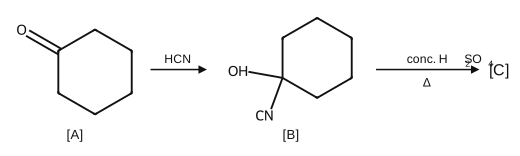
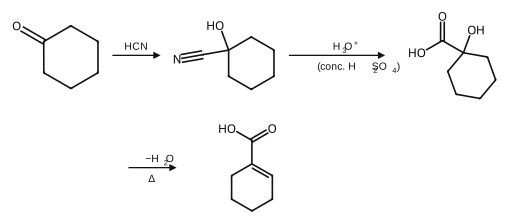
Complete the following reaction

C is ______
निम्नलिखित अभिक्रिया को पूर्ण कीजिए

C है ______
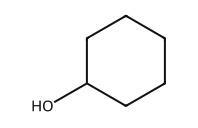
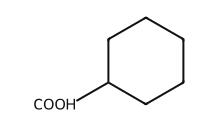
  1. A
  2. B
  3. C
  4. D
Show answer

Concept: HCN adds to C=O to give a cyanohydrin; hot conc. H2SO4 hydrolyses –CN to –COOH and dehydrates the tertiary –OH.

  1. Cyclohexanone + HCN → 1-hydroxycyclohexane-1-carbonitrile [B].
  2. Acid hydrolysis: –C≡N → –COOH, giving 1-hydroxycyclohexane-1-carboxylic acid.
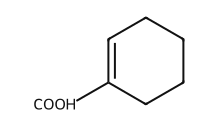
  3. Conc. H2SO4/Δ removes H2O from the 3° alcohol → C=C conjugated with –COOH: cyclohex-1-ene-1-carboxylic acid.
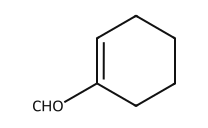
  4. (A) and (B) keep no C=C; (C) has CHO, but –CN never becomes –CHO with H2SO4.

Short trick: Conc. H2SO4 + Δ = 'hydrolyse + dehydrate': look for –COOH and a ring C=C.

Answer: (D) cyclohex-1-ene-1-carboxylic acid

अवधारणा: HCN, C=O पर योग करके सायनोहाइड्रिन बनाता है; गर्म सान्द्र H2SO4 –CN का –COOH में जल-अपघटन करता है और तृतीयक –OH का निर्जलीकरण करता है।

  1. साइक्लोहेक्सेनोन + HCN → 1-हाइड्रॉक्सीसाइक्लोहेक्सेन-1-कार्बोनाइट्राइल [B]।
  2. अम्लीय जल-अपघटन: –C≡N → –COOH, जिससे 1-हाइड्रॉक्सीसाइक्लोहेक्सेन-1-कार्बोक्सिलिक अम्ल बनता है।
  3. सान्द्र H2SO4/Δ, 3° ऐल्कोहॉल से H2O हटाता है → –COOH से संयुग्मित C=C: साइक्लोहेक्स-1-ईन-1-कार्बोक्सिलिक अम्ल।
  4. (A) और (B) में C=C नहीं है; (C) में CHO है, परन्तु H2SO4 से –CN कभी –CHO नहीं बनता।

शॉर्ट ट्रिक: सान्द्र H2SO4 + Δ = 'जल-अपघटन + निर्जलीकरण': –COOH और वलय में C=C खोजिए।

उत्तर: (D) साइक्लोहेक्स-1-ईन-1-कार्बोक्सिलिक अम्ल

NEET UGChemistryAldehydes & ketones – cyanohydrinNEET UG 2023 · 7 May Shift 1
Q152.
Homoleptic complex from the following complexes is
निम्नलिखित संकुलों में से होमोलेप्टिक (homoleptic) संकुल है
  1. APotassium trioxalatoaluminate (III)पोटैशियम ट्राइऑक्सेलेटोऐलुमिनेट (III)
  2. BDiamminechloridonitrito-N-platinum (II)डाइऐम्मीनक्लोरिडोनाइट्राइटो-N-प्लैटिनम (II)
  3. CPentaamminecarbonatocobalt (III) chlorideपेन्टाऐम्मीनकार्बोनेटोकोबाल्ट (III) क्लोराइड
  4. DTriamminetriaquachromium (III) chlorideट्राइऐम्मीनट्राइऐक्वाक्रोमियम (III) क्लोराइड
Show answer

Concept: A homoleptic complex has only one kind of ligand around the metal; heteroleptic has more than one kind.

  1. (A) K3[Al(C2O4)3] – only oxalate ligands → homoleptic.
  2. (B) [Pt(NH3)2Cl(NO2)] – NH3, Cl–, NO2– → heteroleptic.
  3. (C) [Co(NH3)5(CO3)]Cl – NH3 and CO32– → heteroleptic.
  4. (D) [Cr(NH3)3(H2O)3]Cl3 – NH3 and H2O → heteroleptic.

Short trick: Count ligand names before the metal: one name (tri-oxalato) = homo; two or more names = hetero.

Answer: (A) Potassium trioxalatoaluminate (III)

अवधारणा: होमोलेप्टिक संकुल में धातु के चारों ओर केवल एक प्रकार के लिगन्ड होते हैं; हेटेरोलेप्टिक में एक से अधिक प्रकार।

  1. (A) K3[Al(C2O4)3] – केवल ऑक्सेलेट लिगन्ड → होमोलेप्टिक।
  2. (B) [Pt(NH3)2Cl(NO2)] – NH3, Cl–, NO2– → हेटेरोलेप्टिक।
  3. (C) [Co(NH3)5(CO3)]Cl – NH3 और CO32– → हेटेरोलेप्टिक।
  4. (D) [Cr(NH3)3(H2O)3]Cl3 – NH3 और H2O → हेटेरोलेप्टिक।

शॉर्ट ट्रिक: धातु से पहले लिगन्ड के नाम गिनिए: एक नाम (ट्राइ-ऑक्सेलेटो) = होमो; दो या अधिक नाम = हेटेरो।

उत्तर: (A) पोटैशियम ट्राइऑक्सेलेटोऐलुमिनेट (III)

NEET UGChemistryCoordination compounds – homoleptic complexesNEET UG 2023 · 7 May Shift 1
Q153.
The relation between nm, (nm = the number of permissible values of magnetic quantum number (m)) for a given value of azimuthal quantum number (l), is
दिगंशी क्वांटम संख्या (l) के किसी दिए गए मान के लिए nm (nm = चुम्बकीय क्वांटम संख्या (m) के अनुमत मानों की संख्या) के बीच सम्बन्ध है
  1. Al=nm−12
  2. Bl=2nm+1
  3. Cnm=2l2+1
  4. Dnm=l+2
Show answer

Concept: For a given l, m takes values –l … 0 … +l, i.e. 2l+1 values.

  1. nm=2l+1
  2. Rearranging: l=nm−12 → option (A).
  3. Check with p-subshell: l=1 → nm=3 and (3−1)/2=1 ✔; (B), (C), (D) fail this check.

Short trick: Plug l=1, nm=3 into every option – only (A) holds.

Answer: (A) l=nm−12

अवधारणा: किसी दिए गए l के लिए m के मान –l … 0 … +l होते हैं, अर्थात 2l+1 मान।

  1. nm=2l+1
  2. पुनर्व्यवस्थित करने पर: l=nm−12 → विकल्प (A)।
  3. p-उपकोश से जाँच: l=1 → nm=3 तथा (3−1)/2=1 ✔; (B), (C), (D) इस जाँच में असफल।

शॉर्ट ट्रिक: l=1, nm=3 प्रत्येक विकल्प में रखिए – केवल (A) सही बैठता है।

उत्तर: (A) l=nm−12

NEET UGChemistryStructure of atom – quantum numbersNEET UG 2023 · 7 May Shift 1
Q154.
The stability of Cu2+ is more than Cu+ salts in aqueous solution due to
जलीय विलयन में Cu2+ का स्थायित्व Cu+ लवणों से अधिक होता है, इसका कारण है
  1. AFirst ionisation enthalpyप्रथम आयनन एन्थैल्पी
  2. BEnthalpy of atomizationपरमाणुकरण एन्थैल्पी
  3. CHydration energyजलयोजन ऊर्जा (hydration energy)
  4. DSecond ionisation enthalpyद्वितीय आयनन एन्थैल्पी
Show answer

Concept: Stability of an ion in water depends on the balance between ionisation enthalpy (cost) and hydration enthalpy (gain).

  1. Cu2+ is smaller and doubly charged, so its ΔhydH is much more negative than that of Cu+.
  2. This large hydration energy more than compensates the second ionisation enthalpy of Cu.
  3. Hence 2Cu+(aq) → Cu2+(aq) + Cu(s) (disproportionation); Cu2+ is more stable in water.
  4. Ionisation enthalpies and atomisation enthalpy work against Cu2+, so they cannot be the reason.

Short trick: Hydration energy ∝ charge/size – higher charge, smaller ion → more stable in water.

Answer: (C) Hydration energy

अवधारणा: जल में किसी आयन का स्थायित्व आयनन एन्थैल्पी (लागत) तथा जलयोजन एन्थैल्पी (लाभ) के संतुलन पर निर्भर करता है।

  1. Cu2+ छोटा और द्वि-आवेशित है, अतः इसकी ΔhydH, Cu+ से कहीं अधिक ऋणात्मक है।
  2. यह अधिक जलयोजन ऊर्जा Cu की द्वितीय आयनन एन्थैल्पी की पूर्ति से भी अधिक कर देती है।
  3. अतः 2Cu+(aq) → Cu2+(aq) + Cu(s) (असमानुपातन); जल में Cu2+ अधिक स्थायी है।
  4. आयनन एन्थैल्पी और परमाणुकरण एन्थैल्पी Cu2+ के विरुद्ध कार्य करती हैं, अतः ये कारण नहीं हो सकतीं।

शॉर्ट ट्रिक: जलयोजन ऊर्जा ∝ आवेश/आकार – अधिक आवेश, छोटा आयन → जल में अधिक स्थायी।

उत्तर: (C) जलयोजन ऊर्जा

NEET UGChemistryd-Block – stability of Cu²⁺ in waterNEET UG 2023 · 7 May Shift 1
Q155.
Taking stability as the factor, which one of the following represents correct relationship?
स्थायित्व को आधार मानते हुए, निम्नलिखित में से कौन-सा सही सम्बन्ध दर्शाता है?
  1. ATlCl3 > TlCl
  2. BInI3 > InI
  3. CAlCl > AlCl3
  4. DTlI > TlI3
Show answer

Concept: Inert pair effect: down group 13 the ns2 pair resists bonding, so the +1 state becomes more stable than +3 (Tl+ > Tl3+).

  1. (A) Tl(+1) is more stable than Tl(+3) → TlCl > TlCl3; given order is wrong.
  2. (B) Indium already shows a stable +1 state (inert pair effect; InI is a stable compound), so InI3 > InI cannot be asserted on stability grounds.
  3. (C) Al is stable in +3 → AlCl3 > AlCl; given order is wrong.
  4. (D) Tl prefers +1 → TlI > TlI3 ✔ (in fact 'TlI3' is Tl+[I3]–, thallium still +1).

Short trick: In group 13, '+1 wins at the bottom' – Tl(I) compounds are the stable ones.

Answer: (D) TlI > TlI3

अवधारणा: अक्रिय युग्म प्रभाव: वर्ग 13 में नीचे जाने पर ns2 युग्म आबंधन से बचता है, अतः +1 अवस्था +3 से अधिक स्थायी हो जाती है (Tl+ > Tl3+)।

  1. (A) Tl(+1), Tl(+3) से अधिक स्थायी है → TlCl > TlCl3; दिया गया क्रम गलत है।
  2. (B) इंडियम में भी स्थायी +1 अवस्था मिलती है (अक्रिय युग्म प्रभाव; InI एक स्थायी यौगिक है), अतः स्थायित्व के आधार पर InI3 > InI नहीं कहा जा सकता।
  3. (C) Al, +3 में स्थायी है → AlCl3 > AlCl; दिया गया क्रम गलत है।
  4. (D) Tl, +1 पसंद करता है → TlI > TlI3 ✔ (वास्तव में 'TlI3' = Tl+[I3]–, थैलियम फिर भी +1 में)।

शॉर्ट ट्रिक: वर्ग 13 में 'नीचे +1 जीतता है' – Tl(I) यौगिक ही स्थायी होते हैं।

उत्तर: (D) TlI > TlI3

NEET UGChemistryp-Block (group 13) – inert pair effectNEET UG 2023 · 7 May Shift 1
Q156.
Which one is an example of heterogenous catalysis?
निम्नलिखित में से कौन-सा विषमांगी उत्प्रेरण (heterogeneous catalysis) का उदाहरण है?
  1. AOxidation of sulphur dioxide into sulphur trioxide in the presence of oxides of nitrogenनाइट्रोजन के ऑक्साइडों की उपस्थिति में सल्फर डाइऑक्साइड का सल्फर ट्राइऑक्साइड में ऑक्सीकरण
  2. BHydrolysis of sugar catalysed by H+ ionsH+ आयनों द्वारा उत्प्रेरित शर्करा का जल-अपघटन
  3. CDecomposition of ozone in presence of nitrogen monoxideनाइट्रोजन मोनोऑक्साइड की उपस्थिति में ओज़ोन का अपघटन
  4. DCombination between dinitrogen and dihydrogen to form ammonia in the presence of finely divided ironबारीक विभाजित आयरन की उपस्थिति में डाइनाइट्रोजन और डाइहाइड्रोजन का संयोग होकर अमोनिया बनना
Show answer

Concept: Heterogeneous catalysis: catalyst and reactants are in different phases.

  1. (A) 2SO2(g) + O2(g) → 2SO3(g) with NO(g) – all gases → homogeneous.
  2. (B) Sugar(aq) + H2O(l) with H+(aq) – one liquid phase → homogeneous.
  3. (C) 2O3(g) → 3O2(g) with NO(g) – all gases → homogeneous.
  4. (D) N2(g) + 3H2(g) → 2NH3(g) on solid Fe – gas + solid → heterogeneous ✔ (Haber process).

Short trick: Look for a solid catalyst (Fe, Pt, Ni, V2O5) with gaseous/liquid reactants.

Answer: (D) Haber process with finely divided iron

अवधारणा: विषमांगी उत्प्रेरण: उत्प्रेरक और अभिकारक भिन्न-भिन्न प्रावस्थाओं में होते हैं।

  1. (A) 2SO2(g) + O2(g) → 2SO3(g), NO(g) के साथ – सभी गैसें → समांगी।
  2. (B) शर्करा(aq) + H2O(l), H+(aq) के साथ – एक ही द्रव प्रावस्था → समांगी।
  3. (C) 2O3(g) → 3O2(g), NO(g) के साथ – सभी गैसें → समांगी।
  4. (D) ठोस Fe पर N2(g) + 3H2(g) → 2NH3(g) – गैस + ठोस → विषमांगी ✔ (हेबर प्रक्रम)।

शॉर्ट ट्रिक: गैसीय/द्रव अभिकारकों के साथ ठोस उत्प्रेरक (Fe, Pt, Ni, V2O5) खोजिए।

उत्तर: (D) बारीक विभाजित आयरन के साथ हेबर प्रक्रम

NEET UGChemistrySurface chemistry – heterogeneous catalysisNEET UG 2023 · 7 May Shift 1
Q157.
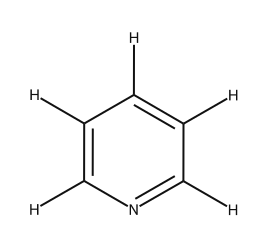
The number of σ bonds, π bonds and lone pair of electrons in pyridine, respectively are:
पिरिडीन में σ आबंधों, π आबंधों तथा एकाकी इलेक्ट्रॉन युग्मों की संख्या क्रमशः है:
  1. A11, 2, 0
  2. B12, 3, 0
  3. C11, 3, 1
  4. D12, 2, 1
Show answer

Concept: Pyridine C5H5N is a benzene ring with one CH replaced by N; every single or double bond contains one σ bond.

  1. Ring σ bonds: 6 (5 C–C/C–N edges + 1 more = 6 ring bonds).
  2. C–H σ bonds: 5 (N carries no H).
  3. Total σ = 6 + 5 = 11.
  4. π bonds = 3 (three alternate double bonds).
  5. N has one lone pair in an sp2 orbital (in the ring plane, not part of the aromatic sextet) → 1 lone pair.

Short trick: Pyridine = benzene (12 σ, 3 π) – one C–H bond + lone pair on N → 11 σ, 3 π, 1 lp.

Answer: (C) 11, 3, 1

अवधारणा: पिरिडीन C5H5N, ऐसा बेंज़ीन वलय है जिसमें एक CH को N से प्रतिस्थापित किया गया है; प्रत्येक एकल या द्वि-आबंध में एक σ आबंध होता है।

  1. वलय के σ आबंध: 6 (वलय की 6 भुजाएँ)।
  2. C–H σ आबंध: 5 (N पर H नहीं है)।
  3. कुल σ = 6 + 5 = 11।
  4. π आबंध = 3 (तीन एकान्तर द्वि-आबंध)।
  5. N पर sp2 कक्षक में एक एकाकी युग्म है (वलय के तल में, ऐरोमैटिक षष्टक का भाग नहीं) → 1 एकाकी युग्म।

शॉर्ट ट्रिक: पिरिडीन = बेंज़ीन (12 σ, 3 π) – एक C–H आबंध + N पर एकाकी युग्म → 11 σ, 3 π, 1 lp।

उत्तर: (C) 11, 3, 1

NEET UGChemistryChemical bonding – σ, π bonds in pyridineNEET UG 2023 · 7 May Shift 1
Q158.
The correct order of energies of molecular orbitals of N2 molecule, is
N2 अणु के आण्विक कक्षकों की ऊर्जाओं का सही क्रम है
  1. Aσ1s < σ*1s < σ2s < σ*2s < (π2px = π2py) < σ2pz < (π*2px = π*2py) < σ*2pz
  2. Bσ1s < σ*1s < σ2s < σ*2s < σ2pz < (π2px = π2py) < (π*2px = π*2py) < π*2pz
  3. Cσ1s < σ*1s < σ2s < σ*2s < σ2pz < σ*2pz < (π2px = π2py) < (π*2px = π*2py)
  4. Dσ1s < σ*1s < σ2s < σ*2s < (π2px = π2py) < (π*2px = π*2py) < σ2pz < σ*2pz
Show answer

Concept: For molecules with ≤ 14 electrons (B2, C2, N2), s–p mixing raises σ2pz above the π2p pair.

  1. Order: σ1s < σ*1s < σ2s < σ*2s < (π2px = π2py) < σ2pz < (π*2px = π*2py) < σ*2pz → option (A).
  2. (B) is the O2/F2 order (and wrongly writes π*2pz).
  3. (C) puts σ*2pz below bonding π – impossible.
  4. (D) puts all antibonding π below σ2pz – wrong.

Short trick: Up to N2: 'π before σ'; from O2: 'σ before π' for the 2p bonding set.

Answer: (A)

अवधारणा: ≤ 14 इलेक्ट्रॉन वाले अणुओं (B2, C2, N2) में s–p मिश्रण के कारण σ2pz, π2p युग्म से ऊपर चला जाता है।

  1. क्रम: σ1s < σ*1s < σ2s < σ*2s < (π2px = π2py) < σ2pz < (π*2px = π*2py) < σ*2pz → विकल्प (A)।
  2. (B) O2/F2 का क्रम है (और π*2pz गलत लिखा है)।
  3. (C) σ*2pz को आबंधी π से नीचे रखता है – असम्भव।
  4. (D) सभी प्रतिआबंधी π को σ2pz से नीचे रखता है – गलत।

शॉर्ट ट्रिक: N2 तक: 2p आबंधी समूह में 'पहले π फिर σ'; O2 से: 'पहले σ फिर π'।

उत्तर: (A)

NEET UGChemistryChemical bonding – MO energy order of N₂NEET UG 2023 · 7 May Shift 1
Q159.
Given below are two statements : one is labelled as Assertion A and the other is labelled as Reason R
Assertion A: Helium is used to dilute oxygen in diving apparatus.
Reason R: Helium has high solubility in O2.
In the light of the above statements, choose the correct answer from the options given below
नीचे दो कथन दिए गए हैं: एक को अभिकथन A और दूसरे को कारण R के रूप में लिखा गया है:
अभिकथन A: गोताखोरी उपकरणों में ऑक्सीजन को तनु करने के लिए हीलियम का उपयोग किया जाता है।
कारण R: हीलियम की O2 में विलेयता उच्च होती है।
उपर्युक्त कथनों के आलोक में, नीचे दिए गए विकल्पों में से सही उत्तर चुनिए
  1. ABoth A and R are true and R correct explanation of AA और R दोनों सत्य हैं तथा R, A की सही व्याख्या है
  2. BBoth A and R are true and R is NOT the correct explanation of AA और R दोनों सत्य हैं परन्तु R, A की सही व्याख्या नहीं है
  3. CA is true but R is falseA सत्य है परन्तु R असत्य है
  4. DA is false but R is trueA असत्य है परन्तु R सत्य है
Show answer

Concept: NCERT: helium is used as a diluent for oxygen in modern diving apparatus because of its very low solubility in blood.

  1. A – true: divers breathe He–O2 mixtures.
  2. R – false: the relevant property is low solubility of He in blood (so it does not cause 'bends' on decompression like N2); 'high solubility in O2' is neither true as a reason nor meaningful.
  3. Hence A true, R false.

Short trick: Diver + Helium → think 'less dissolves in blood → no bends'.

Answer: (C) A is true but R is false

अवधारणा: NCERT: आधुनिक गोताखोरी उपकरणों में ऑक्सीजन के तनुकारक के रूप में हीलियम का उपयोग होता है क्योंकि रक्त में इसकी विलेयता बहुत कम है।

  1. A – सत्य: गोताखोर He–O2 मिश्रण में श्वास लेते हैं।
  2. R – असत्य: प्रासंगिक गुण रक्त में He की कम विलेयता है (अतः विसंपीडन पर N2 की तरह 'बेंड्स' नहीं होते); 'O2 में उच्च विलेयता' न तो सही कारण है न ही अर्थपूर्ण।
  3. अतः A सत्य, R असत्य।

शॉर्ट ट्रिक: गोताखोर + हीलियम → 'रक्त में कम घुलता है → बेंड्स नहीं' सोचिए।

उत्तर: (C) A सत्य है परन्तु R असत्य है

NEET UGChemistryNoble gases – uses of heliumNEET UG 2023 · 7 May Shift 1
Q160.
For a certain reaction, the rate = k[A]2[B], when the initial concentration of A is tripled keeping concentration of B constant, the initial rate would
किसी अभिक्रिया के लिए दर = k[A]2[B] है। B की सान्द्रता स्थिर रखते हुए A की प्रारम्भिक सान्द्रता तिगुनी करने पर प्रारम्भिक दर
  1. ADecrease by a factor of nineनौ गुना घट जाएगी
  2. BIncrease by a factor of sixछह गुना बढ़ जाएगी
  3. CIncrease by a factor of nineनौ गुना बढ़ जाएगी
  4. DIncrease by a factor of threeतीन गुना बढ़ जाएगी
Show answer

Concept: Rate depends on [A] raised to its order (2 here).

  1. r1 = k[A]2[B]
  2. r2 = k(3[A])2[B] = 9k[A]2[B]
  3. r2/r1 = 9 → rate increases nine times.

Short trick: New rate factor = (change factor)order = 32 = 9.

Answer: (C) Increase by a factor of nine

अवधारणा: दर, [A] की उसकी कोटि (यहाँ 2) के घात पर निर्भर करती है।

  1. r1 = k[A]2[B]
  2. r2 = k(3[A])2[B] = 9k[A]2[B]
  3. r2/r1 = 9 → दर नौ गुना बढ़ती है।

शॉर्ट ट्रिक: नई दर का गुणांक = (परिवर्तन गुणांक)कोटि = 32 = 9।

उत्तर: (C) नौ गुना बढ़ जाएगी

NEET UGChemistryChemical kinetics – rate lawNEET UG 2023 · 7 May Shift 1