NEET UG · 2,240 questions

NEET UG 2015, 2016, 2017, 2018, 2019, 2020, 2021, 2022, 2023, 2024, 2025, 2026 PYQs

Real previous year questions, subject-wise. Try the question, then open the answer and the explanation in Hindi & English – free, no login.

Courses – airGurukul

200 questions in Botany.

Q161.
Diadelphous stamens are found in:
द्विसंघी (Diadelphous) पुंकेसर पाए जाते हैं:
  1. APeaमटर में
  2. BChina rose and citrusगुड़हल (चाइना रोज़) तथा सिट्रस में
  3. CChina roseगुड़हल (चाइना रोज़) में
  4. DCitrusसिट्रस में
Show answer

Concept: Stamens united by filaments into bundles: monadelphous – one bundle (China rose); diadelphous – two bundles (pea); polyadelphous – more than two bundles (citrus).

  1. Pea (Fabaceae): (9) + 1 – nine fused, one free → diadelphous – (A) correct.
  2. China rose: monadelphous (staminal tube) – (C) wrong.
  3. Citrus: polyadelphous – (D) wrong.
  4. (B) combines two non-diadelphous plants – wrong.

Short trick: “Mono-China, Di-Pea, Poly-Citrus” (1-2-many bundles).

Answer: (A) Pea

अवधारणा: पुंकेसर तंतुओं द्वारा गुच्छों में जुड़े हों: एकसंघी – एक गुच्छा (गुड़हल); द्विसंघी – दो गुच्छे (मटर); बहुसंघी – दो से अधिक गुच्छे (सिट्रस)।

  1. मटर (फैबेसी): (9) + 1 – नौ जुड़े हुए, एक स्वतंत्र → द्विसंघी – (A) सही।
  2. गुड़हल: एकसंघी (पुंकेसरी नलिका) – (C) गलत।
  3. सिट्रस: बहुसंघी – (D) गलत।
  4. (B) दो गैर-द्विसंघी पौधों को जोड़ता है – गलत।

शॉर्ट ट्रिक: “एक-गुड़हल, द्वि-मटर, बहु-सिट्रस” (1-2-अनेक गुच्छे)।

उत्तर: (A) मटर में
NEET UGBotanyMorphology – androecium (cohesion of stamens)NEET UG 2021 · 12 Sep Shift 1
Q162.
Which of the following statements is not correct?
निम्नलिखित में से कौन-सा कथन सही नहीं है?
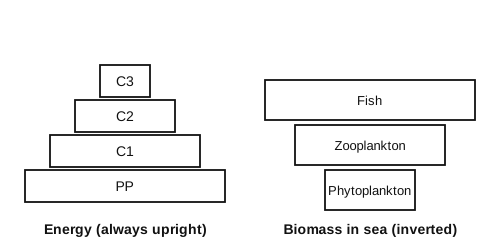
  1. APyramid of energy is always uprightऊर्जा का पिरैमिड सदैव सीधा होता है
  2. BPyramid of numbers in a grassland ecosystem is uprightघास-स्थल पारितंत्र में संख्या का पिरैमिड सीधा होता है
  3. CPyramid of biomass in sea is generally inverted.समुद्र में जैवभार का पिरैमिड सामान्यतः उल्टा होता है।
  4. DPyramid of biomass in sea is generally uprightसमुद्र में जैवभार का पिरैमिड सामान्यतः सीधा होता है
Show answer

Concept: Energy decreases at every trophic level (10 % law), so the energy pyramid is always upright. In the sea, the small standing biomass of phytoplankton supports a larger biomass of fish → inverted biomass pyramid.

  1. (A) correct – energy pyramid can never be inverted.
  2. (B) correct – grassland: many grasses > fewer herbivores > fewer carnivores (upright).
  3. (C) correct – sea biomass pyramid is generally inverted.
  4. (D) not correct – it directly contradicts (C).

Short trick: When two options are exact opposites (C vs D), one of them is the answer; remember “sea = inverted biomass, energy = never inverted”.

Answer: (D) Pyramid of biomass in sea is generally upright

अवधारणा: प्रत्येक पोषी स्तर पर ऊर्जा घटती है (10 % नियम), इसलिए ऊर्जा का पिरैमिड सदैव सीधा होता है। समुद्र में पादपप्लवकों का कम खड़ा जैवभार मछलियों के अधिक जैवभार का पोषण करता है → उल्टा जैवभार पिरैमिड।

  1. (A) सही – ऊर्जा पिरैमिड कभी उल्टा नहीं हो सकता।
  2. (B) सही – घास-स्थल: बहुत अधिक घास > कम शाकाहारी > और कम मांसाहारी (सीधा)।
  3. (C) सही – समुद्र में जैवभार पिरैमिड सामान्यतः उल्टा होता है।
  4. (D) सही नहीं – यह सीधे (C) का विरोधी है।

शॉर्ट ट्रिक: जब दो विकल्प एकदम विपरीत हों (C बनाम D), उनमें से एक उत्तर होता है; याद रखें “समुद्र = उल्टा जैवभार, ऊर्जा = कभी उल्टा नहीं”।

उत्तर: (D) समुद्र में जैवभार का पिरैमिड सामान्यतः सीधा होता है

NEET UGBotanyEcosystem – ecological pyramidsNEET UG 2021 · 12 Sep Shift 1
Q163.
Which of the following are not secondary metabolites in plants?
निम्नलिखित में से कौन-से पादपों में द्वितीयक उपापचयज नहीं हैं?
  1. AVinblastin, curcuminविनब्लास्टिन, करक्यूमिन
  2. BRubber, gumsरबर, गोंद
  3. CMorphine, codeineमॉर्फीन, कोडीन
  4. DAmino acids, glucoseअमीनो अम्ल, ग्लूकोज़
Show answer

Concept: Primary metabolites (sugars, amino acids, nucleotides, fatty acids) have identifiable roles in normal physiology; secondary metabolites (alkaloids, drugs, pigments, rubber, gums…) are not part of routine metabolism.

  1. Vinblastin (drug) and curcumin (drug/pigment) – secondary – (A) wrong.
  2. Rubber and gums (polymeric substances) – secondary – (B) wrong.
  3. Morphine and codeine (alkaloids) – secondary – (C) wrong.
  4. Amino acids and glucose – primary metabolites – (D) correct.

Short trick: If you find it in every cell’s routine metabolism (glucose, amino acids) → primary.

Answer: (D) Amino acids, glucose

अवधारणा: प्राथमिक उपापचयजों (शर्करा, अमीनो अम्ल, न्यूक्लियोटाइड, वसा अम्ल) की सामान्य कार्यिकी में पहचानी जाने योग्य भूमिका होती है; द्वितीयक उपापचयज (ऐल्कलॉइड, औषधियाँ, वर्णक, रबर, गोंद…) सामान्य उपापचय का भाग नहीं होते।

  1. विनब्लास्टिन (औषधि) तथा करक्यूमिन (औषधि/वर्णक) – द्वितीयक – (A) गलत।
  2. रबर तथा गोंद (बहुलकीय पदार्थ) – द्वितीयक – (B) गलत।
  3. मॉर्फीन तथा कोडीन (ऐल्कलॉइड) – द्वितीयक – (C) गलत।
  4. अमीनो अम्ल तथा ग्लूकोज़ – प्राथमिक उपापचयज – (D) सही।

शॉर्ट ट्रिक: जो हर कोशिका के सामान्य उपापचय में मिले (ग्लूकोज़, अमीनो अम्ल) → प्राथमिक।

उत्तर: (D) अमीनो अम्ल, ग्लूकोज़

NEET UGBotanyBiomolecules – primary and secondary metabolitesNEET UG 2021 · 12 Sep Shift 1
Q164.
Gemmae are present in:
जेमी (Gemmae) पाए जाते हैं:
  1. ASome Gymnospermsकुछ अनावृतबीजियों में
  2. BSome Liverwortsकुछ लिवरवर्ट में
  3. CMossesमॉस में
  4. DPteridophytesटेरिडोफाइट में
Show answer

Concept: NCERT: liverworts (e.g. Marchantia) reproduce asexually by fragmentation or by gemmae – green, multicellular asexual buds formed in small cup-like gemma cups on the thallus.

  1. Some liverworts bear gemmae – (B) correct.
  2. Gymnosperms reproduce by seeds – (A) wrong.
  3. Mosses reproduce vegetatively by fragmentation and budding in the secondary protonema – (C) wrong.
  4. Pteridophytes reproduce by spores – (D) wrong.

Short trick: “Gemma cup = Marchantia” (liverwort).

Answer: (B) Some Liverworts

अवधारणा: NCERT: लिवरवर्ट (जैसे Marchantia) अलैंगिक जनन विखण्डन या जेमी द्वारा करते हैं – जेमी हरी, बहुकोशिकीय अलैंगिक कलिकाएँ हैं जो सूकाय (thallus) पर छोटे प्याले-जैसे जेमा कप में बनती हैं।

  1. कुछ लिवरवर्ट में जेमी होते हैं – (B) सही।
  2. अनावृतबीजी बीजों द्वारा जनन करते हैं – (A) गलत।
  3. मॉस विखण्डन तथा द्वितीयक प्रथमतंतु (protonema) में मुकुलन द्वारा कायिक जनन करते हैं – (C) गलत।
  4. टेरिडोफाइट बीजाणुओं द्वारा जनन करते हैं – (D) गलत।

शॉर्ट ट्रिक: “जेमा कप = मार्केन्शिया” (लिवरवर्ट)।

उत्तर: (B) कुछ लिवरवर्ट में

NEET UGBotanyPlant kingdom – bryophytes (liverworts)NEET UG 2021 · 12 Sep Shift 1
Q165.
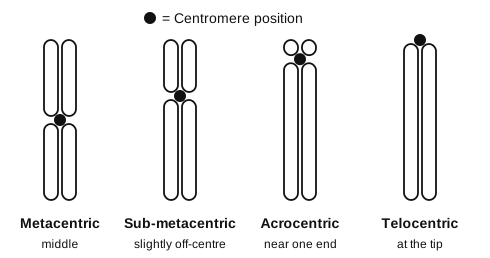
When the centromere is situated in the middle of two equal arms of chromosomes, the chromosome is referred as:
जब गुणसूत्रबिन्दु (centromere) गुणसूत्र की दो समान भुजाओं के मध्य में स्थित होता है, तो गुणसूत्र कहलाता है:
  1. ASub-metacentricउप-मध्यकेन्द्री (Sub-metacentric)
  2. BAcrocentricअग्रबिन्दु (Acrocentric)
  3. CMetacentricमध्यकेन्द्री (Metacentric)
  4. DTelocentricअंतकेन्द्री (Telocentric)
Show answer

Concept: Chromosomes are classified by the position of the centromere (primary constriction).

  1. Metacentric – centromere in the middle, two equal arms – (C) correct.
  2. Sub-metacentric – centromere slightly away from the middle, one arm shorter – (A) wrong.
  3. Acrocentric – centromere close to one end, one very short arm – (B) wrong.
  4. Telocentric – centromere at the terminal end – (D) wrong.

Short trick: Metacentric = Middle; Telocentric = Tip; Acrocentric = Almost at tip.

Answer: (C) Metacentric

अवधारणा: गुणसूत्रों का वर्गीकरण गुणसूत्रबिन्दु (प्राथमिक संकीर्णन) की स्थिति के आधार पर किया जाता है।

  1. मध्यकेन्द्री – गुणसूत्रबिन्दु बीच में, दो समान भुजाएँ – (C) सही।
  2. उप-मध्यकेन्द्री – गुणसूत्रबिन्दु बीच से थोड़ा हटकर, एक भुजा छोटी – (A) गलत।
  3. अग्रबिन्दु (acrocentric) – गुणसूत्रबिन्दु एक सिरे के पास, एक भुजा बहुत छोटी – (B) गलत।
  4. अंतकेन्द्री (telocentric) – गुणसूत्रबिन्दु बिल्कुल अंतिम सिरे पर – (D) गलत।

शॉर्ट ट्रिक: Metacentric = Middle (मध्य); Telocentric = Tip (सिरा); Acrocentric = Almost at tip (लगभग सिरे पर)।

उत्तर: (C) मध्यकेन्द्री (Metacentric)

NEET UGBotanyCell – chromosome types by centromereNEET UG 2021 · 12 Sep Shift 1
Q166.
The factor that leads to Founder effect in a population is:
किसी समष्टि में संस्थापक प्रभाव (Founder effect) उत्पन्न करने वाला कारक है:
  1. AMutationउत्परिवर्तन
  2. BGenetic driftआनुवंशिक विचलन (Genetic drift)
  3. CNatural selectionप्राकृतिक वरण
  4. DGenetic recombinationआनुवंशिक पुनर्योजन
Show answer

Concept: NCERT: when gene-frequency change occurs by chance it is genetic drift; sometimes the change in allele frequency is so different in the new sample that the founders become a different species – this original drifted population is the founder (founder effect).

  1. Genetic drift (chance change in a small group that founds a new population) → founder effect – (B) correct.
  2. Mutation creates new alleles, not the sampling effect – (A) wrong.
  3. Natural selection is non-random (fitness-based) – (C) wrong.
  4. Recombination reshuffles alleles in individuals; it does not explain founder effect – (D) wrong.

Short trick: Founder effect & bottleneck are the two classic “chance” cases = drift.

Answer: (B) Genetic drift

अवधारणा: NCERT: जब जीन आवृत्ति में परिवर्तन संयोगवश होता है तो वह आनुवंशिक विचलन है; कभी-कभी नए नमूने में अलील आवृत्ति इतनी भिन्न हो जाती है कि वे एक भिन्न जाति बन जाते हैं – यह मूल विचलित समष्टि संस्थापक होती है (संस्थापक प्रभाव)।

  1. आनुवंशिक विचलन (नई समष्टि बसाने वाले छोटे समूह में संयोगवश परिवर्तन) → संस्थापक प्रभाव – (B) सही।
  2. उत्परिवर्तन नए अलील बनाता है, यह प्रतिचयन प्रभाव नहीं है – (A) गलत।
  3. प्राकृतिक वरण अयादृच्छिक (योग्यता-आधारित) होता है – (C) गलत।
  4. पुनर्योजन जीवों में अलीलों का पुनर्विन्यास करता है; यह संस्थापक प्रभाव की व्याख्या नहीं करता – (D) गलत।

शॉर्ट ट्रिक: संस्थापक प्रभाव तथा बॉटलनेक – दोनों “संयोग” के उदाहरण = विचलन।

उत्तर: (B) आनुवंशिक विचलन (Genetic drift)

NEET UGBotanyEvolution – genetic drift and founder effectNEET UG 2021 · 12 Sep Shift 1
Q167.
Genera like Selaginella and Salvinia produce two kinds of spores. Such plants are known as:
Selaginella तथा Salvinia जैसे वंश दो प्रकार के बीजाणु उत्पन्न करते हैं। ऐसे पादप कहलाते हैं:
  1. AHomosporousसमबीजाणुक (Homosporous)
  2. BHeterosporousविषमबीजाणुक (Heterosporous)
  3. CHomosorusहोमोसोरस (Homosorus)
  4. DHeterosorusहेटेरोसोरस (Heterosorus)
Show answer

Concept: NCERT: in Selaginella and Salvinia two kinds of spores – macro (large) and micro (small) – are produced; such plants are heterosporous. This is a precursor to the seed habit.

  1. Two kinds of spores = heterosporous – (B) correct.
  2. Homosporous plants (most ferns, Lycopodium) produce one kind of spore – (A) wrong.
  3. “Homosorus” / “Heterosorus” are not terms for spore types (sorus = cluster of sporangia) – (C), (D) wrong.

Short trick: Heterospory list: “S S M A” – Selaginella, Salvinia, Marsilea, Azolla.

Answer: (B) Heterosporous

अवधारणा: NCERT: Selaginella तथा Salvinia में दो प्रकार के बीजाणु – गुरु (बड़े) तथा लघु (छोटे) – बनते हैं; ऐसे पादप विषमबीजाणुक कहलाते हैं। यह बीज स्वभाव (seed habit) का पूर्वगामी है।

  1. दो प्रकार के बीजाणु = विषमबीजाणुक – (B) सही।
  2. समबीजाणुक पादप (अधिकांश फ़र्न, Lycopodium) एक ही प्रकार के बीजाणु बनाते हैं – (A) गलत।
  3. “होमोसोरस” / “हेटेरोसोरस” बीजाणु प्रकार के शब्द नहीं हैं (सोरस = बीजाणुधानियों का समूह) – (C), (D) गलत।

शॉर्ट ट्रिक: विषमबीजाणुक सूची: “S S M A” – Selaginella, Salvinia, Marsilea, Azolla।

उत्तर: (B) विषमबीजाणुक (Heterosporous)

NEET UGBotanyPlant kingdom – pteridophytes (heterospory)NEET UG 2021 · 12 Sep Shift 1
Q168.
In the equation GPP - R = NPP R represents
समीकरण GPP - R = NPP में R निरूपित करता है
  1. AEnvironment factorपर्यावरणीय कारक
  2. BRespiration lossesश्वसन हानियाँ
  3. CRadiant energyविकिरण ऊर्जा
  4. DRetardation factorमंदन कारक
Show answer

Concept: NCERT: gross primary productivity minus respiration losses (R) is net primary productivity: GPP − R = NPP.

  1. A part of GPP is used by plants in respiration; what remains (NPP) is available to consumers.
  2. So R = respiration losses – (B) correct.
  3. Environmental factors, radiant energy or a “retardation factor” are not subtracted in this equation – (A), (C), (D) wrong.

Short trick: Net = Gross − what the plant burns itself (respiration).

Answer: (B) Respiration losses

अवधारणा: NCERT: सकल प्राथमिक उत्पादकता में से श्वसन हानियाँ (R) घटाने पर शुद्ध प्राथमिक उत्पादकता प्राप्त होती है: GPP − R = NPP।

  1. GPP का एक भाग पौधे श्वसन में उपयोग करते हैं; शेष (NPP) उपभोक्ताओं के लिए उपलब्ध रहता है।
  2. अतः R = श्वसन हानियाँ – (B) सही।
  3. पर्यावरणीय कारक, विकिरण ऊर्जा या “मंदन कारक” इस समीकरण में नहीं घटाए जाते – (A), (C), (D) गलत।

शॉर्ट ट्रिक: शुद्ध = सकल − जो पौधा स्वयं जलाता है (श्वसन)।

उत्तर: (B) श्वसन हानियाँ

NEET UGBotanyEcosystem – productivityNEET UG 2021 · 12 Sep Shift 1
Q169.
Which of the following plants is monoecious?
निम्नलिखित में से कौन-सा पादप उभयलिंगाश्रयी (monoecious) है?
  1. AMarchantia polymorpha
  2. BCycas circinalis
  3. CCarica papaya
  4. DChara
Show answer

Concept: Monoecious = male and female sex organs on the same plant; dioecious = on separate plants.

  1. Chara: the oogonium (nucule) and antheridium (globule) are borne on the same thallus → monoecious – (D) correct.
  2. Marchantia polymorpha: dioecious – separate male and female thalli – (A) wrong.
  3. Cycas: dioecious – separate male and female plants – (B) wrong.
  4. Carica papaya: dioecious (NCERT example with date palm) – (C) wrong.

Short trick: NCERT dioecious examples: “Papaya, date palm, Marchantia, Cycas”; monoecious: cucurbits, coconut, Chara.

Answer: (D) Chara

अवधारणा: उभयलिंगाश्रयी = नर तथा मादा लैंगिक अंग एक ही पादप पर; एकलिंगाश्रयी (dioecious) = अलग-अलग पादपों पर।

  1. Chara: अण्डधानी (न्यूक्यूल) तथा पुंधानी (ग्लोब्यूल) एक ही सूकाय पर होते हैं → उभयलिंगाश्रयी – (D) सही।
  2. Marchantia polymorpha: एकलिंगाश्रयी – अलग नर तथा मादा सूकाय – (A) गलत।
  3. Cycas: एकलिंगाश्रयी – अलग नर तथा मादा पौधे – (B) गलत।
  4. Carica papaya: एकलिंगाश्रयी (खजूर के साथ NCERT उदाहरण) – (C) गलत।

शॉर्ट ट्रिक: NCERT एकलिंगाश्रयी उदाहरण: “पपीता, खजूर, मार्केन्शिया, साइकस”; उभयलिंगाश्रयी: कुकरबिट, नारियल, Chara।

उत्तर: (D) Chara

NEET UGBotanyPlant kingdom – monoecious and dioecious plantsNEET UG 2021 · 12 Sep Shift 1
Q170.
The amount of nutrients such as carbon, nitrogen, phosphorus and calcium present in the soil at any given time, is referred as:
किसी भी समय मृदा में उपस्थित कार्बन, नाइट्रोजन, फॉस्फोरस तथा कैल्सियम जैसे पोषकों की मात्रा कहलाती है:
  1. AStanding stateस्थिर अवस्था (Standing state)
  2. BStanding cropखड़ी फसल (Standing crop)
  3. CClimaxचरम (Climax)
  4. DClimax communityचरम समुदाय (Climax community)
Show answer

Concept: NCERT (Nutrient cycling): the amount of nutrients such as carbon, nitrogen, phosphorus, calcium etc. present in the soil at any given time is referred to as the standing state.

  1. Standing state – amount of nutrients present in the soil at a given time – (A) correct.
  2. Standing crop – mass of living material (biomass) at each trophic level at a given time – (B) wrong.
  3. Climax / climax community – the final stable community of a succession – (C), (D) wrong.

Short trick: Standing state = nutrients (soil); standing crop = biomass (organisms).

Answer: (A) Standing state

अवधारणा: NCERT (पोषक चक्रण): किसी भी समय मृदा में उपस्थित कार्बन, नाइट्रोजन, फॉस्फोरस, कैल्सियम आदि पोषकों की मात्रा को स्थिर अवस्था कहते हैं।

  1. स्थिर अवस्था – किसी समय मृदा में उपस्थित पोषकों की मात्रा – (A) सही।
  2. खड़ी फसल – किसी समय प्रत्येक पोषी स्तर पर जीवित पदार्थ का द्रव्यमान (जैवभार) – (B) गलत।
  3. चरम / चरम समुदाय – अनुक्रमण का अंतिम स्थायी समुदाय – (C), (D) गलत।

शॉर्ट ट्रिक: स्थिर अवस्था = पोषक (मृदा); खड़ी फसल = जैवभार (जीव)।

उत्तर: (A) स्थिर अवस्था (Standing state)

NEET UGBotanyEcosystem – standing stateNEET UG 2021 · 12 Sep Shift 1
Q171.
The term used for transfer of pollen grains from anthers of one plant to stigma of a different plant which, during pollination, brings genetically different types of pollen grains to stigma, is:
एक पादप के परागकोशों से भिन्न पादप के वर्तिकाग्र पर परागकणों के स्थानांतरण, जो परागण के दौरान वर्तिकाग्र पर आनुवंशिक रूप से भिन्न प्रकार के परागकण लाता है, के लिए प्रयुक्त शब्द है:
  1. AChasmogamyउन्मील्य परागण (Chasmogamy)
  2. BCleistogamyअनुन्मील्य परागण (Cleistogamy)
  3. CXenogamyपरनिषेचन (Xenogamy)
  4. DGeitonogamyसजातपुष्पी परागण (Geitonogamy)
Show answer

Concept: NCERT: xenogamy – transfer of pollen from the anther to the stigma of a different plant; the only type that brings genetically different pollen to the stigma.

  1. Xenogamy – different plant, genetically different pollen – (C) correct.
  2. Geitonogamy – another flower of the same plant; functionally cross but genetically similar to autogamy – (D) wrong.
  3. Chasmogamy – flowers with exposed anthers and stigma (open flowers), not a pollen-transfer type – (A) wrong.
  4. Cleistogamy – flowers never open, assured self-pollination – (B) wrong.

Short trick: Xeno = foreign (different plant); Geiton = neighbour (same plant).

Answer: (C) Xenogamy

अवधारणा: NCERT: परनिषेचन (xenogamy) – परागकोश से भिन्न पादप के वर्तिकाग्र पर पराग का स्थानांतरण; यही एकमात्र प्रकार है जो वर्तिकाग्र पर आनुवंशिक रूप से भिन्न पराग लाता है।

  1. परनिषेचन – भिन्न पादप, आनुवंशिक रूप से भिन्न पराग – (C) सही।
  2. सजातपुष्पी परागण – उसी पादप का दूसरा पुष्प; कार्यात्मक रूप से पर-परागण पर आनुवंशिक रूप से स्वयुग्मन जैसा – (D) गलत।
  3. उन्मील्य परागण – खुले परागकोश तथा वर्तिकाग्र वाले (खुले) पुष्प, यह पराग-स्थानांतरण का प्रकार नहीं – (A) गलत।
  4. अनुन्मील्य परागण – पुष्प कभी नहीं खुलते, सुनिश्चित स्व-परागण – (B) गलत।

शॉर्ट ट्रिक: Xeno = विदेशी (भिन्न पादप); Geiton = पड़ोसी (वही पादप)।

उत्तर: (C) परनिषेचन (Xenogamy)

NEET UGBotanySexual reproduction in flowering plants – pollinationNEET UG 2021 · 12 Sep Shift 1
Q172.
Match list I with list II.
List IList II
(a) Lenticels(i) Phellogen
(b) Cork cambium(ii) Suberin deposition
(c) Secondary cortex(iii) Exchange of gases
(d) Cork(iv) Phelloderm
सूची I का सूची II से मिलान कीजिए।
सूची Iसूची II
(a) वातरंध्र (Lenticels)(i) कागजन (Phellogen)
(b) कॉर्क एधा(ii) सुबेरिन का जमाव
(c) द्वितीयक वल्कुट(iii) गैसों का विनिमय
(d) कॉर्क(iv) काग अस्तर (Phelloderm)
  1. A(a)-(ii); (b)-(iii); (c)-(iv); (d)-(i)
  2. B(a)-(iv); (b)-(ii); (c)-(i); (d)-(iii)
  3. C(a)-(iv); (b)-(i); (c)-(iii); (d)-(ii)
  4. D(a)-(iii); (b)-(i); (c)-(iv); (d)-(ii)
Show answer

Concept: Periderm = phellem (cork) + phellogen (cork cambium) + phelloderm (secondary cortex). Cork cells have suberin; lenticels allow gas exchange.

  1. (a) Lenticels – lens-shaped openings for exchange of gases (iii).
  2. (b) Cork cambium = phellogen (i).
  3. (c) Secondary cortex = phelloderm (iv) – formed on the inner side of phellogen.
  4. (d) Cork (phellem) – walls impervious due to suberin deposition (ii).
  5. a-iii, b-i, c-iv, d-ii = (D); (C) wrongly matches lenticels with phelloderm.

Short trick: “Phell-O-gen = generator (cambium), phell-O-derm = inner skin (secondary cortex)”.

Answer: (D) (a)-(iii); (b)-(i); (c)-(iv); (d)-(ii)

अवधारणा: परिचर्म = काग (phellem/कॉर्क) + कागजन (phellogen/कॉर्क एधा) + काग अस्तर (phelloderm/द्वितीयक वल्कुट)। कॉर्क कोशिकाओं में सुबेरिन होता है; वातरंध्र गैस-विनिमय होने देते हैं।

  1. (a) वातरंध्र – गैसों के विनिमय हेतु लेंस-आकार के छिद्र (iii)।
  2. (b) कॉर्क एधा = कागजन (phellogen) (i)।
  3. (c) द्वितीयक वल्कुट = काग अस्तर (phelloderm) (iv) – कागजन के भीतरी ओर बनता है।
  4. (d) कॉर्क (phellem) – सुबेरिन जमाव के कारण भित्ति अपारगम्य (ii)।
  5. a-iii, b-i, c-iv, d-ii = (D); (C) वातरंध्र को काग अस्तर से गलत मिलाता है।

शॉर्ट ट्रिक: “Phell-O-gen = जनक (एधा), phell-O-derm = भीतरी त्वचा (द्वितीयक वल्कुट)”।

उत्तर: (D) (a)-(iii); (b)-(i); (c)-(iv); (d)-(ii)

NEET UGBotanyAnatomy – secondary growth (periderm)NEET UG 2021 · 12 Sep Shift 1
Q173.
DNA strands on a gel stained with ethidium bromide when viewed under UV radiation, appear as:
इथीडियम ब्रोमाइड से अभिरंजित जेल पर DNA रज्जुक, UV विकिरण में देखे जाने पर, दिखाई देते हैं:
  1. ADark red bandsगहरे लाल बैंड
  2. BBright blue bandsचमकीले नीले बैंड
  3. CYellow bandsपीले बैंड
  4. DBright orange bandsचमकीले नारंगी बैंड
Show answer

Concept: NCERT: separated DNA fragments are visualised after staining with ethidium bromide followed by exposure to UV radiation – they appear as bright orange coloured bands.

  1. Ethidium bromide intercalates between DNA bases and fluoresces orange under UV – (D) correct.
  2. DNA is not visible without staining; the bands are not dark red, blue or yellow – (A), (B), (C) wrong.
  3. The bands are then cut out and DNA extracted (elution) for cloning.

Short trick: “E-B + UV = Orange” – think of an orange glow-stick.

Answer: (D) Bright orange bands

अवधारणा: NCERT: पृथक्कृत DNA खण्डों को इथीडियम ब्रोमाइड से अभिरंजित करके UV विकिरण में रखने पर देखा जाता है – वे चमकीले नारंगी रंग के बैंड के रूप में दिखाई देते हैं।

  1. इथीडियम ब्रोमाइड DNA क्षारकों के बीच अंतर्विष्ट (intercalate) होकर UV में नारंगी प्रतिदीप्ति देता है – (D) सही।
  2. अभिरंजन के बिना DNA दिखाई नहीं देता; बैंड गहरे लाल, नीले या पीले नहीं होते – (A), (B), (C) गलत।
  3. इसके बाद बैंड काटकर DNA निकाला जाता है (इल्यूशन) तथा क्लोनिंग में प्रयुक्त होता है।

शॉर्ट ट्रिक: “E-B + UV = नारंगी” – नारंगी चमक याद रखें।

उत्तर: (D) चमकीले नारंगी बैंड

NEET UGBotanyBiotechnology – gel electrophoresisNEET UG 2021 · 12 Sep Shift 1
Q174.
Which of the following stages of meiosis involves division of centromere?
अर्धसूत्री विभाजन की निम्नलिखित में से किस अवस्था में गुणसूत्रबिन्दु का विभाजन होता है?
  1. AAnaphase IIपश्चावस्था II
  2. BTelophase IIअन्त्यावस्था II
  3. CMetaphase Iमध्यावस्था I
  4. DMetaphase IIमध्यावस्था II
Show answer

Concept: NCERT: anaphase II begins with the simultaneous splitting of the centromere of each chromosome (which was holding the sister chromatids together), allowing chromatids to move to opposite poles.

  1. Anaphase II – centromere splits, sister chromatids separate – (A) correct.
  2. Anaphase I – homologous chromosomes separate; centromeres do not divide.
  3. Metaphase I / II – chromosomes only align at the equator – (C), (D) wrong.
  4. Telophase II – nuclear envelope re-forms around chromatid groups – (B) wrong.

Short trick: Meiosis I separates homologues, meiosis II separates sisters → centromere splits only in Anaphase II.

Answer: (A) Anaphase II

अवधारणा: NCERT: पश्चावस्था II का आरम्भ प्रत्येक गुणसूत्र के गुणसूत्रबिन्दु के एकसाथ विभाजन से होता है (जो सहोदर अर्धगुणसूत्रों को साथ रखे था), जिससे अर्धगुणसूत्र विपरीत ध्रुवों की ओर जाते हैं।

  1. पश्चावस्था II – गुणसूत्रबिन्दु विभाजित, सहोदर अर्धगुणसूत्र अलग – (A) सही।
  2. पश्चावस्था I – समजात गुणसूत्र अलग होते हैं; गुणसूत्रबिन्दु विभाजित नहीं होते।
  3. मध्यावस्था I / II – गुणसूत्र केवल मध्यरेखा पर संरेखित होते हैं – (C), (D) गलत।
  4. अन्त्यावस्था II – अर्धगुणसूत्र समूहों के चारों ओर केन्द्रक आवरण पुनः बनता है – (B) गलत।

शॉर्ट ट्रिक: अर्धसूत्री I समजातों को, अर्धसूत्री II सहोदरों को अलग करता है → गुणसूत्रबिन्दु केवल पश्चावस्था II में विभाजित।

उत्तर: (A) पश्चावस्था II

NEET UGBotanyCell cycle – meiosisNEET UG 2021 · 12 Sep Shift 1
Q175.
The production of gametes by the parents, formation of zygotes, the F1 and F2 plants can be understood from a diagram called
जनकों द्वारा युग्मकों का उत्पादन, युग्मनजों का निर्माण, F1 तथा F2 पादपों को जिस आरेख से समझा जा सकता है, वह कहलाता है
  1. APunnett squareपनेट वर्ग
  2. BNet squareनेट वर्ग
  3. CBullet squareबुलेट वर्ग
  4. DPunch squareपंच वर्ग
Show answer

Concept: NCERT: the production of gametes by the parents, the formation of zygotes, the F1 and F2 plants can be understood from a diagram called the Punnett square, developed by British geneticist Reginald C. Punnett.

  1. It is a graphical grid used to calculate the probability of all possible genotypes of offspring – (A) correct.
  2. “Net”, “Bullet”, “Punch” squares are not genetics terms – (B), (C), (D) wrong.
  3. Example: Tt × Tt → TT : Tt : tt = 1 : 2 : 1.

Short trick: Punnett square → named after R. C. Punnett.

Answer: (A) Punnett square

अवधारणा: NCERT: जनकों द्वारा युग्मकों का उत्पादन, युग्मनजों का निर्माण, F1 तथा F2 पादपों को पनेट वर्ग नामक आरेख से समझा जा सकता है, जिसे ब्रिटिश आनुवंशिकीविद रेजिनाल्ड सी. पनेट ने विकसित किया।

  1. यह एक आलेखीय ग्रिड है जिससे संतति के सभी संभावित जीनप्ररूपों की प्रायिकता ज्ञात की जाती है – (A) सही।
  2. “नेट”, “बुलेट”, “पंच” वर्ग आनुवंशिकी के शब्द नहीं हैं – (B), (C), (D) गलत।
  3. उदाहरण: Tt × Tt → TT : Tt : tt = 1 : 2 : 1।

शॉर्ट ट्रिक: पनेट वर्ग → आर. सी. पनेट के नाम पर।

उत्तर: (A) पनेट वर्ग

NEET UGBotanyPrinciples of inheritance – Punnett squareNEET UG 2021 · 12 Sep Shift 1
Q176.
Plants follow different pathways in response to environment or phases of life to form different kinds of structures. This ability is called
पादप पर्यावरण या जीवन की प्रावस्थाओं के प्रति अनुक्रिया में विभिन्न प्रकार की संरचनाएँ बनाने हेतु भिन्न-भिन्न पथ अपनाते हैं। इस क्षमता को कहते हैं
  1. APlasticityसुघट्यता (Plasticity)
  2. BMaturityपरिपक्वता (Maturity)
  3. CElasticityप्रत्यास्थता (Elasticity)
  4. DFlexibilityलचीलापन (Flexibility)
Show answer

Concept: NCERT: plants follow different pathways in response to environment or phases of life to form different kinds of structures – this ability is called plasticity (e.g. heterophylly).

  1. Heterophylly in cotton, coriander, larkspur (phase of life) and in buttercup (environment: aerial vs submerged leaves) are examples – (A) correct.
  2. Maturity – a stage of development, not an ability to change form – (B) wrong.
  3. Elasticity / flexibility – physical properties, not developmental terms – (C), (D) wrong.

Short trick: Plasticity ⇄ heterophylly: one plant, many leaf forms.

Answer: (A) Plasticity

अवधारणा: NCERT: पादप पर्यावरण या जीवन की प्रावस्थाओं के अनुसार विभिन्न पथ अपनाकर भिन्न प्रकार की संरचनाएँ बनाते हैं – इस क्षमता को सुघट्यता (plasticity) कहते हैं (जैसे विषमपर्णता)।

  1. कपास, धनिया, लार्कस्पर (जीवन प्रावस्था) तथा बटरकप (पर्यावरण: वायवीय बनाम जलमग्न पत्तियाँ) में विषमपर्णता इसके उदाहरण हैं – (A) सही।
  2. परिपक्वता – परिवर्धन की एक अवस्था है, रूप बदलने की क्षमता नहीं – (B) गलत।
  3. प्रत्यास्थता / लचीलापन – भौतिक गुण हैं, परिवर्धन संबंधी शब्द नहीं – (C), (D) गलत।

शॉर्ट ट्रिक: सुघट्यता ⇄ विषमपर्णता: एक पौधा, पत्तियों के अनेक रूप।

उत्तर: (A) सुघट्यता (Plasticity)

NEET UGBotanyPlant growth and development – plasticityNEET UG 2021 · 12 Sep Shift 1
Q177.
Amensalism can be represented as :
अमेन्सेलिज़्म (Amensalism) को किस प्रकार निरूपित किया जा सकता है?
  1. ASpecies A ( - ) ; Species B ( - )जाति A ( - ) ; जाति B ( - )
  2. BSpecies A ( + ) ; Species B (0)जाति A ( + ) ; जाति B (0)
  3. CSpecies A ( - ) ; Species B (0)जाति A ( - ) ; जाति B (0)
  4. DSpecies A ( + ) ; Species B ( + )जाति A ( + ) ; जाति B ( + )
Show answer

Concept: NCERT: in amensalism one species is harmed (−) while the other is unaffected (0).

  1. (−, −) = competition – (A) wrong.
  2. (+, 0) = commensalism – (B) wrong.
  3. (−, 0) = amensalism – (C) correct (e.g. Penicillium secreting penicillin harms bacteria).
  4. (+, +) = mutualism – (D) wrong.

Short trick: “A-mensalism = A minus, other zero”; Commensalism = comfortable (+, 0).

Answer: (C) Species A ( - ) ; Species B (0)

अवधारणा: NCERT: अमेन्सेलिज़्म में एक जाति को हानि (−) होती है जबकि दूसरी अप्रभावित (0) रहती है।

  1. (−, −) = स्पर्धा – (A) गलत।
  2. (+, 0) = सहभोजिता – (B) गलत।
  3. (−, 0) = अमेन्सेलिज़्म – (C) सही (जैसे Penicillium द्वारा स्रावित पेनिसिलिन जीवाणुओं को हानि पहुँचाता है)।
  4. (+, +) = सहोपकारिता – (D) गलत।

शॉर्ट ट्रिक: “A-mensalism = A माइनस, दूसरा शून्य”; सहभोजिता = आराम से (+, 0)।

उत्तर: (C) जाति A ( - ) ; जाति B (0)

NEET UGBotanyOrganisms and populations – population interactionsNEET UG 2021 · 12 Sep Shift 1
Q178.
Match list I with list II.
List IList II
(a) Protoplast fusion(i) Totipotency
(b) Plant tissue culture(ii) Pomato
(c) Meristem culture(iii) Somaclones
(d) Micropropagation(iv) Virus free plants
सूची I का सूची II से मिलान कीजिए।
सूची Iसूची II
(a) जीवद्रव्यक संलयन(i) पूर्णशक्तता (Totipotency)
(b) पादप ऊतक संवर्धन(ii) पोमेटो
(c) विभज्योतक संवर्धन(iii) कायक्लोन (Somaclones)
(d) सूक्ष्मप्रवर्धन(iv) विषाणुमुक्त पादप
  1. A(a)-(iii); (b)-(iv); (c)-(i); (d)-(ii)
  2. B(a)-(iv); (b)-(iii); (c)-(ii); (d)-(i)
  3. C(a)-(iii); (b)-(iv); (c)-(ii); (d)-(i)
  4. D(a)-(ii); (b)-(i); (c)-(iv); (d)-(iii)
Show answer

Concept: NCERT (Food production): tissue culture rests on totipotency; micropropagation gives genetically identical somaclones; meristem (apical/axillary) is virus-free; somatic hybridisation by protoplast fusion gave the pomato.

  1. (a) Protoplast fusion → somatic hybrid pomato (potato + tomato) (ii).
  2. (b) Plant tissue culture → based on totipotency (i).
  3. (c) Meristem culture → virus-free plants (iv) because meristem is free of virus.
  4. (d) Micropropagation → genetically identical somaclones (iii).
  5. a-ii, b-i, c-iv, d-iii = (D); (A), (B), (C) all mismatch (a).

Short trick: Fix (a) = pomato (ii) → only option (D).

Answer: (D) (a)-(ii); (b)-(i); (c)-(iv); (d)-(iii)

अवधारणा: NCERT (खाद्य उत्पादन): ऊतक संवर्धन पूर्णशक्तता पर आधारित है; सूक्ष्मप्रवर्धन से आनुवंशिक रूप से समान कायक्लोन बनते हैं; विभज्योतक (शीर्ष/कक्षस्थ) विषाणुमुक्त होता है; जीवद्रव्यक संलयन द्वारा कायिक संकरण से पोमेटो बना।

  1. (a) जीवद्रव्यक संलयन → कायिक संकर पोमेटो (आलू + टमाटर) (ii)।
  2. (b) पादप ऊतक संवर्धन → पूर्णशक्तता पर आधारित (i)।
  3. (c) विभज्योतक संवर्धन → विषाणुमुक्त पादप (iv), क्योंकि विभज्योतक विषाणुमुक्त होता है।
  4. (d) सूक्ष्मप्रवर्धन → आनुवंशिक रूप से समान कायक्लोन (iii)।
  5. a-ii, b-i, c-iv, d-iii = (D); (A), (B), (C) सभी (a) में गलत हैं।

शॉर्ट ट्रिक: (a) = पोमेटो (ii) तय कीजिए → केवल विकल्प (D)।

उत्तर: (D) (a)-(ii); (b)-(i); (c)-(iv); (d)-(iii)

NEET UGBotanyBiotechnology in plant breeding – tissue cultureNEET UG 2021 · 12 Sep Shift 1
Q179.
Inspite of interspecific competition in nature, which mechanism the competing species might have evolved for their survival?
प्रकृति में अंतरजातीय स्पर्धा के बावजूद, स्पर्धी जातियों ने अपनी उत्तरजीविता के लिए कौन-सी क्रियाविधि विकसित की होगी?
  1. AMutualismसहोपकारिता
  2. BPredationपरभक्षण
  3. CResource partitioningसंसाधन विभाजन
  4. DCompetitive releaseस्पर्धी विमोचन
Show answer

Concept: NCERT: if two species compete for the same resource, they could avoid competition by choosing different times for feeding or different foraging patterns – resource partitioning (MacArthur’s warblers on the same tree).

  1. Resource partitioning lets competitors co-exist – (C) correct.
  2. Mutualism is a (+, +) interaction, not a way of dealing with competition – (A) wrong.
  3. Predation is (+, −) between predator and prey – (B) wrong.
  4. Competitive release is expansion of a species’ range when the superior competitor is removed – a result, not a survival mechanism evolved by both – (D) wrong.

Short trick: Same tree, different branches (warblers) = partitioning.

Answer: (C) Resource partitioning

अवधारणा: NCERT: यदि दो जातियाँ एक ही संसाधन के लिए स्पर्धा करती हैं, तो वे भोजन के लिए भिन्न समय या भिन्न आहार-खोज प्रतिरूप चुनकर स्पर्धा से बच सकती हैं – संसाधन विभाजन (एक ही पेड़ पर मैकआर्थर की वार्बलर पक्षी)।

  1. संसाधन विभाजन से स्पर्धी सह-अस्तित्व में रह पाते हैं – (C) सही।
  2. सहोपकारिता (+, +) पारस्परिक क्रिया है, स्पर्धा से निपटने का तरीका नहीं – (A) गलत।
  3. परभक्षण परभक्षी तथा शिकार के बीच (+, −) है – (B) गलत।
  4. स्पर्धी विमोचन = श्रेष्ठ स्पर्धी हटाए जाने पर किसी जाति के क्षेत्र का विस्तार – यह परिणाम है, दोनों द्वारा विकसित उत्तरजीविता क्रियाविधि नहीं – (D) गलत।

शॉर्ट ट्रिक: एक पेड़, अलग शाखाएँ (वार्बलर) = विभाजन।

उत्तर: (C) संसाधन विभाजन

NEET UGBotanyOrganisms and populations – competitionNEET UG 2021 · 12 Sep Shift 1
Q180.
Which of the following algae contains mannitol as reserve food material?
निम्नलिखित में से किस शैवाल में संचित खाद्य पदार्थ के रूप में मैनिटॉल होता है?
  1. AVolvox
  2. BUlothrix
  3. CEctocarpus
  4. DGracilaria
Show answer

Concept: NCERT: brown algae (Phaeophyceae) store food as complex carbohydrates – laminarin or mannitol; green algae store starch; red algae store floridean starch.

  1. Ectocarpus – brown alga → mannitol/laminarin – (C) correct.
  2. Volvox – green alga → starch – (A) wrong.
  3. Ulothrix – green alga → starch – (B) wrong.
  4. Gracilaria – red alga → floridean starch – (D) wrong.

Short trick: Brown algae examples “E-D-L-F-S”: Ectocarpus, Dictyota, Laminaria, Fucus, Sargassum → Mannitol.

Answer: (C) Ectocarpus

अवधारणा: NCERT: भूरे शैवाल (फियोफाइसी) भोजन को जटिल कार्बोहाइड्रेट – लैमिनेरिन या मैनिटॉल – के रूप में संचित करते हैं; हरे शैवाल स्टार्च तथा लाल शैवाल फ्लोरिडियन स्टार्च संचित करते हैं।

  1. Ectocarpus – भूरा शैवाल → मैनिटॉल/लैमिनेरिन – (C) सही।
  2. Volvox – हरा शैवाल → स्टार्च – (A) गलत।
  3. Ulothrix – हरा शैवाल → स्टार्च – (B) गलत।
  4. Gracilaria – लाल शैवाल → फ्लोरिडियन स्टार्च – (D) गलत।

शॉर्ट ट्रिक: भूरे शैवाल उदाहरण “E-D-L-F-S”: Ectocarpus, Dictyota, Laminaria, Fucus, Sargassum → मैनिटॉल।

उत्तर: (C) Ectocarpus

NEET UGBotanyPlant kingdom – algae (Phaeophyceae)NEET UG 2021 · 12 Sep Shift 1