Q261.Select the pair which follows the same pattern as that followed by the two pairs given below. Both pairs follow the same pattern.
ALI : BIE
IIK : JFG
उस युग्म का चयन करें जो नीचे दिए गए दो युग्मों के समान पैटर्न का अनुसरण करता है। दोनों युग्म एक ही पैटर्न का अनुसरण करते हैं।
ALI : BIE
IIK : JFG
- ABFK : BBG
- BCJE : DGA
- CFQO : FNJ
- DIPN : IMI
Show answer
Concept: Pattern: +1, −3, −4 on the three letters.
- ALI → BIE: A+1 = B, L−3 = I, I−4 = E
- IIK → JFG: I+1 = J, I−3 = F, K−4 = G
- CJE → C+1 = D, J−3 = G, E−4 = A → DGA ✓
Short trick: First letter +1 already kills A, C, D (B→B, F→F, I→I).
Answer: (B) CJE : DGA
अवधारणा: पैटर्न: तीनों अक्षरों पर +1, −3, −4।
- ALI → BIE: A+1 = B, L−3 = I, I−4 = E
- IIK → JFG: +1, −3, −4 ✓
- CJE → D, G, A → DGA ✓
शॉर्ट ट्रिक: पहला अक्षर +1 से ही A, C, D कट जाते हैं।
उत्तर: (B) CJE : DGA
RRB ALP CBT 1General Intelligence and ReasoningLetter analogyRRB ALP CBT 1 2025 · 17 Feb Shift 1
Q262.Refer to the following number, symbol series and answer the question that follows. Counting to be done from left to right only. All numbers are single-digit numbers. (Left) ^ 7 + > 6 $ > 2 8 4 6 \ 2 & 9 ? + ^ # < % (Right)
How many such numbers are there each of which is immediately preceded by a symbol and also immediately followed by a symbol?
निम्नलिखित संख्या, प्रतीक शृंखला को देखें और उसके बाद आने वाले प्रश्न का उत्तर दें। गिनती केवल बाएँ से दाएँ की जानी है। सभी संख्याएँ एक-अंकीय संख्याएँ हैं। (बाएँ) ^ 7 + > 6 $ > 2 8 4 6 \ 2 & 9 ? + ^ # < % (दाएँ)
ऐसी कितनी संख्याएँ हैं जिनमें से प्रत्येक के ठीक पहले एक प्रतीक है और ठीक बाद में भी एक प्रतीक है?
- AFourचार
- BThreeतीन
- COneएक
- DTwoदो
Show answer
Concept: Check each digit's left and right neighbours.
- ^ 7 + ✓
- > 6 $ ✓
- \ 2 & ✓
- & 9 ? ✓
- Others (2 8 4 6) have a digit beside them
- Count = 4
Short trick: Skip the run "2 8 4 6" entirely – digits in a run of digits can never qualify.
Answer: (A) Four
अवधारणा: प्रत्येक अंक के बाएँ और दाएँ पड़ोसी देखें।
- ^ 7 + ✓
- > 6 $ ✓
- \ 2 & ✓
- & 9 ? ✓
- शेष (2 8 4 6) के पास अंक हैं
- गिनती = 4
शॉर्ट ट्रिक: लगातार अंकों का समूह "2 8 4 6" छोड़ दें – वे कभी शर्त पूरी नहीं करते।
उत्तर: (A) चार
RRB ALP CBT 1General Intelligence and ReasoningNumber–symbol seriesRRB ALP CBT 1 2025 · 17 Feb Shift 1
Q263.Each letter in the word VISION is changed to the letter immediately following it in the English alphabetical order, and then all the letters thus formed are arranged in reverse alphabetical order. Which letter will be fourth from the left?
शब्द VISION के प्रत्येक अक्षर को अंग्रेज़ी वर्णमाला क्रम में उसके ठीक बाद वाले अक्षर से बदल दिया जाता है, और फिर इस प्रकार बने सभी अक्षरों को उल्टे वर्णानुक्रम में व्यवस्थित किया जाता है। बाएँ से चौथा अक्षर कौन-सा होगा?
- AU
- BT
- CO
- DW
Show answer
Concept: Shift each letter +1, then sort Z → A.
- VISION → W J T J P O
- Reverse alphabetical: W, T, P, O, J, J
- Fourth from left = O
Short trick: Fourth from the left in Z→A order = third from the right in A→Z order: J, J, O → O.
Answer: (C) O
अवधारणा: प्रत्येक अक्षर +1, फिर Z → A क्रम में लगाएँ।
- VISION → W J T J P O
- उल्टा वर्णक्रम: W, T, P, O, J, J
- बाएँ से चौथा = O
शॉर्ट ट्रिक: Z→A क्रम में बाएँ से चौथा = A→Z क्रम में दाएँ से तीसरा: J, J, O → O।
उत्तर: (C) O
RRB ALP CBT 1General Intelligence and ReasoningLetter arrangementRRB ALP CBT 1 2025 · 17 Feb Shift 1
Q264.Refer to the following letter series and answer the question that follows. Counting to be done from left to right only.
(Left) F J A F Y H J I D X Q O B C O P O G F I O G (Right)
How many such consonants are there, each of which is immediately preceded by a consonant and also immediately followed by a consonant?
निम्नलिखित अक्षर शृंखला को देखें और उसके बाद आने वाले प्रश्न का उत्तर दें। गिनती केवल बाएँ से दाएँ की जानी है।
(बाएँ) F J A F Y H J I D X Q O B C O P O G F I O G (दाएँ)
ऐसे कितने व्यंजन हैं जिनमें से प्रत्येक के ठीक पहले एक व्यंजन है और ठीक बाद में भी एक व्यंजन है?
- A3
- B4
- C5
- D6
Show answer
Concept: Find consonant triplets (C C C) and count the middle letter.
- F Y H ✓
- Y H J ✓
- D X Q ✓
- Others are broken by vowels (A, I, O)
- Count = 3
Short trick: Mark vowels first (A, I, O, O, O, I, O); only stretches of 3+ consonants between them can give answers: F Y H J and D X Q B C.
Answer: (A) 3
अवधारणा: व्यंजन त्रिक (व्य व्य व्य) खोजें और बीच वाला अक्षर गिनें।
- F Y H ✓
- Y H J ✓
- D X Q ✓
- शेष स्वरों (A, I, O) से टूटते हैं
- गिनती = 3
शॉर्ट ट्रिक: पहले स्वरों पर निशान लगाएँ; केवल 3+ व्यंजनों के खंड (F Y H J, D X Q …) से उत्तर मिलते हैं।
उत्तर: (A) 3
RRB ALP CBT 1General Intelligence and ReasoningLetter series – position countingRRB ALP CBT 1 2025 · 17 Feb Shift 1
Q265.Five friends Varun, Ankit, Neha, Adya and Ruby are of different ages. Only Adya is older than Ankit. Exactly two people are younger than Ruby. Varun is younger than Neha. How many people among them are older than Neha?
पाँच मित्र वरुण, अंकित, नेहा, अद्या और रूबी अलग-अलग आयु के हैं। केवल अद्या, अंकित से बड़ी है। ठीक दो लोग रूबी से छोटे हैं। वरुण, नेहा से छोटा है। उनमें से कितने लोग नेहा से बड़े हैं?
- AThreeतीन
- BFourचार
- COneएक
- DTwoदो
Show answer
Concept: Arrange oldest to youngest.
- Only Adya older than Ankit → Adya 1st, Ankit 2nd
- Exactly two younger than Ruby → Ruby 3rd
- Varun younger than Neha → Neha 4th, Varun 5th
- Older than Neha: Adya, Ankit, Ruby = three
Short trick: Neha is 4th of 5 → three people older.
Answer: (A) Three
अवधारणा: सबसे बड़े से सबसे छोटे तक क्रम लगाएँ।
- केवल अद्या, अंकित से बड़ी → अद्या 1, अंकित 2
- रूबी से ठीक दो छोटे → रूबी 3
- वरुण, नेहा से छोटा → नेहा 4, वरुण 5
- नेहा से बड़े: अद्या, अंकित, रूबी = तीन
शॉर्ट ट्रिक: नेहा 5 में चौथे स्थान पर → तीन बड़े।
उत्तर: (A) तीन
RRB ALP CBT 1General Intelligence and ReasoningRanking – agesRRB ALP CBT 1 2025 · 17 Feb Shift 1
Q266.Each of K, L, U, G, A, B and W has an exam on a different day of a week starting from Monday and ending on Sunday of the same week. K has an exam on Tuesday. G has exam on the day immediately before U. Only three people have exams between B and L. L has exam on the day immediately before G. U has an exam on Sunday. W has exam on the day immediately after K. How many people have exams before A?
K, L, U, G, A, B और W में से प्रत्येक की परीक्षा सोमवार से शुरू होकर उसी सप्ताह के रविवार को समाप्त होने वाले सप्ताह के एक अलग दिन है। K की परीक्षा मंगलवार को है। G की परीक्षा U से ठीक पहले वाले दिन है। B और L के बीच केवल तीन लोगों की परीक्षाएँ हैं। L की परीक्षा G से ठीक पहले वाले दिन है। U की परीक्षा रविवार को है। W की परीक्षा K के ठीक बाद वाले दिन है। A से पहले कितने लोगों की परीक्षाएँ हैं?
- A1
- B2
- C3
- D4
Show answer
Concept: Place the fixed days first.
- K = Tue, W = Wed, U = Sun, G = Sat, L = Fri
- Three between B and L (Fri) → B = Mon
- A takes the last free day = Thu
| Mon | Tue | Wed | Thu | Fri | Sat | Sun |
| B | K | W | A | L | G | U |
- Before A: B, K, W = 3
Short trick: After fixing five people, A and B are forced – no case testing needed.
Answer: (C) 3
अवधारणा: पहले निश्चित दिन रखें।
- K = मंगल, W = बुध, U = रवि, G = शनि, L = शुक्र
- B और L के बीच तीन → B = सोम
- A = गुरु (बचा हुआ दिन)
| सोम | मंगल | बुध | गुरु | शुक्र | शनि | रवि |
| B | K | W | A | L | G | U |
- A से पहले: B, K, W = 3
शॉर्ट ट्रिक: पाँच लोग तय होते ही A और B अपने-आप तय।
उत्तर: (C) 3
RRB ALP CBT 1General Intelligence and ReasoningScheduling puzzle – daysRRB ALP CBT 1 2025 · 17 Feb Shift 1
Q267.Read the given statements and conclusions carefully. Assuming that the information given in the statements is true, even if it appears to be at variance with commonly known facts, decide which of the given conclusions logically follow(s) from the statements.
Statements:
All cricketers are doctors.
All cricketers are pilots.
Conclusions:
(I) Some doctors are pilots.
(II) All pilots are cricketers.
दिए गए कथनों और निष्कर्षों को ध्यानपूर्वक पढ़ें। यह मानते हुए कि कथनों में दी गई जानकारी सत्य है, भले ही वह सामान्यतः ज्ञात तथ्यों से भिन्न प्रतीत होती हो, निर्णय लें कि दिए गए निष्कर्षों में से कौन-सा/कौन-से निष्कर्ष कथनों का तार्किक रूप से अनुसरण करता है/करते हैं।
कथन:
सभी क्रिकेटर डॉक्टर हैं।
सभी क्रिकेटर पायलट हैं।
निष्कर्ष:
(I) कुछ डॉक्टर पायलट हैं।
(II) सभी पायलट क्रिकेटर हैं।
- AOnly conclusion (I) followsकेवल निष्कर्ष (I) अनुसरण करता है
- BBoth conclusions (I) and (II) followनिष्कर्ष (I) और (II) दोनों अनुसरण करते हैं
- CNeither conclusion (I) nor (II) followsन तो निष्कर्ष (I) और न ही (II) अनुसरण करता है
- DOnly conclusion (II) followsकेवल निष्कर्ष (II) अनुसरण करता है
Show answer
Concept: "All C are D" and "All C are P" put the whole of Cricketers inside both Doctors and Pilots.
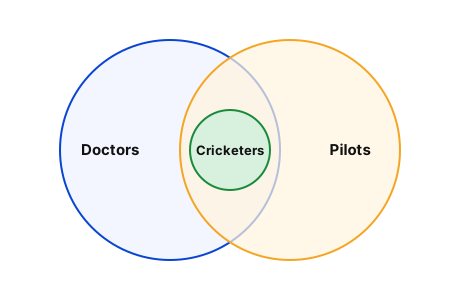
- Cricketers lie in the overlap of Doctors and Pilots → some doctors are pilots: (I) follows
- Pilots may exist outside Cricketers → (II) does not follow
Short trick: Two "All" statements with the same subject always give "Some (predicate 1) are (predicate 2)".
Answer: (A) Only conclusion (I) follows
अवधारणा: "सभी C, D हैं" और "सभी C, P हैं" → पूरा क्रिकेटर वृत्त डॉक्टर और पायलट दोनों के अंदर।
- क्रिकेटर, डॉक्टर और पायलट के उभयनिष्ठ भाग में → कुछ डॉक्टर पायलट हैं: (I) अनुसरण करता है
- पायलट क्रिकेटर के बाहर भी हो सकते हैं → (II) अनुसरण नहीं करता
शॉर्ट ट्रिक: एक ही विषय वाले दो "सभी" कथन → "कुछ (विधेय 1) (विधेय 2) हैं" हमेशा सत्य।
उत्तर: (A) केवल निष्कर्ष (I) अनुसरण करता है
RRB ALP CBT 1General Intelligence and ReasoningSyllogismRRB ALP CBT 1 2025 · 17 Feb Shift 1
Q268.Each of Akarsh, Bindu, Chetu, Divyansh, Ekam, Fatima and Gudiya has an exam on a different day of a week starting from Monday and ending on Sunday of the same week. Only one person has exam after Ekam. Only two persons have exam before Akarsh. Bindu has exam immediately before Divyansh and only one person has exam between Divyansh and Gudiya. Gudiya has exam on Sunday. Chetu's exam is not on the first day of the week. On which day does Chetu have the exam?
आकर्ष, बिंदु, चेतु, दिव्यांश, एकम, फ़ातिमा और गुड़िया में से प्रत्येक की परीक्षा सोमवार से शुरू होकर उसी सप्ताह के रविवार को समाप्त होने वाले सप्ताह के एक अलग दिन है। एकम के बाद केवल एक व्यक्ति की परीक्षा है। आकर्ष से पहले केवल दो व्यक्तियों की परीक्षा है। बिंदु की परीक्षा दिव्यांश से ठीक पहले है और दिव्यांश तथा गुड़िया के बीच केवल एक व्यक्ति की परीक्षा है। गुड़िया की परीक्षा रविवार को है। चेतु की परीक्षा सप्ताह के पहले दिन नहीं है। चेतु की परीक्षा किस दिन है?
- AFridayशुक्रवार
- BMondayसोमवार
- CTuesdayमंगलवार
- DWednesdayबुधवार
Show answer
Concept: Fix Gudiya, Ekam, Akarsh, then the Bindu–Divyansh pair.
- Gudiya = Sun; only one after Ekam → Ekam = Sat
- Two before Akarsh → Akarsh = Wed
- One between Divyansh and Gudiya → Divyansh = Fri, Bindu = Thu
- Mon, Tue left for Chetu and Fatima; Chetu not Mon → Chetu = Tue
| Mon | Tue | Wed | Thu | Fri | Sat | Sun |
| Fatima | Chetu | Akarsh | Bindu | Divyansh | Ekam | Gudiya |
Short trick: Count from the end: Sun G, Sat E, Fri D, Thu B – the back half fills itself.
Answer: (C) Tuesday
अवधारणा: गुड़िया, एकम, आकर्ष, फिर बिंदु–दिव्यांश युग्म तय करें।
- गुड़िया = रवि; एकम के बाद केवल एक → एकम = शनि
- आकर्ष से पहले दो → आकर्ष = बुध
- दिव्यांश और गुड़िया के बीच एक → दिव्यांश = शुक्र, बिंदु = गुरु
- सोम, मंगल बचे; चेतु सोम नहीं → चेतु = मंगल
| सोम | मंगल | बुध | गुरु | शुक्र | शनि | रवि |
| फ़ातिमा | चेतु | आकर्ष | बिंदु | दिव्यांश | एकम | गुड़िया |
शॉर्ट ट्रिक: अंत से गिनें: रवि G, शनि E, शुक्र D, गुरु B – पिछला आधा अपने-आप भर जाता है।
उत्तर: (C) मंगलवार
RRB ALP CBT 1General Intelligence and ReasoningScheduling puzzle – daysRRB ALP CBT 1 2025 · 17 Feb Shift 1
Q269.In a certain code language,
'A # B' means ‘A is the daughter of B’,
'A @ B' means ‘A is the brother of B’,
'A + B' means ‘A is the wife of B’ and
'A - B' means ‘ A is the father of B’.
Based on the above, how is D related to R if ‘D @ M # S - P + R’?
एक निश्चित कूट भाषा में,
'A # B' का अर्थ है ‘A, B की बेटी है’,
'A @ B' का अर्थ है ‘A, B का भाई है’,
'A + B' का अर्थ है ‘A, B की पत्नी है’ और
'A - B' का अर्थ है ‘A, B का पिता है’।
उपरोक्त के आधार पर, यदि ‘D @ M # S - P + R’ है, तो D का R से क्या संबंध है?
- AFatherपिता
- BWife's fatherपत्नी के पिता
- CBrotherभाई
- DWife's brotherपत्नी का भाई
Show answer
Concept: Decode each symbol and draw the tree (+ male, − female).
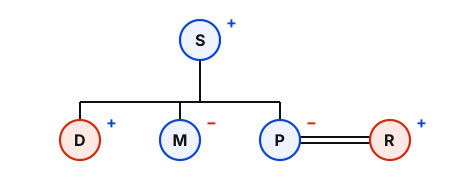
- D @ M: D is brother of M
- M # S: M is daughter of S
- S − P: S is father of P → D is P's brother
- P + R: P is wife of R
- So D is the brother of R's wife
Short trick: Read only the chain D → P → R: brother of wife = wife's brother.
Answer: (D) Wife's brother
अवधारणा: प्रत्येक प्रतीक को खोलें और वंश-वृक्ष बनाएँ (+ पुरुष, − महिला)।
- D @ M: D, M का भाई है
- M # S: M, S की बेटी है
- S − P: S, P का पिता है → D, P का भाई है
- P + R: P, R की पत्नी है
- अतः D, R की पत्नी का भाई है
शॉर्ट ट्रिक: केवल शृंखला D → P → R देखें: पत्नी का भाई = साला।
उत्तर: (D) पत्नी का भाई
RRB ALP CBT 1General Intelligence and ReasoningBlood relation – codedRRB ALP CBT 1 2025 · 17 Feb Shift 1
Q270.Based on the English alphabetical order, three of the following four letter-cluster pairs are alike in a certain way and thus form a group. Which letter-cluster pair DOES NOT belong to that group?
(Note: The odd one out is not based on the number of consonants/vowels or their position in the letter-cluster.)
अंग्रेज़ी वर्णमाला क्रम के आधार पर, निम्नलिखित चार अक्षर-समूह युग्मों में से तीन किसी निश्चित प्रकार से एकसमान हैं और इस प्रकार एक समूह बनाते हैं। कौन-सा अक्षर-समूह युग्म उस समूह से संबंधित नहीं है?
(ध्यान दें: असंगत अक्षर-समूह, उस अक्षर-समूह में व्यंजनों/स्वरों की संख्या या उनके स्थान पर आधारित नहीं है।)
- AUR - PM
- BSP - LJ
- COL - JG
- DLI - GD
Show answer
Concept: Pattern: −3, −2, −3 between successive letters.
- UR - PM: U −3 R, R −2 P, P −3 M ✓
- OL - JG ✓, LI - GD ✓ (same −3, −2, −3)
- SP - LJ: S −3 P, P −4 L, L −2 J → odd
Short trick: Within each cluster the gap is 3 (U→R, P→M …); in LJ it is 2 → odd.
Answer: (B) SP - LJ
अवधारणा: पैटर्न: क्रमागत अक्षरों में −3, −2, −3।
- UR - PM: −3, −2, −3 ✓
- OL - JG ✓, LI - GD ✓
- SP - LJ: −3, −4, −2 → विषम
शॉर्ट ट्रिक: हर क्लस्टर के भीतर अंतर 3 है (U→R, P→M …); LJ में 2 → विषम।
उत्तर: (B) SP - LJ
RRB ALP CBT 1General Intelligence and ReasoningLetter-cluster pairs – odd one outRRB ALP CBT 1 2025 · 17 Feb Shift 1
Q271.A question is followed by two statements numbered (I) and (II). You have to decide whether the data provided in the statements are sufficient to answer the question. Read both the statements and decide the appropriate answer.
Q. Four people – Arvind, Bipin, Chetak, and Divyesh – are seated in a row facing south.
Who is seated second from the left end?
(I) Bipin is seated immediately to the right of Arvind.
(II) Divyesh is seated at the extreme right end.
एक प्रश्न के बाद दो कथन (I) और (II) दिए गए हैं। आपको यह तय करना है कि कथनों में दिया गया डेटा प्रश्न का उत्तर देने के लिए पर्याप्त है या नहीं। दोनों कथनों को पढ़ें और उपयुक्त उत्तर चुनें।
प्रश्न: चार व्यक्ति – अरविंद, बिपिन, चेतक और दिव्येश – एक पंक्ति में दक्षिण की ओर मुख करके बैठे हैं।
बाएँ सिरे से दूसरे स्थान पर कौन बैठा है?
(I) बिपिन, अरविंद के ठीक दाईं ओर बैठा है।
(II) दिव्येश सबसे दाएँ सिरे पर बैठा है।
- AData in both statements I and II together are NOT sufficient to answer the questionकथन I और II दोनों का डेटा मिलकर भी प्रश्न का उत्तर देने के लिए पर्याप्त नहीं है
- BData in Statement II alone is sufficient to answer the question while data in Statement I is notकेवल कथन II का डेटा प्रश्न का उत्तर देने के लिए पर्याप्त है, जबकि कथन I का डेटा पर्याप्त नहीं है
- CData in both statements I and II together (and not statement I alone or statement II alone) are sufficient to answer the questionकथन I और II दोनों का डेटा मिलकर (न कि केवल कथन I या केवल कथन II) प्रश्न का उत्तर देने के लिए पर्याप्त है
- DData in Statement I alone is sufficient to answer the question while data in Statement II is notकेवल कथन I का डेटा प्रश्न का उत्तर देने के लिए पर्याप्त है, जबकि कथन II का डेटा पर्याप्त नहीं है
Show answer
Concept: Test whether the position "second from left" becomes unique.
- (I) alone: Arvind–Bipin adjacent, many arrangements → not sufficient
- (II) alone: only Divyesh fixed → not sufficient
- Together: Divyesh at one end; Arvind–Bipin can still be in seats 1–2 or 2–3 → second from left is Bipin or Arvind
- Not sufficient even together
Short trick: If two cases survive after combining, answer is "not sufficient" – one counter-case is enough.
Answer: (A) Data in both statements I and II together are NOT sufficient to answer the question
अवधारणा: जाँचें कि "बाएँ से दूसरा" स्थान अद्वितीय बनता है या नहीं।
- (I) अकेले: अरविंद–बिपिन पास-पास, कई व्यवस्थाएँ → अपर्याप्त
- (II) अकेले: केवल दिव्येश तय → अपर्याप्त
- दोनों मिलकर: दिव्येश एक सिरे पर; अरविंद–बिपिन अब भी स्थान 1–2 या 2–3 में → बाएँ से दूसरा बिपिन या अरविंद
- दोनों मिलकर भी अपर्याप्त
शॉर्ट ट्रिक: मिलाने के बाद भी दो स्थितियाँ बचें तो उत्तर "अपर्याप्त" – एक प्रति-उदाहरण काफ़ी है।
उत्तर: (A) कथन I और II दोनों का डेटा मिलकर भी प्रश्न का उत्तर देने के लिए पर्याप्त नहीं है
RRB ALP CBT 1General Intelligence and ReasoningData sufficiency – seatingRRB ALP CBT 1 2025 · 17 Feb Shift 1
Q272.What will come in the place of ‘?’ in the following equation, if ‘+’ and ‘-‘ are interchanged and ‘×’ and ‘÷’ are interchanged?
29 - 6 + 19 × 19 ÷ 8 = ?
यदि ‘+’ और ‘-’ को आपस में बदल दिया जाए तथा ‘×’ और ‘÷’ को आपस में बदल दिया जाए, तो निम्नलिखित समीकरण में ‘?’ के स्थान पर क्या आएगा?
29 - 6 + 19 × 19 ÷ 8 = ?
- A27
- B29
- C25
- D28
Show answer
Concept: Swap + ↔ − and × ↔ ÷, then BODMAS.
Short trick: makes the tail just "× 8" → 35 − 8.
Answer: (A) 27
अवधारणा: + ↔ − और × ↔ ÷ बदलें, फिर BODMAS।
शॉर्ट ट्रिक: → केवल 8 घटाना है।
उत्तर: (A) 27
RRB ALP CBT 1General Intelligence and ReasoningMathematical operations – interchangeRRB ALP CBT 1 2025 · 17 Feb Shift 1
Q273.Select the triad which follows the same pattern as that followed by the two triads given below. Both pairs follow the same pattern.
GLMT : MQQW
DQCL : JVGO
उस त्रिक का चयन करें जो नीचे दिए गए दो त्रिकों के समान पैटर्न का अनुसरण करता है। दोनों युग्म एक ही पैटर्न का अनुसरण करते हैं।
GLMT : MQQW
DQCL : JVGO
- AHNEX : NSIB
- BIOYS : OTCV
- CLGTM : RLWP
- DFYZN : LDEQ
Show answer
Concept: Pattern: +6, +5, +4, +3 on the four letters.
- GLMT → MQQW: +6, +5, +4, +3 ✓; DQCL → JVGO ✓
- IOYS → O, T, C (Y+4 cyclic), V → OTCV ✓
- (A) X+3 = A ≠ B; (C) T+4 = X ≠ W; (D) Z+4 = D ≠ E
Short trick: Check the last letter (+3) first: S→V ✓ (B), X→A ✗, M→P ✓, N→Q ✓; then third letter (+4) removes C and D.
Answer: (B) IOYS : OTCV
अवधारणा: पैटर्न: चारों अक्षरों पर +6, +5, +4, +3।
- GLMT → MQQW: +6, +5, +4, +3 ✓; DQCL → JVGO ✓
- IOYS → O, T, C (Y+4 चक्रीय), V → OTCV ✓
- (A) X+3 = A ≠ B; (C) T+4 = X ≠ W; (D) Z+4 = D ≠ E
शॉर्ट ट्रिक: पहले अंतिम अक्षर (+3) जाँचें, फिर तीसरा (+4) – केवल B बचता है।
उत्तर: (B) IOYS : OTCV
RRB ALP CBT 1General Intelligence and ReasoningLetter analogy – four lettersRRB ALP CBT 1 2025 · 17 Feb Shift 1
Q274.Refer to the following number and symbol series and answer the question that follows. Counting to be done from left to right only. All numbers are single-digit numbers. (Left) 1 & 5 * 3 ^ 6 £ $ 2 @ 8 % 7 4 ≺ 9 (Right)
How many such symbols are there, each of which is immediately preceded by an odd number but not immediately followed by an even number?
निम्नलिखित संख्या और प्रतीक शृंखला को देखें और उसके बाद आने वाले प्रश्न का उत्तर दें। गिनती केवल बाएँ से दाएँ की जानी है। सभी संख्याएँ एक-अंकीय संख्याएँ हैं। (बाएँ) 1 & 5 * 3 ^ 6 £ $ 2 @ 8 % 7 4 ≺ 9 (दाएँ)
ऐसे कितने प्रतीक हैं जिनमें से प्रत्येक के ठीक पहले एक विषम संख्या है लेकिन ठीक बाद में सम संख्या नहीं है?
- AOneएक
- BThreeतीन
- CNoneकोई नहीं
- DTwoदो
Show answer
Concept: Look at each symbol: left neighbour odd digit, right neighbour not an even digit.
- 1 & 5 ✓ (5 is odd)
- 5 * 3 ✓
- 3 ^ 6 ✗ (followed by even)
- £, $, @, %, ≺ are not preceded by an odd digit
- Count = 2
Short trick: Only symbols right after 1, 5, 3, 7, 9 need checking: &, *, ^ (7 and 9 are followed/preceded by digits).
Answer: (D) Two
अवधारणा: प्रत्येक प्रतीक देखें: बायाँ पड़ोसी विषम अंक, दायाँ पड़ोसी सम अंक नहीं।
- 1 & 5 ✓
- 5 * 3 ✓
- 3 ^ 6 ✗ (बाद में सम)
- £, $, @, %, ≺ के पहले विषम अंक नहीं
- गिनती = 2
शॉर्ट ट्रिक: केवल 1, 5, 3, 7, 9 के ठीक बाद वाले प्रतीक जाँचें: &, *, ^।
उत्तर: (D) दो
RRB ALP CBT 1General Intelligence and ReasoningNumber–symbol seriesRRB ALP CBT 1 2025 · 17 Feb Shift 1
Q275.Read the given statements and conclusions carefully. Assuming that the information given in the statements is true, even if it appears to be at variance with commonly known facts, decide which of the given conclusion(s) logically follow(s) from the statements.
Statements:
All speakers are radios.
No radio is a television.
Conclusions:
(I) No speaker is a television.
(II) Some televisions are radios.
दिए गए कथनों और निष्कर्षों को ध्यानपूर्वक पढ़ें। यह मानते हुए कि कथनों में दी गई जानकारी सत्य है, भले ही वह सामान्यतः ज्ञात तथ्यों से भिन्न प्रतीत होती हो, निर्णय लें कि दिए गए निष्कर्षों में से कौन-सा/कौन-से निष्कर्ष कथनों का तार्किक रूप से अनुसरण करता है/करते हैं।
कथन:
सभी स्पीकर रेडियो हैं।
कोई रेडियो टेलीविज़न नहीं है।
निष्कर्ष:
(I) कोई स्पीकर टेलीविज़न नहीं है।
(II) कुछ टेलीविज़न रेडियो हैं।
- AOnly conclusion (I) follows.केवल निष्कर्ष (I) अनुसरण करता है।
- BBoth conclusions (I) and (II) follow.निष्कर्ष (I) और (II) दोनों अनुसरण करते हैं।
- CNeither conclusion (I) nor (II) follows.न तो निष्कर्ष (I) और न ही (II) अनुसरण करता है।
- DOnly conclusion (II) follows.केवल निष्कर्ष (II) अनुसरण करता है।
Show answer
Concept: Speakers lie inside Radios; Radios and Televisions are disjoint.
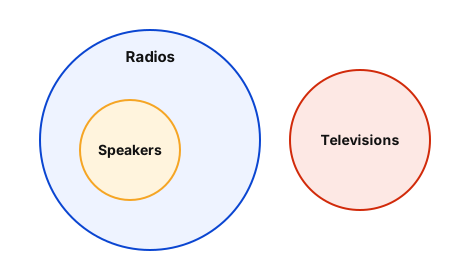
- Since no radio is a television and all speakers are radios → no speaker is a television: (I) follows
- "Some televisions are radios" contradicts "No radio is a television" → (II) does not follow
Short trick: All A are B + No B is C ⇒ No A is C (always).
Answer: (A) Only conclusion (I) follows.
अवधारणा: स्पीकर, रेडियो के अंदर; रेडियो और टेलीविज़न अलग-अलग।
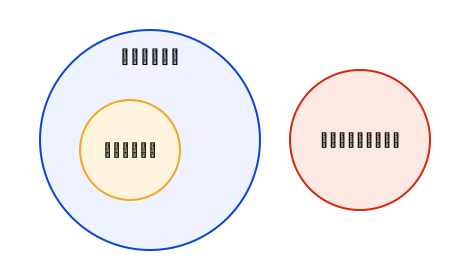
- कोई रेडियो टेलीविज़न नहीं और सभी स्पीकर रेडियो → कोई स्पीकर टेलीविज़न नहीं: (I) अनुसरण करता है
- "कुछ टेलीविज़न रेडियो हैं" कथन के विपरीत है → (II) अनुसरण नहीं करता
शॉर्ट ट्रिक: सभी A, B हैं + कोई B, C नहीं ⇒ कोई A, C नहीं (हमेशा)।
उत्तर: (A) केवल निष्कर्ष (I) अनुसरण करता है।
RRB ALP CBT 1General Intelligence and ReasoningSyllogismRRB ALP CBT 1 2025 · 17 Feb Shift 1
Q276.Refer to the following letter series and answer the question that follows. Counting to be done from left to right only.
(Left) A Q D F H S I C X Z A Q D F H G U Z A O G U K (Right)
How many such consonants are there, each of which is immediately preceded by a vowel and also immediately followed by a vowel?
निम्नलिखित अक्षर शृंखला को देखें और उसके बाद आने वाले प्रश्न का उत्तर दें। गिनती केवल बाएँ से दाएँ की जानी है।
(बाएँ) A Q D F H S I C X Z A Q D F H G U Z A O G U K (दाएँ)
ऐसे कितने व्यंजन हैं जिनमें से प्रत्येक के ठीक पहले एक स्वर है और ठीक बाद में भी एक स्वर है?
- AThreeतीन
- BNoneकोई नहीं
- CTwoदो
- DOneएक
Show answer
Concept: Find vowel–consonant–vowel triplets.
- U Z A ✓
- O G U ✓
- No other consonant is flanked by vowels on both sides
- Count = 2
Short trick: Scan only around vowels: A Q D…, I C X…, A Q D…, U Z A ✓, A O G U ✓ (O G U).
Answer: (C) Two
अवधारणा: स्वर–व्यंजन–स्वर त्रिक खोजें।
- U Z A ✓
- O G U ✓
- अन्य कोई व्यंजन दोनों ओर स्वरों से घिरा नहीं
- गिनती = 2
शॉर्ट ट्रिक: केवल स्वरों के आसपास देखें: U Z A ✓, O G U ✓।
उत्तर: (C) दो
RRB ALP CBT 1General Intelligence and ReasoningLetter series – position countingRRB ALP CBT 1 2025 · 17 Feb Shift 1
Q277.D, E, F, G, K, L, and M are sitting around a circular table, facing the centre of the table. F sits fourth to the left of E. M sits fourth to the right of G. Only two people sit between E and G when counted from the left of E. D is not an immediate neighbour of M or E. K is not an immediate neighbour of D.
Who sits third to the right of L?
D, E, F, G, K, L और M एक वृत्ताकार मेज़ के चारों ओर मेज़ के केंद्र की ओर मुख करके बैठे हैं। F, E के बाएँ चौथे स्थान पर बैठा है। M, G के दाएँ चौथे स्थान पर बैठा है। E के बाएँ से गिनने पर E और G के बीच केवल दो व्यक्ति बैठे हैं। D, M या E का निकटतम पड़ोसी नहीं है। K, D का निकटतम पड़ोसी नहीं है।
L के दाएँ तीसरे स्थान पर कौन बैठा है?
- AD
- BF
- CK
- DM
Show answer
Concept: Facing the centre: left = clockwise, right = anticlockwise.
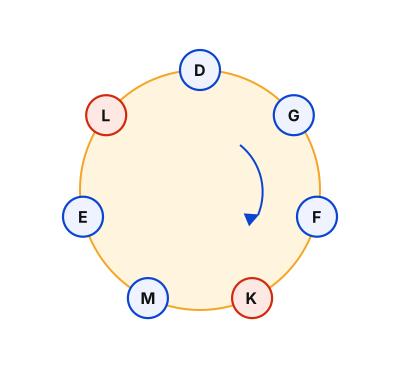
- Two between E and G counted from E's left → G is 3rd to the left of E
- F is 4th to the left of E; M is 4th to the right of G
- Clockwise: E, L, D, G, F, K, M – D not beside M or E, K not beside D ✓
- Third to the right of L (anticlockwise): E, M, K
Short trick: With 7 seats, "4th to the left" = "3rd to the right" – use whichever is shorter.
Answer: (C) K
अवधारणा: केंद्र की ओर मुख: बायाँ = दक्षिणावर्त, दायाँ = वामावर्त।
- E के बाएँ से गिनने पर E और G के बीच दो → G, E के बाएँ तीसरा
- F, E के बाएँ चौथा; M, G के दाएँ चौथा
- दक्षिणावर्त: E, L, D, G, F, K, M – D, M या E के पास नहीं, K, D के पास नहीं ✓
- L के दाएँ तीसरा (वामावर्त): E, M, K
शॉर्ट ट्रिक: 7 सीटों में "बाएँ चौथा" = "दाएँ तीसरा" – जो छोटा हो वह लें।
उत्तर: (C) K
RRB ALP CBT 1General Intelligence and ReasoningCircular seating arrangementRRB ALP CBT 1 2025 · 17 Feb Shift 1
Q278.In a certain code language,
‘A + B’ means ‘A is the mother of B’,
‘A − B’ means ‘A is the brother of B’,
‘A × B’ means ‘A is the wife of B’ and
‘A ÷ B’ means ‘A is the father of B’.
How is M related to K if ‘J × K − L ÷ M + N’?
एक निश्चित कूट भाषा में,
‘A + B’ का अर्थ है ‘A, B की माँ है’,
‘A − B’ का अर्थ है ‘A, B का भाई है’,
‘A × B’ का अर्थ है ‘A, B की पत्नी है’ और
‘A ÷ B’ का अर्थ है ‘A, B का पिता है’।
यदि ‘J × K − L ÷ M + N’ है, तो M का K से क्या संबंध है?
- AMother’s husbandमाँ का पति
- BFather’s brotherपिता का भाई
- CWife’s fatherपत्नी के पिता
- DBrother’s daughterभाई की बेटी
Show answer
Concept: Decode and draw (+ male, − female).
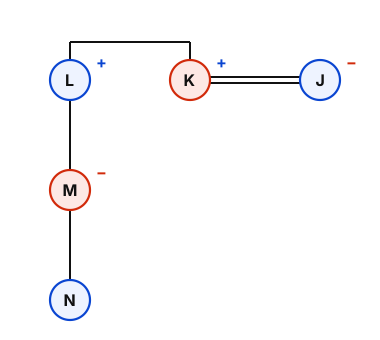
- J × K: J is wife of K (K male)
- K − L: K is brother of L
- L ÷ M: L is father of M
- M + N: M is mother of N → M is female
- M is the daughter of K's brother → brother's daughter (niece)
Short trick: Path K → L → M: brother → his daughter.
Answer: (D) Brother’s daughter
अवधारणा: खोलें और वृक्ष बनाएँ (+ पुरुष, − महिला)।
- J × K: J, K की पत्नी है
- K − L: K, L का भाई है
- L ÷ M: L, M का पिता है
- M + N: M, N की माँ है → M महिला
- M, K के भाई की बेटी है → भतीजी
शॉर्ट ट्रिक: पथ K → L → M: भाई → उसकी बेटी।
उत्तर: (D) भाई की बेटी
RRB ALP CBT 1General Intelligence and ReasoningBlood relation – codedRRB ALP CBT 1 2025 · 17 Feb Shift 1
Q279.LOVE is related to QKYC in a certain way based on the English alphabetical order. In the same way, ILSG is related to NHVE. To which of the following is QNVT related, following the same logic?
अंग्रेज़ी वर्णमाला क्रम के आधार पर LOVE एक निश्चित प्रकार से QKYC से संबंधित है। उसी प्रकार, ILSG, NHVE से संबंधित है। समान तर्क का अनुसरण करते हुए, QNVT निम्नलिखित में से किससे संबंधित है?
- AVJXQ
- BUKYR
- CUKXQ
- DVJYR
Show answer
Concept: Pattern: +5, −4, +3, −2.
- LOVE → QKYC: L+5 = Q, O−4 = K, V+3 = Y, E−2 = C
- ILSG → NHVE ✓
- QNVT → Q+5 = V, N−4 = J, V+3 = Y, T−2 = R → VJYR
Short trick: First letter +5 → V (A or D); third letter +3 → Y → D.
Answer: (D) VJYR
अवधारणा: पैटर्न: +5, −4, +3, −2।
- LOVE → QKYC: +5, −4, +3, −2
- ILSG → NHVE ✓
- QNVT → V, J, Y, R → VJYR
शॉर्ट ट्रिक: पहला अक्षर +5 → V (A या D); तीसरा +3 → Y → D।
उत्तर: (D) VJYR
RRB ALP CBT 1General Intelligence and ReasoningLetter analogy – four lettersRRB ALP CBT 1 2025 · 17 Feb Shift 1
Q280.In this question, a question is followed by two statements numbered (I) and (II). You have to decide whether the data provided in the statements are sufficient to answer the question. Read both the statements and decide the appropriate answer.
Among the five poles—R, A, M, E, and N—each having a different height, which pole is the shortest?
(I) N is taller than M.
(II) E is taller than N. R is only shorter than one pole.
इस प्रश्न में, एक प्रश्न के बाद दो कथन (I) और (II) दिए गए हैं। आपको यह तय करना है कि कथनों में दिया गया डेटा प्रश्न का उत्तर देने के लिए पर्याप्त है या नहीं। दोनों कथनों को पढ़ें और उपयुक्त उत्तर चुनें।
पाँच खंभों—R, A, M, E और N—में से प्रत्येक की ऊँचाई अलग-अलग है, सबसे छोटा खंभा कौन-सा है?
(I) N, M से ऊँचा है।
(II) E, N से ऊँचा है। R केवल एक खंभे से छोटा है।
- ABoth statements I and II together (and not statement I alone or statement II alone) are sufficient to answer the questionकथन I और II दोनों मिलकर (न कि केवल कथन I या केवल कथन II) प्रश्न का उत्तर देने के लिए पर्याप्त हैं
- BData in statement I alone is sufficient to answer the question while data in statement II is notकेवल कथन I का डेटा प्रश्न का उत्तर देने के लिए पर्याप्त है, जबकि कथन II का डेटा पर्याप्त नहीं है
- CBoth statements I and II together are NOT sufficient to answer the questionकथन I और II दोनों मिलकर भी प्रश्न का उत्तर देने के लिए पर्याप्त नहीं हैं
- DData in statement II alone is sufficient to answer the question while data in statement I is notकेवल कथन II का डेटा प्रश्न का उत्तर देने के लिए पर्याप्त है, जबकि कथन I का डेटा पर्याप्त नहीं है
Show answer
Concept: Combine both and check if the shortest pole is fixed.
- (I) N > M only
- (II) E > N and R is second tallest
- Together: E > N > M with R 2nd; A can be tallest (then M shortest) or E tallest with A anywhere below R (then M or A shortest)
- Shortest is not fixed → not sufficient
Short trick: A is never compared with anyone → it can float to the bottom, so the shortest can never be fixed.
Answer: (C) Both statements I and II together are NOT sufficient to answer the question
अवधारणा: दोनों मिलाकर देखें कि सबसे छोटा खंभा तय होता है या नहीं।
- (I) केवल N > M
- (II) E > N और R दूसरा सबसे ऊँचा
- मिलाकर: E > N > M, R दूसरा; A सबसे ऊँचा हो सकता है (तब M सबसे छोटा) या E सबसे ऊँचा और A नीचे कहीं (तब M या A सबसे छोटा)
- सबसे छोटा तय नहीं → अपर्याप्त
शॉर्ट ट्रिक: A की तुलना किसी से नहीं → वह सबसे नीचे भी हो सकता है, इसलिए उत्तर तय नहीं।
उत्तर: (C) कथन I और II दोनों मिलकर भी प्रश्न का उत्तर देने के लिए पर्याप्त नहीं हैं
RRB ALP CBT 1General Intelligence and ReasoningData sufficiency – rankingRRB ALP CBT 1 2025 · 17 Feb Shift 1

