RRB ALP CBT 1 · 825 questions

RRB ALP CBT 1 2025 PYQs

Real previous year questions, subject-wise. Try the question, then open the answer and the explanation in Hindi & English – free, no login.

Courses – airGurukul

440 questions in General Intelligence and Reasoning.

Q321.
What should come in place of the question mark (?) in the given series based on the English alphabetical order?
CAU JHB QOI XVP ?
अंग्रेजी वर्णमाला क्रम के आधार पर दी गई श्रृंखला में प्रश्न चिह्न (?) के स्थान पर क्या आना चाहिए?
CAU JHB QOI XVP ?
  1. AEDS
  2. BERT
  3. CEWC
  4. DECW
Show answer

Concept: Each letter of a cluster moves by a fixed step in its own column.

  1. 1st letters: C(3) → J(10) → Q(17) → X(24) → E(31−26=5): +7
  2. 2nd letters: A → H → O → V → C: +7
  3. 3rd letters: U → B → I → P → W: +7
  4. CAU
    JHB
    QOI
    XVP
    ECW

Short trick: Check only the first column: X + 7 = E → options A–D all start with E, so check 2nd letter: V + 7 = C → only ECW.

Answer: (D) ECW

अवधारणा: प्रत्येक समूह का हर अक्षर अपने स्तंभ में एक निश्चित अंतर से आगे बढ़ता है।

  1. पहले अक्षर: C → J → Q → X → E : +7
  2. दूसरे अक्षर: A → H → O → V → C : +7
  3. तीसरे अक्षर: U → B → I → P → W : +7
  4. CAU
    JHB
    QOI
    XVP
    ECW

शॉर्ट ट्रिक: सभी विकल्प E से शुरू हैं, इसलिए केवल दूसरा अक्षर देखें: V + 7 = C → केवल ECW।

उत्तर: (D) ECW

RRB ALP CBT 1General Intelligence and ReasoningLetter series – position jumpsRRB ALP CBT 1 2025 · 16 Feb Shift 2
Q322.
In a certain code language, ‘SHAT’ is coded as ‘4956’ and ‘ASHY’ is coded as ‘3645’. What is the code for ‘Y’ in the given code language?
एक निश्चित कूट भाषा में, ‘SHAT’ को ‘4956’ और ‘ASHY’ को ‘3645’ लिखा जाता है। उस कूट भाषा में ‘Y’ का कूट क्या है?
  1. A5
  2. B4
  3. C3
  4. D6
Show answer

Concept: Letters common to both words take the digits common to both codes.

  1. SHAT = 4956, ASHY = 3645.
  2. Common letters: S, H, A ↔ common digits 4, 5, 6.
  3. Left over: T = 9 (first word) and Y = 3 (second word).

Short trick: Y appears only in the second word, and 3 is the only digit of 3645 not found in 4956 → Y = 3.

Answer: (C) 3

अवधारणा: दोनों शब्दों में उभयनिष्ठ अक्षरों के कूट दोनों कूटों में उभयनिष्ठ अंक होते हैं।

  1. SHAT = 4956, ASHY = 3645।
  2. उभयनिष्ठ अक्षर S, H, A ↔ उभयनिष्ठ अंक 4, 5, 6।
  3. शेष: T = 9 और Y = 3।

शॉर्ट ट्रिक: Y केवल दूसरे शब्द में है और 3645 में केवल 3 ऐसा अंक है जो 4956 में नहीं → Y = 3।

उत्तर: (C) 3

RRB ALP CBT 1General Intelligence and ReasoningCoding – common lettersRRB ALP CBT 1 2025 · 16 Feb Shift 2
Q323.
If ‘P’ stands for ‘×’, ‘Q’ stands for ‘÷’, ‘R’ stands for ‘−’ and ‘S’ stands for ‘+’, then what will come in place of the question mark (?) in the following equation?
(12 P 3) Q 4 S 5 P 8 = ?
यदि ‘P’ का अर्थ ‘×’, ‘Q’ का अर्थ ‘÷’, ‘R’ का अर्थ ‘−’ और ‘S’ का अर्थ ‘+’ है, तो निम्नलिखित समीकरण में प्रश्न चिह्न (?) के स्थान पर क्या आएगा?
(12 P 3) Q 4 S 5 P 8 = ?
  1. A53
  2. B49
  3. C41
  4. D62
Show answer

Concept: Replace letters by operators and apply BODMAS.

  1. (12 × 3) ÷ 4 + 5 × 8
  2. = 36 ÷ 4 + 40 = 9 + 40 = 49

Short trick: Unit digit check: 9 + 0 = 9 → only 49 ends in 9.

Answer: (B) 49

अवधारणा: अक्षरों को संक्रियाओं से बदलें और BODMAS लगाएँ।

  1. (12 × 3) ÷ 4 + 5 × 8
  2. = 36 ÷ 4 + 40 = 9 + 40 = 49

शॉर्ट ट्रिक: इकाई अंक: 9 + 0 = 9 → केवल 49 का इकाई अंक 9 है।

उत्तर: (B) 49

RRB ALP CBT 1General Intelligence and ReasoningSymbol substitution – BODMASRRB ALP CBT 1 2025 · 16 Feb Shift 2
Q324.
What should come in place of the question mark (?) in the given series based on the English alphabetical order?
BAJ VUD POX JIR ?
अंग्रेजी वर्णमाला क्रम के आधार पर दी गई श्रृंखला में प्रश्न चिह्न (?) के स्थान पर क्या आना चाहिए?
BAJ VUD POX JIR ?
  1. ADFR
  2. BDRF
  3. CDLC
  4. DDCL
Show answer

Concept: Each column moves back by 6.

  1. 1st: B → V → P → J → D (−6)
  2. 2nd: A → U → O → I → C (−6)
  3. 3rd: J → D → X → R → L (−6)
  4. BAJ
    VUD
    POX
    JIR
    DCL

Short trick: Notice 1st and 2nd letters are always consecutive reverse pairs (BA, VU, PO, JI) → next is DC → DCL.

Answer: (D) DCL

अवधारणा: प्रत्येक स्तंभ 6 पीछे जाता है।

  1. पहला: B → V → P → J → D (−6)
  2. दूसरा: A → U → O → I → C (−6)
  3. तीसरा: J → D → X → R → L (−6)
  4. BAJ
    VUD
    POX
    JIR
    DCL

शॉर्ट ट्रिक: पहले दो अक्षर हमेशा उल्टे क्रमागत जोड़े हैं (BA, VU, PO, JI) → अगला DC → DCL।

उत्तर: (D) DCL

RRB ALP CBT 1General Intelligence and ReasoningLetter series – backward stepsRRB ALP CBT 1 2025 · 16 Feb Shift 2
Q325.
Refer to the following letter, symbol series and answer the question that follows. Counting to be done from left to right only.
(Left) J @ € * Y % V % C I D % D H $ K © L E £ M C (Right)
How many such symbol are there, each of which is immediately preceded by a letter and also immediately followed by a letter?
निम्नलिखित अक्षर, प्रतीक श्रृंखला को देखें और नीचे दिए गए प्रश्न का उत्तर दें। गिनती केवल बाएँ से दाएँ की जानी है।
(बाएँ) J @ € * Y % V % C I D % D H $ K © L E £ M C (दाएँ)
ऐसे कितने प्रतीक हैं, जिनमें से प्रत्येक के ठीक पहले एक अक्षर है और ठीक बाद भी एक अक्षर है?
  1. A5
  2. B6
  3. C8
  4. D7
Show answer

Concept: Check every symbol: letter on its left AND letter on its right.

  1. Series: J @ € * Y % V % C I D % D H $ K © L E £ M C
  2. Y % V ✔, V % C ✔, D % D ✔, H $ K ✔, K © L ✔, E £ M ✔
  3. @, €, * fail (a symbol on one side). Total = 6.

Short trick: Look for the pattern “letter–symbol–letter”: scan only isolated symbols; any symbol in a group of symbols (@ € *) is skipped at once.

Answer: (B) 6

अवधारणा: हर प्रतीक जाँचें: बाएँ अक्षर और दाएँ भी अक्षर।

  1. श्रृंखला: J @ € * Y % V % C I D % D H $ K © L E £ M C
  2. Y % V ✔, V % C ✔, D % D ✔, H $ K ✔, K © L ✔, E £ M ✔
  3. @, €, * नहीं (एक ओर प्रतीक है)। कुल = 6।

शॉर्ट ट्रिक: “अक्षर–प्रतीक–अक्षर” पैटर्न खोजें: प्रतीकों के समूह (@ € *) को तुरंत छोड़ दें।

उत्तर: (B) 6

RRB ALP CBT 1General Intelligence and ReasoningLetter–symbol seriesRRB ALP CBT 1 2025 · 16 Feb Shift 2
Q326.
Refer to the following letter series and answer the question that follows. Counting to be done from left to right only.
(Left) N G T X R K H V A W Z W U B R E C F K L Z (Right)
How many such vowels are there, each of which is immediately preceded by a consonant and also immediately followed by a consonant?
निम्नलिखित अक्षर श्रृंखला को देखें और नीचे दिए गए प्रश्न का उत्तर दें। गिनती केवल बाएँ से दाएँ की जानी है।
(बाएँ) N G T X R K H V A W Z W U B R E C F K L Z (दाएँ)
ऐसे कितने स्वर हैं, जिनमें से प्रत्येक के ठीक पहले एक व्यंजन है और ठीक बाद भी एक व्यंजन है?
  1. ANoneकोई नहीं
  2. BOneएक
  3. CThreeतीन
  4. DTwoदो
Show answer

Concept: Find each vowel and check both neighbours.

  1. Series: N G T X R K H V A W Z W U B R E C F K L Z
  2. V A W ✔, W U B ✔, R E C ✔
  3. Only three vowels exist and all three qualify → 3.

Short trick: Count the vowels first (A, U, E = 3); if their count is small just check each one.

Answer: (C) Three

अवधारणा: प्रत्येक स्वर के दोनों पड़ोसी जाँचें।

  1. श्रृंखला: N G T X R K H V A W Z W U B R E C F K L Z
  2. V A W ✔, W U B ✔, R E C ✔
  3. तीनों स्वर शर्त पूरी करते हैं → 3।

शॉर्ट ट्रिक: पहले स्वर गिनें (A, U, E = 3), फिर हर एक को जाँचें।

उत्तर: (C) तीन

RRB ALP CBT 1General Intelligence and ReasoningLetter series – vowel between consonantsRRB ALP CBT 1 2025 · 16 Feb Shift 2
Q327.
Refer to the following letter series and answer the question that follows. Counting to be done from left to right only.
(Left) X H O Z N M W I C G I U S O R Y I Y V I H W (Right)
How many such vowels are there, each of which is immediately preceded by a consonant and also immediately followed by a consonant?
निम्नलिखित अक्षर श्रृंखला को देखें और नीचे दिए गए प्रश्न का उत्तर दें। गिनती केवल बाएँ से दाएँ की जानी है।
(बाएँ) X H O Z N M W I C G I U S O R Y I Y V I H W (दाएँ)
ऐसे कितने स्वर हैं, जिनमें से प्रत्येक के ठीक पहले एक व्यंजन है और ठीक बाद भी एक व्यंजन है?
  1. A6
  2. B5
  3. C8
  4. D7
Show answer

Concept: Mark every vowel and test its left and right neighbours.

  1. X H O Z N M W I C G I U S O R Y I Y V I H W
  2. H O Z ✔, W I C ✔, G I U ✘, I U S ✘, S O R ✔, Y I Y ✔, V I H ✔
  3. Total = 5 (Y is treated as a consonant).

Short trick: Discard vowels that touch another vowel (I U pair) immediately — the rest of the 7 vowels qualify: 7 − 2 = 5.

Answer: (B) 5

अवधारणा: हर स्वर को चिह्नित करें और उसके दोनों पड़ोसी जाँचें।

  1. X H O Z N M W I C G I U S O R Y I Y V I H W
  2. H O Z ✔, W I C ✔, G I U ✘, I U S ✘, S O R ✔, Y I Y ✔, V I H ✔
  3. कुल = 5 (Y को व्यंजन माना गया)।

शॉर्ट ट्रिक: जो स्वर किसी दूसरे स्वर से सटे हैं (I U) उन्हें हटाएँ — 7 − 2 = 5।

उत्तर: (B) 5

RRB ALP CBT 1General Intelligence and ReasoningLetter series – vowel between consonantsRRB ALP CBT 1 2025 · 16 Feb Shift 2
Q328.
Seven boxes, A, B, C, D, E, F and G, are kept one over the other, but not necessarily in the same order. E is kept third from the bottom. G is kept immediately above E. Only two boxes are kept between G and A, but A is not kept in the lowermost position. B is kept immediately below A. Only two boxes are kept between C and F, and D is kept immediate below F. Which box is third from the top?
सात बक्से A, B, C, D, E, F और G एक के ऊपर एक रखे गए हैं, परंतु आवश्यक नहीं कि इसी क्रम में हों। E नीचे से तीसरे स्थान पर रखा है। G, E के ठीक ऊपर रखा है। G और A के बीच केवल दो बक्से रखे हैं, परंतु A सबसे नीचे नहीं रखा है। B, A के ठीक नीचे रखा है। C और F के बीच केवल दो बक्से रखे हैं, और D, F के ठीक नीचे रखा है। ऊपर से तीसरे स्थान पर कौन-सा बक्सा है?
  1. AC
  2. BD
  3. CF
  4. DA
Show answer

Concept: Fix the definite positions first, then the conditional ones.

  1. E = 3rd from bottom, G = 4th.
  2. A is 3 places from G → 1st or 7th; A not lowest → A = 7th, B = 6th.
  3. Free: 1, 2, 5. F with D just below, C two boxes away from F → F = 2, D = 1, C = 5.
  4. Position (bottom→top)1234567
    BoxDFEGCBA
  5. 3rd from top = position 5 = C.

Short trick: 3rd from top = 5th from bottom in a stack of 7 (7 + 1 − 3 = 5).

Answer: (A) C

अवधारणा: पहले निश्चित स्थान रखें, फिर शर्तों वाले।

  1. E = नीचे से 3रा, G = 4था।
  2. A, G से 3 स्थान दूर → 1 या 7; A सबसे नीचे नहीं → A = 7, B = 6।
  3. शेष: 1, 2, 5। F के ठीक नीचे D, C और F के बीच दो बक्से → F = 2, D = 1, C = 5।
  4. स्थान (नीचे→ऊपर)1234567
    बक्साDFEGCBA
  5. ऊपर से 3रा = स्थान 5 = C।

शॉर्ट ट्रिक: 7 बक्सों में ऊपर से 3रा = नीचे से 5वाँ (7 + 1 − 3 = 5)।

उत्तर: (A) C

RRB ALP CBT 1General Intelligence and ReasoningBox stacking puzzleRRB ALP CBT 1 2025 · 16 Feb Shift 2
Q329.
Refer to the following number, symbol series and answer the question. Counting to be done from left to right only. All numbers are single-digit numbers.
(Left) 4 3 1 2 $ 9 & 2 ? 4 @ 1 9 * 3 7 3 @ & < % (Right)
How many such symbols are there each of which is immediately preceded by another symbol and also immediately followed by a number?
निम्नलिखित संख्या, प्रतीक श्रृंखला को देखें और प्रश्न का उत्तर दें। गिनती केवल बाएँ से दाएँ की जानी है। सभी संख्याएँ एक अंक वाली हैं।
(बाएँ) 4 3 1 2 $ 9 & 2 ? 4 @ 1 9 * 3 7 3 @ & < % (दाएँ)
ऐसे कितने प्रतीक हैं जिनमें से प्रत्येक के ठीक पहले एक अन्य प्रतीक है और ठीक बाद एक संख्या है?
  1. AOneएक
  2. BThreeतीन
  3. CTwoदो
  4. DNoneकोई नहीं
Show answer

Concept: Need pattern: symbol – symbol – number.

  1. 4 3 1 2 $ 9 & 2 ? 4 @ 1 9 * 3 7 3 @ & < %
  2. Consecutive symbols occur only at the end: @ & < %.
  3. & is followed by <, < by %, % by nothing → none followed by a number. Count = 0.

Short trick: Find symbol pairs first — the only run (@ & < %) is at the right end with no digit after it → None.

Answer: (D) None

अवधारणा: पैटर्न चाहिए: प्रतीक – प्रतीक – संख्या।

  1. 4 3 1 2 $ 9 & 2 ? 4 @ 1 9 * 3 7 3 @ & < %
  2. लगातार प्रतीक केवल अंत में हैं: @ & < %।
  3. इनके बाद कोई संख्या नहीं → गिनती = 0।

शॉर्ट ट्रिक: पहले लगातार प्रतीक खोजें — एकमात्र समूह (@ & < %) अंत में है जिसके बाद संख्या नहीं → कोई नहीं।

उत्तर: (D) कोई नहीं

RRB ALP CBT 1General Intelligence and ReasoningNumber–symbol seriesRRB ALP CBT 1 2025 · 16 Feb Shift 2
Q330.
Select the venn diagram that best illustrates the relationship between the following classes.
Rabbits, Ants, Lions
उस वेन आरेख का चयन कीजिए जो निम्नलिखित वर्गों के बीच संबंध को सर्वोत्तम रूप से दर्शाता है।
खरगोश, चींटियाँ, शेर
  1. A
  2. B
  3. C
  4. D
Show answer

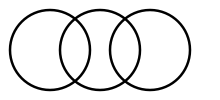
Concept: Rabbits, ants and lions are three different kinds of animals; no member belongs to two classes.

  1. No rabbit is an ant or a lion, and no ant is a lion.
  2. So the three circles do not touch or overlap → option B.

Short trick: Three mutually exclusive groups (like three different species) = three separate circles.

Answer: (B) three separate circles

अवधारणा: खरगोश, चींटियाँ और शेर तीन भिन्न प्रकार के जीव हैं; कोई भी सदस्य दो वर्गों में नहीं है।

  1. कोई खरगोश चींटी या शेर नहीं, कोई चींटी शेर नहीं।
  2. अतः तीन अलग-अलग वृत्त → विकल्प B।

शॉर्ट ट्रिक: तीन परस्पर अपवर्जी समूह = तीन अलग वृत्त।

उत्तर: (B) तीन अलग-अलग वृत्त

RRB ALP CBT 1General Intelligence and ReasoningVenn diagram – unrelated classesRRB ALP CBT 1 2025 · 16 Feb Shift 2
Q331.
Two sets of numbers are given below. In each set of numbers, certain mathematical operation(s) on the first number result(s) in the second number. Similarly, certain mathematical operation(s) on the second number result(s) in the third number and so on. Which of the given options follows the same set of operations as in the given sets? (NOTE: Operations should be performed on the whole numbers, without breaking down the numbers into their constituent digits. E.g. 13 – Operations on 13 such as adding to/subtracting from/multiplying with 13 can be performed. Breaking down 13 into 1 and 3 and then performing mathematical operations on 1 and 3 is not allowed.)
6 – 36 – 72 – 144 ; 7 – 49 – 98 – 196
नीचे संख्याओं के दो समुच्चय दिए गए हैं। प्रत्येक समुच्चय में, पहली संख्या पर कुछ गणितीय संक्रिया(एँ) करने पर दूसरी संख्या प्राप्त होती है। इसी प्रकार, दूसरी संख्या पर कुछ गणितीय संक्रिया(एँ) करने पर तीसरी संख्या प्राप्त होती है, और इसी तरह आगे भी। दिए गए विकल्पों में से कौन-सा विकल्प दिए गए समुच्चयों की तरह संक्रियाओं के समान समुच्चय का अनुसरण करता है? (ध्यान दें: संक्रियाएँ पूर्ण संख्याओं पर की जानी चाहिए, संख्याओं को उनके घटक अंकों में विभाजित किए बिना। उदाहरण के लिए 13 – 13 पर संक्रियाएँ जैसे 13 में जोड़ना/घटाना/गुणा करना की जा सकती हैं। 13 को 1 और 3 में विभाजित करके फिर 1 और 3 पर गणितीय संक्रियाएँ करने की अनुमति नहीं है।)
6 – 36 – 72 – 144 ; 7 – 49 – 98 – 196
  1. A12 – 144 – 288 – 576
  2. B5 – 25 – 50 – 110
  3. C15 – 225 – 625 – 676
  4. D8 – 64 – 128 – 226
Show answer

Concept: Find the rule: square, then ×2, then ×2.

  1. 6 → 36 (6²) → 72 (×2) → 144 (×2); 7 → 49 → 98 → 196.
  2. A: 12 → 144 → 288 → 576 ✔
  3. B: 50 × 2 = 100 ≠ 110; C: 225 × 2 ≠ 625; D: 128 × 2 = 256 ≠ 226.

Short trick: Last number must be 4 × second number: 4 × 144 = 576 ✔ — check only this.

Answer: (A) 12 – 144 – 288 – 576

अवधारणा: नियम: वर्ग, फिर ×2, फिर ×2।

  1. 6 → 36 → 72 → 144; 7 → 49 → 98 → 196।
  2. A: 12 → 144 → 288 → 576 ✔
  3. B: 50 × 2 ≠ 110; C: 225 × 2 ≠ 625; D: 128 × 2 ≠ 226।

शॉर्ट ट्रिक: अंतिम संख्या = दूसरी संख्या × 4: 144 × 4 = 576 ✔।

उत्तर: (A) 12 – 144 – 288 – 576

RRB ALP CBT 1General Intelligence and ReasoningNumber sets – operationsRRB ALP CBT 1 2025 · 16 Feb Shift 2
Q332.
A question is followed by two statements numbered (I) and (II). You have to decide whether the data provided in the statements are sufficient to answer the question. Read both the statements and select the most appropriate answer.
Question:
Among 5 poles, I, L, O, M and D each having a different height, which pole is the tallest?
Statements:
(I) M is taller than L. L is taller than D.
(II) D is shorter than I but taller than O.
एक प्रश्न के बाद दो कथन (I) और (II) दिए गए हैं। आपको यह तय करना है कि कथनों में दिए गए आँकड़े प्रश्न का उत्तर देने के लिए पर्याप्त हैं या नहीं। दोनों कथनों को पढ़ें और सबसे उपयुक्त उत्तर चुनें।
प्रश्न:
5 खंभों I, L, O, M और D में से प्रत्येक की ऊँचाई भिन्न है, कौन-सा खंभा सबसे ऊँचा है?
कथन:
(I) M, L से ऊँचा है। L, D से ऊँचा है।
(II) D, I से छोटा है परंतु O से ऊँचा है।
  1. AData in both statements I and II together are not sufficient to answer the question.कथन I और II दोनों के आँकड़े एक साथ भी प्रश्न का उत्तर देने के लिए पर्याप्त नहीं हैं।
  2. BData in both statements I and II together (and not statement I alone or statement II alone) are sufficient to answer the question.कथन I और II दोनों के आँकड़े एक साथ (और न तो अकेले कथन I और न ही अकेले कथन II) प्रश्न का उत्तर देने के लिए पर्याप्त हैं।
  3. CData in statement I alone is sufficient to answer the question while data in statement II is not.अकेले कथन I के आँकड़े प्रश्न का उत्तर देने के लिए पर्याप्त हैं, जबकि कथन II के आँकड़े नहीं।
  4. DData in statement II alone is sufficient to answer the question while data in statement I is not.अकेले कथन II के आँकड़े प्रश्न का उत्तर देने के लिए पर्याप्त हैं, जबकि कथन I के आँकड़े नहीं।
Show answer

Concept: Combine the statements and see if one pole is above all others.

  1. I: M > L > D (I and O unknown).
  2. II: I > D > O.
  3. Together: M > L > D > O and I > D — M vs I unknown, so tallest may be M or I.

Short trick: Two poles (M and I) both have nobody above them → two candidates → not sufficient.

Answer: (A) Both statements together are not sufficient

अवधारणा: कथनों को मिलाकर देखें कि कोई एक खंभा सबसे ऊपर है या नहीं।

  1. I: M > L > D।
  2. II: I > D > O।
  3. मिलाकर: M > L > D > O और I > D — M और I की तुलना अज्ञात।

शॉर्ट ट्रिक: M और I दोनों के ऊपर कोई नहीं → दो विकल्प → पर्याप्त नहीं।

उत्तर: (A) दोनों कथन मिलकर भी पर्याप्त नहीं

RRB ALP CBT 1General Intelligence and ReasoningData sufficiency – rankingRRB ALP CBT 1 2025 · 16 Feb Shift 2
Q333.
Read the given statements and conclusions carefully. Assuming that the information given in the statements is true, even if it appears to be at variance with commonly known facts, decide which of the given conclusions logically follow(s) from the statements.
Statements:
All angry are birds.
Some angry are pigs.
Conclusion (I): Some birds are pigs.
Conclusion (II): All pigs are birds.
दिए गए कथनों और निष्कर्षों को ध्यानपूर्वक पढ़ें। यह मानते हुए कि कथनों में दी गई जानकारी सत्य है, भले ही वह सामान्य रूप से ज्ञात तथ्यों से भिन्न प्रतीत होती हो, निर्णय लें कि दिए गए निष्कर्षों में से कौन-सा/कौन-से निष्कर्ष तार्किक रूप से कथनों का अनुसरण करता है/करते हैं।
कथन:
सभी क्रोधी, पक्षी हैं।
कुछ क्रोधी, सूअर हैं।
निष्कर्ष (I): कुछ पक्षी, सूअर हैं।
निष्कर्ष (II): सभी सूअर, पक्षी हैं।
  1. AOnly conclusion (II) followsकेवल निष्कर्ष (II) अनुसरण करता है
  2. BBoth conclusion (I) and (II) followनिष्कर्ष (I) और (II) दोनों अनुसरण करते हैं
  3. COnly conclusion (I) followsकेवल निष्कर्ष (I) अनुसरण करता है
  4. DNeither conclusion (I) and (II) followsन तो निष्कर्ष (I) और न ही (II) अनुसरण करता है
Show answer

Concept: Draw the least-overlap Venn diagram.

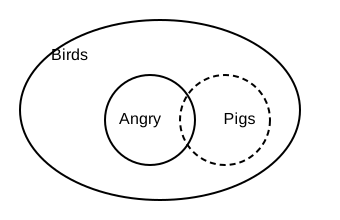
  1. All angry are birds → Angry circle inside Birds.
  2. Some angry are pigs → Pigs overlaps Angry, hence also overlaps Birds → “Some birds are pigs” ✔.
  3. Pigs may extend outside Birds → “All pigs are birds” ✘.

Short trick: “All A are B” + “Some A are C” ⇒ always “Some B are C” (the common A part is both B and C).

Answer: (C) Only conclusion (I) follows

अवधारणा: न्यूनतम अधिव्यापन वाला वेन आरेख बनाएँ।

  1. सभी क्रोधी पक्षी हैं → क्रोधी वृत्त पक्षी के अंदर।
  2. कुछ क्रोधी सूअर हैं → सूअर, क्रोधी को काटता है, अतः पक्षी को भी → “कुछ पक्षी सूअर हैं” ✔।
  3. सूअर पक्षी के बाहर भी हो सकता है → “सभी सूअर पक्षी हैं” ✘।

शॉर्ट ट्रिक: “सभी A, B हैं” + “कुछ A, C हैं” ⇒ हमेशा “कुछ B, C हैं”।

उत्तर: (C) केवल निष्कर्ष (I) अनुसरण करता है

RRB ALP CBT 1General Intelligence and ReasoningSyllogismRRB ALP CBT 1 2025 · 16 Feb Shift 2
Q334.
Among five people named V, W, X, Y and Z, each has a different age. Z is older than Y but younger than W. X is older than V but younger than Y. Who among them is the second oldest?
V, W, X, Y और Z नाम के पाँच व्यक्तियों में से प्रत्येक की आयु भिन्न है। Z, Y से बड़ा है परंतु W से छोटा है। X, V से बड़ा है परंतु Y से छोटा है। उनमें से दूसरा सबसे बड़ा कौन है?
  1. AW
  2. BX
  3. CZ
  4. DV
Show answer

Concept: Chain the inequalities.

  1. W > Z > Y (Z older than Y, younger than W).
  2. Y > X > V.
  3. Order: W > Z > Y > X > V → second oldest = Z.

Short trick: W is above Z and nobody is above W → W 1st, Z 2nd.

Answer: (C) Z

अवधारणा: असमताओं को जोड़ें।

  1. W > Z > Y।
  2. Y > X > V।
  3. क्रम: W > Z > Y > X > V → दूसरा सबसे बड़ा = Z।

शॉर्ट ट्रिक: W सबसे ऊपर, उसके बाद Z।

उत्तर: (C) Z

RRB ALP CBT 1General Intelligence and ReasoningRanking – ageRRB ALP CBT 1 2025 · 16 Feb Shift 2
Q335.
If ‘A’ stands for ‘÷’, ‘B’ stands for ‘×’, ‘C’ stands for ‘+’ and ‘D’ stands for ‘−’, what will come in place of the question mark (?) in the following equation?
159 C 60 A 12 B 11 D 203 = ?
यदि ‘A’ का अर्थ ‘÷’, ‘B’ का अर्थ ‘×’, ‘C’ का अर्थ ‘+’ और ‘D’ का अर्थ ‘−’ है, तो निम्नलिखित समीकरण में प्रश्न चिह्न (?) के स्थान पर क्या आएगा?
159 C 60 A 12 B 11 D 203 = ?
  1. A10
  2. B12
  3. C11
  4. D14
Show answer

Concept: Replace and solve with BODMAS.

  1. 159 + 60 ÷ 12 × 11 − 203
  2. = 159 + 5 × 11 − 203 = 159 + 55 − 203 = 11

Short trick: Do ÷ and × first: 60 ÷ 12 × 11 = 55; 214 − 203 = 11.

Answer: (C) 11

अवधारणा: प्रतिस्थापन करके BODMAS लगाएँ।

  1. 159 + 60 ÷ 12 × 11 − 203
  2. = 159 + 55 − 203 = 11

शॉर्ट ट्रिक: पहले ÷ और ×: 55; 214 − 203 = 11।

उत्तर: (C) 11

RRB ALP CBT 1General Intelligence and ReasoningSymbol substitution – BODMASRRB ALP CBT 1 2025 · 16 Feb Shift 2
Q336.
Each of P, Q, R, S, T, U and V has an exam on a different day of a week starting from Monday and ending on Sunday of the same week. R has an exam on Friday. Only 2 people have an exam between R and Q. S has an exam immediately before U and P has an exam immediately after V. Only 2 people have an exam between T and U.
Who has an exam on Monday?
P, Q, R, S, T, U और V में से प्रत्येक की परीक्षा एक ही सप्ताह के सोमवार से शुरू होकर रविवार को समाप्त होने वाले सप्ताह के अलग-अलग दिन है। R की परीक्षा शुक्रवार को है। R और Q के बीच केवल 2 व्यक्तियों की परीक्षा है। S की परीक्षा U से ठीक पहले है और P की परीक्षा V के ठीक बाद है। T और U के बीच केवल 2 व्यक्तियों की परीक्षा है।
सोमवार को किसकी परीक्षा है?
  1. AS
  2. BP
  3. CT
  4. DU
Show answer

Concept: Place R, then Q, then the consecutive pairs.

  1. R = Friday; two people between R and Q → Q = Tuesday (Monday-start week has no day after Sunday).
  2. Free: Mon, Wed, Thu, Sat, Sun. Pairs S–U and V–P need consecutive days → (Wed, Thu) and (Sat, Sun).
  3. T and U have two between: if U = Thu, T = Mon ✔. So S = Wed, U = Thu, V = Sat, P = Sun, T = Mon.
  4. MonTueWedThuFriSatSun
    TQSURVP

Short trick: Two consecutive pairs fill the only two free blocks of two days, leaving Monday for T.

Answer: (C) T

अवधारणा: पहले R, फिर Q, फिर क्रमागत जोड़े रखें।

  1. R = शुक्रवार; R और Q के बीच दो → Q = मंगलवार।
  2. खाली: सोम, बुध, गुरु, शनि, रवि। S–U और V–P जोड़े → (बुध, गुरु) और (शनि, रवि)।
  3. T और U के बीच दो: U = गुरु, T = सोम ✔।
  4. सोममंगलबुधगुरुशुक्रशनिरवि
    TQSURVP

शॉर्ट ट्रिक: दो क्रमागत जोड़े दो खाली दो-दिनी खंड भरते हैं, सोमवार T के लिए बचता है।

उत्तर: (C) T

RRB ALP CBT 1General Intelligence and ReasoningScheduling puzzle – daysRRB ALP CBT 1 2025 · 16 Feb Shift 2
Q337.
BE 11 is related to AI 33 in a certain way. In the same way, HK 16 is related to GO 48. To which of the given options is SV 18 related, following the same logic?
BE 11 किसी निश्चित प्रकार से AI 33 से संबंधित है। उसी प्रकार, HK 16, GO 48 से संबंधित है। समान तर्क का अनुसरण करते हुए, SV 18 दिए गए विकल्पों में से किससे संबंधित है?
  1. ATY 55
  2. BRZ 54
  3. CTZ 65
  4. DRY 55
Show answer

Concept: Find separate rules for each part.

  1. 1st letter −1: B→A, H→G, S→R.
  2. 2nd letter +4: E→I, K→O, V→Z.
  3. Number ×3: 11→33, 16→48, 18→54.

Short trick: Number ×3 → 54 kills A, C, D at once → RZ 54.

Answer: (B) RZ 54

अवधारणा: हर भाग के लिए अलग नियम।

  1. पहला अक्षर −1: B→A, H→G, S→R।
  2. दूसरा अक्षर +4: E→I, K→O, V→Z।
  3. संख्या ×3: 18→54।

शॉर्ट ट्रिक: संख्या ×3 = 54 से ही A, C, D हट जाते हैं → RZ 54।

उत्तर: (B) RZ 54

RRB ALP CBT 1General Intelligence and ReasoningAnalogy – letters and numbersRRB ALP CBT 1 2025 · 16 Feb Shift 2
Q338.
Refer to the following letter series and answer the question that follows. Counting to be done from left to right only.
(Left) O K A E K J E E K R Y U V J M W O F E O Y A (Right)
How many such vowel are there, each of which is immediately preceded by a consonant and also immediately followed by a vowel?
निम्नलिखित अक्षर श्रृंखला को देखें और नीचे दिए गए प्रश्न का उत्तर दें। गिनती केवल बाएँ से दाएँ की जानी है।
(बाएँ) O K A E K J E E K R Y U V J M W O F E O Y A (दाएँ)
ऐसे कितने स्वर हैं, जिनमें से प्रत्येक के ठीक पहले एक व्यंजन है और ठीक बाद एक स्वर है?
  1. A3
  2. B5
  3. C4
  4. D2
Show answer

Concept: Pattern needed: consonant – vowel – vowel.

  1. O K A E K J E E K R Y U V J M W O F E O Y A
  2. K A E ✔, J E E ✔, F E O ✔
  3. (Y U V, W O F, Y A end ✘) → 3.

Short trick: Look only at vowel pairs (AE, EE, EO): count those whose left neighbour is a consonant → 3.

Answer: (A) 3

अवधारणा: पैटर्न: व्यंजन – स्वर – स्वर।

  1. O K A E K J E E K R Y U V J M W O F E O Y A
  2. K A E ✔, J E E ✔, F E O ✔
  3. कुल = 3।

शॉर्ट ट्रिक: केवल स्वर-युग्म (AE, EE, EO) देखें जिनके पहले व्यंजन है → 3।

उत्तर: (A) 3

RRB ALP CBT 1General Intelligence and ReasoningLetter series – consonant–vowel–vowelRRB ALP CBT 1 2025 · 16 Feb Shift 2
Q339.
Refer to the following series and answer the question (All numbers are single digit numbers only. Counting to be done from left to right.)
(Left) 9 1 7 5 1 1 4 7 2 1 9 5 4 8 5 6 6 8 7 6 8 1 5 7 6 2 8 (Right)
How many such odd numbers are there each of which is immediately preceded by an even number and also immediately followed by an even number?
निम्नलिखित श्रृंखला को देखें और प्रश्न का उत्तर दें (सभी संख्याएँ केवल एक अंक वाली हैं। गिनती बाएँ से दाएँ की जानी है।)
(बाएँ) 9 1 7 5 1 1 4 7 2 1 9 5 4 8 5 6 6 8 7 6 8 1 5 7 6 2 8 (दाएँ)
ऐसी कितनी विषम संख्याएँ हैं जिनमें से प्रत्येक के ठीक पहले एक सम संख्या है और ठीक बाद भी एक सम संख्या है?
  1. A5
  2. B3
  3. C4
  4. D2
Show answer

Concept: Pattern: even – odd – even.

  1. 9 1 7 5 1 1 4 7 2 1 9 5 4 8 5 6 6 8 7 6 8 1 5 7 6 2 8
  2. 4 7 2 ✔, 8 5 6 ✔, 8 7 6 ✔
  3. Total = 3.

Short trick: Scan only for isolated odd digits (an odd digit with no odd neighbour).

Answer: (B) 3

अवधारणा: पैटर्न: सम – विषम – सम।

  1. 9 1 7 5 1 1 4 7 2 1 9 5 4 8 5 6 6 8 7 6 8 1 5 7 6 2 8
  2. 4 7 2 ✔, 8 5 6 ✔, 8 7 6 ✔
  3. कुल = 3।

शॉर्ट ट्रिक: केवल अकेले विषम अंक खोजें (जिनके दोनों पड़ोसी विषम न हों)।

उत्तर: (B) 3

RRB ALP CBT 1General Intelligence and ReasoningNumber series – odd between evensRRB ALP CBT 1 2025 · 16 Feb Shift 2
Q340.
In a certain code language,
'A + B' means 'A is the son of B',
'A – B' means 'A is the brother of B',
'A × B' means 'A is the wife of B' and
'A ÷ B' means 'A is the father of B'.
Based on the above, how is T related to M if 'T × R – Y + G ÷ M'?
एक निश्चित कूट भाषा में,
'A + B' का अर्थ है 'A, B का पुत्र है',
'A – B' का अर्थ है 'A, B का भाई है',
'A × B' का अर्थ है 'A, B की पत्नी है' और
'A ÷ B' का अर्थ है 'A, B का पिता है'।
उपरोक्त के आधार पर, यदि 'T × R – Y + G ÷ M' है, तो T, M से किस प्रकार संबंधित है?
  1. ABrother's wifeभाई की पत्नी
  2. BMotherमाता
  3. CSisterबहन
  4. DBrother's daughterभाई की पुत्री
Show answer

Concept: Decode left to right and draw the tree.

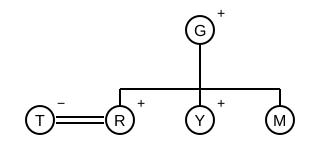
  1. T × R: T is wife of R.
  2. R − Y: R is brother of Y; Y + G: Y is son of G.
  3. G ÷ M: G is father of M → R, Y, M are siblings.
  4. T is the wife of M’s brother.

Short trick: Read the chain as a path T → R → (G) → M: wife of → brother of → sibling ⇒ T = brother’s wife.

Answer: (A) Brother's wife

अवधारणा: बाएँ से दाएँ कूट खोलें और वंश-वृक्ष बनाएँ।

  1. T × R: T, R की पत्नी है।
  2. R − Y: R, Y का भाई; Y + G: Y, G का पुत्र।
  3. G ÷ M: G, M का पिता → R, Y, M भाई-बहन।
  4. T, M के भाई की पत्नी है।

शॉर्ट ट्रिक: शृंखला T → R → M पढ़ें: पत्नी → भाई ⇒ T = भाई की पत्नी।

उत्तर: (A) भाई की पत्नी

RRB ALP CBT 1General Intelligence and ReasoningCoded blood relationRRB ALP CBT 1 2025 · 16 Feb Shift 2