Q21.A metal object exposed to a humid environment starts corroding. Which of the following methods would be the most effective and long-lasting in preventing corrosion?
आर्द्र वातावरण के संपर्क में आई एक धातु की वस्तु संक्षारित होने लगती है। संक्षारण को रोकने में निम्नलिखित में से कौन-सी विधि सबसे प्रभावी और दीर्घकालिक होगी?
- AApplying a single coat of paintपेंट की एक परत लगाना
- BCoating with a more reactive metal like zincज़िंक जैसी अधिक अभिक्रियाशील धातु की परत चढ़ाना
- CWrapping the metal with a dry cloth to prevent moisture exposureनमी के संपर्क से बचाने के लिए धातु को सूखे कपड़े में लपेटना
- DPeriodically wiping the surface with oilसमय-समय पर सतह को तेल से पोंछना
Show answer
Concept: Coating iron with zinc (galvanisation) protects it even if the coating gets scratched.
- Zinc is more reactive than iron, so it corrodes in preference to iron (sacrificial protection).
- Paint or oil only block moisture and wear off; a dry cloth does not stop humid air.
- Hence zinc coating is the most effective and long-lasting.
Short trick: Hook: “Zinc sacrifices itself for iron.”
Answer: (B) Coating with a more reactive metal like zinc
अवधारणा: लोहे पर ज़िंक की परत (यशदलेपन) खरोंच लगने पर भी सुरक्षा देती है।
- ज़िंक लोहे से अधिक अभिक्रियाशील है, अतः पहले ज़िंक संक्षारित होता है (त्यागी सुरक्षा)।
- पेंट या तेल केवल नमी रोकते हैं और घिस जाते हैं; सूखा कपड़ा आर्द्र वायु नहीं रोकता।
- अतः ज़िंक की परत सबसे प्रभावी और दीर्घकालिक है।
शॉर्ट ट्रिक: याद रखें: “ज़िंक लोहे के लिए स्वयं को त्याग देता है।”
उत्तर: (B) ज़िंक जैसी अधिक अभिक्रियाशील धातु की परत चढ़ाना
RRB ALP CBT 1General ScienceCorrosion – galvanisationRRB ALP CBT 1 2025 · 18 Feb Shift 2
Q22.A car falls off a ledge and drops to the ground in 0.6 s. Take g = 10 m/s². What is the car’s speed on striking the ground?
एक कार एक कगार से गिरकर 0.6 s में ज़मीन पर पहुँचती है। g = 10 m/s² लीजिए। ज़मीन से टकराते समय कार की चाल कितनी है?
- A10 m/s
- B3 m/s
- C12 m/s
- D6 m/s
Show answer
Concept: Starting from rest: with .
- m/s.
Short trick: Each second of free fall adds 10 m/s → 0.6 s adds 6 m/s.
Answer: (D) 6 m/s
अवधारणा: विराम से शुरू: , ।
- m/s।
शॉर्ट ट्रिक: मुक्त पतन में हर सेकंड 10 m/s जुड़ता है → 0.6 s में 6 m/s।
उत्तर: (D) 6 m/s
RRB ALP CBT 1General ScienceFree fall – final velocityRRB ALP CBT 1 2025 · 18 Feb Shift 2
Q23.The apparent random wavering or flickering of objects seen through a turbulent stream of hot air rising above a fire or a radiator is due to:
आग या रेडिएटर के ऊपर उठती गर्म वायु की विक्षुब्ध धारा के पार देखी गई वस्तुओं का आभासी, अनियमित रूप से हिलना या टिमटिमाना किसके कारण होता है?
- ADiffraction of lightप्रकाश का विवर्तन
- BDispersion of lightप्रकाश का परिक्षेपण
- CAtmospheric refraction of lightप्रकाश का वायुमंडलीय अपवर्तन
- DReflection of lightप्रकाश का परावर्तन
Show answer
Concept: Hot air above a fire is less dense (lower refractive index) than the cooler air around it, and it keeps fluctuating.
- Light from the object bends by different amounts as it passes through these changing layers.
- So the apparent position of the object keeps changing → it seems to waver/flicker.
- Same reason makes stars twinkle.
Short trick: Hook: “Hot air shimmer = twinkling star” – both are atmospheric refraction.
Answer: (C) Atmospheric refraction of light
अवधारणा: आग के ऊपर की गर्म वायु आसपास की ठंडी वायु से कम सघन (कम अपवर्तनांक) होती है और लगातार बदलती रहती है।
- इन बदलती परतों से गुज़रते समय प्रकाश अलग-अलग मात्रा में मुड़ता है।
- इसलिए वस्तु की आभासी स्थिति बदलती रहती है → वह हिलती/टिमटिमाती दिखती है।
- तारों का टिमटिमाना भी इसी कारण होता है।
शॉर्ट ट्रिक: याद रखें: “गर्म हवा की झिलमिलाहट = तारों का टिमटिमाना” – दोनों वायुमंडलीय अपवर्तन।
उत्तर: (C) प्रकाश का वायुमंडलीय अपवर्तन
RRB ALP CBT 1General ScienceAtmospheric refractionRRB ALP CBT 1 2025 · 18 Feb Shift 2
Q24.What property of gases allows them to fill any container completely?
गैसों का कौन-सा गुण उन्हें किसी भी पात्र को पूरी तरह भरने देता है?
- AParticles remain fixed and cannot move easily.कण स्थिर रहते हैं और आसानी से गति नहीं कर सकते।
- BParticles move freely and have negligible attraction.कण स्वतंत्र रूप से गति करते हैं और उनके बीच आकर्षण नगण्य होता है।
- CParticles occupy definite volume and definite shape.कणों का निश्चित आयतन और निश्चित आकार होता है।
- DParticles form strong bonds with container walls.कण पात्र की दीवारों के साथ प्रबल बंध बनाते हैं।
Show answer
Concept: Gas particles have very weak forces of attraction and very high kinetic energy.
- They move freely and randomly in all directions.
- So a gas has neither fixed shape nor fixed volume – it spreads to fill the whole container.
- Solids have definite shape and volume; particles do not bond with container walls.
Short trick: Hook: “Gas = Go Anywhere Space” – free movement, negligible attraction.
Answer: (B) Particles move freely and have negligible attraction.
अवधारणा: गैस के कणों के बीच आकर्षण बल बहुत कम और गतिज ऊर्जा बहुत अधिक होती है।
- वे सभी दिशाओं में स्वतंत्र और अनियमित रूप से गति करते हैं।
- इसलिए गैस का न निश्चित आकार होता है न निश्चित आयतन – वह पूरे पात्र में फैल जाती है।
- ठोस का निश्चित आकार और आयतन होता है; कण पात्र की दीवारों से बंध नहीं बनाते।
शॉर्ट ट्रिक: याद रखें: गैस = मुक्त गति + नगण्य आकर्षण।
उत्तर: (B) कण स्वतंत्र रूप से गति करते हैं और उनके बीच आकर्षण नगण्य होता है।
RRB ALP CBT 1General ScienceStates of matter – gasesRRB ALP CBT 1 2025 · 18 Feb Shift 2
Q25.Which of the following is correct regarding the quantity of stain retained by the cytoplasm in a temporary mount of onion peel?
प्याज़ की झिल्ली के अस्थायी आरोपण (temporary mount) में कोशिकाद्रव्य द्वारा ग्रहण किए गए अभिरंजक की मात्रा के संबंध में निम्नलिखित में से कौन-सा सही है?
- AVery little stainedबहुत कम अभिरंजित
- BVery high stainedबहुत अधिक अभिरंजित
- CNo stainकोई अभिरंजन नहीं
- DMedium stainedमध्यम अभिरंजित
Show answer
Concept: In an onion-peel mount stained with safranin/iodine, the nucleus and cell wall take up the stain strongly, the cytoplasm only faintly.
- The nucleus is rich in DNA/chromatin and stains dark.
- The cytoplasm is mostly water with few stain-binding materials, so it is very lightly stained.
- Hence cytoplasm: very little stained.
Short trick: Memory hook: "Nucleus dark, cytoplasm light" — the nucleus looks like a dark dot in a pale cell.
Answer: (A) Very little stained
अवधारणा: सैफ्रानिन/आयोडीन से अभिरंजित प्याज़ की झिल्ली में केंद्रक और कोशिका भित्ति गहरा रंग लेते हैं, कोशिकाद्रव्य बहुत हल्का।
- केंद्रक DNA/क्रोमैटिन से भरपूर होता है, इसलिए गहरा रंगता है।
- कोशिकाद्रव्य में मुख्यतः जल होता है और रंग बाँधने वाले पदार्थ कम होते हैं, अतः बहुत कम रंगता है।
- अतः कोशिकाद्रव्य: बहुत कम अभिरंजित।
शॉर्ट ट्रिक: याद रखें: "केंद्रक गहरा, कोशिकाद्रव्य हल्का" — हल्की कोशिका में केंद्रक गहरे बिंदु जैसा दिखता है।
उत्तर: (A) बहुत कम अभिरंजित
RRB ALP CBT 1General ScienceCell – onion peel slide (staining)RRB ALP CBT 1 2025 · 18 Feb Shift 1
Q26.Lenses in spectacles help correct vision defects due to:
चश्मों के लेंस दृष्टि दोषों को ठीक करने में किसके कारण सहायता करते हैं?
- AReflection from mirrorsदर्पणों से परावर्तन
- BScattering of lightप्रकाश का प्रकीर्णन
- CDispersion of lightप्रकाश का विक्षेपण (वर्ण-विक्षेपण)
- DRefraction of light through lensesलेंसों से होकर प्रकाश का अपवर्तन
Show answer
Concept: Spectacle lenses bend (refract) light so that the image falls exactly on the retina.
- Myopia: concave (diverging) lens; hypermetropia: convex (converging) lens.
- Both work by refraction of light through the lens, not by reflection, scattering or dispersion.
Short trick: Memory hook: "Lens → Refraction, Mirror → Reflection".
Answer: (D) Refraction of light through lenses
अवधारणा: चश्मे के लेंस प्रकाश को मोड़ते (अपवर्तित करते) हैं ताकि प्रतिबिंब ठीक रेटिना पर बने।
- निकट-दृष्टि दोष: अवतल (अपसारी) लेंस; दूर-दृष्टि दोष: उत्तल (अभिसारी) लेंस।
- दोनों लेंस से होकर प्रकाश के अपवर्तन से कार्य करते हैं, परावर्तन, प्रकीर्णन या विक्षेपण से नहीं।
शॉर्ट ट्रिक: याद रखें: "लेंस → अपवर्तन, दर्पण → परावर्तन"।
उत्तर: (D) लेंसों से होकर प्रकाश का अपवर्तन
RRB ALP CBT 1General ScienceLight – lenses and vision correctionRRB ALP CBT 1 2025 · 18 Feb Shift 1
Q27.Which of the following correctly describes lymph?
निम्नलिखित में से कौन-सा लसीका (lymph) का सही वर्णन करता है?
- AFluid that flows only inside arteriesवह द्रव जो केवल धमनियों के अंदर बहता है
- BFluid containing more proteins than blood plasmaरक्त प्लाज़्मा से अधिक प्रोटीन वाला द्रव
- CColoured fluid rich in red blood cellsलाल रक्त कोशिकाओं से भरपूर रंगीन द्रव
- DSimilar to plasma but colourless and low in proteinsप्लाज़्मा के समान परंतु रंगहीन और कम प्रोटीन वाला
Show answer
Concept: Lymph (tissue fluid) is plasma that has leaked out of capillaries into intercellular spaces.
- Plasma proteins and RBCs are too large to pass through capillary walls easily, so lymph is colourless and has less protein.
- It flows in lymphatic vessels (not arteries) and carries fats from the intestine; contains lymphocytes.
Short trick: Memory hook: "Lymph = Light plasma" — colourless, less protein, no RBC.
Answer: (D) Similar to plasma but colourless and low in proteins
अवधारणा: लसीका (ऊतक द्रव) वह प्लाज़्मा है जो केशिकाओं से अंतरकोशिकीय स्थानों में रिस जाता है।
- प्लाज़्मा प्रोटीन और RBC बड़े होने के कारण केशिका भित्ति से आसानी से नहीं निकलते, अतः लसीका रंगहीन और कम प्रोटीन वाली होती है।
- यह लसीका वाहिकाओं (धमनियों में नहीं) में बहती है और आँत से वसा ले जाती है; इसमें लिम्फोसाइट होते हैं।
शॉर्ट ट्रिक: याद रखें: "लसीका = हल्का प्लाज़्मा" — रंगहीन, कम प्रोटीन, RBC नहीं।
उत्तर: (D) प्लाज़्मा के समान परंतु रंगहीन और कम प्रोटीन वाला
RRB ALP CBT 1General ScienceHuman body – lymphRRB ALP CBT 1 2025 · 18 Feb Shift 1
Q28.No matter where an object is placed in front of it, a concave lens always forms an image that is:
वस्तु को अवतल लेंस के सामने कहीं भी रखा जाए, अवतल लेंस सदैव ऐसा प्रतिबिंब बनाता है जो होता है:
- AReal, inverted, and enlargedवास्तविक, उल्टा और बड़ा
- BVirtual, erect, and diminishedआभासी, सीधा और छोटा
- CReal, erect, and same sizeवास्तविक, सीधा और समान आकार का
- DVirtual, inverted, and enlargedआभासी, उल्टा और बड़ा
Show answer
Concept: A concave lens is diverging: refracted rays spread out and only appear to meet on the object’s side.

- A ray parallel to the axis diverges as if coming from F₁; a ray through the optical centre goes straight.
- These rays, extended backwards, meet between F₁ and the lens.
- So the image is always virtual, erect and diminished, for every object position.
Short trick: Memory hook: "Concave lens = convex mirror" — both always give a virtual, erect, small image.
Answer: (B) Virtual, erect, and diminished
अवधारणा: अवतल लेंस अपसारी है: अपवर्तित किरणें फैल जाती हैं और केवल वस्तु की ओर मिलती प्रतीत होती हैं।
- अक्ष के समांतर किरण F₁ से आती प्रतीत होती हुई फैलती है; प्रकाशिक केंद्र से जाने वाली किरण सीधी जाती है।
- पीछे बढ़ाने पर ये किरणें F₁ और लेंस के बीच मिलती हैं।
- अतः वस्तु की हर स्थिति में प्रतिबिंब सदैव आभासी, सीधा और छोटा बनता है।
शॉर्ट ट्रिक: याद रखें: "अवतल लेंस = उत्तल दर्पण" — दोनों सदैव आभासी, सीधा, छोटा प्रतिबिंब देते हैं।
उत्तर: (B) आभासी, सीधा और छोटा
RRB ALP CBT 1General ScienceLight – image by a concave lensRRB ALP CBT 1 2025 · 18 Feb Shift 1
Q29.Which of the following correctly describes the effect of consuming ethanol?
निम्नलिखित में से कौन-सा इथेनॉल के सेवन के प्रभाव का सही वर्णन करता है?
- ASmall amounts of absolute alcohol are safe, but diluted ethanol is always fatalपरिशुद्ध ऐल्कोहॉल की थोड़ी मात्रा सुरक्षित है, परंतु तनु इथेनॉल सदैव घातक होता है
- BSmall amounts of dilute ethanol cause drunkenness, whereas absolute alcohol can be lethalतनु इथेनॉल की थोड़ी मात्रा से नशा होता है, जबकि परिशुद्ध ऐल्कोहॉल घातक हो सकता है
- CLong-term consumption of diluted ethanol has no health impact on humansतनु इथेनॉल के दीर्घकालिक सेवन का मनुष्यों के स्वास्थ्य पर कोई प्रभाव नहीं पड़ता
- DAbsolute alcohol in any amount causes minor intoxication without severe effectsपरिशुद्ध ऐल्कोहॉल किसी भी मात्रा में केवल हल्का नशा करता है, कोई गंभीर प्रभाव नहीं
Show answer
Concept: Ethanol is the active ingredient of alcoholic drinks (NCERT Class 10).
- Small quantities of dilute ethanol cause drunkenness.
- Even a small quantity of pure ethanol (absolute alcohol) can be lethal.
- Long-term consumption of alcohol leads to many health problems.
Short trick: Memory hook: "Dilute → drunk, Absolute → deadly".
Answer: (B) Small amounts of dilute ethanol cause drunkenness, whereas absolute alcohol can be lethal
अवधारणा: एथेनॉल सभी ऐल्कोहॉली पेयों का सक्रिय घटक है (NCERT कक्षा 10)।
- तनु एथेनॉल की थोड़ी मात्रा से नशा होता है।
- शुद्ध एथेनॉल (परिशुद्ध ऐल्कोहॉल) की थोड़ी मात्रा भी घातक हो सकती है।
- ऐल्कोहॉल के दीर्घकालिक सेवन से अनेक स्वास्थ्य समस्याएँ होती हैं।
शॉर्ट ट्रिक: याद रखें: "तनु → नशा, परिशुद्ध → घातक"।
उत्तर: (B) तनु इथेनॉल की थोड़ी मात्रा से नशा होता है, जबकि परिशुद्ध ऐल्कोहॉल घातक हो सकता है
RRB ALP CBT 1General ScienceCarbon compounds – ethanolRRB ALP CBT 1 2025 · 18 Feb Shift 1
Q30.Why does the palm feel cool when acetone is poured on it?
हथेली पर ऐसीटोन डालने पर हथेली ठंडी क्यों महसूस होती है?
- AParticles remain still and reflect the surrounding heat.कण स्थिर रहते हैं और आसपास की ऊष्मा को परावर्तित करते हैं।
- BParticles absorb energy from the palm and evaporate.कण हथेली से ऊर्जा अवशोषित करते हैं और वाष्पित हो जाते हैं।
- CParticles release energy to the palm and condense.कण हथेली को ऊर्जा देते हैं और संघनित हो जाते हैं।
- DParticles expand and trap air between skin layers.कण फैलते हैं और त्वचा की परतों के बीच हवा को रोक लेते हैं।
Show answer
Concept: Evaporation needs latent heat, which is taken from the surroundings.
- Acetone is highly volatile and evaporates quickly.
- Its particles absorb energy (latent heat of vaporisation) from the palm to escape as vapour.
- The palm loses heat and feels cool.
Short trick: Memory hook: "Evaporation steals heat" — same reason sweat or a matka cools.
Answer: (B) Particles absorb energy from the palm and evaporate.
अवधारणा: वाष्पन के लिए गुप्त ऊष्मा चाहिए, जो आसपास से ली जाती है।
- ऐसीटोन अत्यधिक वाष्पशील है और तेज़ी से वाष्पित होता है।
- इसके कण वाष्प बनने के लिए हथेली से ऊर्जा (वाष्पन की गुप्त ऊष्मा) अवशोषित करते हैं।
- हथेली ऊष्मा खोती है और ठंडी लगती है।
शॉर्ट ट्रिक: याद रखें: "वाष्पन ऊष्मा चुराता है" — पसीने और मटके के ठंडे होने का भी यही कारण।
उत्तर: (B) कण हथेली से ऊर्जा अवशोषित करते हैं और वाष्पित हो जाते हैं।
RRB ALP CBT 1General ScienceMatter – evaporation causes coolingRRB ALP CBT 1 2025 · 18 Feb Shift 1
Q31.A car falls off a ledge and drops to the ground in 0.8 s. Take g = 10 m/s² (for simplifying the calculations). How high is the ledge from the ground?
एक कार किसी कगार (ledge) से गिरती है और 0.8 s में भूमि पर पहुँच जाती है। g = 10 m/s² लीजिए (गणना को सरल बनाने के लिए)। कगार भूमि से कितनी ऊँचाई पर है?
- A4.0 m
- B2.0 m
- C6.4 m
- D3.2 m
Show answer
Concept: Starting from rest: .
- m
Short trick: With g = 10, : .
Answer: (D) 3.2 m
अवधारणा: विराम से गिरने पर: ।
- m
शॉर्ट ट्रिक: g = 10 पर : ।
उत्तर: (D) 3.2 m
RRB ALP CBT 1General ScienceMotion – free fallRRB ALP CBT 1 2025 · 18 Feb Shift 1
Q32.Which of the following hybridisation crossing is NOT used for the improvement in crop varieties?
निम्नलिखित में से कौन-सा संकरण (hybridisation) संकरण-क्रॉस, फसल की किस्मों में सुधार के लिए उपयोग नहीं किया जाता है?
- AIntergenericअंतरवंशीय (Intergeneric)
- BIntraspecificअंतःजातीय (Intraspecific)
- CInterspecificअंतरजातीय (Interspecific)
- DIntervarietalअंतरकिस्मीय (Intervarietal)
Show answer
Concept: Hybridisation = crossing genetically dissimilar plants (NCERT Class 9).
- The crosses used for crop improvement are intervarietal (between varieties), interspecific (between species of the same genus) and intergeneric (between genera).
- "Intraspecific" is not listed among these hybridisation types.
Short trick: Memory hook: "Varieties – Species – Genera" (V-S-G) are the three crosses; intra- is not in the list.
Answer: (B) Intraspecific
अवधारणा: संकरण = आनुवंशिक रूप से भिन्न पौधों का संकरण (NCERT कक्षा 9)।
- फसल सुधार के लिए प्रयुक्त संकरण हैं — अंतरकिस्मीय (किस्मों के बीच), अंतरजातीय (एक ही वंश की जातियों के बीच) और अंतरवंशीय (वंशों के बीच)।
- "अंतःजातीय" इन संकरण प्रकारों में शामिल नहीं है।
शॉर्ट ट्रिक: याद रखें: "किस्म – जाति – वंश" ये तीन संकरण हैं; "अंतः" इनमें नहीं है।
उत्तर: (B) अंतःजातीय (Intraspecific)
RRB ALP CBT 1General ScienceCrop improvement – hybridisationRRB ALP CBT 1 2025 · 18 Feb Shift 1
Q33.Consider the following chemical reactions:
I: BaCl2 (aq) + Na2SO4 (aq) → BaSO4 (s) + 2NaCl (aq)
II: Pb(NO3)2 (aq) + KI (aq) → PbI2 (s) + 2KNO3(aq)
Which of the following correctly classifies these reactions?
निम्नलिखित रासायनिक अभिक्रियाओं पर विचार कीजिए:
I: BaCl2 (aq) + Na2SO4 (aq) → BaSO4 (s) + 2NaCl (aq)
II: Pb(NO3)2 (aq) + KI (aq) → PbI2 (s) + 2KNO3(aq)
निम्नलिखित में से कौन-सा विकल्प इन अभिक्रियाओं का सही वर्गीकरण करता है?
- AI: Double displacement reaction; II: Displacement reactionI: द्वि-विस्थापन अभिक्रिया; II: विस्थापन अभिक्रिया
- BI: Double displacement reaction; II: Neutralisation reactionI: द्वि-विस्थापन अभिक्रिया; II: उदासीनीकरण अभिक्रिया
- CI: Displacement reaction; II: Double displacement reactionI: विस्थापन अभिक्रिया; II: द्वि-विस्थापन अभिक्रिया
- DBoth are double displacement reactionsदोनों द्वि-विस्थापन अभिक्रियाएँ हैं
Show answer
Concept: In a double displacement reaction two compounds exchange ions (AB + CD → AD + CB), usually forming a precipitate.
- I: Ba²⁺ and Na⁺ swap partners → white precipitate BaSO4.
- II: Pb²⁺ and K⁺ swap partners → yellow precipitate PbI2 (balanced form uses 2KI).
- Both are double displacement (precipitation) reactions; no free element displaces another, and no acid + base.
Short trick: "Two compounds in → two compounds out + (s) precipitate" = double displacement. Single displacement always has a free element on the left.
Answer: (D) Both are double displacement reactions
अवधारणा: द्वि-विस्थापन अभिक्रिया में दो यौगिक आपस में आयनों का आदान-प्रदान करते हैं (AB + CD → AD + CB), प्रायः अवक्षेप बनता है।
- I: Ba²⁺ और Na⁺ साथी बदलते हैं → सफेद अवक्षेप BaSO4।
- II: Pb²⁺ और K⁺ साथी बदलते हैं → पीला अवक्षेप PbI2 (संतुलित रूप में 2KI)।
- दोनों द्वि-विस्थापन (अवक्षेपण) अभिक्रियाएँ हैं।
शॉर्ट ट्रिक: "दो यौगिक अंदर → दो यौगिक बाहर + (s) अवक्षेप" = द्वि-विस्थापन। एकल विस्थापन में बाईं ओर एक स्वतंत्र तत्व होता है।
उत्तर: (D) दोनों द्वि-विस्थापन अभिक्रियाएँ हैं
RRB ALP CBT 1General ScienceChemical reactions – double displacementRRB ALP CBT 1 2025 · 17 Feb Shift 3
Q34.When white light passes through a prism, different colours of light bend through different angles. Which colour bends the least and which bends the most?
जब श्वेत प्रकाश प्रिज्म से होकर गुजरता है, तो प्रकाश के विभिन्न रंग विभिन्न कोणों पर मुड़ते हैं। कौन-सा रंग सबसे कम मुड़ता है और कौन-सा सबसे अधिक मुड़ता है?
- ABlue bends the least, yellow bends the mostनीला सबसे कम मुड़ता है, पीला सबसे अधिक मुड़ता है
- BRed bends the most, violet bends the leastलाल सबसे अधिक मुड़ता है, बैंगनी सबसे कम मुड़ता है
- CRed bends the least, violet bends the mostलाल सबसे कम मुड़ता है, बैंगनी सबसे अधिक मुड़ता है
- DBoth red and violet bend equallyलाल और बैंगनी दोनों समान रूप से मुड़ते हैं
Show answer
Concept: Dispersion: the refractive index of glass is highest for the shortest wavelength.
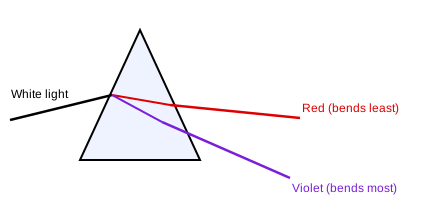
- Red has the longest wavelength → lowest refractive index → least deviation.
- Violet has the shortest wavelength → highest refractive index → maximum deviation.
- Spectrum order from top: VIBGYOR read as ROYGBIV from least to most bent.
Short trick: "Red Rests, Violet Veers" – red bends least, violet bends most.
Answer: (C) Red bends the least, violet bends the most
अवधारणा: विक्षेपण: काँच का अपवर्तनांक सबसे छोटी तरंगदैर्ध्य के लिए सबसे अधिक होता है।
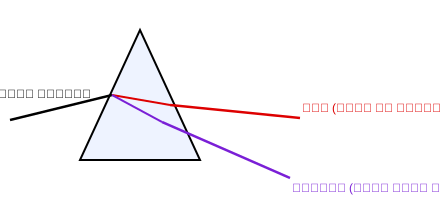
- लाल की तरंगदैर्ध्य सबसे अधिक → अपवर्तनांक सबसे कम → सबसे कम विचलन।
- बैंगनी की तरंगदैर्ध्य सबसे कम → अपवर्तनांक सबसे अधिक → सबसे अधिक विचलन।
- कम से अधिक मुड़ने का क्रम: लाल, नारंगी, पीला, हरा, नीला, जामुनी, बैंगनी।
शॉर्ट ट्रिक: "लाल लेटा, बैंगनी बेहद झुका" – लाल सबसे कम, बैंगनी सबसे अधिक मुड़ता है।
उत्तर: (C) लाल सबसे कम मुड़ता है, बैंगनी सबसे अधिक मुड़ता है
RRB ALP CBT 1General ScienceLight – dispersion by a prismRRB ALP CBT 1 2025 · 17 Feb Shift 3
Q35.Which of the following hormones is secreted by the pituitary gland?
निम्नलिखित में से कौन-सा हॉर्मोन पीयूष ग्रंथि (पिट्यूटरी ग्रंथि) द्वारा स्रावित होता है?
- AGrowth hormoneवृद्धि हॉर्मोन
- BInsulinइंसुलिन
- CAdrenalineएड्रेनालाईन
- DThyroxineथायरॉक्सिन
Show answer
Concept: Each gland has its signature hormones.
- Pituitary → growth hormone (GH), TSH, ACTH, FSH, LH, prolactin, ADH, oxytocin.
- Insulin → pancreas (islets of Langerhans); adrenaline → adrenal medulla; thyroxine → thyroid.
- Deficiency of GH in childhood causes dwarfism; excess causes gigantism.
Short trick: "Pituitary = Pillar of growth" – the master gland makes Growth Hormone.
Answer: (A) Growth hormone
अवधारणा: प्रत्येक ग्रंथि के अपने विशेष हॉर्मोन होते हैं।
- पीयूष ग्रंथि → वृद्धि हॉर्मोन (GH), TSH, ACTH, FSH, LH, प्रोलैक्टिन, ADH, ऑक्सीटोसिन।
- इंसुलिन → अग्न्याशय; एड्रेनालाईन → अधिवृक्क मध्यांश; थायरॉक्सिन → थायरॉयड।
- बचपन में GH की कमी से बौनापन, अधिकता से भीमकायता होती है।
शॉर्ट ट्रिक: "मास्टर ग्रंथि = ग्रोथ (वृद्धि) हॉर्मोन" – पीयूष ग्रंथि शरीर की वृद्धि नियंत्रित करती है।
उत्तर: (A) वृद्धि हॉर्मोन
RRB ALP CBT 1General ScienceEndocrine system – pituitary glandRRB ALP CBT 1 2025 · 17 Feb Shift 3
Q36.A concave mirror is used in torches and car headlights because it:
टॉर्च और कार की हेडलाइट में अवतल दर्पण का उपयोग किया जाता है क्योंकि यह:
- AAlways forms virtual imagesहमेशा आभासी प्रतिबिंब बनाता है
- BReduces the brightness of lightप्रकाश की चमक को कम करता है
- CCan produce a parallel beam of lightप्रकाश की समानांतर किरण-पुंज उत्पन्न कर सकता है
- DScatters light in all directionsप्रकाश को सभी दिशाओं में बिखेरता है
Show answer
Concept: A ray from the focus of a concave mirror reflects parallel to the principal axis.
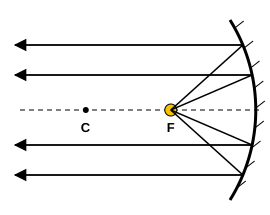
- The bulb is placed at the focus F of the concave reflector.
- All rays from F reflect as a strong parallel beam that travels far without spreading.
- Concave mirrors form real images for objects beyond F, so "always virtual" is wrong.
Short trick: "Focus in → Parallel out" – headlights, torches, searchlights all use this.
Answer: (C) Can produce a parallel beam of light
अवधारणा: अवतल दर्पण के फोकस से आने वाली किरण परावर्तन के बाद मुख्य अक्ष के समानांतर जाती है।
- बल्ब को अवतल परावर्तक के फोकस F पर रखा जाता है।
- F से निकली सभी किरणें परावर्तित होकर शक्तिशाली समानांतर किरण-पुंज बनाती हैं, जो दूर तक फैले बिना जाता है।
- अवतल दर्पण F से दूर रखी वस्तु का वास्तविक प्रतिबिंब बनाता है, अतः "हमेशा आभासी" गलत है।
शॉर्ट ट्रिक: "फोकस पर बल्ब → समानांतर पुंज" – हेडलाइट, टॉर्च, सर्चलाइट।
उत्तर: (C) प्रकाश की समानांतर किरण-पुंज उत्पन्न कर सकता है
RRB ALP CBT 1General ScienceLight – uses of concave mirrorRRB ALP CBT 1 2025 · 17 Feb Shift 3
Q37.Which chamber of the heart sends deoxygenated blood to the lungs for oxygenation?
हृदय का कौन-सा कक्ष विऑक्सीजनित रक्त को ऑक्सीजनीकरण के लिए फेफड़ों में भेजता है?
- ALeft ventricleबायाँ निलय
- BRight atriumदायाँ आलिंद
- CRight ventricleदायाँ निलय
- DLeft atriumबायाँ आलिंद
Show answer
Concept: Right side of the heart handles deoxygenated blood; ventricles pump blood out.
- Body → vena cava → right atrium → right ventricle.
- Right ventricle → pulmonary artery → lungs (oxygenation).
- Lungs → pulmonary vein → left atrium → left ventricle → aorta → body.
Short trick: "Right = Return of used blood; Ventricle = Vent out" ⇒ right ventricle sends it to lungs.
Answer: (C) Right ventricle
अवधारणा: हृदय का दायाँ भाग विऑक्सीजनित रक्त संभालता है; निलय रक्त को बाहर पंप करते हैं।
- शरीर → महाशिरा → दायाँ आलिंद → दायाँ निलय।
- दायाँ निलय → फुफ्फुस धमनी → फेफड़े (ऑक्सीजनीकरण)।
- फेफड़े → फुफ्फुस शिरा → बायाँ आलिंद → बायाँ निलय → महाधमनी → शरीर।
शॉर्ट ट्रिक: "दायाँ = दूषित रक्त, निलय = निकास" ⇒ दायाँ निलय रक्त फेफड़ों को भेजता है।
उत्तर: (C) दायाँ निलय
RRB ALP CBT 1General ScienceHuman heart – circulationRRB ALP CBT 1 2025 · 17 Feb Shift 3
Q38.Which of the following events happens when lysosomes in a cell burst?
जब किसी कोशिका में लाइसोसोम फट जाते हैं, तो निम्नलिखित में से कौन-सी घटना होती है?
- AEnzymes digest foreign particles onlyएंजाइम केवल बाहरी कणों को पचाते हैं
- BCell division increasesकोशिका विभाजन बढ़ जाता है
- CCell becomes more activeकोशिका अधिक सक्रिय हो जाती है
- DEnzymes digest the cell’s own componentsएंजाइम कोशिका के अपने घटकों को पचा लेते हैं
Show answer
Concept: Lysosomes are membrane sacs full of powerful digestive (hydrolytic) enzymes.
- Normally they digest worn-out organelles and foreign particles inside the sac.
- When a lysosome bursts (e.g. in damaged cells), enzymes leak out and digest the cell itself (autolysis).
- Hence lysosomes are called the "suicide bags" of the cell.
Short trick: "Lysosome = Lethal sac" – burst ⇒ self-digestion.
Answer: (D) Enzymes digest the cell’s own components
अवधारणा: लाइसोसोम शक्तिशाली पाचक (हाइड्रोलाइटिक) एंजाइमों से भरी झिल्ली-युक्त थैलियाँ हैं।
- सामान्यतः ये पुराने कोशिकांगों और बाहरी कणों को पचाते हैं।
- लाइसोसोम फटने पर एंजाइम बाहर आकर कोशिका को ही पचा देते हैं (स्वलयन)।
- इसलिए लाइसोसोम को कोशिका की "आत्मघाती थैली" कहते हैं।
शॉर्ट ट्रिक: "लाइसोसोम = आत्मघाती थैली" – फटे तो कोशिका का स्व-पाचन।
उत्तर: (D) एंजाइम कोशिका के अपने घटकों को पचा लेते हैं
RRB ALP CBT 1General ScienceCell – lysosomesRRB ALP CBT 1 2025 · 17 Feb Shift 3
Q39.LPG (Liquefied Petroleum Gas) is stored in cylinders in liquid form because:
LPG (द्रवीकृत पेट्रोलियम गैस) को सिलेंडरों में द्रव रूप में संग्रहित किया जाता है क्योंकि:
- AIt reacts with air to form liquidयह वायु के साथ अभिक्रिया करके द्रव बनाती है
- BIt is cooled and compressed under high pressureइसे ठंडा करके उच्च दाब पर संपीडित किया जाता है
- CIt is solidified before useउपयोग से पहले इसे ठोस बना दिया जाता है
- DIt is heated and expanded under low pressureइसे निम्न दाब पर गर्म और प्रसारित किया जाता है
Show answer
Concept: Gases liquefy when the particles are pushed close together – by increasing pressure and/or lowering temperature.
- LPG (mainly butane + propane) is compressed under high pressure (and cooled), so it becomes liquid.
- A liquid occupies far less volume, so much more gas fits in a cylinder.
- When the valve opens, pressure drops and it turns back to gas.
Short trick: "High P + Low T ⇒ Liquid" (same idea as CNG/LPG, dry ice).
Answer: (B) It is cooled and compressed under high pressure
अवधारणा: दाब बढ़ाने और/या ताप घटाने पर गैस के कण पास आ जाते हैं और गैस द्रव बन जाती है।
- LPG (मुख्यतः ब्यूटेन + प्रोपेन) को उच्च दाब पर संपीडित (और ठंडा) किया जाता है, जिससे वह द्रव बन जाती है।
- द्रव बहुत कम आयतन घेरता है, इसलिए सिलेंडर में अधिक गैस भरी जा सकती है।
- वाल्व खोलने पर दाब घटता है और वह फिर गैस बन जाती है।
शॉर्ट ट्रिक: "उच्च दाब + निम्न ताप ⇒ द्रव"।
उत्तर: (B) इसे ठंडा करके उच्च दाब पर संपीडित किया जाता है
RRB ALP CBT 1General ScienceEveryday chemistry – LPGRRB ALP CBT 1 2025 · 17 Feb Shift 3
Q40.A force acts on a 4 kg body at rest and produces an acceleration of 3 m/s². The final velocity after 5 seconds is:
एक बल, विरामावस्था में स्थित 4 kg के पिंड पर कार्य करता है और 3 m/s² का त्वरण उत्पन्न करता है। 5 सेकंड बाद अंतिम वेग कितना होगा?
- A20 m/s
- B10 m/s
- C12 m/s
- D15 m/s
Show answer
Concept: First equation of motion: .
- (at rest), m/s², s.
- m/s.
- Mass (4 kg) only gives the force F = ma = 12 N – not needed for v.
Short trick: From rest, – ignore the mass, it is a distractor.
Answer: (D) 15 m/s
अवधारणा: गति का प्रथम समीकरण: ।
- (विराम), m/s², s।
- m/s।
- द्रव्यमान (4 kg) केवल बल F = ma = 12 N देता है – v के लिए आवश्यक नहीं।
शॉर्ट ट्रिक: विराम से – द्रव्यमान केवल भ्रमित करने के लिए है।
उत्तर: (D) 15 m/s
RRB ALP CBT 1General ScienceMotion – equations of motionRRB ALP CBT 1 2025 · 17 Feb Shift 3

