Q1.The refractive index of water is 1.33. What does this value mean?
जल का अपवर्तनांक 1.33 है। इस मान का क्या अर्थ है?
- ALight travels 1.33 times faster in water than in air.प्रकाश वायु की तुलना में जल में 1.33 गुना तेज़ चलता है।
- BThe speed of light in air is 1.33 times the speed of light in water.वायु में प्रकाश की चाल, जल में प्रकाश की चाल की 1.33 गुना है।
- CLight travels 1.33 times slower in air than in water.प्रकाश जल की तुलना में वायु में 1.33 गुना धीमा चलता है।
- DThe speed of light in water and air is the same.जल और वायु में प्रकाश की चाल समान है।
Show answer
Concept: Refractive index of a medium n = c (speed in air/vacuum) ÷ v (speed in the medium).
- ⇒ .
- So light in air is 1.33 times faster than in water; light slows down in water.
Short trick: Memory hook: 'n = c by v' — bigger n, slower light (denser medium).
Answer: (B) The speed of light in air is 1.33 times the speed of light in water.
अवधारणा: किसी माध्यम का अपवर्तनांक n = c (वायु/निर्वात में चाल) ÷ v (माध्यम में चाल)।
- ⇒ .
- अतः वायु में प्रकाश की चाल जल से 1.33 गुना है; जल में प्रकाश धीमा हो जाता है।
शॉर्ट ट्रिक: याद रखें: 'n = c बटा v' — n जितना बड़ा, प्रकाश उतना धीमा (सघन माध्यम)।
उत्तर: (B) वायु में प्रकाश की चाल, जल में प्रकाश की चाल की 1.33 गुना है।
RRB ALP CBT 1General ScienceRefractive indexRRB ALP CBT 1 2025 · 11 Mar Shift 1
Q2.In carbon dioxide (CO₂), 12 g of carbon (C) combines with 32 g of oxygen (O). If 36 g of carbon is used, how much oxygen will combine according to the law of constant proportions?
कार्बन डाइऑक्साइड (CO₂) में, 12 g कार्बन (C), 32 g ऑक्सीजन (O) के साथ संयोग करता है। यदि 36 g कार्बन का उपयोग किया जाए, तो स्थिर अनुपात के नियम के अनुसार कितनी ऑक्सीजन संयोग करेगी?
- A96 g
- B64 g
- C48 g
- D72 g
Show answer
Concept: A compound always contains its elements in a fixed ratio by mass (C : O = 12 : 32 = 3 : 8 in CO₂).
- 36 g C = 3 × 12 g.
- Oxygen = 3 × 32 = 96 g.
Short trick: Carbon tripled → oxygen tripled. (Law given by Proust.)
Answer: (A) 96 g
अवधारणा: एक यौगिक में तत्व सदैव द्रव्यमान के निश्चित अनुपात में होते हैं (CO₂ में C : O = 12 : 32 = 3 : 8)।
- 36 g C = 3 × 12 g.
- ऑक्सीजन = 3 × 32 = 96 g.
शॉर्ट ट्रिक: कार्बन तिगुना → ऑक्सीजन तिगुनी। (नियम: प्राउस्ट)
उत्तर: (A) 96 g
RRB ALP CBT 1General ScienceLaw of constant proportionsRRB ALP CBT 1 2025 · 11 Mar Shift 1
Q3.In traditional grain storage, farmers often mix grains with neem leaves to prevent:
पारंपरिक अनाज भंडारण में, किसान अक्सर अनाज के साथ नीम की पत्तियाँ मिलाते हैं ताकि रोका जा सके:
- AMoisture absorptionनमी अवशोषण
- BGerminationअंकुरण
- CLoss of nutrientsपोषक तत्वों की हानि
- DInsect infestationकीट संक्रमण
Show answer
Concept: Dried neem leaves act as a natural insect repellent in stored grain.
- Neem contains azadirachtin, which repels and disrupts the growth of storage pests (weevils, beetles, moths).
- It is a cheap, chemical-free method used at home and on farms.
Short trick: Hook: Neem = natural pesticide (azadirachtin).
Answer: (D) Insect infestation
अवधारणा: सूखी नीम की पत्तियाँ भंडारित अनाज में प्राकृतिक कीट-विकर्षक का काम करती हैं।
- नीम में एज़ाडिरैक्टिन होता है, जो भंडारण कीटों (घुन, भृंग, पतंगे) को दूर रखता है और उनकी वृद्धि रोकता है।
- यह सस्ती और रसायन-रहित विधि है।
शॉर्ट ट्रिक: याद रखें: नीम = प्राकृतिक कीटनाशक (एज़ाडिरैक्टिन)।
उत्तर: (D) कीट संक्रमण
RRB ALP CBT 1General ScienceStorage of food grainsRRB ALP CBT 1 2025 · 11 Mar Shift 1
Q4.Digestion of food by means of gastric glands and hydrochloric acid takes place in which part of the body?
गैस्ट्रिक ग्रंथियों और हाइड्रोक्लोरिक अम्ल द्वारा भोजन का पाचन शरीर के किस भाग में होता है?
- ALarge intestineबड़ी आंत
- BStomachआमाशय
- CSmall intestineछोटी आंत
- DPancreasअग्न्याशय
Show answer
Concept: Gastric glands in the stomach wall secrete HCl, pepsin and mucus.
- HCl makes the medium acidic and kills germs; it activates pepsin for protein digestion.
- Mucus protects the stomach lining from the acid.
Short trick: 'Gastric' = stomach (Greek gaster).
Answer: (B) Stomach
अवधारणा: आमाशय की भित्ति की जठर ग्रंथियाँ HCl, पेप्सिन और श्लेष्मा स्रावित करती हैं।
- HCl माध्यम को अम्लीय बनाता है, कीटाणु मारता है और प्रोटीन पाचन हेतु पेप्सिन को सक्रिय करता है।
- श्लेष्मा अम्ल से आमाशय की परत की रक्षा करता है।
शॉर्ट ट्रिक: 'गैस्ट्रिक' = आमाशय (यूनानी gaster)।
उत्तर: (B) आमाशय
RRB ALP CBT 1General ScienceHuman digestive systemRRB ALP CBT 1 2025 · 11 Mar Shift 1
Q5.Which of the following is NOT an example of a single cell that constitutes a complete organism?
निम्नलिखित में से कौन-सा एकल कोशिका का उदाहरण नहीं है जो एक पूर्ण जीव का निर्माण करती है?
- AAmoebaअमीबा
- BChlamydomonasक्लैमाइडोमोनास
- CParamoeciumपैरामीशियम
- DCycasसाइकस
Show answer
Concept: Unicellular organisms: a single cell performs all life functions.
- Amoeba, Paramoecium (protozoa) and Chlamydomonas (green alga) are unicellular.
- Cycas is a multicellular gymnosperm plant (a 'living fossil').
Short trick: Hook: Cycas = a tree-like plant you can see — never one cell.
Answer: (D) Cycas
अवधारणा: एककोशिकीय जीव: एक ही कोशिका सभी जीवन क्रियाएँ करती है।
- अमीबा, पैरामीशियम (प्रोटोज़ोआ) और क्लैमाइडोमोनास (हरा शैवाल) एककोशिकीय हैं।
- साइकस एक बहुकोशिकीय अनावृतबीजी पौधा ('जीवित जीवाश्म') है।
शॉर्ट ट्रिक: याद रखें: साइकस = दिखने वाला पेड़ जैसा पौधा — कभी एक कोशिका नहीं।
उत्तर: (D) साइकस
RRB ALP CBT 1General ScienceUnicellular organismsRRB ALP CBT 1 2025 · 11 Mar Shift 1
Q6.What is the region around a magnet called, where the force of the magnet can be detected?
चुंबक के चारों ओर का वह क्षेत्र क्या कहलाता है, जहाँ चुंबक के बल का पता लगाया जा सकता है?
- AMagnetic lineचुंबकीय रेखा
- BMagnetic fieldचुंबकीय क्षेत्र
- CMagnetic zoneचुंबकीय ज़ोन
- DMagnetic poleचुंबकीय ध्रुव
Show answer
Concept: The region around a magnet in which its force can be detected is its magnetic field.
- It is a vector quantity (magnitude + direction); SI unit tesla (T).
- Field lines go from N to S outside the magnet; they are closest near the poles (strongest field).
Short trick: 'Field' = region of influence (like gravitational field, electric field).
Answer: (B) Magnetic field
अवधारणा: चुंबक के चारों ओर का वह क्षेत्र जिसमें उसका बल अनुभव होता है, चुंबकीय क्षेत्र कहलाता है।
- यह सदिश राशि है (परिमाण + दिशा); SI मात्रक टेस्ला (T)।
- बाहर क्षेत्र रेखाएँ N से S की ओर; ध्रुवों के पास सबसे सघन (प्रबल क्षेत्र)।
शॉर्ट ट्रिक: 'क्षेत्र' = प्रभाव का स्थान (जैसे गुरुत्वीय क्षेत्र, विद्युत क्षेत्र)।
उत्तर: (B) चुंबकीय क्षेत्र
RRB ALP CBT 1General ScienceMagnetic fieldRRB ALP CBT 1 2025 · 11 Mar Shift 1
Q7.According to the Cartesian sign convention, the object distance (u) is taken as:
कार्तीय चिह्न परिपाटी के अनुसार, बिंब दूरी (u) को लिया जाता है:
- APositive when the object is realधनात्मक जब बिंब वास्तविक हो
- BPositive for all types of objectsसभी प्रकार के बिंबों के लिए धनात्मक
- CNegative when the object is realऋणात्मक जब बिंब वास्तविक हो
- DZero for all mirrorsसभी दर्पणों के लिए शून्य
Show answer
Concept: All distances are measured from the pole/optical centre; distances in the direction of incident light are +, opposite are −.
- The object is placed to the left, and light travels left → right.
- So the object distance (u) of a real object is measured against the incident light → negative.
Short trick: Hook: 'u is always negative' for a real object in front of a mirror or lens.
Answer: (C) Negative when the object is real
अवधारणा: सभी दूरियाँ ध्रुव/प्रकाशिक केंद्र से; आपतित प्रकाश की दिशा में +, विपरीत दिशा में −।
- बिंब बाईं ओर रखा जाता है और प्रकाश बाएँ → दाएँ चलता है।
- अतः वास्तविक बिंब की दूरी (u) आपतित प्रकाश के विपरीत → ऋणात्मक।
शॉर्ट ट्रिक: याद रखें: दर्पण/लेंस के सामने वास्तविक बिंब के लिए 'u सदैव ऋणात्मक'।
उत्तर: (C) ऋणात्मक जब बिंब वास्तविक हो
RRB ALP CBT 1General ScienceSign convention for mirrors and lensesRRB ALP CBT 1 2025 · 11 Mar Shift 1
Q8.How is the valency of an element determined when the outermost shell is nearly full?
जब सबसे बाहरी कोश लगभग भरा हो, तो किसी तत्व की संयोजकता कैसे निर्धारित की जाती है?
- ABy the total number of neutrons in the nucleusनाभिक में न्यूट्रॉनों की कुल संख्या से
- BBy the total number of protons in the nucleusनाभिक में प्रोटॉनों की कुल संख्या से
- CBy the total mass of the atomपरमाणु के कुल द्रव्यमान से
- DBy the number of electrons needed to complete the octetअष्टक पूरा करने के लिए आवश्यक इलेक्ट्रॉनों की संख्या से
Show answer
Concept: Valency = combining capacity = electrons lost, gained or shared to complete the octet.
- If valence electrons are 1–3, valency = number of valence electrons.
- If the shell is nearly full (5–7), valency = 8 − valence electrons, e.g. Cl (7) → 1, O (6) → 2.
Short trick: Hook: 'Few → give, Many → take' — nearly full shells take electrons (8 − n).
Answer: (D) By the number of electrons needed to complete the octet
अवधारणा: संयोजकता = संयोजन क्षमता = अष्टक पूरा करने के लिए खोए, ग्रहण किए या साझा किए गए इलेक्ट्रॉन।
- संयोजी इलेक्ट्रॉन 1–3 हों, तो संयोजकता = संयोजी इलेक्ट्रॉन।
- कोश लगभग भरा (5–7), तो संयोजकता = 8 − संयोजी इलेक्ट्रॉन, जैसे Cl (7) → 1, O (6) → 2.
शॉर्ट ट्रिक: याद रखें: 'कम → दे दो, अधिक → ले लो' — लगभग भरा कोश (8 − n) इलेक्ट्रॉन लेता है।
उत्तर: (D) अष्टक पूरा करने के लिए आवश्यक इलेक्ट्रॉनों की संख्या से
RRB ALP CBT 1General ScienceValencyRRB ALP CBT 1 2025 · 11 Mar Shift 1
Q9.During the chlor-alkali process, which of the following statements is correct regarding the products formed at different electrodes?
क्लोर-क्षार प्रक्रिया के दौरान, विभिन्न इलेक्ट्रोडों पर बनने वाले उत्पादों के संबंध में निम्नलिखित में से कौन-सा कथन सही है?
- AHydrogen gas is released at the cathode and chlorine gas at the anode.कैथोड पर हाइड्रोजन गैस और एनोड पर क्लोरीन गैस मुक्त होती है।
- BChlorine gas is released at the cathode and hydrogen gas at the anode.कैथोड पर क्लोरीन गैस और एनोड पर हाइड्रोजन गैस मुक्त होती है।
- CSodium hydroxide is formed at the anode and chlorine gas at the cathode.एनोड पर सोडियम हाइड्रॉक्साइड और कैथोड पर क्लोरीन गैस बनती है।
- DSodium hydroxide and hydrogen gas both form at the anode.सोडियम हाइड्रॉक्साइड और हाइड्रोजन गैस दोनों एनोड पर बनते हैं।
Show answer
Concept: Electrolysis of brine (aq. NaCl): .
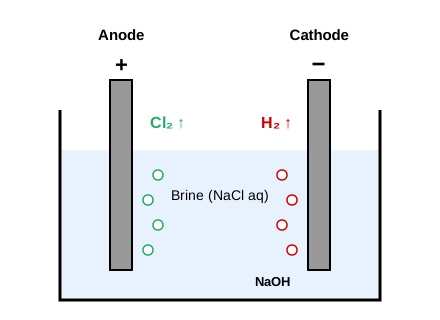
- Anode (+) attracts Cl⁻ ions → oxidised to Cl₂ gas.
- Cathode (−) reduces water → H₂ gas; OH⁻ left there combines with Na⁺ → NaOH forms near the cathode.
- So H₂ at cathode, Cl₂ at anode.
Short trick: Name = products: Chlor (Cl₂, at anode) + Alkali (NaOH, at cathode) with H₂ at cathode. Mnemonic: “Cl₂ at Anode, H₂ at Cathode”.
Answer: (A) Hydrogen gas is released at the cathode and chlorine gas at the anode.
अवधारणा: ब्राइन (NaCl का जलीय विलयन) का विद्युत अपघटन: ।
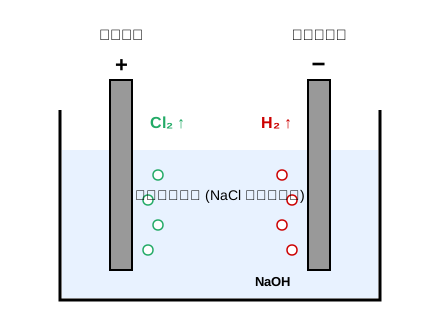
- एनोड (+) Cl⁻ आयनों को आकर्षित करता है → ये Cl₂ गैस में ऑक्सीकृत होते हैं।
- कैथोड (−) पर जल का अपचयन → H₂ गैस; वहाँ बचे OH⁻, Na⁺ से मिलकर कैथोड के पास NaOH बनाते हैं।
- अतः कैथोड पर H₂ और एनोड पर Cl₂।
शॉर्ट ट्रिक: नाम ही उत्पाद बताता है: क्लोर (Cl₂, एनोड पर) + क्षार (NaOH, कैथोड पर), साथ में कैथोड पर H₂।
उत्तर: (A) कैथोड पर हाइड्रोजन गैस और एनोड पर क्लोरीन गैस मुक्त होती है।
RRB ALP CBT 1General ScienceChlor-alkali processRRB ALP CBT 1 2025 · 18 Feb Shift 3
Q10.A sound wave has a frequency of 4 kHz and a wavelength of 25 cm. How much time will it take to travel a distance of 2.5 km?
एक ध्वनि तरंग की आवृत्ति 4 kHz और तरंगदैर्ध्य 25 cm है। 2.5 km की दूरी तय करने में इसे कितना समय लगेगा?
- A2.6 s
- B2.2 s
- C2.0 s
- D2.5 s
Show answer
Concept: Wave speed ; time .
- m/s.
- s.
Short trick: Convert first: 4 kHz × 25 cm = 4000 × ¼ m = 1 km/s → 2.5 km takes 2.5 s.
Answer: (D) 2.5 s
अवधारणा: तरंग की चाल ; समय ।
- m/s।
- s।
शॉर्ट ट्रिक: 4 kHz × 25 cm = 4000 × ¼ m = 1 km/s → 2.5 km में 2.5 s।
उत्तर: (D) 2.5 s
RRB ALP CBT 1General ScienceWave speedRRB ALP CBT 1 2025 · 18 Feb Shift 3
Q11.Transportation of water in plants takes place through ________.
पौधों में जल का परिवहन ________ के माध्यम से होता है।
- AXylemजाइलम
- BPhloemफ्लोएम
- CSclerenchymaदृढ़ोतक (स्क्लेरेनकाइमा)
- DParenchymaमृदूतक (पैरेनकाइमा)
Show answer
Concept: Xylem carries water and minerals from roots upward; phloem carries food.
- Xylem vessels and tracheids form continuous tubes from roots to leaves.
- Transpiration pull draws water up through them.
- Phloem translocates sugars; sclerenchyma/parenchyma are support/storage tissues.
Short trick: Memory hook: Xylem = eXport of water up; Phloem = Food.
Answer: (A) Xylem
अवधारणा: जाइलम जड़ों से जल और खनिज ऊपर ले जाता है; फ्लोएम भोजन ले जाता है।
- जाइलम की वाहिकाएँ और वाहिनिकाएँ जड़ से पत्ती तक निरंतर नलिकाएँ बनाती हैं।
- वाष्पोत्सर्जन खिंचाव जल को ऊपर खींचता है।
- फ्लोएम शर्करा का स्थानांतरण करता है; दृढ़ोतक/मृदूतक सहारा/संग्रह ऊतक हैं।
शॉर्ट ट्रिक: याद रखें: जाइलम = जल; फ्लोएम = फूड (भोजन)।
उत्तर: (A) जाइलम
RRB ALP CBT 1General SciencePlant transport – xylemRRB ALP CBT 1 2025 · 18 Feb Shift 3
Q12.A body of mass 4 kg has a kinetic energy of 72 J. Its speed is:
4 kg द्रव्यमान वाले एक पिंड की गतिज ऊर्जा 72 J है। इसकी चाल है:
- A4 m/s
- B3 m/s
- C9 m/s
- D6 m/s
Show answer
Concept: .
- .
- → m/s.
Short trick: .
Answer: (D) 6 m/s
अवधारणा: ।
- ।
- → m/s।
शॉर्ट ट्रिक: ।
उत्तर: (D) 6 m/s
RRB ALP CBT 1General ScienceKinetic energyRRB ALP CBT 1 2025 · 18 Feb Shift 3
Q13.Which of the following statements correctly describes a double concave lens?
निम्नलिखित में से कौन-सा कथन उभयावतल (द्वि-अवतल) लेंस का सही वर्णन करता है?
- AIt is thinner at the edges and thicker in the middle; it converges light rays.यह किनारों पर पतला और बीच में मोटा होता है; यह प्रकाश किरणों को अभिसरित करता है।
- BIt is used to focus light to a single point.इसका उपयोग प्रकाश को एक बिंदु पर फोकस करने के लिए किया जाता है।
- CIt is equally thick at the center and edges; it neither converges nor diverges light.यह केंद्र और किनारों पर समान रूप से मोटा होता है; यह प्रकाश को न तो अभिसरित करता है और न ही अपसरित।
- DIt is thicker at the edges and thinner in the middle; it diverges light rays.यह किनारों पर मोटा और बीच में पतला होता है; यह प्रकाश किरणों को अपसरित करता है।
Show answer
Concept: A double concave lens is thicker at the edges and thinner at the middle; it is a diverging lens.
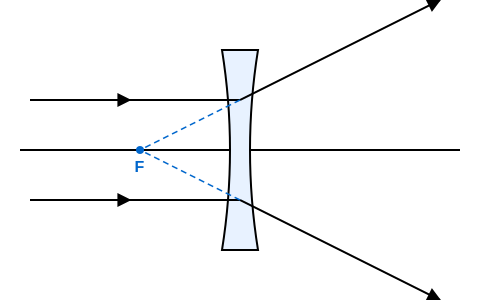
- Parallel rays spread out after passing through it.
- The refracted rays appear to come from the principal focus F on the same side.
- A convex lens (thick middle) converges; option C describes a plain glass slab.
Short trick: Concave = caved in at the middle → thin centre → spreads (diverges) light.
Answer: (D) It is thicker at the edges and thinner in the middle; it diverges light rays.
अवधारणा: उभयावतल लेंस किनारों पर मोटा और बीच में पतला होता है; यह अपसारी लेंस है।
- समांतर किरणें इससे गुज़रकर फैल जाती हैं।
- अपवर्तित किरणें उसी ओर के मुख्य फोकस F से आती प्रतीत होती हैं।
- उत्तल लेंस (बीच में मोटा) अभिसारी होता है; विकल्प C काँच की समतल पट्टिका का वर्णन है।
शॉर्ट ट्रिक: अवतल = बीच में धँसा हुआ → पतला केंद्र → प्रकाश फैलाता है (अपसरण)।
उत्तर: (D) यह किनारों पर मोटा और बीच में पतला होता है; यह प्रकाश किरणों को अपसरित करता है।
RRB ALP CBT 1General ScienceLenses – concave lensRRB ALP CBT 1 2025 · 18 Feb Shift 3
Q14.Which of the following is a mechanical method of weed control?
निम्नलिखित में से कौन-सी खरपतवार नियंत्रण की यांत्रिक विधि है?
- ASpraying herbicidesशाकनाशियों का छिड़काव
- BHand weedingहाथ से निराई
- CCrop rotationफसल चक्रण
- DSeed treatmentबीज उपचार
Show answer
Concept: Mechanical control = physically removing or destroying weeds.
- Hand weeding, hoeing, tilling and harrowing are mechanical methods.
- Spraying herbicides (weedicides) is chemical control.
- Crop rotation is a cultural/preventive method; seed treatment protects seeds from pests/diseases.
Short trick: Mechanical = by hand or machine; Chemical = by spray.
Answer: (B) Hand weeding
अवधारणा: यांत्रिक नियंत्रण = खरपतवारों को भौतिक रूप से हटाना या नष्ट करना।
- हाथ से निराई, गुड़ाई, जुताई और हैरो चलाना यांत्रिक विधियाँ हैं।
- शाकनाशी (खरपतवारनाशी) का छिड़काव रासायनिक नियंत्रण है।
- फसल चक्रण कृषि/निवारक विधि है; बीज उपचार बीजों को रोग/कीट से बचाता है।
शॉर्ट ट्रिक: यांत्रिक = हाथ या मशीन से; रासायनिक = छिड़काव से।
उत्तर: (B) हाथ से निराई
RRB ALP CBT 1General ScienceWeed control methodsRRB ALP CBT 1 2025 · 18 Feb Shift 3
Q15.Waste products formed in body by energy generation processes are desirable to remove by which of the following life processes?
शरीर में ऊर्जा उत्पादन की प्रक्रियाओं द्वारा बने अपशिष्ट उत्पादों को निम्नलिखित में से किस जैव प्रक्रम द्वारा बाहर निकालना वांछनीय है?
- AExcretionउत्सर्जन
- BNutritionपोषण
- CCirculationपरिसंचरण
- DDigestionपाचन
Show answer
Concept: Excretion removes harmful metabolic wastes (CO₂, urea, etc.) produced in the body.
- Respiration and other energy-releasing reactions make CO₂, water and nitrogenous wastes.
- Their removal (by kidneys, lungs, skin) is excretion.
- Nutrition takes in food, circulation transports, digestion breaks food down.
Short trick: Excretion = Exit of metabolic waste (undigested food leaving = egestion, not excretion).
Answer: (A) Excretion
अवधारणा: उत्सर्जन शरीर में बने हानिकारक उपापचयी अपशिष्ट (CO₂, यूरिया आदि) को बाहर निकालता है।
- श्वसन व अन्य ऊर्जा-मुक्ति अभिक्रियाएँ CO₂, जल और नाइट्रोजनी अपशिष्ट बनाती हैं।
- इनका निष्कासन (वृक्क, फेफड़े, त्वचा द्वारा) उत्सर्जन है।
- पोषण भोजन ग्रहण, परिसंचरण परिवहन और पाचन भोजन को तोड़ना है।
शॉर्ट ट्रिक: उत्सर्जन = उपापचयी अपशिष्ट का निकास (अपचित भोजन का निकलना बहिःक्षेपण है, उत्सर्जन नहीं)।
उत्तर: (A) उत्सर्जन
RRB ALP CBT 1General ScienceLife processes – excretionRRB ALP CBT 1 2025 · 18 Feb Shift 3
Q16.Which of the following correctly describes the properties of a proton?
निम्नलिखित में से कौन-सा प्रोटॉन के गुणों का सही वर्णन करता है?
- AIt is positively charged and has a mass approximately 2000 times that of an electron.यह धनावेशित होता है और इसका द्रव्यमान इलेक्ट्रॉन के द्रव्यमान का लगभग 2000 गुना होता है।
- BIt has no charge and is present in the nucleus.इस पर कोई आवेश नहीं होता और यह नाभिक में उपस्थित होता है।
- CIt is negatively charged and located inside the nucleus.यह ऋणावेशित होता है और नाभिक के अंदर स्थित होता है।
- DIt has a positive charge and a mass equal to an electron.इस पर धनावेश होता है और इसका द्रव्यमान इलेक्ट्रॉन के बराबर होता है।
Show answer
Concept: A proton carries a unit positive charge (+1.6 × 10⁻¹⁹ C) and has mass ≈ 1.67 × 10⁻²⁷ kg.
- Electron mass ≈ 9.1 × 10⁻³¹ kg → proton ≈ 1836 ≈ 2000 times heavier.
- Neutron: no charge (option B); electron: negative and outside the nucleus (C wrong).
- Option D wrongly equates the masses.
Short trick: Proton = Positive + Plump (≈ 1836 × electron).
Answer: (A) It is positively charged and has a mass approximately 2000 times that of an electron.
अवधारणा: प्रोटॉन पर एक इकाई धनावेश (+1.6 × 10⁻¹⁹ C) होता है और द्रव्यमान ≈ 1.67 × 10⁻²⁷ kg।
- इलेक्ट्रॉन का द्रव्यमान ≈ 9.1 × 10⁻³¹ kg → प्रोटॉन ≈ 1836 ≈ 2000 गुना भारी।
- न्यूट्रॉन: कोई आवेश नहीं (विकल्प B); इलेक्ट्रॉन: ऋणावेशित और नाभिक के बाहर (C गलत)।
- विकल्प D द्रव्यमानों को गलत रूप से बराबर बताता है।
शॉर्ट ट्रिक: प्रोटॉन = Positive (धन) + भारी (≈ 1836 × इलेक्ट्रॉन)।
उत्तर: (A) यह धनावेशित होता है और इसका द्रव्यमान इलेक्ट्रॉन के द्रव्यमान का लगभग 2000 गुना होता है।
RRB ALP CBT 1General ScienceAtomic structure – protonRRB ALP CBT 1 2025 · 18 Feb Shift 3
Q17.Since the mass of the Moon is less than that of the Earth, what can be said about the weight of an object on the Moon compared to its weight on Earth?
चूँकि चंद्रमा का द्रव्यमान पृथ्वी के द्रव्यमान से कम है, तो पृथ्वी पर किसी वस्तु के भार की तुलना में चंद्रमा पर उसके भार के बारे में क्या कहा जा सकता है?
- AZero on the Moonचंद्रमा पर शून्य
- BGreater on the Moonचंद्रमा पर अधिक
- CLess on the Moonचंद्रमा पर कम
- DSame on bothदोनों पर समान
Show answer
Concept: Weight ; mass stays the same everywhere, but depends on the mass and radius of the planet.
- because the Moon’s mass is much smaller.
- So the same object weighs about one-sixth on the Moon.
- It is not zero – the Moon still attracts the object.
Short trick: Memory hook: “Moon = 1/6” – a 60 kg-weight person feels like 10 kg there.
Answer: (C) Less on the Moon
अवधारणा: भार ; द्रव्यमान हर जगह समान रहता है, परंतु ग्रह के द्रव्यमान और त्रिज्या पर निर्भर करता है।
- चंद्रमा का द्रव्यमान बहुत कम है, इसलिए ।
- अतः वही वस्तु चंद्रमा पर लगभग छठा भाग भारी होती है।
- भार शून्य नहीं होता – चंद्रमा भी वस्तु को आकर्षित करता है।
शॉर्ट ट्रिक: याद रखें: “चंद्रमा = 1/6” – पृथ्वी पर 60 kg-भार वाला व्यक्ति वहाँ 10 kg जैसा।
उत्तर: (C) चंद्रमा पर कम
RRB ALP CBT 1General ScienceGravitation – weight on the MoonRRB ALP CBT 1 2025 · 18 Feb Shift 2
Q18.Thicker muscular walls are present in the ventricles of the heart due to which of the following reasons?
हृदय के निलयों (ventricles) में मोटी पेशीय भित्तियाँ निम्नलिखित में से किस कारण से होती हैं?
- ATo store blood before it enters the atriaआलिंदों में प्रवेश करने से पहले रुधिर का भंडारण करने के लिए
- BTo pump blood with high pressureरुधिर को उच्च दाब से पंप करने के लिए
- CTo receive blood from the body and lungsशरीर और फेफड़ों से रुधिर प्राप्त करने के लिए
- DTo control heartbeat and rhythmहृदय-स्पंदन और लय को नियंत्रित करने के लिए
Show answer
Concept: Ventricles are pumping chambers; atria are receiving chambers.
- The ventricles must push blood to the lungs (right) and the whole body (left).
- This needs high pressure, so their walls are thick and muscular (left ventricle thickest).
- Atria only receive blood and pass it a short distance, so their walls are thin.
Short trick: Hook: “Ventricle = Venture out” – blood leaves the heart from ventricles, so they need strong muscles.
Answer: (B) To pump blood with high pressure
अवधारणा: निलय पंप करने वाले कक्ष हैं; आलिंद रुधिर प्राप्त करने वाले कक्ष हैं।
- निलयों को रुधिर फेफड़ों (दायाँ) और पूरे शरीर (बायाँ) तक भेजना होता है।
- इसके लिए उच्च दाब चाहिए, इसलिए उनकी भित्तियाँ मोटी और पेशीय होती हैं (बायाँ निलय सबसे मोटा)।
- आलिंद केवल रुधिर प्राप्त करते हैं, इसलिए उनकी भित्तियाँ पतली होती हैं।
शॉर्ट ट्रिक: याद रखें: रुधिर निलयों से ही हृदय के बाहर जाता है, इसलिए उन्हें मज़बूत पेशी चाहिए।
उत्तर: (B) रुधिर को उच्च दाब से पंप करने के लिए
RRB ALP CBT 1General ScienceHuman heart – ventriclesRRB ALP CBT 1 2025 · 18 Feb Shift 2
Q19.In onion peel and human cheek cells, the lightly stained region enclosed by the cell membrane is called:
प्याज़ की झिल्ली और मानव गाल की कोशिकाओं में, कोशिका झिल्ली से घिरा हल्का अभिरंजित क्षेत्र क्या कहलाता है?
- AVacuoleरिक्तिका
- BNucleusकेंद्रक
- CCytoplasmकोशिकाद्रव्य
- DCell wallकोशिका भित्ति
Show answer
Concept: In stained onion peel / cheek cells, the nucleus is darkly stained; the rest inside the membrane is lightly stained.
- The fluid content inside the plasma membrane (excluding nucleus) is the cytoplasm.
- Iodine / methylene blue stain the nucleus darker than the cytoplasm.
- Cheek cells have no cell wall; vacuoles are not the lightly stained “region”.
Short trick: Hook: “Dark dot = Nucleus, light background = Cytoplasm.”
Answer: (C) Cytoplasm
अवधारणा: अभिरंजित प्याज़ झिल्ली / गाल की कोशिकाओं में केंद्रक गहरा रंगा होता है; झिल्ली के भीतर का शेष भाग हल्का रंगा होता है।
- प्लाज़्मा झिल्ली के भीतर का तरल भाग (केंद्रक को छोड़कर) कोशिकाद्रव्य है।
- आयोडीन / मेथिलीन ब्लू केंद्रक को अधिक गहरा रंगते हैं।
- गाल की कोशिका में कोशिका भित्ति नहीं होती।
शॉर्ट ट्रिक: याद रखें: “गहरा बिंदु = केंद्रक, हल्की पृष्ठभूमि = कोशिकाद्रव्य।”
उत्तर: (C) कोशिकाद्रव्य
RRB ALP CBT 1General ScienceCell – cytoplasmRRB ALP CBT 1 2025 · 18 Feb Shift 2
Q20.Among the following, which structure is cup shaped at one end of coiled tube in kidney?
निम्नलिखित में से कौन-सी संरचना वृक्क में कुंडलित नलिका के एक सिरे पर प्याले के आकार की होती है?
- ACollecting ductसंग्राहक वाहिनी
- BLoop of Henleyहेनले का लूप
- CBowman’s capsuleबोमन संपुट
- DGlomerulusकेशिका गुच्छ (ग्लोमेरुलस)
Show answer
Concept: Each nephron begins with a cup-shaped Bowman’s capsule enclosing the glomerulus.
- The glomerulus is the bunch of capillaries inside the cup.
- Bowman’s capsule is the cup itself at the start of the coiled tubule – filtration happens here.
- Loop of Henle and collecting duct are further along the tube.
Short trick: Hook: “Bowman’s Bowl” – capsule = cup; glomerulus = the ball in the cup.
Answer: (C) Bowman’s capsule
अवधारणा: प्रत्येक वृक्काणु की शुरुआत प्याले के आकार के बोमन संपुट से होती है, जो ग्लोमेरुलस को घेरे रहता है।
- ग्लोमेरुलस प्याले के अंदर केशिकाओं का गुच्छा है।
- बोमन संपुट स्वयं प्याला है जो कुंडलित नलिका के आरंभ में होता है – यहीं निस्यंदन होता है।
- हेनले का लूप और संग्राहक वाहिनी नलिका में आगे होते हैं।
शॉर्ट ट्रिक: याद रखें: “बोमन = बाउल (कटोरा)” – संपुट प्याला है, ग्लोमेरुलस उसमें गेंद।
उत्तर: (C) बोमन संपुट
RRB ALP CBT 1General ScienceExcretory system – nephronRRB ALP CBT 1 2025 · 18 Feb Shift 2

