Q2061.Jitesh sold an article at a loss of 11%. If he had bought the item at 5% less and had sold it for ₹739 more, then he would have gained 20%. Find the cost price (in ₹) of the article.
जितेश ने एक वस्तु 11% की हानि पर बेची। यदि उसने वह वस्तु 5% कम मूल्य पर खरीदी होती और उसे ₹739 अधिक में बेचा होता, तो उसे 20% का लाभ होता। वस्तु का क्रय मूल्य (₹ में) ज्ञात कीजिए।
- A3,361
- B2,619
- C2,956
- D3,204
Show answer
Concept: Let CP . Compare the two selling prices.
- Actual SP (11% loss).
- New CP ; new SP .
- Difference:
Trick: Difference of % on the same base: of CP = ₹739 ⇒ CP .
Answer: (C) ₹2,956
अवधारणा: मान लें क्रय मूल्य । दोनों विक्रय मूल्यों की तुलना करें।
- वास्तविक विक्रय मूल्य (11% हानि)।
- नया क्रय मूल्य ; नया विक्रय मूल्य ।
- अंतर:
ट्रिक: एक ही आधार पर: = ₹739 ⇒ क्रय मूल्य ।
उत्तर: (C) ₹2,956
RRB NTPC Graduate CBT 1MathematicsProfit and lossRRB NTPC Graduate CBT 1 2024 · 17 Jun Shift 1
Q2062.Find the area of a parallelogram, whose base is m and height is m.
उस समांतर चतुर्भुज का क्षेत्रफल ज्ञात कीजिए, जिसका आधार m और ऊँचाई m है।
- A
- B
- C
- D
Show answer
Concept: Area of a parallelogram .
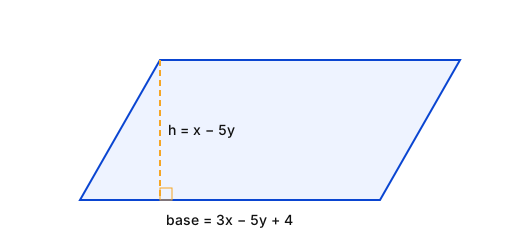
- Area
Trick: Check signs: and terms — only (A) has both.
Answer: (A)
अवधारणा: समांतर चतुर्भुज का क्षेत्रफल ।
- क्षेत्रफल
ट्रिक: चिह्न जाँचें: और पद — दोनों केवल (A) में।
उत्तर: (A)
RRB NTPC Graduate CBT 1MathematicsArea of parallelogram (algebra)RRB NTPC Graduate CBT 1 2024 · 17 Jun Shift 1
Q2063.The radius of the base and the slant height of a right circular cone are 7 cm and 25 cm, respectively. Find the volume (in cm3) of the given cone.
(Use )
एक लंब वृत्तीय शंकु के आधार की त्रिज्या और तिर्यक ऊँचाई क्रमशः 7 cm और 25 cm हैं। दिए गए शंकु का आयतन (cm3 में) ज्ञात कीजिए।
( का प्रयोग कीजिए)
- A1062
- B982
- C1232
- D1352
Show answer
Concept: and .
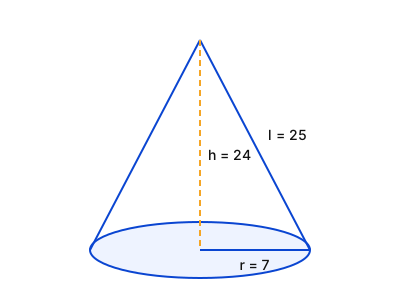
Trick: 7–24–25 is a Pythagorean triplet, so instantly.
Answer: (C) 1232
अवधारणा: तथा ।
ट्रिक: 7–24–25 पाइथागोरस त्रिक है, अतः तुरंत।
उत्तर: (C) 1232
RRB NTPC Graduate CBT 1MathematicsVolume of coneRRB NTPC Graduate CBT 1 2024 · 17 Jun Shift 1
Q2064.Three numbers are in the ratio . The difference between the largest and the smallest number is 54. Find the largest number.
तीन संख्याएँ के अनुपात में हैं। सबसे बड़ी और सबसे छोटी संख्या का अंतर 54 है। सबसे बड़ी संख्या ज्ञात कीजिए।
- A97
- B98
- C94
- D96
Show answer
Concept: Simplify the fractions and convert to a whole-number ratio using the LCM of denominators.
- Multiply by 28:
- Largest − smallest
- Largest
Trick: Compare decimals to spot the order: — so is largest.
Answer: (D) 96
अवधारणा: भिन्नों को सरल करके हरों के LCM से पूर्णांक अनुपात बनाएँ।
- 28 से गुणा:
- सबसे बड़ी − सबसे छोटी
- सबसे बड़ी
ट्रिक: दशमलव से क्रम पहचानें: ।
उत्तर: (D) 96
RRB NTPC Graduate CBT 1MathematicsRatioRRB NTPC Graduate CBT 1 2024 · 17 Jun Shift 1
Q2065.A boat takes 76 minutes to go 32.2 km upstream. The ratio of the speed of the boat in still water to that of the stream is 9 : 8. How much approximate total time (in hours) will the boat take to go 44.9 km upstream and 57.8 km downstream?
एक नाव को धारा के प्रतिकूल 32.2 km जाने में 76 मिनट लगते हैं। शांत जल में नाव की चाल और धारा की चाल का अनुपात 9 : 8 है। नाव को धारा के प्रतिकूल 44.9 km और धारा के अनुकूल 57.8 km जाने में लगभग कुल कितना समय (घंटों में) लगेगा?
- A1.9
- B4.3
- C0.2
- D2.2
Show answer
Concept: Upstream speed , downstream speed .
- Upstream speed
- upstream part, downstream parts
- Downstream
- Time
Trick: With , downstream speed is times the upstream speed.
Answer: (A) 1.9
अवधारणा: धारा के विरुद्ध चाल , धारा के अनुकूल चाल ।
- विरुद्ध चाल
- विरुद्ध भाग, अनुकूल भाग
- अनुकूल चाल
- समय
ट्रिक: हो तो अनुकूल चाल, विरुद्ध चाल की गुना होती है।
उत्तर: (A) 1.9
RRB NTPC Graduate CBT 1MathematicsBoats and streamsRRB NTPC Graduate CBT 1 2024 · 17 Jun Shift 1
Q2066.Find the smallest number by which 2527 must be multiplied to make it a perfect square.
वह सबसे छोटी संख्या ज्ञात कीजिए जिससे 2527 को गुणा करने पर वह एक पूर्ण वर्ग बन जाए।
- A21
- B15
- C7
- D19
Show answer
Concept: In a perfect square every prime factor has an even power.
- 19 already has an even power; 7 has power 1.
- Multiply by 7:
Trick: Try dividing by small primes: — leftover prime is the answer.
Answer: (C) 7
अवधारणा: पूर्ण वर्ग में हर अभाज्य गुणनखंड की घात सम होती है।
- 19 की घात पहले से सम है; 7 की घात 1 है।
- 7 से गुणा:
ट्रिक: छोटे अभाज्यों से भाग दें: — बचा अभाज्य ही उत्तर है।
उत्तर: (C) 7
RRB NTPC Graduate CBT 1MathematicsPerfect squaresRRB NTPC Graduate CBT 1 2024 · 17 Jun Shift 1
Q2067.Robert, Chris and Jeremy can finish a certain piece of work in 10, 14 and 21 days, respectively. All three of them started the work together. Robert left the work after 5 days and Chris left just 2 days before the work was completed. Find the total number of days taken for the work to be completed.
रॉबर्ट, क्रिस और जेरेमी किसी कार्य को क्रमशः 10, 14 और 21 दिनों में पूरा कर सकते हैं। तीनों ने एक साथ कार्य शुरू किया। रॉबर्ट ने 5 दिन बाद कार्य छोड़ दिया और क्रिस ने कार्य पूरा होने से ठीक 2 दिन पहले कार्य छोड़ दिया। कार्य पूरा होने में लगे कुल दिनों की संख्या ज्ञात कीजिए।
- A9.5
- B1.7
- C10.9
- D5.4
Show answer
Concept: Take total work = LCM(10, 14, 21) = 210 units. Efficiency: Robert 21, Chris 15, Jeremy 10 units/day.
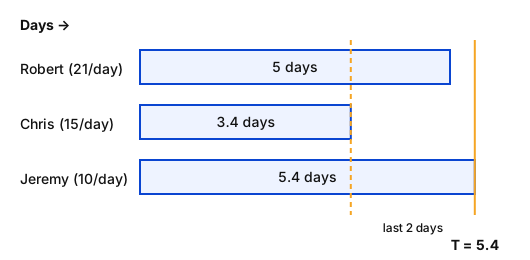
- Let the work take days. Robert works 5 days, Chris days, Jeremy days.
- days
Trick: Write “days worked × efficiency” for each person and equate to total work.
Answer: (D) 5.4
अवधारणा: कुल कार्य = LCM(10, 14, 21) = 210 इकाई। क्षमता: रॉबर्ट 21, क्रिस 15, जेरेमी 10 इकाई/दिन।
- मान लें कार्य दिनों में पूरा हुआ। रॉबर्ट 5 दिन, क्रिस दिन, जेरेमी दिन काम करते हैं।
- दिन
ट्रिक: हर व्यक्ति के लिए “कार्य दिवस × क्षमता” लिखकर कुल कार्य के बराबर रखें।
उत्तर: (D) 5.4
RRB NTPC Graduate CBT 1MathematicsTime and workRRB NTPC Graduate CBT 1 2024 · 17 Jun Shift 1
Q2068.A right triangle with sides 60 cm, 45 cm and 75 cm is rotated about the side of 60 cm to form a cone. The curved surface area (in cm2) of the cone so formed is:
60 cm, 45 cm और 75 cm भुजाओं वाले एक समकोण त्रिभुज को 60 cm वाली भुजा के परितः घुमाकर एक शंकु बनाया जाता है। इस प्रकार बने शंकु का वक्र पृष्ठीय क्षेत्रफल (cm2 में) है:
- A4505π
- B3375π
- C3125π
- D4500π
Show answer
Concept: Rotating a right triangle about one leg gives a cone: that leg = height, other leg = radius, hypotenuse = slant height.
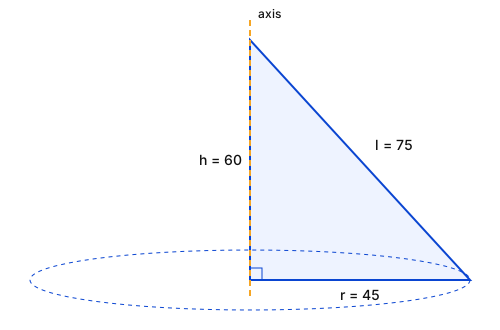
- , , (check: ).
- CSA
Trick: The side you rotate about is always the height; CSA needs only and .
Answer: (B)
अवधारणा: समकोण त्रिभुज को एक भुजा के परितः घुमाने पर शंकु बनता है: वह भुजा = ऊँचाई, दूसरी भुजा = त्रिज्या, कर्ण = तिर्यक ऊँचाई।
- , , (जाँच: )।
- वक्र पृष्ठ क्षेत्रफल
ट्रिक: जिस भुजा के परितः घुमाएँ वही ऊँचाई; वक्र पृष्ठ के लिए केवल और चाहिए।
उत्तर: (B)
RRB NTPC Graduate CBT 1MathematicsCone formed by rotationRRB NTPC Graduate CBT 1 2024 · 17 Jun Shift 1
Q2069.A sum when invested at the rate of 12% simple interest per annum, amounts to ₹8,500 after 3 years. The simple interest (in ₹) for the given time period is:
कोई राशि 12% वार्षिक साधारण ब्याज की दर से निवेश करने पर 3 वर्ष बाद ₹8,500 हो जाती है। दी गई समयावधि के लिए साधारण ब्याज (₹ में) है:
- A2,150
- B2,350
- C2,250
- D2,450
Show answer
Concept: for simple interest.
- Total SI rate
- SI
Trick: SI .
Answer: (C) ₹2,250
अवधारणा: साधारण ब्याज में ।
- कुल ब्याज दर
- ब्याज
ट्रिक: ब्याज ।
उत्तर: (C) ₹2,250
RRB NTPC Graduate CBT 1MathematicsSimple interestRRB NTPC Graduate CBT 1 2024 · 17 Jun Shift 1
Q2070.At what rate of interest per annum will a sum of ₹1,000 amount to ₹1,728 in 1 year and 6 months, if the interest is compounded half-yearly?
यदि ब्याज अर्धवार्षिक रूप से संयोजित होता है, तो किस वार्षिक ब्याज दर पर ₹1,000 की राशि 1 वर्ष 6 महीने में ₹1,728 हो जाएगी?
- A42%
- B22%
- C52%
- D40%
Show answer
Concept: Half-yearly compounding: rate per period , periods .
- 1.5 years = 3 half-years.
- rate per half-year
- Annual rate
Trick: and — spot the cubes.
Answer: (D) 40%
अवधारणा: अर्धवार्षिक चक्रवृद्धि: प्रति अवधि दर , अवधियाँ ।
- 1.5 वर्ष = 3 छमाही।
- प्रति छमाही दर
- वार्षिक दर
ट्रिक: और — घन पहचानें।
उत्तर: (D) 40%
RRB NTPC Graduate CBT 1MathematicsCompound interest (half-yearly)RRB NTPC Graduate CBT 1 2024 · 17 Jun Shift 1
Q2071.K, M, L, N, O and V live on six different floors of the same building. The lowermost floor in the building is numbered 1, the floor above it, number 2 and so on, till the topmost floor is numbered 6. Only one person lives below K. Only three people live between L and K. N lives on a floor below K. O lives on an even-numbered floor. M lives on an odd- numbered floor but not on floor number 5. How many people live between V and K?
K, M, L, N, O और V एक ही इमारत की छह अलग-अलग मंज़िलों पर रहते हैं। इमारत की सबसे निचली मंज़िल की संख्या 1 है, उसके ऊपर वाली मंज़िल की संख्या 2 है और इसी प्रकार आगे, सबसे ऊपरी मंज़िल की संख्या 6 है। K के नीचे केवल एक व्यक्ति रहता है। L और K के बीच केवल तीन व्यक्ति रहते हैं। N, K के नीचे वाली किसी मंज़िल पर रहता है। O एक सम संख्या वाली मंज़िल पर रहता है। M एक विषम संख्या वाली मंज़िल पर रहता है, परंतु मंज़िल संख्या 5 पर नहीं। V और K के बीच कितने व्यक्ति रहते हैं?
- ATwoदो
- BOneएक
- CThreeतीन
- DFourचार
Show answer
Concept: Fix the people with definite positions first, then fill the rest.
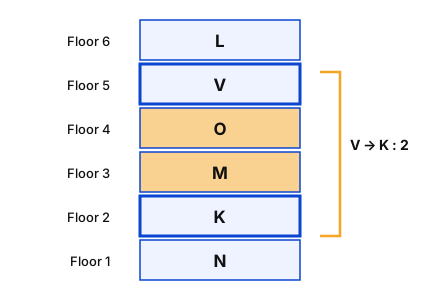
- Only one person below K ⇒ K on floor 2; N is below K ⇒ N on floor 1.
- Three people between L and K ⇒ L on floor 6.
- O on an even floor ⇒ floor 4; M odd but not 5 ⇒ floor 3; so V is on floor 5.
- Between V (5) and K (2) are floors 3 and 4 ⇒ M and O.
Trick: People between floors and = .
Answer: (A) Two
अवधारणा: पहले निश्चित स्थान वाले लोगों को रखें, फिर बाकी भरें।
- K के नीचे केवल एक व्यक्ति ⇒ K मंजिल 2 पर; N, K के नीचे ⇒ N मंजिल 1 पर।
- L और K के बीच तीन लोग ⇒ L मंजिल 6 पर।
- O सम मंजिल ⇒ 4; M विषम पर 5 नहीं ⇒ 3; अतः V मंजिल 5 पर।
- V (5) और K (2) के बीच मंजिल 3 और 4 ⇒ M और O।
ट्रिक: दो मंजिलों के बीच लोग = ।
उत्तर: (A) दो
RRB NTPC Graduate CBT 1General Intelligence and ReasoningFloor PuzzleRRB NTPC Graduate CBT 1 2024 · 17 Jun Shift 1
Q2072.Each of P, Q, R, S, T, U and V has an exam on a different day of a week starting from Monday and ending on Sunday of the same week. U has an exam on Saturday. Only 4 people have an exam between S and T, neither of whom has an exam on Monday. P has an exam immediately after R, and V has an exam immediately before R. T has an exam after P. How many people have an exam after S?
P, Q, R, S, T, U और V में से प्रत्येक की परीक्षा एक ही सप्ताह के सोमवार से शुरू होकर रविवार को समाप्त होने वाले सप्ताह के एक अलग-अलग दिन है। U की परीक्षा शनिवार को है। S और T के बीच केवल 4 व्यक्तियों की परीक्षा है, इनमें से किसी की भी परीक्षा सोमवार को नहीं है। P की परीक्षा R के ठीक बाद है, और V की परीक्षा R के ठीक पहले है। T की परीक्षा P के बाद है। S के बाद कितने व्यक्तियों की परीक्षा है?
- A5
- B2
- C3
- D4
Show answer
Concept: Use the gap clue: 4 people between S and T means their days are 5 apart.
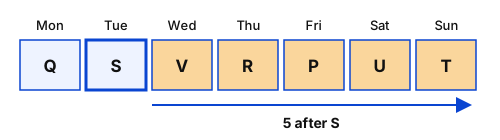
- Pairs 5 days apart: (Mon, Sat) or (Tue, Sun). Monday is not allowed ⇒ S and T on Tue and Sun.
- V, R, P are consecutive and T comes after P, so T cannot be Tuesday ⇒ S = Tue, T = Sun.
- U = Sat; V, R, P = Wed, Thu, Fri; Q = Mon.
- After S (Tue): V, R, P, U, T ⇒ 5 people.
Trick: Gap of people ⇒ positions differ by .
Answer: (A) 5
अवधारणा: अंतर वाला संकेत पहले लगाएँ: S और T के बीच 4 लोग ⇒ उनके दिनों में 5 का अंतर।
- 5 दिन के अंतर वाले जोड़े: (सोम, शनि) या (मंगल, रवि)। सोमवार नहीं ⇒ S, T मंगल व रवि पर।
- V, R, P लगातार हैं और T, P के बाद है, इसलिए T मंगलवार नहीं हो सकता ⇒ S = मंगल, T = रवि।
- U = शनि; V, R, P = बुध, गुरु, शुक्र; Q = सोम।
- S (मंगल) के बाद: V, R, P, U, T ⇒ 5 लोग।
ट्रिक: बीच में लोग ⇒ स्थानों का अंतर ।
उत्तर: (A) 5
RRB NTPC Graduate CBT 1General Intelligence and ReasoningDay-based SchedulingRRB NTPC Graduate CBT 1 2024 · 17 Jun Shift 1
Q2073.In a certain code language, ‘CALM’ is coded as ‘2468’ and ‘LIVE’ is coded as ‘8537’. What is the code for ‘L’ in the given language?
एक निश्चित कूट भाषा में, ‘CALM’ को ‘2468’ के रूप में कूटबद्ध किया जाता है और ‘LIVE’ को ‘8537’ के रूप में कूटबद्ध किया जाता है। दी गई भाषा में ‘L’ के लिए कूट क्या है?
- A6
- B8
- C7
- D3
Show answer
Concept: A letter common to both words gets the digit common to both codes.
- CALM → 2468 and LIVE → 8537.
- Common letter: L. Common digit: 8.
- So L = 8.
Trick: Common letter ↔ common digit (order of digits may be jumbled).
Answer: (B) 8
अवधारणा: दोनों शब्दों में उभयनिष्ठ अक्षर का कोड दोनों कोडों में उभयनिष्ठ अंक होता है।
- CALM → 2468 तथा LIVE → 8537।
- उभयनिष्ठ अक्षर: L; उभयनिष्ठ अंक: 8।
- अतः L = 8।
ट्रिक: उभयनिष्ठ अक्षर ↔ उभयनिष्ठ अंक (अंकों का क्रम उलझा हो सकता है)।
उत्तर: (B) 8
RRB NTPC Graduate CBT 1General Intelligence and ReasoningCoding–DecodingRRB NTPC Graduate CBT 1 2024 · 17 Jun Shift 1
Q2074.Read the given statements and conclusions carefully. Assuming that the information given in the statements is true, even if it appears to be at variance with commonly known facts, decide which of the given conclusion(s) logically follow(s) from the statements.
Statements:
All rabbits are squirrel.
Some squirrels are rats.
All rats are mammals.
Conclusions:
(I) Some mammals are squirrel.
(II) Some rats are rabbits.
दिए गए कथनों और निष्कर्षों को ध्यानपूर्वक पढ़िए। यह मानते हुए कि कथनों में दी गई जानकारी सत्य है, भले ही वह सामान्यतः ज्ञात तथ्यों से भिन्न प्रतीत होती हो, निर्णय लीजिए कि दिए गए निष्कर्षों में से कौन-सा/से निष्कर्ष तार्किक रूप से कथनों का अनुसरण करता है/करते हैं।
कथन:
सभी खरगोश, गिलहरी हैं।
कुछ गिलहरियाँ, चूहे हैं।
सभी चूहे, स्तनधारी हैं।
निष्कर्ष:
(I) कुछ स्तनधारी, गिलहरी हैं।
(II) कुछ चूहे, खरगोश हैं।
- AOnly conclusion (II) followsकेवल निष्कर्ष (II) अनुसरण करता है
- BBoth conclusions (I) and (II) followनिष्कर्ष (I) और (II) दोनों अनुसरण करते हैं
- COnly conclusion (I) followsकेवल निष्कर्ष (I) अनुसरण करता है
- DNeither conclusion (I) nor conclusion (II) followsन तो निष्कर्ष (I) और न ही निष्कर्ष (II) अनुसरण करता है
Show answer
Concept: Draw the least-overlap Venn diagram and test each conclusion.
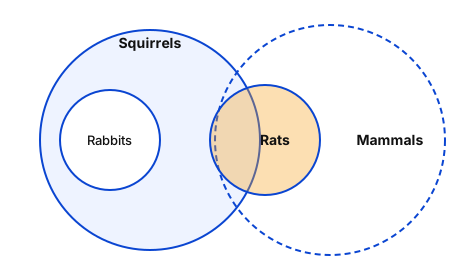
- Some squirrels are rats and all rats are mammals ⇒ those squirrels are mammals ⇒ some mammals are squirrels. (I) follows.
- Rabbits lie inside squirrels but need not touch rats ⇒ (II) is only a possibility, not certain.
- So only (I) follows.
Trick: Some A are B + All B are C ⇒ Some A are C (and Some C are A).
Answer: (C) Only conclusion (I) follows
अवधारणा: न्यूनतम ओवरलैप वाला वेन आरेख बनाकर प्रत्येक निष्कर्ष जाँचें।
- कुछ गिलहरियाँ चूहे हैं और सभी चूहे स्तनधारी ⇒ वे गिलहरियाँ स्तनधारी ⇒ कुछ स्तनधारी गिलहरी हैं। (I) अनुसरण करता है।
- खरगोश गिलहरी के अंदर हैं, पर चूहों को छूना ज़रूरी नहीं ⇒ (II) केवल संभावना है, निश्चित नहीं।
- अतः केवल (I) अनुसरण करता है।
ट्रिक: कुछ A, B हैं + सभी B, C हैं ⇒ कुछ A, C हैं (और कुछ C, A हैं)।
उत्तर: (C) केवल निष्कर्ष (I) अनुसरण करता है
RRB NTPC Graduate CBT 1General Intelligence and ReasoningSyllogismRRB NTPC Graduate CBT 1 2024 · 17 Jun Shift 1
Q2075.Kabir, Jasbir, Urmila, Richa, Prem, Deep and Sonika are sitting around a circular table, facing the centre. Sonika sits third to the right of Prem. Kabir sits to the immediate right of Deep. Jasbir sits second to the left of Sonika. Urmila sits third to the right of Jasbir. Who sits second to the left of Urmila?
कबीर, जसबीर, उर्मिला, ऋचा, प्रेम, दीप और सोनिका एक वृत्ताकार मेज़ के परितः केंद्र की ओर मुख करके बैठे हैं। सोनिका, प्रेम के दाएँ से तीसरे स्थान पर बैठी है। कबीर, दीप के ठीक दाएँ बैठा है। जसबीर, सोनिका के बाएँ से दूसरे स्थान पर बैठा है। उर्मिला, जसबीर के दाएँ से तीसरे स्थान पर बैठी है। उर्मिला के बाएँ से दूसरे स्थान पर कौन बैठा है?
- AJasbirजसबीर
- BKabirकबीर
- CRichaऋचा
- DPremप्रेम
Show answer
Concept: Facing the centre: right = anticlockwise, left = clockwise.
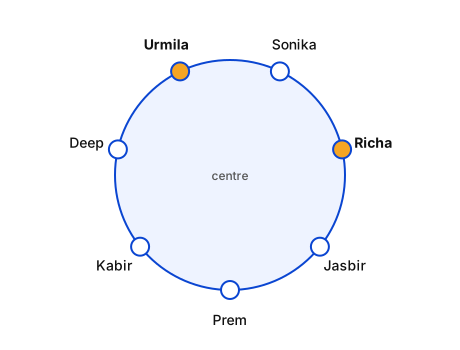
- Place Prem; Sonika is 3rd to his right; Jasbir is 2nd to the left of Sonika (immediate right of Prem).
- Urmila is 3rd to the right of Jasbir (immediate right of Sonika).
- Deep–Kabir must be adjacent with Kabir on Deep's right ⇒ they take the two seats after Urmila; Richa gets the seat between Jasbir and Sonika.
- Second to the left of Urmila: Sonika, then Richa.
Trick: Facing centre: right ⇒ anticlockwise.
Answer: (C) Richa
अवधारणा: केंद्र की ओर मुख: दायाँ = वामावर्त (anticlockwise), बायाँ = दक्षिणावर्त (clockwise)।
- प्रेम को रखें; सोनिका उसके दाएँ तीसरे; जसबीर सोनिका के बाएँ दूसरे (प्रेम के ठीक दाएँ)।
- उर्मिला जसबीर के दाएँ तीसरे (सोनिका के ठीक दाएँ)।
- दीप–कबीर साथ-साथ, कबीर दीप के दाएँ ⇒ ये उर्मिला के बाद की दो सीटों पर; ऋचा जसबीर और सोनिका के बीच।
- उर्मिला के बाएँ दूसरा: पहले सोनिका, फिर ऋचा।
ट्रिक: केंद्र की ओर मुख: दायाँ ⇒ वामावर्त।
उत्तर: (C) ऋचा
RRB NTPC Graduate CBT 1General Intelligence and ReasoningCircular Seating ArrangementRRB NTPC Graduate CBT 1 2024 · 17 Jun Shift 1
Q2076.If ‘A’ stands for ‘÷’, ‘B’ stands for ‘×’, ‘C’ stands for ‘+’ and ‘D’ stands for ‘−’, then what will come in place of the question mark (?) in the following equation?
103 C (64 A8) B 2 C 9 B 3 D 33 = ?
यदि ‘A’ का अर्थ ‘÷’, ‘B’ का अर्थ ‘×’, ‘C’ का अर्थ ‘+’ और ‘D’ का अर्थ ‘−’ है, तो निम्नलिखित समीकरण में प्रश्न चिह्न (?) के स्थान पर क्या आएगा?
103 C (64 A8) B 2 C 9 B 3 D 33 = ?
- A129
- B113
- C137
- D91
Show answer
Concept: Replace letters by signs, then apply BODMAS.
Trick: Solve the bracket first, then × and ÷, then + and −.
Answer: (B) 113
अवधारणा: अक्षरों को चिह्नों से बदलें, फिर BODMAS लगाएँ।
ट्रिक: पहले कोष्ठक, फिर × और ÷, फिर + और −।
उत्तर: (B) 113
RRB NTPC Graduate CBT 1General Intelligence and ReasoningMathematical OperationsRRB NTPC Graduate CBT 1 2024 · 17 Jun Shift 1
Q2077.Prince ranked 24th from the top and 39th from the bottom in his class. How many students are there in his class?
प्रिंस अपनी कक्षा में ऊपर से 24वें और नीचे से 39वें स्थान पर था। उसकी कक्षा में कितने विद्यार्थी हैं?
- A61
- B62
- C64
- D63
Show answer
Concept: Total = rank from top + rank from bottom − 1 (the person is counted twice).
- Rank from top = 24, rank from bottom = 39.
Trick: Top + Bottom − 1.
Answer: (B) 62
अवधारणा: कुल = ऊपर से रैंक + नीचे से रैंक − 1 (व्यक्ति दो बार गिना जाता है)।
- ऊपर से रैंक = 24, नीचे से रैंक = 39।
ट्रिक: ऊपर + नीचे − 1।
उत्तर: (B) 62
RRB NTPC Graduate CBT 1General Intelligence and ReasoningRankingRRB NTPC Graduate CBT 1 2024 · 17 Jun Shift 1
Q2078.Select the pair that follows the same pattern as that followed by the two pairs given below. Both pairs follow the same pattern.
HKN : LOR
DJO : HNS
उस युग्म का चयन कीजिए जो उसी पैटर्न का अनुसरण करता है जिसका अनुसरण नीचे दिए गए दोनों युग्म करते हैं। दोनों युग्म एक ही पैटर्न का अनुसरण करते हैं।
HKN : LOR
DJO : HNS
- AAFM : EJQ
- BATB : CVE
- CGJM : IKO
- DWXC : YGP
Show answer
Concept: Find the change in alphabet positions from the first group to the second.
- HKN → LOR: H(8)→L(12), K(11)→O(15), N(14)→R(18): each +4.
- DJO → HNS: each letter +4 as well.
- AFM → EJQ: A→E, F→J, M→Q, each +4 ✓. Others fail, e.g. ATB → CVE is +2, +2, +3.
Trick: Check only the first letter shift (+4) to eliminate quickly.
Answer: (A) AFM : EJQ
अवधारणा: पहले समूह से दूसरे समूह तक अक्षरों के स्थान का अंतर निकालें।
- HKN → LOR: H(8)→L(12), K(11)→O(15), N(14)→R(18): हर अक्षर +4।
- DJO → HNS: हर अक्षर +4।
- AFM → EJQ: A→E, F→J, M→Q, हर अक्षर +4 ✓। बाकी नहीं, जैसे ATB → CVE में +2, +2, +3।
ट्रिक: पहले अक्षर का +4 जाँचकर जल्दी विकल्प हटाएँ।
उत्तर: (A) AFM : EJQ
RRB NTPC Graduate CBT 1General Intelligence and ReasoningLetter AnalogyRRB NTPC Graduate CBT 1 2024 · 17 Jun Shift 1
Q2079.Select the set in which the numbers are related in the same way as are the numbers of the following sets.
(NOTE: Operations should be performed on the whole numbers, without breaking down the numbers into their constituent digits. E.g. 13 – Operations on 13 such as
adding/subtracting/multiplying to 13 can be performed. Breaking down 13 into 1 and 3 and then performing mathematical operations on 1 and 3 is not allowed.)
(37, 48, 59)
(41, 52, 63)
उस समुच्चय का चयन कीजिए जिसमें संख्याएँ उसी प्रकार संबंधित हैं जिस प्रकार निम्नलिखित समुच्चयों की संख्याएँ संबंधित हैं।
(नोट: संक्रियाएँ संख्याओं को उनके घटक अंकों में विभाजित किए बिना, पूर्ण संख्याओं पर की जानी चाहिए। उदाहरण 13 – 13 पर संक्रियाएँ जैसे 13 में
जोड़ना/घटाना/गुणा करना आदि किया जा सकता है। 13 को 1 और 3 में विभाजित करना और फिर 1 और 3 पर गणितीय संक्रियाएँ करना वर्जित है।)
(37, 48, 59)
(41, 52, 63)
- A(47, 58, 70)
- B(32, 43, 64)
- C(56, 67, 78)
- D(24, 35, 44)
Show answer
Concept: Find the rule linking the three numbers in each set.
- (37, 48, 59): , .
- (41, 52, 63): , .
- (56, 67, 78): , ✓. (47, 58, 70) fails at .
Trick: Each next number = previous + 11.
Answer: (C) (56, 67, 78)
अवधारणा: प्रत्येक समूह की तीनों संख्याओं का संबंध खोजें।
- (37, 48, 59): , ।
- (41, 52, 63): , ।
- (56, 67, 78): , ✓। (47, 58, 70) में है।
ट्रिक: हर अगली संख्या = पिछली + 11।
उत्तर: (C) (56, 67, 78)
RRB NTPC Graduate CBT 1General Intelligence and ReasoningNumber Set AnalogyRRB NTPC Graduate CBT 1 2024 · 17 Jun Shift 1
Q2080.Refer to the following number and symbol series and answer the question that follows. Counting to be done from left to right only.
(NOTE: All numbers are single digit numbers only.)
(Left) © 9 6 £ 9 & € 8 4 4 2 @ © £ # 4 * 7 © 7 9 6 (Right)
How many such numbers are there each of which is immediately preceded by a symbol and also immediately followed by a symbol?
निम्नलिखित संख्या और प्रतीक श्रृंखला को देखिए और उसके बाद आने वाले प्रश्न का उत्तर दीजिए। गिनती केवल बाएँ से दाएँ की जानी है।
(नोट: सभी संख्याएँ केवल एक अंक वाली संख्याएँ हैं।)
(बाएँ) © 9 6 £ 9 & € 8 4 4 2 @ © £ # 4 * 7 © 7 9 6 (दाएँ)
ऐसी कितनी संख्याएँ हैं, जिनमें से प्रत्येक के ठीक पहले एक प्रतीक है और ठीक बाद में भी एक प्रतीक है?
- A5
- B4
- C2
- D3
Show answer
Concept: Look for the pattern Symbol – Number – Symbol.
- £ 9 & ✓
- # 4 * ✓
- * 7 © ✓
- No other number has symbols on both sides (e.g. © 9 6, © 7 9). Total = 3.
Trick: Scan only the symbols that are followed by a single number and another symbol.
Answer: (D) 3
अवधारणा: पैटर्न देखें: प्रतीक – संख्या – प्रतीक।
- £ 9 & ✓
- # 4 * ✓
- * 7 © ✓
- किसी अन्य संख्या के दोनों ओर प्रतीक नहीं (जैसे © 9 6, © 7 9)। कुल = 3।
ट्रिक: केवल उन प्रतीकों को देखें जिनके बाद एक संख्या और फिर प्रतीक हो।
उत्तर: (D) 3
RRB NTPC Graduate CBT 1General Intelligence and ReasoningNumber–Symbol SeriesRRB NTPC Graduate CBT 1 2024 · 17 Jun Shift 1

