Q1.If and , then find the value of .
यदि और है, तो का मान ज्ञात कीजिए।
- A3
- B0
- C1
- D2
Show answer
Concept: Use .
- Sum
Trick: Power turns cube into square: .
Answer: (C) 1
अवधारणा: का प्रयोग करें।
- योग
ट्रिक: घात घन को वर्ग बना देती है: ।
उत्तर: (C) 1
RRB NTPC Graduate CBT 1MathematicsTrigonometric identitiesRRB NTPC Graduate CBT 1 2024 · 24 Jun Shift 3
Q2.The LCM of 40, 78 and another number, x, is 7800. Which of the following can be the value of x?
40, 78 और एक अन्य संख्या x का LCM 7800 है। निम्नलिखित में से कौन-सा x का मान हो सकता है?
- A180
- B200
- C127
- D152
Show answer
Concept: LCM takes the highest power of every prime present in the numbers.
- , — the factor is missing, so must contain and no prime beyond these powers.
- ✔; has , is prime, has — all fail.
Trick: Find the missing prime power first (); only multiples of 25 can work.
Answer: (B) 200
अवधारणा: LCM में हर अभाज्य संख्या की सबसे बड़ी घात ली जाती है।
- , — नहीं है, अतः में होना चाहिए और कोई अतिरिक्त घात नहीं।
- ✔; में , अभाज्य, में — सभी गलत।
ट्रिक: पहले छूटी हुई घात () ढूँढें; केवल 25 के गुणज ही सही हो सकते हैं।
उत्तर: (B) 200
RRB NTPC Graduate CBT 1MathematicsLCMRRB NTPC Graduate CBT 1 2024 · 24 Jun Shift 3
Q3.A shopkeeper fixes the marked price of an item 50% above its cost price. What percentage of discount on the marked price should be allowed to gain 8%?
एक दुकानदार किसी वस्तु का अंकित मूल्य उसके क्रय मूल्य से 50% अधिक निर्धारित करता है। 8% लाभ प्राप्त करने के लिए अंकित मूल्य पर कितने प्रतिशत की छूट दी जानी चाहिए?
- A29%
- B30%
- C28%
- D27%
Show answer
Concept: Take CP = 100 and find the required SP.
- MP , required SP
- Discount
- Discount%
Trick: Discount% .
Answer: (C) 28%
अवधारणा: क्रय मूल्य = 100 मानें।
- अंकित मूल्य , आवश्यक विक्रय मूल्य
- बट्टा
- बट्टा%
ट्रिक: बट्टा% ।
उत्तर: (C) 28%
RRB NTPC Graduate CBT 1MathematicsProfit and discountRRB NTPC Graduate CBT 1 2024 · 24 Jun Shift 3
Q4.The mean proportional between and is:
और के बीच मध्यानुपाती है:
- A6
- B1
- C13
- D9
Show answer
Concept: Mean proportional of and .
Trick: Spot the conjugate pair: .
Answer: (A) 6
अवधारणा: और का मध्यानुपाती ।
ट्रिक: संयुग्मी (conjugate) जोड़ी पहचानें: ।
उत्तर: (A) 6
RRB NTPC Graduate CBT 1MathematicsMean proportional and surdsRRB NTPC Graduate CBT 1 2024 · 24 Jun Shift 3
Q5.A grocer marked his goods at 70% above the cost price and sold them at a discount of X%. If he gained 53% profit, then find the value of X.
एक पंसारी ने अपनी वस्तुओं पर क्रय मूल्य से 70% अधिक मूल्य अंकित किया और उन्हें X% की छूट पर बेच दिया। यदि उसे 53% लाभ हुआ, तो X का मान ज्ञात कीजिए।
- A11
- B9
- C10
- D7
Show answer
Concept: SP = MP × (1 − discount).
- CP ⇒ MP , SP
- ⇒
Trick: .
Answer: (C) 10
अवधारणा: विक्रय मूल्य = अंकित मूल्य × (1 − बट्टा)।
- क्रय मूल्य ⇒ अंकित मूल्य , विक्रय मूल्य
- ⇒
ट्रिक: ।
उत्तर: (C) 10
RRB NTPC Graduate CBT 1MathematicsProfit and discountRRB NTPC Graduate CBT 1 2024 · 24 Jun Shift 3
Q6.Sharad can complete a piece of work alone in 13 days and Varad can complete the same piece of work alone in 9 days. They started the work together, but Varad had to leave 11 days before the completion of the work. In how many days will the work complete?
शरद किसी काम को अकेले 13 दिनों में पूरा कर सकता है और वरद उसी काम को अकेले 9 दिनों में पूरा कर सकता है। उन्होंने एक साथ काम शुरू किया, लेकिन वरद को काम पूरा होने से 11 दिन पहले काम छोड़ना पड़ा। काम कितने दिनों में पूरा होगा?
- A
- B
- C
- D
Show answer
Concept: Work backwards: in the last 11 days only Sharad works.
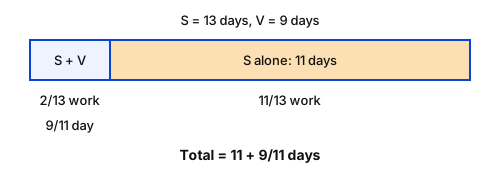
- Sharad’s 11 days of work; remaining done together.
- Combined rate per day.
- Time together day.
- Total days.
Trick: “Left days before completion” ⇒ start from the end with the remaining worker.
Answer: (C)
अवधारणा: पीछे से हल करें: अंतिम 11 दिन केवल शरद काम करता है।
- शरद के 11 दिन काम; शेष दोनों ने मिलकर किया।
- संयुक्त दर प्रतिदिन।
- साथ का समय दिन।
- कुल दिन।
ट्रिक: “पूरा होने से दिन पहले छोड़ा” ⇒ अंत से, बचे व्यक्ति के साथ गणना शुरू करें।
उत्तर: (C)
RRB NTPC Graduate CBT 1MathematicsTime and workRRB NTPC Graduate CBT 1 2024 · 24 Jun Shift 3
Q7.The difference between an interior angle and an exterior angle of a regular polygon is 140°. Find the number of sides of the polygon.
एक सम बहुभुज के एक आंतरिक कोण और एक बाह्य कोण के बीच का अंतर 140° है। बहुभुज की भुजाओं की संख्या ज्ञात कीजिए।
- A15
- B16
- C18
- D20
Show answer
Concept: In a regular polygon, interior + exterior and exterior .
- ,
- ⇒
Trick: , then .
Answer: (C) 18
अवधारणा: सम बहुभुज में अंतःकोण + बाह्यकोण तथा बाह्यकोण ।
- ,
- ⇒
ट्रिक: , फिर ।
उत्तर: (C) 18
RRB NTPC Graduate CBT 1MathematicsPolygons – anglesRRB NTPC Graduate CBT 1 2024 · 24 Jun Shift 3
Q8.Find the value of .
का मान ज्ञात कीजिए।
- A60
- B600
- C10
- D100
Show answer
Concept: Each numerator term is 10 times the matching denominator term.
- , ,
- Squares: numerator denominator
- Value
Trick: If , , then .
Answer: (D) 100
अवधारणा: अंश का हर पद, हर (denominator) के संगत पद का 10 गुना है।
- , ,
- वर्ग करने पर: अंश हर
- मान
ट्रिक: यदि , , तो ।
उत्तर: (D) 100
RRB NTPC Graduate CBT 1MathematicsSimplification – decimalsRRB NTPC Graduate CBT 1 2024 · 24 Jun Shift 3
Q9.Hitesh is three times as old as his son, and his daughter is 3 years younger than the son. If the sum of the ages of these three people 3 years ago was 123 years, then Hitesh's present age (in years) is:
हितेश की आयु उसके पुत्र की आयु की तीन गुनी है, और उसकी पुत्री पुत्र से 3 वर्ष छोटी है। यदि 3 वर्ष पहले इन तीनों व्यक्तियों की आयु का योग 123 वर्ष था, तो हितेश की वर्तमान आयु (वर्षों में) है:
- A81
- B72
- C88
- D91
Show answer
Concept: Let son’s present age .
- Hitesh , daughter ; present sum
- 3 years ago sum
- ⇒ , Hitesh
Trick: Sum years ago = present sum − (people × ).
Answer: (A) 81
अवधारणा: पुत्र की वर्तमान आयु मानें।
- हितेश , पुत्री ; वर्तमान योग
- 3 वर्ष पहले योग
- ⇒ , हितेश
ट्रिक: वर्ष पहले का योग = वर्तमान योग − (व्यक्ति × )।
उत्तर: (A) 81
RRB NTPC Graduate CBT 1MathematicsProblems on agesRRB NTPC Graduate CBT 1 2024 · 24 Jun Shift 3
Q10.If x2 + y2 − 10x + 26y + 194 = 0, then the value of x2 + y2 is:
यदि x2 + y2 − 10x + 26y + 194 = 0 है, तो x2 + y2 का मान है:
- A190
- B194
- C198
- D200
Show answer
Concept: Write the expression as a sum of squares.
- ⇒ ,
Trick: Sum of squares ⇒ each square .
Answer: (B) 194
अवधारणा: व्यंजक को वर्गों के योग में लिखें।
- ⇒ ,
ट्रिक: वर्गों का योग ⇒ प्रत्येक वर्ग ।
उत्तर: (B) 194
RRB NTPC Graduate CBT 1MathematicsAlgebra – completing squaresRRB NTPC Graduate CBT 1 2024 · 24 Jun Shift 3
Q11.Mohan can do a piece of work in 9 hours. Pramod can do it in 21 hours. With the assistance of Ashish, they completed the work in 6 hours. In how many hours can Ashish alone do twice the same work?
मोहन किसी काम को 9 घंटे में कर सकता है। प्रमोद उसे 21 घंटे में कर सकता है। आशीष की सहायता से, उन्होंने काम 6 घंटे में पूरा कर लिया। आशीष अकेले उसी काम का दोगुना काम कितने घंटों में कर सकता है?
- A251
- B252
- C254
- D253
Show answer
Concept: Ashish’s rate = combined rate − other rates.
- ; LCM
- ⇒ Ashish alone: 126 hours
- Twice the work: hours
Trick: Take total work = LCM(9, 21, 6) = 126 units: Ashish does 1 unit/h.
Answer: (B) 252
अवधारणा: आशीष की दर = संयुक्त दर − अन्य की दरें।
- ; LCM
- ⇒ आशीष अकेले: 126 घंटे
- दोगुना काम: घंटे
ट्रिक: कुल काम = LCM(9, 21, 6) = 126 इकाई: आशीष 1 इकाई/घंटा।
उत्तर: (B) 252
RRB NTPC Graduate CBT 1MathematicsTime and workRRB NTPC Graduate CBT 1 2024 · 24 Jun Shift 3
Q12.Raj spent ₹1,200, ₹1,300, ₹1,400, ₹1,100, ₹1,300 and ₹1,200 on six consecutive days of a trip. What was his average daily spending over these six days?
राज ने एक यात्रा के लगातार छह दिनों में ₹1,200, ₹1,300, ₹1,400, ₹1,100, ₹1,300 और ₹1,200 खर्च किए। इन छह दिनों में उसका औसत दैनिक खर्च कितना था?
- A₹1,300
- B₹1,250
- C₹1,150
- D₹1,350
Show answer
Concept: Average = total ÷ number of days.
- Total
- Average
Trick: Assume 1200 as base: deviations , ⇒ .
Answer: (B) ₹1,250
अवधारणा: औसत = कुल ÷ दिनों की संख्या।
- कुल
- औसत
ट्रिक: 1200 को आधार मानें: विचलन , ⇒ ।
उत्तर: (B) ₹1,250
RRB NTPC Graduate CBT 1MathematicsAverageRRB NTPC Graduate CBT 1 2024 · 24 Jun Shift 3
Q13.The simple interest (in ₹) on ₹2,200 at the rate of 5% per annum in 2 years is:
₹2,200 पर 5% वार्षिक दर से 2 वर्ष का साधारण ब्याज (₹ में) है:
- A₹220
- B₹320
- C₹170
- D₹270
Show answer
Concept:
Trick: of 2200 .
Answer: (A) ₹220
अवधारणा:
ट्रिक: , 2200 का 10% ।
उत्तर: (A) ₹220
RRB NTPC Graduate CBT 1MathematicsSimple interestRRB NTPC Graduate CBT 1 2024 · 24 Jun Shift 3
Q14.If A varies directly as B, and A = 210 when B = 51, then find A when B = 136.
यदि A, B के अनुक्रमानुपाती है, और B = 51 होने पर A = 210 है, तो B = 136 होने पर A ज्ञात कीजिए।
- A563
- B560
- C558
- D559
Show answer
Concept: ⇒ is constant.
Trick: , so .
Answer: (B) 560
अवधारणा: ⇒ स्थिर है।
ट्रिक: , अतः ।
उत्तर: (B) 560
RRB NTPC Graduate CBT 1MathematicsVariationRRB NTPC Graduate CBT 1 2024 · 24 Jun Shift 3
Q15.If the length of a cuboid is 4 cm, breadth is 46 cm and volume is 8832 cm3, then find the height (in cm) of the cuboid.
यदि एक घनाभ की लंबाई 4 cm, चौड़ाई 46 cm और आयतन 8832 cm3 है, तो घनाभ की ऊँचाई (cm में) ज्ञात कीजिए।
- A43
- B48
- C41
- D57
Show answer
Concept: Volume of cuboid .
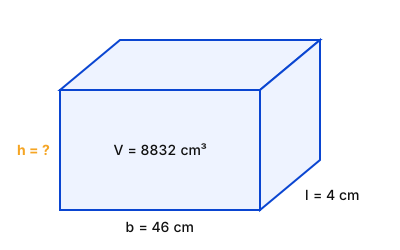
- ⇒
Trick: Unit-digit check: ends in 2 ⇒ ends in 3 or 8; ✔
Answer: (B) 48
अवधारणा: घनाभ का आयतन ।
- ⇒
ट्रिक: इकाई अंक: का अंत 2 ⇒ का अंत 3 या 8; ✔
उत्तर: (B) 48
RRB NTPC Graduate CBT 1MathematicsMensuration – cuboidRRB NTPC Graduate CBT 1 2024 · 24 Jun Shift 3
Q16.Find the median from the following data.
| Age in years | 20-30 | 30-40 | 40-50 | 50-60 | 60-70 | 70-80 | 80-90 |
|---|
| No. of patients | 11 | 16 | 14 | 29 | 40 | 21 | 17 |
|---|
निम्नलिखित आँकड़ों से माध्यिका ज्ञात कीजिए।
| आयु (वर्षों में) | 20-30 | 30-40 | 40-50 | 50-60 | 60-70 | 70-80 | 80-90 |
|---|
| रोगियों की संख्या | 11 | 16 | 14 | 29 | 40 | 21 | 17 |
|---|
- A80 years80 वर्ष
- B59 years59 वर्ष
- C79 years79 वर्ष
- D61 years61 वर्ष
Show answer
Concept:
- ,
- Cumulative frequencies: 11, 27, 41, 70, 110 ⇒ median class 60-70.
- , , ,
Trick: Median class = first class whose cumulative frequency crosses .
Answer: (D) 61 years
अवधारणा:
- ,
- संचयी बारंबारता: 11, 27, 41, 70, 110 ⇒ माध्यिका वर्ग 60-70।
- , , ,
ट्रिक: माध्यिका वर्ग = पहला वर्ग जिसकी संचयी बारंबारता से अधिक हो।
उत्तर: (D) 61 years
RRB NTPC Graduate CBT 1MathematicsMedian of grouped dataRRB NTPC Graduate CBT 1 2024 · 24 Jun Shift 3
Q17.If 72 ÷ 18 × 32 - 21 × 12 ÷ 3 + 12 = z, then find value of z.
यदि 72 ÷ 18 × 32 - 21 × 12 ÷ 3 + 12 = z है, तो z का मान ज्ञात कीजिए।
- A-28
- B-44
- C-31
- D-36
Show answer
Concept: Apply BODMAS: powers first, then division/multiplication left to right, then addition/subtraction.
Trick: Solve each product-quotient block separately, then combine: .
Answer: (D)
अवधारणा: BODMAS लगाएँ: पहले घात, फिर बाएँ से दाएँ भाग/गुणा, फिर जोड़/घटाव।
ट्रिक: हर गुणा-भाग वाले भाग को अलग हल करें, फिर जोड़ें: ।
उत्तर: (D)
RRB NTPC Graduate CBT 1MathematicsSimplification (BODMAS)RRB NTPC Graduate CBT 1 2024 · 24 Jun Shift 3
Q18.On a circular path of 2742 m, Riya and Trisha start walking from the same point but in opposite directions at the speed of 4.6 m/s and X m/s, respectively. They will meet for the first time after 457 seconds. Find the value of X.
2742 m के एक वृत्ताकार पथ पर, रिया और तृषा एक ही बिंदु से विपरीत दिशाओं में क्रमशः 4.6 m/s और X m/s की चाल से चलना शुरू करती हैं। वे 457 सेकंड के बाद पहली बार मिलेंगी। X का मान ज्ञात कीजिए।
- A0.8
- B2.2
- C1.1
- D1.4
Show answer
Concept: Moving in opposite directions on a circular track, they meet first when together they cover one full round: .
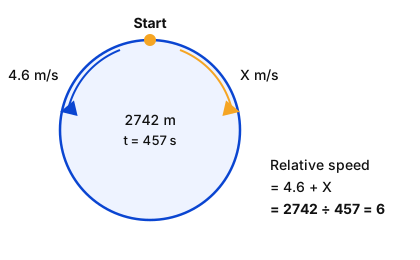
Trick: Opposite directions → add speeds; same direction → subtract.
Answer: (D)
अवधारणा: वृत्ताकार पथ पर विपरीत दिशा में चलने पर पहली बार मिलने तक दोनों मिलकर एक पूरा चक्कर लगाते हैं: ।
ट्रिक: विपरीत दिशा → चालें जोड़ें; समान दिशा → घटाएँ।
उत्तर: (D)
RRB NTPC Graduate CBT 1MathematicsCircular track (relative speed)RRB NTPC Graduate CBT 1 2024 · 24 Jun Shift 3
Q19.A man has to cover a distance of 387 km in 18 hours. If he covers two-third of this distance in of the time, then what should his speed (in km/hr) be to cover the remaining distance in the time left?
एक व्यक्ति को 18 घंटे में 387 km की दूरी तय करनी है। यदि वह इस दूरी का दो-तिहाई भाग समय में तय कर लेता है, तो शेष दूरी को बचे हुए समय में तय करने के लिए उसकी चाल (km/hr में) कितनी होनी चाहिए?
- A21.5
- B6.3
- C23.7
- D10.7
Show answer
Concept: Find the remaining distance and the remaining time, then .
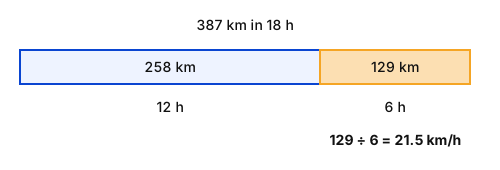
- Distance covered ; remaining .
- Time used ; time left .
- Required speed
Trick: Remaining distance in remaining time: — same as the average speed.
Answer: (A)
अवधारणा: बची हुई दूरी और बचा हुआ समय निकालें, फिर ।
- तय दूरी ; शेष ।
- लगा समय ; शेष समय ।
- आवश्यक चाल
ट्रिक: शेष दूरी, शेष समय में: — औसत चाल के बराबर।
उत्तर: (A)
RRB NTPC Graduate CBT 1MathematicsSpeed, time and distanceRRB NTPC Graduate CBT 1 2024 · 24 Jun Shift 3
Q20.A manufacturer fixes his selling price at 30% over the cost of production. If the cost of production goes up by 30%, and the manufacturer raises his selling price by 70%, find the profit percentage.
एक निर्माता अपना विक्रय मूल्य उत्पादन लागत से 30% अधिक निर्धारित करता है। यदि उत्पादन लागत 30% बढ़ जाती है, और निर्माता अपना विक्रय मूल्य 70% बढ़ा देता है, तो लाभ प्रतिशत ज्ञात कीजिए।
- A70%
- B73%
- C69%
- D71%
Show answer
Concept: Take a convenient cost price and apply the changes step by step; .
- Let CP = 100, so SP = 130.
- New CP ; new SP .
- Profit
Trick: Both CP and SP were 130 at different stages; SP rises 70% on the new CP of 130 → profit is exactly 70%.
Answer: (A)
अवधारणा: सुविधाजनक क्रय मूल्य मानकर बदलाव लगाएँ; ।
- माना CP = 100, तो SP = 130।
- नया CP ; नया SP ।
- लाभ
ट्रिक: नया CP = पुराना SP = 130 और नया SP उस पर 70% अधिक → लाभ ठीक 70%।
उत्तर: (A)
RRB NTPC Graduate CBT 1MathematicsProfit and lossRRB NTPC Graduate CBT 1 2024 · 24 Jun Shift 3

