RRB NTPC Graduate CBT 1 · 4,700 questions

RRB NTPC Graduate CBT 1 2024 PYQs

Real previous year questions, subject-wise. Try the question, then open the answer and the explanation in Hindi & English – free, no login.

Courses – airGurukul

1,411 questions in Mathematics.

Q21.
A number when increased by 5712%, gives 378. The number is:
एक संख्या में 5712% की वृद्धि करने पर 378 प्राप्त होता है। वह संख्या है:
  1. A240
  2. B200
  3. C400
  4. D100
Show answer

Concept: If a number increases by r%, new value =number×100+r100.

  1. 5712%=1152%, so new value =x×315200.
  2. x×315200=378
  3. x=378×200315=240

Trick: Check: 240+57.5% of 240=240+138=378 ✔

Answer: (A) 240

अवधारणा: यदि कोई संख्या r% बढ़े, तो नया मान =संख्या×100+r100।

  1. 5712%=1152%, अतः नया मान =x×315200।
  2. x×315200=378
  3. x=378×200315=240

ट्रिक: जाँच: 240+240 का 57.5%=240+138=378 ✔

उत्तर: (A) 240

RRB NTPC Graduate CBT 1MathematicsPercentageRRB NTPC Graduate CBT 1 2024 · 24 Jun Shift 3
Q22.
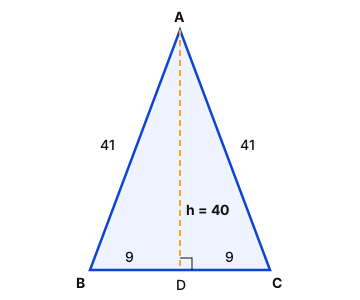
The length of each of the two equal sides of an isosceles triangle is 41 cm and the length of its base is 18 cm. The area (in cm2) of the triangle is:
एक समद्विबाहु त्रिभुज की दोनों समान भुजाओं में से प्रत्येक की लंबाई 41 cm है और उसके आधार की लंबाई 18 cm है। त्रिभुज का क्षेत्रफल (cm2 में) है:
  1. A351
  2. B355
  3. C360
  4. D365
Show answer

Concept: The altitude to the base of an isosceles triangle bisects the base; Area=12×base×height.

  1. Half base =182=9cm
  2. h=412−92=1681−81=1600=40cm
  3. Area=12×18×40=360cm2

Trick: (9, 40, 41) is a Pythagorean triplet. Or use b44a2−b2=184×80=360.

Answer: (C) 360

अवधारणा: समद्विबाहु त्रिभुज में आधार पर डाला गया लंब आधार को समद्विभाजित करता है; क्षेत्रफल=12×आधार×ऊँचाई।

  1. आधा आधार =182=9cm
  2. h=412−92=1681−81=1600=40cm
  3. क्षेत्रफल=12×18×40=360cm2

ट्रिक: (9, 40, 41) पाइथागोरस त्रिक है। या सूत्र b44a2−b2=184×80=360।

उत्तर: (C) 360

RRB NTPC Graduate CBT 1MathematicsMensuration – isosceles triangleRRB NTPC Graduate CBT 1 2024 · 24 Jun Shift 3
Q23.
Which smallest number should be added to 22938 so that the sum is completely divisible by 7?
22938 में कौन-सी सबसे छोटी संख्या जोड़ी जानी चाहिए ताकि योगफल 7 से पूर्णतः विभाज्य हो?
  1. A5
  2. B6
  3. C1
  4. D2
Show answer

Concept: Least number to be added =divisor−remainder.

  1. 22938÷7: 7×3276=22932, remainder =6
  2. Number to add =7−6=1
  3. 22938+1=22939=7×3277 ✔

Trick: Divide by 7, find remainder; add (7 − remainder).

Answer: (C) 1

अवधारणा: जोड़ी जाने वाली न्यूनतम संख्या =भाजक−शेषफल।

  1. 22938÷7: 7×3276=22932, शेषफल =6
  2. जोड़ें =7−6=1
  3. 22938+1=22939=7×3277 ✔

ट्रिक: 7 से भाग देकर शेषफल निकालें; (7 − शेषफल) जोड़ें।

उत्तर: (C) 1

RRB NTPC Graduate CBT 1MathematicsDivisibilityRRB NTPC Graduate CBT 1 2024 · 24 Jun Shift 3
Q24.
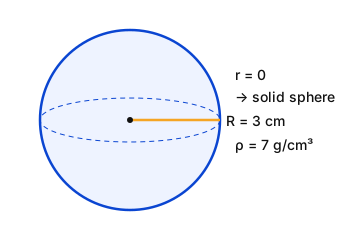
A hollow spherical shell is made of a metal of density 7 g/cm3. Its internal and external radii are 0 cm and 3 cm, respectively. What is the approximate weight (in kg) of the shell?
(Take π=227, Density=MassVolume)
एक खोखला गोलीय कोश 7 g/cm3 घनत्व वाली धातु से बना है। इसकी आंतरिक और बाह्य त्रिज्याएँ क्रमशः 0 cm और 3 cm हैं। कोश का अनुमानित भार (kg में) क्या है?
(π=227, Density=MassVolume लीजिए)
  1. A2.208
  2. B2.14
  3. C0.792
  4. D2.15
Show answer

Concept: Volume of shell =43π(R3−r3) and Mass=Density×Volume.

  1. With r=0, R=3: V=43×227×27=7927cm3
  2. Mass=7×7927=792g
  3. 792g=0.792kg

Trick: The density 7 cancels the 7 of π=227: mass =43×22×27=792 g.

Answer: (C) 0.792

अवधारणा: खोल का आयतन =43π(R3−r3) और द्रव्यमान=घनत्व×आयतन।

  1. r=0, R=3: V=43×227×27=7927cm3
  2. द्रव्यमान=7×7927=792g
  3. 792g=0.792kg

ट्रिक: घनत्व 7, π=227 के 7 को काट देता है: द्रव्यमान =43×22×27=792 g।

उत्तर: (C) 0.792

RRB NTPC Graduate CBT 1MathematicsMensuration – sphereRRB NTPC Graduate CBT 1 2024 · 24 Jun Shift 3
Q25.
Find the value of K, for which the quadratic equation x2+4x+K=0 has equal roots.
K का वह मान ज्ञात कीजिए, जिसके लिए द्विघात समीकरण x2+4x+K=0 के मूल समान हैं।
  1. A3
  2. B5
  3. C4
  4. D6
Show answer

Concept: A quadratic ax2+bx+c=0 has equal roots when the discriminant D=b2−4ac=0.

  1. Here a=1, b=4, c=K.
  2. 42−4×1×K=0
  3. 16−4K=0⇒K=4

Trick: Equal roots → perfect square: x2+4x+4=(x+2)2, so K=(b2)2=4.

Answer: (C) 4

अवधारणा: द्विघात समीकरण ax2+bx+c=0 के मूल बराबर होते हैं जब विविक्तकर (discriminant) D=b2−4ac=0।

  1. यहाँ a=1, b=4, c=K।
  2. 42−4×1×K=0
  3. 16−4K=0⇒K=4

ट्रिक: बराबर मूल → पूर्ण वर्ग: x2+4x+4=(x+2)2, अतः K=(b2)2=4।

उत्तर: (C) 4

RRB NTPC Graduate CBT 1MathematicsQuadratic equationsRRB NTPC Graduate CBT 1 2024 · 24 Jun Shift 3
Q26.
The average height of 15 boys out of a class of 50 is 160 cm. If the average height of the remaining boys is 168 cm, the average height (in cm) of all the boys of the class is:
50 लड़कों की एक कक्षा में से 15 लड़कों की औसत ऊँचाई 160 cm है। यदि शेष लड़कों की औसत ऊँचाई 168 cm है, तो कक्षा के सभी लड़कों की औसत ऊँचाई (cm में) है:
  1. A165
  2. B165.6
  3. C166.6
  4. D164
Show answer

Concept: Overall average=Total sumTotal count.

  1. Sum of 15 boys =15×160=2400
  2. Remaining 50−15=35 boys: 35×168=5880
  3. Average =2400+588050=828050=165.6cm

Trick: Deviation method: 160+35×850=160+5.6=165.6.

Answer: (B) 165.6

अवधारणा: कुल औसत=कुल योगकुल संख्या।

  1. 15 लड़कों का योग =15×160=2400
  2. शेष 50−15=35 लड़के: 35×168=5880
  3. औसत =2400+588050=828050=165.6cm

ट्रिक: विचलन विधि: 160+35×850=160+5.6=165.6।

उत्तर: (B) 165.6

RRB NTPC Graduate CBT 1MathematicsAverageRRB NTPC Graduate CBT 1 2024 · 24 Jun Shift 3
Q27.
If A's salary is 12% more than that of B, then by what percentage is B's salary less than that of A (correct to two decimal places)?
यदि A का वेतन B के वेतन से 12% अधिक है, तो B का वेतन A के वेतन से कितने प्रतिशत कम है (दशमलव के दो स्थानों तक सही)?
  1. A13.26%
  2. B10.71%
  3. C11.73%
  4. D12.47%
Show answer

Concept: If A is r% more than B, then B is r100+r×100% less than A.

  1. Let B = 100, then A = 112.
  2. B is less than A by 12.
  3. 12112×100=10.71%

Trick: r100+r: 12112=328≈10.71%.

Answer: (B) 10.71%

अवधारणा: यदि A, B से r% अधिक है, तो B, A से r100+r×100% कम है।

  1. माना B = 100, तो A = 112।
  2. B, A से 12 कम है।
  3. 12112×100=10.71%

ट्रिक: r100+r: 12112=328≈10.71%।

उत्तर: (B) 10.71%

RRB NTPC Graduate CBT 1MathematicsPercentage comparisonRRB NTPC Graduate CBT 1 2024 · 24 Jun Shift 3
Q28.
The median of the observations 54, 65, 77, 34, 68, 66, 60, 70, 33, 71 and 15 is:
प्रेक्षणों 54, 65, 77, 34, 68, 66, 60, 70, 33, 71 और 15 की माध्यिका है:
  1. A61
  2. B66
  3. C68
  4. D65
Show answer

Concept: Arrange the data in order; for n odd, median =(n+12)th value.

  1. Ascending: 15, 33, 34, 54, 60, 65, 66, 68, 70, 71, 77
  2. n=11, median =(11+12)th=6th value
  3. 6th value =65

Trick: 5 values below and 5 above: 15, 33, 34, 54, 60 | 65 | 66, 68, 70, 71, 77.

Answer: (D) 65

अवधारणा: आँकड़ों को क्रम में लगाएँ; n विषम हो तो माध्यिका =(n+12)वाँ पद।

  1. आरोही क्रम: 15, 33, 34, 54, 60, 65, 66, 68, 70, 71, 77
  2. n=11, माध्यिका =(11+12)=6वाँ पद
  3. 6वाँ पद =65

ट्रिक: 5 मान नीचे, 5 ऊपर: 15, 33, 34, 54, 60 | 65 | 66, 68, 70, 71, 77।

उत्तर: (D) 65

RRB NTPC Graduate CBT 1MathematicsMedianRRB NTPC Graduate CBT 1 2024 · 24 Jun Shift 3
Q29.
Tejas gets double the amount in 11 years when invested at compound interest, compounded annually. In how many years will the amount become four times itself?
तेजस को वार्षिक रूप से संयोजित चक्रवृद्धि ब्याज पर निवेश करने पर 11 वर्षों में दोगुनी राशि प्राप्त होती है। कितने वर्षों में राशि स्वयं की चार गुनी हो जाएगी?
  1. A21
  2. B44
  3. C43
  4. D22
Show answer

Concept: At compound interest, if money becomes 2 times in n years, it becomes 2k times in kn years.

  1. P(1+r)11=2P
  2. 4P=22P=P[(1+r)11]2=P(1+r)22
  3. So time =2×11=22 years.

Trick: Doubling time multiplies: 2× in 11 → 4× in 22 → 8× in 33.

Answer: (D) 22

अवधारणा: चक्रवृद्धि ब्याज पर यदि धन n वर्ष में 2 गुना हो, तो kn वर्ष में 2k गुना होता है।

  1. P(1+r)11=2P
  2. 4P=22P=P[(1+r)11]2=P(1+r)22
  3. अतः समय =2×11=22 वर्ष।

ट्रिक: 2 गुना 11 में → 4 गुना 22 में → 8 गुना 33 में।

उत्तर: (D) 22

RRB NTPC Graduate CBT 1MathematicsCompound interestRRB NTPC Graduate CBT 1 2024 · 24 Jun Shift 3
Q30.
Sohit and Rohit have a certain sum of money in the ratio of 17 : 14 and they spend their money on purchasing books in the ratio of 12 : 8. After purchasing books each of them has ₹3,392. Find the amount of money that Sohit initially had.
सोहित और रोहित के पास 17 : 14 के अनुपात में एक निश्चित धनराशि है और वे अपना धन 12 : 8 के अनुपात में पुस्तकें खरीदने पर खर्च करते हैं। पुस्तकें खरीदने के बाद उनमें से प्रत्येक के पास ₹3,392 बचते हैं। सोहित के पास प्रारंभ में कितनी धनराशि थी, ज्ञात कीजिए।
  1. A₹7,274
  2. B₹7,208
  3. C₹7,256
  4. D₹7,218
Show answer

Concept: Write initial money and spending in ratio form; equal remaining amounts give an equation.

  1. Money: 17x and 14x; spending ratio 12:8=3:2, i.e. 3k and 2k.
  2. 17x−3k=3392 and 14x−2k=3392
  3. From the second: k=7x−1696; then 17x−21x+5088=3392⇒x=424
  4. Sohit =17×424=₹7208

Trick: Check: k=2968−1696=1272; Sohit spends 3816, 7208−3816=3392 ✔

Answer: (B) ₹7,208

अवधारणा: प्रारंभिक धन और व्यय को अनुपात रूप में लिखें; बचा धन बराबर होने से समीकरण बनता है।

  1. धन: 17x और 14x; व्यय अनुपात 12:8=3:2, अर्थात् 3k और 2k।
  2. 17x−3k=3392 और 14x−2k=3392
  3. दूसरे से: k=7x−1696; तब 17x−21x+5088=3392⇒x=424
  4. सोहित =17×424=₹7208

ट्रिक: जाँच: k=2968−1696=1272; सोहित का व्यय 3816, 7208−3816=3392 ✔

उत्तर: (B) ₹7,208

RRB NTPC Graduate CBT 1MathematicsRatio and proportionRRB NTPC Graduate CBT 1 2024 · 24 Jun Shift 3
Q31.
In one hour, a boat goes 46 km/hr in the direction of the stream and 36 km/hr against the direction of the stream. What will be the speed of the current?
एक घंटे में, एक नाव धारा की दिशा में 46 km/hr और धारा की विपरीत दिशा में 36 km/hr की चाल से चलती है। धारा की चाल कितनी होगी?
  1. A5 km/hr
  2. B4 km/hr
  3. C11 km/hr
  4. D2 km/hr
Show answer

Concept: Downstream speed =u+v, upstream speed =u−v; so current speed v=down−up2.

  1. Downstream =46km/h, upstream =36km/h.
  2. v=46−362=102=5km/h.
  3. (Boat speed in still water =46+362=41km/h.)

Trick: Current = half the difference; boat = half the sum.

Answer: (A) 5km/h

अवधारणा: धारा के अनुकूल चाल =u+v, प्रतिकूल चाल =u−v; अतः धारा की चाल v=अनुकूल−प्रतिकूल2।

  1. अनुकूल =46km/h, प्रतिकूल =36km/h।
  2. v=46−362=5km/h।
  3. (स्थिर जल में नाव की चाल =46+362=41km/h।)

ट्रिक: धारा = अंतर का आधा; नाव = योग का आधा।

उत्तर: (A) 5km/h

RRB NTPC Graduate CBT 1MathematicsBoats and StreamsRRB NTPC Graduate CBT 1 2024 · 24 Jun Shift 2
Q32.
Pipe A can fill an empty cistern alone in 26 hours and pipe B can fill the same cistern alone in 36 hours. The time taken by them to fill half of the cistern by operating together will be:
पाइप A अकेले एक खाली टंकी को 26 घंटे में भर सकता है और पाइप B अकेले उसी टंकी को 36 घंटे में भर सकता है। दोनों को एक साथ चलाने पर आधी टंकी भरने में लगने वाला समय होगा:
  1. A151731 hours151731 घंटे
  2. B111731 hours111731 घंटे
  3. C71731 hours71731 घंटे
  4. D161731 hours161731 घंटे
Show answer

Concept: Work together: combined rate = sum of individual rates. Take LCM of 26 and 36 as total capacity.

  1. LCM(26,36)=468 units. A fills 46826=18 units/h, B fills 46836=13 units/h.
  2. Together =18+13=31 units/h.
  3. Half cistern =234 units → time =23431=71731 hours.

Trick: Full tank together =aba+b=26×3662=46831; halve it.

Answer: (C) 71731 hours

अवधारणा: साथ में भरने की दर = दोनों दरों का योग। 26 और 36 का LCM कुल क्षमता मानें।

  1. LCM(26,36)=468 इकाई। A: 46826=18 इकाई/घंटा, B: 46836=13 इकाई/घंटा।
  2. साथ में =31 इकाई/घंटा।
  3. आधी टंकी =234 इकाई → समय =23431=71731 घंटे।

ट्रिक: पूरी टंकी =aba+b=46831; फिर आधा करें।

उत्तर: (C) 71731 घंटे

RRB NTPC Graduate CBT 1MathematicsPipes and CisternsRRB NTPC Graduate CBT 1 2024 · 24 Jun Shift 2
Q33.
What is the mode of the following data?
49, 54, 54, 43, 52, 49, 51, 46, 53, 43, 53, 49, 44, 45, 46, 44, 40, 50, 52, 49
निम्नलिखित आँकड़ों का बहुलक (mode) क्या है?
49, 54, 54, 43, 52, 49, 51, 46, 53, 43, 53, 49, 44, 45, 46, 44, 40, 50, 52, 49
  1. A49
  2. B43
  3. C54
  4. D52
Show answer

Concept: Mode is the value that occurs most often in the data.

  1. Count: 49 occurs 4 times.
  2. 43, 44, 46, 52, 53, 54 occur 2 times each; the rest once.
  3. Highest frequency is for 49.

Trick: Tally only the repeating values – one with the most ticks is the mode.

Answer: (A) 49

अवधारणा: बहुलक (Mode) वह मान है जो आँकड़ों में सबसे अधिक बार आता है।

  1. गिनती: 49 चार बार आता है।
  2. 43, 44, 46, 52, 53, 54 दो-दो बार; बाकी एक बार।
  3. सबसे अधिक बारंबारता 49 की है।

ट्रिक: केवल दोहराए गए मानों का मिलान करें – सबसे अधिक वाला बहुलक।

उत्तर: (A) 49

RRB NTPC Graduate CBT 1MathematicsModeRRB NTPC Graduate CBT 1 2024 · 24 Jun Shift 2
Q34.
The mean proportional between 4+23 and 16−83 is:
4+23 और 16−83 के बीच मध्यानुपाती (mean proportional) है:
  1. A4
  2. B8
  3. C9
  4. D14
Show answer

Concept: Mean proportional between a and b is ab.

  1. ab=(4+23)(16−83).
  2. =64−323+323−16×3=64−48=16.
  3. 16=4.

Trick: 16−83=4(4−23), so product =4(16−12)=16 quickly.

Answer: (A) 4

अवधारणा: a और b का मध्यानुपाती =ab।

  1. ab=(4+23)(16−83)।
  2. =64−323+323−48=16।
  3. 16=4।

ट्रिक: 16−83=4(4−23), अतः गुणनफल =4(16−12)=16।

उत्तर: (A) 4

RRB NTPC Graduate CBT 1MathematicsMean Proportional and SurdsRRB NTPC Graduate CBT 1 2024 · 24 Jun Shift 2
Q35.
A retailer allows a 10% discount on the marked price. What price (in ₹) must be marked on an item whose cost price is ₹626 to make a profit of 35%?
एक खुदरा विक्रेता अंकित मूल्य पर 10% की छूट देता है। 35% का लाभ अर्जित करने के लिए, ₹626 क्रय मूल्य वाली एक वस्तु पर कितना मूल्य (₹ में) अंकित किया जाना चाहिए?
  1. A939
  2. B938
  3. C937
  4. D942
Show answer

Concept: SP=CP×100+P%100 and MP=SP×100100−D%.

  1. SP=626×135100=845.10.
  2. MP=845.10×10090=939.

Trick: MP=CP×13590=626×1.5=939.

Answer: (A) ₹939

अवधारणा: विक्रय मूल्य=क्रय मूल्य×100+लाभ%100, अंकित मूल्य=विक्रय मूल्य×100100−छूट%।

  1. SP=626×135100=845.10।
  2. MP=845.10×10090=939।

ट्रिक: MP=626×13590=626×1.5=939।

उत्तर: (A) ₹939

RRB NTPC Graduate CBT 1MathematicsProfit, Loss and DiscountRRB NTPC Graduate CBT 1 2024 · 24 Jun Shift 2
Q36.
Find the nature of the roots of the quadratic equation 2x2 + x + 3 = 0.
द्विघात समीकरण 2x2 + x + 3 = 0 के मूलों की प्रकृति ज्ञात कीजिए।
  1. ARational rootsपरिमेय मूल
  2. BReal roots and equalवास्तविक और समान मूल
  3. CImaginary rootsकाल्पनिक मूल
  4. DDistinct real rootsभिन्न वास्तविक मूल
Show answer

Concept: For ax2+bx+c=0, discriminant D=b2−4ac: D>0 real distinct, D=0 equal, D<0 imaginary.

  1. a=2,b=1,c=3.
  2. D=1−4×2×3=1−24=−23.
  3. D<0 → roots are imaginary (not real).

Trick: If a and c have the same sign and b2<4ac, roots are imaginary.

Answer: (C) Imaginary roots

अवधारणा: ax2+bx+c=0 में विविक्तकर D=b2−4ac: D>0 भिन्न वास्तविक, D=0 बराबर, D<0 काल्पनिक।

  1. a=2,b=1,c=3।
  2. D=1−24=−23।
  3. D<0 → मूल काल्पनिक हैं।

ट्रिक: a,c एक ही चिह्न के हों और b2<4ac हो तो मूल काल्पनिक।

उत्तर: (C) Imaginary roots

RRB NTPC Graduate CBT 1MathematicsQuadratic Equations – Nature of RootsRRB NTPC Graduate CBT 1 2024 · 24 Jun Shift 2
Q37.
Anushka walks to her office 5 km away from home. In the morning she covers the distance in 1 hour, whereas while returning home in the evening, she takes 15 more minutes to cover the same distance. Find her average speed (in km/hr) during the two- way journey.
अनुष्का घर से 5 km दूर स्थित अपने कार्यालय पैदल जाती है। सुबह वह यह दूरी 1 घंटे में तय करती है, जबकि शाम को घर लौटते समय वह उसी दूरी को तय करने में 15 मिनट अधिक लेती है। दोनों ओर की यात्रा के दौरान उसकी औसत चाल (km/hr में) ज्ञात कीजिए।
  1. A389
  2. B409
  3. C4011
  4. D419
Show answer

Concept: Average speed=Total distanceTotal time.

  1. Total distance =5+5=10km.
  2. Time =1+11560=214=94 h.
  3. Average speed =10÷94=409km/h.

Trick: Never average the two speeds directly; use total distance over total time.

Answer: (B) 409

अवधारणा: औसत चाल=कुल दूरीकुल समय।

  1. कुल दूरी =10km।
  2. समय =1+1560+1=94 घंटे।
  3. औसत चाल =10÷94=409km/h।

ट्रिक: दोनों चालों का सीधा औसत न लें; कुल दूरी ÷ कुल समय लें।

उत्तर: (B) 409

RRB NTPC Graduate CBT 1MathematicsAverage SpeedRRB NTPC Graduate CBT 1 2024 · 24 Jun Shift 2
Q38.
Two years ago, the average age of A, B and C was 66 years. Two years from now, the average age of A and C will be 89 years. What will be the age (in years) of B, four years from now?
दो वर्ष पहले, A, B और C की औसत आयु 66 वर्ष थी। अब से दो वर्ष बाद, A और C की औसत आयु 89 वर्ष होगी। अब से चार वर्ष बाद B की आयु (वर्षों में) कितनी होगी?
  1. A37
  2. B30
  3. C34
  4. D31
Show answer

Concept: Sum of ages = average × number; each person ages by the same years.

  1. 2 years ago A + B + C =3×66=198 → now =198+6=204.
  2. 2 years later A + C =2×89=178 → now =178−4=174.
  3. B now =204−174=30; after 4 years =34.

Trick: Bring every sum to “now” first, then subtract.

Answer: (C) 34

अवधारणा: आयु का योग = औसत × संख्या; हर व्यक्ति की आयु बराबर बढ़ती है।

  1. 2 वर्ष पहले A + B + C =198 → अभी =204।
  2. 2 वर्ष बाद A + C =178 → अभी =174।
  3. B अभी =30; 4 वर्ष बाद =34।

ट्रिक: पहले सभी योगों को “वर्तमान” में बदलें, फिर घटाएँ।

उत्तर: (C) 34

RRB NTPC Graduate CBT 1MathematicsAverage – AgesRRB NTPC Graduate CBT 1 2024 · 24 Jun Shift 2
Q39.
The average of Sachin's marks in 7 subjects is 76. His average in six subjects excluding English is 70. How many marks did he get in English?
सचिन के 7 विषयों में प्राप्त अंकों का औसत 76 है। अंग्रेज़ी को छोड़कर छह विषयों में उसका औसत 70 है। उसे अंग्रेज़ी में कितने अंक मिले?
  1. A113
  2. B111
  3. C112
  4. D114
Show answer

Concept: Missing value = total of all − total of the rest.

  1. Total of 7 subjects =7×76=532.
  2. Total of 6 subjects =6×70=420.
  3. English =532−420=112.

Trick: English =70+7×(76−70)=70+42=112.

Answer: (C) 112

अवधारणा: छूटा मान = कुल योग − शेष का योग।

  1. 7 विषयों का योग =7×76=532।
  2. 6 विषयों का योग =6×70=420।
  3. अंग्रेज़ी =532−420=112।

ट्रिक: अंग्रेज़ी =70+7×6=112।

उत्तर: (C) 112

RRB NTPC Graduate CBT 1MathematicsAverageRRB NTPC Graduate CBT 1 2024 · 24 Jun Shift 2
Q40.
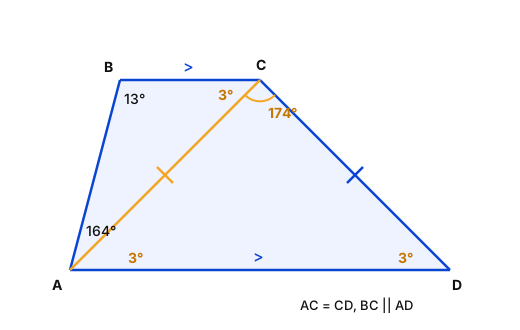
ABCD is a trapezium in which BC || AD and AC = CD. If ∠ABC=13∘ and ∠BAC=164∘, then what is the measure of ∠ACD?
ABCD एक समलंब चतुर्भुज है जिसमें BC || AD और AC = CD है। यदि ∠ABC=13∘ और ∠BAC=164∘ है, तो ∠ACD का माप क्या है?
  1. A164°
  2. B161°
  3. C188°
  4. D174°
Show answer

Concept: Use the angle sum in a triangle, alternate angles for parallel lines and equal base angles of an isosceles triangle.

  1. In △ABC: ∠ACB=180∘−13∘−164∘=3∘.
  2. BC∥AD → ∠CAD=∠ACB=3∘ (alternate angles).
  3. AC=CD → ∠CDA=∠CAD=3∘.
  4. ∠ACD=180∘−3∘−3∘=174∘.

Trick: In isosceles △ACD, apex angle =180∘−2× base angle.

Answer: (D) 174∘

अवधारणा: त्रिभुज का कोण-योग, समांतर रेखाओं के एकांतर कोण और समद्विबाहु त्रिभुज के बराबर आधार कोण का प्रयोग करें।

  1. △ABC में: ∠ACB=180∘−13∘−164∘=3∘।
  2. BC∥AD → ∠CAD=∠ACB=3∘ (एकांतर कोण)।
  3. AC=CD → ∠CDA=∠CAD=3∘।
  4. ∠ACD=180∘−6∘=174∘।

ट्रिक: समद्विबाहु △ACD में शीर्ष कोण =180∘−2× आधार कोण।

उत्तर: (D) 174∘

RRB NTPC Graduate CBT 1MathematicsGeometry – Trapezium and TrianglesRRB NTPC Graduate CBT 1 2024 · 24 Jun Shift 2