RRB NTPC Graduate CBT 1 · 4,700 questions

RRB NTPC Graduate CBT 1 2024 PYQs

Real previous year questions, subject-wise. Try the question, then open the answer and the explanation in Hindi & English – free, no login.

Courses – airGurukul

4,700 questions.

Q1341.
Three numbers are in the ratio 1 : 11 : 19, and their LCM is 8778. Their HCF is _____.
तीन संख्याएँ 1 : 11 : 19 के अनुपात में हैं, और उनका LCM 8778 है। उनका HCF _____ है।
  1. A42
  2. B36
  3. C54
  4. D50
Show answer

Concept: If numbers are x,11x,19x with 1,11,19 pairwise co-prime, then HCF =x and LCM =1×11×19×x.

  1. LCM =209x.
  2. 209x=8778⇒x=8778209=42.
  3. So HCF =42 (numbers 42, 462, 798).

Trick: For co-prime ratio terms, HCF =LCMproduct of ratio terms.

Answer: (A) 42

अवधारणा: संख्याएँ x,11x,19x हैं; 1,11,19 परस्पर सह-अभाज्य (co-prime) हैं, अतः HCF =x और LCM =1×11×19×x।

  1. LCM =209x।
  2. 209x=8778⇒x=8778209=42।
  3. अतः HCF =42 (संख्याएँ 42, 462, 798)।

ट्रिक: सह-अभाज्य अनुपात में HCF =LCMअनुपात पदों का गुणनफल।

उत्तर: (A) 42

RRB NTPC Graduate CBT 1MathematicsHCF and LCMRRB NTPC Graduate CBT 1 2024 · 19 Jun Shift 2
Q1342.
The mode of the observations 35, 27, 27, 32, 25, 24, 27, 24, 32, 20, 31, 21, 29, 22, 27, 20 and 26 is:
प्रेक्षणों 35, 27, 27, 32, 25, 24, 27, 24, 32, 20, 31, 21, 29, 22, 27, 20 और 26 का बहुलक (mode) है:
  1. A35
  2. B25
  3. C27
  4. D32
Show answer

Concept: Mode is the observation that occurs most often.

  1. Frequencies: 27 occurs 4 times; 20, 24, 32 occur twice each; the rest once.
  2. Highest frequency is 4, for 27.

Trick: Just tally repeats — no calculation needed.

Answer: (C) 27

अवधारणा: बहुलक (Mode) वह मान है जो सबसे अधिक बार आता है।

  1. आवृत्ति: 27 चार बार; 20, 24, 32 दो-दो बार; बाकी एक-एक बार।
  2. सबसे अधिक आवृत्ति 4 है, जो 27 की है।

ट्रिक: बस दोहराव गिनें — कोई गणना नहीं।

उत्तर: (C) 27

RRB NTPC Graduate CBT 1MathematicsModeRRB NTPC Graduate CBT 1 2024 · 19 Jun Shift 2
Q1343.
One-third of a journey is covered at a speed of 31 km/hr, the next one-third of the journey is covered at a speed of 4 km/hr, and the remaining journey is covered at a speed of 34 km/hr. The average speed (in km/hr, rounded off to one decimal place) for the entire journey is:
किसी यात्रा का एक-तिहाई भाग 31 km/hr की चाल से, अगला एक-तिहाई भाग 4 km/hr की चाल से, और शेष यात्रा 34 km/hr की चाल से तय की जाती है। संपूर्ण यात्रा की औसत चाल (km/hr में, दशमलव के एक स्थान तक पूर्णांकित) है:
  1. A3.1
  2. B7.1
  3. C6.3
  4. D9.6
Show answer

Concept: For equal distances at speeds a,b,c: average speed =31a+1b+1c.

  1. 131+14+134≈0.03226+0.25+0.02941=0.31167.
  2. Average speed =30.31167≈9.63.
  3. Rounded to one decimal: 9.6km/h.

Trick: The slow 4 km/h stretch dominates: time on it alone is 112 of the journey per km-unit, so the answer must be a little under 3×4=12 — only 9.6 fits sensibly.

Answer: (D) 9.6

अवधारणा: बराबर दूरियाँ चालों a,b,c से तय हों तो औसत चाल =31a+1b+1c।

  1. 131+14+134≈0.03226+0.25+0.02941=0.31167।
  2. औसत चाल =30.31167≈9.63।
  3. एक दशमलव तक: 9.6km/h।

ट्रिक: धीमी 4 km/h वाली दूरी समय पर हावी है, इसलिए उत्तर 12 से थोड़ा कम होगा — केवल 9.6 उपयुक्त है।

उत्तर: (D) 9.6

RRB NTPC Graduate CBT 1MathematicsAverage SpeedRRB NTPC Graduate CBT 1 2024 · 19 Jun Shift 2
Q1344.
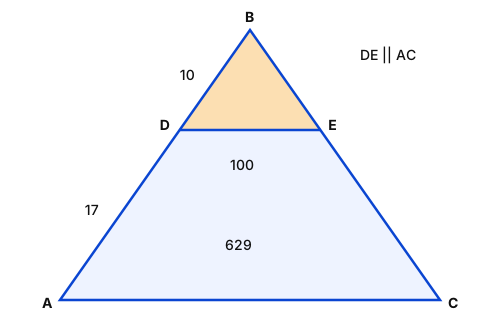
In △ABC, DE∥AC, where D and E are the points on sides AB and BC, respectively.
If BD = 10 cm and AD = 17 cm, then what is the ratio of the area of △BDE to the trapezium ADEC?
△ABC में, DE∥AC, जहाँ D और E क्रमशः भुजाओं AB और BC पर स्थित बिंदु हैं।
यदि BD = 10 cm और AD = 17 cm है, तो △BDE के क्षेत्रफल और समलंब ADEC के क्षेत्रफल का अनुपात क्या है?
  1. A344 : 415
  2. B629 : 100
  3. C406 : 383
  4. D100 : 629
Show answer

Concept: If DE∥AC, then △BDE~△BAC and the ratio of areas equals the square of the ratio of corresponding sides.

  1. BA=BD+AD=10+17=27.
  2. ar(BDE)ar(BAC)=(1027)2=100729.
  3. Trapezium ADEC=729−100=629 parts.
  4. Required ratio =100:629.

Trick: Square the side ratio, then subtract: 102:(272−102).

Answer: (D) 100:629

अवधारणा: DE∥AC होने से △BDE~△BAC; समरूप त्रिभुजों के क्षेत्रफलों का अनुपात संगत भुजाओं के अनुपात का वर्ग होता है।

  1. BA=BD+AD=10+17=27।
  2. ar(BDE)ar(BAC)=(1027)2=100729।
  3. समलंब ADEC=729−100=629 भाग।
  4. अभीष्ट अनुपात =100:629।

ट्रिक: भुजा अनुपात का वर्ग लें, फिर घटाएँ: 102:(272−102)।

उत्तर: (D) 100:629

RRB NTPC Graduate CBT 1MathematicsSimilar Triangles – Area RatioRRB NTPC Graduate CBT 1 2024 · 19 Jun Shift 2
Q1345.
A sum, when invested at 20% simple interest per annum, amounts to ₹8,640 after 3 years. What is the simple interest (in ₹) on the same sum at the same rate in 2 years?
एक राशि, 20% वार्षिक साधारण ब्याज पर निवेश किए जाने पर 3 वर्षों में ₹8,640 हो जाती है। उसी राशि पर समान दर से 2 वर्षों में साधारण ब्याज (₹ में) कितना होगा?
  1. A4,320
  2. B2,160
  3. C8,640
  4. D1,080
Show answer

Concept: Amount A=P(1+RT100) and SI=PRT100.

  1. 3 years at 20% → SI =60% of P, so A=1.6P=8640.
  2. P=86401.6=5400.
  3. SI for 2 years =5400×40100=2160.

Trick: 160%→8640, so 40%→86404=2160.

Answer: (B) ₹2,160

अवधारणा: मिश्रधन A=P(1+RT100) तथा SI=PRT100।

  1. 3 वर्ष, 20% → SI =P का 60%, अतः A=1.6P=8640।
  2. P=86401.6=5400।
  3. 2 वर्ष का SI =5400×40100=2160।

ट्रिक: 160%→8640, अतः 40%→86404=2160।

उत्तर: (B) ₹2,160

RRB NTPC Graduate CBT 1MathematicsSimple InterestRRB NTPC Graduate CBT 1 2024 · 19 Jun Shift 2
Q1346.
Ramesh purchased (4x−3y) dolls from a shop at the rate of ₹(x+y) per doll. Find the total money paid by Ramesh to the shopkeeper.
रमेश ने एक दुकान से (4x−3y) गुड़ियाँ ₹(x+y) प्रति गुड़िया की दर से खरीदीं। रमेश द्वारा दुकानदार को भुगतान की गई कुल राशि ज्ञात कीजिए।
  1. A₹(x2−xy+3y2)
  2. B₹(4x2+xy−3y2)
  3. C₹(4x2−xy+y2)
  4. D₹(x2−xy+y2)
Show answer

Concept: Total cost = number of dolls × rate per doll.

  1. Total =(4x−3y)(x+y).
  2. =4x2+4xy−3xy−3y2.
  3. =4x2+xy−3y2.

Trick: Check with x=y=1: dolls =1, rate ₹2, total ₹2; only 4+1−3=2 matches.

Answer: (B) ₹(4x2+xy−3y2)

अवधारणा: कुल राशि = गुड़ियों की संख्या × प्रति गुड़िया दर।

  1. कुल =(4x−3y)(x+y)।
  2. =4x2+4xy−3xy−3y2।
  3. =4x2+xy−3y2।

ट्रिक: x=y=1 रखें: 1 गुड़िया, दर ₹2, कुल ₹2; केवल 4+1−3=2 मेल खाता है।

उत्तर: (B) ₹(4x2+xy−3y2)

RRB NTPC Graduate CBT 1MathematicsAlgebra – Multiplication of PolynomialsRRB NTPC Graduate CBT 1 2024 · 19 Jun Shift 2
Q1347.
A shopkeeper sold a book for ₹225 at a loss of 10%. At what price (in ₹) should he have to sell it to gain 24% on it?
एक दुकानदार ने एक पुस्तक 10% की हानि पर ₹225 में बेची। उस पर 24% का लाभ प्राप्त करने के लिए उसे इसे किस मूल्य (₹ में) पर बेचना चाहिए था?
  1. A310
  2. B307
  3. C311
  4. D308
Show answer

Concept: CP=SP×100100−Loss% and new SP=CP×100+Gain%100.

  1. CP=225×10090=250.
  2. For 24% gain: SP=250×1.24=310.

Trick: Directly: 225×12490=310.

Answer: (A) ₹310

अवधारणा: क्रय मूल्य=विक्रय मूल्य×100100−हानि%, नया विक्रय मूल्य=क्रय मूल्य×100+लाभ%100।

  1. CP=225×10090=250।
  2. 24% लाभ के लिए: SP=250×1.24=310।

ट्रिक: सीधे: 225×12490=310।

उत्तर: (A) ₹310

RRB NTPC Graduate CBT 1MathematicsProfit and LossRRB NTPC Graduate CBT 1 2024 · 19 Jun Shift 2
Q1348.
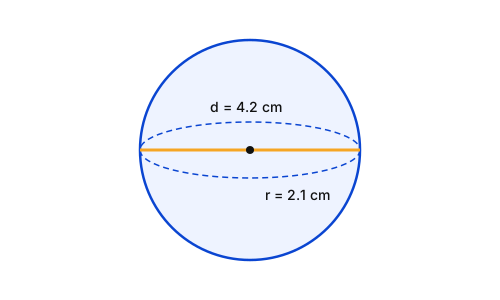
Find the volume (in cm3) of a sphere having a diameter of 4.2 cm, giving your answer correct to two places of decimal.
Take π=227
4.2 cm व्यास वाले एक गोले का आयतन (cm3 में) ज्ञात कीजिए, अपना उत्तर दशमलव के दो स्थानों तक सही दीजिए।
π=227 लीजिए
  1. A18.8
  2. B188.8
  3. C38.8
  4. D168.8
Show answer

Concept: Volume of a sphere V=43πr3.

  1. r=4.22=2.1cm, r3=9.261.
  2. V=43×227×9.261=8821×9.261.
  3. =88×0.441=38.808≈38.8cm3.

Trick: 2.1=3×0.7, so 227 cancels neatly: 8821×9.261=88×0.441.

Answer: (C) 38.8

अवधारणा: गोले का आयतन V=43πr3।

  1. r=4.22=2.1cm, r3=9.261।
  2. V=43×227×9.261=8821×9.261।
  3. =88×0.441=38.808≈38.8cm3।

ट्रिक: 2.1=3×0.7, इसलिए 227 आसानी से कटता है: 88×0.441।

उत्तर: (C) 38.8

RRB NTPC Graduate CBT 1MathematicsMensuration – SphereRRB NTPC Graduate CBT 1 2024 · 19 Jun Shift 2
Q1349.
A group of people consists of men, women and children. Among them, 20% are men, 30% are women and the rest are children, and their average weights are 50 kg, 40 kg and 40 kg, respectively. The average weight of the group (in kg) is:
लोगों के एक समूह में पुरुष, महिलाएँ और बच्चे हैं। इनमें से 20% पुरुष, 30% महिलाएँ और शेष बच्चे हैं, और उनका औसत भार क्रमशः 50 kg, 40 kg और 40 kg है। समूह का औसत भार (kg में) है:
  1. A39
  2. B37
  3. C42
  4. D38
Show answer

Concept: Average of groups =∑(share×average).

  1. Children =100−20−30=50%.
  2. Average =0.2×50+0.3×40+0.5×40.
  3. =10+12+20=42kg.

Trick: 80% weigh 40 kg; men add 0.2×10=2 extra → 40+2=42.

Answer: (C) 42

अवधारणा: समूह का औसत =∑(हिस्सा×औसत)।

  1. बच्चे =100−20−30=50%।
  2. औसत =0.2×50+0.3×40+0.5×40।
  3. =10+12+20=42kg।

ट्रिक: 80% का भार 40 kg; पुरुष 0.2×10=2 अतिरिक्त जोड़ते हैं → 40+2=42।

उत्तर: (C) 42

RRB NTPC Graduate CBT 1MathematicsWeighted AverageRRB NTPC Graduate CBT 1 2024 · 19 Jun Shift 2
Q1350.
Simplify: [(24×6)×{2÷2×(18−122)}]
सरल कीजिए: [(24×6)×{2÷2×(18−122)}]
  1. A432
  2. B1435
  3. C872
  4. D1728
Show answer

Concept: Solve innermost brackets first, then division and multiplication from left to right.

  1. 18−122=18−6=12.
  2. 2÷2×12=1×12=12.
  3. (24×6)×12=144×12=1728.

Trick: 1728=123 — a familiar cube.

Answer: (D) 1728

अवधारणा: पहले सबसे भीतरी कोष्ठक, फिर भाग और गुणा बाएँ से दाएँ।

  1. 18−122=18−6=12।
  2. 2÷2×12=1×12=12।
  3. (24×6)×12=144×12=1728।

ट्रिक: 1728=123 — परिचित घन।

उत्तर: (D) 1728

RRB NTPC Graduate CBT 1MathematicsSimplification (BODMAS)RRB NTPC Graduate CBT 1 2024 · 19 Jun Shift 2
Q1351.
Three numbers are in the ratio 4 : 5 : 6 and their average is 40. The largest number is:
तीन संख्याएँ 4 : 5 : 6 के अनुपात में हैं और उनका औसत 40 है। सबसे बड़ी संख्या है:
  1. A42
  2. B44
  3. C48
  4. D32
Show answer

Concept: Total =Average×count; split it in the given ratio.

  1. Sum =40×3=120.
  2. Ratio parts =4+5+6=15, one part =12015=8.
  3. Largest =6×8=48.

Trick: Middle ratio term 5 ↔ average 40, so one part =8; largest =6×8.

Answer: (C) 48

अवधारणा: योग =औसत×संख्या; इसे दिए अनुपात में बाँटें।

  1. योग =40×3=120।
  2. भाग =4+5+6=15, एक भाग =12015=8।
  3. सबसे बड़ी =6×8=48।

ट्रिक: मध्य पद 5 ↔ औसत 40, अतः एक भाग =8; सबसे बड़ी =6×8।

उत्तर: (C) 48

RRB NTPC Graduate CBT 1MathematicsRatio and AverageRRB NTPC Graduate CBT 1 2024 · 19 Jun Shift 2
Q1352.
If a + b = 50, and a − b = 42, find the value of a2+ b2.
यदि a + b = 50, और a − b = 42 है, तो a2+ b2 का मान ज्ञात कीजिए।
  1. A2578
  2. B2503
  3. C2500
  4. D2132
Show answer

Concept: a2+b2=(a+b)2+(a−b)22

  1. (a+b)2=502=2500
  2. (a−b)2=422=1764
  3. a2+b2=2500+17642=42642=2132

Trick: Direct: a=46, b=4 → 2116+16=2132.

Answer: (D) 2132

अवधारणा: a2+b2=(a+b)2+(a−b)22

  1. (a+b)2=502=2500
  2. (a−b)2=422=1764
  3. a2+b2=2500+17642=2132

ट्रिक: सीधे: a=46, b=4 → 2116+16=2132।

उत्तर: (D) 2132

RRB NTPC Graduate CBT 1MathematicsAlgebraic identitiesRRB NTPC Graduate CBT 1 2024 · 19 Jun Shift 2
Q1353.
If the median of a data is 46.36 less than its mode, then the median of the data exceeds its mean by _____. (Use the empirical formula)
यदि किसी आँकड़े की माध्यिका उसके बहुलक से 46.36 कम है, तो आँकड़े की माध्यिका उसके माध्य से _____ अधिक है। (आनुभविक सूत्र का प्रयोग कीजिए)
  1. A20.83
  2. B23.18
  3. C19.14
  4. D18.76
Show answer

Concept: Empirical relation: Mode=3Median−2Mean

  1. Mode−Median=2Median−2Mean=2(Median−Mean)
  2. Given Mode−Median=46.36
  3. Median−Mean=46.362=23.18

Trick: Mode − Median is always twice Median − Mean.

Answer: (B) 23.18

अवधारणा: अनुभवजन्य सूत्र: Mode=3Median−2Mean

  1. Mode−Median=2(Median−Mean)
  2. दिया है Mode−Median=46.36
  3. Median−Mean=46.362=23.18

ट्रिक: बहुलक − माध्यिका हमेशा माध्यिका − माध्य का दोगुना।

उत्तर: (B) 23.18

RRB NTPC Graduate CBT 1MathematicsMean, median, mode (empirical)RRB NTPC Graduate CBT 1 2024 · 19 Jun Shift 2
Q1354.
If 18% of a number is equal to 45 of another number, then what is the ratio of the first number to the second number?
यदि किसी संख्या का 18% दूसरी संख्या के 45 के बराबर है, तो पहली संख्या और दूसरी संख्या का अनुपात क्या है?
  1. A42 : 13
  2. B41 : 6
  3. C40 : 9
  4. D43 : 5
Show answer

Concept: Write both sides as equations and divide.

  1. 18100x=45y
  2. xy=45×10018=40090=409

Trick: x:y=45:18100=80:18=40:9.

Answer: (C) 40:9

अवधारणा: दोनों पक्षों को समीकरण में लिखकर भाग दें।

  1. 18100x=45y
  2. xy=45×10018=409

ट्रिक: x:y=80:18=40:9।

उत्तर: (C) 40:9

RRB NTPC Graduate CBT 1MathematicsPercentage and ratioRRB NTPC Graduate CBT 1 2024 · 19 Jun Shift 2
Q1355.
The population of a town in the year 1921 was 3,47,900. If its population increased in two successive decades by 50% in each decade, the population of the town in the year 1941 was:
वर्ष 1921 में एक नगर की जनसंख्या 3,47,900 थी। यदि इसकी जनसंख्या में लगातार दो दशकों में प्रत्येक दशक 50% की वृद्धि हुई, तो वर्ष 1941 में नगर की जनसंख्या थी:
  1. A7,82,777
  2. B7,82,775
  3. C7,82,778
  4. D7,82,776
Show answer

Concept: Pn=P(1+r100)n

  1. P=347900, r=50%, n=2 decades
  2. 347900×32×32=347900×2.25
  3. =782775

Trick: 50% twice = ×2.25; 347900×2=695800, plus a quarter (86975) → 782775.

Answer: (B) 7,82,775

अवधारणा: Pn=P(1+r100)n

  1. P=347900, r=50%, n=2 दशक
  2. 347900×32×32=347900×2.25
  3. =782775

ट्रिक: दो बार 50% = ×2.25।

उत्तर: (B) 7,82,775

RRB NTPC Graduate CBT 1MathematicsPopulation growthRRB NTPC Graduate CBT 1 2024 · 19 Jun Shift 2
Q1356.
The fourth proportion to 7, 5 and 14 is the same as the third proportion to A and 10. What is the value of A?
7, 5 और 14 का चतुर्थानुपाती, A और 10 के तृतीयानुपाती के समान है। A का मान क्या है?
  1. A11
  2. B8
  3. C13
  4. D10
Show answer

Concept: Fourth proportional to a,b,c=bca; third proportional to a,b=b2a.

  1. Fourth proportional to 7, 5, 14 =5×147=10
  2. Third proportional to A and 10 =100A
  3. 100A=10⇒A=10

Trick: Third proportional equals 10 = middle term → A must also be 10.

Answer: (D) 10

अवधारणा: चतुर्थानुपाती =bca; तृतीयानुपाती =b2a।

  1. 7, 5, 14 का चतुर्थानुपाती =5×147=10
  2. A और 10 का तृतीयानुपाती =100A
  3. 100A=10⇒A=10

ट्रिक: तृतीयानुपाती = मध्य पद हो तो दोनों पद बराबर।

उत्तर: (D) 10

RRB NTPC Graduate CBT 1MathematicsProportionRRB NTPC Graduate CBT 1 2024 · 19 Jun Shift 2
Q1357.
If sinB=32, then find the value of (3cosecB+secB−4).
यदि sinB=32 है, तो (3cosecB+secB−4) का मान ज्ञात कीजिए।
  1. A3
  2. B3
  3. C0
  4. D2
Show answer

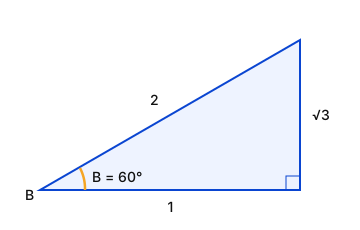
Concept: sin60∘=32, so B=60∘.

  1. cosecB=23⇒3cosecB=2
  2. secB=1cos60∘=2
  3. 2+2−4=0

Trick: From the triangle 1 : 3 : 2 read all ratios instantly.

Answer: (C) 0

अवधारणा: sin60∘=32, अतः B=60∘।

  1. 3cosecB=3×23=2
  2. secB=2
  3. 2+2−4=0

ट्रिक: त्रिभुज 1 : 3 : 2 से सभी अनुपात तुरंत।

उत्तर: (C) 0

RRB NTPC Graduate CBT 1MathematicsTrigonometric ratiosRRB NTPC Graduate CBT 1 2024 · 19 Jun Shift 2
Q1358.
Simplify the following:
(29)×(2710)+(65−5)
निम्नलिखित को सरल कीजिए:
(29)×(2710)+(65−5)
  1. A−174
  2. B−165
  3. C−98
  4. D−79
Show answer

Concept: Do brackets first, then multiplication, then addition.

  1. 29×2710=5490=35
  2. 65−5=6−255=−195
  3. 35−195=−165

Trick: Same denominator 5 appears — combine numerators directly.

Answer: (B) −165

अवधारणा: पहले कोष्ठक, फिर गुणा, फिर जोड़।

  1. 29×2710=35
  2. 65−5=−195
  3. 35−195=−165

ट्रिक: हर 5 समान है — सीधे अंश जोड़ें।

उत्तर: (B) −165

RRB NTPC Graduate CBT 1MathematicsSimplification of fractionsRRB NTPC Graduate CBT 1 2024 · 19 Jun Shift 2
Q1359.
If 425 bananas were distributed among three monkeys in the ratio 83:75:85 in the mentioned order, how many bananas did the third monkey get?
यदि 425 केलों को तीन बंदरों में उल्लिखित क्रम में 83:75:85 के अनुपात में बाँटा गया, तो तीसरे बंदर को कितने केले मिले?
  1. A118
  2. B119
  3. C121
  4. D120
Show answer

Concept: Convert a ratio of fractions to whole numbers by multiplying by the LCM of denominators.

  1. LCM of 3, 5, 5 = 15: 83:75:85=40:21:24
  2. Total parts =85; one part =42585=5
  3. Third monkey =24×5=120

Trick: Total 425 = 85 × 5 — answer must be a multiple of 5 and of 24.

Answer: (D) 120

अवधारणा: भिन्नों के अनुपात को हरों के LCM से गुणा कर पूर्णांक बनाएँ।

  1. LCM 15: 83:75:85=40:21:24
  2. कुल भाग =85; एक भाग =42585=5
  3. तीसरे बंदर को =24×5=120

ट्रिक: उत्तर 24 का गुणज होना चाहिए।

उत्तर: (D) 120

RRB NTPC Graduate CBT 1MathematicsRatio – distributionRRB NTPC Graduate CBT 1 2024 · 19 Jun Shift 2
Q1360.
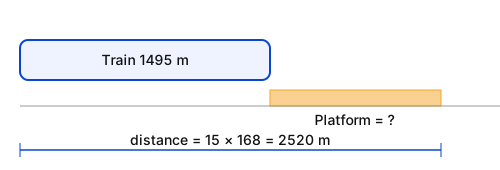
A train is 1495 m and it crosses a platform in 2.8 minutes running at the speed of 54 km/hr. Find the difference between the length of the train and the platform.
एक रेलगाड़ी 1495 m लंबी है और यह 54 km/hr की चाल से चलते हुए एक प्लेटफ़ॉर्म को 2.8 मिनट में पार करती है। रेलगाड़ी और प्लेटफ़ॉर्म की लंबाई का अंतर ज्ञात कीजिए।
  1. A470 m
  2. B467 m
  3. C461 m
  4. D472 m
Show answer

Concept: While crossing a platform, distance = train length + platform length.

  1. Speed =54×518=15m/s; time =2.8×60=168s
  2. Distance =15×168=2520m
  3. Platform =2520−1495=1025m
  4. Difference =1495−1025=470m

Trick: km/h → m/s: multiply by 518.

Answer: (A) 470 m

अवधारणा: प्लेटफॉर्म पार करने में दूरी = ट्रेन की लंबाई + प्लेटफॉर्म की लंबाई।

  1. चाल =54×518=15m/s; समय =168s
  2. दूरी =15×168=2520m
  3. प्लेटफॉर्म =2520−1495=1025m
  4. अंतर =1495−1025=470m

ट्रिक: km/h को m/s में बदलने हेतु 518 से गुणा।

उत्तर: (A) 470 m

RRB NTPC Graduate CBT 1MathematicsTrain and platformRRB NTPC Graduate CBT 1 2024 · 19 Jun Shift 2