Q5261.The population of a district is 368000, out of which 220000 are males. 62% of the population is literate. If 62% males are literate, then what percentage of females are literate?
एक ज़िले की जनसंख्या 368000 है, जिसमें से 220000 पुरुष हैं। जनसंख्या का 62% साक्षर है। यदि 62% पुरुष साक्षर हैं, तो कितने प्रतिशत महिलाएँ साक्षर हैं?
- A63%
- B59%
- C60%
- D62%
Show answer
Concept: Overall literacy % is a weighted average of male and female literacy %.
- Females
- Total literate of 368000; male literate of 220000
- Female literate of 148000
- So female literacy
Trick: If the overall average and one group's value are equal (62%), the other group must also be 62%.
Answer: (D) 62%
अवधारणा: कुल साक्षरता % पुरुष और महिला साक्षरता % का भारित औसत है।
- महिलाएँ
- कुल साक्षर का 62%; साक्षर पुरुष का 62%
- साक्षर महिलाएँ का 62%
- अतः महिला साक्षरता
ट्रिक: यदि कुल औसत और एक समूह का मान समान (62%) हो, तो दूसरा समूह भी 62% होगा।
उत्तर: (D) 62%
RRB NTPC Undergraduate CBT 1MathematicsPercentageRRB NTPC Undergraduate CBT 1 2024 · 8 Aug Shift 1
Q5262.If 20% of first number is equal to four-fifths of second number, what is the ratio of first number to the second number?
यदि पहली संख्या का 20%, दूसरी संख्या के चार-पाँचवें भाग के बराबर है, तो पहली संख्या और दूसरी संख्या का अनुपात क्या है?
- A1 : 6
- B4 : 1
- C6 : 2
- D7 : 4
Show answer
Concept: Write the condition as an equation and divide.
Trick: .
Answer: (B) 4 : 1
अवधारणा: शर्त को समीकरण में लिखकर भाग दें।
ट्रिक: ।
उत्तर: (B) 4 : 1
RRB NTPC Undergraduate CBT 1MathematicsRatioRRB NTPC Undergraduate CBT 1 2024 · 8 Aug Shift 1
Q5263.The curved surface area of a right circular cylinder is 5280 cm2 and its base radius is 21 cm. Find the volume (in cm3) of the cylinder.
एक लंब वृत्तीय बेलन का वक्र पृष्ठीय क्षेत्रफल 5280 cm2 है और उसके आधार की त्रिज्या 21 cm है। बेलन का आयतन (cm3 में) ज्ञात कीजिए।
- A45,550
- B55,440
- C50,440
- D65,660
Show answer
Concept: Curved surface area ; volume .
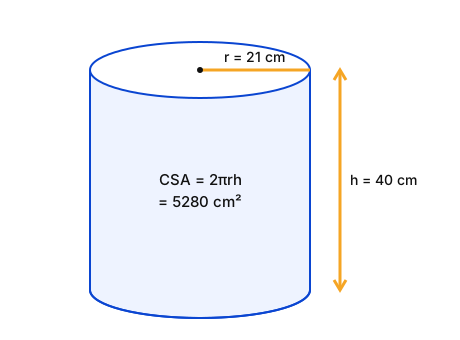
Trick: .
Answer: (B) 55,440
अवधारणा: वक्र पृष्ठीय क्षेत्रफल ; आयतन ।
ट्रिक: ।
उत्तर: (B) 55,440
RRB NTPC Undergraduate CBT 1MathematicsMensuration – CylinderRRB NTPC Undergraduate CBT 1 2024 · 8 Aug Shift 1
Q5264.Find the value of .
का मान ज्ञात कीजिए।
- A
- B
- C
- D
Show answer
Concept: Use and .
Trick: Put : .
Answer: (C)
अवधारणा: तथा का प्रयोग करें।
ट्रिक: रखें: ।
उत्तर: (C)
RRB NTPC Undergraduate CBT 1MathematicsTrigonometric IdentitiesRRB NTPC Undergraduate CBT 1 2024 · 8 Aug Shift 1
Q5265.Pipe A can fill a tank in 16 hours, pipe B can fill the same tank in 28 hours and pipe C can fill the same tank in 8 hours. The time taken by them to fill the same tank if they operate together is::
पाइप A एक टंकी को 16 घंटे में भर सकता है, पाइप B उसी टंकी को 28 घंटे में भर सकता है और पाइप C उसी टंकी को 8 घंटे में भर सकता है। यदि वे एक साथ कार्य करें, तो उसी टंकी को भरने में उनके द्वारा लिया गया समय है::
- A hours घंटे
- B hours घंटे
- C hours घंटे
- D hours घंटे
Show answer
Concept: Add the hourly filling rates of all pipes.
- Rates:
- LCM 112: tank per hour
- Time hours
Trick: Take tank units: A , B , C units/h, total 25.
Answer: (A) hours
अवधारणा: सभी पाइपों की प्रति घंटा भरने की दर जोड़ें।
- दरें:
- LCM 112: टंकी प्रति घंटा
- समय घंटे
ट्रिक: टंकी इकाई: A , B , C इकाई/घंटा, कुल 25।
उत्तर: (A) घंटे
RRB NTPC Undergraduate CBT 1MathematicsPipes and CisternsRRB NTPC Undergraduate CBT 1 2024 · 8 Aug Shift 1
Q5266.The average of first 155 even numbers is
प्रथम 155 सम संख्याओं का औसत है
- A156
- B155.5
- C157
- D156.5
Show answer
Concept: Average of the first even numbers .
- Sum of first even numbers
- Average
- For :
Yaad rakhein: First even → ; first odd → ; first natural → .
Answer: (A) 156
अवधारणा: प्रथम सम संख्याओं का औसत ।
- प्रथम सम संख्याओं का योग
- औसत
- के लिए:
याद रखें: प्रथम सम → ; प्रथम विषम → ; प्रथम प्राकृत → ।
उत्तर: (A) 156
RRB NTPC Undergraduate CBT 1MathematicsAverageRRB NTPC Undergraduate CBT 1 2024 · 8 Aug Shift 1
Q5267.Find the value of x satisfying: 2(3x2 − 6) − 3(2x2 + 8x − 5) = 14
x का वह मान ज्ञात कीजिए जो संतुष्ट करता है: 2(3x2 − 6) − 3(2x2 + 8x − 5) = 14
- A
- B
- C
- D
Show answer
Concept: Expand, the terms cancel, leaving a linear equation.
Trick: Watch the sign: .
Answer: (D)
अवधारणा: विस्तार करने पर वाले पद कट जाते हैं, रैखिक समीकरण बचता है।
ट्रिक: चिह्न ध्यान दें: ।
उत्तर: (D)
RRB NTPC Undergraduate CBT 1MathematicsLinear EquationsRRB NTPC Undergraduate CBT 1 2024 · 8 Aug Shift 1
Q5268.6 men can complete a piece of work in 9 days, while 6 women can do it in 6 days. In how many days can 2 women and 3 men complete this work?
6 पुरुष एक कार्य को 9 दिनों में पूरा कर सकते हैं, जबकि 6 महिलाएँ इसे 6 दिनों में कर सकती हैं। 2 महिलाएँ और 3 पुरुष इस कार्य को कितने दिनों में पूरा कर सकते हैं?
- A10 days10 दिन
- B11 days11 दिन
- C12 days12 दिन
- D9 days9 दिन
Show answer
Concept: Find one man's and one woman's one-day work.
- 1 man's 1-day work
- 1 woman's 1-day work
- Days
Trick: , so ; → days.
Answer: (D) 9 days
अवधारणा: एक पुरुष और एक महिला का एक दिन का कार्य निकालें।
- 1 पुरुष का 1 दिन का कार्य
- 1 महिला का 1 दिन का कार्य
- दिन
ट्रिक: ; अतः → दिन।
उत्तर: (D) 9 days
RRB NTPC Undergraduate CBT 1MathematicsTime and WorkRRB NTPC Undergraduate CBT 1 2024 · 8 Aug Shift 1
Q5269.The number of prime numbers lying between 430 and 438, both included, is:
430 और 438 के बीच स्थित अभाज्य संख्याओं की संख्या (दोनों को शामिल करते हुए) है:
- A6
- B2
- C4
- D3
Show answer
Concept: Test only odd numbers not ending in 5 for divisibility by primes up to .
- Candidates: 431, 433, 437 (others are even or end in 5)
- 431 and 433 are not divisible by 2, 3, 5, 7, 11, 13, 17, 19 → prime
- → not prime
- Count
Trick: Check primes only up to .
Answer: (B) 2
अवधारणा: केवल विषम और 5 पर न समाप्त होने वाली संख्याओं को तक के अभाज्यों से जाँचें।
- संभावित: 431, 433, 437
- 431 और 433 किसी भी 2, 3, 5, 7, 11, 13, 17, 19 से विभाज्य नहीं → अभाज्य
- → अभाज्य नहीं
- संख्या
ट्रिक: तक के अभाज्यों से ही जाँच करें।
उत्तर: (B) 2
RRB NTPC Undergraduate CBT 1MathematicsPrime NumbersRRB NTPC Undergraduate CBT 1 2024 · 8 Aug Shift 1
Q5270.The marks scored by 10 students are given below.
13, 20, 15, 13, 19, 12, 12, 11, 13, 10
The mode of the given data is:
10 विद्यार्थियों द्वारा प्राप्त अंक नीचे दिए गए हैं।
13, 20, 15, 13, 19, 12, 12, 11, 13, 10
दिए गए आँकड़ों का बहुलक (mode) है:
- A13
- B15
- C19
- D20
Show answer
Concept: Mode is the value that occurs most often.
- Frequencies: 13 → 3 times, 12 → 2 times
- All others (10, 11, 15, 19, 20) occur once
- Mode
Yaad rakhein: Mode = most frequent; Median = middle value; Mean = sum ÷ count.
Answer: (A) 13
अवधारणा: बहुलक (Mode) वह मान है जो सबसे अधिक बार आता है।
- बारंबारता: 13 → 3 बार, 12 → 2 बार
- बाकी सभी (10, 11, 15, 19, 20) एक-एक बार
- बहुलक
याद रखें: बहुलक = सबसे अधिक बार; माध्यिका = बीच का मान; माध्य = योग ÷ संख्या।
उत्तर: (A) 13
RRB NTPC Undergraduate CBT 1MathematicsStatistics – ModeRRB NTPC Undergraduate CBT 1 2024 · 8 Aug Shift 1
Q5271.In the following number-pairs, the second number is obtained by applying certain mathematical operations to the first number. Select the pair in which the numbers are related in the same way as are the numbers of the following pairs.
(Note: Operations should be performed on the whole numbers, without breaking down the numbers into its constituent digits. E.g., 13 – Operations on 13 such as
adding/subtracting/multiplying etc. to 13 can be performed. Breaking down 13 into 1 and 3 and then performing mathematical operations on 1 and 3 is not allowed.) 108, 54
78, 39
निम्नलिखित संख्या-युग्मों में, पहली संख्या पर कुछ गणितीय संक्रियाएँ करके दूसरी संख्या प्राप्त की जाती है। उस युग्म का चयन कीजिए जिसमें संख्याएँ उसी प्रकार संबंधित हैं जिस प्रकार निम्नलिखित युग्मों की संख्याएँ संबंधित हैं।
(ध्यान दें: संक्रियाएँ संख्याओं को उनके घटक अंकों में विभाजित किए बिना, पूर्ण संख्याओं पर की जानी चाहिए। उदाहरण के लिए, 13 – 13 पर संक्रियाएँ जैसे
13 में जोड़ना/घटाना/गुणा करना आदि किया जा सकता है। 13 को 1 और 3 में विभाजित करना और फिर 1 और 3 पर गणितीय संक्रियाएँ करना वर्जित है।) 108, 54
78, 39
- A12, 24
- B65, 13
- C96, 48
- D54, 18
Show answer
Concept: Second number first number .
- ,
- (A) ; (B) ; (D)
- (C) ✓
Trick: Check the simplest operation (half/double) first.
Answer: (C) 96, 48
अवधारणा: दूसरी संख्या पहली संख्या ।
- ,
- (A) ; (B) ; (D)
- (C) ✓
ट्रिक: पहले सबसे सरल संक्रिया (आधा/दोगुना) जाँचें।
उत्तर: (C) 96, 48
RRB NTPC Undergraduate CBT 1General Intelligence and ReasoningNumber Pair AnalogyRRB NTPC Undergraduate CBT 1 2024 · 8 Aug Shift 1
Q5272.What will come in the place of the question mark (?) in the following equation, if ‘÷’ and ‘−’ are interchanged and ‘×’ and ‘+’ are interchanged?
15 + 7 ÷ 7 × 48 − 2 + 23 × 4 = ?
यदि ‘÷’ और ‘−’ को आपस में बदल दिया जाए तथा ‘×’ और ‘+’ को आपस में बदल दिया जाए, तो निम्नलिखित समीकरण में प्रश्न चिह्न (?) के स्थान पर क्या आएगा?
15 + 7 ÷ 7 × 48 − 2 + 23 × 4 = ?
- A612
- B716
- C559
- D654
Show answer
Concept: Interchange the signs first, then apply BODMAS.
- After swapping:
Trick: Rewrite the whole expression with new signs before calculating.
Answer: (D) 654
अवधारणा: पहले चिह्न बदलें, फिर BODMAS लगाएँ।
- बदलने के बाद:
ट्रिक: गणना से पहले पूरा व्यंजक नए चिह्नों के साथ लिखें।
उत्तर: (D) 654
RRB NTPC Undergraduate CBT 1General Intelligence and ReasoningMathematical OperationsRRB NTPC Undergraduate CBT 1 2024 · 8 Aug Shift 1
Q5273.Based on the English alphabetical order, three of the following four letter-clusters are alike in a certain way and thus form a group. Which letter-cluster DOES NOT belong to that group?
(Note: The odd one out is not based on the number of consonants/vowels or their position in the letter-cluster.)
अंग्रेज़ी वर्णमाला क्रम के आधार पर, निम्नलिखित चार अक्षर-समूहों में से तीन किसी निश्चित प्रकार से एकसमान हैं और इस प्रकार एक समूह बनाते हैं। कौन-सा अक्षर-समूह उस समूह से संबंधित नहीं है?
(ध्यान दें: असंगत अक्षर-समूह, उस अक्षर-समूह में व्यंजनों/स्वरों की संख्या या उनके स्थान पर आधारित नहीं है।)
- ANGK
- BTMQ
- CQJN
- DIBE
Show answer
Concept: Compare positions: 1st = 2nd, 2nd = 3rd.
- NGK: (G), (K) ✓
- TMQ: (M), (Q) ✓
- QJN: (J), (N) ✓
- IBE: (B), (E) ✗
Yaad rakhein: EJOTY: E=5, J=10, O=15, T=20, Y=25.
Answer: (D) IBE
अवधारणा: स्थानीय मान देखें: पहला = दूसरा, दूसरा = तीसरा।
- NGK: (G), (K) ✓
- TMQ: (M), (Q) ✓
- QJN: (J), (N) ✓
- IBE: (B), (E) ✗
याद रखें: EJOTY: E=5, J=10, O=15, T=20, Y=25।
उत्तर: (D) IBE
RRB NTPC Undergraduate CBT 1General Intelligence and ReasoningOdd One Out – LettersRRB NTPC Undergraduate CBT 1 2024 · 8 Aug Shift 1
Q5274.Read the given statement(s) and conclusions carefully. Assuming that the information given in the statement(s) is true, even if it appears to be at variance with commonly known facts, decide which of the given conclusions logically follow(s) from the statement(s).
Statements:
Some guns are roses.
All roses are bats.
Conclusions:
(I) Some guns are bats.
(II) All bats are roses.
दिए गए कथन/कथनों और निष्कर्षों को ध्यानपूर्वक पढ़िए। यह मानते हुए कि कथन/कथनों में दी गई जानकारी सत्य है, भले ही वह सामान्यतः ज्ञात तथ्यों से भिन्न प्रतीत होती हो, निर्णय कीजिए कि दिए गए निष्कर्षों में से कौन-सा/कौन-से निष्कर्ष तार्किक रूप से कथन/कथनों का अनुसरण करता है/करते हैं।
कथन:
कुछ बंदूकें, गुलाब हैं।
सभी गुलाब, चमगादड़ हैं।
निष्कर्ष:
(I) कुछ बंदूकें, चमगादड़ हैं।
(II) सभी चमगादड़, गुलाब हैं।
- ABoth conclusions (I) and (II) follow.निष्कर्ष (I) और (II) दोनों अनुसरण करते हैं।
- BOnly conclusion (II) follows.केवल निष्कर्ष (II) अनुसरण करता है।
- CNeither conclusion (I) nor (II) follows.न तो निष्कर्ष (I) और न ही (II) अनुसरण करता है।
- DOnly conclusion (I) follows.केवल निष्कर्ष (I) अनुसरण करता है।
Show answer
Concept: Some A are B + All B are C ⇒ Some A are C.
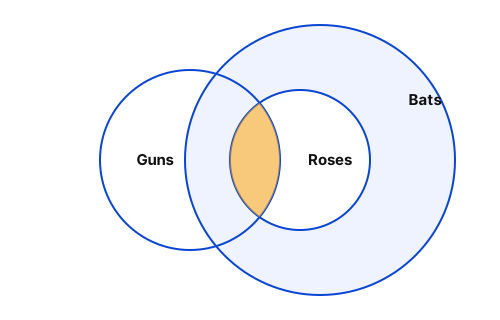
- The guns that are roses lie inside 'bats' as well, so some guns are bats → I follows.
- Bats may contain things other than roses, so 'All bats are roses' is not certain → II does not follow.
Yaad rakhein: 'All B are C' can never be reversed to 'All C are B'.
Answer: (D) Only conclusion (I) follows.
अवधारणा: कुछ A, B हैं + सभी B, C हैं ⇒ कुछ A, C हैं।
- जो guns, roses हैं वे bats के अंदर भी हैं, अतः कुछ guns, bats हैं → I अनुसरण करता है।
- Bats में roses के अलावा भी चीज़ें हो सकती हैं, अतः 'सभी bats, roses हैं' निश्चित नहीं → II नहीं।
याद रखें: 'सभी B, C हैं' को उलटकर 'सभी C, B हैं' कभी नहीं बनाया जा सकता।
उत्तर: (D) Only conclusion (I) follows.
RRB NTPC Undergraduate CBT 1General Intelligence and ReasoningSyllogismRRB NTPC Undergraduate CBT 1 2024 · 8 Aug Shift 1
Q5275.In a certain code language, ‘GIRL’ is coded as ‘5317’ and ‘INKS’ is coded as ‘2146’. What is the code for ‘I’ in the given code language?
एक निश्चित कूट भाषा में, ‘GIRL’ को ‘5317’ लिखा जाता है और ‘INKS’ को ‘2146’ लिखा जाता है। उस कूट भाषा में ‘I’ के लिए कूट क्या है?
- A3
- B2
- C4
- D1
Show answer
Concept: Codes of letters are jumbled; match the common letter with the common digit.
- GIRL → 5317, INKS → 2146
- Common letter: I
- Common digit: 1
- So I = 1
Trick: Common letter ↔ common digit.
Answer: (D) 1
अवधारणा: अक्षरों के कोड क्रम में नहीं हैं; उभयनिष्ठ अक्षर को उभयनिष्ठ अंक से मिलाएँ।
- GIRL → 5317, INKS → 2146
- उभयनिष्ठ अक्षर: I
- उभयनिष्ठ अंक: 1
- अतः I = 1
ट्रिक: उभयनिष्ठ अक्षर ↔ उभयनिष्ठ अंक।
उत्तर: (D) 1
RRB NTPC Undergraduate CBT 1General Intelligence and ReasoningCoding – DecodingRRB NTPC Undergraduate CBT 1 2024 · 8 Aug Shift 1
Q5276.Each of the digits in the number 2436857 is arranged in ascending order from left to right. What will be the sum of the digits which are third from the left and second from the right in the new number thus formed?
संख्या 2436857 के प्रत्येक अंक को बाएँ से दाएँ आरोही क्रम में व्यवस्थित किया जाता है। इस प्रकार बनी नई संख्या में बाएँ से तीसरे और दाएँ से दूसरे अंकों का योग क्या होगा?
- A12
- B9
- C10
- D11
Show answer
Concept: Rearrange digits in ascending order, then pick positions.
- 2436857 → 2345678
- Third from left
- Second from right
- Sum
Trick: n-th from right in a 7-digit number = -th from left.
Answer: (D) 11
अवधारणा: अंकों को आरोही क्रम में लगाकर स्थान देखें।
- 2436857 → 2345678
- बाएँ से तीसरा
- दाएँ से दूसरा
- योग
ट्रिक: 7 अंकों में दाएँ से n-वाँ = बाएँ से -वाँ।
उत्तर: (D) 11
RRB NTPC Undergraduate CBT 1General Intelligence and ReasoningDigit ArrangementRRB NTPC Undergraduate CBT 1 2024 · 8 Aug Shift 1
Q5277.What should come in place of the question mark (?) in the given series based on the English alphabetical order?
GBD IDF KFH MHJ ?
अंग्रेज़ी वर्णमाला क्रम के आधार पर दी गई श्रृंखला में प्रश्न चिह्न (?) के स्थान पर क्या आना चाहिए?
GBD IDF KFH MHJ ?
- APJS
- BOJL
- CPQS
- DOQK
Show answer
Concept: Each letter position moves in every term.
- 1st letters: G, I, K, M, O
- 2nd letters: B, D, F, H, J
- 3rd letters: D, F, H, J, L
- Next term: OJL
Trick: Read the series column-wise.
Answer: (B) OJL
अवधारणा: हर पद में प्रत्येक अक्षर आगे बढ़ता है।
- पहले अक्षर: G, I, K, M, O
- दूसरे अक्षर: B, D, F, H, J
- तीसरे अक्षर: D, F, H, J, L
- अगला पद: OJL
ट्रिक: श्रृंखला को स्तंभवार पढ़ें।
उत्तर: (B) OJL
RRB NTPC Undergraduate CBT 1General Intelligence and ReasoningAlphabet SeriesRRB NTPC Undergraduate CBT 1 2024 · 8 Aug Shift 1
Q5278.In the following triads, each group of letters is related to the subsequent one following a certain logic. Select from the given options, the one which follows the same logic. MINK - IKNM - KNIM
PLOT - LTOP - TOLP
निम्नलिखित त्रिकों में, अक्षरों का प्रत्येक समूह एक निश्चित तर्क का अनुसरण करते हुए अगले समूह से संबंधित है। दिए गए विकल्पों में से उसका चयन कीजिए जो समान तर्क का अनुसरण करता है। MINK - IKNM - KNIM
PLOT - LTOP - TOLP
- ATOES - OTES - SOET
- BWAIT - AWIT - TAIW
- CREAD - RAED - DAER
- DCORD - ODRC - DROC
Show answer
Concept: Track letter positions: 1234 → 2431 → 4321.
- MINK → IKNM (letters 2,4,3,1) → KNIM (4,3,2,1 – reverse)
- PLOT → LTOP → TOLP follows the same
- CORD → ODRC (2,4,3,1) ✓ → DROC (reverse) ✓
- Other options break the pattern (e.g. TOES → OTES ✗)
Trick: Third term is just the first word reversed — check that first.
Answer: (D) CORD - ODRC - DROC
अवधारणा: अक्षरों के स्थान देखें: 1234 → 2431 → 4321।
- MINK → IKNM (2,4,3,1) → KNIM (4,3,2,1 – उल्टा)
- PLOT → LTOP → TOLP भी यही नियम
- CORD → ODRC ✓ → DROC (उल्टा) ✓
- बाकी विकल्प नियम तोड़ते हैं (जैसे TOES → OTES ✗)
ट्रिक: तीसरा पद पहले शब्द का उल्टा है — पहले यही जाँचें।
उत्तर: (D) CORD - ODRC - DROC
RRB NTPC Undergraduate CBT 1General Intelligence and ReasoningLetter RearrangementRRB NTPC Undergraduate CBT 1 2024 · 8 Aug Shift 1
Q5279.What should come in place of the question mark (?) in the given series?
18 58 47 145 134 ?
दी गई श्रृंखला में प्रश्न चिह्न (?) के स्थान पर क्या आना चाहिए?
18 58 47 145 134 ?
- A426
- B406
- C460
- D408
Show answer
Concept: Alternating operations: , then .
- ,
- ,
Trick: Large jump then small drop → look for multiply-add and subtract alternately.
Answer: (B) 406
अवधारणा: बारी-बारी से संक्रिया: , फिर ।
- ,
- ,
ट्रिक: बड़ी छलाँग फिर छोटी गिरावट → गुणा-जोड़ और घटाना बारी-बारी से।
उत्तर: (B) 406
RRB NTPC Undergraduate CBT 1General Intelligence and ReasoningNumber SeriesRRB NTPC Undergraduate CBT 1 2024 · 8 Aug Shift 1
Q5280.Refer to the following number, symbol series and answer the question that follow. Counting to be done from left to right only.
(Left) ? 7 3 ? 2 5 3 ^ # + * @ 2 7 # & 5 2 * # 2 (Right)
How many such symbols are there each of which is immediately preceded by a number and also immediately followed by a number?
निम्नलिखित संख्या, प्रतीक श्रृंखला का संदर्भ लीजिए और उसके बाद आने वाले प्रश्न का उत्तर दीजिए। गिनती केवल बाएँ से दाएँ की जानी है।
(बाएँ) ? 7 3 ? 2 5 3 ^ # + * @ 2 7 # & 5 2 * # 2 (दाएँ)
ऐसे कितने प्रतीक हैं जिनमें से प्रत्येक के ठीक पहले एक संख्या है और ठीक बाद भी एक संख्या है?
- AOneएक
- BThreeतीन
- CFourचार
- DTwoदो
Show answer
Concept: Look for the pattern Number – Symbol – Number.
- Series: ? 7 3 ? 2 5 3 ^ # + * @ 2 7 # & 5 2 * # 2
- '3 ? 2' → symbol between two numbers ✓
- '7 # &', '2 * #', '* # 2' → fail
- Only one such symbol
Trick: Scan each symbol and check both neighbours.
Answer: (A) One
अवधारणा: संख्या – प्रतीक – संख्या का क्रम खोजें।
- श्रृंखला: ? 7 3 ? 2 5 3 ^ # + * @ 2 7 # & 5 2 * # 2
- '3 ? 2' → दो संख्याओं के बीच प्रतीक ✓
- '7 # &', '2 * #', '* # 2' → नहीं
- केवल एक ऐसा प्रतीक
ट्रिक: हर प्रतीक के दोनों पड़ोसी जाँचें।
उत्तर: (A) One
RRB NTPC Undergraduate CBT 1General Intelligence and ReasoningSymbol-Number SeriesRRB NTPC Undergraduate CBT 1 2024 · 8 Aug Shift 1

