Q341.Which of the following factor helps in increasing crop yield?
निम्नलिखित में से कौन-सा कारक फसल उपज बढ़ाने में सहायक है?
- AUsing only rainwater for irrigationसिंचाई के लिए केवल वर्षा जल का उपयोग करना
- BUsing poor seeds without irrigationसिंचाई के बिना निम्न गुणवत्ता वाले बीजों का उपयोग करना
- CIgnoring crop protectionफसल सुरक्षा की उपेक्षा करना
- DUsing quality seeds, irrigation, fertilisers, crop protectionगुणवत्तापूर्ण बीज, सिंचाई, उर्वरक, फसल सुरक्षा का उपयोग करना
Show answer
Concept: Yield rises with good inputs and protection together.
- Quality seeds, timely irrigation, fertilisers and crop protection all raise yield.
- Other options (poor seeds, rain only, no protection) reduce yield.
Yaad rakhein: Three stages of crop improvement: choice of seeds, nurturing of crops, protection of crops.
Answer: (D) Using quality seeds, irrigation, fertilisers, crop protection
अवधारणा: अच्छे निवेश और फसल सुरक्षा साथ हों तो उपज बढ़ती है।
- गुणवत्ता बीज, सिंचाई, उर्वरक और फसल सुरक्षा से उपज बढ़ती है।
- बाकी विकल्प (खराब बीज, केवल वर्षा, सुरक्षा नहीं) उपज घटाते हैं।
याद रखें: फसल सुधार के तीन चरण: बीज चयन, फसल पोषण, फसल सुरक्षा।
उत्तर: (D) गुणवत्तापूर्ण बीज, सिंचाई, उर्वरक, फसल सुरक्षा का उपयोग करना
RRB Technician Grade IIIGeneral ScienceCrop yield improvementRRB Technician Grade III 2025 · 6 Mar Shift 1
Q342.Which of the following correctly explains why toothpaste is basic in nature?
निम्नलिखित में से कौन-सा सही व्याख्या करता है कि टूथपेस्ट क्षारकीय प्रकृति का क्यों होता है?
- ATo neutralise the acid formed in the mouth after eating foodभोजन करने के बाद मुँह में बनने वाले अम्ल को उदासीन करने के लिए
- BTo provide an acidic medium for enzyme action in salivaलार में एंजाइम क्रिया के लिए अम्लीय माध्यम प्रदान करने के लिए
- CTo react with water and release hydrogen ionsजल के साथ अभिक्रिया करके हाइड्रोजन आयन मुक्त करने के लिए
- DTo lower the pH of saliva and prevent cavitiesलार का pH कम करने और दंत क्षय को रोकने के लिए
Show answer
Concept: Bacteria break down food to acids; pH below 5.5 corrodes tooth enamel.
- Toothpaste is basic and neutralises this excess acid.
- This prevents tooth decay; B, C and D describe acidic behaviour.
Yaad rakhein: Tooth enamel is calcium hydroxyapatite (calcium phosphate) – hardest substance in the body.
Answer: (A) To neutralise the acid formed in the mouth after eating food
अवधारणा: बैक्टीरिया भोजन से अम्ल बनाते हैं; pH 5.5 से कम होने पर दाँतों का इनेमल घुलता है।
- टूथपेस्ट क्षारीय होता है और इस अम्ल को उदासीन करता है।
- इससे दंत क्षय रुकता है; B, C, D अम्लीय व्यवहार बताते हैं।
याद रखें: दाँतों का इनेमल कैल्शियम हाइड्रॉक्सीएपेटाइट है – शरीर का सबसे कठोर पदार्थ।
उत्तर: (A) भोजन करने के बाद मुँह में बनने वाले अम्ल को उदासीन करने के लिए
RRB Technician Grade IIIGeneral ScienceAcids and bases – toothpasteRRB Technician Grade III 2025 · 6 Mar Shift 1
Q343.What will be the wavelength of a sound wave whose frequency is 220 Hz and speed is 440 m/s in a given medium?
किसी दिए गए माध्यम में उस ध्वनि तरंग की तरंगदैर्ध्य क्या होगी जिसकी आवृत्ति 220 Hz और चाल 440 m/s है?
- A440 m
- B220 m
- C2 m
- D0.5 m
Show answer
Concept: Speed = frequency × wavelength.
- .
- m.
Yaad rakhein: Frequency depends on the source and stays the same in any medium; speed and wavelength change.
Answer: (C) 2 m
अवधारणा: चाल = आवृत्ति × तरंगदैर्ध्य।
- ।
- m।
याद रखें: आवृत्ति स्रोत पर निर्भर – माध्यम बदलने पर नहीं बदलती; चाल और बदलते हैं।
उत्तर: (C) 2 m
RRB Technician Grade IIIGeneral ScienceWave equation v = fλRRB Technician Grade III 2025 · 6 Mar Shift 1
Q344.Which calculation correctly determines the formula unit mass of CaCl2?
कौन-सी गणना CaCl2 के सूत्र इकाई द्रव्यमान को सही रूप से ज्ञात करती है?
- AAtomic mass of Ca + (atomic mass of Cl ÷ 2) = 40 + 17.75 = 57.75 uCa का परमाणु द्रव्यमान + (Cl का परमाणु द्रव्यमान ÷ 2) = 40 + 17.75 = 57.75 u
- BAtomic mass of Ca + (2 × atomic mass of Cl) = 40 + 71 = 111 uCa का परमाणु द्रव्यमान + (2 × Cl का परमाणु द्रव्यमान) = 40 + 71 = 111 u
- CAtomic mass of Ca + atomic mass of Cl = 40 + 35.5 = 75.5 uCa का परमाणु द्रव्यमान + Cl का परमाणु द्रव्यमान = 40 + 35.5 = 75.5 u
- DAtomic mass of Ca × atomic mass of Cl = 40 × 35.5 = 1420 uCa का परमाणु द्रव्यमान × Cl का परमाणु द्रव्यमान = 40 × 35.5 = 1420 u
Show answer
Concept: Add atomic masses of all atoms in the formula (CaCl₂ has 1 Ca and 2 Cl).
- Ca = 40 u, Cl = 35.5 u.
- u.
Yaad rakhein: 'Formula unit mass' is used for ionic compounds like NaCl (58.5 u), CaCl₂ (111 u).
Answer: (B) Atomic mass of Ca + (2 × atomic mass of Cl) = 40 + 71 = 111 u
अवधारणा: सूत्र के सभी परमाणुओं के द्रव्यमान जोड़ें (CaCl₂ में 1 Ca, 2 Cl)।
- Ca = 40 u, Cl = 35.5 u।
- u।
याद रखें: आयनिक यौगिकों (NaCl = 58.5 u, CaCl₂ = 111 u) के लिए 'सूत्र इकाई द्रव्यमान' शब्द प्रयोग होता है।
उत्तर: (B) Ca का परमाणु द्रव्यमान + (2 × Cl का परमाणु द्रव्यमान) = 40 + 71 = 111 u
RRB Technician Grade IIIGeneral ScienceFormula unit massRRB Technician Grade III 2025 · 6 Mar Shift 1
Q345.Dhritiman tries to extract magnesium from magnesium oxide using carbon. The attempt fails. What is the reason?
धृतिमान कार्बन का उपयोग करके मैग्नीशियम ऑक्साइड से मैग्नीशियम निष्कर्षित करने का प्रयास करता है। प्रयास विफल हो जाता है। इसका कारण क्या है?
- ACarbon reacts violently with oxygen.कार्बन ऑक्सीजन के साथ तीव्रता से अभिक्रिया करता है।
- BThe reaction produces carbon monoxide only.अभिक्रिया से केवल कार्बन मोनोऑक्साइड बनता है।
- CMagnesium forms a volatile compound with carbon.मैग्नीशियम कार्बन के साथ एक वाष्पशील यौगिक बनाता है।
- DCarbon is less reactive than magnesium.कार्बन, मैग्नीशियम से कम अभिक्रियाशील है।
Show answer
Concept: Carbon can reduce only oxides of metals less reactive than itself.
- Mg is more reactive than carbon, so C cannot remove oxygen from MgO.
- Highly reactive metals (Na, Mg, Ca, Al) are obtained by electrolytic reduction of molten compounds.
Yaad rakhein: Carbon reduces oxides of middle-reactivity metals like Zn, Fe, Pb (e.g. ZnO + C → Zn + CO).
Answer: (D) Carbon is less reactive than magnesium.
अवधारणा: कार्बन केवल अपने से कम क्रियाशील धातुओं के ऑक्साइड का अपचयन कर सकता है।
- Mg कार्बन से अधिक क्रियाशील है, इसलिए C, MgO से ऑक्सीजन नहीं हटा सकता।
- अति क्रियाशील धातुएँ (Na, Mg, Ca, Al) गलित यौगिकों के विद्युत-अपघटन से मिलती हैं।
याद रखें: कार्बन Zn, Fe, Pb जैसी मध्यम क्रियाशील धातुओं के ऑक्साइड अपचयित करता है।
उत्तर: (D) कार्बन, मैग्नीशियम से कम अभिक्रियाशील है।
RRB Technician Grade IIIGeneral ScienceExtraction of metals – reactivityRRB Technician Grade III 2025 · 6 Mar Shift 1
Q346.Plants get macro-nutrients mainly from the ________, and micro-nutrients in small quantities from the ________.
पौधे वृहत् पोषक तत्व (macro-nutrients) मुख्य रूप से ________ से, और सूक्ष्म पोषक तत्व (micro-nutrients) अल्प मात्रा में ________ से प्राप्त करते हैं।
- Asoil ; soilमृदा ; मृदा
- Bwater ; sandजल ; रेत
- Csunlight ; mineralsसूर्य का प्रकाश ; खनिज
- Dair ; waterवायु ; जल
Show answer
Concept: Of 16 essential nutrients, C, H, O come from air and water; the other 13 come from soil.
- These 13 include 6 macro-nutrients (N, P, K, Ca, Mg, S) and 7 micro-nutrients (Fe, Mn, B, Zn, Cu, Mo, Cl).
- So both macro- and micro-nutrients come from the soil.
Yaad rakhein: Macro-nutrients are needed in large amounts, micro-nutrients in very small amounts.
Answer: (A) soil ; soil
अवधारणा: 16 आवश्यक पोषकों में C, H, O वायु-जल से; बाकी 13 मिट्टी से।
- इन 13 में 6 वृहत् (N, P, K, Ca, Mg, S) और 7 सूक्ष्म पोषक (Fe, Mn, B, Zn, Cu, Mo, Cl) हैं।
- अतः वृहत् और सूक्ष्म दोनों पोषक मिट्टी से मिलते हैं।
याद रखें: वृहत् पोषक अधिक मात्रा में, सूक्ष्म पोषक बहुत कम मात्रा में चाहिए।
उत्तर: (A) मृदा ; मृदा
RRB Technician Grade IIIGeneral SciencePlant nutrients – sourcesRRB Technician Grade III 2025 · 6 Mar Shift 1
Q347.Which of the following is an example of a double displacement reaction?
निम्नलिखित में से कौन-सा द्विविस्थापन अभिक्रिया का एक उदाहरण है?
- ANa2O + H2O→ 2 NaOH
- BAgNO₃ + NaCl → AgCl + NaNO₃
- C2Mg + O₂ → 2MgO
- DH₂ + Cl₂ → 2HCl
Show answer
Concept: Exchange of ions between two compounds.
- AgNO₃ + NaCl → AgCl↓ + NaNO₃: Ag⁺ and Na⁺ swap partners; white AgCl precipitate forms.
- A, C and D are combination reactions (two reactants → one product).
Trick: One product only = combination; two compounds swapping partners = double displacement.
Answer: (B) AgNO₃ + NaCl → AgCl + NaNO₃
अवधारणा: दो यौगिकों के बीच आयनों का आदान-प्रदान।
- AgNO₃ + NaCl → AgCl↓ + NaNO₃: Ag⁺ और Na⁺ साथी बदलते हैं; सफ़ेद AgCl अवक्षेप।
- A, C, D संयोजन अभिक्रियाएँ हैं (एक ही उत्पाद)।
ट्रिक: एक उत्पाद = संयोजन; दो यौगिक साथी बदलें = द्विविस्थापन।
उत्तर: (B) AgNO₃ + NaCl → AgCl + NaNO₃
RRB Technician Grade IIIGeneral ScienceDouble displacement – precipitationRRB Technician Grade III 2025 · 6 Mar Shift 1
Q348.If a lens forms a real and inverted image, the height of the image h' is generally taken as _____________.
यदि कोई लेंस वास्तविक और उल्टा प्रतिबिंब बनाता है, तो प्रतिबिंब की ऊँचाई h' को सामान्यतः _____________ लिया जाता है।
- APositive, but less than the object heightधनात्मक, परंतु वस्तु की ऊँचाई से कम
- BPositive, as it is above the axisधनात्मक, क्योंकि यह अक्ष के ऊपर है
- CNegative, only if the object is virtualऋणात्मक, केवल तभी जब वस्तु आभासी हो
- DNegative, as it is below the axisऋणात्मक, क्योंकि यह अक्ष के नीचे है
Show answer
Concept: Heights above the principal axis are positive, below are negative.
- A real image formed by a lens is inverted, i.e., below the axis.
- So h' is taken negative (and magnification m = h'/h is negative).
Yaad rakhein: Virtual, erect images have positive h' and positive m.
Answer: (D) Negative, as it is below the axis
अवधारणा: मुख्य अक्ष से ऊपर ऊँचाई धनात्मक, नीचे ऋणात्मक।
- लेंस का वास्तविक प्रतिबिंब उल्टा, यानी अक्ष के नीचे बनता है।
- इसलिए h' ऋणात्मक (और आवर्धन m = h'/h भी ऋणात्मक)।
याद रखें: आभासी, सीधे प्रतिबिंब के लिए h' और m धनात्मक।
उत्तर: (D) ऋणात्मक, क्योंकि यह अक्ष के नीचे है
RRB Technician Grade IIIGeneral ScienceSign convention – image heightRRB Technician Grade III 2025 · 6 Mar Shift 1
Q349.Which of the following correctly explains the adaptation of desert plants in
photosynthesis?
निम्नलिखित में से कौन-सा प्रकाश संश्लेषण में
मरुस्थलीय पौधों के अनुकूलन की सही व्याख्या करता है?
- ALight energy is captured at night and converted into starch for daytime use.प्रकाश ऊर्जा को रात में ग्रहण किया जाता है और दिन में उपयोग के लिए स्टार्च में परिवर्तित किया जाता है।
- BOxygen is absorbed at night while carbon dioxide is released during the day.रात में ऑक्सीजन अवशोषित की जाती है जबकि दिन में कार्बन डाइऑक्साइड मुक्त की जाती है।
- CCarbon dioxide uptake occurs at night and carbohydrates are synthesized during the day.कार्बन डाइऑक्साइड का अंतर्ग्रहण रात में होता है और दिन में कार्बोहाइड्रेट का संश्लेषण होता है।
- DPhotosynthesis is restricted to night-time only to minimise water loss.जल की हानि को न्यूनतम करने के लिए प्रकाश संश्लेषण केवल रात तक सीमित रहता है।
Show answer
Concept: Desert plants keep stomata closed by day to save water.
- They take in CO₂ at night and store it as an intermediate (acid).
- In daytime, light energy is used to make carbohydrates from this stored CO₂.
Yaad rakhein: This is CAM (Crassulacean Acid Metabolism), seen in cacti, pineapple.
Answer: (C) Carbon dioxide uptake occurs at night and carbohydrates are synthesized during the day.
अवधारणा: मरुस्थलीय पौधे पानी बचाने हेतु दिन में रंध्र बंद रखते हैं।
- वे रात में CO₂ लेकर उसे मध्यवर्ती (अम्ल) के रूप में संचित करते हैं।
- दिन में प्रकाश ऊर्जा से इस CO₂ से कार्बोहाइड्रेट बनाते हैं।
याद रखें: इसे CAM कहते हैं – कैक्टस, अनानास में।
उत्तर: (C) कार्बन डाइऑक्साइड का अंतर्ग्रहण रात में होता है और दिन में कार्बोहाइड्रेट का संश्लेषण होता है।
RRB Technician Grade IIIGeneral SciencePhotosynthesis in desert plants (CAM)RRB Technician Grade III 2025 · 6 Mar Shift 1
Q350.Which of the following is a complex permanent tissue responsible for the transport of water in plants?
निम्नलिखित में से कौन-सा एक जटिल स्थायी ऊतक है जो पौधों में जल के परिवहन के लिए उत्तरदायी है?
- ACollenchymaस्थूलकोण ऊतक (Collenchyma)
- BXylemजाइलम (Xylem)
- CParenchymaमृदूतक (Parenchyma)
- DPhloemफ्लोएम (Phloem)
Show answer
Concept: Complex tissues have more than one type of cell; xylem and phloem are complex.
- Xylem (tracheids, vessels, xylem parenchyma, fibres) conducts water and minerals.
- Phloem carries food; parenchyma and collenchyma are simple tissues.
Trick: X for 'water' – Xylem eXports water up; Phloem = food.
Answer: (B) Xylem
अवधारणा: जटिल ऊतक में एक से अधिक प्रकार की कोशिकाएँ होती हैं; जाइलम, फ्लोएम जटिल हैं।
- जाइलम (वाहिनिकाएँ, वाहिकाएँ, जाइलम पैरेन्काइमा, रेशे) जल व खनिज ले जाता है।
- फ्लोएम भोजन ले जाता है; पैरेन्काइमा, कॉलेन्काइमा सरल ऊतक हैं।
ट्रिक: जाइलम = जल, फ्लोएम = फूड (भोजन)।
उत्तर: (B) जाइलम (Xylem)
RRB Technician Grade IIIGeneral ScienceComplex permanent tissue – xylemRRB Technician Grade III 2025 · 6 Mar Shift 1
Q351.Which of the following situations shows zero acceleration?
निम्नलिखित में से कौन-सी स्थिति शून्य त्वरण दर्शाती है?
- AA train speeding upगति बढ़ाती हुई रेलगाड़ी
- BAn aeroplane taking offउड़ान भरता हुआ हवाई जहाज़
- CA car moving with constant speed on a straight roadसीधी सड़क पर स्थिर चाल से चलती हुई कार
- DA ball thrown upwardऊपर की ओर फेंकी गई गेंद
Show answer
Concept: Acceleration is zero only if both speed and direction stay constant.
- Car at constant speed on a straight road → velocity constant → a = 0.
- Speeding up, taking off, ball thrown up → velocity changes → a ≠ 0.
Yaad rakhein: Uniform circular motion has constant speed but is still accelerated (direction changes).
Answer: (C) A car moving with constant speed on a straight road
अवधारणा: त्वरण शून्य तभी जब चाल और दिशा दोनों स्थिर हों।
- सीधी सड़क पर स्थिर चाल वाली कार → वेग स्थिर → a = 0।
- तेज़ होती ट्रेन, उड़ता विमान, ऊपर फेंकी गेंद → वेग बदलता → a ≠ 0।
याद रखें: एकसमान वृत्तीय गति में चाल स्थिर पर त्वरण होता है (दिशा बदलती है)।
उत्तर: (C) सीधी सड़क पर स्थिर चाल से चलती हुई कार
RRB Technician Grade IIIGeneral ScienceAcceleration – zero accelerationRRB Technician Grade III 2025 · 6 Mar Shift 1
Q352.Choose a term to pair the analogy.
Nucleus : Eukaryotic Cell :: Nucleoid : _______
सादृश्य को पूर्ण करने के लिए एक पद का चयन कीजिए।
केंद्रक : यूकैरियोटी कोशिका :: केंद्रकाभ : _______
- AMulticellular Organismबहुकोशिकीय जीव
- BPlant Cellपादप कोशिका
- CProkaryotic Cellप्रोकैरियोटी कोशिका
- DAnimal Cellजंतु कोशिका
Show answer
Concept: Eukaryotes have a membrane-bound nucleus; prokaryotes have only a nucleoid.
- Nucleoid = region with naked DNA and no nuclear membrane.
- Found in bacteria → prokaryotic cell. Plant and animal cells are eukaryotic.
Yaad rakhein: Pro = before, karyon = nucleus: prokaryotes have no true nucleus.
Answer: (C) Prokaryotic Cell
अवधारणा: यूकैरियोट में झिल्ली-युक्त केंद्रक; प्रोकैरियोट में केवल न्यूक्लियॉइड।
- न्यूक्लियॉइड = केंद्रक झिल्ली रहित DNA क्षेत्र।
- जीवाणु में → प्रोकैरियोटी कोशिका। पादप व जंतु कोशिकाएँ यूकैरियोटी हैं।
याद रखें: Pro = पहले, karyon = केंद्रक: प्रोकैरियोट में सत्य केंद्रक नहीं।
उत्तर: (C) प्रोकैरियोटी कोशिका
RRB Technician Grade IIIGeneral ScienceProkaryotic vs eukaryotic cellsRRB Technician Grade III 2025 · 6 Mar Shift 1
Q353.Which of the following statements about Thomson’s model of an atom is/are correct? Statement 1. An atom consists of a positively charged sphere with electrons embedded in it.
Statement 2. The mass of the atom is due to neutrons located in the nucleus.
Statement 3. The model is often compared to a watermelon with seeds representing electrons.
टॉमसन के परमाणु मॉडल के बारे में निम्नलिखित में से कौन-सा/से कथन सही है/हैं? कथन 1. परमाणु धनावेशित गोले से बना होता है जिसमें इलेक्ट्रॉन धँसे होते हैं।
कथन 2. परमाणु का द्रव्यमान नाभिक में स्थित न्यूट्रॉनों के कारण होता है।
कथन 3. इस मॉडल की तुलना प्रायः तरबूज से की जाती है, जिसमें बीज इलेक्ट्रॉनों को निरूपित करते हैं।
- AOnly 1, 2, and 3केवल 1, 2 और 3
- BOnly 2 and 3केवल 2 और 3
- COnly 1केवल 1
- DOnly 1 and 3केवल 1 और 3
Show answer
Concept: Thomson: positive sphere with electrons embedded (plum pudding / watermelon).
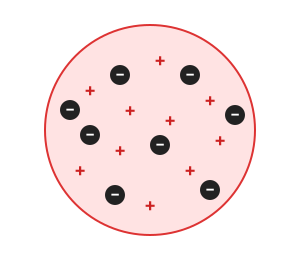
- Statement 1 true; Statement 3 true – watermelon: red part = positive charge, seeds = electrons.
- Statement 2 false – nucleus and neutrons were not part of this model (nucleus: Rutherford 1911, neutron: Chadwick 1932).
Yaad rakhein: Thomson's model said the atom is electrically neutral as charges are equal.
Answer: (D) Only 1 and 3
अवधारणा: थॉमसन: धनावेशित गोला जिसमें इलेक्ट्रॉन धँसे हैं (प्लम पुडिंग / तरबूज़)।
- कथन 1 सही; कथन 3 सही – तरबूज़ का लाल भाग = धन आवेश, बीज = इलेक्ट्रॉन।
- कथन 2 गलत – इस मॉडल में नाभिक/न्यूट्रॉन नहीं थे (नाभिक: रदरफोर्ड 1911, न्यूट्रॉन: चैडविक 1932)।
याद रखें: थॉमसन के अनुसार धन और ऋण आवेश बराबर, अतः परमाणु उदासीन।
उत्तर: (D) केवल 1 और 3
RRB Technician Grade IIIGeneral ScienceThomson's atomic modelRRB Technician Grade III 2025 · 6 Mar Shift 1
Q354.What does the given circuit symbol represent?
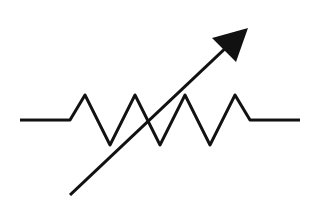
दिया गया परिपथ प्रतीक क्या निरूपित करता है?
- AVariable resistance or rheostatपरिवर्ती प्रतिरोध या धारा नियंत्रक (rheostat)
- BA wireएक तार
- CA batteryएक बैटरी
- DSwitch in the closed positionबंद स्थिति में स्विच
Show answer
Concept: A zig-zag line = resistor; an arrow across it = its value can be varied.
- Symbol shows a resistor with a diagonal arrow → variable resistance (rheostat).
- Battery = long and short parallel lines; closed switch = (•) key; wire = plain line.
Yaad rakhein: A rheostat is used to change current in a circuit without changing the source voltage.
Answer: (A) Variable resistance or rheostat
अवधारणा: टेढ़ी-मेढ़ी रेखा = प्रतिरोधक; उसके आर-पार तीर = मान बदला जा सकता है।
- प्रतीक में प्रतिरोधक पर तिरछा तीर → परिवर्ती प्रतिरोध (रिओस्टेट)।
- बैटरी = लंबी-छोटी समांतर रेखाएँ; बंद स्विच = (•) कुंजी; तार = सीधी रेखा।
याद रखें: रिओस्टेट से स्रोत वोल्टता बदले बिना परिपथ की धारा बदली जाती है।
उत्तर: (A) परिवर्ती प्रतिरोध या धारा नियंत्रक (rheostat)
RRB Technician Grade IIIGeneral ScienceCircuit symbols – rheostatRRB Technician Grade III 2025 · 6 Mar Shift 1
Q355.A clean strip of calcium metal is added to cold water and the reaction is observed. Compared to sodium and magnesium, which of the following statements correctly describes calcium’s reactivity and the nature of products formed?
कैल्शियम धातु की एक साफ़ पट्टी को ठंडे जल में डाला जाता है और अभिक्रिया का प्रेक्षण किया जाता है। सोडियम और मैग्नीशियम की तुलना में, निम्नलिखित में से कौन-सा कथन कैल्शियम की अभिक्रियाशीलता और बनने वाले उत्पादों की प्रकृति का सही वर्णन करता है?
- ACalcium reacts less vigorously than sodium but more than magnesium, forming calcium hydroxide and hydrogen gas.कैल्शियम, सोडियम से कम प्रबलता से परंतु मैग्नीशियम से अधिक प्रबलता से अभिक्रिया करता है, जिससे कैल्शियम हाइड्रॉक्साइड और हाइड्रोजन गैस बनती है।
- BCalcium reacts explosively like sodium, forming calcium hydroxide and hydrogen gas.कैल्शियम, सोडियम की भाँति विस्फोटक रूप से अभिक्रिया करता है, जिससे कैल्शियम हाइड्रॉक्साइड और हाइड्रोजन गैस बनती है।
- CCalcium reacts slowly with cold water, producing calcium oxide and oxygen gas.कैल्शियम ठंडे जल के साथ धीरे-धीरे अभिक्रिया करता है, जिससे कैल्शियम ऑक्साइड और ऑक्सीजन गैस बनती है।
- DCalcium does not react with cold water but only with steam, forming calcium oxide and hydrogen gas.कैल्शियम ठंडे जल के साथ अभिक्रिया नहीं करता बल्कि केवल भाप के साथ करता है, जिससे कैल्शियम ऑक्साइड और हाइड्रोजन गैस बनती है।
Show answer
Concept: Reactivity with water: Na > Ca > Mg.
- Ca + 2H₂O → Ca(OH)₂ + H₂: reacts with cold water, less violently than Na.
- Mg barely reacts with cold water (reacts with hot water/steam).
- Bubbles of H₂ stick to Ca, so it starts floating.
Yaad rakhein: Products with cold water are hydroxide + H₂; metals reacting with steam give oxide + H₂.
Answer: (A) Calcium reacts less vigorously than sodium but more than magnesium, forming calcium hydroxide and hydrogen gas.
अवधारणा: जल से क्रियाशीलता: Na > Ca > Mg।
- Ca + 2H₂O → Ca(OH)₂ + H₂: ठंडे जल से, Na से कम तीव्रता से।
- Mg ठंडे जल से लगभग नहीं (गर्म जल/भाप से) अभिक्रिया करता है।
- H₂ के बुलबुले Ca पर चिपकते हैं, इसलिए वह तैरने लगता है।
याद रखें: ठंडे जल से हाइड्रॉक्साइड + H₂; भाप से ऑक्साइड + H₂ बनते हैं।
उत्तर: (A) कैल्शियम, सोडियम से कम प्रबलता से परंतु मैग्नीशियम से अधिक प्रबलता से अभिक्रिया करता है, जिससे कैल्शियम हाइड्रॉक्साइड और हाइड्रोजन गैस बनती है।
RRB Technician Grade IIIGeneral ScienceReactivity of calcium with waterRRB Technician Grade III 2025 · 6 Mar Shift 1
Q356.Which connective tissue forms the framework of the external ear, tip of the nose, and the ends of long bones?
कौन-सा संयोजी ऊतक बाह्य कर्ण, नाक के अग्र भाग और लंबी अस्थियों के सिरों का ढाँचा बनाता है?
- AAreolar tissueएरिओलर ऊतक
- BBoneअस्थि
- CCartilageउपास्थि
- DAdipose tissueवसामय ऊतक
Show answer
Concept: Cartilage is a flexible connective tissue with a solid matrix of protein and sugars.
- It is found in the ear pinna, nose tip, trachea, larynx and at ends (joint surfaces) of bones.
- It smoothens bone surfaces at joints; bone is rigid, adipose stores fat.
Yaad rakhein: Areolar tissue fills spaces inside organs and lies between skin and muscles.
Answer: (C) Cartilage
अवधारणा: उपास्थि एक लचीला संयोजी ऊतक है – प्रोटीन व शर्करा की ठोस आधात्री।
- कान, नाक की नोक, श्वासनली, कंठ और हड्डियों के सिरों (जोड़ों) पर पाई जाती है।
- जोड़ों पर सतह चिकनी करती है; अस्थि कठोर, वसा ऊतक चर्बी संग्रह।
याद रखें: एरिओलर ऊतक अंगों के बीच की जगह भरता है, त्वचा और पेशियों के बीच।
उत्तर: (C) उपास्थि
RRB Technician Grade IIIGeneral ScienceConnective tissue – cartilageRRB Technician Grade III 2025 · 6 Mar Shift 1
Q357.A convex mirror used as a rear-view mirror in a car has a radius of curvature of 4.00 m. A bus is located 6.00 m in front of the mirror. What will be the position and nature of the image formed?
किसी कार में पश्च-दृश्य दर्पण के रूप में प्रयुक्त उत्तल दर्पण की वक्रता त्रिज्या 4.00 m है। एक बस दर्पण के सामने 6.00 m की दूरी पर स्थित है। बनने वाले प्रतिबिंब की स्थिति और प्रकृति क्या होगी?
- AImage is formed at 1.5 m behind the mirrorप्रतिबिंब दर्पण के पीछे 1.5 m पर बनता है
- BImage is formed at 1.2 m behind the mirrorप्रतिबिंब दर्पण के पीछे 1.2 m पर बनता है
- CThe image is formed at 3.0 m behind the mirrorप्रतिबिंब दर्पण के पीछे 3.0 m पर बनता है
- DImage is formed at 3.0 m in front of the mirrorप्रतिबिंब दर्पण के सामने 3.0 m पर बनता है
Show answer
Concept: ; for a convex mirror .
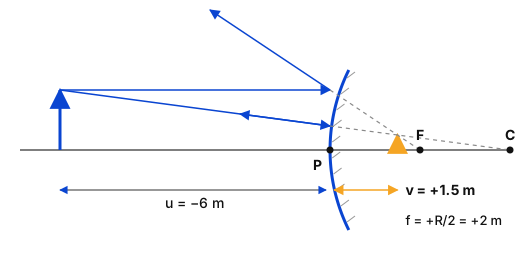
- m; m.
- m.
- Positive v → image behind the mirror (virtual, erect, diminished).
Trick: Convex mirror image is always virtual and behind the mirror – option D is out instantly.
Answer: (A) Image is formed at 1.5 m behind the mirror
अवधारणा: ; उत्तल दर्पण में ।
- m; m।
- m।
- v धनात्मक → प्रतिबिंब दर्पण के पीछे (आभासी, सीधा, छोटा)।
ट्रिक: उत्तल दर्पण का प्रतिबिंब सदा आभासी और पीछे – विकल्प D तुरंत बाहर।
उत्तर: (A) प्रतिबिंब दर्पण के पीछे 1.5 m पर बनता है
RRB Technician Grade IIIGeneral ScienceMirror formula – convex mirrorRRB Technician Grade III 2025 · 6 Mar Shift 1
Q358.If both solute and solvent masses are doubled, the concentration (mass %) of the solution will:
यदि विलेय और विलायक दोनों के द्रव्यमान दोगुने कर दिए जाएँ, तो विलयन की सांद्रता (द्रव्यमान %):
- ARemain the sameसमान रहेगी
- BDoubleदोगुनी हो जाएगी
- CBecome halfआधी हो जाएगी
- DIncrease by 25%25% बढ़ जाएगी
Show answer
Concept: Mass % = mass of solute ÷ (solute + solvent) × 100.
- Doubling both: .
- The ratio does not change, so mass % stays the same.
Trick: Scaling numerator and denominator by the same factor never changes a fraction.
Answer: (A) Remain the same
अवधारणा: द्रव्यमान % = विलेय ÷ (विलेय + विलायक) × 100।
- दोनों दुगुने: ।
- अनुपात नहीं बदलता, इसलिए % वही रहता है।
ट्रिक: अंश और हर को समान गुणक से गुणा करने पर भिन्न नहीं बदलती।
उत्तर: (A) समान रहेगी
RRB Technician Grade IIIGeneral ScienceConcentration – mass percentageRRB Technician Grade III 2025 · 6 Mar Shift 1
Q359.The urine formed in the kidneys passes through the ______ into the _____ where it is stored until excreted.
वृक्कों में बना मूत्र ______ से होकर _____ में जाता है, जहाँ यह उत्सर्जित होने तक संग्रहित रहता है।
- Aurinary bladder; urethraमूत्राशय; मूत्रमार्ग
- Bureters; urinary bladderमूत्रवाहिनियों; मूत्राशय
- Cnephrons; urethraवृक्काणुओं; मूत्रमार्ग
- Durethra; uretersमूत्रमार्ग; मूत्रवाहिनियों
Show answer
Concept: Path of urine: kidney → ureter → urinary bladder → urethra.
- Urine made in the nephrons passes through the ureters.
- It is stored in the urinary bladder until released through the urethra.
Trick: Order 'K-U-B-U': Kidney, Ureter, Bladder, Urethra.
Answer: (B) ureters; urinary bladder
अवधारणा: मूत्र मार्ग: वृक्क → मूत्रवाहिनी → मूत्राशय → मूत्रमार्ग।
- नेफ्रॉन में बना मूत्र मूत्रवाहिनियों (ureters) से गुजरता है।
- यह मूत्राशय में जमा रहता है और मूत्रमार्ग (urethra) से बाहर निकलता है।
ट्रिक: क्रम 'K-U-B-U': Kidney, Ureter, Bladder, Urethra।
उत्तर: (B) मूत्रवाहिनियों; मूत्राशय
RRB Technician Grade IIIGeneral ScienceHuman excretory systemRRB Technician Grade III 2025 · 6 Mar Shift 1
Q360.What is the work done on an object if its displacement is zero, even when a force is applied?
बल लगाए जाने पर भी यदि किसी वस्तु का विस्थापन शून्य हो, तो उस पर किया गया कार्य क्या है?
- AZeroशून्य
- BInfiniteअनंत
- CNegativeऋणात्मक
- DPositiveधनात्मक
Show answer
Concept: W = F × s × cosθ.
- If s = 0, W = F × 0 = 0, however large the force.
- Example: pushing a wall that does not move – no work done.
Yaad rakhein: Work is also zero when force ⟂ displacement (θ = 90°), e.g. a coolie carrying a load on a level road.
Answer: (A) Zero
अवधारणा: W = F × s × cosθ।
- s = 0 हो तो W = F × 0 = 0, बल कितना भी हो।
- उदाहरण: दीवार धकेलना जो हिलती नहीं – कार्य शून्य।
याद रखें: बल और विस्थापन लंबवत (θ = 90°) हों तब भी कार्य शून्य, जैसे समतल सड़क पर बोझ उठाए कुली।
उत्तर: (A) शून्य
RRB Technician Grade IIIGeneral ScienceWork done – zero displacementRRB Technician Grade III 2025 · 6 Mar Shift 1

