Q541.Apical meristem is present in which of the following?
शीर्षस्थ विभज्योतक (apical meristem) निम्नलिखित में से किसमें उपस्थित होता है?
- APlantsपौधे
- BAnimalsजंतु
- CBacteriaजीवाणु
- DVirusविषाणु
Show answer
Concept: Meristems are growing tissues found only in plants. Apical meristem lies at the tips of stems and roots and increases their length.
- Plants grow throughout life only in regions having meristems.
- Apical (tips), lateral/cambium (girth) and intercalary (base of leaves, internodes) are its types.
- Animals, bacteria and viruses have no meristematic tissue.
Yaad rakhein: Apical → length; Lateral (cambium) → girth; Intercalary → near nodes.
Answer: (A) Plants
अवधारणा: विभज्योतक वृद्धि करने वाले ऊतक हैं जो केवल पौधों में पाए जाते हैं। शीर्षस्थ विभज्योतक तने और जड़ के शिखर पर होता है और लंबाई बढ़ाता है।
- पौधे जीवन भर केवल विभज्योतक वाले भागों में बढ़ते हैं।
- इसके प्रकार: शीर्षस्थ (सिरे), पार्श्व/कैम्बियम (मोटाई) और अंतर्वेशी (पत्तियों के आधार, पर्वसंधि)।
- जंतुओं, जीवाणुओं और विषाणुओं में विभज्योतक ऊतक नहीं होता।
याद रखें: शीर्षस्थ → लंबाई; पार्श्व (कैम्बियम) → मोटाई; अंतर्वेशी → पर्वसंधियों के पास।
उत्तर: (A) पौधे
RRB Technician Grade IIIGeneral ScienceMeristematic tissueRRB Technician Grade III 2024 · 29 Dec Shift 2
Q542.The number of chromosomes become half in a daughter cell by the process of:
किस प्रक्रिया द्वारा संतति कोशिका (daughter cell) में गुणसूत्रों की संख्या आधी हो जाती है?
- Abinary fissionद्विविभाजन (binary fission)
- Bamitosisअसूत्री विभाजन (amitosis)
- Cmitosisसमसूत्री विभाजन (mitosis)
- Dmeiosisअर्धसूत्री विभाजन (meiosis)
Show answer
Concept: Meiosis is reduction division: it occurs in reproductive cells and forms gametes with half the number of chromosomes.
- Parent cell: chromosomes (human ).
- After meiosis, each gamete has (human ).
- At fertilisation , so the number stays constant over generations. Mitosis/binary fission keep the number the same.
Yaad rakhein: Meiosis → half (gametes); Mitosis → same (growth and repair).
Answer: (D) meiosis
अवधारणा: अर्धसूत्री विभाजन (मियोसिस) न्यूनीकरण विभाजन है: यह जनन कोशिकाओं में होता है और आधे गुणसूत्रों वाले युग्मक बनाता है।
- जनक कोशिका: गुणसूत्र (मानव )।
- मियोसिस के बाद प्रत्येक युग्मक में (मानव )।
- निषेचन पर , अतः पीढ़ियों में संख्या स्थिर रहती है। समसूत्री विभाजन/द्विखंडन में संख्या समान रहती है।
याद रखें: मियोसिस → आधे (युग्मक); माइटोसिस → समान (वृद्धि और मरम्मत)।
उत्तर: (D) अर्धसूत्री विभाजन (meiosis)
RRB Technician Grade IIIGeneral ScienceMeiosisRRB Technician Grade III 2024 · 29 Dec Shift 2
Q543.Which of the following non-metals is liquid at room temperature?
निम्नलिखित में से कौन-सी अधातु कमरे के तापमान पर द्रव होती है?
- AFluorineफ्लोरीन
- BOxygenऑक्सीजन
- CMercuryपारा (Mercury)
- DBromineब्रोमीन
Show answer
Concept: Most non-metals are solids or gases at room temperature; bromine is the only non-metal that is a liquid.
- Fluorine and oxygen are gases.
- Mercury is a liquid but it is a metal, not a non-metal.
- Bromine (reddish-brown liquid) is the liquid non-metal.
Yaad rakhein: Liquid metal → mercury; liquid non-metal → bromine.
Answer: (D) Bromine
अवधारणा: अधिकांश अधातुएँ कमरे के ताप पर ठोस या गैस होती हैं; ब्रोमीन एकमात्र अधातु है जो द्रव है।
- फ्लोरीन और ऑक्सीजन गैसें हैं।
- पारा द्रव है, पर वह धातु है, अधातु नहीं।
- ब्रोमीन (लाल-भूरा द्रव) द्रव अधातु है।
याद रखें: द्रव धातु → पारा; द्रव अधातु → ब्रोमीन।
उत्तर: (D) ब्रोमीन
RRB Technician Grade IIIGeneral SciencePhysical state of non-metalsRRB Technician Grade III 2024 · 29 Dec Shift 2
Q544.Which of the following is the longest cell in our body?
निम्नलिखित में से कौन-सी हमारे शरीर की सबसे लंबी कोशिका है?
- ANerve cellतंत्रिका कोशिका
- BOvumअंडाणु (Ovum)
- CBlood cellरक्त कोशिका
- DFat cellवसा कोशिका
Show answer
Concept: Nerve cells (neurons) have long extensions called axons to carry messages over long distances, making them the longest cells in the body.
- An axon can be up to about 1 m long (spinal cord to toe).
- The ovum is the largest cell (by size/volume), not the longest.
- Blood and fat cells are small.
Yaad rakhein: Longest cell → neuron; largest cell → ovum; smallest cell → sperm.
Answer: (A) Nerve cell
अवधारणा: तंत्रिका कोशिका (न्यूरॉन) में संदेश को लंबी दूरी तक ले जाने के लिए एक्सॉन नामक लंबा प्रवर्ध होता है, इसलिए यह शरीर की सबसे लंबी कोशिका है।
- एक्सॉन लगभग 1 m तक लंबा हो सकता है (मेरुरज्जु से पैर की अंगुली तक)।
- अंडाणु आकार में सबसे बड़ी कोशिका है, सबसे लंबी नहीं।
- रक्त और वसा कोशिकाएँ छोटी होती हैं।
याद रखें: सबसे लंबी कोशिका → तंत्रिका कोशिका; सबसे बड़ी → अंडाणु; सबसे छोटी → शुक्राणु।
उत्तर: (A) तंत्रिका कोशिका
RRB Technician Grade IIIGeneral ScienceHuman cellsRRB Technician Grade III 2024 · 29 Dec Shift 2
Q545._______ increases the girth (diameter) of the stem or root.
_______ तने या जड़ के व्यास (मोटाई) में वृद्धि करता है।
- AUnderneath meristemअधःस्थ विभज्योतक (Underneath meristem)
- BApical meristemशीर्षस्थ विभज्योतक (Apical meristem)
- CCambiumकैम्बियम (Cambium)
- DIntercalary meristemअंतर्वेशी विभज्योतक (Intercalary meristem)
Show answer
Concept: Cambium is the lateral meristem; its dividing cells add new tissue on the sides, so the stem and root become thicker.
- Apical meristem at tips → increases length.
- Intercalary meristem near nodes → growth of internodes/leaves.
- Cambium (lateral) → increases girth (secondary growth).
Yaad rakhein: Girth = cambium (lateral meristem).
Answer: (C) Cambium
अवधारणा: कैम्बियम पार्श्व विभज्योतक है; इसकी विभाजित होती कोशिकाएँ बगल में नया ऊतक जोड़ती हैं, जिससे तना और जड़ मोटे होते हैं।
- सिरों पर शीर्षस्थ विभज्योतक → लंबाई बढ़ाता है।
- पर्वसंधि के पास अंतर्वेशी विभज्योतक → पर्व/पत्तियों की वृद्धि।
- कैम्बियम (पार्श्व) → मोटाई बढ़ाता है (द्वितीयक वृद्धि)।
याद रखें: मोटाई (घेरा) = कैम्बियम (पार्श्व विभज्योतक)।
उत्तर: (C) कैम्बियम (Cambium)
RRB Technician Grade IIIGeneral ScienceLateral meristemRRB Technician Grade III 2024 · 29 Dec Shift 2
Q546.Which of the following is NOT the correct relation between electric power (P), electric current(I), electric potential difference (V) and resistance(R):
विद्युत शक्ति (P), विद्युत धारा (I), विद्युत विभवांतर (V) और प्रतिरोध (R) के बीच निम्नलिखित में से कौन-सा संबंध सही नहीं है?
- A
- B
- C
- D
Show answer
Concept: Basic power formula: . Using Ohm's law , it can be rewritten in two more forms.
- Put : .
- Put : .
- is actually Ohm's law for , not power – wrong relation.
Trick: Check units: gives volts, not watts – so must be wrong.
Answer: (D)
अवधारणा: शक्ति का मूल सूत्र: । ओम के नियम से इसे दो और रूपों में लिखा जा सकता है।
- रखें: ।
- रखें: ।
- वास्तव में के लिए ओम का नियम है, शक्ति नहीं – गलत संबंध।
ट्रिक: मात्रक जाँचें: से वोल्ट आता है, वाट नहीं – अतः गलत है।
उत्तर: (D)
RRB Technician Grade IIIGeneral ScienceElectric powerRRB Technician Grade III 2024 · 29 Dec Shift 2
Q547.Which of the following statements is NOT true regarding the particles of matter?
द्रव्य के कणों के संबंध में निम्नलिखित में से कौन-सा कथन सत्य नहीं है?
- AThey attract each other.वे एक-दूसरे को आकर्षित करते हैं।
- BThey do not have spaces in between them.उनके बीच रिक्त स्थान नहीं होता है।
- CThey are very small.वे बहुत छोटे होते हैं।
- DThey are moving constantly.वे निरंतर गतिशील रहते हैं।
Show answer
Concept: Characteristics of particles of matter: very small, have spaces between them, are continuously moving, and attract each other.
- Sugar dissolving in water without raising the level shows spaces between particles.
- Diffusion and Brownian motion show constant motion.
- A solid piece is hard to break → particles attract each other.
- So 'no spaces between them' is NOT true.
Yaad rakhein: 4 properties: tiny, spaces, motion, attraction.
Answer: (B) They do not have spaces in between them.
अवधारणा: द्रव्य के कणों के गुण: अत्यंत सूक्ष्म, उनके बीच रिक्त स्थान, निरंतर गतिशील और एक-दूसरे को आकर्षित करते हैं।
- पानी में चीनी घुलने पर जल-स्तर न बढ़ना कणों के बीच रिक्त स्थान दर्शाता है।
- विसरण और ब्राउनी गति निरंतर गति दर्शाते हैं।
- ठोस टुकड़े को तोड़ना कठिन → कण एक-दूसरे को आकर्षित करते हैं।
- अतः 'उनके बीच रिक्त स्थान नहीं होता' असत्य है।
याद रखें: 4 गुण: सूक्ष्म, रिक्त स्थान, गति, आकर्षण।
उत्तर: (B) उनके बीच रिक्त स्थान नहीं होता है।
RRB Technician Grade IIIGeneral ScienceParticles of matterRRB Technician Grade III 2024 · 29 Dec Shift 2
Q548.The radius of curvature of any mirror is +20 cm. What is the focal length and nature of this mirror?
किसी दर्पण की वक्रता त्रिज्या +20 cm है। इस दर्पण की फोकस दूरी और प्रकृति क्या है?
- A−40 cm, convex−40 cm, उत्तल
- B+10 cm, convex+10 cm, उत्तल
- C+40 cm, concave+40 cm, अवतल
- D+10 cm, concave+10 cm, अवतल
Show answer
Concept: For a spherical mirror . By the New Cartesian sign convention, positive and (behind the mirror) belong to a convex mirror.
- Positive focal length → focus lies behind the mirror.
- Hence the mirror is convex.
Yaad rakhein: Sign of : concave → negative, convex → positive.
Answer: (B) +10 cm, convex
अवधारणा: गोलीय दर्पण के लिए । नई कार्तीय चिह्न परिपाटी में धनात्मक और (दर्पण के पीछे) उत्तल दर्पण के होते हैं।
- धनात्मक फोकस दूरी → फोकस दर्पण के पीछे।
- अतः दर्पण उत्तल है।
याद रखें: का चिह्न: अवतल → ऋणात्मक, उत्तल → धनात्मक।
उत्तर: (B) +10 cm, उत्तल
RRB Technician Grade IIIGeneral ScienceFocal length of mirrorsRRB Technician Grade III 2024 · 29 Dec Shift 2
Q549.Which of the following hydrocarbons generally produces a clean flame?
निम्नलिखित में से कौन-सा हाइड्रोकार्बन सामान्यतः स्वच्छ ज्वाला उत्पन्न करता है?
- AEthyleneएथिलीन
- BEthaneएथेन
- CEtheneएथीन
- DEthyneएथाइन
Show answer
Concept: Saturated hydrocarbons generally burn with a clean blue flame; unsaturated hydrocarbons give a yellow, sooty flame.
- Ethane () – saturated (single bonds) → clean flame.
- Ethylene/ethene () – double bond, unsaturated → sooty.
- Ethyne () – triple bond, unsaturated → sooty.
Yaad rakhein: Ethylene and ethene are the same compound; '-ane' = saturated = clean flame.
Answer: (B) Ethane
अवधारणा: संतृप्त हाइड्रोकार्बन सामान्यतः स्वच्छ नीली ज्वाला से जलते हैं; असंतृप्त हाइड्रोकार्बन पीली, कालिखयुक्त ज्वाला देते हैं।
- एथेन () – संतृप्त (एकल बंध) → स्वच्छ ज्वाला।
- एथिलीन/एथीन () – द्विबंध, असंतृप्त → कालिख।
- एथाइन () – त्रिबंध, असंतृप्त → कालिख।
याद रखें: एथिलीन और एथीन एक ही यौगिक हैं; '-ane' = संतृप्त = स्वच्छ ज्वाला।
उत्तर: (B) एथेन
RRB Technician Grade IIIGeneral ScienceCombustion of hydrocarbonsRRB Technician Grade III 2024 · 29 Dec Shift 2
Q550.Which of the following electrolytes is used in electrolytic refining of copper?
ताँबे के वैद्युत अपघटनी परिष्करण (electrolytic refining) में निम्नलिखित में से किस विद्युत अपघट्य का उपयोग किया जाता है?
- A
- B
- C
- D
Show answer
Concept: In electrolytic refining, impure metal is the anode, a thin strip of pure metal is the cathode, and a soluble salt of the same metal is the electrolyte.
- Anode: impure Cu; cathode: pure Cu.
- Electrolyte: acidified copper sulphate, .
- Cu dissolves from the anode and deposits on the cathode: ; impurities fall as anode mud.
Yaad rakhein: Electrolyte always contains ions of the metal being refined → copper needs a soluble copper salt.
Answer: (D)
अवधारणा: विद्युत अपघटनी परिष्करण में अशुद्ध धातु ऐनोड, शुद्ध धातु की पतली पट्टी कैथोड और उसी धातु का विलेय लवण विद्युत अपघट्य होता है।
- ऐनोड: अशुद्ध Cu; कैथोड: शुद्ध Cu।
- विद्युत अपघट्य: अम्लीकृत कॉपर सल्फेट, ।
- Cu ऐनोड से घुलकर कैथोड पर जमता है: ; अशुद्धियाँ ऐनोड पंक के रूप में नीचे बैठती हैं।
याद रखें: विद्युत अपघट्य में परिष्कृत होने वाली धातु के आयन होते हैं → ताँबे के लिए ताँबे का विलेय लवण।
उत्तर: (D)
RRB Technician Grade IIIGeneral ScienceElectrolytic refiningRRB Technician Grade III 2024 · 29 Dec Shift 2
Q551.What is the direction of the magnetic field produced by a current carrying straight wire?
धारावाही सीधे तार द्वारा उत्पन्न चुंबकीय क्षेत्र की दिशा क्या होती है?
- AParallel to the plane of the wireतार के तल के समांतर
- BAt an angle to the plane of the wireतार के तल से के कोण पर
- CPerpendicular to the plane of the wireतार के तल के लंबवत
- DAt an angle to the plane of the wireतार के तल से के कोण पर
Show answer
Concept: Around a straight current-carrying wire, magnetic field lines are concentric circles centred on the wire.
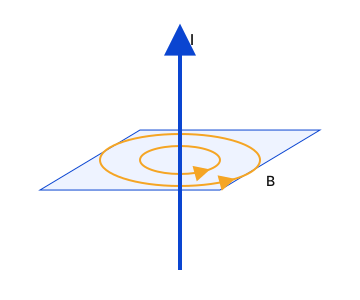
- These circles lie in a plane perpendicular to the wire.
- So the field is perpendicular to the wire at every point (tangent to the circle).
- Direction (clockwise/anticlockwise) is given by the right-hand thumb rule.
Trick: Right-hand thumb rule: thumb along current, curled fingers show the field direction.
Answer: (C) Perpendicular to the plane of the wire
अवधारणा: सीधे धारावाही तार के चारों ओर चुंबकीय क्षेत्र रेखाएँ तार पर केंद्रित संकेंद्री वृत्त होती हैं।
- ये वृत्त तार के लंबवत तल में होते हैं।
- अतः हर बिंदु पर क्षेत्र तार के लंबवत (वृत्त की स्पर्शरेखा) होता है।
- दिशा (दक्षिणावर्त/वामावर्त) दक्षिण-हस्त अंगुष्ठ नियम से मिलती है।
ट्रिक: दक्षिण-हस्त अंगुष्ठ नियम: अँगूठा धारा की दिशा में, मुड़ी अंगुलियाँ क्षेत्र की दिशा बताती हैं।
उत्तर: (C) तार के तल के लंबवत
RRB Technician Grade IIIGeneral ScienceMagnetic field of a straight wireRRB Technician Grade III 2024 · 29 Dec Shift 2
Q552.Which of the following alcohols is used in cough syrups?
निम्नलिखित में से किस ऐल्कोहॉल का उपयोग कफ सिरप में किया जाता है?
- AEthanolएथेनॉल
- BMethanolमेथेनॉल
- CPropanolप्रोपेनॉल
- DEthanoic acidएथेनोइक अम्ल
Show answer
Concept: Ethanol () is a good solvent and is present in medicines such as tincture iodine, cough syrups and many tonics.
- Ethanol dissolves the medicinal ingredients and acts as a preservative.
- Methanol is poisonous – can cause blindness or death.
- Ethanoic acid is not an alcohol (it is a carboxylic acid).
Yaad rakhein: Ethanol → medicines, drinks, sanitizers; methanol → poisonous, used to denature ethanol.
Answer: (A) Ethanol
अवधारणा: एथेनॉल () अच्छा विलायक है और टिंक्चर आयोडीन, कफ सिरप तथा कई टॉनिक जैसी दवाओं में होता है।
- एथेनॉल औषधीय घटकों को घोलता है और परिरक्षक का काम करता है।
- मेथेनॉल विषैला है – अंधापन या मृत्यु तक हो सकती है।
- एथेनॉइक अम्ल ऐल्कोहॉल नहीं, कार्बोक्सिलिक अम्ल है।
याद रखें: एथेनॉल → दवाएँ, पेय, सैनिटाइज़र; मेथेनॉल → विषैला, एथेनॉल को विकृत करने में उपयोग।
उत्तर: (A) एथेनॉल
RRB Technician Grade IIIGeneral ScienceUses of ethanolRRB Technician Grade III 2024 · 29 Dec Shift 2
Q553.Which of the following statements is NOT true?
निम्नलिखित में से कौन-सा कथन सत्य नहीं है?
- AThe total energy before and after the transformation always remains constant.रूपांतरण से पहले और बाद में कुल ऊर्जा सदैव स्थिर रहती है।
- BEnergy can neither be created nor destroyed.ऊर्जा को न तो उत्पन्न किया जा सकता है और न ही नष्ट किया जा सकता है।
- CThe total energy before and after the transformation is not constant.रूपांतरण से पहले और बाद में कुल ऊर्जा स्थिर नहीं रहती है।
- DEnergy can only be transformed from one form to another.ऊर्जा को केवल एक रूप से दूसरे रूप में रूपांतरित किया जा सकता है।
Show answer
Concept: Law of conservation of energy: energy can neither be created nor destroyed; it only changes from one form to another, so the total energy remains constant.
- (A), (B), (D) are direct statements of this law – true.
- (C) says total energy before and after transformation is not constant.
- That contradicts the law, so (C) is NOT true.
Yaad rakhein: Free fall: PE decreases, KE increases, but PE + KE stays constant.
Answer: (C) The total energy before and after the transformation is not constant.
अवधारणा: ऊर्जा संरक्षण का नियम: ऊर्जा न तो उत्पन्न की जा सकती है न नष्ट; यह केवल एक रूप से दूसरे रूप में बदलती है, इसलिए कुल ऊर्जा स्थिर रहती है।
- (A), (B), (D) इसी नियम के सीधे कथन हैं – सत्य।
- (C) कहता है कि रूपांतरण से पहले और बाद कुल ऊर्जा स्थिर नहीं रहती।
- यह नियम के विपरीत है, अतः (C) असत्य है।
याद रखें: मुक्त पतन: स्थितिज ऊर्जा घटती, गतिज बढ़ती है, पर दोनों का योग स्थिर रहता है।
उत्तर: (C) रूपांतरण से पहले और बाद में कुल ऊर्जा स्थिर नहीं रहती है।
RRB Technician Grade IIIGeneral ScienceConservation of energyRRB Technician Grade III 2024 · 29 Dec Shift 2
Q554.Which type of reproduction is seen in Spirogyra?
स्पाइरोगायरा में किस प्रकार का जनन देखा जाता है?
- AVegetative propagationकायिक प्रवर्धन
- BBuddingमुकुलन
- CFragmentationखंडन
- DBinary fissionद्विविभाजन
Show answer
Concept: Spirogyra is a simple multicellular filamentous alga. When mature, its filament breaks into small pieces and each piece grows into a new individual.
- This method of asexual reproduction is called fragmentation.
- It works because each cell can divide and form a full filament.
- Budding → Hydra/yeast; binary fission → Amoeba; vegetative propagation → plants like Bryophyllum.
Yaad rakhein: Spirogyra → fragmentation; Planaria → regeneration; Hydra → budding; Amoeba → binary fission.
Answer: (C) Fragmentation
अवधारणा: स्पाइरोगायरा सरल बहुकोशिकीय तंतुमय शैवाल है। परिपक्व होने पर इसका तंतु छोटे टुकड़ों में टूट जाता है और प्रत्येक टुकड़ा नए जीव में विकसित होता है।
- अलैंगिक जनन की इस विधि को विखंडन (फ्रैगमेंटेशन) कहते हैं।
- यह संभव है क्योंकि प्रत्येक कोशिका विभाजित होकर पूरा तंतु बना सकती है।
- मुकुलन → हाइड्रा/यीस्ट; द्विखंडन → अमीबा; कायिक प्रवर्धन → ब्रायोफिलम जैसे पौधे।
याद रखें: स्पाइरोगायरा → खंडन; प्लेनेरिया → पुनरुद्भवन; हाइड्रा → मुकुलन; अमीबा → द्विखंडन।
उत्तर: (C) खंडन
RRB Technician Grade IIIGeneral ScienceFragmentationRRB Technician Grade III 2024 · 29 Dec Shift 2
Q555.Select the correct option related to the function regulated by ovaries.
अंडाशयों द्वारा नियंत्रित कार्य से संबंधित सही विकल्प का चयन कीजिए।
- AStimulates growth in all organsसभी अंगों में वृद्धि को उद्दीपित करता है
- BMenstrual cycleमासिक धर्म चक्र (Menstrual cycle)
- CStimulates pituitary glandsपीयूष ग्रंथियों (pituitary glands) को उद्दीपित करता है
- DRegulates metabolismउपापचय (metabolism) का नियमन करता है
Show answer
Concept: Ovaries secrete the hormones oestrogen and progesterone, which control female secondary sexual characters and the menstrual cycle.
- Oestrogen develops female sex organs and characters.
- Oestrogen and progesterone regulate the menstrual cycle and maintain the uterus lining.
- Growth of organs → growth hormone (pituitary); metabolism → thyroxine (thyroid).
Yaad rakhein: Ovary → oestrogen (menstrual cycle); testis → testosterone; thyroid → metabolism.
Answer: (B) Menstrual cycle
अवधारणा: अंडाशय एस्ट्रोजन और प्रोजेस्टेरोन हॉर्मोन स्रावित करते हैं, जो स्त्रियों के द्वितीयक लैंगिक लक्षणों और मासिक चक्र को नियंत्रित करते हैं।
- एस्ट्रोजन स्त्री जनन अंगों और लक्षणों का विकास करता है।
- एस्ट्रोजन और प्रोजेस्टेरोन मासिक चक्र को नियमित करते और गर्भाशय की भित्ति बनाए रखते हैं।
- अंगों की वृद्धि → वृद्धि हॉर्मोन (पीयूष); उपापचय → थायरॉक्सिन (थायरॉइड)।
याद रखें: अंडाशय → एस्ट्रोजन (मासिक चक्र); वृषण → टेस्टोस्टेरोन; थायरॉइड → उपापचय।
उत्तर: (B) मासिक धर्म चक्र (Menstrual cycle)
RRB Technician Grade IIIGeneral ScienceEndocrine glands – ovariesRRB Technician Grade III 2024 · 29 Dec Shift 2
Q556.Which of the following is the valency of carbon in ethene?
एथीन में कार्बन की संयोजकता निम्नलिखित में से कौन-सी है?
- AThreeतीन
- BSixछह
- CFourचार
- DTwoदो
Show answer
Concept: Carbon has 4 valence electrons (configuration 2, 4), so it always forms four bonds – its valency is 4 in every compound.
- Ethene: .
- Each carbon: one double bond to the other C (2 bonds) + two C–H bonds (2 bonds).
- Total bonds per carbon .
Yaad rakhein: Carbon is tetravalent in methane, ethene, ethyne alike – count bonds, a double bond counts as 2, a triple as 3.
Answer: (C) Four
अवधारणा: कार्बन के 4 संयोजी इलेक्ट्रॉन (विन्यास 2, 4) होते हैं, इसलिए यह सदैव चार बंध बनाता है – हर यौगिक में इसकी संयोजकता 4 है।
- एथीन: ।
- प्रत्येक कार्बन: दूसरे C से एक द्विबंध (2 बंध) + दो C–H बंध (2 बंध)।
- प्रति कार्बन कुल बंध ।
याद रखें: मेथेन, एथीन, एथाइन – सभी में कार्बन चतुःसंयोजी है; द्विबंध 2 और त्रिबंध 3 गिनें।
उत्तर: (C) चार
RRB Technician Grade IIIGeneral ScienceValency of carbonRRB Technician Grade III 2024 · 29 Dec Shift 2
Q557.In Bryophyllum, vegetative propagation takes place by:
ब्रायोफिलम में कायिक प्रवर्धन किसके द्वारा होता है?
- Apistilस्त्रीकेसर (pistil)
- Bpetalपंखुड़ी (petal)
- Cstamenपुंकेसर (stamen)
- Dbuds produced in the notches along the leaf marginपत्ती के किनारों पर स्थित खाँचों में उत्पन्न कलिकाएँ
Show answer
Concept: In vegetative propagation, new plants arise from roots, stems or leaves instead of seeds. Bryophyllum leaves bear buds in the notches of their margin.
- These buds develop into small plantlets on the leaf.
- When the leaf falls on moist soil, each plantlet grows into a new plant.
- Pistil, petal and stamen are flower parts used in sexual reproduction.
Yaad rakhein: Bryophyllum → leaf-margin buds; potato → eyes on stem tuber; ginger → rhizome.
Answer: (D) buds produced in the notches along the leaf margin
अवधारणा: कायिक प्रवर्धन में नए पौधे बीज के बजाय जड़, तने या पत्ती से बनते हैं। ब्रायोफिलम की पत्तियों के किनारों के खाँचों में कलिकाएँ होती हैं।
- ये कलिकाएँ पत्ती पर छोटे पौधों में विकसित होती हैं।
- पत्ती नम मिट्टी पर गिरने पर प्रत्येक छोटा पौधा नया पौधा बन जाता है।
- स्त्रीकेसर, पंखुड़ी और पुंकेसर फूल के भाग हैं, जो लैंगिक जनन में काम आते हैं।
याद रखें: ब्रायोफिलम → पत्ती के किनारे की कलिकाएँ; आलू → कंद की आँखें; अदरक → प्रकंद।
उत्तर: (D) पत्ती के किनारों पर स्थित खाँचों में उत्पन्न कलिकाएँ
RRB Technician Grade IIIGeneral ScienceVegetative propagationRRB Technician Grade III 2024 · 29 Dec Shift 2
Q558.The contraction and relaxation of which of the following results in movement of the organ?
निम्नलिखित में से किसके संकुचन और शिथिलन के परिणामस्वरूप अंग में गति होती है?
- ACartilagesउपास्थियाँ (Cartilages)
- BMuscle cellsपेशी कोशिकाएँ
- CBonesअस्थियाँ
- DNerve cellsतंत्रिका कोशिकाएँ
Show answer
Concept: Muscle cells contain special contractile proteins; their contraction and relaxation pull on bones or organ walls and cause movement.
- Muscle cells shorten (contract) and lengthen (relax).
- This changes the shape of muscles, moving the attached body part.
- Bones only act as levers; nerve cells send signals; cartilage gives smooth joint surfaces.
Yaad rakhein: Contraction/relaxation → muscle; message transmission → nerve; support → bone/cartilage.
Answer: (B) Muscle cells
अवधारणा: पेशी कोशिकाओं में विशेष संकुचनशील प्रोटीन होते हैं; इनके संकुचन और शिथिलन से हड्डियाँ या अंगों की भित्तियाँ खिंचती हैं और गति होती है।
- पेशी कोशिकाएँ छोटी (संकुचन) और लंबी (शिथिलन) होती हैं।
- इससे पेशियों का आकार बदलता है और जुड़ा अंग हिलता है।
- हड्डियाँ केवल उत्तोलक का काम करती हैं; तंत्रिका कोशिकाएँ संदेश भेजती हैं; उपास्थि जोड़ों को चिकना बनाती है।
याद रखें: संकुचन/शिथिलन → पेशी; संदेश संचरण → तंत्रिका; सहारा → हड्डी/उपास्थि।
उत्तर: (B) पेशी कोशिकाएँ
RRB Technician Grade IIIGeneral ScienceMuscle tissueRRB Technician Grade III 2024 · 29 Dec Shift 2
Q559.When we stretch a spring, the form of energy stored in the spring is _________.
जब हम किसी स्प्रिंग को खींचते हैं, तो स्प्रिंग में संचित ऊर्जा का रूप _________ होता है।
- Aelectric energyविद्युत ऊर्जा
- Bpotential energyस्थितिज ऊर्जा
- Cgravitational energyगुरुत्वीय ऊर्जा
- Dkinetic energyगतिज ऊर्जा
Show answer
Concept: Energy stored in a body due to change in its shape or position is potential energy. Stretching a spring changes its shape, so work done is stored as elastic potential energy.
- Work is done against the spring's restoring force while stretching.
- This work is stored in the stretched spring.
- On release, it changes to kinetic energy.
Yaad rakhein: Stretched spring, wound watch spring, bent bow, stretched rubber band → potential energy.
Answer: (B) potential energy
अवधारणा: आकार या स्थिति में परिवर्तन के कारण वस्तु में संचित ऊर्जा स्थितिज ऊर्जा है। स्प्रिंग खींचने से उसका आकार बदलता है, इसलिए किया गया कार्य प्रत्यास्थ स्थितिज ऊर्जा के रूप में संचित होता है।
- खींचते समय स्प्रिंग के प्रत्यानयन बल के विरुद्ध कार्य किया जाता है।
- यह कार्य खिंची हुई स्प्रिंग में संचित रहता है।
- छोड़ने पर यह गतिज ऊर्जा में बदल जाता है।
याद रखें: खिंची स्प्रिंग, चाबी भरी घड़ी, तना हुआ धनुष, खिंचा रबर बैंड → स्थितिज ऊर्जा।
उत्तर: (B) स्थितिज ऊर्जा
RRB Technician Grade IIIGeneral ScienceElastic potential energyRRB Technician Grade III 2024 · 29 Dec Shift 2
Q560.Which of the following is a biodegradable substance?
निम्नलिखित में से कौन-सा एक जैव-निम्नीकरणीय पदार्थ है?
- ADead plantमृत पौधा
- BGlassकाँच
- CElectric wireविद्युत तार
- DPlastic bagप्लास्टिक की थैली
Show answer
Concept: Biodegradable substances are broken down by microorganisms such as bacteria and fungi into simpler, harmless substances.
- Dead plants are decomposed by microbes and return nutrients to the soil – biodegradable.
- Glass, plastic bags and electric wire (plastic insulation, metal) are not decomposed by microbes – non-biodegradable.
- Hence the dead plant is the answer.
Yaad rakhein: Natural organic matter (vegetable peels, paper, cotton, dead plants/animals) → biodegradable.
Answer: (A) Dead plant
अवधारणा: जैव निम्नीकरणीय पदार्थ जीवाणु और कवक जैसे सूक्ष्मजीवों द्वारा सरल, हानिरहित पदार्थों में तोड़ दिए जाते हैं।
- मृत पौधों को सूक्ष्मजीव अपघटित करते हैं और पोषक तत्व मिट्टी में लौटते हैं – जैव निम्नीकरणीय।
- काँच, प्लास्टिक थैली और बिजली का तार (प्लास्टिक आवरण, धातु) सूक्ष्मजीवों से अपघटित नहीं होते – अजैव निम्नीकरणीय।
- अतः मृत पौधा उत्तर है।
याद रखें: प्राकृतिक कार्बनिक पदार्थ (सब्ज़ियों के छिलके, कागज़, सूती कपड़ा, मृत पौधे/जंतु) → जैव निम्नीकरणीय।
उत्तर: (A) मृत पौधा
RRB Technician Grade IIIGeneral ScienceBiodegradable substancesRRB Technician Grade III 2024 · 29 Dec Shift 2

