Q41.Which of the following statement(s) is/are true when a beam of white light is incident on a glass prism?
(i) The white light undergoes dispersion.
(ii) The speed of light remains constant when it goes from air into the prism.
(iii) The speed of light decreases as the light goes from air into the prism.
जब श्वेत प्रकाश का एक पुंज काँच के प्रिज़्म पर आपतित होता है, तो निम्नलिखित में से कौन-सा/से कथन सत्य है/हैं?
(i) श्वेत प्रकाश का विक्षेपण (dispersion) होता है।
(ii) वायु से प्रिज़्म में जाने पर प्रकाश की चाल स्थिर रहती है।
(iii) वायु से प्रिज़्म में जाने पर प्रकाश की चाल घट जाती है।
- AOnly (ii)केवल (ii)
- BBoth (i) and (iii)(i) और (iii) दोनों
- COnly (i)केवल (i)
- DBoth (ii) and (iii)(ii) और (iii) दोनों
Show answer
Concept: Glass is optically denser than air, and its refractive index differs for each colour.
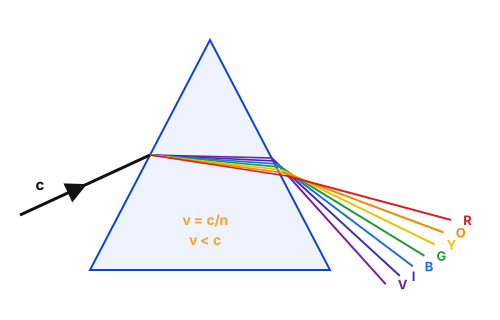
- White light splits into VIBGYOR, so (i) is true
- Light slows down in a denser medium (, for glass), so (iii) is true and (ii) is false
Trick: (ii) and (iii) contradict each other, so only one can be true. Speed falls in glass, so the answer is (i) + (iii).
Answer: (B) Both (i) and (iii)
अवधारणा: काँच, वायु से प्रकाशतः सघन है और हर रंग के लिए उसका अपवर्तनांक अलग होता है।
हल:
- श्वेत प्रकाश VIBGYOR में बँट जाता है, अतः (i) सही
- सघन माध्यम में प्रकाश की चाल घटती है (, काँच ), अतः (iii) सही, (ii) गलत
ट्रिक: (ii) और (iii) परस्पर विरोधी हैं; काँच में चाल घटती है, इसलिए (i) + (iii)।
उत्तर: (B) (i) और (iii) दोनों
RRB Technician Grade IIIGeneral ScienceDispersion of light by a prismRRB Technician Grade III 2025 · 10 Mar Shift 2
Q42.A girl weighing 420 N climbs a rope to a height of 6 m and takes 20 seconds to do it. What is her power output?
420 N भार वाली एक लड़की एक रस्सी पर 6 m की ऊँचाई तक चढ़ती है और ऐसा करने में 20 सेकंड लेती है। उसकी शक्ति (power) निर्गत कितनी है?
- A126 W
- B105 W
- C155 W
- D90 W
Show answer
Concept: .
- Work =
- Power = W
Trick: Weight is already in newtons, so do not multiply by g again: directly.
Answer: (A) 126 W
अवधारणा:
हल:
- कार्य =
- शक्ति = W
ट्रिक: भार पहले से न्यूटन में है, g से दोबारा गुणा न करें।
उत्तर: (A) 126 W
RRB Technician Grade IIIGeneral SciencePower – work done against gravityRRB Technician Grade III 2025 · 10 Mar Shift 2
Q43.Ethanol and ethanoic acid react in the presence of concentrated sulphuric acid to form a sweet-smelling compound. Which of the following correctly identifies the reaction type and the role of concentrated H₂SO₄?
एथेनॉल और एथेनॉइक अम्ल सांद्र सल्फ्यूरिक अम्ल की उपस्थिति में अभिक्रिया करके एक मीठी गंध वाला यौगिक बनाते हैं। निम्नलिखित में से कौन-सा विकल्प अभिक्रिया के प्रकार और सांद्र H₂SO₄ की भूमिका की सही पहचान करता है?
- AIt is a neutralization reaction; H₂SO₄ acts as an acid to neutralize the base.यह एक उदासीनीकरण अभिक्रिया है; H₂SO₄ क्षारक को उदासीन करने के लिए अम्ल के रूप में कार्य करता है।
- BIt is an oxidation reaction; H₂SO₄ acts as an oxidizing agent.यह एक ऑक्सीकरण अभिक्रिया है; H₂SO₄ ऑक्सीकारक के रूप में कार्य करता है।
- CIt is an esterification reaction; H₂SO₄ acts as a catalyst and a dehydrating agent.यह एक एस्टरीकरण (esterification) अभिक्रिया है; H₂SO₄ उत्प्रेरक और निर्जलीकारक के रूप में कार्य करता है।
- DIt is a substitution reaction; H₂SO₄ acts as a dehydrating agent to remove water molecules.यह एक प्रतिस्थापन अभिक्रिया है; H₂SO₄ जल के अणुओं को हटाने के लिए निर्जलीकारक के रूप में कार्य करता है।
Show answer
Concept: Alcohol + carboxylic acid → ester (sweet smell) + water, in the presence of conc. H₂SO₄.
- CH₃COOH + C₂H₅OH → CH₃COOC₂H₅ (ethyl ethanoate) + H₂O
- Conc. H₂SO₄ acts as a catalyst and removes the water formed (dehydrating agent), which pushes the reaction forward
Trick: Sweet smell = ester, so the reaction is esterification. Only option C names it.
Answer: (C) It is an esterification reaction; H₂SO₄ acts as a catalyst and a dehydrating agent.
अवधारणा: ऐल्कोहॉल + कार्बोक्सिलिक अम्ल → एस्टर (मीठी गंध) + जल; सांद्र H₂SO₄ की उपस्थिति में।
हल:
- CH₃COOH + C₂H₅OH → CH₃COOC₂H₅ (एथिल एथेनोएट) + H₂O
- सांद्र H₂SO₄ उत्प्रेरक है और बनने वाला जल सोखता है (निर्जलीकारक), जिससे अभिक्रिया आगे बढ़ती है
ट्रिक: मीठी गंध = एस्टर = एस्टरीकरण; यह केवल विकल्प C में है।
उत्तर: (C) यह एक एस्टरीकरण (esterification) अभिक्रिया है; H₂SO₄ उत्प्रेरक और निर्जलीकारक के रूप में कार्य करता है।
RRB Technician Grade IIIGeneral ScienceEsterificationRRB Technician Grade III 2025 · 10 Mar Shift 2
Q44.Which of the following best explains why anaerobic respiration releases less energy than aerobic respiration?
निम्नलिखित में से कौन-सा कथन सबसे अच्छी तरह स्पष्ट करता है कि अवायवीय श्वसन (anaerobic respiration), वायवीय श्वसन (aerobic respiration) की तुलना में कम ऊर्जा क्यों मुक्त करता है?
- AIt does not require enzymes.इसमें एंज़ाइमों की आवश्यकता नहीं होती है।
- BIt partially breaks down glucose.इसमें ग्लूकोज़ का आंशिक विखंडन होता है।
- CIt uses less glucose.इसमें कम ग्लूकोज़ का उपयोग होता है।
- DIt occurs slower than aerobic respiration.यह वायवीय श्वसन की तुलना में धीमी गति से होता है।
Show answer
Concept: Energy released depends on how completely glucose is broken down.
- Anaerobic: glucose is only partly broken down to ethanol + CO₂ or lactic acid, giving 2 ATP
- Aerobic: glucose is fully oxidised to CO₂ + H₂O, giving about 36–38 ATP
- Both use enzymes, so A is wrong
Yaad rakhein: Yeast gives ethanol + CO₂; tired muscles give lactic acid (which causes cramps).
Answer: (B) It partially breaks down glucose.
अवधारणा: मुक्त ऊर्जा इस पर निर्भर है कि ग्लूकोज़ कितना पूरी तरह टूटा।
हल:
- अवायवीय: ग्लूकोज़ आंशिक रूप से एथेनॉल + CO₂ या लैक्टिक अम्ल में टूटता है, केवल 2 ATP
- वायवीय: पूर्ण ऑक्सीकरण से CO₂ + H₂O, लगभग 36–38 ATP
- दोनों में एंजाइम लगते हैं, अतः A गलत
याद रखें: यीस्ट में एथेनॉल + CO₂; थकी मांसपेशियों में लैक्टिक अम्ल (ऐंठन)।
उत्तर: (B) इसमें ग्लूकोज़ का आंशिक विखंडन होता है।
RRB Technician Grade IIIGeneral ScienceAnaerobic vs aerobic respirationRRB Technician Grade III 2025 · 10 Mar Shift 2
Q45.A sound wave has a frequency of 2 kHz and a wavelength of 45 cm. How much time will it take to cover a distance of 1.8 km?
एक ध्वनि तरंग की आवृत्ति 2 kHz और तरंगदैर्ध्य 45 cm है। 1.8 km की दूरी तय करने में इसे कितना समय लगेगा?
- A2 seconds2 सेकंड
- B0.5 seconds0.5 सेकंड
- C1 second1 सेकंड
- D4 seconds4 सेकंड
Show answer
Concept: Speed of a wave v = frequency × wavelength; time = distance/speed.
Trick: Convert units first: 2 kHz = 2000 Hz, 45 cm = 0.45 m, 1.8 km = 1800 m.
Answer: (A) 2 seconds
अवधारणा: तरंग चाल v = आवृत्ति × तरंगदैर्ध्य; समय = दूरी/चाल
हल:
ट्रिक: पहले इकाइयाँ बदलें: 2 kHz = 2000 Hz, 45 cm = 0.45 m, 1.8 km = 1800 m।
उत्तर: (A) 2 सेकंड
RRB Technician Grade IIIGeneral ScienceWave speed – v = fλRRB Technician Grade III 2025 · 10 Mar Shift 2
Q46.The SI unit of the universal gravitation constant is ____________.
सार्वत्रिक गुरुत्वाकर्षण नियतांक का SI मात्रक ____________ है।
- ANm2kg-2
- BNm-2kg-1
- CNm2kg-1
- DNm-2kg2
Show answer
Concept: , so .
- Unit =
Yaad rakhein: ; it is the same everywhere in the universe, unlike g.
Answer: (A) Nm2kg-2
अवधारणा: ⇒
हल:
- मात्रक =
याद रखें: ; यह पूरे ब्रह्मांड में समान है, g की तरह बदलता नहीं।
उत्तर: (A) Nm2kg-2
RRB Technician Grade IIIGeneral ScienceUniversal gravitational constant – unitRRB Technician Grade III 2025 · 10 Mar Shift 2
Q47.Epithelial tissue primarily functions in:
उपकला ऊतक (epithelial tissue) मुख्य रूप से किस कार्य में सहायक होता है?
- ACoordinationसमन्वय
- BSecretion and protectionस्रावण और सुरक्षा
- CSupportआधार प्रदान करना
- DMuscle contractionपेशी संकुचन
Show answer
Concept: Epithelial tissue covers body surfaces and lines organs.
- It forms a protective covering (skin, lining of mouth)
- Glandular epithelium secretes substances (e.g. sweat, enzymes)
- Coordination is done by nervous tissue, support by connective tissue, contraction by muscle
Yaad rakhein: Types: squamous (skin, lungs), cuboidal (kidney tubules), columnar (intestine), ciliated, glandular.
Answer: (B) Secretion and protection
अवधारणा: उपकला ऊतक शरीर की सतह ढकता है और अंगों को आस्तरित करता है।
हल:
- सुरक्षात्मक आवरण बनाता है (त्वचा, मुख का अस्तर)
- ग्रंथिल उपकला स्राव करती है (पसीना, एंजाइम)
- समन्वय = तंत्रिका ऊतक, सहारा = संयोजी ऊतक, संकुचन = पेशी ऊतक
याद रखें: प्रकार: शल्की (त्वचा, फेफड़े), घनाकार (वृक्क नलिका), स्तंभाकार (आंत), पक्ष्माभी, ग्रंथिल।
उत्तर: (B) स्रावण और सुरक्षा
RRB Technician Grade IIIGeneral ScienceEpithelial tissue – functionRRB Technician Grade III 2025 · 10 Mar Shift 2
Q48.If A displaces B, and C displaces A, then the order of reactivity is:
यदि A, B को विस्थापित करता है, और C, A को विस्थापित करता है, तो अभिक्रियाशीलता का क्रम है:
- AB > A > C
- BC > A > B
- CC > B > A
- DA > B > C
Show answer
Concept: A more reactive element displaces a less reactive one from its compound.
- A displaces B, so A > B
- C displaces A, so C > A
- Order: C > A > B
Trick: The displacer is always on the left: chain the two clues as C > A > B.
Answer: (B) C > A > B
अवधारणा: अधिक सक्रिय तत्व कम सक्रिय तत्व को उसके यौगिक से विस्थापित करता है।
हल:
- A, B को हटाता है, अतः A > B
- C, A को हटाता है, अतः C > A
- क्रम: C > A > B
ट्रिक: विस्थापित करने वाला हमेशा बड़ा; दोनों संकेत जोड़ें: C > A > B।
उत्तर: (B) C > A > B
RRB Technician Grade IIIGeneral ScienceReactivity series – displacementRRB Technician Grade III 2025 · 10 Mar Shift 2
Q49.In a dug well, water is collected from:
खोदे गए कुएँ में जल किससे एकत्रित होता है?
- ANeighbouring strataपड़ोसी स्तर
- BDeep strataगहरे स्तर
- CWater-bearing strataजलधारी स्तर
- DImpervious strataअपारगम्य स्तर
Show answer
Concept: Groundwater is stored in porous water-bearing layers (aquifers).
- A dug well draws water that seeps from the water-bearing strata around it
- Impervious strata (clay, hard rock) do not let water through, so they cannot supply a well
Yaad rakhein: The upper level of groundwater is called the water table; it falls when we take out more water than rain recharges.
Answer: (C) Water-bearing strata
अवधारणा: भूजल छिद्रयुक्त जलधारी परतों (aquifer) में संचित रहता है।
हल:
- खोदे गए कुएँ में पानी आसपास की जलधारी परतों से रिसकर आता है
- अपारगम्य परतें (मिट्टी, कठोर चट्टान) पानी नहीं जाने देतीं
याद रखें: भूजल की ऊपरी सतह को जल स्तर (water table) कहते हैं; अधिक दोहन से यह नीचे जाता है।
उत्तर: (C) जलधारी स्तर
RRB Technician Grade IIIGeneral ScienceGroundwater – wellsRRB Technician Grade III 2025 · 10 Mar Shift 2
Q50.Food chains generally do not extend beyond four trophic levels because:
आहार शृंखलाएँ सामान्यतः चार पोषी स्तरों से आगे नहीं बढ़तीं, क्योंकि:
- Acarnivores feed only on producersमांसाहारी केवल उत्पादकों को खाते हैं
- Bdecomposers outnumber consumersअपघटकों की संख्या उपभोक्ताओं से अधिक होती है
- Cof limited number of producersउत्पादकों की संख्या सीमित होती है
- Dof large loss of energy at each levelप्रत्येक स्तर पर ऊर्जा की अत्यधिक हानि होती है
Show answer
Concept: Only about 10% of energy passes from one trophic level to the next.
- About 90% is lost as heat and in life processes at each level
- After 4 levels, too little energy remains to support another level
Trick: 10% law: 1000 J → 100 → 10 → 1 J. By the 4th level almost nothing is left.
Answer: (D) of large loss of energy at each level
अवधारणा: एक पोषी स्तर से अगले स्तर तक लगभग 10% ऊर्जा ही जाती है।
हल:
- हर स्तर पर लगभग 90% ऊर्जा ऊष्मा व जैविक क्रियाओं में खो जाती है
- 4 स्तरों के बाद अगले स्तर के लिए पर्याप्त ऊर्जा नहीं बचती
ट्रिक: 10% नियम: 1000 J → 100 → 10 → 1 J; चौथे स्तर तक लगभग कुछ नहीं बचता।
उत्तर: (D) प्रत्येक स्तर पर ऊर्जा की अत्यधिक हानि होती है
RRB Technician Grade IIIGeneral ScienceEnergy flow – 10% lawRRB Technician Grade III 2025 · 10 Mar Shift 2
Q51.A 2.0 cm tall object is placed 20 cm from a convex lens of focal length 15 cm. What is the magnification produced by the lens?
2.0 cm ऊँची एक वस्तु को 15 cm फोकस दूरी वाले एक उत्तल लेंस से 20 cm की दूरी पर रखा गया है। लेंस द्वारा उत्पन्न आवर्धन क्या है?
- A+1
- B-3
- C- 1
- D+3
Show answer
Concept: Lens formula: ; magnification .
- cm, cm: , so cm
- (real, inverted, 3 times enlarged)
Trick: The object is between f and 2f (20 cm lies between 15 and 30 cm), so the image is real, inverted and magnified: m must be negative with , which is −3.
Answer: (B) -3
अवधारणा: लेंस सूत्र: ; आवर्धन
हल:
- cm, cm: , cm
- (वास्तविक, उल्टा, 3 गुना बड़ा)
ट्रिक: वस्तु f और 2f के बीच है, इसलिए प्रतिबिंब वास्तविक, उल्टा, बड़ा होगा: m ऋणात्मक और , यानी −3।
उत्तर: (B) -3
RRB Technician Grade IIIGeneral ScienceConvex lens – magnificationRRB Technician Grade III 2025 · 10 Mar Shift 2
Q52.The female reproductive part of the flower is known as:
पुष्प के मादा जनन भाग को क्या कहा जाता है?
- Asepalsबाह्यदल
- Bstamensपुंकेसर
- Cpetalsपंखुड़ियाँ (दल)
- Dpistilस्त्रीकेसर
Show answer
Concept: The pistil (carpel) is the female reproductive part.
- Pistil = stigma + style + ovary (ovules inside)
- Stamen (anther + filament) is the male part; sepals and petals are non-reproductive
Yaad rakhein: After fertilisation the ovary becomes the fruit and the ovules become seeds.
Answer: (D) pistil
अवधारणा: स्त्रीकेसर (पिस्टिल/अंडप) मादा जनन भाग है।
हल:
- स्त्रीकेसर = वर्तिकाग्र + वर्तिका + अंडाशय (बीजांड सहित)
- पुंकेसर (परागकोश + तंतु) नर भाग है; बाह्यदल और दल जनन भाग नहीं हैं
याद रखें: निषेचन के बाद अंडाशय फल बनता है और बीजांड बीज बनते हैं।
उत्तर: (D) स्त्रीकेसर
RRB Technician Grade IIIGeneral ScienceParts of a flowerRRB Technician Grade III 2025 · 10 Mar Shift 2
Q53.In Fleming’s Left Hand Rule, which finger represents the direction of the magnetic field?
फ्लेमिंग के वामहस्त नियम में, कौन-सी उँगली चुंबकीय क्षेत्र की दिशा को दर्शाती है?
- ALittle fingerकनिष्ठा (छोटी उँगली)
- BThumbअँगूठा
- CFirst (index) fingerपहली (तर्जनी) उँगली
- DMiddle fingerमध्यमा (बीच की उँगली)
Show answer
Concept: Thumb, first finger and middle finger are held mutually perpendicular.
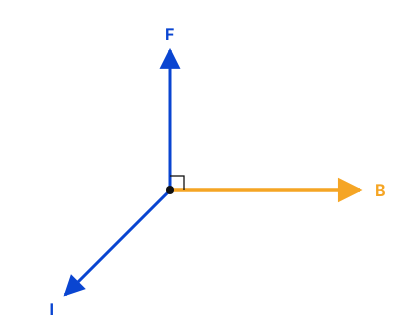
- First (index) finger = magnetic Field
- Middle finger = Current
- Thumb = Motion (force on the conductor)
Trick: FBI order: F (thumb) = Force, B (index) = magnetic field, I (middle) = current. Or 'Father, Mother, Child' = Motion (thumb), Field (first), Current (middle).
Answer: (C) First (index) finger
अवधारणा: अंगूठा, तर्जनी और मध्यमा परस्पर लंबवत रखे जाते हैं।
हल:
- तर्जनी (first finger) = चुंबकीय क्षेत्र
- मध्यमा = विद्युत धारा
- अंगूठा = गति/बल
ट्रिक: FBI: F (अंगूठा) = Force, B (तर्जनी) = Field, I (मध्यमा) = Current।
उत्तर: (C) पहली (तर्जनी) उँगली
RRB Technician Grade IIIGeneral ScienceFleming's left-hand ruleRRB Technician Grade III 2025 · 10 Mar Shift 2
Q54.If a conductor has a potential difference of 1 V across its ends and a current of 1 A flows through it, what is the resistance of the conductor?
यदि किसी चालक के सिरों के बीच 1 V का विभवांतर है और उसमें 1 A धारा प्रवाहित होती है, तो चालक का प्रतिरोध (resistance) क्या है?
- A0.5 Ω
- B2 Ω
- C10 Ω
- D1 Ω
Show answer
Concept: .
Yaad rakhein: This is the definition of 1 ohm: the resistance of a conductor through which 1 A flows when 1 V is applied across it.
Answer: (D) 1 Ω
अवधारणा:
हल:
याद रखें: यही 1 ओम की परिभाषा है: 1 V विभवांतर पर 1 A धारा बहे तो प्रतिरोध 1 Ω।
उत्तर: (D) 1 Ω
RRB Technician Grade IIIGeneral ScienceOhm's law – definition of 1 ohmRRB Technician Grade III 2025 · 10 Mar Shift 2
Q55.What is the formula unit mass of ammonium sulphate (NH4)2SO4?
अमोनियम सल्फेट (NH4)2SO4 का सूत्र इकाई द्रव्यमान क्या है?
- A146 u
- B114 u
- C132 u
- D98 u
Show answer
Concept: Add the atomic masses: N = 14, H = 1, S = 32, O = 16 u. The formula is .
- Total = u
Trick: Remember and (, take away 2 H). So .
Answer: (C) 132 u
अवधारणा: परमाणु द्रव्यमान जोड़ें: N = 14, H = 1, S = 32, O = 16 u; सूत्र
हल:
- कुल = 132 u
ट्रिक: और ( में से 2 H घटाएँ) याद रखें: ।
उत्तर: (C) 132 u
RRB Technician Grade IIIGeneral ScienceFormula unit massRRB Technician Grade III 2025 · 10 Mar Shift 2
Q56.Which of the following observations best confirms that a neutralisation reaction has occurred?
निम्नलिखित में से कौन-सा प्रेक्षण सबसे अच्छी तरह पुष्टि करता है कि उदासीनीकरण अभिक्रिया हुई है?
- AThe temperature of the solution drops drastically.विलयन का ताप अत्यधिक घट जाता है।
- BThe solution changes from blue to red.विलयन नीले से लाल हो जाता है।
- CThe pH of the solution becomes close to 7.विलयन का pH, 7 के निकट हो जाता है।
- DA gas with a pungent smell is evolved.तीखी गंध वाली एक गैस निकलती है।
Show answer
Concept: Acid + base → salt + water; H⁺ and OH⁻ cancel each other.
- When neutralisation is complete, the solution is neither acidic nor basic, so pH ≈ 7
- The reaction is exothermic, so the temperature rises (it does not fall)
- Blue → red litmus shows an acid, not neutralisation; a pungent gas is not a sign of it
Trick: 'Neutral' means pH 7. The option with pH 7 is the right one.
Answer: (C) The pH of the solution becomes close to 7.
अवधारणा: अम्ल + क्षार → लवण + जल; H⁺ और OH⁻ एक-दूसरे को निष्क्रिय करते हैं।
हल:
- पूर्ण उदासीनीकरण पर विलयन न अम्लीय न क्षारीय रहता है, यानी pH ≈ 7
- अभिक्रिया ऊष्माक्षेपी है, ताप बढ़ता है (घटता नहीं)
- नीला → लाल अम्ल दर्शाता है; तीखी गैस उदासीनीकरण का प्रमाण नहीं
ट्रिक: 'उदासीन' = pH 7; उसी विकल्प को चुनें।
उत्तर: (C) विलयन का pH, 7 के निकट हो जाता है।
RRB Technician Grade IIIGeneral ScienceNeutralisation reactionRRB Technician Grade III 2025 · 10 Mar Shift 2
Q57.The alpha particles that passed straight through the gold foil showed that:
स्वर्ण पन्नी से सीधे पार निकल जाने वाले अल्फा कणों ने यह दर्शाया कि:
- Athe nucleus is negatively chargedनाभिक ऋणावेशित है
- Bthe atom is mostly empty spaceपरमाणु का अधिकांश भाग रिक्त है
- Cthe nucleus is hugeनाभिक बहुत बड़ा है
- Dthe atom has a positive chargeपरमाणु पर धनावेश होता है
Show answer
Concept: Each observation of α-scattering leads to one conclusion.
- Most α-particles passed straight through, so the atom is mostly empty space
- A few were deflected, so the positive charge is concentrated in a small region
- Very few (about 1 in 12,000) bounced back, so the nucleus is very small and dense
Yaad rakhein: The nucleus is about 10⁵ times smaller than the atom (radius ~10⁻¹⁵ m vs ~10⁻¹⁰ m).
Answer: (B) the atom is mostly empty space
अवधारणा: α-प्रकीर्णन के हर प्रेक्षण से एक निष्कर्ष निकलता है।
हल:
- अधिकांश α-कण सीधे निकल गए, यानी परमाणु का अधिकांश भाग खाली है
- कुछ विक्षेपित हुए, यानी धनावेश छोटे क्षेत्र में केंद्रित है
- बहुत कम (लगभग 12,000 में 1) वापस लौटे, यानी नाभिक बहुत छोटा और सघन है
याद रखें: नाभिक परमाणु से लगभग 10⁵ गुना छोटा है।
उत्तर: (B) परमाणु का अधिकांश भाग रिक्त है
RRB Technician Grade IIIGeneral ScienceRutherford's α-scattering experimentRRB Technician Grade III 2025 · 10 Mar Shift 2
Q58.Why are xylem and phloem called “complex permanent tissues”?
जाइलम और फ्लोएम को “जटिल स्थायी ऊतक” क्यों कहा जाता है?
- AThey consist of only one type of cell for performing a single function.इनमें एक ही कार्य करने के लिए केवल एक प्रकार की कोशिकाएँ होती हैं।
- BThey are temporary in function and disappear after growth.इनका कार्य अस्थायी होता है और वृद्धि के बाद ये समाप्त हो जाते हैं।
- CThey contain different types of cells working together for transport.इनमें विभिन्न प्रकार की कोशिकाएँ होती हैं जो परिवहन के लिए साथ मिलकर कार्य करती हैं।
- DTheir cells can divide and form new tissues.इनकी कोशिकाएँ विभाजित होकर नए ऊतक बना सकती हैं।
Show answer
Concept: A complex tissue is made of more than one type of cell, all working together for one function.
- Xylem: tracheids, vessels, xylem parenchyma, xylem fibres; carries water and minerals
- Phloem: sieve tubes, companion cells, phloem parenchyma, phloem fibres; carries food
- They are 'permanent' because their cells have lost the ability to divide
Yaad rakhein: Simple permanent tissues (parenchyma, collenchyma, sclerenchyma) have only one type of cell.
Answer: (C) They contain different types of cells working together for transport.
अवधारणा: जटिल ऊतक में एक से अधिक प्रकार की कोशिकाएँ एक साथ एक कार्य करती हैं।
हल:
- जाइलम: ट्रेकीड, वाहिकाएँ, जाइलम मृदूतक, जाइलम रेशे; जल व खनिज का परिवहन
- फ्लोएम: चालनी नलिका, सहचर कोशिका, फ्लोएम मृदूतक, फ्लोएम रेशे; भोजन का परिवहन
- 'स्थायी' क्योंकि इनकी कोशिकाएँ विभाजन क्षमता खो चुकी हैं
याद रखें: सरल स्थायी ऊतक (मृदूतक, स्थूलकोण, दृढ़ोतक) में एक ही प्रकार की कोशिकाएँ होती हैं।
उत्तर: (C) इनमें विभिन्न प्रकार की कोशिकाएँ होती हैं जो परिवहन के लिए साथ मिलकर कार्य करती हैं।
RRB Technician Grade IIIGeneral ScienceComplex permanent tissueRRB Technician Grade III 2025 · 10 Mar Shift 2
Q59.Which of the following statements is correct regarding molecules of an element?
किसी तत्व के अणुओं के संबंध में निम्नलिखित में से कौन-सा कथन सही है?
- AMolecules of an element always contain two or more different types of atoms.किसी तत्व के अणुओं में सदैव दो या अधिक भिन्न प्रकार के परमाणु होते हैं।
- BAll elements exist as monoatomic molecules in their natural state.सभी तत्व अपनी प्राकृतिक अवस्था में एकपरमाणुक अणुओं के रूप में पाए जाते हैं।
- CA molecule of an element consists of only one type of atom bonded together.किसी तत्व का अणु केवल एक ही प्रकार के परमाणुओं के आपस में आबंधित होने से बनता है।
- DElements do not form molecules, only compounds do.तत्व अणु नहीं बनाते, केवल यौगिक बनाते हैं।
Show answer
Concept: A molecule of an element contains only one kind of atom.
- Examples: O₂, N₂, O₃, P₄, S₈ (same atoms bonded together)
- Noble gases (He, Ne) are monoatomic, but not all elements are, so B is wrong
- Different types of atoms make a compound, not an element (A is wrong)
Yaad rakhein: Atomicity: Ar = 1, O₂ = 2, O₃ = 3, P₄ = 4, S₈ = 8.
Answer: (C) A molecule of an element consists of only one type of atom bonded together.
अवधारणा: तत्व के अणु में केवल एक ही प्रकार के परमाणु होते हैं।
हल:
- उदाहरण: O₂, N₂, O₃, P₄, S₈
- उत्कृष्ट गैसें (He, Ne) एकपरमाणुक हैं, पर सभी तत्व नहीं, अतः B गलत
- भिन्न परमाणु यौगिक बनाते हैं, तत्व नहीं (A गलत)
याद रखें: परमाणुकता: Ar = 1, O₂ = 2, O₃ = 3, P₄ = 4, S₈ = 8।
उत्तर: (C) किसी तत्व का अणु केवल एक ही प्रकार के परमाणुओं के आपस में आबंधित होने से बनता है।
RRB Technician Grade IIIGeneral ScienceMolecules of elementsRRB Technician Grade III 2025 · 10 Mar Shift 2
Q60.In a school canteen, students notice that many plastic cups and plates are thrown away daily. To solve this problem, they suggest switching to steel plates and reusable water bottles. This action mainly promotes ________.
एक विद्यालय की कैंटीन में, विद्यार्थी देखते हैं कि प्रतिदिन बहुत-से प्लास्टिक के कप और प्लेटें फेंक दी जाती हैं। इस समस्या को हल करने के लिए, वे स्टील की प्लेटों और पुन: उपयोग योग्य पानी की बोतलों को अपनाने का सुझाव देते हैं। यह कार्य मुख्य रूप से ________ को बढ़ावा देता है।
- AMore plastic recyclingअधिक प्लास्टिक पुनर्चक्रण
- BFaster waste collectionतेज़ अपशिष्ट संग्रहण
- CBetter packaging designबेहतर पैकेजिंग डिज़ाइन
- DReduction and reuse of wasteअपशिष्ट में कमी और उसका पुन: उपयोग
Show answer
Concept: 3R = Reduce, Reuse, Recycle.
- Steel plates and bottles are used again and again, which is reuse
- Fewer disposable cups thrown away means waste is reduced
- Nothing is reprocessed, so this is not recycling
Yaad rakhein: Reuse is better than recycle because it needs no energy for reprocessing.
Answer: (D) Reduction and reuse of waste
अवधारणा: 3R = कम करना (Reduce), पुनः उपयोग (Reuse), पुनर्चक्रण (Recycle)
हल:
- स्टील की प्लेटें और बोतलें बार-बार उपयोग होती हैं, यह पुनः उपयोग है
- डिस्पोज़ेबल कप कम फेंके जाते हैं, यानी कचरे में कमी
- कोई पुनर्संसाधन नहीं होता, इसलिए यह पुनर्चक्रण नहीं
याद रखें: पुनः उपयोग, पुनर्चक्रण से बेहतर है क्योंकि इसमें दोबारा संसाधन के लिए ऊर्जा नहीं लगती।
उत्तर: (D) अपशिष्ट में कमी और उसका पुन: उपयोग
RRB Technician Grade IIIGeneral ScienceWaste management – 3RRRB Technician Grade III 2025 · 10 Mar Shift 2

