Q601.Honey is produced by the honeybee. So, the honeybee is a ________.
शहद का उत्पादन मधुमक्खी द्वारा किया जाता है। अतः, मधुमक्खी एक ________ है।
- ADecomposerअपघटक
- Bprimary consumerप्राथमिक उपभोक्ता
- Csecondary consumerद्वितीयक उपभोक्ता
- Dproducerउत्पादक
Show answer
Concept: Organisms that feed directly on plants or plant products are primary consumers (herbivores).
- Honeybee feeds on nectar and pollen of flowers — plant products.
- So it occupies the second trophic level → primary consumer.
- Making honey from nectar does not make it a producer; producers make food by photosynthesis.
Yaad rakhein: Producer (plants) → primary consumer (herbivores) → secondary consumer (carnivores).
Answer: (B) primary consumer
अवधारणा: जो जीव सीधे पौधों या पादप उत्पादों पर निर्भर हैं, वे प्राथमिक उपभोक्ता (शाकाहारी) हैं।
- मधुमक्खी फूलों का मकरंद और पराग खाती है — ये पादप उत्पाद हैं।
- अतः यह दूसरे पोषी स्तर पर है → प्राथमिक उपभोक्ता।
- मकरंद से शहद बनाने से वह उत्पादक नहीं बनती; उत्पादक प्रकाश-संश्लेषण से भोजन बनाते हैं।
याद रखें: उत्पादक (पौधे) → प्राथमिक उपभोक्ता (शाकाहारी) → द्वितीयक उपभोक्ता (मांसाहारी)।
उत्तर: (B) प्राथमिक उपभोक्ता
RRB Technician Grade IIIGeneral ScienceFood ChainRRB Technician Grade III 2024 · 29 Dec Shift 1
Q602.________ is useful for the survival of species over time.
समय के साथ प्रजातियों की उत्तरजीविता के लिए ________ उपयोगी है।
- AVariationविभिन्नता (Variation)
- BBuddingमुकुलन (Budding)
- CReproductionजनन (Reproduction)
- DPopulationसमष्टि (Population)
Show answer
Concept: Variation means differences among individuals of a species, arising mainly during sexual reproduction (and DNA copying errors).
- When the environment changes, some variants are better suited and survive.
- These survivors pass on their traits, so the species continues over time.
- Budding and reproduction create new individuals, but variation is what helps the species survive change.
Yaad rakhein: Variation is the raw material for natural selection and evolution (NCERT Class 10).
Answer: (A) Variation
अवधारणा: विविधता का अर्थ है किसी प्रजाति के सदस्यों में अंतर, जो मुख्यतः लैंगिक जनन (और DNA प्रतिलिपि की त्रुटियों) से आता है।
- पर्यावरण बदलने पर कुछ भिन्न सदस्य बेहतर अनुकूलित होकर जीवित रहते हैं।
- ये अपने गुण अगली पीढ़ी को देते हैं, जिससे प्रजाति लंबे समय तक बनी रहती है।
- मुकुलन और जनन नए जीव बनाते हैं, पर बदलाव में प्रजाति को बचाने का काम विविधता करती है।
याद रखें: विविधता प्राकृतिक वरण और विकास का आधार है (NCERT कक्षा 10)।
उत्तर: (A) विभिन्नता (Variation)
RRB Technician Grade IIIGeneral ScienceHeredity and EvolutionRRB Technician Grade III 2024 · 28 Dec Shift 3
Q603.What happens to the motion of an object when balanced forces act on it?
जब किसी वस्तु पर संतुलित बल (balanced forces) कार्य करते हैं, तो उसकी गति पर क्या प्रभाव पड़ता है?
- AIt slows down.वह धीमी हो जाती है।
- BIts state of motion remains unchanged.उसकी गति की अवस्था अपरिवर्तित रहती है।
- CIt changes its direction of motion.वह अपनी गति की दिशा बदल लेती है।
- DIt speeds up.उसकी चाल बढ़ जाती है।
Show answer
Concept: When balanced forces act on a body, the net (resultant) force is zero, so no acceleration is produced.
- Balanced forces: equal in size, opposite in direction, so .
- From , ; velocity does not change.
- A body at rest stays at rest; a moving body keeps the same speed and direction.
Yaad rakhein: Balanced force changes only shape (sometimes), never the state of motion; unbalanced force changes speed or direction.
Answer: (B) Its state of motion remains unchanged.
अवधारणा: जब किसी वस्तु पर संतुलित बल लगते हैं तो परिणामी बल शून्य होता है, इसलिए कोई त्वरण नहीं होता।
- संतुलित बल: बराबर परिमाण, विपरीत दिशा, अतः ।
- से ; वेग नहीं बदलता।
- विरामावस्था वाली वस्तु विराम में और गतिमान वस्तु समान चाल व दिशा में चलती रहती है।
याद रखें: संतुलित बल गति की अवस्था नहीं बदलता; असंतुलित बल ही चाल या दिशा बदलता है।
उत्तर: (B) उसकी गति की अवस्था अपरिवर्तित रहती है।
RRB Technician Grade IIIGeneral ScienceBalanced forcesRRB Technician Grade III 2024 · 28 Dec Shift 3
Q604.Find the magnitude of applied force on a box of mass 10 kg for 20 s. It increases the box's velocity from to .
10 kg द्रव्यमान वाले एक बक्से पर 20 s तक लगाए गए बल का परिमाण ज्ञात कीजिए। यह बल बक्से के वेग को से तक बढ़ा देता है।
- A5 N
- B10 N
- C4 N
- D1 N
Show answer
Concept: Force , where acceleration .
- , , , .
- .
- .
Trick: Directly: (change in momentum ÷ time).
Answer: (A) 5 N
अवधारणा: बल , जहाँ त्वरण ।
- , , , ।
- ।
- ।
ट्रिक: सीधे: (संवेग परिवर्तन ÷ समय)।
उत्तर: (A) 5 N
RRB Technician Grade IIIGeneral ScienceForce and accelerationRRB Technician Grade III 2024 · 28 Dec Shift 3
Q605.What are the balanced products of the following reaction?
_____ + _____
निम्नलिखित अभिक्रिया के संतुलित उत्पाद क्या हैं?
_____ + _____
- A
- B
- C
- D
Show answer
Concept: Sodium sulphate and barium chloride exchange ions (double displacement) and form a white precipitate of barium sulphate.
- Ions swap: joins ; joins .
- .
- Balance check: 2 Na, 1 Ba, 1 S, 4 O, 2 Cl on each side. No is released.
Yaad rakhein: is the classic white precipitate; NaCl stays in solution (aq).
Answer: (C)
अवधारणा: सोडियम सल्फेट और बेरियम क्लोराइड आयनों की अदला-बदली (द्विविस्थापन) करके बेरियम सल्फेट का सफ़ेद अवक्षेप बनाते हैं।
- आयन बदलते हैं: और जुड़ते हैं; और जुड़ते हैं।
- ।
- संतुलन: दोनों ओर 2 Na, 1 Ba, 1 S, 4 O, 2 Cl; कोई नहीं बनती।
याद रखें: प्रसिद्ध सफ़ेद अवक्षेप है; NaCl विलयन (aq) में रहता है।
उत्तर: (C)
RRB Technician Grade IIIGeneral ScienceDouble displacement reactionRRB Technician Grade III 2024 · 28 Dec Shift 3
Q606.A spherical mirror, whose reflecting surface faces towards the centre of the sphere, is called a ________.
वह गोलीय दर्पण, जिसका परावर्तक पृष्ठ गोले के केंद्र की ओर होता है, ________ कहलाता है।
- Aconcave mirrorअवतल दर्पण (concave mirror)
- Bplane mirrorसमतल दर्पण (plane mirror)
- Cconvex mirrorउत्तल दर्पण (convex mirror)
- Dplano-convex mirrorसमतलोत्तल दर्पण (plano-convex mirror)
Show answer
Concept: A spherical mirror is part of a hollow sphere. If the reflecting surface is curved inwards, i.e. faces the centre of curvature C, it is a concave mirror.
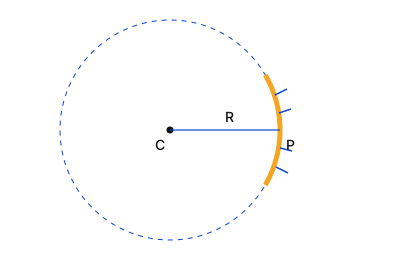
- Reflecting side faces C (inside of the sphere) → concave mirror.
- Reflecting side bulges outward (away from C) → convex mirror.
- Plane mirror has no curvature; plano-convex is a lens, not a mirror.
Yaad rakhein: Concave = 'caves in' towards the centre (like the inside of a spoon); convex = outer back of the spoon.
Answer: (A) concave mirror
अवधारणा: गोलीय दर्पण एक खोखले गोले का भाग है। यदि परावर्तक सतह अंदर की ओर, अर्थात वक्रता केंद्र C की ओर हो, तो वह अवतल दर्पण है।
- परावर्तक सतह C की ओर (गोले के भीतर) → अवतल दर्पण।
- परावर्तक सतह बाहर की ओर उभरी (C से दूर) → उत्तल दर्पण।
- समतल दर्पण वक्र नहीं होता; समतल-उत्तल एक लेंस है, दर्पण नहीं।
याद रखें: अवतल = चम्मच का भीतरी भाग (केंद्र की ओर); उत्तल = चम्मच का बाहरी पिछला भाग।
उत्तर: (A) अवतल दर्पण (concave mirror)
RRB Technician Grade IIIGeneral ScienceSpherical mirrorsRRB Technician Grade III 2024 · 28 Dec Shift 3
Q607.Express the speed of 36 km/h in m/s.
36 km/h की चाल को m/s में व्यक्त कीजिए।
- A78 m/s
- B10 m/s
- C60 m/s
- D11 m/s
Show answer
Concept: .
- Multiply by .
- .
Trick: km/h → m/s: ; m/s → km/h: . Also , .
Answer: (B) 10 m/s
अवधारणा: ।
- से गुणा करें।
- ।
ट्रिक: km/h → m/s: ; m/s → km/h: । , ।
उत्तर: (B) 10 m/s
RRB Technician Grade IIIGeneral ScienceUnit conversion of speedRRB Technician Grade III 2024 · 28 Dec Shift 3
Q608.Which of the following represents the molecular formula for carbon monoxide?
निम्नलिखित में से कौन-सा कार्बन मोनोऑक्साइड का आण्विक सूत्र दर्शाता है?
- A
- B
- C
- D
Show answer
Concept: 'Mono' means one: carbon monoxide has one carbon atom and one oxygen atom.
- Carbon monoxide → (1 C + 1 O).
- Carbon dioxide → ('di' = two O).
- is the carbonate ion, not a gas.
Yaad rakhein: Mono = 1, Di = 2, Tri = 3; the prefix tells the number of oxygen atoms.
Answer: (A)
अवधारणा: 'मोनो' का अर्थ एक है: कार्बन मोनोऑक्साइड में एक कार्बन और एक ऑक्सीजन परमाणु होता है।
- कार्बन मोनोऑक्साइड → (1 C + 1 O)।
- कार्बन डाइऑक्साइड → ('डाइ' = दो O)।
- कार्बोनेट आयन है, गैस नहीं।
याद रखें: मोनो = 1, डाइ = 2, ट्राइ = 3; उपसर्ग ऑक्सीजन परमाणुओं की संख्या बताता है।
उत्तर: (A)
RRB Technician Grade IIIGeneral ScienceChemical formulaeRRB Technician Grade III 2024 · 28 Dec Shift 3
Q609.Which of the following is produced when carbon dioxide reacts with calcium hydroxide?
जब कार्बन डाइऑक्साइड, कैल्शियम हाइड्रॉक्साइड के साथ अभिक्रिया करती है, तो निम्नलिखित में से क्या उत्पन्न होता है?
- A
- B
- C
- D
Show answer
Concept: Carbon dioxide passed through lime water (calcium hydroxide) forms insoluble calcium carbonate, which turns it milky.
- .
- is a white precipitate → milkiness.
- Excess forms soluble and milkiness disappears.
Yaad rakhein: Lime water turns milky = test for .
Answer: (D)
अवधारणा: कार्बन डाइऑक्साइड को चूने के पानी (कैल्शियम हाइड्रॉक्साइड) में प्रवाहित करने पर अघुलनशील कैल्शियम कार्बोनेट बनता है, जिससे वह दूधिया हो जाता है।
- ।
- सफ़ेद अवक्षेप → दूधियापन।
- अधिक से घुलनशील बनता है और दूधियापन मिट जाता है।
याद रखें: चूने का पानी दूधिया होना = का परीक्षण।
उत्तर: (D)
RRB Technician Grade IIIGeneral ScienceLime water testRRB Technician Grade III 2024 · 28 Dec Shift 3
Q610.Cranial nerves arising from the brain and spinal nerves arising from the spinal cord together constitute the:
मस्तिष्क से निकलने वाली कपाल तंत्रिकाएँ और मेरुरज्जु से निकलने वाली मेरु तंत्रिकाएँ मिलकर ______ का निर्माण करती हैं:
- Aperipheral nervous systemपरिधीय तंत्रिका तंत्र (peripheral nervous system)
- Bautonomic nervous systemस्वायत्त तंत्रिका तंत्र (autonomic nervous system)
- Cendocrine systemअंतःस्रावी तंत्र (endocrine system)
- Dcentral nervous systemकेंद्रीय तंत्रिका तंत्र (central nervous system)
Show answer
Concept: The nervous system has two parts: the central nervous system (brain + spinal cord) and the peripheral nervous system (nerves connecting CNS to the body).
- Cranial nerves arise from the brain (12 pairs in humans).
- Spinal nerves arise from the spinal cord (31 pairs).
- Together they form the peripheral nervous system (PNS).
Yaad rakhein: CNS = brain + spinal cord; PNS = cranial + spinal nerves.
Answer: (A) peripheral nervous system
अवधारणा: तंत्रिका तंत्र के दो भाग हैं: केंद्रीय तंत्रिका तंत्र (मस्तिष्क + मेरुरज्जु) और परिधीय तंत्रिका तंत्र (CNS को शरीर से जोड़ने वाली तंत्रिकाएँ)।
- कपाल तंत्रिकाएँ मस्तिष्क से निकलती हैं (मनुष्य में 12 जोड़े)।
- मेरु तंत्रिकाएँ मेरुरज्जु से निकलती हैं (31 जोड़े)।
- दोनों मिलकर परिधीय तंत्रिका तंत्र (PNS) बनाती हैं।
याद रखें: CNS = मस्तिष्क + मेरुरज्जु; PNS = कपाल + मेरु तंत्रिकाएँ।
उत्तर: (A) परिधीय तंत्रिका तंत्र (peripheral nervous system)
RRB Technician Grade IIIGeneral ScienceHuman nervous systemRRB Technician Grade III 2024 · 28 Dec Shift 3
Q611.Which one of the following options is correctly paired according to their mode of action?
निम्नलिखित में से कौन-सा विकल्प उनकी क्रियाविधि के अनुसार सही सुमेलित है?
- ACondom – Mechanical barrierकंडोम – यांत्रिक अवरोध
- BTubectomy – Chemical barrierट्यूबेक्टॉमी – रासायनिक अवरोध
- CContraceptive pills – Uterine deviceगर्भनिरोधक गोलियाँ – गर्भाशयी युक्ति
- DCopper T – Hormonal imbalanceकॉपर-T – हार्मोनल असंतुलन
Show answer
Concept: Contraceptive methods work as barriers, hormones, intra-uterine devices or surgery.
- Condom: mechanical barrier stopping sperm from reaching the egg — correct.
- Tubectomy: surgical method (fallopian tubes cut/tied), not chemical.
- Oral pills: hormonal; Copper-T: intra-uterine device (IUD). The other pairs are swapped.
Yaad rakhein: Barrier → condom; Hormonal → pills; IUD → Copper-T; Surgical → vasectomy/tubectomy.
Answer: (A) Condom – Mechanical barrier
अवधारणा: गर्भनिरोधक विधियाँ अवरोध, हार्मोन, अंतर्गर्भाशयी युक्ति या शल्य क्रिया द्वारा काम करती हैं।
- कंडोम: यांत्रिक अवरोध, शुक्राणु को अंडाणु तक पहुँचने से रोकता है — सही।
- ट्यूबेक्टॉमी: शल्य विधि (अंडवाहिनी काटना/बाँधना), रासायनिक नहीं।
- गोलियाँ: हार्मोनल; कॉपर-टी: अंतर्गर्भाशयी युक्ति (IUD)। बाकी जोड़े उलटे हैं।
याद रखें: अवरोध → कंडोम; हार्मोनल → गोलियाँ; IUD → कॉपर-टी; शल्य → पुरुष/स्त्री नसबंदी।
उत्तर: (A) कंडोम – यांत्रिक अवरोध
RRB Technician Grade IIIGeneral ScienceContraceptive methodsRRB Technician Grade III 2024 · 28 Dec Shift 3
Q612.Where is glucose converted into pyruvate?
ग्लूकोज का पाइरुवेट में रूपांतरण कहाँ होता है?
- ARibosomeराइबोसोम
- BCytoplasmकोशिका द्रव्य (Cytoplasm)
- CGolgi-complexगॉल्जी-काय (Golgi-complex)
- DMitochondriaमाइटोकॉन्ड्रिया
Show answer
Concept: The first step of respiration, glycolysis, breaks one glucose (6-carbon) into two pyruvate (3-carbon) molecules.
- Glycolysis occurs in the cytoplasm and needs no oxygen.
- Pyruvate then enters mitochondria (aerobic) to form , water and energy.
- Ribosome = protein synthesis; Golgi = packaging.
Yaad rakhein: Glucose → pyruvate in cytoplasm; pyruvate → in mitochondria.
Answer: (B) Cytoplasm
अवधारणा: श्वसन का पहला चरण ग्लाइकोलाइसिस एक ग्लूकोज़ (6-कार्बन) को दो पाइरूवेट (3-कार्बन) अणुओं में तोड़ता है।
- ग्लाइकोलाइसिस कोशिकाद्रव्य में होता है, ऑक्सीजन की आवश्यकता नहीं।
- फिर पाइरूवेट माइटोकॉन्ड्रिया में जाकर (वायवीय) , जल और ऊर्जा बनाता है।
- राइबोसोम = प्रोटीन संश्लेषण; गॉल्जी = पैकेजिंग।
याद रखें: ग्लूकोज़ → पाइरूवेट: कोशिकाद्रव्य; पाइरूवेट → : माइटोकॉन्ड्रिया।
उत्तर: (B) कोशिका द्रव्य (Cytoplasm)
RRB Technician Grade IIIGeneral ScienceRespiration – glycolysisRRB Technician Grade III 2024 · 28 Dec Shift 3
Q613.At what temperature does water transform into steam under normal atmospheric pressure?
सामान्य वायुमंडलीय दाब पर जल किस ताप पर भाप में परिवर्तित होता है?
- A50°C (122°F)
- B100°C (212°F)
- C80°C (176°F)
- D0°C (32°F)
Show answer
Concept: At normal atmospheric pressure (1 atm), water boils and changes into steam at its boiling point.
- Boiling point of water .
- In Fahrenheit: .
- is the freezing/melting point.
Yaad rakhein: Water: melts at (), boils at () = .
Answer: (B) 100°C (212°F)
अवधारणा: सामान्य वायुमंडलीय दाब (1 atm) पर जल अपने क्वथनांक पर उबलकर भाप बनता है।
- जल का क्वथनांक ।
- फ़ारेनहाइट में: ।
- हिमांक/गलनांक है।
याद रखें: जल: () पर पिघलता, () = पर उबलता है।
उत्तर: (B) 100°C (212°F)
RRB Technician Grade IIIGeneral ScienceBoiling point of waterRRB Technician Grade III 2024 · 28 Dec Shift 3
Q614.Which gas is primarily produced during the burning of coke?
कोक के दहन के दौरान मुख्य रूप से कौन-सी गैस उत्पन्न होती है?
- AOxygenऑक्सीजन
- BSulphur dioxideसल्फर डाइऑक्साइड
- CCarbon dioxideकार्बन डाइऑक्साइड
- DNitrogen dioxideनाइट्रोजन डाइऑक्साइड
Show answer
Concept: Coke is almost pure carbon (about 98%), so burning it in air mainly produces carbon dioxide.
- + heat.
- Oxygen is consumed, not produced.
- comes from sulphur impurities only in small amounts.
Yaad rakhein: Coke = nearly pure carbon → burns to (CO only when air is limited).
Answer: (C) Carbon dioxide
अवधारणा: कोक लगभग शुद्ध कार्बन (लगभग 98%) है, इसलिए इसे हवा में जलाने पर मुख्यतः कार्बन डाइऑक्साइड बनती है।
- + ऊष्मा।
- ऑक्सीजन ख़र्च होती है, बनती नहीं।
- केवल सल्फ़र अशुद्धि से थोड़ी मात्रा में बनती है।
याद रखें: कोक = लगभग शुद्ध कार्बन → जलकर (वायु कम हो तो CO)।
उत्तर: (C) कार्बन डाइऑक्साइड
RRB Technician Grade IIIGeneral ScienceCombustion of cokeRRB Technician Grade III 2024 · 28 Dec Shift 3
Q615.The displacement of a body is perpendicular to the direction in which the force is applied; the work done in this case will be:
किसी वस्तु का विस्थापन, लगाए गए बल की दिशा के लंबवत है; इस स्थिति में किया गया कार्य होगा:
- ANegativeऋणात्मक
- BInfiniteअनंत
- CPositiveधनात्मक
- DZeroशून्य
Show answer
Concept: Work , where is the angle between force and displacement.
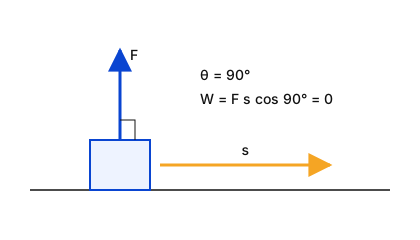
- Displacement is perpendicular to force, so .
- .
- .
Trick: → positive work, → zero work, → negative work (e.g. coolie walking with load on head does zero work against gravity).
Answer: (D) Zero
अवधारणा: कार्य , जहाँ बल और विस्थापन के बीच का कोण है।
- विस्थापन बल के लंबवत है, अतः ।
- ।
- ।
ट्रिक: → धनात्मक कार्य, → शून्य कार्य, → ऋणात्मक कार्य (जैसे सिर पर बोझ लेकर चलता कुली गुरुत्व के विरुद्ध शून्य कार्य करता है)।
उत्तर: (D) शून्य
RRB Technician Grade IIIGeneral ScienceWork doneRRB Technician Grade III 2024 · 28 Dec Shift 3
Q616.Burning of unsaturated compounds gives which of the following?
असंतृप्त यौगिकों के दहन से निम्नलिखित में से क्या प्राप्त होता है?
- AClean flameस्वच्छ ज्वाला
- BGreen flameहरी ज्वाला
- CYellow flameपीली ज्वाला
- DRed flameलाल ज्वाला
Show answer
Concept: Saturated hydrocarbons burn with a clean blue flame; unsaturated hydrocarbons burn with a yellow, sooty (smoky) flame.
- Unsaturated compounds have a higher proportion of carbon.
- Carbon does not burn completely, so unburnt carbon particles glow → yellow flame with black smoke.
- Saturated compounds (in enough air) give a clean blue flame.
Yaad rakhein: Saturated → blue, clean flame; Unsaturated → yellow, sooty flame.
Answer: (C) Yellow flame
अवधारणा: संतृप्त हाइड्रोकार्बन स्वच्छ नीली ज्वाला से जलते हैं; असंतृप्त हाइड्रोकार्बन पीली, कालिख युक्त (धुएँदार) ज्वाला देते हैं।
- असंतृप्त यौगिकों में कार्बन का अनुपात अधिक होता है।
- कार्बन पूर्ण रूप से नहीं जलता, बिना जले कण चमकते हैं → पीली ज्वाला व काला धुआँ।
- संतृप्त यौगिक (पर्याप्त वायु में) स्वच्छ नीली ज्वाला देते हैं।
याद रखें: संतृप्त → नीली स्वच्छ ज्वाला; असंतृप्त → पीली कालिखयुक्त ज्वाला।
उत्तर: (C) पीली ज्वाला
RRB Technician Grade IIIGeneral ScienceCombustion of carbon compoundsRRB Technician Grade III 2024 · 28 Dec Shift 3
Q617.Match the hormones with their respective functions.
Hormones — Functions
1. Thyroxin — a. Control body’s growth and development
2. Growth hormone — b. Male sex organ development
3. Testosterone — c. Controls the level of blood sugar in the body
4. Insulin — d. Controls the body's metabolism of fat, protein and carbohydrates.
हार्मोनों का उनके संबंधित कार्यों से मिलान कीजिए।
हार्मोन — कार्य
1. थायरॉक्सिन — a. शरीर की वृद्धि और विकास को नियंत्रित करता है
2. वृद्धि हार्मोन — b. नर लैंगिक अंगों का विकास
3. टेस्टोस्टेरोन — c. शरीर में रक्त शर्करा के स्तर को नियंत्रित करता है
4. इंसुलिन — d. शरीर में वसा, प्रोटीन और कार्बोहाइड्रेट के उपापचय को नियंत्रित करता है।
- A1-d, 2-b, 3-c, 4-a
- B1-b, 2-a, 3-d, 4-c
- C1-d, 2-a, 3-b, 4-c
- D1-a, 2-c, 3-b, 4-d
Show answer
Concept: Each endocrine hormone has a specific role in the body.
- Thyroxin (thyroid) → regulates metabolism of carbohydrate, fat and protein: 1-d.
- Growth hormone (pituitary) → growth and development: 2-a.
- Testosterone (testes) → male sex organ development: 3-b.
- Insulin (pancreas) → controls blood sugar: 4-c.
Yaad rakhein: Thyroxin–metabolism, GH–growth, Testosterone–male traits, Insulin–blood sugar (deficiency causes diabetes).
Answer: (C) 1-d, 2-a, 3-b, 4-c
अवधारणा: प्रत्येक अंतःस्रावी हार्मोन शरीर में एक विशेष कार्य करता है।
- थायरॉक्सिन (थायरॉइड) → कार्बोहाइड्रेट, वसा, प्रोटीन का उपापचय: 1-d।
- वृद्धि हार्मोन (पीयूष ग्रंथि) → वृद्धि व विकास: 2-a।
- टेस्टोस्टेरोन (वृषण) → नर जनन अंगों का विकास: 3-b।
- इंसुलिन (अग्न्याशय) → रक्त शर्करा नियंत्रण: 4-c।
याद रखें: थायरॉक्सिन–उपापचय, GH–वृद्धि, टेस्टोस्टेरोन–नर लक्षण, इंसुलिन–रक्त शर्करा (कमी से मधुमेह)।
उत्तर: (C) 1-d, 2-a, 3-b, 4-c
RRB Technician Grade IIIGeneral ScienceHormones and functionsRRB Technician Grade III 2024 · 28 Dec Shift 3
Q618.Which of the options below represents the correct chemical formula of calcium hydroxide?
नीचे दिए गए विकल्पों में से कौन-सा कैल्शियम हाइड्रॉक्साइड (calcium hydroxide) का सही रासायनिक सूत्र दर्शाता है?
- ACa(OH)2
- BMg(OH)2
- CNaOH
- DKOH
Show answer
Concept: Calcium is divalent () and hydroxide is monovalent ().
- Criss-cross valencies: Ca (2) and OH (1).
- Formula: (slaked lime).
- = magnesium hydroxide, NaOH = sodium hydroxide, KOH = potassium hydroxide.
Yaad rakhein: Slaked lime / lime water = ; quicklime = .
Answer: (A) Ca(OH)2
अवधारणा: कैल्शियम द्विसंयोजी () और हाइड्रॉक्साइड एकसंयोजी () है।
- संयोजकता का क्रॉस-गुणन: Ca (2) और OH (1)।
- सूत्र: (बुझा हुआ चूना)।
- = मैग्नीशियम हाइड्रॉक्साइड, NaOH = सोडियम हाइड्रॉक्साइड, KOH = पोटैशियम हाइड्रॉक्साइड।
याद रखें: बुझा चूना / चूने का पानी = ; बिना बुझा चूना = ।
उत्तर: (A) Ca(OH)2
RRB Technician Grade IIIGeneral ScienceChemical formulaeRRB Technician Grade III 2024 · 28 Dec Shift 3
Q619.The pressure exerted on a body is 10 , if the area of the body is 2 ; then the thrust acting on the body will be:
किसी वस्तु पर लगने वाला दाब 10 है, यदि वस्तु का क्षेत्रफल 2 है; तो वस्तु पर लगने वाला प्रणोद (thrust) होगा:
- A2 N
- B5 N
- C10 N
- D20 N
Show answer
Concept: , so .
- , .
- .
Yaad rakhein: Thrust is a force (unit N); pressure is force per unit area (unit = Pa).
Answer: (D) 20 N
अवधारणा: , अतः ।
- , ।
- ।
याद रखें: प्रणोद एक बल है (मात्रक N); दाब प्रति इकाई क्षेत्रफल बल है (मात्रक = Pa)।
उत्तर: (D) 20 N
RRB Technician Grade IIIGeneral ScienceThrust and pressureRRB Technician Grade III 2024 · 28 Dec Shift 3
Q620.What is the filtration unit of the kidney?
वृक्क (kidney) की निस्यंदन इकाई क्या है?
- ASeminiferous tubuleशुक्रजनक नलिका (Seminiferous tubule)
- BNephronवृक्काणु (Nephron)
- CNeuronतंत्रिका कोशिका (Neuron)
- DSpermशुक्राणु (Sperm)
Show answer
Concept: The kidney filters blood through about a million tiny units called nephrons.
- Each nephron has a Bowman's capsule with glomerulus where filtration happens.
- Useful substances are reabsorbed in the tubule; urine is formed.
- Neuron = nerve cell; seminiferous tubules and sperm belong to the male reproductive system.
Yaad rakhein: Structural & functional unit: kidney → nephron, nervous system → neuron.
Answer: (B) Nephron
अवधारणा: वृक्क लगभग दस लाख छोटी इकाइयों, नेफ्रॉन, द्वारा रक्त को छानता है।
- प्रत्येक नेफ्रॉन में बोमन संपुट व ग्लोमेरुलस होता है जहाँ निस्यंदन होता है।
- उपयोगी पदार्थ नलिका में पुनः अवशोषित होते हैं और मूत्र बनता है।
- न्यूरॉन = तंत्रिका कोशिका; शुक्रजनक नलिका व शुक्राणु नर जनन तंत्र के भाग हैं।
याद रखें: संरचनात्मक व क्रियात्मक इकाई: वृक्क → नेफ्रॉन, तंत्रिका तंत्र → न्यूरॉन।
उत्तर: (B) वृक्काणु (Nephron)
RRB Technician Grade IIIGeneral ScienceHuman excretory systemRRB Technician Grade III 2024 · 28 Dec Shift 3

