Q961.Charge on how many electrons is equivalent to 1 coulomb of electric charge?
कितने इलेक्ट्रॉनों पर आवेश 1 कूलॉम विद्युत आवेश के तुल्य होता है?
- A
- B
- C
- D
Show answer
Concept: Charge on one electron C. Number of electrons in charge : .
- electrons.
Trick: C electrons – a standard NCERT value.
Answer: (B)
अवधारणा: एक इलेक्ट्रॉन पर आवेश C। आवेश में इलेक्ट्रॉनों की संख्या: ।
- इलेक्ट्रॉन।
ट्रिक: C इलेक्ट्रॉन – NCERT का मानक मान।
उत्तर: (B)
RRB Technician Grade IIIGeneral ScienceQuantisation of ChargeRRB Technician Grade III 2024 · 26 Dec Shift 1
Q962.The following equation is an example of which type of reaction?
निम्नलिखित समीकरण किस प्रकार की अभिक्रिया का उदाहरण है?
- ANeutralisation reactionउदासीनीकरण अभिक्रिया (Neutralisation reaction)
- BCombination reactionसंयोजन अभिक्रिया (Combination reaction)
- CDouble displacement reactionद्विविस्थापन अभिक्रिया (Double displacement reaction)
- DCombustion reactionदहन अभिक्रिया (Combustion reaction)
Show answer
Concept: In a double displacement reaction, two compounds exchange their ions to form two new compounds.
- Reactants: and .
- pairs with and pairs with .
- – ions swapped, blue precipitate forms.
Trick: Pattern means double displacement.
Answer: (C) Double displacement reaction
अवधारणा: द्विविस्थापन अभिक्रिया में दो यौगिक आपस में आयनों का आदान-प्रदान करके दो नए यौगिक बनाते हैं।
- अभिकारक: और ।
- , से तथा , से जुड़ता है।
- – आयन बदल गए, नीला अवक्षेप बना।
ट्रिक: वाला पैटर्न = द्विविस्थापन।
उत्तर: (C) द्विविस्थापन अभिक्रिया (Double displacement reaction)
RRB Technician Grade IIIGeneral ScienceTypes of chemical reactionsRRB Technician Grade III 2024 · 24 Dec Shift 3
Q963.Involuntary actions including blood pressure, salivation and vomiting are controlled by:
रक्तचाप, लार आना और वमन (उल्टी) सहित अनैच्छिक क्रियाएँ किसके द्वारा नियंत्रित होती हैं?
- Aonly the spinal cordकेवल मेरुरज्जु (spinal cord)
- Bthe medulla in the hind-brainपश्चमस्तिष्क (hind-brain) में स्थित मेडुला
- Cthe cerebellum in the fore-brainअग्रमस्तिष्क (fore-brain) में स्थित अनुमस्तिष्क (cerebellum)
- Donly the heartकेवल हृदय
Show answer
Concept: The hind-brain has the pons, cerebellum and medulla. The medulla controls involuntary actions.
- Blood pressure, salivation and vomiting happen without our will – they are involuntary.
- Such actions are controlled by the medulla oblongata of the hind-brain.
- Cerebellum is in the hind-brain (not fore-brain) and controls balance and posture.
Yaad rakhein: Medulla = BP, salivation, vomiting; Cerebellum = balance; Cerebrum = thinking.
Answer: (B) the medulla in the hind-brain
अवधारणा: पश्चमस्तिष्क में पोंस, अनुमस्तिष्क और मेडुला होते हैं। मेडुला अनैच्छिक क्रियाओं को नियंत्रित करता है।
- रक्तचाप, लार आना और उल्टी हमारी इच्छा के बिना होते हैं – ये अनैच्छिक क्रियाएँ हैं।
- इनका नियंत्रण पश्चमस्तिष्क का मेडुला ऑब्लांगेटा करता है।
- अनुमस्तिष्क (सेरिबेलम) पश्चमस्तिष्क में है, अग्रमस्तिष्क में नहीं; यह संतुलन बनाए रखता है।
याद रखें: मेडुला = रक्तचाप, लार, उल्टी; अनुमस्तिष्क = संतुलन; प्रमस्तिष्क = सोचना।
उत्तर: (B) पश्चमस्तिष्क (hind-brain) में स्थित मेडुला
RRB Technician Grade IIIGeneral ScienceHuman brainRRB Technician Grade III 2024 · 24 Dec Shift 3
Q964.A cart is moving with a uniform velocity and a retarding force F is applied in the opposite direction to stop the cart. The work done by the force is:
एक गाड़ी एकसमान वेग से गतिमान है और उसे रोकने के लिए विपरीत दिशा में एक मंदक बल (retarding force) F लगाया जाता है। बल द्वारा किया गया कार्य है:
- Apositiveधनात्मक
- Bzeroशून्य
- Cundeterminedअनिर्धारित
- Dnegativeऋणात्मक
Show answer
Concept: , where is the angle between force and displacement.
- The cart moves forward; the retarding force acts backward.
- So and .
- , i.e. negative work.
Trick: Force opposite to motion (friction, brakes) always does negative work.
Answer: (D) negative
अवधारणा: , जहाँ बल और विस्थापन के बीच का कोण है।
- गाड़ी आगे चलती है, मंदक बल पीछे की ओर लगता है।
- अतः तथा ।
- , अर्थात कार्य ऋणात्मक है।
ट्रिक: गति के विपरीत बल (घर्षण, ब्रेक) सदैव ऋणात्मक कार्य करता है।
उत्तर: (D) ऋणात्मक
RRB Technician Grade IIIGeneral ScienceWork done by a forceRRB Technician Grade III 2024 · 24 Dec Shift 3
Q965.Animals like hydra and planaria can be cut into any number of pieces and each piece grows into a complete organism. This is known as:
हाइड्रा और प्लेनेरिया जैसे जंतुओं को कितने भी टुकड़ों में काटा जा सकता है और प्रत्येक टुकड़ा एक पूर्ण जीव में विकसित हो जाता है। इसे कहा जाता है:
- Aregenerationपुनरुद्भवन (regeneration)
- Bbinary fissionद्विखंडन (binary fission)
- Cbuddingमुकुलन (budding)
- Dfragmentationखंडन (fragmentation)
Show answer
Concept: Regeneration is the ability of a fully differentiated organism to give rise to new individuals from its body parts.
- When Hydra or Planaria is cut into many pieces, each piece forms a complete organism.
- This is carried out by specialised cells that divide and differentiate into all tissues.
- Fragmentation (e.g. Spirogyra) is breaking up on maturity; here the organism is cut, so it is regeneration.
Yaad rakhein: Planaria and Hydra = regeneration; Spirogyra = fragmentation; Amoeba = binary fission.
Answer: (A) regeneration
अवधारणा: पुनर्जनन वह क्षमता है जिसमें पूर्ण विकसित जीव अपने शरीर के किसी भाग से नया जीव बना लेता है।
- हाइड्रा या प्लेनेरिया को कई टुकड़ों में काटने पर हर टुकड़ा पूरा जीव बन जाता है।
- यह विशेष कोशिकाओं द्वारा होता है जो विभाजित होकर सभी ऊतक बनाती हैं।
- विखंडन (जैसे स्पाइरोगायरा) परिपक्व होने पर टूटना है; यहाँ जीव को काटा गया है, अतः पुनर्जनन।
याद रखें: प्लेनेरिया, हाइड्रा = पुनर्जनन; स्पाइरोगायरा = खंडन; अमीबा = द्विखंडन।
उत्तर: (A) पुनरुद्भवन (regeneration)
RRB Technician Grade IIIGeneral ScienceRegenerationRRB Technician Grade III 2024 · 24 Dec Shift 3
Q966.Which of the following forces is responsible for the tides, due to the Moon and the Sun?
चंद्रमा और सूर्य के कारण आने वाले ज्वार-भाटे के लिए निम्नलिखित में से कौन-सा बल उत्तरदायी है?
- AElectromagnetic forceविद्युतचुंबकीय बल
- BNuclear forceनाभिकीय बल
- CGravitation forceगुरुत्वाकर्षण बल
- DElectrostatic forceस्थिरवैद्युत बल
Show answer
Concept: Every two masses attract each other by the gravitational force .
- The Moon (and the Sun) pull the ocean water of the Earth.
- The side nearer to the Moon is pulled more, so water bulges – high tide.
- Thus tides are caused by the gravitational force of the Moon and the Sun.
Yaad rakhein: Tides, motion of planets, falling bodies – all due to gravitation.
Answer: (C) Gravitation force
अवधारणा: कोई भी दो द्रव्यमान एक-दूसरे को गुरुत्वाकर्षण बल से आकर्षित करते हैं।
- चंद्रमा (और सूर्य) पृथ्वी के समुद्री जल को अपनी ओर खींचते हैं।
- चंद्रमा के निकट वाले भाग पर अधिक खिंचाव से जल ऊपर उठता है – ज्वार।
- अतः ज्वार-भाटा चंद्रमा व सूर्य के गुरुत्वाकर्षण बल के कारण होता है।
याद रखें: ज्वार-भाटा, ग्रहों की गति, वस्तुओं का गिरना – सब गुरुत्वाकर्षण से।
उत्तर: (C) गुरुत्वाकर्षण बल
RRB Technician Grade IIIGeneral ScienceGravitationRRB Technician Grade III 2024 · 24 Dec Shift 3
Q967.An athlete is moving with uniform speed in a circular track of radius R, and he completes one round in t s. The speed of the athlete is:
एक धावक R त्रिज्या वाले वृत्ताकार पथ पर एकसमान चाल से गतिमान है और वह t s में एक चक्कर पूरा करता है। धावक की चाल है:
- A
- B
- C
- D
Show answer
Concept: Speed . One round of a circle of radius covers its circumference .
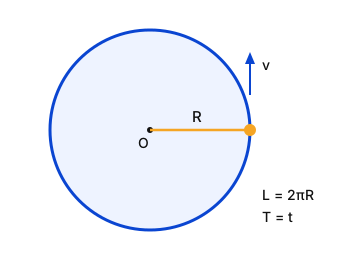
- Distance in one round .
- Time for one round .
- .
Trick: Speed on a circular path .
Answer: (B)
अवधारणा: चाल । त्रिज्या के वृत्त का एक चक्कर उसकी परिधि के बराबर है।
- एक चक्कर में दूरी ।
- एक चक्कर का समय ।
- ।
ट्रिक: वृत्ताकार पथ पर चाल ।
उत्तर: (B)
RRB Technician Grade IIIGeneral ScienceUniform circular motionRRB Technician Grade III 2024 · 24 Dec Shift 3
Q968.From the given following metals, which one is least reactive towards displacement reaction?
Copper, iron, zinc and lead.
दी गई निम्नलिखित धातुओं में से कौन-सी विस्थापन अभिक्रिया के प्रति सबसे कम अभिक्रियाशील है?
कॉपर (ताँबा), आयरन (लोहा), जिंक और लेड।
- ALeadलेड (Lead)
- BCopperकॉपर (Copper)
- CIronआयरन (Iron)
- DIron and zincआयरन और जिंक
Show answer
Concept: A more reactive metal displaces a less reactive metal from its salt solution. The least reactive metal is lowest in the reactivity series.
- Order: .
- Copper is placed below hydrogen and below lead.
- So copper cannot displace Zn, Fe or Pb – it is the least reactive.
Yaad rakhein: K Na Ca Mg Al Zn Fe Pb H Cu Hg Ag Au – reactivity decreases left to right.
Answer: (B) Copper
अवधारणा: अधिक सक्रिय धातु कम सक्रिय धातु को उसके लवण विलयन से विस्थापित करती है। सबसे कम सक्रिय धातु श्रेणी में सबसे नीचे होती है।
- क्रम: ।
- कॉपर हाइड्रोजन और लेड दोनों से नीचे है।
- अतः कॉपर Zn, Fe या Pb को विस्थापित नहीं कर सकता – यह सबसे कम सक्रिय है।
याद रखें: K Na Ca Mg Al Zn Fe Pb H Cu Hg Ag Au – बाएँ से दाएँ सक्रियता घटती है।
उत्तर: (B) कॉपर (Copper)
RRB Technician Grade IIIGeneral ScienceReactivity seriesRRB Technician Grade III 2024 · 24 Dec Shift 3
Q969.Which of the following symptoms is related to myopia?
निम्नलिखित में से कौन-सा लक्षण निकट-दृष्टि दोष (myopia) से संबंधित है?
- AA person cannot see both nearby and distant objects distinctly.व्यक्ति निकट और दूर दोनों की वस्तुओं को स्पष्ट रूप से नहीं देख सकता।
- BA person can see nearby objects clearly but cannot see distant objects distinctly.व्यक्ति निकट की वस्तुओं को स्पष्ट देख सकता है, लेकिन दूर की वस्तुओं को स्पष्ट रूप से नहीं देख सकता।
- CA person can see distant objects clearly but cannot see nearby objects distinctly.व्यक्ति दूर की वस्तुओं को स्पष्ट देख सकता है, लेकिन निकट की वस्तुओं को स्पष्ट रूप से नहीं देख सकता।
- DA person can see both nearby and distant objects distinctly.व्यक्ति निकट और दूर दोनों की वस्तुओं को स्पष्ट रूप से देख सकता है।
Show answer
Concept: Myopia (near-sightedness): image of a distant object forms in front of the retina.
- Causes: elongated eyeball or excessive curvature of the eye lens.
- The person sees nearby objects clearly but distant objects look blurred.
- Corrected with a concave (diverging) lens.
Yaad rakhein: Myopia – near clear, far blurred, concave lens; Hypermetropia – far clear, near blurred, convex lens.
Answer: (B) A person can see nearby objects clearly but cannot see distant objects distinctly.
अवधारणा: निकट दृष्टि दोष (मायोपिया): दूर की वस्तु का प्रतिबिंब रेटिना के आगे बनता है।
- कारण: नेत्र गोलक का लंबा होना या लेंस की अधिक वक्रता।
- व्यक्ति पास की वस्तुएँ साफ देखता है, पर दूर की वस्तुएँ धुँधली दिखती हैं।
- सुधार: अवतल (अपसारी) लेंस से।
याद रखें: मायोपिया – पास साफ, दूर धुँधला, अवतल लेंस; हाइपरमेट्रोपिया – दूर साफ, पास धुँधला, उत्तल लेंस।
उत्तर: (B) व्यक्ति निकट की वस्तुओं को स्पष्ट देख सकता है, लेकिन दूर की वस्तुओं को स्पष्ट रूप से नहीं देख सकता।
RRB Technician Grade IIIGeneral ScienceDefects of vision – myopiaRRB Technician Grade III 2024 · 24 Dec Shift 3
Q970.Select the correct chemical reaction that represents the chlor-alkali process.
क्लोर-क्षार प्रक्रिया (chlor-alkali process) को दर्शाने वाली सही रासायनिक अभिक्रिया का चयन कीजिए।
- A
- B
- C
- D
Show answer
Concept: Electrolysis of brine (aqueous sodium chloride) is called the chlor-alkali process.
- Brine .
- .
- Products: chlorine (chlor) and sodium hydroxide (alkali), plus hydrogen.
Trick: Name itself: chlor () + alkali () – from .
Answer: (C)
अवधारणा: ब्राइन (सोडियम क्लोराइड का जलीय विलयन) के विद्युत अपघटन को क्लोर-क्षार प्रक्रिया कहते हैं।
- ब्राइन ।
- ।
- उत्पाद: क्लोरीन (क्लोर), सोडियम हाइड्रॉक्साइड (क्षार) तथा हाइड्रोजन।
ट्रिक: नाम से ही: क्लोर () + क्षार () – से।
उत्तर: (C)
RRB Technician Grade IIIGeneral ScienceChlor-alkali processRRB Technician Grade III 2024 · 24 Dec Shift 3
Q971.Which of the following statements is correct for a heterogeneous mixture?
विषमांगी मिश्रण (heterogeneous mixture) के लिए निम्नलिखित में से कौन-सा कथन सही है?
- AA clear solution is called a heterogeneous mixture.एक स्पष्ट विलयन को विषमांगी मिश्रण कहा जाता है।
- BThe composition of the mixture is non-uniform.मिश्रण का संघटन असमान होता है।
- CMixtures don't contain physically distinct parts.मिश्रणों में भौतिक रूप से भिन्न भाग नहीं होते।
- DThe composition of the mixture is uniform.मिश्रण का संघटन एकसमान होता है।
Show answer
Concept: A heterogeneous mixture has a non-uniform composition and physically distinct parts.
- Examples: sand + water, oil + water, salt + iron filings.
- Different samples of it have different compositions.
- A clear solution (salt in water) is homogeneous with uniform composition, so A, C, D are wrong.
Yaad rakhein: Homogeneous = uniform, one phase; Heterogeneous = non-uniform, visible boundaries.
Answer: (B) The composition of the mixture is non-uniform.
अवधारणा: विषमांगी मिश्रण का संघटन असमान होता है और उसके भाग अलग-अलग दिखाई देते हैं।
- उदाहरण: रेत + पानी, तेल + पानी, नमक + लौह चूर्ण।
- इसके अलग-अलग नमूनों का संघटन भिन्न होता है।
- स्पष्ट विलयन (पानी में नमक) समांगी है, अतः A, C, D गलत हैं।
याद रखें: समांगी = एकसमान संघटन; विषमांगी = असमान संघटन, अलग सीमाएँ दिखती हैं।
उत्तर: (B) मिश्रण का संघटन असमान होता है।
RRB Technician Grade IIIGeneral ScienceMixturesRRB Technician Grade III 2024 · 24 Dec Shift 3
Q972.An object is displaced horizontally because of the applied force. What is revealed by this action?
लगाए गए बल के कारण एक वस्तु क्षैतिज रूप से विस्थापित होती है। इस क्रिया से क्या पता चलता है?
- AWork is done by the force.बल द्वारा कार्य किया गया है।
- BThe force decreases the mass of the object.बल वस्तु के द्रव्यमान को घटाता है।
- CThe force increases the inertia of the object.बल वस्तु के जड़त्व को बढ़ाता है।
- DThe force increases the mass of the object.बल वस्तु के द्रव्यमान को बढ़ाता है।
Show answer
Concept: Work is done when a force acts on an object and the object is displaced in the direction of the force: .
- Force is applied and the object moves horizontally, so .
- Hence – work is done by the force.
- Force never changes mass or inertia of a body.
Yaad rakhein: Two conditions for work: a force acts and displacement occurs.
Answer: (A) Work is done by the force.
अवधारणा: जब बल लगाने पर वस्तु बल की दिशा में विस्थापित होती है, तब कार्य होता है: ।
- बल लगाया गया और वस्तु क्षैतिज रूप से खिसकी, अतः ।
- इसलिए – बल द्वारा कार्य किया गया।
- बल वस्तु का द्रव्यमान या जड़त्व नहीं बदलता।
याद रखें: कार्य की दो शर्तें: बल लगे और विस्थापन हो।
उत्तर: (A) बल द्वारा कार्य किया गया है।
RRB Technician Grade IIIGeneral ScienceWorkRRB Technician Grade III 2024 · 24 Dec Shift 3
Q973.Which of the following is INCORRECT about plant hormones?
पादप हॉर्मोनों के बारे में निम्नलिखित में से कौन-सा कथन गलत है?
- AAll plant hormones except cytokinins promote cell division.साइटोकाइनिन को छोड़कर सभी पादप हॉर्मोन कोशिका विभाजन को बढ़ावा देते हैं।
- BAll plant hormones except abscisic acid help in promoting growth.एब्सिसिक अम्ल को छोड़कर सभी पादप हॉर्मोन वृद्धि को बढ़ावा देने में सहायता करते हैं।
- CDifferent plant hormones help to coordinate growth and development.विभिन्न पादप हॉर्मोन वृद्धि और विकास के समन्वय में सहायता करते हैं।
- DDifferent plant hormones help to coordinate responses to the environment.विभिन्न पादप हॉर्मोन पर्यावरण के प्रति अनुक्रियाओं के समन्वय में सहायता करते हैं।
Show answer
Concept: Plant hormones (auxin, gibberellin, cytokinin, abscisic acid) coordinate growth, development and responses to the environment.
- Cytokinins actually promote cell division – so statement A is wrong.
- Abscisic acid inhibits growth while the others promote growth – statement B is correct.
- Statements C and D are correct roles of hormones.
Yaad rakhein: Cytokinin = cell division; Auxin = cell elongation; Gibberellin = stem growth; ABA = growth inhibitor (wilting).
Answer: (A) All plant hormones except cytokinins promote cell division.
अवधारणा: पादप हॉर्मोन (ऑक्सिन, जिबरेलिन, साइटोकाइनिन, एब्सिसिक अम्ल) वृद्धि, विकास और पर्यावरण के प्रति अनुक्रिया का समन्वय करते हैं।
- साइटोकाइनिन स्वयं कोशिका विभाजन को बढ़ावा देता है – अतः कथन A गलत है।
- एब्सिसिक अम्ल वृद्धि रोकता है, बाकी वृद्धि बढ़ाते हैं – कथन B सही है।
- कथन C और D हॉर्मोन के सही कार्य हैं।
याद रखें: साइटोकाइनिन = कोशिका विभाजन; ऑक्सिन = कोशिका दीर्घन; जिबरेलिन = तने की वृद्धि; ABA = वृद्धि अवरोधक।
उत्तर: (A) साइटोकाइनिन को छोड़कर सभी पादप हॉर्मोन कोशिका विभाजन को बढ़ावा देते हैं।
RRB Technician Grade IIIGeneral SciencePlant hormonesRRB Technician Grade III 2024 · 24 Dec Shift 3
Q974.According to the laws of refraction, which of the following is/are true?
(A) The incident ray, the refracted ray and the normal to the interface of two transparent media do not lie in the same plane.
(B) For a given colour of light and a given pair of media, the ratio of the sine of angle of incidence to sine of angle of refraction is a constant.
अपवर्तन के नियमों के अनुसार, निम्नलिखित में से कौन-सा/से सत्य है/हैं?
(A) आपतित किरण, अपवर्तित किरण और दो पारदर्शी माध्यमों के अंतरापृष्ठ पर अभिलंब एक ही तल में नहीं होते।
(B) प्रकाश के किसी दिए गए रंग और माध्यमों के किसी दिए गए युग्म के लिए, आपतन कोण की ज्या (sine) और अपवर्तन कोण की ज्या का अनुपात एक नियतांक होता है।
- A'A' is true and 'B' is false.'A' सत्य है और 'B' असत्य है।
- B'A' is false and 'B' is true.'A' असत्य है और 'B' सत्य है।
- CBoth 'A' and 'B' are false.'A' और 'B' दोनों असत्य हैं।
- DBoth 'A' and 'B' are true.'A' और 'B' दोनों सत्य हैं।
Show answer
Concept: Laws of refraction: (1) incident ray, refracted ray and normal lie in the same plane; (2) Snell's law .
- Statement A says they do NOT lie in the same plane – false.
- Statement B is Snell's law for a given colour and pair of media – true.
- So A is false and B is true.
Yaad rakhein: The constant is the refractive index of the second medium w.r.t. the first.
Answer: (B) 'A' is false and 'B' is true.
अवधारणा: अपवर्तन के नियम: (1) आपतित किरण, अपवर्तित किरण और अभिलंब एक ही तल में होते हैं; (2) स्नेल का नियम ।
- कथन A कहता है वे एक तल में नहीं होते – असत्य।
- कथन B दिए गए रंग और माध्यम-युग्म के लिए स्नेल का नियम है – सत्य।
- अतः A असत्य और B सत्य है।
याद रखें: नियतांक ही दूसरे माध्यम का पहले के सापेक्ष अपवर्तनांक है।
उत्तर: (B) 'A' असत्य है और 'B' सत्य है।
RRB Technician Grade IIIGeneral ScienceLaws of refractionRRB Technician Grade III 2024 · 24 Dec Shift 3
Q975.The refractive index is related to:
अपवर्तनांक (refractive index) किससे संबंधित है?
- Athe frequency of light in two different mediaदो भिन्न माध्यमों में प्रकाश की आवृत्ति
- Bthe dielectric polarizability of two mediaदो माध्यमों की परावैद्युत ध्रुवणीयता (dielectric polarizability)
- Cthe speed of propagation of light in two different mediaदो भिन्न माध्यमों में प्रकाश के संचरण की चाल
- Dthe magnetic moment of two different mediaदो भिन्न माध्यमों का चुंबकीय आघूर्ण
Show answer
Concept: Refractive index of medium 2 w.r.t. medium 1: (ratio of speeds of light).
- Light changes speed when it passes from one medium to another.
- Refractive index compares these speeds: for absolute refractive index.
- Frequency of light does not change on refraction, so option A is wrong.
Yaad rakhein: Larger refractive index = optically denser = slower light.
Answer: (C) the speed of propagation of light in two different media
अवधारणा: माध्यम 2 का माध्यम 1 के सापेक्ष अपवर्तनांक: (प्रकाश की चालों का अनुपात)।
- एक माध्यम से दूसरे में जाने पर प्रकाश की चाल बदलती है।
- अपवर्तनांक इन चालों की तुलना है: निरपेक्ष अपवर्तनांक ।
- अपवर्तन में आवृत्ति नहीं बदलती, अतः विकल्प A गलत है।
याद रखें: अधिक अपवर्तनांक = प्रकाशतः सघन = प्रकाश की चाल कम।
उत्तर: (C) दो भिन्न माध्यमों में प्रकाश के संचरण की चाल
RRB Technician Grade IIIGeneral ScienceRefractive indexRRB Technician Grade III 2024 · 24 Dec Shift 3
Q976.The weight of an object was 60 N when measured on the surface of the earth.
What would be its weight when measured on the surface of the moon?
पृथ्वी की सतह पर मापे जाने पर किसी वस्तु का भार 60 N था।
चंद्रमा की सतह पर मापे जाने पर इसका भार कितना होगा?
- A10 N
- B60 N
- C39 N
- D30 N
Show answer
Concept: Gravity on the Moon is about of that on the Earth, so weight on the Moon weight on the Earth.
- Weight on the Earth .
- Weight on the Moon .
- Mass stays the same; only weight changes.
Trick: Moon weight = Earth weight .
Answer: (A) 10 N
अवधारणा: चंद्रमा पर गुरुत्व पृथ्वी का लगभग है, अतः चंद्रमा पर भार पृथ्वी पर भार।
- पृथ्वी पर भार ।
- चंद्रमा पर भार ।
- द्रव्यमान वही रहता है, केवल भार बदलता है।
ट्रिक: चंद्रमा पर भार = पृथ्वी पर भार ।
उत्तर: (A) 10 N
RRB Technician Grade IIIGeneral ScienceWeight on the MoonRRB Technician Grade III 2024 · 24 Dec Shift 3
Q977.The aperture of a spherical mirror is:
गोलीय दर्पण का द्वारक (aperture) है:
- Athe distance between the object and the mirrorवस्तु और दर्पण के बीच की दूरी
- Bthe distance between the centre of curvature and the focusवक्रता केंद्र और फोकस के बीच की दूरी
- Cthe diameter of the reflecting surface of the mirrorदर्पण के परावर्तक पृष्ठ का व्यास
- Dthe distance between the image and the mirrorप्रतिबिंब और दर्पण के बीच की दूरी
Show answer
Concept: The aperture of a spherical mirror is the diameter of its reflecting surface (MN in the figure).
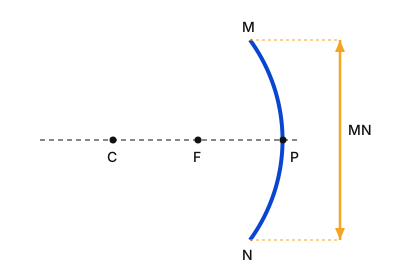
- P = pole, C = centre of curvature, F = focus.
- The circular outline of the reflecting surface has a diameter MN – this is the aperture.
- Distance CF is (equal to ), not the aperture.
Yaad rakhein: Aperture = size of the reflecting surface; Focal length .
Answer: (C) the diameter of the reflecting surface of the mirror
अवधारणा: गोलीय दर्पण का द्वारक (अपर्चर) उसकी परावर्तक सतह का व्यास है (चित्र में MN)।
- P = ध्रुव, C = वक्रता केंद्र, F = फोकस।
- परावर्तक सतह की वृत्ताकार सीमा का व्यास MN – यही द्वारक है।
- दूरी CF (अर्थात ) है, द्वारक नहीं।
याद रखें: द्वारक = परावर्तक सतह का आकार; फोकस दूरी ।
उत्तर: (C) दर्पण के परावर्तक पृष्ठ का व्यास
RRB Technician Grade IIIGeneral ScienceSpherical mirrorsRRB Technician Grade III 2024 · 24 Dec Shift 3
Q978.What will be the name of product that is formed when metals react with air?
जब धातुएँ वायु के साथ अभिक्रिया करती हैं, तो बनने वाले उत्पाद का नाम क्या होगा?
- AMetal hydrideधातु हाइड्राइड
- BMetal oxideधातु ऑक्साइड
- CMetal chlorideधातु क्लोराइड
- DMetal nitrateधातु नाइट्रेट
Show answer
Concept: Metals combine with oxygen of air to form metal oxides.
- Metal + oxygen metal oxide.
- Example: (black).
- Example: ; metal oxides are mostly basic.
Yaad rakhein: Metal oxides are basic; non-metal oxides are acidic.
Answer: (B) Metal oxide
अवधारणा: धातुएँ वायु की ऑक्सीजन से संयोग करके धातु ऑक्साइड बनाती हैं।
- धातु + ऑक्सीजन धातु ऑक्साइड।
- उदाहरण: (काला)।
- उदाहरण: ; धातु ऑक्साइड प्रायः क्षारीय होते हैं।
याद रखें: धातु ऑक्साइड क्षारीय; अधातु ऑक्साइड अम्लीय।
उत्तर: (B) धातु ऑक्साइड
RRB Technician Grade IIIGeneral ScienceReaction of metals with oxygenRRB Technician Grade III 2024 · 24 Dec Shift 3
Q979.Burning of coal is an example of which type of chemical reaction?
कोयले का जलना किस प्रकार की रासायनिक अभिक्रिया का उदाहरण है?
- AReduction reactionअपचयन अभिक्रिया
- BDecomposition reactionवियोजन अभिक्रिया
- CDouble decomposition reactionद्वि-अपघटन अभिक्रिया
- DCombination reactionसंयोजन अभिक्रिया
Show answer
Concept: In a combination reaction two or more reactants combine to form a single product.
- Coal is mainly carbon.
- On burning: + heat.
- Two reactants give one product, so it is a combination (also exothermic) reaction.
Trick: Many reactants one product = combination; one reactant many products = decomposition.
Answer: (D) Combination reaction
अवधारणा: संयोजन अभिक्रिया में दो या अधिक अभिकारक मिलकर एक ही उत्पाद बनाते हैं।
- कोयला मुख्यतः कार्बन है।
- जलने पर: + ऊष्मा।
- दो अभिकारक से एक उत्पाद, अतः संयोजन (साथ ही ऊष्माक्षेपी) अभिक्रिया।
ट्रिक: अनेक अभिकारक एक उत्पाद = संयोजन; एक अभिकारक अनेक उत्पाद = वियोजन।
उत्तर: (D) संयोजन अभिक्रिया
RRB Technician Grade IIIGeneral ScienceCombination reactionRRB Technician Grade III 2024 · 24 Dec Shift 3
Q980.The magnetic field lines produced inside a long current carrying solenoid is similar to that of a:
एक लंबी धारावाही परिनालिका (solenoid) के अंदर उत्पन्न चुंबकीय क्षेत्र रेखाएँ किसके समान होती हैं?
- Ahorseshoe magnetनाल चुंबक
- Bdisc magnetडिस्क चुंबक
- Cbar magnetछड़ चुंबक
- Dring magnetवलय चुंबक
Show answer
Concept: A solenoid is a long coil of many circular turns of insulated wire.
- Inside the solenoid the field lines are parallel straight lines – a uniform field.
- One end behaves like a north pole and the other like a south pole.
- This pattern is the same as the field of a bar magnet.
Yaad rakhein: Current-carrying solenoid = bar magnet; with a soft iron core it becomes an electromagnet.
Answer: (C) bar magnet
अवधारणा: परिनालिका विद्युतरोधी तार के अनेक वृत्ताकार फेरों वाली लंबी कुंडली है।
- परिनालिका के भीतर क्षेत्र रेखाएँ समांतर सरल रेखाएँ होती हैं – एकसमान क्षेत्र।
- एक सिरा उत्तरी ध्रुव और दूसरा दक्षिणी ध्रुव की तरह व्यवहार करता है।
- यह प्रतिरूप छड़ चुंबक के क्षेत्र जैसा ही है।
याद रखें: धारावाही परिनालिका = छड़ चुंबक; नरम लोहे की क्रोड डालने पर विद्युत चुंबक।
उत्तर: (C) छड़ चुंबक
RRB Technician Grade IIIGeneral ScienceMagnetic field of a solenoidRRB Technician Grade III 2024 · 24 Dec Shift 3

