Q1261.Which of the following is the characteristic of a liquid?
निम्नलिखित में से कौन-सा द्रव का अभिलक्षण है?
- AIt has fixed shape and volume.इसका आकार और आयतन निश्चित होता है।
- BIt is highly compressible.यह अत्यधिक संपीड्य होता है।
- CIt has fixed volume but not fixed shape.इसका आयतन निश्चित होता है लेकिन आकार निश्चित नहीं होता।
- DIt is hard.यह कठोर होता है।
Show answer
Concept: Liquids have particles closer than gases but free to slide past each other.
- Fixed volume: particles are held by fairly strong attraction.
- No fixed shape: liquid takes the shape of its container.
- Liquids are almost incompressible and not hard; fixed shape and volume belong to solids; high compressibility to gases.
Yaad rakhein: Solid: fixed shape + volume; Liquid: fixed volume only; Gas: neither.
Answer: (C) It has fixed volume but not fixed shape.
अवधारणा: द्रव के कण गैस से पास-पास होते हैं, पर एक-दूसरे पर फिसल सकते हैं।
- निश्चित आयतन: कणों के बीच पर्याप्त आकर्षण होता है।
- निश्चित आकार नहीं: द्रव पात्र का आकार ले लेता है।
- द्रव लगभग असंपीड्य होते हैं और कठोर नहीं; निश्चित आकार व आयतन ठोस का गुण है; अधिक संपीड्यता गैस का।
याद रखें: ठोस: निश्चित आकार + आयतन; द्रव: केवल निश्चित आयतन; गैस: दोनों नहीं।
उत्तर: (C) इसका आयतन निश्चित होता है लेकिन आकार निश्चित नहीं होता।
RRB Technician Grade IIIGeneral ScienceStates of matterRRB Technician Grade III 2024 · 20 Dec Shift 2
Q1262.Select the correct pair from the following options.
निम्नलिखित विकल्पों में से सही युग्म का चयन कीजिए।
- AVelocity does not change with time - Non-uniform motionवेग समय के साथ नहीं बदलता - असमान गति (Non-uniform motion)
- BChange in velocity per unit time - Accelerationप्रति इकाई समय में वेग में परिवर्तन - त्वरण (Acceleration)
- CMotion of a freely falling body - Non-uniform accelerationस्वतंत्र रूप से गिरती हुई वस्तु की गति - असमान त्वरण (Non-uniform acceleration)
- DVelocity varies with time - Uniform motionवेग समय के साथ बदलता है - एकसमान गति (Uniform motion)
Show answer
Concept: Acceleration is the rate of change of velocity: .
- Velocity not changing with time → uniform motion (A is wrong).
- Change in velocity per unit time → acceleration (B is correct).
- Free fall → uniform acceleration (C wrong); velocity varying with time → non-uniform motion (D wrong).
Yaad rakhein: Free fall is the classic example of uniform acceleration ().
Answer: (B) Change in velocity per unit time - Acceleration
अवधारणा: त्वरण वेग परिवर्तन की दर है: ।
- समय के साथ वेग न बदले → एकसमान गति (A गलत)।
- प्रति इकाई समय वेग में परिवर्तन → त्वरण (B सही)।
- मुक्त पतन → एकसमान त्वरण (C गलत); समय के साथ बदलता वेग → असमान गति (D गलत)।
याद रखें: मुक्त पतन एकसमान त्वरण का प्रमुख उदाहरण है ()।
उत्तर: (B) प्रति इकाई समय में वेग में परिवर्तन - त्वरण (Acceleration)
RRB Technician Grade IIIGeneral ScienceMotion – basic termsRRB Technician Grade III 2024 · 20 Dec Shift 2
Q1263.Which of the following is an example of suspension?
निम्नलिखित में से कौन-सा निलंबन (suspension) का एक उदाहरण है?
- AOil in waterपानी में तेल
- BSolution of sugar in waterपानी में चीनी का विलयन
- CChalk powder in waterपानी में चॉक का चूर्ण
- DFew drops of milk in waterपानी में दूध की कुछ बूँदें
Show answer
Concept: A suspension is a heterogeneous mixture whose solid particles are visible to the naked eye and settle down on standing.
- Chalk powder in water: particles visible and settle → suspension.
- Sugar in water → true solution.
- Few drops of milk in water → colloid; oil in water → emulsion (colloid type).
Yaad rakhein: Suspension examples: chalk/sand/muddy water, flour in water; particle size more than 100 nm.
Answer: (C) Chalk powder in water
अवधारणा: निलंबन एक विषमांगी मिश्रण है जिसके ठोस कण नंगी आँखों से दिखते हैं और रखने पर नीचे बैठ जाते हैं।
- पानी में चॉक पाउडर: कण दिखते हैं और बैठते हैं → निलंबन।
- पानी में चीनी → वास्तविक विलयन।
- पानी में दूध की कुछ बूँदें → कोलाइड; पानी में तेल → पायस (कोलाइड का प्रकार)।
याद रखें: निलंबन के उदाहरण: चॉक/रेत/गंदला पानी, पानी में आटा; कण आकार 100 nm से अधिक।
उत्तर: (C) पानी में चॉक का चूर्ण
RRB Technician Grade IIIGeneral ScienceSuspensionRRB Technician Grade III 2024 · 20 Dec Shift 2
Q1264.In electrolytic refining procedure, the cathode is made up of:
विद्युत अपघटनी परिष्करण (electrolytic refining) प्रक्रिया में, कैथोड किससे बना होता है?
- Aalloy metalमिश्रधातु धातु
- Bimpure metalअशुद्ध धातु
- Cmetal saltधातु लवण
- Dpure metalशुद्ध धातु
Show answer
Concept: In electrolytic refining, metal ions move from the impure anode through the electrolyte and deposit as pure metal on the cathode.
- Anode: thick block of impure metal.
- Cathode: thin strip of pure metal.
- Electrolyte: solution of a salt of the same metal (e.g. acidified for copper).
Yaad rakhein: Pure metal collects on the pure-metal cathode; impurities fall as anode mud.
Answer: (D) pure metal
अवधारणा: विद्युत-अपघटनी परिष्करण में धातु आयन अशुद्ध एनोड से विद्युत-अपघट्य द्वारा कैथोड पर शुद्ध धातु के रूप में जमते हैं।
- एनोड: अशुद्ध धातु का मोटा टुकड़ा।
- कैथोड: शुद्ध धातु की पतली पट्टी।
- विद्युत-अपघट्य: उसी धातु के लवण का विलयन (जैसे ताँबे हेतु अम्लीकृत )।
याद रखें: शुद्ध धातु शुद्ध धातु वाले कैथोड पर जमती है; अशुद्धियाँ एनोड पंक बनती हैं।
उत्तर: (D) शुद्ध धातु
RRB Technician Grade IIIGeneral ScienceElectrolytic refiningRRB Technician Grade III 2024 · 20 Dec Shift 2
Q1265.Which of the following is the olfactory indicator to check the acidic or basic nature of the substance?
किसी पदार्थ की अम्लीय या क्षारीय प्रकृति की जाँच के लिए निम्नलिखित में से कौन-सा गंधीय सूचक (olfactory indicator) है?
- APhenolphthaleinफीनॉल्फ्थेलिन
- BVanilla essenceवैनिला एसेंस
- CRed litmusलाल लिटमस
- DMethyl orangeमेथिल ऑरेंज
Show answer
Concept: Olfactory indicators change their smell in acidic or basic medium.
- Vanilla essence, onion and clove oil are olfactory indicators.
- Vanilla smell disappears in a base but remains in an acid.
- Phenolphthalein, litmus and methyl orange are visual (colour-change) indicators.
Yaad rakhein: Olfactory = smell: vanilla, onion, clove.
Answer: (B) Vanilla essence
अवधारणा: गंधीय सूचक अम्लीय या क्षारीय माध्यम में अपनी गंध बदलते हैं।
- वनीला एसेंस, प्याज और लौंग का तेल गंधीय सूचक हैं।
- क्षार में वनीला की गंध समाप्त हो जाती है, अम्ल में बनी रहती है।
- फिनॉल्फ्थेलिन, लिटमस व मेथिल ऑरेंज दृश्य (रंग बदलने वाले) सूचक हैं।
याद रखें: गंधीय = गंध: वनीला, प्याज, लौंग।
उत्तर: (B) वैनिला एसेंस
RRB Technician Grade IIIGeneral ScienceOlfactory indicatorsRRB Technician Grade III 2024 · 20 Dec Shift 2
Q1266.What is the angle between the two lateral faces of a triangular glass prism called?
त्रिभुजाकार काँच के प्रिज़्म के दो पार्श्व फलकों के बीच के कोण को क्या कहते हैं?
- AInclination angleआनति कोण (Inclination angle)
- BAngle of deviationविचलन कोण (Angle of deviation)
- CBase angleआधार कोण (Base angle)
- DAngle of prismप्रिज़्म कोण (Angle of prism)
Show answer
Concept: A triangular prism has two triangular bases and three rectangular lateral faces.
- Light enters through one lateral face and leaves through another.
- The angle between these two refracting lateral faces is the angle of prism ().
- Angle of deviation is the angle between incident ray and emergent ray.
Yaad rakhein: For a prism: .
Answer: (D) Angle of prism
अवधारणा: त्रिभुजाकार प्रिज्म के दो त्रिभुजाकार आधार और तीन आयताकार पार्श्व फलक होते हैं।
- प्रकाश एक पार्श्व फलक से प्रवेश करता है और दूसरे से निकलता है।
- इन दो अपवर्तक पार्श्व फलकों के बीच का कोण प्रिज्म कोण () है।
- विचलन कोण आपतित किरण और निर्गत किरण के बीच का कोण है।
याद रखें: प्रिज्म के लिए: ।
उत्तर: (D) प्रिज़्म कोण (Angle of prism)
RRB Technician Grade IIIGeneral SciencePrismRRB Technician Grade III 2024 · 20 Dec Shift 2
Q1267.Which of the following techniques is used to separate colloidal particles from the mixture?
मिश्रण से कोलॉइडी कणों को अलग करने के लिए निम्नलिखित में से किस तकनीक का उपयोग किया जाता है?
- AFiltrationनिस्यंदन (Filtration)
- BEvaporationवाष्पीकरण (Evaporation)
- CDistillationआसवन (Distillation)
- DCentrifugationअपकेंद्रण (Centrifugation)
Show answer
Concept: Colloidal particles are too small to be stopped by filter paper and do not settle on their own.
- Centrifugation spins the mixture very fast.
- The denser particles are forced to the bottom and separate out.
- Example: separating cream from milk; blood cells from plasma.
Trick: Filter paper fails for colloids → spin them out (centrifuge).
Answer: (D) Centrifugation
अवधारणा: कोलाइडी कण इतने छोटे होते हैं कि फिल्टर पेपर से नहीं रुकते और स्वयं नीचे नहीं बैठते।
- अपकेंद्रण (centrifugation) में मिश्रण को बहुत तेज़ी से घुमाया जाता है।
- भारी कण नीचे की ओर धकेले जाकर अलग हो जाते हैं।
- उदाहरण: दूध से क्रीम अलग करना; प्लाज़्मा से रक्त कोशिकाएँ।
ट्रिक: कोलाइड पर फिल्टर पेपर बेकार → तेज़ घुमाकर (अपकेंद्रण) अलग करें।
उत्तर: (D) अपकेंद्रण (Centrifugation)
RRB Technician Grade IIIGeneral ScienceSeparation techniquesRRB Technician Grade III 2024 · 20 Dec Shift 2
Q1268.When we are standing in a bus facing towards the driver and the bus begins to move straight suddenly, we tend to fall:
जब हम बस में चालक की ओर मुँह करके खड़े होते हैं और बस अचानक सीधी चलने लगती है, तो हम किस ओर गिरने लगते हैं?
- Abackwardsपीछे की ओर
- Bleft sideबाईं ओर
- Cright sideदाईं ओर
- Dforwardआगे की ओर
Show answer
Concept: Newton's first law: a body tends to remain in its state of rest or motion (inertia).
- When the bus starts suddenly, our feet in contact with the floor move forward with the bus.
- The upper body, due to inertia of rest, tends to stay where it was.
- So we fall backwards. (On sudden braking we fall forward — inertia of motion.)
Trick: Bus starts → fall backward; bus stops → fall forward.
Answer: (A) backwards
अवधारणा: न्यूटन का पहला नियम: वस्तु अपनी विराम या गति की अवस्था बनाए रखना चाहती है (जड़त्व)।
- बस अचानक चलने पर फर्श से जुड़े हमारे पैर बस के साथ आगे बढ़ जाते हैं।
- शरीर का ऊपरी भाग विराम के जड़त्व के कारण वहीं रहना चाहता है।
- इसलिए हम पीछे की ओर गिरते हैं। (अचानक ब्रेक पर आगे गिरते हैं — गति का जड़त्व।)
ट्रिक: बस चली → पीछे गिरें; बस रुकी → आगे गिरें।
उत्तर: (A) पीछे की ओर
RRB Technician Grade IIIGeneral ScienceInertia of restRRB Technician Grade III 2024 · 20 Dec Shift 2
Q1269.What is the speed of an athlete, if the athlete takes seconds to go once around a circular path of radius ?
यदि एक धावक को त्रिज्या वाले वृत्ताकार पथ का एक चक्कर लगाने में सेकंड लगते हैं, तो धावक की चाल क्या है?
- A
- B
- C
- D
Show answer
Concept: Speed = distance ÷ time. In one round of a circle the distance covered is its circumference .
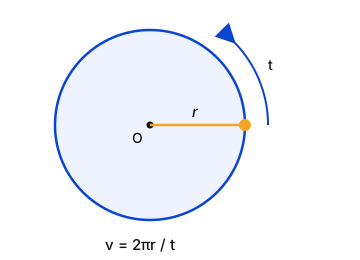
- Distance in one round .
- Time for one round .
- .
Yaad rakhein: is area, not distance — reject such options at once.
Answer: (A)
अवधारणा: चाल = दूरी ÷ समय। वृत्त के एक चक्कर में तय दूरी उसकी परिधि होती है।
- एक चक्कर में दूरी ।
- एक चक्कर का समय ।
- ।
याद रखें: क्षेत्रफल है, दूरी नहीं — ऐसे विकल्प तुरंत हटाएँ।
उत्तर: (A)
RRB Technician Grade IIIGeneral ScienceUniform circular motionRRB Technician Grade III 2024 · 20 Dec Shift 2
Q1270.Which of the options provides the correct explanation for the following statement?
Sweating cools down your body on a hot day.
निम्नलिखित कथन के लिए कौन-सा विकल्प सही व्याख्या प्रदान करता है?
गर्म दिन में पसीना आने से आपका शरीर ठंडा होता है।
- ASweating increases the body's temperature.पसीना आने से शरीर का तापमान बढ़ता है।
- BSweating increases blood circulation and cools the body.पसीना आने से रक्त परिसंचरण बढ़ता है और शरीर ठंडा होता है।
- CThe given statement is wrong.दिया गया कथन गलत है।
- DSweating causes rapid evaporation, which absorbs heat from the body surface and cools the body.पसीना आने से तीव्र वाष्पीकरण होता है, जो शरीर की सतह से ऊष्मा अवशोषित करता है और शरीर को ठंडा करता है।
Show answer
Concept: Evaporation needs latent heat; the liquid takes this heat from its surroundings, which cool down.
- Sweat on the skin evaporates.
- The heat needed for evaporation is absorbed from the body surface.
- So the body loses heat and feels cool.
Yaad rakhein: Same reason: earthen pot cools water; we wear cotton clothes in summer.
Answer: (D) Sweating causes rapid evaporation, which absorbs heat from the body surface and cools the body.
अवधारणा: वाष्पन के लिए गुप्त ऊष्मा चाहिए; द्रव यह ऊष्मा अपने परिवेश से लेता है, जिससे परिवेश ठंडा होता है।
- त्वचा पर पसीना वाष्पित होता है।
- वाष्पन हेतु आवश्यक ऊष्मा शरीर की सतह से अवशोषित होती है।
- इसलिए शरीर ऊष्मा खोता है और ठंडक महसूस होती है।
याद रखें: इसी कारण: मिट्टी का घड़ा पानी ठंडा रखता है; गर्मी में सूती कपड़े पहनते हैं।
उत्तर: (D) पसीना आने से तीव्र वाष्पीकरण होता है, जो शरीर की सतह से ऊष्मा अवशोषित करता है और शरीर को ठंडा करता है।
RRB Technician Grade IIIGeneral ScienceEvaporation causes coolingRRB Technician Grade III 2024 · 20 Dec Shift 2
Q1271.What is the displacement accomplished by an object if it moves 15 m to the right from point 'A' and then moves 15 m to the opposite direction to reach the same point 'A'?
यदि कोई वस्तु बिंदु 'A' से 15 m दाईं ओर चलती है और फिर विपरीत दिशा में 15 m चलकर उसी बिंदु 'A' पर पहुँच जाती है, तो वस्तु द्वारा तय किया गया विस्थापन कितना है?
- A0 m
- B15 m
- C30 m
- D7.5 m
Show answer
Concept: Displacement is the shortest straight-line distance from initial to final position (with direction); distance is the total path length.
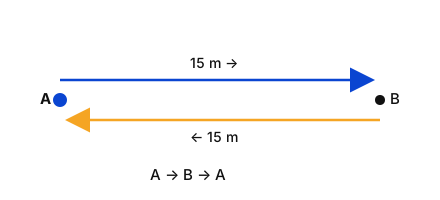
- A → B: 15 m right; B → A: 15 m left.
- Final position = initial position A.
- Displacement (distance ).
Trick: Back to the starting point → displacement is always zero.
Answer: (A) 0 m
अवधारणा: विस्थापन प्रारंभिक से अंतिम स्थिति तक की न्यूनतम सीधी दूरी (दिशा सहित) है; दूरी कुल पथ की लंबाई है।
- A → B: 15 m दाएँ; B → A: 15 m बाएँ।
- अंतिम स्थिति = प्रारंभिक स्थिति A।
- विस्थापन (दूरी )।
ट्रिक: आरंभ बिंदु पर लौट आए → विस्थापन हमेशा शून्य।
उत्तर: (A) 0 m
RRB Technician Grade IIIGeneral ScienceDistance and displacementRRB Technician Grade III 2024 · 20 Dec Shift 2
Q1272.If a car travelling along a straight road increases its speed by unequal amounts in equal intervals of time, then the car is said to be moving with:
यदि सीधी सड़क पर चलती हुई एक कार समान समय-अंतरालों में अपनी चाल में असमान मात्रा में वृद्धि करती है, तो कहा जाता है कि कार किसके साथ गतिमान है?
- Anon-uniform accelerationअसमान त्वरण
- Buniform velocityएकसमान वेग
- Cuniform speedएकसमान चाल
- Duniform accelerationएकसमान त्वरण
Show answer
Concept: If velocity changes by equal amounts in equal time intervals, acceleration is uniform; otherwise it is non-uniform.
- The speed increases, so the car is accelerating (not uniform speed/velocity).
- Increases are unequal in equal intervals.
- Hence the acceleration is non-uniform.
Trick: Equal change in equal time → uniform; unequal change → non-uniform.
Answer: (A) non-uniform acceleration
अवधारणा: यदि समान समय-अंतरालों में वेग समान मात्रा से बदले तो त्वरण एकसमान, अन्यथा असमान होता है।
- चाल बढ़ रही है, अतः कार त्वरित है (एकसमान चाल/वेग नहीं)।
- समान अंतरालों में वृद्धि असमान है।
- अतः त्वरण असमान है।
ट्रिक: समान समय में समान परिवर्तन → एकसमान; असमान परिवर्तन → असमान।
उत्तर: (A) असमान त्वरण
RRB Technician Grade IIIGeneral ScienceUniform and non-uniform accelerationRRB Technician Grade III 2024 · 20 Dec Shift 2
Q1273.Which reproductive part(s) is/are essential for fertilisation?
निषेचन के लिए कौन-सा/से जनन भाग आवश्यक है/हैं?
- APollen grain and ovuleपरागकण और बीजांड
- BSepalबाह्यदल (Sepal)
- CThalamusपुष्पासन (Thalamus)
- DPetalsपंखुड़ियाँ (Petals)
Show answer
Concept: Fertilisation is the fusion of the male gamete with the female gamete.
- The male gamete is formed in the pollen grain (from the stamen).
- The female gamete (egg) lies in the ovule inside the ovary (pistil).
- Sepals, petals and thalamus are non-essential (accessory) parts.
Yaad rakhein: Essential whorls: stamen and pistil; accessory whorls: sepals and petals.
Answer: (A) Pollen grain and ovule
अवधारणा: निषेचन नर युग्मक और मादा युग्मक का संलयन है।
- नर युग्मक परागकण में बनता है (पुंकेसर से)।
- मादा युग्मक (अंड) अंडाशय (स्त्रीकेसर) के अंदर बीजांड में होता है।
- बाह्यदल, पंखुड़ियाँ और पुष्पासन अनावश्यक (सहायक) भाग हैं।
याद रखें: आवश्यक चक्र: पुंकेसर व स्त्रीकेसर; सहायक चक्र: बाह्यदल व दल।
उत्तर: (A) परागकण और बीजांड
RRB Technician Grade IIIGeneral ScienceSexual reproduction in plantsRRB Technician Grade III 2024 · 20 Dec Shift 2
Q1274.If lysosomes are also known as the ‘suicide bags’ of the cell, then which of the following is the powerhouse of the cell?
यदि लयनकायों (lysosomes) को कोशिका की ‘आत्मघाती थैलियाँ’ भी कहा जाता है, तो निम्नलिखित में से कौन कोशिका का ऊर्जा-गृह (powerhouse) है?
- AVacuolesरसधानियाँ (Vacuoles)
- BMitochondriaमाइटोकॉन्ड्रिया (Mitochondria)
- CPlastidsलवक (Plastids)
- DEndoplasmic reticulumअंतर्द्रव्यी जालिका (Endoplasmic reticulum)
Show answer
Concept: Mitochondria carry out cellular respiration and release energy in the form of ATP.
- ATP is the 'energy currency' of the cell, so mitochondria are called the powerhouse of the cell.
- They have their own DNA and ribosomes.
- Lysosomes = suicide bags; plastids = kitchen (chloroplast); vacuoles = storage sacs.
Yaad rakhein: Powerhouse → mitochondria; suicide bag → lysosome; kitchen → chloroplast.
Answer: (B) Mitochondria
अवधारणा: माइटोकॉन्ड्रिया कोशिकीय श्वसन करके ATP के रूप में ऊर्जा मुक्त करते हैं।
- ATP कोशिका की 'ऊर्जा मुद्रा' है, इसलिए माइटोकॉन्ड्रिया को कोशिका का बिजलीघर कहते हैं।
- इनका अपना DNA और राइबोसोम होता है।
- लाइसोसोम = आत्मघाती थैली; लवक = रसोईघर (हरितलवक); रिक्तिका = भंडारण थैली।
याद रखें: बिजलीघर → माइटोकॉन्ड्रिया; आत्मघाती थैली → लाइसोसोम; रसोईघर → हरितलवक।
उत्तर: (B) माइटोकॉन्ड्रिया (Mitochondria)
RRB Technician Grade IIIGeneral ScienceMitochondriaRRB Technician Grade III 2024 · 20 Dec Shift 2
Q1275.Which of the following synthetic chemicals was responsible for the sharp drop in the amount of ozone in the atmosphere in the 1980s?
1980 के दशक में वायुमंडल में ओज़ोन की मात्रा में तीव्र गिरावट के लिए निम्नलिखित में से कौन-सा संश्लेषित रसायन उत्तरदायी था?
- AIodofluorocarbonsआयोडोफ्लोरोकार्बन
- BIodobromocarbonsआयोडोब्रोमोकार्बन
- CChloroiodocarbonsक्लोरोआयोडोकार्बन
- DChlorofluorocarbonsक्लोरोफ्लोरोकार्बन
Show answer
Concept: The ozone layer in the stratosphere absorbs harmful UV radiation from the Sun.
- In the 1980s ozone levels fell sharply.
- The main cause: synthetic chlorofluorocarbons (CFCs) used in refrigerators, ACs and fire extinguishers.
- UV breaks CFCs, releasing chlorine atoms that destroy ozone molecules.
Yaad rakhein: Montreal Protocol (1987) agreed to phase out CFCs; ozone is .
Answer: (D) Chlorofluorocarbons
अवधारणा: समतापमंडल की ओज़ोन परत सूर्य के हानिकारक पराबैंगनी (UV) विकिरण को अवशोषित करती है।
- 1980 के दशक में ओज़ोन की मात्रा तेज़ी से घटी।
- मुख्य कारण: रेफ्रिजरेटर, AC व अग्निशामकों में प्रयुक्त कृत्रिम क्लोरोफ्लोरोकार्बन (CFC)।
- UV से CFC टूटकर क्लोरीन परमाणु मुक्त करते हैं जो ओज़ोन अणुओं को नष्ट करते हैं।
याद रखें: मॉन्ट्रियल प्रोटोकॉल (1987) में CFC को चरणबद्ध हटाने पर सहमति; ओज़ोन है।
उत्तर: (D) क्लोरोफ्लोरोकार्बन
RRB Technician Grade IIIGeneral ScienceOzone depletionRRB Technician Grade III 2024 · 20 Dec Shift 2
Q1276.A solid iron rod is placed on the surface of the water. What would happen if the upthrust of water on the iron rod were greater than the downward force acting on it?
लोहे की एक ठोस छड़ को पानी की सतह पर रखा जाता है। यदि लोहे की छड़ पर पानी का उत्प्लावन बल (upthrust) उस पर कार्यरत अधोमुखी बल से अधिक हो, तो क्या होगा?
- AThe iron rod would float on water surface.लोहे की छड़ पानी की सतह पर तैरेगी।
- BThe iron rod would move downwards.लोहे की छड़ नीचे की ओर गति करेगी।
- CThe iron rod would sink slowly.लोहे की छड़ धीरे-धीरे डूबेगी।
- DThe iron rod would sink faster.लोहे की छड़ तेज़ी से डूबेगी।
Show answer
Concept: An object in a liquid experiences upward buoyant force (upthrust) and downward force of gravity (its weight).
- If upthrust weight → net force is upward → the object floats.
- If upthrust weight → the object sinks.
- Here upthrust is greater, so the iron rod floats on the surface.
Trick: Compare the two forces: upthrust wins → float; weight wins → sink.
Answer: (A) The iron rod would float on water surface.
अवधारणा: द्रव में रखी वस्तु पर ऊपर की ओर उत्प्लावन बल (उत्क्षेप) और नीचे की ओर गुरुत्व बल (भार) लगता है।
- यदि उत्क्षेप भार → परिणामी बल ऊपर → वस्तु तैरती है।
- यदि उत्क्षेप भार → वस्तु डूबती है।
- यहाँ उत्क्षेप अधिक है, अतः लोहे की छड़ सतह पर तैरेगी।
ट्रिक: दोनों बलों की तुलना करें: उत्क्षेप अधिक → तैरे; भार अधिक → डूबे।
उत्तर: (A) लोहे की छड़ पानी की सतह पर तैरेगी।
RRB Technician Grade IIIGeneral ScienceBuoyancyRRB Technician Grade III 2024 · 20 Dec Shift 2
Q1277.A uniform magnetic field is represented by:
एकसमान चुंबकीय क्षेत्र को किसके द्वारा निरूपित किया जाता है?
- Aconcentric circular linesसंकेंद्री वृत्ताकार रेखाएँ
- Belliptical linesदीर्घवृत्तीय रेखाएँ
- Cparallel and equidistant straight linesसमांतर और समदूरस्थ सरल रेखाएँ
- Dparallel but irregular straight linesसमांतर परंतु अनियमित सरल रेखाएँ
Show answer
Concept: The closeness of field lines shows field strength and their direction shows field direction.
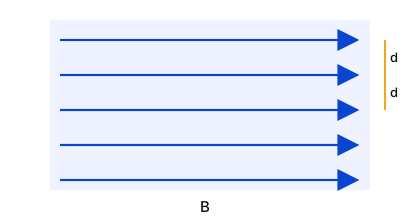
- Uniform field = same strength and same direction everywhere.
- Same direction → lines are parallel and straight.
- Same strength → lines are equally spaced (equidistant).
Yaad rakhein: Concentric circles → field of a straight current-carrying wire; parallel lines → inside a solenoid (uniform).
Answer: (C) parallel and equidistant straight lines
अवधारणा: क्षेत्र रेखाओं की सघनता क्षेत्र की प्रबलता और उनकी दिशा क्षेत्र की दिशा बताती है।
- एकसमान क्षेत्र = हर जगह समान प्रबलता और समान दिशा।
- समान दिशा → रेखाएँ समांतर व सीधी।
- समान प्रबलता → रेखाएँ समान दूरी पर (समदूरस्थ)।
याद रखें: संकेंद्री वृत्त → सीधे धारावाही तार का क्षेत्र; समांतर रेखाएँ → परिनालिका के अंदर (एकसमान)।
उत्तर: (C) समांतर और समदूरस्थ सरल रेखाएँ
RRB Technician Grade IIIGeneral ScienceMagnetic field linesRRB Technician Grade III 2024 · 20 Dec Shift 2
Q1278.The flexibility in plants is due to which permanent tissue that allows bending of various parts of a plant like tendrils and stems of climbers without breaking?
पौधों में लचीलापन किस स्थायी ऊतक के कारण होता है, जो पौधे के विभिन्न भागों जैसे प्रतान (tendrils) और आरोही पौधों के तनों को बिना टूटे मुड़ने देता है?
- AChlorenchymaहरित ऊतक (Chlorenchyma)
- BCollenchymaस्थूलकोण ऊतक (Collenchyma)
- CAerenchymaवायूतक (Aerenchyma)
- DParenchymaमृदूतक (Parenchyma)
Show answer
Concept: Simple permanent tissues in plants: parenchyma, collenchyma and sclerenchyma.
- Collenchyma cells are living, elongated and irregularly thickened at the corners.
- This gives flexibility and mechanical support, so tendrils and climber stems bend without breaking.
- Found in leaf stalks below the epidermis.
Yaad rakhein: Chlorenchyma → photosynthesis; aerenchyma → buoyancy in aquatic plants; sclerenchyma → hardness (husk of coconut).
Answer: (B) Collenchyma
अवधारणा: पौधों के सरल स्थायी ऊतक: मृदूतक, स्थूलकोण ऊतक और दृढ़ ऊतक।
- स्थूलकोण (कॉलेनकाइमा) कोशिकाएँ जीवित, लंबी और कोनों पर अनियमित रूप से मोटी होती हैं।
- यह लचीलापन व यांत्रिक सहारा देता है, जिससे प्रतान व आरोही पौधों के तने बिना टूटे मुड़ते हैं।
- यह पत्ती के डंठल में बाह्यत्वचा के नीचे मिलता है।
याद रखें: हरित ऊतक → प्रकाश-संश्लेषण; वायूतक → जलीय पौधों में उत्प्लावन; दृढ़ ऊतक → कठोरता (नारियल का छिलका)।
उत्तर: (B) स्थूलकोण ऊतक (Collenchyma)
RRB Technician Grade IIIGeneral SciencePlant tissues – collenchymaRRB Technician Grade III 2024 · 20 Dec Shift 2
Q1279.All of the following are examples of connective tissue, EXCEPT:
निम्नलिखित में से कौन संयोजी ऊतक का उदाहरण नहीं है?
- Abloodरक्त
- Btracheidवाहिनिका (tracheid)
- Ccartilageउपास्थि (cartilage)
- Dboneअस्थि (bone)
Show answer
Concept: Connective tissue is an animal tissue whose cells lie in a matrix; it connects and supports body parts.
- Blood (fluid matrix plasma), bone and cartilage are animal connective tissues.
- Tracheid is a plant tissue — an element of xylem (complex permanent tissue).
- So tracheid is the odd one out.
Trick: Spot the plant word: tracheid, vessel, sieve tube → plant tissues.
Answer: (B) tracheid
अवधारणा: संयोजी ऊतक जंतु ऊतक है जिसकी कोशिकाएँ आधात्री (matrix) में रहती हैं; यह शरीर के अंगों को जोड़ता व सहारा देता है।
- रक्त (तरल आधात्री प्लाज़्मा), अस्थि और उपास्थि जंतु संयोजी ऊतक हैं।
- वाहिनिका (tracheid) पादप ऊतक है — जाइलम का एक घटक (जटिल स्थायी ऊतक)।
- अतः वाहिनिका अलग है।
ट्रिक: पादप शब्द पहचानें: वाहिनिका, वाहिका, चालनी नलिका → पादप ऊतक।
उत्तर: (B) वाहिनिका (tracheid)
RRB Technician Grade IIIGeneral ScienceConnective tissueRRB Technician Grade III 2024 · 20 Dec Shift 2
Q1280.When the level of growth hormone is low, which releases growth hormone releasing factor and stimulates the pituitary gland to release growth hormone?
जब वृद्धि हॉर्मोन का स्तर कम होता है, तो कौन वृद्धि हॉर्मोन मोचक कारक (growth hormone releasing factor) स्रावित करता है और पीयूष ग्रंथि को वृद्धि हॉर्मोन स्रावित करने के लिए उद्दीपित करता है?
- APancreasअग्न्याशय (Pancreas)
- BHypothalamusहाइपोथैलेमस (Hypothalamus)
- CThyroid glandथायरॉइड ग्रंथि (Thyroid gland)
- DAdrenal glandअधिवृक्क ग्रंथि (Adrenal gland)
Show answer
Concept: The hypothalamus links the nervous system with the endocrine system and controls the pituitary.
- When growth hormone level is low, the hypothalamus releases growth hormone releasing factor.
- This factor stimulates the pituitary gland.
- The pituitary then releases growth hormone.
Yaad rakhein: Hypothalamus → releasing factors → pituitary → hormones (feedback control).
Answer: (B) Hypothalamus
अवधारणा: हाइपोथैलेमस तंत्रिका तंत्र को अंतःस्रावी तंत्र से जोड़ता है और पीयूष ग्रंथि को नियंत्रित करता है।
- वृद्धि हॉर्मोन का स्तर कम होने पर हाइपोथैलेमस वृद्धि हॉर्मोन मोचक कारक छोड़ता है।
- यह कारक पीयूष ग्रंथि को उद्दीपित करता है।
- तब पीयूष ग्रंथि वृद्धि हॉर्मोन स्रावित करती है।
याद रखें: हाइपोथैलेमस → मोचक कारक → पीयूष ग्रंथि → हॉर्मोन (पुनर्भरण नियंत्रण)।
उत्तर: (B) हाइपोथैलेमस (Hypothalamus)
RRB Technician Grade IIIGeneral ScienceHypothalamusRRB Technician Grade III 2024 · 20 Dec Shift 2

