Q121.The main reason for twinkling of stars is _________.
तारों के टिमटिमाने का मुख्य कारण _________ है।
- APresence of cloudsबादलों की उपस्थिति
- BNuclear reactions inside starsतारों के अंदर नाभिकीय अभिक्रियाएँ
- CAtmospheric refraction varying with timeसमय के साथ बदलता वायुमंडलीय अपवर्तन (atmospheric refraction)
- DScattering of star lightतारों के प्रकाश का प्रकीर्णन (scattering)
Show answer
Concept: Starlight is refracted by air layers whose density keeps changing.
- Stars are so far away that they act as point sources.
- Changing atmospheric refraction shifts the apparent position and brightness of the star continuously → twinkling.
- Scattering explains the blue sky, not twinkling.
Yaad rakhein: Planets do not twinkle — they are closer and act as extended sources, so the fluctuations average out.
Answer: (C) Atmospheric refraction varying with time
अवधारणा: तारे का प्रकाश बदलते घनत्व वाली वायु परतों में अपवर्तित होता है।
- तारे बहुत दूर हैं, इसलिए बिंदु-स्रोत जैसे हैं।
- लगातार बदलता वायुमंडलीय अपवर्तन उनकी आभासी स्थिति और चमक बदलता रहता है → टिमटिमाना।
- प्रकीर्णन (scattering) आकाश के नीले रंग का कारण है, टिमटिमाने का नहीं।
याद रखें: ग्रह नहीं टिमटिमाते — वे पास हैं और विस्तृत स्रोत की तरह व्यवहार करते हैं।
उत्तर: (C) समय के साथ बदलता वायुमंडलीय अपवर्तन (atmospheric refraction)
RRB Technician Grade IIIGeneral ScienceTwinkling of stars – atmospheric refractionRRB Technician Grade III 2025 · 9 Mar Shift 3
Q122.Which of the following statements correctly differentiates a compound from a mixture?
निम्नलिखित में से कौन-सा कथन यौगिक और मिश्रण के बीच सही अंतर बताता है?
- ACompounds show variable composition, mixtures do not.यौगिक परिवर्तनशील संघटन दर्शाते हैं, मिश्रण नहीं।
- BMixtures are formed through chemical reactions.मिश्रण रासायनिक अभिक्रियाओं द्वारा बनते हैं।
- CMixtures can be separated by physical means, but compounds cannot.मिश्रणों को भौतिक विधियों द्वारा पृथक किया जा सकता है, परंतु यौगिकों को नहीं।
- DCompounds retain the properties of their constituents.यौगिक अपने घटकों के गुणों को बनाए रखते हैं।
Show answer
Concept: Mixtures are physical combinations; compounds are chemical combinations.
- Mixture components can be separated by physical methods (filtration, distillation, magnet).
- Compounds need chemical methods; they have fixed composition and new properties.
- Options A, B, D state the reverse of the truth.
Yaad rakhein: Fe + S mixture – iron removed by magnet; FeS compound – not magnetic, no separation by magnet.
Answer: (C) Mixtures can be separated by physical means, but compounds cannot.
अवधारणा: मिश्रण भौतिक मेल है; यौगिक रासायनिक मेल।
- मिश्रण के घटक भौतिक विधियों (छानना, आसवन, चुंबक) से अलग हो जाते हैं।
- यौगिक को अलग करने के लिए रासायनिक विधि चाहिए; उसका संघटन निश्चित और गुण नए होते हैं।
- A, B, D उल्टी बातें कहते हैं।
याद रखें: Fe + S मिश्रण से चुंबक लोहा खींच लेता है; FeS यौगिक से नहीं।
उत्तर: (C) मिश्रणों को भौतिक विधियों द्वारा पृथक किया जा सकता है, परंतु यौगिकों को नहीं।
RRB Technician Grade IIIGeneral ScienceCompound vs mixtureRRB Technician Grade III 2025 · 9 Mar Shift 3
Q123.Which of the following best distinguishes a food web from a food chain?
निम्नलिखित में से कौन-सा खाद्य जाल (food web) को खाद्य श्रृंखला (food chain) से सबसे अच्छी तरह अलग करता है?
- AA food web allows backward energy flow; a food chain is unidirectionalखाद्य जाल में ऊर्जा का पश्चगामी प्रवाह संभव है; खाद्य श्रृंखला एकदिशीय होती है
- BA food web shows multiple trophic levels; a food chain shows one levelखाद्य जाल अनेक पोषी स्तर दर्शाता है; खाद्य श्रृंखला एक स्तर दर्शाती है
- CA food chain always has decomposers; a food web does notखाद्य श्रृंखला में सदैव अपघटक होते हैं; खाद्य जाल में नहीं
- DA food web transfers all energy; a food chain loses energyखाद्य जाल सारी ऊर्जा स्थानांतरित करता है; खाद्य श्रृंखला में ऊर्जा की हानि होती है
Show answer
Concept: A food web is a network of many interconnected food chains.
- A food chain is a single linear path; a food web shows many feeding links across trophic levels.
- Energy flow is unidirectional in both — so option A is wrong.
- Energy is lost at every level in both (10% law) — so D is wrong.
Trick: Any option saying energy flows backward or is fully transferred is always false.
Answer: (B) A food web shows multiple trophic levels; a food chain shows one level
अवधारणा: खाद्य जाल कई आपस में जुड़ी खाद्य श्रृंखलाओं का नेटवर्क है।
- खाद्य श्रृंखला एक सीधा रास्ता है; खाद्य जाल कई पोषी स्तरों के बीच अनेक संबंध दिखाता है।
- दोनों में ऊर्जा प्रवाह एकदिशीय है — A गलत।
- दोनों में हर स्तर पर ऊर्जा घटती है (10% नियम) — D गलत।
ट्रिक: 'ऊर्जा पीछे बहती है' या 'पूरी ऊर्जा स्थानांतरित' वाले विकल्प हमेशा गलत।
उत्तर: (B) खाद्य जाल अनेक पोषी स्तर दर्शाता है; खाद्य श्रृंखला एक स्तर दर्शाती है
RRB Technician Grade IIIGeneral ScienceFood chain vs food webRRB Technician Grade III 2025 · 9 Mar Shift 3
Q124.In a prism, the emergent ray comes out at an angle different from the incident ray. What is this angle called?
एक प्रिज़्म में, निर्गत किरण आपतित किरण से भिन्न कोण पर बाहर निकलती है। इस कोण को क्या कहते हैं?
- AAngle of deviationविचलन कोण (Angle of deviation)
- BAngle of incidenceआपतन कोण
- CAngle of reflectionपरावर्तन कोण
- DAngle of the prismप्रिज़्म कोण
Show answer
Concept: The angle between the incident ray (extended) and the emergent ray is the angle of deviation.
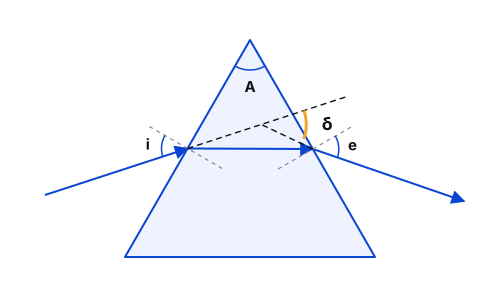
- A prism bends light twice (entry and exit), turning it towards the base.
- This total bending = angle of deviation (δ).
- Angle of the prism (A) is the angle between its two refracting faces.
Yaad rakhein: i + e = A + δ for a prism.
Answer: (A) Angle of deviation
अवधारणा: आपतित किरण (बढ़ाई गई) और निर्गत किरण के बीच का कोण विचलन कोण है।
- प्रिज्म प्रकाश को दो बार मोड़ता है और आधार की ओर झुकाता है।
- यह कुल मोड़ = विचलन कोण (δ)।
- प्रिज्म कोण (A) दो अपवर्तक सतहों के बीच का कोण है।
याद रखें: प्रिज्म के लिए i + e = A + δ।
उत्तर: (A) विचलन कोण (Angle of deviation)
RRB Technician Grade IIIGeneral ScienceRefraction through prism – angle of deviationRRB Technician Grade III 2025 · 9 Mar Shift 3
Q125.Which of the following is a ring compound with the molecular formula C₆H₁₂?
निम्नलिखित में से कौन-सा, आण्विक सूत्र C₆H₁₂ वाला एक वलय यौगिक है?
- AButaneब्यूटेन
- BBenzeneबेंज़ीन
- CCyclohexaneसाइक्लोहेक्सेन
- DHexaneहेक्सेन
Show answer
Concept: A saturated ring (cycloalkane) has formula CₙH₂ₙ.
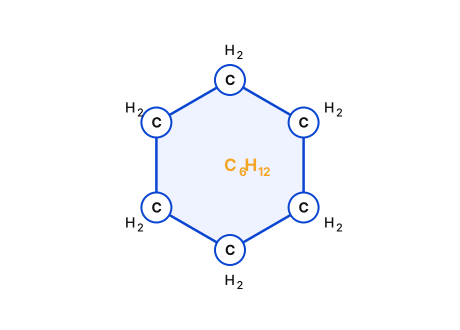
- Cyclohexane = 6-carbon ring with single bonds → C₆H₁₂.
- Benzene is a ring but C₆H₆; hexane is open-chain C₆H₁₄; butane is C₄H₁₀.
Trick: Ring + only single bonds = 'cyclo' + alkane name; CₙH₂ₙ with n = 6 → C₆H₁₂.
Answer: (C) Cyclohexane
अवधारणा: संतृप्त वलय (साइक्लोएल्केन) का सूत्र CₙH₂ₙ होता है।
- साइक्लोहेक्सेन = 6 कार्बन का एकल-बंध वलय → C₆H₁₂।
- बेंज़ीन भी वलय है पर C₆H₆; हेक्सेन खुली श्रृंखला C₆H₁₄; ब्यूटेन C₄H₁₀।
ट्रिक: वलय + केवल एकल बंध = 'साइक्लो' + एल्केन; n = 6 → C₆H₁₂।
उत्तर: (C) साइक्लोहेक्सेन
RRB Technician Grade IIIGeneral ScienceCyclic hydrocarbons – cyclohexaneRRB Technician Grade III 2025 · 9 Mar Shift 3
Q126.Crossbreeding in cattle is done to achieve ______.
पशुओं (मवेशियों) में संकरण (crossbreeding) ______ प्राप्त करने के लिए किया जाता है।
- ALonger lactation and disease resistanceलंबी दुग्धस्रवण अवधि और रोग प्रतिरोधक क्षमता
- BExcessive draught powerअत्यधिक भारवाहक शक्ति
- CReduced milk productionकम दुग्ध उत्पादन
- DOnly higher milk fat contentकेवल दूध में अधिक वसा की मात्रा
Show answer
Concept: Cross-breeding combines desirable traits of two breeds.
- Exotic breeds (Jersey, Brown Swiss) → long lactation period.
- Local breeds (Red Sindhi, Sahiwal) → excellent disease resistance.
- Cross gives both: long lactation + disease resistance.
Trick: Options with 'reduced', 'only' or 'excessive' are rarely the goal of improvement — eliminate them.
Answer: (A) Longer lactation and disease resistance
अवधारणा: संकरण से दो नस्लों के अच्छे गुण एक साथ मिलते हैं।
- विदेशी नस्लें (जर्सी, ब्राउन स्विस) → लंबी दुग्धस्रवण अवधि।
- देसी नस्लें (रेड सिंधी, साहीवाल) → अच्छी रोग प्रतिरोधक क्षमता।
- संकर नस्ल में दोनों गुण।
ट्रिक: 'कम', 'केवल', 'अत्यधिक' वाले विकल्प सुधार का लक्ष्य नहीं होते — हटा दें।
उत्तर: (A) लंबी दुग्धस्रवण अवधि और रोग प्रतिरोधक क्षमता
RRB Technician Grade IIIGeneral ScienceAnimal husbandry – cross-breeding of cattleRRB Technician Grade III 2025 · 9 Mar Shift 3
Q127.A wire carrying current is placed between the poles of a magnet. It experiences maximum force when it _____.
धारावाही तार को एक चुंबक के ध्रुवों के बीच रखा जाता है। उस पर अधिकतम बल तब लगता है जब वह _____।
- Ais perpendicular to the magnetic fieldचुंबकीय क्षेत्र के लंबवत हो
- Bis outside the magnetic fieldचुंबकीय क्षेत्र के बाहर हो
- Cis parallel to the magnetic fieldचुंबकीय क्षेत्र के समांतर हो
- Dis at 45° to the magnetic fieldचुंबकीय क्षेत्र से 45° पर हो
Show answer
Concept: F = BIL sinθ, where θ = angle between wire and field.
- θ = 90° → sin90° = 1 → force maximum.
- θ = 0° (parallel) → force zero.
- Outside the field → no force.
Yaad rakhein: Direction of this force is given by Fleming's left-hand rule.
Answer: (A) is perpendicular to the magnetic field
अवधारणा: F = BIL sinθ, θ = तार और क्षेत्र के बीच कोण।
- θ = 90° → sin90° = 1 → बल अधिकतम।
- θ = 0° (समांतर) → बल शून्य।
- क्षेत्र के बाहर → कोई बल नहीं।
याद रखें: इस बल की दिशा फ्लेमिंग के वाम-हस्त नियम से मिलती है।
उत्तर: (A) चुंबकीय क्षेत्र के लंबवत हो
RRB Technician Grade IIIGeneral ScienceForce on current-carrying conductor in magnetic fieldRRB Technician Grade III 2025 · 9 Mar Shift 3
Q128.An object moving at 25 m/s is brought to rest in 5 seconds. The final velocity is _________.
25 m/s से गतिमान एक वस्तु को 5 सेकंड में विरामावस्था में लाया जाता है। अंतिम वेग _________ है।
- A20 m/s
- B0 m/s
- C25 m/s
- D5 m/s
Show answer
Concept: 'Brought to rest' means final velocity .
- Initial velocity m/s, final .
- The 5 s only decides the retardation: .
Trick: 'Comes to rest / stops' = — no calculation needed.
Answer: (B) 0 m/s
अवधारणा: 'विराम में लाया गया' = अंतिम वेग ।
- m/s,
- 5 s से केवल मंदन निकलता है: ।
ट्रिक: 'रुक जाना / विराम में आना' = — गणना की जरूरत नहीं।
उत्तर: (B) 0 m/s
RRB Technician Grade IIIGeneral ScienceMotion – final velocityRRB Technician Grade III 2025 · 9 Mar Shift 3
Q129.Which of the following is the product formed when ethene (C2H4) reacts with hydrogen (H2) in the presence of a catalyst nickel?
उत्प्रेरक निकेल की उपस्थिति में एथीन (C2H4) की हाइड्रोजन (H2) के साथ अभिक्रिया होने पर निम्नलिखित में से कौन-सा उत्पाद बनता है?
- APropene (C3H6)प्रोपीन (C3H6)
- BEthyne (C2H2)एथाइन (C2H2)
- CPropane (C3H8)प्रोपेन (C3H8)
- DEthane (C2H6)एथेन (C2H6)
Show answer
Concept: Addition of H₂ to an unsaturated compound (Ni catalyst) gives a saturated compound.
- CH₂=CH₂ + H₂ → (Ni) → CH₃–CH₃.
- Ethene (C₂H₄) becomes ethane (C₂H₆) — carbon count stays 2.
Trick: Hydrogenation never changes the number of carbons → eliminate propene and propane.
Answer: (D) Ethane (C2H6)
अवधारणा: असंतृप्त यौगिक में Ni उत्प्रेरक की उपस्थिति में H₂ जुड़ने से संतृप्त यौगिक बनता है।
- CH₂=CH₂ + H₂ → (Ni) → CH₃–CH₃
- एथीन (C₂H₄) → एथेन (C₂H₆) — कार्बन 2 ही रहते हैं।
ट्रिक: हाइड्रोजनीकरण में कार्बन संख्या नहीं बदलती → प्रोपीन, प्रोपेन हटाएँ।
उत्तर: (D) एथेन (C2H6)
RRB Technician Grade IIIGeneral ScienceHydrogenation of alkenesRRB Technician Grade III 2025 · 9 Mar Shift 3
Q130.Metals in the middle of the activity series, such as iron and zinc, are generally extracted by:
सक्रियता श्रेणी के मध्य में स्थित धातुएँ, जैसे लोहा और जिंक, सामान्यतः किसके द्वारा निष्कर्षित की जाती हैं?
- AHeating alone without any reducing agentकिसी अपचायक के बिना केवल गर्म करके
- BReduction of their oxides with carbon or carbon monoxideउनके ऑक्साइडों का कार्बन या कार्बन मोनोऑक्साइड द्वारा अपचयन करके
- CElectrolysis of molten saltsगलित लवणों के विद्युत अपघटन द्वारा
- DDisplacement from aqueous solutionजलीय विलयन से विस्थापन द्वारा
Show answer
Concept: Method of extraction depends on position in the activity series.
- Middle metals (Fe, Zn, Pb): ore → oxide (roasting/calcination) → reduced by carbon/CO.
- e.g. ZnO + C → Zn + CO.
- Electrolysis of molten salts is for highly reactive metals (Na, K, Mg, Al).
Yaad rakhein: Top → electrolysis; middle → carbon reduction; bottom (Hg, Cu) → heating alone.
Answer: (B) Reduction of their oxides with carbon or carbon monoxide
अवधारणा: निष्कर्षण की विधि सक्रियता श्रेणी में धातु के स्थान पर निर्भर है।
- मध्य धातुएँ (Fe, Zn, Pb): अयस्क → ऑक्साइड (भर्जन/निस्तापन) → कार्बन/CO से अपचयन।
- उदा. ZnO + C → Zn + CO
- गलित लवण का विद्युत अपघटन अति सक्रिय धातुओं (Na, K, Mg, Al) के लिए है।
याद रखें: ऊपर → विद्युत अपघटन; बीच → कार्बन अपचयन; नीचे (Hg, Cu) → केवल गर्म करना।
उत्तर: (B) उनके ऑक्साइडों का कार्बन या कार्बन मोनोऑक्साइड द्वारा अपचयन करके
RRB Technician Grade IIIGeneral ScienceExtraction of metals of medium reactivityRRB Technician Grade III 2025 · 9 Mar Shift 3
Q131.A bus moves from one end A to the other end B of a straight 1000 m road in 100 s and then turns around and moves 500 m back to point C in another 100 s. What will be the average velocity (in m/s) and the type of motion of the bus in going from point A to point C?
एक बस 1000 m लंबी सीधी सड़क के एक छोर A से दूसरे छोर B तक 100 s में जाती है और फिर मुड़कर अगले 100 s में 500 m पीछे बिंदु C तक जाती है। बिंदु A से बिंदु C तक जाने में बस का औसत वेग (m/s में) और गति का प्रकार क्या होगा?
- A0.4 m/s and Non-Uniform Motion0.4 m/s और असमान गति
- B0.4 m/s and Uniform Motion0.4 m/s और समान गति
- C2.5 m/s and Non-Uniform Motion2.5 m/s और असमान गति
- D2.5 m/s and Uniform Motion2.5 m/s और समान गति
Show answer
Concept: Average velocity = net displacement ÷ total time.
- Displacement A → C = m.
- Total time = s.
- Average velocity = m/s.
- Speed changes (10 → 5 m/s) and direction reverses → non-uniform motion.
Trick: 0.4 is a trap ( inverted); a turning body can never be in uniform motion.
Answer: (C) 2.5 m/s and Non-Uniform Motion
अवधारणा: औसत वेग = कुल विस्थापन ÷ कुल समय।
- A → C विस्थापन = m
- कुल समय = 200 s
- औसत वेग = m/s
- चाल बदलती है (10 → 5 m/s) और दिशा उलटती है → असमान गति।
ट्रिक: 0.4 उल्टा भाग () है — जाल; मुड़ने वाली वस्तु की गति कभी समान नहीं।
उत्तर: (C) 2.5 m/s और असमान गति
RRB Technician Grade IIIGeneral ScienceAverage velocity and non-uniform motionRRB Technician Grade III 2025 · 9 Mar Shift 3
Q132.Choose a term to complete the analogy.
Columnar Epithelium : Absorption :: Cuboidal Epithelium : ____________
सादृश्य को पूरा करने के लिए एक पद चुनिए।
स्तंभाकार उपकला (Columnar Epithelium) : अवशोषण :: घनाकार उपकला (Cuboidal Epithelium) : ____________
- AMechanical supportयांत्रिक सहारा
- BPushing mucusश्लेष्मा को आगे धकेलना
- CForming a delicate liningकोमल अस्तर बनाना
- DPreventing wear and tearटूट-फूट से बचाना
Show answer
Concept: Each epithelium type matches a function (NCERT Class 9).
- Columnar epithelium → absorption and secretion (intestine lining).
- Cuboidal epithelium → mechanical support (kidney tubules, salivary gland ducts).
- Ciliated → pushing mucus; squamous → delicate lining; stratified → preventing wear and tear.
Yaad rakhein: Cube = box = strong → 'support'; Column = tall cells → 'absorb'.
Answer: (A) Mechanical support
अवधारणा: हर उपकला का एक विशेष कार्य (NCERT कक्षा 9)।
- स्तंभाकार उपकला → अवशोषण व स्रावण (आंत)।
- घनाकार उपकला → यांत्रिक सहारा (वृक्क नलिका, लार ग्रंथि नलिका)।
- पक्ष्माभी → श्लेष्मा धकेलना; शल्की → कोमल अस्तर; स्तरित → टूट-फूट से बचाव।
याद रखें: घन = डिब्बा = मजबूत → 'सहारा'; स्तंभ = लंबी कोशिकाएँ → 'अवशोषण'।
उत्तर: (A) यांत्रिक सहारा
RRB Technician Grade IIIGeneral ScienceEpithelial tissue – functionsRRB Technician Grade III 2025 · 9 Mar Shift 3
Q133.Lysosomes are also known as:
लयनकाय (Lysosomes) को और किस नाम से जाना जाता है?
- AControl centersनियंत्रण केंद्र
- BEnergy powerhousesऊर्जा घर (पावरहाउस)
- CSuicidal bags of the cellकोशिका की आत्मघाती थैलियाँ
- DProtein factoriesप्रोटीन कारखाने
Show answer
Concept: Lysosomes contain powerful digestive enzymes.
- When a cell is damaged, lysosomes burst and their enzymes digest the cell itself.
- Hence they are called 'suicide bags' of the cell.
- Nucleus = control centre, mitochondria = powerhouse, ribosomes = protein factories.
Yaad rakhein: Lysosomes also act as the cell's waste-disposal system.
Answer: (C) Suicidal bags of the cell
अवधारणा: लाइसोसोम में शक्तिशाली पाचक एंजाइम होते हैं।
- कोशिका क्षतिग्रस्त होने पर लाइसोसोम फटकर कोशिका को ही पचा देते हैं।
- इसलिए इन्हें 'आत्मघाती थैलियाँ' कहते हैं।
- केंद्रक = नियंत्रण केंद्र, माइटोकॉन्ड्रिया = ऊर्जा घर, राइबोसोम = प्रोटीन कारखाना।
याद रखें: लाइसोसोम कोशिका की सफाई व्यवस्था (waste disposal) भी हैं।
उत्तर: (C) कोशिका की आत्मघाती थैलियाँ
RRB Technician Grade IIIGeneral ScienceCell organelles – lysosomeRRB Technician Grade III 2025 · 9 Mar Shift 3
Q134.An object travels 16 m in 4 s and then another 16 m in 2 s. What is the average speed of the object?
एक वस्तु 4 s में 16 m चलती है और फिर 2 s में अगले 16 m चलती है। वस्तु की औसत चाल क्या है?
- A5.33 m/s
- B2.67 m/s
- C8 m/s
- D4 m/s
Show answer
Concept: Average speed = total distance ÷ total time.
- Total distance = m.
- Total time = s.
- Average speed = m/s.
Trick: Don't average the speeds (4 and 8 → 6 is wrong); for equal distances use .
Answer: (A) 5.33 m/s
अवधारणा: औसत चाल = कुल दूरी ÷ कुल समय।
- कुल दूरी = 32 m
- कुल समय = 6 s
- औसत चाल = m/s
ट्रिक: चालों का साधारण औसत न लें; समान दूरी पर ।
उत्तर: (A) 5.33 m/s
RRB Technician Grade IIIGeneral ScienceAverage speedRRB Technician Grade III 2025 · 9 Mar Shift 3
Q135.How long does an unfertilised egg survive after being released from the ovary?
अंडाशय से निर्मुक्त होने के बाद एक अनिषेचित अंडाणु कितने समय तक जीवित रहता है?
- AAbout one dayलगभग एक दिन
- BOne weekएक सप्ताह
- CTwo hoursदो घंटे
- DOne monthएक महीना
Show answer
Concept: After ovulation the egg can be fertilised only for a short time.
- An unfertilised ovum survives for about one day (12–24 hours).
- If not fertilised, it degenerates and the uterine lining is later shed as menstruation.
Yaad rakhein: The ovary releases one egg roughly every month — 'one month' is the cycle, not the egg's life.
Answer: (A) About one day
अवधारणा: अंडोत्सर्ग के बाद अंडाणु थोड़े समय तक ही निषेचित हो सकता है।
- अनिषेचित अंडाणु लगभग एक दिन (12–24 घंटे) जीवित रहता है।
- निषेचन न होने पर वह नष्ट हो जाता है और बाद में गर्भाशय की परत मासिक धर्म के रूप में निकलती है।
याद रखें: अंडाशय लगभग हर महीने एक अंडाणु छोड़ता है — 'एक महीना' चक्र है, अंडाणु की आयु नहीं।
उत्तर: (A) लगभग एक दिन
RRB Technician Grade IIIGeneral ScienceHuman reproduction – life of ovumRRB Technician Grade III 2025 · 9 Mar Shift 3
Q136.The SI unit of force (F) is __________ .
बल (F) का SI मात्रक __________ है।
- AN m
- BJouleजूल
- Ckg m/s²
- Dkg m/s
Show answer
Concept: .
- Unit = = 1 newton (N).
- N m (= joule) is unit of work/torque; kg m/s is unit of momentum.
Trick: Write the formula's units: mass (kg) × acceleration (m/s²).
Answer: (C) kg m/s²
अवधारणा:
- मात्रक = = 1 न्यूटन (N)
- N m (= जूल) कार्य/बल-आघूर्ण का; kg m/s संवेग का मात्रक है।
ट्रिक: सूत्र के मात्रक लिखें: द्रव्यमान (kg) × त्वरण (m/s²)।
उत्तर: (C) kg m/s²
RRB Technician Grade IIIGeneral ScienceSI unit of forceRRB Technician Grade III 2025 · 9 Mar Shift 3
Q137.The molecular mass of a compound is '60'. If it contains 40% carbon, 6.7% hydrogen, and 53.3% oxygen, what is the molecular formula?
एक यौगिक का आण्विक द्रव्यमान '60' है। यदि इसमें 40% कार्बन, 6.7% हाइड्रोजन और 53.3% ऑक्सीजन है, तो इसका आण्विक सूत्र क्या है?
- AC₂H₄O₂
- BC₃H₆O₃
- CCH₂O
- DC₄H₈O₄
Show answer
Concept: Molecular formula = n × empirical formula, n = molar mass ÷ empirical mass.
- C : H : O = = 3.33 : 6.7 : 3.33 = 1 : 2 : 1 → CH₂O.
- Empirical mass = .
- → C₂H₄O₂ (acetic acid).
Trick: Just find the option with mass 60: C₂H₄O₂ = .
Answer: (A) C₂H₄O₂
अवधारणा: आण्विक सूत्र = n × मूलानुपाती सूत्र, n = आण्विक द्रव्यमान ÷ मूलानुपाती द्रव्यमान।
- C : H : O = = 1 : 2 : 1 → CH₂O
- मूलानुपाती द्रव्यमान = 30
- → C₂H₄O₂ (एसिटिक अम्ल)
ट्रिक: वह विकल्प चुनें जिसका द्रव्यमान 60 हो: C₂H₄O₂ = ।
उत्तर: (A) C₂H₄O₂
RRB Technician Grade IIIGeneral ScienceEmpirical and molecular formulaRRB Technician Grade III 2025 · 9 Mar Shift 3
Q138.Implantation of developing embryo occurs in which part of the female reproductive system in human beings?
मनुष्यों में, विकासशील भ्रूण का रोपण (implantation) स्त्री जनन तंत्र के किस भाग में होता है?
- ALining of the uterusगर्भाशय की भित्ति (अस्तर)
- BCervixगर्भाशय ग्रीवा
- CFallopian tubesअंडवाहिनियाँ (फैलोपियन नलिकाएँ)
- DOvaryअंडाशय
Show answer
Concept: The embryo attaches to the thick, blood-rich inner wall of the uterus.
- Fertilisation occurs in the fallopian tube (oviduct).
- The developing embryo moves down and gets implanted in the uterine lining.
- Placenta then forms there for nutrition.
Yaad rakhein: Fertilisation → oviduct; implantation → uterus wall.
Answer: (A) Lining of the uterus
अवधारणा: भ्रूण गर्भाशय की मोटी, रक्त-समृद्ध भीतरी परत में जुड़ता है।
- निषेचन अंडवाहिनी (फैलोपियन नलिका) में होता है।
- विकसित होता भ्रूण नीचे आकर गर्भाशय की परत में आरोपित होता है।
- फिर वहीं अपरा (placenta) बनता है।
याद रखें: निषेचन → अंडवाहिनी; आरोपण → गर्भाशय की दीवार।
उत्तर: (A) गर्भाशय की भित्ति (अस्तर)
RRB Technician Grade IIIGeneral ScienceHuman reproduction – implantationRRB Technician Grade III 2025 · 9 Mar Shift 3
Q139.A body undergoes a displacement of 50 m under the action of a constant force of 5 N in the same direction as that of the force. What will be the work done under the action of this force?
5 N के एक नियत बल की क्रिया के अंतर्गत कोई वस्तु बल की दिशा में ही 50 m का विस्थापन करती है। इस बल की क्रिया के अंतर्गत किया गया कार्य कितना होगा?
- A+ 25 J
- B- 250 J
- C- 25 J
- D+ 250 J
Show answer
Concept: .
- Force and displacement in same direction → , .
- J.
Trick: Same direction → work is positive; this alone removes both negative options.
Answer: (D) + 250 J
अवधारणा:
- बल और विस्थापन एक ही दिशा में → ,
- J
ट्रिक: एक ही दिशा → कार्य धनात्मक; दोनों ऋणात्मक विकल्प तुरंत हटें।
उत्तर: (D) + 250 J
RRB Technician Grade IIIGeneral ScienceWork done by a constant forceRRB Technician Grade III 2025 · 9 Mar Shift 3
Q140.What is the importance of sexual reproduction in creating variation in plant
populations?
पादप
समष्टियों में विविधता उत्पन्न करने में लैंगिक जनन का क्या महत्व है?
- AIt speeds up DNA copying errors.यह DNA प्रतिकृति की त्रुटियों को तेज़ करता है।
- BIt prevents any variations from occurring.यह किसी भी विविधता को उत्पन्न होने से रोकता है।
- CIt copies DNA without any changes.यह DNA की प्रतिलिपि बिना किसी परिवर्तन के बनाता है।
- DIt mixes DNA from two parents to create new variations.यह दो जनकों के DNA को मिलाकर नई विविधताएँ उत्पन्न करता है।
Show answer
Concept: Sexual reproduction combines DNA of two parents.
- Gametes from two different individuals fuse → new combinations of genes.
- This creates variation, which helps populations survive changing environments.
- Asexual reproduction copies DNA almost exactly → little variation.
Yaad rakhein: Variation is the raw material for evolution.
Answer: (D) It mixes DNA from two parents to create new variations.
अवधारणा: लैंगिक जनन में दो जनकों का DNA मिलता है।
- दो अलग जीवों के युग्मक मिलते हैं → जीनों के नए संयोजन।
- इससे विविधता आती है, जो बदलते पर्यावरण में जीवित रहने में मदद करती है।
- अलैंगिक जनन में DNA लगभग हूबहू कॉपी होता है → कम विविधता।
याद रखें: विविधता ही विकास (evolution) का आधार है।
उत्तर: (D) यह दो जनकों के DNA को मिलाकर नई विविधताएँ उत्पन्न करता है।
RRB Technician Grade IIIGeneral ScienceSexual reproduction and variationRRB Technician Grade III 2025 · 9 Mar Shift 3

