Q201.A statement is given followed by two conclusions. Find which conclusion is TRUE based on the given statement.
Statement: A < K ≤ T = E ≥ O; P ≥ E < S; T ≥ K
Conclusions:
I. K ≤ O
II. A < P
एक कथन के बाद दो निष्कर्ष दिए हैं। बताइए कौन-सा निष्कर्ष कथन के आधार पर सत्य है।
कथन: A < K ≤ T = E ≥ O; P ≥ E < S; T ≥ K
निष्कर्ष:
I. K ≤ O
II. A < P
- AEither I or IIया तो I या II
- BNeither I nor IIन I न II
- COnly Iकेवल I
- DOnly IIकेवल II
Show answer
Concept: Two letters can be compared only if the signs between them all point the same way.
- II: A < K ≤ T = E ≤ P (since P ≥ E). All signs open one way ⇒ A < P is true.
- I: K ≤ T = E ≥ O. The sign flips at E (≤ then ≥) ⇒ K and O cannot be compared, so I is false.
- Either-or is not possible because II is definitely true.
Trick: Opposite signs (≤ … ≥) between two letters = no relation. Stop checking at the first flip.
Answer: (D) Only II
अवधारणा: दो अक्षरों की तुलना तभी होगी जब उनके बीच सभी चिह्न एक ही दिशा में हों।
हल:
- II: A < K ≤ T = E ≤ P (क्योंकि P ≥ E) ⇒ A < P सत्य।
- I: K ≤ T = E ≥ O – E पर चिह्न उलट जाता है ⇒ K और O की तुलना संभव नहीं, I असत्य।
- II निश्चित सत्य है, इसलिए 'या तो-या' लागू नहीं।
ट्रिक: बीच में ≤ और ≥ आमने-सामने आ जाएँ तो कोई संबंध नहीं निकलता।
उत्तर: (D) केवल II
SSC CGLGeneral Intelligence & ReasoningInequality – direct chain checkSSC CGL 2025 · 14 Oct Shift 1
Q202.Select the letter-cluster that can replace the question mark (?) in the following series.
HIJ, KLM, NOP, QRS, ?
निम्न शृंखला में प्रश्न चिह्न (?) के स्थान पर आने वाला अक्षर-समूह चुनिए।
HIJ, KLM, NOP, QRS, ?
- ANOP
- BGHS
- CTUV
- DKMN
Show answer
Concept: The letters of the alphabet are written in order, three at a time.
- HIJ → KLM → NOP → QRS: each group continues straight after the previous one.
- After S come T, U, V.
- Next group = TUV.
Trick: Just read the alphabet onward from the last letter: S → T U V.
Answer: (C) TUV
अवधारणा: वर्णमाला के अक्षर क्रम से तीन-तीन के समूह में लिखे गए हैं।
हल:
- HIJ → KLM → NOP → QRS: हर समूह पिछले के ठीक बाद से शुरू होता है।
- S के बाद T, U, V आते हैं।
- अगला समूह = TUV।
ट्रिक: अंतिम अक्षर S से आगे वर्णमाला पढ़ें: T U V।
उत्तर: (C) TUV
SSC CGLGeneral Intelligence & ReasoningLetter series – consecutive tripletsSSC CGL 2025 · 14 Oct Shift 1
Q203.Interchange two signs to make the equation correct.
50 ÷ 5 + 6 − 8 × 2 = 20
समीकरण को सही बनाने हेतु दो चिह्न आपस में बदलिए।
50 ÷ 5 + 6 − 8 × 2 = 20
- A÷ and −÷ और −
- B+ and −+ और −
- C÷ and ×÷ और ×
- D− and ×− और ×
Show answer
Concept: Swap the two signs given in an option, then solve using BODMAS (÷, × before +, −).
- Given form: .
- Swap + and −: .
- ✓.
Trick: Fix ÷ and × values first (, ); then you only need .
Answer: (B) + and −
अवधारणा: विकल्प के दो चिह्न बदलें और BODMAS से हल करें (पहले ÷, ×, फिर +, −)।
हल:
- मूल रूप: ।
- + और − बदलने पर: ।
- ✓।
ट्रिक: पहले और निकाल लें; फिर बस बैठाएँ।
उत्तर: (B) + और −
SSC CGLGeneral Intelligence & ReasoningInterchange of signs – BODMASSSC CGL 2025 · 14 Oct Shift 1
Q204.Consider the following statements and choose the option that follows.
Statements:
I. The municipal corporation started a cleanliness drive in the city.
II. Citizens have been throwing garbage in public places.
निम्न कथनों पर विचार कर सही विकल्प चुनिए।
कथन:
I. नगर निगम ने शहर में स्वच्छता अभियान शुरू किया।
II. नागरिक सार्वजनिक स्थानों पर कचरा फेंकते रहे हैं।
- AI is the cause and II is the effectI कारण है और II परिणाम
- BII is the cause and I is the effectII कारण है और I परिणाम
- CBoth are effects of the same causeदोनों एक ही कारण के परिणाम हैं
- DNo relationकोई संबंध नहीं
Show answer
Concept: The event that happens first and creates a need is the cause; the action taken in response is the effect.
- Littering in public places (II) creates a dirty city – a problem.
- The corporation's cleanliness drive (I) is the response to that problem.
- So II → I.
Trick: Ask 'Why was this done?' – Why a cleanliness drive? Because people litter. The 'because' part is the cause.
Answer: (B) II is the cause and I is the effect
अवधारणा: जो घटना पहले हो और ज़रूरत पैदा करे वह कारण; उसके जवाब में उठाया गया कदम प्रभाव है।
हल:
- सार्वजनिक जगहों पर कचरा फेंकना (II) – समस्या।
- नगर निगम का स्वच्छता अभियान (I) – समस्या का जवाब।
- अतः II कारण, I प्रभाव।
ट्रिक: पूछें 'यह क्यों किया गया?' – अभियान क्यों? क्योंकि लोग कचरा फेंकते हैं। 'क्योंकि' वाला भाग कारण है।
उत्तर: (B) II कारण है और I परिणाम
SSC CGLGeneral Intelligence & ReasoningCause and effectSSC CGL 2025 · 14 Oct Shift 1
Q205.Solve:
JP : MS :: EK : ?
हल कीजिए:
JP : MS :: EK : ?
- AVP
- BHN
- CVQ
- DUW
Show answer
Concept: Find the shift from the first pair and apply it to the second.
- J(10) → M(13): +3; P(16) → S(19): +3.
- E(5) + 3 = H(8); K(11) + 3 = N(14).
- Answer pair = HN.
Trick: Check only the first letter: E + 3 = H – only HN starts with H.
Answer: (B) HN
अवधारणा: पहली जोड़ी का नियम निकालकर दूसरी पर लगाएँ।
हल:
- J(10) → M(13): +3; P(16) → S(19): +3।
- E(5) + 3 = H(8); K(11) + 3 = N(14)।
- उत्तर = HN।
ट्रिक: सिर्फ़ पहला अक्षर देखें: E + 3 = H – केवल HN में H है।
उत्तर: (B) HN
SSC CGLGeneral Intelligence & ReasoningLetter analogy – +3 shiftSSC CGL 2025 · 14 Oct Shift 1
Q206.Choose the address that is the same as the one given below.
Sample Address: W840, Monarch Street, Lane No. 4, Kochi, Kerala 78965
नीचे दिए गए पते के समान पता चुनिए।
नमूना पता: W840, Monarch Street, Lane No. 4, Kochi, Kerala 78965
- AW840, Monarch Street, Lane No. 4, Kochi, Kerala 78865
- BW840, Monarch Street, Lane No. 4A, Kochi, Kerala 78965
- CW840, Monarch Street, Lane No. 4, Cochi, Kerala 78965
- DW840, Monarch Street, Lane No. 4, Kochi, Kerala 78965
Show answer
Concept: Compare each part (number, street, lane, city, PIN) of the options with the sample.
- (A) PIN 78865 ≠ 78965.
- (B) Lane No. 4A ≠ 4.
- (C) 'Cochi' ≠ 'Kochi'.
- (D) matches every part.
Trick: Check the parts most likely to be altered first – PIN digits and spellings – to strike out options fast.
Answer: (D) W840, Monarch Street, Lane No. 4, Kochi, Kerala 78965
अवधारणा: विकल्प के हर भाग (नंबर, सड़क, लेन, शहर, पिन) को मूल पते से मिलाएँ।
हल:
- (A) पिन 78865 ≠ 78965।
- (B) लेन 4A ≠ 4।
- (C) 'Cochi' ≠ 'Kochi'।
- (D) हर भाग समान है।
ट्रिक: पहले पिन के अंक और नाम की स्पेलिंग जाँचें – गलत विकल्प जल्दी कट जाते हैं।
उत्तर: (D) W840, Monarch Street, Lane No. 4, Kochi, Kerala 78965
SSC CGLGeneral Intelligence & ReasoningAddress matchingSSC CGL 2025 · 14 Oct Shift 1
Q207.Find the odd one out from the given alternatives.
दिए गए विकल्पों में से असंगत चुनिए।
- AFluteबाँसुरी
- BClarinetक्लैरिनेट
- CTrumpetतुरही
- DDholakढोलक
Show answer
Concept: Group instruments by how they produce sound.
- Flute, clarinet, trumpet – sound comes from blowing air (wind instruments).
- Dholak – sound comes from striking a stretched skin (percussion/membranophone).
Yaad rakhein: Indian classification: Sushira (wind – flute, shehnai), Avanaddha (skin – dholak, tabla), Tata (string), Ghana (solid – cymbals).
Answer: (D) Dholak
अवधारणा: वाद्य यंत्रों को ध्वनि पैदा करने के तरीके से बाँटें।
हल:
- बाँसुरी, क्लैरिनेट, ट्रम्पेट – फूँक से बजने वाले (सुषिर/वायु वाद्य)।
- ढोलक – चमड़े पर थाप से बजता है (अवनद्ध/ताल वाद्य)।
याद रखें: भारतीय वर्गीकरण: सुषिर (फूँक), अवनद्ध (चमड़ा), तत (तार), घन (ठोस धातु)।
उत्तर: (D) ढोलक
SSC CGLGeneral Intelligence & ReasoningOdd one out – musical instrumentsSSC CGL 2025 · 14 Oct Shift 1
Q208.X is the son of Y. Y is the brother of Z. Z is the son of A. How is X related to A?
X, Y का पुत्र है। Y, Z का भाई है। Z, A का पुत्र है। X का A से क्या संबंध है?
- ASonपुत्र
- BNephewभतीजा
- CGrandsonपोता
- DUncleचाचा
Show answer
Concept: Trace the relation generation by generation.
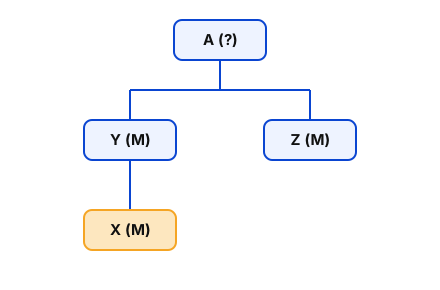
- Z is A's son; Y is Z's brother ⇒ Y is also A's son.
- X is Y's son ⇒ X is the son of A's son.
- So X is A's grandson.
Trick: Count generations: A → Y → X is two steps down, and X is male ⇒ grandson.
Answer: (C) Grandson
अवधारणा: पीढ़ी-दर-पीढ़ी संबंध जोड़ें।
हल:
- Z, A का पुत्र है; Y, Z का भाई ⇒ Y भी A का पुत्र।
- X, Y का पुत्र ⇒ X, A के पुत्र का पुत्र।
- अतः X, A का पोता (Grandson) है।
ट्रिक: पीढ़ी गिनें: A → Y → X दो पीढ़ी नीचे, पुरुष ⇒ पोता।
उत्तर: (C) पोता
SSC CGLGeneral Intelligence & ReasoningBlood relation – grandsonSSC CGL 2025 · 14 Oct Shift 1
Q209.Identify the assumptions that must hold for the statement to be valid, then choose the correct option.
Statement: The introduction of online medical consultation apps has improved access to healthcare services, especially for people living in remote areas.
Assumptions:
I. Online medical apps help people receive medical advice without visiting hospitals.
II. People in remote areas face difficulty accessing traditional healthcare services.
III. Online consultations are always as effective as in-person medical visits.
कथन के वैध होने हेतु आवश्यक पूर्वधारणाएँ पहचानकर सही विकल्प चुनिए।
कथन: ऑनलाइन चिकित्सा परामर्श ऐप्स ने स्वास्थ्य सेवाओं तक पहुँच बेहतर की है, विशेषकर दूरस्थ क्षेत्रों में रहने वालों के लिए।
पूर्वधारणाएँ:
I. ऑनलाइन चिकित्सा ऐप्स लोगों को अस्पताल गए बिना चिकित्सकीय सलाह दिलाते हैं।
II. दूरस्थ क्षेत्रों के लोगों को पारंपरिक स्वास्थ्य सेवाओं तक पहुँचने में कठिनाई होती है।
III. ऑनलाइन परामर्श सदैव आमने-सामने की चिकित्सकीय भेंट जितने ही प्रभावी होते हैं।
- AOnly I and II are implicitकेवल I और II निहित हैं
- BOnly II and III are implicitकेवल II और III निहित हैं
- COnly I is implicitकेवल I निहित है
- DAll I, II and III are implicitI, II और III तीनों निहित हैं
Show answer
Concept: An assumption is an unstated belief the statement needs; extreme words like 'always' rarely qualify.
- I: 'improved access' means advice is now possible without going to a hospital – implicit.
- II: 'especially remote areas' presumes these people had difficulty earlier – implicit.
- III: equal effectiveness 'always' is never claimed – the statement talks only about access, not quality.
Trick: Words like always/only/never in an assumption usually make it non-implicit.
Answer: (A) Only I and II are implicit
अवधारणा: पूर्वधारणा वह अनकही बात है जिसके बिना कथन टिक नहीं सकता; 'हमेशा' जैसे चरम शब्द प्रायः निहित नहीं होते।
हल:
- I: 'पहुँच बेहतर हुई' – मतलब अस्पताल गए बिना सलाह मिलती है – निहित।
- II: 'खासकर दूर-दराज़ के लोग' – मानता है कि पहले उन्हें कठिनाई थी – निहित।
- III: 'हमेशा' उतना ही प्रभावी – कथन में गुणवत्ता की बात ही नहीं – निहित नहीं।
ट्रिक: पूर्वधारणा में हमेशा/केवल/कभी नहीं जैसे शब्द दिखें तो उसे प्रायः निहित न मानें।
उत्तर: (A) केवल I और II निहित हैं
SSC CGLGeneral Intelligence & ReasoningStatement and assumptionsSSC CGL 2025 · 14 Oct Shift 1
Q210.If 6 * 3 = 54 and 7 * 2 = 42, what is 4 * 6?
यदि 6 * 3 = 54 और 7 * 2 = 42 है, तो 4 * 6 = ?
- A40
- B44
- C45
- D72
Show answer
Concept: Find the single rule that fits both given examples.
- and .
- and .
- .
Trick: Divide the result by the plain product: , – the multiplier is fixed at 3.
Answer: (D) 72
अवधारणा: ऐसा एक नियम खोजें जो दोनों उदाहरणों पर लागू हो।
हल:
- और ।
- और ।
- ।
ट्रिक: परिणाम ÷ सामान्य गुणनफल: , – गुणक 3 तय है।
उत्तर: (D) 72
SSC CGLGeneral Intelligence & ReasoningSymbol operation – product × 3SSC CGL 2025 · 14 Oct Shift 1
Q211.Read the following statements carefully and identify the conclusion that follows.
Statements:
Some cats are wild.
All wild are scary.
Conclusions:
I. Some cats are scary.
II. All wild are cats.
निम्न कथनों को ध्यानपूर्वक पढ़कर अनुसरण करने वाला निष्कर्ष पहचानिए।
कथन:
कुछ बिल्लियाँ जंगली हैं।
सभी जंगली डरावने हैं।
निष्कर्ष:
I. कुछ बिल्लियाँ डरावनी हैं।
II. सभी जंगली बिल्लियाँ हैं।
- AOnly I followsकेवल I अनुसरण करता है
- BOnly II followsकेवल II अनुसरण करता है
- CBoth I and II followI और II दोनों अनुसरण करते हैं
- DNeither I nor II followsन I न II अनुसरण करता है
Show answer
Concept: 'Some A are B' + 'All B are C' ⇒ 'Some A are C'. An 'all' statement cannot be reversed.
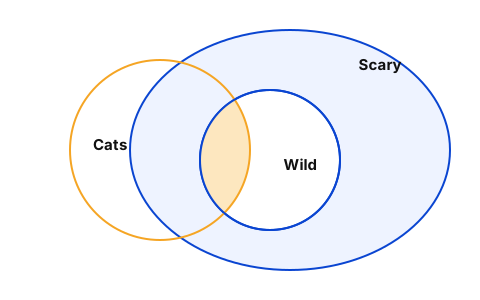
- The cats that are wild fall inside 'scary' ⇒ some cats are scary – I follows.
- 'Some cats are wild' only says the two overlap; it does not put every wild thing inside cats – II fails.
Trick: Some + All = Some (in that order). Never turn 'some' into 'all'.
Answer: (A) Only I follows
अवधारणा: 'कुछ A, B हैं' + 'सभी B, C हैं' ⇒ 'कुछ A, C हैं'। 'सभी' वाले कथन को उलटा नहीं किया जा सकता।
हल:
- जो बिल्लियाँ जंगली हैं, वे डरावनी भी हैं ⇒ कुछ बिल्लियाँ डरावनी हैं – I सही।
- 'कुछ बिल्लियाँ जंगली' से यह नहीं निकलता कि सभी जंगली बिल्लियाँ हैं – II गलत।
ट्रिक: कुछ + सभी = कुछ। 'कुछ' को कभी 'सभी' न बनाएँ।
उत्तर: (A) केवल I अनुसरण करता है
SSC CGLGeneral Intelligence & ReasoningSyllogism – some + allSSC CGL 2025 · 14 Oct Shift 1
Q212.Choose the correct option to complete the analogy.
Scalpel : Incise :: Microscope : ?
सादृश्य पूरा करने हेतु सही विकल्प चुनिए।
Scalpel : Incise :: Microscope : ?
- AResearchअनुसंधान
- BEnlargeआवर्धन
- CDiscoverखोज
- DAnalyseविश्लेषण
Show answer
Concept: Pair 1 = instrument : the direct action it performs.
- A scalpel's direct job is to incise (cut).
- A microscope's direct job is to enlarge (magnify) objects.
- Research, discovery and analysis are what the user does, not the instrument.
Trick: Pick the verb the tool itself does, not the purpose of the person using it.
Answer: (B) Enlarge
अवधारणा: पहली जोड़ी = उपकरण : उसका सीधा काम।
हल:
- स्कैल्पल का काम चीरना (Incise) है।
- माइक्रोस्कोप का काम वस्तु को बड़ा दिखाना (Enlarge) है।
- शोध, खोज, विश्लेषण उपयोगकर्ता करता है, उपकरण नहीं।
ट्रिक: वह क्रिया चुनें जो उपकरण स्वयं करता है, उपयोगकर्ता का उद्देश्य नहीं।
उत्तर: (B) आवर्धन
SSC CGLGeneral Intelligence & ReasoningAnalogy – tool and its functionSSC CGL 2025 · 14 Oct Shift 1
Q213.Find the odd one out from the given alternatives.
दिए गए विकल्पों में से असंगत चुनिए।
- AArticle 15अनुच्छेद 15
- BArticle 32अनुच्छेद 32
- CArticle 24अनुच्छेद 24
- DArticle 368अनुच्छेद 368
Show answer
Concept: Group the Articles by the Part of the Constitution they belong to.
- Art. 15 (no discrimination), Art. 24 (no child labour in factories), Art. 32 (constitutional remedies) – all Fundamental Rights, Part III (Arts. 12–35).
- Art. 368 – power of Parliament to amend the Constitution, Part XX.
Yaad rakhein: Dr. B.R. Ambedkar called Article 32 the 'heart and soul' of the Constitution.
Answer: (D) Article 368
अवधारणा: अनुच्छेदों को संविधान के भाग के अनुसार बाँटें।
हल:
- अनु. 15 (भेदभाव निषेध), अनु. 24 (कारखानों में बाल श्रम निषेध), अनु. 32 (संवैधानिक उपचार) – मौलिक अधिकार, भाग III (अनु. 12–35)।
- अनु. 368 – संविधान संशोधन की शक्ति, भाग XX।
याद रखें: डॉ. अंबेडकर ने अनुच्छेद 32 को संविधान का 'हृदय और आत्मा' कहा।
उत्तर: (D) अनुच्छेद 368
SSC CGLGeneral Intelligence & ReasoningOdd one out – Constitution articlesSSC CGL 2025 · 14 Oct Shift 1
Q214.In a row of 70 students, Sonam is 30th from the left and Madhuri is 25th from the right. How many students are there between them?
70 विद्यार्थियों की पंक्ति में सोनम बाएँ से 30वीं और माधुरी दाएँ से 25वीं है। उनके बीच कितने विद्यार्थी हैं?
- A26
- B15
- C28
- D24
Show answer
Concept: Convert both positions to the same end, then between = difference − 1.
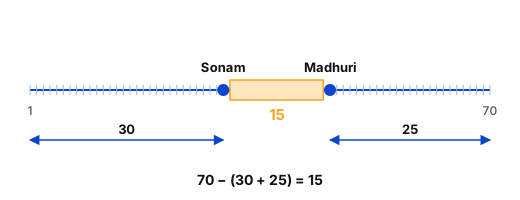
- Madhuri from left = 70 − 25 + 1 = 46th.
- Sonam = 30th from left.
- Between = 46 − 30 − 1 = 15.
Trick: If no overlap: between = Total − (Left pos + Right pos) = 70 − (30 + 25) = 15.
Answer: (B) 15
अवधारणा: दोनों स्थान एक ही छोर से बदलें, फिर बीच वाले = अंतर − 1।
हल:
- माधुरी बाएँ से = 70 − 25 + 1 = 46वीं।
- सोनम = बाएँ से 30वीं।
- बीच में = 46 − 30 − 1 = 15।
ट्रिक: ओवरलैप न हो तो: बीच वाले = कुल − (बाएँ स्थान + दाएँ स्थान) = 70 − 55 = 15।
उत्तर: (B) 15
SSC CGLGeneral Intelligence & ReasoningRanking – persons betweenSSC CGL 2025 · 14 Oct Shift 1
Q215.Evaluate: (4 + 3) × (8 − 3)²
मान ज्ञात कीजिए: (4 + 3) × (8 − 3)²
- A200
- B225
- C175
- D135
Show answer
Concept: Order: Brackets → Orders (powers) → ×/÷ → +/−.
- Brackets: , .
- Power: .
- .
Trick: Multiply by 25 quickly: .
Answer: (C) 175
अवधारणा: क्रम: कोष्ठक → घात → ×/÷ → +/−।
हल:
- कोष्ठक: , ।
- घात: ।
- ।
ट्रिक: – सेकंडों में।
उत्तर: (C) 175
SSC CGLGeneral Intelligence & ReasoningBODMAS – brackets and powersSSC CGL 2025 · 14 Oct Shift 1
Q216.Determine the logic and find the missing value.
JQ : :: KP : ?
तर्क पहचानकर लुप्त मान ज्ञात कीजिए।
JQ : :: KP : ?
- A
- B
- C
- D
Show answer
Concept: Each letter is replaced by the square of its alphabet position.
- J = 10 → ; Q = 17 → ⇒ 100289 ✓.
- K = 11 → 121; P = 16 → 256.
- Code = 121256.
Trick: K is 11 ⇒ code must start with 121 – only one option does.
Answer: (C)
अवधारणा: हर अक्षर की जगह उसके वर्णमाला स्थान का वर्ग लिखा गया है।
हल:
- J = 10 → 100; Q = 17 → 289 ⇒ 100289 ✓।
- K = 11 → 121; P = 16 → 256।
- कूट = 121256।
ट्रिक: K = 11 ⇒ कूट 121 से शुरू होगा – केवल एक विकल्प ऐसा है।
उत्तर: (C)
SSC CGLGeneral Intelligence & ReasoningLetter-number coding – square of positionSSC CGL 2025 · 14 Oct Shift 1
Q217.Identify the odd number:
8, 27, 64, 125, 216, 356
असंगत संख्या पहचानिए:
8, 27, 64, 125, 216, 356
- A64
- B125
- C356
- D27
Show answer
Concept: The terms are cubes of 2, 3, 4, 5, 6, 7.
- , , , , .
- Next should be .
- 356 does not fit.
Trick: Learn cubes 1–15; is a frequent trap value.
Answer: (C) 356
अवधारणा: पद 2, 3, 4, 5, 6, 7 के घन हैं।
हल:
- , , , , ।
- अगला होना चाहिए।
- 356 नियम में नहीं बैठता।
ट्रिक: 1 से 15 तक के घन याद रखें; ।
उत्तर: (C) 356
SSC CGLGeneral Intelligence & ReasoningOdd number – cube seriesSSC CGL 2025 · 14 Oct Shift 1
Q218.In a certain code, PURPLE is written as QWUTQK. How will ORANGE be written?
एक कूट में PURPLE को QWUTQK लिखा जाता है। ORANGE कैसे लिखा जाएगा?
- APSBPIH
- BPSBOIH
- CPTDRLK
- DPQBOIH
Show answer
Concept: Find the position-wise shift between word and code.
- PURPLE → QWUTQK: shifts are +1, +2, +3, +4, +5, +6 (P→Q, U→W, R→U, P→T, L→Q, E→K).
- ORANGE with shifts (+1 … +6): O→P, R→T, A→D, N→R, G→L, E→K.
- Code = PTDRLK.
Trick: Third letter decides fast: A + 3 = D – only PTDRLK has D third.
Answer: (C) PTDRLK
अवधारणा: शब्द और कूट के बीच हर स्थान का खिसकाव निकालें।
हल:
- PURPLE → QWUTQK: खिसकाव +1, +2, +3, +4, +5, +6 (P→Q, U→W, R→U, P→T, L→Q, E→K)।
- ORANGE पर (+1 … +6): O→P, R→T, A→D, N→R, G→L, E→K।
- कूट = PTDRLK।
ट्रिक: तीसरा अक्षर देखें: A + 3 = D – केवल PTDRLK में तीसरा D है।
उत्तर: (C) PTDRLK
SSC CGLGeneral Intelligence & ReasoningCoding – increasing shiftSSC CGL 2025 · 14 Oct Shift 1
Q219.A 45-litre solution has juice : water = 5 : 4. How much water must be added to make juice : water = 1 : 1?
45 लीटर के एक घोल में रस : जल = 5 : 4 है। रस : जल = 1 : 1 करने हेतु कितना जल मिलाना होगा?
- A10 L
- B5 L
- C8.5 L
- D9 L
Show answer
Concept: When only water is added, the juice quantity stays fixed.
- Juice = L; water = L.
- For 1 : 1, water must equal juice = 25 L.
- Water to add = L.
Trick: Ratio 5 : 4 → 1 : 1 = 5 : 5, so 1 part extra; 1 part = L.
Answer: (B) 5 L
अवधारणा: केवल पानी मिलाने पर जूस की मात्रा नहीं बदलती।
हल:
- जूस = L; पानी = L।
- 1 : 1 के लिए पानी = 25 L।
- मिलाना = L।
ट्रिक: 5 : 4 → 5 : 5, यानी 1 भाग अधिक; 1 भाग = L।
उत्तर: (B) 5 L
SSC CGLGeneral Intelligence & ReasoningMixture – water to be addedSSC CGL 2025 · 14 Oct Shift 1
Q220.A group of three letter-number pairs is given in each option. Identify the group that does NOT follow the same pattern as the others.
प्रत्येक विकल्प में तीन अक्षर-संख्या युग्म दिए हैं। वह समूह पहचानिए जो शेष के पैटर्न का अनुसरण नहीं करता।
- AC1 : F5 : I9
- BD2 : G6 : J10
- CJ3 : M7 : P13
- DQ4 : T8 : W12
Show answer
Concept: In each group, letters jump +3 and numbers jump +4.
- (A) C,F,I | 1,5,9 ✓ (B) D,G,J | 2,6,10 ✓ (D) Q,T,W | 4,8,12 ✓.
- (C) J,M,P ✓ but 3,7,13: 7 + 4 = 11, not 13 ✗.
Trick: Letters are fine everywhere, so just check the numbers' gap: only (C) has 3, 7, 13 (gaps 4, 6).
Answer: (C) J3 : M7 : P13
अवधारणा: हर समूह में अक्षर +3 और संख्या +4 बढ़ती हैं।
हल:
- (A) C,F,I | 1,5,9 ✓ (B) D,G,J | 2,6,10 ✓ (D) Q,T,W | 4,8,12 ✓।
- (C) J,M,P ✓ पर 3,7,13: 7 + 4 = 11 होना चाहिए, 13 नहीं ✗।
ट्रिक: अक्षर सब में ठीक हैं, इसलिए केवल संख्याओं का अंतर देखें।
उत्तर: (C) J3 : M7 : P13
SSC CGLGeneral Intelligence & ReasoningOdd group – letter-number patternSSC CGL 2025 · 14 Oct Shift 1

