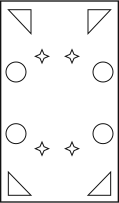
Q21.The sequence of folding a paper and the manner in which the folded paper is cut is shown in the following figures. How would this paper look when unfolded?
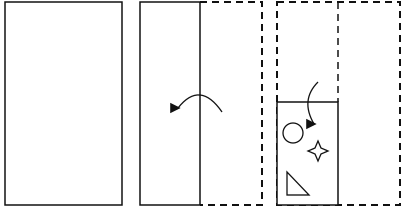
एक कागज़ को मोड़ने का क्रम और मुड़े हुए कागज़ को काटने का तरीका निम्नलिखित आकृतियों में दर्शाया गया है। खोलने पर यह कागज़ कैसा दिखाई देगा?
- A
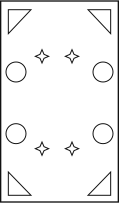
- B
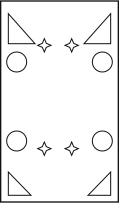
- C
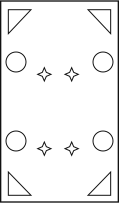
- D
Show answer
Concept: Each fold doubles the cuts; on unfolding, shapes reflect across the fold lines.
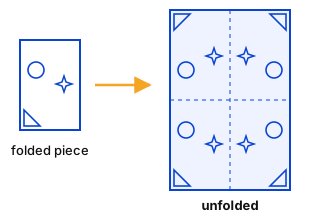
- Fold 1: right half onto left. Fold 2: top half down onto the bottom. Cuts (circle, star, triangle) are made in the bottom-left quarter.
- Unfolding the vertical fold gives a mirror copy in the bottom-right; unfolding the horizontal fold reflects both into the top half.
- In the bottom half the triangles sit in the bottom corners and the stars lie below the circles; in the top half triangles are in the top corners and stars lie above the circles.
- This symmetric pattern matches option (A).
Trick: Reflection across the horizontal fold flips 'below' to 'above' — use the star–circle position to reject (C).
Answer: (A)
अवधारणा: हर मोड़ से कटाव दोगुने होते हैं; खोलने पर आकृतियाँ मोड़-रेखा के पार प्रतिबिंबित होती हैं।
- पहला मोड़: दायाँ आधा बाएँ पर; दूसरा: ऊपर का आधा नीचे। कटाव (वृत्त, तारा, त्रिभुज) नीचे-बाएँ चौथाई में।
- ऊर्ध्वाधर मोड़ खोलने पर नीचे-दाएँ में दर्पण-प्रतिलिपि; क्षैतिज मोड़ खोलने पर दोनों ऊपर की ओर प्रतिबिंबित।
- नीचे वाले आधे में त्रिभुज नीचे के कोनों में और तारे वृत्तों के नीचे; ऊपर वाले आधे में त्रिभुज ऊपर के कोनों में और तारे वृत्तों के ऊपर।
- यह सममित पैटर्न विकल्प (A) से मेल खाता है।
ट्रिक: क्षैतिज मोड़ के पार 'नीचे' 'ऊपर' बन जाता है — तारे–वृत्त की स्थिति से (C) अलग हो जाता है।
उत्तर: (A)
SSC CPO Paper IGeneral Intelligence and ReasoningPaper folding and cuttingSSC CPO Paper I 2024 · 29 Jun Shift 3
Q22.Ajay starts from Point A and drives 10 km towards North. He then takes a right turn, drives 3 km, turns right and drives 15 km. He then takes a right turn and drives 8 km. He takes a final right turn, drives 5 km and stops at Point P. How far (shortest distance) and towards which direction should he now drive to reach Point A again? (All turns are 90° turns only.)
अजय बिंदु A से चलना आरंभ करता है और उत्तर की ओर 10 km ड्राइव करता है। फिर वह दाएँ मुड़ता है, 3 km ड्राइव करता है, दाएँ मुड़ता है और 15 km ड्राइव करता है। फिर वह दाएँ मुड़ता है और 8 km ड्राइव करता है। वह अंतिम बार दाएँ मुड़ता है, 5 km ड्राइव करता है और बिंदु P पर रुक जाता है। बिंदु A पर फिर से पहुँचने के लिए उसे अब कितनी दूर (न्यूनतम दूरी) और किस दिशा में ड्राइव करना चाहिए? (सभी मोड़ केवल 90° के हैं।)
- A5 km towards Eastपूर्व की ओर 5 km
- B3 km towards Westपश्चिम की ओर 3 km
- C5 km towards Westपश्चिम की ओर 5 km
- D3 km towards Eastपूर्व की ओर 3 km
Show answer
Concept: Plot the path on axes with A at the origin; every right turn rotates the direction clockwise.
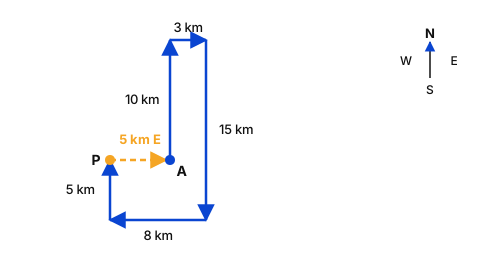
- North 10 → ; right (east) 3 → .
- Right (south) 15 → ; right (west) 8 → .
- Right (north) 5 → P = .
- P is 5 km west of A, so he must drive 5 km towards East.
Trick: Net N–S: ; net E–W: → P is 5 km west of A.
Answer: (A) 5 km towards East
अवधारणा: A को मूल बिंदु मानकर रास्ता बनाएँ; हर दायाँ मोड़ दिशा को घड़ी की दिशा में घुमाता है।
- उत्तर 10 → ; दाएँ (पूर्व) 3 → .
- दाएँ (दक्षिण) 15 → ; दाएँ (पश्चिम) 8 → .
- दाएँ (उत्तर) 5 → P = .
- P, A से 5 km पश्चिम में है, इसलिए 5 km पूर्व (East) जाना होगा।
ट्रिक: कुल उत्तर–दक्षिण: ; पूर्व–पश्चिम: → P, A से 5 km पश्चिम।
उत्तर: (A) 5 km towards East
SSC CPO Paper IGeneral Intelligence and ReasoningDirection and distanceSSC CPO Paper I 2024 · 29 Jun Shift 3
Q23.Select the number from among the given options that can replace the question mark (?) in the following series.
53, 62, 77, 98, ?
दिए गए विकल्पों में से उस संख्या का चयन कीजिए जो निम्नलिखित शृंखला में प्रश्न चिह्न (?) का स्थान ले सकती है।
53, 62, 77, 98, ?
- A123
- B121
- C122
- D125
Show answer
Concept: Check the differences and the second differences.
- Differences: , , .
- Differences increase by 6: .
- Next term .
Trick: Second difference constant (6) → next difference is simply last + 6.
Answer: (D) 125
अवधारणा: अंतर और अंतरों का अंतर देखें।
- अंतर: , , .
- अंतर हर बार 6 बढ़ता है: .
- अगला पद .
ट्रिक: दूसरा अंतर स्थिर (6) → अगला अंतर = पिछला + 6.
उत्तर: (D) 125
SSC CPO Paper IGeneral Intelligence and ReasoningNumber seriesSSC CPO Paper I 2024 · 29 Jun Shift 3
Q24.In a certain code language, ‘bring the bags’ is written as ‘nd sm pf’ and ‘bags of gold’ is written as ‘rg tx sm’. How is ‘bags’ written in the given language?
एक निश्चित कूट भाषा में, ‘bring the bags’ को ‘nd sm pf’ लिखा जाता है और ‘bags of gold’ को ‘rg tx sm’ लिखा जाता है। दी गई भाषा में ‘bags’ को किस प्रकार लिखा जाता है?
- Arg
- Bnd
- Csm
- Dpf
Show answer
Concept: A word common to two sentences has the code common to both coded sentences.
- 'bring the bags' → nd sm pf; 'bags of gold' → rg tx sm.
- Common word: bags. Common code: sm.
- So 'bags' = sm.
Trick: Common word ↔ common code — no need to decode the rest.
Answer: (C) sm
अवधारणा: दो वाक्यों में उभयनिष्ठ शब्द का कोड भी दोनों कोडों में उभयनिष्ठ होगा।
- 'bring the bags' → nd sm pf; 'bags of gold' → rg tx sm.
- उभयनिष्ठ शब्द: bags; उभयनिष्ठ कोड: sm.
- अतः 'bags' = sm.
ट्रिक: उभयनिष्ठ शब्द ↔ उभयनिष्ठ कोड — बाकी डिकोड करने की ज़रूरत नहीं।
उत्तर: (C) sm
SSC CPO Paper IGeneral Intelligence and ReasoningWord codingSSC CPO Paper I 2024 · 29 Jun Shift 3
Q25.In a code language, 'SERIES' is coded as 87 and 'DISMAY' is coded as 91. How will
'SPRINT' be coded in the same language?
एक कूट भाषा में, 'SERIES' को 87 के रूप में कूटबद्ध किया जाता है और 'DISMAY' को 91 के रूप में कूटबद्ध किया जाता है। उसी भाषा में
'SPRINT' को किस प्रकार कूटबद्ध किया जाएगा?
- A66
- B52
- C57
- D71
Show answer
Concept: The code is the sum of the reverse alphabet positions (Z = 1, Y = 2, …, A = 26); reverse value .
- SERIES: S 8, E 22, R 9, I 18, E 22, S 8 → ✓.
- DISMAY: D 23, I 18, S 8, M 14, A 26, Y 2 → ✓.
- SPRINT: S 8, P 11, R 9, I 18, N 13, T 7.
- .
Trick: If the forward-position sum misses, try reverse positions .
Answer: (A) 66
अवधारणा: कोड = उल्टे क्रम के स्थानों (Z = 1, Y = 2, …, A = 26) का योग; उल्टा मान .
- SERIES: S 8, E 22, R 9, I 18, E 22, S 8 → ✓.
- DISMAY: D 23, I 18, S 8, M 14, A 26, Y 2 → ✓.
- SPRINT: S 8, P 11, R 9, I 18, N 13, T 7.
- .
ट्रिक: सीधे स्थानों का योग न मिले तो उल्टे स्थान आज़माएँ।
उत्तर: (A) 66
SSC CPO Paper IGeneral Intelligence and ReasoningLetter–number codingSSC CPO Paper I 2024 · 29 Jun Shift 3
Q26.What will come in place of the question mark (?) when + and − are interchanged and 8 and 16 are also interchanged?
3 × 6 + 16 − 8 ÷ 2 = ?
यदि + और − को आपस में बदल दिया जाए तथा 8 और 16 को भी आपस में बदल दिया जाए, तो प्रश्न चिह्न (?) के स्थान पर क्या आएगा?
3 × 6 + 16 − 8 ÷ 2 = ?
- A18
- B20
- C19
- D17
Show answer
Concept: Apply both interchanges first, then solve with BODMAS.
- Given: .
- Interchange + ↔ − and 8 ↔ 16: .
- .
Trick: Do the swaps on paper first; mixing swap and calculation causes most errors.
Answer: (A) 18
अवधारणा: पहले दोनों अदला-बदली करें, फिर BODMAS लगाएँ।
- दिया: .
- + ↔ − और 8 ↔ 16: .
- .
ट्रिक: पहले बदला हुआ व्यंजक लिखें, फिर गणना करें।
उत्तर: (A) 18
SSC CPO Paper IGeneral Intelligence and ReasoningInterchange of signs and numbersSSC CPO Paper I 2024 · 29 Jun Shift 3
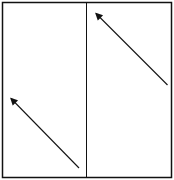
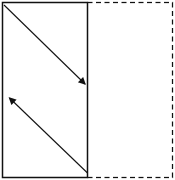
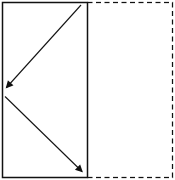
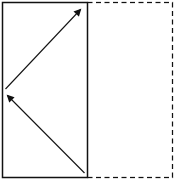
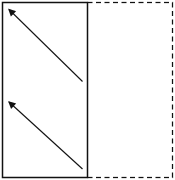
Q27.A transparent sheet with a pattern is given below. Select the option that depicts the pattern that would appear when the given transparent sheet is folded at the middle vertical line.
नीचे एक पैटर्न वाली पारदर्शी शीट दी गई है। उस विकल्प का चयन कीजिए जो उस पैटर्न को दर्शाता है जो दी गई पारदर्शी शीट को बीच की ऊर्ध्वाधर रेखा पर मोड़ने पर दिखाई देगा।
- A
- B
- C
- D
Show answer
Concept: When a transparent sheet is folded along the vertical middle line, the design of the folded half is mirrored (left ↔ right) and lies on top of the other half.
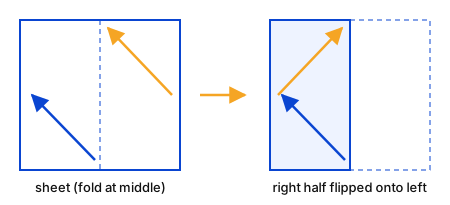
- Left half: an arrow from the bottom (near the fold) pointing up-left — it stays as it is.
- Right half: an arrow from the lower right pointing up-left to the top near the fold.
- After folding it is mirrored: it now starts at the left edge (middle) and points up-right towards the top near the fold.
- Both arrows together: one up-left from the bottom, one up-right to the top — option (C).
Trick: Only the folded half changes; it flips left–right, the vertical positions stay the same.
Answer: (C)
अवधारणा: पारदर्शी शीट को बीच की ऊर्ध्वाधर रेखा पर मोड़ने पर मोड़े गए आधे का चित्र बाएँ ↔ दाएँ उलट कर दूसरे आधे पर आ जाता है।
- बायाँ आधा: नीचे (मोड़ के पास) से ऊपर-बाएँ जाता तीर — वैसा ही रहता है।
- दायाँ आधा: नीचे-दाएँ से ऊपर-बाएँ, मोड़ के पास शीर्ष तक जाता तीर।
- मोड़ने पर यह उलटकर बाएँ किनारे (मध्य) से ऊपर-दाएँ, मोड़ के पास शीर्ष की ओर हो जाता है।
- दोनों तीर मिलकर: एक नीचे से ऊपर-बाएँ, एक ऊपर-दाएँ — विकल्प (C)।
ट्रिक: सिर्फ मोड़ा गया आधा बदलता है; बाएँ–दाएँ पलटता है, ऊँचाई वही रहती है।
उत्तर: (C)
SSC CPO Paper IGeneral Intelligence and ReasoningTransparent sheet foldingSSC CPO Paper I 2024 · 29 Jun Shift 3
Q28.Select the option that indicates the correct arrangement of the given words in the
order in which they appear in an English dictionary.
1- Junction
2- Jupiter
3- Jungle
4- Jump
5- Juncture
उस विकल्प का चयन कीजिए जो दिए गए शब्दों की उस सही व्यवस्था को दर्शाता है जिस
क्रम में वे अंग्रेज़ी शब्दकोश में आते हैं।
1- Junction
2- Jupiter
3- Jungle
4- Jump
5- Juncture
- A1, 5, 4, 2, 3
- B4, 5, 1, 3, 2
- C1, 5, 3, 2, 4
- D4, 1, 5, 3, 2
Show answer
Concept: Compare words letter by letter; the first differing letter decides the order.
- All start with 'Ju'. Third letters: Jum(p), Jun(ction/cture/gle), Jup(iter) → m < n < p.
- Among Jun-: Junc-, Junc-, Jung- → c < g, so Junction/Juncture come before Jungle.
- Junctio- vs Junctur-: 'i' < 'u' → Junction before Juncture.
- Order: Jump, Junction, Juncture, Jungle, Jupiter → 4, 1, 5, 3, 2.
Trick: Group words by the first letter where they differ, then sort inside each group.
Answer: (D) 4, 1, 5, 3, 2
अवधारणा: शब्दों की अक्षर-दर-अक्षर तुलना करें; पहला अलग अक्षर क्रम तय करता है।
- सभी 'Ju' से शुरू। तीसरा अक्षर: Jum(p), Jun(ction/cture/gle), Jup(iter) → m < n < p.
- Jun- में: Junc-, Junc-, Jung- → c < g, अतः Junction/Juncture, Jungle से पहले।
- Junctio- बनाम Junctur-: 'i' < 'u' → Junction पहले।
- क्रम: Jump, Junction, Juncture, Jungle, Jupiter → 4, 1, 5, 3, 2.
ट्रिक: पहले जहाँ अक्षर अलग हों उसी आधार पर समूह बनाएँ, फिर समूह के अंदर क्रम लगाएँ।
उत्तर: (D) 4, 1, 5, 3, 2
SSC CPO Paper IGeneral Intelligence and ReasoningDictionary orderSSC CPO Paper I 2024 · 29 Jun Shift 3
Q29.Select the option that represents the correct order of the given words as they would appear in an English dictionary.
1. Larkiness
2. Larcenist
3. Larceners
4. Lariated
5. Laryngal
6. Largely
उस विकल्प का चयन कीजिए जो दिए गए शब्दों के उस सही क्रम को दर्शाता है जिस क्रम में वे अंग्रेज़ी शब्दकोश में आएँगे।
1. Larkiness
2. Larcenist
3. Larceners
4. Lariated
5. Laryngal
6. Largely
- A3, 2, 1, 4, 6, 5
- B3, 2, 1, 6, 4, 5
- C3, 2, 4, 1, 6, 5
- D3, 2, 6, 4, 1, 5
Show answer
Concept: All words begin with 'Lar'; compare from the 4th letter onwards.
- 4th letters: Larc- (Larceners, Larcenist), Larg- (Largely), Lari- (Lariated), Lark- (Larkiness), Lary- (Laryngal).
- c < g < i < k < y.
- Larcene-r vs Larceni-st: 'e' < 'i' → Larceners (3) before Larcenist (2).
- Order: 3, 2, 6, 4, 1, 5.
Trick: Underline the first letter that differs in each word and sort by it.
Answer: (D) 3, 2, 6, 4, 1, 5
अवधारणा: सभी शब्द 'Lar' से शुरू; चौथे अक्षर से तुलना करें।
- चौथा अक्षर: Larc- (Larceners, Larcenist), Larg- (Largely), Lari- (Lariated), Lark- (Larkiness), Lary- (Laryngal).
- c < g < i < k < y.
- Larcene-r बनाम Larceni-st: 'e' < 'i' → Larceners (3) पहले, फिर Larcenist (2)।
- क्रम: 3, 2, 6, 4, 1, 5.
ट्रिक: हर शब्द में पहला अलग अक्षर रेखांकित करके उसी से क्रम लगाएँ।
उत्तर: (D) 3, 2, 6, 4, 1, 5
SSC CPO Paper IGeneral Intelligence and ReasoningDictionary orderSSC CPO Paper I 2024 · 29 Jun Shift 3
Q30.If ‘I’ stands for ‘×’, ‘J’ stands for ‘+’, ‘K’ stands for ‘÷’ and ‘L’ stands for ‘−’, what will come in place of the question mark (?) in the following equation?
(40 J 32 K 4) I 5 L 155 J 7 I 9 = ?
यदि ‘I’ का अर्थ ‘×’ है, ‘J’ का अर्थ ‘+’ है, ‘K’ का अर्थ ‘÷’ है और ‘L’ का अर्थ ‘−’ है, तो निम्नलिखित समीकरण में प्रश्न चिह्न (?) के स्थान पर क्या आएगा?
(40 J 32 K 4) I 5 L 155 J 7 I 9 = ?
- A126
- B156
- C134
- D148
Show answer
Concept: Replace the letters by signs (I = ×, J = +, K = ÷, L = −) and use BODMAS.
- .
- Bracket: , .
- , .
- .
Trick: Solve the bracket first, then all × and ÷, and finally + and − from left to right.
Answer: (D) 148
अवधारणा: अक्षरों को चिह्नों से बदलें (I = ×, J = +, K = ÷, L = −) और BODMAS लगाएँ।
- .
- कोष्ठक: , .
- , .
- .
ट्रिक: पहले कोष्ठक, फिर × और ÷, अंत में + और − बाएँ से दाएँ।
उत्तर: (D) 148
SSC CPO Paper IGeneral Intelligence and ReasoningMathematical operationsSSC CPO Paper I 2024 · 29 Jun Shift 3
Q31.Select the number from among the given options that can replace the question mark (?) in the following series.
22, 27, 37, 52, 72, ?
दिए गए विकल्पों में से उस संख्या का चयन कीजिए जो निम्नलिखित शृंखला में प्रश्न चिह्न (?) का स्थान ले सकती है।
22, 27, 37, 52, 72, ?
- A97
- B95
- C100
- D92
Show answer
Concept: Find the differences between consecutive terms.
- Differences: — multiples of 5.
- Next difference .
- Next term .
Trick: Differences in AP → add the next multiple of 5.
Answer: (A) 97
अवधारणा: लगातार पदों का अंतर निकालें।
- अंतर: — 5 के गुणज।
- अगला अंतर .
- अगला पद .
ट्रिक: अंतर समांतर श्रेढ़ी (AP) में → अगला 5 का गुणज जोड़ें।
उत्तर: (A) 97
SSC CPO Paper IGeneral Intelligence and ReasoningNumber seriesSSC CPO Paper I 2024 · 29 Jun Shift 3
Q32.Select the option in which the numbers share the same relationship as that shared by the given pair of numbers.
50 – 130
उस विकल्प का चयन कीजिए जिसमें संख्याओं के बीच वही संबंध है जो दिए गए संख्या-युग्म की संख्याओं के बीच है।
50 – 130
- A35 – 120
- B60 – 120
- C30 – 80
- D75 – 110
Show answer
Concept: Look for a simple relation between the two numbers — here their sum is fixed.
- Given pair: .
- Options: , , , .
- Only 60 – 120 gives the same sum 180.
Trick: Try sum, difference, ratio quickly; the one that matches exactly one option is the rule.
Answer: (B) 60 – 120
अवधारणा: दोनों संख्याओं का सरल संबंध खोजें — यहाँ उनका योग स्थिर है।
- दिया युग्म: .
- विकल्प: , , , .
- केवल 60 – 120 का योग 180 है।
ट्रिक: योग, अंतर, अनुपात जल्दी-जल्दी जाँचें; जो नियम केवल एक विकल्प पर फिट हो वही सही।
उत्तर: (B) 60 – 120
SSC CPO Paper IGeneral Intelligence and ReasoningNumber pair analogySSC CPO Paper I 2024 · 29 Jun Shift 3
Q33.24 is related to 8 following a certain logic. Following the same logic, 54 is related to 20. Which of the following numbers is related to 18 using the same logic?
एक निश्चित तर्क का अनुसरण करते हुए 24 का संबंध 8 से है। उसी तर्क का अनुसरण करते हुए, 54 का संबंध 20 से है। उसी तर्क का उपयोग करते हुए, निम्नलिखित में से किस संख्या का संबंध 18 से है?
- A12
- B42
- C63
- D26
Show answer
Concept: The second number is the product of the digits of the first number; we need the number that is related to 18 in this way.
- ✓; ✓.
- We need a number whose digit product is 18.
- Options: , , , .
- So 63 is related to 18 (63 : 18 :: 24 : 8).
Trick: Note the direction: 18 is the second term, so test which option produces 18.
Answer: (C) 63
अवधारणा: दूसरी संख्या = पहली संख्या के अंकों का गुणनफल; ऐसी संख्या चाहिए जो इसी तरह 18 से संबंधित हो।
- ✓; ✓.
- ऐसी संख्या चाहिए जिसके अंकों का गुणनफल 18 हो।
- विकल्प: , , , .
- अतः 63 का संबंध 18 से है (63 : 18 :: 24 : 8)।
ट्रिक: दिशा पर ध्यान दें: 18 दूसरा पद है, इसलिए देखें कौन-सा विकल्प 18 बनाता है।
उत्तर: (C) 63
SSC CPO Paper IGeneral Intelligence and ReasoningNumber analogySSC CPO Paper I 2024 · 29 Jun Shift 3
Q34.If + means − , − means × , × means ÷ , ÷ means +, what will come in place of the
question mark (?) in the given equation?
180 × 60 – 33 ÷ 1 + 50 = ?
यदि + का अर्थ − है, − का अर्थ × है, × का अर्थ ÷ है, ÷ का अर्थ + है, तो दिए गए समीकरण में
प्रश्न चिह्न (?) के स्थान पर क्या आएगा?
180 × 60 – 33 ÷ 1 + 50 = ?
- A40
- B55
- C51
- D50
Show answer
Concept: Replace each sign as given, then apply BODMAS.
- becomes .
- , .
- .
Trick: Write the converted expression first; then ÷ and × from left to right.
Answer: (D) 50
अवधारणा: दिए अनुसार चिह्न बदलें, फिर BODMAS लगाएँ।
- बदलकर .
- , .
- .
ट्रिक: पहले बदला हुआ व्यंजक लिखें; फिर ÷ और × बाएँ से दाएँ।
उत्तर: (D) 50
SSC CPO Paper IGeneral Intelligence and ReasoningMathematical operationsSSC CPO Paper I 2024 · 29 Jun Shift 3
Q35.Select the option that is related to the fifth letter-cluster in the same way as the second letter-cluster is related to the first letter-cluster and the fourth letter-cluster is related to the third letter-cluster.
ABIDE : GFKDC :: CHARM : OTCJE :: BLOOM : ?
उस विकल्प का चयन कीजिए जो पाँचवें अक्षर-समूह से उसी प्रकार संबंधित है जिस प्रकार दूसरा अक्षर-समूह पहले अक्षर-समूह से संबंधित है और चौथा अक्षर-समूह तीसरे अक्षर-समूह से संबंधित है।
ABIDE : GFKDC :: CHARM : OTCJE :: BLOOM : ?
- AOQQND
- BOPQND
- CDNQQO
- DOQQDN
Show answer
Concept: Reverse the word and then move every letter .
- ABIDE reversed = EDIBA → → GFKDC ✓.
- CHARM reversed = MRAHC → → OTCJE ✓.
- BLOOM reversed = MOOLB → → OQQND.
Trick: The last letter of the word (E → G, M → O) becomes the first letter of the code — a quick sign of reversal.
Answer: (A) OQQND
अवधारणा: शब्द को उल्टा लिखें, फिर हर अक्षर को करें।
- ABIDE उल्टा = EDIBA → → GFKDC ✓.
- CHARM उल्टा = MRAHC → → OTCJE ✓.
- BLOOM उल्टा = MOOLB → → OQQND.
ट्रिक: शब्द का अंतिम अक्षर (E → G, M → O) कोड का पहला अक्षर बनता है — उल्टे क्रम का संकेत।
उत्तर: (A) OQQND
SSC CPO Paper IGeneral Intelligence and ReasoningLetter analogySSC CPO Paper I 2024 · 29 Jun Shift 3
Q36.Select the Venn diagram that best illustrates the relationship between the following classes.
Painters, Men, Women
उस वेन आरेख का चयन कीजिए जो निम्नलिखित वर्गों के बीच संबंध को सर्वोत्तम रूप से दर्शाता है।
चित्रकार, पुरुष, महिलाएँ
- A

- B
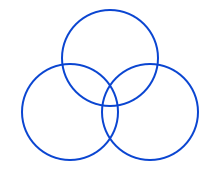
- C

- D
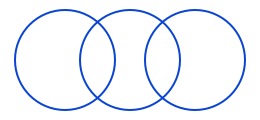
Show answer
Concept: Decide for each pair of classes whether they are disjoint, overlapping or one inside the other.
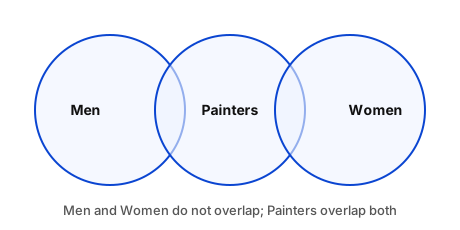
- Men and Women: no person is both → two separate circles.
- Painters: some painters are men and some are women → the Painters circle overlaps both.
- Three circles in a chain with the middle one (Painters) overlapping both ends — option (D).
Trick: Gender classes never overlap; a profession overlaps every gender.
Answer: (D)
अवधारणा: हर दो वर्गों के लिए तय करें — अलग, आंशिक रूप से जुड़े, या एक-दूसरे के अंदर।
- पुरुष (Men) और महिलाएँ (Women): कोई दोनों नहीं → अलग वृत्त।
- चित्रकार (Painters): कुछ पुरुष, कुछ महिलाएँ → Painters का वृत्त दोनों को काटता है।
- तीन वृत्त एक कड़ी में, बीच वाला (Painters) दोनों से जुड़ा — विकल्प (D)।
ट्रिक: लिंग-आधारित वर्ग कभी नहीं मिलते; पेशा हर लिंग से मिलता है।
उत्तर: (D)
SSC CPO Paper IGeneral Intelligence and ReasoningVenn diagramSSC CPO Paper I 2024 · 29 Jun Shift 3
Q37.In a certain code language, ‘BYE’ is written as ‘32’ and ‘ANGER’ is written as ‘45’. How will ‘LOVE’ be written in that language?
एक निश्चित कूट भाषा में, ‘BYE’ को ‘32’ लिखा जाता है और ‘ANGER’ को ‘45’ लिखा जाता है। उस भाषा में ‘LOVE’ को किस प्रकार लिखा जाएगा?
- A54
- B39
- C46
- D37
Show answer
Concept: The code is the sum of the alphabet positions of the letters.
- BYE: ✓.
- ANGER: ✓.
- LOVE: .
Trick: Memorise EJOTY (5, 10, 15, 20, 25) to get positions fast.
Answer: (A) 54
अवधारणा: कोड = अक्षरों के स्थानीय मानों (A = 1 … Z = 26) का योग।
- BYE: ✓.
- ANGER: ✓.
- LOVE: .
ट्रिक: EJOTY (5, 10, 15, 20, 25) याद रखें — स्थान जल्दी निकलेंगे।
उत्तर: (A) 54
SSC CPO Paper IGeneral Intelligence and ReasoningLetter–number codingSSC CPO Paper I 2024 · 29 Jun Shift 3
Q38.Select the set in which the numbers are related in the same way as are the numbers of the following sets.
(NOTE : Operations should be performed on the whole numbers, without breaking
down the numbers into its constituent digits. E.g. 13 – Operations on 13 such as
adding /deleting /multiplying etc. to 13 can be performed. Breaking down 13 into 1 and 3 and then performing mathematical operations on 1 and 3 is not allowed.)
(599, 236, 363)
(481, 145, 336)
उस समुच्चय का चयन कीजिए जिसमें संख्याएँ उसी प्रकार संबंधित हैं जिस प्रकार निम्नलिखित समुच्चयों की संख्याएँ संबंधित हैं।
(ध्यान दें: संख्याओं को उनके घटक अंकों में तोड़े बिना, संक्रियाएँ पूर्ण संख्याओं पर की जानी चाहिए। उदाहरण के लिए 13 – 13 पर संक्रियाएँ जैसे
13 में जोड़ना/घटाना/गुणा करना आदि किया जा सकता है। 13 को 1 और 3 में तोड़कर फिर 1 और 3 पर गणितीय संक्रियाएँ करने की अनुमति नहीं है।)
(599, 236, 363)
(481, 145, 336)
- A(641, 314, 327)
- B(612, 278, 344)
- C(547, 217, 310)
- D(426, 159, 287)
Show answer
Concept: Third number = first number − second number.
- ✓; ✓.
- (A) ✓.
- (B) ; (C) ; (D) .
Trick: Check the units digits first: matches 327 — instantly picks (A).
Answer: (A) (641, 314, 327)
अवधारणा: तीसरी संख्या = पहली संख्या − दूसरी संख्या।
- ✓; ✓.
- (A) ✓.
- (B) ; (C) ; (D) .
ट्रिक: पहले इकाई अंक जाँचें: , 327 से मेल — तुरंत (A)।
उत्तर: (A) (641, 314, 327)
SSC CPO Paper IGeneral Intelligence and ReasoningNumber set relationSSC CPO Paper I 2024 · 29 Jun Shift 3
Q39.Select the option that is related to the fifth letter-cluster in the same way as the second letter-cluster is related to the first letter-cluster and the fourth letter-cluster is related to the third letter-cluster.
DIETY : CJFSX :: GRACE : FQBBF :: GLORY : ?
उस विकल्प का चयन कीजिए जो पाँचवें अक्षर-समूह से उसी प्रकार संबंधित है जिस प्रकार दूसरा अक्षर-समूह पहले अक्षर-समूह से संबंधित है और चौथा अक्षर-समूह तीसरे अक्षर-समूह से संबंधित है।
DIETY : CJFSX :: GRACE : FQBBF :: GLORY : ?
- AFKMQX
- BFKRQX
- CFKPQX
- DFKPSX
Show answer
Concept: Every vowel moves one step forward and every consonant one step back .
- DIETY → CJFSX: D−1, I+1, E+1, T−1, Y−1 ✓ (I, E are vowels).
- GRACE → FQBBF: G−1, R−1, A+1, C−1, E+1 ✓.
- GLORY: G−1 = F, L−1 = K, O+1 = P, R−1 = Q, Y−1 = X → FKPQX.
Trick: The shifts look random until you mark vowels — then the rule is clear.
Answer: (C) FKPQX
अवधारणा: हर स्वर (vowel) एक आगे और हर व्यंजन (consonant) एक पीछे ।
- DIETY → CJFSX: D−1, I+1, E+1, T−1, Y−1 ✓ (I, E स्वर)।
- GRACE → FQBBF: G−1, R−1, A+1, C−1, E+1 ✓.
- GLORY: G−1 = F, L−1 = K, O+1 = P, R−1 = Q, Y−1 = X → FKPQX.
ट्रिक: खिसकाव बेतरतीब लगे तो स्वर चिह्नित करें — नियम साफ़ हो जाएगा।
उत्तर: (C) FKPQX
SSC CPO Paper IGeneral Intelligence and ReasoningLetter analogySSC CPO Paper I 2024 · 29 Jun Shift 3
Q40.Given below are two statements and two conclusions. Take the statements to be true even if they are at variance with commonly known facts, and decide whether the
conclusion(s) follow(s) the given statements.
Statements:
All plastics are fibres.
Some fibres are leathers.
Conclusions:
I. Some plastics are leathers.
II. Some fibres are plastics.
नीचे दो कथन और दो निष्कर्ष दिए गए हैं। कथनों को सत्य मानिए, भले ही वे सामान्यतः ज्ञात तथ्यों से भिन्न प्रतीत होते हों, और निर्णय कीजिए कि कौन-सा/से
निष्कर्ष दिए गए कथनों का अनुसरण करता है/करते हैं।
कथन:
सभी प्लास्टिक, फाइबर हैं।
कुछ फाइबर, चमड़े हैं।
निष्कर्ष:
I. कुछ प्लास्टिक, चमड़े हैं।
II. कुछ फाइबर, प्लास्टिक हैं।
- AOnly conclusion II followsकेवल निष्कर्ष II अनुसरण करता है
- BNeither conclusion I nor II followsन तो निष्कर्ष I और न ही II अनुसरण करता है
- COnly conclusion I followsकेवल निष्कर्ष I अनुसरण करता है
- DBoth the conclusions followदोनों निष्कर्ष अनुसरण करते हैं
Show answer
Concept: A conclusion follows only if it is true in every possible Venn diagram.
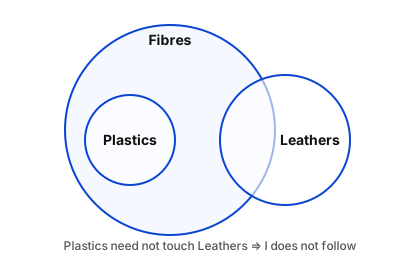
- All plastics are fibres → Plastics circle inside Fibres.
- Some fibres are leathers → Leathers overlaps Fibres, but it may not touch Plastics at all → I (Some plastics are leathers) is not certain.
- II (Some fibres are plastics) is the conversion of 'All plastics are fibres' → follows.
Trick: Two 'some/all' links through the middle term with 'some' never give a definite relation between the end terms.
Answer: (A) Only conclusion II follows
अवधारणा: निष्कर्ष तभी मान्य जब हर संभव वेन आरेख में सत्य हो।
- All plastics are fibres → Plastics वृत्त Fibres के अंदर।
- Some fibres are leathers → Leathers, Fibres को काटता है पर Plastics को छूना ज़रूरी नहीं → I निश्चित नहीं।
- II (Some fibres are plastics), 'All plastics are fibres' का रूपांतरण → सही।
ट्रिक: मध्य पद (Fibres) के साथ 'some' वाला संबंध हो तो छोर वाले पदों में निश्चित संबंध नहीं बनता।
उत्तर: (A) Only conclusion II follows
SSC CPO Paper IGeneral Intelligence and ReasoningSyllogismSSC CPO Paper I 2024 · 29 Jun Shift 3

