Q5781.Select the most appropriate option to substitute the underlined segment in the given sentence. If there is no need to substitute it, select ‘No substitution required’.
One morning I went out with my cousin which is the lawyer.
- Awho is the
- BNo substitution required
- Cwhich is a
- Dwho is a
Show answer
Concept: Relative pronoun who for persons; indefinite article a before a profession mentioned for the first time.
- cousin is a person → who, not which.
- Profession as complement → a lawyer (he is one of many lawyers).
- One morning I went out with my cousin who is a lawyer.
Yaad rakhein: He is a doctor / an engineer – profession takes a/an.
Answer: (D) who is a
अवधारणा: व्यक्ति के लिए relative pronoun who; पेशे से पहले indefinite article a।
- cousin व्यक्ति है → who, which नहीं।
- पेशा बताने पर → a lawyer (अनेक वकीलों में से एक)।
- One morning I went out with my cousin who is a lawyer.
याद रखें: He is a doctor / an engineer – पेशे के साथ a/an।
उत्तर: (D) who is a
SSC CPO Paper IEnglish ComprehensionSentence ImprovementSSC CPO Paper I 2020 · 25 Nov Shift 1
Q5782.Select the most appropriate ANTONYM of the given word.
EXONERATE
- Aabsolve
- Bvindicate
- Cacquit
- Dsentence
Show answer
Concept: Exonerate = to declare someone free from blame or guilt.
- absolve, vindicate, acquit all mean to clear of blame – synonyms.
- The opposite is to declare guilty and punish = sentence.
- So the antonym is sentence.
Trick: Court: acquit/exonerate ↔ convict/sentence.
Answer: (D) sentence
अवधारणा: Exonerate = दोषमुक्त करना, आरोप से मुक्त करना।
- absolve, vindicate, acquit – सभी का अर्थ दोषमुक्त करना (समानार्थी)।
- विपरीत = दोषी ठहराकर सज़ा सुनाना = sentence।
- अतः विलोम sentence।
ट्रिक: अदालत: acquit/exonerate ↔ convict/sentence।
उत्तर: (D) sentence
SSC CPO Paper IEnglish ComprehensionAntonymsSSC CPO Paper I 2020 · 25 Nov Shift 1
Q5783.Select the most appropriate word for the given group of words.
A particular form of a language which is peculiar to a specific region
- Aslang
- Bdialect
- Clingo
- Djargon
Show answer
Concept: A form of a language peculiar to a particular region = dialect (बोली).
- slang = very informal words used by a group, not tied to a region.
- jargon = technical words of a profession; lingo = informal word for a language or jargon.
- Regional variety of a language → dialect.
Yaad rakhein: Bhojpuri, Awadhi are dialects of Hindi – regional forms.
Answer: (B) dialect
अवधारणा: किसी क्षेत्र विशेष में बोला जाने वाला भाषा का रूप = dialect (बोली)।
- slang = किसी समूह के अनौपचारिक शब्द, क्षेत्र से बंधे नहीं।
- jargon = किसी पेशे की तकनीकी शब्दावली; lingo = भाषा/jargon का अनौपचारिक शब्द।
- क्षेत्रीय रूप → dialect।
याद रखें: भोजपुरी, अवधी – हिंदी की बोलियाँ (dialects)।
उत्तर: (B) dialect
SSC CPO Paper IEnglish ComprehensionOne-word SubstitutionSSC CPO Paper I 2020 · 25 Nov Shift 1
Q5784.Select the most appropriate option to fill in the blank.
I ______ for forty minutes to see the doctor before my name was announced.
- Aam waiting
- Bwere waiting
- Chad been waiting
- Dhave been waiting
Show answer
Concept: Past perfect continuous (had been + V-ing) shows an action that continued for a period before another past action.
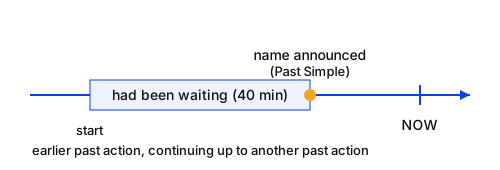
- The waiting (for forty minutes) went on before the past event my name was announced.
- 'for + period' + earlier past action → had been waiting.
- am/have been waiting are present forms; were does not agree with I.
Trick: Duration + 'before' + simple past → had been + V-ing.
Answer: (C) had been waiting
अवधारणा: Past perfect continuous (had been + V-ing) – किसी दूसरी भूतकालिक क्रिया से पहले कुछ समय तक चलती रही क्रिया।
- प्रतीक्षा (चालीस मिनट) भूतकालिक घटना my name was announced से पहले चलती रही।
- 'for + अवधि' + पहले की past क्रिया → had been waiting।
- am/have been waiting present रूप हैं; were, I से मेल नहीं खाता।
ट्रिक: अवधि + 'before' + simple past → had been + V-ing।
उत्तर: (C) had been waiting
SSC CPO Paper IEnglish ComprehensionFill in the BlanksSSC CPO Paper I 2020 · 25 Nov Shift 1
Q5785.Select the most appropriate option to substitute the underlined segment in the given sentence. If there is no need to substitute it, select ‘No substitution required’.
Everybody who know him agree that he rarely loses his temper.
- Awhom know him agrees that
- BNo substitution required
- Cwho knows him agrees that
- Dwho knows him agrees if
Show answer
Concept: Indefinite pronouns like everybody are singular and take singular verbs.
- Everybody → singular verb agrees; in the relative clause who refers to everybody → knows.
- whom cannot be the subject of know; agrees if changes the meaning – agree that introduces the statement.
- Everybody who knows him agrees that he rarely loses his temper.
Yaad rakhein: Everybody / everyone / each → singular verb, even in the 'who' clause.
Answer: (C) who knows him agrees that
अवधारणा: Everybody जैसे indefinite pronouns singular होते हैं, verb भी singular।
- Everybody → singular verb agrees; relative clause में who = everybody → knows।
- whom verb know का subject नहीं हो सकता; agrees if से अर्थ बदलता है – कथन के लिए agree that।
- Everybody who knows him agrees that he rarely loses his temper.
याद रखें: Everybody / everyone / each → singular verb, 'who' clause में भी।
उत्तर: (C) who knows him agrees that
SSC CPO Paper IEnglish ComprehensionSentence ImprovementSSC CPO Paper I 2020 · 25 Nov Shift 1
Q5786.Select the wrongly spelt word.
- Amidget
- Bmilitant
- Cmigrent
- Dmigraine
Show answer
Concept: Spelling check of each option.
- midget, militant, migraine – correct.
- The correct spelling is migrant (one who migrates) – ending -ant, not -ent.
- So migrent is wrongly spelt.
Trick: migrate → migrant (like immigrant).
Answer: (C) migrent
अवधारणा: हर विकल्प की वर्तनी जाँचें।
- midget, militant, migraine – सही।
- सही वर्तनी migrant (प्रवासी) है – अंत -ant, -ent नहीं।
- अतः migrent गलत।
ट्रिक: migrate → migrant (जैसे immigrant)।
उत्तर: (C) migrent
SSC CPO Paper IEnglish ComprehensionSpellingSSC CPO Paper I 2020 · 25 Nov Shift 1
Q5787.Select the most appropriate synonym of the given word.
CHASTE
- Adivine
- Bpure
- Cliberated
- Ddefiled
Show answer
Concept: Chaste = pure, virtuous; simple and undecorated in style.
- pure = morally clean – same sense.
- defiled (made impure) is the antonym; divine = godly, liberated = set free – different meanings.
- So the synonym is pure.
Yaad rakhein: Chaste ≈ pure; chastity = purity.
Answer: (B) pure
अवधारणा: Chaste = पवित्र, शुद्ध, सदाचारी; (शैली) सादा।
- pure = पवित्र, शुद्ध – समान अर्थ।
- defiled (अपवित्र किया हुआ) विलोम है; divine = दैवी, liberated = मुक्त – भिन्न अर्थ।
- अतः समानार्थी pure।
याद रखें: Chaste ≈ pure; chastity = पवित्रता।
उत्तर: (B) pure
SSC CPO Paper IEnglish ComprehensionSynonymsSSC CPO Paper I 2020 · 25 Nov Shift 1
Q5788.Identify the segment in the sentence which contains a grammatical error.
Anybody who does not stop at the red light will fined.
- Awill fined
- Bat the red light
- CAnybody who
- Ddoes not stop
Show answer
Concept: Passive voice with a modal: modal + be + V3.
- The person does not fine himself; he receives the action → passive.
- Correct: Anybody who does not stop at the red light will be fined.
- will fined misses be, so the error is in that segment.
Trick: will/can/must/should + be + V3 in passive.
Answer: (A) will fined
अवधारणा: Modal के साथ passive voice: modal + be + V3।
- व्यक्ति स्वयं जुर्माना नहीं करता, उस पर जुर्माना होता है → passive।
- सही: Anybody who does not stop at the red light will be fined.
- will fined में be छूटा है, अतः त्रुटि इसी भाग में।
ट्रिक: will/can/must/should + be + V3 (passive)।
उत्तर: (A) will fined
SSC CPO Paper IEnglish ComprehensionError SpottingSSC CPO Paper I 2020 · 25 Nov Shift 1
Q5789.Select the most appropriate ANTONYM of the given word.
IRRELEVANT
- Aconsequential
- Btrivial
- Cimmaterial
- Dpointless
Show answer
Concept: Irrelevant = not connected with the matter; unimportant.
- trivial, immaterial, pointless all mean unimportant – synonyms.
- consequential = important, significant, having consequences – the opposite.
- So the antonym is consequential.
Trick: Immaterial = irrelevant; consequential = it matters.
Answer: (A) consequential
अवधारणा: Irrelevant = असंगत, अप्रासंगिक; महत्वहीन।
- trivial, immaterial, pointless – सभी का अर्थ महत्वहीन (समानार्थी)।
- consequential = महत्वपूर्ण, परिणाम देने वाला – विपरीत।
- अतः विलोम consequential।
ट्रिक: Immaterial = irrelevant; consequential = महत्वपूर्ण।
उत्तर: (A) consequential
SSC CPO Paper IEnglish ComprehensionAntonymsSSC CPO Paper I 2020 · 25 Nov Shift 1
Q5790.Select the most appropriate option to fill in the blank.
You really need ______ some guidance in Chemistry.
- Ato take
- Btake
- Ctaking
- Dto be taking
Show answer
Concept: The verb need (as a main verb) is followed by a to-infinitive when the subject must do the action.
- You need to take some guidance – the subject 'you' must take it.
- take (bare) is wrong after main verb 'need'; need taking has a passive sense (it needs to be taken).
- to be taking is continuous and does not suit a general necessity.
Yaad rakhein: need + to + V1 (active); need + V-ing = needs to be done.
Answer: (A) to take
अवधारणा: मुख्य क्रिया need के बाद, जब कार्य subject को स्वयं करना हो, to-infinitive आता है।
- You need to take some guidance – कार्य 'you' को करना है।
- मुख्य verb 'need' के बाद bare take गलत; need taking का अर्थ passive (किए जाने की ज़रूरत)।
- to be taking continuous है, सामान्य आवश्यकता के लिए उपयुक्त नहीं।
याद रखें: need + to + V1 (active); need + V-ing = किए जाने की ज़रूरत।
उत्तर: (A) to take
SSC CPO Paper IEnglish ComprehensionFill in the BlanksSSC CPO Paper I 2020 · 25 Nov Shift 1
Q5791.Select the wrongly spelt word.
- Adecease
- Bdecieve
- Cdecibel
- Ddecency
Show answer
Concept: Spelling rule: i before e except after c.
- decease, decibel, decency – correct.
- After c the order is ei: deceive (like receive, conceive).
- So decieve is wrongly spelt.
Yaad rakhein: 'i before e, except after c' – receive, deceive, perceive.
Answer: (B) decieve
अवधारणा: वर्तनी नियम: i before e except after c।
- decease, decibel, decency – सही।
- c के बाद ei: deceive (जैसे receive, conceive)।
- अतः decieve गलत।
याद रखें: 'i before e, except after c' – receive, deceive, perceive।
उत्तर: (B) decieve
SSC CPO Paper IEnglish ComprehensionSpellingSSC CPO Paper I 2020 · 25 Nov Shift 1
Q5792.Select the most appropriate synonym of the given word.
PRODIGAL
- Atalented
- Bmodest
- Cwasteful
- Dintelligent
Show answer
Concept: Prodigal = spending money or resources freely and recklessly; extravagant.
- wasteful = using more than needed – same sense.
- Do not confuse with prodigy (a talented child) – so talented, intelligent are traps.
- modest is unrelated. Synonym = wasteful.
Yaad rakhein: The Prodigal Son wasted his father's wealth.
Answer: (C) wasteful
अवधारणा: Prodigal = फ़िज़ूलख़र्च, अपव्ययी।
- wasteful = ज़रूरत से ज़्यादा ख़र्च करने वाला – समान अर्थ।
- prodigy (प्रतिभाशाली बालक) से भ्रमित न हों – talented, intelligent जाल हैं।
- modest असंबंधित। समानार्थी = wasteful।
याद रखें: The Prodigal Son – जिसने पिता का धन उड़ा दिया।
उत्तर: (C) wasteful
SSC CPO Paper IEnglish ComprehensionSynonymsSSC CPO Paper I 2020 · 25 Nov Shift 1
Q5793.Select the most appropriate ANTONYM of the given word.
USURP
- Awrest
- Bannex
- Cassume
- Drelease
Show answer
Concept: Usurp = to take (power, a position or property) illegally or by force.
- wrest, annex, assume all involve seizing or taking over – similar sense.
- The opposite is to give up / let go = release.
- So the antonym is release.
Trick: Usurp the throne = seize it; release = let it go.
Answer: (D) release
अवधारणा: Usurp = (सत्ता, पद या संपत्ति) अवैध रूप से या बलपूर्वक हड़पना।
- wrest, annex, assume – सभी में छीनना/कब्ज़ा करना का भाव (समानार्थी)।
- विपरीत = छोड़ देना = release।
- अतः विलोम release।
ट्रिक: Usurp the throne = सिंहासन हड़पना; release = छोड़ना।
उत्तर: (D) release
SSC CPO Paper IEnglish ComprehensionAntonymsSSC CPO Paper I 2020 · 25 Nov Shift 1
Q5794.Select the most appropriate meaning of the given idiom.
Get your money’s worth
- Ato pay and get something of good value
- Bto buy something very expensive
- Cto be cheated in a purchase
- Dto get something of poor quality for free
Show answer
Concept: Get your money's worth = to get full value for the money you spend.
- Example: The buffet was huge – we really got our money's worth.
- Being cheated, poor quality or something too expensive is the opposite idea.
- So it means: to pay and get something of good value.
Yaad rakhein: Worth of money = value equal to the money paid.
Answer: (A) to pay and get something of good value
अवधारणा: Get your money's worth = ख़र्च किए गए पैसे का पूरा मूल्य पाना (पैसा वसूल)।
- उदाहरण: The buffet was huge – we really got our money's worth.
- ठगा जाना, घटिया चीज़ या बहुत महँगी चीज़ – उल्टे भाव।
- अतः अर्थ: भुगतान करके अच्छे मूल्य की वस्तु पाना।
याद रखें: Money's worth = पैसा वसूल।
उत्तर: (A) to pay and get something of good value
SSC CPO Paper IEnglish ComprehensionIdioms and PhrasesSSC CPO Paper I 2020 · 25 Nov Shift 1
Q5795.Select the most appropriate ANTONYM of the given word.
ADMONISH
- Ascold
- Bchide
- Cwarn
- Dapplaud
Show answer
Concept: Admonish = to warn or reprimand someone firmly.
- scold, chide, warn – all synonyms of admonish.
- The opposite is to praise = applaud.
- So the antonym is applaud.
Trick: Admonish ↔ applaud / praise / commend.
Answer: (D) applaud
अवधारणा: Admonish = चेतावनी देना, डाँटना, फटकारना।
- scold, chide, warn – सभी समानार्थी।
- विपरीत = प्रशंसा करना = applaud।
- अतः विलोम applaud।
ट्रिक: Admonish ↔ applaud / praise / commend।
उत्तर: (D) applaud
SSC CPO Paper IEnglish ComprehensionAntonymsSSC CPO Paper I 2020 · 25 Nov Shift 1
Read the following passage and answer the questions that follow.
During the decade after liberalisation floriculture industries took giant steps in the export arena. This era has seen a dynamic shift from sustenance production to commercial
production. The area under floriculture production in India is around 249 thousand hectares with a production of 1659 thousand tonnes loose flowers and 484 thousand tonnes cut flowers. Floriculture is now commercially cultivated in several states with Tamil Nadu (20%), Karnataka (13.5%) West Bengal (12.2%) having gone ahead of other producing states like Madhya Pradesh, Mizoram, Gujarat, Andhra Pradesh, Odisha, Jharkhand, Haryana, Assam and Chhattisgarh.
Government of India has identified floriculture as a sunrise industry and accorded it 100% export oriented status. Owing to steady increase in the demand of flowers, floriculture has become one of the important commercial trades in agriculture. Hence commercial floriculture has emerged as hi-tech activity-taking place under controlled climatic conditions inside greenhouse. Floriculture in India, is being viewed as a high growth industry. Commercial floriculture is becoming important from the export angle. The liberalisation of industrial and trade policies paved the way for development of export-oriented production of cut flowers. The new seed policy had already made it feasible to import planting material of international varieties. It has been found that commercial floriculture has higher potential per unit area than most of the field crops and is therefore a lucrative business. Indian floriculture industry has been shifting from traditional flowers to cut flowers for export purposes. The liberalised economy has given an impetus to the Indian entrepreneurs for establishing export oriented floriculture units under controlled climatic conditions.
Indian floriculture industry comprises of flowers such as Rose, Tuberose, Glads, Anthurium, Carnations, Marigold etc.
India's total export of floriculture was ₹571.38 crores/$81.94 million in 2018-19. The major importing countries were United States, Netherlands, United Kingdom, Germany and United Arab Emirates. There are more than 300 export-oriented units in India. More than 50% of the floriculture units are based in Karnataka, Andhra Pradesh and Tamil Nadu. With the technical collaborations from foreign companies, the Indian floriculture industry is poised to increase its share in world trade.
Q5796.Which three states are the major cultivators of floriculture products?
- AWest Bengal, Andhra Pradesh and Odisha
- BKarnataka, Gujarat and Andhra Pradesh
- CTamil Nadu, Assam and Chhattisgarh
- DTamil Nadu, Karnataka and West Bengal
Show answer
Concept: Fact-based question – locate the leading producing states named in the passage.
- Passage: '... with Tamil Nadu (), Karnataka (), West Bengal () having gone ahead of other producing states ...'
- Andhra Pradesh, Odisha, Gujarat, Assam, Chhattisgarh are listed among the other states.
- So the three major cultivators are Tamil Nadu, Karnataka and West Bengal.
Trick: Pick the states with percentages – they are the leaders.
Answer: (D) Tamil Nadu, Karnataka and West Bengal
अवधारणा: तथ्य-आधारित प्रश्न – गद्यांश में बताए गए प्रमुख उत्पादक राज्य खोजें।
- गद्यांश: '... with Tamil Nadu (), Karnataka (), West Bengal () having gone ahead of other producing states ...'
- Andhra Pradesh, Odisha, Gujarat, Assam, Chhattisgarh 'other' राज्यों में हैं।
- अतः तीन प्रमुख राज्य: Tamil Nadu, Karnataka और West Bengal।
ट्रिक: प्रतिशत वाले राज्य ही अग्रणी हैं।
उत्तर: (D) Tamil Nadu, Karnataka and West Bengal
SSC CPO Paper IEnglish ComprehensionReading ComprehensionSSC CPO Paper I 2020 · 25 Nov Shift 1
Read the following passage and answer the questions that follow.
During the decade after liberalisation floriculture industries took giant steps in the export arena. This era has seen a dynamic shift from sustenance production to commercial
production. The area under floriculture production in India is around 249 thousand hectares with a production of 1659 thousand tonnes loose flowers and 484 thousand tonnes cut flowers. Floriculture is now commercially cultivated in several states with Tamil Nadu (20%), Karnataka (13.5%) West Bengal (12.2%) having gone ahead of other producing states like Madhya Pradesh, Mizoram, Gujarat, Andhra Pradesh, Odisha, Jharkhand, Haryana, Assam and Chhattisgarh.
Government of India has identified floriculture as a sunrise industry and accorded it 100% export oriented status. Owing to steady increase in the demand of flowers, floriculture has become one of the important commercial trades in agriculture. Hence commercial floriculture has emerged as hi-tech activity-taking place under controlled climatic conditions inside greenhouse. Floriculture in India, is being viewed as a high growth industry. Commercial floriculture is becoming important from the export angle. The liberalisation of industrial and trade policies paved the way for development of export-oriented production of cut flowers. The new seed policy had already made it feasible to import planting material of international varieties. It has been found that commercial floriculture has higher potential per unit area than most of the field crops and is therefore a lucrative business. Indian floriculture industry has been shifting from traditional flowers to cut flowers for export purposes. The liberalised economy has given an impetus to the Indian entrepreneurs for establishing export oriented floriculture units under controlled climatic conditions.
Indian floriculture industry comprises of flowers such as Rose, Tuberose, Glads, Anthurium, Carnations, Marigold etc.
India's total export of floriculture was ₹571.38 crores/$81.94 million in 2018-19. The major importing countries were United States, Netherlands, United Kingdom, Germany and United Arab Emirates. There are more than 300 export-oriented units in India. More than 50% of the floriculture units are based in Karnataka, Andhra Pradesh and Tamil Nadu. With the technical collaborations from foreign companies, the Indian floriculture industry is poised to increase its share in world trade.
Q5797.What gave a major fillip to the export of Indian floriculture products?
- AThe use of technology in cultivating flowers inside greenhouses.
- BThe new policy to ease the import of seeds of international varieties
- CThe demand from many countries like the US, the UK, and UAE.
- DThe liberalisation of industrial and trade policies by the government
Show answer
Concept: Look for the cause the passage directly links to export-oriented floriculture.
- Passage: 'The liberalisation of industrial and trade policies paved the way for development of export-oriented production of cut flowers.'
- Greenhouse technology and the seed policy are mentioned as supporting factors, and the importing countries are only listed – not given as the trigger.
- So the major fillip came from liberalisation of industrial and trade policies.
Trick: 'paved the way' = gave the major push (fillip).
Answer: (D) The liberalisation of industrial and trade policies by the government
अवधारणा: गद्यांश में निर्यातोन्मुख floriculture से सीधे जुड़ा कारण खोजें।
- गद्यांश: 'The liberalisation of industrial and trade policies paved the way for development of export-oriented production of cut flowers.'
- Greenhouse तकनीक और seed policy सहायक कारक हैं, आयातक देशों की केवल सूची दी गई है – मुख्य कारण नहीं।
- अतः बड़ा प्रोत्साहन (fillip) उदारीकरण से मिला।
ट्रिक: 'paved the way' = मुख्य बढ़ावा (fillip)।
उत्तर: (D) The liberalisation of industrial and trade policies by the government
SSC CPO Paper IEnglish ComprehensionReading ComprehensionSSC CPO Paper I 2020 · 25 Nov Shift 1
Read the following passage and answer the questions that follow.
During the decade after liberalisation floriculture industries took giant steps in the export arena. This era has seen a dynamic shift from sustenance production to commercial
production. The area under floriculture production in India is around 249 thousand hectares with a production of 1659 thousand tonnes loose flowers and 484 thousand tonnes cut flowers. Floriculture is now commercially cultivated in several states with Tamil Nadu (20%), Karnataka (13.5%) West Bengal (12.2%) having gone ahead of other producing states like Madhya Pradesh, Mizoram, Gujarat, Andhra Pradesh, Odisha, Jharkhand, Haryana, Assam and Chhattisgarh.
Government of India has identified floriculture as a sunrise industry and accorded it 100% export oriented status. Owing to steady increase in the demand of flowers, floriculture has become one of the important commercial trades in agriculture. Hence commercial floriculture has emerged as hi-tech activity-taking place under controlled climatic conditions inside greenhouse. Floriculture in India, is being viewed as a high growth industry. Commercial floriculture is becoming important from the export angle. The liberalisation of industrial and trade policies paved the way for development of export-oriented production of cut flowers. The new seed policy had already made it feasible to import planting material of international varieties. It has been found that commercial floriculture has higher potential per unit area than most of the field crops and is therefore a lucrative business. Indian floriculture industry has been shifting from traditional flowers to cut flowers for export purposes. The liberalised economy has given an impetus to the Indian entrepreneurs for establishing export oriented floriculture units under controlled climatic conditions.
Indian floriculture industry comprises of flowers such as Rose, Tuberose, Glads, Anthurium, Carnations, Marigold etc.
India's total export of floriculture was ₹571.38 crores/$81.94 million in 2018-19. The major importing countries were United States, Netherlands, United Kingdom, Germany and United Arab Emirates. There are more than 300 export-oriented units in India. More than 50% of the floriculture units are based in Karnataka, Andhra Pradesh and Tamil Nadu. With the technical collaborations from foreign companies, the Indian floriculture industry is poised to increase its share in world trade.
Q5798.The main theme of the passage is:
- Athe rise of floriculture industry in India
- Bcommercialisation of floriculture
- Cthe Government’s policies regarding floriculture
- Dthe export of flowers from India
Show answer
Concept: The main theme covers the whole passage, not just one paragraph.
- The passage traces floriculture's giant steps after liberalisation – area, production, states, government status, exports, future growth.
- Commercialisation, government policy and exports are each only parts of this story.
- So the theme is the rise of the floriculture industry in India.
Trick: Main idea = the umbrella topic that every paragraph supports.
Answer: (A) the rise of floriculture industry in India
अवधारणा: मुख्य विषय पूरे गद्यांश को समेटता है, किसी एक अनुच्छेद को नहीं।
- गद्यांश उदारीकरण के बाद floriculture की प्रगति – क्षेत्र, उत्पादन, राज्य, सरकारी दर्जा, निर्यात, भविष्य – बताता है।
- Commercialisation, सरकारी नीति और निर्यात इसी कहानी के भाग मात्र हैं।
- अतः विषय: भारत में floriculture उद्योग का उदय।
ट्रिक: Main idea = वह छतरी-विषय जिसका हर अनुच्छेद समर्थन करे।
उत्तर: (A) the rise of floriculture industry in India
SSC CPO Paper IEnglish ComprehensionReading ComprehensionSSC CPO Paper I 2020 · 25 Nov Shift 1
Read the following passage and answer the questions that follow.
During the decade after liberalisation floriculture industries took giant steps in the export arena. This era has seen a dynamic shift from sustenance production to commercial
production. The area under floriculture production in India is around 249 thousand hectares with a production of 1659 thousand tonnes loose flowers and 484 thousand tonnes cut flowers. Floriculture is now commercially cultivated in several states with Tamil Nadu (20%), Karnataka (13.5%) West Bengal (12.2%) having gone ahead of other producing states like Madhya Pradesh, Mizoram, Gujarat, Andhra Pradesh, Odisha, Jharkhand, Haryana, Assam and Chhattisgarh.
Government of India has identified floriculture as a sunrise industry and accorded it 100% export oriented status. Owing to steady increase in the demand of flowers, floriculture has become one of the important commercial trades in agriculture. Hence commercial floriculture has emerged as hi-tech activity-taking place under controlled climatic conditions inside greenhouse. Floriculture in India, is being viewed as a high growth industry. Commercial floriculture is becoming important from the export angle. The liberalisation of industrial and trade policies paved the way for development of export-oriented production of cut flowers. The new seed policy had already made it feasible to import planting material of international varieties. It has been found that commercial floriculture has higher potential per unit area than most of the field crops and is therefore a lucrative business. Indian floriculture industry has been shifting from traditional flowers to cut flowers for export purposes. The liberalised economy has given an impetus to the Indian entrepreneurs for establishing export oriented floriculture units under controlled climatic conditions.
Indian floriculture industry comprises of flowers such as Rose, Tuberose, Glads, Anthurium, Carnations, Marigold etc.
India's total export of floriculture was ₹571.38 crores/$81.94 million in 2018-19. The major importing countries were United States, Netherlands, United Kingdom, Germany and United Arab Emirates. There are more than 300 export-oriented units in India. More than 50% of the floriculture units are based in Karnataka, Andhra Pradesh and Tamil Nadu. With the technical collaborations from foreign companies, the Indian floriculture industry is poised to increase its share in world trade.
Q5799.The area under floriculture production in India is about:
- A1659 thousand hectares
- B484 thousand hectares
- C249 thousand hectares
- D571 thousand hectares
Show answer
Concept: Fact-based question – distinguish area (hectares) from production (tonnes).
- Passage: 'The area under floriculture production in India is around 249 thousand hectares'.
- 1659 thousand and 484 thousand are production figures in tonnes; 571 relates to export value.
- So the area is about 249 thousand hectares.
Trick: Check the unit: area → hectares, production → tonnes.
Answer: (C) 249 thousand hectares
अवधारणा: तथ्य-आधारित प्रश्न – क्षेत्रफल (hectares) और उत्पादन (tonnes) में अंतर करें।
- गद्यांश: 'The area under floriculture production in India is around 249 thousand hectares'।
- 1659 thousand और 484 thousand उत्पादन (tonnes) के आँकड़े हैं; 571 निर्यात मूल्य से जुड़ा है।
- अतः क्षेत्रफल लगभग 249 thousand hectares।
ट्रिक: इकाई देखें: क्षेत्र → hectares, उत्पादन → tonnes।
उत्तर: (C) 249 thousand hectares
SSC CPO Paper IEnglish ComprehensionReading ComprehensionSSC CPO Paper I 2020 · 25 Nov Shift 1
Read the following passage and answer the questions that follow.
During the decade after liberalisation floriculture industries took giant steps in the export arena. This era has seen a dynamic shift from sustenance production to commercial
production. The area under floriculture production in India is around 249 thousand hectares with a production of 1659 thousand tonnes loose flowers and 484 thousand tonnes cut flowers. Floriculture is now commercially cultivated in several states with Tamil Nadu (20%), Karnataka (13.5%) West Bengal (12.2%) having gone ahead of other producing states like Madhya Pradesh, Mizoram, Gujarat, Andhra Pradesh, Odisha, Jharkhand, Haryana, Assam and Chhattisgarh.
Government of India has identified floriculture as a sunrise industry and accorded it 100% export oriented status. Owing to steady increase in the demand of flowers, floriculture has become one of the important commercial trades in agriculture. Hence commercial floriculture has emerged as hi-tech activity-taking place under controlled climatic conditions inside greenhouse. Floriculture in India, is being viewed as a high growth industry. Commercial floriculture is becoming important from the export angle. The liberalisation of industrial and trade policies paved the way for development of export-oriented production of cut flowers. The new seed policy had already made it feasible to import planting material of international varieties. It has been found that commercial floriculture has higher potential per unit area than most of the field crops and is therefore a lucrative business. Indian floriculture industry has been shifting from traditional flowers to cut flowers for export purposes. The liberalised economy has given an impetus to the Indian entrepreneurs for establishing export oriented floriculture units under controlled climatic conditions.
Indian floriculture industry comprises of flowers such as Rose, Tuberose, Glads, Anthurium, Carnations, Marigold etc.
India's total export of floriculture was ₹571.38 crores/$81.94 million in 2018-19. The major importing countries were United States, Netherlands, United Kingdom, Germany and United Arab Emirates. There are more than 300 export-oriented units in India. More than 50% of the floriculture units are based in Karnataka, Andhra Pradesh and Tamil Nadu. With the technical collaborations from foreign companies, the Indian floriculture industry is poised to increase its share in world trade.
Q5800.Which of the following statements is NOT true according to the passage?
- AFloriculture has been identified as a sunrise industry by the Government of India.
- BIndia's total export of floriculture was $571.38 million in 2018-19.
- CMore than 50% of the floriculture units are based in Karnataka, Andhra Pradesh and Tamil Nadu.
- DFloriculture has been accorded a 100% export status by the Government.
Show answer
Concept: For a NOT-true question, match each statement with the passage and find the one that changes a fact.
- Passage: export was ₹571.38 crores / $81.94 million in 2018-19 – so '$571.38 million' mixes the rupee figure with the dollar unit – not true.
- Sunrise industry, export-oriented status and 'more than units in Karnataka, Andhra Pradesh and Tamil Nadu' are all stated in the passage.
- Hence statement (B) is NOT true.
Trick: In data questions, check the unit (₹ crore vs $ million) as well as the number.
Answer: (B) India's total export of floriculture was $571.38 million in 2018-19.
अवधारणा: NOT-true प्रश्न में हर कथन को गद्यांश से मिलाएँ और जो तथ्य बदलता हो उसे चुनें।
- गद्यांश: निर्यात ₹571.38 crores / $81.94 million (2018-19) – '$571.38 million' में रुपये का आँकड़ा डॉलर इकाई के साथ है – असत्य।
- Sunrise industry, export-oriented status और 'more than units in Karnataka, Andhra Pradesh and Tamil Nadu' – सभी गद्यांश में हैं।
- अतः कथन (B) सत्य नहीं है।
ट्रिक: आँकड़ों में संख्या के साथ इकाई (₹ crore बनाम $ million) भी जाँचें।
उत्तर: (B) India's total export of floriculture was $571.38 million in 2018-19.
SSC CPO Paper IEnglish ComprehensionReading ComprehensionSSC CPO Paper I 2020 · 25 Nov Shift 1

