Q1841.Which two signs should be interchanged to make the given equation correct?
39 ÷ 3 – 11+ 57 × 29 = 171
दिए गए समीकरण को सही बनाने के लिए किन दो चिह्नों को आपस में बदला जाना चाहिए?
39 ÷ 3 – 11+ 57 × 29 = 171
- A– and ×– और ×
- B– and +– और +
- C÷ and +÷ और +
- D÷ and –÷ और –
Show answer
Concept: Interchange the two signs and evaluate with BODMAS.
- Interchange − and ×: .
- , .
- ✓.
Trick: As printed, is far too large for 171, so × must leave that place.
Answer: (A) – and ×
अवधारणा: दोनों चिह्न बदलकर BODMAS से हल करें।
- − और × बदलें: ।
- , ।
- ✓।
ट्रिक: मूल रूप में , 171 से बहुत बड़ा है, अतः × वहाँ से हटना चाहिए।
उत्तर: (A) – और ×
SSC CPO Paper IGeneral Intelligence and ReasoningSign InterchangeSSC CPO Paper I 2023 · 5 Oct Shift 3
Q1842.Stanley starts cycling from Point A. He cycles X km towards the west and then turns right and cycles 3 km. He again turns right and cycles for X+1 km. He again turns right and cycles for 2X+1 km. He takes a final right turn and cycles for 1 km to stop at Point B. Point B is 6 km south of Point A. What is the value of X?
स्टेनली बिंदु A से साइकिल चलाना शुरू करता है। वह पश्चिम की ओर X km साइकिल चलाता है और फिर दाएँ मुड़कर 3 km साइकिल चलाता है। वह फिर से दाएँ मुड़ता है और X+1 km साइकिल चलाता है। वह फिर से दाएँ मुड़ता है और 2X+1 km साइकिल चलाता है। वह अंतिम बार दाएँ मुड़ता है और 1 km साइकिल चलाकर बिंदु B पर रुकता है। बिंदु B, बिंदु A से 6 km दक्षिण में है। X का मान क्या है?
- A9
- B3
- C4
- D5
Show answer
Concept: Track the north–south displacement; the east–west moves cancel out.
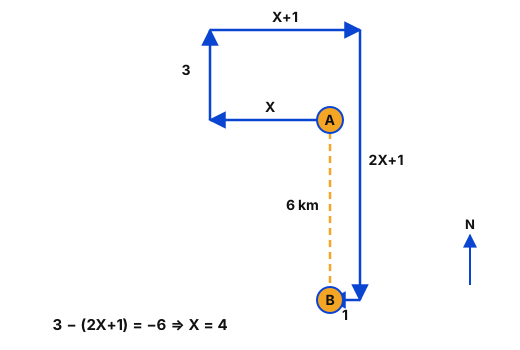
- Start at A, go X km west, turn right (north) 3 km, turn right (east) X+1 km, turn right (south) 2X+1 km, turn right (west) 1 km.
- East–west: , so B is straight below A.
- North–south: .
- B is 6 km south: ⇒ .
Trick: Only the vertical moves decide the 6 km: .
Answer: (C) 4
अवधारणा: उत्तर–दक्षिण विस्थापन देखें; पूर्व–पश्चिम चालें आपस में कट जाती हैं।
- A से X km पश्चिम, दाएँ मुड़कर (उत्तर) 3 km, दाएँ (पूर्व) X+1 km, दाएँ (दक्षिण) 2X+1 km, दाएँ (पश्चिम) 1 km।
- पूर्व–पश्चिम: , अतः B ठीक A के नीचे।
- उत्तर–दक्षिण: ।
- B, 6 km दक्षिण: ⇒ ।
ट्रिक: केवल ऊर्ध्व चालें 6 km तय करती हैं: ।
उत्तर: (C) 4
SSC CPO Paper IGeneral Intelligence and ReasoningDirection and DistanceSSC CPO Paper I 2023 · 5 Oct Shift 3
Q1843.In a certain code language, 'PIN' is coded as 9 and 'CHARGER' is coded as 49. How will 'CABLE' be coded in the same language?
एक निश्चित कूट भाषा में, ‘PIN’ को 9 के रूप में कूटबद्ध किया जाता है और ‘CHARGER’ को 49 के रूप में कूटबद्ध किया जाता है। उसी भाषा में ‘CABLE’ को किस प्रकार कूटबद्ध किया जाएगा?
- A27
- B25
- C18
- D36
Show answer
Concept: Relate the code to the number of letters.
- PIN has 3 letters: ✓.
- CHARGER has 7 letters: ✓.
- CABLE has 5 letters: .
Trick: 9 and 49 are perfect squares of 3 and 7 – count the letters.
Answer: (B) 25
अवधारणा: कोड को अक्षरों की संख्या से जोड़ें।
- PIN में 3 अक्षर: ✓।
- CHARGER में 7 अक्षर: ✓।
- CABLE में 5 अक्षर: ।
ट्रिक: 9 व 49, 3 व 7 के वर्ग हैं – अक्षर गिनें।
उत्तर: (B) 25
SSC CPO Paper IGeneral Intelligence and ReasoningCoding–Decoding (Number)SSC CPO Paper I 2023 · 5 Oct Shift 3
Q1844.Which of the following numbers will replace the question mark (?) in the given series? 5, 20, 60, 240, 720, ?
दी गई श्रृंखला में निम्नलिखित में से कौन-सी संख्या प्रश्न चिह्न (?) के स्थान पर आएगी? 5, 20, 60, 240, 720, ?
- A2580
- B2880
- C2160
- D2675
Show answer
Concept: Check the ratio of consecutive terms.
- , , , .
- Multipliers alternate 4, 3.
- Next: .
Trick: Alternating ×4, ×3 – the next multiplier after ×3 is ×4.
Answer: (B) 2880
अवधारणा: क्रमागत पदों का अनुपात देखें।
- , , , ।
- गुणक बारी-बारी 4, 3।
- अगला: ।
ट्रिक: बारी-बारी ×4, ×3 – ×3 के बाद ×4।
उत्तर: (B) 2880
SSC CPO Paper IGeneral Intelligence and ReasoningNumber SeriesSSC CPO Paper I 2023 · 5 Oct Shift 3
Q1845.Two statements are given, followed by two conclusions numbered I and II. Assuming the statements to be true, even if they seem to be at variance with commonly known facts, decide which of the conclusions logically follow(s) from the statements.
Statements:
All rivers are lakes.
Some seas are rivers.
Conclusion:
I)Some seas are lakes.
II)All lakes are rivers.
दो कथन दिए गए हैं, जिनके बाद I और II क्रमांकित दो निष्कर्ष दिए गए हैं। कथनों को सत्य मानते हुए, भले ही वे सामान्य रूप से ज्ञात तथ्यों से भिन्न प्रतीत होते हों, निर्णय लीजिए कि कौन-सा/कौन-से निष्कर्ष तार्किक रूप से कथनों का अनुसरण करता है/करते हैं।
कथन:
सभी नदियाँ, झीलें हैं।
कुछ समुद्र, नदियाँ हैं।
निष्कर्ष:
I) कुछ समुद्र, झीलें हैं।
II) सभी झीलें, नदियाँ हैं।
- ANeither Conclusion I nor II follows.न तो निष्कर्ष I और न ही II अनुसरण करता है।
- BOnly Conclusion II follows.केवल निष्कर्ष II अनुसरण करता है।
- COnly Conclusion I followsकेवल निष्कर्ष I अनुसरण करता है
- DBoth Conclusions I and II follow.निष्कर्ष I और II दोनों अनुसरण करते हैं।
Show answer
Concept: Draw the Venn diagram from the statements and test each conclusion.
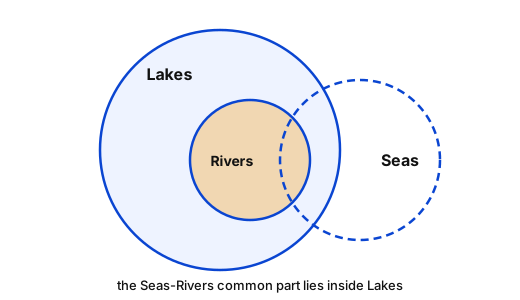
- All rivers are lakes → Rivers inside Lakes.
- Some seas are rivers → Seas overlaps Rivers; that common part is also inside Lakes.
- I: Some seas are lakes – true. II: All lakes are rivers – not definite ('All A are B' does not give 'All B are A').
Trick: Some + All = Some (Some seas are rivers + All rivers are lakes ⇒ Some seas are lakes).
Answer: (C) Only Conclusion I follows
अवधारणा: कथनों से वेन आरेख बनाएँ और हर निष्कर्ष जाँचें।
- सभी rivers, lakes हैं → Rivers, Lakes के अंदर।
- कुछ seas, rivers हैं → Seas, Rivers से मिलता है; यह साझा भाग Lakes के अंदर भी है।
- I: कुछ seas, lakes हैं – सही। II: सभी lakes, rivers हैं – निश्चित नहीं ('All A are B' से 'All B are A' नहीं निकलता)।
ट्रिक: Some + All = Some (कुछ seas rivers + सभी rivers lakes ⇒ कुछ seas lakes)।
उत्तर: (C) Only Conclusion I follows
SSC CPO Paper IGeneral Intelligence and ReasoningSyllogismSSC CPO Paper I 2023 · 5 Oct Shift 3
Q1846.If ‘+’ means ‘–’, ‘–’ means ‘×’, ‘×’ means ‘÷’, ‘÷’ means ‘+’, then what will come in place of the question mark (?) in the following equation?
39 × 3 – 11 ÷ 57 + 29 = ?
यदि ‘+’ का अर्थ ‘–’, ‘–’ का अर्थ ‘×’, ‘×’ का अर्थ ‘÷’ और ‘÷’ का अर्थ ‘+’ है, तो निम्नलिखित समीकरण में प्रश्न चिह्न (?) के स्थान पर क्या आएगा?
39 × 3 – 11 ÷ 57 + 29 = ?
- A163
- B190
- C185
- D171
Show answer
Concept: Replace each sign by its meaning and apply BODMAS.
- × → ÷, − → ×, ÷ → +, + → −.
- becomes .
- ; .
Trick: Rewrite the full expression with the new signs before calculating.
Answer: (D) 171
अवधारणा: हर चिह्न को उसके अर्थ से बदलें और BODMAS लगाएँ।
- × → ÷, − → ×, ÷ → +, + → −।
- बनता है ।
- ; ।
ट्रिक: गणना से पहले पूरा व्यंजक नए चिह्नों से दोबारा लिखें।
उत्तर: (D) 171
SSC CPO Paper IGeneral Intelligence and ReasoningMathematical Operations (Sign Interchange)SSC CPO Paper I 2023 · 5 Oct Shift 3
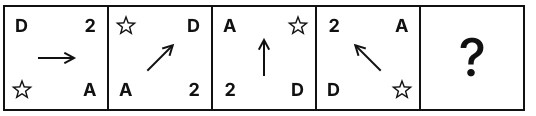
Q1847.Which figure from the given options would replace the question mark (?) if the following figure series were to be continued?
यदि निम्नलिखित आकृति श्रृंखला को जारी रखा जाए, तो दिए गए विकल्पों में से कौन-सी आकृति प्रश्न चिह्न (?) के स्थान पर आएगी?
- A
- B
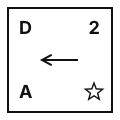
- C
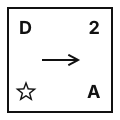
- D
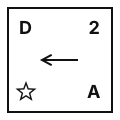
Show answer
Concept: Track the corner symbols and the central arrow separately.
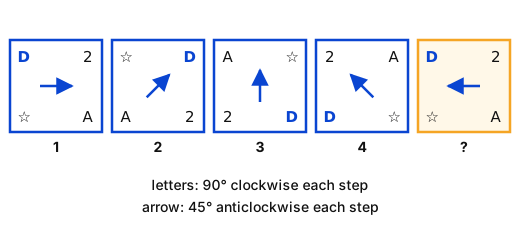
- Corner symbols move one corner clockwise (90°) each step: D goes top-left → top-right → bottom-right → bottom-left → top-left.
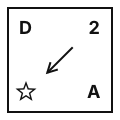
- So figure 5 = figure 1 arrangement: D top-left, 2 top-right, star bottom-left, A bottom-right.
- Arrow turns 45° anticlockwise each step: → , ↗ , ↑ , ↖ , so next is ←.
- Option (D) has this arrangement with a left arrow; (B) has A and star interchanged.
Trick: Follow one symbol (D) for the corners and one tip for the arrow.
Answer: (D) the fourth figure
अवधारणा: कोनों के चिह्न और बीच का तीर अलग-अलग देखें।
- कोनों के चिह्न हर चरण में एक कोना दक्षिणावर्त (90°) चलते हैं: D ऊपर-बाएँ → ऊपर-दाएँ → नीचे-दाएँ → नीचे-बाएँ → ऊपर-बाएँ।
- अतः आकृति 5 = आकृति 1 जैसी व्यवस्था: D ऊपर-बाएँ, 2 ऊपर-दाएँ, तारा नीचे-बाएँ, A नीचे-दाएँ।
- तीर हर चरण 45° वामावर्त घूमता है: → , ↗ , ↑ , ↖ , अगला ←।
- विकल्प (D) में यही व्यवस्था व बायाँ तीर है; (B) में A व तारा बदले हुए हैं।
ट्रिक: कोनों के लिए एक चिह्न (D) और तीर के लिए उसकी नोक का पीछा करें।
उत्तर: (D) चौथी आकृति
SSC CPO Paper IGeneral Intelligence and ReasoningFigure Series (Rotation)SSC CPO Paper I 2023 · 5 Oct Shift 3
Q1848.If M denotes ‘−’, N denotes ‘÷’, O denotes ‘×’, and P denotes ‘+’, then what will come in place of ‘?’ in the following equation?
21 O 5 P 69 N 3 P M 88 = ?
यदि M का अर्थ ‘−’, N का अर्थ ‘÷’, O का अर्थ ‘×’ और P का अर्थ ‘+’ है, तो निम्नलिखित समीकरण में ‘?’ के स्थान पर क्या आएगा?
21 O 5 P 69 N 3 P M 88 = ?
- A61
- B65
- C55
- D50
Show answer
Concept: Replace letters by signs and use BODMAS.
- M = −, N = ÷, O = ×, P = +.
- .
Trick: Find first, then do × and ÷.
Answer: (C) 55
अवधारणा: अक्षरों के स्थान पर चिह्न लगाएँ और BODMAS लागू करें।
- M = −, N = ÷, O = ×, P = +।
- ।
ट्रिक: पहले , फिर × व ÷।
उत्तर: (C) 55
SSC CPO Paper IGeneral Intelligence and ReasoningMathematical Operations (Symbol Substitution)SSC CPO Paper I 2023 · 5 Oct Shift 3
Q1849.Which of the following numbers will replace the question mark (?) in the given series? 69, 65, 67, 63, ?, 61
दी गई श्रृंखला में निम्नलिखित में से कौन-सी संख्या प्रश्न चिह्न (?) के स्थान पर आएगी? 69, 65, 67, 63, ?, 61
- A65
- B60
- C62
- D64
Show answer
Concept: Check the alternating differences.
- : ; : ; : .
- Next : .
- Then : ✓.
Trick: Pattern −4, +2 repeating (net −2 every two steps).
Answer: (A) 65
अवधारणा: बारी-बारी वाले अंतर देखें।
- : ; : ; : ।
- अगला : ।
- फिर : ✓।
ट्रिक: पैटर्न −4, +2 दोहराता है (हर दो चरण में कुल −2)।
उत्तर: (A) 65
SSC CPO Paper IGeneral Intelligence and ReasoningNumber SeriesSSC CPO Paper I 2023 · 5 Oct Shift 3
Q1850.Which two mathematical signs should be interchanged to make the given equation correct?
(45 × 2) ÷ 15 – (6 × 3) + 10 – (63 ÷ 21) = 17
दिए गए समीकरण को सही बनाने के लिए किन दो गणितीय चिह्नों को आपस में बदला जाना चाहिए?
(45 × 2) ÷ 15 – (6 × 3) + 10 – (63 ÷ 21) = 17
- A÷ and +÷ और +
- B× and –× और –
- C– and +– और +
- D÷ and ×÷ और ×
Show answer
Concept: Solve the brackets, interchange the two given signs and apply BODMAS.
- Brackets first: , , .
- Interchange − and +: .
- ✓.
Trick: Evaluate the brackets once; then only the outer signs matter.
Answer: (C) – and +
अवधारणा: दिए गए चिह्न बदलें और BODMAS लगाएँ।
- पहले कोष्ठक: , , ।
- − और + बदलें: ।
- ✓।
ट्रिक: कोष्ठक एक बार हल करें; फिर केवल बाहरी चिह्न मायने रखते हैं।
उत्तर: (C) – और +
SSC CPO Paper IGeneral Intelligence and ReasoningSign InterchangeSSC CPO Paper I 2023 · 5 Oct Shift 3
Q1851.Lavani is a traditional dance of which of the following states?
लावणी निम्नलिखित में से किस राज्य का पारंपरिक नृत्य है?
- AUttar Pradeshउत्तर प्रदेश
- BMaharashtraमहाराष्ट्र
- CHimachal Pradeshहिमाचल प्रदेश
- DMadhya Pradeshमध्य प्रदेश
Show answer
Concept: Lavani is a popular folk dance-music form of Maharashtra, performed to the beat of the dholki.
- Lavani is known for its powerful rhythm and is usually performed by women wearing a nine-yard saree (nauvari).
- It became popular in the Peshwa period and is linked with Tamasha folk theatre of Maharashtra.
- Other states: Uttar Pradesh – Charkula, Nautanki; Himachal – Nati; Madhya Pradesh – Matki, Gaur.
Yaad rakhein: Maharashtra: Lavani, Tamasha, Koli, Povadas.
Answer: (B) Maharashtra
अवधारणा: लावणी (Lavani) महाराष्ट्र का प्रसिद्ध लोक नृत्य-संगीत है, जो ढोलकी की थाप पर किया जाता है।
- लावणी तेज़ लय के लिए जानी जाती है; प्रायः महिलाएँ नौवारी साड़ी पहनकर इसे करती हैं।
- पेशवा काल में यह लोकप्रिय हुई और महाराष्ट्र के तमाशा लोक-नाट्य से जुड़ी है।
- अन्य राज्य: उत्तर प्रदेश – चरकुला, नौटंकी; हिमाचल – नाटी; मध्य प्रदेश – मटकी, गौर।
याद रखें: महाराष्ट्र: लावणी, तमाशा, कोली, पोवाड़ा।
उत्तर: (B) महाराष्ट्र
SSC CPO Paper IGeneral Knowledge and General AwarenessFolk Dances of IndiaSSC CPO Paper I 2023 · 5 Oct Shift 3
Q1852.Which of the following scientists provided the Law of Octaves?
निम्नलिखित में से किस वैज्ञानिक ने अष्टक का नियम (Law of Octaves) दिया था?
- AGalileo Galileiगैलीलियो गैलीली
- BJohn Newlandsजॉन न्यूलैंड्स
- CMichael Faradayमाइकल फैराडे
- DMarie Curieमैरी क्यूरी
Show answer
Concept: In 1865 the English chemist John Newlands arranged the known elements in increasing order of atomic mass and found that every eighth element had properties similar to the first – the Law of Octaves.
- He compared this to the eighth note in a musical scale (sa, re, ga, ma, pa, dha, ni, sa).
- The law worked only up to calcium; it failed for heavier elements.
- Galileo (motion, telescope), Faraday (electromagnetic induction), Marie Curie (radioactivity) are not linked to it.
Yaad rakhein: Dobereiner – Triads; Newlands – Octaves; Mendeleev – Periodic Law (atomic mass); Moseley – atomic number.
Answer: (B) John Newlands
अवधारणा: 1865 में अंग्रेज़ रसायनज्ञ जॉन न्यूलैंड्स (John Newlands) ने तत्वों को बढ़ते परमाणु द्रव्यमान के क्रम में रखा और पाया कि हर आठवाँ तत्व पहले तत्व जैसे गुण दिखाता है – यही अष्टक नियम (Law of Octaves) है।
- उन्होंने इसकी तुलना संगीत के सरगम के आठवें स्वर (सा से सा) से की।
- यह नियम केवल कैल्शियम तक ही लागू हुआ; भारी तत्वों पर असफल रहा।
- गैलीलियो, फैराडे और मैरी क्यूरी का इस नियम से कोई संबंध नहीं है।
याद रखें: डोबेराइनर – त्रिक; न्यूलैंड्स – अष्टक; मेंडेलीफ – आवर्त नियम; मोज़ले – परमाणु क्रमांक।
उत्तर: (B) जॉन न्यूलैंड्स
SSC CPO Paper IGeneral Knowledge and General AwarenessPeriodic ClassificationSSC CPO Paper I 2023 · 5 Oct Shift 3
Q1853.Who among the following Bahmani sultan was noted for cruelty and hence got the title as ‘Zalim’?
निम्नलिखित में से कौन-सा बहमनी सुल्तान अपनी क्रूरता के लिए प्रसिद्ध था और इसलिए उसे ‘ज़ालिम’ की उपाधि मिली?
- AHumayunहुमायूँ
- BFiruz Shahफ़िरोज़ शाह
- CMujahid Shahमुजाहिद शाह
- DAhmad Shahअहमद शाह
Show answer
Concept: Humayun Shah (ruled 1458–1461) of the Bahmani Sultanate was so harsh and cruel that he was called "Zalim" (the tyrant).
- Chroniclers like Ferishta describe his brutal punishments of rebels and nobles.
- His minister Mahmud Gawan served under him and later became prominent.
- Firuz Shah Bahmani and Ahmad Shah (called "Wali") are remembered differently; Mujahid Shah was an earlier ruler.
Yaad rakhein: Humayun Shah = "Zalim"; Ahmad Shah I = "Wali" (saint); capital shifted from Gulbarga to Bidar under Ahmad Shah.
Answer: (A) Humayun
अवधारणा: बहमनी सल्तनत का हुमायूँ शाह (1458–1461) इतना क्रूर था कि उसे "ज़ालिम" (अत्याचारी) कहा गया।
- फ़रिश्ता जैसे इतिहासकार उसके कठोर दंडों का वर्णन करते हैं।
- महमूद गवाँ उसके समय में भी सेवा में था और बाद में प्रसिद्ध वज़ीर बना।
- फ़िरोज़ शाह, अहमद शाह ("वली") और मुजाहिद शाह को यह उपाधि नहीं मिली।
याद रखें: हुमायूँ शाह = "ज़ालिम"; अहमद शाह प्रथम = "वली"; अहमद शाह राजधानी गुलबर्गा से बीदर ले गया।
उत्तर: (A) हुमायूँ
SSC CPO Paper IGeneral Knowledge and General AwarenessBahmani SultanateSSC CPO Paper I 2023 · 5 Oct Shift 3
Q1854.According to the Koppen classification,Which regions experience cold humid winter with short summers?
कोपेन वर्गीकरण के अनुसार, किन क्षेत्रों में छोटी ग्रीष्म ऋतु के साथ ठंडी आर्द्र शीत ऋतु होती है?
- AWestern Rajasthanपश्चिमी राजस्थान
- BNorthern Madhya Pradeshउत्तरी मध्य प्रदेश
- CSouth of Goaगोवा के दक्षिण में
- DArunachal Pradeshअरुणाचल प्रदेश
Show answer
Concept: In Koppen's scheme for India, the type Dfc means a cold humid winter with a short summer; it is found in Arunachal Pradesh.
- Western Rajasthan – BWhw (hot desert).
- Northern Madhya Pradesh / Ganga plain – Cwg (dry winter).
- South of Goa (west coast) – Amw (monsoon with short dry season); Arunachal Pradesh – Dfc.
Yaad rakhein: Dfc = Arunachal (cold humid winter, short summer); E = Ladakh-type polar; Amw = west coast south of Goa.
Answer: (D) Arunachal Pradesh
अवधारणा: कोपेन के वर्गीकरण में Dfc प्रकार का अर्थ है ठंडी आर्द्र सर्दी और छोटी गर्मी; भारत में यह अरुणाचल प्रदेश में पाया जाता है।
- पश्चिमी राजस्थान – BWhw (गर्म मरुस्थल)।
- उत्तरी मध्य प्रदेश / गंगा मैदान – Cwg (शुष्क सर्दी)।
- गोवा के दक्षिण का तट – Amw (मानसूनी, छोटा शुष्क मौसम); अरुणाचल प्रदेश – Dfc।
याद रखें: Dfc = अरुणाचल; Amw = गोवा के दक्षिण का पश्चिमी तट; BWhw = पश्चिमी राजस्थान।
उत्तर: (D) अरुणाचल प्रदेश
SSC CPO Paper IGeneral Knowledge and General AwarenessKoppen Climatic ClassificationSSC CPO Paper I 2023 · 5 Oct Shift 3
Q1855.The Rajpath was decided to be a permanent venue for the Republic Day parade from which of the following year onwards?
निम्नलिखित में से किस वर्ष से राजपथ को गणतंत्र दिवस परेड के लिए स्थायी स्थल बनाने का निर्णय लिया गया था?
- A1959
- B1951
- C1955
- D1958
Show answer
Concept: From 1950 to 1954 the Republic Day celebrations were held at different venues (Irwin Stadium, Kingsway, Red Fort, Ramlila Ground).
- In 1955 Rajpath (now Kartavya Path) became the permanent venue of the parade.
- The first parade at Rajpath in 1955 had Malik Ghulam Muhammad of Pakistan as chief guest.
- Rajpath was renamed Kartavya Path in 2022.
Yaad rakhein: 1950 – first Republic Day (Irwin Stadium); 1955 – Rajpath permanent venue.
Answer: (C) 1955
अवधारणा: 1950 से 1954 तक गणतंत्र दिवस समारोह अलग-अलग स्थानों (इरविन स्टेडियम, किंग्सवे, लाल किला, रामलीला मैदान) पर हुए।
- 1955 से राजपथ (अब कर्तव्य पथ) परेड का स्थायी स्थल बना।
- 1955 की पहली राजपथ परेड के मुख्य अतिथि पाकिस्तान के गवर्नर-जनरल मलिक ग़ुलाम मुहम्मद थे।
- 2022 में राजपथ का नाम बदलकर कर्तव्य पथ किया गया।
याद रखें: 1950 – पहला गणतंत्र दिवस (इरविन स्टेडियम); 1955 – राजपथ स्थायी स्थल।
उत्तर: (C) 1955
SSC CPO Paper IGeneral Knowledge and General AwarenessRepublic DaySSC CPO Paper I 2023 · 5 Oct Shift 3
Q1856.Which disease is caused by NOT having enough vitamin C in the diet for at least 3
months leading to weakness, anaemia, gum disease and skin problems?
आहार में कम से कम 3 महीने तक पर्याप्त विटामिन C न होने के कारण कौन-सा रोग होता है, जिससे कमज़ोरी, रक्ताल्पता (anaemia), मसूड़ों के रोग और त्वचा संबंधी समस्याएँ होती हैं?
- APellagraपेलाग्रा
- BRicketsरिकेट्स (सूखा रोग)
- CBeriberiबेरीबेरी
- DScurvyस्कर्वी
Show answer
Concept: Vitamin C (ascorbic acid) is needed to make collagen. Its long deficiency (about 3 months or more) causes scurvy.
- Scurvy symptoms: weakness, anaemia, swollen bleeding gums, poor wound healing and skin spots.
- Pellagra – vitamin B3 (niacin); Rickets – vitamin D; Beriberi – vitamin B1 (thiamine).
Yaad rakhein: C – Scurvy, B1 – Beriberi, B3 – Pellagra, D – Rickets, A – Night blindness, K – poor clotting.
Answer: (D) Scurvy
अवधारणा: विटामिन C (ऐस्कॉर्बिक अम्ल) कोलेजन बनाने के लिए आवश्यक है। लंबे समय (लगभग 3 महीने) तक इसकी कमी से स्कर्वी (Scurvy) होता है।
- लक्षण: कमज़ोरी, एनीमिया, मसूड़ों में सूजन व खून आना, घाव देर से भरना, त्वचा पर धब्बे।
- पेलाग्रा – विटामिन B3; रिकेट्स – विटामिन D; बेरीबेरी – विटामिन B1।
याद रखें: C – स्कर्वी, B1 – बेरीबेरी, B3 – पेलाग्रा, D – रिकेट्स, A – रतौंधी।
उत्तर: (D) स्कर्वी
SSC CPO Paper IGeneral Knowledge and General AwarenessVitamin Deficiency DiseasesSSC CPO Paper I 2023 · 5 Oct Shift 3
Q1857.What do you call a Glycocalyx that is a loose sheath type?
ढीले आवरण प्रकार के ग्लाइकोकैलिक्स (Glycocalyx) को क्या कहते हैं?
- AMesosomesमीसोसोम
- BCapsuleसंपुटिका (Capsule)
- CTubulesनलिकाएँ (Tubules)
- DSlime layerअवपंक परत (Slime layer)
Show answer
Concept: The glycocalyx is the outermost layer of many bacteria. It differs in thickness and composition: a loose sheath is called the slime layer, while a thick and tough one is called the capsule.
- Slime layer – loose, easily removed; capsule – thick, firmly attached.
- Mesosomes are infoldings of the plasma membrane; tubules are internal membrane structures – not glycocalyx.
Yaad rakhein: Loose = Slime layer; Thick and tough = Capsule (NCERT Class 11, Cell: The Unit of Life).
Answer: (D) Slime layer
अवधारणा: ग्लाइकोकैलिक्स (glycocalyx) कई जीवाणुओं की सबसे बाहरी परत है। जब यह ढीली आवरण जैसी होती है तो उसे स्लाइम लेयर (slime layer) कहते हैं, और मोटी व मज़बूत होने पर कैप्सूल (capsule)।
- स्लाइम लेयर – ढीली; कैप्सूल – मोटी और दृढ़ता से चिपकी।
- मीसोसोम प्लाज़्मा झिल्ली के अंतर्वलन हैं; ट्यूब्यूल्स भी आंतरिक झिल्ली संरचनाएँ हैं।
याद रखें: ढीली = स्लाइम लेयर; मोटी = कैप्सूल।
उत्तर: (D) स्लाइम लेयर (Slime layer)
SSC CPO Paper IGeneral Knowledge and General AwarenessBacterial Cell EnvelopeSSC CPO Paper I 2023 · 5 Oct Shift 3
Q1858.Assessment of the country’s GDP growth, external balance and fiscal balance are
presented in which part of the budget document?
देश की GDP वृद्धि, बाह्य संतुलन और राजकोषीय संतुलन का आकलन
बजट दस्तावेज़ के किस भाग में प्रस्तुत किया जाता है?
- AMedium-term Fiscal Policy Statementमध्यम-अवधि राजकोषीय नीति विवरण
- BAppropriation billविनियोग विधेयक
- CFiscal Policy Strategy Statementराजकोषीय नीति रणनीति विवरण
- DMacroeconomic Framework Statementसमष्टि-आर्थिक रूपरेखा विवरण
Show answer
Concept: Under the FRBM Act, the Macroeconomic Framework Statement is laid with the Budget. It assesses the growth prospects of the economy – GDP growth, fiscal balance and external (current account) balance.
- Medium-term Fiscal Policy Statement – sets rolling targets for fiscal indicators.
- Fiscal Policy Strategy Statement – explains the government's policies on taxation, expenditure and borrowing.
- Appropriation Bill – seeks Parliament's authority to withdraw money from the Consolidated Fund.
Yaad rakhein: GDP + external balance + fiscal balance assessment → Macroeconomic Framework Statement.
Answer: (D) Macroeconomic Framework Statement
अवधारणा: FRBM अधिनियम के तहत बजट के साथ मैक्रोइकोनॉमिक फ्रेमवर्क स्टेटमेंट (Macroeconomic Framework Statement) प्रस्तुत किया जाता है, जिसमें GDP वृद्धि, राजकोषीय संतुलन और बाहरी संतुलन का आकलन होता है।
- मीडियम-टर्म फिस्कल पॉलिसी स्टेटमेंट – राजकोषीय संकेतकों के लक्ष्य।
- फिस्कल पॉलिसी स्ट्रैटेजी स्टेटमेंट – कर, व्यय और उधार की नीतियाँ।
- विनियोग विधेयक (Appropriation Bill) – संचित निधि से धन निकालने की अनुमति।
याद रखें: GDP + बाहरी संतुलन + राजकोषीय संतुलन = मैक्रोइकोनॉमिक फ्रेमवर्क स्टेटमेंट।
उत्तर: (D) मैक्रोइकोनॉमिक फ्रेमवर्क स्टेटमेंट
SSC CPO Paper IGeneral Knowledge and General AwarenessUnion Budget DocumentsSSC CPO Paper I 2023 · 5 Oct Shift 3
Q1859.The seven years of war in the 18th century was fought between Britain and ________.
18वीं शताब्दी में सप्तवर्षीय युद्ध ब्रिटेन और ________ के बीच लड़ा गया था।
- ASpainस्पेन
- BFranceफ्रांस
- CGermanyजर्मनी
- DPortugalपुर्तगाल
Show answer
Concept: The Seven Years' War (1756–1763) was mainly a struggle between Britain and France (with their allies) for colonial and commercial supremacy.
- It was fought in Europe, North America and India; the Third Carnatic War in India was its Indian part.
- The Treaty of Paris (1763) ended it, and Britain emerged as the leading colonial power.
Yaad rakhein: Seven Years' War 1756–63 = Britain vs France → Third Carnatic War (Battle of Wandiwash, 1760).
Answer: (B) France
अवधारणा: सप्तवर्षीय युद्ध (1756–1763) मुख्यतः ब्रिटेन और फ्रांस (तथा उनके सहयोगियों) के बीच औपनिवेशिक व व्यापारिक प्रभुत्व के लिए लड़ा गया।
- यह यूरोप, उत्तरी अमेरिका और भारत में लड़ा गया; भारत में तीसरा कर्नाटक युद्ध इसी का हिस्सा था।
- पेरिस की संधि (1763) से यह समाप्त हुआ और ब्रिटेन प्रमुख औपनिवेशिक शक्ति बना।
याद रखें: सप्तवर्षीय युद्ध = ब्रिटेन बनाम फ्रांस → तीसरा कर्नाटक युद्ध (वांडीवाश, 1760)।
उत्तर: (B) फ्रांस
SSC CPO Paper IGeneral Knowledge and General AwarenessWorld History – Seven Years' WarSSC CPO Paper I 2023 · 5 Oct Shift 3
Q1860.At the time of launch of the Smart Cities Mission, how many cities were proposed to be covered under this scheme?
स्मार्ट सिटी मिशन के शुभारंभ के समय, इस योजना के अंतर्गत कितने शहरों को शामिल करने का प्रस्ताव था?
- A100
- B50
- C75
- D25
Show answer
Concept: The Smart Cities Mission was launched on 25 June 2015 by the Ministry of Housing and Urban Affairs.
- It proposed to develop 100 smart cities, selected through a City Challenge competition.
- AMRUT (for 500 cities) and PMAY-Urban were launched on the same day.
Yaad rakhein: Smart Cities – 100 cities; AMRUT – 500 cities; launched 25 June 2015.
Answer: (A) 100
अवधारणा: स्मार्ट सिटीज़ मिशन 25 जून 2015 को आवास एवं शहरी कार्य मंत्रालय द्वारा शुरू किया गया।
- इसके अंतर्गत 100 स्मार्ट शहर विकसित करने का प्रस्ताव था, जिन्हें सिटी चैलेंज प्रतियोगिता से चुना गया।
- उसी दिन AMRUT (500 शहर) और PMAY-शहरी भी शुरू हुए।
याद रखें: स्मार्ट सिटी – 100 शहर; AMRUT – 500 शहर; 25 जून 2015।
उत्तर: (A) 100
SSC CPO Paper IGeneral Knowledge and General AwarenessGovernment SchemesSSC CPO Paper I 2023 · 5 Oct Shift 3

