Q1.
What is the main cause of different seasons on the Earth?
पृथ्वी पर विभिन्न ऋतुओं का मुख्य कारण क्या है?
- AEarth's distance from the Sunसूर्य से पृथ्वी की दूरी
- BEarth's rotationपृथ्वी का घूर्णन (rotation)
- CSolar flaresसौर ज्वालाएँ (solar flares)
- DEarth's tilt and revolution around the Sunपृथ्वी का झुकाव और सूर्य के चारों ओर उसकी परिक्रमा
Show answer
Concept: Seasons occur because the Earth’s axis is tilted (about ) while it revolves around the Sun.
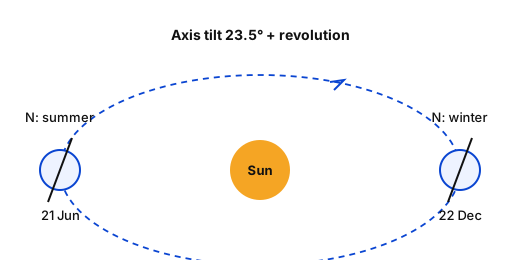
- Due to the tilt, each hemisphere leans towards the Sun for half the year and away from it for the other half.
- The hemisphere tilted towards the Sun gets more direct rays and longer days – summer; the other gets slanting rays – winter.
- Distance is not the cause: Earth is nearest the Sun (perihelion) in early January, when the Northern Hemisphere has winter. Rotation only causes day and night.
Yaad rakhein: Rotation → day–night; Revolution + tilt → seasons.
Answer: (D) Earth’s tilt and revolution around the Sun
अवधारणा: ऋतुएँ इसलिए बनती हैं क्योंकि पृथ्वी का अक्ष लगभग झुका है और पृथ्वी सूर्य की परिक्रमा (revolution) करती है।
- झुकाव के कारण आधे वर्ष एक गोलार्ध सूर्य की ओर झुका रहता है और आधे वर्ष दूर।
- सूर्य की ओर झुके गोलार्ध पर सीधी किरणें और लंबे दिन – गर्मी; दूसरे पर तिरछी किरणें – सर्दी।
- दूरी कारण नहीं है: जनवरी की शुरुआत में पृथ्वी सूर्य के सबसे पास (perihelion) होती है, तब उत्तरी गोलार्ध में सर्दी होती है। घूर्णन (rotation) से केवल दिन-रात बनते हैं।
याद रखें: घूर्णन → दिन-रात; परिक्रमा + झुकाव → ऋतुएँ।
उत्तर: (D) पृथ्वी का झुकाव और सूर्य के चारों ओर परिक्रमा