

Q1.
Which of the following is an impact of river meandering in plains?
मैदानों में नदी के विसर्पण (meandering) का निम्नलिखित में से कौन-सा प्रभाव है?
- AFormation of waterfallsजलप्रपातों का निर्माण
- BFormation of oxbow lakesगोखुर झीलों (oxbow lakes) का निर्माण
- CFormation of rift valleysभ्रंश घाटियों (rift valleys) का निर्माण
- DFormation of rapidsक्षिप्रिकाओं (rapids) का निर्माण
Show answer
Concept: In the plains a mature river flows slowly and swings in wide loops called meanders.
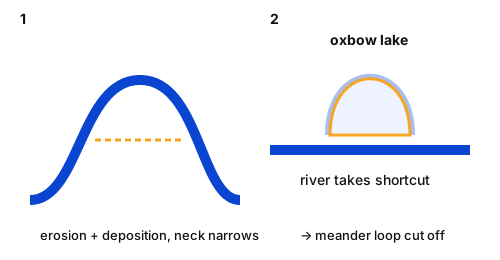
- Water erodes the outer bank (faster flow) and deposits on the inner bank, so the loops keep growing.
- The neck of a loop becomes very narrow; during a flood the river cuts straight across it.
- The abandoned loop is left as a crescent-shaped lake – an oxbow lake.
- Waterfalls and rapids form in the youthful (mountain) stage; rift valleys form by faulting, not by rivers.
Yaad rakhein: Meander → cut-off → oxbow lake: a typical landform of the lower course (e.g., Ganga plains).
Answer: (B) Formation of oxbow lakes
अवधारणा: मैदानों में परिपक्व नदी धीमी गति से बहती है और चौड़े घुमाव (meanders) बनाती है।
- बाहरी किनारे पर अपरदन और भीतरी किनारे पर निक्षेपण से घुमाव बढ़ता जाता है।
- घुमाव की गर्दन (neck) बहुत संकरी हो जाती है; बाढ़ के समय नदी सीधा रास्ता बना लेती है।
- छूटा हुआ घुमाव अर्धचंद्राकार झील बन जाता है – गोखुर झील (oxbow lake)।
- जलप्रपात व क्षिप्रिका (rapids) युवा अवस्था (पर्वतीय भाग) में बनते हैं; भ्रंश घाटी (rift valley) भ्रंशन से बनती है।
याद रखें: विसर्प (meander) → कट-ऑफ → गोखुर झील: नदी के निचले मार्ग (जैसे गंगा मैदान) की पहचान।
उत्तर: (B) गोखुर झीलों का निर्माण (Formation of oxbow lakes)