RRB NTPC Undergraduate CBT 1 2024 · Shift 2

RRB NTPC Undergraduate CBT 1 14 Aug 2025 Shift 2 – Question Paper

100 questions · 100 marks · 90 minutes · +1 for a correct answer, −1/3 for a wrong one. With answer key and detailed solutions in Hindi and English.

Test Series – airGurukul

Paper pattern

SectionQuestionsMarks
General Awareness4040
Mathematics3030
General Intelligence and Reasoning3030

Sample questions from this paper

Q1.
Market control under Alauddin Khilji aimed mainly to ________.
अलाउद्दीन खिलजी के अधीन बाज़ार नियंत्रण का मुख्य उद्देश्य ________ था।
  1. Apatronise artisan guildsकारीगर श्रेणियों (गिल्डों) को संरक्षण देना
  2. Bencourage foreign tradeविदेशी व्यापार को प्रोत्साहित करना
  3. Cpromote luxury crafts and goodsविलासितापूर्ण शिल्पों और वस्तुओं को बढ़ावा देना
  4. Dcheck price inflation for army provisionsसेना की रसद के लिए मूल्य वृद्धि (महँगाई) पर नियंत्रण करना
Show answer

Concept: Alauddin Khilji (1296–1316) introduced market reforms to maintain a huge standing army cheaply.

  1. He fixed low prices of grain, cloth, horses and cattle and set up separate markets for them.
  2. Officers like the Shahna-i-Mandi and spies (barid) checked hoarding and black-marketing.
  3. Low prices let him pay soldiers modest salaries, so the aim was to check price rise of army provisions – not foreign trade or luxury goods.

Yaad rakhein: Market control = sasta anaaj for a big army.

Answer: (D) check price inflation for army provisions

अवधारणा: अलाउद्दीन खिलजी (1296–1316) ने विशाल स्थायी सेना को कम खर्च में बनाए रखने के लिए बाज़ार सुधार किए।

  1. उसने अनाज, कपड़ा, घोड़े और पशुओं के मूल्य तय किए और उनके लिए अलग बाज़ार बनाए।
  2. शहना-ए-मंडी जैसे अधिकारी और गुप्तचर जमाखोरी पर नज़र रखते थे।
  3. कम कीमतों से सैनिकों को कम वेतन में गुज़ारा हो जाता था – उद्देश्य सेना की रसद की महँगाई रोकना था।

याद रखें: बाज़ार नियंत्रण = बड़ी सेना के लिए सस्ता अनाज।

उत्तर: (D) सेना की रसद के लिए मूल्य वृद्धि (महँगाई) पर नियंत्रण
RRB NTPC Undergraduate CBT 1General AwarenessMedieval History – Delhi Sultanate
Q41.
Rishi bought some pens at the rate of ₹180/dozen. He sold them for ₹21 each. His profit percentage is ______%.
ऋषि ने ₹180/दर्जन की दर से कुछ पेन खरीदे। उसने उन्हें ₹21 प्रति पेन की दर से बेचा। उसका लाभ प्रतिशत ______% है।
  1. A40
  2. B38
  3. C44
  4. D42
Show answer

Concept: Profit%=SP−CPCP×100

  1. CP of one pen =18012= ₹15.
  2. SP of one pen = ₹21, so profit =21−15= ₹6.
  3. Profit%=615×100=40%

Trick: Compare per dozen: SP =21×12=252, CP =180; 72180=40%.

Answer: (A) 40

अवधारणा: लाभ%=विक्रय मूल्य−क्रय मूल्यक्रय मूल्य×100

  1. एक पेन का क्रय मूल्य =18012= ₹15।
  2. एक पेन का विक्रय मूल्य = ₹21, लाभ =21−15= ₹6।
  3. लाभ%=615×100=40%

ट्रिक: दर्जन के हिसाब से: SP =21×12=252, CP =180; 72180=40%।

उत्तर: (A) 40

RRB NTPC Undergraduate CBT 1MathematicsProfit and Loss
Q71.
Read the given statements and conclusions carefully. Assuming that the information given in the statements is true, even if it appears to be at variance with commonly known facts, decide which of the given conclusions logically follow(s) from the statements.
Statements:
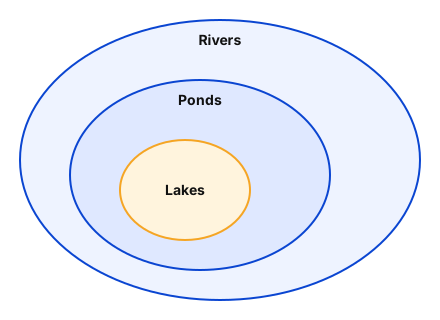
All lakes are ponds.
All ponds are rivers.
Conclusions:
(I): All lakes are rivers.
(II): All rivers are ponds.
दिए गए कथनों और निष्कर्षों को ध्यानपूर्वक पढ़िए। यह मानते हुए कि कथनों में दी गई जानकारी सत्य है, भले ही वह सामान्य रूप से ज्ञात तथ्यों से भिन्न प्रतीत होती हो, निर्णय कीजिए कि दिए गए निष्कर्षों में से कौन-सा/कौन-से निष्कर्ष तार्किक रूप से कथनों का अनुसरण करता है/करते हैं।
कथन:
सभी झीलें, तालाब हैं।
सभी तालाब, नदियाँ हैं।
निष्कर्ष:
(I): सभी झीलें, नदियाँ हैं।
(II): सभी नदियाँ, तालाब हैं।
  1. ANeither Conclusion I nor II followsन तो निष्कर्ष I और न ही II अनुसरण करता है
  2. BBoth Conclusions I and II followनिष्कर्ष I और II दोनों अनुसरण करते हैं
  3. COnly Conclusion I followsकेवल निष्कर्ष I अनुसरण करता है
  4. DOnly Conclusion II followsकेवल निष्कर्ष II अनुसरण करता है
Show answer

Concept: Two 'All' statements chain: All A are B + All B are C ⇒ All A are C. 'All' cannot be reversed.

  1. Lakes ⊂ Ponds ⊂ Rivers, so all lakes are rivers → I follows
  2. Rivers may be outside ponds, so 'All rivers are ponds' is not certain → II does not follow

Trick: 'All A are B' never gives 'All B are A' — only 'Some B are A'.

Answer: (C) Only Conclusion I follows

अवधारणा: दो 'सभी' कथन जुड़ते हैं: सभी A, B हैं + सभी B, C हैं ⇒ सभी A, C हैं। 'सभी' को उलटा नहीं कर सकते।

  1. Lakes ⊂ Ponds ⊂ Rivers, अतः सभी lakes, rivers हैं → I अनुसरण करता है
  2. कुछ rivers, ponds से बाहर हो सकती हैं → II निश्चित नहीं

ट्रिक: 'सभी A, B हैं' से 'सभी B, A हैं' कभी नहीं — केवल 'कुछ B, A हैं'।

उत्तर: (C) केवल निष्कर्ष I अनुसरण करता है

RRB NTPC Undergraduate CBT 1General Intelligence and ReasoningSyllogism

See all 100 solutions

More RRB NTPC Undergraduate CBT 1 papers

Download our app

Study smarter with the airGurukul App

Your complete exam-prep companion - classes, practice, and progress tracking.

Learn anytime, anywhere - live classes, tests, notes, and updates in one place.

GET IT ONGoogle Play

Have a query? We’re here to help

Fill out the form and our team will get back to you as soon as possible.

  • Ask your questions related to admission, courses, fees, or facilities
  • Share your details so our team can contact you easily
  • Get accurate information from our support team
  • Quick and simple form submission process

All fields marked * are required.